Electric Literature is pleased to reveal the cover of Beauty Talkby Asa Drake, which will be published on October 13th, 2026 by Noemi Press. You can pre-order your copyhere.
Intimate, wry and a little sour, Asa Drake’s Beauty Talk addresses the (im)possibility of talking about beauty in America without addressing whiteness. Here is a personal history of who gets to be beautiful.
While Beauty Talk pulls from the autobiographical—a father as the 1970’s Camel cigarette man, correspondences with abandoned siblings, a historic family map—the collection is shaped by the illegibility, omission, and ekphrasis of the personal archive. Embracing a fractal telling, these poems explore an inheritance of mixed aesthetics and what it means to partake in a lineage that is both colonial and immigrant. Drake pulls from sources as varied as Chiwan Choi’s adaptation of the Bechdel test and Viv Chen’s substack The Molehill to index the racial and gendered language of advertisement copy, incident reports, and parental beauty advice. Woven between these coded distinctions of moral and aesthetic utility, Beauty Talk asks if, perhaps, family is the first commodification of the body.
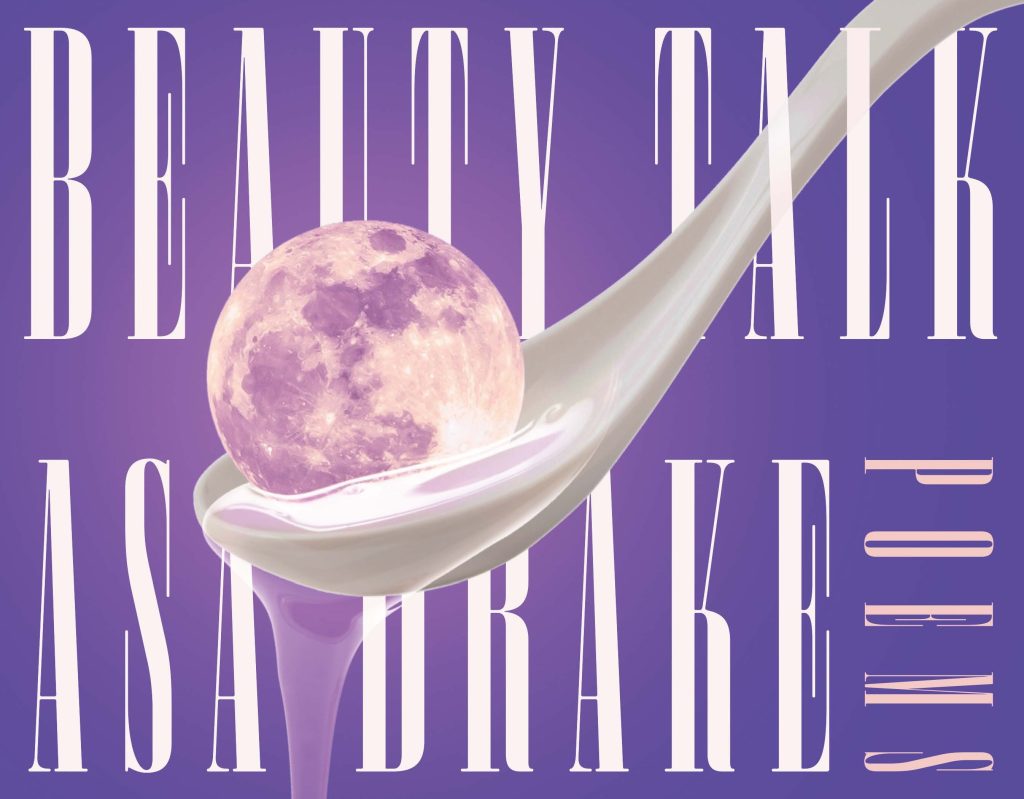
Here is the cover, designed by Alban Fischer:
Asa Drake: In 2022, I had the opportunity to study with Paisley Rekdal at a Tin House (now McCormack Writing Center) Summer Workshop, and during that workshop we joked that I could write a whole book about beauty advice from my father who was a model during the 1970s. I’d never really written about my father because writing about my father meant writing about the body, about whiteness, about abandonment and desirability.
In Beauty Talk and, I think, in life, beauty is euphemistic. Beauty is a kind of cultural adherence that we’re promised will make our lives easier. This collection is filled with moments where I catch myself using beauty in place of whiteness, a substitution/exnomination I learned from my parents. Throughout Beauty Talk, I’m testing the distance between signifier and signified. Even when we talk about the color yellow or the scent of jasmine or peaches or the moon, we can’t separate the symbolism we’ve attached to each word from the thing itself.
I would have never imagined this cover image on my own, and yet I know exactly how Alban Fischer’s design ties into the book. There are two poems that immediately come to mind: one with pearlescent bilo-bilo and another where I compare a peach canned in syrup to the moon. Beauty Talk is a collection filled with spheres, orbits, and ellipses. And the moon at some point becomes the subject of direct address. It’s a heavenly shape that I return to as the site of harm and repair.
When I think about the many substitutions which happen throughout Beauty Talk, Alban’s incredible cover becomes charged with hypergloss and maybe a little sarcasm. I love how this image explores when words mean themselves and when they call to one another. Alban’s visual rhyme (moon in spoon!) gives me hope that despite engaging with questions of whiteness and exnomination, readers will laugh at my jokes.
Alban Fischer: The brief for Beauty Talk was relatively open, and the author was quite helpful in providing possible directions. The image of the moon is a consistent presence in the book, so it seemed to me a solid compass to work with. The question was how best to represent it from among all its permutations and valences throughout the collection. I was initially intrigued by the possibility of using the dumplings in one of the title poems as moon or, better yet, using “The moon is a peach lifted / from syrup” as a stepping-off point. There were almost too many possibilities, and I was briefly concerned about creating something unintentionally zany. Ultimately, it was Asa saying she was “more interested in a cover that is striking and memorable than a cover that is pretty” that gave me license to just let myself be led wherever these poems’ warped poignance took me. The line “it is easier for an American to enter heaven / than to engage with an unfamiliar texture” from “Recipe for Bilo-Bilo” stuck with me; it seemed to encapsulate the book’s themes, and the dumplings in the poem were the moon the cover needed. The rest was mostly getting the color scheme and type choices right. Smoosh’s exaggeratedly condensed contours finish off the cover with the right amount of cheeky refinement. I loved this book. Drake writes into complicated family dynamics and culturally sanctioned standards of how one exteriorizes identity in ways that are thrilling and original. It’s such a pleasure when a project like this comes your way.
My son wanted to run around the departure lounge before we got on the plane, and it wasn’t like I could say, Now we must sit in our seats and wait and wait. He was too little for that. So I followed him as he ran around, making sure he didn’t cause trouble. We were on our way to visit his grandparents, who lived so far away we could only get there by plane. Or cargo ship. But I could not imagine chasing him around a cargo ship for several days as we crossed the ocean. And what if it sank? Then we would be in a lifeboat. Maybe even one of those round or hexagonal ones that auto-inflate during an emergency. How long would we sit in our lifeboat, bobbing on the waves, awaiting rescue? What if rescue never came? How long before my son grew restless? Started crying? At first, he might enjoy the strange new experience, even though everyone else in the boat was clearly not enjoying it. Children are remarkably adaptable (or so I’ve heard said, many times, in those exact words). But what if the man sitting next to us became hostile when my son started crying? Would I have to fight him? Would I know how to fight a man in an inflatable lifeboat? And who would look after my son while I was fighting? Parenting does not come with a manual. Friends give you parenting books, but you don’t read them. You refer to them. But only when something bad has already happened. Would there be a chapter covering emergency situations in cramped lifeboats? What if there was a cat in the lifeboat and my son wanted to pet the cat but the cat belonged to the hostile man? Perhaps we could use the cat as a way of avoiding fighting, of smoothing things over. But what if the cat was vicious and scratched my son? Then what? And of course any number of things could happen. We could starve to death. Military drones might come along and bomb us. A pod of adolescent orcas could attempt to overturn our craft. They would have a hard time, though, if it was one of those round ones. But orcas are intelligent. They problem-solve and work together to kill seals. One of them would come up with the idea of biting the craft in order to deflate it, and the rest would immediately see the merit in this. They would all begin to bite the craft until we were pitched into open water. But perhaps some dolphins would be standing by to save us from the orcas, which are pretty much just giant black-and-white dolphins. Dolphins probably don’t think much of orcas. For them orcas are probably like huge dumb trolls. For the orcas the dolphins are like elves. Confusingly nimble, supercilious, kind of mean. The dolphins probably delight in making them feel stupid. So they would no doubt step in and save us from the orcas and ferry us to an uninhabited isle. They would know where one was the same way you know where lakes are. I suppose the cat would not do well in this scenario. Even if a dolphin tried to help the cat, the cat would panic and end up with its claws out. You can’t blame the cat, though. That’s just how they’re wired. Anyway, things probably wouldn’t get that far. Dolphins almost never interact with cats, and so a cat would probably look pretty alarming to them. A dolphin would be like, No, I’m not going anywhere near that fucking thing. Perhaps the hostile man could stuff it into a waterproof sack and do his best to make sure it didn’t suffocate while a dolphin zoomed them to safety. That’s about the only way I can see the cat getting out of there. My son would probably be all right, though. The dolphins would see he was little more than a baby. He would be their top priority—pretty much the opposite situation as the cat. They would make sure he got to the uninhabited isle. Hopefully he wouldn’t be the only one to make it, though. That would suck. As much as they might want to, the dolphins wouldn’t be able to wriggle out of the water and prepare meals for him until he was old enough to take care of himself. Then again, maybe the isle would have some kind of helpful animal living on it. Calm, thoughtful, nurturing monkeys. Or maybe a lost species of humanoid which had managed to evolve there without us knowing about it, perhaps because the dolphins had misdirected our ships, making sure we never landed there and massacred them. These humanoids would be small, because that’s what happens when your species evolves in isolation on an island. It’s called insular dwarfism. Islands have limited resources, so you end up getting smaller over time. Unless you’re small to begin with, like rats, and then you end up getting larger. Which is exactly what happened on that island in Indonesia where homo floresiensis lived for 700,000 years. So my son might find himself on an island with small humanoids who hunt giant rodents or maybe even saddle them up and ride them around. The rodents would be bigger than the cat, if the cat made it ashore. Who knows? Maybe the hostile man, just before he was torn apart by orcas, managed to toss it onto a piece of flotsam. The humanoids wouldn’t know what to make of it. My son, however, would pick it up, or try to, which would require a measure of patience on the cat’s part, and the humanoids would be amazed. So my son would live on the island with the cat and the humanoids, learning their customs and language. Why wouldn’t they have a language? As he grew, feasting on giant rats, horrifying insects, and the fruit that grew all over the island, he would eventually tower over everyone else even though he wouldn’t be all that tall by homo sapiens standards. How would the diminutive islanders react to this? With aplomb? Not if they’re anything like us! So my son would have to deal with the height issue as he got older, but by then he would know these people well and hopefully be able to come up with something. He wouldn’t remember me or the rest of us, so it would be tough to explain, but I have confidence in him. He is an intelligent toddler so why wouldn’t he be an intelligent adolescent—which is when the height thing would really start to become an issue. Hopefully the humanoids won’t be as fractious as us. If dolphins or the equivalent of dolphins in space (space dolphins) brought us a strange being that had been shipwrecked out there, saving its life, and it grew up among us here on Earth and had some weird physical characteristics but otherwise behaved like us, you can be sure that two schools of thought would emerge. Some of us would be all right with him as long as he was all right with us, while others would want to kill the thing. It would probably be a little more complicated than that, but that’s pretty much how it would break down. Hopefully most of the humanoids aren’t of the second mindset. I bet they’re pretty chill, though. They don’t have to work a hundred hours a week. They don’t have social media or guns. They don’t have to deal with robots calling them on the phone and instructing them to please stand by. They never have to peer into a camera while a truculent police officer photographs their retinas. Not on the island. Giant rats would be the worst of it. But I am getting ahead of myself! We are still in the airport departure lounge. My son is still just a toddler. I’m tagging along behind him, making sure he doesn’t cause trouble. And just as they announce our flight is boarding and families with small children have priority—well, after the active duty service members; we all have to stand there and clap for the active duty service members, toddlers included—he runs up to one of those one-way doors you only find in airports, funhouses, and the International Space Station. It opens. Before I can stop him he barrels through, and the door swishes shut behind him. Now he is trapped in the airlock between the two doors. If I can just get over there before he . . . but no, he’s already done it. He barrels through the second door. He is outta here. If I go after him, I will miss my plane. If I don’t go after him, I will lose my son. Checkmate! And exactly the kind of conundrum you would never have to deal with on that magical, rat-trodden isle.
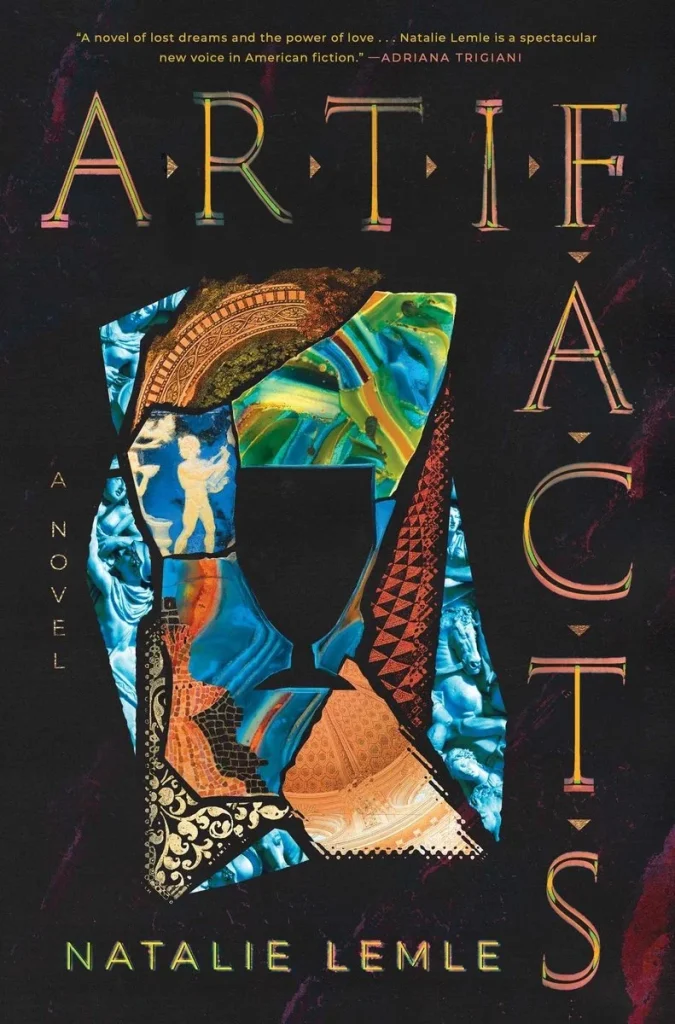
There is a particular pleasure in lost objects. We know it in ordinary life: the small shock of finding again what had vanished, the almost absurd intensity of a key, a ring, a photograph, a letter suddenly returned to us. Natalie Lemle’s Artifacts, her debut novel, turns that intimate sensation into a larger, more dangerous fiction. At its center is Lena Connolly, a lawyer drawn into a case involving a possibly looted Roman cup made of dichroic glass. The cup does not simply come from the past: It summons it, forcing Lena back to the summer she spent on an archaeological dig in Italy, and to what she thought she had left there.
What makes the novel so compelling is its understanding of art history not as ornament, but as a narrative engine. While writing my own novel, Mona’s Eyes, I had the chance to experience how powerfully works of art can move a story forward. Lemle uses that force in a darker key. She goes behind the museum glass, into the machinery of provenance, money, desire, and crime. We are drawn to beauty; but we are also drawn, perhaps more secretly, to the mud around it.
In that sense, Artifacts is a form of archaeology by other means. It excavates memory as much as ruins, illusions as much as evidence. In the conversation that follows, Natalie Lemle and I spoke about ancient things and ordinary possessions, Italy and myth, the art world’s shadows, unstable memory, and the strange energy that certain objects continue to exert over the living.
Thomas Schlesser: Let’s begin with the title itself: Artifacts. An artifact is an object, of course, but an object that has survived—something charged with evidence, memory, perhaps even secrecy. Your novel is full of these presences: antiquities, artworks, fragments of the past, but also more intimate traces of a life. As an art historian, I am always struck by the way certain objects seem to remember more than we do. What is your own relationship to them—ancient or ordinary, precious or personal?
Natalie Lemle: My relationship to ancient objects is very different from my relationship to everyday possessions. When it comes to antiquity, or really anything that comes from the past—it doesn’t even have to be ancient, but let’s say something at least 100 years old, something made before my lifetime—I’m much more intrigued, much more fascinated. That is what gets me thinking, what gets me into my storytelling mind.
Something from the outside can maybe lead you to an inner corridor in your own mind—but then you have to actually be willing to open all those doors.
With everyday possessions, I have a more complicated relationship. To be honest, I don’t like being attached to physical things. I don’t like the feeling of being beholden to them. I want to be the kind of person who could always pack up, leave her life, and not feel sad or sentimental.
I may have one or two pieces of jewelry that feel sentimental because of the memories associated with them, but I can’t point to a single possession that feels important to me in that way. I see how easily possessions can become an extension of the ego, and I bristle against that. I am fascinated by ancient objects, but suspicious of what belongs too closely to my own life: The older something is, the more it liberates my imagination; the closer it is to me, the more it feels like a trap.
TS: What I find striking is the paradox: In life, you resist the hold material things can have over us; in the novel, you give them enormous power. Did Lena need to believe in them more than you do?
NL: Yes, that’s true. It doesn’t bother me if readers see that the book is written in the first person and think Lena is a stand-in for me. But there are many differences between me and my narrator.
I needed Lena to be more fully fixated than I am on the promise of something tangible, something you can hold and see. At least initially, she believes that if she can see something with her own eyes, she can understand it. What she learns is that seeing is not the same as knowing.
TS: In my generation, Indiana Jones was a terribly efficient machine for turning children into imaginary archaeologists. A lot of us wanted, at least for five minutes, to dig up mysteries in a hat. But archaeology, in your novel, is obviously not just adventure. What do you think draws us so deeply to it?
NL: I think the most obvious answer is that we want to dig in order to understand. We want to understand how people lived before us, what they did with the things they possessed or shared—maybe because those things give us clues about our own daily life, or help us understand something about the through-line between human beings.
My personal belief, and what I tried to do with Lena and the other archaeologists in the book, is to show that they are interested in archaeology because they really want to understand themselves. For Lena, excavation becomes a dangerous form of introspection: She thinks she is digging into the past, but she is really digging toward herself.
What she comes to realize is that something from the outside can maybe lead you to an inner corridor in your own mind—but then you have to actually be willing to open all those doors. The excavation is only step one. What happens afterward has to happen inside you.
That is also why archaeology becomes frightening for her: It asks her to follow a feeling before she is ready to do so. She is still in her head, still cerebral. She thinks archaeology is about physical evidence. But by the end of the book, she comes to understand that archaeology may be more spiritual than she thought, and more based on instinct: on being willing to follow those instincts instead of grasping for the tangible.
TS: The novel is built on two timelines, and Lena is not only confronting a mystery; she is also meeting a younger version of herself and facing the gap between two periods of her life. Why was that structure important to you?
NL: Originally, there were two reasons I decided to use a dual timeline.
The first is that the laws and attitudes around cultural heritage and restitution changed so drastically between 2004 and 2022, when the present-day story takes place. How did we go from 2004, when museums were still taking things into their collections so freely, and all kinds of sketchy pieces were being sold on the open market, to 2022, when curators won’t touch an antiquity—even the most beautiful one in the world—without rock-solid provenance? They won’t touch it with a 10-foot pole. That is a huge difference.
The second reason is that I wanted Lena’s present-day narrative to be somewhat unstable. Not because I needed her to be fully unreliable, but because I wanted her to filter her memories through what she is learning in the present day about the case. The two timelines let me think about provenance in two ways: what can be proven about an artifact, and what can never be fully proven about memory.
She remembers things based on what she is learning now. And of course she cannot remember verbatim what was said. The dialogues are more or less invented, right? The mind doesn’t remember in that way. She remembers some things—she definitely remembers the important things—but she is also selling us a narrative about the past.
I personally enjoy fiction that does that. You suspend your disbelief, you go along with what the narrator says, and at the same time, as a reader, you keep asking yourself: Is this what really happened?
TS: I’m happy you mention unstable memory, because I know you also love Elena Ferrante. And Italy, in Artifacts, is such a powerful landscape: luminous, sensual, full of secrets. Why was it the perfect place for part of this story?
NL: Ferrante does narrative instability so well. Troubling Love is a great example: The main character is looking for her mother and remembering pieces of her childhood. Then, as she gets more clues about what happened to her mother, she starts remembering her childhood differently. And The Lost Daughter does that really well too.
As for Italy, I am half Italian—Sicilian on my father’s side—but I didn’t go there until I was 18. I didn’t grow up going to Italy. My Italian side is totally American. I think I’m fourth-generation Italian, so it’s not as if I had a direct connection to the country.
She is selling us a narrative about the past.
But I was lucky enough to go to a high school where I learned Italian, and I did an exchange at the end of high school with another high school in Bologna. I remember being there for the first time and feeling this very strong connection to the country. At first, I thought it might be related to my knowledge of the language, or my interest in it. I was also studying Latin in high school, and I knew I wanted to study art history, ancient art, the ancient world. So initially I thought: I am interested in all these things, and now I get to be in the country where so much of this came from.
But then I started to feel that it was deeper. I felt a sense of homecoming. And yet I’m Sicilian, and I was in Bologna, so it wasn’t literal. Italy was both inherited and imaginary for me: I felt a homecoming there, but it was a home I had invented as much as received.
Later I did an archaeological dig in Tuscany as an undergraduate, and then I spent a college year abroad in Bologna. I even fantasized about staying, but that year also made me realize how American I really was.
So when I was drafting Artifacts, I was returning, with some distance, to the sense of magic I felt when I first went to Italy. For me, Italy is a place full of stories to which I feel an emotional connection. It makes me feel transported. And maybe this is a naive thing to say, but when I’m writing fiction, part of the pleasure I get is the feeling of being outside myself, outside my normal day-to-day life. I love feeling as if I am in Italy when I write.
TS: I’m struck by how hungry readers are for the dark side of the art world—the money, ambition, vanity, and opportunism behind the beauty. But your novel does not simply expose that world from the outside; it understands why people are drawn to it, and why they stay. What makes that darkness so fertile for fiction?
NL: Like anybody else, I can be critical of the art world. It’s fun to complain about how sketchy it can get! But ultimately, it is also a place where I feel very at home—so I don’t know what that says about me.
I think I am very comfortable with gray areas in general. I am interested in systems and how things work, and the art world is a very complex system that relies on relationships: institutions, personal relationships, discretion. These are compelling and interesting forces, and very fertile ground for fiction.
What fascinated me in my 20s, as I was building my career in the art world, was that I could walk into a museum and look at beautiful paintings, or go into a gallery, or see that a Basquiat had just sold at Sotheby’s for many millions of dollars. I could see all of that, appreciate it, move toward it, without really knowing how it worked.
I think there are many of us who work in the art world who do not actually understand its hidden scaffoldings. Many things that happen sound stranger than fiction but are painfully true.
The art world is where idealism and opportunism meet in front of the same beautiful work. People enter the field because they love beauty, and then find themselves inside a system built on money, secrecy, and power. You have bad actors and idealists constantly in conversation with each other. And what brings them together? A work of art that they may both love, but for completely different reasons.
TS: There are several allusions to myths and legends in your novel. In myths, there is very often a key object at the center: a treasure, a relic, something that must be found. Did you always know Artifacts would have both this mythic dimension and a darker, almost noir dimension?
NL: My first introduction to myth was probably in school, and then through art history. But it was in college that I read Apuleius’ The Golden Ass, and inside that novel is the myth of Cupid and Psyche. Psyche stayed with me because it joins love, rebirth, transformation, and the soul—which are also the hidden materials of Artifacts.
As for the darker dimension, I love writing plot. I knew something had to happen that would be the engine of the novel. I wanted Lena to be trying to figure something out. I knew I wanted some kind of mystery element, though I did not know at first how dark it would become.
I rewrote the book so many times. Every time I rewrote it, something new and important revealed itself to me. So I am a first-time novelist in the sense that this is my first published novel. But behind the scenes, Artifacts is the tip of the iceberg. Underneath it are so many revisions, so many thoughts.
TS: The book is full of enchantment, but also of the end of illusions. I felt something close to that, in another way, while writing Mona’s Eyes: the discovery that art can illuminate life, but does not magically repair it. Would you say that Artifacts is also about that kind of loss of illusion?
Artifacts is the tip of the iceberg. Underneath it are so many revisions, so many thoughts.
NL: Yes. I think there are many ways the book looks at the end of illusion: Lena’s relationship to archaeology, to history, to love, all of those things. But the one that is most personally resonant for me is the relationship she has with her parents. She is circling this unresolved—I don’t want to say trauma, because I feel that cheapens it—but this unresolved, complicated relationship with her parents, which extends to her sister in the present.
The real trigger is not only the case, but her sister’s pregnancy, which forces Lena to think about family, inheritance, childhood, and the stories siblings tell differently about the same past.
By the end of the novel, she realizes that love does not have to follow a set of rules. She and her sister can have different paths and still love each other.
And one personal thing—true both for me and for Lena—is the illusion that we can control outcomes. We can choose our actions, but not the life those actions create. The events we set in motion may look as if we can control them, but we cannot. There are too many unknown forces. I believe that the idea of controlling outcomes is an illusion the mind creates. That is my woo-woo side.
TS: One last, slightly tricky question. Do you think every artifact hides a story, or do we need to invent stories in order to love what remains?
NL: I think it is both. But I would not use the word story. I would use the word energy, or feeling. Something more abstract than narrative.
I don’t think you can ever separate your own bias, your own history, from something you are beholding, or even reading. I am not only talking about an antiquity or a painting on a wall. I am talking about the bias we bring to reading fiction. Even reading your novel Mona’s Eyes, I bring my own museum memories to it.
That is just to say that you cannot separate yourself from the work of art. But that is one of the pleasures of art. Art helps us understand ourselves because we see our story, and we feel it reflected back to us.
I feel this especially with ancient things. I am not an archaeologist, I am not a registrar, I am not a museum curator. I do not regularly have occasion to hold an antiquity or a sculpture. But I can feel the energy of a thing when I get close to it. I can feel what draws me to it.
And I do think that, under the surface, there is a lot in Artifacts about magic. Cyrille talks about Druid rites, about various superstitions. And of course there is the dichroic glass cup, which for a long time could seem almost magical, because scientists did not yet have the technology to view the nanoparticles of metal mixed into the glass—the thing that gives it its dichroic quality.
I think so much of what is pleasurable and important about art is that je ne sais quoi, that intangible magic you cannot put into words. It is just a feeling you have.
If ancient things did not give off some kind of energy, I don’t think we would fight over them, preserve them, or build museums around them. They matter because they make us feel that the world has remembered something we have forgotten. We simply understand, as humans, that they are important, and that they have power.
Pathetic, really, how late in life he had come into his beauty. It didn’t even have the decency to be the normal kind of beauty—no, his was the beauty of a svelte but surprisingly strong former prisoner of a gulag, rangy and bearded, quiet about the before parts of his life but with bright eyes that brightened more when he listened to you, and you thought: oh. It wasn’t like he turned heads on the street, not even in this little ski town, yet in line for a bakery as it opened, or in the unpopular sections of a bookstore, the right kind of person would stop, notice him, and scrape their tongue against their top teeth. The smell of their hair would get stronger and Matt would know that if he opened his mouth they’d think the word love, or at least sex.
He had nothing against inviting people back to his place, but much more often he found himself invited. He saw the insides of all sorts of apartments and cabins. Often, trying to get back to town in the morning to shower before work, he got turned around between the windbald mountains. This meant he got to the shop at wildly inconsistent times depending on where his date lived or was staying. Vlad of course would already be in the back, listening to the Beach Boys and complaining to himself in Bulgarian.
Matt worked quietly in the stale shopfront, coaxing the old coffee machine under the gaze of the mounts on the walls, antelope and elk. When he shouldered through the workshop door, steaming mug out in self defense, Vlad switched to complaints in English.
“You ass bastard,” said Vlad. After his coffee, he calmed and returned to work.
Currently, Vlad’s professional focus was hooves. An animal’s true essence, he posited, was in its relationship to the ground. This morning, experiments with laces and eyelets crowded his workbench—the floor beneath was piled with failed prototypes incorporating velcro, or inner layers of stocking, or just glue. The job ad had been for an amanuensis. During the interview, conducted on Facebook Messenger, Vlad had asked all sorts of questions about sewing, the treatment of hides, and other such taxidermic knowledge Matt did not have, but in practice the job was making coffee, manning the forlorn front desk, and talking to Vlad. The talking was the hardest part. Vlad took his work seriously, especially his current project, and it was an art to know when he needed building up and when he was due for a cold dose of reality.
“So,” said Vlad. “Young Flower.”
Vlad called him Young Flower. Matt was 30.
“You must please tell me. I am dying to know. Have you always had such girlish ankles? Or did you earn them in the acrobatics gymnasium?”
“Oh, these?” Matt joked. Jokes were, generally, safe. “These are my mother’s.”
“God, she must be an elegant woman!”
“Yeah, well, keep your eyes to yourself or I’ll start charging.”
Vlad laughed hard. Then his eyes went flat and in disgust he threw down his tools.
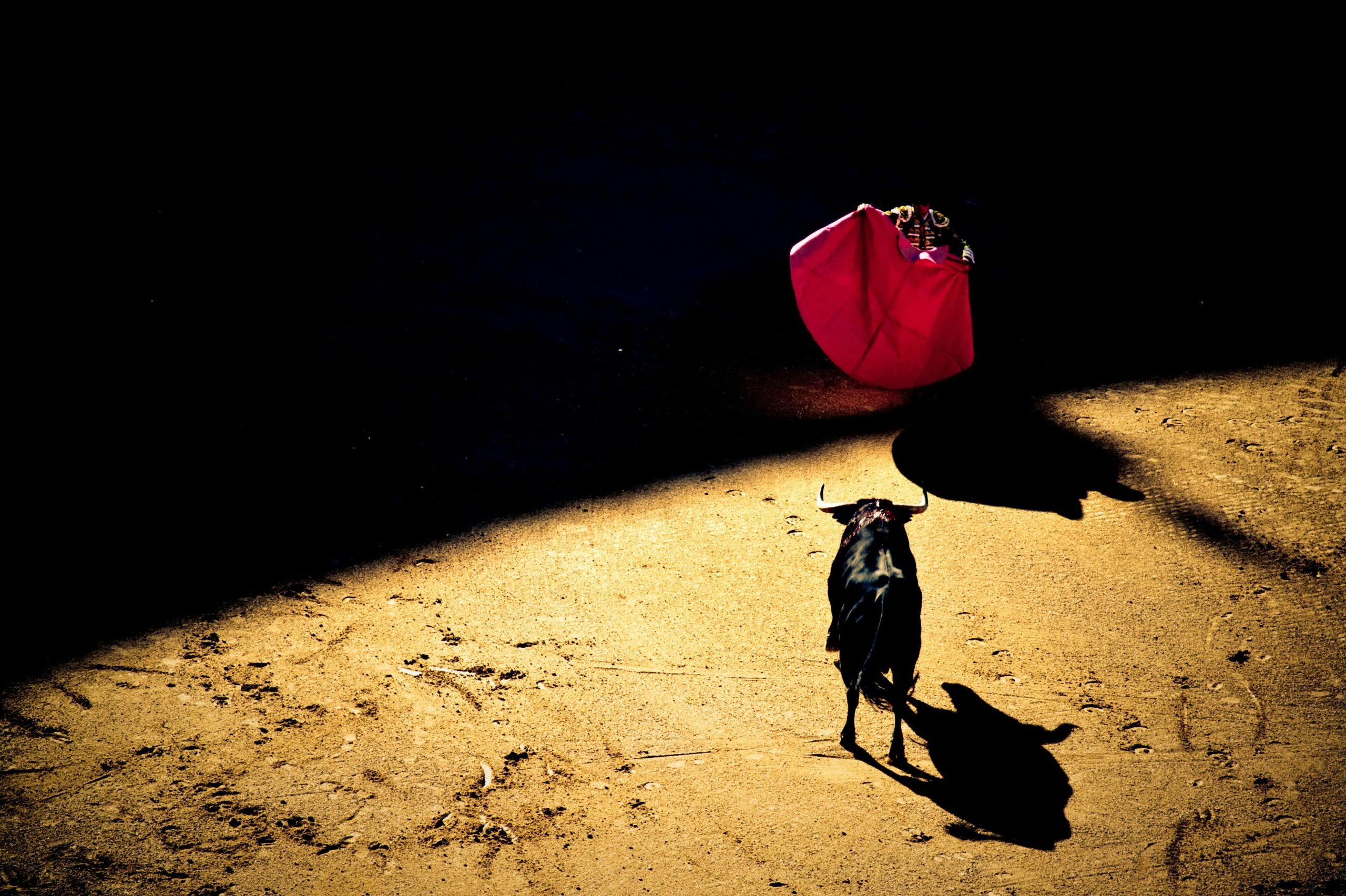
“I must stop thinking in clothes!” he exclaimed. “A bull wears no clothes. A bull is. I must think: skin. I must have new skin.”
Partly, Matt thought, the tragedy of Vlad was that he’d been born a few decades too early. These days, if you wanted a new kind of skin there were all sorts of resources and communities online. Agreed-upon, empowering taxonomies. You picked the animal you wanted to be, added the word kin to its name, and you were reborn. Matt wasn’t sure whether Vlad was aware of the existence of furries. He wasn’t about to tell him. Though a humble Oregon taxidermist, Vlad was a tortured genius type. If he found out other people were already doing what he was trying to do—even with much less commitment—it would go one of two ways. Either he’d laugh and laugh at the synthetic fur and moé optimism, or he’d go quietly up to his apartment above the shop and blow his brains out.
That night, Matt had dinner with a cosmetologist. She wore black latex gloves when she cut hair. It was part of the uniform. She had a throatpiece of an open pair of scissors. When it was Matt’s turn to talk about work he talked about Vlad, though not the project, whatever the project was. He listened to Vlad talk about it all day but wouldn’t know where to begin describing it. Hooves? New skin?
“Vlad’s really into animals,” Matt told her. “I’ve been kind of worried about him.” Which was the truth.
“Hmm. Does he have any friends?” asked the cosmetologist from the kitchen, grabbing them beers. Matt lay naked in her bed, which was also more or less in the kitchen.
“Sort of.”
One day after closing, Vlad had said, “Come, Young Flower! We go out.” In his suspensionless pickup they’d driven up the mountain to a campground filled with men. On the way, Vlad had explained how men have to work hard to retain friendships, especially as they get older. Old men who are alone die fast.
“And what,” asked the cosmetologist, “women get assigned magic besties?”
“I asked about that. Vlad’s theory is that women have spent millennia living under the overwhelming, institutionalized hatred of men. To survive, they’ve developed methods of underground friendmaking, the creation of alliances beneath and within a hostile power. Nowadays, with things sort of equalizing power-wise, men are discovering they don’t know such methods. They’ve never needed to develop them.”
The cosmetologist considered. “I’ll have to get back to you on whether I’m offended by that.”
In any case, Vlad, the men, and by extension Matt had spent the evening doing nothing at all. Some played horseshoes at first, but eventually all settled around the fire in silence, adding wood until it was right to stop adding it, and the hoop of their faces dimmed like cave paintings in the sputter of a people’s last dying torch.
“Oh and get this,” Matt told the cosmetologist. “When they all went home, they didn’t say goodbye. They said: Good luck with the night.”
“Weird,” she said. “Norway, right?”
“Bulgaria. It’s between three seas.”
“Oh, I was going to say something about long, dark winters. No accent on you, though.”
“I’m from California.”
“Oof. Money problems?”
She meant the reason for his being in town. Middle of nowhere. At first he had lied about why, but pretty quickly it turned out he couldn’t do it right, not about Ingrid. So he’d thought out a pared-down version for dates.
“Grief reasons,” he said. “Death in the family and I came up here because I couldn’t stand it. Staying down there, I mean.”
“Sounds bad,” said the cosmetologist. For a second she was stiff with discomfort but then she loosened and set her beer on the bedside table, which was her microwave. She put the sole of one bare foot against Matt’s chest. “Hi,” she said.
Vlad hit the books. This was the first time Matt had known him to conduct research, but one day bringing a refill he found him braced over a double-page diagram of a bull cut in half, its insides trussed, color-coded, and labeled. He turned the page. The next spread was dedicated to the matador, similarly labeled though his insides were not on display. The red cape was called the muleta. The costume was called traje de luces. Suit of lights. Without turning, Vlad spoke: “I think, Young Flower, I am arriving at some kind of idea.”
Matt paused. The few times Vlad had made a pronouncement like this, Matt had come in the next morning to find the taxidermist mute with misery because, once again, the latest unnamable idea had failed unnamably. He refused to say what had happened those nights—the days after hung hostile and burnt and quiet. Now, not for the first time, Matt wondered whether all this was a little too strange for him. The little shop in the woods, and inside a little man attempting something. He liked Vlad, he did. Criminal paycheck aside he liked the job, its nothingness and total disconnect from what he’d been doing before. But maybe it was time he found a real job at the resort like everyone else, or just moved farther north.
Before closing for the day, Vlad asked Matt to check on the crate in the utility closet. It was there like always, unpried, compact but long enough to accommodate the horns. Vlad had said that, before opening it, he wanted to be sure. That’s how he put it. Be sure.
“Looks fine,” Matt reported.
“Thank you, Young Flower. Now, go clean yourself up! You cannot appear before her so bedraggled!” Matt had told Vlad a little about his dates.
Now the taxidermist looked him in the eye. “Good luck with the night,” he said.
In fact, Matt did not have a date that night. Instead he took a walk. As he paused to browse the one-dollar carts outside the used bookstore, a woman pulled up like a hunting hound. She breathed loudly out her nose and looked Matt right in the eyes. “You were an emo kid,” she announced. “I can tell.”
He was wearing a band t-shirt. “Oh yeah?” he asked.
“They were my Myspace page song circa 2007.”
“Haha. I can just see your scene bangs and studded belt.”
“Oh, I still have that belt,” she said. “Wanna see?”
He guessed it had been a while for her because he got winded trying to keep up walking to her place. Downtown was rental shops and specialty gear stores beneath apartments and Airbnbs. All exploded with skiers in the winter, though he’d only been here long enough to catch the tail end of the previous season.
The woman said she worked for the resort as a ski lift technician. She was pretty but had strangely dated hair—shiny brown ringlets framing a noble forehead. She probably wouldn’t appreciate him calling her forehead noble, but that’s what it brought to mind for him: feudalism. Sorting her keyring before the door of her third-story walkup, her wrists trembled.
“I was a punk kid by the way,” Matt told her. “Not an emo kid.”
“Same difference.”
“No way!” he protested.
She turned the knob. The door opened and water gushed out. It sheeted over their shoes and down the steps, the stairwell echoing like a grotto at low tide.
“Oh, fuck you,” hissed the ski lift technician. “Oh, god damn you.”
While she rushed downstairs to get the super to shut off the main, Matt ran around her unfamiliar studio picking up objects that seemed both important and susceptible to water damage. A lot of things fell into both categories. The water was cold and she was gone a long time. It was not fun.
The super turned out to be supers—plural. Two sisters, maybe forties, maybe Swiss. They gave him a synchronized once-over. “With any luck he is a plumber,” one sang. Her accent made it sound like she was singing.
“Haha,” he said.
The sisters threw down towels, threw on soup, and hung the soaked area rug from the balcony rail. They made Matt lug up a sump from the basement while the ski lift technician let it all happen around her, looking embarrassed though Matt couldn’t tell in what direction. Then she began to cry. The sisters sat with her.
“Her mother recently died,” one sister explained, rubbing the ski lift technician’s back.
“My niece died last year,” Matt offered.
Both sisters gave him a look that informed him this had been the wrong thing to say, selfish and irrelevant, so he excused himself. He was disappointed, which was fine. The hot drink feeling of want from a stranger was still unpredictable to him. He was learning how many different ways that feeling could go over the course of a night.
The technician caught up with him on the landing. “Ugh,” she said, “I’m so sorry. Home improvement shit like this is so unsexy to me. But you seem really cool. Raincheck?”
He said, “Sure.”
A storm came up from the low altitudes overnight. Matt made his morning drive through pondgreen air, black pines thrashing above the old moraines. He was early; the front of the shop stood dark. The door though was unlocked, and when the bell sounded Vlad called out to him from the workshop.
“Young Flower. Matthew, my friend.”
A quaver to his voice.
“You okay, Vlad?”
“I am wonderful. But don’t come in. Before coming in, please pause.”
“Pause and do what?”
“Just pause.”
“I’m coming in.”
Vlad sat at his workbench, chest heaving, his skin candy red and his clothes inky with sweat. Coming around, Matt saw, hitched up on the stool’s rest bar, one scuffed cowboy boot and one polished hoof. The fur above the hoof curled and shone like a little boy’s tousled crown.
“Wow, Vlad. It looks real.”
“It is real,” Vlad gasped. “Touch it, Young Flower.”
Matt touched it. It was real. The heavy, split keratin dollop of the hoof. The angle of the pastern joint, a bull’s soundness, everything Vlad had spoken of. Lifting the fur there was no transition line, no place of change from his flesh to its. Blood pumped across and within. The hoof reeked.
Lifting the fur there was no transition line, no place of change from his flesh to its.
“First,” Vlad said, “coffee.”
Once Matt got him settled, Vlad admonished him through the mugsteam. “Do not be so surprised, Young Flower. I have been telling you this whole time. You did not believe, but it is the law of the universe. If for long enough nothing happens, something will happen. Empathy.”
“Entropy.”
“Well. In addition, I wished for it very hard.”
“You wished for it?”
“Yes. It required finding a place of agony. Within, I mean. This will be a problem for us, as I cannot remember how I reached that place. But that is for the future. For now my happiness is enormous.”
The rest of the day, Vlad lunged about heroically, humming to himself. He took stretches of hide and draped them over a pommel horse, then spread them on the floor and lay on top, arms crossed like the undead soon to rise. Meanwhile, his new hoof was real. No way around it. The hoof leg was longer than his human leg, and when he walked he bobbed up on it, then swung back down. Shuffle, click.
Matt sat at the workbench, nauseated. He wondered who he could call. As if he didn’t know. He’d never deleted his brother’s texts from his phone. Because Cooper wasn’t texting him anymore, the vitriol his brother sent after Matt disappeared had slid farther and farther down the screen, buried by texts from dates until Matt just didn’t see it anymore. A few weeks ago, Matt had met a law school hopeful for pasta at a pizza place. She’d talked about acceptance statistics the whole dinner and it had made Matt think of Coop for the first time in a while. His brother the veterinarian. Statistically, vet school was harder to get into than law school or even medical school. The only grad programs with nastier rejection rates were poetry programs, for whatever fucking reason.
The law school hopeful had been abuzz—not in a good way—with waiting for her news, due any day now. She kept kicking the toe of Matt’s boot under the table with the toe of hers. Right when he became sure it was intentional she sort of shuddered, stood, and, saying she didn’t feel so good, walked out the restaurant door and across its nightblack window to where she’d parked.
Vlad ordered in two huge blocks of polyurethane that took up most of the workshop. He spent three days carving mannequins out of them, one in his shape and one in the shape of a bull, starting with the chainsaw then switching to a kind of garrote, his face clamped between the huge, trapezoidal filters of an industrial respirator. He insisted Matt wear one too. Before calling it quits each day they vacuumed up the foam dust, then hit each other with the leaf blower. It made Vlad’s hair fly up and he laughed patting it down. “You rascal,” he said. “Good luck with the night.”
A week passed. The next Monday, Matt came in to find Vlad on the floor, gulping air, his body so hot the room had been made hot. Protruding from both legs of Vlad’s cargo shorts were two identical bull’s hooves.
Matt crouched over him, touched Vlad’s clammy forehead. A substance had pooled beneath. It smelled sweet.
“Jesus, Vlad.”
“I am very good,” Vlad said, then coughed for six minutes straight.
Matt helped him up to his apartment, which had thin, public school carpet but big windows full of pine fronds. Vlad had tidied since the last time Matt had been up here, a couple months ago to take out an old window AC unit. New books had been artfully arranged on the coffee table. While Vlad clopped into the kitchen for water, Matt opened An Illustrated History of Bullfighting to an impressionist painting of the moment of the kill: the bright, dartlike flags drooping from the haunch of the downed beast, the blood down it in melodramatic pink. In the middle ground, an attendant handed the fighter his weapon.
The feeling Matt got from this was bad.
“Hey Vlad?” he called. “Why a bull in the first place?”
Vlad emerged from the kitchen with, instead of water, a bottle of red and the stems of two glasses twined between his chemicalstained fingers. He and Matt sat at his small dining table.
“Hmm,” said Vlad, pouring. “Well, it is—well, bulls, they are single-minded. Yes? They are strong. A force. Their horns, like a crown, no? They are kings.”
“Except they’re chattel.”
“Yes, Young Flower!” Vlad exclaimed. “You are right, just so. What I say is too simple. A bull is king of nothing. He is in a pen. He is bred and then he is knocked on the head with a hammer. Do you know how much blood spills from the freshly slit throat of a stunned bull?”
“I guess not.”
“Magnitudes, Young Flower. Magnitudes.”
If Vlad had earned a second hoof, it meant he’d found his place of agony again. Matt wondered how he was doing it. Hurting himself maybe, physically or otherwise, then using the pain to dive down into some well or through some eye, past some membrane. Real magic probably worked like that. Stepping past a threshold, then fighting your way back with whatever you’d managed to plunder.
Vlad was beaming. He topped off both glasses. “What I am saying is the bull, even more than an animal, is a symbol. He is a dumb, sad brute and yet we see in this creature dignity? Strength? A bull has no strength. In no contest does the bull prevail. If it kills the fighter, all it earns is the next. And yet. We do see these things. Strength. Through the animal’s own oblivion, we see them.”
The apartment’s windows were old and set badly in their frames. Matt could hear the tree branches telling on each other. He got the bad feeling again.
Vlad sat back. “Ah, Young Flower. I want to be a bull because they are cool. That is all. And you? What do you think is cool?”
“Uh. Birds? Like, hawks?”
Vlad rolled his eyes. “Birds. Of course. You Americans. Hey, Young Flower? Watch this.”
Out in the empty parking lot, Vlad set his hooves into a sprinter’s starting position then erupted across the gravel, ungainly at first but then finding his rhythm and picking up so much speed Matt’s uncanny valley instinct pinged. When Vlad tried to turn at the lot’s end he couldn’t overcome his own momentum and, arms wheeling, he careened into the brush. After a second, his face poked back out like one of Peter Pan’s lost boys, except old.
The ski lift technician with the flooded apartment texted, asking for a re-do date. She suggested hiking. Matt remembered her crying over the sound of the sump pump, almost said no, then said yes. The afternoon of, she didn’t take him to any sort of trail but to the autumnbare slopes of the resort itself. There had been fearful talk in town that it wouldn’t snow at all the coming season. Scrabbling after her under the lonely lift lines, Matt theorized how badly being at her place of employment killed the mood. The answer didn’t matter. Matt didn’t go on dates for the mood.
She seemed anxious again. They talked while resting on a bluff, periodically cupped and uncupped by giant hands of mist. She talked about her job, how she liked the way it was high skill but low stakes. He defined the word amanuensis for her.
“Wow. Are you an artist too?” she asked.
“Not really. In a previous life I was an actor.”
“No lie?”
Immediately Matt wished he had lied. He usually did about the acting. But he was rooting for the technician, had been trying to encourage her, offer up something. By mistake he’d offered a true thing he did not want to talk about.
Meanwhile the technician waited.
He’d been born and raised in an unfamous part of LA’s sprawl, Claremont if she was interested. Mortifyingly, he fell in love with the movies. He insisted and whined and his parents had paid for theater magnet school, but neither of them were in the business so after that he’d had to get lucky. And he did. From an open call he was cast as Lancelot in an overly ambitious but visually stunning adaptation of The Once and Future King, which led to a lead role in a gender-swapped, eighties junkie neo-horror version of The Little Girl Who Lives Down the Lane. Indie darling, critically acclaimed. He got an agent. He was 19. He appeared in a handful of decent projects out of respected studios and was breaking into second- and third-round auditions for bigger things from hot directors. He was good.
And then 10 years passed. If he’d had a moment it was gone. His agent’s words. The few casting directors he did get in with said they were moving in a different direction, or that he was talented but, unfortunately, not handsome enough.
“Uh, you’re pretty handsome,” the ski lift technician said. “At least I think so.”
“Thanks. But there’s handsome and there’s movie handsome. And I’m more handsome now than I was then.”
Joshing him for vanity, she looked him up on her phone. Press tour shots and film GIFs.
“Oh dang,” she said. “You are more handsome.” Here she frowned, confused. “But wouldn’t that mean you’d have better luck now? Getting hired? Cast?”
He shrugged.
“Did you get tired of trying? Is that why you’re up here? Or did something big break your heart?”
Matt looked at her anew. “You’re good,” he admitted.
She grinned. “Let me show you something.”
They hiked up to where one of the lifts terminated. No one around. With a small red lever in a locked metal cabinet she fired it up. The cables shrieked, the hanging chairs began to move. They got on one together and descended along the angle of the mountain. With no snow, the lift supports and resort outbuildings looked furtive, like the surface protrusions of a vast, secret underground facility.
The ski lift technician touched his hand, but did not lean in. “Say it up here,” she told him, “if you can’t on the ground. The wind takes your words away, so it’s like you didn’t say them at all. Try it! I’ve banished tons of demons like this.”
Matt swallowed.
“Here, I’ll go first.” She cupped her hands around her mouth. He expected her to say something about her mom’s death but instead she shouted: “Margrith and Julia are nice but they’re killing me on rent! They’re bleeding me dry and I hate them!”
“There,” she said. “Now you.”
“It wasn’t even related to acting,” Matt said.
“That’s okay,” said the technician.
Matt looked down, trying to gauge the distance to the earth below. He swallowed so he could shout.
“My niece died!” he shouted. “Leukemia! I was there for the whole thing! I went with her and my brother and his wife to appointments and surgeries! But it just kept getting worse! She had a downward trend! My brother is a vet and it killed him to be so close to being able to understand and help professionally but not being able to! And she died!” Beside him the technician took her hands off the safety bar and pressed them to her legs. “And suddenly there was LA! And the idea of wading into it all again was so stupid I left! I had to! I left before Ingrid’s funeral and didn’t tell anyone! It’s the worst thing I’ve ever done but it was like I couldn’t see straight! My brother called and texted and I never answered! My phone felt like a bomb until he stopped! Now I’m here!”
He hated how the volume of his voice gave every sentence an exclamation point. The technician had lied: the wind hadn’t taken a single one of his words away. The lift brought them back to earth and in the vacant parking lot he suggested coffee at his place. She said maybe not. That night she texted to apologize. I have pretty severe issues with abandonment, she wrote. I get what you went through was hard, but I need to protect myself from people not strong enough to, you know, be there. Good luck with everything.
Amazing that you think you understand a single thing about me, he texted back.
After that, Matt went two weeks, then three, without going on another date. This wasn’t good or bad. Well at first it felt good, easy, then it felt bad. His life condensed more than he’d already made it to. He worked, then went home alone. Cooked something simple and watched a movie. Good luck with the night. He braced for Vlad’s next change.
Only it didn’t come. Two weeks, three—whatever Vlad had done before he seemed to be having trouble doing again. The taxidermist turned jokey, then brittle. At the shop, Matt didn’t know where to position himself relative to his dark cloud; if he stayed in front, Vlad seemed abandoned. If he hung out in the workshop, he had to witness Vlad abusing the mannequins. The man-shaped mannequin he covered in animal parts and orbited, telling it things in Bulgarian that could only be degrading. The bull mannequin stood away, faced into a corner.
“It is as I feared,” Vlad groaned.
Matt hesitated. “The agony problem?”
Vlad covered his face.
“I’ve been trying to understand,” Matt said. “What you did the first two times—”
“It is different,” Vlad snapped. “Every time different, every time harder. I am trying now to be two things. Not a bull and a man, but a symbol and a being. The symbol endures. The being ends.”
The being ends, thought Matt.
“The problem is this. I must wish for it, yes? I have wished for it. But what I have already, it is too much like I hoped it would be. The changing is too beautiful and I keep thinking how beautiful it is. I know it will eventually become familiar and less bright. All it will take is time. But ah, Young Flower, I hate to wait. A disgusting flaw, no?”
Before lunch Vlad would not look at his new legs. In the afternoons he stroked them carefully. He tried breathing meditations, following the recorded voice on an app he’d asked Matt to download onto his phone. When not meditating, Vlad breathed like his lungs owed him money. It was clear he wasn’t sleeping. Another week. Matt found himself wishing alongside Vlad.
“Do they hurt?” Matt asked him. “Your legs?”
“My hooves are wonderful,” Vlad said. “It is the rest of me that is in pain.”
Another week and Matt couldn’t stand it. His apartment, the shop, back to his apartment. This was not surprising to him. On the apps, he matched with a woman who worked for the Bureau of Land Management. He asked if that was like being a park ranger and she responded with a crying laughing emoji. Haha no I’m a clerk.
She invited him to dinner at her cabin and they ate on her amazing deck until a chill set in and she had to lend him a heavier coat. The sun went down. It always had and still did scare him, how quiet it got in this place after dark. The fairy lights she had strung tree to tree did not help but rather burned in invitation to whatever might be walking in the night. And Matt wondered: Where was the magic coming from? Here? The mountains above that sometimes fell? Or had Vlad brought it with him from his homeland between three seas? He was cold and afraid and begged off early to the clerk’s look of hurt confusion. The next day, he went in early for want of anything else to do.
Vlad slunk across the floor out into the shopfront about midmorning and sat with his back against the counter where Matt was standing. He made wet sounds into his elbow until Matt looked down at his boss. Vlad’s pale scalp at the part of the tough greywire hair, pulled away from his neck into milkmaid braids. Vlad had turned on the building heat for the winter and it was working overtime—they’d stripped down. Vlad wore a tank top and hazard-orange swim trunks, the fur of his hooves spiked with sweat.
“Will you stand there and do nothing, Young Flower?” whispered Vlad.
This question surprised Matt. Vlad had never asked for help before but more than that Matt was surprised at how angry the question made him. The past weeks had been frustrating, ugly even, but he’d never felt actually pissed off until this moment. I do not want to be here, Matt thought, but Vlad gazed up at him from the floor.
Vlad had never asked for help before but more than that Matt was surprised at how angry the question made him.
“What do you want me to do, Vlad?”
Vlad sniffed. “Tell me something bad.”
“Something bad.”
“Yes. I am too happy. As usual. Tell me I am never going to do it. Tell me it is hopeless.”
“It’s hopeless,” Matt tried.
Vlad flinched but then looked disappointed.
“It’s hopeless, Vlad,” Matt said again.
Vlad cocked his head. As if at something he detected in Matt’s voice. After a moment he licked his lips.
“Young Flower,” he said. “What do you say we make a night of it. Hm? The couch has its comforts, take it from me. Be here to see the night. Or what it could be. Lend your perspective. We can talk into the hours. Yes?”
Matt looked at Vlad. He looked at the clock. Not even noon. Something bad, he thought.
He started packing up. “Sorry,” he said. “I have a date. I was actually hoping you wouldn’t mind if I took off early. I have a few things to get ready. Have I told you about this girl? I like her a lot. She works for the Bureau of Land Management.”
Vlad closed his eyes. When he opened them he stood, stroking his braids haplessly. “Early?” the taxidermist said. “Oh well yes of course. Not as though things are happening here.”
“Thanks.” Matt grabbed his bag, pulled on his hat.
“A special lady this time, you are saying?”
“That’s right. I might be in love, honestly. Anyway I’ll tell you all about her tomorrow, okay? She’s beautiful. I can’t wait to see her.”
“Ah,” said Vlad.
He followed Matt to the doorway and was still there when Matt pulled out of the lot.
At home Matt slept. When he woke it was dark. The responsible thing to do for dinner was leftovers—his fridge was overflowing from ordering in the past month more than was probably morally correct. He couldn’t remember which were most recent. A few styrofoam lids opened to reveal mutated remains. There was a smell, actually. He got a trash bag from under the sink but had trouble opening it; in the light of his one lamp he couldn’t tell the difference between the bag’s inside and its outside. This reminded him of Vlad. Right about now he had to be hyperdense in the darkness of the shop, forgesteam spewing out of his mouth. Ever since Matt had told Vlad about his dates, talk had increased about the girls, the girls out there, was Matt seeing girls, what girls were they, and how many? “Ah you are abandoning me for the girls,” he’d say when Matt leaned through the workshop door at quitting time. “Well, good luck with the night I suppose.” To do Vlad the kindness of solving the agony problem he’d had to be cruel, but Matt wasn’t sure he’d done right. There was no telling how many more nights it would take.
He took out his phone, tapped to contacts, scrolled. His brother was listed as Brother Cooper, like a monk. As opposed to a veterinarian. After Matt had fled up here, the cruel texts his brother sent became, under the name, benedictions of a kind.
Cooper was a great veterinarian. He cared for the pets of stars. He had to know something. Matt sat with his thumb over the call icon. He wasn’t sure how he’d broach the subject, so he sat there trying to figure that out. Then his phone shook with an incoming call. Impossibly, it was his brother.
Matt answered on speaker. The connection was wide, hissy with the interference of every cell tower between here and Los Angeles. He heard the spin of ice in a glass.
“I am giving you a phone call,” Cooper said. He was drunk.
“This is really fucking weird,” Matt said after a second.
“Not a great start, bud.”
“No. I was—I was literally about to call you. Like my thumb was up. But then you called me.”
“Spooky,” Cooper allowed.
“Everything okay?”
“I found out where you’re living today,” Cooper said. “Finally. Francine told me. She brought Spanky in. Her blue-and-gold. That parrot’s fucking ancient. And dying, unfortunately. You remember Francine, right? You were in that movie together. The one set in the apartment building that crosses time like a ship, and the tenants listen to each other through the walls. At the end everything catches fire.”
“I remember,” Matt said. Over the line he heard the lap of water. “Out by the pool?”
“Yep. Just little old me.”
“How’s Lil?”
“Anyway Francine was like, is Matty still up there in the woods? She’s worried about you. Said I should give you a call. So. I’m calling.”
Matt imagined Cooper’s backyard. The bluelit pool and soulless monoculture grass. Cooper had kept it so carefully, wasted so much water and leeched so many poisons into the topsoil, so Ingrid would have a soft place to play. Matt hoped Coop and Lilly weren’t having marital problems. But of course they were. Their little girl had died in their arms.
“It’ll be a year in the spring,” Cooper said.
This was a fact. Nothing Matt could say to it. Last spring had been unseasonably cold in LA. Ingrid had wanted to go to the beach. Her lips had turned blue in the wind, then the rest of her had.
“You should come home,” Cooper said next.
This was not a fact. Not even close.
“What does that mean?” Matt asked.
“It means come home. You shouldn’t be up there. There’s nothing up there, man.”
“I guess I don’t know what you’re saying,” Matt said.
In LA, Cooper stood in anger. Matt heard the topple of his plastic chair.
“God dammit you little twerp,” he shouted. “I don’t forgive you, okay? You fucking selfish prick. You crumbled the minute we needed you the most. It was the three of us, plus her, the whole time, and then suddenly you were gone. I had to say her name in front of all those people, and Lilly was alone in the front row, and you—a few more days, you piece of shit? I would have driven you up there myself. But no. And tonight? I had to call you. That is fucking monstrous, man.”
“I know,” Matt said. “I swear I was about to call.”
“Shut up. Come home. I’m pissed. But come back to LA so I can be pissed at you in LA. You’re not special. You can be forgiven. Someday. You can stay in the office.”
Matt ran into his tiny bathroom. He was going to barf out of relief. He lifted the seat and bent but the relief stayed put, plugging. Eventually he managed to speak.
“Lilly might have something to say about that.”
“Oh Lilly will fucking hate it. But come and the two of you can have it out. Listen, your defense is that, yes you missed the funeral, but you were there for everything else. You came over, cleaned up Ingrid’s vomit, and 15 minutes later she couldn’t breathe because she was laughing so hard at some dumb shit you said. Tell Lilly that, then say you’re sorry. That’s all you need to do. Are you ready to say sorry?”
“I’m ready,” Matt said. He was.
“Good.”
“But Coop?”
“Yeah?”
“I crumbled when Ingrid stopped needing me. That’s what happened.”
For a long time Cooper didn’t say anything. Then he said, “Come home. You’re not special.” He hung up.
Matt didn’t wait to start packing. It was suddenly very funny to him how few things he owned. He was rolling one of his four t-shirts when he heard a crash outside. His apartment was on the first floor, with windows to the alleyway there. He opened one and poked his head out. Nothing other than a fallen trash can and a new bite to the breeze.
In the car, the radio talked about a big surprise snow on the way. Everyone had been worried but it was coming. Matt didn’t really listen. He hadn’t slept. He kept being surprised by the same realization. He’d thought Ingrid dying had clarified the world and what mattered in it but it hadn’t clarified shit. In fact it had hidden so much away.
He got to the shop. Vlad was in the front, making coffee. He was covered in mud. No, it was fur. A velvet shell of hide up his chest to the top of his throat. The hide looked warm and it suited Vlad in a way Matt would not have guessed.
Vlad held up a bristled hand. It was still a hand.
“Before you say a word, Young Flower, I want to say something to you. Thank you.”
“Vlad, I—”
“No. No. Whether you meant to or not, you have helped me. It is past. It is good. Thank you hugely.” Vlad stepped forward, gripped Matt’s shoulders. “More importantly Matthew, I am feeling you have something to tell me. Something joyful, yes? It is that you are leaving, no?” At Matt’s expression he said, “Oh it is obvious. You floated in here like a sunbeam. How happy for you! A new stage of your life.”
Matt explained. He felt he owed an explanation, which was why he’d come. About his life, about moving up here, Ingrid and Lily and his brother. But midway through Vlad disengaged, busying himself straightening a mount.
“That is wonderful, Young Flower,” Vlad said. “Do you leave now?”
“Early tomorrow, probably. After they clear the roads. There’s a storm.” This would break his lease but Matt didn’t care.
“Yes,” Vlad said. “A big one.”
“I’m sorry it’s so fast.”
“Oh do not, Matthew. Do not. There is much for you to do. Arrange your conveniences. One last croon upon your lady love. Ha!”
Matt laughed. “You’re using ‘croon’ wrong.”
“I will croon you upside the head. But how about this, Young Flower. Do one last favor for me. I have a package. Pick it up, return, and we’ll have a last drink. A good midday drink. I will toast you and you will toast me and we will say our farewells. What do you say?”
“I say great.”
“Wonderful. Meet me in the flat.”
The post office was 20 minutes there, 20 minutes back. Halfway, it began to snow. Ski families were appearing. The streets were suddenly packed with them, hybrid SUVs jockeying, every child with an iPad. There was a line at the post office. Waiting, Matt decided that during their drink he would only tell Vlad kind things, no matter how badly he begged. He thought about the word croon and opened the apps to message the few drinks he had lined up. One of them texted back, disappointed. The other two blocked him. All these dates. His new handsomeness had come on suddenly during the worst time of his life and felt like something distributed out to him by a system as compensation. Acting upon it felt like blooming. Like a televised Olympic feat he wouldn’t accomplish again. Glorious to be wanted, sure, but glory required the logistics of pain. Of being brusquely dismissed, of taking and being taken for granted. Of making concessions, of dehumanizing and being dehumanized in minor ways that weirdly he had not felt accumulate, though they must have. It was all a room he could step out of and thank god.
The postal worker retrieved two packages: a cardboard roll like for a poster and a longer, heavier, rectangular box. Back at the shop Matt parked in a thin blanket of snow on the gravel, climbed the stairs, and let himself into the apartment. “I come bearing gifts!” he called.
No answer. Outside the snow was turning heavy. Soft music played from a turntable by the small TV and a delicious smell wafted from a sauté pan simmering on the stove. An open bottle breathed on the counter. Vlad was not in the kitchen or the bedroom, nor the bathroom when Matt checked. There was only the music and Vlad’s low furniture, his weirdly chic European taste. He found Vlad’s phone facedown on the carpet by accidentally stepping on it.
To get to the shop he had to go downstairs and back outside, shifting the packages arm to arm. He shouldered through the front door and the bell jingled. Setting the packages on the counter, he went into the workshop.
“Vlad,” he called, “whatever’s cooking up there smells amazing.”
When he saw what was in the workshop he stopped. He turned around and, silently, returned to the shopfront.
The bull had not reacted hostilely to his presence or even seemed much aware of him. It stood at an oblique angle from the door, staring amicably ahead, chewing its cud, its incredible muscle mass lit into chiaroscuro by the harsh light of the workbench lamp. No evidence whatsoever of rampaging. The only indication of something amiss at all was the fluffs of industrial packaging strewn across the floor from the open utility closet. The man-shaped mannequin had had some of its facial features smoothed. It wore a shirt Matt could not find last night to pack.
Matt peeked back in. There it was. He noticed the horns for what they were: weapons, rigged to the neanderthal brow beneath a bowlcut tuft of hair. The whippy tail and the eyes, emotionless yet in their whites a madness irrespective. Matt stepped back, wondering what exactly had, in the end, made Vlad sad enough.
He considered calling animal control. He considered calling Cooper. He had forgotten to mention Vlad last night when they’d talked. He decided against both. The packages lay before him on the counter. After last night’s call, Matt had decided to be a person who kept his promises. The cardboard tube contained a cape the size of an overgenerous apron, red. From the longer box he pulled a narrow and wicked sword, the hilt one-handed, a combination T and crescent guard. Matt held both objects in the thin storm light. He flowed the cape this way and that, getting a feel. Danced back, then forth. Matadors were not killed in the sacred arena but gored. A final test felt expected and fair, all things considered. Behind the door the bull sighed deeply and the sound was his name.
Sometimes, long term friendships reach a moment of reckoning. I’m not talking about your work friends, or that roommate you swore to keep in touch with but never found the time. I’m talking about your chosen family. The people you thought would never leave you. When they do—or you do—something big shatters inside. Maybe this is because neither of you wants to hear what the other has to say—but don’t we count on our friends for absolute honesty more than our lovers?
The intense intimacy of friendship is having a moment in contemporary fiction. But this is only the latest wave in a long literary tradition. Whether it’s the biological sisters of Jane Austen, the soul sisters of Toni Morrison’s Sula, or Elena Ferrante’s Neapolitan Quartet, a fraught, essential friendship completes the two main characters. When things aren’t right between them, or even worse, if one of them is gone for good, the other moves through life with a phantom limb.
My novel,Talking to the Wolf, centers the profound effect of a friend breakup on four women, in tandem with the accidental death of one of the group. The women in my novel are completely undone by this unexpected loss. The pain of the breakup is compounded by the fact that there will never be a chance to make things right. Each of them—including the ghost—wrestles with the loyalty and turmoil of their shifting friendships as they make their way through a snowbound New York City to their 35th high school reunion. The primacy of their feelings toward each other affects every aspect of their lives across careers, thwarted ambitions, and romantic relationships.
The “marriage plot” has taken a very long time to die. There’s a powerful cultural mythology around that elusive partner who is both your best friend and your lover—even when those roles are often incompatible. But a friend divorce can feel more painful than the end of a bad marriage. After all, your friends were there to help you tape together your reckless, impossible heart.
The following books know this well. They span decades and styles, coming-of-age, death, ambition, success and failure. All of them explore the complicated, private heartbreak of losing a friend.
This novel is haunted by a glamorous mother who became a B-movie horror film star. What a great premise! The story is told from three points of view: the mother, her insecure, adolescent daughter, Szu—a social outcast at her school in Singapore—and Circe, the classmate who appears to be a fellow outcast despite her wealth and beauty. Szu’s distant, cruel mother and her Auntie now scrape by as mediums (though their psychic gifts are questionable, according to Szu). Circe becomes Szu’s “best friend” for better and worse. The novel has a gothic horror sensibility that echoes the campy film that made Szu’s mother famous, but the teenage friendship, with its complex cocktail of loyalty and betrayal, is utterly real.
Goodbye Tsugumi by Banana Yoshimoto, translated by Michael Emmerich
Yoshimoto has an eye and ear for language that holds us with exquisite simplicity—like a ballet dancer, her words land without a sound. The story follows the close bond between two cousins/best friends in a small coastal Japanese town, while death lingers just offstage. Tsugumi has had a mysterious illness since childhood, but her frail body burns with rebellion. Using rude honesty as her weapon, she shocks and charms her family, especially her cousin, who tells the story of this last summer in their late teens; they both know something is about to change forever.
The Grammarians is a word lovers’ book. In it, a pair of identical twin sisters not only have their own language—they share an obsession with language itself. Precocious American children of the late 20th century, the dictionary is their favorite toy. The novel explores the tensions, envy, and loyalties that hold these two together, just as it splits them apart. The semiotics of words shape both of their lives, becoming the lens through which they see the world and each other. A tale of two sisters.
This novel gripped me from the start. When three friends develop a highly successful video game in college, a love triangle plays out. Yes, two of them fall in love, but their story is more about the intensity of friendship than romantic love. The cyber world serves as a mirror to the real-life bonds that are changed forever by the price of success and adulthood. I’m not a gamer, but I was utterly compelled by this novel, which is really about the games played between friends and lovers.
In this memoir, Ann Patchetttells the story of her highly literary friendship with the writer Lucy Grealy, who died in 2002. The reader follows Patchett and Grealy from their graduate school days through their later careers as successful writers. They were opposites in many ways—Lucy was a luminescent poet, the life of the party, and a fragile survivor of childhood cancer, while Ann describes herself as more of a workhorse writer, the stalwart best friend who saw Lucy through her struggles with addiction and repeated surgeries. Patchett both adores and is exhausted by her crucial, talented, difficult friend. At the heart of this book is the urgency and ambition of two young artists. Who is Truth and who is Beauty? You can make up your own mind about that.
In this novel, “the wilderness” refers to the wilds of adulthood. How do you get there and what does it mean for your friendships along the way? This coming-of-age in your 20s story follows a group of four young Black women split between New York and Los Angeles, whose cities and backgrounds define their friendships and selves. Spanning two decades, from 2000 to 2020, Flournoy effortlessly time jumps between years and narrators as their conflicts, personal histories, and deep loyalties reveal what they really think about each other. Even as they struggle with expectations and societal judgements, they refuse—or are unable to—leave each other behind.
Sula may be the “mother” of all contemporary female friendship novels. Even if you haven’t read this since high school, Sula remains a literary cornerstone, speaking to the different parts of us that emerge at various stages of life. There are many entry points—political, sexual, racial, social—but the center of gravity is the friendship between rebellious, bohemian Sula, and her childhood best friend, the more conventional Nel. Sula is both the ultimate outsider and insider of their multigenerational community in Ohio. Although she and Nel swear to share everything as children, Sula never bows to conventional social mores. Secrets and betrayals emerge when Sula returns to town as an adult. But Nel, and the town itself, are not complete without Sula’s agonizing and disruptive life force.
We’d been driving in silence for some time. Nothing was wrong—nothing we could point to. It was early autumn. The larch trees had begun to yellow, and there was new snow in the mountains. We drove with the top down and the heat on high. The cold air and artificial heat struggled for power—one moment hot, the next cold.
We were on one of our Sunday drives. There was no destination. We’d gone south on 93, out of Missoula, down the spine between the Bitterroot and Sapphire Mountains. As usual, Max drove and I sat passenger.
He was in a mood, as he often was. Too much Reddit and ragebait, the news was too bleak, the job too jobby. It was an existential grumpiness. He drove to escape it. I would have liked to stay home and take up some unperceived space in our one-bedroom apartment, but I joined him for the drive. If he had to escape, I wasn’t going to be left behind.
I was in charge of music, and the music I chose had the big job of speaking for us. I played a band I knew he liked—Counting Crows. One of his favorites. It was worth my suffering if the music cheered him up. His lips began to move along to the lyrics. Do you see yourself in me? We’re such crazy babies, little monkey. I let my hand rest open near the console . . . God, we’re so fucked up, you and me . . . but he didn’t take it in his own, as he sometimes would.
Just ahead there was a sign denoting river access. He asked if I wanted to check it out, and I agreed. The access road was steep, unpaved, and knuckled with rocks and roots. We parked the car and walked to the riverbank.
By now, the sun was a narrow line of light on the river’s face. Clouds gathered heavily above us. The bright summer days were over. It was autumn, and soon it’d be winter. In the winter everything would feel forever long and gray. We’d been together for less than a year, so each season was our first. Did that also mean the summer of our romance was over? That we were entering the long, gray winter of disenchantment? I had the sense that the seasons had to be gotten through. That it proved something to have fought to the next one. Already, we’d put so much fight into our relationship, both of us resisting his suspicion that he “might not be cut out for domestic life,” that he “couldn’t hack it.” The thought that he was losing interest in our life and might soon go in search of another exhausted me—perhaps even more than the relationship itself.
No. We would trudge on. Together in his bug-eyed ’91 Miata convertible, our hair (equally long, his a little more lush) twisting in the Montana valley wind, soundtracked by Counting Crows, pointed away from whatever it was that chased him. I was determined. If we stayed together, at least then we wouldn’t have to trudge alone.
We removed our boots and socks, and rolled up our pant legs. I followed him in. The water came from a glacier, and was starting its return to ice. It closed tight around my skin. I felt my bones. I felt my blood. Then I felt nothing.
He ran ahead, balancing on river rocks and running across logs without looking back. Even from a distance, I could tell his mood was lifting. He moved loosely and with confidence as the space between us widened. I took a step, and a rock turned underfoot. I always stepped on the wrong rocks. I caught myself, stabilized, and pulled in a sharp breath.
“How can you go that fast,” I yelled, laughing. I was scared. “It’s so fucking cold.”
He turned back to look at me, his face full of boyish glee. He cracked a huge big-kid grin, and then theatrically adjusted his expression to one of pity and adoration. He shoved his lower lip into a pout.
“Oh, sweetie,”—when he called me sweetie, it was always with the same sweet voice. Oversweet, a voice we used alone together—“Is it too cold?”
“Kinda,” I said. Why was I also speaking in the sweetie voice?
It was too cold, not kinda too cold. But I didn’t want to ruin the moment, neither his nor ours. Cautiously, I continued. He watched me take a few steps, and then, satisfied that I’d be fine, he ran on.
“I grew up on the water, baby,” he yelled over his shoulder. “I’m a river man.”
I tried to find his source of vigor. Behind him the clouds broke down and fell back into the sunset. Against that distant light, he spread his arms for balance and ran across a fallen tree. I watched his silhouette and knew I would see this image when I thought of him, sometime in the future: a shadow balanced against the sunset. I was breathless but I fought the current, feeling the river close in around me. Keep up, keep up. This felt important, my ability to keep up. The sun slid down. I knew that if I stopped paying attention for even a moment, I would trip.
When I reached him, his face was full of abundance and gratitude. I’d been able to keep up, and this meant something, it was important. He kissed me.
I was determined. If we stayed together, at least then we wouldn’t have to trudge alone.
When I moved to Missoula, I was told I had to learn how to fly fish. There was “good water” five minutes in any direction. But I had little interest in the sport. It looked a lot like standing around. There were other things to do, things I already loved to do. Rocks to climb in Kootenai Canyon and Lolo Pass, horses to ride across the hills of Pattee Canyon, mountains to hike in the Rattlesnake Wilderness. Plus also a job—the reason I’d moved out there—working on a graduate degree and teaching undergrads. It was the same reason Max had moved there, and it was in that context that we met, became friends, and then slowly, intensely, fell in love.
Max was a fly fisher. In the beginning, when we could barely spend a moment apart, the necessary separation that fishing provided was romantic. He fished, I did what I wanted to do, and then we found one another—tired, windswept, desperate for each other.
But now we were starting to run out of ways to spend time together. I didn’t want to fly fish. But I loved him, and he loved to fly fish. So I decided to learn. I wanted to figure out why he loved it, what he loved about it. Or perhaps I wanted to associate myself with this thing he loved, in order to be closer to him—closer to his love. In order to be proximal to the object of his love.
As soon as I told him that I wanted to learn, I knew he’d been waiting for me to ask.
“You don’t really want to come fishing with me,” he said.
“I do,” I insisted. “You’ve never asked.”
He looked at me seriously, much more seriously than when I’d agreed to move in with him a few months prior, or when we’d nearly taken the highway exit for a Las Vegas chapel. His face—broad, strong-jawed and suntanned—was grave. He took a deep breath, and looked me in the eyes.
“Will you go fishing with me?” he asked.
“Yes.”
Everything took on a new shine as my “yes” landed between us. He grinned, almost absurdly joyful. His cheeks rippled from the hugeness of his smile, and his blue eyes filled with childlike delight.
His Miata was in the shop, but he didn’t want to put off our first day of fishing. There was a sense of urgency. Maybe he feared I’d change my mind. That night, he rented a truck for next-day pickup and purchased my fishing license online. He printed the license and carefully cut it out, bringing the paper very close to his face while he did. His eyes went a little crossed. When Max was invested, he performed every action with intense focus. He slipped my license into his wallet, behind his own. We went to bed early and slept perfectly. All night we held one another, never too hot or too cold.
The next morning, we woke in the dark. He was tender and careful with me, like the morning after a fight. I opened the front door to feel the air. It was cold. Streetlamps shone in our alley, and beyond the mountains, the first flat blue light stained the sky. The grass was tipped in thin frost. I ducked back into our house and told him it was cold. A little whine of hope started up in the back of my head: Maybe we could stay home.
“Sweetie,” he said in his sweetie voice, wrapping me in an embrace, “I won’t let you get cold.”
He chose our outfits. A technical fleece for me, and for him, a red hoodie and a yellow baseball cap. Because his chest waders were leaky and I had none, both of us wore duck pants. His river shoes were old tight-laced Stan Smiths that smelled like hell from getting wet, drying out, and getting wet again. I had Chacos.
He called us a cab and paid for the rental. He was taking care of everything, like a real first date. He’d decided to take me to his favorite place out past Lolo on the Bitterroot. I’d been expecting a long drive, but we arrived in just over half an hour. This unnerved me. Often he was gone fishing for full days, and whenever he was, he felt a great distance away. Now I understood that sometimes he was only a half hour from home.
We made it to the riverbank by half past nine. The sky was mottled blue and white. I didn’t carry anything except my backpack with our sandwiches, sunscreen, and water bottles. He had the fishing rod and the net, which was slung over his back. Without hesitation, he stepped into the water and walked until it was up to his knees. Then he stopped and turned toward me, smiling, and shouted over the current, “Come on in, baby! Water’s nice!”
The river was a shock when I first entered, and it felt wrong to let my pants soak up the water and gain weight. They tractioned down on my hips. I waded to him, the bones in my feet groaning in the cold. He gave me a huge, perfect kiss.
“Let’s keep going a little bit. There’s a fork up here where I’ve had some luck.”
We walked together upstream. The river water was dark green and glossy toward the central channel, where it was deep, and a translucent yellow toward the shallow edges. Glossy green trees reflected onto the glossy green river, and their reflected spines shimmered in the current. The wetness traveled up the fabric of my pants and suctioned against my legs. Ahead of us was a funnel of blue sky, wedged between the treed hills.
After 15 minutes, we stopped at the fork in the river.
“We’re gunna stand here,” he motioned to the crotch between one leg of water and the other. “And cast where the waters meet.”
He stared into his little plastic fly box, trying to decide what fly to start with.
“Look around, baby,” he said. “What do you see?”
What did I see? I saw everything: I saw a bridge, I saw light on every dimple in the water’s face, I saw no people except the person I loved. I stared at him, while he peered up into the sky, full of pinlike insects. They darted around, sometimes landing in tiny rippled pools on the river. He motioned for me to lean closer.
“That’s our guy,” he whispered, pointing to a speck of wings on the water. “The trout are coming up like crazy for him. See?”
Now that he said it, I saw the occasional burps that disturbed the still line of water. He thumbed through his box and pinched at a tiny fly. Holding it up to the light, he showed it to me.
“What do you think?”
“Seems probable,” I said.
He got to work securing the fly. I watched as he wet it in his mouth and strung it, his hands deceptively nimble. How did he do it, with big hands like his? He worked the line through a loop of wire, pulling gingerly, staring very closely at his task, eyes crossing. The only way to say it was that he tied the fly with love. He tied it with care and devotion. Using a tool like a nail clipper, he clipped off the excess tail.
Once he got the fly threaded, he positioned his body so that he was shadowless. You had to be sure that no movement you made above was visible below, he told me. He asked if I wanted to give it the first go, but I declined. I wanted to watch him fish, I said, for research purposes.
“Okay, baby,” he said. “Then come stand over here.”
He motioned to his left side.
“Always stand on my left so you don’t get a hook to the head on my back cast.”
He began, first slowly and then with speed, letting out a little line. Then he pulled the line up and danced it back and forth, drawing loops against the sky. He followed the motion forward, as if he were hesitant to give it away. The fly landed gently in the water. It floated down the current. We were still, watching it float. I could see that he made fine adjustments in order to reduce his impact on the fly’s natural movement, or to give it some subtle signs of animation. When he ran out of line, he whipped the fly out of the water. The nylon caught light as he flung it back, and water drew off the line and skipped in the white sun. Then he started over. He pulled the line, slapped it down, and watched it glide like a snake in the water. He went a few more times and caught nothing. Then it was my turn.
I tried to follow the fly, but all I could see were sparkles of light. I began to shiver.
“Hold it like this,” he said, taking my hand in his and wrapping it around the handle. I resisted making a quip about holding his rod. He was very serious. He loosened my forefinger from the grip and placed that, like the barrel of a gun, down the rod. Then he planted my thumb on top of the handle. “Like you’re pointing your thumb right where you want the fly to land.”
He took the rod and he stood behind me.
He stayed where he was, behind me, with his hands on my hands on the rod, and showed me how to follow the trail of a fish.
“Go along with the current,” he said, “like you’re just a little fly who landed on the water . . . you’re being carried along by the current, yes, good . . . and you can make a little flick now and then because you’re a bug and you’re alive. Now start to let out just a little line, yes, gently, not too much . . . .”
I leaned forward, trying to follow all the way to the end of my range, as he’d done. With his help, I pulled the line down with my nondominant hand, ripping the end out of the water. The motion looked visceral, medical, like a burst stitch.
“Don’t just give it up, honey, you have to keep a handle on its backward pull, right, and just give and take the line, yes, that’s it baby,” he said, guiding my hand and controlling the motion. I had little or no role in our performance—it was almost as if he were talking to himself.
After he was satisfied enough with my form, he let me do it on my own. I was in a pleasant mood. I’d stopped feeling the cold and was enjoying the novelty of standing in a river. But after about four rounds, as the fly traveled down the seam once more, he gasped, “That’s a trout! Set the hook, baby! Get him!”
“How?” I yelled, frantic.
An intense wash of dread came over me. There was something out there, something on my hook. Maybe it would get away. Would he be disappointed if it did? So I should try to get it, though I didn’t really want it? Then he was behind me again, hands on my hands, and he jerked the rod up deftly. There was tension on the line. I looked back at him for reassurance, but he was staring straight ahead. His face was jubilant and focused. We were fighting, I realized. We were engaged in a very subtle war.
“Hold it up, like this, yes, don’t let go,” he said. We stayed there. He eased the pressure toward us. Removing one hand from mine and putting it on the crank, he said, “Now, can you let go with your left hand and start to reel with me?”
We reeled. In a moment the pressure lightened dramatically. Then I saw the trout. She didn’t seem to be resisting, at least not anymore. Max reached in and snatched her from the water with bare hands. What a beauty, he said, look at this, have you ever, you caught this, baby, look at this beautiful fish you caught. He told me to get the net off his back and I did. He gently lowered the fish into the net and then lowered the whole bundle into the water so the trout could recline there as we observed her.
Beneath her jaw was a deep red print of color. Her eyes were hollow black, with a ring of white around them as if they were glowing. She was freckled all over, and her freckles were black with white edges, like her eyes. The green fishing line pulled at her mouth. Max reached into the net and removed the hook. Then he lifted her.
Beads of water stood on his hands and cascaded off her shimmering flanks. He held her body knowingly, firmly, but with respect.
“Get a photo!”
I dried my hands and took a picture. In it, he didn’t smile, but stared with intensity at the fish. Then he hurriedly lowered her back into the net and gave her an intermission in the water. Now it was my turn to get a picture with our catch.
I bent, grasped her, and straightened. We had only a moment of stillness before she sensed my lack of control and slipped wetly from my palms. I laughed, and then heard the violent slap of her body on the water and flinched. She flashed away. I could see Max was disappointed. We’ll work on a gentle release, he said, don’t worry. He showed me my photographs. The first was as expected, my hands clasped around the trout’s body. In the second, there was air where the trout had been, a ghost of her belly between my hands, and she was mid-flight, her tail flexed in effort.
“You caught that,” he said. He prodded me lovingly in the chest. “You caught that, sweetie.”
But he’d caught it. Actually, I wanted to make a point of that—I hadn’t caught the fish, it wasn’t me, it was him. It was his eye that saw the fly go down, his hand on the rod, ripping us up to set the hook. Though I knew he was bestowing an honor when he insisted that I’d caught this fish, it felt, as he said it, like an accusation.
The first fish is terrifying because if there isn’t another, it’s the only one you got and now it’s gone. It was only after his second fish that he began to smile. And the second fish established the possibility of a third; the third a longing for a fourth. It went on like that for hours. My bones ached and my stomach growled. I remembered our sandwiches and wondered when he’d think of food. I fantasized about a shower, dry clothes, the warmth of our bed. When it was my turn to fish, I scanned the surface of the water. I tried to follow the fly, but all I could see were sparkles of light. I began to shiver. He noticed and he pressed a thumb against my lips, which he said were blue. He gave me his sweatshirt. The clouds were bearing down on the sun, and only the most distant reach of river was lit, shining, beaconlike. I longed for that distant reach. Every step I took was a fight.
“Honey,” I said, shyly, “can we go soon?”
He looked at me, surprised.
“Yes! Of course we can go, we can leave whenever you want,” he said. Then he thought a moment. “There’s just one more hole I want you to see.”
We walked 10 minutes and stopped at the bottom of a cliff. He examined the sky and the surface of the water, and chose a new fly to tie on. On his first cast, he caught a trout. I thanked the trout for her expedience, and began to look for an easy exit from the water. He released her, whispering see you later as he let her go.
Then he stood, dropped the fly into the water again, and began to arch the line back for another cast.
So, I thought. It would never end. His hunt would keep going, with or without me.
The sky was all gray now, crinkling like the current, and he was a small man out in a big river. I noticed more yellow larches than I’d seen at first.
“I’m getting out,” I said. “You don’t have to, I can wait in the truck.”
He looked back at me and pouted. “Oh, sweetie,” he said, in his sweetie voice. “I’m done, I promise.”
He told me to take the scree path up to the bridge, and we could follow the road back to the parking lot. I waded out of the water alone. He was right behind me, he said.
Scrambling up the scree was humiliating. Each step I took, the rocks gave beneath me. I moved slowly and low to the ground. My hands and knees, wet from the river, were now crusted in dirt. At the top of the hill, I stepped onto the bridge and walked to the middle. I was wet, cold, and I stood on a beautiful arching bridge that overlooked the Bitterroot. I watched him down below. He was right there, but felt far away. The mountains were black now, the river a reflective black, and the river rocks whitely piled in a path to me while the river blackly flowed away. As the dark descended, his casting became desperate. He fought time as I waited for him up above. I knew he could feel me watching.
The green neon line rears back like a whip. Then it flicks forward, floats on the air, and lands imperceptibly on the river’s face. He watches the invisible lure, following its invisible path. I watch what he watches, I try to see. A great rock wall takes up all the sunlight. There’s a log down at the edge of the water. We stare at its black belly. Now the invisible thing travels through the log’s shadow. In that blackness, we’ll have our best chance. I catch sight of the fly, get cocky, and then lose it again. He never loses it. He sees it the whole time, while I strain my eyes, scanning the surface of the water. I take a step forward. Silt swirls around my wadered legs, disturbing our camouflage. He glances over at me, and I notice the frustration on his face before he can control it. We wait for the silt to settle. He casts again.
The winter was long, and the Clark Fork turned into a solid serpent of ice. Without rivers to move him, Max took to the highways. He drove for hours in any direction. The destination didn’t matter. It was the movement he sought. Our home was too small, the walls were too solid. He felt trapped. He was beginning to get the old itch, he told me. The need to move. He wanted to go back east. No big deal, I said, we’d go back east. But he wasn’t sure he could be depended on. He was afraid to make any promises. What if he couldn’t find a job? What if he didn’t want to find one? We’d both go east, but maybe it’d be better if I made my plans without him, he said. We’d stay together, of course, but things would be better if the pressure was off.
I wasn’t sure. I had a feeling that the pressure was the only constant we had left.
I watched him work, his hands bloodied, the fish’s silk pink insides exposed.
One night my mom texted me. She said there were predictions that the Northern Lights might be visible from Montana. I told Max, and he brightened. This gave us a purpose. We would find the Northern Lights, it was settled. We would find them, and when we did, they would tell us something.
We drove for hours, farmland on both sides of the road. Because he was driving, my job was finding the Northern Lights for us. If I could find them, they might say the things I knew he’d like me to say without having to say them.
I looked for greens, pinks, yellows. I squinted in determination, sometimes gasped, is that it? Over there . . . ? But the sky was black.
After a couple hours, we abandoned our mission and began to head back to town. As the modest skyline of Missoula came into view, he put his hand on mine.
“Do you want to tell your mom we found the Northern Lights?” he asked.
On his birthday we had a fight about our future and then went fishing. I didn’t want to fish, but I didn’t want him to be alone to think about our fight. If he thought of the fight alone, then he thought of the future alone.
Because it was a special day, we drove to a faraway spot. It was April. The air was cold, and I knew the water would be colder. In the nudity of early spring, the place seemed tangled and devoid of color. Leafless trees reached with witchy knuckled fingers.
I’d never been here before. He led me through impossible brambles and trailless woods. We bushwhacked, anemic branches snapping against us, until we reached the riverbank. Logs had fallen in a grid over the water. We had to cross them. Max ran without trouble, but I couldn’t stop imagining slipping off the side, a leg going down the crevasse. When Max wasn’t looking, I got on my hands and knees and inched my way across.
And then we were in the river. The speed and slowness of it, the absolute solitude of it. The only sounds were distant April birds, the chime of water turning stones. The glacial snow was melting, so the river was high and opaque. We’d made it through the winter. This was our spring.
We stayed the whole day. For our final location, we waded down to a pebbled beach. The sky was pink black in the setting sun. Then the sun set and it was just black. I sat on the beach and watched him. The moon rose bright white. He fished in its beam.
There was something depressing about the undulations of these days. His sharp hot joy when he caught the largest rainbow he’d ever caught. The cold white of him in the moonlight as he stood there, frozen in the river, imprisoned by the possibility of another catch, casting spells against the sky with his silver line, whipping it back and forth as if cursed.
He was agitated and restless, like a trapped animal. I wondered whether he felt trapped by his fixation, or trapped by my gaze. Sometimes it seemed as though he wanted me to leave him there alone. But why did he invite me? Maybe he wanted me to see this—the shame, the pride, the determination. He was trying to tell me something without having to say it out loud. It was something he knew I needed him to say.
On a gray day in late spring, an existential grumpiness befell me. Max asked me if I wanted to join him fishing, but I didn’t.
I was pleased, a little guiltily, to find his absence left me feeling light. As soon as he drove away, my mood began to shift.
When he returned a few hours later, I was feeling more like myself. The sun had come out, and I’d gone for a hike on the mountain behind our house. Now I sat on the couch, unlacing my boots. He stood in the doorway.
“I have something for you, sweetie,” he said. He didn’t say this in his sweetie voice, but instead, carefully, gently, like a grown-up.
He brought a hand out from behind his back. It was his down jacket, bundled up and tied into a knot. He placed the bundle on the kitchen island and began to untie it. I came and stood beside him. Folding back the panels of the jacket, I saw what was inside. A beautiful, good-sized rainbow trout. I gasped.
“I thought you weren’t allowed to keep them?” I asked.
“Technically you can keep a few. But it’s not open season, so I had to sneak this one out.”
He scrupulously prepared the fish on our wooden cutting board. The deboning was a delicate job, but he was thorough. I watched him work, his hands bloodied, the fish’s silk pink insides exposed. He cooked it on the stovetop in butter and we ate the meat, unseasoned, at our little kitchen table.
When the fishing got bad in the early summer, he packed all his belongings into his Miata and left. The fishing getting bad and him leaving weren’t directly correlated, but they kind of were. There was no longer anything in this life to hold his attention.
After he left I fished one last time, to prove I could. My friend’s boyfriend was a guide, and the three of us went out on a boat. They took me to an area you could only float, a place Max had always wanted to go.
We explored narrow stretches of the river. The water was low and warm. I didn’t catch one fish. I didn’t care. Now that Max wasn’t here, the absence of a catch didn’t mean as much. I’d been “skunked,” my friends told me. It meant that we fished all day and caught nothing. In the shy heat of early summer, we took off our shirts and swam in the river.
I couldn’t see it then, through the shock of being dropped back into the real world, hurt but whole. But later I understood that I’d held on to him because I was afraid to let go—not because I thought I had the real thing. I’d fought so hard. To let go didn’t feel like freedom; it felt like defeat. The idea of starting that fight all over again, with someone new, scared me.
At the end of the day, my friend and I waited in the drift boat while her boyfriend brought the truck to the ramp. We sat together in silence, tipping in a still pool. White river rocks, warm brown water, a blue jay in flight, dark green trees. The river, a taut cable of light, pointed to the distant heap of Bitterroot Mountains. I wasn’t really here to fish, but if I’d never asked to fish, I wouldn’t have this moment. Deception leads us to beautiful places. Why does it look less beautiful when we realize we were deceived to get there?
Watching Max on our days in the river, I learned the art of a respectful release. He reached into the trout’s gaping mouth and freed what he had caught, as if he were her savior rather than her hunter. As he held her facing upstream, she seemed to visibly revive, her fins swishing. She gulped, gathering strength. Then he opened his hold so gently it was as if he never had a hold at all, and she swam away. She slipped like a silk ribbon through the water.
I imagined what she must have felt when she was released. Some kind of relief. The relief experienced after having come to the surface to feed, only to be suddenly pulled by the lip toward an unimaginable fate of waterlessness. She fought, was caught, and was let go. She swam away, still hungry, but now suspicious of her own instincts, wondering, if fish can wonder, What happened back there? Now can I eat, or will it happen again? This had to be a complicated kind of relief—if fish feel relief at all.
Catch-and-release is considered the most sustainable fishing practice, when done properly, and Max released everything he caught. But Montana Fish, Wildlife, and Parks (FWP) estimates that almost a quarter of some of the most-fished trout species in Montana die of sublethal injuries after release. Poor release tactics—like losing hold of a trout from several feet out of water, as I did that first time—are the most common cause. These mortality rates vary by species, and are further compounded by injuries, exhaustion, and trauma. A 2005 publication by researchers Aaron Bartholomew and James Bohnsack includes a cumulative mortality model, showing that on top of these factors, “total mortality rises rapidly in response to repeated releases.” Fish die all the time from natural causes, but a cutthroat trout in the Yellowstone River can live over a decade. Cutthroats have a 22 percent chance of dying after being caught once and released; one cutthroat caught 10 times won’t survive. Research shows an individual cutthroat may be caught up to 10 times on the Yellowstone during one fishing season. A decade-long life expectancy could be reduced to 40 days.
What’s the alternative? To stop fly fishing—a sport that has been around since the end of the second century? To catch only what you’ll eat—a rule impossible to enforce in our maximalist culture?
The clear answer is to require all who fish to learn the context, consequences, and best practices of the sport. “Real” anglers are committed to releasing fish as painlessly, and as kindly, as possible.
A couple months after Max and I had split up, I saw him on an app. I was swiping quickly and decisively, barely looking past the first card. I almost swiped left on his profile. But I recognized him and stopped myself in time. It gave me a small thrill to nearly left-swipe my own recent ex. I tapped through his photos. Most of them were several years old—except one of us in his car, with me cropped out—and none showed him fishing. In the two years I’d known him, Max had fished almost every day. He had a camera roll of recent, attractive photos of himself—all with trout. Perhaps he intuited that fish pics aren’t particularly good bait on a dating app.
Sometimes we can’t even admit that it was our willingness to be deceived that contributed to our harm.
Part of the game of dating apps is about presenting what our ideal mate might be attracted to. We know there is deception at play on both sides, but we overlook it. We swipe on people looking for “short term relationships” (what constitutes “short term”?)—then we’re hurt when they ghost us after a night of fun. We swipe on 10/10 influencer babes (perhaps they’re ready for someone nice?)—then we rage when they’re a catfish or a bot. In his essay “Alder Fork,” Aldo Leopold says, “How like fish we are: ready, nay eager, to seize upon whatever new thing some wind of circumstance shakes down upon the river of time! And how we rue our haste, finding the gilded morsel to contain a hook.” Sometimes we can’t even admit that it was our willingness to be deceived that contributed to our harm. Likewise, we refuse the blame when we deceive others, knowing we aren’t what they’re fishing for, but trying anyway, hoping that if we set the hook, they’ll stay. But of course they’ll get free, and they’ll set us free. Or one of us will consume the other.
Leopold writes that there’s virtue in risk, no matter the outcome. “How utterly dull,” he says, “would be a wholly prudent man, or trout, or world!”
I have a close friend, a woman, who is a fly fisher. As we hiked down a coppered trail in the Adirondacks, I asked her about her attraction to fishing—a male-dominated sport. Max, I explained, couldn’t let go of the possibility of another trout, if only he cast on the right fly or in the right shadow. I asked her if she got that way too—if she couldn’t stop fishing once she started.
“You mean, what creates the need for just one more?”
“Yes.”
Our trail led us into a clearing where the grass was tall and yellow. Pebbles crunched under our hiking boots.
“Is it an addiction to the thrill of the catch, like it was for him?” I prompted.
She continued to walk in thoughtful silence.
“No,” she said, finally. “For me, it’s about the fight.”
I imagined her in the rivers of Alaska and on her father’s fishing boats off La Push. I saw her in gray waders, standing her ground against some mysterious force, feeling the subtle pulls, listening, knowing when to resist and when to give, motivated by the nuance of figuring it out. Not just holding on, but understanding how to hold on.
“Once the fight is over, I lose interest.”
If there’s an art to the catch and an art to the release, there’s also an art to the fight. In “Alder Fork,” Leopold tells the story of a difficult capture. In an unfishable hole concealed by branches, he saw a single trout. There was an opening 20 yards upstream. Though he knew it was unlikely to catch a trout by fishing downstream, he tried anyway—“Now for the long chance!”—and through patient, tactful play, he reeled the fish in. That day, he caught only three trout, and none were so large that they required folding or beheading to fit in his creel. “What was big was not the trout, but the chance,” Leopold writes. “What was full was not my creel, but my memory.”
I step in silt and it swirls around my waders. I stare into the agitated water, wait for the whirl of organic glitter to settle and clear, and in its settling I have a distant perspective. I look down upon a planet from outer space, and the swirls of silt are clouds. When they calm, a life is revealed beneath the disquiet. Something constant. I’m down there, under the turbulence, solid in my boots. When I look up, I see a white house at the top of a hill. Larch trees surround the house. There are no other houses within view. Who lives there? What is their life like—alone on that cliff, looking out on us, alone in the river? Alone except for the people in that house, who can see us kissing in the current, reading on the rock, catching fish and letting them go again? Looking up at that house on the hill, I have a strange sense that it is me living there, and that I’m not being watched by a girl in the house, but that I am both the girl in the river and the girl in the house. I imagine all that I want from life, and I wonder if I’ll get it. I think I might.
In Arielle Hebert’s debut poetry collection Bottom Feeders, Florida lures you in with long summer nights, oversized t-shirts and damp bikinis, trips to Publix for champagne and orange juice. There’s a reason so many choose the Sunshine State for their vacations, but as Hebert points out, vacations here are quick to become trap doors: “A whole town of trap doors / and someone always lost / on the other side.”
Bottom Feeders explores Hebert’s love for a state that’s produced an opioid crisis and for those who struggled with that addiction. These two loves collapse into one another, becoming interchangeable objects of desire and destruction, the speaker too immersed in the damage to see a way out. Distance offers relief, a chance to catch her breath after living so long underwater, but it doesn’t extinguish the pull.
Like Hebert, I grew up in Floridaand left for many of the reasons she depicts. While distance felt necessary at the time, Florida is a seductress, and after so many years I find myself questioning why I left—even the humidity I once found so oppressive rewritten in my memory as a familiar comfort. This longing is palpable in Hebert as well, both in her collection and in our conversation. In our interview, I asked Hebert how she writes about disaster without falling back into its magic. Like she states in the collection, “Everything we do / is self-preservation / or self-destruction,” but how can you tell which is which? It’s a question I asked as much for the readers’ benefit as for my own.
Although states apart, I could feel our shared insatiability for the place we both left behind. Potted ferns decorated both our backgrounds as we talked over Zoom, her words pressed like fingers on a bruise: Painful, yes, but also a relief to be reminded that part of you is still there.
Sam Risak: Florida is often made into spectacle: the news stories, the memes, the mythology. Do you feel the state warrants this portrayal? Did you find yourself consciously writing toward it or against it?
Arielle Hebert: I am hyper-aware of the ways that Florida is portrayed in the media, especially since I’ve left the state and hear outsiders’ perspectives. When I say, “I’m from Florida,” it’s received with a certain look, or a recognition of what they see portrayed in the media, whether that’s Florida Man stories or, these days, about the political climate. But when I was writing the book, I tried to be aware of those preconceived notions about Florida and to write honestly toward my own experience. I tried to do a little bit of both leaning into and away from what folks might think they know about Florida.
SR: Taking the preconceived notions and complicating them?
AH: Complicating them, interrogating them, and also trying to portray what I loved about Florida—the flora and the fauna, the landscapes, the ocean, the swamps, all of it. It’s such a beautiful place where complicated things happen.
SR: In Bottom Feeders, the opioid crisis functions as a structural backdrop to the personal narrative. Why was it important to put the state’s conditions in conversation with the speaker’s intimate life?
AH: I didn’t want it just to be about a breakup or a relationship. The time that the book is written about is my later years of high school and then the few years after graduation. So certainly adolescence and being a young adult. And during that time, there was so much happening that I really wanted that intertwined-ness to be present in the book. It wasn’t just early love and early hurt or heartbreak. It was also exploring my sexuality and finding a group of friends to do that with that I felt safe and accepted by.
It was also the height of the opioid epidemic, and that was certainly ever-present in all our lives whether it was in that friend group or outside of it. It touched everyone I knew, whether personally or [by] a few degrees of separation.
And then, going back to Florida as a place, erosion is ever-present. I lived on the coast—the west coast of Florida in Sarasota—and the beaches have been eroding since I moved there in 2000. So all these issues were swirling around each other, and I don’t know if I could have written about only the personal or only the external factors. It seemed like they were all predicated on one another.
SR: In “Hurricane Blues” you write: “We treaded grief like water, / missed hurricanes in the off season, / when chaos ebbed enough / for us to see clearly, all the damage.” It seemed like a parallel that runs throughout the collection: that both the speaker and the citizens of Florida are inclined to dwell in disaster rather than take on the arduous work of reckoning. Do you have a sense of what produces that collective avoidance? Did your thinking about it change while writing the collection?
It’s hard to reckon with one disaster as another one is befalling you.
AH: My perception definitely changed as I started to write the collection. There is this sort of—I don’t know if addiction is the right word, but keeping in the themes of the book—this addiction to chaos, where things are happening very quickly, and one piece of chaos or disaster can befall [you], and you don’t have time to process before the next thing is happening, whether that’s hurricanes, overdoses, prom, funerals—all of it overlapped. And going back to that intertwined-ness of chaos, I would say that as I was writing it, my perception did change, but it was also confirmed in a way.
I keep daily planners and weekly calendars, and I have since middle school. And it was illuminating and also affirming to look back at those old calendars from high school and from the couple of years that followed to see how frequently these life-changing events were happening, and in such quick succession. So in part, I think that chaos does prevent some of the processing and the reconciliation that needs to happen. And I don’t know about the collective, but for me, it certainly was a space that was hard to heal when you’re inside of it. It’s hard to reckon with one disaster as another one is befalling you. It’s like keeping your head above water during a high tide. You’re treading water and doing everything you can to just make it to the next day or the next week or the next year.
SR: And in turn, the chaos becomes the familiar.
AH: Definitely, definitely. The chaos becomes the stasis of being.
SR: It can be difficult to write about addiction without romanticizing it. How did you navigate that balance, both for the readers’ sake and your own? Were there poems in this collection that crossed a line you had to pull back from?
AH: Early in my writing career, I did fall victim to that, but I’m very lucky to have wonderful mentors. When I first started writing these poems during my MFA, I remember one particular workshop with Eduardo C. Corral where we were going over a poem in which I had likened an image of track marks to wisteria vines. And one of the most valuable pieces of feedback I got about that poem from Eduardo was that I was using beauty for something I shouldn’t. I was afraid to dwell in the ugliness for a long time, and my defense mechanism was to use these beautiful images to lift the reader out of that, or to essentially romanticize it.
I don’t think any poems that made it into the book do that. I hope not. What I did end up doing was incorporating beauty and levity and love into the book, but where those things fit—[like in] the relationship between the speaker and her girlfriend before the addiction, or the relationship between the speaker and her friend group. There were moments of real joy and beauty in there, but they didn’t belong in the poems that dwelled in addiction.
SR: The speaker implicates herself throughout the collection, perhaps most directly in “The Architect” as she says: “Even if it wasn’t my intention, / I helped build this house.” How do you write culpability without letting it tip into self-blame?
AH: Writing those poems helped me blame myself a little less. Early on in these experiences, I did feel incredibly guilty and responsible. I was constantly grappling with the question, “What else could I have done?” And writing the poems where I do express some culpability helped me pull back enough to say, “We were in the trenches together, and we weren’t each other’s keeper. We did the best with the tools we had at the time.” And in a way, expressing that culpability helped me forgive myself a little bit and forgive her, forgive Florida, forgive our friend group. We weren’t always the best to each other, and that’s something that made our friendships very complicated but also very beautiful. We were certainly flawed, and yet we had this sort of unshakable bond. We were fiercely protective of each other, and sometimes that fierceness turned into fierce betrayals.
We were fiercely protective of each other, and sometimes that fierceness turned into fierce betrayals.
I don’t want to say I’m completely guilt-free now. I do still grapple with those feelings, but it was also important for me to include some of my own experiences with opioids or experimenting with drugs and alcohol because we were all in it together. I wasn’t a victim. I wasn’t a bystander or an innocent witness. I was right there alongside the rest of them. And I think, for better or for worse, admitting some of those things to myself and in the book also demonstrates that I’m not demonizing the speaker’s girlfriend. I’m not vilifying addiction or addicts or anyone in recovery. There is only a thin line between what happened and what could have happened. It could have been any of us. And I say that in the collection too. It feels like I got lucky.
SR: Do you find that writing gives you some intellectual distance that helped you get to that place of forgiveness?
AH: It’s a phase of my writing, a lens that I use during revision or drafting. And sometimes thinking of myself as “the speaker” is like the Scooby-Doo villain’s mask that you take off, and it’s the same person underneath. But even that tiny layer of distance provides enough outside perspective that I can look at things a little bit differently, even if it’s just one hue or shade different.
SR: Distance from Florida appears in the collection as necessary, and yet it does not ultimately offer a total solution. Instead, recovery is portrayed as an unglamorous, unending process. How do you write honestly about recovery without diminishing its urgency?
AH: Like anything worthwhile in life, recovery can be difficult, but that doesn’t mean we shouldn’t try. And seeing friends and loved ones go through recovery and advocate for themselves motivated me to portray how difficult it is. How unending it is. It really is a cycle.
There’s a metaphor in psychology that likens grief to a ball in a box. And when grief or trauma first happens, the ball inside the box is really large, and it bumps against the walls frequently and with force. Over time, the ball in the box gets smaller, but each time it hits a wall, it’s still just as powerful, just as visceral, as when it first happens.
And I think that’s also an apt description for recovery and addiction.It doesn’t matter how long you’ve been cycling through or which number of the cycle you’re on. It’s just as easy to ping back to day one of a recovery or a relapse. But knowing you don’t have to do it alone—that there are people who believe in you—makes it worth it. Their care and love, and the care and love you feel for yourself, is worth it.
SR: Would you be willing to share what your relationship with Florida looks like now?
AH: Still complicated. I miss Florida every day. I have mermaids in almost every room of my house. I’ve got some shark teeth on my desk. This summer, I’ll have lived in North Carolina for just as long as I lived in Florida—so 13 years—but I don’t know if I’ll ever think of Florida as anything but home. My folks still live in Sarasota. I’ve got lots of friends there. It’s a place that I love to visit. I’m not sure I’ll ever live there again, although those are some famous last words.
Sometimes thinking of myself as ‘the speaker’ is like the Scooby-Doo villain’s mask that you take off, and it’s the same person underneath.
Though, I do want to add, Florida was recently rated the least safe state in the US for LGBTQ folks. I know tons of queer people who still live in Florida, and it’s so hard to hold that in my mind. There is this awful legislation and political climate in Florida, but also so many people fighting the good fight. A lot of times, I wish I was one of them.
SR:Your final poem is titled “athazagoraphobia,” meaning the fear of being forgotten. In it, you write: “I start to wonder / if I’ve ever really seen a wolf.” When you write for a living, it’s easy to become aware of how memory is constructed, even manufactured. Do you find yourself struggling to trust your own memories? If so, how do you deal with it? How do you know that wolf was really there?
AH: I don’t trust my memory because it’s not very strong, but that’s why I have all my calendars and weekly planners. I keep my dentist appointments and doctors appointments and my meetings and my work obligations in those pages, but I also keep written logs of hanging out with friends and going to the beach and—if we’re thinking back to the years depicted in the book—when prom was, when my coach’s funeral was, when our intervention for my girlfriend happened.
I’m drawn to writing and archiving because I know that memory can change over time. Like you said, we can fabricate what a memory becomes for us, which is one of the reasons I wanted to write the book so badly, or felt compelled to write these poems. I don’t trust my memory, and I wanted to stay true to the way things were and how they happened and who we were during those times. I wanted to honor us and tell our stories. And the story’s not over. Memory goes on just like the story does. Being a poet and a writer and an archivist is another failsafe in having a shoddy memory. I want to look back someday and know that I kept a record, that I stayed true to those girls we once were.
At the Selden Awards, you’re Nathaniel’s guest, with your own seat at the best table. Two years and change, you say to the woman who asks how long you’ve been in New York. People are starting to know you now, at least by sight: Nathaniel’s assistant, his special girl. He is giving a speech about what it feels like to be emerging, and how it never really stops. Wilhelmina Miles. Your name sounds like a stranger’s when Nathaniel thanks you onstage. Someone interesting, important. That very morning, you caught Nathaniel reading your new pages before you even asked.
After the event, you walk through the frigid December night to one of the writer bars. You admit to Samson, who has already found four reasons to mention how surprised he was that Nathaniel nominated him, that you’re writing a book. Good for you, he says. I liked yours, you offer, and this relaxes him. You did look at it for a long time, imagining what it would feel like to have Nathaniel say, in print, magnificent, about you. About you, or about your work? It will be years before these memories make you cringe—though, in the very back of your mind, that trapdoor behind which people like your mother live, isn’t it there already? Your awareness that this isn’t exactly right, your place here, and how you’ve gotten it? That you’ve made a bargain, without knowing how you’re paying?
There’s Nathaniel, by the door, talking to a guy you vaguely recognize; Lili, sitting on a barstool with that impenetrable ring of space around her, even as three separate people try to get her attention; Reg, listening to the Hindenburg with his eyes on you, then Lili, then you again. Samson tells you it’s impossible to write a book. That he couldn’t give you a piece of good advice if he tried. It needs to burn itself out of your guts, he says, tongue darting toward a speck of foam on his lip, and then you must be strong enough to wrestle it into shape. The way he says must and wrestle and guts, looking at your waist, then your hair, then your breasts, you know he doesn’t think you’re writing anything at all, that if you have managed a sentence, two, they’re slush, about dolls or blood or other girls, about your silly little self. You’re Nathaniel’s assistant, Samson tells you. Good man. I should see if he needs a drink, you say, thinking, go ahead, dismiss me. Burn itself out of your guts. Your brain gives his words Nathaniel’s red slash.
A couple of months later, another reading, another bar just a few blocks away from the last one. In line for the bathroom, Reg kisses you, tasting of gin, and then you’re in a cab going over the Manhattan Bridge, your hand on his zipper. Nathaniel, Reg, Nathaniel, Reg. Then it’s summer, and you’re crashing at Nathaniel’s place—the sculptor, surprise!, is back in town for three weeks. At a book party Nathaniel ducks out early—my head, he says, and whispers in your ear: See you tomorrow. He’s no longer dating Sarah, but there’s someone—his shower drain was clogged with long brown hair. It doesn’t matter. Really, it doesn’t. What’s between you is secret and lawless and yours. His key in your purse, credit card in your wallet, the spearmint taste of his Italian toothpaste in the back of your throat. You sleep together, nights you’re at his apartment—Thursdays, always, because you clean on Fridays, and any time you stay for dinner, and whenever you’re uptown—but you can’t remember the last time you had sex. Is this weird? You like his hand around your waist, his clean sheets you washed, he likes your eggs in the morning, to give you his thoughts over coffee, how you fold the towels, one of your Rosendale tricks. Sex, he says, does it ever make you weary? All that wet and slap. Your legs are in his lap. He puts one finger at a time between your toes. Sometimes I think my panting years are over. You try to remember what it felt like to want him like that. The memory slithers away. But you still make sure you smell clean and sweet, vanilla sugar scrub, something that tastes good to bite. You would let him. You both know that. But more and more you talk like this, about sex, about his women. Once, he even takes you out to lunch with Vilma. When he’s in the bathroom you ask her if she was ever afraid they weren’t important, literary enough, her stories about women and all the things they think and feel. Jesus, she says. I thought your generation would be braver. Actually, you’re worse.
You even talk about Reg, who kisses you and then disappears, who’s in Vienna, sending you letters, or France, sending you silence, or in Brooklyn, texting you to come over, please, I can’t stop thinking about that space where your collarbone divots, if it still tastes like snow. Nathaniel says, well, little Wilhelmet, you’re not exactly available either, are you? That’s probably why he keeps coming back.
Nathaniel says, he’s a poet, what do you expect?
Your mother finally comes to New York, a three-day visit, after she gets a Xanax prescription for the plane. The days before she arrives you yearn for her, a desperation returned from childhood, those afternoons you couldn’t wait for her to come home and begin chopping onions for dinner. You put her up with Nathaniel’s card in a Holiday Inn in the Garment District, an anonymous location walking distance to many chain restaurants with food you know she’ll eat. You don’t show her Barth, or the sculptor’s studio, or any of the bookstores or bars where you spend your non-Nathaniel hours reading, reading, reading, sometimes putting the book down for coffee or wine with Lili or Dev. Your mother walks with her arm looped tightly through yours, an intimacy she only allows herself because her fear of the city is greater than all the unspoken bitterness between you. On the subway, she clutches her things. She doesn’t ask you anything, and because that hurts your feelings, you ask her nothing in return, as punishment. After her first twenty-four hours you count the minutes until you can leave her at LaGuardia, and then, even as your heart aches, you’re waving goodbye as she rises on the escalator beside her hulking suitcase, bought for the sole purpose of visiting you.
Every emergency room in the city is the same, and the adenosine is the same, too: doom, then exhausted relief, the bruise in the crook of your arm where the drip went in, the flutter of your heart before it pumps once, starts again. The bills vary, even though they’re always for the same thing. You’ve long stopped keeping track of how much you owe. At Maimonides they give you Xanax when you arrive, Xanax when you leave, as if this faulty mechanism is something your mind should be able to control. Is it? At Mount Sinai, they test every time for drugs. Vilma publishes a strange, slim novel about marriage, darker than her other books—you read it in a hospital bed, waiting for discharge papers, Nathaniel barraging you with texts. In the book, the wife eats her husband. She doesn’t cook him; she eats him raw, but with a fork and knife sharpened using a special device she built herself. It’s described graphically and for many pages, but before the cannibalism, the book read like a domestic drama. You can’t put it down, and when it’s over you don’t know how to feel. The book, you realize, doesn’t care. Vilma wins a prize in the UK that Nathaniel has never even been nominated for. He repeats that fact over and over. He takes Vilma to dinner to celebrate, and for weeks afterward he’s gloomy and cold.
Don’t you ever want to do something else with your time, he snaps, coming home to find you pruning expired food from his pantry. Buzz buzz buzz, you’re just here. Your chest empties, fills with ice. As quiet as you can, you close the pantry door, pick up the trash bag, and leave. You stop using his card, eat peanut butter toast and cheese cubes from party trays for a scarily long amount of time, weeks, so long you think maybe the whole thing is over, start wondering if he’s going to cancel the electric for the sculptor’s studio, applying for executive assistant jobs that never reach out for an interview. You have no degree, no work experience except for whatever you’re doing with Nathaniel. One night you google cleaning services, the phrase “maid for hire,” consider applying for a position that clearly involves sex work. When Nathaniel asks you to come back, you cry with relief. When’s the last time you truly cried? Still, you make him ask three times before you agree to meet to talk.
That night, after two bottles of wine at dinner, after Nathaniel’s apology, after he tells you he needs you, after kissing sloppily in the elevator, you have sex. It’s been a long time, so many nights with Reg in between, a couple of strangers, too, but you feel tenderness for Nathaniel when he bends to retrieve his T-shirt from where it’s fallen off the couch, the freckled curve of his shoulder, his baby powdery smell, the way it takes his penis three tries to get hard and stay that way. You expect something when he leaves to catch a flight—a kiss on the mouth, some return to how it was in the beginning between you, but having sex only rewinds you part of the way, back to where you’d been before your break, companions, sexless husband and wife. He ruffles your hair, tells you to order a takeout, stay at his while he’s gone, reminds you to type up his old notebooks so they’re easier for him to read. It almost makes you sad. Nathaniel’s lukewarm desire seems to have less to do with you—my God, Wilhelmet, he’d said, when he unzipped your dress, you’re in full bloom—than with the way he has begun to drop his sentences right in the middle, repeat the same story twice.
Your phone rings. You don’t answer. Some days the calls come every few minutes. On the other end of the line, there’s a person whose job it is to call only you—that’s how much money you owe. Do they strategize the pacing, four calls in a row with an hour break, or what area code to use, the most sensitive time of day to deploy the one from where you grew up? Will they get a reward if you finally pay? You wonder how much they make, what their health insurance is like. Would they garnish your wages if you had a W-2? That happened to Tray once; you remember your mother telling you. You learn to keep your phone on silent. Popular, Reg says, watching it light up on the bar. And then months with no calls at all, so long you start to believe maybe the hospitals just gave up. But they always, always start again.
It happens overnight. Oh, everyone says, with the exact same note of awestruck heartbreak, how is it fall already? You meet Lili at a speakeasy near Belvedere’s offices in Dumbo to toast to her promotion. She dresses all in black now, most days, or big oversized button-down shirts over skin-tight jeans, her vintage dresses and hats pushed way back in her closet. To the associate editor, you say, watching the olives jounce as your martinis collide. Nathaniel buys you a new scarf, cashmere, the color of the frost on the Great Lawn of Central Park.
Your book is sixty pages, then zero, then eighty-two, one hundred, a single radiant chapter, halfway done, almost finished, roughly twelve pages, eighty thousand words. No, you don’t have an agent, you say, when people ask you at readings, at parties, but you do have Nathaniel, Nathaniel who reads every version, Nathaniel who tells you, when you really think you’re truly done, to set it aside, to write it again, like a real writer. You’ve completed the practice rounds, he says. But, Will, this is real work! I am so proud of you. You bury your head in his chest when he says this, so he can’t see your face, how happy it makes you. When you start again, you write slowly, you aim for poetry in every line. Purple, Nathaniel writes in the margins. Breathe. You’re in a rush, but you’re also not. You’re only twenty-what, five or six, still Nathaniel’s assistant, his very best girl.
No, you don’t have an agent, but you do have Nathaniel, Nathaniel who reads every version, Nathaniel who tells you, when you really think you’re truly done, to set it aside, to write it again, like a real writer.
Your job has swelled and swelled. Do you ever feel, you ask Lili, like something odd is happening with time? Now you manage Nathaniel’s life, you make it bigger, busier. You’re working with his agent on a new selected—prose this time. And he’s got so many meetings, Hollywood things you schedule that never seem to pan out, he likes for you to send gifts after, cocktail shakers, personal notes. You write recommendation letters for his former students, blurbs, spend a week researching mattresses for lower back pain and coordinate the replacing of his bed, the installation of blackout shades, the doctor’s appointments, the insurance claims, the copies for his classes, groceries, dinner, shoes to the cobbler, the first draft of the book review, the speech, the questions for the interview at the 92nd Street Y. Sometimes you pick out his clothes. He likes to keep baby wipes on the toilet tank, just in case. He wants you to record him talking about screenwriting, for a craft book. He wasn’t trained, you know, he learned it all himself. Why is he always out of bananas? He doesn’t trust transcription services, wants you to do it by hand. He never asks you about health insurance, even when he collects you from the hospital, even though he knows about your heart, the urgent care visits you sometimes pay for with his card. You’ll be done with the book when Nathaniel tells you you are.
Best of the New, same as every year, Nathaniel’s students switched out. You sit in the front row. Tilda nods hello, but at some point, it’s like you never knew her at all. When you pick up your plastic cup of wine, she doesn’t even nod, doesn’t try to meet your eyes.
In the winter, the best part of the bar after the reading is the second bar after the reading, the group whittled to an unlikely handful shuffling through the snow, you and Reg coming up behind, slipping away to smoke and make out in the cartoonish whirl of flakes—wait. Pause here. This time was different, wasn’t it.
Reg stops. You look at each other, eye to eye. He kisses you again, both of your eyelashes full of snow, the kiss you dreamed of as a girl, or would have, if you hadn’t been thinking so much about poetry. It’s been six months, more, since you last touched. Reg, who’d started doing things like taking reporting trips, had been on one of those, or Nathaniel was being extra needy, or Reg had a girlfriend, or you were dating Nathaniel’s agent’s forgettable assistant, oh, who knows. “Come with me,” Reg says, and he hails a cab crawling slowly through the sheets of snow, the only car in sight. When it stops, you’re not at his place in Greenpoint, you’re at Prospect Park, the grand entrance near the library. You stumble through the snow—it’s coming down too hard and fast for the plows to keep up, and anyway, why would they bother, when you and Reg are the only two people in the whole city. Snow is in your boots, melting down your back, it’s in your bra, your ears, in the crevices where your fingers and Reg’s fingers meet. Everything glows. In the circles of light cast by streetlamps, the flakes are sparks, so bright they hurt your eyes.
“Where are we going?” you ask, and he tells you he doesn’t know, that he wanted to be somewhere outside of the city with you, and this was the best he could think of.
“I thought you were made of snow, Michigan girl,” he says when you stop to brush a thick layer off your hair. And you’re annoyed, just a flicker, because he’s wearing one of those expensive puffer coats with cuffs that extend to the knuckles, a wool hat pulled below his eyebrows, waterproof Chelsea boots. You’re in one of Lili’s old coats, wine red and fuzzy, with torn silk lining and plastic buttons shaped like daisies. Tights, faux leather cowboy boots a quarter of an inch taller than the snow you’re walking through. He pulls you with him toward a break in the trees, and Long Meadow opens out before you. No one. Just a plain of empty, alien white, as if you’ve traveled somewhere impossible, like Greening, or the surface of the moon. You don’t even see the tracks of a squirrel, or a rat.
“There,” Reg said. “We made it.” See how he looks at you. “Remember your first Christmas here, when I tried to walk you home?” Feel the wobble in his hands as he turns yours over, unfurls your fingers from your palm. He kisses your forehead, then puts his hat on your head until it covers the place his mouth touched. Neither of you are drunk anymore. In the story you’ve told yourself, Reg was the one with the crush, who, as soon as you showed interest, couldn’t commit. Reg was the one deciding where and when and how, but here he is, looking at you like he’s been waiting outside your door for years. “Will,” he says, “I really like you. I like you so much. I’ve been an idiot. I wasn’t ready. But I think I could be now. I got stuck on you a long time ago and it just doesn’t go away.”
You try to think of one thing you’ve ever asked of him, and you come up with nothing. Wasn’t that Nathaniel’s advice? Let him come to you? It occurs to you only there, snow in your mouth, that’s exactly what you didn’t do with Nathaniel. It’s taking you too long to respond. You both feel it. “Took you long enough” is what you finally say. What you mean is, why didn’t you tell me before it was too late? (Later, when it really is, you’ll see that, of course, it wasn’t too late at all.) And then, because you want it to be true, because you’ve slipped out of time together, onto this blank page with no record of your mistakes, you say: “I could be ready, too.”
In Reg’s bathroom mirror, you look older than you do in Nathaniel’s. At Nathaniel’s, you’re always a girl of twenty-two, begging the great writer to take you seriously, because that’s what he needs you to be. Here, you’re someone else. Who? Back in Reg’s bed, he tells you, haltingly, as he fiddles with a hank of your hair, that your job with Nathaniel makes him uncomfortable. That he knows what Nathaniel is like, and even though—“Even though what?” you say. Reg stops, tries again.
“You’ve been his assistant forever, as long as I’ve known you. Don’t you want to do something else?”
What Nathaniel is like. The worst part of that line, and you’ve heard it so much, is what it assumes about you: that you’re either delusional, a sweet little girl who tripped and fell sideways into a trap, or something even more pathetic, a woman who takes any crumb she can get. “I want to write. That’s it. Who else will give me my mornings free? All those days off every month when he travels?” It’s too hard to explain. It’s not something Reg would ever understand. Maybe you had other ways of getting here, but would they have worked? You also don’t say the next thing you think: that Reg only knows you because of Nathaniel.
You’re either delusional, a sweet little girl who tripped and fell sideways into a trap, or something even more pathetic, a woman who takes any crumb she can get.
“I know,” he says. “And I’m not one of those crazy jealous people. I just don’t like how much he—it’s like you’re his pet or something, or he sees you like that, like he can just . . .”
It’s almost possible. You could tell Reg about the Visa, your debt, how you’re nine credits shy of a bachelor’s degree. You could tell Reg about your mother, about Tray, about your dreams of Rosendale, how they come to you still, as if part of you is already banished there, hands dishwater raw, bleach in your hair. As if part of you never left. How Tray never touched you, but how he made you think about what he imagined, how you still feel him outside every window. How in your book, Nathaniel says you need to write it plain, but you still haven’t figured out what that means. How he feels—even with Reg right there beside you—like the most solid thing you have.
In the morning, Reg kisses you before either of you has brushed your teeth, like Nathaniel never would. It feels different, this time, like Reg is trying to tell you something he doesn’t know how to say. Sweat pools in his lower back, the curve of his neck, and when it’s over, both of you are damp, breathing hard. He has to go to the office to file a piece. He says he’ll see you after work. He whispers something into your hair, that word again, and you reach for him, confirming. But when he calls, you’re at Nathaniel’s, putting the salmon in the broiler.
You text back, sorry Reg, I can’t now. Talk later?
Samson is, somehow, always there, at the reading, at the bar after the reading, at the second bar, the diner after the nightcap at the editorial assistant’s shockingly well-appointed apartment, the used bookshop on Twelfth Street in the middle of the afternoon, when everyone else is at their normal job. One night you kiss him back half-heartedly after Reg shows up at the Housing Works holiday party with a date, a bony butterfly of a girl who works in marketing for Time Out. Samson hasn’t written another book—no, that’s not right, he’s still writing it, he had that story, Nathaniel took him out for a beer, it’s been a struggle. He gets some help from his parents, but just a little—really, he hardly gets by. Most of the time he says nothing to you, either that or you wind up gossiping furiously in some dark corner after you’ve both had too much to drink. At some point you realize you’re not so far apart in age, you and Samson, him perpetually at work on book number two, you promoted to typing up Nathaniel’s archives, the stacks of impenetrable legal pads from the past he thinks might hold a kernel that can become a new novel. Sometimes, when it’s late, his handwriting very messy, you let yourself write, a little, in his voice. When you show him the pages, you wait for him to notice where you took over, but he never does.
Are you different? You’re twenty-seven. There was something you were supposed to do by now—what was it? You measure your face in Nathaniel’s mirror. Nathaniel says hair is youth; you let your eyebrows creep toward each other. You cut your hair, let it grow back out. Your mother gets sick, but she doesn’t tell you until after she’s better, stage 2 breast cancer, nothing chemo couldn’t fix. For a while, you call more frequently, but the long silences, how neither of you can ever seem to find a way to ask a question of the other that elicits more than a single-word response—it’s too much for you to bear, and you’re both comforted, you tell yourself, when you slide back into the rhythm of talking once a month, less, on holidays only.
Nathaniel’s taking his new Lili out for dinner. She’s Chinese—he tells you this over and over—and writes like her head is on fire. What would he say about how you write? A year later it’s a different girl, a blonde with crooked teeth and a Southern accent. He reads you one of her poems out loud. For two months, he’s out almost every night with a brassy girl from Queens, tiny with humongous breasts; the next semester, you hear through the grapevine, she drops out of the program. Sometimes the Lilis make you jealous, but there’s never another Will. You read every single draft. You let yourself into his apartment on a Saturday morning, so you can be there to show the super the noise the toilet makes when you flush it, and find a young woman, no more than twenty if you had to guess, eating a bowl of Kix at the kitchen island. Just his assistant, you say, and scoop up his laundry, throw in a load of wash while you’re waiting. The girl is gone before the super arrives, and you never see her again. It takes you a few days to realize—you never asked her name. Whenever you find women’s clothes mixed in with his, you fold them carefully, leave them on the foot of his bed. Once, you steal a pink cashmere sweater, hip length and so soft; when the radiator breaks at the sculptor’s studio, you sleep in it.
Reg and Lili, even Nathaniel, they transform, transform again. But you, it’s as if the monumental effort of finding your way to him, of turning yourself into the person Nathaniel needed you to be, blasted your power source, got you stuck in this endless loop forever, pairing his clean socks, fucking him a couple of times a year, as if performing routine maintenance on an antique car. Writing and rewriting the same book, publishing your secret poems here and there, for usually zero, sometimes fifty dollars apiece, hitting ignore when your phone rings. But you have an apartment, a job, Nathaniel’s notes in the margins. This is the story you tell yourself: There is no life in the city without him, not for you. Isn’t that why you dodged Reg for months after that night in the snow, let your relationship slide back into an uneasy friendship, why you never let him talk like that again?
Reg writes a piece about ghosting that goes viral, starts getting bigger and bigger assignments. He goes to Flint to report on lead in the water, texts you a selfie from the Detroit airport. In your home state, he writes, and you don’t bother trying to explain that Detroit is as much of a different universe from where you grew up as New York, that you’ve never even been there. Lili becomes the managing editor at Belvedere, starts dating with great seriousness one of the hedge fund guys from the board. It seems like you only hang out with him three or four times before she’s engaged, before you’re at her wedding, telling people over and over, no, you don’t know Lili from college, you met through poetry. Her husband, Jake, is forty-one, a tasteful age gap, with a dimpled chin and earnest political opinions, eager for children. He’s never once made you laugh. He seems double Lili’s height. Sometimes he picks her up and cradles her in his arms like a baby. Maybe that’s his appeal. Lili, who stopped writing after her second promotion, wins the Selden the year of her wedding, for a chapbook she published two years prior. You know Nathaniel nominated her. You want to ask her what she’s doing with the money, where thirty thousand dollars goes when your husband is a hedge fund manager. You’re supposed to attend the ceremony as Nathaniel’s plus one but you tell him you have the stomach flu, and then you lie to Lili, too, pretend you were so sad to miss it when she shows you a photo later. But you’re also happy for her, truly—you hope it will make her write again. You miss her poems; you never feel closer to her than you do when you are reading them. The exact opposite of how you feel about Nathaniel’s work, which you still value unthinkingly, even when it bores you, makes you squirm.
After the election, everyone is shocked. You are, too. But when you press against the feeling, are you, really? You know, without ever asking, that your mother and Tray probably didn’t vote at all, but if they did, it was for the man. On the subway the next morning, the atmosphere is funereal; an elderly lady sitting across from you openly sobs. You go to the Women’s March with Reg and feel inspired, yes, but mutely so. What has to happen in a life to make a person believe that if they say no loud enough, the bad thing will stop? That rescue will come. Was it something someone was supposed to teach you? Where was that teacher? Was it protest, what you did, leaving Greening and refusing even to visit? Taping the bag over your window?
Then, a miracle. Nathaniel tells you the book is done. You’re in Paris, just the two of you. He’s there for a festival and he brought you along. I can’t believe this is my life, you think, as you follow him around the city. You watched him read your latest draft on the plane. It’s the shortest version, barely one hundred and fifty pages. No fat, all scene, a numb third person, lots of white space. You had a feeling he liked it because of how he was breathing, his irritation when the flight attendant interrupted to ask what he wanted to drink. When he tells you, you’re at a café in the 11th arrondissement, hallucinatory with jetlag, sharing a plate of cheese so pungent that forever after, whenever you see your book’s title, you smell mold. Even after Nathaniel passes the book to his friend, the publisher of a prestigious small press you’ve read for years, after he calls to offer you three thousand dollars and a contract, tells you during your first meeting how the book reminds him of The Sun Also Rises but with a distinctly female point of view, you smell mold, mold, mold, as if the cheese were still melting on your tongue.
You and Nathaniel eat it all. On bread, it is delicious, veined with blue, crumbling at the edges. You press it against the sponge of yeast until your fingers stink. The two of you stop at a tabac for a Kir Royale, and then another, for another. You attempt sex in the creaky bed near the window, which looks like a doorway, opening outward. It doesn’t work. You tell Nathaniel you’re tired, you want to stop. “I’m sorry,” he says, and you almost laugh. Is it possible he thinks this was ever what you really wanted from him? The next morning, standing by the steps to the pop-up stage, you help him adjust his clip-on mic. He stops your hands before you switch it on, puts his palms on your cheeks, says, “You are very dear to me, Wilhelmet.”
“I know,” you tell him back. And you do.
How will you account for all these years? You’re nobody’s poor little fiddlestick anymore. When your book comes in the mail—in a cardboard box, like it could be toilet paper, a sheath of lightbulbs, a replacement filter for Nathaniel’s air cleaner—the first thing you can’t believe is your name, in silver foil, slick against the matte cover. Wilhelmina Miles, almost as large as the title, as if the publisher wants you to be the thing the reader remembers. You pick it up—there’s that taste again, fecund and earthy—and flip to the first chapter, the fourth, the very last page. You swallow, trying to clear the taste from your mouth. The endpapers look expensive, too, especially for a small press, and when you crack the binding for a flash of a second, you’re in Nathaniel’s office again, begging him to let you in, you’re widening the hole in the neckline of Reg’s black T-shirt, you’re listening to the shrieking EKG, you’re at Rosendale, trying to outrun Tray. Turn back to the first page. There you are, just behind the text. Alone in the sculptor’s studio, writing down a word that becomes a sentence that becomes a story.
For so long, you’ve been watching yourself try to figure out how to live. Is it writing that does that, skips a person a little off the track of their own existence, or something broken in you? You pick up another copy. Wilhelmina Miles. You wouldn’t take any of it back, even if you knew what came next. Look, you say out loud, though there’s nobody in the sculptor’s apartment to hear.
My partner and I go to the movies. The theater and our conversations after, on the drive home or at the bar where we’re regulars—this routine is our most consistent intimacy.
We are in couples therapy, have been for many years now. The current cadence is once a month. In this season of my 30s, dry and lacking direction like I’m in the deep desert of Arrakis, a month can feel like a year. So much effort but no change. All pain and no gain.
Powerless, like many men tell us they feel.
Not long ago, after hours of writing classes on Zoom, I sat down for our telehealth session needing to talk about how the two of us can be in the same room, refilling the Brita, emptying the dryer, and I can feel totally alone. It’s made worse that we feel like soulmates when my childhood wounds aren’t inflamed.
Our therapist started by asking if there was anything either of us wanted to discuss. I rubbed my eyes, fake-smiled, and said no.
Lying, as dudes do about height, dick size, drugging wives.
The couples therapist asked how it’s going with my writing career. This annoyed me, the need to download him on the bad news, to re-process what I’d processed to pieces with his colleague, my individual therapist Matthew. As I replied about agent this, editors that, and he asked questions that I thought would lead to validation, I closed my eyes, tired from screen time. I knew I was being rude, but I had the excuse of the classes, self-improvement—I was being a good man. He asked if I was okay, said that something felt off with me.
Annoyed with the line of questioning, feeling like he wanted me to blink, I said, “Are you prompting me to talk about the suicide stuff? I’ve talked to Matthew about it. He said he’d pass it on to you. I had to sign a form and everything.”
“Oh! No,” he said, likely shocked but acting composed. “It’s the first time I’m hearing about it.”
I no longer doubt the quality of my writing, the value of what I have to say.
So I talked about the weeks of suicide ideation. I used the phrase “end of my rope,” which felt macabre, on the nose, I don’t know. I’d told my other therapist and my partner on separate occasions, but this time, in a Zoom room of three, I was both more detailed about those weeks in the hole (when I was alone, disassociating in traffic, I’d imagine crashing into the divider) and more keen on assuring them that I was okay (our therapist asked me to imagine what would cross my mind the second before impact and I said how foreign the thought experiment felt—more proof that I hadn’t gone farther than thinking about it; then I said I don’t know, maybe that I’d die and it wouldn’t really matter).
Those weeks when the thoughts flitted like flies, I felt out of hope and cut off from purpose. I’d done everything I was supposed to do to publish a book. I’d put in the work, paid my dues. I had tried to make a difference, be great. Was I not good enough or was this injustice? Is it a liability to be an Asian man? I thought society didn’t care about people like me. I believed it was easier for Asian women to publish. I had a hard time telling up from down.
Every time I reach the next rung of the ladder, it breaks and I fall to the ground. Rejection’s broken my back a few times. With the help of my therapists and partner of 10 years, I’ve pieced my spine together straighter and sturdier. I no longer doubt the quality of my writing, the value of what I have to say. I believe in the merit of my work. What hurts most this time is the lesson that merit doesn’t matter. At least it doesn’t guarantee a book. Nice sentences and a message don’t count when “the market” wants “easy” and “light.” Can you blame anybody? Things are heavy and hard. My friends tell me to keep going, but I’m not strong enough to hang in there much longer.
That’s the fear, at least. After all, am I really a man? I like dicks and quads and pecs. I love a good handbag. Once in a blue moon, I wear skirts and dresses. I’m often in designer, always stylish. “[F]or a man to dress too fashionably,” writes critic Julian Randall in GQ, “to be so fluent in fashionspeak that he can correctly pronounce Loewe and Jacquemus is to diminish his romantic prospects, apparently”—with women, implicitly, of course.
When this nation panics about masculinity, hand-wringing about isolation, radicalization, my gay ass receives no compassion. If the term “heteronormative” has ever felt abstract to the point of alienation, look no further for examples than the coverage about masculinity in every magazine with “New York” in the title. You’d think from reading these articles that only straight men want to be swole. No one else embodies masculinity. At the risk of sounding like a lib, it hurts to consume media that pretends like I don’t exist.
Because I have shoulder-length hair, when I sit with my back to the room, waiters greet the table with “ladies.” I don’t use “they/them” pronouns, but the way I move through the world says the same thing. I learned that gender is more performance than biology my first semester at elitist Brown. I epitomize the manosphere’s problem with America. Well, I would except I am Asian, which disqualifies me from the whole “man” conversation. Case in point, K-pop stars are one of the few subsets of Asian men that some Americans find desirable. At the same time, in the comments, trolls ask, “Why are Asian guys all always pretty like girls?” We’re the last people who’d be called “masculine.”
So I don’t worry about “acting like a man.” I sang along to a love song at the Florence + The Machine concert and I cried in my car playing back Everybody Scream. GQ tells me that “if you truly are cool, you don’t care about a magazine’s cookie-cutter mold of masculinity.” Thanks, sis.
But let me not lie by omission. I put creatine in my shakes. I have the best legs in the gym though it’s partly cuz I grew up fat. Even though I drink too much to have a six-pack, I run shirtless whenever I can.
Notice me! Want me. I am a man after all, demanding everyone’s attention.
There’s been so much content about men. “You can make good money telling men that they’re the truly oppressed sex,” writes Helen Lewis in The Atlantic. Even coastal elites’ glossy magazines are cashing in, making readers feel bad for men, many subscribers likely liberal women.
This essay started out as a defense of the witches in the lambasted Wicked: For Good. I didn’t want to write about masculinity. I thought we were polarized enough. But a new friend and my long-standing editor encouraged me to zoom out.
Defined by Lewis as “a movement to fight back against the advances of feminism and reassert the primacy of men . . . masculinism has become the single most force uniting the American right.” In GQ’s special report on “the state of the American male,” there’s a roundtable of “8 voices spanning the great masculinity divide,” from a family therapist who calls Trump “a celebration of shamelessness” to a venture capitalist who says Donald has “a lot of balls.” I resonated most with Jerrod Carmichael, the Emmy-winning comedian, a Black man who came out as gay in an HBO special. “[I]f I say something violent, that is motivated by fear, wanting to be seen, to feel brave, to not acknowledge the fear—it’s not truthful. Trying to make work about my biggest fears actually feels more dangerous than the dangerous stuff,” a reference perhaps to transphobic rants, straight-comic fodder. In the course of revising this essay, it became about my biggest fears. Trying my best and failing. Feeling like I’ll never be enough. These are the “genuine feelings of ennui experienced by many young American men.” The manosphere, in Lewis’s words, “lays the blame at the feet of the elites.” In particular, these men believe “[i]t’s the women who took their status,” says Laura Fields, author of Furious Minds: The Making of the MAGA New Right. Some of these men are so impotent, they work at the White House.
People whose belonging is actually up for debate—queer men of color like Carmichael, like myself—hold the power to lay bare a community to outsiders as well as the in-group. I want to talk here with men, especially those of us who feel different, and I want to do it without pointing fingers. If there really is a crisis among men, let us talk through it intimately.
The headlines run the gamut. Men in overalls, pink sweaters, and Matthieu Blazy’s Chanel all spawned so much coverage. Speaking of clothes, the “I’m elegant, I’m classy” TikTok by @whois.jason, the Black man who made quarter zips viral, sounds a lot like @joolieannie’s “very demure, very mindful.” It’s a clear example of how culture originates with trans women. Then there’s the obsession with the male-loneliness epidemic. NPR complicates this, noting “there’s only a 1% difference in reported loneliness between men and women” but flagging that “men made up nearly 80% of the suicide rate in 2022.” Men also go to dangerous lengths for a square jaw and broad shoulders. The New York Times Magazine calls this the “Testosterone Moment.” It’s authorized by the worst Kennedy, amplified by bad podcasts, and put into action by average Joes on Reddit. Libtards, ofc, have low T, which is “synonymous with low status, weakness and sexual inadequacy.” Even the abandoned monkey who didn’t know how to make friends carried around a “stuffed orangutan toy to build muscle strength,” says the Times.
If there really is a crisis among men, let us talk through it intimately.
These stories fill the paper of record even though most of them come out of TikTok. I didn’t see the same rampant interest in the killings of three Black women by their male partners, all in the span of four weeks. During this time, a man killed eight children and shot two women, including his wife, Shaneiqua Pugh. This was “[t]he deadliest mass shooting our country has witnessed in two years,” notes scholar Brittney Cooper. Black femicide was not all over my feed. Neither was CNN’s investigation of “a hidden, online world” where “men encourage one another to drug and assault their wives – and swap tips on getting away with it.”
When the “grab ‘em by the pussy” president rage-baits by tweeting policy, it’s hard to tell which crises are real and what’s just algorithm and vibes. Contributing to the confusion is liberal media’s endless reporting on the far right’s male influencers. I learned about “AWFULs” in The Atlantic and “mogging” in The New Yorker. ICYMI, “AWFUL” is an acronym for “Affluent White Female Urban Liberal” and “mog” derives from “AMOG,” which is short for “alpha male of the group.” Platforming the extreme makes it mainstream.
As alarming as the headlines is the collective shift they reveal: an undoing of painfully earned gains, a rewriting of what defines worthiness. After Time’s Up and summer uprisings, all that reckoning with systemic injustice, men are rewriting the story, this time emphasizing effort and how we deserve to be at the top. As though wanting something badly, hungering and hunting, justified every kill.
Men are using the scripts of meritocracy—I worked hard for this so I deserve it—to reinstate patriarchy. They’ve internalized the language of identity and grievance, which had made them feel like the enemy, and rebranded themselves the real victims. The right has taken the tools of the left. They’re beating us at our own game.
This switchback in common sense has shown up all over culture. New York Magazine ran a piece about “penis anxiety” in which a guy who runs a “girth-enhancement clinic” says his clients “leave his clinic emotionally healed.” Pumped with scrotum filler, they gain what he calls a “more natural way of perpetuating dominance, this dominant alpha-male persona that begins to come from within.”
A grievance-lacquered sense of entitlement also clouds my judgment. I’m the wrong kind of minority, not one whose suffering matters. What can I put on or take off so that people see me, choose me, read me?
I’m getting ahead of myself. Now that we’ve seen the lay of the land, let’s take a step back and ask how we got here.
By the time of #MeToo, certain feminist critiques were part of everyday chatter. Think “male privilege,” “manspreading,” and “rape culture,” all ways of naming entitlement that fell under “toxic masculinity.” As nonbinary author Jacob Tobia puts it, “We went from proclaiming men as sometimes wielding a toxic substance to proclaim[ing] men as a toxic substance.”
Once “men” was synonymous with “problem,” the rehabilitation project began: reading lists and earnest how-tos about being a good man. Except the internet had no time for articles like “The Reality That All Women Experience That Men Don’t Know About” or “I Won’t Tell My 4-Year-Old Son to ‘Man Up.’ Not Now. Not Ever.” In mockery of the defensive “But not all men,” it became standard to insist “Yes, all men,” to double down on the systemic over the individual, the view that all men were puppets of patriarchy.
I went out of my way to be the exception. Whenever I ended up behind a woman on the sidewalk, I slowed down enough to increase our distance or got off the curb and sped ahead. On dates, I’d ask guys question after question. The next day, between sets of deadlifts, I’d complain to my trainer Rachel about self-centered men, not knowing I was closed off, emotionally unavailable.
Even now, there are efforts to rebrand masculinity. In the UK last year, Esquire relaunched under a new editor and introduced the “Better Men Project.” On all three covers, the messaging’s the same: “Not perfect, just better.” In contrast to the sincerity of print media, the “performative male” popped out of TikTok like a jack in the box. To be “the antithesis of the toxic man,” says the Times, these Gen Z men acted out what they thought would appeal to liberal women, sporting “on-trend markers for softness, stylishness and a feminist leaning that he may or may not actually possess.” These props included matcha and a tote bag and the bell hooks bestseller All About Love. At the same time, “[a]lmost a third of generation Z men and boys think a wife should obey her husband,” according to a survey of 23,000 people conducted by the Global Institute for Women’s Leadership. Compared to 44 percent of Baby Boomers, 57 percent of Gen Z men agree that “we have gone so far in promoting women’s equality that we are discriminating against men.” It tracks, then, that in a survey conducted by a Manhattan surgeon specializing in men’s sexual health, “Gen Z reported the lowest confidence in their penises.”
I went out of my way to be the exception.
The trend of reading in public to court women gave rise to the term “performative reading,” a phenomenon as old as Infinite Jest, the thousand-page novel that turned 30 this year. David Foster Wallace, my first favorite writer, killed himself on my birthday my first semester of college. 18, wanting to be great, but far from calling myself a writer, I took the coincidence as a sign from the universe that I’d inherit his status as a genius one day. People would study my every word, just as I was idolizing his.
Fast forward to adulthood. Writing workshops, publications, a PhD. Yet it still feels impossible to publish a book. So I started a Substack read-along of Wallace’s 1996 compendium of loneliness and addiction. I e-mailed writing friends and mentors about it, even my two therapists. One kind friend said she was excited about my book club while reminding me, because I had known, that Wallace was a known abuser of Mary Karr, a professor and bestselling writer. I proceeded with the Substack, setting out to examine the man’s magnum opus.
In 2018, Karr tweeted that Wallace “tried to buy a gun. kicked me. climbed up the side of my house at night. followed my son age 5 home from school. had to change my number twice, and he still got it. months and months it went on[.]” This was not new information at the time. “The horror stories had simply been subsumed into the broader story . . . of Wallace’s personal genius,” writes Megan Garber in The Atlantic, “as evidence of his uncontainable passion, of the singular depth of his wanting.”
My post-Wallace literary favorite was another code-switching, MacArthur-winning nerd. Junot Díaz is a brown immigrant, a self-professed intersectional feminist. Díaz was a role model during my 20s. I was teaching high-school English in LA, creating a safe space in my classroom. Everything was new for this kid from the suburbs. Díaz showed me a way to be down beyond the male bravado of the ’60s, raised fists and tests of endurance. He seemed so at ease in vulnerability. In his image, with my friends, I organized to make ethnic studies a graduation requirement. After championing my students’ right to learn their own history, I left my job to pursue writing.
In January of 2018, fresh off of grad school applications, seeking guidance on becoming a writer, I drove early from LA to San Diego to get a good seat at one of Díaz’s talks. After, signing my copies of his books, he complimented my outfit, like he’d done at the last talk I went to. In March, fans filled my local indie bookstore to celebrate Díaz’s new children’s book. I spotted his partner and friends off to the side. In April, he wrote an essay in The New Yorker“detailing the sexual assault he experienced as an 8-year-old boy.” In May, the New York Times published an article. “The Writer Zinzi Clemmons Accuses Junot Díaz of Forcibly Kissing Her.” Since then, on the rare occasion I see his byline or blurb, I look away, curious but ashamed.
This spring, in light of well-documented allegations, the founding chef of Noma, once the top restaurant in the world, stepped down from a Los Angeles residency. In the same month, after the Times’s delicate and harrowing investigation, California announced plans to rename Cesar Chavez Day to Farmworkers Day. To echo Garber, the “dangerous romance of male genius” unravels seasonally, but it always seems to re-form.
It’s hard to care about “the state of the American male” when monsters’ heads always rear.
It’s hard to valorize greatness when skeletons fall out of closets.
We’ve talked about where things stand and how we got here. The big question is, what’s the problem?
From the darkness of the manosphere to the lights of movies’ biggest night, something pernicious is happening in culture. Fuck goodness. Men are doing whatever it takes to be great.
In what already feels like the worst timeline, everything seems to start and end with Joe Rogan and his disciples, men with expensive equipment and costly opinions. They interview looksmaxxers, weirdos dignified as a movement by liberal media. An offshoot of “involuntary celibates,” these guys “accept the premise that appearance is destiny but reject the incels’ resignation to congenital ugliness.” Instead, The New Yorker reports, they break their face with a hammer and take testosterone until they’re infertile. They do so to “ascend” to “Chad” status, the highest on an eight-point scale that “sorts men into three tiers.” Clavicular, the nom de guerre of the figurehead, an AI-looking white guy that Armie Hammer might enjoy as a snack, says the scale is “all very objective . . . all very well researched.” Armed with outlandish jargon, looksmaxxers insist that beauty is scientific. They’re just cracking the code. In reality, Wired reports, their judgment is far from neutral. Harassing Black looksmaxxers, trolls post in the comments “Jbw,” an acronym for “just be white.”
In this corner of the internet, it’s accepted that the world is unfair, but men are the victims of injustice. “One of masculinism’s central claims,” Lewis observes, “is that no one is talking about men.” The fervor of this grievance burns through any arguments about privilege and patriarchy. There but for the grace of God go I.
In another moment and milieu, maybe “looksmaxxers” could have “called folx in” about “pretty privilege.” But nowadays, new norms dictate that anybody can look good. The New Yorker reports the options: “Rhinoplasties, jaw surgeries, ab implants, limb-lengthening, whatever.” Appearance is everything in an age of optimization, screenshots, and Zoom. If you want to look better, you’ll do what it takes—and actually, it might not take all that much. Just ask Chat. In the permission structure created by GLP-1 pills and protein lattes, which make the unattainable seem within reach, people who don’t get what they want, with their outdated talk of injustice, are just losers who won’t go the distance.
Rob Rausch went all the way. He’s the latest winner of The Traitors and “a preeminent internet boyfriend.” Alan Cumming, the host of the campiest game of Mafia streaming on Peacock, called Rob one of the best Traitors in the history of the show.
People kept bringing up Rob’s appearance. Interview Magazine says he’s “blessed with devastatingly good looks.” Honestly, guys, he’s just white, which is how he got away with dressing so badly on what’s functionally a show about style. Asked if he ever got “the sense you’d sort of cast a spell over everyone,” Rob insists he won because he made “strategic decisions.” A stable genius, “I’d get home from my Traitor duties and I would lay in bed and close my eyes . . . I would say, ‘What if this happens?’” Rob’s saying he outworked and outthought. He won cuz he mastered the craft. It’s not because he’s straight and from a red state. It’s got nothing to do with the minorities he played to claim the $220,800 jackpot all for himself.
In this corner of the internet, it’s accepted that the world is unfair, but men are the victims of injustice.
Thankfully, not every man gets his way. My friends, it’s time to talk Chalamet, who’s generated so much discourse. I use that word not just in the colloquial sense of online chatter. I also mean the ingredients in the making of common sense. Everything that we’re tracking, down to Punch the Monkey, reshapes social norms: what’s permissible, what’s thinkable. By paying attention to discourse, we see where society’s headed. We decide when to step in.
The Atlantic calls Chalamet “the movie star for this social-media-obsessed, parasocial-relationship-building moment.” He’s been playing on a loop. Citing the writer Hunter Harris, Vulture points out that Chalamet’s “essentially been on a never-ending publicity tour” since Wonka opened on Christmas in 2023. Even his courtside appearances at Knicks games were a reset before the third Dune.
What a hard-working man. From the queer-coded confectionary eccentric to the fiercely straight table-tennis player, he’s played “characters defined by otherworldly gifts, monomaniacal drive, and a cold-blooded disregard for the concerns of others.” So, he’s been playing himself. One performance gave the internet pause. In his 2025 acceptance speech for Best Actor at the SAG Awards, he said, “I’m really in pursuit of greatness. I know people don’t usually talk like that, but I want to be one of the greats.”
Then his loud ambition turned all the way up doing press for Marty Supreme. In case orange blimps and throwback windbreakers didn’t get this across, the movie’s about a little guy who’ll do whatever it takes for the world to recognize his—wait for it—supremacy.
Orange and ego-driven. Sound familiar?
All of Chalamet’s publicity stunts, from staging a marketing meeting on Zoom to shouting at the top of the Sphere, formed what Vulture calls a “I Am My Character” campaign for the Oscars. Chalamet was talking his shit even before the movie’s Christmas release. (We get it, Timmy, your work is a gift.) In a posted-then-deleted YouTube interview, he said, “[I]t’s been like seven, eight years that I feel like I’ve been handing in really, really committed, top-of-the-line performances . . . The discipline and the work ethic I’m bringing to these things,” key terms when talking meritocracy, “I don’t want people to take for granted. I don’t want to take for granted.” I talk this way to myself, but I’d never say it aloud. He told Good Morning America, “I’m confident I know what it’s gonna be by next summer.”
Less than a month before the Oscars, he took “shots” at ballet and opera, calling them “things where it’s like, ‘Hey, keep this thing alive.’” He triggered a backlash.
The week after Chalamet lost, it was spring and hotter than summer. I have a hard time believing that slighting pursuits of greatness associated with women was the silver bullet at his once-foregone golden statue. He’d already forsaken the gays, the ones lured with Call Me By Your Name, catching a Chanel contract along the way. Then he was “getting overly familiar with the trappings of inner-city Blackness,” says the critic Craig Jenkins. “But in dialing his tastes and mannerisms back,” swapping streetwear for Givenchy suits, “he exhibits a luxury not available to the people whose culture he champions.”
Betraying sexual and racial minorities didn’t stop Chalamet’s ascent. I don’t have reason to think the Oscars were holding him accountable for belittling women.
It wasn’t just him. While Chalamet was building his grindset, film critics were tearing women down.
Consider the uncanny parallels of these three films’ trajectories. Disney’s live-action Snow White remake seemed doomed from the casting announcement. Rachel Zegler, the Colombian American star of West Side Story, would play the titular heroine. This made MAGA see red cuz Snow White had to be white. Then the internet left got blue in the face because former Miss Israel Gal Gadot was playing the Evil Queen. By the time that I saw the trailer, including the seven CGI companions excised from the title, skipping the movie was a no-brainer. I’d forgotten all about it until talking with a friend about this essay. He said Snow White was actually pretty good. Alison Whitmore at Vulture said it’s “totally about lefty infighting”—would watch.
When I saw the first trailer for The Bride!, I took it as yet another take on Frankenstein, this one directed by Maggie Gyllenhaal, featuring actors Jake Gyllenhaal and Peter Sarsgaard. I didn’t recognize the actress in the lead role. Then my partner and I watched another movie that I knew little about, only that it’d somehow connect to Shakespeare. For most of Hamnet, I expected a movie about a male genius and his canonical play even as he kept leaving behind Agnes, his wife, played by Jessie Buckley, the star of The Bride!. She’s why we ended up seeing Gyllenhaal’s movie.
I don’t have reason to think the Oscars were holding him accountable for belittling women.
In the theater, I got so fed up, I thought about walking out, but that would’ve embarrassed my partner. After the credits, driving to the bar, we had a hard time finding the words. Gyllenhaal’s feminism, with a reference to #MeToo, got the best of the movie. She felt too strongly about the material to make edits. Why didn’t a reasonable person take the wheel? It’s not smart to work with your brother and husband. Pinpointing the flaws of the movie, we heard our misogyny loud and clear. When critics posted their reviews, I was relieved that we weren’t alone. “I Have No Idea What The Bride! Is Trying to Say,” Whitmore wrote, “But It Sure Is Loud About It.” The movie’s at 57 percent on the Tomatometer.
The last time I came across a Rotten Tomatoes score that low for a movie I’d watched, it was Wicked: For Good in the mid-60s. That’s a D and not the fun kind.
Leading up to opening weekend, I came across mean headlines on Insta, squirming as I scrolled past. The New Yorker posted a picture of Glinda in her new Good Witch gown for the sequel, frowning amidst piles of propaganda painting Elphaba as the Wicked Witch. The title? “Wicked: For Good Is Very, Very Bad.”
This insult got in my head. Part one of the musical-turned-film was deftly satirical, the laughs many, the tone wonderfully strange. I grew attached to Cynthia Erivo and Ariana Grande. I wanted the sequel to do well, be great, so the bad reviews worried me. Their schadenfreude made me defensive. This bad weather followed me into the theater for the adaptation of Act II. I kept looking for problems like I was squinting to pass an eye test.
After the movie ended, adjusting to the bright hallway, I told my partner what I thought might be wrong with the movie.
“I mean, I guess she was doing a lot? And the whole thing has soap-opera beats.”
When I finished, he said he was surprised. “I thought it was great. What do you mean?”
I told him about the reviews, the little I knew.
“I’m so glad I’m not online like that,” his social media usage limited to academic LinkedIn and a YouTube that’s equal parts Ts Madison and Dune.
The rest of the way home, we went back and forth about the sequel, concluding it was even better than the first.
As awards season unfurled, Hollywood turned out to be as confused as I was. After the blitzkrieg of negativity, the American Film Institute and the National Board of Review both recognized For Good as one of the top films of the year. The Golden Globes nominated both leading ladies for the second time. When the Oscars released its shortlists, For Good was on eight of the twelve, a feat matched only by Sinners.
In a final reversal, For Good received no Oscars nominations. The Hollywood Reporter called it completely shut out, an outcome that masculinism explains. By the end of For Good, the green witch turns the ginger beta into tin and the mogging heartthrob into straw. Talk about dehumanizing. And who ends up on top but the pink witch, the AWFUL who deposes the Wizard. For Good is the manosphere’s bogeywoman. F1, the Brad Pitt vehicle, was nominated for Best Picture.
While many of the reviews talk about the Wicked sequel as the lesser of the two films, they disagree on where things went wrong, which layer of the palimpsest is cracked. The 2003 musical that the movies are based on. The 1995 novel that the musical adapted. The 1939 classic that the novel complicated. The 1900 novel that the film brought to the screen. Could any adaptation of Act II have soared or is the source material that shaky? This archaeology resembles the question of the times. Where did the US go wrong? How did the country once again become the home of the Wizard?
The industry’s flip-flopping about Wicked is consistent with the ongoing struggle over myths. Which origin story is valid? Can anyone’s telling be just? Trump is dismantling the education department over these questions about history and narrative. Storytelling relies on heroes and villains, a binary that’s gendered and racialized. Changing a character’s race inverts the gravity. That’s why Hamilton still moves me. When people of color fill the cast list and when Black people take center stage, white audiences predictably lash out.
Changing a character’s race inverts the gravity. That’s why Hamilton still moves me.
Revision is no simple matter. It determines who belongs.
Snow White, The Bride!, and For Good all contend with the canon. Updating narratives that are practically myths, the trio is intimately aware of stories’ influence on culture. What the Wall Street Journal says about the Disney remake is true for all three. There’s a “tension . . . when remaking beloved movies made at a different time with different social norms,” whether that’s changing Snow White’s lore so her name’s no longer about the whiteness of her skin to casting a queer Black woman alongside a white pop star to examine the construction of American morality, the tension between goodness and greatness.
These are all stories about power. They center women and care about justice.
Critics berated these movies. Meanwhile, lauded as “a movie of our moment” by The New Yorker, directed by a man whose white-male “films are studies of American loneliness,” One Battle After Another won Best Picture. Weird connection: OBAA director PTA studied creative writing with DFW. Are initial bros a thing? Idk. Jbw.
A culture with limitless grace for “great” men and endless content about bad ones has no patience for stories about women. Contributing to this climate, Vanity Fair dedicated a whole issue last year to “our new class of leading men.” In “The People’s Princes,” writer Ottessa Moshfegh says men ranging from Jonathan Bailey to LaKeith Stanfield represent “the almost approachable, appealingly authentic modern actor.” They are all Internet boyfriends—so many boyfriends!—“accessible, kind, vulnerable, and recognizably human,” the same qualities that drew me to Wallace and Díaz. I took after Dave’s long hair and Junot’s speech patterns. “The true internet boyfriend doesn’t want to be mothered. He already has a mother, and he loves her.”
It’s a good thing that Chalamet didn’t win the Oscar—this child who diminished the artistic communities his mother and sister belong to for the sake of appealing to men. Even better, Chalamet lost to a man who brought his mother to every award show.
The story of celebrity pageantry may seem distant to the point of irrelevance. To me, they’re a statement of values. Whether a receipt or a budget, I’m not sure—how things should be versus how they are—but Michael B Jordan’s recognition matters. He who played monster and men.
There’s an Internet theory about Sinners. Before Jonathan Majors attacked his then-girlfriend and was found guilty of harassment and assault, the former Marvel villain might have played Jordan’s twin in the vampire movie.
As I remember Majors’ rise, there was a point that crystallized his image as an artist, an actor’s actor—a good man rocketing to greatness. The Times published a photo shoot of Majors and Jordan side by side, in embrace. As publicity for Creed III, they showed a form of male friendship that was tender and unguarded. I revisit the portrait now. Majors’ arms slung around Jordan, their cheeks pressed. Their gaze directed at mine. Jordan’s brows arched like a wave. I see an intimacy that I long for. I wish I held onto men with such ease instead of thinking I’m unworthy of touch. In couples therapy last week, I said aloud for the first time something I’ve believed most of my life. If there’s a man I find attractive, he would never look my way. Since saying this, I’m coming to realize that my assumption may not be true.
A friend told me about the Sinners theory. Rasheed Newson, a showrunner with a new novel called There’s Only One Sin in Hollywood, traced the images of Jordan and Majors to the closeness of their predecessors, Sidney Poitier and Harry Belafonte. Jordan thanked Poitier in his acceptance speech for Best Actor. Meanwhile, Majors’ next movie is produced by manosphere mobster Ben Shapiro. In another Choose Your Own Adventure, Timothée Chalamet will return in one of the biggest movies of the year. Armie Hammer appeared in one thing last year. There weren’t enough reviews of it for Rotten Tomatoes to give a score.
These splits in the road are stories about good guys and bad. It’d be easy to say I’m on the right side of history, disidentify from the “geniuses” whose violence gets folded into creativity. The men whose ambition writes a permission slip for carelessness and exploitation. Whose “loneliness” is cover for societal sabotage. But if I’ve learned anything from the discourse about men, it’s that I’m not so different from them. I fear I have no place in society. It got so bad, I imagined my death.
I was sick of pouring my heart out only to find a blank slate. He was sick of doing his best only to hear it wasn’t enough.
With that said, so do men who do the unthinkable. The father who killed his own children had told family members about suicidal thoughts, reports the Times. But, as Dr. Cooper argues, mental illness is a spurious cover for “a patriarchal reset, in which men are heads of household and women and children are their willing and devoted subordinates.” To get in the way where we can, I hope the left takes more seriously how our excesses and hypocrisies brought these nightmares to life. To echo Julia Gillard, the chair of the Global Institute for Women’s Leadership, how do we “dispel the idea of a zero-sum game in which women are the only beneficiaries of a gender-equal world”? What’s a rhetoric that’s got more meat on its bones than the skeletal logic of grievance? This discursive work is urgent because, as Lewis reports, masculinism “is a movement with real policy goals,” including “affirmative action for men.”
The other day, at the end of a long week, my partner and I went to the bar to reconnect. Hoping it’d go well, I chose a seat in the middle of the house. Then we had our version of a fight. We sat side by side, unable to speak, making our bartender friends uneasy, maybe. I was sick of pouring my heart out only to find a blank slate. He was sick of doing his best only to hear it wasn’t enough.
We chose to meet each other where he was at. I explained that my unease with silence had more to do with my parents than it did with him. He said that if I ever felt neglected, bring it up in a light way on the spot. Then we closed out and made it to the theater in time for Project Hail Mary, a heartwarming sci-fi blockbuster that shows Ryan Gosling, no longer Ken, is not only redeemable but fundamentally good. Two incompatible men can learn to be close, even a hunky scientist who wears chunky cardigans and an alien rock that speaks in animal sounds.
Other standout movies this year include Is God Is and The Drama. Young women, twins and a bride, navigate what’s good and what’s wicked in the wake of male violence. Both films are formally inventive and tonally expansive, as entertaining as they are smart. In a year of too-big-to-fail tentpoles like The Odyssey and Avengers: Doomsday, let’s keep an eye out and our minds open to women’s ambivalence and ambition.
Personally, I’m letting go of wanting to be great. I’m learning more tender reasons to live. I fail and find I’m still worthy.
A man who is not a man, I peel myself open again and again, hoping for my other’s touch.
At night I rest my hand on his side. In the dark we write our own story.
DON’T MISS OUT
Sign up for our newsletter to get submission announcements and stay on top of our best work.
YOUR INBOX IS LIT
Enjoy absorbing fiction from Recommended Reading on Mondays, strange, diverting work from The Commuter on Wednesdays, and a roundup of our best work of the week on Fridays. Personalize your subscription preferences here.
Thank You!
Manage Consent
To provide the best experiences, we use technologies like cookies to store and/or access device information. Consenting to these technologies will allow us to process data such as browsing behavior or unique IDs on this site. Not consenting or withdrawing consent, may adversely affect certain features and functions.
Functional
Always active
The technical storage or access is strictly necessary for the legitimate purpose of enabling the use of a specific service explicitly requested by the subscriber or user, or for the sole purpose of carrying out the transmission of a communication over an electronic communications network.
Preferences
The technical storage or access is necessary for the legitimate purpose of storing preferences that are not requested by the subscriber or user.
Statistics
The technical storage or access that is used exclusively for statistical purposes.The technical storage or access that is used exclusively for anonymous statistical purposes. Without a subpoena, voluntary compliance on the part of your Internet Service Provider, or additional records from a third party, information stored or retrieved for this purpose alone cannot usually be used to identify you.
Marketing
The technical storage or access is required to create user profiles to send advertising, or to track the user on a website or across several websites for similar marketing purposes.