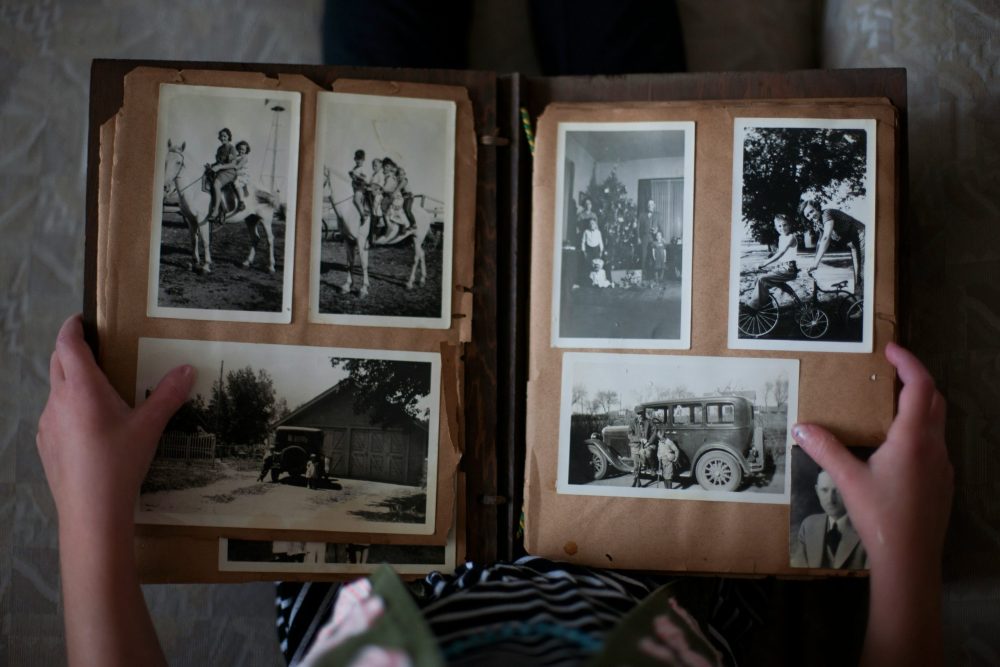
I grew up with a surprising amount of family archives. Photographs, scrapbooks, and even my Japanese grandparents’ passports, once nestled in old fruit packing boxes in closets and basements, now occupy space in my own home. As a third-generation Japanese American, the fact that I have so many of my family members’ materials is both surprising and poignant. My father and his family were among the more than 125,000 Japanese Americans incarcerated during World War II. Like many, they were forced to burn most of their possessions that had Japanese writing, including my grandfather’s collection of books and most of the family baby pictures—anything that could tie them to the then-enemy nation of Japan.
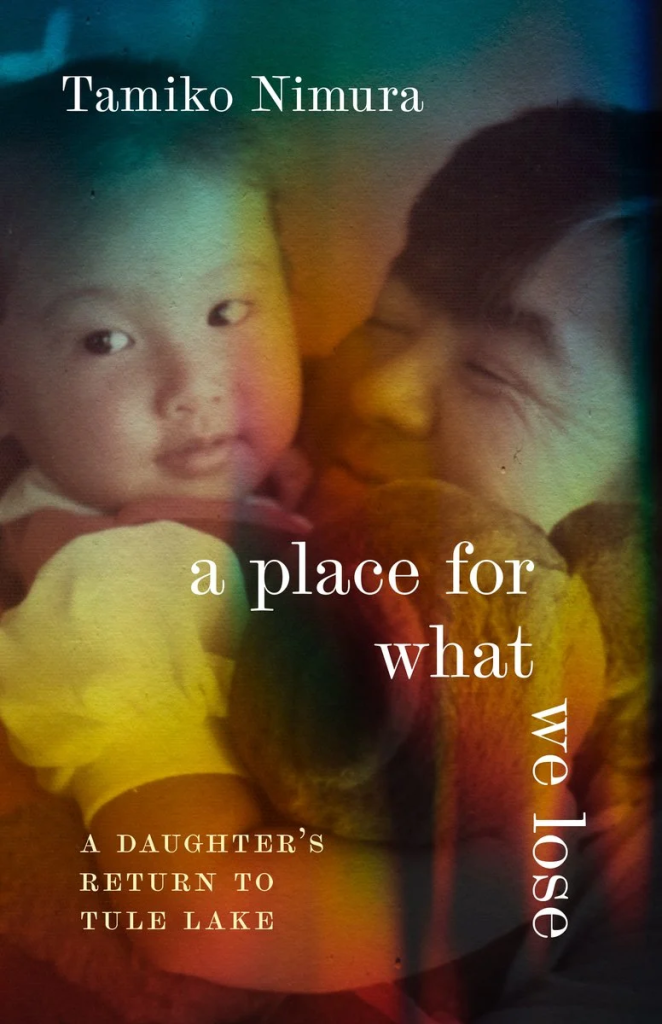
Among the archives is my father’s unpublished memoir, Daruma: The Indomitable Spirit, a chronicle of his imprisonment and release from Tule Lake, an incarceration camp in Northern California, where he spent nearly four years, from the age of 10 to 14. When I began to write my own memoir, A Place for What We Lose: A Daughter’s Return to Tule Lake, I knew that I needed to begin with my father’s words.
Building on the groundbreaking work of memoirists like Deborah Miranda (Bad Indians: A Tribal Memoir), I wanted an intergenerational, dialogic approach to writing about Japanese American incarceration. To accomplish this, I had to recontextualize, repurpose, and even contradict sections of my father’s book. Through this multivocal approach, I learned how to grieve, finally, the early loss of my dad and reckon with my family’s history.
In the books gathered below, authors unearth and incorporate family archives in creative, innovative, poetic, and genre-bending ways. By sharing their personal inheritances, they prevent history from becoming a faded-sepia matter of the past.
Psychotherapist Satsuki Ina is herself a survivor of Japanese American incarceration; she was born at Tule Lake, where my father and his family were incarcerated. Building on her documentary work, including Children of the Camps, her book is a painstaking compilation of her parents’ translated letters and poetry during their internment. But it is also a moving account of Ina’s reckoning with this legacy and her inspiring movement into cross-racial solidarity and activism.
The Unwritten Book is a hybrid literary memoir of essay and biography that deeply engages with Hunt’s father’s writing, found only after his death. Hunt includes part of his unfinished novel on the left-hand side with her annotations on the right-hand side. The resulting book is fascinated with haunting, hoarding, and the echoing significance of objects we leave behind after death.
The Grave on the Wall is an inventive, lyrical, and meditative journey in search of Shimoda’s Issei grandfather who was incarcerated during World War II, moving from California to Montana to Hiroshima, Japan. This essay collection uses photographs by and of the author’s grandfather as well as reminiscences from oral history interviews, emails from family members, and excerpts from his grandfather’s file in the National Archives. Shimoda’s work is thought-provoking and poignant, and this collection is no exception.
Described as an “image-text memoir” and “a collage” by Julia Fierro, the Dominican American author Erika Morillo’s work includes not just family photographs and letters but also film stills and portraits, resembling Theresa Hak Kyung Cha’s book Dictee. Morillo was also a photographer before the publication of MotherArchive. “[There] was so much of my family history I had to come to terms with or at least understand,” she noted in a 2020 interview. “Making work about it gave me some agency over my own history.” Once the memoir was published in 2024, Morillo described the book as “a personal case against erasure” and her “attempt to create the bond and spaces for discussion” that she had longed for in her own mother-daughter relationship. A finalist for the National Book Critics Circle Award, Morillo’s memoir is a striking exploration of motherhood and historical amnesia.
Letters to Memory began with Yamashita’s discovery of two manila folders full of typed letters on onionskin paper from her Aunt Kay after her death. Piecing together the story of her Japanese American family’s incarceration, the author quickly expanded the letters into this book as well as a family project: the Yamashita Family Archives housed at the University of California Santa Cruz. Some family artifacts appear in the book as color reproductions, while others are found in the pages dividing each section—addressed as letters to larger concerns such as poverty, modernity, love, death, and laughter. It’s difficult to describe this inventive journey through family history, wartime incarceration and resettlement, but it’s poetic, funny, and deeply intelligent.
Gibney’s speculative memoir uses a sort of “sliding doors” approach to her life as a transracial adoptee. Who would she be if she had been able to stay with her birth mother? Who did she become as a result of being adopted, and transracially? Gibney’s book includes facsimiles of different family documents and photographs that provide vivid illustrations of these two different lives.
Seattle Samurai is a loving and beautifully designed compilation of author Kelly Goto’s father Sam Goto’s comic strips, which he wrote and drew for The North American Post, a Japanese American community newspaper in Seattle. After his passing, Goto organized and selected her father’s comic strips and also took stock of his wider interests and collections, such as samurai swords, that provided historical and cultural context for his work. Kelly’s background in graphic design is evident in the photographs, the arrangements of the strips, and the white spaces which allow her father’s work to come to life off the page.
It feels good to type these next few words: The Pulitzer Prize announcement is nigh! On Monday, May 4th, at 3:00 p.m. EST, we’ll find out which book takes home one of the literary world’s most celebrated prizes. Live stream the announcement here!
To be honest, it’s nice to be able to celebrate something. The book that claims the title as the winner of the 2026 Pulitzer Prize for Fiction will get media attention, and it’ll be just plain wonderful to see some energy spent on books and stories.
My task of predicting what title might win is a tough one. Could we see a double winner, like in 2023, when Barbara Kingsolver’s Demon Copperhead and Hernan Diaz’s Trustclaimed the Prize? Could we see another 2012, with no winner? Could something shock us all—maybe a magnificent small wonder like Paul Harding’s Tinkers?
As per my usual, I’ve tried my best to stay away from my own literary opinions in compiling this prediction list, which is why you won’t find several of my favorite fiction books of the year—Dan Leach’s Junah at the End of the World, Julia Elliott’s Hellions, Susan Gregg Gilmore’s The Curious Calling of Leonard Bush, Scott Gould’s Peace Like a River, Emma Ensley’s The Computer Room, or Robert Busby’s Bodock—included below. Instead, I rely on other awards, critical and reader buzz, and my own intuition in offering these Pulitzer hopefuls.
So, here we go. In order from dark horses to definite contenders, below are my predictions for the 2026 Pulitzer Prize for Fiction:
The Slip was among the very first books I read during 2025, and it lingered with me throughout the year. It’s many things, but at its core, it’s a book about sports, sex, and race. It was one of the early winners in the literary award cycle, picking up the esteemed Kirkus Prize. It also showed up on multiple best-of lists. While The Slip is a debut, and debuts aren’t frequent winners for the Pulitzer, Schaefer’s novel is absolutely fantastic and would be a worthy winner.
I know this one is another debut, but when I talk to folks about books from 2025, Virginia Evans’ epistolary gemis the one I hear about the most. Readers absolutely love this book. However, it’s not only readers who are celebrating it. Critics are on board, too. Venues such as NPR, The Washington Post, and others included it on best-of lists, and it was longlisted for several prizes, including the Center for Fiction First Novel Prize.
Flournoy’s The Wilderness, which is the author’s follow-up to the hugely-acclaimed The Turner House, is another major win. The novel looks at friendship and closely examines modern life. It already received an endorsement from Barack Obama himself, and it was a finalist for the Kirkus Prize and the National Book Critics Circle Award. It’s one to watch!
Majumdar’s latest novel has done very well during the current award cycle, and such acclaim is definitely deserved. What a book this is, exploring issues of morality, climate, and love. A Guardian and a Thief took home the Andrew Carnegie Medal for Excellence in Fiction, and it was a finalist for the National Book Award.
Williams has been a finalist for the Pulitzer Prize in Fiction before with 2000’s The Quick and the Dead. Last year’s The Pelican Child, a timely story collection with wonderful reviews and accolades, including being longlisted for the National Book Award, brings Williams back as a strong—maybe a very strong—contender.
I know I mentioned how I try to keep my own personal feelings out of these predictions as much as I can, but this is the great Wendell Berry I’m writing about. During the summer of 2025, I spent time tending my garden, teaching a bit, and reading, again, all of Berry’s Port William series, which is set in the kind of place I don’t really want to leave. Marce Catlett features Berry writing about the things he writes about best of all. There is memory, love, family, and an exploration of our connection to the land. The book hasn’t garnered the literary trophies and buzz that often help in predicting these major literary awards, but Berry is deeply beloved, with a career that’s given us numerous masterpieces of rural America. Marce Catlett: The Force of a Story is an underdog, perhaps, but it’s a mighty one.
Patrick Ryan’s Buckeye is a brilliant book that captured me from the first page to the last one. It’s brimming with big moments and even bigger characters. It covers a lot of territory, including sex, secrets, grief, and redemption, as it spans multiple generations, and I think it definitely earns the title of “Great American Novel.” Readers love it. Critics adore it. It’s shown up on many, many “best-of” lists from venues such as The New York Times Book Review, NPR, and People.
Desai’s previous novel, The Inheritance of Loss, was a major critical success—a major one—when it was released nearly 20 years ago. The Loneliness of Sonia and Sunny, full of family and love and much more, is following in similarly successful footsteps. Among other accolades, the novel was shortlisted for the Man Booker Prize, was a finalist for the Kirkus Prize, and made the year-end lists of Lit Hub, The New Yorker, Library Journal, and others.
Choi’s widely-acclaimed new novel, Flashlight, depicts, among other things, the complexities of memory. It’s shown up at so many places as one of the best books of 2025, and it’s received nomination upon nomination, including being featured on longlists for the National Book Award, the Women’s Prize for Fiction, and the Andrew Carnegie Medal. I expect it to show up come Pulitzer day.
Karen Russell is a previous finalist for the Pulitzer, and I have to believe that this is her year to take it home. The Antidote is Russell at her absolute best. There is magic aplenty, and even more complexities of the human heart inside these pages. Set around the Dust Bowl, this wonderful novel explores memory in such a complex and important way, showing readers that to remember is to better understand our own identity. The Antidote is timely, certainly, but there’s also something about it that feels timeless. Like I said, there’s magic here. It’s already been named as a finalist for the National Book Award and the National Book Critics Circle Award. The New York Times, NPR, and numerous others loved it. I think it’s the winner.
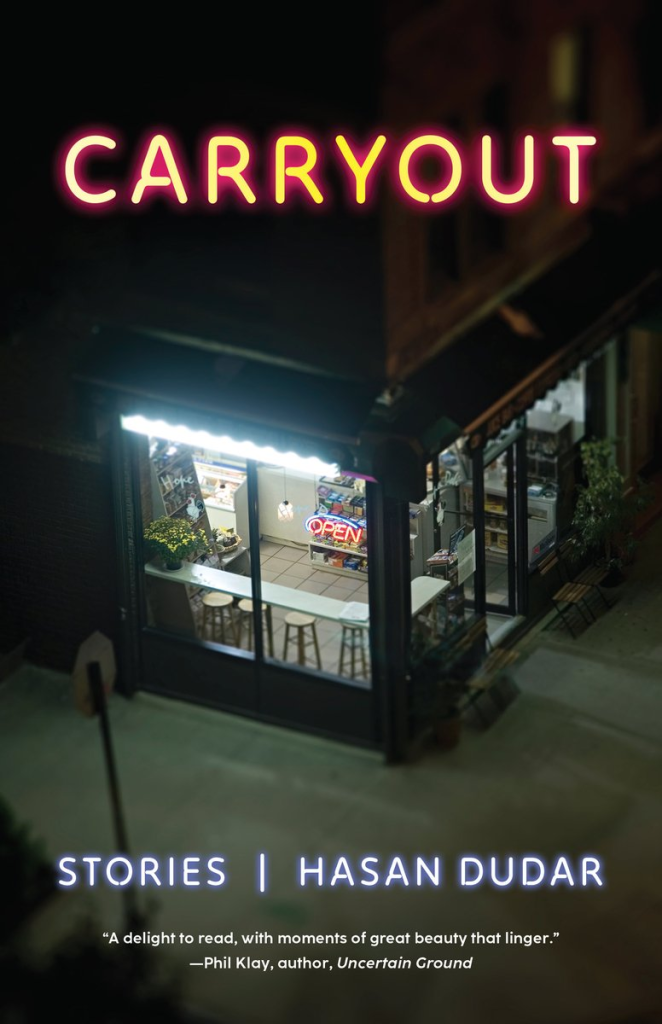
Hasan Dudar’s debut collection, Carryout, follows a Palestinian-Lebanese family through their years in the shifting landscape of Toledo, Ohio. Dudar places the migrant experience at the heart of his book and offers a poignant examination of displacement and belonging in the Arab American community.
When Ziad Idilbi, a Palestinian refugee from Lebanon, meets Salma, a Lebanese refugee fleeing the war in Beirut, they are bound by a shared longing for their homeland. A desire to settle, build their own roots, leads them to buy a corner store in Toledo, across from the General Motors factory, amid a vibrant Arab community. Over decades, their lives and those of their children unfold. Mustafa, their oldest, navigates identity as a Lebanese American in the aftermath of 9/11. Walid, their youngest, broods and writes poetry, and later in life, becomes invested in his father’s refugee past. And Nawal, the only daughter, often remains in the shadows except for one tale about friendship and betrayal.
Hasan Dudar is a Toldeo native, based in Washington DC. In conversation over Zoom, Dudar told me he approaches fiction as a place to explore otherness, as a Palestinian, as a Muslim, and as an Arab. This resonates through Carryout, where the lives of this one family bring us closer to their experience, that of many Muslims and minorities trying to battle the nightmare that is America. We spoke about the Palestinian struggle, living in the US as Muslims under the shadow of Islamophobia, Western imperialism causing cultural and linguistic erasure in other parts of the world, and more.
Bareerah Ghani: I love the opening story, following Ziad in his early years in the US, especially the line, “That was no way to live, we knew, with half a mind on hold, treating every place like a hotel.” It is particularly poignant in Ziad’s case because his family are Palestinian, and they can’t return home. How do you contend with this fact that Palestinian refugees and others from war-torn places are essentially sentenced to a life of perpetual unease and false hope?
Hasan Dudar: That was one of the big questions of the book, and also one of the big questions in my own life, and that of my family. I’m a Palestinian-American, also Lebanese-American, by way of my mother. But the Palestinian identity somehow sticks through it all, and I think it’s because it’s one of those things that’s been unresolved. It’s a wound that really hasn’t healed.
This is what we see with Ziad. He is a Palestinian who was born in Lebanon. He grew up among Arabs, and yet he feels different. That is the essence of Palestinian identity––wherever you are, you feel a little different. And for the Palestinians in Lebanon, their predicament hasn’t been addressed properly. They’re still non-citizens after nearly 80 years. That has been felt through the generations.
I don’t want to generalize. There are so many different facets of the Palestinian identity. But I think one of the key parts is this sense of exile and displacement. You’re denied the acknowledgement of what’s taken place. And whether you’re born in Gaza, or West Bank, or Akka, where my father’s family came from, that sense sticks with you.
To experience the full breadth of life, you have to fail, taste something of your own folly.
BG: I’m curious about the epigraph. “On and on and on and on!” from A Portrait of the Artist as a Young Man by James Joyce. To me, it reflects displacement, but also resilience and survival. Can you share how and why the quote spoke to you?
HD: It comes from a longer passage that’s talking about our human capacity to both fall into error, and to find glory. And to experience the full breadth of life, you have to fail, taste something of your own folly. The passage ends with that line, which I thought captures life very well. How it doesn’t stop. And you continue to fail, and you continue to succeed, and it’s winding, sometimes you go backwards, sometimes sideways, sometimes you don’t know what direction you’re going, but you’re going on and on.
That constancy, the ability for life to surprise us, to upend us, is something I was after in my own work, especially dealing with characters who are displaced—something which is upending as much as it is full of constant surprises. You are forced to start over in many ways. And not just immigrants—for all of us this may be the case—we just sense it acutely in the life of the immigrant and the displaced. There are setbacks, major and minor, daily or yearly, but continuing may be its own form of glory.
BG: In “The Howara”, Walid talks about his family getting together and remembering the past but nothing is remembered as it was. What are your thoughts on the power of nostalgia in sustaining the idea of and sentiment around the homeland?
HD: Oh, it’s so strong. This book was born of nostalgia. When I began this, it was the first time I had really left home in a way that felt permanent. I had gone to Berkeley. From Ohio to California, it all felt different, and I was young. I really started to miss home, and that was very surprising to me. Because when you’re growing up, your whole being kind of rebels against being home. But in Berkeley, I found myself yearning for the life I had in Toledo, and the people that I was surrounded by. My father was sick at the time, and I would take any opportunity to go back home. On those visits, I really started to see the place with fresh eyes, what I’d left behind. My family, my community. Toledo, among the Arab community, was very village-like. People just dropped by. My parents had sold their convenience store, pretty much retired, and so had a lot of their friends. They had time on their hands, and they’d just visit my father. On those breaks, I would sit and listen as they shared their own nostalgia, about old Toledo when they first came, how good it was, and then sharing stories about Beirut, and if they were from different parts of Palestine, what it was like there in the cities and the villages.
I see nostalgia as a yearning to get back to an ideal that maybe you didn’t know was an ideal at the time. I think identity is so much molded by memory, and nostalgia is a way of forming yourself. You can never go back, but in that futile effort of attempting to go back, whether through telling stories, remembering, misremembering, a lot is gained. Your identity, personality, community, it can all form from there.
BG: Families in the book want Ziad to marry their daughters because they worry their later generations would lose their identity as Arabs, as Muslims. I wonder about the traumas we carry and how those might be broken through marriage. I would love your thoughts on this in connection with marriage as a way to influence identity, preserve heritage, especially for later generations.
The ability for life to surprise us, to upend us, is something I was after in dealing with characters who are displaced.
HD: Marriage is a very personal choice. To each their own, but in the context of being a minority somewhere, like in the US, wanting to stay within the same religion or ethnicity are serious, valid concerns. In terms of future generations, I can only speak from my own life. My wife is Lebanese, she mostly grew up between here and Lebanon. Our daughter speaks some Arabic, and this year, she got really into Ramadan. I wonder, would she have those things if both parents were not Arabic speakers, Muslim?
Another way I view this––with everything that’s been going on, my wife and I are chatting about the news in Lebanon, Iran, and we’re being careful of what we say around our daughter, because she’s young. But she still has the idea that Lebanon means something to us, and Palestine means something to us, and she’s now kind of starting to ask questions. It’s one of those moments that remind me of what it was like growing up. Every day my parents would turn on the news, my dad would always say in Arabic, ولّعت , like, it’s on fire now, and there was always this idea, that this is something important to him. That’s sort of where I learned from my parents about what was going on in Lebanon, in Palestine.
BG: In one place, you write that Lebanon hardly belonged to those who remained. And earlier in that chapter, Ziad meets a business contact in the Middle East who says something to the effect that soon, everywhere will be the same. I couldn’t help but think about Western imperialist notions driving cultural and even linguistic erasure in many parts of the world.
HD: The West has been influential through its culture’s ability to attract talent, viewers, and imitators. Worldwide, especially in the last 30 years, there’s been a struggle within cultures and countries, with people left wondering, do you assimilate to this more homogenous, westernized notion of the world or do you hold on to what’s more specific to you? And in a way, something specific to these characters, and to the Arab world more broadly, is the issue of Palestine. These characters are holding on to it, because it still needs holding on to, and where does that put them in relation to the world around them?
So the notion really came from the characters, how they viewed returning to the Arab world and Lebanon, in particular. I always try to take the character’s lead. They often know best. How did they view Lebanon, where even the Lebanese were being displaced? How did they view the Arab world, where you didn’t have to uproot yourself to live a life of Western comfort? And is this, in a way, its own uprooting? Perhaps there are many ways of being displaced, and the Palestinians, like Ziad, have mainly experienced one of those ways. It’s a terrible displacement, and through it, I sense Palestinians have held on to the identity to avoid having uprooted what’s left. In many ways, when it comes to assimilating, others may feel less guilt about it than someone like Ziad, who is more burdened, who feels there is more at stake.
BG: For Muslim immigrants in the US, this question of assimilation has been especially pressing in the last two decades. You masterfully depict the climate of terror in the Muslim community post-9/11. Given that Islamophobia continues to persist, how do you as a Muslim living in the US grapple with this reality, especially in your work as a journalist?
HD: I think there’s a lot of pressure on immigrants, on minorities, and on Muslims, more recently in the U.S. Things are asked of those groups that aren’t asked of others. There’s a sort of perfection that’s demanded of us. If someone screws up, does something illegal, it comes down on the whole community. The margin for error is very narrow. And there is a fear, a sense of doubting yourself, questioning your belonging.
I was fortunate to grow up in a community of Arabs and Muslims. The Arab community in Toledo goes back to the 1880s, and the Muslims maybe, the 1920s or so. It’s a very historic community that has really integrated itself in a lot of ways, but also remained itself in a lot of ways. I always found it kind of miraculous. I think that’s something the immigrants have, especially the children of immigrants and minorities, that other communities may not have access to. You get to come here, and you get to do it all over again. You get another chance at life, at your own self. And I think that’s something very original. That’s sort of what inspired me as I wrote this book. A lot of the people who were in my parents’ circle of friends in the Muslim or Arab community, they were eccentric. Which is to say, they had their own center. I felt that these people were so free, and authentic. They could be talking about wanting to go back to Lebanon, or the West Bank, wherever, and how life in America is awful, and why they came here and are regretting it. And then in the next sentence, they will say how wonderful it is. And all of it is true. They mean it all, and it’s sincere. They’re not apologizing for that mess of contradictions. I think that when we come here, we are asked to kind of give up all of that contradiction. It’s like, just sign up for this identity, and that’s it. But it’s so much more complex than that.
Identity is so much molded by memory, and nostalgia is a way of forming yourself.
BG: In my own community, I’ve noticed that people who migrated back in the day had this resolve to stay true to their roots, to hold on to our culture and identity. I feel like over time, my generation has slipped away. I see many Pakistanis whose kids don’t speak Urdu, and I find that appalling, because I think your language is so much of your culture and your identity, and you’re not passing that on. But their explanation is it’s just easier for the kids, and they can assimilate better in schools.
HD: It’s tough. I think we’re less social in a lot of face-to-face ways than we used to be. Growing up, we lived one house over from my uncle’s, and people were always at each other’s place. There was just always something going on in the community. I think that that impacted people’s identity, their language, their relationships with the community. I don’t want to speak for Toledo, because that may still be the case. I haven’t lived there in a while, at least as a father. But there was a kind of casual intent to get together, and that allowed so many other things to happen. Now you really have to fight for it.
My daughter understands Arabic. She can speak it, but she only really has me and her mother to speak Arabic with. When she went into daycare full-time, she was mostly speaking Arabic, but she quickly realized, where is this going to get me? I need food, I have needs. And so, it’s a fight, just on Arabic alone. For me and my wife, it’s not like: you have to learn this, this is important to us. It’s more like: this is part of who we are, and how we understand the world, so why wouldn’t we pass it down, or expose her to it? Once she’s old enough, if she wants to keep speaking it, it’s up to her.
BG: In “The Litani,” in the face of yet another experience of discrimination post 9/11, Mustafa notes his dad is always saying “Leave it to God.” For me, this idea of surrender is so integral to being Muslim, but I’m curious about your thoughts on the line between surrender and inaction, especially in face of injustice.
HD: That was kind of a recurring line, a recurring sense among the characters. I wanted something that felt true to where they were, to how they viewed the world. I think it can be many things at once. Leaving it to God can kind of be a capitulation. “I’m powerless here in these worldly matters.” But I also think that it can be a guiding principle; sometimes when you let go, things fall into place. And in these characters’ lives, I wanted to explore how they were in a world that they perhaps couldn’t change. And the only thing that they could really change is their approach, and it’s not to see the other side as right. It’s like when Ziad tells his son, let them have it-–don’t go after what’s not yours. It can be a liberating thing.
In the face of injustice, you should fight, stand up for your rights. But in that particular story, they’re facing the question of: Is there any changing this? You know who you are, and know what you stand for, and sometimes that’s as much as you can do. Sometimes, it’s not so much a capitulation or surrender as it is to understand that this wouldn’t change the reality of the injustice. I don’t have the answer for what would change a lot of these injustices. I think if people had those answers, it’d be a much simpler and better world. But I think through fiction and literature, you look at how people respond to these issues of power dynamics, of powerlessness, of being othered. And you try to look for what’s true to that character in that moment.
For six weeks, every painting on the wall is brown. Pretty, stoic deer stand and stare with wide wet eyes; slick panthers stalk across the frames; and dawn breaks over some craggy mountain tops. Entire galaxies churn, the panels bursting with starfields that could be anywhere, in our corner of the universe or another. So many worlds rendered in sepia.
“He paints with tar from the La Brea Tar Pits,” I explain whenever a visitor asks about the material—and they always ask about the material. They’re intrigued by the thick, sepia paint, all the subtle textures. What is this, what is that? They always want to know how a thing is made. I introduce the Tar Pits over and over. It’s the end of summer, and people are on vacation in Los Angeles, many for the first time. “It’s the only active Ice Age dig site in the world,” I say. “It’s in the middle of the city—if you go right now, it’ll only take you twenty-five minutes to get there.” Most seem surprised to hear this, but dismiss it as a random oddity. A few insist they’ll go as soon as they leave the gallery, where I am the director.
Explorers and scientists have spent the better part of a century pulling fossils out of the natural asphalt that bubbles up through the grass in Rancho La Brea, now a park where the tar pits are located. You can walk around the grounds and watch the staff work, ten feet, twenty feet deep in the earth, dredging up oil and dirt. This muck is called the matrix—an ancient mixture filled with microfossils, tiny toes and teeth, shreds of ancient leaves.
Walk into the museum at the park—an outpost of the LA’s Natural History Museum further downtown—and you’ll see the paleontologists working in the Fossil Lab, the fishbowl station where they prepare findings from the pits. They’re all wearing white coats and blue gloves, like doctors who might swab your throat in a different setting. Here, though, they rinse and sort bones. Once I saw a paleontologist with something large and meaty in her hands, maybe a femur. She held the bulge at one end as though it were a baby’s delicate head and used her other hand to swipe a long Q-tip along the length of the bone, probably cleaning off residue, though you couldn’t see any progress. The tar stains are impossible to remove. Her desk was crowded with tools, canisters of brushes and Q-tips, a large white microscope. If a specimen is broken or damaged, the paleontologist will try to reconstruct it with glue, putting all the little bits she can find back together. She set the bone down and shuffled muddy fragments across the desk, touching them carefully with green-gloved fingers. She was looking for something specific. She arranged the pieces, stepped back and considered her work—she saw something there, in the mess.
We visited the Tar Pits often when I was a kid, my parents eager to show my sister and me the layers of history buried under our city—a place they’d moved from Texas just a month before I was born. The pits were discovered by a Spanish expedition in 1769. A friar who tagged along with the group noted the strange climate and landscape of the area in his diary: “In the afternoon we felt new earthquakes, the continuation of which astonishes us,” he writes. “We judge that in the mountains that run to the west in front of us there are some volcanoes. The explorers saw some large marshes of a certain substance like pitch, they were boiling and bubbling.” He wondered about the relationship between the tar and the earthquakes, unfamiliar with both.
When I was seven and eight, I wanted to be a paleontologist. I drew myself on a dig for a school assignment, crouched in vibrant orange sand, wearing green cargo pants and a boxy red shirt. There was a bone outlined in thick black marker by my dusty knees, drawn the way all cartoon bones are, with big, bubbly ends. My face was obscured by a wide-brim hat, the kind I imagined you would wear for long days in the desert. I conjured myself as part-sleuth, part-storyteller, able to make sense of things that happened thousands of years ago with only the tiniest shards of information.
I was terrified of human bones, my own especially.
The obsession with this line of work perplexed my parents, even as they tried to feed my curiosity. I was terrified of human bones, my own especially. I sobbed when a pinky finger bent the wrong way when I caught it on a playground slide, sure it was going to fall off. Tears ran down my cheeks at the emergency room; I refused to make eye contact with anyone else waiting to be summoned deeper into the hospital, disturbed by our shared status as sick or injured.
I was anxious about obscure diseases, too, like Mad Cow, the scraps of information I heard on the radio or at someone else’s house plaguing me. West Nile was on the news at my uncle’s house, on the TV crowned by a stuffed pheasant, its dead wings spread wide across the wall as if in flight. There was an epidemic in Texas, the reporter said. I was there for the summer, bouncing between family members. Mosquitos loved me; I was already covered in red spots the size of quarters. I imagined my infection, my spinal cord stiffening and my brain swelling. I cried and cried on the phone with my mother, begging her to come get me and take me home, certain every second spent away from her was an exponentially greater risk.
There isn’t a clear connection between the pits and earthquake activity, though both are endemic to Los Angeles. The pits formed as crude oil moved up through fissures in the Earth’s crust, and when people began mining the asphalt here in the 1800s, one of the holes they left behind collected rain and groundwater until it became a bubbling pool, dark and pearlescent. Today it is the iconic Lake Pit, where model mammoths are arranged to show visitors exactly how so many animals and plants got stuck there. The tar looks like water but for its slight iridescence, the little methane bubbles, and the unmistakable petroleum smell. Covered in fallen leaves or other debris, the pits would have been perfectly camouflaged. Animals wouldn’t know they were stepping in tar until it was too late, before they stuck and sank, buried for tens of thousands of years.
The probability that any organism will be completely preserved after it dies is very low, which is why the troves at the Tar Pits are so special—a mecca for students of natural history. “Natural history” refers to the interdisciplinary study of the natural world, with its roots in Ancient Greece. It encompasses many modern subjects, including biology, paleontology, geology, and philosophy, but unlike contemporary sciences, it was mostly observational, not experimental. In the long lifetime of such study, there have been many points of convergence between science and religion, fact and fiction, as scientists and scholars tried to come up with stories that linked the phenomena they saw into a logical narrative without much concrete evidence to go on. The problem is, the fossil record is sparse. When an animal dies in nature, its flesh is mostly gone a few weeks later. Bacteria, fungi, insects, water, wind, light—all these forces pull it apart, scatter the pieces. But asphalt is an impermeable preservative, keeping things as tiny and fragile as hollow bird bones and broken leaves intact for thousands of years; no water or oxygen ever reaches them. The Tar Pits have preserved specimens so perfectly they still contain original biological minerals, like the apatite from bones and calcite from shells. Using the molecular data from this material, scientists can date the fossils very precisely. They can establish a clear record of the natural world as it once was, and create a detailed narrative of change.
The summer I turned 10, I saw the inside of my own body for the first time. After school, I bent over in my uniform skort and hospital gown, exposing my back to the new surgeon and my mother. The surgeon, a referral from my usual pediatrician, pointed out the slight hump of my ribcage—I could see him gesturing with a pencil in the air above me, tracing the shape of the curve. I could see the red and black checkers of his starchy shirt, the slick of dark hair on the side of his head, thick and wet with product. His olive skin was sallow in the hospital lighting, almost waxen.
I was right, my body was not safe. On a structural level, it was unreliable.
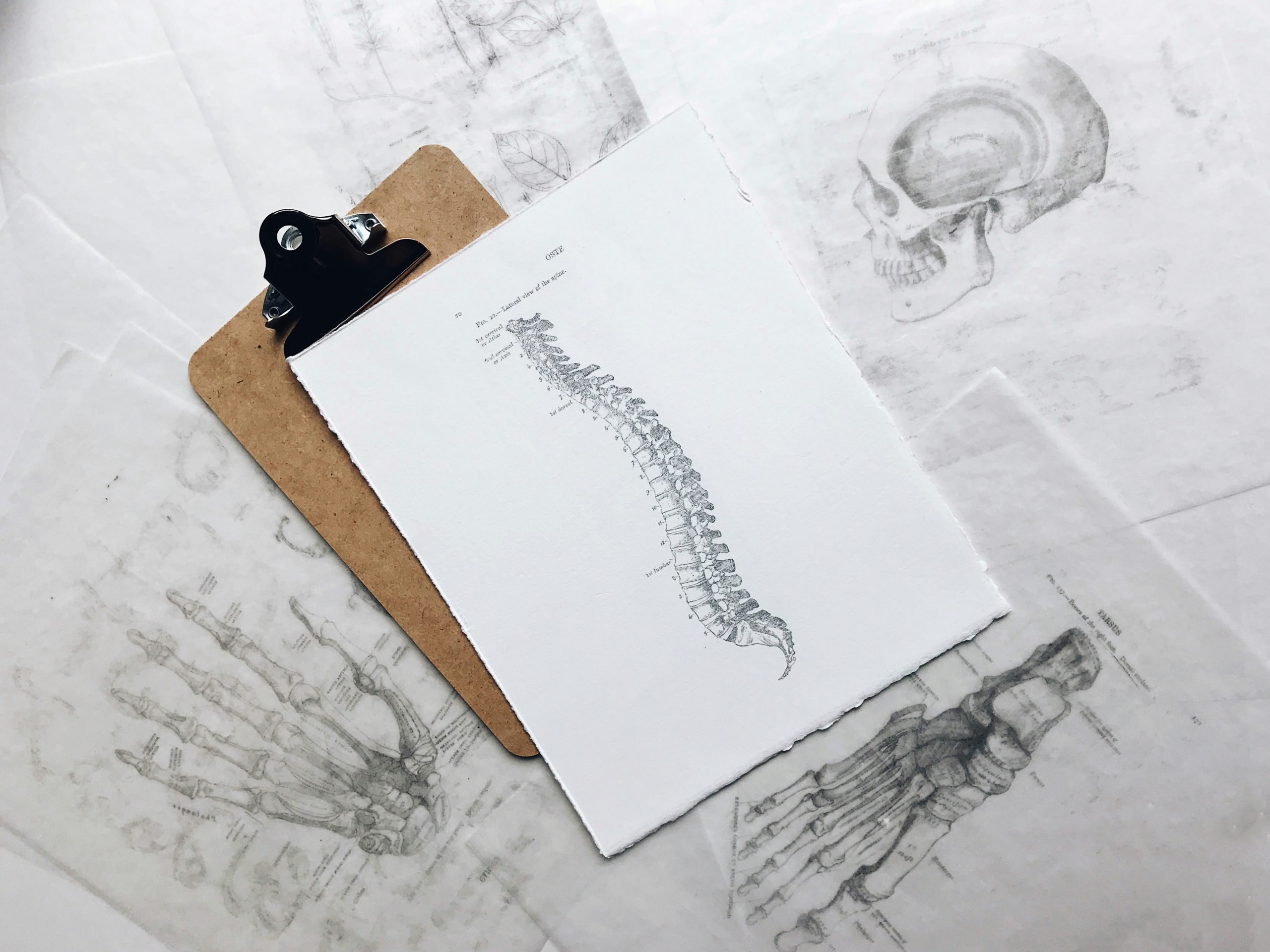
My pediatrician had suspected I had scoliosis, a spontaneous, abnormal curve of the spine. The surgeon confirmed it. The curve wasn’t severe then; it was still invisible to the untrained eye and unnoticeable under clothes. But it was there, on the computer screen. The surgeon annotated my X-ray, drawing a line across the top of the thoracic curve and another along the bottom, the lumbar. He traced a third line, an intersection. He measured the angle and typed quick notes. The nature of the condition, sudden and random and persistent, horrified me—but it was also, in a way, a relief. Here was confirmation of what I had often suspected as a small child: I was right, my body was not safe. On a structural level, it was unreliable.
There was nothing to do but wait for a while. Scoliosis like mine is quite common, especially in girls, and it doesn’t always become a bigger health concern. But the surgeon told my mother what might happen: I would grow, and so would the curve; I would need a back brace, and if that didn’t control the curve, I’d need a spinal fusion for permanent correction. Without surgery, my moving spine could twist my ribcage, forcing it against my heart and lungs. Potential complications were infertility, heart failure, pneumonia. Pain, certainly. Low self-esteem, likely.
It was a relatively routine surgery, he said, but it had its risks: fusion failure, chronic pain, paralysis, death. My mother held me close and tried to shush him as he rattled off the list of potential outcomes. She didn’t want me to hear those details, but it was too late. I had already stored them away, these new ways my body could betray me.
If my curve progressed past 45 degrees, we would have to move quickly. Once it hit that threshold, a curve would usually keep progressing even after the growth plates closed and the skeleton was fully developed. Plus, better correction is possible when patients are younger, when their bones are still pliable. Surgeons prefer to operate as soon as possible.
There has been only one human specimen ever shown at the Tar Pits: The La Brea Woman. She is the oldest human found in California, and her display case used to sit between a ground sloth’s and a suite of bird bones. It was almost too dark to see inside, her skeleton just barely illuminated in weak amber light. But every ten seconds or so, a hologram would turn her into an exaggerated woman with a neat hourglass figure—topless, brown eyes, and shiny hair down to her hips. Then the lights would change again, and she would shrink back to bone. When I stood in front of the La Brea Woman as a 10-year-old, we were about the same height, just under five feet; looking in the dark glass, my reflection slipped over her skeleton; I was her.
The La Brea Woman isn’t on display anymore. Sometime in the early 2000s, museum representatives decided it wasn’t right to display her remains: Her identity was mostly speculative, and she wasn’t actually found in the pits—she had been buried in a nearby grave. Her skull shape meant she may have been ethnically Chumash, and the museum’s director was worried about negative attention and demands for repatriation of the bones. So he put her remains in storage, where no one could see them. As far as I know, she’s still there.
I grew too much, too fast, and the new height twisted into deeper curves in my spine. For all of sixth and seventh grade, I wore a back brace molded to my body for 23 hours a day. At school, I layered t-shirts and sweatshirts to hide the bulk of the brace. Middle school cliques coagulated, but I was insular, and kept my distance from other kids. When a girl playfully poked me in the stomach before first period history, her finger bent back against the plastic under my clothes. Her eyes grew big and confused; I couldn’t explain. I just walked into class and sat down, the shame of it making me mute, skin sweating under the brace until I turned cold and stale. I was sure I would start crying if I tried to tell her what was wrong with me. I didn’t know where to begin.
I had X-rays taken every three months to monitor my spine’s movement. Each time was the same. Clothes off, drafty gown on. Wait in one room, then another. Bend over, then walk a few feet, let’s see how you move. The room is always cold, the doctor barely there. When he is, he notes another few degrees of movement in my spine.
We were waiting for my period. Your period means you’ll stop growing in a year or so, the surgeon told me. By the time it started, just days before my fourteenth birthday, my thoracic curve had already bent to 50 degrees.
This was the dynamic of treatment: pain now that would supposedly salvage my future.
The scoliosis had become more obvious in the skew of my shoulders and hips, the swing in my gait, but even then, it didn’t hurt much. I struggled with the dissonance of the impending surgery and my daily experience. My body looked bad, I was told, but I felt mostly fine. I got a little stiff after spending hours crunched into the small desks at school or in narrow airplane seats, but that didn’t seem significant. I was fencing competitively, successfully. I wanted to make the US national team. I saw myself as a promising athlete and a sharp student. I loved writing essays, sketching with charcoal. I wanted to be an artist, maybe. I was confused. I couldn’t feel the disease threatening me, though I was told it was. Now I see my mother’s fear was clearest in her willingness to try every treatment option, no matter how questionable. When the back brace didn’t stop my spine, she took me to a massage therapist who tried to move my vertebrae through violent bodywork, pushing muscle directly against bone. I lay on a table in his garage and cried quietly while he worked, tears squeaking a little against the faux-leather face rest. My bones seemed to burn where he pressed hardest, shoving my paraspinals against the curves with the full force of his large body.This was the dynamic of treatment: pain now that would supposedly salvage my future. I was taught every bad thing I felt was the mechanism of a cure.
There is a picture of me at 15, a few months before my spinal fusion. For years, the photo has moved with me from home to home, one of many in a box of keepsakes. My family went to a water park to celebrate my sister’s thirteenth birthday, and my mother gave my sister and me disposable waterproof cameras so we could document the day. In the photo, I am sitting on the top of a water slide, facing away, ready to go down. My arms are folded across my chest in preparation for the slide, my wet hair shellacked to my head, my whole back exposed in a string bikini such a pale shade of yellow, you can hardly tell I’m wearing anything. My spine presses against skin, each vertebra clearly articulated, the sequence forming a perfect S-shape down my back. My body appeared like an object I could see and describe, but it wasn’t me anymore. Before my last move, I threw the photo away.
It’s completely unusual for so many specimens in a natural history museum to be dug up on-site. Many of the world’s great collections, like those in the British Museum in London, or the Natural History Museum in New York, are the results of long colonial campaigns.
When Napoleon Bonaparte invaded Egypt at the turn of the nineteenth century, a commission of scientists and scholars went with him. They took detailed notes on Egyptian art, culture, and history; they found the Rosetta Stone, and they took that too. As explorers returned with more stolen corpses, Europeans began hosting unwrapping parties, which revolved around literally unrolling and examining mummified remains. At first, these gatherings served a purported medical purpose: Only surgeons were present, ostensibly there to learn more about the effects of mummification on the body and the natural history of certain diseases—mummification via salt preserves soft tissue well enough to stop the degradation of DNA. But surgical operations were often punishments and performances: Public autopsies might be retribution for extreme crimes, and the parties kept growing, hosted by wealthier people for intrigue and entertainment among friends. They started selling tickets to the public. You could pay to see a body excavated right in front of you.
An immersive King Tut exhibit recently toured the U.S. in honor of the 100th anniversary of the discovery of the child-pharaoh’s tomb—“the King Tut Experience takes you on a mythical journey through the afterlife!” There is something perversely soothing about experiencing death as fictive and fantastical, an experience so separate from your own. The bones I saw at the Tar Pits as a child were never real to me—they belonged to sublime creatures that no longer existed. I found comfort looking into empty eye sockets and between gaping ribs. It’s much easier to grapple with disease and decay when it affects an object, or even an animal, but not a person. But King Tut was hardly more than a boy when he died, only 18 or 19. He was buried with many things, most notably over 100 canes—generations of incest had left him with many medical issues, among them severe scoliosis and a rare bone disease that made it impossible for him to walk without assistance.
My dad asked me recently what he might’ve handled differently about my scoliosis treatment; I said I only wanted someone to ask me how I felt, how I wanted to approach it. Maybe it’s a parental prerogative to surrender their child’s body to science. The Mütter Museum in Philadelphia, where I went to college, is filled with medically anomalous remains donated for research. “The goal of the Museum is to help visitors understand the mysteries and beauty of the human body and appreciate the history of diagnosis and treatment of disease,” their website explains. Many are fetal remains; there are several babies’ skulls. No child, even an older one, can really sanction medical decisions regarding their own body in our current biomedical model. Legally, any patient under 18 cannot consent, or grant permission. They can only assent—they can agree with an opinion already given. But I don’t remember anyone truly asking me mine. It was my body in question, but the decisions affecting it would always be made by someone else.
I don’t have the records from the pediatrician who discovered my curve when I was 10, or the assessments from my original surgeon, who I saw for the first few years after my diagnosis. I don’t have the notes from the orthotist who strapped me to a glass table and created a three-dimensional image of my torso that would become the back brace I wore everyday for two years, until it was clear surgery was inevitable.
I do have years of X-rays, email attachments and PDF downloads showing my spectral spine bending between splayed ribs, the angles of each curve marked with red lines and numbers that keep ticking higher. I have 72 pages of password-protected notes from Children’s Hospital Los Angeles, where my operating surgeon was the head of orthopedic surgery, where I spent six hours on an operating table and a week recovering, hallucinating on oxycodone and learning how to walk again.
I didn’t read the operative report for my surgery until I was nearly 30. It took me a few weeks to get my records from the hospital staff, who had to find my papers in analog storage and scan them for me.
The patient: a 15-year-old girl of normal height, weight, appetite, and disposition. She presented on July 13, 2010, for a posterior spinal fusion of T-2 to T-11—her entire thoracic spine—to correct her case of adolescent idiopathic scoliosis. Her spine was twisted into an S-shape; surgically straightening the upper curve would pull the lower one along with it.
When the team opened her body on the operating table, conditions were more difficult than they anticipated. Her primary curve was extremely stiff. The vertebrae were wedged so tight, they had to remove more of the patient’s bone than planned. The patient’s right lung was severely impinged. The surgical team estimated it was only at 70 percent capacity.
It took nearly six hours to dissect the patient’s spine, apply grafts, and implement the hardware that would hold everything together. The surgeon used bone grafts scraped from the patient’s iliac crest and morsels from cadaver donors to close the gaps between her vertebrae. He added steel screws and a thick crossbar for extra support. The patient was an athlete. The extra stability would help her return to competition sooner.
The patient tolerated the procedure well.
There are holes in my hospital records. There’s no note about my return to the orthopedic floor, just three days after I’d gone home. The fainting episodes, which began in those days and continued for years after surgery, only get two lines, brief notes of “recurring syncope.” There’s no mention of my weight after surgery, of my concerningly low body fat percentage, of the number shrinking on the scale in my mother’s bathroom. There’s no mention of my intolerance to oxycodone, the hallucinations, my dad trying to strangle me, hands shoving my neck into the mattress. There was no inventory of the bottles of Advil I went through to control the pain without narcotics.
Recovery was mostly pain. Pain in my back, my chest, running down my legs and arms. The IVs pinching my wrists and ankles. The aching when I lay down, the stabbing when I stood up. I remember thinking, They did this to me, they did this to me.
Technically speaking, if a patient experiences any recurring pain after a spinal fusion, she has failed fusion syndrome. It’s been almost 13 years since my surgery and my back still bothers me. If I sit too long, there is pain; if I’m too active, pain. I’ve been hospitalized several times since for pain management. I’ve had more X-rays taken, seen more physical therapists, swallowed more Tramadol and steroids. There is nothing wrong, all the specialists say. There is nothing wrong.
Also, I didn’t know about the donors. It wasn’t just my vertebrae being fused, but flesh and metal, my bones and another’s. I feel displaced reading this, jolted out of my skin as if I’m on an airplane that’s suddenly losing altitude.
I understand that there’s a wide spectrum of reasons why a person isn’t allowed to make their own decisions. Maybe they’re too sick or simply insane, their skin the wrong shade, their bodies too big or too small. Maybe they’re just women, or girls with no grip on reality.
Public interest in personal medical narratives is not only about prurient curiosity; it’s also about individuals asserting the truths the medical system fails to acknowledge. That people, patients—women especially—are sharing their experiences, correcting records and insisting on the details that have been left out, is as essential to our cultural record as it is to medical knowledge. A natural history is also that of a disease without treatment, usually defined in four stages: susceptibility, subclinical, clinical, and of course, the final outcome. This last stage varies widely depending on the case. It could be recovery, disability, or death.
In the Mütter Museum, some of the dead people are disassembled. There are bones and body parts everywhere, spongey lungs soaking in jars of formaldehyde, tarnished skulls stacked along the walls. But hanging in a glass vitrine, Harry Eastlack’s bones look more sculptural than scientific. Harry had fibrodysplasia ossificans progressiva, or FOP, an extremely rare genetic disorder that turns connective tissue to bone. It was as though the artist hadn’t finished hewing the shape from stone, leaving tenuous connections between ribs and teeth. Harry’s remains remind me of Michelangelo’s Prisoners, a series of sculptures arranged in the hallway leading up to one of the most famously perfect works in the world, the David. Carved into huge chunks of marble, the Prisoners are unfinished, perpetually in the process of emerging. They’re examples of Michelangelo’s approach to his work, his manner of carving a subject from stone freehand. It’s believed the Prisoners were left like this on purpose to demonstrate man’s ongoing struggle to free himself from his own body.
“When my time comes, I would like to hang next to Harry,” Carol Ann Orzel told her doctor. A Philadelphian who had FOP too, Carol decided to donate her entire skeleton to the museum after she saw Harry’s there in 1995. She wanted more visibility for their terminal condition. More funding, more research, better chances at longer lives for future patients.
Carol died at 58, which was old for someone with FOP. There have only been about 900 patients ever diagnosed with the disease, and most don’t make it to 50. The overgrowth of bone itself doesn’t kill them, but the constraints on the rest of the body do. Over time, their mobility decreases. Eventually, their hearts give out, exhausted from lifetimes of pumping against chest cavities that cannot make space. I remember the way the brace wrapped around my ribcage, the intrusion of its foam wedges under my armpits. I remember the weight on my shoulders when I tried to get out of bed for the first time post-op, like a man shoving me down with both hands, refusing to let me stand. My left lung, trapped by twisted ribs for years, ached as it expanded again.
In a final act of self-determination, Carol requested her costume jewelry be shown alongside her skeleton. Now, under her fused feet, there is a pink rhinestone tiara, a black and white cameo ring, and a brooch made of thickly clustered pearls. From a certain angle, the brooch takes on the abstract shape of a woman, bulbous and shimmering.
I used to look away when my X-rays were up on the screen in exam rooms. I would wait for the surgeon to tell my mother what he saw, for my mother’s reaction to interpret his words. All the hospitals and hallways are mixed up into one spare, white room with vinyl floors and a drop ceiling. I am always sitting on an exam table, wearing a thin gown that gapes no matter how I pull at it. I am always looking down, denying the fact of my body even as it’s submitted to scrutiny. I am not asking any questions. In the hospital’s records, I am described as “tearful,” “agitated,” and “determined,” but my name is never used. I am always “patient,” or “pt,” abbreviated for efficiency.
I don’t want stories told in bones or blood cells. I’m after another kind of natural history now, one composed of personal reflections, records of sensation and emotion, structured by association, not cause and effect. Rather than list symptoms or attempt to pin down the slipperiness of chronic pain, I want to approach pain as structure: synaptic and expansive.
It’s still easier for me to look away and out, to observe and describe some other object, some other person. But more often now, this looking becomes a reflexive exercise. I talk to the artists at the gallery, ask them what sorts of clay they use, why they work in oil versus acrylic, how they know when a piece is finished. I draft their bios, describe their upbringings and educations and materials. Writing about art, I’m articulating what it means to make an object, to shape a narrative that honors this process. Not everything makes the cut. The ceramicists sometimes break the things they don’t like—it’s called “decommissioning.” One of them shows me a video on her phone: Face obscured by a gas mask, she takes a sledgehammer to a monumental vessel, slamming it and shattering it and stomping on the shrapnel.
The man who makes the tar paintings, with all his sharp, perfect lines, uses a number 11 Xacto knife to cut his images in relief. If you make the wrong mark, I ask, what do you do?
You can see a mammoth’s skull sitting on the ground in the middle of the Fossil Labs now, his jaws wedged with what looked like pieces of styrofoam and crumpled paper. The preparators decided to leave the matrix inside his skull for support, so that over time, gravity doesn’t pull the teeth out of his fragile mouth. Years before, conservationists had used basic adhesive and Elmer’s glue to keep his teeth consolidated. Over time, little bits of his bones would crumble off, and they’d just keep gluing them back together. Now, the team applies layers of Japanese rice paper and archival adhesive to the outside of his skull for extra stability. The Lab’s manager describes this process as a kind of papier-mache—an art form.
It only takes a few months, I learn, for bone grafts to grow into solid bone. My body has had years to integrate the cadaver tissue in my spine, to weave around the screws and insertions. Different cells move at different speeds, though. Some cells, like the musculoskeletal, can take decades to grow back. Others, like those in your spinal cord, never do.
In the gallery’s storage room, there is art everywhere. There’s an old ping pong table stacked with ceramics and sculptures. Rows of paintings lean against an overstuffed bookshelf on one wall; on the other, there are 20-foot-tall wooden bays filled with canvases and stacked with boxes of photographs, both personal and professional—the gallery owner has been here for 31 years. My entire lifetime.
We bring a client back to see some of the tar paintings, back in storage now that the show has ended, and he steps on something—I hear the soft crunch underfoot. It is a sculpture made of thousands of individual ceramic links, together mimicking a malleable pile of patinated chains. The client startles—he hadn’t noticed the piece against the grey carpet. The gallery owner, standing just behind me, sighs. I look back at him, and he shrugs. He knows the precarity of it all.
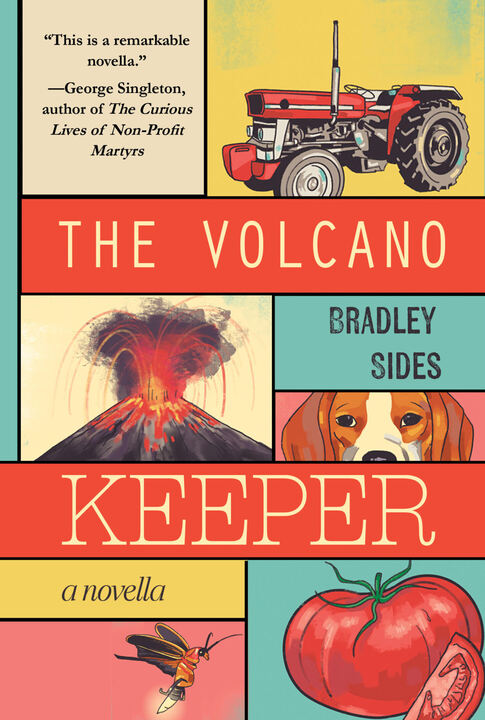
Electric Literature is pleased to reveal the cover of The Volcano Keeper by Bradley Sides, which will be published on October 20th, 2026 by Regal House Publishing. You can pre-order your copy here.
When a volcano suddenly emerges in the middle of his family’s Alabama cattle pasture, young Charlie Melvin is confronted with a promise his grandfather once made—that something extraordinary would rise from the land.
As Charlie comes of age, he wrestles with the meaning of the volcano and the legacy of his family. His story unfolds through evocative vignettes that explore love, loss, responsibility, and faith.
Graceful, tender, and emotionally resonant, Bradley Sides’ The Volcano Keeper is a moving portrait of a young man navigating grief while discovering the quiet miracles woven into the natural world.
Here is the cover, designed by Chiana Royal:
Bradley Sides: When I write, I almost always begin with an image. These images guide so much of my narratives–and, honestly, I’d be in trouble without them.
Not too long ago, I was in a writing workshop, and we were asked to create a scene from childhood. Here’s what I came up with: “I’m on my Alabama family’s back porch. Covering an algae-stained pond, there’s this big, top-heavy tree, full of all kinds of greenness extending from untamed branches, with its roots angled from the dirt and mud. There are mallard ducks flapping about under the shade, obsessively quacking. Leaves and feathers twirl about, like stray clouds. Cows abound at the periphery, and bringing it together, there’s this strange and soothing mix of sounds. Crickets. Tractors. Wind brushing against hay. Bullfrogs splashing.” As you can see, even with something so short, it began with an image. After I had that porch and, then, the pond, I could open up that memory. I could make it come alive, and I could make it real.
Chiana, the designer for my new book, The Volcano Keeper, which mixes the Rural South with magical realism, asked me a few questions about what I might like to see on the cover. I didn’t think I could offer much help, but I approached the process like I do my writing. I thought of images. Specifically, I began to list images that are heavy within The Volcano Keeper. I came up with several things, and I sent her the list.
Not too long later, I received the beautiful cover. It includes many of the images I suggested. The back jacket even features a cow that looks just like one named Rosie that I used to show at fairs across Alabama when I was younger, which makes the cover extra special. There is such vibrancy, too. It pops with life. The Volcano Keeper is, at the end of the day, about love–about how grief comes from a grand form of love. It’s also about how we find healing and peace, again, from love. The bright colors Chiana uses perfectly showcase the heart of this book. To me, it’s perfect.
Chiana Royal: Working on The Volcano Keeper by Bradley Sides was just as fun as it looks. The bright colors, detailed motifs, and segmented composition all played into the themes of the novel. . . also ensuring it would stand out on the bookshelf!
My design process is a collaborative one. To gain insight into Bradley’s novel, I sent over a questionnaire. Back came his design preferences and a list of motifs—the tractor, cow, firefly, and of course, the volcano. The “aha moment” came to me while flipping through one of my art history books and landing on Andy Warhol’s famous Campbell’s Soup Cans.
I particularly love the way pop art transforms everyday familiarities into icons. By drawing on the high-contrast palettes and the graphic punch of the mid-century pop art movement, I created a design that evokes The Volcano Keeper’s vibrant setting and magical realism.
The goal was to give a brief glimpse of the story, peeking through at hints of the novel’s world while mirroring the vignette format.
This cover has definitely made it on my list of favorites, and I hope to explore more modern art-inspired designs in the future!
Tell me a story, he said. A happy one. Your stories are always so sad.
It’s what I’m good at. Besides, it’s hard to write a happy story, I said. But I’ll try. What kind of story?
One with fairies, he said, after thinking for a moment. The kind with wings. I already know too many stories about the other kind.
We were in bed, with only our toes touching. We weren’t looking at each other but instead were gazing out the window overlooking the front yard. We had argued earlier and weren’t really mad anymore, but we were still trying to figure out how to make up.
The fight had started when his sister asked him to take his mother to the doctor, even though his sister doesn’t work and has plenty of free time. I had merely said he shouldn’t always be so willing to help, because he got taken advantage of. I don’t know why we were fighting, but for some reason I thought it was important to get him to admit he couldn’t stop doing it, even though I liked that he was always so giving. And he felt it was important to insist he could always refuse to help if he wanted, even though he never would. Such is the stupid way that even people who love each other communicate sometimes.
Do you know about the martini fairy? I asked.
That sounds more like that other kind of fairy, he said.
The martini fairy is a wonderful fairy. He’s the wittiest fairy. The most charming. Often in a tuxedo or white dinner jacket. He lives in our front garden, between the dogwood and the pink azalea, beneath that floppy lavender. He likes to lean against a mushroom, smoking a blade of grass, chatting with the gin-and-tonic fairy and the Manhattan fairy. And his nights with the champagne fairy are always special, but he thinks the pinot noir fairy is pretentious. He is suspicious of the white burgundy fairy and barely tolerates the beer fairy. And he loves staying up until dawn, swinging in a hammock made of spiderwebs, listening to the whiskey fairy unwind tales of lost love and forgotten empires.
Sounds like a lot of lushes in fairyland, he said.
Don’t interrupt. One night he was drinking a Pelligrino and looking sad and the Limoncello fairy, the most sensitive of all the fairies, asked what was wrong. And the martini fairy said they had run out of olives. They only had lemon twists and pearl onions. So the other fairies fanned out to search for olives in trash cans and dumpsters but all they found were black and kalamata olives, which clearly wouldn’t do. Some fairies tried to sneak into a pixies’ bar, but pixies are fairy-phobic and refused to share their olives.
He turned towards me now with a look of concern.
The Limoncello fairy came over and gave the martini fairy a hug. The Vermouth fairy, who understood the martini fairy in ways that no one else could, offered words of consolation, but the martini fairy would not be consoled. He felt suddenly incomplete. And, in truth, his white dinner jacket had started to wrinkle and the air of sophistication that always clung to him was beginning to evaporate.
I stopped there and looked out the window.
That’s as far as I got, I said. His foot moved away from mine.
That’s not a happy story, he said. The martini fairy needs his olives.
Unfortunately there aren’t any and all the fairy liquor stores are closed, I said. The only way to make it a happy story is for someone to get the martini fairy some olives.
You’re only stopping there to prove a point, he said. I shrugged.
He looked at me, clearly irritated, and shook his head.
You suck, he said. I shrugged again.
He pulled the blankets off and got up, leaving a small indentation in the mattress. I heard the refrigerator in the kitchen downstairs open and close. Then I looked out the window to see him walking barefoot across the damp grass, shivering in his boxer shorts and ragged t-shirt, holding a toothpick with three green olives speared on it. He squatted and slipped the toothpick gently underneath the lavender.
It’s a happy story now, he said, when he came upstairs.
Montreal is a surging literary city with its own unique idiosyncrasies and marks of character. Compared with, say, Toronto, Montreal literature sits alongside a wider cultural scene arising from the bilingual locale with many universities, countless cultural festivals, and publishing hotspots, including the legendary indie darling Drawn & Quarterly, which specializes in graphic novels. All that and more feed a body of literature that feels somehow distinctly cool. Simply walking the streets, encountering the varied neighborhoods, landscapes, and architecture, is an inspiring experience for any writer looking to find the form for what it is they want to say.
This list of books by Québécois authors, primarily published first in French, demonstrates the city’s unique identity. Montreal is a hub of cultural contradictions, a home to many thousands of immigrants, an erotic city bursting with sensuality, a queer-friendly atmosphere set alongside deep religious roots, and a place of seasonal extremes: deadly hot in the summer (we read in parks), endlessly frigid in the winter (we read at home). There are characters around every corner, in every fresh bagel shop, independent bookstore, hip cinematheque, and lush green park. In other words, Montreal certainly has a reputation, but it’s one that is so baroque and multifarious that it always comes back around feeling unexpected. The literature of the city, particularly the books that are set within it, frequently, perhaps unavoidably, reflect this.
The list below is an attempt to offer an introduction to the city’s literary tradition. Each book takes place in or around Montreal. Patterns emerge: there are many debuts here, and many semi-autobiographical immigrant tales, and many examinations of the rural/urban divide in Québec. It is also a mixture of noted classics, alongside some less obvious examples. No matter where you start, though, you’ll be brought squarely into what makes Montreal so stubbornly singular.
First published in 1985, Laferrière’s debut remains one of Québec’s most acclaimed and widely-read books. It tells the story of a Haitian immigrant in Montreal, surviving in the city’s poverty-stricken slums. Laferrière, himself, born and raised in Port-au-Prince before coming to Montreal at age 23, puts much of that experience into the book, which is, surprisingly, a comedy. It is also provocative, going into detail about the narrator’s interracial affairs with white women, and the deeply felt racism of the era. The narrator and his friend are also pursuers of cultural and intellectual life, finding a home within the city’s jazz and literary circles. Again, this loosely reflects the author’s own experiences of his first years in Montreal, all while sharply satirizing the city’s prejudices. In short, it’s a classic for a reason.
The Orange Grove by Larry Tremblay, translated by Sheila Fischman
Tremblay, whose primary occupation is as a celebrated playwright, wrote this tragic tale about twins, Amed and Aziz, caught in an unnamed, war-torn country. Their relatively tranquil lives in their family’s orange grove are disrupted by the ravages of an unwanted war and the troubling consequences of revenge. Early passages can be hard to bear, but Tremblay’s prose is confident and devastating in its detail. Later, the story moves to the cold winter of Montreal, as one of the twins is involved in a play about war, and his own story influences the shape that the show takes. While a short read, much is packed into these pages.
Zoe Whittall’s debut is a stirring Bildungsroman, evocatively placing readers in the run-up to Québec’s 1995 referendum when the province’s citizens voted on whether or not to separate from Canada. 18-year-old Eve is fired up not only about secessional politics but about queer rights and feminist ennui following the mainstreaming of riot grrrl aesthetics. Then she meets an older woman who awakens her sensibilities—sexual, political, cultural—to an even higher degree. Whittall renders this revolutionary spirit and discovery of the self and the other with thrilling directness and intensity. As a result, the city’s own intensities at that moment in history become personal.
O’Neill, one of Montreal’s most-beloved working writers in English, is an excellent place to start for any reader eager to immerse themselves in the life of the city. You could go with The Lonely Hearts Hotel, about two Montreal orphans in the early 20th-century, or When We Lost Our Heads, about the clash of the classes in 19th century Montreal; but your best bet would be her debut, Lullabies for Little Criminals, a rough and often dark story of a young girl with a junkie father, growing up in squalor and, ultimately, being forced to raise herself. What stands out in each novel is O’Neill’s careful attention to Montreal itself, from the dangerous to the stunningly beautiful and how the two uncomfortably overlap.
Kim Thúy, who fled with her parents from Vietnam at the age of 10 to the Montreal suburbs, hit the bestseller list with her debut, Ru, a tale of a refugee’s journey from Saigon to Montreal. The structural and temporal architecture of the book is a treat for readers, as Thúy demonstrates unbelievable control over the narrative’s back and forth, and the vagaries of memory across decades of excitement and disappointment. The book is written via fragments which accumulate into something cohesive and moving. While there are many literary explorations like this one, subtly taking apart the nuances of the American (or Canadian) dream, the specificity and verve of Thúy’s storytelling puts Ru a step above.
Whore by Nelly Arcan, translated by Bruce Benderson
Another short autobiographical book, Nelly Arcan’s confrontational story of Québec’s religious, sexual, and cultural dysfunction is, to use a cliche, genuinely raw. Like Ru, it is told mostly through vignettes, though with a more unwieldy, angry spirit. The book draws from Arcan’s rural Catholic upbringing, and it is unsparing in detailing the protagonist’s turn to prostitution. The style may not be for everyone, and Arcan’s tragic suicide adds an even heavier register to the book’s contents, but it is nevertheless an essential read for those interested in Québec history, and how it intertwines with personal trauma.
Dandelion Daughter by Gabrielle Boulianne-Tremblay, translated by Eli Tareq El Bechelany-Lynch
Gabrielle Boulianne-Tremblay, an actress, turned to literature with her debut, Dandelion Daughter, a coming-of-age story about the prejudices of rural Québec and a protagonist who realizes they were assigned the wrong gender at birth. It is a story of transgender discovery told with radical honesty and a deep understanding of character—nothing about the self is ever simple. As the protagonist moves to Québec City and then Montreal, the book excavates poetry from deep emotional wounds and demonstrates what it means to own your identity.
While Chacour’s book largely takes place in 1980s Cairo, the Montreal native pulls from his own family history to tell a remarkable story about queerness and expectations. The structure is daring, as we begin in second-person narration of Tarek, taking over his father’s medical practice in the Egyptian capital, before turning to first-person, and finally to an omniscient narrator. The result, as we track the emergence of an impossible queer love for Tarek and, later on, his melancholy life in Montreal, is a gentle but sophisticated narrative about the calcifying power of secrets, and the constant reminders of how effective perspective can be as a storytelling tool.
It was hard not to shed a tear or two when Stranger Things came to a close this winter. I was in college when the first season aired—not exactly a kid in a way that might have made the story’s characters relatable. But at 19, I was on the cusp of a symbolic split, straddling youth and adulthood with great expectations for adventures ahead and a good dose of melancholy for what I thought I was leaving behind. Perhaps Stranger Things found me at the right time. Like millions of others, in 2016 I was on the edge of my seat when Will Byers sent signals through the string lights in his living room. Over the years, the story grew with me, and I came to cherish its introspective portrayal of community and imagination.
As is usually the case with television, when oversight intensifies and budgets increase, writing tends to worsen. Previous seasons were already showing signs of decline, so I suspected going into season five that the ending would suffer from the same formulaic-slop-syndrome that now plagues most streaming platforms. Unfortunately, I was not far off. What started out 10 years ago as an insightful, character-driven story about friendship, trauma, and nostalgia devolved into an action-packed wannabe Marvel movie by the end. Writers and producers sacrificed depth for flashiness and wound up with over 10 hours of redundant dialogue and expensive action shots.
The story was a blueprint to struggle with the monsters of everyday life.
The $500 million budget of the final season is proof that you can’t buy a good story. But, sitting by a pile of bunched up tissues as the final credits rolled on January 1, I could not shake the sense that what I was feeling was not just the disappointed goodbye blues. I felt like something precious had just been gutted, and its carcass made to dance for entertainment. The more I thought about it, the more convinced I was that the Duffer Brothers had betrayed the heart of their own story, a transgression worse than bad writing. Some days later, my suspicions were confirmed. In an interview with Variety, the Duffers explained that Eleven had to die in the final episode because she represented “the magic of childhood. And we knew for our kids to be able to grow up, the magic had to leave Hawkins.” I was floored. Had not the whole story been about keeping the magic alive? And what does growing up even look like? For the Duffers, it looks like conforming and forgetting.
I had always admired Stranger Things for its insistence on imagination and nonconformity as keys to seeing the world for what it is, demogorgons and all. For years, we followed along as nightmarish creatures and state agents threatened the town of Hawkins. Characters attuned to this reality were often dismissed for being delusional or infantile, but the story consistently told us that the real heroes were the ones detached enough from social conventions to risk believing what might seem outlandish. Nerds and outcasts, queers and misfits, trailer park kids and single parents were the ones at a vantage point to believe in magic. From the margins, they could see and fight monsters. We are not just talking about demogorgons here. The story was a blueprint to struggle with the monsters of everyday life; the ones we fight alone and the ones we fight together.
The power of friendship can be an overused trope, but in its early seasons, Stranger Things did it well. Love was the show’s engine—the reason Will’s friends and family went looking for him, that Mike took Eleven into his home and Eleven saved Mike in return, the reason Bob died for Joyce and Eddie for Dustin, that Lucas could pull Max from Vecna’s curse, and that Hopper raised Eleven as his own. It was significant to see attachments on mainstream media premised on friendship not as a noun but as a verb. Friends in our story were rarely able to spare each other suffering—on the contrary, they were at times inadvertently causing it. But they chose to be together through it. And as external and internal forces ripped them away from one another, they refused to let each other go. In insisting that friendship was not an accessory but a potent part of the magic, the writers invited us to think about bonds as necessary rather than bound to dissolve with age.
In this regard, one of the most meaningful moments of the show for me was when Will destroys Castle Byers. The scene represents the very real pain that comes from change, but it does so without presenting childhood as something we permanently leave behind. Yes, the symbol of Will’s childhood is damaged, but it’s there that his friends come looking for him. Even after the destruction of Castle Byers, the kids know exactly where to find Will; their affection for each other is grounded in their histories, and by way of those histories they continue on their journey together. Things change, but they don’t have to end.
But by the show’s final season, the Duffers had departed drastically from this messaging. In the final shot of the saga, a new generation of kids takes over the Wheeler basement to begin their own D&D campaign, and Mike shuts the door behind him, leaving them with a bittersweet smile. The closed door is the last thing we see before the screen fades to black. We get it, they want us to grow up. Indeed, they beat us over the head with it. And growing up this time is rendered with isolated finality. While the remains of Castle Byers were a place for Will and his friends to embrace their next chapter together, the closed door of season five creates a barrier between childhood and adulthood. The message is clear: There is no going back, and the rest of life, you must do alone. Beyond this door? A set of sad tropes. In antithesis to everything the writers had expressed as important, magic is now a setback, and adulthood is a milestone that cannot be achieved without forgetting the past and conforming to a normative idea of life.
With the finale, the Duffers’ coming-of-age narrative becomes about manufacturing absorption into an idea of adulthood.
It is a familiar norm our society feeds its children, a tired American dream, and Stranger Things ultimately caved to it. Eleven dies, and the magic dies with her. As for the rest of our heroes, monster hunting ends and real life begins, which entails leaving community, creativity, and nonconformity behind in favor of “real” dreams like college, mortgages, marriage, and promotions. They barely speak of what happened to them and talk, instead, of moving on and not getting stuck in the past. In the end, the only characters who maintain meaningful relationships with each other do so in romantic partnerships, and almost everyone’s happy ending involves becoming a productive member of society and embarking on a solo identity building project: Jonathan, Robin, and Dustin are off to university; Will is finding himself in the city; Nancy is out girlbossing; and Steve is looking to settle down and start a family.
With the finale, the Duffers’ coming-of-age narrative becomes about manufacturing absorption into an idea of adulthood.I say idea here because, just like childhood, adulthood as a category has come to signal more than just an age range, but a standardized, socially acceptable set of attributes. In early seasons, a grown-up’s proximity to childhood was seen as an asset. Characters like Joyce, Hopper, or Murray had not really grown up yet, by societal standards: Joyce was a chain-smoking single mom, Hopper was a divorcee living in a trailer, and Murray a conspiracy theorist. But their failure (voluntary or not) to be disciplined into adulthood enabled them to believe what other adults dismissed and save Hawkins because of it.
By the end, even the adults are made to properly “grow up.” This is most obvious in the treatment of Hopper. When Eleven disappears in a storm of debris, I was sure he would never recover. He had, after all, spent the entire show fearing this would happen. Instead, he bounces back faster than I did. In their last heart-to-heart, Hopper encourages Mike to accept Eleven’s choice and move on, lest he make the same mistake Hopper had made after Sarah’s death. While there is nothing healthy about dwelling in the past, and Hopper had dealt with the trauma of Sarah in ways that hurt him and those around him, her memory also enabled him to sympathize with Joyce, help her save Will, and open his heart to Eleven, even at great cost to himself. There is a difference between healing and forgetting. Hopper deserved the former but got the latter. The Duffers wrote him a future at the cost of his past. To move on, he must cut ties with most everything that binds him to his own story—namely his friends, his town, and his cabin in the woods—in favor of an ending that mirrors all the others: marriage, a promotion, and a real house in a different city.
We need more people who are not done imagining better worlds and fighting monsters.
There are many reasons why youth are often at the forefront of struggles for justice—sure, they have more time and energy, but they also dare demand what the adult world has declared impossible. We saw this in the Black liberation and anti-war movements of the ’60s, in the early 2000s Occupy Wall Street, and more recently in efforts to abolish ICE and the movement against the genocide in Gaza. In Solidarity with Children, Madeline Lane-McKinley writes that progressive attributes and liberatory demands are often dismissed as childish in a society that wants to blunt their potential. “Language of infantilization,” she writes, “is consistently employed to demarcate what and who has gone too far, too often for the sake of defending the status quo, if not to moralize reformism.” Qualities like hope, creativity, and communal struggle, at the core of early Stranger Things, were ultimately relegated to kid things by what Lane-McKinley would call the “disciplinary horizon of adulthood.” Was Stranger Things ever telling us to be radical? Maybe not exactly. But it was telling us to be curious and imaginative, to embrace our singularities and use them in service of others, to love in concrete ways, to remember the dead, to play, and to keep the magic alive. These are small seeds for potentially big change if cultivated in earnest.
Instead, the Duffers presented the traits above as childish pelts to shed. The kids are all grown up now—time to put the toys away and settle down. But the reality is that we need more people who are not done imagining better worlds and fighting monsters. Stranger Things started off in praise of the underdogs who dare to believe their own eyes and take risks accordingly. In the end, it parroted a societal dismissal of what it had originally set out to praise: collective life, the courage to take risks, and the belief that things could be different. In so doing, it joined the catalog of texts that present the ideals of childhood as something to leave behind. This not only made for a poorly crafted ending; it was harmful to its audience. The writers encouraged generations of children and young adults to put their play away and leave their communities behind in favor of an individualist, cookie-cutter life. In the footsteps of our protagonists, we are to desire the ostensibly happy endings of well-adjusted adults—that is, nothing that rocks the boat or that exists beyond the parameters of “normal.”
This is why the only tragic ending in Stranger Things is also the only honest one: Mike, in love with Eleven, refuses to let go entirely. Their story, of course, should be read literally, as one of two young people learning how to be together. But if we run with the Duffers’ allegory, we also learn something important—that the only character who keeps the memory of childhood alive becomes a writer. Mike is not stuck in the past, he just lives life with continuity. Unlike the others who show no signs of being tethered to what happened, his life remains grounded in his story—he keeps a picture of Eleven on his desk and Will’s painting hangs on his wall. And so he writes, to make memory where the others won’t. It’s not a comfortable ending. But it is the one that shows that it is possible to exist in the world without succumbing to the death of being in awe of everything. Because losing the magic of childhood is not inevitable; we are just made to accept adulthood as life without wonder. The spark should be passed along as much as we should carry it with us. After all, it’s not just up to the kids—it’s up to you too.
The first and only time I’ve visited Korea was in November 2019, with my father. Although we are Korean American, neither of us speak the language; he is third-generation American-born, I am fourth. As I spent a week surrounded by people with my shared heritage, I wondered: What was the Korea that my great-grandparents knew? What collective histories did they not experience because they immigrated? Who might I have become if my family had never left the homeland?
These questions resurfaced as I read Jiyoung Han’s debut novel, Honey in the Wound, which begins in Korea in 1902, the year before my own great-grandparents left Korea for Hawaii. Moving across time, borders, and generations, the novel chronicles one Korean family’s story of survival against the violence of the Japanese empire. The narrative revolves around Song Young-Ja, who is one among thousands of women forced into sexual slavery by the Japanese military during the 1930s (euphemistically known as “comfort women”). Young-Ja, along with her ancestors, and her descendants, are blessed with magical abilities that allow them to persist—and resist. Power is not merely a blunt-force tool of the oppressor, but is found in information-sharing networks that women create through gossip; feeling and expressing rage; and symbiosis with the natural world.
Blending magical realism and historical fiction throughout the novel, Han illuminates the dark chapter of Japanese occupation in Korea spanning five generations and 90 years. As Han’s novel suggests, the aftermath of Japanese colonial rule during the 20th century continues to ripple into contemporary life. Even during my 2019 trip, many Koreans were boycotting Japanese goods, in part to protest Japan’s wartime atrocities.
Over Zoom in January, Han and I discussed her folkloric inspirations, learning about the legacy of comfort women, and the subversive possibilities of magical realism.
Morgan Ome: I was really moved by the letter of introduction you include in the advanced copies of your novel. You explain that you were compelled to write this story after reading about the nine surviving comfort women in Korea. Can you tell me more about this inspiration?
Jiyoung Han: I started writing this book because I was so upset about comfort women. Part of the reason I’m so angry about comfort women is the contemporary aspect: how they’re treated by the far right and the Japanese government. But you also have to go back and understand the spread of Japanese imperialism in East Asia from before the comfort women system was established in the ’30s. So it ballooned from that initial moment of inspiration and urgency.
Comfort women have not felt like they’ve gotten a sufficient apology that was meaningful from the Japanese government, and there still are acts of historical erasure happening today.
Around when I moved to California, San Francisco put up the Comfort Women Memorial in Saint Mary’s Square [in 2017]. It’s this lovely statue that symbolizes comfort women from all different nationalities, including Korean and Chinese. There’s also an older woman looking up at the three girls who’s supposed to be in the image of Kim Hak-Sun, the first Korean comfort woman to come out with [public testimony]. She’s the only real person in my book. Osaka actually ended ties with San Francisco, which was its sister city, because this Comfort Women Memorial went up.
MO: What drew you to magic and folklore when writing into this history?
JH: Magical realism is one of my absolute favorite genres. I read Midnight’s Childrenby Salman Rushdie and Beloved by Toni Morrison, One Hundred Years of Solitude—all of these big works before my prefrontal cortex had even fully developed. I really love the genre and what it’s able to achieve.
What I particularly like for my approach to this novel is that magical realism offered a tonal counterbalance, because the history itself is so brutal. I wanted to be able to fold in elements of magic to not make it more palatable per se but make it something that people could hold on to with elements of hope. The magical realism in the book gives a lot of the female characters, especially, agency in ways that they might not necessarily have always had. So it was very intentional on my part to be this countervailing force with these atrocious truths. I don’t want to say that magic was the only way that they were able to survive and overcome. But it’s a way to amplify the existing agency, strength, and resilience of the people that were in situations like this.
MO: Can you talk about how you came up with the different magical abilities? I particularly loved Young-Ja’s ability to imbue emotions into her food.
JH: With Young-Ja, I thought it could be really powerful to subvert qualities like being emotional, or domestic duties such as cooking—things that are seen as liabilities or too feminine—and turn them into an asset for her. Her ability allows her to bring comfort to those around her, as a balm for colonial wounds, but also as a literal weapon that she can wield against people that might otherwise wish her harm.
MO: And Jung-Soon has the ability to force people to tell the truth so she can gather intel. We often see gossip as women chatting in their communities, but gossip ends up being this powerful information sharing network.
Her ability allows her to bring comfort to those around her, as a balm for colonial wounds, but also as a literal weapon.
JH: With Jung-Soon, I wanted her to be someone that was otherwise set up to be completely underestimated. She had horrific scarring on her face. She was a second child, a daughter, and kind of quiet and shy. Because everyone else underestimates her so much, it allows her to extract truth from people without necessarily bringing attention onto herself, which is a great asset for her, especially as she’s engaging more in resistance against these colonial forces.
MO: I don’t want to spoil too much for readers, but in the beginning of the book, one character, Geum-Ja, turns into a tiger. In Korean folklore, the tiger is a symbol of courage, strength, and national identity. Why was that symbol important for you to include in your novel?
JH: Tigers have a funny role in Korean folklore. All the things that you said are true. If you look at the Korean peninsula, Koreans will often say it’s in the shape of a tiger. But in folklore, tigers are also a buffoonish villain that’s often tricked by children or the noble farmer, whenever it’s trying to eat people. I love that duality.
The reason I wanted to specifically have tigers is that it was yet another element in which colonial oppression was wiping out Korean culture. Tigers were essentially hunted to extinction under Japanese colonial rule. A lot of them migrated up north and then eventually out of the peninsula. I wanted to incorporate that historical fact as something that was both poignant but could speak to this natural folkloric magic that was in Korea at the time.
MO: The novel concludes in the ‘90s with a character named Rinako, who is Young-Ja’s granddaughter. She feels like a bridge between Young-Ja and the reader, as if she’s calling us to continue the work of remembering and memorializing. Did you plan for Rinako to function in this way?
JH: Absolutely. Rinako has the ability to look into others’ dreams, which is a way for her to commune and connect with the past and all of these hidden truths. The huge theme in that section is about people trying to hide their truths. And not just the Japanese government doing historical erasure, but Young-Ja trying to hide her experience as a comfort woman from her family, or Rinako being conditioned from a very young age that she needs to keep quiet in order to preserve the peace.
Rinako has the ability to look into others’ dreams, which is a way for her to commune and connect with the past and all of these hidden truths.
It was also really important for me to make Rinako Japanese. I want to make sure that people don’t look at [the novel] as condemning all Japanese people. I’m an American. I love Americans, but I don’t always agree with what my government is doing, and in a similar way, I wanted to show that there are tons of Japanese scholars and activists that have been really instrumental in getting some of these stories and histories and research to come out.
MO: Rinako gave me a lot to think about. I’m Japanese American on my mom’s side, and a lot of the children of incarcerees didn’t talk to their parents about the internment camp history, but the grandchildren were the ones who talked to their grandparents. Maybe in the time that grandchildren come of age, there’s more discussion about resurfacing histories.
JH: I was really moved by what you said about grandchildren in general being better equipped or better able to talk about the trauma that their grandparents face versus the children of the grandparents. That’s absolutely true for Joon [Young-Ja’s son and Rinako’s father]. He’s actually quite a tragic character, because for obvious reasons, Young-Ja had such horrible PTSD that she was just not able to be a good parent at all. That’s the element of intergenerational trauma that affects him. And even though he turned out in this really flawed way, it’s not necessarily his fault, and I have a lot of sympathy for him. He’s perhaps a little too close to the trauma that was inflicted on him by his mother’s PTSD for him to have engaged in good conversation with her, or resolved it.
MO: What was your research process like?
JH: I immigrated to the U.S. when I was seven and went through the public education system here. I grew up in the Midwest, which probably contributed to the fact that if Asia was ever mentioned in any of my classes, it was around three historical events that were all connected to American imperialism: the Vietnam War, the atomic bombs in Japan, and the Korean War. I actually don’t think I even knew Korea was colonized by the Japanese until I was a teenager or in college. And that’s around when I learned about comfort women.
It wasn’t until I started writing this book that I started reading academic texts about the different systems at play, the way that women were recruited, the way their day-to-day life was in these comfort stations. I found lots of oral histories and testimonies from comfort women themselves and I ended up watching YouTube videos of comfort women talking about their experiences. That was a wake-up moment for me when I realized just how horrifying it was, in graphic and granular detail.
It was really important for me to depict moments of joy and even humor or levity.
We talk about this as history, but sexual violence is still happening every day. Perhaps not in this systematized state endorsed kind of way, but in many of the conflict zones that are active now across the world, there’s rampant acts of sexual violence.
MO: The section where Young-Ja and other women are experiencing sexual slavery is so disturbing. But I also felt like it was important for the reader to actually understand what they had gone through. The comfort women are given Japanese names and many of the names end in “ko.” You highlight that “ko” is the Japanese word for child.
JH: A lot of the comfort women were really young. In Korean, “ja” has the same connotation as “ko” in Japanese names. A lot of young women born in those decades have names ending with “ja.” Young-Ja is a really common Korean name for women born in the 20s and 30s. I chose that name for her simply because I wanted her to be the every woman of that era.
MO: One part of the book that has stuck with me, especially in the historical moment we’re living through, is where you write: “Their capacity to experience joy, no matter how fleeting, was a sign of the inextinguishable spirit of their people. Something they swore would never be taken from them.” This line seems specific to your book and to Korean identity, but it could also be interpreted universally.
JH: It was really important for me to depict moments of joy and even humor or levity. I wanted to make sure that these women weren’t just getting together to be super serious all the time and engage in acts of resistance. Of course they still felt fear, they still felt panicked, they were anxious. But having the solidarity of that community enabled them to laugh about the fact that they put dog shit in the rice cakes for the cops.
Joy as an act of resistance may be a little bit more contemporary and could feel potentially anachronistic in the book, but I think that’s just true. People go through atrocities, but in the little folds and corners, you still have people laughing or finding moments of solace or relief, and that’s what we as humans are wired to seek out.
We heard about Monica Logue going missing same as everyone else. It was in the Gazette and I’d know the editor, Deirdre, very well since she comes into the shop the odd time buying flowers for her mammy’s grave. It’s all anyone’s been talking about. You’d think having a world-famous celebrity in town would be the biggest news going, but it turns out her not being in town at all trumps it handy. I reckon she’s taking a bit of time out from the stress of it all and you’d imagine those Hollywood types have their own demons with the drink and drugs although sometimes you see them going into rehab and they’re on some chat show going on about how they were drinking a bottle of wine a night and you think they’ve hardly touched the sides of what we get up to. Sure there’s nuns in Derry drink more than these fluthers and no one bats an eyelid. Most of my teachers were half cut in class, I’d swear it, but I guess it’s different everywhere. Maybe she got a look at Waterloo Street on a Friday night and realised she’d landed in Sodom and Gomorrah and fucked off back to the Hollywood Hills in pure shock.
It’ll all work out in the end. I hope it does because I think she’s marvellous. Me and Paul binged Blackfinch when it was on streaming and I couldn’t believe she was going to be in this thing. You’d almost not mind that it was an American and not someone from here if it’s someone of her talent and stature, and sure it’d mean more eyes on it and Paul was happy about it too because he’s had a glad eye for her since the nineties although he’d never say it but I’ve seen him reading every word printed.
Some of the stories you hear, though. I’ve heard the same as everyone else, that she needed to dry out or she was kidnapped by Provos who’d run out of horses to hold hostage. Some saying she was murdered by Diarmuid himself seeing as he’s the last one saw her alive, and isn’t that always what they say in cop shows before they put the screws on the school caretaker or the weirdo uncle. Few days ago, everyone and their mammy had seen her. Eileen says she was out buying buns in the bakery the day before yesterday which would hardly be the behaviour of someone about to skip town, but I’d trust her as soon as I’d trust an MP, I mean, a greater gossip than Eileen Downey never put her arm through a coat, and I don’t think she means to lie but she gets ideas in her head and lets them run away with her and you wouldn’t say a word to her if you were in your right mind, I mean you wouldn’t tell her the time.
You would get to worrying though all the same. There’s a lot of ways people can go, sure there was a wain on our estate God help us was run over by an ambulance, and another a few years before who fell in the river after a frisbee although they said that wee boy was troubled, never so far to say as he was suicidal only that it was worth mentioning just that about him, that he was “troubled” which seemed to be saying the same thing.
There’s a monument for mental health near where he drowned on the Foyle Road, it’s at the start of the bridge with a few steps reaching out into the river. I always liked it and I don’t often like the monuments but I like that one. They had to cordon it off since people were throwing themselves off it which I said was one way to spread suicide awareness anyway. Next thing there’ll be a wee plinth with a length of rope and a bottle of pills, there yous are, lads, help yourselves.
There’s the other one, the Hands Across the Divide, over by where Tillie’s used to be, it’s two lads reaching out for one another. It’s good because it could be about the Troubles or it could be about mental health or the environment or gays. They’re not touching, the hands, but they’re trying to touch and I reckon that’s the point. It’s all about awareness.
More people have died from suicide since the Good Friday Agreement than were killed in all the fighting before it, I hear people saying that a lot. Father McLaughlin used to say it in mass before collection. Now the details of how fixing the church’s roof was going to help teen suicides was never made clear to me but, that aside, everyone would nod at this fact like it was wile wise. I always wondered how it was that everyone’s killing themselves now when things are better, when no one was back in the day. I read a pamphlet that says a thousand more people died by suicide than murder even during the Troubles, so is that better or worse than now? If it’s better, then it seems a weird thing to go on about, and if it’s worse, then maybe the Troubles were better for people’s mental health than everyone lets on, gave them something else to worry about. But you can’t say things like that these days. Everyone just wants to move past it.
The whole place has gone mad with Hollywood arriving, talking about our wee town having its moment in the spotlight and how it’ll give a boost to the economy like Thrones did for Belfast, as if they needed it anyway. In my own personal view it’s a great thing altogether. Very good for getting the story out there—and if there’s jobs in it, all the better.
The whole place has gone mad with Hollywood arriving, talking about our wee town having its moment in the spotlight.
That’s one thing I think about a lot is jobs, it’s terrible the amount of unemployment that’s around and then you look at some of the people who do have jobs and you wonder how it even happened. Our Patricia’s Turlough minds the cars in the leisure centre up in Pennyburn and I always think how did he even get the job. He’s too good for it, you see, the great struggling actor! And now he’s given Patricia the bug, but sure it’s good to have a passion. It would just be nice to see some passion in the job he actually has, is all I’m saying, face like thunder while he’s raising the barriers and you’d feel bad even parking your car, like you’re taking food from his mouth. Before they started courting, I used to think he must have been born in the centre, swaddled in a kitbag, raised by the lifeguards and handed a work pass. He doesn’t even sweep the floors or hand out swimming caps or anything, I’ve never even seen him indoors, and I always used to joke he probably has a wee pullout bed and a stove to make his tea ’cos he just sits in his wee booth minding the cars all day and the face on him you’d think he was before a firing squad. That to me is a shame to be honest because there’s plenty would do that job and do it with a smile on their face.
But then I suppose my big thing, and as long as I live I will always return to it, is the handicapped, who I think have a terrible time of it already, and could do with a leg-up—or a wheel-up as the case may be. It’s every day I see some eejit collecting trolleys or serving drinks and looking like the world’s not done them any favours and when I see people like that I think: do you know what, that’d be a great job for a wee handicapped person. There are degrees of handicapped but I think it’s something we need to look into if the powers-that-be would give it a moment’s thought. When you do see wee handicaps in jobs they seem happy with it, they’re thankful for the opportunity, and sure if there’s a bit of a fuss learning them the ropes well it can’t be worse than some of the gombeens I see washing cars and doing dishes and not knowing how lucky they are. There was one used to work in Duffy’s making the teas and he was a credit to his disability, always smiling, and if he made a wee mistake he apologised and everything was fine. Except one time I was in there with Eileen Downey and she had a face on her the whole time like she was being served by a chimpanzee and I had to have a word with her and tell her she was being unkind even if he did get a few things wrong. She was put out to put it mildly because he gave her the wrong drink and me the wrong sandwich but I wasn’t complaining and I don’t need Eileen Downey to do that on my behalf, I’m loud enough on my own thank you very much, but the final straw for her was when he touched her biscuit when it nearly fell off her saucer as he was handing it to her and she picked it up with the tiniest tips of her two fingers as if it was polluted, as if he’d pulled it out of his arse in front of her, and what does she do but ask for another one. He was wile confused so I had to step in and tell him, slowly and at loud volume, that everything was fine and I nearly kicked her under the chair, I tell you she went down in my estimation there and then. She said the biscuit was half broke and I said it’ll all end up in the same place once it’s down ye and in any case a kind word neverbroke anyone’s mouth, Eileen Downey and then she said her Joe was after getting into gambling debts and she wouldn’t have minded if it was the football or the dogs but it was a wee mobile game that had girls with their tits out which I thought was strange that it made the difference to her but I did feel bad then because sometimes people are going through things and you don’t even know and it’s all about having empathy at the end of the day. We got that meal for free anyway because the wee fella forgot to come back with the cheque so it all worked out.
As for the telly, our Patricia thinks she’s hired already. If there’s one good thing about her and Turlough, and I’ll be honest, he’s a nice young man when he smiles a bit, God knows she could do a lot worse, it’s that they raise each other up when it comes to the acting. She’s in with the drama troupe and already sees her name in lights, and with Hollywood coming to town it’s very exciting altogether. Paul says I’m convinced she’s going to get Monica’s part and would I steal the poor woman’s grave as quick, but I paid him no mind because there’s going to be hundreds of parts for young girls even in the crowd scenes, and optimism is a choice, I tell him, why not support your child to the hilt, there’s enough disappointments in life without presuming them in advance. For the big parts I’d find myself a bit more realistic on that score since part of me thinks sure they’ll probably just get wee English girls in and make them do accents like they always do, but I don’t say that except to our Paul and he says the same. I just tell him to make sure he doesn’t say it out loud because then we’d never hear the end of it from Patricia, who’s very sensitive about these things.
Honest to God, you can hardly breathe around her. Twice last week he dropped the ball complimenting her friends, and in fairness he can be useless about these things but she laid the whole trap out for him, you’d forget how devious teenagers are if you didn’t have one under your roof, it’s demons they are. The whole lot of them are convinced they’re made for showbiz, so it was all Kylie wants to be a model and Anna wants to be on TV and he just said yeah they’d be good at it all right and I knew then he’d suffer for that, it was as if he’d scalded her with acid, Jesus Christ, it was like he’d killed her dead. The competition between those girls! Good luck ever working out who’s friends with who and what does be going on with any of them. When they were wains it was all about dance moves and hairstyles and now it’s about who’s got the best arse and the biggest lips and this from girls of seventeen years of age. I pity poor Paul for it because he can’t put a foot right. In my view Patricia is as gorgeous as any of her friends—certainly Kylie, God love the girl but she hasn’t a feature. I said to Paul that Kylie would have better luck as a crash-test dummy than a supermodel and we had a good laugh at that, God forgive us, but then I told him don’t you be saying that to Patricia either, for the love of Jesus, we’d never hear the end of it.
What’s true and I don’t care one jot if I’m biased is that if the casting people are on the lookout for local talent they couldn’t do better than Patricia. She played Aladdin—the boy part—in the panto last year and even without the makeup, which they rightly banned for sensitivity reasons after that whole to-do last year, I swear you’d have thought she was a wee Arab boy. She even got the part over Terri Harkin’s youngest, Alex, who’s a wee they-them, so I was particularly pleased, even though I fully support her visibility and God love them they need awareness too, sure it’s the modern day and you need to be kind, but Patricia just has the goods, and I know I’m her mother but that girl has the goods.
The latest now is they’re casting, and the producers were very pleased with her tape and want to see her for a whole host of parts. The house is elated to say the least and the only sad part, I thought, was that she and Kylie got a look-in but Anna didn’t, but it turns out Patricia has taken against Anna for some reason so it hasn’t made a dent in her happiness, to be honest she might even be happier that Anna didn’t get her dream which is nice for her in a way. I’ve given up worrying about anything else, sure they’ll be thick as thieves again by tomorrow and anything you say, for or against any one of them, can and will be used against you in the court of Patricia McDaid.
All of a sudden I’m flavour of the month because I’m so ancient she thinks I can give her all the information she wants.
Of course, now she’s decided her best bet is to know all about what it was like in the bad old days and particularly how it was for young girls, and all of a sudden I’m flavour of the month because I’m so ancient she thinks I can give her all the information she wants. She talks to me like I’m the last survivor of the Titanic, like she’s only just realised that she was living this whole time with a relic from the Ulster Museum, like anything I’ve ever done has actually mattered. And the things she’s asking, my God do they teach these kids anything at all. I mean this morning she was asking me how we got to school, as if we were dodging bullets the whole trip, and Paul couldn’t help himself then telling her we went to bed on a heap of sandbags and wrapped our Christmas presents with barbed wire and she writing it all down like a thick, we had to laugh. But then she takes me aside and says it’s all about recording history through drama and using art to tell stories and you’d think she was on the couch with Paddy Kielty talking about the struggle of her craft. So there we were in the front room for an hour going over the whole thing and she with the pencil in her hand taking notes, asking me if I’d ever been bombed or shot and me having to tell her my life story stuck without anything to say because I couldn’t believe she was interested in any of it.
And there’s me trying to explain what the army checkpoints looked like or how a bomb site smelled, almost as if I was telling her what the world was like before mobile phones or those times when she was a wain when she and her brother would ask us if we lived around the dinosaurs or when exactly it was that the world stopped being in black and white. And then she’s asking about the killings and what happened to this one and that one and thon, and by the end of it I have her pencil in my hand drawing protest routes and the whole time she’s at me about atrocities and massacres and I don’t know why but the way she’s saying it like she’s someone on the news, or an English person, like she’s a tourist or some fella from the UN on a fact-finding mission, and it all had me grabbing the tissues wondering how it could be she didn’t know, how my whole life I’ve tried to stop her from hearing any of it as if I was trying to protect her and not be like some of the other people round here who’d boil the ear off you never giving over about every last thing that happened, as if they and they alone were God’s one true perfect martyr and we didn’t every one of us go through the same thing.
And wouldn’t you know it, eventually she had me talking about Jamie Devenney, both of us blubbering on the couch and me stroking her hair and remembering when she was just a funny bold wee girl fretting about monsters under her bed and now it’s me worrying about the monsters out there she’ll be set free to encounter.
I wouldn’t say I get emotional about any of it at all nowadays, I’d say my philosophy is I leave the past in the past and there were people who had it worse, God knows, but there was something about remembering what happened to Jamie and the way she didn’t even know his name, she read it from her notes like she’s seen it in a book, and she says is he one of the fellas on the wall and I say aye, one of the fellas on the wall and I say but he was a beautiful boy, you know and tell her all about how the whole neighbourhood were mad after him and she says you wouldn’t know it from the picture. I told her sure that was a whole story on its own. Sad as everyone was when he got shot, I said, there was more uproar when that mural came up and everyone saw Jamie who was our wee pop star, our wee dreamboat, looking like a bank manager or a bus driver, not that there’s anything wrong with people in those professions but he was movie-star good-looking so he was.
And I meant all this to be funny because by this point my tears needed drying, but it came out angry and I found the whole thing wrong somehow, like this wasn’t a story or a page in a book or a scene for some innocent child to be play-acting, this was a thing that had happened, these were people. Patricia God love her was studying all this and wondering what to make of her lovesick heart-broke mammy snotting into a bog roll and trying to get my words out, and I wondered there and then if awareness is all it’s cracked up to be if you can’t tell the whole story, but there’s no way the whole story could ever be told, and every film I ever seen about any place or any war was probably filled with stuff the people from there would hate, things they couldn’t stand, and is this what we’re making for ourselves, a rod for our own backs, a great big heap of shite to raise a bit of awareness of what, of my life of my people.
The thought of that boy and that I’d seen him at a dance two nights before and always felt that maybe there was something there to keep an eye on between me and him, not some deep spiritual connection don’t get me wrong but a wee throw of the eye, a sense that we had a story to tell between us sometime if the time ever came, but all that was thrown away and forgotten about because some cunt soldier shot him in the head in front of the whole street, and now I see him up on that wall every day, just another fading mural like that one down the road of Sinead Bradley’s brother and a couple others but I never knew them quite so well, and there’s one wee fella who has one on the far side of the estate whose name I always forget and I feel the worst for him because it’s been too long now and I can hardly go round asking.
DON’T MISS OUT
Sign up for our newsletter to get submission announcements and stay on top of our best work.
YOUR INBOX IS LIT
Enjoy strange, diverting work from The Commuter on Mondays, absorbing fiction from Recommended Reading on Wednesdays, and a roundup of our best work of the week on Fridays. Personalize your subscription preferences here.