When the Power Failed

Novel Gazing is Electric Literature’s personal essay series about the way reading shapes our lives. This time, we asked: What book was your feminist awakening?

In the summer of 2003, I was riding Metro-North from New Haven, Connecticut back to New York City where I lived when the power to the train failed. For the first hour, I barely noticed the delay, or the hot mutterings from passengers which had slowly escalated from the odd outburst to a constant buzz. I was deeply preoccupied reading Under the Banner of Heaven, Jon Krakauer’s true story about a brutal double murder committed by two followers of a fundamentalist offshoot cult of Mormonism. I had just convinced my book club, composed entirely of women members of the Church of Jesus Christ of Latter-Day Saints (the mainstream Mormon church, abbreviated L.D.S.) to read it.

My book club, which met in New Haven once a month, had the lofty title Women of Words. It was composed of Yale professors, grad students, and professionals. Every member identified as a feminist — a term still somewhat disparaged by our larger church community. The group typified a small but emerging new generation of Mormon women who were defying the stereotype of cookie-baking stay-at-home mothers. These religious yet ambitious women defied everything I had experienced, and resented, about how Mormon women are expected to behave: to passively accept their inability to hold leadership roles in Church hierarchy; to relinquish career and accomplishment to support family life; to eschew conflict and embrace submission for the sake of peace and harmony.

I committed to one meeting, reluctantly; I assumed it would be a quilting circle that might dare to read an Oprah Book Club selection. I was wrong. I got intellectually schooled when we read Joseph Stiglizs’ Globalization and Its Discontents, and struggled to finish the entire tome Mother Nature — an 800-page academic dissection of everything from infanticide to breastfeeding to female genital mutilation. When I suggested we read a Jon Krakauer book, all twelve members looked at me with tight smiles. They were too polite to tell me, new to the group, that the latest book by an adventure writer, even if it was on the New York Times Bestseller List, was not on par with the groups’ standards of provocative, feminist, and intellectually stimulating literature.

I didn’t actually want to read the book. But during the summer of 2003, New Yorkers seemed to be buying it by the crateful. This was right before Kindle and electronic copy exploded. What people were reading, out in the world, was more public; strangers witnessed, and in my case were subtly influenced by, one another’s choices. I saw businessmen on the subways, strap-hanging with one hand, pinching the book open by thumb and pinky with the other, too dialed in to be tortured by the sweaty lurching of the A train. Moms with strollers and Starbucks in Riverside Park, engrossed in the tale while their kids ate sand and cried for Cheerios. I was the only Mormon anyone in New York City seemed to know at that time, and I was constantly peppered by questions. “You’re Mormon, right?” “Have you read this?” “What did you think of it?”

I had seen from the countless book jackets, which appeared everywhere from the sides of buses to glossy ads in The New Yorker, that Krakauer’s latest bestseller was another sensationalist account of a tragedy, but this time, “the roots of the crime lay deep in the history of an American religion practiced by millions.” That religion, I knew, was Mormonism. I briefly looked on the internet, and learned that the story centered around the crimes of Ron and Dan Lafferty, who, directed by a revelation from God, murdered their own niece and sister-in-law. The Laffertys, followers of a fundamentalist Mormon sect, had previously been excommunicated from the mainstream L.D.S. church. There was nothing in me that wanted to read about this gruesome crime, effectively marketed as a page-turning summer beach read and flying off the Barnes and Nobles shelves. The religious convictions of these psychopaths had nothing to do with the mainstream faith that I practiced. I saw no reason to make Krakauer rich from conflating my mainstream L.D.S faith with the freak-show of fundamentalists. This was my pat answer, along with, “That book just doesn’t seem that interesting to me, in a literary sense.”

I can’t remember how many times I was asked about the book before I finally broke down and bought it. Something about disparaging the story without reading it felt like ignorance — and a perpetuation of the censorship culture in which I was raised. From the time I was a very small child, I had been told that the world would try to cast doubt on the miracles that I believed in, and that I shouldn’t read anything about my religion not explicitly sanctioned, written, and published by the L.D.S Church itself. Any literature which commented on Mormonism outside of these strict boundaries was the work of Satan. The official presentation of L.D.S Church history, to its members, reads something like a cross between a Disney movie script and Chicken Soup for the Soul; at no point do the revered people and events — the bedrock on which rests the faith of millions — ever show a dark, faulted underbelly. I had a vague idea about “real” Mormon history: the dubious origin of the golden plates on which the Book of Mormon is based; the powers of translation which Joseph Smith claimed to have; the soap-operaesque philandering and polygamy of the most revered prophets of the LDS faith, Joseph Smith and Brigham Young. But at that point, I thought I had found a way to make peace with a religion that was too much a part of my family, my past, and my identity to give up on. The L.D.S. church provided an amazing community of support. My entire family were practicing members. I had rejected the idea that the devil was behind all criticism of Mormons, but something in me was still resistant to seeking out negative commentary about my beliefs.

I had rejected the idea that the devil was behind all criticism of Mormons, but something in me was still resistant to negative commentary about my beliefs.

The summer I read the book, I was 28 years old, had just completed a graduate degree at Yale, and had gotten married the year before to a non-Mormon. In my book group, I had found an intellectual, razor-smart group of women who seemed to be able to both believe in Mormonism and exercise critical analytical skills across a variety of intellectual disciplines: business, art, history, medicine. It seemed silly to let a rock-climber turned adventure writer titillate the public with an outlandish tale, using my faith as bait, without being able to offer some kind of thoughtful rebuttal. My book group, mostly humoring me, agreed to read it — with the general feeling that it would be a quick, poorly written, and boorish read.

But on the train that sweltering summer day, I was hypnotized. This was a story of men who had grown up believing in the same Book of Mormon stories that I did. Who believed, just as I had for many years, in the same fantastic tenets that are the foundation of the Mormon Church: the validity of personal communication with God, unquestioning devotion to a modern-day prophet, and the selective justification of violence for religious purposes.

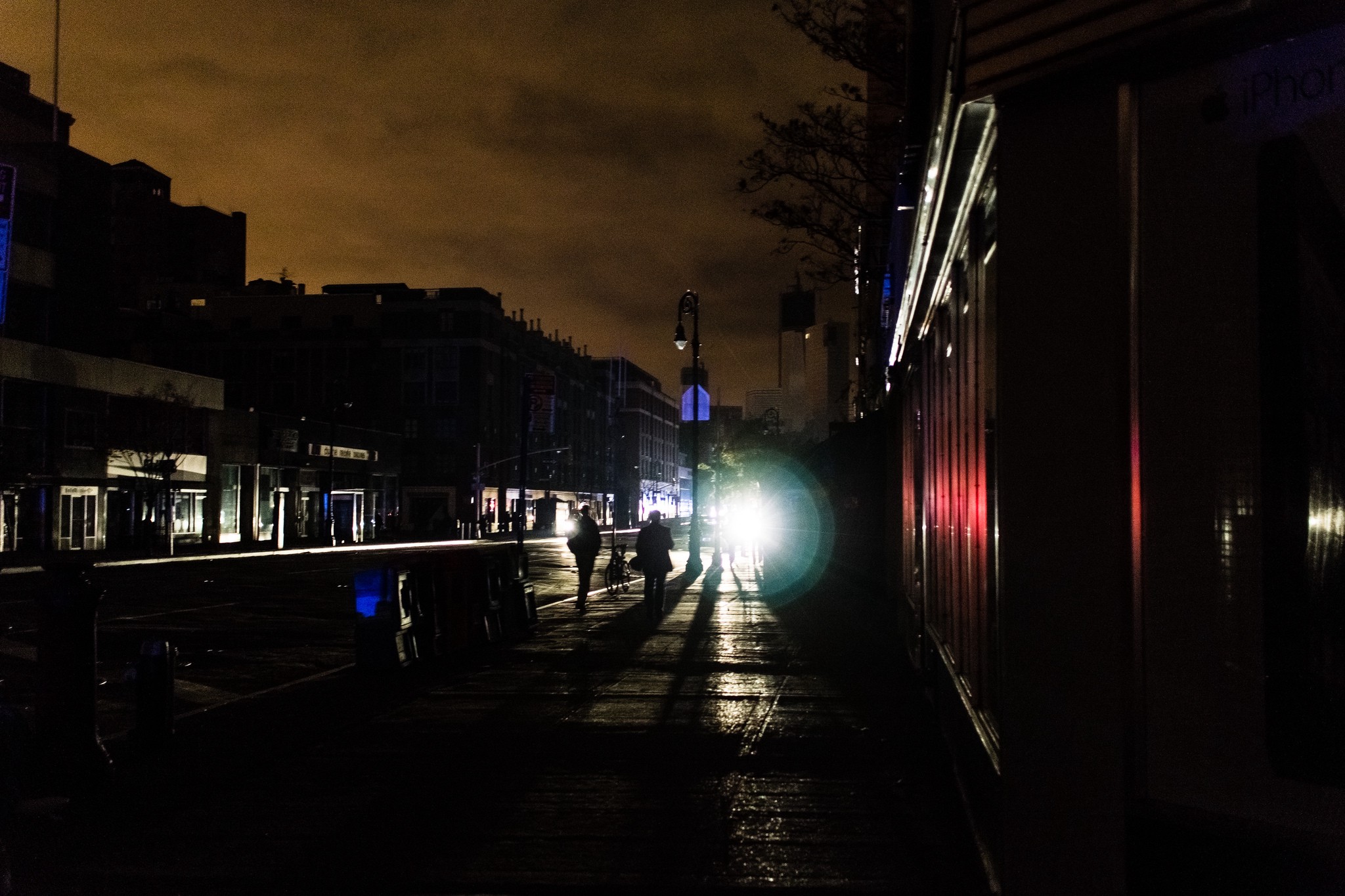
Broadway during a blackout. (Photo: Dan Nguyen)

The jarring yells of a panicky group of commuters startled me from my reading; several people were trying to open the windows of the roasting car, the air conditioning having failed with the power. Nobody knew that this was the first few minutes of the now infamous 2003 blackout that shut down the power grid for an enormous swath of the Northeast, including all of New York City. I shifted, trying to unstick my legs from the vinyl seat so I could see what was going on. I was grateful for a reason to tear myself away from the most terrible story I had read in a long time. Krakauer had just described how the victims’ throats had been slit — the murders a fulfillment of God’s will. The series of events that led up to his crime included the Lafferty brothers’ embrace of the Mormon tenet of personal revelation: God had told Ron and Dan to leave mainstream Mormonism for a fundamentalist sect, and to convince their other four brothers to join them. God had also told them to practice polygamy, just as the Prophet of this new sect commanded. Ron’s spouse refused to let him wed other wives, and ultimately left the marriage — with support from Brenda Lafferty, the wife of Allen, the youngest of the Lafferty brothers. God told Ron to kill Brenda Lafferty, whom both brothers blamed for abandoning the marriage. Ron and Dan Lafferty, following this revelation, obeyed God and murdered Brenda and her baby daughter Erica.

People on the train were starting to panic; passengers had begun to notice no one had cell reception. This was just two years after 9/11 and most people in New York had learned that it was no longer foolish to assume the worst. A conductor appeared and informed us that the train and every station on the line had lost power completely. The problem seemed to be huge; the train and everyone on it would be stuck on the tracks indefinitely. Every able-bodied person was advised to exit the cars and walk down the tracks about half a mile to a nursing home — the closest facility to the train tracks the conductors had been able to find in any direction.

This was just two years after 9/11 and most people in New York had learned that it was no longer foolish to assume the worst.

I thought about trying to call my husband, to tell him what was going on, but like everyone else’s, my phone was useless. Not that I really wanted to talk to him. The marital bliss I had naively expected from newlywed life had not materialized in the year since our wedding day. From the outside, we appeared to be the yin-yang of couples, a success story of “opposites attract.” I was a devout Mormon; he was a lapsed Protestant. I commuted to New Haven to manage HIV/AIDS studies based in India and South Africa, and volunteered at organic farms in my spare time. He worked at a Midtown bank. I was a Democrat; he was a Republican. But things were not going well. I used my job in New Haven as an excuse to spend a large part of the week away from my new husband. I looked forward to my frequent overseas trips as an escape from the disappointments of our marital bed. Both of us were paying the price for my religious devotion. My unquestioning obedience to the revelations of an 80-year-old Utah man, Gordon B. Hinkley, the current Prophet of the mainstream L.D.S church at the time, had precluded us from having sex before our wedding night.

After the doors had been pried open by hand, passengers awkwardly lowered themselves and their possessions — strollers, briefcases, purses, and luggage — several feet from the car to the ground and began walking down the tracks, straight into the glaring summer sun. People stumbled over the rails, walking tentatively, not really knowing where the hell we were going. One train conductor had run up ahead, his arms waving in the distance at the point where passengers should veer off the tracks, duck through a hole in the wire fence, and spill onto the perfectly manicured lawn of a large white building. But the nursing home wouldn’t let anyone inside. Groups of passengers would arrive five or ten at a time, buzzing and knocking on the glass doors to be let in to use the bathroom, the phone, or get a drink of water. Again and again, a disembodied voice would crackle through a small speaker by the doors, saying no one could enter the building for fear that so many visitors and germs would infect the frail and elderly residing inside. Every few minutes the scene would repeat itself with people throwing up their hands and despondently plopping down in the grass. The pristine lawn, peopled with overdressed passengers, looked like the scene of the saddest picnic ever: hungry, thirsty people in torn skirts, broken heels, and sweat-stained dress shirts, sitting on briefcases and suit coats spread out like blankets, waiting for food, water, or at least a ride home.

23rd St. during a blackout. (Photo: Dan Nguyen)

Faced with the prospect of being stranded indefinitely, I turned back to my book and read the entire story throughout the next six hours. I couldn’t put it down. At one point someone placed a tiny cup of water and a package of Lorna Doones next to me. I unwrapped and nibbled at a cookie until I forgot about it, letting it melt in my sweaty hand. I remember needing to pee and forgetting about that too. When I finished, I felt hollowed out. Ashamed. It would have been easy to convince myself the book had nothing to do with me or anything I believed in — the subjects of this narrative were disenfranchised men whose financial failings, thirst for power, and desire to fuck other women prompted a libertarian rejection of the rule of law, and delusional revelations from God justifying lecherous misdemeanors and heinous crimes. But there were too many parallels between Under the Banner of Heaven and the revered founders of my own religion. Much to the official L.D.S. Church’s chagrin, a wealth of historical evidence suggests these prophetic figures were similarly motivated and guilty of many similar acts of deceit and violence, just short of cold-blooded murder. They had practiced polygamy — often pressuring underage girls to become sister-wives. They embraced the selective use of violence to achieve religious goals. They lied, cheated, vandalized, and committed other crimes out of economic desperation and deluded religious conviction. Krakauer did not try to blame Lafferty’s actions on the official L.D.S. Church. But by explaining the historical circumstances surrounding the religion in which Lafferty was raised, Krakauer laid out, clearly and succinctly, with cited and accurate sourcing, many details and events I had not previously seen told in such a public, compelling, and engaging way.

I read the entire book throughout the next six hours. When I finished, I felt hollowed out. Ashamed.

What really bothered me was that this book had taken what I, and many (but definitely not most) Mormons, knew as our dirty little secrets, and told them in scintillating detail to the entire pop-culture reading public. Prior to this book, the historical peccadillos and transgressions of early Mormonism had been relegated to marginal academic explorations. But this book was now on the shelves at T.J. Maxx and Costco, at every Hudson News in every airport across the United States. Krakauer’s book was the first chink in the censorship fortress the L.D.S. church and its members had been building around themselves for as long as I could remember. It was hard to hide from information — previously only available by digging through the dusty stacks in a library — that now occupied the New York Times bestseller list. That everyone from your dog walker to your barista was reading on their lunch breaks.

But more than having to face my neighbors, co-workers, and even the damn mailman who I had seen resting in his truck, the book spread over his face while he napped, I had to face myself. I had to admit that the real reason I resisted reading this book was because the L.D.S. Church didn’t want me to, had told me for my whole life not to exercise my own judgement. I had done so many things “because the Church said so.” I went to church for over three hours every Sunday. I watched men, and only men, perform religious rites and hold leadership roles. I paid 10% of everything I earned to the Church. I had never tasted wine. Enjoyed a coffee. Smoked a cigarette. I spent years of my life reading and studying scriptures that were likely fabricated by a 14-year-old farm boy turned charismatic cult leader. I accepted the need to wear the weirdest, most unsexy, knee-length underwear because the L.D.S. leadership said that God had commanded it. Instead of trusting my body and my instincts about sex I had trusted the Church; I hadn’t had intercourse with the one partner I had committed myself to for the rest of my life.

That’s when my shame for my thoughtless obedience, the sugar from the cookies, dehydration, fatigue, and growing sense of how the fuck was I going to get home — and what was waiting for me when I got there — hit me. I started to weep and couldn’t stop. I didn’t know what to do with what I now realized the LDS Church had so effectively taught me; with a marriage I had too cluelessly entered; with this fucking book that I had convinced twelve other L.D.S. women to read.

Another passenger sitting nearby asked me if I was okay. I couldn’t answer. Misinterpreting my tears for the despondency of the power-grid situation, he said “Don’t worry. Everything is going to be alright.” Noticing the book in my hand, and possibly attempting to distract me from the fact that the sun was going down and that we might all be sleeping on the lawn that night, he said, “Hey! That’s Krakauer’s new book! I totally want to read it. I read Into Thin Air in like an hour. Is this one any good?” I wiped my tears and told him it was. That everyone should read it. “Here, take it.” I said. He looked at me, surprised, and started to walk away. Then he stopped, considered me for a moment, and said, “I talked to one of the cooks at the nursing home who was smoking out back. He’s driving back to New York City and willing to fill his car with anyone who’s got $50 in cash. There’s one more seat in his car. I’ll float you if you don’t have the money. You seem like you really need to get home.”

I accepted his offer. The four other passengers and the driver kindly ignored my silent tears as we drove. I exchanged email addresses with the guy who now had my book and to whom I owed this ride and 50 bucks. We went as far into Manhattan as we could before eventually being stopped by a cop with flares. The police had declared a moratorium on driving. “We’re worried people will get hit by cars.” I got out at 120th Street, started walking, and soon understood what he meant: so many people were on foot, trying to get home, that the sidewalks couldn’t contain everyone. The streets were full of pedestrians, walking very slowly, trying not to trip, fall into a pothole, or bump smack into a streetlight or one of the thousands of garbage cans, newspaper stands, or other random obstacles strewn across the city.
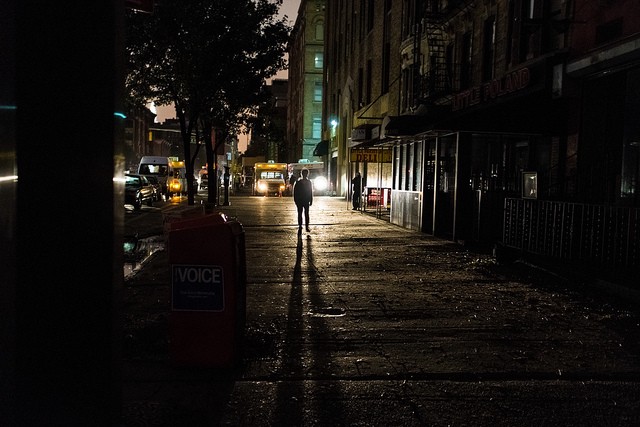
East Village during a blackout. (Photo: Dan Nguyen)

During those three hours of walking in almost total darkness to Magnolia Street in the West Village, I felt more lost than I have ever felt in my life. The night was moonless. No one I saw had a flashlight — every store that sold them had shuttered for fears of looting. I couldn’t see people until they were literally one or two feet in front of me. Street signs took minutes of scanning to find. There was nothing to do but keep walking. I remember pausing to catch my breath and realizing I was in Times Square, inky and lightless as the deepest woods I had ever camped in. It was beautiful and stupefying — like the truth I had been realizing and hiding from and reminded of by Krakauer’s book. The truth about my religion, and about myself. I just stood there looking at nothing for a long time. I had no fucking idea what to do with any of it.

I was in Times Square, inky and lightless as the deepest woods I had ever camped in. It was beautiful and stupefying — like the truth I had been hiding from.

When I arrived at my apartment on Magnolia Street, I walked up the three flights and let myself in the front door. I thought my husband might have been worried, and I pictured him rushing to the door to greet me. He was sitting on the fire escape, drinking a beer. He heard me come in, but didn’t get up. Through the light leaking in from stars and candles from our neighbors windows I saw him look my way, then turn back toward the street. I heard him sigh. He took another sip of his beer. I knew in that moment: he’s not relieved that I’m okay. He isn’t elated that I made it home, miraculously, on the craziest night either of us had ever experienced in Manhattan. He isn’t happy to see me. He wasn’t worried. He doesn’t love me either.

But this moment of truth would be like many others. I didn’t know what to do with it. I didn’t know a lot of things then. I didn’t know that one of the twelve women in my book club had never read anything about the “real” history of the L.D.S. church; my book choice would completely devastate her faith. She never attended church again after we met to discuss Under the Banner of Heaven. I didn’t know I would try so hard to keep believing for another two years before leaving Mormonism behind for good. I didn’t know it would take me another nine years and three children to leave a doomed marriage. Or that, fifteen years after reading Kraukauer’s book, I would get so much more out of having coffee in bed with my boyfriend on Sunday mornings that I ever did from attending three hours of church on the Sabbath. Or that life, without the rote answers, clear direction, and all-encompassing structure of Mormonism to guide me, would feel so much like stumbling around slowly in the dark, trying to find my way. And that this feeling might last the rest of my life.
A Culture of Violence is a Culture of Shame

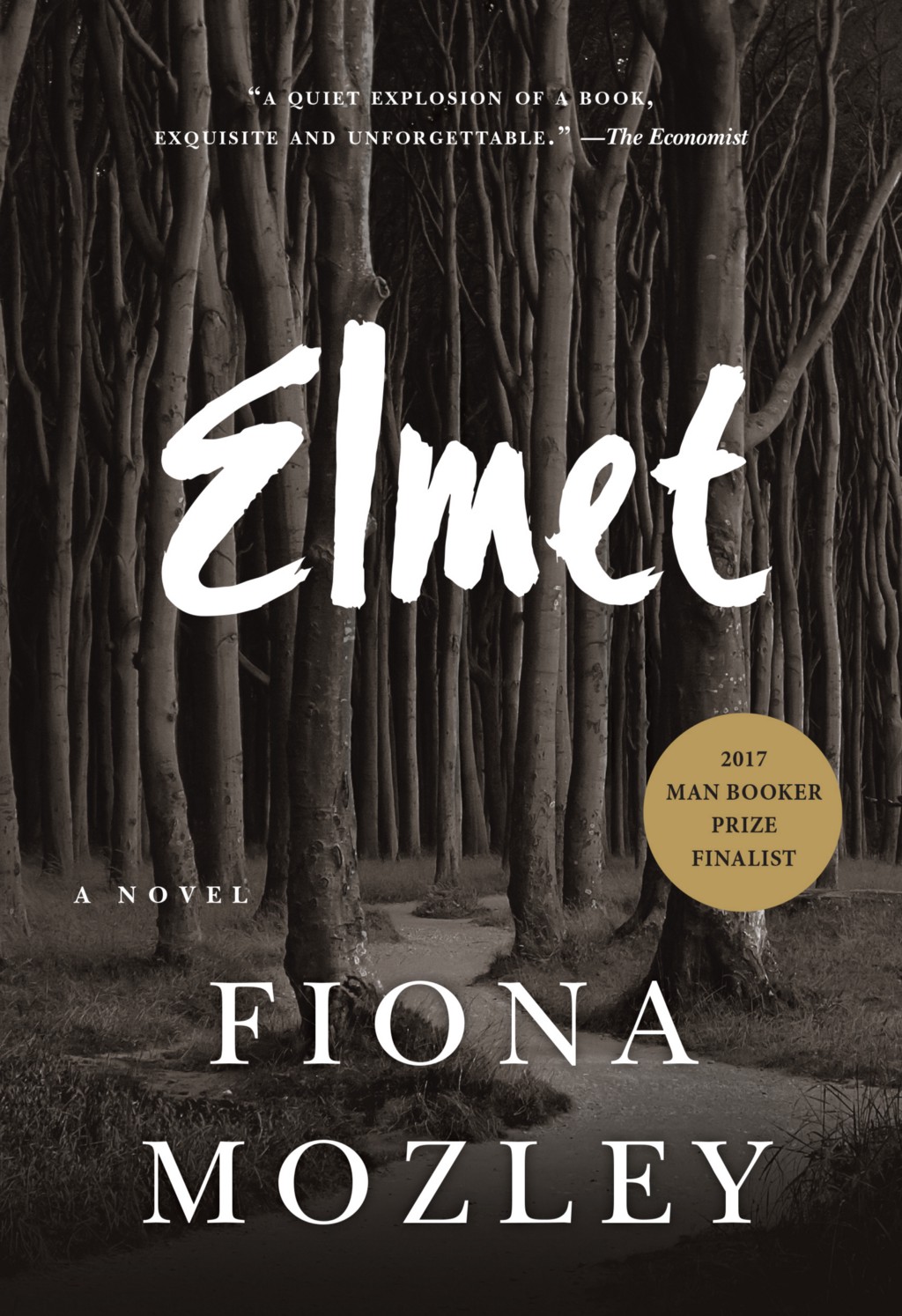
Fiona Mozley’s debut novel, Elmet, shortlisted for the Man Booker prize, is a firestorm of a story. Through carefully woven characters, Mozley spools a tale that simultaneously homes in on the dynamics of a family and assesses the systemic issues within a rural society.

Purchase the novel.

Teenagers Daniel and Cathy live with their father, John, in Northern England. John earns his living from his aggression and strength — he’s an undefeated bare-knuckle boxer — yet his relationship with his children is centered on tenderness. While the sensitive son and his tougher sister struggle with the that roles society has prescribed them, together, the family is carving out what seems like a sustainable life in a post-industrial, rural landscape. But when John begins to organize his neighbors to fight for better living standards, what begins as a property squabble with a landlord spirals out of control, affecting every aspect of the family’s life. Elmet is more than the story of a family fighting for its livelihood. It’s about the ways that childhood shapes who we become as adults, and how violence is embedded and perpetuated in our culture.

Mozley and I spoke over email about the dangers of a society that rewards aggression and functions on individual shame.


Rebecca Schuh: The book’s epigraph is perfect:

“Elmet was the last independent Celtic kingdom in England and originally stretched out over the vale of York…But even into the seventeenth century this narrow cleft and its side-ginnels, under the glaciated moors, were still a ‘badlands,’ a sanctuary for refugees from the law.”

Is it a quote you knew before you began the novel, or did you find it while working on the manuscript?

Fiona Mozley: I came to that particular Ted Hughes collection (Remains of Elmet) after I had nearly finished the novel, which was unfortunate as it is full of real gems that would have complemented the writing process perfectly. That said, the quotation — which is from the introductory material of the collection — was a convenient way to quickly explain to the reader why the novel is called Elmet. I didn’t want to discuss the ancient kingdom too much, as there was a danger of detracting from the story’s contemporary concerns, but the reason I gave it that title was to evoke a sense of antiquity; to remind the reader that the boundaries of the landscape have not always been the same. I wanted it to be a shadow; a ghost, if you like.

RS: The chapters of the book are structured in an interesting and particular way, with longer, conventional chapters interspersed with shorter, italicized vignettes. It creates an effective sense of duality. Can you describe the process of reaching that narrative structure?

FM: The structure of the book is the product of collaboration. I submitted it to my agent, Leslie Gardner, without any of the italicized vignettes in which Daniel travels north. She suggested to me that the manuscript might require something else to bind the novel together. She asked me to reflect on why Daniel, the narrator, wanted to tell this story. It was this that prompted me to write those extra chapters in the separate and, at times, indistinct time-zone. I am very glad that I did. She was right I think — they do bind the novel together. After Elmet found a publisher in the UK, my editor there also wanted me to accentuate those passages. I don’t mind being up-front about this collaboration, or admitting that the original idea to include those vignettes was not my own. Writing can be such a lonely task, and I think those rare moments of collaboration are something to be lauded rather than dismissed.

RS: You explore a really interesting side of the parent-child bond. Can you talk about what fascinates you about that particular relationship?

I am fascinated by interactions between people who are very different, whether those differences are in background, temperament, or even physicality.

FM: I am fascinated by interactions between people who are very different, whether those differences are in background, temperament, or even physicality. Families are interesting because, theoretically, there are profound similarities between their constituents. And yet deep differences can also emerge. In Elmet, the three characters of the central family — Daddy, Cathy and Daniel — are bound tightly by their love for one another, but they are also each confused by how the other two members of the family unit operate. For example, Daddy cannot understand how Daniel and Cathy can possibly survive in the world when, in terms of physicality, neither of them has anything like his strength or magnitude.

RS: Early on in the book, there’s a passage about Cathy and Daniel carrying childhood games into adulthood. I think this is a common phenomenon — how do you think childhood games shape the way adults interact?

FM: Childhood games are the building blocks of society (no pun intended). The manner in which we learn to interact with each other as children goes on to inform all sorts of behaviors as we get older. Schools can be hostile places, and children can be just as cruel as adults, but the playground can also be a place where children learn lessons in empathy and freedom of imagination. In Elmet, Daniel and Cathy find both these things to be true. Through their games, they learn about social relations and discrepancies in power. They also learn to explore these discrepancies, and to question what they see.

RS: I loved the line, “A naked body is just a naked body. Shame is only in beholding.” How did you develop the theme of shame throughout the novel?

FM: This passage is again about the impact of cultural representations and expectations on a person’s sense of self. We are told from a very early age that different parts of our body mean different things. Both Daniel and Cathy learn these lessons, although at the same time both of them find ways to undermine these expectations. I suppose you could also say that the sentence you have quoted was my attempt to present a sort of equivalent for the “tree falling in the woods” aphorism. A naked body alone in a room (or alone in a wood) is a very different thing from a naked body among a crowd. It’s all about situation and perception.

RS: At one point, Daniel says, “I had an inside sort of head. She had an outside sort of head.” I was intrigued by this description and the passage that followed — can you expand a little on that idea?

A naked body alone in a room is a very different thing from a naked body among a crowd.

FM: Daniel is a reader and also a writer, and as with many people who like to engross themselves in those activities, he spends more time reflecting on the world around him than inhabiting it. Cathy is the opposite. She is a person of action. She is more interested in that which is external, outside her own head, be it the copse and the countryside around the family’s house or the processes of building, digging, chopping wood, running, hunting. I wanted to establish a contrast between the intellectual and the physical.

RS: A friend of the siblings, Vivien, says, “A lot of men feel like they should be violent. They grow up seeing a violent life as something to aspire to.” This quote felt especially potent given the current context of male violence being revealed in the press. Can you talk more about that quote and what drives men to violence?

FM: Our cultures seem to be obsessed with violence. That’s an obvious thing to say, but it’s true. The kinds of aggression that are revealed in Elmet are informed entirely by this cultural obsession rather than by any lived experience. I am lucky in that I have had very little first-hand experience of violence; most of what I have seen has been mediated by the arts: by literature, theatre, film, the visual arts, or simply the news, which is, of course, authored like any of these other aforementioned media. Does this make my writing on the subject less authentic? Well, that’s a question for someone else to answer, but I do know that Elmet was, in part, an attempt to explore the deep impact that cultural representations of violence have on both men and women. Some of the male characters in the novel (though not all) find themselves behaving in a manner they think they should behave in. Likewise, Cathy — the narrator’s older sister — is haunted by images and stories of murdered women. As she sees her own body developing into that of a mature woman, her response is that of terror: terror at finding herself, likewise, the victim of violence.

In your question, I think perhaps you’re referring to the recent Hollywood scandals. Is it surprising that men treat women badly in Hollywood? Well, I have no experience whatsoever of that industry, but like most people I have watched a lot of Hollywood films. Are female characters treated badly in Hollywood films? Yes. So I guess there’s your answer.

RS: How did you go about representing a society in decline?

FM: That’s a tricky question. For one thing, I grew up and still live just north of the area I describe in Elmet, and I am not sure I would say it’s in decline! However, it’s certainly true that the novel focusses on the troubles faced by industrialized regions in the post-industrial era. Once the whole area was a forest, then it was a patchwork of fields and agrarian settlements, then mills and factories and coal mines sprang up, and the people who had worked the land were given jobs in these new industries. When the mills and factories and coal mines stopped being profitable they were closed, but these people couldn’t then return to the land. So where do they go? Politicians necessarily work on short-term problems and short-term solutions — that’s the nature of their jobs. But I think it’s also important to take a step back and consider the wide expanse of centuries that recline behind any given moment.

As well as revealing the conundrums posed by regions like Elmet, it was also my desire to touch on some possible solutions, even if those solutions don’t find a full form over the course of the narrative. There are moments of hope, of community spirit, of tenderness. Fundamentally, these are the solutions that these regions require. Yes, it’s true that “community spirit” and “tenderness” do not form coherent social or economic plans, but it’s sentiments such as these that must be at the foundation of any strategy. The biggest obstacle to the regeneration of certain neglected regions — both in the U.K. and possibly in the U.S.A. (though I admit I am not as informed about the situation there) — is that there doesn’t seem to be a genuine desire among policy-makers to consider the plights of these communities. And how do we solve that? Well, by trying to induce a bit of tenderness.

My Old Man and the Sea

After my father’s death, I ended up in what I came to call “The Worst Apartment in Daytona.” Muggy and humid, the linoleum seethed with cockroaches at night. The stench of my next door neighbor’s weed seeped through the wall and, more than once, I watched from my front window as the parking lot filled with lights and sirens.

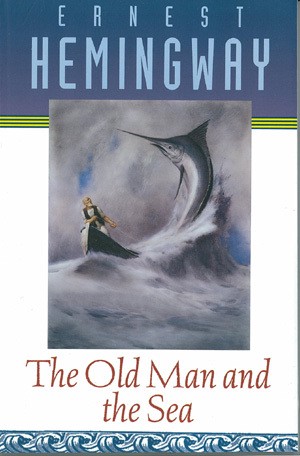
After six months of working nights as a certified nursing assistant and coming home to an apartment packed with the detritus of my former life, I ripped open the cardboard boxes of my dad’s books to seek refuge. He owned four copies of The Old Man and the Sea, one for each of our bookshelves. When I asked him why, he said the book was like a barometer. That with each new decade of his life, he would read the novel again, and it would tell him who he was. Every time he read it, he saw Santiago’s marlin as something different: his brothers’ deaths, loneliness, our failing horse farm, my mother’s mental illness.

My dad was one of those people who always seemed to have the right answer. I would have given anything to talk to him again. I always thought of things, like jokes or realizations, I wanted to text him, but thought the intimacy of reading his books would be more than I could endure. I was afraid reading the book again would be like having a conversation with him. I would want the novella to last forever and, unable to finish it, I would become stuck in my grief. The problem was, I didn’t want to grieve. I didn’t want any of this. I wanted my old life.

Reading The Old Man and the Sea again was like Santiago, the book’s protagonist, going out to fish: he hoped for a catch, sure, but he didn’t anticipate he would catch that behemoth marlin. He thought he would be back quickly. So did I. I didn’t understand grief before. I thought people who were dragged under the surface of it were weaker than me. But I soon found grief was a much bigger fish than it looked from a distance. Up close, it was a marlin the size of my boat, and I thought, like Santiago did, that either it would take me or I it; there was no in-between.

When I opened the book, a faded receipt fell out. It was for Gooding’s Supermarket in Silver Springs, FL, close to my parents’ horse farm. The date stamp at the top read 05/27/90, 39 days after I was born. My dad bought pineapple-orange-banana juice, pork ribs, and water. He was running the horse farm then. As I read I tried to imagine what he was thinking. Inexplicably, he underlined each instance of the word “urinated” and blued in the ‘o’ in whore. No other marginalia waited to clue me into his thoughts.

Who was my dad each time he read this book? If I hadn’t moved home from college when he was first diagnosed, I would hardly have known him. Before then, I knew him as any child knows a parent. He was an archetype, a stand-in, not a fleshed-out character. I knew a list of things he liked: planes, books, history, and cooking. I knew a rough outline of his life, with many spaces held by “I’ll tell you when you’re older.” In the four years between his diagnosis and his death, we spent hours, weeks, days together. He filled each of these moments with stories.

I didn’t understand grief before. I thought people who were dragged under the surface of it were weaker than me.

When he was a teenager, his favorite part of being a stock boy at Publix was getting there at 4 AM, before everyone else, and planting a lingering fart in the freezer. A few years later, when he was driving a delivery truck for Hughes Supply, he nearly got into a car accident with a pretty girl, because he was trying to impress her. Like most of his stories, this one was apocryphal. It included the truck catching air from an overpass and slamming down so hard that all the bathtubs in the back cracked. And for the girl he ran off the road, he tried to smile his way out of it. This got him a date at least, but she wasn’t the one.

The dad who arose from his stories wasn’t the same guy I knew as a kid. This version of my dad was a charmer and a goofball. He surfed and rode motorcycles. Once, a woman moved in with him because he cooked her coq au vin. That woman was later the classroom mom of my kindergarten. He taught me life was funny like that.

To this day, I don’t know everything about him. I only know his stories and the stories others told. But I do know enough that I can guess what the marlin was each time he read The Old Man and the Sea.

Dearest Jenny: Reading My Chinese Father’s English Letters

As a young man, the marlin was hope, lost to tragedy. With his brothers’ deaths — his younger brother Timmy killed in an accident involving a lawn mower when he was a little kid (seven, I think?), and his older brother John in a motorcycle accident while he was on shore leave from the Navy in the Keys. These two deaths shattered everything my dad believed about the world. Before that, he believed, as many people do, that bad things only happen to bad people. He read The Old Man and the Sea soon after that, and he saw Santiago’s fortunes rise and fall with the marlin. Santiago, who seemed virtuous and hard-working, lost everything. On his first reading of The Old Man and the Sea, my dad saw that life could be fickle and cruel.

In his mid-20s, my dad’s marlin was love. He once told me that women get over love easier than men, and I think he said that because of someone in his past, a woman who died in a car accident a week before he was going to propose. If he ever told me her name, I can’t remember it. Despite his love of storytelling, he kept certain memories guarded, especially the ones about death. Did he think he was guarding me? Did he think if I knew how dark the world could be that I’d lose hope like he did?

Did he think he was guarding me? Did he think if I knew how dark the world could be that I’d lose hope like he did?

He met my mom on a blind date when he was 28, and they were married six months later. She was a whirlwind of emotions. A storyteller, too, the words she wove around our lives elevated them to the level of myth. According to her, we were southern gentility. Her favorite book was Gone with the Wind. A champion equestrian and racehorse trainer, like my dad, she had struggled against grief: her brother shot himself in the head, and her father, a lauded neurosurgeon who mapped the brain with Wilder Penfield, mixed sleeping pills with wine and never woke up.

It makes sense that their love was tumultuous. My childhood is marked by arguments about inconsequential things. In particular, a spat about eggs benedict carried on for more than ten years. But the early days of their marriage, at least according to my mom’s and his stories, weren’t so contentious.

By the time my mom became pregnant with me three years into their marriage, she was running Arabian Nights Farm, one of whose horses had won the Arm and Hammer Classic. Before then, my dad had never ridden a horse. But while my mom was pregnant, and for a while after I was born, my dad, the city-boy surfer, ended up running the farm.

What was his marlin then, 39 days after I was born? Was the marlin me? Was it my life? He always said he wanted a better life for me than he had. I thought that meant the American Dream sort of thing: house, car, job, family. Except he had all that. Nonetheless, he seemed disappointed. He wanted to be a naval aviator. He wanted to go into space. He wanted to be a writer. He fell in love over and over again. His life hadn’t turned out the way he planned, but disappointing lives don’t make the kinds of stories he told.

What was his marlin then, 39 days after I was born? Was the marlin me? Was it my life?

Maybe when he said he wanted me to have a better life, he meant a life not full of grief. But that, I think, would be a bleak sentence. A life without grief would be a life without love.

My problem has always been that I fall in love with everything. That’s why I’m a writer. It gives me free rein to pursue, to obsess. My dad had the same problem. I believe he saw himself in me and that scared him. He wanted to protect me. That’s how I was his fish.

I discovered that one night with the rain sloshing down in The Worst Apartment’s flooded courtyard, and the more I thought, the more I understood that grief was not my fish. Just like I was my dad’s, he was mine: he spent years of his life amassing enough money so that I might have all the chances he didn’t. All the possibilities had hung before me. They were the shore at the other side of my grief, far away, but they were there.

I was living in a hellhole. I hated my job. I didn’t have family to turn to. I didn’t know where I was going. Everything he’d done for me, I was afraid that I had wasted it. He continued to work two years into his illness to make sure I went back to school. In those years, I commuted to class, dreamed of being a writer, and came home to watch as his condition worsened until he could no longer walk. I had just barely graduated before then, but I couldn’t work, because he needed me. Our savings dried up, and after he died, I struggled to find my place in the world. I was a caregiver for the elderly, because I couldn’t get another job. My dream of being a writer — of being anything other than in poverty, struggling paycheck to paycheck — seemed as far as a distant shore.

All the possibilities had hung before me. They were the shore at the other side of my grief, far away, but they were there.

It’s been almost four years since my dad died. I still think about him, but it’s starting to hurt less. I’m a teacher and a writer now, and I feel like I’m doing something, that all the heartache he accumulated in his life was not wasted on me.

Most importantly, I think he’d be proud that I didn’t let the marlin sink me. I passed the sharks, weathered the expanse of grief to find the shore…but unlike Santiago, I made it home with my marlin, because of it. Those last months of his life showed me I didn’t need to lose the thing I was struggling against — whether it was faith, love, grief, or disappointment — to make it back to shore.

My dad experienced so much grief and heartache, but in the end, even though he was dying, even though he was afraid, he was happy because he had me.

“I would do it all over again,” he said with tears in his eyes the last time he left the hospital. “The divorce, cancer, everything. Because if that never happened, you would’ve never become my friend.”

They All Laughed at Edwidge Danticat

During my second fiction workshop at my MFA program, my professor asked us each to take turns bringing in a favorite short story. The idea was that everyone in the classroom would read and dissect each short story, and that being exposed to the different tastes of our classmates might help us gain a broadened perspective on what short fiction is able to do.

For my week, I chose “Children of the Sea” by the Haitian American writer Edwidge Danticat, from her National Book Award-nominated collection Krik? Krak! The story had been my favorite short story since I’d come across it in undergrad. It was a story that broke my heart; a story that, when I finished, I simply closed the book and had to take a moment to breathe. I was so moved by the story that first time that I wrote a blog entry about how much it inspired me. I can’t remember the exact words I used, but the entry amounted to both a realization and a promise: that the thing I most ached to do was write something that would make someone feel the way I felt after reading this piece; that no matter what else I might do in my life, I wanted at least to try, once, to move someone with my words.

So, no big deal. I was only bringing in the story that set me on the path towards being a writer.

I worried a little that this wouldn’t be considered a “well-read” choice. I wasn’t entirely sure what a well-read choice would be. I didn’t major in English in undergrad (I majored in psychology, and I don’t regret it). This means that, unlike many of my peers, I was never forced to read many “classic” canonized works — to this day I have yet to pick up any Hemingway, Steinbeck, Twain, Austen, most of the Russians. I wasn’t exposed to Joyce or Flannery O’Connor until after college. I read Wilde for the first time two years ago. I’ve read a single book by Faulkner, never finished Anna Karenina, and struggled through D.H. Lawrence’s Women in Love when I took it upon myself to read it. I don’t feel apologetic for this, but at the time, entering an MFA program — one I had been rejected from the first time I applied, no less — with this lack of knowledge meant that I felt a touch of imposter syndrome. Unlike my peers, some of whom confided to me that they felt the assignments were just a rehash of what they’d already learned in undergrad, I had mostly only read contemporary literature, novels I picked up in bookstores from the “New Releases” shelf. While I read a lot, the books I chose weren’t exactly what I figured those students who studied literature or writing seriously read during their academic years.

But when it came to Danticat, I was confident that the story’s emotional power would make clear why I’d chosen it as my favorite. “Children of the Sea,” if you haven’t read it, is written in epistolary form, told entirely in letters ostensibly traded by two young lovers in during a period of dictatorship and political unrest in Haitian history. Danticat’s language is lush, brimming with emotion, evocative imagery, and lyricism. It’s an unbearably sad story, highlighting the helplessness yet fragile hope of the lovers in the face of political machinations beyond their control.

The story was too maudlin, too emotional. They felt the love was contrived. They thought the metaphors were overwrought. They felt the tragedy was unconvincing.

The other workshop students intimidated me. Unlike me, they were mostly in their second year; unlike me, they were almost all white. They were opinionated and sure of themselves, having had an extra year to grow confident in their ideas, I guess. They were also less welcoming than the people I had met in my own cohort, and so, aside from a couple of exceptions, I hadn’t become friendly with them.

I don’t recall the discussion of the story being governed by workshop rules; that is, I’m certain I was allowed to speak and participate in the conversation. But, either because I was shy or because I was anxious, I don’t remember offering my thoughts on the story as it was being discussed, though I’m sure I was asked by the professor to give a brief introduction. The other students, never shy to share their thoughts, immediately jumped in. I can’t remember exactly how they phrased their criticisms, but I remember the gist: the story was too maudlin, too emotional. They felt the love was contrived. They disliked the form. They thought the metaphors were overwrought. They felt the tragedy was unconvincing. They felt it was the work of a young writer, an inexperienced one — certainly one they’d never heard of. (Danticat was indeed young at the time, and this was her first collection, but she had won several awards by that point, including the MacArthur Genius Award only months prior.) One by one, they tore the story to shreds. They even ripped apart the story’s last two lines: “From here, I cannot even see the sea. Behind these mountains there are more mountains and more black butterflies still and a sea that is endless like my love for you.” It was a quote I loved and had memorized and put in my email signature all through college, but they called it a vague and meaningless metaphor.

Not a single person liked it. I shrunk in my seat in embarrassment and shame. I remember trying to justify my choice in bringing in the story. “Maybe it’s because I’m a young writer too,” I said quietly. “Maybe that’s why I didn’t see all these flaws. Maybe that’s why it speaks to me.”

At break, I stood outside the building with some other people, including a white guy who was the only second-year student I was friends with. He looked at my face, took a drag from his cigarette, and then gently admonished me: “Don’t apologize for what you like. You like what you like. Stand by it.” I nodded, grateful for his kindness, but I noticed that he did not say he liked the story. I left that class burning with humiliation and self-doubt. Perhaps I simply didn’t know what good writing was, I thought. Perhaps I was so under-read that I had no sense of what made a story successful, what made it a failure, what was too overwrought, and what was elegant in its simplicity. I had embarrassed myself in front of my peers, outed myself as someone who had terrible taste in literature, someone who couldn’t determine a good sentence from a bad one. I went home that day second-guessing myself, wondering if I would ever be able to write a good piece of fiction given that my own taste in writing was so clearly off.

It was only several years later, when I was already out of graduate school and I began meeting other writers of color, that I discovered that not only did other writers know of Edwidge Danticat, but that she was beloved. I watched other people’s eyes light up the way mine did when they talked about her work, or become bashful and shy like I did when meeting her at a signing. I listened to these writers of color — many of them descended from immigrants like me; many of them women, like me — talk at length about how Danticat’s work served as a model and inspiration to them. The longing, the inherited pain, the oral storytelling quality, the poetry, the magic, the duende — all of the things about Danticat’s work that speak to me were qualities that also spoke to these people. For the first time, I began to realize that it wasn’t that I’d had bad taste — I’d simply been privy to the way a white audience reads something when it isn’t intended for them, when it isn’t rooted in the language and cues that they have valued as “good.”

I began to realize that it wasn’t that I’d had bad taste — I’d simply been privy to the way a white audience reads something when it isn’t intended for them.

It pains me now, to think of the years in between that workshop and when I realized other people loved Danticat. Those were years I spent trying to excise the emotions from my work, to wrestle my work into something palatable in a conventional (read: white) way. I read Carver and tried to figure out if I could ever be as sparse or economical as he was. I read the pithy, quirky, ironic stories of my peers and wondered if I could somehow become more wry, more darkly funny, or else more serious and filled with restrained gravitas like the canonical writers some of them looked up to. This isn’t to say that there weren’t things I had to improve upon — I was a young writer and I was prone to using too many metaphors, towards prose that veered towards purple. But my crisis was an existential one, where I wanted to be a different writer than I was, where I wanted to care less about being moved — or perhaps I wanted to be moved in a different way, the “right” way.

This illustrates, I think, the danger of a limited canon not just for readers, but also for young writers trying to find out how best to express the heart of who they are. It isn’t just about having mirrors, where readers can see themselves reflected in literature, and windows, where readers can understand other people’s experience through literature (though, of course, that’s a big part of the argument for diversity and inclusivity). It’s also about offering different models of work. What gets published, what’s deemed worthy — these are things selected by gatekeepers whose standards of what passes for “good” are rooted in their own worldview, histories, and traditions. Though this is starting to change, these gatekeepers still overwhelmingly represent the dominant culture. When they deem something “not good” instead of recognizing that they simply don’t understand it because it hails from a different literary and cultural tradition, a cycle is perpetuated where the same “acceptable” work gets made over and over again — and anything else is derided. Those in the margins are left questioning the validity of their work and stifling their impulses as artists, or else (and I am grateful for the folks who do this) defiantly making the work anyway, with the confidence that their work is meaningful, despite what those in power might say — and despite the fact that they may never be rewarded or recognized.

Sometimes, a marginalized writer breaks through; Edwidge Danticat, of course, has been lauded by gatekeepers, as is evident from her many awards. Still, a few token writers will never be enough to break people out of the mindset that this stuff isn’t worthy. I do wonder if my classmates might have looked upon the story differently if they’d known of Danticat’s many achievements, though. I wonder if that, in some perverse sense, would have “legitimized” her. I think it would.

I’ve reread “Children of the Sea” many times since that day in that workshop, and have even taught it to students, and while I can recognize that it’s an imperfect short story, it still moves me the way it did all those years ago, before I even knew I would become a writer. I proudly stand by my love for it, and to this day, Danticat remains one of my most cherished influences. Had I not found my community, people who confirmed what I had known in my heart — that Danticat and writers like her speak to people like me, and that alone confirms their merit — I might have wasted more time trying to become a writer that I was not. I might have continued in vain to write towards what I thought those white readers felt was “good writing” in an effort to please and pander to them. I might have given up on writing altogether, uncertain of my own discernment, discouraged by ability to conform. I’m lucky that I did not do any of those things. I’m lucky that I found the people for whom Danticat’s stories were meant, because now when I write, I too, in turn, write for them.

Can a Book About Incest Be Greater Than Its Shock Value?

Double Take is a literary criticism series in which two readers tackle a book’s innermost themes, successes, failures, trappings, and surprises. In this edition, Heather Scott Partington and Ian MacAllen explore Christine Angot’s memoir-inflected novel, Incest.

The central relationship in Christine Angot’s autobiographical novel Incest, translated from the French, is not an incestuous one. It’s a brief, intense love affair between the narrator (also “Christine Angot”) and another woman—an affair that, as the book opens, has fallen apart. But, as one might expect from a book literally titled Incest, the specter of incest—Christine’s earlier sexual relationship with her father—hangs over the narrator’s experience of love, grief, motherhood, illness, and trauma. It’s a provocative book from a consistently provocative (though rarely translated) writer. Our readers ask: is there deeper value beyond the shock? And in what sense is sex, and incest, kind of like writing?

Heather Scott Partington: From the start, I was struck by Angot’s direct, fragmentary sentences. In the beginning, when she’s introducing her romantic obsession, I think it works particularly well to convey her desperation. “Even at this very moment,” she writes, “Have to stop myself from calling her… I call back to say, ‘above all, don’t call me again.” She binds the idea of homosexuality as a choice with her inability to gracefully let the relationship go. She says, “I was homosexual for three months… I was homosexual the moment I saw her.” At first I wondered if this posture on homosexuality — as optional, binary — was intended for shock value. But after reading the entire novel, I don’t think this is a piece of work that gets its value just from jarring its reader. (Though it’s certainly intended to provoke.) Incest is a raw examination of desire and obsession, but I think to reduce it to words like brave would undercut the complexity of Angot’s work.

What was your initial reaction, Ian? Do you think Angot intends her reader to recoil, a bit, from her approach and subject matter?

Ian MacAllen: My first thought was that this book was one about frustration. It manifests itself in multiple ways. Creatively, she is frustrated, but there is also constant tension between concepts like sex and love between both abusive and healthy relationships. There is frustration in expression of these emotions and the cognitive dissonance required to process them. She says, “‘Everything can always be mashed together’ could have been my motto,” and I think that gets to the heart of these conflicts. I’m not sure I see her view of homosexuality as a literal choice, but moments where she is allowing a truth to emerge, one that must coexist with other desires. I see that as an extension of her frustrations as well as part of her recognition that everything is linked.

HSP: I saw it less as frustration and more as an innate inability to change who she is. For me, her true self keeps rising to the surface of both her relationship and her sentences. The “mashing together” gave this text interesting layers. While the narrator reminded the reader continually of the limited term of this relationship, she is unable to leave her love or escape her stylistic tendencies. It is worth noting that Angot rejects interpretation, rejects the idea of readers codifying the narrator’s beliefs or identity in any way, writing, “To take this book as a shit piece of testimony will be an act of sabotage, but you’ll do it. It screws up a woman’s life, it screws up a writer’s life, but, as they say, it doesn’t matter.”

In fact, when the text becomes metacognitive, when — in the second half — she begins to comment on her choices as a writer and try to make different ones, she seems to fall back into the same patterns of layering the story back into itself. She calls it “a miracle of logical disorganization.” I agree with you particularly about the way she links healthy and unhealthy relationships, deliberately crossing a reader’s boundaries.

IM: She feels immutable in that way — and overall there wasn’t much of a change in her through the duration of the narrative other than coming to terms with that inflexibility. I’m not sure I agree that she is actually rejecting interpretation, though. She says, “I associate things others don’t associate, I bring together things that don’t fit together… I highlight opposites.” To consider those relationships demands a level of interpretation. Consider the examples she cites like “blonde-bitch” or “money-hate.” These are fairly abstract associations. Also, the irony is that in a translated work, the whole thing is to some extent already interpreted for us by the translator. As readers of the English, we don’t have the opportunity to read Angot without a level of interpretation imposed on the text. There is no pure text here, unless we go back to the original French.

Who Gets to Write About Sexual Abuse, and What Do We Let Them Say?

Angot is being most truthful when she is discussing her choices as a writer. On one level, I see this book as a treatise on writing itself.

She is struggling to organize the world — or her interpretation of the world. This is the challenge of any writer, and that’s why talking about sex can be so relevant. So much of sex is having control. A writer has absolute control, something that seems to have been lost through abuse, but that she is struggling to recapture through writing. I think this is partly why she includes the definitions of incest and narcissism and desire to seize control of this language — like when she gives a concrete and specific definition of incest:

We call incest a sexual relation without force or constraint between blood relatives to a degree prohibited by the laws of each society. In almost all societies, except for a few cases including Egyptian Pharaohs or the ancient nobility of Hawaii, incest has always been severely chastised then prohibited. That is why it is so often kept secret and experienced as a tragedy by those who engage in it.

So much of sex is having control. A writer has absolute control, something that seems to have been lost through abuse, but that she is struggling to recapture through writing.

HSP: I found myself thinking about the French a lot, too. Many of her linguistic tricks seemed like near-puns (my French is pretty rusty, though). I also had the feeling that a lot of this worked on a different level in the original text.

Again, here we see how two different readers approach a narrative differently. I read the passage you cite — about highlighting opposites — as indicative of how she places objects together without analysis. To me, the novel resists interpretation so stubbornly. Angot underscores this with her flat affect when writing of difficult or taboo circumstances. The narrator’s paired opposites represented a microcosm for how she tells this story. She juxtaposes dissimilar things to provoke. I suppose it’s more accurate to say she juxtaposes in such a way that forces her reader to hold two opposing thoughts at the same time — particularly the idea of parent/child relationships with sexual relationships. This brings me back to my original thought:

I wonder if Angot’s desire to be provocative supersedes the story she wants to tell. She definitely makes me question whether there are some topics that the human mind cannot (and, for reasons of survival, should not) compute.

She definitely makes me question whether there are some topics that the human mind cannot (and, for reasons of survival, should not) compute.

What do you make of this book being labeled a novel, rather than nonfiction? Does genre affect the way you read the work?

IM: I agree; Angot is reaching to be provocative. You don’t title a book Incest without looking to get a rise out of people. There are definitely moments where she the language is designed to incite like when she says to “make the vagina’s wetness go into the anus” or “I move the cock, I see the spot. I penetrate. My fingers become a cock.” Its tapping into a kind of raw emotion as a catalyst to feel. Yet there are these other moments — like when she reflects on the Barbie doll put under the tree — that feel much more controlled. It’s another example, as you say, of two oppositional ideas being forced upon the reader. There is this unabashed discussion of sex acts and desire, and she wants us to have this sense of sweet loving coziness of family, but I take it as Angot pushing us towards discomfort rather than the impossibility of contemplation.

Genre is a curiosity. The idea of a novel as a genre for a bookstore means something very different than it does for the author of a book. I can’t help but think of another French writer, Adrien Bosc, who’s “novel” Constellation was translated last year. Americans are more thoughtful of the distinctions between fiction and nonfiction, while in French the flexibility always existed. I’m paraphrasing what Bosc said, the moment information is organized by chapters, there is a kind of fiction that exists. In Angot’s case, even if this was based on memoir, there is an inclination to fictionalize due to the nature of the material. Also, she insists that “I don’t have the right to use real names, the lawyer has forbidden it, not even real initials.”

You don’t title a book ‘Incest’ without looking to get a rise out of people.

If we consider this as nonfiction, albeit nonfiction as a metaphor, it strikes me that she is making linkages between unconnected ideas, the mashing up she talks about. Also in context to sexual abuse, that writing is about power and vulnerability. Do you think I’m reading too much into this?

HSP: I’m less concerned with trying to figure out how true something is than I am trying to figure out how I understand it or experience it while reading, anyway, since that’s the only part of this I control. The author writes it down, choosing details and edits certain things out, so even a memoir becomes a representation. That goes to what Bosc is saying with his ideas about imposing a narrative structure. Angot seems to want to muddy things — her deliberate choice of, conflation of, and emphasis on names from her actual life draws attention to the fact that readers look for autobiographical connections, or truth. In the passage you mention, she calls her own work “serious invasion of the privacy of the author’s father, as she recounts their incestuous relations in precise detail.” She wants to push the genre button, too. Pushing readers toward autobiographical details feels like it’s in line with how she wants to shock.

I don’t think you’re reading too much into it. Sex is transactional, and so too is writing. Writing is manipulative; asking a reader to feel things while their eyes look at words on a page. There’s power changing hands in both scenarios. Both involve vulnerability, and incest is a perversion of healthy boundaries. It makes sense to me Angot wants to push boundaries in her writing, too. Angot’s mimetic style forces a reader to be in her narrator’s head and I would argue it’s not a comfortable space — but that she doesn’t want it to be. She says, “my mental structure is incestuous… I associate things others don’t associate” and “I suffer from hypermesia, too strong a memory.” She wants us to feel uncomfortable, to feel too much. She wants us to feel what her narrator feels.

Sex is transactional, and so too is writing. Both involve vulnerability, and incest is a perversion of healthy boundaries.

I love when she writes, “writing is not choosing your narrative. But taking it, into your arms, and putting it calmly down on the page, as calmly as possible, as accurately as possible.” There’s a sense that this story was unavoidable, that she had to tell it this way, that even if she’s, as she says earlier, “touching garbage,” she has to treat this story with accuracy. Which, of course, I see takes me right back into discussions of genre, fictionalization, truth.

This book is an infinite loop of connected ideas.

IM: To the success or failure of the book, it’s worth considering we are now almost two decades after it was first published in the French and many of the topics she confronts don’t seem nearly as shocking or abnormal. The book was first published in France in 1999, the same year same-sex civil unions were legalized. Now marriage equality is rule of law both in France and the United States. The English translation is entering into a very different world than Angot’s original text. I think the internet has changed our perception also by making available and normalizing a great number of sexual fantasies, inadvertently devaluing the original shock value of certain taboos.

I agree — juxtaposition is where the novel wants to thrive. The book spoke to me as a metaphor of creative process, the frustration of that experience. The idea of the author becoming her own obstacle to the story could even be intentional. I could understand Angot making some conscious choice to disrupt the narrative to convey the irritations and limits of creative expression.

The internet has changed our perception by normalizing a great number of sexual fantasies, inadvertently devaluing the original shock value of certain taboos.

HSP: Incest is certainly always going to be taboo (for good biological reason, right?) The other topics she touches on, less so. I think it will still have appeal in 2017 to readers who want their assumptions challenged, or for whom traditional notions of family, romance, or story don’t hold enough appeal. I am not that reader, though, and Angot doesn’t do enough innovation in how she tells the story to make this a captivating thought-journey. It disturbed me. Even knowing that was the aim of the author, it’s not one I’m likely to pick up again or recommend. The point at which I start to feel manipulated as the reader is usually the point when I check out. This one felt too contrived, too constructed in service of a response.

IM: Every author is manipulative to some extent, but the magic happens when authors trick us into believing we aren’t being manipulated. Maybe the problem with this text is with the voice. The attempt to be provocative is disrupting the ability to mask the manipulation, and so we are conscious of these efforts and put off by it.

Deconstructing a Relationship Through Ducks

“Short Circuit”

by Jenny Diski

It was Lillian’s habit to take a walk every lunchtime. It got her out of the office, she avoided having to eat with the colleagues she already spent most of her week with, and gained a daily dose of fresh air. A nonsense, of course, in an inner-city park with traffic racing and fuming round its perimeter, but the landscaped greenery and docile duck-life in the man-made pond gave at least a symbolic justification for Lillian’s feeling that it was good for her. Anyway, it didn’t do any harm.

Lillian felt also that her daily walk was good for her mind, though if thinking was a deliberate consideration of particular matters about which one came to a judgement, then that probably wasn’t the right word for what went on in her head as she walked the winding path that took her back to where she had started, in just the right amount of time to begin the afternoon’s work. Her thought processes didn’t seem to function in the deliberate, one-step-after-another way of her daily walks, on their defined route.

This really didn’t matter since she was not a professional thinker. She supposed, though she wasn’t sure, that philosophers and scientists thought in an orderly, arranged way. First there was a problem, then the pros and cons of a possible solution and finally a decision which might mean the end of that particular thought, or the choosing of a new solution to be mentally tested. Even if this were an accurate picture of that kind of mind — and she wasn’t convinced it was — her life didn’t require such an orderly approach to thought. She didn’t think she thought about anything very much during her lunchtime walks.

At least that was how it had been, until a couple of months ago. But then she reminded herself as she reached the part of the path which looped itself around the oval duck pond, everything had been the way it had been until that time. Since when, her lunchtime walks had lost their pleasantly pointless flavor, her mind seeming blank enough to do no more than notice the recurring influence of the seasons: leaf-fall and the stark silhouettes of naked branches; new growth and the strange, almost hallucinatory suggestion of pale green like the fuzz on the chin of an adolescent boy; male mallards in their bright mating colors; ranks of ducklings struggling to keep up in the race for the bread Lillian threw to them, but which their mothers always seemed to get to first. That had been what the walks were for; just noticing the same things as the years rolled by — now this is happening again, now that. She valued them for the relaxation that repetition offered. Like the path which led, in space, always to the same sequence of landmarks, the changing seasons provided a similar comfort in time. All Lillian did, or wanted to do, was effortlessly to notice. But although it was now palpably winter — her heavy overcoat and scarf, and the slap of cold air against her cheeks telling her it was so — her mind was too preoccupied to benefit from the pleasure of here it is again. She wondered, though, if what went on in her mind lately would be counted as “thought,” either.

This morning, as she put up with the daily crush on the tube getting to work, a memory of part of a conversation before dinner last night had come into her mind, gleaming and sharp, like a bright, lethal blade.

“I’ll be a bit late this evening. I’m having a drink with Rory.”

“Who?”

“Rory, from God-knows-when in my life. He phoned out of the blue, this morning.”

“How do I know that’s true?”

The sentence had slipped out in spite of Lillian trying to hold it in by sinking her teeth into her bottom lip.

“Because,” the voice calm, without emotion one way or the other, “because I say so.”

End of conversation. Time for a drink before dinner.

On the tube, surrounded by damp, overheated bodies which Lillian would smell on her clothes from time to time during the day, there were two passes from the gleaming, double-edged knife. The memory of having tried and failed — again, always again — to bite back useless words that couldn’t possibly resolve the question constantly paining her, made her almost faint with anger at herself. Until she remembered how deliberately he’d said, “He phoned me out of the blue…” The emphasis on he hadn’t been there as he spoke, but that was what the sentence was for. Allay suspicion, leave no room for it. Rory. He.

The direction of her anger shifted now from her own inability to live with her doubts, to Charlie, for his deceit, his scheming, and for the way his deceit made her feel. The rage at being lied to. The energy it took up.

There were flashes before her eyes as if chemicals surged suddenly in her body, causing a visual disturbance. She saw a picture of Rory — female — telling whoever she was involved with, “I’m seeing Charlie tonight. You remember, the girl I was at college with?” Why not use the coincidence of a pair of cunningly ambiguous names? Make up as little as possible. Always the best way. And then laugh about it together.

Out in the street with enough empty air around her, she shook off the pressure of bodies pushing, close in, against her, and got hold of her thoughts. This had to stop. It was too painful, too awful. Charlie had told her again and again, “Listen to me, I love you. Why else would I be here? What other possible reason could there be for it? Don’t you know, don’t you feel I love you? Can’t you tell?”

Lillian let the familiar assurance spread over her sore parts like a viscous remedy taken to line and soothe raw flesh. There was a simple logic to Charlie’s words. Truth was self-evident. Well, that wasn’t necessarily true, but in this case it was. She couldn’t, if she looked at the history of the two of them, at his behavior, at how things were between them, doubt that he loved her. And the corollary: “I’m not interested in anyone else. I love you — I want you. You are everything I’ve ever wanted, why would I go with anyone else?”

It was insane — well, neurotic — to give time and energy to suspicions that made no sense in the light of what was actually happening.

She climbed the flight of stairs to the office, relieved at the calm certainty — as normal as Charlie, as anyone — she had made herself feel. It was the state of mind in which she wanted to proceed with her day and her life.

It had lasted until lunchtime. Her emotional existence had taken on a new diurnal pattern: the second-thought rage about something said or done as the tube clattered along in time to the build-up of her anger; the coming to her senses as she walked to work, once the pressure of being underground was relieved by being back on the surface again; the simple getting on with her job until lunchtime, when she went downstairs and headed towards the park, and then the other version of “coming to her senses,” and an hour of striding rage. A daily nightmare since Charlie had moved in with her. It was unbearable — whether her suspicions were accurate or not — just the thinking, the supposing, the turmoil of one minute this certainty, the next minute the opposite. It reminded her how, as a child, she had believed in God because it was so clear, so obvious, that he existed. She couldn’t imagine how anyone could think differently. And then, ten years on, the same absolute conviction that there was no deity, no otherness, only the material world that could be seen, heard and felt. How could anyone possibly believe in God? It wasn’t until a further ten years on that she had come to the possibility of agnosticism, and the ability to live with an uncertainty. Even then, she had trouble understanding how anyone could believe firmly one way or the other. But the business of believing in Charlie was more urgent than her problems with God. The swings of conviction — he is seeing someone else — he most certainly isn’t — came around several giddying times a day. Sometimes Lillian felt as if she were going mad, but there was nothing mad about her thoughts in either state of mind. They were all too logical. It was only the persistence and the seesawing that had the quality of madness.

She had told Charlie it wouldn’t work. She kept on telling him, but it seemed that they had different definitions of what working meant. Lillian was at a loss to know what to do. She didn’t understand the situation, had no idea how to assess what was going on, all she knew was the vivid quality of her discomfort.

Lillian had never lived with anyone, not until she was thirty-five and Charlie moved in. Barged in, she would have said, but she had enough respect for the truth to know it couldn’t have happened without her consent, without her wanting it. Nonetheless, it felt now more as if she had been involved in an accident, than that she had made a considered decision. She couldn’t shake off the feeling that an act of God had occurred of which she was the victim.

This was not the truth. Lillian had very definitely made a decision, but looking back on it, it seemed to her that that moment was the root of the madness which had descended on her. It had started there: with a thought-out attempt to be…normal?

There had always been lovers. Lillian liked sex, and sometimes liked to have company. After a few years of getting together with men purely for their talent in bed, she came round to the view that there might be something better to be found. She confined herself to relationships, thereafter, with men who were talented in bed, and whom she could stand to have in her flat for more than five minutes after they’d got dressed. Lillian saw this as a definite moment of growth. At twenty-six, when she made the decision, she had, she felt, matured. Sex on its own was all right, physically, but would no longer do. She felt she wanted more. So from then on she only got involved with men she liked. This caused a decrease in sexual activity, but she was able to cope with it, given her new-found maturity.

At first, at the beginning of Lillian’s sexual history, she was no different from her friends, who had as frequent and superficial relationships as she had. They all had fun, Lillian and her friends, through college. But, gradually, one after another, the other women dropped away as each formed permanent attachments. By the time Lillian was thirty-two, most had married or were living with someone, though some had divorced by then and were on second husbands, and two had decided to be lesbians (which made no difference since both of them were in settled relationships). Only Lillian remained steadfastly single. No one stayed in her flat for more than one night at a time, and her newly discovered dissatisfaction with purely physical relationships did not mean that she felt the need to be with someone twenty-four hours a day, or to have company when she went to the supermarket.

She still saw some of those friends and they frequently tried to persuade her of the joys of being in a committed relationship, but it was not what Lillian wanted. She didn’t argue when they called her neurotic, she acknowledged it.

“Yes, I suppose I am, but there it is. Here I am, and neurotic or not, I live and work and function okay. So if I don’t have a problem, why not just accept that’s how I am?”

Fair enough, but, in fact, Lillian did see a psychotherapist for a while. She went because of car tax. She found keeping her car on the road caused her terrible anxiety. For two months before the road tax was due to be renewed each year, Lillian would be overcome with fear and helplessness. The car needed an MOT, but she was somehow incapable of finding, or getting to, a garage to obtain it. She always did eventually, at the last moment, but until then she would lie awake until it began to get light, consumed with worry about how to find a garage, about making an appointment, then getting to it. All this, night after night, for months before, and then a blind panic a day before the tax was due. Afterwards, always, she wondered what the fuss was about; it had been simple, she only had to repeat next year what she had done this year, but calmly. But, of course, the following year the same thing happened. All kinds of official, required organization left her in this state, and Lillian knew that there was something wrong about it. It made life a misery and she was aware, with one part of her mind, that it wasn’t necessary. She went to see a shrink.

There was, in her fear of coping with everyday details, something of a hankering for a “man about the house.” So David Fanshaw suggested, and in all honesty, Lillian found herself unable to protest much at his analysis as far as it went. Very soon, though, she was confronted with the problem of transference. She was too guarded, Fanshaw told her. After a few weeks, he pointed out that not once had she made a slip of the tongue, she recalled no dreams, and her refusal to lie on the couch, as opposed to sitting opposite him in the chair, was symptomatic of a refusal to trust him, to be prepared to make herself vulnerable to him. They had long since stopped talking about cars and getting domestic machinery mended. Vulnerability had become the issue.

“But why would I deliberately make myself vulnerable?” she asked, her eyes widening in genuine perplexity.

“Because people who refuse to be vulnerable, who refuse to take a risk with other people, are hampered in their ability to make relationships.”

“Are you telling me that to open yourself up to being hurt and unhappy is a sign of health? You aren’t really saying that, are you? That I should deliberately lay myself open to pain? Wouldn’t your lot call that masochistic? There are some genuinely unpleasant people out there, you know.”

David Fanshaw made a church roof and steeple with his fingers.

“Until you take the risk, how do you know what anyone is like? If you reject everyone, because some people aren’t nice, you won’t find the other kind. You’ll never make a real relationship.”

“But,” Lillian explained calmly, “I don’t want a real relationship. I mean, not more than I have already. I see people. I get involved with people…”

“Up to a point.”

“Well, of course, up to a point. Everything’s up to a point. Why would I change my life when it seems very satisfactory to me? I don’t have to be married to be happy.”

“But you’re here.”

“Because of panicking about things, not because I’m not in a cozy domestic situation.”

They carried on for a while, but Lillian never did lie down, and it became clear that David Fanshaw felt they wouldn’t get to the bottom of things until she responded in a less rational way.

One problem was that Lillian was not mystified about why she was like she was. She knew that her background, a pair of hopelessly inept, over-anxious parents and an older sister killed in a pointless and awful accident, made her attitude to life the way it was. She told Fanshaw that at the first session.

“I understand why I’m the way I am, but how I am, preferring to live alone and so on, is fine by me. I don’t want to be cured of my need for independence, I just want some help with my irrational anxieties.”

“I’m afraid that psychotherapy doesn’t work like that,” he warned her. “It’s not a matter of curing inconvenient symptoms, but of looking at underlying causes, at the whole situation.”

She should have realized then that there wasn’t any point, but she kept on hoping that something useful would come out of it. One night, though, she had what David Fanshaw might have called an insight if it had been the kind of thing he approved of. Lillian got up early, wrote a letter to Fanshaw thanking him for his help and enclosing a final cheque, and then put a small ad in the local newspaper offering her car for sale. That was what she called dealing with a problem. She couldn’t panic about the car if she didn’t have one. She promised herself to deal with other anxieties as they arose, in much the same way. If they cause you trouble, do without them. She was only applying to machinery what she had always applied to men. Get rid of whatever areas she found intolerable. Deny the power of anything that could upset her equilibrium. Practical, was the way Lillian thought about it.

So how did it come about that a year after she’d met Charlie, he’d turned up at her doorstep with his suits over one arm, and his stereo under the other? Because she had agreed that he should. And why, Lillian wondered as if it were an entirely new thought, throwing the crusts of her sandwich at the ducks, had she agreed to such a thing?

Because she loved Charlie; because it was different. And because, recognizing the pleasure she got from his company and wanting more of it, more of the time, she had thought why shouldn’t she take a risk, for once in her life? But if love was what she felt for Charlie, it wasn’t the blinding kind that her friends seemed to catch. She wasn’t befuddled into believing herself to be part of a fairy tale. She had no doubt that the relationship would end sooner or later, or, at any rate, peter out. She could imagine only too well the unpleasantness of separating the effects of two lives that had come together in one place. She could see with dismal clarity, when she forced herself, the misery of finding herself alone after a year or two, disoriented by the new kind of existence she had got used to; or worse, the hideous near-certainty of becoming the woman who waited at home while her man found himself more interesting fish to fry without wanting the inconvenience of packing his bags.

Knowing all this, certain that all this applied to her and not some statistical other, Lillian had nevertheless taken a deep breath and said, “Yes,” when Charlie told her for the tenth time that he wanted to be living with her. After all, it seemed suddenly to occur to her, what was the prospect of pain, however clearly she envisaged it, compared to the excitement of doing what she wanted to do, and, for once, to hell with the consequences? Which was a curious thought, since until that moment, she had not felt that the life she chose to lead was anything other than exactly what she wanted.

But throwing caution to the wind is a talent that comes with practice, and Lillian had none. A whim, novel though it might be, wasn’t enough to stop the cold sweat that ran down her spine when Charlie rang the doorbell on the day they had arranged he should move in. So Lillian, learning from the motorcar lesson, took things in hand.

“Listen,” she said while Charlie filled the space in the wardrobe she had made for him. “I want to get something straight. I want to make a deal. I won’t be told lies. In return for you not lying to me, I won’t make any demands about fidelity. It’s just logical,” she said, as Charlie turned to look at her. “If I don’t care about you fucking other women, then you can’t lie to me, can you, because there’s nothing to lie about. And then I won’t have to spend energy worrying if I’m being lied to. It’s the idea of being deceived and not knowing it, not you fucking other women, that I really can’t stand.”

“You don’t care if I have other women?”

“No.”

Charlie turned to the wardrobe and started taking out the hangers he had just put in.

“What are you doing?”

“I don’t want to live with you if you don’t care if I’m fucking other people. I’d rather leave now.”

Lillian stared at him. “Stop it.”

“No. The arrangement isn’t to my taste. I am faithful to you, and that’s all there is to it. I don’t want you not to care if I fuck someone else.”

“It’s just that I don’t want you to have a chance to lie to me. I can’t bear the idea of worrying about it.”

“I don’t lie to you. I won’t ever lie to you. I don’t want other women, because I want you, but if I did, I’d tell you, because it’d be over.”

“How do I know that’s true?”

“Because I’m telling you it’s true.”

It was the first time that pair of sentences were spoken between them, but by no means the last. Lillian recognized the essential truth of the exchange, or rather, recognized that it was as far as truth could go in such matters. She had already solved the problem: if she wanted guarantees about another person’s thoughts and acts, then she simply had to distance herself sufficiently from them, so that their thoughts and acts were not relevant, and only the actual time spent together was of concern. But something had made her want more.

Perhaps it was simply the passage of time — being thirty-five makes you notice that time is limited and that it’s entirely possible for some things never to happen. It also had to do with what might be thought of as a pull towards democracy. If everyone else was taking risks, shacking up with someone and accepting the consequences, then maybe her fear of it was wrong. Maybe she should try it.

Whatever it was, when she was faced with the reality, she discovered that her fears were not merely “neurotic,” as in “superficial,” but ran deep enough to take up most of her mental energies. She knew she could never know what was really going on in another person’s mind, no matter how closely they might have linked their lives, and Lillian found the inescapable reality of this fact intolerable.

“I want to rummage through the files inside your mind,” she had once said to a sleepy Charlie, who had smiled at the idea, not realizing the deadly seriousness of the thought.

That fact, combined with what seemed to be her congenital certainty that, after a time, all relationships became at best comfortable, and that men would inevitably look elsewhere for excitement, made living with Charlie a kind of hell, as bad as her worst imaginings.

Lillian couldn’t understand friends whose confidence in their men seemed to her like a desperate optimism. It seemed that all of them, for the most part, intelligent, well-informed women, believed at the beginning of their involvements that their relationship was the final choice of partner that each party would make. They had found their life-long relationship, and, in spite of both the men and the women having had several other relationships, Lillian’s friends were wonderfully sure that this was it. Never mind the divorce statistics, never mind the figures showing the percentage of men (and women) who were unfaithful in relationships, never mind the fact that some of their friends’ marriages had collapsed into apathy or desertion.

Lillian couldn’t understand the “It’s different for us” attitude that she saw all around her. She didn’t feel like that. She couldn’t help knowing that statistics had as good a chance of applying to her as to anyone else. So there was no doubt that Charlie, ardent and devoted as he might be at their relatively early stage of relationship, would end up wanting a comfortable domestic relationship with her (if such a thing were possible), and sexual excitement with a variety of someone else’s. No, she didn’t really think he was unfaithful to her now (at least, for part of the time she didn’t), but she knew he would be, and she was horrified at the idea that there would be a moment when the change occurred and she would be left foolishly imagining that it was still the way it had been at the beginning. “Bastard!” she yelled at the faithless Charlie of the future. “Treacherous, lying bastard!” And sometimes, when she couldn’t stop herself, she said it to the Charlie of the here and now. It wasn’t that she wept and screamed; their discussions were no more than that. But Lillian knew, for all the apparent reasonableness of her tone, that she couldn’t believe what Charlie said, and, most awful, she knew she never would. There was nothing he could say. Her questions and accusations were more like verbal tics. They could not be answered.

“But you’d know if I was involved with someone else,” Charlie tried to reassure her, defending his future against her pessimism.

She knew, though, that was just another truism not borne out by the figures.

“But you can’t punish me, or throw me out for what I haven’t done but might do in the future.” Charlie was remarkably patient with what he called “LM,” which stood for “Lillian’s madness.”

Enjoy what there is now, and let the future take care of itself. Lillian heard this advice from everyone. It made very good sense. They were, she and Charlie, amazingly happy together; she did enjoy having breakfast with him; she liked them going to the supermarket together; she looked forward to getting home and meeting him, as she often did, on the doorstep, each fumbling in their pocket for the key. Against all the odds their relationship was a huge success. Except for those times when Lillian’s alarm about what was going to happen cut through the pleasure, and made her brain zing with anger at Charlie for bringing potential deceit into her life.

Lillian threw her last piece of bread into the mêlée at the edge of the pond and, seeing no more coming their way, the ducks veered off in search of other lunchtime philanthropists. She didn’t view their behavior as treacherous; it was perfectly natural that they should take what they wanted from wherever they could get it. Lillian liked the openness of the transaction.

Everything about human transactions, on the other hand, was devious, including attempts at openness. All right, so Charlie, loving her and wanting her, assured her that he wasn’t sleeping around; but when he grew tired of her, he would use exactly the same words to lie with. He would say “No” to her question, “Are you fucking anyone?” now, because he wasn’t, and then, because he was. How could anyone know which was which, or when the one turned into the other?

Lillian continued her walk. The path straightened up and took her past neatly manicured grass. In the summer, it was filled with people sunning themselves singly or in couples, with kids racing and shouting, with balls and bikes, dogs and picnickers; now, it was empty, a quiet, green swathe, as soothing and uneventful as she wished her mind would be. But she couldn’t make it be still.

Today it was ambisexual Rory, yesterday it was a postcard that slipped out of the book Charlie was reading. “Sorry you’re feeling low. Here’s something to cheer you up.” On the other side was a reproduction of a Rothko painting, an abstract of solid yellow blocks. Back on the side that really mattered, it was signed, “Janey.” She knew who Janey was: a colleague at work. But she didn’t know what Janey was.

“Nothing. A friend. She left it on my desk.”

“After you told her how unhappy you are with me?” Lillian snapped. “After I’d walked around groaning about my sinuses a couple of weeks ago. Remember? How could I have told her I was unhappy with you? Haven’t you noticed that we’re happy together?”

“You don’t leave cards on someone’s desk without a reason.”

“Yes, you do. Just a friendly gesture.”

“And then you keep it in your book?”

“Yes.”

“Why should I believe you?”

“Because I’m telling you the truth.”

Charlie’s tone of infinite patience frightened her, but there was also something curiously exciting about it. It felt as if she were walking on a smooth lake of ice, knowing that each step brought her nearer to the middle that was not quite frozen enough to be safe. She had wondered on yesterday’s walk how many more times they could have that conversation before Charlie threw up his hands and left, his patience turning out not to be infinite at all, as she knew it couldn’t be. And now, she recognized suddenly that part of her wished he would. Get it over with. Push him just that bit further, and she wouldn’t have to worry about their future; it would be a thing of the past. And she would be proven right: yes, there was love, but it was only up to a point. How could it be any other way?

So this morning it had been Rory. One step nearer. Even if Charlie brought a resplendently masculine Rory round for dinner, there was no reason to believe that he hadn’t been seeing someone else, using Rory as an alibi. There was no reason to believe anything, not in a world where outcomes are already inevitable, and telling the truth is the same as telling lies at a different time. Even Charlie’s infinite patience was suspect. It was like laying down wine for drinking in the future. The more she grew to trust him, the easier it would be for him to deceive her. It was therefore an act of madness, of self-destruction, to trust Charlie, even if he was telling the truth.

The path curved gently around the neat green field and Lillian walked back on the other side towards the entrance. The park had been carved out of the edge of Hampstead Heath. To her left, as she walked, a fence marked the boundary between the untended heath on one side, and the carefully cultivated park on the other. The heath wasn’t exactly wild land, there was a network of branching paths through and round it, but Lillian preferred to stay on the cultivated side where there were no unexpected turns along the path, no unforeseen distractions — a circle of interesting mushrooms, or an enticing wooded area — so she could be sure she would be back where she had started from in the same amount of time, every day.

And what was wrong with that? What was wrong with enjoying the thoughtlessness that routine allowed? What was the necessity for doing the unknown, the difficult thing?

Tomorrow, she would overhear Charlie speaking to someone on the phone, while she was having a bath. The next day she’d think she’d detected a scent that wasn’t his. The day after, they’d be driving to a restaurant and she’d notice a single, auburn hair on the headrest of the passenger seat. And on. And on. It didn’t matter how happy they were together, the suspicions would squeeze out the pleasure, until anxiety was all that was left. Only one thing could satisfy her. Not reassurance, not logic, not re-affirmations of love; only a simple “Yes” in answer to her question would provide relief. Lillian discovered, as she reached the park gate, that was all she wanted. Love was a charming idea, companionship was nice, but only Charlie’s infidelity could make her really happy. She was working on it, she thought, as she climbed the stairs to her office. She was doing the best she could to make the relationship work.

Zinzi Clemmons is Always Willing to Get in Trouble

Zinzi Clemmons’s novel What We Lose, for which she was recently named one of the National Book Foundation’s “5 under 35,” doesn’t mince words. The novel is unusual, bringing together many small pieces — a page or two of narration, a graph, a quoted article, a sentence alone on the page. The precision of each of these pieces cuts open the many layers of grief, desire, and identity, and Clemmons leaves them splayed for the reader. After the first few pages, I felt the narrator’s loss of her mother, her fear of losing her father, and my own fears of losing my parents knotting together in my stomach. I closed the book for a week before I could face the rest of it. When I re-opened it, of course, I couldn’t shut it; I read the whole, gorgeous thing in a single sitting.

Purchase the novel.

The novel started for Clemmons as a different book entirely: a traditional, linear narrative, which she was writing as her MFA thesis at Columbia. Shortly after she finished classes, her mother’s battle with cancer took a turn and intensified. Clemmons moved back to Philadelphia to care for her until her death a few months later. “Basically I had this very big life event plop down right in the middle of writing the book,” Clemmons explains. “And, as anyone who’s a writer knows, when those things happen, they will present you with new topics to write about — because it’s really impossible not to write about them.” She began incorporating journal entries about her mother into the manuscript, and eventually abandoned the original manuscript entirely. A new story grew around fragments of journals and research on grief: the story of Thandi, a young woman who, like Clemmons, is the daughter of an American father and a South African mother who is dying of cancer.

Since the release of What We Lose, Clemmons has stayed attentive to the fine details of social issues. Recently that meant calling out the “hipster racism” of Lena Dunham, who had dismissed actor Aurora Perrineau’s accusation of rape by Murray Miller, a writer and producer on Girls. (This interview was conducted a few weeks before that incident.) Clemmons followed her statement on Dunham with a tweet written with the same fearlessness we find in her novel: “To all the haters, harassers and abusers creeping into my timeline, remember this: I brought down a major celebrity and her publication with one Facebook post. Try me.”

On a cold evening in New York and a warm afternoon in LA, I chatted with Clemmons about the complexities of race and womanhood that public discourse likes to gloss over, and the choice to write in a structure of fragments to examine those details.

Alison Lewis: You manage to excavate so many different layers of privilege in this novel. I’m thinking, for instance, of Thandi seeing her mother’s cancer as almost a privilege; Thandi is too embarrassed to tell her friends about the cancer because it’s a disease that’s so well documented and funded — whereas AIDs, at the time, wasn’t. And yet of course Thandi can’t express that embarrassment to her mother because it would be so hurtful… These notions of privilege are so complicated and personal that Thandi feels they can’t be spoken aloud. Did writing about them through fiction free you, in some sense, to go there, to say it?

Zinzi Clemmons: Yeah, absolutely. That was a thought I had at the time: that I would be protected by a novel; I could be more honest. At the same time, I don’t want to make it seem like I never would have said those things [in nonfiction]. I definitely have said things that have gotten me in trouble, even in this book. I’m always willing to get myself into trouble! During the writing process, I didn’t want to feel encumbered by anything.

A Burial Story About Far-Away Family

AL: In that same paragraph about the “privilege” of cancer, you go on to say that the legacy of apartheid is always with Thandi and her family: “not sickness, not suffering, not death could change that.” I wonder if you could talk about that — as an American, I’m not sure I know what it feels like to carry the truth of apartheid daily.

ZC: I think you can understand that as an American, if you replace apartheid with race. The point that I was trying to make that disease, and pretty much all matters of health, completely constrict you in a way that is unavoidable. Especially for young people, it’s hard to wrap your head around: just how little control you have. You might have all of these feelings about a group that you’ve been put in, right — cancer patients, cancer families — but the world looks at you in a specific way, and the way the world feels about it constricts you. Even though Thandi has these feelings about cancer, there is nothing she could ever do to be outside of it. This is something that is put on you; you don’t have any control over it. As a black person, I’m used to feeling out of control. And as people who have lived under the [apartheid] government and have subsequently lived with that legacy, you also do not have control over what the world thinks about you.

AL: I wonder if you could talk about writing about biracial experience, or being a light-skinned black woman? Was it scary to write about those things publicly? Did you worry that people would say, “that’s not my experience”?

ZC: Yeah, of course. And I guess that’s part of why I did it. A lot of the problem of talking about race is that feelings are bound up in it so tightly, and people have a hard time distinguishing their feelings from true systemic issues and things that are offensive. And of course feelings are valid — my book is entirely about feelings! But that’s one part of the argument, and it has dominated the discussion in a way that obscures any kind of progress on the issue. Aside from feelings, what’s at stake in this colorism debate is power and privilege. There are black women like myself who have more privilege than other black women — that’s the issue. I didn’t explain that argument in the book; I came out and just said the ugly things that light-skinned women say as a result of their privilege. I just put it out there. That’s really the only appropriate way do it in fiction because it’s not polemic, and I knew with that approach there would be a reaction to it.

A lot of the problem of talking about race is that feelings are bound up in it so tightly, and people have a hard time distinguishing their feelings from true systemic issues.

An excerpt that contains some of those blunt passages about colorism ran online, and I think some took it as me saying those terrible things that light-skinned women say — they thought that I was saying them earnestly. And, it’s Twitter — this platform is almost designed to proliferate these types of battles. I think a lot of it was just genuine confusion or not knowing that it was fiction. The reactions that happened beyond that were like “you’re black, why would you write this?” I think what it came down to was, “you’re not any better than us.” And that’s really the point, right? Those statements — in the book it’s something like “darker skinned women will always be jealous of you” — I agree that’s fucked up. In that moment, that is a light-skinned black woman not dealing with her own privilege, not recognizing that, and being cruel. And what I would say to that character, if I had the chance to talk to her, is the same thing: “you’re not any better than anyone else.”

The upside to these discussions that generate a lot of controversy is sometimes they put you on the path towards making actual progress. When people are talking about these things, working past that point of discomfort to actually understand what’s going on, that’s what’s important. Personally, as well as in my writing, I don’t really care about the discomfort, as long as there’s a payoff. For black writers, for writers of color and people who are working with identity, we have to make that choice all the time. And I guess my stance on it is, I wouldn’t be doing this unless I was taking risks and pushing boundaries — I’m glad to be able to do that. In regards to my own identity, that’s why I’m here.

One thing that I want people to understand, especially my readers, is that I don’t have the same identity as Thandi; I have a different experience. If you want to be technical, I’m a multiracial person, not a biracial person — but I’ve never called myself multiracial. I think that people should be able to define themselves however they want to, and that’s the choice that I made: I call myself black. I always have. I acknowledge that I have a multiracial experience and I’m interested in investigating it, but I have always been uncomfortable with the ways in which, when we label ourselves as half-this, half-that, multiracial, blah blah blah, we’re sectioning ourselves off from people. There has been so much anti-black racism associated with those categorizations that I think it’s really necessary to look at them with a lot of suspicion. So as far as my identity goes, I say I’m black, and it’s complicated…is pretty much how I’ve always approached it.

AL: You mentioned you’re glad to be able to push boundaries. What are some boundaries you would like to push, and what kinds of messages do you feel aren’t getting talked about that should be?

ZC: The various identities within blackness, within whiteness, within gay communities — publishing tends to homogenize, so right now we have black books, we have some black women’s books, we have a couple of black gay books. But we haven’t yet trained ourselves to look at those complexities within race or within another umbrella identity — to really look at them for what they are. I’ve been compared to Chimamanda Adichie — why? We’re just black women who are writing about Africa! The similarities end there, and I would even disagree with her strongly on many points, particularly as relates to class. And those sorts of arguments, where we’re really talking about who we are and what we care about, that’s where we should be going.

AL: I wanted to ask about violence specific to motherhood; your narrator carefully admits that, in her worst moments, she would gladly hand her son over to a very kind kidnapper because he’s annoying and she can’t deal with him all the time. How did you reconcile this experience of motherhood in the same book that is mourning a mother?

ZC: I felt compelled to investigate the underside. Perhaps this is where I’d be more of an essayist as opposed to a fiction writer — point, counterpoint. It’s incomplete unless you do that. I’m not a mother, so I was the most intimidated writing those sections because I didn’t have any relation to it. I felt like I started getting in touch with the authenticity of that experience — it started feeling realer to me — when I got to lines like that one with the kidnapper because, you know, that’s what makes it complete. I had a feeling that statement would feel authentic, but I didn’t know for sure, so I was nervous about how people with children would respond to it.

Perhaps this is where I’d be more of an essayist as opposed to a fiction writer — point, counterpoint. It’s incomplete unless you do that.

AL: Lastly, both you and I work in publishing, and I get frustrated that it’s such a white industry, which isn’t often ready to look at itself and realize that it has a specific perspective. Do you have thoughts on the direction that publishing is going, and where there are spaces for writers of color to publish in a way that feels true, that isn’t going to be edited into being more…palatable for white readers?

ZC: One thing that’s really important now is how independent presses have stepped up and taken on some of the slack from mainstream publishers. It’s getting harder and harder to get a debut literary novel published, and now the indies are really covering that area. With that growth, you do see room for more writers of color because indies are just open to more things; they don’t have corporate interests they’re beholden to. But I think what that creates — something that I’ve noticed and that I’m worried about — is tokenization. Honestly, writers of color are in vogue now, and everyone is talking about issues of representation! The danger with that is that we only learn half the lesson, and we end up publishing books by writers of color that don’t talk about issues that are important to people of color, that don’t actually move the needle. Look at Tyler Perry. He’s one of the most successful filmmakers working right now, period, and his stuff is trash. It’s absolutely bad for society. So we can increase the color and don’t increase the quality or get any further towards progress. We need to ask who we’re choosing elevate, and who we’re choosing not to, and why are we elevating them? I think that’s the next frontier — not just talking about people’s identities but talking about their messages, and how those two things match up.

Zinzi Clemmons is at work on her next book, a collection of essays, for Viking.

Alison Tate Lewis is editor of the literary magazine American Chordata. Her writing has appeared in the Brooklyn Rail, Somesuch Stories, and Electric Literature.

What Reading Bukowski’s ‘Women’ Taught Me About Men

In Late to the Party, we ask writers to read a seminal author who has somehow passed them by. You can read previous entries here.

When I began working as a bookseller almost two and a half years ago, I frequently said to no one in particular as I shelved books in the poetry and fiction sections, “I have a thousand and one reasons I’ll never read Bukowski, and they’re all named Trevor.”

I avoided Bukowski in high school without even trying, simply because I had no male authority guiding me to his work. I focused instead on the Daves — Dave Eggers, David Foster Wallace, and David Sedaris — all because my favorite teacher, a quirky and energetic man, mentioned those writers were among his favorites. Nor did I ever reach for Bukowski in college. None of my syllabi included him, as I focused my coursework on Indian and South Asian writers, and later ultra-contemporary short stories. But the real reason I never touched his work at that age? No man I wanted to sleep with thought I should.

Until I left school, and really until I met my current partner a year and a half after that, I aligned my taste (in literature, in music, in whatever I could) with the sensitive young men who caught my (always looking) eye. I spent my first year in New York City going on a lot of dates. I scoured dating profiles, and the same name kept popping up — Charles Bukowski. But Trevor left an especially bad taste in my mouth. We didn’t date for long, and things didn’t end well. Thanks to him, I associated Bukowski with condescension, infidelity, and a sheer unwillingness to sexually satisfy a woman. I saw Trevor’s smug face every time I put a copy of Ham on Rye back on the shelf, raising his eyebrows in mock surprise that someone who calls herself a writer has never read Bukowski’s seminal novel.

In short, back then, my taste in literature — both what I sought out and what I avoided — was formed by infatuation more than my own preferences. I was not confident in my own personality or opinions to hold the interest of my latest crush, so I read his favorite authors so he could tell me about them — or, in the case of Trevor and Bukowski, spurned them out of spite. In the time since then, I’ve grown up. I read for only myself now, focusing exclusively on young female writers with a powerful story to tell. I’ve become an advocate for these emerging voices, and haven’t read a book published before 1980 in about two years.

Back then, my taste in literature — both what I sought out and what I avoided — was formed by infatuation more than my own preferences.

But I somehow cannot escape Bukowski’s pull. My current partner has Bukowski cover art tattooed on his left bicep. He has a tattered copy of Women he read after a terrible breakup six years ago. The moment I learned that, I knew I would have to read it too. The bad dates with Trevor (and others) aside, Bukowski-reading men aren’t all bad. They can be clever, sensitive, and creative. They’re also, unquestionably, messed up — just like the protagonist of Women, Henry Chinaski, who pinballs from fling to fling, unable to be satisfied. But the truth is, as problematic as it is to admit this, I am drawn to “damaged” men, in much the same way way damaged men are drawn to “damaged” women in the Manic Pixie Dream Girl books and films I criticize for stripping women of their agency. Would finally reading Bukowski help me comprehend exactly what their damage was?

I borrowed my partner’s tattered copy of Women, curious to stand in his shoes and read what he did to mend his broken heart. I hoped it would help me better understand him, or at least the “him” of a time before we had even met. I hoped that in reading this novel, I would also understand the men behind those bad dates, the great men in my life now, and possibly why I tried so hard to impress them.

Women is a straightforward first-person narrative. Poet and novelist Henry Chinaski lives in Los Angeles, and writes a few poems each day when he’s not drinking beer or having sex. He’s successful — though we don’t see his poems, he frequently gives readings at universities, and has garnered a fan base of predominantly young women, most of whom are aspiring writers themselves. He pursues a relationship with Lydia, a sculptor and single mom. They make each other miserable and happy in equal measure. After Lydia moves away, he has a series of short-term flings with women he meets through friends, or fans who reach out to him over the phone or by mail. He seeks fulfillment through repeated sexual encounters, but can’t seem to find any.

When I reached the halfway mark, I told a coworker (a male Bukowski fan I really respect) that I found the text “unsettling.” I like grit and I like grime. I like that, despite his success, Chinaski drives a beat up car and lives in a squalid house. I like that he is unattractive, and his success with women (at least in the short term) is based solely on his talent as a writer. I like that he (sometimes—okay, rarely) cares about pleasing his partners during sex. I like that he meets his match in one or two women who won’t sleep with him, but I will get to that later. But that’s it — that’s all I like.

The novel is rife with problematic viewpoints. Chinaski rarely seeks affirmative consent with his partners, he’s horrifyingly misogynistic to these women and to the reader, and his daily routine is so mundane I feel like I read a thousand-page tome instead of a mid-length novel. I realized early on that I was right to never read Bukowski’s work. I continued, though, to satisfy my curiosity. There’s a reason Bukowski is popular among the men I’ve been with, and I was determined to discover why. Then I found the meditation on love and loneliness I was looking for. “I thought about breakups, how difficult they were, but then usually it was only after you broke up with one woman that you met another,” Chinaski says after leaving yet another paramour. “I had to taste women in order to really know them, to get inside them. … So I explored them as best I could and I found human beings inside.” He goes on to say,

I was sentimental about many things: a woman’s shoes under the bed; one hairpin left behind on the dresser; they way they said, ‘I’m going to pee…’; hair ribbons; walking down the boulevard with them at 1:30 in the afternoon, just two people walking together; the long nights of drinking and smoking, talking; the arguments; thinking of suicide; eating together and feeling good; arguments; the jokes, the laughter out of nowhere; feeling miracles in the air; being in a parked car together; comparing past loves at 3 AM; being told you snore, hearing her snore; mothers, daughters, sons, cats, dogs; sometimes death and sometimes divorce, but always carrying on, always seeing it through. …

And with that, I got it. My expectations for the book rested on the men in my life I knew had read it, and I could not understand how these soulful and creative people (even the bad ones somehow wooed me for a brief period of time) could idolize a text rife with violence and misogyny. But I suddenly understood. I finally recognized Chinaski’s aggression as a mask for sensitivity and romance he did not understand in himself. I did not get the journey from damaged man to fixed man I hoped for, but I found my motive for reading.

I finally recognized Chinaski’s aggression as a mask for sensitivity and romance he did not understand in himself.

I didn’t like Women, but I gained a few things from reading it. The book offered a better understanding of Los Angeles literary culture, and insight into the power dynamics that inform sexual relationships. I liked reading about a time when iPhones weren’t invented yet, and writers still banged out their manuscripts on a typewriter without any irony. The act of reading Women reminded me how far I’ve come as a reader and writer. I felt visceral horror at Bukowski’s depictions of Chinaski having sex with women without their consent. I am not too far removed from a time in my life where that wouldn’t make me red with rage. My rage could not keep me from thinking critically about the text as I do with current novels I adore and applaud. I felt proud of myself for engaging with art I knew would make me upset, which is something I tell my friends to do all the time.

But mostly, Women taught me about men. Eventually Chinaski comes around to admitting his behavior might be a problem. “Could I keep on telling myself that it was merely a matter of research, a simple study of the female? I was simply letting things happen without thinking about them. I wasn’t considering anything but my own selfish, cheap pleasure. I was like a spoiled high school kid.” But he does not change. His self-deprecation and timid approach to being a better person reminds me of the worst qualities in those Bukowski-reading men I’ve known — Trevor, in other words. But the Trevors of the world don’t have the option of writing themselves an understanding partner, or a successful career, so they have to be better when Chinaski is not. To be “better” is to treat women as intellectual equals, and not sexual playthings. To be “better” is to act unselfishly. To be “better” is to have impulse control.

I will continue to engage with art that makes me angry because I can’t write about the world if I don’t know about the world, and every new book I read is a chance to join a different conversation. But I have no plans to read any more Bukowski novels — I don’t care for his voice. Still, I’m grateful for the opportunity to learn what he was saying to all the Trevors who worship him. I struggled with Women, but I am a better reader and writer for having done so.

Ursula K. Le Guin Explains How to Build a New Kind of Utopia

These are some thoughts about utopia and dystopia. The old, crude Good Places were compensatory visions of controlling what you couldn’t control and having what you didn’t have here and now — an orderly, peaceful heaven; a paradise of hours; pie in the sky. The way to them was clear, but drastic. You died.

Thomas More’s secular and intellectual construct Utopia was still an expression of desire for something lacking here and now — rational human control of human life — but his Good Place was explicitly No Place. Only in the head. A blueprint without a building site.

Ever since, utopia has been located not in the afterlife but just off the map, across the ocean, over the mountains, in the future, on another planet, a livable yet unattainable elsewhere.

Every utopia since Utopia has been both a good place and a bad one.

Every utopia since Utopia has also been, clearly or obscurely, actually or possibly, in the author’s or in the readers’ judgment, both a good place and a bad one. Every eutopia contains a dystopia, every dystopia contains a eutopia.

In the yang-yin symbol each half contains within it a portion of the other, signifying their complete interdependence and continual intermutability. The figure is static, but each half contains the seed of transformation. The symbol represents not a stasis but a process.

It may be useful to think of utopia in terms of this long-lived Chinese symbol, particularly if one is willing to forgo the usual masculinist assumption that yang is superior to yin, and instead consider the interdependence and intermutability of the two as the essential feature of the symbol.

Yang is male, bright, dry, hard, active, penetrating. Yin is female, dark, wet, easy, receptive, containing. Yang is control, yin acceptance. They are great and equal powers; neither can exist alone, and each is always in process of becoming the other.


Both utopia and dystopia are often an enclave of maximum control surrounded by a wilderness — as in Butler’s Erewhon, E. M. Forster’s “The Machine Stops,” and Yevgeny Zamyatin’s We.

Good citizens of utopia consider the wilderness dangerous, hostile, unlivable; to an adventurous or rebellious dystopian it represents change and freedom. In this I see examples of the intermutability of the yang and yin: the dark mysterious wilderness surrounding a bright, safe place, the Bad Places — which then become the Good Place, the bright, open future surrounding a
dark, closed prison . . . Or vice versa.

In the last half century this pattern has been repeated perhaps to exhaustion, variations on the theme becoming more and more predictable, or merely arbitrary.

Notable exceptions to the pattern are Huxley’s Brave New World, a eudystopia in which the wilderness has been reduced to an enclave so completely dominated by the intensely controlled yang world-state that any hope of its offering freedom or change is illusory; and Orwell’s 1984, a pure dystopia in which the yin element has been totally eliminated by the yang, appearing only in the receptive obedience of the controlled masses and as manipulated delusions of wilderness and freedom.

Yang, the dominator, always seeks to deny its dependence on yin. Huxley and Orwell uncompromisingly present the outcome of successful denial. Through psychological and political control, these dystopias have achieved a nondynamic stasis that allows no change. The balance is immovable: one side up, the other down. Everything is yang forever.

Where is the yin dystopia? Is it perhaps in post-holocaust stories and horror fiction with its shambling herds of zombies, the increasingly popular visions of social breakdown, total loss of control — chaos and old night?

Where is the yin dystopia? Is it perhaps in the increasingly popular visions of social breakdown, total loss of control — chaos and old night?

Yang perceives yin only as negative, inferior, bad, and yang has always been given the last word. But there is no last word.

At present we seem only to write dystopias. Perhaps in order to be able to write a utopia we need to think yinly. I tried to write one in Always Coming Home. Did I succeed?

Is a yin utopia a contradiction in terms, since all the familiar utopias rely on control to make them work, and yin does not control? Yet it is a great power. How does it work?

I can only guess. My guess is that the kind of thinking we are, at last, beginning to do about how to change the goals of human domination and unlimited growth to those of human adaptability and long-term survival is a shift from yang to yin, and so involves acceptance of impermanence and imperfection, a patience with uncertainty and the makeshift, a friendship with water, darkness, and the earth.

Excerpted from NO TIME TO SPARE: Thinking About What Matters by Ursula K. Le Guin. Copyright © 2017 by Ursula K. Le Guin. Reprinted by permission of Houghton Mifflin Harcourt Publishing Company. All rights reserved.

Yo Mama Wants to Know what Kind of Shit You’re Reading

Yo mama’s breath stinks so bad that when she goes into your room and picks up William Trevor: The Collected Stories from the nightstand, she breathes that stank breath on that old paper and the characters living in the pages start to do shit they aren’t supposed to do, like Malcolmson in “Access to the Children,” a fair, tallish man in a green tweed suit. The way it’s written that dude Malcolmson is supposed to exit his Volvo, keys jangling, and get his kids from his ex-wife’s place but yo mama’s breath stinks so bad that even Malcolmson can smell it, that stank breath seeping through the cracks in the car door, and he refuses to get out. Yo mama’s breath stinks so bad the fucking story don’t work like it’s supposed to anymore. Malcolmsom won’t get his kids and take them to the zoo or the movies or anywhere at all because he’s trapped in that Volvo, trying to save himself from yo mama’s breath, that heavy stank burning the paint off his car, and the story can’t move forward, which is kind of a good thing for Malcolmson because he can’t go get drunk in front of his kids and then say some regrettable shit to his ex-wife. In a way, yo mama’s breath saves Malcolmson from himself.

That doesn’t make a good story, though. The whole reason you’ve got that book on your nightstand is because you’re looking for a good story, and the only reason yo mama is flipping through it is because she wants to know what kind of shit you’re reading in your room all night, which is better than being with her downstairs, where she slumps nightly on the couch and eats tuna salad from a mixing bowl and watches reruns of The Andy Griffith Show and laughs as the cockatiel whistles along during the theme song from his cage in the corner. The worst thing about yo mama’s breath is that it makes everything else stink, too, like the carpet, the drapes, the furniture, the laundry, and all those old books you bring home from the library, all those old books that once smelled so good and so sweet.

The New Oxford American Tells a Story — An Essay by Helen Betya Rubinstein