A Story of Intellectualizing an Affair

“Her Thirty-Seventh Year, an Index”
by Suzanne Scanlon

A
Anecdote,
You tell him that you are writing a story about him. You ask if he’s heard the one about Flannery O’Connor and the young and handsome textbook salesman. He courted her, took her for a drive, kissed her. She didn’t know how to kiss, as it happened. I had a feeling of kissing a skeleton, he described the experience in a letter to a friend. Some weeks later, upon hearing that he’d married, she sat down to write “Good Country People”; she sent the finished story to him, with a note: This is not about you.

B
Belief, In the height of summer, just past the solstice, she fell into what her doctors characterized as a chthonic depression. The young shrink on the case noted that she’d been off medication too long. She lost weight; she wasn’t sleeping — sort of classic and boring was how she described it to a friend. She explained something of her desires to the young shrink, who responded, “I don’t think you really feel that way. I think that’s the voice of depression talking.” A part of her wants to believe the young doctor — to believe that her beliefs — her overvalued beliefs — are borne of a chemical disorder. A chemical imbalance. Something separate from what feels like herself. That would comfort, in its way.

Blind spot, The thing about one is that you can’t see it. You will feel like you are flying but then wonder if you are falling. You are falling. You are falling.

Boredom (see also: inner resources, see also: Marriage), Which Tolstoy defined as the desire for desires.

C
Cabbages
(see also: Happiness, see also: Woolf, Virginia), Sally asked (she herself was extremely happy); for, she admitted, she knew nothing about them, only jumped to conclusions, as one does, for what can one know even of the people one lives with every day? She asked, Are we not all prisoners? She had read a wonderful play about a man who scratched on the wall of his cell, and she had felt that was true of life — one scratched on the wall. Despairing of human relationships (people were so difficult), she often went into her garden and got from her flowers a peace that men and women never gave her. But no; he did not like cabbages; he preferred human beings, Peter said.

Cake, Which you eat as you sit in the cafe, waiting for him. Frances Mcdormand will be sipping tea at the next table and you will find it difficult not to stare. She will stare back, in a nice way. She isn’t wearing makeup. She will be beautiful in real life, more beautiful than she appears on film, and this will remind you of something.

Closure, As when you tell him that it was his fault, that he took advantage, that you were vulnerable. Also: what you hoped his arrival might offer, what we all hoped, with the knowledge that one lover will call up a past love or experience, the knowledge that fantasy will intermingle with reality.

Confession (see also: Language), He wants to talk: There are so many things about myself that I want to tell you. You want to stay on the phone with him for hours. You will fall in love with his voice, which is not the body, but links to it.

Consequences, It may cause you to suffer, the wetness of your panties; your desire to be touched by a married man.

Containment (see also: Memory, see also: Theater), Dearest X, I was watching a woman on stage last night, a young woman, and I had a memory of a woman from the ward for promising young women. Meredith. She was something of an aberration on the ward. Everything about her was contained. She was perpetually tan and maintained, somehow, a crisp, short blonde haircut. She wore tennis skirts and tight little sundresses that revealed her thick tan legs, which were punctuated by white Keds. She smoked thin Virginia Slims. She was from Greenwich; she would be sure to tell you. She would talk with the Aides and laugh, but when she laughed her mouth only opened so far and the rest of her face didn’t move. There was such a sadness about her — the containment — so it didn’t bother me or anyone too much the way she talked about the others: Ava with her scars, Maria with her fingers down her throat, Jennifer with her various personalities. Jennifer who, we all knew, would never leave. Jennifer who had become a part of the place. Jennifer whose father raped her lying face down in his work shed. Jennifer who still ate nails, liked the taste of nails, couldn’t help herself.

Courtship, He will ask for more. I want to read you, he will write.

Cupcake, You walk together to the counter. He will say, “Let me handle this,” which you like. You eat chocolate cupcakes with chocolate frosting and beautiful flowers. Your body will feel like it’s on fire. You will want so badly for him to touch you. You will call Dread. He will refer you to his expensive healer. You will call the expensive healer. She will call you sweetie and she will tell you that it’s going to be okay.

D
Death
(see also: Friendship), Dearest X, Last night I went out for expensive Korean food with a girlfriend. I drank one glass of wine and felt a little drunk. She is so intense, my friend. Later I had that Kierkegaardian feeling that I give her too much, that she takes something of me, from me, that it’s vampiric, our friendship. She tells me her mother was this way, and I don’t know what it would be like to have a mother so invested in me, my well-being, I don’t know and so I take this from my friend, this is why I love her why I was first drawn to her, she cares about me — and she tells me this. I care about you, she says. I believe her. Is that foolish? Later we drive home and decide that we’re each having a midlife crisis, in our own personal special stupid ways. Her childhood friend has cancer, she explains: “And I feel like saying to her, Now really did you have to get cancer? Do you have to remind me that we’re all going to die, that I’m also going to die, which is something I cannot accept right now? At all. Really did you have to?” She starts to cry. I get it, I say. It’s why I’m obsessed with desire, I say, which is the opposite of death, as Tennessee Williams wrote, but also dangerous, in the way death is dangerous. As my desire for death is dangerous. We laugh then. I care about you, too, I say. I never say things like this to friends, but she brings it out in me. She makes me a better friend. Which is why I will say it here to you, too, my dearest: I care about you.

Dreams, Of airplanes, tall buildings, healing; you wake at two a.m. to see the Manhattan skyline over the promenade. You know yourself again, or think you do. I am home. I am home, you say to the sky, the water, the possibility of all things.

Desire (see also: Boredom), A friend describes it this way: My crushes are usually like — I want him to fuck me against the wall. Another friend explains, For me, marriage — monogamy, rather — means that I will never reach my sexual potential.

E
E-mail,
You will read his one line: looking forward to hearing your voice, and it will make you wet. He eschews capitalization, which somehow makes the note sexier. If it were from a student, you would not find the use of lowercase sexy; you would find it disrespectful, an indication of stupidity. you sit at your desk wet, wondering at the link between language and desire. You walk into class. You teach the poems of Edna St. Vincent Millay with your panties wet. You wonder if this is the only real thing in the world anymore, the only true thing: the wetness of your panties.

Exceptions, He loves you but feels three things: bored; lonely; invisible. Also: he thought this sort of longing, desperation, was for sad old people.

F
Fantasy,
A dog will present as a lobster, a child as a serpent.

Friendship (see also: Love, see also: desire), For example, you meet a man to whom you reveal a secret that may or may not be true. You discover that there isn’t language for this sort of friendship.

G
Good People
(see also: Tragedy), From a letter in H.’s safe box, Nov. 2009: My dearest X, You are a good person and because you are a good person I am going to like you even more than I already do. But still there might exist a part of me that wishes you were not such a good person, that instead you would say, Let’s meet somewhere for a day or a night. And if you said that I would say Yes. And we would meet and have really hot sex, and it would be great. Afterward, we would return to our conventional lives where we attempt to be good people. But instead, of course, you say, Let’s be friends! and I say, Yes let’s! And we become friends in the manner of Oscar Wilde, where friendship is more tragic than love, if only because it lasts longer.

H
Hardwick, Elizabeth
(see also: Betrayal, see also: Hunger), Seduction may be baneful, even tragic, but the seducer at his work is essentially comic. The seducer as a type, or as an archetype, hardly touches upon any of our deep feelings unless there is some exaggeration in him, something complicated and tangled and mysteriously compelling about a nature that has come to de ne itself through the mere fact of sex. For the most part, the word “seduction” indicates effort of a persevering, thoughtful sort. A seduction is the very opposite of the abrupt, which is, of course, rape. The most interesting seducers are actually rapists; for instance, Don Giovanni and Lovelace. Their whole character is trapped in the moil of domination, and they drudge on, never satisfied, never resting, mythically hungry.

Holiday, I took a hot bath. I spoke to you. I drank two glasses of wine. I kissed my baby. I left the room. I had trouble communicating. I read three poems by three men. I read “The Pornographic imagination.” I sleep. I dream of you.

L
Lessons
, You will teach “One Art.” You will tell your students that writing is like losing. That writing is losing. You correct yourself. They look confused. you try to explain. When you read the poem, as when you read Auden, you cry. A student sits with his ass hanging out of his pants. You want to pull up his pants.

Lispector, Clarice (see also Love, see also Solitude), At this time of day she often wishes to be alone and dead to everything in the world, except for the one man whom she does not yet know and whom she will create for herself.

Loneliness, You remember reading an interview with Anne Carson who said that loneliness is not a significant problem. The doctor will ask you, How bad does it get, the loneliness? And you feel uncomfortable measuring such a thing; you feel she’s failed to understand your experience. She meant to be comforting, but the question only makes you lonelier.

M
Marriage
, Your husband will call. I miss you, you will say. I love you, you will say. I want to move back to New York, you will say. He will either not hear you or he will ignore you. I have to get some work done, he will say. We can talk tomorrow, he will say. Goodnight. Love you. Goodnight.

Memory, A teacher reading a poem about a married woman who wanted the gas attendant to put a hand on her breast; who wanted to grab a pretty woman, a friend burning with desire, complaining about the normative brotherly lust of marriage. And the way you giggled, you and your silly Catholic schoolgirl classmates, embarrassed for the teacher, wishing away her gooey lust.

Mothers (see also: Bliss, see also: desire), Dearest X, Yesterday I visited a friend with a new baby, a friend who told me that she does not feel as happy as she should feel. That she expected to feel sheer bliss at the arrival of her second child, but instead it has been something else, a letdown. She does not have a personality like mine, she does not tend toward the darkness, and so it surprised me to hear her speak this way. But I understood her, though I cannot understand. I understand, I told her.

P
Passive Intentionality, A friend calls it, warning you.

Pathos (see also: Platonic affair, see also: religion), Dearest X, I think we are lovely. I think we are searching, blind, groping in the dark, like all chosen people. I went to church yesterday. I haven’t been in years. I liked that the priest quoted Keats. I liked that the priest noted that we are all Zacchaeus — but I feared the inherent anti-Semitism. I want things to be different. I want to believe in God. I want to believe in something.

Phaedra (see also: Lacan, see also: Poetry, see also: Racine), In Coeur de Lion, A. Reines writes, “I love when Racine makes / Phaedra say I LOVE instead / Of I LOVE YOU. She was / not too proud.” Simone Weil calls Phaedra’s love impure. In her case, Weil writes, the passion of love goes as far as vegetative energy. Sontag writes: The obscene, that is to say, the extremity of erotic experience, is the root of vital energies. Human beings live only through excess.

Philosophy, Your analyst will say, “your marriage is not working because you are depressed” and you will agree; your friend will say, “you are depressed because your marriage is not working” and you will agree.

R
Reality
, As when he speaks of the life that is real and the life that is unreal. As when you ask: how can one tell the difference? Or the way you forget that his interest in you is wholly professional, that he wants something, merely. You will forget and you will feel a connection to him, to his voice on the phone, to the promise of his body across from your own, which is hysterical and problematic, an insoluble problem. Your body. You will stand next to him. He will bring you water, Dixie cups full, over and over again. You are so thirsty.

Religion (see also: Memory, see also: desire), Didi: Do you believe in the life to come? Gogo: Mine was always that.

Rendezvous, He will suggest meeting. He will write: coffee/tea/Danish? It will turn you on. You will wonder about yourself. But not so much as to stop you from replying, and too quickly, Yes.

Romero, Encarnación Bail (see also: Mothers), variously described as an undocumented worker/migrant worker/illegal immigrant; Romero’s two-year-old son, Carlos, is taken from her when the plant where she works is raided; she is put in jail. Carlos is taken by the state until he is allowed to be adopted. Encarnación remains in jail. She will never again see her son.

S
Sad
, You might feel alive again, connected again to something that has been lost, that you lost years ago. You might imagine accessing the infinite through him, through this, which is all you’ve ever wanted.

Sanity (see also: Sontag, see also: Weil, Simone, see also: Truth), Susan Sontag writes that of course she comes down on the side of sanity that of course no one would wish for his/her child to live as Simone Weil and yet everyone reads Simone Weil, searching for the truth that they know she possessed. Sontag begins in a flurry, stating that Weil’s truth was necessary for this age that it was the hysteric voice that we needed a truth to contrast with the other problematic voices and yet what we also know was that it was not true. In conclusion, she states that she believes in the truth of sanity, but she will not say that the voice of insanity is untrue.

Seduction, He will read your book. Poetry: academic, obscure, abstruse is how the critics describe it. No one reads your book, but he will read it: thoughtfully, carefully.

Sontag (see also: Truth, see also: inspiration), Art must mount a full-scale attack on language itself, by means of language and its surrogates, on behalf of the standard of silence.

T
Theater
(see also: Memory, see also: Containment, see also: Madwomen), My dearest X, these women will always be with me. I don’t know where they are, if they are alive or dead. But they often appear to me, and in the most unexpected moments. I used to walk by Meredith’s room and catch her arranging her many tiny glass figurines on the shelves of her room. She would spend hours arranging the tiny glass figurines and, because our rooms didn’t have doors, I often stood there watching her. No one was allowed to have glass, but for Meredith an exception was made. She needed the figurines, needed to arrange the figurines, needed to be contained. The allusion to Tennessee Williams was so heavy, so obvious, that no one spoke of it. Maybe Lyle spoke of it in one of his lectures to medical students. It was the kind of detail he savored.

Time, As when you tell him you have plenty. Which you have not told anyone in years.

Tragedy, As when you tell him that you are happy that the two of you are going to be friends.

Triangulation (see also: Sestina, see also: Marriage), On day ten, he will tell you that he is writing a sestina for a woman. And so you will tell him that your husband writes sestinas. Would he like to read your husband’s sestinas? You will know that it is inappropriate to mention your husband’s talent with the sestina. But then you will remember: he is not your boyfriend. He is married. You were just trying to be a grown-up, you will say, apologizing. You tell him that you don’t know the etiquette. Is there etiquette? You ask. He will say Yes. The first piece of etiquette, he explains, is that you don’t mention your husband.

W
Wishes
(see also: Desire), And toward the luxurious quotidian: I wish for one or two more students like the one who shook my hand and said It’s been a pleasure or the one who said Thank you for the semester as if it were a gift (it was) or the one who asked me to watch his favorite movie and then whispered, And e-mail me after you do. A Single Man. A sad movie, from a Christopher Isherwood novel I haven’t read. A day in the life of a grieving man. I e-mail the student, but I don’t tell him that I understand that grief, how perception alters, shifts, what it is to be undone by grief, the effort that must go into daily life. I tell him that I was moved by the highly stylized, melancholy movie. I tell him I liked especially when the single man (I forget his name) tells a student: the only thing that’s made the whole thing worthwhile has been those few times when I’ve been able to really truly connect with another human being.

Woolf, Virginia (see also: Orgasm, see also: Cabbages), Something now leaves me; something goes from me to meet that figure who is coming, and assures me that I know him before I see who it is. How curiously one is changed by the addition, even at a distance, of a friend. How useful an office one’s friends perform when they recall us. Yet how painful to be recalled, to be mitigated, to have one’s self adulterated, mixed up, become part of another.

Weil, Simone (see also: desire), To see each human being (an image of oneself) as a prison in which a prisoner dwells, surrounded by the whole universe.

Writing (see also: Cixous, Helene), To my sincere surprise, which is only the product of a form of blindness, I realized in time that the writers I love above all are of the dying-clairvoyant kind.

X
X,
or Xing, Which might refer to sex, or to love, or to you (see also: X marks the spot, see also: X-rated, see also: Xed out). The thing is, I really need you with me in this story.

Founding Fathers and Pagan Goddesses

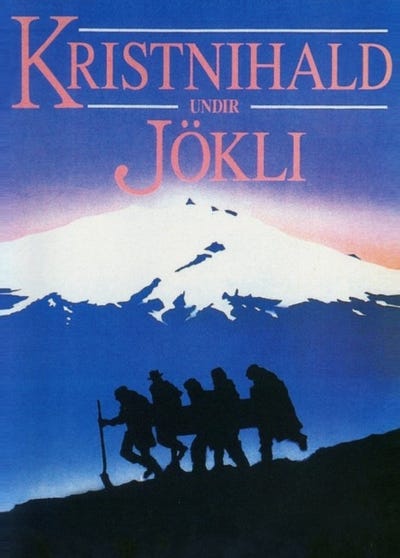
Iceland’s sole Nobel laureate Halldór Laxness (1902–1998) published twenty-two novels, among many other things, during his long career. I’ve not read all of them, but of those I have Kristnihald undir Jökli strikes me as by far his strangest, his funniest, and his most radical. Susan Sontag once declared, “It is like nothing else Laxness ever wrote” and I’ll take her word for it. I’m also told that it was the last novel he completed before turning to playwriting.

The English-language translation we have is called Under the Glacier, but the literal title is something closer to Christianity Under the Glacier, and it was first published in 1968. That was a time, some of us will recall, of tremendous transformation and upheaval in the arts. The staid and dominant order was breaking down. It was the year of the White Album and White Light/White Heat, of Planet of the Apes and 2001: A Space Odyssey. Disruption was in the air. New and radical ideas permeated the popular culture to such an extent that the very notion of a popular culture finally became suspect. Adventurous artists in seemingly every medium broke free of the old strictures.

Christianity Under the Glacier did likewise. To the best of my admittedly limited knowledge, it seems like an aberration in Laxness’s oeuvre, a change in direction — and the end result of decades of writing novels. There’s little that’s traditionally Christian about Christianity Under the Glacier. Although he had referenced and retold and relied upon the medieval Sagas of the Icelanders innumerable times, this particular novel strikes me as his greatest effort to launch an entirely new and secular — which is to say profane — epic saga of his own.

Disruption was in the air. New and radical ideas permeated the popular culture to such an extent that the very notion of a popular culture finally became suspect.

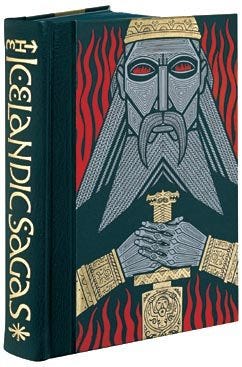
I don’t feel like there’s any need to mansplain the continued relevance or vitality of the Sagas of the Icelanders, but it is difficult to discuss the works of Halldór Laxness without giving them their due. From what we can tell, the mythic histories that constitute those Sagas were recorded in the fourteen, fifteen, and sixteen-hundreds, the height of the Middle Ages. Like the Old English poem of Beowulf, the Icelandic Sagas were Christian-era tellings of stories about great pagan heroes and deeds of the past.

It was the Russian formalist critic M.M. Bakhtin who, in his essay “Epic and Novel: Toward a Methodology for the Study of the Novel,” distinguished the novel from the epic. It’s a distinction that Laxness would undermine in Christianity Under the Glacier. Bakhtin’s essay also detailed three primary characteristics of an epic, all of which we see in the Sagas.

First, an epic will likely describe a “national epic past” or “absolute past” of a particular place. Second, the epic could be said to detail national traditions rather than the personal or individual experiences of its peoples. Third, and I think most interestingly, the epic establishes absolute distance that “separates the epic world from contemporary reality, that is, from the time in which the singer (the author and his audience) lives.”

To Bakhtin’s point, the Sagas clearly demarcate the bygone heathen epoch from their Christian retellings. In doing so, they also serve as the epic origin myths of Iceland — of that “national epic past.” Bakhtin may well have had the Sagas of the Icelanders in mind when he wrote: “The world of the epic is the national heroic past: it is a world of ‘beginnings’ and ‘peak times’ in the national history, a world of fathers and of founders of families, a world of ‘firsts’ and ‘bests.’”

The ugly phallocentrism on display here is no accident. Here in the United States, when we refer to the so-called “Founding Fathers” of our nation we are casting them and their actions in epic terms. In valorizing the drafting of the Declaration of Independence, for example, we risk making it impervious to criticism. We pretend that the framers were not, for example, misogynistic slave owners.

Iceland’s own mythic and heroic past is the subject of many of those Sagas and, we will see, of Laxness’s eventual subversion of them in Christianity Under the Glacier. That novel cuts through the cheap historiography. It tells the story of a Pastor in a remote village who abandons the conventions of the church and begins what appears to be a new tradition. In effect, Laxness has invented an entirely new saga, one reflective of the counter-cultural anti-authoritarianism and searching secularism of the late 1960s.

In valorizing the drafting of the Declaration of Independence, for example, we risk making it impervious to criticism. We pretend that the framers were not, for example, misogynistic slave owners.

The story is recounted in notes compiled by a parish clerk named Tumi Jónson, who is hired by the Bishop of Iceland to travel to the remote settlement of Snæfellsjökull (or Snæfells Glacier). He’s there to check up on the local pastor, who has been neglecting his duties. Rumors abound that the pastor no longer buries the dead but instead has them placed on the glacier itself.

When Jónson arrives, he finds that things are even more bizarre than he had been led to understand. In his report, he writes: “As far as the undersigned can see, Christian observance is at a minimum in the district.” And, “clerical duties are hardly performed at all in the parish unless ministers from outside are called in. Burials neglected. No services at Christmas, etc.”

Pastor Jón — who also goes by the name Prímus — had deviated so far from his Christian duties that he has more or less begun a new cult. Jónson’s account of his time there describes the beginning and perhaps the founding of a decidedly un-Christian community. In other words, Prímus — and of course Laxness himself — have put in motion some new and rather unorthodox local traditions.

As Bakhtin writes: “By its very nature the epic world of the absolute past is inaccessible to personal experience and does not permit an individual, personal point of view or evaluation. One cannot glimpse it, grope for it, touch it; one cannot look at it from just any point of view; it is impossible to experience it, analyze it, take it apart, penetrate its core. It is given solely as tradition, sacred and sacrosanct, evaluated in the same way by all and demanding a pious attitude toward itself.”

While that remains true of the Sagas of the Icelanders, Jónson’s experiences defy this. The epic origins of the new traditions at Snæfells Glacier are no longer “walled off from all subsequent times by an impenetrable boundary.” They are happening in the present moment in the book.

Through Prímus’s actions, Laxness peels away the centuries of religious dogma and returns his characters — and his readers — to the pre-Christian tradition of goddess worship and to the feminine origins of European mythmaking as described in, among many other sources, Robert Graves’s The White Goddess.

Graves cites a twelfth-century English book that describes the eternal goddess as: “Earth, divine goddess, Mother Nature, who dost generate all things and bringest forth ever anew the sun which thou hast given to the nations, Guardian of the sky and sea and of all Gods and powers.” He also cites how Christianity attempted to supersede the worship of the timeless goddess figures.

The goddess at the center of Snæfells Glacier and of Laxness’s new epic saga goes by many names, but she’s best known as Úa (“Ooh-a”). She provides the divine inspiration for Prímus and many others. Jónson describes her: “So wonderful was this creation that it’s no exaggeration to say she was completely unbearable” and “There was never anything like her.”

Úa is both absent and present, real and extra-real.

The Trolls in Our Midst: What Fairytales Can Tell Us about Online Behavior

Prímus says: “The Úa who came is not the one who went away. Because in the first place Úa cannot go away, and in the second place she cannot come back. She doesn’t come back because she didn’t go away. […] She didn’t remain just outwardly but above all within myself. Who could take your mother away from you? How could your mother leave you? What’s more, she is closer to you the older you become and longer it is since she died.”

Úa’s seemingly supernatural not-present presence refutes Bakhtin’s notion that “The epic world is an utterly finished thing.” Bakhtin also writes: “One can only accept the epic world with reverence; it is impossible to really touch it, for it is beyond the realm of human activity, the realm in which everything humans touch is altered and re-thought.”

The great contribution of Christianity Under the Glacier is Laxness’s insistence that that’s no longer true. The novel excises any religious dogma in favor of the ancient goddess-worship traditions that Christianity attempted to repeal and replace.

Recalling Graves’s White Goddess, Jónson comes to learn that: “The foremost women of the world all speak to me with one mouth: the Virgin Mary with the Infant on her knee; the Greek golden age with washerwoman bun and Venus from Willendorf, vulgar and Simon-pure with her face hidden behind her hair and her buttocks bare, the bitch-goddess of mythology, the Virgin Whore or Romanticism, Ibsen’s fate-woman, the Mater Dolorosa of the Gospel — but above all the good abbess, Saint Theresa from Spain, in search of a new Saint John of the Cross.”

Christianity Under the Glacier displays little reverence for the Christian origins of the Sagas of the Icelanders. It also closes any “absolute epic distance” between the events of an epic and of its later telling. The ramifications of that are radical.

What I mean is, it asks each of us to question and ultimately distrust the political agendas and machinations of epic storytelling itself. And once we rethink the orthodox stories of whatever glorified “founding fathers” we’ve been told to worship, we can then start to envision how to retell those origin stories — our own origin stories — with more honesty and more inclusivity.

[Adapted from an April 7, 2017 talk at the “Celebrating the Legacy of Icelandic Author Halldór Laxness” symposium at the University of Maine.]

Zen and the Art of Motorcycle Maintenance Author Robert Pirsig Has Passed Away

The Best-Selling Author Was 88 Years Old

We are sad to report that author Robert Pirsig, best known for his 1974 philosophical novel Zen and the Art of Motorcycle Maintenance, died at his home in South Berwick, Maine yesterday.

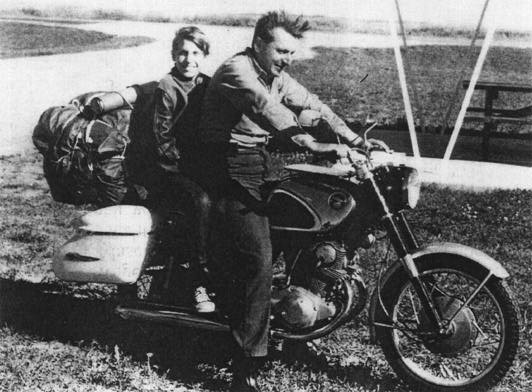
Pirsig’s best-selling debut tracks a 1968 motorcycle road trip across the American West that the author took with his son Chris. It also includes flashbacks to the elder Pirsig’s hospitalization for Schizofrenia earlier in the decade. Despite being rejected by 121 publishers, Zen and the Art of Motorcycle Maintenance went on to sell over five million copies. It's composed of meditations that, as the author put it, “set out to resolve the conflict between classic values that create machinery, such as a motorcycle, and romantic values, such as experiencing the beauty of a country road." The book made Pirsig a seminal voice in American culture during the turbulent 1970s.

He published a sequel, Lila: An Inquiry into Morals, in 1991. According to The Guardian, Pirsig had been experiencing “after a period of failing health.” He was 88 years old.

April Fiction Prompts Culled from the News

Jeff VanderMeer & Cory Doctorow Discuss the Future of Sci-Fi & the World

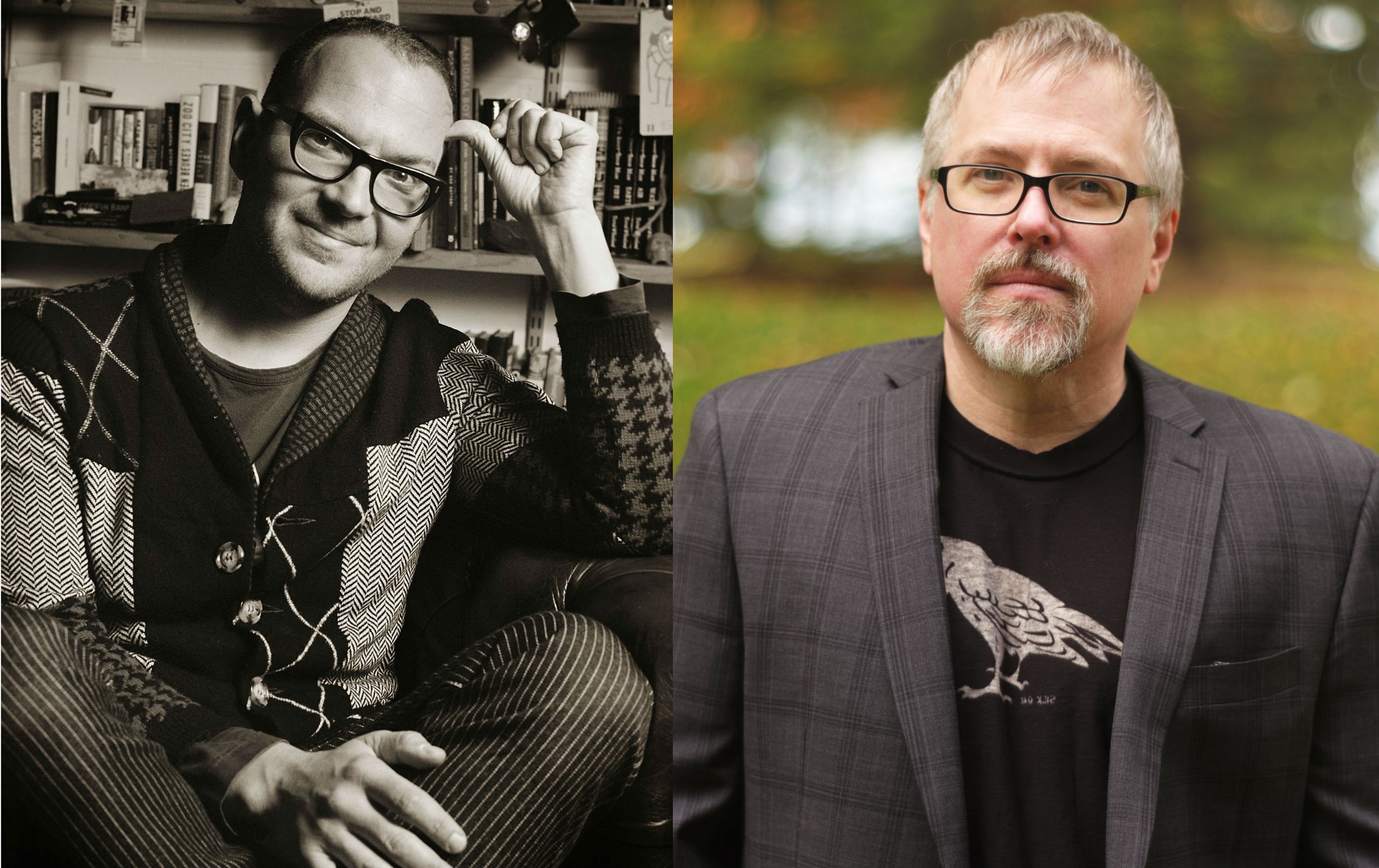
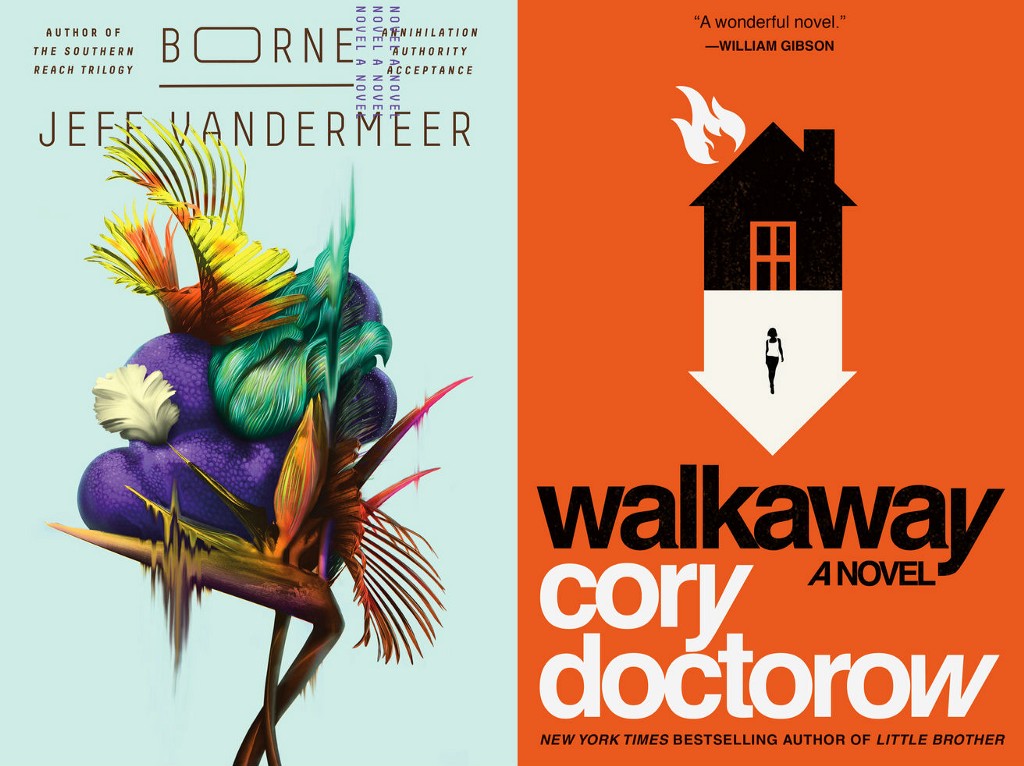
Twenty-five years ago, Cory Doctorow and Jeff VanderMeer both attended the Clarion Writers Workshop, the premier science fiction and fantasy writing program. Since that time, VanderMeer and Doctorow have each gone on to long literary careers. By chance, their new novels, Borne (VanderMeer) and Walkaway (Doctorow) are being published on the same date this year, April 25th, which got them to talking, which got us to publishing their conversation.

Jeff VanderMeer: Fresh-faced and eager as we both might seem, I’m calling it: we’re pretty much grandpas now. (Literally, too.) Looking back over the past quarter century, it’s pretty clear that a lot has changed. And a lot of it for the good. The genre boundaries are much more fluid now. I’m one of those continual label-evaders so this suits me fine. I’d prefer to shape-shift, in part because my interests and curiosity vectors are always changing. One way I think we are definitely alike is in adapting well to the new environment, if in very different ways.

Cory Doctorow: We’re in the midst of a curious era for nerdy subculture, which is something I’ve been involved with since I started taking the subway to Saturday D&D clubs when I was 9 years old. Back then, it was *really hard* to find other people who found genre sensibilities satisfying. The covers of paperbacks on buses became a recognition semaphore (“I see you are reading a John Wyndham novel; I too, have read of the Triffids!”) Networked communications brought subcultures together — counterculture fashion identities like goth and punk; out-of-mainstream political identities from anarcho-syndicalism to intersectional feminism to (alas) neo-fascism.

VanderMeer: Coming into Clarion, you were a Heinlein enthusiast and I was an Angela Carter devotee, and we didn’t so much clash as — as I recall — have a few discussions about it. But I was definitely young and arrogant, so have to imagine I was annoyingly vehement. Sorry about that. I also know that I’ve taken great pleasure in watching your career take off — I feel like we’re both survivors over a pretty long span now, though we’ve taken different paths.

Doctorow: No apologies needed! If you’re not abrasive at some point at Clarion, you’re probably not trying hard enough. (I’m sure I was!)

VanderMeer: Oh, you were. But it was a group of total eccentrics and I think the whole nature of throwing 18 strangers together — especially a bunch of introverts and weirdos — and expecting harmony is kind of absurd. As for Heinlein, though, I still don’t like his work. Do you still read him? It’s curious how he’s become invisible to readers recently, especially given some of his libertarian leanings would seem to match the times.

Doctorow: Heinlein invented and refined a lot of the field’s signature moves, and moreover was at the epicenter of a lot of high weird craziness in his “real life” — he was a socialist Upton Sinclair doorbell-ringer; a Crowley-adjacent polyamorous pioneer whose alcoholic “white witch” story-doctor wife took up with the recently discharged ex-Navy-man L. Ron Hubbard; a vicious racist who was certain he wasn’t. Today, he’s a litmus test of sorts. You can learn a lot about a person by what they think Heinlein was all about. I personally love the way that contemporary SF is engaging with him — Charlie Stross ripping into the guts of Friday with Saturn’s Children; John Varley using the juvies like Red Planet to savage GWB’s war on terror; and now Ian McDonald’s Luna books, a frontal assault on Randism by way of The Moon is a Harsh Mistress. It’s deeply kinky, taking all this problematic stuff and just *owning* the way it bent the field, using it to bend the field in the other direction.

VanderMeer: I want to get back to this idea of how the landscape has changed since we started our careers. On the negative side, it can be noisy and time-consuming in how writers are expected to engage on social media. But creatively I find it very positive in the sense that the fracturing of media and of hierarchies leads to all kinds of beautiful cross-pollinations. If there’s one thing I’ve been devoted to my whole career it’s been to breaking down barriers between speculative fiction and realism, if you will — in my fiction but also in the anthologies my wife Ann and I edit. For example, it was great to publish you in The Big Book of SF alongside Borges.

Doctorow: I think of it in terms of our communications tools, which always constrain the kinds of experiences we can have. When all you have is live performance, every live tale told is either a stage-play or a puppet show. Invent movies, and all the stories that had been shoehorned onto the stage (but really need to be movies) are liberated from stages and brought to the screen — meanwhile, all the tales that had lurked in potentia, unable to find any expression in the constraint of live performance, finally come to fruition. What’s left behind on-stage is irreducibly stage-like; it’s a purer expression of what you could only ever do onstage. And so on! Youtube gives us “shows” that are 19 seconds long, or 75 hours, things that couldn’t have lived on stage or cinema or TV screens.

The Rise of Science Fiction from Pulp Mags to Cyberpunk

VanderMeer: I’m definitely thinking in terms of fabulist fiction this time around, but I’m also interested in the moral/ethical questions involved with biotech, against a backdrop of a scarcity scenario. I think that’s what’s beginning to play out now in the world, and I wanted to approach the present through the future in a more direct way than I was able to in the Southern Reach books.

As I read Walkaway, I’m struck by some similarities at the paragraph level in the way we both deploy biotech, but you’re of course working from a kind of post-climate-change scenario. I read your Wired essay about hope and dystopias, and I agree whole-heartedly that it’s important to conceive of hopeful futures — Borne is meant to convey a hopeful future, because we’re still in it. But I do wonder at what cost imagining hope comes, in terms of things that are uncontrollable, i.e., we cannot manipulate our environment to the extent necessary to reach a post-scarcity scenario right now without basically eating or burning all the biomass on the planet that is not ourselves. I’d like to think we can just go kind of post-post-capitalist and get there, but I’m not sure. I like your example of people sharing food during a disaster…but we all know there will also be complete bastards out there. We live in a world that’s full of bad people doing bad things, but also good people doing good things. But it’s good that my approach in Borne and yours in Walkaway are so different, because we need as many different possibilities and entry points as possible in such an urgent conversation.

Doctorow: I think that a signature stfnal move is to mix in some technological whoppers with some truths and hope that the reader doesn’t notice ’em, they’re protective coloration.

VanderMeer: Ha! Yes, I like that, a lot. Because fiction is implausible anyway. Even the most realistic fiction is just an approximation anyway.

Doctorow: So I’ve got all this plausible utopian business — material objects designed to gracefully decompose back into the material stream, networks designed for censorship resistance and graceful failure modes, etc., and then there’s a hand-waving whopper, the idea of consciousness uploading, which is described as though it was just as plausible as the rest of it, though, of course, it’s purely metaphorical and completely incoherent on a neurological or technological level.

I felt like the biotech in Borne was similarly symbolic and not meant to be read as literal — no amount of squinting at the fine-print and inference from clues would tell you how a building sized-bear used “biotech” to fly over a city, etc. It was meant (I thought) as a kind of frankensteinian symbol for our inability to contain and steer the technologies we spawn.

VanderMeer: In anything I write, the monsters or animals or whatever have to be literal and visceral, and then figurative. But I’m not asking anyone who narrates the novel to understand how to create these creatures. We don’t know how to make a smart phone or even fix our cars anymore — I don’t think the future of biotech is going to be any different. And we’ll normalize to it, so we won’t think in terms of explanations just of purpose or outcomes. Sometimes explanations are what we do when we can’t actually envision the future. Which is tough, of course.

Doctorow: I definitely wanted to put Walkaway closer to present than my other “utopian” work like Down and Out in the Magic Kingdom, to at least give the impression that you could walk from here to there. Walkaway is meant to have just enough familiarity/plausibility to get you walking toward it, though, of course, anything like it would require a very long and arduous journey indeed.

VanderMeer: Getting back to biotech and the big issues in both of our novels — which one way or the other have to figure in climate change: What are your thoughts on issues like human populations relative to resources? Obviously, they’re tough topics. But seriously taking them on and doing forward planning strikes me as one of our biggest problems right now. For me this is deeply tied up with bio-diversity and it simply being wrong for us to save ourselves while dooming wildlife, especially since it seems to me we de-link ourselves from the biosphere at our peril.

Doctorow: I believe that what makes “nature” — biodiverse, stasis-seeking, teeming life — beautiful and desirable is *our* relationship to it, and its relationship to itself. Bees and chimps and coral, to the extent that they have a point of view, seem to want to exist, as do we, and ideally, we will figure that stuff out. But I’m a human, and I suspect that bees and coral would be OK with it if we disappeared, and one of the things that makes being a human pretty cool is that we *would* care if the bees or coral died. Which all leads me to think that the thing that matters is getting humans to survive, and then figuring out how that survival can make all this other life also viable — because *we care* about it.

VanderMeer: I’m not keen on defining something in relationship to ourselves in what we write about the future. Shouldn’t we be trying to get beyond the human gaze as part of that speculation? We’ve brought the planet to this juncture and directly killed off thousands and thousands of species. All this other life was and is already viable. My argument isn’t that humans should go away but that our relationship to the world we live in has to change drastically for us to survive.

Doctorow: If we’re going to locate the reason for saving other species in whether we can survive, then we’re in vigorous agreement. Species wipe each other out like crazy. “Nature” itself obviously doesn’t care about preserving species diversity — let alone life! — but *we* do, because that stuff keeps us alive and because we find it deeply, aesthetically pleasing.

VanderMeer: The idea of “aesthetically pleasing” with regard to animals is both interesting and troubling to me — it’s one reason we pay more attention to “cute” and “non-dangerous” animals and say to hell with sharks or centipedes. I’d much rather we recognize that our standards are incredibly “dumb.” And that the world doesn’t just exist because we perceive it.

The planet, in terms of geological time will be here regardless, and new forms of life will sprout up in millions of years. I take some comfort in that, but of course I’d much prefer a solution closer at hand. We’re already seeing fungal research that can yield biodegradable equivalents to Styrofoam, and if we can find ways to break down plastics and to slap a heap of socialism on top of our capitalism, that would also help. I’m curious, though, how you perceive the situation with Trump in control and all kinds of ecological safe guards on the scrap-heap. Is the market itself enough to counterbalance this, given interest in green energy?

Doctorow: I think the problem of getting markets to solve problems is that markets are, by definition, externalizers — when a problem can be solved more cheaply by offloading it on someone else than it can be through actual change, the former will always win. That’s why carbon offsets have been such a failure: companies are profit-maximizing machines, not carbon-minimizing machines. But solar is a technology, not a fuel, and it’s in a competitive marketplace, which means that firms can realize higher profits by reducing the material/labor/energy inputs to their products. However, energy is also digital in nature — we will make our hybrid, renewable grids work by using computers to do heavy lifting to coordinate supply, storage and demand — and where you have digital, you have a repertoire of tricks for monopolization: “your” smart meter belongs to a power company that can game it and spy on you with it and manipulate the market with it. So solar will continue because it is profitable, and it will improve because it is competitive — but it will not save us so long as it is embedded in a crony-capitalist “market.”.

VanderMeer: On a lot of these and similar topics, I admire that you use your platforms to push for a progressive vision of the future. It’s something that feels like it’s 24–7 for you.

Doctorow: On good days, the activist work feeds into my artistic work, each informing the other, or being escape-valves for one another’s pressures. On bad days, the frustrations in one realm blow over into the other — wrestling with activist causes will make art seem like a pointless deck-chair rearrangement exercise. I just try and power through it. How is it for you?

VanderMeer: The same, although my emphasis comes less through the tech side and more through the environmental side. I am working on a nonfiction book about storytelling and climate change, and although it can be depressing to do that research, it’s also enlightening and very hopeful in its way. So many people are engaging with it and in so many different ways. Just this week I spoke to an MFA student whose fiction is heavily into seeing animals in a way more consistent with current animal behavior research and also to someone working on expressing climate change through performance art, along with the guy who leads the energy center at Rice, and my own stepdaughter, who wrote two chapters of the World Wildlife Fund report on sustainability last year. So, between that and hiking, which is all about experiencing our world in the moment, I do feel hopeful to some extent. We shouldn’t underestimate the good we can do day-to-day no matter what the future holds.

April Fiction Prompts Culled from the News

True stories that are strange enough to be fiction

Stuck on an idea for your next short story? Every now and then we gather news headlines that are strange enough to be fiction. Here’s a batch of headlines to get your creative juices flowing along with suggested genres:

Historical Fantasy: People used to live in little hobbit stump houses!

True Snake Crime: Meth-addicted python put in rehab

Drunk Borges Fan Fiction: Bar owner in India builds labyrinth to access booze

Tasty Road Trip Novel: 8-year-old steals car to drive to McDonald’s

Capitalism Horror: Desperate people made to kiss a car for 50 hours in contest

Wildlife Martial Arts: Horse battles alligator

Children’s Adventure Story: “Buttery and ashamed” squirrel rescued from dumpster

Vampire Diet Guide: Salad recall after dead bat found in lettuce

18 (More) Amazing Novels You Can Read in a Day

The Queer Erotics of Handholding in Literature

People always want to know how queer love functions, but that question feels unanswerable. If books have taught us anything, it’s that there’s no right way to love a body. I’ve had people ask how I know a woman wants me. They want some lesbian strategies, a set of documented rules. They ask: how did female friendship miraculously transform into love?

How should I know, I want to say, shrugging off the thing that might trap me. How should I know any of it? I’ve only ever really held hands once and look how that turned out.

‘She thought of people she had seen holding hands in movies, and why shouldn’t she and Carol?’

Patricia Highsmith’s The Price of Salt provides readers with countless glimpses of queer hands. The novel documents the burgeoning relationship between Therese, a young woman working at a department store, and the much older object of her affection, a soon-to-be divorcée named Carol. It’s a novel about two women falling in love. It’s the story of how queer attraction sometimes functions: in closeted spaces, coaxing emotions that are difficult to navigate. These liaisons, born in secret, are often fraught with anxiety. For lesbian relationships in the 1950’s, there are no rules for knowing what shouldn’t exist.

Much of Therese and Carol’s attraction is documented through touch. Hands crop up incessantly throughout The Price of Salt: they perform domestic duties and work unwanted day jobs, they pilot cars and open motel doors. More importantly, they’re viewed through the eyes of a woman looking for romantic signals. Therese watches Carol’s hands as they move and perform. Carol’s hands become the impetus for the erotic. As readers, we’re shown their significance through the lens of Therese. She watches Carol’s hands like she might watch a barometer. By viewing what the hands do, she’s able to ascertain what is wanted from her. Do the hands coax? Are they pushing Therese away; are they standoffish and flighty? A fundamental element of eroticism is the tension of what might be. We understand Therese’s longing as it pertains specifically to Carol’s hands.

In the novel, Therese wonders why she can’t achieve a simple moment of intimacy, the kind heterosexual couples achieve without having to overthink the act. Holding hands is considered a rite of passage for most people. Palms pressed together, fingers interlaced. It’s a sweet, uncomplicated way to move a relationship from friendship into something more.

For lesbian relationships in the 1950’s, there are no rules for knowing what shouldn’t exist.

“…why shouldn’t she and Carol?” muses Therese, who considers what it might mean to walk hand-in-hand with the person she loves. Handholding. It happens in movies and on the street, casually reaching for the hand of the person you want. People do it all the time.

But considering queer female sexuality, touching hands is illicit. For lesbians it often marks the entrance into what might happen next in an erotic sense. Queer women assess hands in terms of their readiness for sex: the length of someone’s fingernails, the strength in their grip. We look at hands to see if they’re up for intimacy. Our hands do the work of sexual organs.

What would happen if we touched, we wonder. What would happen if my hand found yours? What would come next?

Highsmith, a queer woman, knew this. In 1952, she had to write her novel under a pseudonym or risk tanking her career. There was no lesbian writing available for mass-market publication at that time. No place for queer female romance in the strictly heteronormative audiences that populated mainstream fiction.

We look at hands to see if they’re up for intimacy. Our hands do the work of sexual organs.

Publishers were unwilling to take on the novel. It was farmed out to a smaller house and ultimately picked up as pulp. The book’s cult following, mostly queer women, gained momentum over the past decade. The tender, anxious relationship that blossoms between Therese and Carol showcases the stress of coming out for women in a time period where they were expected to marry men and maintain households. Not so many years ago, the simple act of touching another woman’s hand meant you might have to give up everything you knew for love. Concerned with documenting that struggle, The Price of Salt turns handholding into a marker of queer rebellion.

The first time I held a girl’s hand, I thought about it so hard beforehand I made myself throw up. It was an anxiety so all-consuming that I puked three times. A rocketing kind of barf; the kind that made my guts want to exit my body, exorcist-style. My mother, normally someone who made me suck a thermometer for twenty minutes before she’d let me stay home, took one look at my face and called me in sick for school. Rolling around in my bed, I twisted the sheets and prayed something might give. Things I worried about:

How I’d reach for this girl. How she’d respond.

What my fingers would do. Would my thumb go on the outside? Inside?

Would my palms sweat? Would I tremble?

The first time I held a girl’s hand, I thought about it so hard beforehand I made myself throw up.

Most of all, I wanted to know where holding hands would eventually lead: because if I held her hand, my hand might then touch her wrist, her shoulder, and then her breast. We were very young and good friends and neither of us had dated before. There’d been no discussion of romance because neither of us was “that way.” Every step toward this new part of our relationship existed in how she brushed my hand when we passed a can of coke between us during choir practice. Every pass of the can left her fingers on mine until we were touching each other more than the soda. I liked the way she held the high notes. I drew caricatures of her face in my vocal scores. High A, high A: a beautiful second soprano who made the notes sound like clear, ringing bells. I was a first alto. Nobody cares about that vocal range.

I asked her to a movie, just the two of us. She said yes.

“This doesn’t mean anything,” she whispered as we sat in the darkened theater. I couldn’t watch the movie. I closed my eyes and thought about her hand. The webbing of her fingers pressed hard enough against my own to form a seal. “It doesn’t mean anything,” she repeated as she stroked the inside of my palm with her littlest finger.

Handholding is a trigger for the wider issues of the erotic. In The Price of Salt, Therese considers the action a relationship-defining event. Once the hands grip, there’s no turning back. It’s the line in the sand. The action changes the relationship into something denser; the pressure like smashing coal into a diamond.

‘It doesn’t mean anything,’ she repeated as she stroked the inside of my palm with her littlest finger.

I don’t like the dictionary definition for hands. It’s all metatarsals and bone fragments, so clinical it removes the movement from the parts. But what I do like of the definition comes from the secondary source. We’re told that a hand can be considered a personal possession; that to “hand” something means you have given someone an instance of control or supervision. The example provided:

left the matter in her hands

To leave matters in someone’s hands means they maintain autonomy over their actions and their desires. The Price of Salt repeatedly provides images of hands that chart the course of their owner’s lives. I read these sentences and think of the hands that have touched me, certainly, but mostly I think of my own hands and what they continue to do. Holding a beer, peeling the wet label from the bottle. My fingers scratching behind my dog’s ears. One long ago summer, I wet my palms with lake water when I went on a trip with that first girl I loved, the one who only acknowledged my presence when we were alone. When we swam, I held her buoyant above the drifting algae. Her body felt insubstantial and I gripped harder just to know she was present; just to know she was there with me. At that point in my life, queer hands were only allowed to touch when no one else was looking.

“This doesn’t mean anything,” that same girl said in the theater as she stroked my palm, but what she meant was:

It only means something to you because I won’t let it mean anything for me. If exposed to air and light, my hands will untangle themselves from yours.

Highsmith looks at hands in The Price of Salt as conduits for future intimacy. She showcases them as what-will-come. I often look at hands as objects of desire and self-ruination.

Control, supervision. The matter is left in my hands.

The movie version of Highsmith’s book, Carol, often puts the camera’s focus on character’s hands. Gauzy close-ups of Carol’s fingers as she smokes cigarettes. Hands caressing the soft, peachy fuzz of women’s faces. Fingering fabric and carting around purses, grasping at the straps. Holding onto drinks. Women are always clutching alcohol in these scenarios, as if to do the work they need to do, the hands must first be inebriated. Highsmith writes about hands in ways that suggest the erotic and the romantic, but as separate entities. Though the book has an unheard-of happy ending for its time, it’s also one of the first queer books I read where sex doesn’t necessarily mean love. For queer love to exist in much of literature, it must be shown in mortal agony. People want to see it born so they can watch it die.

For queer love to exist in much of literature, it must be shown in mortal agony. People want to see it born so they can watch it die.

In the grand tradition of lesbian novels, there’s always the reveal of the emotion and the quick killing off of one of the women. Lesbian love doesn’t often survive written scenarios or even many movie scenes. The Price of Salt is different. Highsmith allows for the pain of losing a straight, heteronormative life, but she leaves the two women intact at the end of it. In her novel, the erotic focuses less on romance and more on who’s in control of the relationship: “I feel I stand in a desert with my hands outstretched, and you are raining down upon me.”

Hands are used to mark instances of scarcity and plenty. They’re always reaching out; to touch something, anything, to embrace another person so they know they aren’t alone. Touch in these instances moors the characters in space and time.

The Price of Salt might use hands to mark discovery, but I use hands as warning signs. I keep them outstretched, like a person searching a darkened room. I want them as barricades. It would be nice to find things, sure, but I don’t want anything finding me.

…to obtain information about the texture of an object, people rub their fingertips across the object’s surface, and to obtain information about shape they trace the contour of the object with their fingertips. Conversely, in object manipulation there is precise motor control of the hands. The fact that individuals with numbed digits have great difficulty handling small objects even with full vision illustrates the importance of somatosensory information from the fingertips.

Encyclopedia of the Human Brain, Vol 2

In the span of a day I count 494 separate hands. This number is an instance of a single day. It’s a pastime I perform repeatedly; something I do without thought. I look at people’s hands and note them, checking them off. Everyone’s hands. As a librarian, I see patrons pick up books, palming library cards, clutching overdue receipts. Fingers flipping through pages. Rifling the newspapers. I watch the way people hold their belongings and shoulder their backpacks. I note the value they place in their things and the garbage they toss without thinking. I count hands the way someone might count sheep.

Though I shy away from friendly intimacy like hugging, but I’m fascinated by what fingers and thumbs and palms can do. Dexterity. Manipulation. The movement of our speech so often contained in the movement of our hands. Mine are birds when I speak, flapping until I ascend and reach the apex of my sentence. When I’m stressed, I move my fingers like they’re gears that power the momentum of my thoughts. Help me reach the point, I beg, as they open and fold and smack into each other.

Dexterity. Manipulation. The movement of our speech so often contained in the movement of our hands.

Highsmith wants the reader to know queerness in terms of the other. The other, in this instance, is anyone aside from the two women and their relationship. Their magnetized bodies are what draw us close to them as they draw close to each other. We want to know: why do they feel the way they feel? We want to know because no one understands these impulses. We want to know because our bodies want unknowable things and most of the time our brains can’t understand why.

We see the body here, broken up into parts. The eyes. The voice. Most of all the hands, which Highsmith uses for directional control. Touch is the thing that binds the characters. Touch is the thing that maps the body. In the novel, it’s a driving impulse. But we understand this as readers because we are that way ourselves. How do we react in moments of pain? Of fear? Of intense need? We stretch out our hands. We reach for the unreachable thing. We ache and want. We grasp.

‘You ask if I miss you. I think of your voice, your hands, and your eyes when you look straight into mine.’

It’s said that fingers contain some of the densest areas of nerve endings on the body. If I drink, I can numb my brain and also the sensitivity that comes from touch. How hard is it to orgasm after three beers. Four? Five beers in and my hands could be touching the smooth, warmed-over flesh of a melon. In those buzzed moments, every time I touch something I am touching it for the first time.

Could hands address the same issues over and over again without knowing? Do hands hold amnesia cupped in their palms? How else do we describe the illusion of seduction. Even when we’re touching ourselves, we’re inventing scenarios for our hands to chart. We imagine the hands as belonging to other people. We imagine those hands are capable of things far beyond their potential.

We can use our hands not only to manipulate the physical world, but also to perceive it. Using our hands to perceive the shape of an object often involves running the fingertips over the object’s surface. During such ‘active touch’, we obtain both geometric and force cues about the object’s shape: geometric cues are related to the path taken by the fingertips, and force cues to the contact forces exerted by the object on the fingertips. These cues are highly correlated, and it is difficult to determine the contribution of each to perception.

Nature, Vol 412, 26 July 2001

In the aptly named 2002 novel Fingersmith, Sarah Waters discusses queer hands in the same way Patricia Highsmith does. A work of historical fiction, Fingersmith is concerned with the lives of two women: Sue, an orphan who’s been sent to gain the trust of Maud, a wealthy heiress. Waters narrates from both female perspectives throughout her book. In the first instance, we’re given narrative from Sue, posing as a lady’s maid, who has set out to manipulate Maud. Sue eventually falls in love with Maud, much to her dismay. In the second part, we’re given the perspective of Maud, who’s got her own agenda. Both sections of the book deal with the improbabilities of love and honesty, and both scenarios demarcate what it’s like to discover something unexpected with your hands.

In Waters’ books, bodies discover love ahead of the conscious mind. But again, the bodies are the ones leading the charge. The characters bodies are often tools for the protagonists to enforce their will. They find love with their hands before their hearts are willing to acknowledge any kind of true intimacy. Sex is a power dynamic. Sex is ruled with the hands.

“Do you know how careful my love will make me? See here, look at my hands. Say there’s a cobweb spun between them. It’s my ambition. And at its centre there’s a spider, a color of a jewel. The spider is you. This is how I shall bear you — so gently, so carefully and without jar, you shall not know you are being taken.”

Waters makes these bodies open and accessible to the reader. Yet at the same time, their minds are closed. Both women seek ways to understand. They forsake each other, again and again, but their hands always do the most honest work. Even when they can’t admit they love each other, their hands say it for them.

Even when they can’t admit they love each other, their hands say it for them.

Their hands draw a pleasurable agony. It is the most understandable kind of pain.

I like hands the way I like knowing the exact right thing to say in a conversation. How they open and shut, how they fold into themselves and hide things. I want hands the way I want to know my own mind. I want them with a fierce, unknowable throbbing. Once very late at night, a friend asked what part I liked most of a body. We’d been talking about sex for hours and I’d spoken without flinching: orgasms, one-night stands, documenting our best sexual experiences and our worst.

What part do you prefer, that friend asked, and I replied:

“Hands.”

My voice was so unsteady I could hear the ache in it. I looked at that friend’s hands when I said it and swallowed hard. An entire night discussing sex and the red flush only crept up my neck when I thought about those parts that inevitably do all the touching. The part that precedes my brain; that shows all my want. The part I can’t hide from myself

Forget toolmaking, think fisticuffs. Did evolution shape our hands not for dexterity but to form fists so we could punch other people?

— New Scientist, 19 December 2012

In hands, power sometimes means violence.

Even when we’re touching ourselves, we’re inventing scenarios for our hands to chart. We imagine the hands as belonging to other people.

There is sex happening with hands in these narratives, certainly, but there’s also fraught emotion — a love that hinges on manic.

Unlike Highsmith, Waters’ novel looks at how two queer storylines might eventually intertwine to show how bodies function within the construct of aggression. There is sex happening with hands in these narratives, certainly, but there’s also fraught emotion — a love that hinges on manic. Too stressful to be dealt with outright, the sex and the intimacy become a kind of ownership. Revisiting that secondary definition of hands, we see the word control. What are the hands doing if not guiding the other into the role they wish them to play?

“…but when she saw me turn to her she reached and took my hand. She took it, not to be led by me, not to be comforted; only to hold it, because it was mine.”

Hands in traditional feminine roles perform “women’s work.” They guide the domestic. They’re the hands that carry babies, create meals, that clean and maintain households. Capable hands. As a person who grew up in a space where gender roles were rigidly enforced, I look to these domestic spots and wonder how to reimagine them. One way of doing that is in how I think about art outside of writing.

When I make things for friends, I use my two hands. I’ve sliced myself and blood has wet these created objects. Bits of me — my hair, flakes of my skin — inevitably embed in the work. Fragments of my body make their way from me, through the mail, and into the person’s home. My fingers ache when I’m done. It’s a reminder that I used the tenderest part of me to engineer something they open and touch. That part of me, that building part, will always be with them. Let my hands do the talking, I plead with these gifts.

It’s not unlike how I perform sexually. Just let me show you what these hands can do, I say.

As a perceptual organ, the hand has several advantages over the eye: the hand can effectively ‘see’ around corners and can directly detect object properties such as hardness, temperature and weight. During active touch, the perceptual and motor functions of the hand are tightly linked, and people tailor their hand movements to the information they wish to extract. Whereas ‘local’ information about the object, at the fingertip’s point of contact, can be extracted simply by touching the surface.

Nature, Vol 412, 26 July 2001

When I was young, I bought a hand strengthener from the dollar store because I wanted to be able to fend for myself. I was seventeen and my hands, dangling from my skinny, praying mantis frame, looked inordinately large for my body. The strengthener, I thought, would help me achieve some measure of control. I wanted to be the one someone turned to when they needed something.

Correction:

I wanted to be the one that women turned to when they needed their sodas opened. So I bought the hand strengthener and used it every night in my room, clenching down on it over and over again until my repetitions beat into the backdrop of the sad, lovelorn music that played on my stereo. I’d cut off all my hair that summer and bought men’s cargo pants. I wore a sweater vest and oxford brogues and my mother wouldn’t let me leave the house because she said I “looked to much like Ellen.”

The girl I first loved told me she liked my shoes and she liked my pants and her hair was longer than anyone I knew. When we held hands, finally, I took hers gently and tried not to crush her fingers with my own. My hands were strong enough by then I could’ve hurt her. I didn’t want to crush her. I wanted only to show tenderness.

“This means nothing,” she said in that movie theater, but I let my hands cradle hers like baby birds. It was important that I show the utmost delicacy. Tenderness was foreign to me. I wanted her to know I could love without hurting someone.

Therese thinks logistically in The Price of Salt about how her hands work in conjunction with Carol’s hands. She’s always at odds with them just as she’s always at odds with her own feelings. The characters emotions are so overwhelming that her body works against her mind’s wishes most of the time.

“Therese leaned closer toward it, looking down at her glass. She wanted to thrust the table aside and spring into her arms, to bury her nose in the green and gold scarf that was tied close about her neck. Once the backs of their hands brushed on the table, and Therese’s skin there felt separately alive now, and rather burning.”

Handholding with the girl I once loved made me feel like my skin was being slowly peeled from me. I remember that when we kissed it was something good — but it was handholding, that precursor to the other kinds of holding, that made my insides ache. Her hands and how they touched mine let me know how they might touch other parts of me. Those parts, alive with nerves and singing, singing, refused to let me forget what they could do.

Handholding with the girl I once loved made me feel like my skin was being slowly peeled from me.

Highsmith writes that Therese thinks about the desire to “thrust” and “spring” at Carol. The imagined actions are followed closely by the real action — the tender brushing of the backs of hands against a table. That bare contact is enough to send Therese into agony.

Hands function in Highsmith’s text as conduits. They are grappling objects, passing across each other’s skin only to alight the flesh with “burning.” Hands work frantically to conjoin bodies. Perhaps that’s the thing that brings the erotic to the forefront of the mind when we consider queer hands: the fact that they indicate what might happen next. Unlike most queer stories, which focus on bringing the hidden to light (coming out narratives), Highsmith and Waters’ hands are all about possibility. They’re already out. They’re actively seeking.

I love you, they say, but don’t hold too tight. Gently. Don’t crush me.

The woman who would not recognize me outside our theater-darkened handholding let me touch other places on her body. Understanding of my own frame hinges on a complex understanding of hers. Handholding. Heartholding. It was a body I knew under the scope of my palm.

A Closer Look at the Man Booker International Prize Shortlist

Get to know the finalists before the winner is announced in June

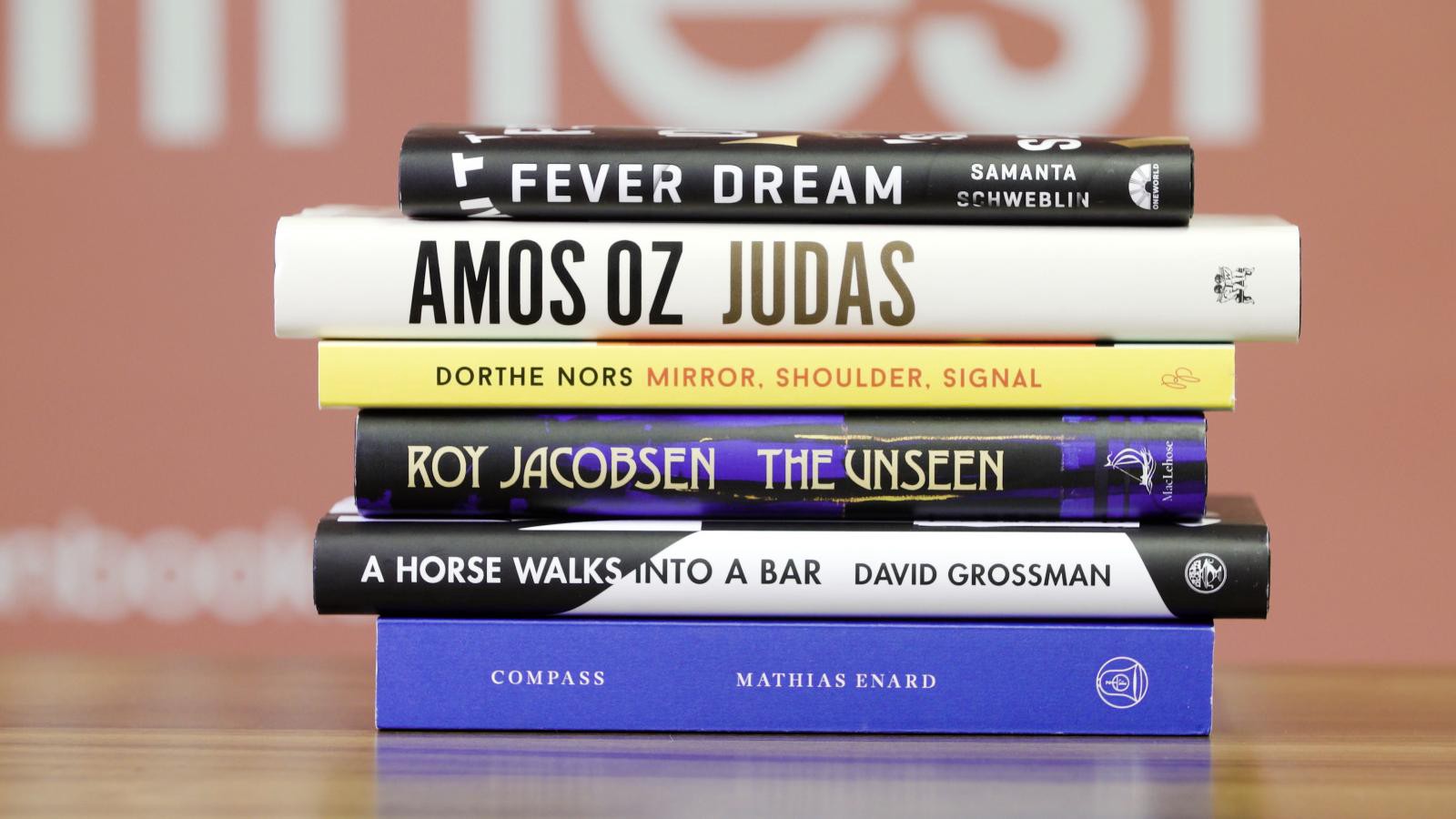
A stack of beautiful books.

Last week, the Man Booker International Prize officially released its shortlist for the 2017 award. This accolade focuses on exceptional literary work translated into English. The lucky winner receives a cash prize of £50,000 (about $64,000) — and this is one prize where the translator gets a cut, too!

In previous years, the international prize was based on a writer’s complete body of work. But 2016 marked the first year that authors and translators entered consideration on the basis of a specific book. Check back in here on June 14th when all of the Man Booker Prizes will be announced. But in the meantime, here’s a primer on the candidates and their work. That’s right — it’s time to get better acquainted with international literature in translation!

The 2017 Man Booker International Prize Shortlist

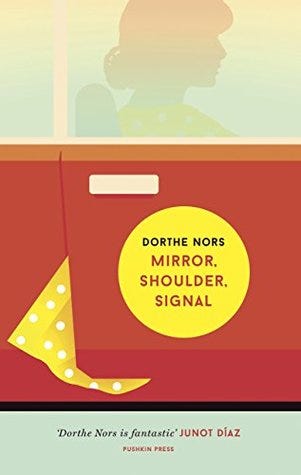
  • Dorthe Nors, Mirror, Shoulder, Signal (translated from Danish by Misha Hoekstra).

Nors has authored five novels, including the short story collection Karate Chop, which was welcomed with high critical praise, and was a favorite of Electric Lit’s Lincoln Michel in 2014. Nors is the recipient of a Danish Arts Agency’s ‘Three Year Grant’ for her “unusual and extraordinary talent.” You can find more of her work (translated by Misha Hoekstra) right here on Electric Lit:

A Wolf in Jutland: Dorthe Nors On The Writing Life In Denmark

  • Mathias Énard, Compass (translated from French by Charlotte Mandell)

The Washington Post hails Compass, Énard’s third novel to be translated into English, as more timely now than ever. (Mandell also translated Énard’s novels, Zone (2010) and Street of Thieves, (2014). Compass is a story about the complex historical relationships between the East and West, with a particular focus on the shared experience of music.

  • David Grossman, A Horse Walks Into a Bar (translated from Hebrew by Jessica Cohen).

It may not come as a surprise that a book named after the setup to an old joke is about a comic, but don’t be fooled, this Guardian review warns that A Horse Walks Into A Bar is neither “funny nor an easy read.” What Grossman may lack in levity is compensated fully by its truthfulness to the intersection of suffering and art. His 2014 genre-bending book, Falling Out of Time, was also translated by Jessica Cohen.

  • Roy Jacobsen, The Unseen (translated from Norwegian by Don Bartlett and Don Shaw)

The Unseen is a best-selling book in Norway about a fishing family living in Barrøy Island, which is perched off the northwestern coast of the mainland. Jacobsen has had an award-studded career. In 1989, he won the Norwegian Critics Prize for Literature for a collection of his short stories and he’s been nominated for the Nordic Council’s Literature Prize twice.

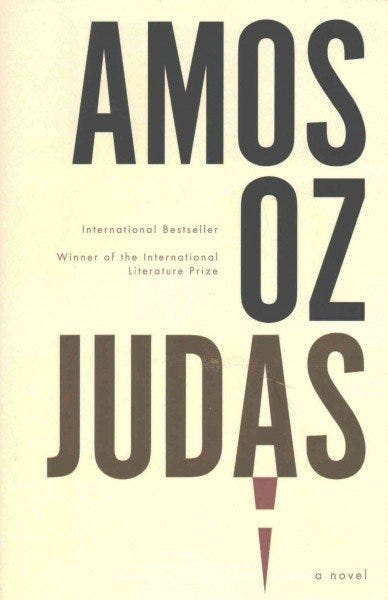
  • Amos Oz, Judas (translated from Hebrew by Nicholas de Lange)

Beloved Israeli writer Amos Oz’s latest work is a reimagining of the crucifixion story in which he asserts another version of history: “Judas was not a traitor but, in fact, the truest believer in Jesus’ divinity, more so than even Jesus himself.” According to the New York Times, Oz’s obsession with the story of the ultimate traitor began when he was eight and was called a traitor himself, for befriending a British occupying soldier in Jerusalem.

  • Samanta Schweblin’s, Fever Dream (translated from Spanish by Megan McDowell).

Tobias Carroll recently reviewed Schweblin’s Fever Dream in Electric Lit and came to the conclusion that it was aptly named, yet found it difficult to describe why. He proposed that it may be “the result of some unlikely literary mash-ups: an interrogation blended with a deathbed confession; Gene Wolfe’s sinister/pastoral Peace interwoven with Silvina Ocampo’s hallucinatory tales of class and obsession.” Read the full review here.

Or if you want to get a taste of Schweblin’s genius, read her short story “Birds in the Mouth” in Issue №12 of Electric Lit’s Recommended Reading:

“Birds in the Mouth” by Samanta Schweblin

So, there you have it: your 2017 Man Booker International shortlist. Time to get reading!

Are Video Games Meaningful?

Andrew Ervin’s Bit by Bit explores what video games mean for popular culture

“We can move up or down, left or right, or we can stand still until the ghosts come and kill us. That is free will. We cannot, however escape the maze entirely. Even the best players in the world will eventually find themselves chased down. That’s fate.”

In Bit by Bit: How Video Games Transformed Our World, author Andrew Ervin takes a journey both personal and pedagogical. He is as transfixed and mesmerized by what video games mean and what video games are as his nephews are obsessed with Minecraft or the legions of World of Warcraft players are possessed with the world of Azeroth. Between his personal reflection and his exhaustive interviews, he posits the question: are video games meaningful? Is the act of playing them more than just digitized conditioning? These are not rhetorical questions.

Ervin has his own answers but he wants the reader to draw their own conclusions, following the path games have taken to get to this point. Starting at the beginning. Where do video games “start?” It isn’t a question normally asked. To some, video games start whenever they first picked up a controller. To others, there’s a “Press Start to Begin.” I’m not sure the answer matters so much as the question.

Early in Bit by Bit, Ervin describes the genesis of video games: the analog computer game Tennis for Two. While this seems relatively cut and dry, he introduces unexpected uncertainty. Is Tennis for Two a video game? To start, it’s not a video, and the venue (an analog computer) is a different beast entirely from other gaming platforms. According to one of the (many) experts that Ervin interviews throughout Bit by Bit, Tennis for Two is “a quasi-computer game. It’s not something that you can plug into your TV or computer screen and run.”

These epistemological knots run throughout Bit by Bit. If it were a strict history of video games — Tennis for Two begat Pong begat Donkey Kong begat … Minecraft — this would be a far less interesting book. Alternatively, were it a biography-by-video game that focused more on Ervin’s own experiences as he plays Berserk, and Journey, it might lose some of that research-based credibility. By melding the two and asking tough ontological questions, Ervin transcends.

The Great 2017 Indie Press Preview

Many of his tougher questions bear thoughtful fruit. For example, while paraphrasing and translating a Belgian surrealist, Ervin investigates the nature of being through video games. “… Magritte painted the words, ‘Ceci n’est pas une pipe.’ This is not a pipe. Of course it’s not a pipe, not any more than a green sewer pipe in Super Mario Bros is a pipe: it’s a representation of a pipe made with oil paint or pixels.” Why is this comparison of Margritte to the Bros important? Well, how often do we play video games and take the actions on screen at face value? We press buttons and actions happen, but are we running or jumping or building or shooting? No, we’re directing data to interact with data and data-driven conclusions occur. There is no pipe, there is no spoon, there’s only us.

While these nature-of-being questions are intriguing, over time they can grow weary, as do the classical references: “They ran and jumped through a series of sewers like Jean Valjean, though harassed by turtles rather than by Javert.” It’s as if Ervin, knowing he’s writing about a form of entertainment that critics such as Roger Ebert misliked — “I remain convinced that in principle, video games cannot be art” — wants the readers to know that while he plays video games, he’s a smart dude (besides Les Miserables, there are copious references to Shakespeare, Moby Dick, and other “highbrow” entertainment). It’s clear throughout Bit by Bit that Andrew Ervin is a devoted and capable researcher, and a thoughtful, accomplished writer, these references can feel forced.

Needless references aside, I’m glad he’s so careful and thoughtful. Importantly, Ervin makes it a point to introduce as many view points from underrepresented populations as possible. There are many female critics, game developers and players interviewed and quoted in Bit by Bit. For a population that (by some measures) encompasses half of the gaming world, women are not mentioned or addressed enough. That Ervin made it a point is a step in the right direction.

It’s hard as a reader to know the entirety of an author’s journey with their book’s construction. Perhaps there are other reasons for the numerous philosophical, artistic and literary references and parallels. To a point, they’re highly enjoyable brain-engagers. As are Ervin’s own deeper suspicions about video games, such as Colossal Cave Adventure, “Options are limited; free will does not truly exist on the game’s world. I cannot drink stream or break dance” and Berserk, “Like existence itself, in Berserk there are no levels to attain, no loot, no real point other than inevitable death.”

Thankfully, Ervin doesn’t solely dwell on classic titles and gaming antiquity. Through his truncated, subjective (by design) tour of video games, he lingers on what he terms the Video Game Renaissance (the Super Nintendo, the PlayStation and the N64). While he himself left gaming at this period, “Even as the PS1 and N64 Renaissance brought video games into a new and glorious era, it disenfranchised a large number of casual gamers like me,” he also recognizes that this is the period that popularized and modernized the industry. He bemoans the fact that he gave up before achieving fluency.
It’s at this point that I most personally empathized with the author. While my disenfranchisement was not as total, I also ‘didn’t get’ the 3D revolution and sometimes feel wistful for a simpler time.
Near the conclusion of Bit by Bit, after Ervin’s re-entry into video games due to the wave of auteur games in the recent iteration of systems and technology, Ervin addresses the title. Have video games changed the world? To Ervin, the answer is evident. As he states, “Being subject to academic methodology is one sign that games have truly arrived.” That is one objective metric that gaming has entered the mainstream, that they’ve become, more than culturally important, part of culture itself. Interesting, but not necessarily convincing. It’s another section, where Ervin depicts the US Armed Forces’ comingling with video gaming (and a theme park devoted to shooting games and recruitment), that’s more pointed.

I wonder at the central tenet of Bit by Bit. Have video games changed the world? Or have they become assimilated into the cultural gestalt and thereby just another hobby? I’m not sure. While much of Bit by Bit is a fascinating and engrossing history, I’m not convinced that history alone amounts for much. But he makes so many thought-provoking points, asks so many excellent and difficult questions, that maybe he’ll convince you. Regardless of our conclusions, Bit by Bit is an engrossing and necessary read.

Let’s pause here so you can read for yourself. We can do that now:

“It’s easy to forget that save functionality did not always exist. Someone had to come along and invent it.”

The Nostalgia of the Neighborhood Hardware Store

The dog and I walk to the hardware store in the snow like that first winter in Chicago when we were still young and brave. We were one and 22 then. We are 12 and 33 now. We need keys for the new place where we’re starting our new life, and snow makes newness feel safe. We slide down the sidewalk with that old sense of promise, two girls against the world, the city a glistening pearl at our feet.

In front of the store, a crowd disperses as a truck slips and swerves away from the curb. Inside, the man at the counter wears a utilikilt. I say, “I need to copy this key,” and he says, “I was just helping those guys push their truck out and I ate it on the ice.” He rubs his right arm and winces while I stand there, stupid, key in hand. As usual, I missed the whole thing.

Another employee comes in from the snow and asks Utilikilt if he’s okay.

“I’ll be fine,” he says. He has a viking beard almost as orange as his vest.

“You fell down hard, man,” his coworker says.

“It’s not so bad,” he says. I think he should go to the hospital. I think he should wear pants.

While Utilikilt Viking cuts my keys with his remaining good arm, the dog and I roam the aisles looking at parts. I wouldn’t know what to do with most of them, but they’re soothing all the same. This nut fits that bolt; this joint threads with that pipe; intention and usefulness abound. In the housewares aisle, I pick up dish soap, the fancy kind, and picture wire, and hooks. The dog sniffs a box of rat poison on a low shelf until I notice and pull her away.

In the back of the store, a wall of toilet seats makes me cry. There are reasons, but how silly they sound: the way our old landlady had warned us about the toilet when we moved in, “I mean, I don’t know what you eat, but just in case.” The time we stood in the too-small bathroom of that too-precious house and named the fish on the shower curtain. How my new landlady is more nosy and less kind, and my new apartment has a bigger bathroom with a better toilet, and how I wish he could see the sink, the way it fits into an old wooden cabinet with plenty of room for two people’s things. How I had believed my days of going to a hardware store alone to fix up an apartment for just me and the dog were long gone. I sink to the floor beside a plunger display and the dog sticks her face in mine. “Sorry, kid,” I say. I want to scream obscenities until someone calls the police. I want to fill my arms with every kind of hammer and run down the street breaking windows and heads.

I read somewhere that the end of a significant romantic relationship affects the brain the same as death; grief is grief, no matter the cause. Some days, I envy the widowed and terminally ill, publicly praised for their bravery and strength. There is no honor for the heartbroken bereft. I am not brave or strong, I am merely surrounded by bathroom fixtures and alone. Cry me a whatever, woe the fuck is me.

“My girlfriend loves this soap,” says Partnered Utilikilt Viking as he bags my things. If he saw me by the toilet seats, he isn’t saying a word. This store is quite small.

“You should put the rat poison up higher,” I say. “Since you’re dog-friendly? It’s kind of unsafe.”

“I never would have thought of that,” he says. He still isn’t using his fallen-on arm.

He hands the dog a large biscuit, and me three identical keys, and I tell him he should go to urgent care.

“Yeah thanks,” he says, “You take care, too.”

Twelve in dog years is 84 in human, common wisdom says, but really it depends on the dog. The vet told me mine could live to be 16, which would be 112, which is very old, but still not enough. I think when the dog dies, I’ll die, too. I’ll be 37 then. It’s young, but people can understand that kind of giving up.

We walk out the doors into snow already turning to slush. Winter never lasts in this town, which should be some sort of relief, but imagine if snow stuck around long enough to count. Imagine if love never died, and neither did dogs, and winter did its job for once. We head towards our new home, two old girls against a world already starting to forget. The city is a riverstone, a comforting weight. It will pull us under if we let it, but we won’t, we can’t, we won’t.

Five Essays, by Josh Russell

Which Novelists Are Writing for TV in 2017?

From Fargo to American Gods, The Leftovers to Legion, find out which of your favorite shows are employing your favorite novelists

clockwise from top right, a whole lotta novelists

Maybe it’s the insatiable appetites of online behemoths Amazon and Netflix, gobbling up IP and talent like the studios of yesteryear. Maybe novel advances are down or ambition is up, or maybe it’s just been a cold string of winters in New York and hell, Los Angeles looks pretty damn good from that fourth-floor walk-up in Bed-Stuy. Whatever the reason, it seems like every year we do this list, there are more and more novelists making a go of it in TV-land. And this year the writers aren’t just hired hands for showrunner visionaries. Increasingly, novelists are coming to the fore, whether it’s Richard Price or Noah Hawley continuing a run of excellence, crime fiction legend Leonardo Padura trying his hand, or Philipp Meyer’s production company placing a Texas-sized gamble on a frontier epic for AMC. And it’s not just a boys’ club, either. (Although, let’s be frank here — it’s still mostly a (white) boys’ club, unfortunately.) This year, two of the brightest stars in crime fiction, Megan Abbott and Lisa Lutz, join the David Simon universe, while Gillian Flynn’s Sharp Objects looks to pick up where Big Little Lies left off, with another female-led mystery drama for HBO Sunday nights.

TV isn’t going to replace the novel anytime soon, but with barriers to entry dropping and audience demand for new content on the rise — and not just content, but well-crafted, narratively ambitious story—there’s no reason to think this is a passing trend. Now, at some point, yes, there’s a chance that the old-fashioned novel-writing industry will experience some significant brain drain, since TV is where the money and the audiences reside. But for the time being, let’s assume that a well-told story is a worthwhile thing no matter the form, and that the two media are actually somewhat simpatico and maybe even mutually-nourishing. Are you a fan of Westworld? Guess what? You’re gonna love the books of Charles Yu, one of the show’s writers. Or take the reverse. Are you a crime fiction devotee but every once in a while you’d like to put down the book and turn on the tube? Good news! Quarry and Four Seasons in Havana are every bit as good as you dreamed.

So, here’s our 2017 list of novelists and other literary types writing for TV. Have we missed some people? Almost certainly. Let us know and we’ll keep things up-to-date. Now let’s all give thanks for Ian McShane & Neil Gaiman.

David Benioff & DB Weiss, Game of Thrones (HBO)

For two more glorious (slightly abbreviated) seasons, Benioff & Weiss will reign atop just about every list-icle and think piece about TV’s continued run of pop culture excellence. Why should this one be an exception? Benioff (author of The 25th Hour) and Weiss (author of Lucky Wander Boy) are still at the head of TV’s most beloved and critically-acclaimed show, and who knows, after it’s all done, maybe they’ll go back to their novelistic roots. In the meantime, here’s to another 16 episodes of what American Gods’ Ian McShane lovingly referred to as ‘the greatest literary adaptation of our time’…oh wait, no, he said it was a show about ‘tits and dragons.’ Our bad.

Carson Mell — Silicon Valley (HBO), Tarantula (TBS)

Mell is a longtime Electric Literature favorite — we even published the eBook of his brilliant Saguaro. Nowadays we enjoy his work on HBO’s hit comedy, Silicon Valley, where he serves as a story editor with several episode credits. And pretty soon his original creation — Tarantula, an animated series about an unlicensed tattoo artist in a residential hotel — will be on TBS. In short, Carson Mell is a lowdown crazy genius and we can’t get enough of his work.

Max Allan Collins — Quarry (Cinemax)

For a two-month stretch at the end of 2016, Cinemax’s Quarry had a perfectly legitimate claim to the title of best crime series on TV. At press time, the show’s cast and crew are still waiting for the go-ahead on a second season, but if Cinemax has any good sense (and given its Banshee track record, it would appear the network most likely does), it will quickly pony up while the gang is still together. Max Allan Collins, the author of the beloved series of Quarry novels (beloved might be the wrong word for material this dark, but you catch our meaning), published by Hard Case Crime, is on staff and deeply involved in the show, with writing credits on the teleplays for all eight episodes of the series. Collins is an incredibly prolific writer — we’re talking multiple novels, graphic novels, and comics each year — yet somehow Quarry seems to be gaining new life all the time.

Noah Hawley — Fargo, Legion (FX)

Noah Hawley is giving the late James Brown a run for the title of hardest working man in show business. In addition to publishing a new novel (Before the Fall), Hawley has also kept busy writing season 3 of the hit FX show, Fargo, and season 1 of the network’s new X-Men-universe pyschological thriller, Legion. All three projects have received critical acclaim, and Hawley shows no signs of letting up. Just as Fargo season 3 hits screens, Hawley is reportedly pushing for a quick turnaround on season 2 of Legion, aiming for a 10-episode arc set to air in spring 2018. FX seems entirely happy to oblige.

Leonardo Padura — Four Seasons in Havana (Netflix)

Netflix hasn’t given this limited series the push it deserves in the US market, but hidden away in the Spanish-language section of your account is a gem: Four Seasons in Havana. Leonardo Padura is an icon of Latin American crime fiction, with a voice and style all his own: gritty, sensual, learned, cynical in one breath, sentimental the next, all with a vast affection for Cuba and Cubans that permeates every page. Four Seasons in Havana adapts Padura’s most famous quartet — one book per episode (episodes run at about 90 minutes). The author created the series alongside his wife, the screenwriter Lucia López Col. They managed to film on location in Havana, and the show has some of the most poignant, rich cinematography you’ll find anywhere on TV. No word yet on whether Padura will be adpating more work for Netflix.

Philipp Meyer — The Son (AMC)

Meyer is directly involved in the adaptation of his 2013 novel, The Son, a multi-generation Texas epic that premiered this weekend (April 22nd) on AMC. According to a recent article in The New York Times, the author is on-set and even overseeing accent work and Comanche bow technique. (Pierce Brosnan praised Meyer for his “swagger” — pretty good notch in the belt right there.) The series is being produced by newcomer El Jefe, the company Meyer founded in 2014 along with old UT-MFA classmates Brian McGreevy and Lee Shipman. There’s a lot riding on the success of The Son — El Jefe is currently working on TV adaptations of Meyer’s American Rust, Wil Hylton’s Vanished, and Smith Henderson’s Fourth of July Creek. The company’s goal is to make sure even more novelists are able to stay involved in the screen adaptations of their work.

Joe Lansdale — Hap & Leonard (Sundance)

It warms the heart of crime fiction aficionados everywhere that Joe Lansdale’s Hap & Leonard has found a home on TV, and with a damn impressive cast, too — Michael Kenneth Williams, James Purefoy and Christina Hendricks. 2017 is still young, but we’ve already seen two Hap & Leonard novellas — Coco Butternut and Rusty Puppy — and the debut of season 2 of the Sundance series, based on Mucho Mojo. The show is helmed by Nick Damici and Jim Mickle, but Lansdale is a big presence — reviewing scripts, offering up ideas and notes, and even finding time to be on set during filming. His vision of East Texas is a distinct one, so it’s no wonder the showrunners have been eager to keep him involved in the adaptation.

Neil Gaiman — American Gods (Starz)

Gaiman isn’t an fixture in the writers’ room on American Gods. He describes himself as “a kibitzy sort of executive producer. What I can do is read scripts, comment on them, give notes, talk to things in general terms.” The new show, set to premiere April 30th on Starz, is one of the most highly-anticipated programs of 2017 — thanks to the beloved source material, some badass poster work, and the presence of Ian McShane. Meanwhile, Gaiman is doing some teleplay writing of his own: he’s reportedly working on a 6-part limited series script for Good Omens, the fantasy novel Gaiman wrote in collaboration with the legendary Terry Pratchett. The adaptation was recently picked up by Amazon Studios and is on target for a 2018 release.

Which Books Are Coming to TV in 2017?

George Pelecanos, Richard Price, Megan Abbott & Lisa Lutz — The Deuce (HBO)

When it comes to novelist bona fides in TV writers’ rooms, The Deuce is in a class of its own. Going back to The Wire and Treme, David Simon has always had a knack for assembling literary talent. With The Deuce, he’s back to working with crime fiction icons George Pelecanos and Richard Price (now a TV heavyweight in his own right, after co-creating HBO’s 2016 hit The Night Of) and brought on board two of the reigning queens of literary noir: Megan Abbott (whose most recent novel, You Will Know Me, you can read about here) and Lisa Lutz (author of The Passengers and the Spellman series). The Deuce is shaping up to be one of the year’s most talked-about shows. It’s 1970’s NYC in all its seedy glory — a story about smut-peddlers, prostitutes and Times Square, starring James Franco and Maggie Gyllenhaal. HBO has said we can expect a 2017 premiere date; rest assured, Electric Lit is on it.

Tom Perrotta, Tamara P. Carter & Patrick Somerville — The Leftovers (HBO)

In addition to Tom Perrotta, who wrote the source material and co-created the TV adaptation along with Damon Lindelof, HBO’s The Leftovers has an impressive roster of fiction writers on-staff, including Tamara P. Carter (Lovestoned and Behind Those Eyes) and Patrick Somerville (The Cradle, This Bright River and two short story collections). Somerville was also recently signed to write The Maniac, Netflix’ upcoming half-hour prestige project, starring Jonah Hill and Emma Stone, with Cary Fukunaga slated to direct. The Leftovers, which has moved well beyond the action of Perrotta’s novel, just started its third and final season, Sunday nights on HBO.

Trouble and the Shadowy Deathblow

Nic Pizzolatto —True Detective…Season 3 (HBO)

You really thought Frank Semyon, a badass moustache and some Molly binanca could kill True Detective? Well, for a while it looked like you were right, but the new report is that none other than David Milch (HBO OG and, since we’re on the topic of novelists, former Robert Penn Warren protégé) is coming in to help Pizzolatto write a new season of the once-and-future king of TV crime fiction. Will Milch convince the author of Galveston to return to his Texas roots? Or will season 3 deliver on Pizzolatto’s old promise to write about “hard women, bad men and the secret occult history of the United States transportation system”? Couldn’t we get both of those things? And, please, if Milch does us this solid, could HBO throw him a couple bones and (1) jumpstart his long-gestating Faulkner adatations, and (2) give us the Deadwood movie we all deserve? Oh, and Pizoalatto is also supposedly developing a Perry Mason show for Robert Downey, Jr. (*mic drop*)

Nick Antosca — Channel Zero (Syfy)

Antosca, the author of Fires (2006), Midnight Picnic (2009), and The Girlfriend Game (2013) has been handed the keys to Syfy’s kingdom: Channel Zero, a horror anthology with episodes based on creepypastas. Antosca is the creator and showrunner, and with SyFy already committing to a second, third and fourth season, he’s going to be at full-writing-employment for quite some time. New episodes are slated for fall 2017.

Jonathan Ames, World’s End (TBS), Blunt Talk (Starz)

Ames — the bard of Brooklyn, or one of them anyway — is now a TV veteran, with three seasons of Bored to Death and two seasons of Blunt Talk under his belt. His newest creation, World’s End, is signed up for a TBS pilot, with Ames at the helm and Hamish Linklater and Wanda Sykes set to star. The show’s about an English professor (obviously) leading a mental institution revolt (a little less obviously, but not that far outside Ames’ wheelhouse).

Charles Yu — Westworld (HBO)

Charles Yu, the author of How to Live Safely in a Science Fictional Universe, Third Class Superhero and Sorry Please Thank You is a bit of a polymath. Besides his gig writing fiction, Yu was also, until recently, serving as in-house counsel for the consumer electronics company, Belkin. But that was until Jonathan Nolan, Lisa Joy and HBO came calling, inviting Yu to join the Westworld writers’ room. Yu serves as a “story editor” for HBO’s high concept Sunday night mind-fuck; over the course of season 1 he earned three writing credits, so you’d have to expect he’ll be back for season 2 — Samurai World!

Gillian Flynn — Sharp Objects (HBO)

This long-awaited HBO series is finally coming together. A year after HBO first announced a straight-to-series order, filming on Sharp Objects has finally begun in Los Angeles. Amy Adams and Chris Messina will star, with Jean Marc Vallée directing, Marti Noxon serving as showrunner, and of course Gillian Flynn writing episodes (along with Noxon). The series adapts Flynn’s bestelling mystery novel. The story follows a journalist just out of a mental hospital who returns to her hometown to investigate a string of murders. After a series of rumored projects, Sharp Objects will be Flynn’s first script to hit screens since penning David Fincher’s 2014 Gone Girl film adaptation.

18 (More) Amazing Novels You Can Read in a Day