Bedtime Stories for Ghosts

Who killed Cock Robin?

I, said the Sparrow,

with my bow and arrow,

I killed Cock Robin.

— the English nursery rhyme “Who Killed Cock Robin?” published c. 1744

What is silent reading but a private, intimate act? Just you, alone in your head, and a text. Fingers on the page. Quiet breath. Mind moving at its own speed, thoughts wandering and returning. Poaching ideas. But reading doesn’t start out that way. Reading starts with a connection. Child and adult, most often. Reading happens aloud, expelling air, sounds, letters, words forming concepts. We learn language and reading through stories of animals. The sheep goes baaa. The cow goes moo. The Little Rabbit. The Hungry Caterpillar. Bambi. Black Beauty. Reading connects us to others, to things beyond ourselves. Held in a lap, listened to from a bed, and, then, later, alone, your eyes on a text, another’s ideas mixing with your mind.


Ann Hamilton’s the common S E N S E, an immersive exhibit at the Henry Art Gallery in Seattle in which I participated, grew out of Aristotle’s premise that touch is the sense common to all species. The show explored touch and our relationship to nature through scanned images of taxidermy animals (birds, amphibians, mammals), clothing made of animals (fur, feathers, gut), and children’s ABC primers and bestiaries. It contemplated physical touch and being touched, emotionally and intellectually, through the private act of reading.

Visitors were invited to take the images of animals, printed to pads of newsprint hung on the walls. In return, they were asked to add to the exhibit in a special photo booth. The human portraits, taken behind a thick translucent sheet of plastic, are blurred in the same manner of the animal scans: only the body parts in direct contact with a surface (the scanner for the animals, the sheet for the humans) are in focus. As the animal images depleted over time, the human images accumulated.

The show invited participation in other ways, too: chorale singers from the University of Washington wandered the rooms and sang to objects. And reader/scribes sat beside them and read aloud from a common text. I participated as a reader/scribe.

The reader/scribe activity goes as follows: you get a lap desk, clip-on reading lamp, a copy of the common text, a log book, and a pencil. In the fall and winter, the common text was J.A. Baker’s The Peregrine, a book about one man’s six-month expedition tracking a hawk. In the spring it was Mercè Rodoreda’s Death in Spring, a lush, mythic novel exploring violence in the natural landscape and cruelty among humans. One copy of Aristotle’s Meteorlogica was available as an alternate text throughout the year.

You choose an object in the gallery (an animal scanned to newsprint in the north galleries or an item of clothing, encased in a curtained vitrine, in the east galleries), pull up a stool up to it, and read aloud to it, from the book. It is like reading a bedtime story. There is an optional wool blanket, embroidered with an image of Cock Robin that you may sit on top of for extra cushioning, or drape over your lap for warmth — or to cocoon inside. As you read aloud, you copy passages you especially like into the log book and reread them aloud at the speed of your handwriting. That log book accumulates text and becomes an artifact of the collective reading experience of all the reader/scribes.


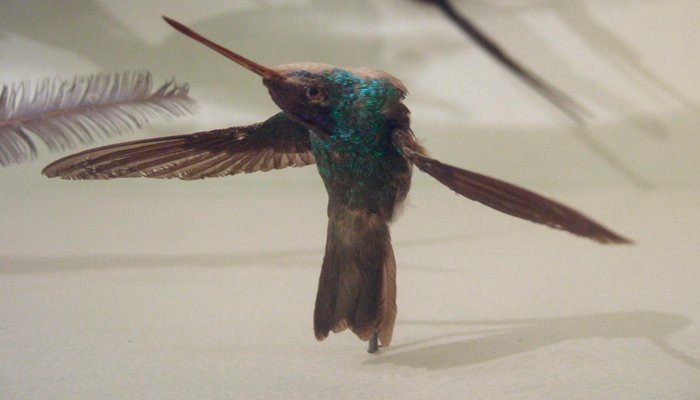
I first chose a ruby-throated hummingbird. Though I could not see its eyes (I could not see most of the animals’ eyes, they were belly-up, soft-throated), as I addressed it, I felt as if something was listening to me. Dare I say I thought the hummingbird could, in some distant way, hear the words I read from The Peregrine? Is that — woo woo? That first time reading aloud, at the press preview, there were few people in the galleries. It was mostly hushed, and very intimate, but sometimes there was the sound of footfall, a rasp of paper, another’s breath. Sometimes a viewer paused to listen and sometimes, it seemed, they wanted to avoid that intimacy and rushed elsewhere, to look at the animals in a room empty of readers. A bell would ring, and a chorale singer, then two, incanted in distant rooms, until they came closer, closer, and I was aware of my voice overlapping with theirs in the room with me, aware of divergent elements competing for my attention. I drifted in and out of focus on The Peregrine, even as I continued reading it.

In this drifting I became aware of the disparate experiences of reading silently and aloud. Speaking the words slows the process literally of course, but there is also the delayed moment in which a listener apprehends what is spoken. A gap. Where in that gap do our minds wander, diverge? How vastly different or peculiarly similar are our ricocheting imaginations? Discussing our comprehension and interpretations of a text is one thing. What about the sparks that fly off words and images that cannot be fully explained? What about the half-formed ideas that, in the course of encountering new texts and experiences, become an entirely different animal?

What about the half-formed ideas that, in the course of encountering new texts and experiences, become an entirely different animal?


My second encounter in the museum proved less engrossing than the first. Had the novelty worn off? Had I chosen the wrong bird? Or was it the clamor of a much bigger, opening day crowd? The stronger pull of their steps and voices, the sound of them ripping the newsprint animals from the wall? A baby grabbed at my reading light, and I couldn’t keep reading in the same way, felt compelled to address both baby and bird. Did his mother think it strange that I kept reading? That I only briefly smiled at him, then kept reading, but smiling?

A woman came up behind me and ripped an animal from the wall above my head. It seemed her movement was deliberately slow, so that I had to be especially aware of her audacity. She had her own performance in mind. I wanted, then, to observe others in the room. I heard the security guard asking spectators not to take so many prints. (The invitation to take souvenirs was whole-heartedly embraced and the museum went into conservation mode on the very first day, worried there would be no more images available in a show that was scheduled to run from October to April.) But I had to keep my focus on this bird; maybe because I didn’t know its name, what kind of bird it was (there were no labels), retraining my focus felt more effortful than the hummingbird, a naturally loveable animal. What about the animals that are not immediately loveable? I’m thinking of a certain squashed bullfrog: his belly was so vulnerable, you wanted to put your finger on it.


It wasn’t until my third encounter that I felt moved to write. I don’t mean copying Baker’s words, which for me, in each instance, was a great joy, a way to physically inhabit someone else’s gorgeous prose, someone else’s attempt to empty himself into another: the hawk he tracked. It was on my third encounter that I began to think about how the object itself would react to the words I read. I should say that my choice in object had a lot to do with this. Instead of an animal scanned to newsprint, I went down into the east galleries, where clothing made from animal products lay inside vitrines — bassinets, they called them — each surrounded by soft, cream-colored curtains. The vitrines were not comfortably arranged; the room was purposefully crowded (sometimes I thought of them as baby coffins rather than bassinets, Snow White-like, glass-fronted, baby coffins) but each object was labeled beautifully by hand, the label tied to the bassinet with a black ribbon. The clothing was chosen without regard to culture; all that mattered was that they were made from animals: mink stoles from the estates of grand dames, 19th century gut skin raincoats, salmon skin gloves (my favorite object to reference).

I made a beeline for an object I’d noticed in my previous visits, a 1932 Coco Chanel capelet made of snowy egret feathers and lined with gray silk. I could not simply crack open the curtain and read to it. I draped each curtain over the rods of the bassinet, forming a proscenium. I was conscious of the fact that we were not supposed to be performing, that the reader/scribe activity was supposed to be an intimate address. But beyond the practical desire to see the entire object, to let visitors more easily see what I was addressing, that capelet, those egret feathers, demanded a theater.

I embraced the reality of the situation. I was a performer. And so I deliberately read a passage beginning on October 15, the day I happened to be in the gallery. There, Baker describes a peregrine-tiercel duo flying in a dance of sexual pursuit and display. And I couldn’t help but think: you would know something about that, wouldn’t you, capelet? And later, I read a phrase that I copied into the log book — “the hovering cloud of light that towered on the distant water” — and I thought: I bet you like that, capelet. Maybe gravitating toward the human intervention on the animal made me address the object as capelet and not, say, remnants of egret. There seemed to be, here, too, some vain desire to be an egret — and to embody the glamour of the capelet.

What would have happened if I began speaking my thoughts to the object in the vitrine? Rather than appear a lunatic, I could instead jot them down in the log book meant for the recording of favorite passages. Commenting aloud would break the rules more explicitly than what was already happening in the log book and margins of the common texts: other reader/scribes were inserting their own comments, too.


In the east galleries, on that day, I did not hear the bells and chorale singers. Another sound, beyond the rise and fall of visitors chattering above me in the mezzanine, was that of the mechanized bullroarers (ancient ritual music instruments of Australian and Alaskan origin) in the south gallery. Intermittently, they hummed, increasing in volume and speed, mimicking the movement of flocks of birds. Their increasing intensity intersected with a passage in the text of the hawk hunting and killing. And the bullroarers died down as the hawk settled in on the limp body of another bird and tore at its feathers to get at the flesh. A coincidence, an unexpected circumstance. But I was making a narrative of it, wondering when and if that confluence would recur. When, in the real world, do I encounter these kinds of intersections? A moment of wonder: two starlings, flying together, split apart around my body, the wind of their passing on my forearms. That only happened once. That moment of mechanized bullroarers in 2014 intersecting with a hawk killing in 1962 occurred only once for me. But it also tempted me to observe, over multiple visits, what else might occur.


Aristotle’s Meteorlogica cast a different hue on the whole endeavor. I read to a rusty-colored bird head, its eye eerily large and entirely white. It was a quiet Sunday afternoon in November, no chorale singers, just the shifting light of the sun filtered through the skylights. Pale orange, clouds, pale yellow. (Hamilton had the museum uncover all the skylights normally covered to preserve the art and control the light.) Aristotle’s words felt more crystalline than Baker’s. The cosmos are cold. Bloodless. Earth, fire, air, water. The nature of color. What makes fire red.

The bloodlessness of the writing made me feel distant. Maybe it was the lack of a sentient animal in the text, the focus on elements. Maybe it was Aristotle’s distance from me, in history. Or maybe it was the emptiness of the room, the fewer scans of animals on the walls, no singers’ breath to fill the air. Just the sound of curling paper blown up by the HVAC system. Maybe it was that bird’s strangely white eye socket. A shocking emptiness.

After this encounter with Aristotle, I became methodical.

In January, the Henry held a discussion on how the exhibit was evolving. It was evening, and the galleries were darker. I was aware of the artificial light. There were, originally, 200 images of animals (some repeated) on 1500 pads of newsprint, with each pad carrying 100 prints. Of these, I counted 26 fully depleted animal scans. I’d hypothesized that most of the depleted pads would be within easy reaching distance, that the images close to the ceiling would be unscathed. This was not the case. Some at the very top were gone, probably due to ambition: I can reach that too, or, I must have that one.

Still more disturbing were the ragged edges of the quickly torn, and, still worse, the half-torn and left behind. My ruby-throated hummingbird, slashed at the same spot that had first attracted me, half a ragged head atop another bird whose head was hidden.

Where there had been a single growing stack of human portraits in October, in January there were three full stacks and a just-burgeoning fourth. The bar on which the portraits hung seemed to bend under the weight of them.

That night, for my fifth encounter, I took Aristotle to the bassinets. I found a vitrine containing fish skin mittens made of embroidery thread, caribou hair, grass, birds’ feet, and string, from the Yupik culture in the early 20th century, and a child’s gut parka from the Central Arctic made of harbor seal small intestine in the late 19th century. Perhaps because of the stiffness of the intestine, the parka appeared inflated in the shape of the child, as if the original owner still inhabited the coat. I imagined a little face framed by its hood.

I checked the index of Meteorlogica to ensure an interesting selection. I read on the origins of dew and hoar frost and snow.

I focused my address to the air-puffed parka and found myself feeling didactic, as if I had no business reading Aristotle’s theory on winter weather to a coat from the Central Arctic.

The bullroarers whirred, eliciting images of a windswept tundra, and I wanted to slip my hands inside the fish skin gloves, wanted to feel their texture on my cold fingers.

I read about the sea and its origins, about salt and the suggestion that it is the sweat of the earth. With the bullroarers and Aristotle’s litany on the deepness of the seas — Aegean, Pontus, Sicilian, Sardinian, Tyhrenian — my speech quickened. On the phrase “our basic ideas of the sea,” a contemporary image appeared in my mind’s eye: the island of garbage, of plastic bags, floating in the North Pacific. Here I was in Seattle, in 2015, reading a text from 350 BCE, to objects from the turn of the 20th century, thinking of the Great Pacific Garbage Patch, formed beginning in the 1980s, seemingly far from me in geographic distance, and yet so close to my own nightmares of what we’ve been doing, of what we have done in this world.


I hadn’t yet read to a mammal. It seemed the scanned mammals, purposefully, were few. The majority of animals were birds, followed by amphibians. But when The Peregrine was replaced by Death in Spring, I chose a scan of two meerkats. One meerkat’s upturned paws blocked its face; the other’s paws framed its little teeth in an underbite. I wonder now if the decision to make mammals a minority came from a fear of Disney-fying the experience. These meerkats were cute, even if, as with the other animals, you couldn’t quite make out their faces.

Death in Spring is hardly cute. Its gorgeous prose makes reading its horrifying violence bearable. Villagers in that novel slaughter horses, eat balls of horse fat hanging from ceilings, ridicule a starving prisoner caged in the town square until he loses his humanity, and force feed the dying cement so as to seal the soul into the body before it can fly out.

Reader/scribes are encouraged to annotate the books as they see fit, another way of making the collective experience of reading visible. Comments are discouraged but underlining, starring, bracketing, are allowed. “I didn’t want to be seen,” in the opening of Rodoreda’s novel, was underlined three times by others who preceded me. I wondered if those readers pulled wool blankets tightly around their shoulders, if they covered their heads with the blankets to feel more protected while exposing themselves to Rodoreda’s story. Both Rodoreda and the prospect of reading her aloud in public make the reader vulnerable, demand some kind of hearty pelt or carapace.

The novel’s landscape is extraordinarily lush, profuse with yellow pollen hanging in the balmy air and wisteria so abundant it threatens to uproot houses. I wondered if my meerkats wanted to rub their snouts in the flowers or were skimmed by the many hovering bees. I wondered if my meerkats ate bees. And I wondered if my wondering could be read, fleetingly, across my face and in my voice.

In an annual ritual, Rodoreda’s villagers ascend Maraldina Mountain collecting crimson powder to paint their white houses pink. I imagined the meerkats ascending with them. When wind rustled through the brush, I imagined the meerkat’s fur rustling.

In an adjacent room, a high-pitched whistle pierced the air for thirty seconds every two minutes. The first few times this happened, I thought the HVAC system was acting strangely. I skipped forward in Death in Spring to a dramatic mob scene. Too intense for your average bedtime story. I still read aloud, but I was no longer reading to my meerkats. I was troubled for my meerkats, but also fully immersed in the horror of the scene: humans hunting humans. I had to remind myself I had an audience: the meerkats. Soon, I just had to stop reading. The writing had touched me.

I learned the soundtrack of a teakettle had been added to the exhibit in the back room of the galleries as a warning bell to visitors. A sonic urgency. In fact, by March it was clear that the back room of the east galleries contained the fewest remaining animal scans. They’d been depleted first: people preferred to stow away their souvenirs in a more hidden location. They didn’t want to grab the first possible image in the first room.

Hamilton’s exhibit naturally puts its finger on the problem of “using” nature, taking from it. No insects appear in her elegiac collection of objects, but in “The Book of Natural and Unnatural Nature,” Rikki Ducornet writes of a (presumably nineteenth century) fashion throughout the Caribbean, of pinning live fireflies to ballgowns. The fireflies could only be worn live, while they emitted light. Fifty to 100 of them might be pinned to a single dress. If such a dress were entombed in the glass vitrines, would the gallery lights glint off lightning bugs’ dead husks? How might such a gown speak to the egret capelet, the gut skin coat? How might it collide with the story of a hawk or a landscape of mythic violence? I can imagine that collision evolving as fiction, careening into other creations, and carrying these ghosts.

“Souls have no mouths,” Rodoreda writes in her novel. The mouths of the scanned animals are hidden or obscure; the mouths of those who wore the clothing in the bassinets are long gone. But they all still speak. They all have multiple histories: as the living, as the materials of an object for use (clothing) or study (taxidermy), as a thing related to by humans in the constructed world of the common S E N S E, made distant by the medium of a glass case or a scanned image. You can touch the curtains draped over the glass vitrines, you can touch the newsprint scans. You can never get closer than that. But repeatedly addressing these ghostly objects breathes air, breathes words, breathes imagined lives into those long gone mouths, collapsing distance and time.

TED WILSON REVIEWS THE WORLD: MY TADPOLE

★★★★☆

Hello, and welcome to my week-by-week review of the world. Today I am reviewing my tadpole.

Earlier this spring I found a tadpole in a Ziplock bag being dangled at arm’s length by a neighborhood boy selling tadpoles door-to-door.

I’d always loved the idea of having a tadpole and this was my chance. A montage of possible adventures the tadpole and I might have flashed before my eyes. We were riding a train in a foreign land, or laughing together while watching a movie, and then fending off a home intruder.

I named him Toddpole. Then I wondered if he was a girl, then remembered a guy I knew named Shannon, and decided everything is okay, it’s just a name.

“What do baby frogs eat,” I panicked. Baby flies maybe, but those are hard to find, so I just made him a fly puree. Except I didn’t have any flies so I used ants. He didn’t seem to care for it. He seemed lazy, frankly.

Everything was going swimmingly (ha ha) until reality struck. Toddpole would not be a cute, black, sperm-like thing forever. One day he would transform into a frog. That’s basically a whole new animal. Toddpole as I knew him would be gone, forever.

The thought of losing him overwhelmed me. I decided to be proactive and sell him back, but that kid was nowhere to be found. I searched high and low, looking in people’s windows and calling out, “Hey little kid” at the playground. Nothing.

I’ve seen in movies where a person appears, does something, and then vanishes and turns out to be a ghost who didn’t like sticking around. Did God send a ghost to bring me a tadpole? Nope. Because when I tried to abandon Toddpole at an animal shelter, the woman there said he was only a rubber toy. I wasn’t angry, I was relieved. Life seemed more manageable knowing Toddpole would never change.

I think a lot of parents might prefer to have rubber children who stay cute forever, instead of real kids who turn into teenagers. Toddpole was the best without any of the worst. I turned him into a keychain.

BEST FEATURE: He requires little care and no money.
WORST FEATURE: If left on the dashboard of my car he may melt.

Please join me next week when I’ll be reviewing Margaret Thatcher.

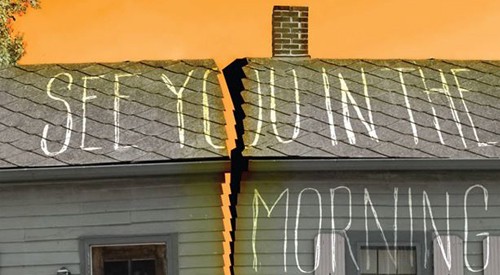
The Heartbreaking and the Familiar: See You in the Morning by Mairead Case

The unnamed narrator of See You in the Morning goes to punk shows, works at a bookstore and hangs out with her elderly neighbor, Mr. Green. She is jealous of her slutty friends but afraid for them, too. She is also afraid for herself, because it’s the summer before her senior year, “the last one that nobody really cares about,” as she puts it, and to not be afraid would be crazy. At least, that is the world Mairead Case creates for her debut novel See You in the Morning. The result is heartbreaking and familiar, liable to trigger flashbacks of alienation so vivid, they’ll make your feet sweat.

The novel is set in a mid-western town caught in the low tide of latent Catholicism. The narrator goes to church with her mom, but she often wakes up early so she can go alone. That way she can sit in the back and people watch, which seems innocent, but plays into the larger theme of the novel. Much of what bothers the narrator gets internalized through her descriptions of the people around her. For example, she may not hear the homily one morning because she is watching a little boy, fascinated by his own ability to splay his fingers, but truthfully, she misses it on purpose. She feels like she doesn’t deserve communion. Her guilt is a reflection of the town she lives in, but the saddest part is not that she abstains from being forgiven but that she doesn’t have the wherewithal or self-reflection to remove herself. She’s still in high school, after all.

Her parents are isolated from her. She doesn’t feel like she can talk to them. The parents of her friends are either divorced or going through hardship, and every one-on-one interaction she has with an adult is overshadowed by a need to protect them or a need to protect her friends from seeing their parents in such a vulnerable state. The guise that she perpetuates is the same song and dance that she placates to whenever she goes to church. She suspends disbelief; it’s easier and she only has one more year left. At least, that is what she keeps telling herself.

The only adult she feels comfortable talking to is her elderly neighbor, Mr. Green. He seems to fit into the same category that the narrator pictures for herself, which is a category that doesn’t seem to actually fit anywhere. Mr. Green dresses differently, acts differently and believes it’s okay to think differently or at least modify the beliefs you’ve been given:

“Remember, Mr. Green said when I started crying about that yard with the tiny white crosses, crying about the babies, your God doesn’t have to be exactly like their God. You just have to sit next to each other sometimes.”

He teaches her how to hit on girls and how to drive a car. He treats her like an adult-in-training, giving her a hard time when she doesn’t know how to do things she should know how to do. Their relationship is endearing, but it also works as a base for comparison, because compared to every other relationship, the one she has with Mr. Green is remarkable, which only makes her situation seem that much worse.

See You in the Morning isn’t all wayward and woeful, though. Case manages to slip her sly sense of humor into the narrative, which creates a pacing that balances the overall tone so that it falls just shy of overly sentimental. Her style is reminiscent of Catherine Lacey or, at times, Sarah Gerard, but it also calls on the almost dreamlike world-building of John Brandon or even Haruki Murakami. It’s as if Case manages to evoke a sense of importance with every detail and a feeling of urgency with every action. There is more to this book than its spare 126 pages. It folds itself into your memories and pulls more out than you may be willing to give, and in this way, it is an important and vital book.

See You in the Morning

by Mairead Case

Powells.com

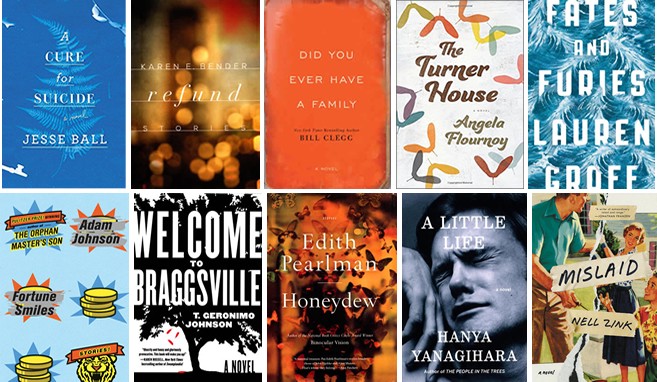
Here Is the National Book Award Longlist in Fiction

The National Book Award longlists are being announced this week, with the longlists already posted for Young People’s Literature, Poetry, and Nonfiction. Today, the longlist for fiction was announced.

Congrats to all the authors who made the list!

You can also read our review of Fates and Furies as well our interview with author Lauren Groff, our review of Nell Zink’s Mislaid, and our interview with Hanya Yanagihara.

Is This Really What We’re All Supposed To Want?:

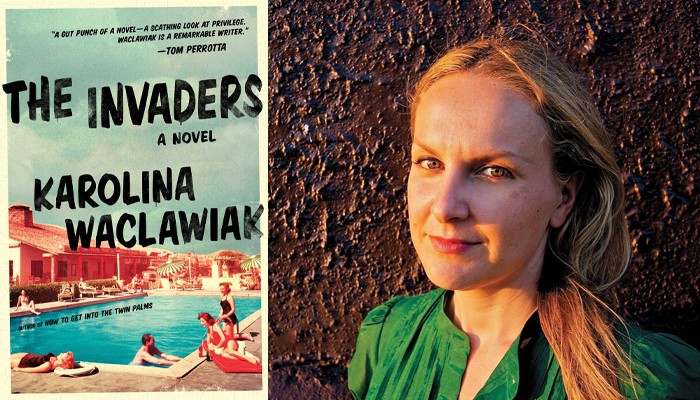
One of my favorite moments in Karolina Waclawiak’s second novel, The Invaders (Regan Arts 2015), concerns one of the book’s narrator’s Cheryl, who once was a young beautiful wife to an older, successful man, though when we meet her she has aged and their love has collapsed. She’s reminiscing about how she grew up, and more, how she grew into the woman she is. She remembers watching her mother get ready to go out with all types of men, watching these men come and go from the home. And then she plays at being the woman she sees her mother being, her earliest instruction in such things:

“My mother always dyed her hair a brassy blond and when she wasn’t entertaining, she put it up in curlers with a thin, gauzy scarf wrapped around it. But when she unwrapped the curlers and pulled her fingers through the loose waves, she looked beautiful….Her slender calves and shapely hips filled in her dresses just so as she wandered the house night after night. As I got older, I would put on the laciest of her bras and imagine taking them off for someone.”

What Cheryl is remembering is a kind of game. The game of playing dress up. Then soon enough, it isn’t a game any longer.

She remembers that heady early teen time when these men who had once called and come for her mother begin to pay attention to her, and eventually to call and come for her instead. To be a young girl is also to hint at the woman that girl will become. Along with her mother, those men who notice young Cheryl become teachers in a way. It’s a bit chilling but also unblinkingly honest, the truth about how we learn to be women from the women and men we watch and who watch us.

It reminded me of a moment in Waclawiak’s first novel, How to Get Into the Twin Palms, about a young Polish woman, Anya, trying to pass as Russian in order to be accepted into The Twin Palms, the hangout of seemingly glamorous women and brusque, tough men. In this moment, Anya is narrating her walk by a group of Russian men who hang out at the titular club:

“I know what they want to ask. Polska? Ruska? Svedka? Or maybe just Amerykanska. They can’t tell with me. They won’t ask, instead they stare; whisper something to see if I turn. Flick ash near me to see if I quicken my pace. They want to know if I’m used to men like them. I keep moving slowly because I want to see if it’s working.”

What I love so much here is the detail that they’ll flick their ash near her to see if she is scared. It’s both sensual and sinister. And it’s as elemental as much as it’s a game. Waclawiak excels at uncovering both the truths that makes us flinch and the secret desire that drives us. And I’ve been a fan of her take on the world since I first read her.

I emailed some questions I’d been wondering about The Invaders to Waclawiak and she graciously responded.

Diane Cook: I’ve always admired the way you capture not just the male gaze but the female knowledge, understanding, and complex yearning for it. The totems of womanhood that we have access to as girls build our sense of self early. Cheryl is wary of it now but admits to having felt a power from it. It’s complicated. Like a burden, a glory, or both. Are you looking for something definitive about a kind of femininity?

Is there something definitive to say about femininity? It’s a powerful drug.

Karolina Waclawiak: I was talking to David Shields about his book That Thing You Do with Your Mouth and the narrator in his book, Samantha, is both worried that her sexual trauma and her sexual openness has somehow been passed down to her daughter, very nearly on a molecular level. I was saying to him how interested I am in where we get our ideas about how to be a woman from. I do think it’s from watching our moms or other, older women around us. They’re passing on their ideas of femininity to us, and we are imprinted by them. I guess from an anthropological standpoint, I’m obsessively curious about how performative femininity is — especially in terms of acting out as a sexual woman from a young age. We know it’s expected of us from a young age — to be cute and charming — but we’re also punished if we go overboard. We are, of course, putting on this performance for someone else and when we realize we’re being looked at, we start to perform our femininity or sexuality to an even greater extent. It’s working! we think as young girls, and so we perform harder. Knowing we have the attention of boys or whoever suddenly gives young girls a blush of sexual power and then we’re off. I seem to always want to look at that balance of power and how feminine power shifts over time. Is there something definitive to say about femininity? It’s a powerful drug.

DC: I love Cheryl’s comebacks. Thinking specifically about her interaction with Tuck at a boring neighborhood party. She’s strong, sarcastic and quick. She owns the moment. I want to be her in that moment. Then there is this other Cheryl, frightened, frustrated, self-loathing — because of the situation she finds herself in, attached but unloved, judged and not fitting in. The difference feels stark but as the book goes on it feels familiar, reminds us that we all carry contradictions. Did Cheryl always have both sides?

KW: I think she did always have the two sides. The side she wants to reveal — the person she is — versus the person she’s comfortable showing. I feel like Cheryl is the type of person who is always worried she’s going to get in trouble. She’s always on her toes because she thinks everyone’s waiting for her to make a misstep. She isn’t going to give anyone any ammunition to take her down and so she behaves. I think that in this neighborhood, and perhaps neighborhoods like this, people are cracking from the pressure of suppressing how they feel. It’s a sort of “we have to keep the peace” mentality, i.e. these are our neighbors and we have to live in this weird, warped cage with them until it’s time to go to Florida so don’t make waves. And in the midst of this is Cheryl, who has always been relegated to interloper status, and who has moments of clarity where she acts out verbally — mostly with her neighbor Tuck because he feels safe. Someone recently likened the community in my book to a cult, which made me think about the book in a new way. Yes, of course it’s a cult. All these communities are cults where you are taught to act, speak, and live in a certain way. And Cheryl’s misbehaviors are of course going to get her kicked out of the cult or worse. So maybe she’s my Katie Holmes, testing the waters and looking for a way out.

DC: The novel is narrated by Cheryl and by her stepson Teddy, in an alternating structure. I had the pleasure of reading an earlier draft where Teddy seemed a more minor character. Now he kind of steals the show — his voice is so pitch-perfect. Talk about how he came to life.

KW: Teddy was so much fun to write. He was the entrance point into this whole world for me, to be honest. I had written a version of his character years ago. I thought about guys I had grown up with in Connecticut who came from wealthy families but had less-than-stellar work ethics and I wanted to see what could happen to someone like that in my world. At first, I had him pretty evenly an asshole throughout, but as I developed the book further I realized I wasn’t letting myself get to know him by keeping him at arm’s length. I had to fall for Teddy in order to truly understand him and make him empathetic. And it took coming to terms with the fact that these guys are just as wounded as anyone else (surprise!) to do so. He spends the entire book trying to keep you at a distance, and often, he does, but I like the idea of characters betraying themselves and unwittingly letting the reader in on their secrets. His brief stint marooned on an island was the moment that he really betrayed his true self to the reader. And I think from that point on, we understand his motivations for self-protection better. His bravado, his swagger is all self-protection.

DC: Cheryl’s successful, older husband Jeffrey is a really interesting character. I want to think of him with this broad stroke. He’s a jerk. His gaze is the one the book and Cheryl rail against but are also ruled by. So, it feels in some sense that he’s the problem. But he’s not really. In a neighborhood that follows its own worst instinct he is often a voice of reason, saying the thing you as the reader might be thinking. He seems pained yet entitled. Unhappy too. One moment I loved was when Cheryl jealously notes a woman, mid-peel of laughter practically sitting on Jeffrey’s lap at a party, and then she notes how bored he looks. This makes her happy. That’s not the typical male, self-centered character. How did you modulate Jeffrey, as both a kind of villain and also deeply human? Do you know what he’s looking for?

One day you wake up staring down at the fact that you no longer love your spouse and what are you supposed to do about it?

KW: In a way, every character is me, or has some part of me in them. I think it was Aleksandar Hemon who recently said the same thing in an interview and it’s so true. For me, I’m playing out some of my worst tendencies through my characters. That isn’t to say it’s a book about me. It’s fiction. However, I understand Jeffrey’s desire to pull away from a relationship that is falling apart as much as I understand his wife Cheryl’s desire to cling to it. I wanted to write Jeffrey as someone who falls out of love with his wife. Not because there’s another woman, though it feels easier for Cheryl to think that there is someone on the sidelines, but just because. I’ve been wrestling with the question of where does the love go for a very long time. I can imagine there are many, many people who have fallen out of love with someone and from the outside it may seem villainous, but it happens. One day you wake up staring down at the fact that you no longer love your spouse and what are you supposed to do about it? Let that person down by telling them to move out and you want a divorce or go through the motions because that’s what seems easier at the time? There is a certain numbness to this book and it all swirls around this feeling of, I didn’t think my life was going to end up like this. Jeffrey doesn’t know what he wants, except maybe to go into the life that he had mapped out for himself. This book is probably a reckoning about aging in general, and ending up in a life you didn’t plan for.

DC: Especially in the environment they are in. The book makes it clear that all these characters are weighted under the pressure to be and feel a certain way. Jeffrey must want a certain kind of woman, and even as the woman grows and changes, his desire can’t. Teddy is testing out what he thinks he’s supposed to want and it is bewildering to him. Cheryl is supposed to want to be a part of this world and yet she doesn’t. They all fall into a malaise that seems to come from not being able to be who they would naturally be outside of the structure they find themselves in. How much of the small world of this privileged town is to blame? Could they all run away together and find a kind of happiness, or is this a bigger force, impossible to escape, one we are all a part of?

KW: I think in this stratosphere you can’t really be who you want to be but that’s the price of admission. I can imagine their secret lives all function as a pressure valve for them. Would Teddy ever tell his friends he has a thing for 40-year old women? Doubtful. And though I think the town has blame in their being trapped, they are also living in self-made prisons. I think that could be true for anyone. What would really happen if you started exerting your real desires in a more overt way? These people are all trapped by their wants and needs and feeling those desires are out of the realm of possibility for them. They have come to believe that they have no control over their own lives so they give up. Is it different anywhere else? Not if you are too terrified to open yourself up to living how you want to live. That’s probably why people live how they want to live anonymously, online.

DC: You grew up in Connecticut, near areas like this and when I saw you in conversation with Michelle Tea at your reading at Green Apple Books in San Francisco, you mentioned that people from home think you’re writing about their town or the people there. Which, you’re not. But I imagine you’re writing about something that seems familiar, or that you recognize. As though, now that you’re older you have context for what you witnessed growing up. And it’s coming through. Is there something to that? Or is there some other impulse?

I am the product of the American Dream, but I also question our values. Why is the American dream suddenly now just having stuff?

KW: Growing up in a beach community in Connecticut was a miserable experience for me. I felt like there was a whole world out there that everyone was consciously shutting themselves off from. Class was a big thing that I noticed — who had money and who didn’t — and it was apparent right away. The kids in these towns were holding strong to the same hierarchies their parents were holding on to — who got to be in and who was cast out. While exploring the feelings I had growing up was the impetus for the novel, I went well beyond those initial feelings to build a world I’d seen in many different place I’ve been. I’ve heard people say, oh this feels like the Palisades, or I’m from Massachusetts and this is my community. The thing about it is, these kinds of communities make up America. In the novel I am asking the question, is this really what you want? Is this really what we’re all supposed to want? I get it, it’s the American Dream. The American Dream is why my parents left Poland. I am the product of the American Dream, but I also question our values. Why is the American dream suddenly now just having stuff? And, more so, the pursuit of stuff. I work in Beverly Hills and I see tourists taking pictures of all the stores on Rodeo Drive every day. We are all worshipping at the altar of wealth and stuff and it’s perverse to me.

DC: Was there a book or piece of culture you thought about a lot when you wrote The Invaders?

KW: I read two books while thinking about and writing The Invaders. The first is Richard Yates’ Revolutionary Road, which of course is a classic book about the suburbs. And I also read Mrs. Caliban by Rachel Ingalls, which is also a masterpiece and totally off the wall — it features a depressed housewife who falls in love with an escaped man-sized sea creature named Larry. Those two books about suburban dread made me start thinking about how I could approach the suburbs. That, coupled with the pervasive fear of “the other” that continues to grip the nation, made me want to write this book. It’s disturbing to see Trump on the campaign trail yell at everyone who doesn’t belong here to get out. It’s even more disturbing to see people at his rallies cheer that sentiment on so vociferously. The world of The Invaders is just a microcosm of what’s going on in the country and in the world, actually. We’re on high alert for threats, but we’re not even sure who the threat is anymore — everyone who isn’t white, I guess.

[ed. — Jason Diamond wrote for Electric Literature about the suburbs in Karolina Waclawiak’s work here.]

DC: I heard one of my favorite writers, Carolyn Chute, discussing the troubling way her characters were talked about in public. She took offense at the offhand classification that they were “white trash” our shorthand for a certain kind of rural white living in poverty. We forget the meaning of the words and it just becomes a term. But she said basically (and I’m paraphrasing here), “When you call someone white trash you’re calling them garbage. They’re not garbage. They’re people.” I feel that books which look at the wealthy or trophy wives are usually send-ups, we read them to cackle, feel good about ourselves because they are no longer people, they are just puppets of the term. Yours isn’t a send-up though because we see the inner lives of people. They are round and full and at odds with the rules they are living under and we hear that struggle.

KW: I’m glad you say that. Thank you. It pains me to hear people be dismissive of the people in the book. Or to say I’m skewering them. I didn’t want this to be a send up at all. For me, everyone here is trapped. Whether they know it or not. And it’s a tragedy.

DC: But an interesting twist is that the characters we get to know the best sometimes label those around them. We laugh easily at some or disregard others because the characters we’re aligned with do, as though to remind us of that reality — that way we can look at people without remembering they’re people. This layering of the trope showed the kind of mess we get in, the social game we play, railing against what binds us, while binding others. Was it hard to modulate these layers and keep the key characters feeling complex and real, which they do and so the despair hits even harder?

KW: I wanted to make sure I wasn’t being cruel in the way I was writing the book, even if the characters happen to be cruel to each other. That was difficult to do and took many, many drafts of trying to find small ways to humanize the minor characters and big ways to humanize the main characters. Everyone is playing off of each other and maybe not everyone is “likable,” but that doesn’t mean their actions don’t come from a place of real need and fear. I think that’s something that feels really true about people — most of our actions come from a place of need or fear, and, in some cases desperation. Layering that need and fear throughout the book made sense to me and I think it helped make the characters feel more complex.

DC: So as I said, I was thinking a lot about villains when I read this book. First because while all the characters behave badly in ways I still always felt sympathy for them. And like I just mentioned, even for Jeffrey, who could easily have come off as a caricature but doesn’t. And second, because I was thinking about the culture’s predilection toward easily defined characters. I remember some feedback you got from different early readers was that Cheryl was too unlikeable. I wonder what to think of the idea that we don’t want unlikeable characters when we love villains? We love those murdering, thriller girls. Aren’t they the runaway hits of the book world? Women behaving badly? We love the fantasy of this woman on a rampage but we reject the more real premise of a woman making small transgressions against the society that entraps her. And we don’t forgive her poor behavior, especially when it doesn’t free her in the end. A failed attempt is booed. Even though that trapped character is more like us than any cartoonish villainess. Why do we love to hate some characters and hate to hate others and so, hate them more?

Tiny transgressions and misbehavior on a smaller scale feel more damaging than a serial killer on the loose because it is a small voice saying this could be you.

KW: I’ve said before that the unlikeable complaint is most often lobbed at women so it’s inherently gendered and total bullshit. I do not give a fuck if people like my characters, or would make the same choices. But I do want you to turn the page to see what happens to them. I’m not looking for life affirmation in the books I read so I can’t really comprehend people who want to read something in order to have their morality nurtured and affirmed. As to why some unlikable characters are more popular than others, I think because extremes don’t seem as terrifying as someone who could maybe be you, even a little bit. I think we read extreme characters like psychotic women in a voyeuristic way. She could never be us, so she feels safe. We’re just along for the ride. Holding a mirror up to someone and asking, Are you happy? Could this be your life? feels more invasive and so there’s a more offended response. I don’t want to think about those things, some readers have said. Books that are not so extreme in their transgression make you think about how you act and the choices you make in your life. What you’ve given up to live how you live. That asks more of a reader than say, watch this wacko sociopathic woman get revenge. Think about popular shows on TV — they are morality plays. There are killers and there are good guys and at the end everything is made right in the world. The universe gets put back on its axis. Tiny transgressions and misbehavior on a smaller scale feel more damaging than a serial killer on the loose because it is a small voice saying this could be you. That’s really uncomfortable to some people and so they turn away from it.

DC: I’m very curious about the idea of redemption and when people feel they’ve seen it in a story and how indignant they can get if they don’t. As though the whole goal of living is to be redeemed somehow. Or to find a happy ending. (Is it that we want villains and happy endings and not much in between?) Do we need redemption in what we read? Is there redemption in The Invaders? (I feel like this is something a trick question but I’m hoping you have something smart to say about it because I personally hate the weight of this mandate and also understand there is something very human about the desire for it and so, creatively, it can feel like a trap…)

KW: I hate this mandate! I went on a tirade about redemption on a previous question, but I will just say one more time, I think it’s absurd to ask writer to pencil in some redemption at the end so the reader can walk away feeling all is right in the world. Not everyone is looking for redemption, not everyone wants to find a way to get clean. I think it comes down to people wanting the world to fit into these simplistic moral narratives. You are bad, you get in trouble, you get what you deserve. Or, you are bad, you realize you’re bad and you go find a way to be good again. The only redemption I see in The Invaders is that the characters finally find a way to be free. Some people don’t agree with my method of finding freedom, but that’s okay. I’m okay with that. Some of us aren’t looking to be saved by someone else. Some of us will go to an extreme to save ourselves in any way we see fit.

Midweek Links: Literary Links from Around the Web (September 17th)

Looking for some interesting reading to get you through the week? Here are some literary links from around the web to check out:

We need diverse books, and also diverse worlds in books

All your smart friends are talking about Valeria Luiselli (read our reviews and interview with Luiselli here)

The Man Booker shortlist offers up six diverse books from around the globe

More and more US authors are earning sub-poverty level wages

Interesting article on who gets to decide what counts as “immigrant fiction”

Does epic fantasy have to always be about the end of the world, or can it tell a small story?

Some cool graphic novels to check out this fall

Bill Clegg, an agent turned author: “I really understand the loneliness, excitement and vulnerability it takes to create a book now”

Some famous authors you may not have known wrote screenplays

A look at how “harrowing personal essays” took over the internet

Todo lo bueno que sé lo aprendí de las mujeres

by Tryno Maldonado, recomendado por The Buenos Aires Review

Mi madre es educadora. Maestra de preescolar. Si quieres joder las relaciones amorosas de un varón con las mujeres para el resto de su vida, no hay método más eficiente: inscríbelo en la clase de su madre en el preescolar. ¡Buena suerte, Freud! Con el tiempo he desarrollado la creencia de que mis relaciones con las mujeres no son más que una emulación tras otra de aquélla, mi relación platónica y tormentosa con mi profesora de preescolar. Que resultó, de paso, ser mi madre. Los mismos anhelos, la misma idealización, las mismas expectativas. Las mismas escenas de celos. Los mismos errores. Ah, Freud… Un día, a los seis años, mi madre me sorprendió masturbándome con unos calzones suyos que dejó secando en la regadera. Fui acusado. Mi abuela Amparo me dijo esa misma tarde que ardería en el infierno por ser un puerco y apagó las ascuas de su puro en el dorso de mi mano como un anticipo de lo que se me tenía reservado en el infierno. Freud… ¡Me cago en Freud!

A mi abuela Amparo le gustaba fumar puros por las tardes mientras tejía con ganchillo y chismeaba con sus nueras. Tomaban un café negro muy aguado en pocillos de peltre y fumaban. A veces, y sólo si mi abuelo no estaba, mi abuela echaba a escondidas un chorrito de mezcal en su café y en el café de las nueras. Nunca entendí por qué todas esas señoras, mis tías políticas, se reían tanto y tan escandalosamente. Su risa se oía incluso hasta la tienda de abarrotes de la esquina adonde me mandaban a comprarles más cigarros. Un día me tomé a escondidas el café de mi abuela. Remojaba un dedo y me lo llevaba a la boca de rato en rato sin que ella ni mis tías se dieran cuenta. Ese día tampoco pude dejar de reírme con ellas.

A mi madre le gustaba inventar palabras. O las había aprendido quizá de su madre y ella, a su vez, las había escuchado en el rancho donde nació. No lo sé. A mis hermanos y a mí nos decía, por ejemplo, que nos habíamos “reborujado” con el cambio o en alguna operación aritmética. Cuando lo que quería decir era que nos habíamos “confundido”, o nada más que estábamos equivocados. No te reborujes, decía. Uva se escribe con v, no con b. Había otras, que naturalmente, eran de su propia cosecha. Chucitos. Era como nos llamaba a mis hermanos y a mí. Según ella, yo era una mezcla entre Chucky, el muñeco diabólico, y Bruce Lee. Bruce Lee era por entonces mi ídolo, mi modelo a seguir. De él solía imitar las patadas voladoras como con las que había vencido a Karim Abdul Jabbar, sólo que yo las aplicaba contra los dientes de mis hermanos. Bruce Lee. Chucky. Chu-cee. Chu-ci. Diminutivo: Chucito. Mi madre. Así era. Las veces en que mi padre nos golpeaba con un cable de cobre en las nalgas y en los muslos por haber hecho alguna travesura, mi madre (aunque al principio del lado de mi padre) venía a consolarnos. ¡Chucitos!, decía. E invariablemente nos sacaba una sonrisa indecisa entre lágrimas que enseguida se transformaba en una carcajada. ¡Chucitos! Y mis hermanos y yo reíamos de nuevo.

Tengo varias cicatrices de quemaduras como callos en las manos. Mi abuela Amparo me las hacía con su puro encendido cada vez que mi madre iba a contarle desesperanzada que, de nuevo, me habían suspendido de la primaria por masturbarme durante la clase. Enséñame la mano con la que lo hiciste, decía mi abuela Amparo y me acercaba el puro encendido. Tú no te vas al cielo, decía. Yo entendía: Tú eres mi cenicero.

Entre las muchas escenas de celos que le gastaba a mi madre cuando fui su alumno durante el preescolar, recuerdo varias. Ser el hijo de la profesora llevaba consigo ciertas prebendas, privilegios. Y como además era el más avanzado de la clase, gozaba de impunidad académica (la hermana de mi madre, profesora de primaria, hacía tiempo que me había enseñado a leer y a escribir). Yo les ponía apodos bastante crueles a los otros niños de los que mi madre se ocupaba más que por mí, sobre todo a los que tenían algún defecto físico o eran muy tontos. Como al Doctor Celebro (que no Cerebro). El Doctor Celebro era un niño con síndrome de Down que iba en nuestro salón porque en mi pueblo no existían escuelas de educación especial. O al Patas de Oro, un niño de piernas lisiadas por la polio que debía usar bastones ortopédicos para caminar a duras penas y que yo torturaba haciéndolo correr detrás del balón de futbol durante el recreo. No reducía mi nivel de terrorismo de baja intensidad contra esos mocosos que se hacían pasar por hijos espurios de mi madre hasta que sus padres venían a quejarse amargamente con la maestra (o sea, con mi madre). A los más ricos, hijos de abarroteros y de profesores, yo solía robarles sus cosas en venganza si mi madre les ponía una estrellita en la frente o si se tomaba una foto con ellos durante los festivales. Crayolas caras, pegamento en envase de elefantes azules, plastilina en botecitos de colores, gomas para borrar con olor… Todo lo más bonito y caro del salón terminaba, sin variedad, en mi mochila. Es decir, en la mochila del hijo ejemplar de la maestra. Quien no quisiera pagar tributo sabía que se exponía a ser tildado con el peor de los apodos durante todo el año, o a verse obligado a que yo lo orinara encima o le tusara el cabello con mis tijeras Barrilito. Saboteaba los festivales si veía que mi madre se mostraba complacida con el talento de tal o cual niño para, digamos, cantar sin cambiar la letra o pegarle al pandero sin cagarla demasiadas veces. Como me tocaba formar detrás de todos por mi estatura, empujaba al del pandero o al que tuviera delante con todas mis fuerzas durante las presentaciones, luego me quitaba el zarape de pastor de pastorela y el imbécil sombrero de paja y los pisoteaba en el escenario. Y todo, desde luego, para reclamar la atención de la profesora (que era mi madre). A veces, mientras el resto de los niños trazaban estúpidamente planas de círculos de colores con crayolas en el salón, me gustaba irme a un rincón y masturbarme hasta que mi madre (es decir, la profesora) venía a prohibírmelo.

Mi abuela Amparo era de rancho. Ella y su familia vivieron de lleno la Revolución en Zacatecas. La Revolución. Una época de bárbaros del norte que en mi mente infantil servía para explicar por qué mi abuelo cargaba pistola en el cinturón o por qué mi abuela era la persona de este lado del hemisferio que mayor número de groserías podía escupirle en los ojos al primer desdichado que se le atravesara. Soltaba más leperadas que sus trece hijos juntos y que mi abuelo. Jamás dejaba de sorprenderme su amplio arsenal de mentadas. Algunas me parecían tan ingeniosas que me gustaba repetirlas en la escuela incluso sin saber qué significaban. Me volvían invencible. Pero cuando mi madre me sorprendía repitiendo las chingaderas que yo aprendía de mi abuela, me forzaba a tragarme un puño de jabón para lavar trastes y me tapaba la nariz hasta que me lo pasara. Mis primos, hermanos y yo sabíamos que era mejor no hacer enojar a mi abuela. Un peso de menos en el cambio cuando nos mandaba a la tienda de la esquina, una orden mal ejecutada y ya estaba. El riesgo era que soltara toda su batería de maledicencias sobre uno como insecticida sobre un insecto. Casi nunca nos pegaba, y a veces hasta nos solapaba e intercedía por nosotros con mi abuelo. Era mi abuelo quien sacaba el cinto de cuero a la menor oposición. Lo remojaba en agua, nos ordenaba bajarnos los pantalones hasta las rodillas y enseguida nos azotaba. ¡Dolía hasta la médula! A mis primos y a mí nos quedaban durante días unas franjas granates cruzadas en los muslos y en el culo. Había que dejar pasar una semana para poder volver a sentarse. Pero a los pocos días volvíamos a caer en la ilegalidad como forajidos curtidos por el castigo. Mi abuela, en cambio, era capaz de pisotearte y matar para siempre tu ridícula e insignificante alma de niño con dos o tres palabras llenas de veneno. Me doblada de risa escucharla decirle a alguien más “Váyase a la verga”. Aunque lo que yo entendía era: “Váyase a la alberca”. Decía mi abuela: “Ese cabrón es un pinche culero de mierda”. Y yo entendía: “Ese carbón es chinche en Kool-Aid de fresa”. Mi abuela le gritaba a alguien furiosa: “Chinga a tu madre”. Y yo entendía: “Si un gato muere”.

Una vez nos reunieron a todos los de mi salón. Mi madre (es decir, la profesora), nos acomodó en fila y salimos al patio de recreo. Hay un niño en este kinder que está enfermo, nos dijo la directora por el micrófono que se usaba sólo los lunes para los honores a la bandera. Es una enfermedad muy contagiosa, dijo. A ese niño enfermo le gusta tocarse sus partes delante de los otros niños y niñas. Así es que vamos a tener que suspenderlo para que no contagie a sus compañeros. Eso dijo la directora y, quién sabe por qué, a partir de ese día gocé de dos semanas de vacaciones.

Desde niño fui un caso extraño. Eso me dijo la directora del kinder hace poco, cuando la volví a ver. Extraño. Del latín extraneus, del exterior, extranjero, raro. Pasé a ese mismo kinder a recoger al hijo de mi hermano y le pregunté a la directora si se acordaba de mí. Hizo un gesto de espanto. Casi se santiguó. Que era un niño muy raro y que ya no sabían que hacer conmigo. Eso dijo. Yo no hablaba con el resto de los niños más que para ponerles apodos o amenazarlos. No socializaba durante el recreo. Y cuando había una excursión al exterior, me plantaba en un rincón con los brazos cruzados y ya nadie (ni la directora, ni el maestro de educación física, ni el presidente de la República) me movía de allí. Me quedaba todo el día sentado, en silencio, a esperar a que volviera mi grupo de la calle. Casi siempre, a la vuelta de la excursión, me encontraban con los pantalones del uniforme y los calcetines orinados. Mi orgullo no admitía moverme siquiera para ir al baño. Pero, en cambio, mis calificaciones me permitían estar en la escolta del kinder y yo accedía por una sola razón: la abanderada, una niña morena y delgada, usaba para las ceremonias unas botitas blancas de piel, nuevas y muy monas. Esos días en que tocaban honores a la bandera, ya por la tarde, cuando mi madre y yo íbamos de vuelta a la casa, me gustaba recostarme bocabajo sobre el asiento trasero del Volkswagen y restregar la ingle contra el hule espuma pensando en las botitas blancas de piel de la niña que llevaba la bandera.

La calle de mis abuelos donde mis primos y yo pasamos la infancia aparece en una novela de Cormac McCarthy. La calle por donde cruzan los vaqueros de McCarthy era la calle en la que nosotros cazábamos ratas con tira-fichas y jugábamos futbol. En una ocasión, una vecina de mi abuela con la que creo que estaba enemistada, llegó a tocar a la puerta. Se veía muy agitada. Fui yo quien abrió. Había salido temprano de clases y la casa de mi abuela estaba a unas cuadras de la primaria. La vecina llegó a quejarse amargamente conmigo. Gritaba mucho y movía los brazos. Mi abuela vino a defenderme de aquella señora histérica. Se hicieron de palabras. Aparentemente algo muy malo había hecho uno de los hijos de mi abuela con una de las hijas de aquella vecina. No entendí muy bien, pero estaba claro que era algo grave lo que fuera en que había incurrido alguno de mis doce tíos. O incluso mi padre. Me fui a esconder detrás de las enaguas de mi abuela Amparo. Dígale a su hijo que no vuelva a meterse con mi hija, le gritó la vecina. ¿Cuál de mis trece hijos, señora?, dijo mi abuela. Pues cuál va a ser. El más borrachito de todos, dijo la vecina. Con mucho gusto, señora, dijo mi abuela. Pero dígale a su hija que se ande con cuidado. ¿De cuál de todas mis hijas me habla?, dijo la vecina. Pues de cuál va a ser. De la más puta de todas.

10.

Jamás me atreví a hablarle a aquella niña que era la abanderada en el kinder. No puedo decir que me haya gustado su cara o que estuviera enamorado de ella. Ni siquiera me acuerdo cómo era. Llegué desde el primer día a la conclusión de que lo que me perturbaba de ella, lo que durante las noches me provocaba inquietud y ansiedad, era en realidad la contemplación de sus botitas blancas de piel que le llegaban hasta las rodillas. Era una fiebre ingobernable que me hacía querer restregar a todas horas la ingle contra prácticamente cualquier superficie blanda. Era como una enfermedad. Incluso mis padres me llevaron al médico con la esperanza de que lo mío tuviera una cura. Pero nada. Mi madre no sabía que hacer conmigo. Mi abuela Amparo me mandó a hacer una limpia con hierbas y un huevo podrido y me ordenó hacer una misa. Nada. Me masturbaba en la escuela. Me masturbaba en el baño. Me masturbaba en la cama. Me masturbaba en el coche. Me masturbaba en la calle. Me masturbaba durante la quinta y sexta entradas de los partidos de béisbol debajo del guante. Me masturbaba los domingos en la iglesia. Me masturbaba incluso dormido. ¡Era un campeón precoz de la puñeta! Había días, literalmente, que no bajaba a comer para no privarme del placer de frotar mi ingle contra el colchón imaginando las botitas blancas de piel de la niña que sostenía la bandera con el águila y la serpiente. Jamás en mi vida he vuelto a tener una temporada de tan ferviente patriotismo. Mi abuela, en castigo, me quemaba la mano con la punta de su puro cuando se enteraba de mi afición por la puñeta y repetía la consigna del infierno. ¡Qué me importaba el infierno si me llevaba conmigo el recuerdo de esas botitas de piel tan blancas y tan nuevas marcando el paso!

11.

¿Por qué mi madre, esa muchacha guapa de veintinueve años de la que todos los otros alumnos se enamoraban y demandaban a gritos su atención, no tenía ojos para mí durante las clases? Nada más traspasar la puerta del aula se volvía otra persona. ¡Cuánta frialdad! Sentía ganas de reventarme la cabeza a golpes contra la pared por los celos. Había, por ejemplo, un niño listo. Era un güero de familia rica que acaparaba la atención de mi madre durante las clases. Para su cumpleaños los padres nos llevaron una piñata. Una piñata cara, de esas bonitas pero tan mamonas que no te atreves a tocarlas para no echarlas a perder. Yo era más alto que el resto de los alumnos. En las fiestas infantiles (excepto las de mis primos que eran igual o más altos que yo) me tocaba siempre darle a la piñata hasta el final de la cola. Además, jugaba béisbol. Era famoso por la amenaza de mi poder destructivo contra la producción nacional de piñatas per cápita. Y el día del cumpleaños del niño güero y rico aquel, el consentido de mi madre (es decir, de la profesora), por supuesto que no iba a ser la excepción. La piñata apenas había recibido algunos impactos de los otros niños en la fila y había perdido un bracito o una pierna. Y allí voy yo, el último al bat, tomando impulso como si sujetara de veras un bat de béisbol en la caja de bateo. Los otros niños hacían una rueda alrededor y me cantaban y me aplaudían entusiasmados para que la quebrara. Pero el escándalo, la corredera y la gritería que se desató después de mi primer golpe fue superior a todos mis planes. Mi madre y las otras maestras salieron disparadas a levantar al niño rico con la nariz rota para llevárselo de inmediato al hospital. Gritaban y manoteaban histéricas. El uniforme del kinder le quedó completamente ensangrentado. Parecía mentira que una criatura tan frágil, pequeña y delicada pudiera producir tales cantidades de sangre. Fue mi madre quien le sujetó la cabeza sobre los muslos antes de que se lo llevaran. El delantal le quedó manchado con la sangre del niño mientras ella trataba con desesperación de contenerle la hemorragia sin éxito. Salí corriendo a esconderme en los baños de la escuela aún con el palo de la piñata entre las manos, todavía enervado por el impulso contradictorio del resentimiento de ver a mi madre sosteniendo la cabeza sangrienta de su alumno favorito sobre sus piernas y el placer secreto de haberle matado (en ese momento creí que lo había matado) a ese hijo espurio que ni era su hijo ni era yo, una sensación morbosa como una droga que pocas veces he podido volver a experimentar. Salvo un par de años después, cuando le arranqué un pedazo de la oreja a mi hermano.

12.

El día que murió mi abuela Amparo me negué a ir a su entierro. Mi madre nos vistió a mis hermanos y a mí con la mejor ropa que teníamos (que era la que ella compraba en un mercado de segunda mano y que yo heredaría a mis dos hermanos menores cuando ya no me quedara). Nos pasó un peine con limón por la cabeza hasta quedar los tres con los pelos como una sopa. Mis padres y mis hermanos se subieron al Volkswagen. Pero yo no quise. Ya íbamos con retraso al entierro. Cuando mi padre, enfadado, vino a averiguar dónde me había escondido, me encontró metido en la cama, debajo de las sábanas, con los pelos revueltos, sin ropa. Vístete y métete en el coche con tus hermanos si no quieres que te rompa la madre, dijo levantando el puño. Era lo que decía mi padre cuando más furioso estaba. Romper la madre. Y yo obedecía porque me imaginaba a mi madre rota como una figura de cerámica que se caía al suelo y se reventaba en mil pedacitos y me daban ganas de llorar. Vete a la alberca, dije colérico. Mi padre no se lo podía creer. ¿Qué dijiste? Que te vayas a la alberca, dije de nuevo. Sólo hasta que volvió en sí luego de la inusitada respuesta que había recibido a su mandato (el primer acto de rebelión en su casa), apretó los dientes y fue y me sacó de la cama por los pelos y me dio la peor paliza que jamás me había dado en su vida. Me golpeó fuerte, tal como yo había visto que él golpeaba a otros adultos de su peso y de su tamaño en las peleas que se suscitaban durante los partidos de futbol. Vete a la alberca, volví a decirle entre sollozos. Esta vez mi padre ni siquiera me miró. Salió del cuarto azotando la puerta. Luego escuché que mi madre arrancaba el motor del Volkswagen y que el sonido se perdía calle abajo. Hubo silencio en toda la casa. Me abordó una mezcla de coraje, impotencia y desolación al saber que mi familia se marchaba sin mí. Ellos cumplirían cabalmente con su responsabilidad como el hijo, la nuera y los nietos que eran. Lo que, por pura contraposición, me volvía a mí un canalla ante los ojos no sólo del resto de la familia, sino del resto del mundo. Un hijo de puta, diría mi abuela. Lo que sentía era un coraje y un odio dirigidos, sobre todo, hacia mí mismo por la terrible afrenta que le estaba haciendo a mi abuela. No sólo al faltar a mi deber como nieto en su entierro, sino por el hecho de que, por más que me esforcé ese día en ello, de veras no conseguí sentir tristeza ni fingir tristeza por su muerte. Juro que lo intenté. Lo intenté con todas mis energías. Era mi primer encuentro con la muerte y la verdad es que la muerte, ahora que la tenía tan cerca, me daba igual. ¿Qué clase de persona era? Quizá la directora del kinder se refería a eso cuando decía que yo había sido un niño extraño. Era un monstruo. Un extraño. Extraenus. Un extranjero que contemplaba desde el exterior la experiencia humana. Fue lo que pensé entonces, a los seis años de edad, y no pude deshacerme de esa imagen de mí mismo, de fenómeno, en muchísimo tiempo. Había creído que cuando alguien de mi familia muriera iba a ser un día tristísimo. Que habría rayos y truenos y que muy probablemente lloviera y que yo enloquecería por el dolor frente al ataúd. Pero nada de eso ocurrió. Esa tarde incluso vi Mazinger Z, mi caricatura favorita, sin el menor remordimiento, a pesar de la prohibición explícita de mi madre de no encender la televisión durante el duelo. En cambio, me sentí miserable por no experimentar ese dolor bíblico que creí que me partiría de la cabeza al cóccix como un relámpago. Sería el único de toda la inmensa prole de nietos que le negaría el último gesto de gratitud, la llamada última despedida, a mi abuela. Me quedé en el suelo, donde mi padre me había dejado luego de darme la paliza, y lloré pensando en lo ignominiosamente egoísta que era, en la atroz clase de ser humano que, a diferencia de mis muchos primos y a diferencia de mis dos hermanos, era yo por no sentirme triste por la muerte de la madre de mi padre, la atroz clase de ser humano que era yo por no sentirme triste por la muerte de mi abuela.

13.

El día del incidente con la piñata y la nariz rota del niño rico, descubrí a mi madre llorando en el baño de nuestra casa. Aparentemente la directora la había reprendido con severidad. El niño rico resultó ser hijo de un regidor local del PRI, por entonces el partido de Estado, y la cosa se pondría más oscura en delante para mi madre. Por mi culpa. Pero yo no tenía manera de saberlo, ni mucho menos de comprenderlo. A mi madre la habían suspendido. Y no sólo eso, sino que a raíz del incidente con el hijo del regidor del PRI, la harían cambiarse de zona. En castigo, la trasladaron a una escuela preescolar fuera de la capital. En aquel municipio conurbano al que fue enviada en represalia, mi madre trabajó el resto los días de su vida profesional, hasta su jubilación. Es decir, durante más de treinta años. Sólo la intervención del sindicato de profesores (también afín al PRI) evitó que mi madre fuera echada sin más. Mi madre jamás me propinó un castigo por lo del niño de la nariz rota. Era como si no hubiera ocurrido nada. Ni siquiera volvimos a hablar de ello. Ni por entonces ni ahora, que tengo más de la edad que tenía ella en ese tiempo. El día del incidente del niño de la nariz rota me desperté a media noche. Había escuchado ruidos en el piso inferior de la casa, una casa diminuta de interés social de dos habitaciones en la que la privacidad entre los cinco miembros de nuestra familia era imposible. Salí del cuarto de una sola cama que compartía con mis dos hermanos y fui al baño. El ruido que había escuchado eran los sollozos de mi madre. Lloraba desconsolada sentada sobre la tapa del excusado. Olvidó cerrar la puerta. Mi madre se sobresaltó al verme, pero de inmediato se rehizo. No son horas para que estés despierto, dijo. Tenía los ojos como berenjenas por tanto llorar. Es que tenía que decirte algo, dije. ¿No puedes dormir?, quiso saber ella. Sí puedo, dije. ¿Entonces? Chucita, dije. Chucita, dije otra vez, como un conjuro. Chucita. Y por primera vez, desde hace mucho tiempo, vi sonreír a mi madre.

Here Is the National Book Award Longlist in Nonfiction

The National Book Award longlists are being announced this week, and today the nonfiction list went up. It includes Ta-Nehisi Coates’s celebrated book on black life in America, Between the World and Me, and Sally Mann’s memoir in photographs, Hold Still. The judges were Diane Ackerman, Patricia Hill Collins, John D’Agata, Paul Holdengräber, and Adrienne Mayor.

  • Cynthia Barnett, Rain (Crown Publishing Group/Penguin Random House)
  • Ta-Nehisi Coates, Between the World and Me (Spiegel & Grau/Penguin Random House)
  • Martha Hodes, Mourning Lincoln (Yale University Press)
  • Sally Mann, Hold Still (Little, Brown/Hachette Book Group)
  • Sy Montgomery, The Soul of an Octopus (Atria/Simon & Schuster)
  • Susanna Moore, Paradise of the Pacific (Farrar, Straus and Giroux)
  • Michael Paterniti, Love and Other Ways of Dying: Essays (The Dial Press/Penguin Random House)
  • Carla Power, If the Oceans Were Ink: An Unlikely Friendship and a Journey to the Heart of the Quran (Henry Holt and Company)
  • Tracy K. Smith, Ordinary Light (Alfred A. Knopf)
  • Michael White, Travels in Vermeer: A Memoir (Persea Books)

Congrats to all the finalists!

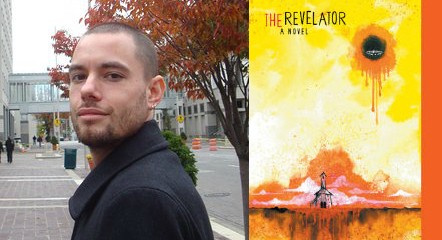
Violent Histories: An Interview With Robert Kloss, Author Of The Revelator

Robert Kloss’s novels take an unorthodox look at a violent strain in American history. His earlier novel The Alligators in Abraham followed one character from the Civil War through the early days of the 20th century, and featured hallucinatory interludes, an exploration of the racist politics of the time, and ill-fated polar expeditions along the way. His new novel The Revelator takes as its central character a man who graduates from assorted low-level crimes to founding a religion in the mid-19th century. Here, too, are surreal visitations, violent clashes, and the rise of fanaticism–it’s a searing and often phantasmagorical work.

Increasing the unpredictability of Kloss’s fiction is his use of the second person, which has the effect of pinning the reader to an increasingly unhinged point of view. It’s hypnotic and terrifying, a window into segments of history that many of us might prefer to forget. Kloss and I exchanged a series of emails in which we discussed the roots of his fiction, his historical inspiration, and much more.

TC: Both The Revelator and your earlier novel The Alligators of Abraham are largely set in the 19th century. What attracted you to this period of history?

RK: Well, I think partly the attraction comes from early on in my life — I always found photographs from that period very haunting, strange. And that’s not just because people back then took staged pictures of their dead infants — even photographs of men posed in a general store or a woman in a hat standing next to a horse takes on a strangeness. It’s a society and a people that we recognize as similar to our own, but something is off. Partly it’s the awkwardness of the posing — there’s a weird formality and severity to their faces and postures. There’s the distance of time and the recognition that those people and the world they inhabited and created is long dust, even as it went into the formation of our own. So just looking at those people going about their lives feeds into my ongoing reveries about mortality and life — and I do enjoy looking at those people long dead and yet captured and immortalized in that single moment in time and wonder about them and I always have. There’s also the idea that the 19th century, for the most part, is where the United States came from. We can point to different moments in that century and recognize the acceleration of history and technology and industry and pinpoint where things went right or wrong. I suppose my books focus on the “where things went wrong” side, but some good came out of those years as well.

TC: Do you remember what the first artifact from the 19th century that you came across was?

RK: No, but I lived in Massachusetts for 12 years, and everything out there is an artifact. You’re constantly made aware of the past, of the living past… every building is an artifact or monument. Even a Dunkin Donuts might be housed in a three hundred year old building. I’m originally from Wisconsin, so moving to a place with that much living history is very affecting. And then, just about everything is an artifact anyway. Birds are supposedly derived from dinosaurs, for instance, and I think about that whenever some crow swoops over my back deck.

TC: You’ve written several novels in the second person. What are some of the challenges of this? And how do you best shape a character when using this approach?

RK: I’ve been writing in the second person mostly exclusively since the summer of 2010, and entirely in the second since 2011, when I started The Alligators of Abraham. I find writing in the perspective very liberating — there are no restrictions. I believe in challenges, not restrictions, and in a way my challenge is always how to write in the most authentic, liberated way possible — and for me using the second person was one of those keys, and writing in period was one of the others.

For me there’s something almost primordial about the perspective, as if addressing the “you” creates the world out of the dust…

I have overthought the perspective in the past, because the perspective is less conventional — for instance, in the first draft of The Alligators of Abraham I tried justifying the perspective within the narrative by establishing the speaker’s identity, and I quickly realized that was a mistake. I think the second person works best when the speaker is somehow removed from events — when the speaker is greater or more powerful than the protagonist or is looking back on events with a wider perspective, a longer view. For me there’s something almost primordial about the perspective, as if addressing the “you” creates the world out of the dust, and I suppose in a way it does.

As far as shaping character, my philosophy is that character should move within the narrative, not drive the narrative. We have the illusion that we are in control of our lives, that we determine events, but we do not. We are at the mercy of forces far greater than ourselves. I actually prefer a passive character — observing, reacting, being buffeted around and responding to the world. The universe is active. Society is active. History is active. God moves, and characters respond, grope, search, wander. And slowly, in figuring out why that response happened, the character is revealed. But that revelation is less essential than the drive of historical event.

TC: In terms of using the second person: can you foresee a time when you might be interested in working in either the first or third person again?

RK: I’m open to any approach if it fits the material. Both The Revelator and the novel I wrote after it, The Woman Who Lived Amongst the Cannibals, contain sections in the third person and Cannibals has some first person as well (although second is again dominant). I did try out both third and first for my new book but eventually I went back to second — it just felt right. I suppose as long as second feels right I’ll stay faithful and the moment it feels wrong I will have to find the next perspective. I should mention that I’ve thought about doing something in the first person plural at some point, but I have no special plans right now.

TC: Is your next project also an exploration of history?

RK: Maybe? The manuscript I finished after The Revelator is fairly direct exploration of history, pre-history, post-history. So the idea of history and what it is and how it is shaped was really, directly, on the front of my thinking for almost two years. I’ve backed away from it, a little, with the new book, but I’m sure those ideas will inform my thinking… I did not reach any definitive conclusions about anything I wrote about. And now that I’m out west (I moved to Boulder, Colorado a couple weeks ago), you are constantly confronted with the juxtaposition of these mountains that are incredibly old and the remnants of what counts as history out here — a house constructed in 1890, for example, or the remnants of an old mining town on a mountain. So the idea of being human, being mortal, and being in the shadow of forces and influences much older and grander and (yet) more or less impermanent is always on my mind.

To answer your question a bit more directly the new novel is set in (roughly) the 1850s to… a time period probably post-reconstruction, but it’s all very loose and uncertain right now. So it’s a period novel and it’s a novel about early America, while also being a novel about contemporary America. It’s in the second person. But that’s all I really know right now.

TC: The Revelator can be described as a violent, hallucinatory take on the early days of Mormonism. What first drew you to this subject?

…the Mormon story seemed the largest and the grandest and in many ways the most American.

RK: I wanted to write a novel about the end of time — not a post-apocalypse novel, but a novel about the apocalypse. So the interest in Mormonism came out of my research into doomsday cults and doomsday scenarios. Eventually most of that material was dropped, but I suppose in general I’m drawn to stories about extreme beliefs, extreme individuals, extreme actions, and the Mormon story — the Joseph Smith story and the story of the rise of the church — is a story of so many extremes. I did draw from other traditions, other cults and religions, but the Mormon story seemed the largest and the grandest and in many ways the most American. There’s something very crucial about that national moment that illustrates a lot about where we are as a nation today.

TC: Your novels incorporate real historical figures, and at the end of The Alligators of Abraham, you include a list of works that you referenced. To what extent do you feel compelled to stay historically accurate?

RK: Oh, I’m not compelled at all. I’m not a scholar and I don’t write history — I write fiction. Although I did want to credit my references in the earlier novel, Alligators and The Revelator both abuse and manipulate history to the point that they are something other than historical fiction… fictional history, maybe. Researching for The Revelator I read more about Abraham from the Old Testament and other religious and political extremists than I did about Mormonism. And I ultimately place more importance on the role of imagination in novel writing than research and accuracy. I don’t think I could ever write like, say, William T. Vollmann, although I greatly admire his work and I obviously wish I could write books like his.

TC: As someone who’s read Ghosts of Cape Sabine, I was curious–how did you come to work that bit of history into The Alligators of Abraham?

RK: I keep my eyes and ears open, wherever I go, whatever I do; I’m always thinking about the book I’m working on, even if a little in the back of my mind, always working out problems or looking for material to add. I’m sure this is how many writers work, and it makes sense. You just naturally come into contact with the material you didn’t know you needed — the perfect information or perfect story or perfect bit of history or fact you’d somehow been moving toward. I walk library aisles, bookstore aisles, a lot, waiting for an impulse to grab a particular book. And I watch television programs on PBS and History Channel and whatever other station devote any time to “informational” programing. For instance, the Almighty’s black mountain in The Revelator comes from a program about Mount Fuji — a mention about the forest of suicides at the base of the mountain touched off something in me. It was exactly what the novel needed, and it was exactly what I had been looking for, and there it was. I read Ghosts of Cape Sabine after watching a program on PBS devoted to the Greely Expedition, and it was exactly what I needed for Alligators. I had been planning something in the novel for Lincoln’s plan to deport freed slaves, and the two ideas somehow collided perfectly when I saw the program. It just made sense.

TC: The Revelator explores the boundary between mysticism and self-interest; where, for you, does the line fall?

Rare is the holy fool, my ideal mystic, that raving fellow who falls from society and perishes in the wilderness or is consumed by a bear or swarmed by bees.

RK: I’m not sure. My first answer is that they are not compatible. Self-interest naturally corrupts and perverts and packages. How watered down or malformed can something become before it loses its essence? I lived in Salem, Massachusetts for nine years, and so I’m all too familiar with the charismatic mystic, the smooth mystic, the self-interested mystic, the mystic on a poster and the mystic in a shop window, the mystic as gossip. I don’t believe what you get in those shops is mysticism as much as commerce and entertainment and, often, outright fraud, but there are those who find some peace in having their palm read, or, at least, a greater sense of something beyond themselves. Of course, a psychic shop in Salem is on a different level than a cult leader who calls for a mass suicide or a megachurch leader who makes millions off the sick and weak and elderly. They all seem powered by the same motivations and impulses, if different levels of them, and they all seem on the American wavelength. Rare is the holy fool, my ideal mystic, that raving fellow who falls from society and perishes in the wilderness or is consumed by a bear or swarmed by bees.

TC: In the final third of The Revelator, the religiously-motivated violence becomes overwhelming at times. How did you find an approach to this that felt right?

RK: The level of violence and the kind of violence is probably the most historically accurate part of the book and I wanted to get it as right as I could — so I leaned a bit on historical accounts, when they existed. I certainly looked to how McCarthy handles violence in Blood Meridian. I also looked at accounts of cult and extremist related violence — for instance, I read about Jim Jones and the oppression and mass murders of Stalin-era Soviet Union. I tried to be as honest as possible. And I tried to be overwhelming, yes. I tried to convey with language as much as I could the horror and enormity of the violence. I did not want to write about violence and horror and oppression in this book in a half-stated way. It would have been dishonest to do so.

TC: You’ve worked on several projects with artist Matt Kish. How did you two first meet? How would you say that your working relationship has evolved over the years?

RK: I knew of (and greatly admired) Matt’s work from his Moby-Dick project, but we did not talk until my publisher at the time, J.A. Tyler at Mud Luscious Press, approached him to illustrate the cover for The Alligators of Abraham. That was about four years ago now. To this point he’s illustrated two more of my books — The Desert Places (co-authored with Amber Sparks) and now The Revelator. And I think the process was fairly similar in every case. I approached Matt to see if he was interested and then I let him set the terms. I gave him the books and let him do what he wanted with them. He decided what he would illustrate and how he would illustrate it. Limitations were set by the publishers are far as size and color, but I set no limits or criteria — I trust Matt and his vision completely. But that hasn’t changed — I knew he was a great artist from the first time I saw his blog and I also knew from the first that we had similar visions, even if we were working in different mediums, with different languages, and he had gone further in his.

We are also working on an ongoing bestiary project (that I’ve fallen behind on) where Matt illustrates and names a fantastic creature and then I interpret the beast with my writing.

I watched the Ralph Steadman documentary, For No Good Reason, about a year ago, and I found Steadman’s relationship with Hunter S. Thompson quite fascinating — the two worked together very closely, they went on adventures together. Matt and I have never met, other than a Skype session that we did through a third party, and maybe we never will. We’ve never spoken on the phone to each other. There’s always a little distance in our collaboration — and I like that. I don’t think two artists, especially artists who are close enough in sensibility, should get too close to each other. You become too friendly, maybe, and you lose some of the edge that should go into a project. Whenever I approach Matt about illustrating something or whenever I send him a piece for the bestiary project I feel an anxiety and dread that my work is not up to his standards. Because I see him foremost as a great artist and not a person that I am overly comfortable working with — and I want to maintain that. I think our working relationship, as stands, allows for the right amount of anxiety and dread.