Growing Up Shouldn’t Mean Conforming and Forgetting

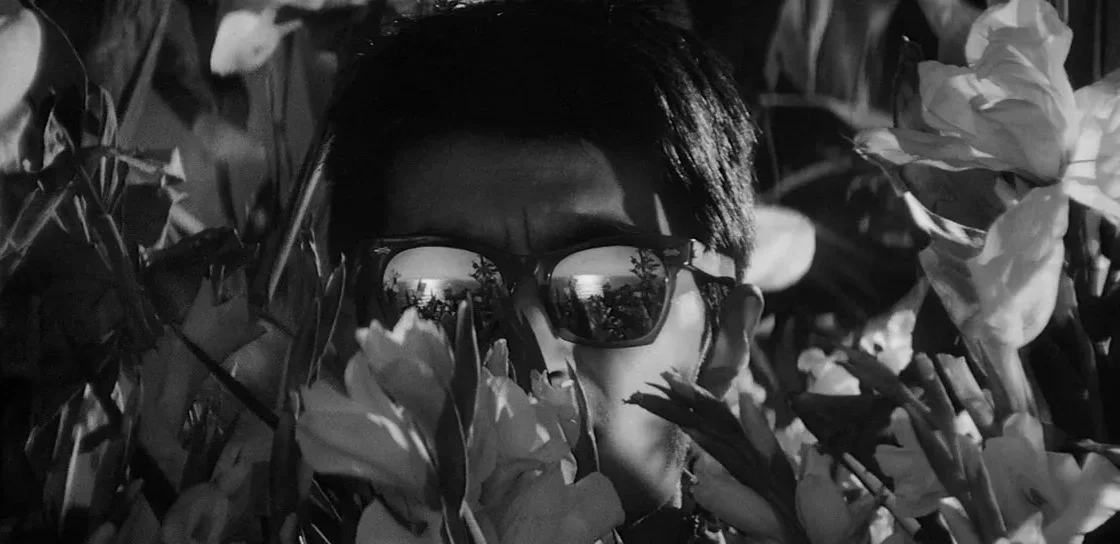
It was hard not to shed a tear or two when Stranger Things came to a close this winter. I was in college when the first season aired—not exactly a kid in a way that might have made the story’s characters relatable. But at 19, I was on the cusp of a symbolic split, straddling youth and adulthood with great expectations for adventures ahead and a good dose of melancholy for what I thought I was leaving behind. Perhaps Stranger Things found me at the right time. Like millions of others, in 2016 I was on the edge of my seat when Will Byers sent signals through the string lights in his living room. Over the years, the story grew with me, and I came to cherish its introspective portrayal of community and imagination.

As is usually the case with television, when oversight intensifies and budgets increase, writing tends to worsen. Previous seasons were already showing signs of decline, so I suspected going into season five that the ending would suffer from the same formulaic-slop-syndrome that now plagues most streaming platforms. Unfortunately, I was not far off. What started out 10 years ago as an insightful, character-driven story about friendship, trauma, and nostalgia devolved into an action-packed wannabe Marvel movie by the end. Writers and producers sacrificed depth for flashiness and wound up with over 10 hours of redundant dialogue and expensive action shots. 

The story was a blueprint to struggle with the monsters of everyday life.

The $500 million budget of the final season is proof that you can’t buy a good story. But, sitting by a pile of bunched up tissues as the final credits rolled on January 1, I could not shake the sense that what I was feeling was not just the disappointed goodbye blues. I felt like something precious had just been gutted, and its carcass made to dance for entertainment. The more I thought about it, the more convinced I was that the Duffer Brothers had betrayed the heart of their own story, a transgression worse than bad writing. Some days later, my suspicions were confirmed. In an interview with Variety, the Duffers explained that Eleven had to die in the final episode because she represented “the magic of childhood. And we knew for our kids to be able to grow up, the magic had to leave Hawkins.” I was floored. Had not the whole story been about keeping the magic alive? And what does growing up even look like? For the Duffers, it looks like conforming and forgetting. 

I had always admired Stranger Things for its insistence on imagination and nonconformity as keys to seeing the world for what it is, demogorgons and all. For years, we followed along as nightmarish creatures and state agents threatened the town of Hawkins. Characters attuned to this reality were often dismissed for being delusional or infantile, but the story consistently told us that the real heroes were the ones detached enough from social conventions to risk believing what might seem outlandish. Nerds and outcasts, queers and misfits, trailer park kids and single parents were the ones at a vantage point to believe in magic. From the margins, they could see and fight monsters. We are not just talking about demogorgons here. The story was a blueprint to struggle with the monsters of everyday life; the ones we fight alone and the ones we fight together. 

The power of friendship can be an overused trope, but in its early seasons, Stranger Things did it well. Love was the show’s engine—the reason Will’s friends and family went looking for him, that Mike took Eleven into his home and Eleven saved Mike in return, the reason Bob died for Joyce and Eddie for Dustin, that Lucas could pull Max from Vecna’s curse, and that Hopper raised Eleven as his own. It was significant to see attachments on mainstream media premised on friendship not as a noun but as a verb. Friends in our story were rarely able to spare each other suffering—on the contrary, they were at times inadvertently causing it. But they chose to be together through it. And as external and internal forces ripped them away from one another, they refused to let each other go. In insisting that friendship was not an accessory but a potent part of the magic, the writers invited us to think about bonds as necessary rather than bound to dissolve with age. 

In this regard, one of the most meaningful moments of the show for me was when Will destroys Castle Byers. The scene represents the very real pain that comes from change, but it does so without presenting childhood as something we permanently leave behind. Yes, the symbol of Will’s childhood is damaged, but it’s there that his friends come looking for him. Even after the destruction of Castle Byers, the kids know exactly where to find Will; their affection for each other is grounded in their histories, and by way of those histories they continue on their journey together. Things change, but they don’t have to end.

But by the show’s final season, the Duffers had departed drastically from this messaging. In the final shot of the saga, a new generation of kids takes over the Wheeler basement to begin their own D&D campaign, and Mike shuts the door behind him, leaving them with a bittersweet smile. The closed door is the last thing we see before the screen fades to black. We get it, they want us to grow up. Indeed, they beat us over the head with it. And growing up this time is rendered with isolated finality. While the remains of Castle Byers were a place for Will and his friends to embrace their next chapter together, the closed door of season five creates a barrier between childhood and adulthood. The message is clear: There is no going back, and the rest of life, you must do alone. Beyond this door? A set of sad tropes. In antithesis to everything the writers had expressed as important, magic is now a setback, and adulthood is a milestone that cannot be achieved without forgetting the past and conforming to a normative idea of life. 

With the finale, the Duffers’ coming-of-age narrative becomes about manufacturing absorption into an idea of adulthood.

It is a familiar norm our society feeds its children, a tired American dream, and Stranger Things ultimately caved to it. Eleven dies, and the magic dies with her. As for the rest of our heroes, monster hunting ends and real life begins, which entails leaving community, creativity, and nonconformity behind in favor of “real” dreams like college, mortgages, marriage, and promotions. They barely speak of what happened to them and talk, instead, of moving on and not getting stuck in the past. In the end, the only characters who maintain meaningful relationships with each other do so in romantic partnerships, and almost everyone’s happy ending involves becoming a productive member of society and embarking on a solo identity building project: Jonathan, Robin, and Dustin are off to university; Will is finding himself in the city; Nancy is out girlbossing; and Steve is looking to settle down and start a family. 

With the finale, the Duffers’ coming-of-age narrative becomes about manufacturing absorption into an idea of adulthood. I say idea here because, just like childhood, adulthood as a category has come to signal more than just an age range, but a standardized, socially acceptable set of attributes. In early seasons, a grown-up’s proximity to childhood was seen as an asset. Characters like Joyce, Hopper, or Murray had not really grown up yet, by societal standards: Joyce was a chain-smoking single mom, Hopper was a divorcee living in a trailer, and Murray a conspiracy theorist. But their failure (voluntary or not) to be disciplined into adulthood enabled them to believe what other adults dismissed and save Hawkins because of it. 

By the end, even the adults are made to properly “grow up.” This is most obvious in the treatment of Hopper. When Eleven disappears in a storm of debris, I was sure he would never recover. He had, after all, spent the entire show fearing this would happen. Instead, he bounces back faster than I did. In their last heart-to-heart, Hopper encourages Mike to accept Eleven’s choice and move on, lest he make the same mistake Hopper had made after Sarah’s death. While there is nothing healthy about dwelling in the past, and Hopper had dealt with the trauma of Sarah in ways that hurt him and those around him, her memory also enabled him to sympathize with Joyce, help her save Will, and open his heart to Eleven, even at great cost to himself. There is a difference between healing and forgetting. Hopper deserved the former but got the latter. The Duffers wrote him a future at the cost of his past. To move on, he must cut ties with most everything that binds him to his own story—namely his friends, his town, and his cabin in the woods—in favor of an ending that mirrors all the others: marriage, a promotion, and a real house in a different city.

We need more people who are not done imagining better worlds and fighting monsters.

There are many reasons why youth are often at the forefront of struggles for justice—sure, they have more time and energy, but they also dare demand what the adult world has declared impossible. We saw this in the Black liberation and anti-war movements of the ’60s, in the early 2000s Occupy Wall Street, and more recently in efforts to abolish ICE and the movement against the genocide in Gaza. In Solidarity with Children, Madeline Lane-McKinley writes that progressive attributes and liberatory demands are often dismissed as childish in a society that wants to blunt their potential. “Language of infantilization,” she writes, “is consistently employed to demarcate what and who has gone too far, too often for the sake of defending the status quo, if not to moralize reformism.” Qualities like hope, creativity, and communal struggle, at the core of early Stranger Things, were ultimately relegated to kid things by what Lane-McKinley would call the “disciplinary horizon of adulthood.” Was Stranger Things ever telling us to be radical? Maybe not exactly. But it was telling us to be curious and imaginative, to embrace our singularities and use them in service of others, to love in concrete ways, to remember the dead, to play, and to keep the magic alive. These are small seeds for potentially big change if cultivated in earnest. 

Instead, the Duffers presented the traits above as childish pelts to shed. The kids are all grown up now—time to put the toys away and settle down. But the reality is that we need more people who are not done imagining better worlds and fighting monsters. Stranger Things started off in praise of the underdogs who dare to believe their own eyes and take risks accordingly. In the end, it parroted a societal dismissal of what it had originally set out to praise: collective life, the courage to take risks, and the belief that things could be different. In so doing, it joined the catalog of texts that present the ideals of childhood as something to leave behind. This not only made for a poorly crafted ending; it was harmful to its audience. The writers encouraged generations of children and young adults to put their play away and leave their communities behind in favor of an individualist, cookie-cutter life. In the footsteps of our protagonists, we are to desire the ostensibly happy endings of well-adjusted adults—that is, nothing that rocks the boat or that exists beyond the parameters of “normal.” 

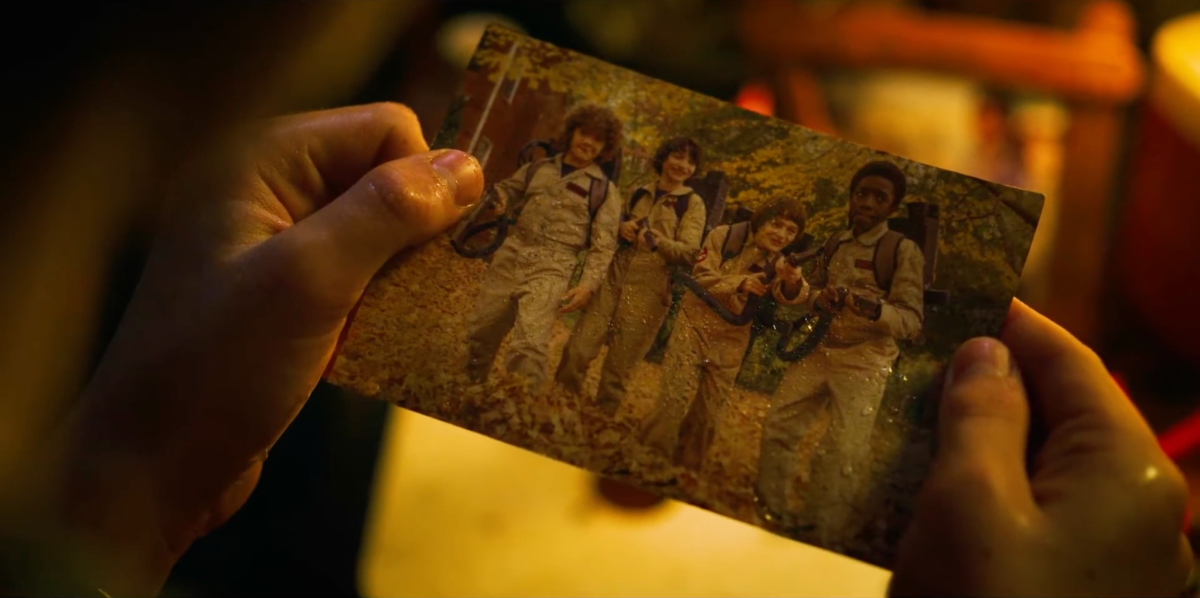
This is why the only tragic ending in Stranger Things is also the only honest one: Mike, in love with Eleven, refuses to let go entirely. Their story, of course, should be read literally, as one of two young people learning how to be together. But if we run with the Duffers’ allegory, we also learn something important—that the only character who keeps the memory of childhood alive becomes a writer. Mike is not stuck in the past, he just lives life with continuity. Unlike the others who show no signs of being tethered to what happened, his life remains grounded in his story—he keeps a picture of Eleven on his desk and Will’s painting hangs on his wall. And so he writes, to make memory where the others won’t. It’s not a comfortable ending. But it is the one that shows that it is possible to exist in the world without succumbing to the death of being in awe of everything. Because losing the magic of childhood is not inevitable; we are just made to accept adulthood as life without wonder. The spark should be passed along as much as we should carry it with us. After all, it’s not just up to the kids—it’s up to you too. 
A Debut Novel That Writes Magic Into a Difficult History

The first and only time I’ve visited Korea was in November 2019, with my father. Although we are Korean American, neither of us speak the language; he is third-generation American-born, I am fourth. As I spent a week surrounded by people with my shared heritage, I wondered: What was the Korea that my great-grandparents knew? What collective histories did they not experience because they immigrated? Who might I have become if my family had never left the homeland? 

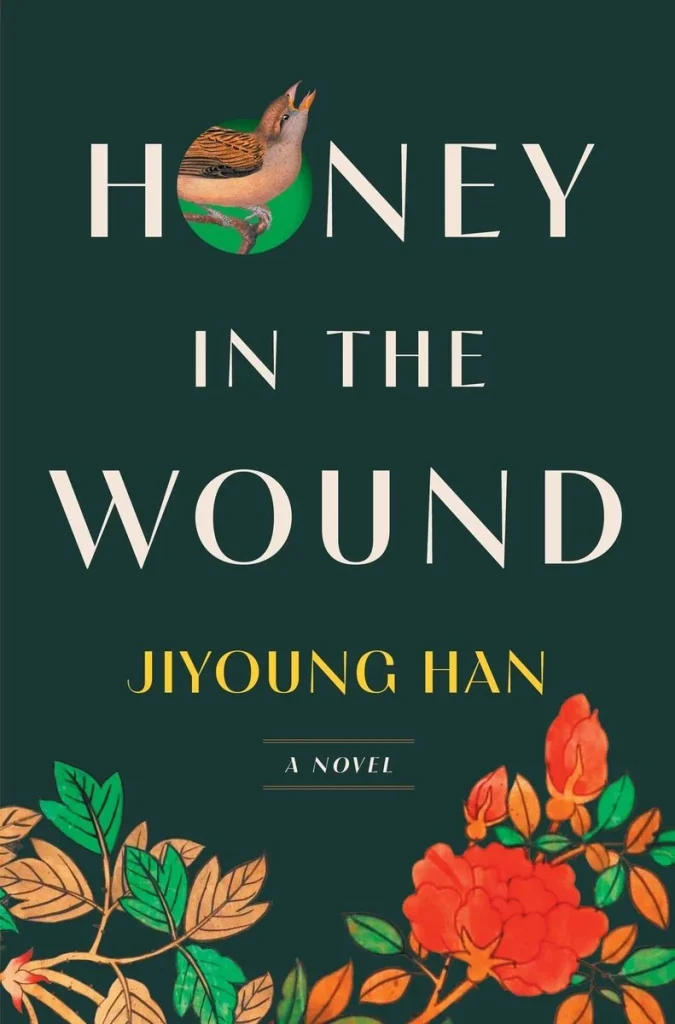
These questions resurfaced as I read Jiyoung Han’s debut novel, Honey in the Wound, which begins in Korea in 1902, the year before my own great-grandparents left Korea for Hawaii. Moving across time, borders, and generations, the novel chronicles one Korean family’s story of survival against the violence of the Japanese empire. The narrative revolves around Song Young-Ja, who is one among thousands of women forced into sexual slavery by the Japanese military during the 1930s (euphemistically known as “comfort women”). Young-Ja, along with her ancestors, and her descendants, are blessed with magical abilities that allow them to persist—and resist. Power is not merely a blunt-force tool of the oppressor, but is found in information-sharing networks that women create through gossip; feeling and expressing rage; and symbiosis with the natural world. 

Blending magical realism and historical fiction throughout the novel, Han illuminates the dark chapter of Japanese occupation in Korea spanning five generations and 90 years. As Han’s novel suggests, the aftermath of Japanese colonial rule during the 20th century continues to ripple into contemporary life. Even during my 2019 trip, many Koreans were boycotting Japanese goods, in part to protest Japan’s wartime atrocities. 

Over Zoom in January, Han and I discussed her folkloric inspirations, learning about the legacy of comfort women, and the subversive possibilities of magical realism. 


Morgan Ome: I was really moved by the letter of introduction you include in the advanced copies of your novel. You explain that you were compelled to write this story after reading about the nine surviving comfort women in Korea. Can you tell me more about this inspiration?

Jiyoung Han: I started writing this book because I was so upset about comfort women. Part of the reason I’m so angry about comfort women is the contemporary aspect: how they’re treated by the far right and the Japanese government. But you also have to go back and understand the spread of Japanese imperialism in East Asia from before the comfort women system was established in the ’30s. So it ballooned from that initial moment of inspiration and urgency. 

Comfort women have not felt like they’ve gotten a sufficient apology that was meaningful from the Japanese government, and there still are acts of historical erasure happening today. 

Around when I moved to California, San Francisco put up the Comfort Women Memorial in Saint Mary’s Square [in 2017]. It’s this lovely statue that symbolizes comfort women from all different nationalities, including Korean and Chinese. There’s also an older woman looking up at the three girls who’s supposed to be in the image of Kim Hak-Sun, the first Korean comfort woman to come out with [public testimony]. She’s the only real person in my book. Osaka actually ended ties with San Francisco, which was its sister city, because this Comfort Women Memorial went up. 

MO: What drew you to magic and folklore when writing into this history?

JH: Magical realism is one of my absolute favorite genres. I read Midnight’s Children by Salman Rushdie and Beloved by Toni Morrison, One Hundred Years of Solitude—all of these big works before my prefrontal cortex had even fully developed. I really love the genre and what it’s able to achieve.

What I particularly like for my approach to this novel is that magical realism offered a tonal counterbalance, because the history itself is so brutal. I wanted to be able to fold in elements of magic to not make it more palatable per se but make it something that people could hold on to with elements of hope. The magical realism in the book gives a lot of the female characters, especially, agency in ways that they might not necessarily have always had. So it was very intentional on my part to be this countervailing force with these atrocious truths. I don’t want to say that magic was the only way that they were able to survive and overcome. But it’s a way to amplify the existing agency, strength, and resilience of the people that were in situations like this.

MO: Can you talk about how you came up with the different magical abilities? I particularly loved Young-Ja’s ability to imbue emotions into her food. 

JH: With Young-Ja, I thought it could be really powerful to subvert qualities like being emotional, or domestic duties such as cooking—things that are seen as liabilities or too feminine—and turn them into an asset for her. Her ability allows her to bring comfort to those around her, as a balm for colonial wounds, but also as a literal weapon that she can wield against people that might otherwise wish her harm. 

MO: And Jung-Soon has the ability to force people to tell the truth so she can gather intel. We often see gossip as women chatting in their communities, but gossip ends up being this powerful information sharing network. 

Her ability allows her to bring comfort to those around her, as a balm for colonial wounds, but also as a literal weapon.

JH: With Jung-Soon, I wanted her to be someone that was otherwise set up to be completely underestimated. She had horrific scarring on her face. She was a second child, a daughter, and kind of quiet and shy. Because everyone else underestimates her so much, it allows her to extract truth from people without necessarily bringing attention onto herself, which is a great asset for her, especially as she’s engaging more in resistance against these colonial forces.

MO: I don’t want to spoil too much for readers, but in the beginning of the book, one character, Geum-Ja, turns into a tiger. In Korean folklore, the tiger is a symbol of courage, strength, and national identity. Why was that symbol important for you to include in your novel? 

JH: Tigers have a funny role in Korean folklore. All the things that you said are true. If you look at the Korean peninsula, Koreans will often say it’s in the shape of a tiger. But in folklore, tigers are also a buffoonish villain that’s often tricked by children or the noble farmer, whenever it’s trying to eat people. I love that duality. 

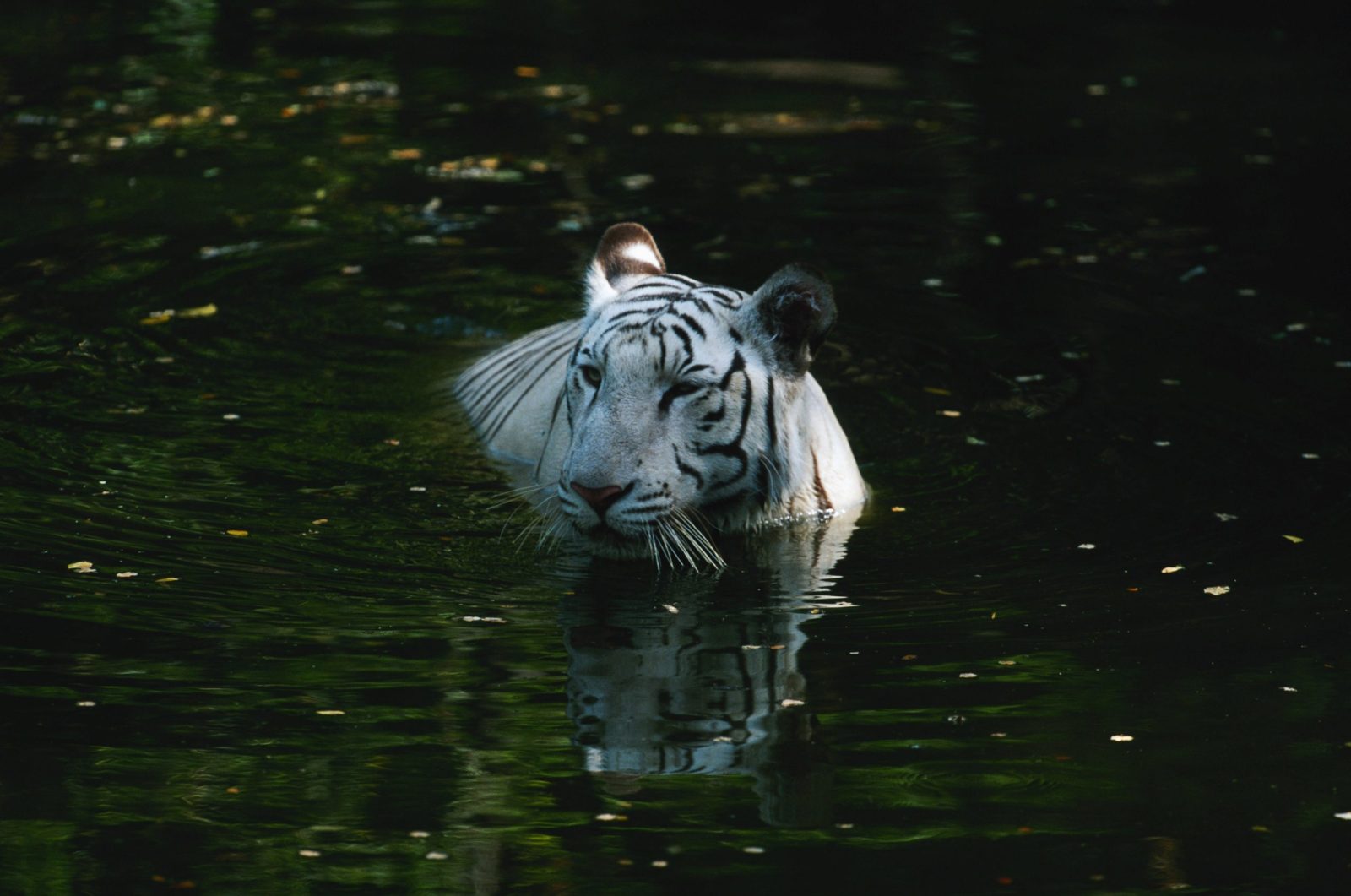
The reason I wanted to specifically have tigers is that it was yet another element in which colonial oppression was wiping out Korean culture. Tigers were essentially hunted to extinction under Japanese colonial rule. A lot of them migrated up north and then eventually out of the peninsula. I wanted to incorporate that historical fact as something that was both poignant but could speak to this natural folkloric magic that was in Korea at the time. 

MO: The novel concludes in the ‘90s with a character named Rinako, who is Young-Ja’s granddaughter. She feels like a bridge between Young-Ja and the reader, as if she’s calling us to continue the work of remembering and memorializing. Did you plan for Rinako to function in this way?

JH: Absolutely. Rinako has the ability to look into others’ dreams, which is a way for her to commune and connect with the past and all of these hidden truths. The huge theme in that section is about people trying to hide their truths. And not just the Japanese government doing historical erasure, but Young-Ja trying to hide her experience as a comfort woman from her family, or Rinako being conditioned from a very young age that she needs to keep quiet in order to preserve the peace. 

Rinako has the ability to look into others’ dreams, which is a way for her to commune and connect with the past and all of these hidden truths.

It was also really important for me to make Rinako Japanese. I want to make sure that people don’t look at [the novel] as condemning all Japanese people. I’m an American. I love Americans, but I don’t always agree with what my government is doing, and in a similar way, I wanted to show that there are tons of Japanese scholars and activists that have been really instrumental in getting some of these stories and histories and research to come out. 

MO: Rinako gave me a lot to think about. I’m Japanese American on my mom’s side, and a lot of the children of incarcerees didn’t talk to their parents about the internment camp history, but the grandchildren were the ones who talked to their grandparents. Maybe in the time that grandchildren come of age, there’s more discussion about resurfacing histories.

JH: I was really moved by what you said about grandchildren in general being better equipped or better able to talk about the trauma that their grandparents face versus the children of the grandparents. That’s absolutely true for Joon [Young-Ja’s son and Rinako’s father]. He’s actually quite a tragic character, because for obvious reasons, Young-Ja had such horrible PTSD that she was just not able to be a good parent at all. That’s the element of intergenerational trauma that affects him. And even though he turned out in this really flawed way, it’s not necessarily his fault, and I have a lot of sympathy for him. He’s perhaps a little too close to the trauma that was inflicted on him by his mother’s PTSD for him to have engaged in good conversation with her, or resolved it. 

MO: What was your research process like?

JH: I immigrated to the U.S. when I was seven and went through the public education system here. I grew up in the Midwest, which probably contributed to the fact that if Asia was ever mentioned in any of my classes, it was around three historical events that were all connected to American imperialism: the Vietnam War, the atomic bombs in Japan, and the Korean War. I actually don’t think I even knew Korea was colonized by the Japanese until I was a teenager or in college. And that’s around when I learned about comfort women. 

It wasn’t until I started writing this book that I started reading academic texts about the different systems at play, the way that women were recruited, the way their day-to-day life was in these comfort stations. I found lots of oral histories and testimonies from comfort women themselves and I ended up watching YouTube videos of comfort women talking about their experiences. That was a wake-up moment for me when I realized just how horrifying it was, in graphic and granular detail. 

It was really important for me to depict moments of joy and even humor or levity.

We talk about this as history, but sexual violence is still happening every day. Perhaps not in this systematized state endorsed kind of way, but in many of the conflict zones that are active now across the world, there’s rampant acts of sexual violence. 

MO: The section where Young-Ja and other women are experiencing sexual slavery is so disturbing. But I also felt like it was important for the reader to actually understand what they had gone through. The comfort women are given Japanese names and many of the names end in “ko.” You highlight that “ko” is the Japanese word for child.

JH: A lot of the comfort women were really young. In Korean, “ja” has the same connotation as “ko” in Japanese names. A lot of young women born in those decades have names ending with “ja.” Young-Ja is a really common Korean name for women born in the 20s and 30s. I chose that name for her simply because I wanted her to be the every woman of that era. 

MO: One part of the book that has stuck with me, especially in the historical moment we’re living through, is where you write: “Their capacity to experience joy, no matter how fleeting, was a sign of the inextinguishable spirit of their people. Something they swore would never be taken from them.” This line seems specific to your book and to Korean identity, but it could also be interpreted universally.

JH: It was really important for me to depict moments of joy and even humor or levity. I wanted to make sure that these women weren’t just getting together to be super serious all the time and engage in acts of resistance. Of course they still felt fear, they still felt panicked, they were anxious. But having the solidarity of that community enabled them to laugh about the fact that they put dog shit in the rice cakes for the cops. 

Joy as an act of resistance may be a little bit more contemporary and could feel potentially anachronistic in the book, but I think that’s just true. People go through atrocities, but in the little folds and corners, you still have people laughing or finding moments of solace or relief, and that’s what we as humans are wired to seek out. 

Our Wee Town’s Violent History Is Having Its Hollywood Moment

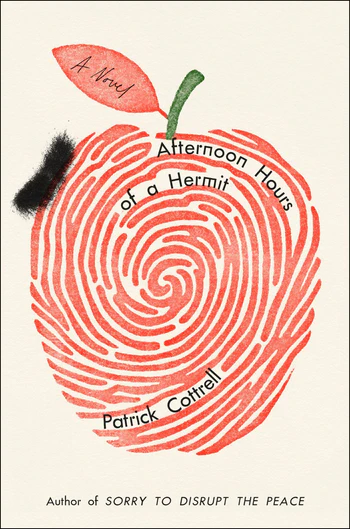
An excerpt from Prestige Drama by Séamas O’Reilly

We heard about Monica Logue going missing same as everyone else. It was in the Gazette and I’d know the editor, Deirdre, very well since she comes into the shop the odd time buying flowers for her mammy’s grave. It’s all anyone’s been talking about. You’d think having a world-famous celebrity in town would be the biggest news going, but it turns out her not being in town at all trumps it handy. I reckon she’s taking a bit of time out from the stress of it all and you’d imagine those Hollywood types have their own demons with the drink and drugs although sometimes you see them going into rehab and they’re on some chat show going on about how they were drinking a bottle of wine a night and you think they’ve hardly touched the sides of what we get up to. Sure there’s nuns in Derry drink more than these fluthers and no one bats an eyelid. Most of my teachers were half cut in class, I’d swear it, but I guess it’s different everywhere. Maybe she got a look at Waterloo Street on a Friday night and realised she’d landed in Sodom and Gomorrah and fucked off back to the Hollywood Hills in pure shock.

It’ll all work out in the end. I hope it does because I think she’s marvellous. Me and Paul binged Blackfinch when it was on streaming and I couldn’t believe she was going to be in this thing. You’d almost not mind that it was an American and not someone from here if it’s someone of her talent and stature, and sure it’d mean more eyes on it and Paul was happy about it too because he’s had a glad eye for her since the nineties although he’d never say it but I’ve seen him reading every word printed.

Some of the stories you hear, though. I’ve heard the same as everyone else, that she needed to dry out or she was kidnapped by Provos who’d run out of horses to hold hostage. Some saying she was murdered by Diarmuid himself seeing as he’s the last one saw her alive, and isn’t that always what they say in cop shows before they put the screws on the school caretaker or the weirdo uncle. Few days ago, everyone and their mammy had seen her. Eileen says she was out buying buns in the bakery the day before yesterday which would hardly be the behaviour of someone about to skip town, but I’d trust her as soon as I’d trust an MP, I mean, a greater gossip than Eileen Downey never put her arm through a coat, and I don’t think she means to lie but she gets ideas in her head and lets them run away with her and you wouldn’t say a word to her if you were in your right mind, I mean you wouldn’t tell her the time.

You would get to worrying though all the same. There’s a lot of ways people can go, sure there was a wain on our estate God help us was run over by an ambulance, and another a few years before who fell in the river after a frisbee although they said that wee boy was troubled, never so far to say as he was suicidal only that it was worth mentioning just that about him, that he was “troubled” which seemed to be saying the same thing.

There’s a monument for mental health near where he drowned on the Foyle Road, it’s at the start of the bridge with a few steps reaching out into the river. I always liked it and I don’t often like the monuments but I like that one. They had to cordon it off since people were throwing themselves off it which I said was one way to spread suicide awareness anyway. Next thing there’ll be a wee plinth with a length of rope and a bottle of pills, there yous are, lads, help yourselves.

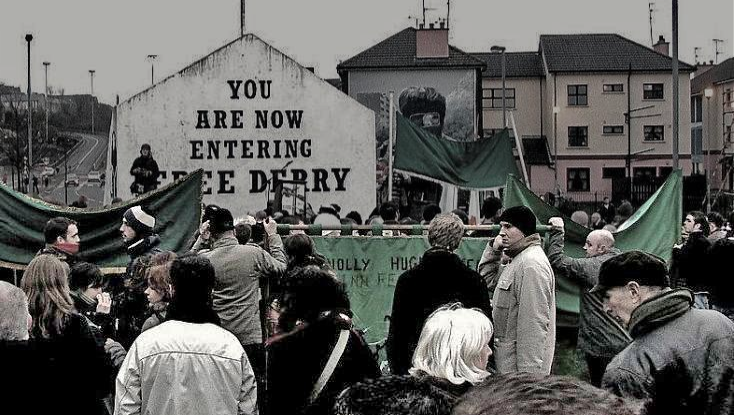
There’s the other one, the Hands Across the Divide, over by where Tillie’s used to be, it’s two lads reaching out for one another. It’s good because it could be about the Troubles or it could be about mental health or the environment or gays. They’re not touching, the hands, but they’re trying to touch and I reckon that’s the point. It’s all about awareness.

More people have died from suicide since the Good Friday Agreement than were killed in all the fighting before it, I hear people saying that a lot. Father McLaughlin used to say it in mass before collection. Now the details of how fixing the church’s roof was going to help teen suicides was never made clear to me but, that aside, everyone would nod at this fact like it was wile wise. I always wondered how it was that everyone’s killing themselves now when things are better, when no one was back in the day. I read a pamphlet that says a thousand more people died by suicide than murder even during the Troubles, so is that better or worse than now? If it’s better, then it seems a weird thing to go on about, and if it’s worse, then maybe the Troubles were better for people’s mental health than everyone lets on, gave them something else to worry about. But you can’t say things like that these days. Everyone just wants to move past it.

The whole place has gone mad with Hollywood arriving, talking about our wee town having its moment in the spotlight and how it’ll give a boost to the economy like Thrones did for Belfast, as if they needed it anyway. In my own personal view it’s a great thing altogether. Very good for getting the story out there—and if there’s jobs in it, all the better.

The whole place has gone mad with Hollywood arriving, talking about our wee town having its moment in the spotlight.

That’s one thing I think about a lot is jobs, it’s terrible the amount of unemployment that’s around and then you look at some of the people who do have jobs and you wonder how it even happened. Our Patricia’s Turlough minds the cars in the leisure centre up in Pennyburn and I always think how did he even get the job. He’s too good for it, you see, the great struggling actor! And now he’s given Patricia the bug, but sure it’s good to have a passion. It would just be nice to see some passion in the job he actually has, is all I’m saying, face like thunder while he’s raising the barriers and you’d feel bad even parking your car, like you’re taking food from his mouth. Before they started courting, I used to think he must have been born in the centre, swaddled in a kitbag, raised by the lifeguards and handed a work pass. He doesn’t even sweep the floors or hand out swimming caps or anything, I’ve never even seen him indoors, and I always used to joke he probably has a wee pullout bed and a stove to make his tea ’cos he just sits in his wee booth minding the cars all day and the face on him you’d think he was before a firing squad. That to me is a shame to be honest because there’s plenty would do that job and do it with a smile on their face.

But then I suppose my big thing, and as long as I live I will always return to it, is the handicapped, who I think have a terrible time of it already, and could do with a leg-up—or a wheel-up as the case may be. It’s every day I see some eejit collecting trolleys or serving drinks and looking like the world’s not done them any favours and when I see people like that I think: do you know what, that’d be a great job for a wee handicapped person. There are degrees of handicapped but I think it’s something we need to look into if the powers-that-be would give it a moment’s thought. When you do see wee handicaps in jobs they seem happy with it, they’re thankful for the opportunity, and sure if there’s a bit of a fuss learning them the ropes well it can’t be worse than some of the gombeens I see washing cars and doing dishes and not knowing how lucky they are. There was one used to work in Duffy’s making the teas and he was a credit to his disability, always smiling, and if he made a wee mistake he apologised and everything was fine. Except one time I was in there with Eileen Downey and she had a face on her the whole time like she was being served by a chimpanzee and I had to have a word with her and tell her she was being unkind even if he did get a few things wrong. She was put out to put it mildly because he gave her the wrong drink and me the wrong sandwich but I wasn’t complaining and I don’t need Eileen Downey to do that on my behalf, I’m loud enough on my own thank you very much, but the final straw for her was when he touched her biscuit when it nearly fell off her saucer as he was handing it to her and she picked it up with the tiniest tips of her two fingers as if it was polluted, as if he’d pulled it out of his arse in front of her, and what does she do but ask for another one. He was wile confused so I had to step in and tell him, slowly and at loud volume, that everything was fine and I nearly kicked her under the chair, I tell you she went down in my estimation there and then. She said the biscuit was half broke and I said it’ll all end up in the same place once it’s down ye and in any case a kind word never broke anyone’s mouth, Eileen Downey and then she said her Joe was after getting into gambling debts and she wouldn’t have minded if it was the football or the dogs but it was a wee mobile game that had girls with their tits out which I thought was strange that it made the difference to her but I did feel bad then because sometimes people are going through things and you don’t even know and it’s all about having empathy at the end of the day. We got that meal for free anyway because the wee fella forgot to come back with the cheque so it all worked out.

As for the telly, our Patricia thinks she’s hired already. If there’s one good thing about her and Turlough, and I’ll be honest, he’s a nice young man when he smiles a bit, God knows she could do a lot worse, it’s that they raise each other up when it comes to the acting. She’s in with the drama troupe and already sees her name in lights, and with Hollywood coming to town it’s very exciting altogether. Paul says I’m convinced she’s going to get Monica’s part and would I steal the poor woman’s grave as quick, but I paid him no mind because there’s going to be hundreds of parts for young girls even in the crowd scenes, and optimism is a choice, I tell him, why not support your child to the hilt, there’s enough disappointments in life without presuming them in advance. For the big parts I’d find myself a bit more realistic on that score since part of me thinks sure they’ll probably just get wee English girls in and make them do accents like they always do, but I don’t say that except to our Paul and he says the same. I just tell him to make sure he doesn’t say it out loud because then we’d never hear the end of it from Patricia, who’s very sensitive about these things.

Honest to God, you can hardly breathe around her. Twice last week he dropped the ball complimenting her friends, and in fairness he can be useless about these things but she laid the whole trap out for him, you’d forget how devious teenagers are if you didn’t have one under your roof, it’s demons they are. The whole lot of them are convinced they’re made for showbiz, so it was all Kylie wants to be a model and Anna wants to be on TV and he just said yeah they’d be good at it all right and I knew then he’d suffer for that, it was as if he’d scalded her with acid, Jesus Christ, it was like he’d killed her dead. The competition between those girls! Good luck ever working out who’s friends with who and what does be going on with any of them. When they were wains it was all about dance moves and hairstyles and now it’s about who’s got the best arse and the biggest lips and this from girls of seventeen years of age. I pity poor Paul for it because he can’t put a foot right. In my view Patricia is as gorgeous as any of her friends—certainly Kylie, God love the girl but she hasn’t a feature. I said to Paul that Kylie would have better luck as a crash-test dummy than a supermodel and we had a good laugh at that, God forgive us, but then I told him don’t you be saying that to Patricia either, for the love of Jesus, we’d never hear the end of it.

What’s true and I don’t care one jot if I’m biased is that if the casting people are on the lookout for local talent they couldn’t do better than Patricia. She played Aladdin—the boy part—in the panto last year and even without the makeup, which they rightly banned for sensitivity reasons after that whole to-do last year, I swear you’d have thought she was a wee Arab boy. She even got the part over Terri Harkin’s youngest, Alex, who’s a wee they-them, so I was particularly pleased, even though I fully support her visibility and God love them they need awareness too, sure it’s the modern day and you need to be kind, but Patricia just has the goods, and I know I’m her mother but that girl has the goods.

The latest now is they’re casting, and the producers were very pleased with her tape and want to see her for a whole host of parts. The house is elated to say the least and the only sad part, I thought, was that she and Kylie got a look-in but Anna didn’t, but it turns out Patricia has taken against Anna for some reason so it hasn’t made a dent in her happiness, to be honest she might even be happier that Anna didn’t get her dream which is nice for her in a way. I’ve given up worrying about anything else, sure they’ll be thick as thieves again by tomorrow and anything you say, for or against any one of them, can and will be used against you in the court of Patricia McDaid.

All of a sudden I’m flavour of the month because I’m so ancient she thinks I can give her all the information she wants.

Of course, now she’s decided her best bet is to know all about what it was like in the bad old days and particularly how it was for young girls, and all of a sudden I’m flavour of the month because I’m so ancient she thinks I can give her all the information she wants. She talks to me like I’m the last survivor of the Titanic, like she’s only just realised that she was living this whole time with a relic from the Ulster Museum, like anything I’ve ever done has actually mattered. And the things she’s asking, my God do they teach these kids anything at all. I mean this morning she was asking me how we got to school, as if we were dodging bullets the whole trip, and Paul couldn’t help himself then telling her we went to bed on a heap of sandbags and wrapped our Christmas presents with barbed wire and she writing it all down like a thick, we had to laugh. But then she takes me aside and says it’s all about recording history through drama and using art to tell stories and you’d think she was on the couch with Paddy Kielty talking about the struggle of her craft. So there we were in the front room for an hour going over the whole thing and she with the pencil in her hand taking notes, asking me if I’d ever been bombed or shot and me having to tell her my life story stuck without anything to say because I couldn’t believe she was interested in any of it.

And there’s me trying to explain what the army checkpoints looked like or how a bomb site smelled, almost as if I was telling her what the world was like before mobile phones or those times when she was a wain when she and her brother would ask us if we lived around the dinosaurs or when exactly it was that the world stopped being in black and white. And then she’s asking about the killings and what happened to this one and that one and thon, and by the end of it I have her pencil in my hand drawing protest routes and the whole time she’s at me about atrocities and massacres and I don’t know why but the way she’s saying it like she’s someone on the news, or an English person, like she’s a tourist or some fella from the UN on a fact-finding mission, and it all had me grabbing the tissues wondering how it could be she didn’t know, how my whole life I’ve tried to stop her from hearing any of it as if I was trying to protect her and not be like some of the other people round here who’d boil the ear off you never giving over about every last thing that happened, as if they and they alone were God’s one true perfect martyr and we didn’t every one of us go through the same thing.

And wouldn’t you know it, eventually she had me talking about Jamie Devenney, both of us blubbering on the couch and me stroking her hair and remembering when she was just a funny bold wee girl fretting about monsters under her bed and now it’s me worrying about the monsters out there she’ll be set free to encounter.

I wouldn’t say I get emotional about any of it at all nowadays, I’d say my philosophy is I leave the past in the past and there were people who had it worse, God knows, but there was something about remembering what happened to Jamie and the way she didn’t even know his name, she read it from her notes like she’s seen it in a book, and she says is he one of the fellas on the wall and I say aye, one of the fellas on the wall and I say but he was a beautiful boy, you know and tell her all about how the whole neighbourhood were mad after him and she says you wouldn’t know it from the picture. I told her sure that was a whole story on its own. Sad as everyone was when he got shot, I said, there was more uproar when that mural came up and everyone saw Jamie who was our wee pop star, our wee dreamboat, looking like a bank manager or a bus driver, not that there’s anything wrong with people in those professions but he was movie-star good-looking so he was.

And I meant all this to be funny because by this point my tears needed drying, but it came out angry and I found the whole thing wrong somehow, like this wasn’t a story or a page in a book or a scene for some innocent child to be play-acting, this was a thing that had happened, these were people. Patricia God love her was studying all this and wondering what to make of her lovesick heart-broke mammy snotting into a bog roll and trying to get my words out, and I wondered there and then if awareness is all it’s cracked up to be if you can’t tell the whole story, but there’s no way the whole story could ever be told, and every film I ever seen about any place or any war was probably filled with stuff the people from there would hate, things they couldn’t stand, and is this what we’re making for ourselves, a rod for our own backs, a great big heap of shite to raise a bit of awareness of what, of my life of my people.

The thought of that boy and that I’d seen him at a dance two nights before and always felt that maybe there was something there to keep an eye on between me and him, not some deep spiritual connection don’t get me wrong but a wee throw of the eye, a sense that we had a story to tell between us sometime if the time ever came, but all that was thrown away and forgotten about because some cunt soldier shot him in the head in front of the whole street, and now I see him up on that wall every day, just another fading mural like that one down the road of Sinead Bradley’s brother and a couple others but I never knew them quite so well, and there’s one wee fella who has one on the far side of the estate whose name I always forget and I feel the worst for him because it’s been too long now and I can hardly go round asking.

7 Books About the Messy Politics of Indian Meals

We were at Carter Road, fingers still sticky from the Belgian waffles we’d just demolished, when Bani admitted she’d been forbidden from drinking water at my house. “Because you’re a Muslim and eat meat,” she added guilelessly. Bani and I went to school together in Mumbai, and had been friends for nearly seven years at that point. When my parents couldn’t pick me up from a birthday party a few years earlier, hers had offered to take me in until I got a ride home. At lunch, when Bani needed someone to accompany her to the school gate, where she’d collect her lunch box from the dabbawala, she’d tilt her head at me, wiggle her fingers in a walking motion, and mouth, ‘Coming?’ It was Bani who introduced me to Retrica, the vintage-inspired camera app that was all the rage in middle school, and appeared in almost every selfie of mine thereafter.

So really, it should’ve stung—should’ve smarted—that someone I’d grown up with could even bear to nurse a thought so acrid, so casually cruel. But at thirteen, in the greenness of teenagehood, I took great pride instead in being the Muslim that could stomach an insult, proffer a critical remark with no hint of defensiveness, brag about never having kept a fast during Ramadan—so I merely shrugged and nodded in acquiescence. By the time we’d left the waffle shop and stepped into the mugginess of Mumbai, the sky was tinged with magenta and Bani’s remark had already faded from consciousness. This was in 2014, shortly after the right-wing Bharatiya Janata Party rose to power in India in a landslide victory, ushering in a new era of Hindu nationalism which sought to sweep religious minorities to the sidelines. 

Twelve years on, Bani’s remark seems to have foreshadowed a chain of events unfurling in the political landscape of India: reports of cow vigilantes lynching Muslims on suspicion of eating beef, non-vegetarian renters being denied housing in major Indian cities, beef being banned in twenty out of twenty-eight states. What is it about food, I wonder, that can drive one to murder, to be entirely stripped of remorse? Why does the aroma of a certain meal feel like an insult so personal, so scathing, that the only acceptable response is hot, vicious rage? 

The answer lies in the fact that food and politics are immersed in a strange dance, of sorts, where one not only informs but also augments the other—a fact reinforced by political scientist Gopal Guru, who argued that food is a “site of humiliation” for Dalits in a caste-based system like ours. In 2011, the India Human Development Survey found that women in about a quarter of Indian households eat last, stoically gleaning the remnants once the men had eaten their fill. For those hovering at the margins—women, Muslims, Dalits, Adivasis—these facts underscore a jarring truth: food isn’t merely fuel, it determines if they get to survive at all. 

The seven books below encapsulate this sentiment by asking questions that are as jarring as they are necessary: what is acceptable to eat, who is handed the leftovers, whose meals are considered dirty, who toils in the kitchen. And somewhere in between stories of vengeful women, debates about inter-dining, and ethnographic accounts of the beef ban, we stumble upon the realisation that food can be both life-affirming and life-destroying, all at once. 

Chhaunk by Abhijit Banerjee

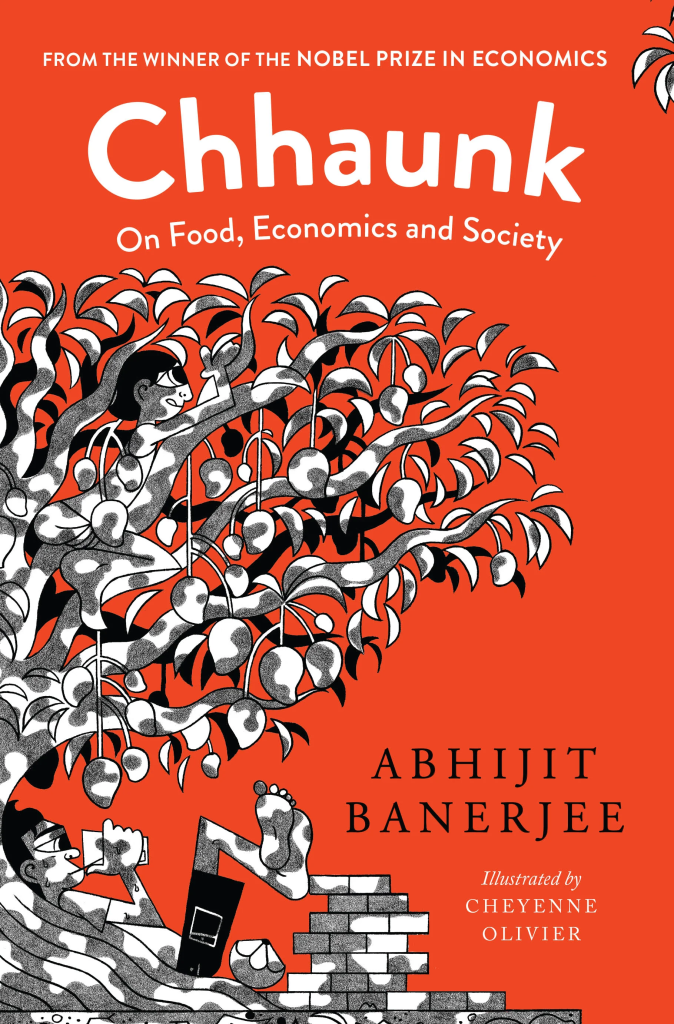
How are roadside chowmein and foreign policy related? What does a disappointing New Year’s Eve have in common with Universal Basic Income? Few authors can extrapolate the dreary slog of everyday life to economic theories without being overly didactic, but Banerjee suffers from no such predicament. Every chapter begins with a juicy anecdote about food—in one, a sanyasi suckles lasciviously at a ripe mango on a crowded train, putting on a show for his scandalised audience; in another, a group of friends skip lunch to make their evening meal of sutli kebabs feel more rewarding, only to find that hunger has fettered every ounce of their mental energy.

Then, almost as if by chance, Banerjee begins to drift away—drawing unexpected parallels to Xi Jinping’s domestic policy, India’s malnutrition problem, the erosion of democracy, undertrial prisoners. Nothing is too frivolous, everything is related, and it almost always circles back to food. But while Chhaunk is a sobering reminder that the personal has always been political, Banerjee’s writing is laced with levity, making it an easily digestible read in spite of its heft. 

Dalit Kitchens of Marathwada by Shahu Patole

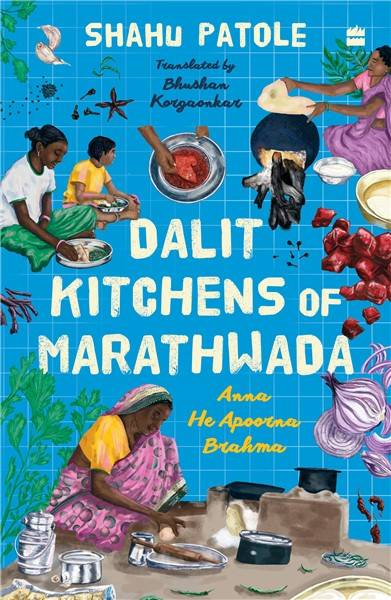
Amidst an ever-swelling pile of desi cookbooks, Shahu Patole’s memoir stands out, not only for the age-old recipes etched into its pages, but because its very existence is an act of subversion. It is true, after all, that Dalit recipes never wriggle their way into the mainstream, into the glossy cookbooks that sit smugly on front-facing displays in bookstores; that has long been a feat reserved only for the upper-caste. “Even my own siblings didn’t like my writing this book in such great detail,” Patole admits in the preface. “But this is the story of the food my parents ate and their parents ate—an acquired taste, one acquired through centuries of discrimination.”

Through a series of vignettes, we learn how Dalit communities—often driven by paucity—use every part of the animal in their cooking, how non-vegetarianism is weaponised to uphold caste hierarchies in India, how some ingredients have historically only been available to the upper caste. And upon reaching the raw, tender marrow of the book, we find ourselves stumped by a more rudimentary question: why has nobody even noticed that Dalit recipes are missing from mainstream media?

Eating Women, Telling Tales by Bulbul Sharma

If Patole’s work has a grim undercurrent, this cheeky collection of short stories pivots sharply, with plotlines that are as piquant as Indian cooking. At first, the characters seem run-of-the-mill, unassuming. But a sardonic tone runs through the book, coaxing a self-conscious giggle out of the oblivious reader, and eventually, giving way to a sticky, viscous malaise that lingers for days after. Perhaps it’s the realization that the mother trying to ‘earn’ her son’s love by cooking for him feels oddly familiar, as does the wife attempting to clog her good-for-nothing husband’s arteries by glutting him with rich, greasy food. 

After all, the women in this book are women we recognise—mothers, daughters, aunts—who spend their lives toiling in the kitchen, their worth forever hinging on how aromatic their tadka is, how thinly they can slice a radish, how swiftly they can plump up a too-thin husband. It is through food that these women are controlled, tyrannised, shown their place. But it’s also through food that they find solace, validation, and sometimes even revenge. 

Sacred Cows and Chicken Manchurian by James Staples

Emerging out of two decades of ethnographic research in South India, Sacred Cows and Chicken Manchurian takes a long, hard look at what it means to consume beef in a country where cows have historically been considered sacred. Within the first thirty pages, Staples gently tosses aside the cut-and-dried way in which we usually speak of the beef issue—as a clash between the cow-slaughtering Muslims, Dalits, and Christians and the cow-worshipping Hindus.

While there is, of course, some truth to this notion, Staples brings in a more nuanced view, acquainting us with cow slaughterers who refuse to eat beef, Dalit cattle herders who feel a sense of kinship with their animals, upper caste Hindus who devour beef in secret, and those that wilfully turn a blind eye to the exploitative practices of the meat industry. It is through these encounters that he makes a case for the messy complexity of beef-eating. Especially now, at a time when gau rakshaks are lynching religious minorities on suspicion of eating beef, a book as nuanced as this one feels like a welcome respite, an oasis in drought.

Fasting, Feasting by Anita Desai

In the initial segment of this book, we meet Uma, a spinster who spends her days at the beck and call of her parents, only to be met with vitriolic remarks in return. Despite feeding those around her, Uma’s life in India is one of fasting—starved of freedom, education, new experiences. The latter half follows Uma’s brother, Arun, who moves in with an American family, the Pattons, after he enrolls in a college in the United States. The Pattons lead a life of excess—they buy an obscene amount of groceries, have a freezer crammed with meat, and their daughter Melanie obsessively snacks on candy bars only to vomit everything back up.

While their circumstances are unalike, Uma and Melanie are similar in that they’re both unhappy with their lives, which has the effect of thwarting their appetite, both literal and symbolic. There is, after all, a sense of aliveness to hunger—a reaching outwards, a wish for nourishment, the sign of a body functioning as it should. What can be understood of a hunger that is quashed, diminished like theirs? Does it point to a barren inner world? A belief that one’s needs will forever remain unmet? A quashing of desire itself? 

The Flavours Of Nationalism by Nandita Haksar

The urge to pen this book came to Haksar as early as the 1980s, while attending a human rights conference in Amritsar, Punjab. There, a South Indian delegate asked for rasam (a dish typically only prepared further South) despite the conference having a lavish spread of local Punjabi food. This interaction first annoyed and then amused Haksar—who’d grown up with “the Nehruvian idea that we must appreciate the cultures and cuisines of others”—and eventually inspired her to work on a book she imagined would be titled ‘Rasam in Amritsar’.

Only, what set out to be a light-hearted work grew progressively more dismal once the culinary tastes and recipes of India revealed themselves to be mired in socio-political strife. It is with this understanding that Haksar unpacks the Gandhi-Ambedkar debate on inter-dining, the impact of privatisation on the Goan food industry, and the ban on eating beef. But while it unfolds as a narrative, The Flavours of Nationalism is, at its heart, an act of questioning: where do our meals come from? Who is permitted at the table? What food provokes violence? What doesn’t? And more importantly, perhaps, what does that mean for us as a people?

Khabaar by Madhushree Ghosh

Whether it’s buying meat and fish at Chittaranjan Park in New Delhi or watching her mother fry rohu in mustard oil, Ghosh, the daughter of Bengali refugees, nurses her memories of India with utmost fondness after immigrating to the United States for graduate school. In the decades after, she finds herself oscillating between past and present, rootedness and adriftness, belonging and alienation—as is a rite of passage for most immigrants.

It’s only in the aftermath of her baba’s death, and eventually ma’s, as well, that she tries to keep alive her Indian heritage and the memory of her parents, through Bengali food: preparing goat curry in remembrance of her childhood meals, making a “bastardised version” of raita with kefir instead of yogurt, haggling with a local fisherman while buying fresh fish the way her father had taught her to. (“We absorb the fish’s life. We live because they did… Never forget, Puchkey, fresh fish. For fresh life. Always.”) As much as Khabaar is a tale of grief and cultural identity, it is also one of vitality, of recognizing that there is presence even in absence, and that memory—of those departed, of homes left behind—does not have to destroy us. 

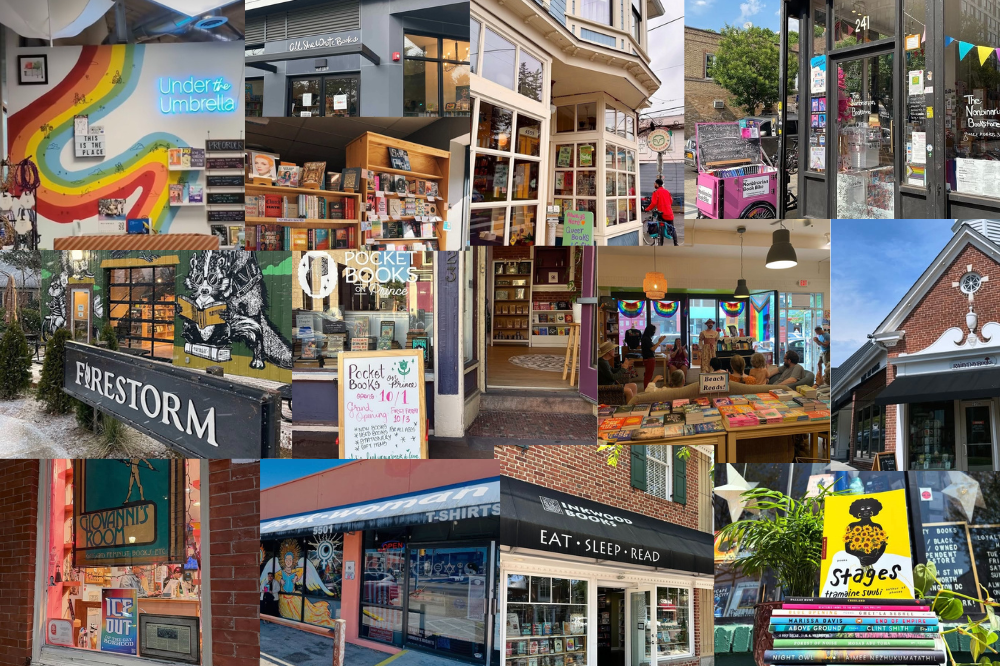
Queer Bookstores Across America to Support This Independent Bookstore Day

April 26 is Independent Bookstore Day, and to celebrate, Electric Lit is once again sharing a round-up of some of our favorite independent bookstores, including a few that are new to the literary landscape. In a time when it seems as if the very earth is moving beneath our feet, we remember that books and bookstores help to ground us. 

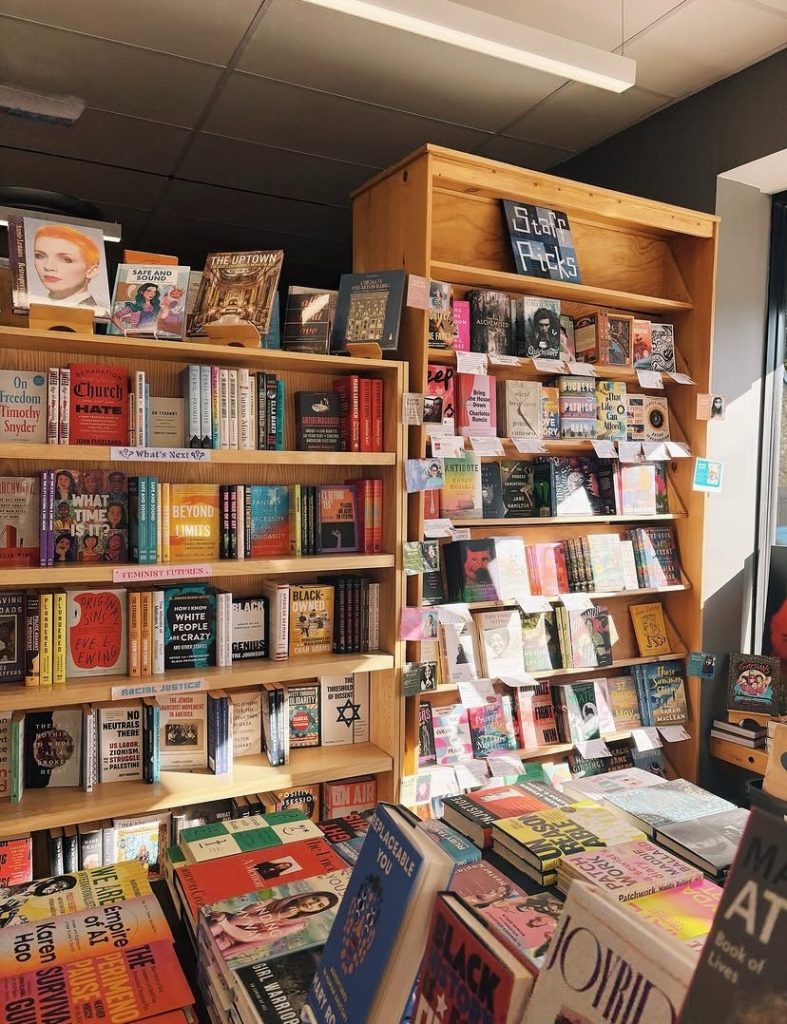
This year, we’re highlighting indie bookstores that focus on intersectional LGBTQ+ literature. Save a queer, read a book!

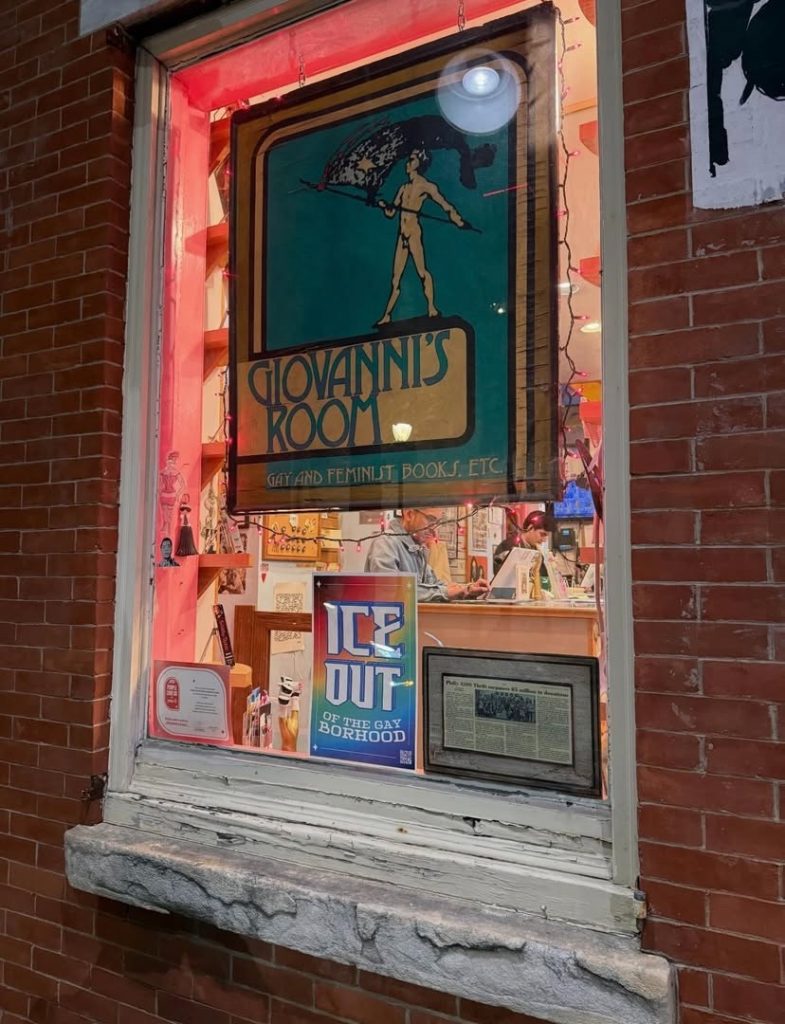
Giovanni’s Room (Philadelphia, PA)

Giovanni’s Room has the bragging rights to being the oldest LGBTQ+ bookstore in the US. A Philly favorite selling both new and used books, it’s part of the queer family that is Philadelphia AIDS Thrift, a gem whose mission is “to sell lovely, useful, interesting, amusing, and sometimes mysterious stuff.” A federally recognized 501(c)(3), they’ve distributed over $5 million to local organizations committed to the fight against HIV/AIDS. Don’t miss Philly Queer Book Club, hosted monthly by the charming and stylish self-proclaimed Book Club Kid, Danny Maloney! You’ll read classics like Sula, Zami, and Paul Takes the Form of a Mortal Girl, as well as hot new titles.

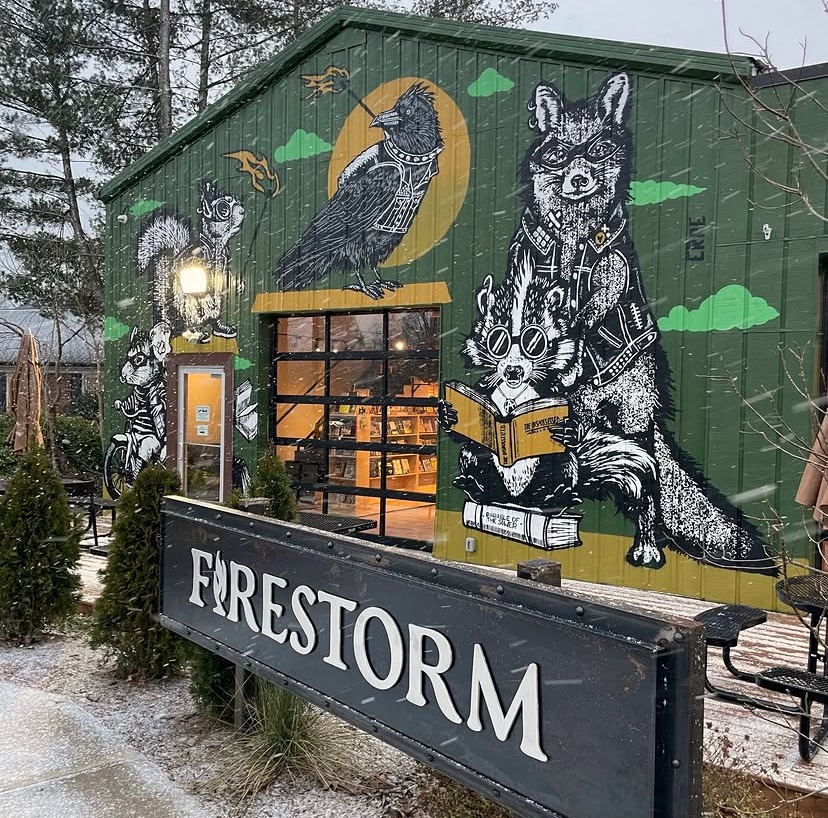
Firestorm Books (Asheville, NC)

This queer, radical activist co-op has been a feminist collective and social movement since 2008, and they need your help! Like many small businesses in Asheville, the worker-owned, non-hierarchal, self-managed business was hit hard by Hurricane Helene. Sales are down, costs are up, capitalism is the worst. The bookstore, which provides critical community space and serves as a hub of mutual aid, has been enlisting community support to bridge their gap in revenue and expenses. Even so, they’re continuing to facilitate civic programming like “Your Book Club Has Been Designated a Terrorist Threat,” which disseminates essential knowledge about the landmark Dallas-Fort Worth case after activists were convicted of “material support for terrorism.” Join this beloved indie, become a Firestorm Sustainer today! 

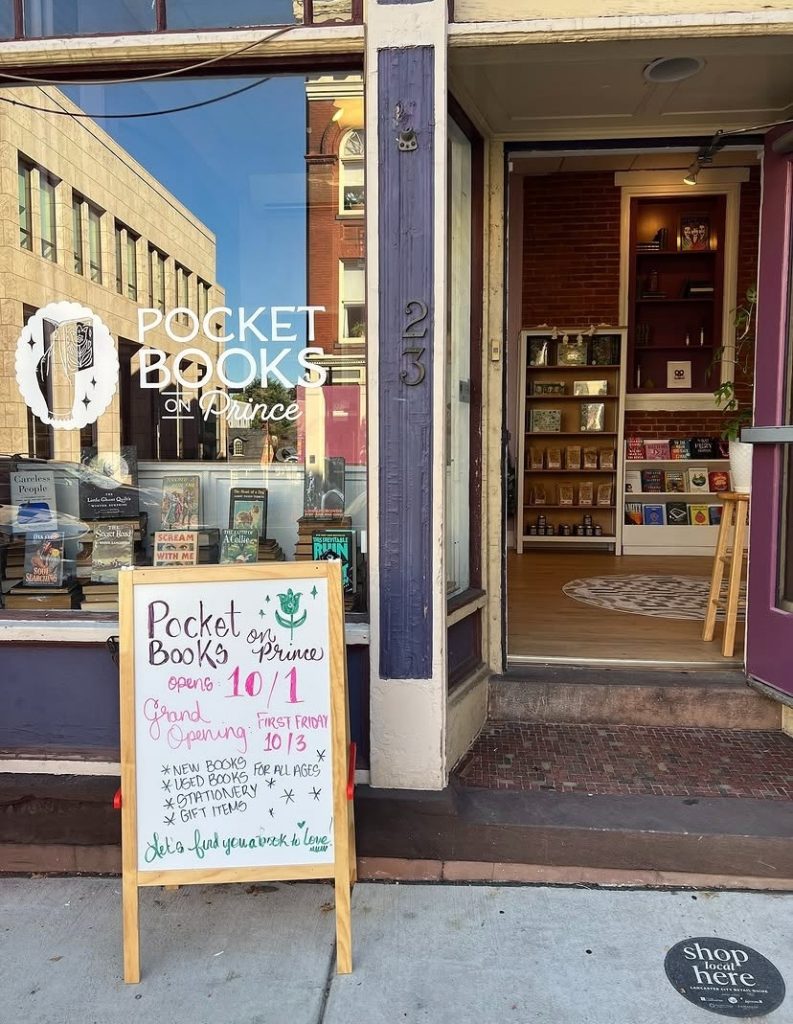
Pocket Books (Lancaster, PA)

Owned by three best friends (who we all want to be our best friends), Pocket Books is an independent, queer, feminist indie committed to “the idea that bookstores are places for communities to share knowledge, wisdom, resources, and connections.” If you’re looking for a hot new title (Horror? Sexy? Sexy Horror?), their book recs are fantastic! They curate an “intentional and eclectic” stock of books, including titles by local writers and small presses; their monthly subscription, Pocket Picks, features early career writers and prioritizes women, queer writers, and writers of color. Pocket Books is so popular and beloved, they recently doubled in size and love, opening their second location in Lancaster, PA. They ship nationwide and offer 15% on all pre-orders! 

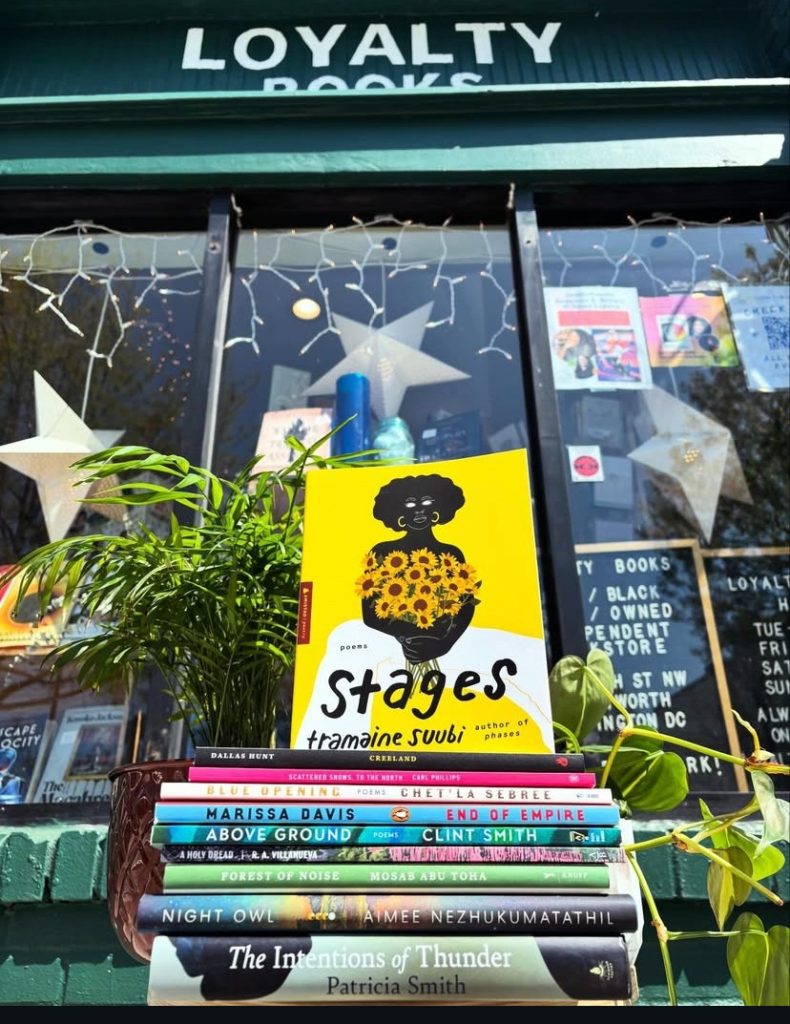
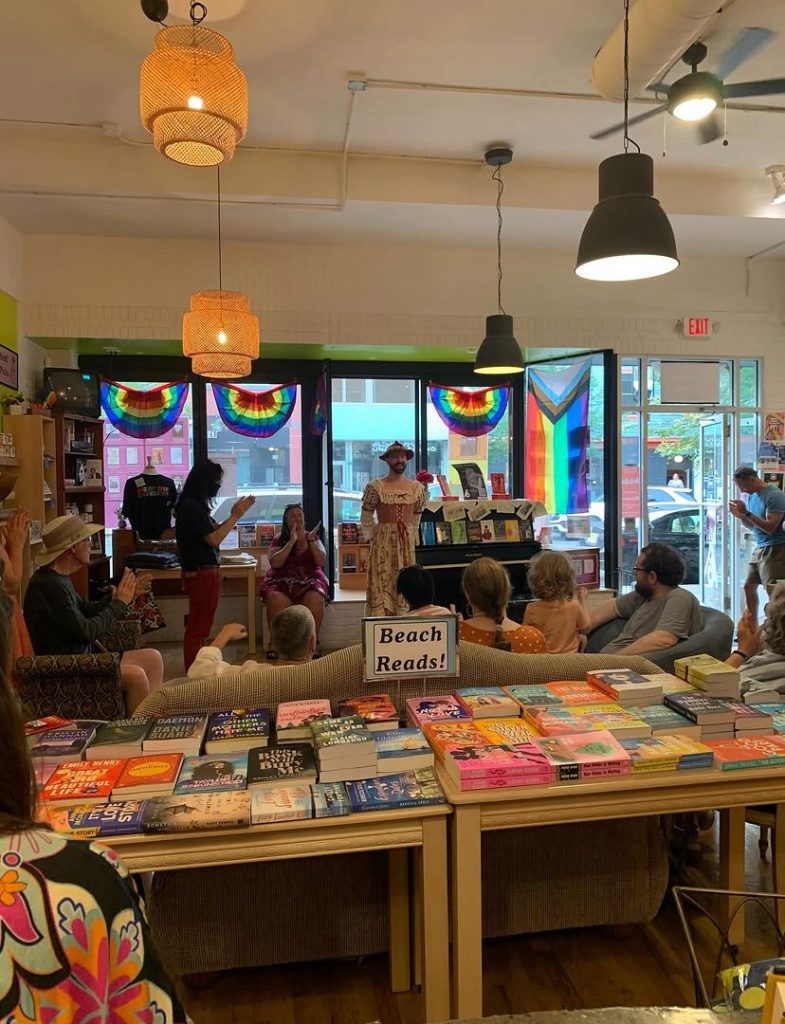
Loyalty Bookstores (Washington, DC)

Founded by Hannah Oliver Depp, a Black and Queer bookseller, and now co-owned by Christine Bollow, a Queer, disabled, and biracial Filipina bookseller, Loyalty highlights diverse voices to reflect Washington, DC’s intersectional community. Their motto is, “We Like Books, We Like You, Welcome.” There are many book clubs to choose from: Meet Cute, which reads across sub-genres within Romancelandia; In the Margins, which focuses on marginalized authors; the Big Ass Book Club for ambitious books; and Agatha Christie & Sherry, which pairs Christie with sherry and tea. Loyalty Bookstores is located in Petworth, DC, in the Pop Up at Walter Reed. 

Asbury Book Cooperative (Asbury Park, NJ)

Asbury Book Cooperative is a community-run 501(c)(3) nonprofit bookstore, supported and run by members and volunteers who are always delighted to offer their take on a great book. Selling both new and used books (including a pretty solid poetry section for a store of its size), and located downtown in gay Asbury Park, ABC is an excellent stop on your way to the 5th Avenue Beach. Not only are there readings, workshops, and book clubs—such as an excellent Racial & Social Justice Reading Group—but Friday nights at ABC are usually a great time to catch live music!

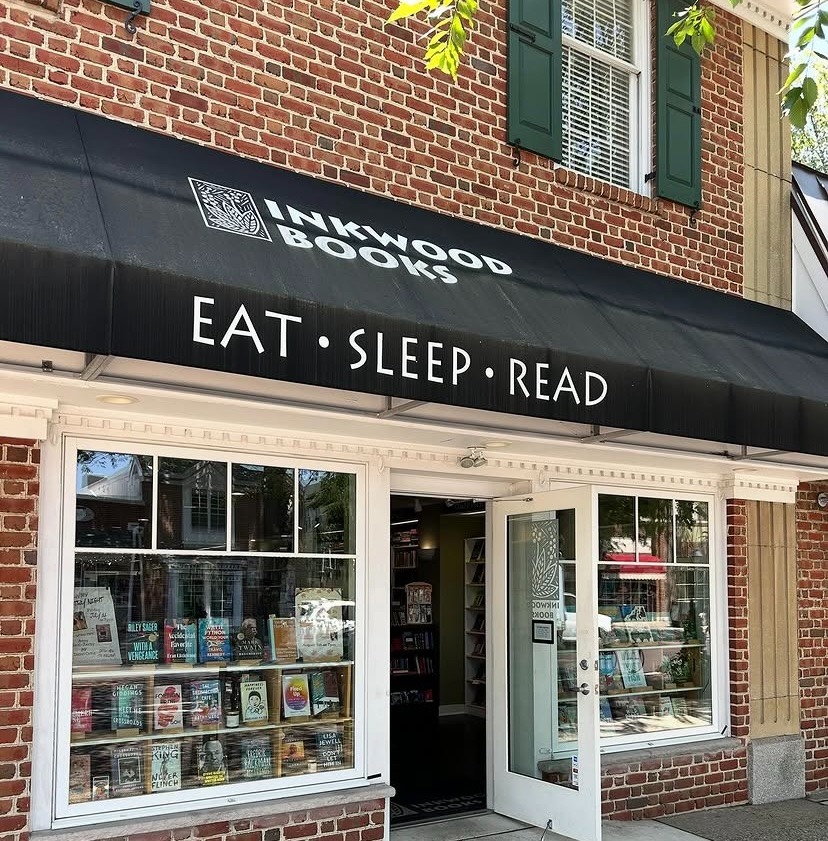
Inkwood Books (Haddonfield, NJ)

Located in walkable downtown Haddonfield, not far from a beloved water ice shop, Inkwood Books serves as a community hub, holding story times, book clubs, and walk-ins. They carry more than 18,000 books, including a dedicated children’s section and independent authors and presses. A lively, charming, and welcoming indie, it’s beloved by locals for being a South Jersey “gem.” Pride Book Club runs monthly on Tuesdays! 

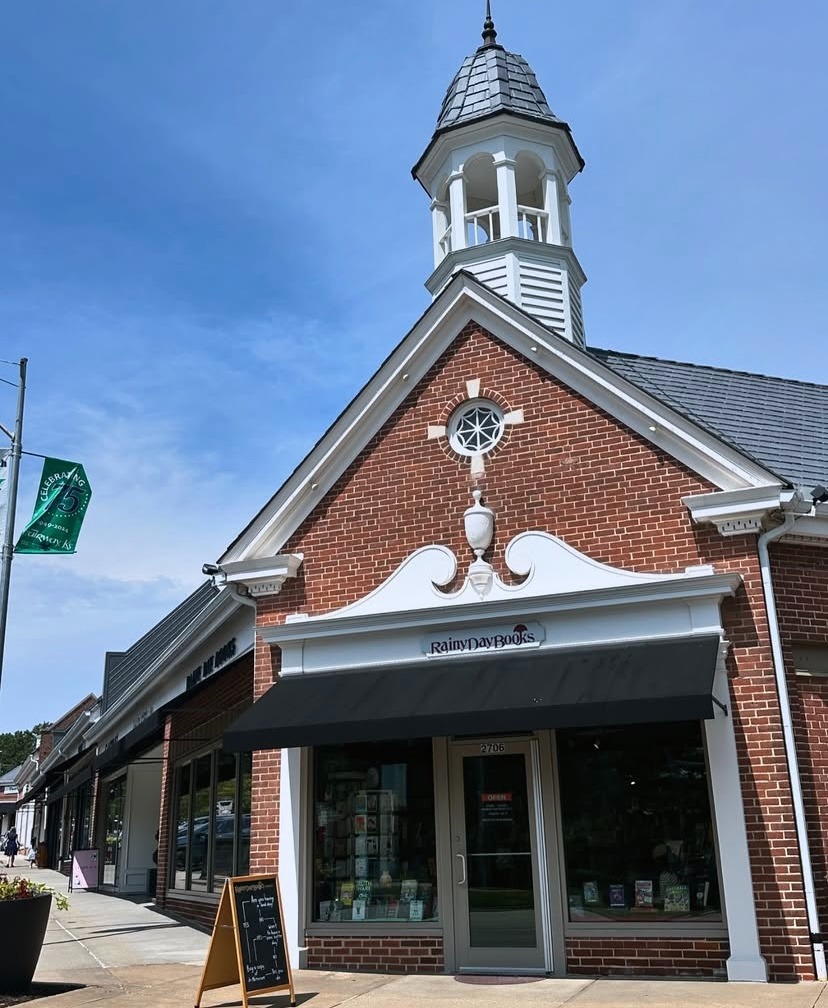
Rainy Day Books (Kansas City, KS)

A fan favorite and a highlight at 2024 AWP-Kansas City, Rainy Day Books is one of the oldest independent bookstores in the region. It began in the 1970s as a used bookstore with a unique paperback exchange, enabling customers to trade books for credit. Now, Rainy Day Books is deeply involved in the local community, hosts hundreds of author events each year, and promotes literacy as a cultural hub for readers of Kansas City. They partnered with Lead to Read KC to host the “Story by Story: KC Book Fair,” celebrated queer AWP at Missie B’s, and recently hosted a “Potions & Devotions Tour.” 

Under the Umbrella (Salt Lake City, UT)

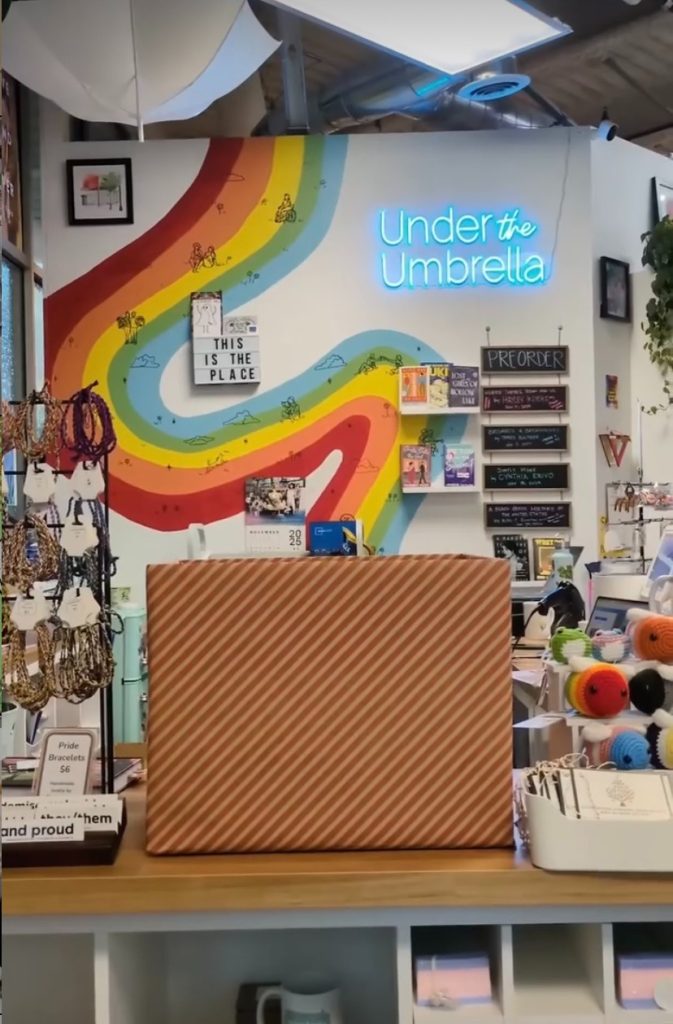
Under the Umbrella is a proud safe space for queer folks of all ages to congregate: queer authors, queer stories, queer perspectives. “No other bookstore in the area specifically caters to the queer community,” writes owner Katlyn Mahoney. The indie, which includes a café, also features small presses and self-published writers. Under the Umbrella, prioritizes, “the stories of Black queers—especially Black transgender women—Indigenous queers, and other queers of color, disabled queers, fat queers, two-spirit people, intersex people, asexual and aromatic people, incarcerated queer people, queer sex workers, and other identities within the queer community that experience further marginalization, even within the queer community.” They offer HRT support meetings, skill building workshops, pop-up markets for local artisans, and Queer Speed Date events. For their contributions, they received the ACLU Torch of Freedom Award in 2024 and the 2026 University of Utah Pinnacle of Pride Award.

Women & Children First (Chicago, IL)

Women & Children First celebrates over 45 years of inclusive feminist bookselling in Chicago. They carry 20,000 books that center marginalized voices, facilitating programming and in-kind donations to offer safe, inclusive spaces for the Windy City. They have ongoing partnerships with Chicago Books to Women in Prison, Liberation Library, and Chicago Abortion Fund. Favorite community events include Weekly Morning Storytime, Banned Books Book Club, and a regular array of visiting author events. They’ve even hosted Hot Potato Hearts, a speed dating event that pairs people randomly (some would say “adventurously”) regardless of gender or sexual orientation. Find your personalized reading list for talking to teens, abolishing ICE, or freeing Palestine.

BookWoman (Austin, TX) 

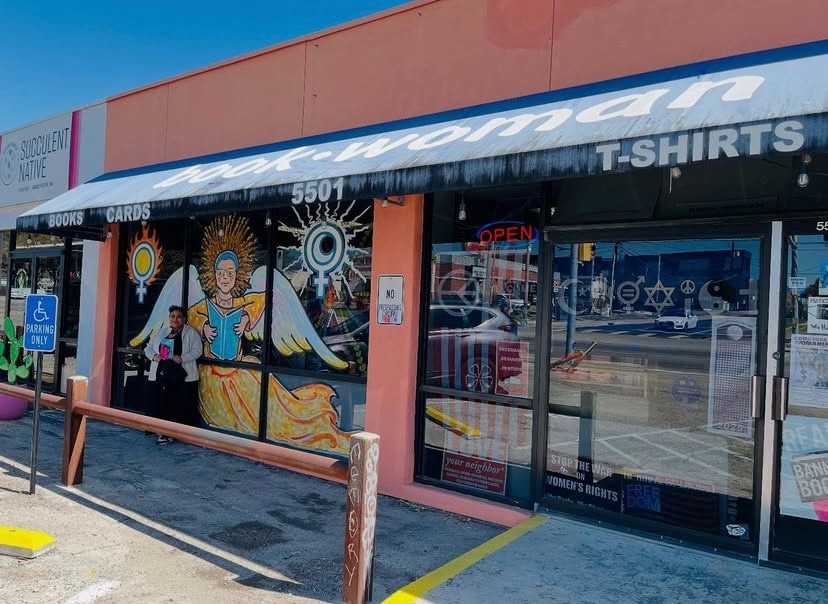
This historic institution is one of the oldest feminist bookstores in the United States. BookWoman was founded in 1975 and is celebrating 50 years of continued community outreach. Originally launched as a women’s collective (The Common Woman Bookstore), it focuses on feminist and LGBTQ+ literature with an emphasis on intersectionality. There are regularly scheduled readings, open mics, poetry evenings, and speakers. BookWoman creates a community space for learning, discussion, and activism. In 2026, this indie is often described as a safe haven and sanctuary bookstore in a red state.

The Nonbinarian Bookstore (Brooklyn, NY)

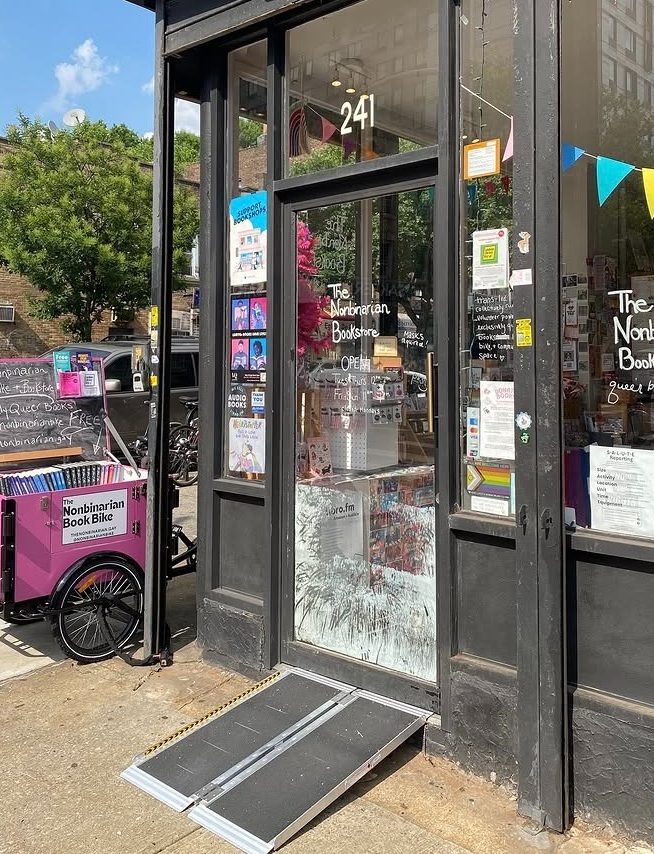
The Nonbinarian hot pink book bike can often be spotted throughout Brookly, distributing free books to readers in “book deserts” throughout the city. Part of the post-2020 explosion of queer indie bookstores in NYC, The Nonbinarian centers trans, enby, and queer voices with a focus on visibility and community-building. Established in 2022 as a mobile mutual-aid initiative, it has evolved into a queer social hub and community space in Crown Heights. The Nonbinarian is a trans, disabled, Asian-owned collective that is volunteer powered, exclusively queer, and carries new, used, and free books, as well as gifts, and resources. Upcoming events include: Quiet Queers (Silent!) Reading Hour, a T4T Clothing Swap, and bike pop-ups at the Brooklyn Public Library.

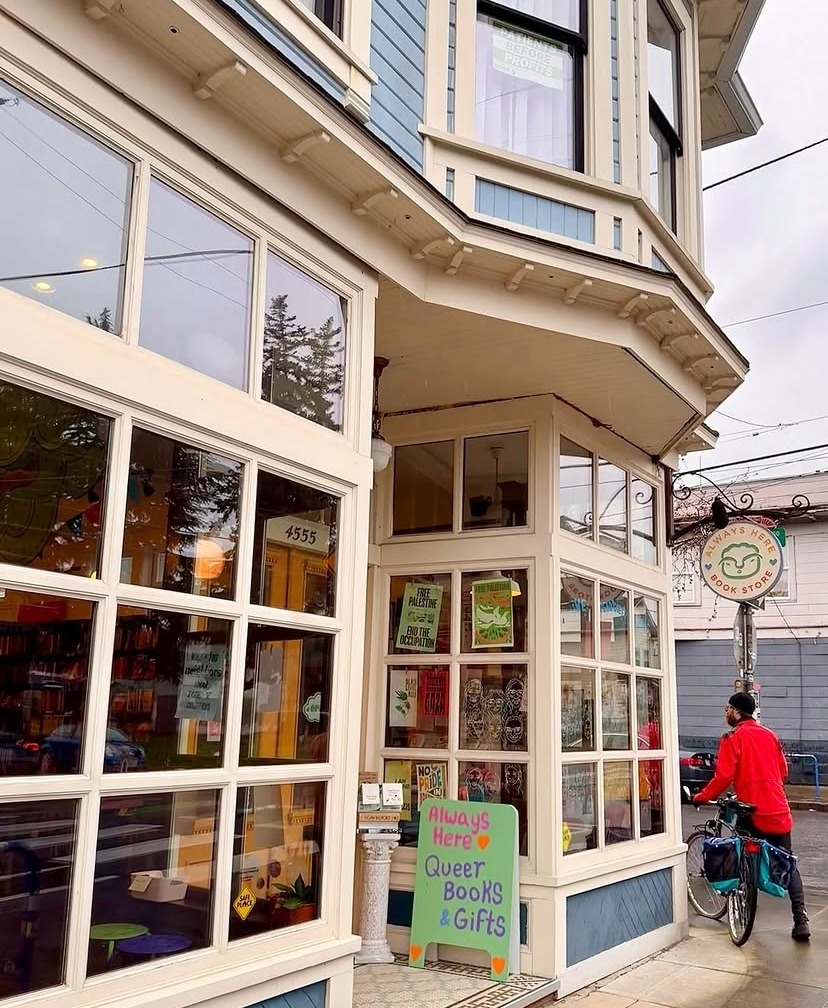
Always Here Bookstore (Portland, OR) 

This community-rooted, queer bookstore is a recent addition to the indie landscape. Thanks to community support, the pop-up recently moved into a physical storefront in Portland’s North Williams area and has been creating space for queer gathering. The indie features books with intersectional social justice themes and curates for a diverse readership, including queer and trans people, Latinx communities, and neurodivergent readers. Always Here Bookstore identifies as a living queer community, and they host community gatherings, queer book swaps, and member social hours. 

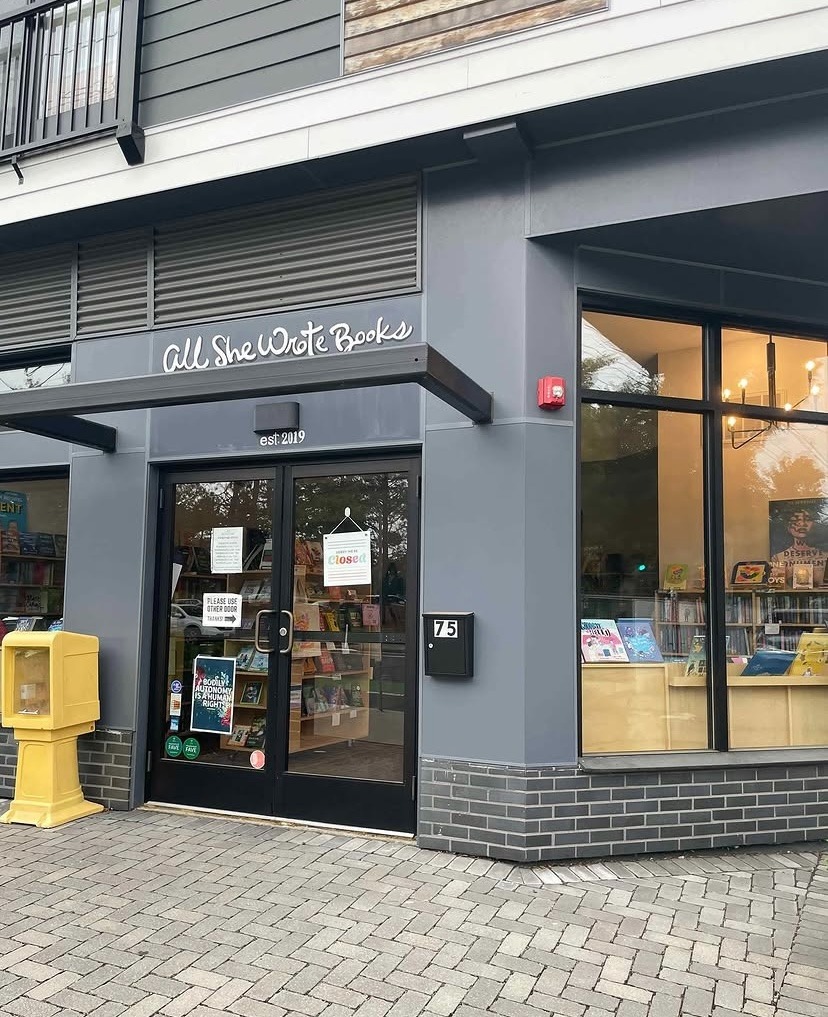
All She Wrote Books (Somerville, MA) 

Another newer addition, All She Wrote Books is an inclusive queer feminist bookstore that centers socially conscious nonfiction and fiction. Its mission as “an intersectional, inclusive feminist and queer bookstore” is to “support, celebrate, and amplify underrepresented voices through a thoughtfully curated selection of books spanning across all genres.” All She Wrote Books hosts queer-friendly book clubs and community gatherings, facilitates trans and nonbinary voices programming, and offers “Friends of Ruby” memberships for local readers. Upcoming events include a Bookworm Comedy Show, Gentle Yoga for Booklovers, and Queer Literary Speed Dating. After starting as a three-shelf Ikea cart, they’re now at their new brick-and-mortar location in Somerville! 

Emma Copley Eisenberg Is Tired of the Plot Police

I first encountered Emma Copley Eisenberg’s work through this wonderful essay from EL contributor Elizabeth Endicott. In it, Endicott chronicles her experience delving into Eisenberg’s Housemates as a plus-size reader; she moves from apprehension to relief to recognition, highlighting Eisenberg’s ability to render fatness without the shadow of authorial judgment. Deeply imagined and embodied, Eisenberg’s work captures a nuanced reality; she doesn’t shy away from the systemic biases and discrimination that her protagonist Leah faces, but at its core, Housemates is also a love story; she reminds us that joy and connection are universal, fundamentally human experiences, and that they’re made possible by the very complex bodies we occupy. 

Eisenberg’s newest story collection, Fat Swim, carries forth this ethos across 10 luminous, visceral stories. Within its pages, the body acts as a setting where desire, hunger, and loss can transform. 

I was honored to get to speak with Eisenberg about pushing through writer’s block, bad film adaptations, and the joys of trampolining from one sentence to the next.

Lennie Roeber-Tsiongas
Editorial Intern


1. Describe your publication week in a six-word story.

Emma Copley Eisenberg: Getting lost on I-95 on my way to Philly bookstores.

2. What book should everyone read growing up?

ECE: Fairytales. Specifically, Princess Furball. It’s a lesser known retelling of a Grimm’s story. Also In the Night Kitchen, and the Alanna books by Tamora Pierce. And Anne of Green Gables. Oh, and Tuck Everlasting. I just reread and it mostly holds up except for the weird age gap dynamic.

3. Write alone or in community?

ECE: Both, I have to say. It’s very bisexual of me. I need to be alone for the generative parts and the focus, but one can’t really write alone. You need people to walk the path with you.

4. How do you start from scratch?

ECE: I have been getting up early to write, which doesn’t come naturally to me. But there’s something about that dawn hour, where night brain and daytime brain are both online at the same time, that helps me. It makes sense because dawn and dusk are when people pray, too. Also playing, reading, swimming, and not being too precious about anything is important in the scratch phrase. And sometimes writing longhand with a fun pen.

5. Three presses you’ll read anything from:

ECE: Graywolf. Dutton if they’re edited by Pilar Garcia Brown. McSweeney’s.

6. If you were a novel what novel would you be?

ECE: It feels aspirational, but I’d be The Heart Is a Lonely Hunter by Carson McCullers because it has so many different points of view and weird risks and it’s sad but also funny.

7. Describe your ideal writing day.

ECE: Similar to Ursula Le Guin’s ideal writing day. Wake up early for dawn brain, coffee, breakfast (lots of it), more writing, a walk, lunch, a movie or doing something out in the world, reading, then dinner, then bed early with the cats. 

8. What’s a piece of writing advice you never want to hear again?

ECE: I never want to hear that something “doesn’t have a plot” or to “give it more plot” because I don’t think people really know what that means. A lot of books that feel really propulsive have a plot, they just aren’t incident-based. I had a student at Temple say “I think what people mean when they say something doesn’t have a plot is that they don’t care about it.” Or they don’t care about the character. And I think that’s true. If you care about the character or what’s going on then the incident becomes sort of extraneous.

9. What’s a piece of writing advice you think everyone needs to hear?

ECE: Writing gets done sentence by sentence. 

10. Realism or surrealism?

ECE: Impossible bind. I’m more comfortable in realism. That’s the tradition I was raised reading. But realism is also surreal and weird and strange. Kelly Link and Hilary Leichter are writers who show us that all the time. There’s one story in Fat Swim that has non-realist elements and it was hard but we did our best.

11. Favorite and least favorite film adaptation of a book:

ECE: Well speaking of, I hate the Tuck Everlasting adaptation with Rory Gilmore. Makes it so boring when it’s really an open, soulful book. The Sophie’s Choice movie is also really bad. For best adaptation . . . maybe The Devil Wears Prada? I’ve never read the book and I don’t want to, but I will watch The Devil Wear Prada when I’m sick 4,000 times.

12. Edit as you go or shitty first draft?

ECE: Shitty first draft. I don’t understand the edit as you go people. That would break me.

13. Best advice for pushing through writer’s block?

ECE: This is stolen from Alexander Chee so credit him. He says there’s no such thing as writer’s block, there’s only unmade decisions and shame, which I think is basically true. When you’re blocked you’re avoiding making a decision about the draft, or you’re feeling shame that you haven’t written. Easier said than done.

14. What’s your relationship to being edited?

ECE: Into it. Very into it. Good editors are such a gift, and they help you see what you’re doing more clearly. The editor for my first book also changed the structure of the book in a way that helped me understand what I was trying to do. I wish that editors had more time and space to edit in today’s landscape. Huge appreciation to editors, they’re doing the Lord’s work.

15. Write every day or write when inspired?

ECE: Everyone’s life is different, and I think either can work. I sometimes do the latter, but I would say I’m most productive when I’m doing the former. Conditioning your brain to be creative is like a muscle, it does strengthen and start to come online more consistently if you can be consistent with it. Maybe a better way to say that is write around the same time and around the same place as much as you can.

16. What other art forms and literary genres inspire you?

ECE: Collage, ceramics, and film. Films have helped me figure out the shape of what I want to write more than once. For Housemates, the quest was to make it as good as Thelma and Louise.

17. The writer who made you want to write:

ECE: Carson McCullers and Raymond Carver when I was in high school. And James Baldwin.

18. How do you know when you’ve reached the end?

ECE: I think there’s an intuitive body sense where I’m just like, this is the furthest I can take this thing. There’s this concept in sociology called saturation where you ask the same question of different people and you start to get the same answer over and over again. That’s how I feel when I’m asking my characters a question. My first book was nonfiction, and I was asking real people questions, and you start to hear what you’ve already guessed or imagined over and over.

19. Describe your writing space.

ECE: I’m very lucky to have my own little room now. All my books in one place. I do have my little woo-woo objects (tarot cards, James Baldwin candle, some little rocks). And I also have a really big fat pink chair now.

20. How do you keep your favorite writers close to you?

ECE: I have a tattoo of Grace Paley’s face on my arm. I’ll leave it at that.

21. What’s the last indie bookstore you went to?

ECE: There’s a little used bookstore that just opened in my neighborhood in Philly called Little Yenta Books. And then in Baltimore, I went to Greedy Reads when I was there for AWP. 

22. What does evolving as a writer mean to you?

ECE: It’s seeing what I want to do more clearly and then knowing if I’m doing it or not.

23. Outside of literature, what are you obsessed with?

ECE: I got really into the Winter Olympics figure skating. Alysa Liu and also the evil French ice dancing team. I used to be pretty obsessed with making my own ice cream. I’m pretty into knitting and making babushka triangle scarves for my friends now. And seltzer, my favorite brand is Polar.

My Mother Lived and Died in a Polluted Ecotone

A Mother and Daughter Are An Edge by Sarah Giragosian

“A mother and daughter are an edge. Edges are ecotones, transitional zones, places of danger or opportunity.”
– Terry Tempest Williams, When Women Were Birds

When my mother died, I was handed some pamphlets about grief, its permutations and stages. What to expect. What falls within the range of normal, although what I could have used was a field guide. Suddenly everything around me, the animals and plants, people and objects, changed utterly. I had changed. The birds had changed. A hummingbird was no longer just a hummingbird. A hummingbird could be a decoy for my mother. The mother deer that feeds from my garden could be a proxy for her. My brain craved my mother, needed to see her or at least see the world as she once did. Its vibrations, bundles of energy and meanings that once lit her up did the same to me. I took an interest in the things that once riveted her, and I needed to inhabit her perceptual world, her Umwelt. When I missed her most, I imagined her sitting next to me, inhabiting the same space, looking out at the same view.

Grief cracked me open, rewired my brain, transformed me. Now, I’m filled with questions.

My mother died of esophageal cancer. I have all sorts of questions about what caused it. Her systemic scleroderma is a likely contender (an autoimmune disease that tightens the skin and organs), but there are other dark-horse candidates: the toxin chromium-6 that is found in her town’s drinking water, her apartment’s proximity to a nuclear power plant, and the industrial park abutting her old house that was once a Superfund site. How clean can a former Superfund site really be? A federal review tells me: “. . . the EPA is satisfied that the site poses no threat to human health and the environment if the property is reused for commercial/industrial use.” But I don’t trust the EPA anymore, which allows fracking companies to steer clear of regulation. Most of the time I don’t really know what I’m drinking when I fill my glass from the tap.

To townies and tourists, my mother resided in a coveted place, a coastal town in Massachusetts. But I’ve pored over the cancer cluster maps, and there’s a high incidence of cancer right where she lived. She lived and died in a polluted ecotone, a place by the sea that in the summer is flooded by tourists.

There are territories of body and place that leave me with more questions than answers.

In her monumental work of conservation Silent Spring, Rachel Carson writes, “There is an ecology of the world within our bodies. In this unseen world minute causes produce mighty effects . . . To discover the agent of disease and death depends on a patient piecing together of many seemingly distinct and unrelated facts.” Carson would later die of breast cancer, but before that she was constructing a biochemical map between the complex ecosystem of her body and her region. In my own way, I’m doing the same, charting my mother’s inner and outer ecologies. There are territories of body and place that leave me with more questions than answers. Climate change and the polycrisis of our times upend ecological interactions, threaten biological health, increase mortality, undermine hard-won resilience.


Ecotones are sites of transition. A forest clearing is an ecotone, as is the littoral zone of a lake, the saturated swale of the marshland. The word’s etymology comes from the Greek roots “oikos” (home) and “tonus” (tension). It is a meeting zone, a space of interchange and energy. Think of it as akin to a contact zone, a bordering habitat rather than a line, a place where ecosystems converge. For Rob Nixon, ecotones “may . . . open up new configurations of possibility (and for some species, introduce new threats) as the transitional areas create so-called edge effects.”   

Ecologists have found high species diversity in ecotones where rich habitats sustain different kinds of life. Birds frequent the edges of land and water, while the edge between seas and rivers have many fish species. Some animals are restricted to the edges of ecotones while others travel between habitats. Many migrate across ecotones. Some creatures thrive in them. Others may meet their end. Climate change has introduced new threats. Drought, for example, may exceed a plant’s ability to withstand a water shortage. A shortage of rainfall can limit flower and fruit production, which in turn can have system-wide impacts on wildlife and people. This is only the tip of the proverbial iceberg.

The ecotones my mother and I shared were the placenta, the umbilical cord, our cells and DNA. Then, later: the ecotone of her milk, which included vitamins and minerals, but also the pollutants and pesticides and heavy metals in my mother’s system, in many mothers’ systems in first world countries these days. Those tender hydraulics between mother and child are marked with uncertainty. An ecotone is a “place of danger and opportunity.” A site of slippage and risk. In that fraught zone, my mother and I were knitted together from the get-go. Ours was a geometry of leaning in, of giving and receiving. Another word for this might be love.

Grief, too, is an ecotone: I’m half in, half out of this world. A sense of unreality pads alongside me. Weather passes through me, unseen, unfelt. The seasons too. My mind wanders off somewhere again. A serious question: Where did I go? Send out a search party; take me home.

Branching out of my heart are all sorts of versions of me: the one who wants to float off on a barge down the river, destined for who-knows-where. The one who daredevils too rapidly on the highway. The one who wants to call up my mother on the telephone and tell her about the lifetime of things I have experienced since her death. I did hardly anything in the months after my mother’s death. But emotionally speaking, I was trying to make a go of it on a dark planet with no vegetation or water, with no soul save me.  


I’m seeking out the ecotone of the page, where there is potential interchange, perhaps even a sort of dialogue that I might enter with my mother. I’m testing out the contours of a spiritual field where we might transfer energy between us. Energy, they say, can’t be destroyed, just transformed from one form to another. I imagine her voice, what would she say. I know my mother would tell me that, whether I’m wounded or not, I have more life to live. To get on with the business of being. I know this, yet I want to see her again, disheveled but radiant with life, her jeans garden-soiled, her hair flung back from her face. Her friends gravitated to her warmth, her irreverence and integrity. Once, her laugh and smile were all I needed to recalibrate myself, to remember the small wonders around me I missed: butterfly bush, coneflower, the bright orange shock of a newt in the soil. Look, Sarah, look! I miss that voice, loud and buoyant, ripe with awe. My mother was most alive at the ocean, in a forest or garden. Before the chemo, my mother was vibrant; after, it was like she curled in on herself.

Grief feeds off my body from the inside out. It feasts on my doubts: Did I do everything in my power to help my mother during the eight months her health declined? What if there was more I could have done? 

Cue her voice, cue her wonder. I can hear her in my memories, but I’m fearful of what my mind is capable of undoing. I would give a garden’s worth of bird songs to hear her voice again. I want it to be more than an echo in my mind. I suspect that all my future writing will be made in pursuit of her voice. It is inside of me now; I have to excavate it.


In his book Game Management, the ecologist Aldo Leopold identified what he termed the “law of interspersion,” noting that animals flourish in ecotones where they can simultaneously benefit from ecosystems. In an ecotone, they can flourish as they take advantage of the vegetation and abundance of prey. But abundant life also offers new opportunities for predators. This space of energy and entanglement, opportunity and danger, is what’s called an edge effect.


I can hear her in my memories, but I’m fearful of what my mind is capable of undoing.

Writing has become an ecotone between my life and her death, a place where I tap the sources of memory and creativity to bring her back. There’s energy in this contact zone. Perhaps we are both trying to communicate with each other. Call this magical thinking (Didion is right: We become magical thinkers when we lose a loved one), but my mother—in whatever form she is now—would want me to feel her steadying presence. Sometimes I feel her presence in the thoughtful stare of a doe or the hummingbird that hovers by the living room window, peeking in, or any of the other creatures (red-tailed hawks, cardinals, chickadees, dragonflies, and monarch butterflies) that I associate with her. Spirit animals, those she sought to draw to her garden. 


My mother’s signs of good fortune have become mine.

The summer my mother died was the summer of hummingbirds. Ruby-throated hummingbirds at the feeder. Ruby-throated hummingbirds whizzing inches past my face. To the Aztecs, hummingbirds were warriors. To Mayans, the sun in disguise. To Emily Dickinson, “A Route of Evanescence.” Perfectly agile and unworldly creatures, which enchanted my mother and filled her with delight. Sometimes I imagine there must be a gap between her world and mine, and she’s scooting them through to send me a reprieve from my sadness. True: It’s hard to sustain sadness when you’ve glimpsed a hummingbird. You have to surrender to their spell.

Hummingbirds are drawn toward ecotones, the edges between meadow and forest where they can feed, breed, and nest. Telegraphing their iridescence, they swoop and turn on a knife point, drinking from our false indigo and columbine, our sugar water in its red bottle. But summer is fading, and I know they will soon return south for the winter. To sustain my cheer, my partner refills their sugar water each time the bottle runs out. In her love of animals and love for me, she is not so different from my mother. 


But can hummingbirds be a substitute for her? Can writing? Can I forage in the margins between life and death until I find a version of myself I can live with? I don’t know. On some days, it’s enough to see a bright flash at the bird feeder. On other days, I rage at the thought anything other than her, proxy or not, could possibly be enough to sustain me. 

I miss the little things: the way she treated strawberries as a delicacy, placed sachets of lavender under her pillow and mine, left treats out for the birds, mailed me greeting cards with photographs of wildlife “just for the hell of it.” She loved the sound of ocean surf and could spend a whole day reading on the beach. She could pass the hours watching old Hitchcock movies with me or exploring a new bookstore. She made the best mushroom soup. The most decadent brownies drizzled with chocolate fudge. I miss calling her on Sundays to tell her about my week.

All our walks from that point had an air of desperation.

My mother was a caretaker at heart and managed a home for developmentally disabled adults. She was fiercely protective of them, but she had a tough side too. She quickly grew frustrated with self-pity or extreme emotion: When I discovered that her cancer was at stage 4 and she was given a year or less to live (she would ultimately have eight months), I cried and cried. Although in my thirties, I wanted her to treat me with kid-gloves, to reassure me. “Knock it off,” she said when she saw my tears. Then she dragged me for a walk along the beach. All our walks from that point had an air of desperation. I think she was trying to teach me how to walk off my grief, how to pay attention to something else, anything other than the pain.  

After she died, I kept finding myself in strange places: at an unfamiliar part of the city, on a street bench too stunned to stand up, or crossing the street against moving traffic. I don’t know how I ended up at any of those places; my feet had their own mind. 

Not the deathbed body, not the graveyard scene, not the paper-thin proxy of icons or the mirage of blessings, but the close-up of her big laugh; that’s all I want.

I crave her momisms, wrapped in material tough as rawhide, but softhearted in intent.

Before she died, I wasn’t aware of what I see now. I see in photographs that she had eyes only for me, forgetting all about the camera lens. How did I never notice this? Every snapshot is another iteration of her breaking into a grin, her eyes crinkling as she peered down at me, while I rolled my eyes. This was part of our act. We were mother and daughter, not terribly far apart in age. She was a single mother. I was her only child. Of course, we loved each other. Of course, we grated upon each other’s last nerve.

She could be slapdash or refined, hysterically funny or annoying. She was playful, which I realize now is a smart way to disarm people, to open them up or—in my case—to provoke a reaction.  

“Mom, do you want to run out to the store with me?”

“Only if I can tease you.”

“Stop it, Mom.”

“Stop it, Mom,” she would parrot back. Inane, but on and on it would go. 

Once her habits grated, like her loud voice or the way she forgot to wash the kitchen counter clean. Now I just want her back. 

I would greet her as a zombie, Edwidge Danticat once said of her desire to see her mother after she died. I get it: I would take my mom back no matter what unholy arts resuscitated her.


I connect ecological trauma with my mother’s death. I pore over Massachusetts cancer data; the graphs tell me that 2017-2021 (the last years that data was collected) in my mother’s region had a higher incidence for esophageal cancer than in previous years. Is it normal for the bereft to search for answers like this? I don’t know. Grief, like my OCD, is a frightful loop. I can’t fully pull myself away from the questions that I can’t answer. They summon me back, even as I write this essay.

I don’t know for sure if the unseen toxicities of the land and water gave my mom cancer or not, but if so, it adds another layer of horror to her death. My mother who stewarded the land, who kept soil and shovels in her car trunk for the next garden she promised to re-design or just spruce up, usually for her work or her sister or a friend. My mother, who never forgot to leave seeds out for the birds.

I don’t feel like I can face the collective traumas of the current moment, ecological and political, without her. I check my body for tumors. I check the news for the latest atrocity. I watch the skies for smog and wildfire.

Sure, in a way the Earth is my mother, but in a much more real sense, my mother is my mother.

I hear silence and wonder why the birds are not singing.


You begin to cherish the moments your stomach unclenches, your muscles slacken, and your throat tastes, no longer, of acid.

If you mapped the home that my mother created for the two of us, it would be full of books and jagged edges where the past could lie in wait around the corner or the summons of the present appeared in the form of a sun-bright day and a couple of walking sticks at the door. We lived in a tiny summer cottage, cold and uninsulated in the winter, on a dirt road not far from the bay. We looked for clams in the summer, frequented ice cream shops, the ocean, and the library all through the year.  

Inside and out, the plants were toothed and full of berries, some sweet, others bright and bitter. All sorts of creatures drifted in through the front door. My mother taught me the names of the flowers in our yard: lady’s slipper, Queen Anne’s lace, dandelions. She showed me which I could pluck, and which I could only look at, like the lady’s slipper, a delicate orchid, which is endangered or threatened in some regions.

She taught me about the secrets of the soil: how to look under logs for rich earth glinting with worms and slugs, when to plant sunflower seeds, how to watch for deer in the morning as they nuzzled their snouts into dew-licked grasses. We took headcounts of the purple beach pea in the dunes and in the spring we left sugar water out for the hummingbirds.

“Look, Sarah, look.” I miss her voice, edged with wonder, exhorting my attention. Maybe a small gesture, but significant for me who is often too much in her head. When you carry unease inside of your body much of the time, you begin to cherish the moments your stomach unclenches, your muscles slacken, and your throat tastes, no longer, of acid. In the forest or garden or bay with her, I was present. I listened to her injunctions to pay attention, to be alive to the world beyond my own worries.

And I miss my mother’s body of knowledge, my favorite body of knowledge, who recognized the calls of most songbirds in the Northeast and taught me to be present to the creatures, plants and little animals around me.

“Go get dirty” she’d urge me, and as a child, I would play in earnest with my friends in the woods, unafraid, unlike some of the other kids, to come home with ripped jeans, skinned knees, or dandelions and violets tangled in my hair.  

My mother furnished our home with bedtime stories and works of art and old jokes, the same ones like touchstones across the span of years. Sometimes we dined on chocolate pudding while winds from the north tried to knock down our door. Roughhewn but welcoming, our home flushed with pink light almost every morning. Cicadas and orange-bright newts roamed its edges. Once upon a time, no mercury or toxins or disease could get past the front door. Once, a mother and daughter counted themselves lucky.

The Deepest Readers Do Not Make the Best Detectives 

Patrick Cottrell’s second novel Afternoon Hours of a Hermit begins with a mysterious envelope delivered in the mail; inside is a childhood photograph of the narrator’s deceased brother, sent just as the fifth anniversary of his suicide approaches. It is the kind of inciting incident that carries all the scaffolding of a detective story—a mystery to be solved, a past event reopened under the promise of yielding not just new information but some deeper understanding. However, this is not your typical detective novel: Cottrell resists the genre’s usual pleasures of discovery and resolution; questions are left unanswered, and the truth is partial or ambiguous, if it’s uncovered at all. 

The novel follows writer Dan Moran as he returns to his childhood home in the Midwest in search of answers about the circumstances of his brother’s life and suicide. His family is surprised to see him, even as they prepare a memorial for his brother—one that Dan was not invited to attend. Unfazed, or perhaps simply accustomed to his ostracism as a trans Asian adoptee, Dan forges ahead with his investigation. From the outset, it is clear that Dan is spectacularly ill-suited to the task—he misreads clues, follows dead ends, and cannot seem to stay on track. It is important to note that Dan doesn’t simply consider himself a detective, but rather a “metaphysical investigator,” a designation that shifts the terms of the inquiry from facts to interpretation. More than that, the term signals Cottrell’s larger project, which lies not necessarily in arriving at answers but in the act of reading deeply. In both Afternoon Hours of a Hermit and Cottrell’s first novel, Sorry to Disrupt the Peace, there’s a strong extra-literary dimension: Sorry to Disrupt the Peace is filled with direct quotations from well-known authors, and Afternoon Hours of a Hermit similarly weaves in references to writers like Thomas Bernhard and W.G. Sebald. 

Moreover, Cottrell’s characters are marked with bibliophilic tendencies. At one point Dan thinks, “My constant curiosity got in the way of my suicide,” a line that reads as his own but is in fact a direct quotation from Bernhard’s The Loser. Dan doesn’t simply think about his life; he thinks through literature. It is no surprise that a reader like Dan would be drawn to detective work—they are engaged in similar pursuits, trying to locate truth, to distinguish between what one thinks and what one knows. In this way, Dan Moran’s investigation stages a kind of deep reading of his brother, yes, but also of himself, probing the gap between reality and how one is perceived. This foregrounds a central tension of the novel form—and of reading itself: the desire to enter another consciousness, and the impossibility of ever fully doing so. If Afternoon Hours of a Hermit reveals anything, it is that truly knowing another person is the greatest mystery of all.

Patrick and I spent a few weeks exchanging emails about detective stories, metafictional doubling, lessons drawn from Thomas Bernhard, and more.


Evander James Reyes: This novel leans into the detective/noir genre, but Dan Moran is—there’s no other way to say this—a terrible detective! What draws you to the detective story and how are you interested in playing with/against expectations?

Patrick Cottrell: The word that comes to mind for me is atmosphere. Rain, fog, cars. I grew up in Milwaukee and I don’t remember many sunny days. I wanted to conjure the mystery/noir atmosphere which means driving around at night, spying on people, questioning them, showing up at places you’re not supposed to, but I didn’t want to be beholden to managing all the plot conventions. The noir genre seems to be about justice so there’s some added propulsion on a narrative level, but that’s also where the humor comes in. Sometimes the most justice-inclined people are also the most delusional and the least self-aware. Dan Moran believes he is attempting to restore justice by writing his psychological thriller, but in reality, what is he doing? 

Frustration and humor go hand in hand.

For me the ending was the most important part of the book and I really struggled with it for a long time. I had to do a major rewrite that involved deleting multiple chapters. When I landed on this ending, I felt a huge sense of relief because I believe it works. I don’t think it answers things in a tidy, traditional mystery sense, but I deeply believe in it on an emotional and gut level. 

EJR: Did you have any detective stories in mind while you were drafting this book? 

PC: I’m indebted to the blurbs in Olga Tokarczuk’s Drive Your Plow Over the Bones of the Dead. I hadn’t read it at the time, but I read the blurbs and something about them made me want to write the book they were describing: private, existential, a fairy tale, philosophical. I tried to imagine what that book could be. The blurbs were actually inspiring which is weird to say. Drive Your Plow is an off-kilter mystery. 

Another detective influence is Bennett Sim’s story “The Postcard.” I love how he refuses to explain the circumstances of what his narrator is doing, the set-up is fairly vague and mysterious in a purposeful, ominous way. Of course, Kobo Abe was a master at refusing to explain things. It can be frustrating for the reader, but there’s something productive about the frustration. Marie NDiaye’s My Heart Hemmed In is not a traditional detective story, but the protagonist is trying to find out why she and her husband have been (seemingly overnight) shunned by their community. It’s a psychological horror novel. The protagonist sets off on an investigation of sorts through her city while her husband is bed-ridden with a festering wound. NDiaye’s imagination is boundless.

EJR: Dan Moran’s decisions often feel frustrating, even self-sabotaging, but they also seem to drive the novel forward. What do you think about frustration as an engine in the book?

PC: Frustration is always part of the mechanics of plot: someone wants something and they face obstacles or they get in their own way and this pushes the story forward. I’m never thinking about plot when I’m writing though. I am mostly thinking about humor, or whatever’s funny to me on the page (I honestly don’t know what’s funny to other people). Frustration and humor go hand in hand. If you’re not a particularly plot-driven writer, you have to find other ways and means to move the book forward. Claire-Louise Bennett is good at that. I always want to stay in her world even though she’s never beholden to plot. She conjures a particular mood or atmosphere via her sometimes-outlandish, embroidered sentences. Caren Beilin does this, too. Sometimes if I’m stuck, I go back to Amina Cain’s description of narrative: “[ . . . ] when objects and characters, and also landscapes, appear together, that is how narrative happens for me.” Amina Cain’s work is always a guiding light.

I see that my book is made up of other books and writers and it seems silly to ignore that fact or avoid it.

EJR: The title Afternoon Hours of a Hermit exists both as the book we’re reading and as a book the narrator abandoned writing—what drew you to this doubling?

PC: I think it was a self-serious conceit that’s supposed to be absurd and funny. The narrator seems to take writing seriously but at the same time erases and abandons what he’s doing, as you’ve rightly pointed out. I enjoy the game within the game, the little corners where you can play around to see what you can get away with. I love doubles, twins, doppelgängers, mirrors, etc. because I feel as if, when I was adopted, I myself was doubled in some way—when I was adopted, it’s almost as if there were two directions my life could have gone and it went one particular way, but then there’s the shadow of other possibilities. And transitioning, there’s another doubling, but not.

EJR: Another doubling: In Afternoon Hours, Dan Moran is the author of your first novel, Sorry to Disrupt the Peace. I find this ontological weirdness really intriguing! It creates a strange loop of interpretation—when I went back to Sorry to Disrupt the Peace, I could only read it through the Dan Moran of Afternoon Hours. The same text exists in two contexts at once. What kind of textual game are you playing with that move?!

PC: I love that! I think that’s really cool and funny. Yeah, it’s a weird meta-fictional game. I wanted to try to establish that the world of this book, Afternoon Hours, is not unfolding in the same world as the first book. When I first started writing this book, I had the idea that the narrator would transition in between books. I had never heard of anyone doing that or exploring that. But, I wanted to do that in an indirect way. So, is the Afternoon Hours narrator the same character in the first book, pre-transition, or a fictional invention of Dan Moran? Again, it’s a hall of mirrors. I like that the books can exist on two different planes of reality. 

Someone asked if this is a sequel or if I simply rewrote my first book with a trans narrator. Absolutely not. But I understand why a person would ask that or think that, I really do: suicide, siblings, Korean adoptees, returning home, detectives, etc. Honestly, I think a lot of what I was thinking about with Dan Moran (as the author of Sorry to Disrupt the Peace) goes back to the fact that my former name will always be tethered to my first book. I wanted to reclaim it with a new name, in a sense.

I also want to put in a good word for McSweeney’s here. Perhaps some of the larger publishers can pulp backstock, reprint copies with a new name, and take the financial loss, but McSweeney’s is a small non-profit organization and they did the right thing and reprinted my book with my name on it. I’ve always felt deeply grateful for them, especially Amanda Uhle and Rita Bullwinkel, both amazing authors. They get it.

ER: What draws you to characters whose relationship to literature is so immersive?

PC: A novel can be a vehicle or container of influence, conversation, and perception. The novel as a form is so capacious. I mostly write to be in conversation with other writers, their traditions, techniques and so on. I spend more time reading than writing. Even though I love writing, I don’t do it every day, but I read every day (for work and for my own purposes). When I was in high school, I didn’t have many friends but I spent a lot of time reading and going to bookstores. Friday nights, two friends and I would go to Barnes and Noble or Half Price Books and browse and sit on the floor and read. So to answer your question, I guess I see that my book is made up of other books and writers and it seems silly to ignore that fact or avoid it. I feel hopeful that this acknowledgement adds depth to the narrative and some minor excitement. When I read Bolaño, I’m always excited to read the writers he mentions. I suppose these mentions of other writers also situate my book in the real world, half-in, half-out.

Writing doesn’t get easier; I think it gets harder because you expect it to get easier the more you do it, but it actually doesn’t.

ER: What is your relationship to Thomas Bernhard? I notice certain stylistic echoes—repetition, the constant returning to earlier thoughts and images, which take on different valences as the novel unfolds. At the same time, this novel doesn’t read to me as a strictly “Bernhardian” rant—how do you see your work in relation to his, and where do you feel it diverges?

PC: I’ve read some of the writers who mimic his voice on a syntactical level and I really enjoy those books. But . . . that’s not really what I’m trying to do at all. I think what Bernhard offers me (as a writer) is permission to sidestep descriptions of physical movement and descriptions of people’s physical appearances, which I’ve always had trouble with. A character can spend pages upon pages physically static but Bernhard creates a mood and atmosphere that’s addictive, so as a reader I don’t care if the character is moving through the world or not. My greatest affinity with him is a way of viewing the world. You understand that at their most basic, people can be incredibly grotesque, selfish, small-minded, and cruel. And the world continues to become more absurd by the day. And yet, there’s compassion in his books, they’re not heartless. To be Bernhardian, you have to have an eye (and ear) for absurdity. He is truly a very comic writer. His sense of humor holds up, it’s not dated at all. About divergence, that’s an interesting question. I might be more aligned with the detective/noir genre although The Lime Works could be considered a crime novel, I guess. I could talk about him a lot. Once you know his tricks and techniques, you can spot his influence everywhere.

EJR: It’s been about eight years since Sorry to Disrupt the Peace—how did writing Afternoon Hours feel different this time around?

PC: It took a lot longer. I’m older and slow. I felt blocked for a while because I needed things in my personal life to settle down. During that time, I would write little stories here and there and interview other writers. Writing doesn’t get easier; I think it gets harder because you expect it to get easier the more you do it, but it actually doesn’t, at least not for me. The only time I feel writing is relatively easy is when I’m working on a really short story, and that’s because my short stories are so short, they’re probably closer to prose poems.

This will sound weird but I felt at peace with taking a long time between books. I didn’t want to write a book just for the sake of writing it and trying to get it published. Not everything has to be published, not everything needs to turn into “a book.” 

All of this is to say, I’m not a very strategic writer, I’m almost pure intuition. With my first book, I felt very anxious while writing. What felt different this time was a sense of enchantment. I wanted to be submerged in something weird and uncanny, and I felt that while writing this. I didn’t feel as anxious. Once I knew what I wanted to write about and the particular angle I wanted to explore, writing the book became challenging in a pleasurable way. 

The Fragile Pride of the Displaced New Englander

Away in Tampa

I was there in the cheap seats when the man with Boston 
on his back tackled the giant bug. A shaded skyline that enfolded

his shoulders, revealed when he frenzied his shirt over his head
after Nathan Horton scored in the second—the Ontarian

dispatching the puck so absolutely the net was compelled
to take it in. As if to make something belong, you hack hard as you can.

From the terrace level I cheered too—not for the goal but to make
myself known. Displaced New Englanders never stop needing

to tell you where they’re from. The bug was from Tampa—a woman
named Kelly in a 10-foot foam exoskeleton who silly-stringed a man

when his team was down and away from home. So fervent for a city
he needled it under his skin. As security walked him out, he spiked

a finger in her face—not Kelly’s but the bug’s, with the unwatching
eyes—and snarled as the crowd cheered his ejection. Hockey

gets violent. Players brawl. The refs allow it, the us-and-them-ing,
and we take it for camaraderie: the refs, and the fans, and even me,

indifferent to the game but not the need. Even Kelly, though it cost her
the job. Now she lives in Chicago, custom-crafting mascot costumes

designed to ride light on one's frame, and all machine washable.
Horton eventually got traded to Toronto, never leaving

the injured list, but I hope Canada consoled him. The Bruins took
their loss and headed north, same as we would later that year,

in a U-Haul heavy with everything. The tattooed man lives forever
in a video online. In my memory, I’m right across the aisle, close enough

to hear him scream Stanley Cup into the bug’s meshed mouth.
But I’ve watched the clip a dozen times and I’m nowhere to be found.

Self-Portrait with Vermont Forge’s Heirloom Weeder

that I bought online one night, unable to sleep
and again intent on wresting order
from the mess. On uprooting
clover—even the four-leaf. I don’t believe

in luck, maybe because I’ve mostly had it. I do
believe in knuckling down.
Yesterday, I potted the sprouted pit of a stone
fruit I pulled from the compost.

I’ll overwinter it in the basement
where I can fret about its chances every time
I run on the treadmill.
Exercise is supposed to be good for sleep.

And lavender, though I cut mine back
too hard and it’s not pulling
through. I wish the garden gave me more
time to make good. Five months if I’m lucky—

not that luck exists. Episcopalians
have prayers for the Natural Order,
praising the God who fills all living things
with plenteousness

and I consider my plenty and if I’d make a good
Episcopalian and what else might be available
at Vermont Forge,
what other instruments they make

that could help me. Because in order
to endure, clover can’t be anything
but persistent—
like the faithful, reciting the words of St. Francis,

who is said to have left his garden
wild at the edges and who begged of his God:
Make me an instrument
of peace.

7 Novels That Let India’s Smaller Towns Shine

Small towns and cities mean different things to different people. To a big-city dweller visiting for the weekend, it can be a place to lose—or find—oneself; a place to rejuvenate and invigorate. For someone who hails from a small town, it can mean getting in touch with one’s roots. To those who inhabit these spaces permanently, they signify something still more different. A small town might mean warmth and safety, but it can just as easily be a stifling presence to escape.  

Whatever their effect, there’s no doubt that these in-between spaces make perfect breeding ground for stories. The term “mofussil,” used for places outside the major metropolitan cities in India, expresses the intricacies of these locations perfectly. These mofussil spaces can be small towns where everyone knows everyone’s business, where anonymity is impossible and the bonds of community are still strong. On the other hand, it can also refer to the tier-2and tier-3 cities—once smaller, they now sprawl in all directions, rapidly re-inventing themselves. None of these spaces are silent backgrounds. They are active presences that shape the lives and histories of their people, particularly in a country like India. Perhaps this is why stories set away from the major Indian cities are becoming popular with global audiences. The latest example of this subtle shift is the success of the film Homebound, which was on the shortlist for Best International Feature Film at the 2026 Oscars.

The following seven novels are set in these twilight places spread across the length and breadth of the country. Whether it’s the Himalayas looming in the background or the sea on the edge of the town, a place in the terai or a dusty town hard to find on the map—these places make for stories worth telling, sometimes acting as catalysts, sometimes as accomplices.

English, August by Upamanyu Chatterjee

Upamanyu Chatterjee’s English, August is the story of Agastya Sen, who has been posted to Madna after joining the elite civil service. This hot, dusty town is far removed from Kolkata and Delhi, where Agastya has spent most of his life, and the contrast between his life so far and the life he is expected to lead in this outpost lies at the center of this darkly humorous novel. Chatterjee brings the quintessential small town of the ’80s to life through descriptions of slow-moving bureaucracy and the portrait of a place where cattle camp in the corridors of government offices and the walls of buildings are splotched “maroon with paan spittle.” As Agastya’s existential crisis intensifies, Madna refuses to stay in the background, gradually becoming the catalyst to his struggles and driving the novel towards its conclusion.

The Inheritance of Loss by Kiran Desai

Kiran Desai’s novel moves between New York and Kalimpong, a small town in the Eastern Himalayan region, weaving the stories of multiple characters. There’s a retired, Cambridge-educated judge clinging to colonial ways; his granddaughter, Sai; and their cook’s son, Biju, an undocumented immigrant struggling in New York. The action unfolds during a tumultuous period in the region’s history as the Nepali-speaking majority demands its own state, turning the quiet, misty town into a “ghost town.” With the mighty Kanchenjunga looming over its treacherous terrain, a sharp class divide and political tensions on the rise, Kalimpong becomes an active presence shaping the trajectory of its characters’ lives.

The Small-Town Sea by Anees Salim

Set in an unnamed small town where the sea is a living, breathing presence, The Small-Town Sea is narrated by an unnamed 13-year-old boy. The boy has moved to this “small, depressing town” from a “big, overcrowded city” to fulfil the wish of his dying father. This mofussil town thus becomes the space where he must draw the map of his many griefs, including the life he has left behind. Written in sparse prose in the form of a letter addressed to a literary agent who had rejected his father’s manuscripts, The Small-Town Sea captures the claustrophobic feeling of growing up surrounded by the anxieties of childhood.

Lunatic in My Head by Anjum Hasan

Hasan’s Lunatic in My Head is set in ’90s Shillong and tells the story of three characters who live most of their lives in their heads. Eight-year-old Sophie Das, aspiring civil servant Aman Moondy, and college lecturer Firdaus Ansari are all “dkhars”—outsiders—whose identities become closely intertwined with their feelings for their city. Shillong, with its hilly terrain and rain-soaked streets where “pine trees dripped slow tears,” charms while also making the characters long to leave it all behind. That push-and-pull is at the heart of this novel in which nothing grand happens, nevertheless offering insight into a space that is irrevocably tangled with the lives of the people who inhabit it.

The Courtesan, Her Lover and I by Tarana Husain Khan

The Courtesan, Her Lover and I is set in Rampur and narrates the story of Rukmini, who returns to her hometown with her husband after a few years in Dubai. Unhappy with her teaching, she almost unwillingly begins researching the cultural history of Rampur, which leads her to the nineteenth century courtesan Munni Bai Hijab, a poet herself and muse of the famous Urdu poet Dagh Dehlvi. As we move in time, Rampur stays in the background as a powerful force. It’s a city in flux, a city where “the circle of life is transcribed within the mohallas,” but which is also turning into a “smart city” even as its men—however well-meaning—tend to define the trajectory of a woman’s ambition. This in-betweenness shapes the life of Rukmini, weaving Rampur closely into the stories of both women.

Alipura by Gyan Chaturvedi, translated by Salim Yusufji

Gyan Chaturvedi’s Alipura is set in the Hindi heartland of the late 1960s. The novel takes readers to a typical village to meet the Dube family, who are low on money but high on dreams and struggling to fulfill their ambitions, however small. Chaturvedi uses humor and satire to bring out the bleak realities of life in a small village riddled with casteism, corruption, outdated beliefs, and a deeply patriarchal mindset. Alipura is a place where women are supposed to stay away from cosmetics because they tend to bring “dishonour to the family” while masculinity and muscle-power go hand-in-hand. A site of colorful characters with bleak futures, Alipura defines as well as confines its characters. It is a place where dreamers thrive but dreams refuse to come true.

The Folded Earth by Anuradha Roy

Set in Ranikhet, a small town in the foothills of Northern Himalayas, The Folded Earth is the story of Maya, a young widow. She has come in search of sanctuary, and The Folded Earth shows a small town becoming a safe haven. At the same time, it reveals the fragility of such peace and tranquillity when faced with powerful local forces that thrive on conflict. Roy gives local color in descriptions of this charming town as well as through characters like the aristocratic Diwan Sahib and the young Charu—people who can only be found in India’s mofussils. Never in a hurry to reach its destination, The Folded Earth moves at a languid pace, capturing the feeling of strolling along winding, hilly roads of the town it describes.