Electric Literature Seeks a Development Director to Join our Team

Electric Literature’s mission is to amplify the power of storytelling with digital innovation. In the last year, we reached 2.9 million unique visitors, received our non-profit status, relaunched our website, electricliterature.com, doubled the audience of our weekly fiction magazine, Recommended Reading, and launched another weekly magazine of short things, Okey-Panky. During this exciting period of growth, we are looking for a Development Director to increase our contributed income as we expand our staff, audience, and the scope of our projects.

This is a part-time, flexible position that pays $1,000 per month. Applicants must be located in the NYC area.

Responsibilities

The Director of Development will:

  • Work with the Editorial Director and Board Chairman to develop a strategic plan and set fundraising goals
  • Cultivate individual donors
  • Maintain relationships with individual and organizational donors
  • Write and submit grant proposals
  • Write and submit grant reports
  • Identify new funding sources
  • Manage fundraising campaigns
  • Liaise with fundraising board members
  • Measure success against strategic plan and fundraising goal

Experience

The ideal candidate will have:

  • A minimum 1 year of experience working in non-profit development
  • Authored or collaborated on successfully funded grant proposals
  • Authored or collaborated on multi-year fundraising strategies
  • Experience creating project budgets
  • Management and/or leadership experience

Skills

The ideal candidate will:

  • Write clearly and cleanly
  • Express the mission of Electric Literature in compelling and unexpected ways
  • Have a passion for literature
  • Believe strongly in making literature more accessible through digital innovation
  • Be self-motivated
  • Be confident and comfortable engaging new people
  • Be cool under pressure, and able to work on deadlines

To apply, please send a cover letter, relevant writing sample, and resume to halimah [at] electricliterature.com by February 16, 2015.

January Fiction Prompts Culled from the News

Each month we gather some news headlines that are strange enough to be fiction. Here’s yet another batch of headlines to get your creative juices flowing along with suggested genres:

Urban Horror: Ghost trains running without passengers during a blizzard

Burger Noir: Couple gets $2,631 dollars in their Burger King order

Burger Horror: Woman eats chicken nugget with worms inside

Cosmetic Sci-Fi: “Human Ken Doll” attempting to become 100% plastic

Celebrity Romance: Rapper Drake tries to hit on porn star over Instagram

Celebrity Fan Fiction: John Travolta hangs out with random dudes at the gym at 3 am

Druggie Christmas Tale: 40 people hallucinate on laced Christmas cakes

Man Against Nature: NFL player falls off boat, swims 9 hours back to beach

Legal Thriller: Court rules man can pee all over the floor if he wants

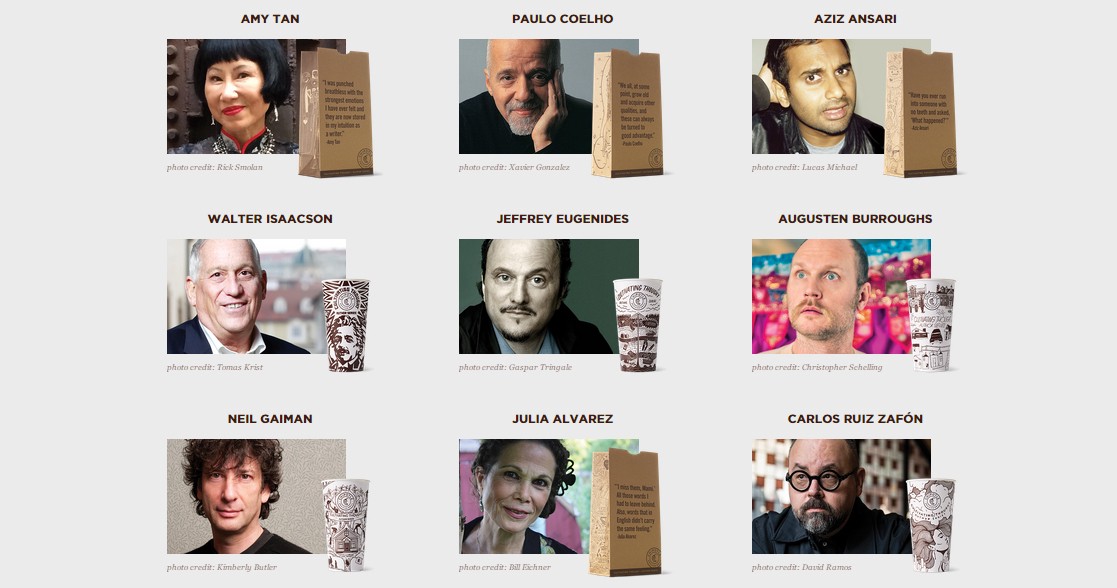
Burrito Realism: Neil Gaiman, Aziz Ansari, Amy Tan, and Jeffrey Eugenides join Chipotle’s literary…

Jonathan Safran Foer once had a beautiful vision: literary writing on fast food restaurant packaging. Last year, this impossible dream became a value-priced reality when Foer teamed up with Chipotle to create a series of burrito bags and soda cups with short fiction and whimsical illustrations. The humble series is called “Cultivating Thought,” and poses an answer to the great philosophical question of our time: “Must a cup, or bag, suffer an existence that is limited to just one humble purpose, defined merely by its simple function?” (That’s an actual quote on the website.)

Snark aside, Foer did manage to get a pretty great list of authors to join, including Toni Morrison and George Saunders. Now, there’s a new wave of Burrito Realism shaking up fast food fiction that includes another set of pretty awesome writers like Neil Gaiman, Amy Tan, comedian Aziz Ansari, and Carlos Ruiz Zafon. Rumors are, the gig pays pretty well, so good on Foer and Chipotle for paying writers and spreading literature.

If you aren’t a fan of Chipotle burritos, you can read several of the stories online at Vanity Fair.

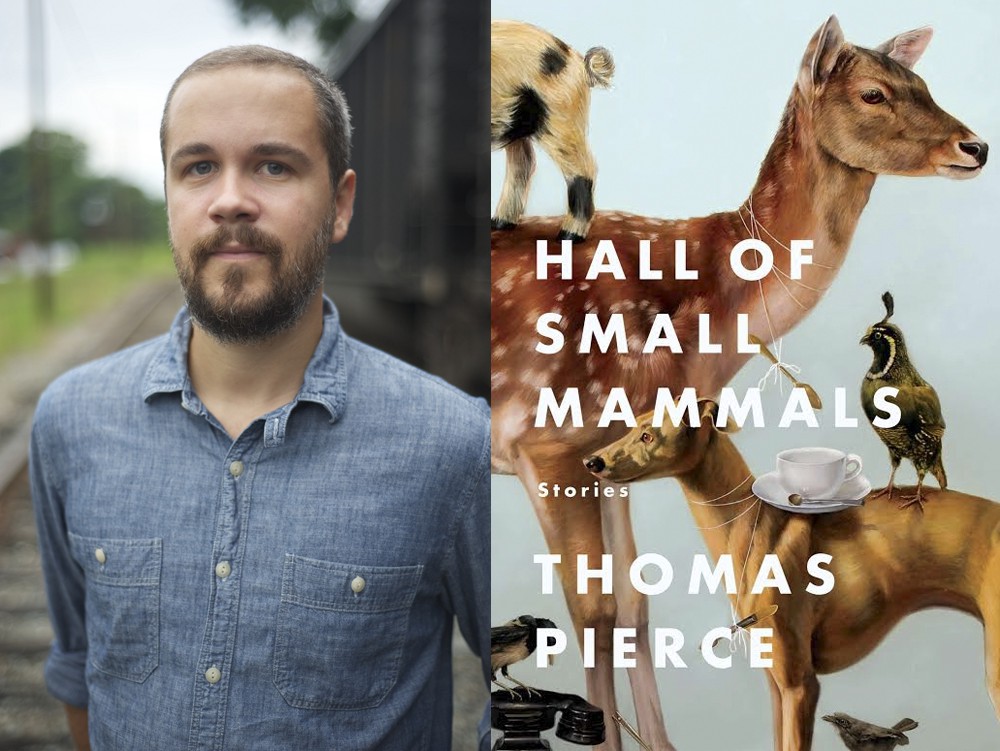
INTERVIEW: Thomas Pierce, author of Hall of Small Mammals

by Diane Cook

This summer, I started following Thomas Pierce on Twitter. I’d admired the stories he’d published in The New Yorker, and I’d begun to hear about his forthcoming story collection, Hall of Small Mammals. But I knew nothing else about him. Then one day this fall, I happened to see this tweet of his:

In the grand scheme, there are very few people in the world who can truly understand the particular stress of producing live radio and who will be plagued by fever dreams long past their time doing it. Even fewer of those have written books, let alone forthcoming debut short story collections. And maybe just two people from this already small pool have an interest in looking at humans through some kind of natural world lens. (Hint: that would be me and Thomas. I dare you to find another.) I think a lot about how my past as a producer for public radio’s This American Life influenced my writing and I was curious how his experience at NPR had shaped him. So I contacted him to see if he’d be game to talk about writing and our pasts in radio and how that all mixes together. This was before either of our books had come out. But once we began to make time for a conversation Thomas’s book was on the very near horizon, so it made sense to focus in on it. Plus, it’s really great.

Hall of Small Mammals may be dotted with mysterious creaturely “others” like a dwarf wooly mammoth, unidentifiable skulls, or invisible particles, but it is overflowing with troubled, searching, tender people, or “human animals” as one story slyly calls them, reminding us where we come from. The stories create familiar worlds and cast a fog of strangeness over them. They are compassionate portrayals of characters at odds and at crossroads, looking for answers in what is still mysterious about the world and about us. And the stories have a heady, imaginative sheen over them: what if the woman you loved, loved someone else in her dreams? How would you care for a creature that was last alive before the last ice age? What if you knew the deepest feelings of the people you’ve laughed at online?

As I read Hall of Small Mammals, I would begin to feel as though I knew these characters, only to be totally surprised by them. As though the book was telling me that no matter how common our lives may seem, there is something unpredictable in our hearts and minds, and while yes, that can prompt us to be our worst selves, it can also bring out our best, or, at least the best we can manage in the moment.

Thomas and I emailed back and forth about his book, writing, our own fascinations and how radio landed us here.

[Editor’s note: Read a story from Thomas Pierce’s Hall of Small Mammals here, and a story from Diane Cook’s Man V. Nature here.]

Diane Cook: In the stories that make up a bulk of Hall of Small Mammals, the characters have some encounter with the natural world — a creature, a skull, a theoretical particle. It’d be easy to say these stories are intersecting with the wild world but to me these natural items and ideas seemed more about the unknown and mysterious than a tangible thing we are face to face with. Or rather, the stories chronicle the characters’ quests to know what we don’t yet know, in the grand scheme and in the deeply personal realm. The characters are wanderers even if only in mind and imagination. Did you approach writing these stories with a quest of your own? An intellectual or creative project? How did the themes of the stories reveal themselves?

Thomas Pierce: That’s an interesting way to frame a story, as a quest. I do often think that I want my stories to seek. I want them to be after something. Even if the action is somewhat static at any given moment, I want the reader to have a palpable sense that the story itself is hungry and full of questions. This approach isn’t really particular to this collection. Maybe that’s more like a life-long creative project. Maybe it’s my quest.

I’m not sure the stories’ themes have fully revealed themselves to me yet. I’m joking. Sort of. I do know that I was preoccupied with certain ideas and questions at the time of writing, and maybe this amounts to the same thing. One of my preoccupations was — and is — the trouble that arises as we try to explain the world to ourselves, especially in moments when we are forced to incorporate new, more complex information into our thinking. The collisions with the natural world that occur in the book are, as you suggest, manifestations of the mysterious and the unknown. The fossils, the creatures, the particles — they are disruptions in these characters’ lives. They keep the characters from being too lazy in their thinking, from clinging too firmly to a particular perspective on a relationship or on existence itself.

DC: As I was reading I thought a possible subtitle for the book could be Scenes from the Pop-Yop or something to that effect. The fictional ice cream chain makes many appearances, and occasionally seems to connect characters from certain stories together, or give the appearance of connection. It makes a potentially boundless world of a story collection seem intimate, like all these people live in a town, county, region. And their lives are all circling one another though they may never meet. It doesn’t feel like a linked collection, yet reading it, I felt I’d walked into a familiar place but with realistic distance between people, the way it is in life. Do the stories come together for you in more ways than thematically?

TP: Scenes from the Pop-Yop — I love that! Yes, I didn’t set out to write a collection of stories linked in the traditional sense. They don’t all take place in the same town. One or two characters appear in multiple stories, but in my head they all belong to the same universe. It’s a universe a few inches to the left of this one, perhaps, but I aim for consistency within that world. The characters might not know each other personally or ever interact with one another, but I’d like to think they could, by chance, all wind up on different aisles of the same grocery store one Saturday morning.

The stories are connected but in subtle ways. One story does not depend on another in any vital way. The truth is, I’ve always enjoyed creating alternate but recognizable worlds. I remember writing a couple of stories in college and feeling far too pleased with myself for making references in each to a particular brand of spreadsheet software that I’d invented. It was called Dynamite. (With Dynamite, you can explode your charts and graphs!) I’d be hard-pressed to name something more mundane and boring than spreadsheet software, and so I’m not sure what it says about me that I feel the need to create my own version of it. If I’m writing a story about movies, I’ll make up a few of my own. If I’m writing a story about mammoths, I’ll invent my own species.

That might help to explain Pop-Yop, the soft-serve ice cream franchise that appears in the book. Pop-Yop is the place you see advertised every fifteen exits or so on the interstate. It’s delicious and popular. It’s how we try to tame the world. We Pop-Yop it. You land in a new city and you don’t know where you’re going, and then you see a Pop-Yop, and you say, Oh thank God, they’ve got a Pop-Yop. Bread Island functions, in some ways, as Pop-Yop’s antithesis. Bread Island is like a fountain of strangeness and mystery. We’ve cracked open the earth on Bread Island — with a mining operation, with a mammoth excavation — and unleashed all sorts of craziness.

These elements do help to unify the stories in this book, but honestly I wouldn’t be surprised if they show up again, in future stories. I’m not done writing about Bread Island, I’ll say that much.

DC: Is that how you knew you had a viable book of stories?

TP: I wasn’t thinking about a collection, really, until my agent pointed out that I was close to having one. Until that point, I’d been so focused on the individual stories, but when I went back and looked, I realized she was right. The stories I’d been writing over the last few years belonged together. They were powered by the same engine.

DC: So, I Googled you. And there is this other Thomas Pierce who seems to be this socialite guy about town in NY getting his picture taken with fancy ladies, he in a fancy suit. And there are others. It made me think of the side affects of what happens in the wonderful story “The Real Alan Gass” where the wife’s confession that she is married to another man in her dreaming life sends the narrator on a surprising search for the real life version of her dream husband. Do you think of doppelgangers or of the ways we connect to the people wandering around with pieces of our own identity, namely our names? Or about the stranger ways we connect to one another?

TP: Oh, but I am that socialite! And I hardly ever take off my fancy suit. Not even in the shower. I’m wearing it right now. It’s got baby food all over it — and dog hair.

I’ll go ahead and admit to you (and the world) that I’m signed up for Google Alerts, so anytime my name — or some variation of it — is in the news, I get an email. The vast, vast majority of the articles aren’t about me, thank God. They are about other Thomas Pierces. I think I could probably fix this somehow — by feeding Google more information — but I’ve come to enjoy the alerts. Most of the articles concern one of three things: an arrest, a death, or an award. Lots of Thomas Pierces in jail right now, as it turns out. I got an alert recently about a particular Thomas Pierce serving a multi-millennial prison sentence. Multi-millennial! I forget what he did — I’m not sure I want to remember — but it earned him so many consecutive life sentences that if he was immortal he’d be in jail until the year 4014 or something like that.

DC: I’m going to guess he did something very bad.

Speaking of bad behavior, one of the things that struck me in your stories is how when your characters struggle between right and wrong, right wins out a good amount. In the story we just mentioned, “The Real Alan Gass,” the narrator is offered the chance to do something bad (though understandable) but doesn’t in the end. And in “Grasshopper Kings” the dad begins to get wrapped up in a cultish sense of belonging but eventually comes to the rational side. There is something deeply decent about your characters. Is there a question about behavior you were investigating, and were you ever surprised by where your writing and characters ended up?

TP: That’s interesting. Certainly there are characters who’ve made mistakes and regrettable decisions in their lives, but I think you’re onto something here in that these generally aren’t stories about people doing the “wrong” thing. But then again, I wouldn’t necessarily say they’re doing the “right” thing either. I might be that I have a little trouble with the right/wrong duality. At the risk of coming across like some sophomore business major in the back row of his mandatory ethics class, I do wonder if the not-wrong thing necessarily equals the right thing (except in the rather limited sense that not committing a wrong contains an inherent rightness). If you choose not to do the wrong thing, you’re still left with a wide spectrum of possible behavior, much of which is not exactly good or bad. Anyway, I’m not sure I set out to specifically investigate this question of human behavior. It could be that the characters are basically decent because I want to believe most of us are. Or it could be that I’m simply more interested in people who want to do right but who aren’t exactly sure what that entails in every situation.

DC: Yes, the ambiguity is there, and certainly all the characters aren’t always acting decent. But when they are it feels like a real line in the sand. In “The Real Alan Gass” the protagonist does, over the course of the story, many things that really violate some kind of trust. He goes far in one direction, but it’s here — when given the opportunity to alter his wife’s most private mental space — he comes to his senses, as though waking from a dream of his own. Did I want him to try? I don’t know. Part of me did and part of me hoped he wouldn’t. I think that’s why I liked the story so much — as a reader I too was at odds with what was happening. I became very involved in this man’s life and particular heartbreak. It’s one of the things I so admired about all of the stories. In the midst of them I felt like I could look around convinced I was so close to living, breathing folks that I might reach out and touch them.

TP: That’s very nice to hear. Now of course I’m curious to know how you see our own book in these terms because there are quite a few characters who do something that I’m tempted to call “wrong.” I’m thinking of Phil in “Man V. Nature,” a man who, among other things, steals food from his friends’ pockets as they waste away in a small life raft; or of the narrator in “The Way the End of Days Should Be,” who’s living out an end-of-the-world flood in his mansion and who refuses to aid almost everyone who shows up at the door. They have their reasons for doing what they do. They aren’t doing wrong in a vacuum. These characters, and others, are in dire, life-threatening situations, and I never quite blame them for their actions. I feel like I might be one of them if put in that spot. The choices they make are rarely admirable but they’re almost always believable, honest, and maybe even rational too. What led you to write about what I’ll somewhat reductively call “wrong-doers?” That is, about people in situations where there’s more overlap between what’s rational and what’s wrong?

DC: One thread of my book is concerned with survival. We tend to applaud survival but it can be a pretty ugly endeavor — the things we do to save ourselves can seem cruel but can also be so understandable that they’re heartbreaking. I’m fascinated by how messy life gets when our baser instincts are pressured to the surface, and how often they lead to conflict with other people, even loved ones. So, while I also don’t believe in the reductive right and wrong — and don’t see my characters as wrong-doers either — maybe I’m lacking inspiring words for the conflict between the individual and all others. In my real life I’m liberal and also loyal. But in my fiction I’m puzzling through our responsibility to one another.

In your stories, many of the characters want to connect with something beyond their own scope of being. Is there some motivation you think your characters share? Why do your characters look to the natural world for what feels like surprise or purpose or meaning?

TP: That’s a great question. In the broadest sense of course, the natural world encompasses everything in the material universe. It’s everything we can see and observe. It’s us. Don’t worry, this is not me saying that ipso facto we have no other place to search. I only point this out because I think many of these characters are in search of little glimpses behind the material curtain, and their search is prompted by that which is seemingly unexplainable (or unnatural): a deformed and questionably evil skull, a resurrected mammoth, a husband who only appears in the world of a woman’s dreams.

I think that we humans are full of contrary impulses. On the one hand, we want to know everything there is to know. We want all the answers. But on the other hand, I suspect we don’t want that at all. I think we require mystery and even thrive on it. I think a small part of us wants the universe to remain just outside of our understanding, and all signs up to this point indicate that the universe will continue to oblige us in this regard. I was reading the other day about a theory that reality is in fact a hologram, that we’re actually just bits of 2-D information encoded along the rim of the universe. (This is not a crackpot theory, by the way.) Suppose we prove it’s true. No doubt, for some, this would be a distressing discovery. Some people would reject it because it doesn’t mesh with what they already believe. Somebody else might choose it as their new belief. Others might try and incorporate it somehow into an existing belief. I can imagine some preacher out there suggesting to his congregation that the 2-D information is the language of God and that the rim of the universe is the iris of God’s eye. So be it. My point is that new discoveries don’t have to squash our most basic questions. I actually think they can revive our questions. They invite us to engage with the bottomless mystery of our own existence.

DC: I found your writing wonderfully unfussy and the dialogue perfectly natural. Which did not surprise me. You used to be a radio producer for NPR. I wonder if any person who ever wrote for or produced radio is even capable of overwriting? Writing for the ear has to be clear and directional. I think radio writers really appreciate simple construction because we’ve seen how well it works. Has radio influenced your writing at all?

TP: Thanks! And that certainly applies to you too, as a fellow recovering radio producer. Your writing never gets in the way of itself. Writing for radio really does train you to write economically. You have to get to the story with as little preamble as possible. No time to dither. After all, you might only have a few minutes to tell your story. I think writing for radio also made me very aware of “audience.” I don’t write in order to please an audience and I don’t typically think too much about whether a story is capable of finding one, but when I’m revising, I do think about the potential readers, who have taken time away from their lives to sit with me for a moment.

DC: That’s a great point — You have to get to the story with as little preamble as possible. It’s something I do a lot but I’d not thought of it like that before, or, I hadn’t thought that the way I establish a fabulist or fantastic world — where I get the rules of the world down immediately — actually has some roots in my radio days. The goals are the same though — you don’t want to lose your audience, whether it’s their attention or their trust in you.

TP: Yes, exactly, and you do that really well, by the way, dropping us right into a world.

I also think working in radio taught me to finish projects and to be a more disciplined writer. When you’re working on a deadline — and working toward a show week after week — you can’t really give up. You have to make the best of the tape you have. I used to give up on stories too fast. I had so many fragments and partial stories that never amounted to much. Now I try to finish every short story even if, halfway through, I’ve begun to suspect it’s terrible and unusable. I have plenty of awful stories that I’ll never send out, but I think generally it’s good to try and finish them no matter what.

Were you writing fiction before you worked at This American Life? I’m curious if you’ve noticed any changes in your style or in your patterns as a writer.

DC: I wrote fiction in college but then stopped. I had started listening to the radio. Got swept up in voices and in nonfiction. The truth seemed nobler than my (then) silly ideas. But really, I think I just got stuck with fiction and didn’t know where to go with it. I had raw skills and no purpose. Working at This American Life taught me how to work with writing and also how to be a working writer. I got a lot of practice at structuring and identifying what the story was in any given project. But eventually, I started to feel the boundaries of journalism, of telling the truth. I wanted to explore more than what had already happened in the world, or what was happening at that moment. I wanted to think and dream beyond that.

Is there something about your subject matter and interests that drove you from radio? An obsession or fascination that could never be scratched by radio…or you think can’t be scratched? What does fiction do that journalism can’t?

TP: That pretty much sums up my own experience, too. I wrote fiction in college and then stopped — or very nearly stopped — after I started working in radio. The way you describe wanting to explore more than what’s already happened or is happening in the world, I can definitely relate to that. I think a lot of what interests me could not be classified as newsworthy. I feel like I can put more of myself into my fiction. I don’t mean autobiographically but emotionally and philosophically. My fiction might be a better representation of who I am than my work in the news. Still, I do miss radio. I miss the feeling of being a part of a show. It’s almost like playing in an orchestra. I miss the collaboration and the teamwork of putting on a show each week. I also miss the adrenaline of being live on the air. Maybe I’m not finished with radio yet. What about you? Can I just throw back this question to you?

DC: Yes, that’s exactly it. My interests didn’t always feel newsworthy. And more, I wasn’t particularly interesting as a journalist. You know, I left radio in 2007 and the radio culture I left behind felt limited to me, or at least, limiting. And that hadn’t really changed in the seven years since. BUT, this year, suddenly (it feels sudden though of course nothing is) audio storytelling feels reborn in the podcast realm. It’s exciting and boundless and risky in the best ways. Obviously my impulse to innovate led me elsewhere, and if I’d been truly suited to radio journalism I probably would have attempted to innovate from within. But it was a funny experience to launch my book the same week as my former (and incredible) colleagues launched Serial. My new chosen medium felt old and yellowed next to shiny new podcasts. That said, it still feels dominated by true stories and I just don’t have much interest in that. I love reading nonfiction and listening to it, but don’t want to be held responsible for it any longer. I don’t think I’d ever return to that kind of journalism, but I could return to audio if it had to do with fiction or the art of writing.

And what about you, what’s next for you? A return to Bread Island?

TP: Ticket booked. I’ve got some new short stories that I hope to place soon, but mostly I’m working on two longer projects, one of which is a novel due to my publisher at the end of the year. But, hey, if you have an idea for a shiny new podcast that involves fiction and maybe even a little journalism, sign me up. I’ll be your east coast bureau. Almost True Stories, we could call it. If it’s a big hit, people will know this is where it all began, right here in this interview.

REVIEW: Baboon by Naja Marie Aidt

Most of the literary fiction I’ve encountered tries to steer clear of everything nauseating, unbelievably gritty, scatological, paltry or too physically violent in an effort to focus on feelings, atmosphere, the endless possibilities offered by semantics, and those emotional spaces that can only be explored through language. Acclaimed Danish poet and author Naja Marie Aidt’s Baboon does the opposite. It collects fifteen short narratives that run toward human ugliness, desire, heartbreak, physicality, and failure. With a prose that combines beauty and poetry with hostility and unpleasantness, Aidt dissects humanity in order to show how weird, wonderful, and downright atrocious it can be, and the result is one of the most outstanding collections I’ve read all year.

Aidt kicks things off with a story that’s slightly unsettling and ends with a few wounds, and it’s a story that helps her set the tone for the rest of the collection. From lost love, child abuse, and misogyny to sickness, desperation, and adultery, Baboon daringly tackles a plethora of themes that usually stand opposed to awe-inspiring fiction. While the fifteen tales are unique, elements like an obsession with the body, sexuality, and situations where control becomes impossible give the collection a sense of cohesion. These narratives are violent and ugly, but they brilliantly achieve that elusive goal that all exceptional fiction is known for: they make the reader feel something.

Offering a synopsis and analysis of each tale would require a huge word count, so instead I’ll offer a look at some of the narratives that left a lasting impression on me. The first is “Torben and Maria.” In this one, a mother physically abuses her 3-year old boy while her brother and the toddler’s father look on and do nothing. The narrative is disturbing and strongly critiques the way society condones abuse because it’s better not to get involved in other people’s affairs. In fact, even those who take care of Torben try their best to rationalize the physical signs of abuse:

“They’re beginning to wonder. Torben is so shy. But he’s also violent. He hits the other children when they come near him. He bites. And he often has bumps and bruises on his body and head. They’ve talked it over with each other. But on the other hand, Maria seems okay. You can’t be too quick to judge people. Children at that age are accident-prone, they’re always stumbling and falling and hurting themselves.”

Just like Torben and Maria could be the poster story for the collection, Starry Sky also delves into many of the uncomfortable grey spaces in which most of the narratives in Baboon reside. The tale follows a young couple that falls madly in love and lust with each other to the point that sex turns into something that consumes their existence. After they get married and have a child, the desire is still there and, for a brief moment, it seems like their life will never change. Then the husband takes a male lover. Surprisingly, he manages to keep his wife happy in the bedroom and suspicion at bay, but one day their young daughter sees her father passionately kissing a man in a passageway:

“…the child saw that it wasn’t a completely ordinary kiss, because her father and the man went on kissing, but the most disturbing part was that the man was holding the nape of her father’s neck as if he were pushing him down.”

The girl tells her mother what she saw, but the revelation has no effect on the relationship and the father goes on with his homosexual adventures without caring about what his daughter witnessed or how it might affect the way she looks at him.

While all I’ve said so far might lead readers to think Baboon is too weird and dark to be considered top-notch literary fiction, the opposite is true. This book, which won the Danish Critics Prize as well as the 2008 Nordic Council’s Literature Prize, Scandinavia’s highest literary honor, is also very comfortable inhabiting those spaces were language is masterfully used to convey emotion. In The Green Darkness of the Big Trees, a man becomes obsessed with a woman to the point where he stops being himself and becomes a creature crippled by her absence:

“Maybe I had fallen down a crevasse. A sudden slide down an all-too slippery passageway. Maybe this is it. And in this chrysalis, in this recess, in this hole I’ve been waiting either for life to notice me again and pull me up, or death to force me down the last few feet and away. I don’t eat much. I don’t sleep much. Sometimes it’s as if I were possessed by a ghost, at other times it’s clear to me that I’ve created this non-existence that my life has turned into.”

Exceptional. Kafkaesque. Delightfully bizarre. There are many ways to describe Baboon, but full appreciation and understanding for the worlds Aidt’s created here and the multiplicity of ways in which she dismantles humanity to make her critiques obvious and sharp can only come from reading her narratives. Translator Denise Newman did a fantastic job and managed to maintain Aidt’s original tone, and for that she deserves kudos. The worse components of human nature are grim things to dwell upon, but these stories turn this unattractive examination into a pleasurable experience.

Baboon

by Naja Marie Aidt

Powells.com

What’s Wrong with Only Reading Half a Book?

Last month, the e-reading company Kobo revealed which books its users read to completion. Much was made of the fact that Donna Tartt’s prize-winning bestseller The Goldfinch was only finished by 44% of Kobo readers, and that, in general, the bestseller list didn’t match up at all with the most completed list. It also spurned a flurry of essays on what this data mining could mean for writers, readers, and publishers. Will, as Francine Prose wonders in the NYRB, marketing departments dictate authors rewrite plots and characters based on user data? Or does this, as Joseph Bernstein suggests at Buzzfeed, mean little to the writing process while having the potential to better connect readers with books they like?

These are interesting questions, but almost all the articles I’ve read have had an underlying unchallenged assumption that I’d like to challenge: that a half-read book is a failure either on the part of the writer or the reader.

Certainly there are books that could be better written and there are readers that could be more patient and willing to challenge themselves. Analytics might help weak writers figure out what they are doing wrong, and plenty of readers would benefit from pushing through to the end of good books. Still, it isn’t the case that book that a half-finished book means the book is flawed or that the reader has sinned against literature. This should be obvious for much non-fiction, or poetry and story collections. One can learn volumes from a history or biography without finishing it, and poems and stories are complete units that do not have to be read together to be appreciated. But even a half-finished novel can provide plenty to a reader.

Here’s a confession: I’ve never finished Moby-Dick. I absolutely loved Moby-Dick, call it one of the greatest novels of all time, remember passages and scenes on a regular basis, and know it taught me many things about writing. But I haven’t finished it.

Should I? Probably, and I almost certainly will at some point. (I read every word of Infinite Jest… spaced out over a few years.) But even if I don’t, Moby-Dick provided me with everything that can be asked of a book. It was hilarious (seriously, read the opening chapters), beautifully written, formally innovative, and all around immersive, interesting, and entertaining. Around the time I started Moby-Dick, I also started Stephen King’s Doctor Sleep. I had the latter on an e-reader and decided to leave the large Moby-Dick paperback at home when I traveled. I had to force my way through Doctor Sleep. If I hadn’t been traveling, I’d have never finished it. I’ve enjoyed other books by King, but Doctor Sleep was a slog and a snore. There is no measure by which Doctor Sleep surpassed Moby-Dick for me, even though the former gets a 100% personal completion rate.

We seem to expect more from books than other narrative media. If we read a four book series and think that final book sucks, we characterize the entire series as a failure. Yet no one says to avoid watching The Wire because season 5 is a letdown, or that The Godfather 3 ruins the first two films.

There are many factors that go into whether or when a reader finishes a book. I imagine many people’s reading habits are, like mine, scattered. I have at least a dozen in-progress books on my nightstand — and several more on my phone and e-reader. Readers stop reading a book they enjoy when they put it down and forget to come back. Readers finish books they hate when they are assigned it for book clubs or else they want to hate-read and laugh about with their friends. (Certainly a large percentage of Fifty Shades readers fall into that second category.) Just as a half-read book isn’t necessarily a failure, a completed book is not necessarily a success.

It’s also worth pointing out that it is actually logical that bestsellers have a lower completion rate. The Guardian noted with surprise that “Kobo’s first analysis of trends in e-reading… reveal an unexpected divide between bestsellers, and the books that readers actually complete.” But bestselling books are exactly the books that are purchased on an impulse, or picked up by casual readers who only finish a book or two a year. A good book that only sells to its niche should be expected to have a higher completion rate than one given out as Christmas presents to aunts and uncles.

Whenever people talk about books that people don’t finish, the same titles get trotted out: Infinite Jest, In Search of Lost Time, Ulysses, Moby-Dick, etc. Often these books are used as evidence that the classics of literary fiction are secretly awful or that people are pretentious fakes who’d be happier reading the latest Dean Koontz. But the most common feature of those books and the The Goldfinch is not pretention or density. It’s length. Long books are more likely to be abandoned. This is true whether it’s King, Rowling, or Pynchon.

The world would be a poorer place if books that are long or difficult were made short and easy. The people who do devour the long and difficult books often find them to be the most rewarding books they’ve read. Maybe only half the people who read Bolano’s 2666 finish it, but that half may love it far more than the 80% finishing a shorter and more formulaic mystery. In fact, that may even be the case for The Goldfinch. A separate e-reading data analysis done months before Kobo’s found that The Goldfinch scored near the top of the charts in the Hawking Index, a measure of which parts of a book readers highlight. Almost all of Tartt’s frequently-highlighted passages were at the end of the book. This means that those who were engaged enough with Tartt’s work to highlight passages were the ones who read, presumably happily, to the end.

And even those who don’t finish The Goldfinch or Gravity’s Rainbow or Ulysses may end up getting something out of their reading experience that they never would if they only read the books that an algorithm suggested they were most likely to finish. And what’s wrong with that?

still of Donna Tartt reading The Goldfinch from BBC

Punching Jackie

“Punching Jackie” by Matt Sumell

Thing is she didn’t think that pots and pans should go in the dishwasher, so I pointed out that there’s a setting on the dishwasher for pots and pans, just look, it’s right there, open your fuckin’ eyeballs. Well she didn’t like that very much and started in with this business about me being a loser headed nowhere and all that, which normally wouldn’t get me going except that it might be true, also ’cause it was coming from someone who supposedly cares about me and who I care about and blah blah blah I mean, I’ve pretty much looked up to her my whole life — she’s been like an older brother to me, but a lady.

Anyway she didn’t mean it I don’t think, maybe a little, but really it was just her best-guessing what would hurt me most, and I’d be lying if I said I haven’t done the same thing myself in arguments past. Just the other night even this girl in a bar was not nice to my nice friend James so I said, “Wow, that’s ugly.” When she said, “What is?” I said, “Your face. Now get outta here.” It wasn’t true, but I was pretty sure it would hurt her feelings, and as it turned out I was correct. I could tell I was correct ’cause she started crying and called me a fuckin’ dick, only when she said it, it sounded more like “deck,” fuckin’ deck! — and then she gave me the middle finger and headed off all wiggly-wobbly on her high heels in the direction of the ladies’ room.

Also, along similar lines maybe, any racial thing that comes out of my mouth, if not an attempt at humor, is meant only to injure. For example one time this Asian guy was walking extra slow across this crosswalk holding an orange, so I rolled down my window and said, “How about you just pick up the pace a little, Ninjerk. I got places to be and stuff.” I didn’t mean it, the Ninjerk bit, it’s just that he was pissing me off and I wanted to piss him off. I know there’s a racial sensitivity there, which minus the modifier is exactly like any other sensitivity: easily exploited. There’s no sincerity in it, only malice, which is exactly what I suspect about my sister calling me a loser, except she might’ve meant it a little. I’m not sure.

Either way it made me upset, and I slammed the refrigerator door so hard the milk exploded, then I turned around and told her to shut it or I’d punch her mustache off her face and watch it fly across the room like a hairy bug. Then I flapped my arms like I was flying, like a bug, like her mustache. Now, I know I crossed a line there, but I hope some people can at least appreciate how much restraint it actually took on my part to not just turn around and haul one off on her. Knowing some people will find that difficult to appreciate, let me employ this awesome analogy: my temper is like a rogue wave of weapons, and my ego is like the dam holding back the rogue wave of weapons from being unleashed on the townspeople/person, in this case my sister. Sometimes, though, the wave of weapons is too big or powerful or whatever, and some squeeze through a crack or splash over the top or whatever. It’s unfortunate, sure, but don’t I deserve at least some credit for holding back 99 percent of the entire wave of weapons that I could’ve just as easily unleashed on her if I wasn’t a good person/ego/dam? More important, she was making fun of the ego/dam, provoking it to break or whatever. So in a sense she was sabotaging me, like a fuckin’ saboteur. Like a fuckin’ dirty, no good, no pot-washing, dandruff-having lady saboteur. My point, then, is didn’t she, in some way, cross a line first? I think so, and that is number one on my list of seven excuses as to why it was OK for me to punch my sister in the tits.

1) She started it. I know that’s a childish thing to say but…

2) When adult siblings revisit the house they grew up in, they often regress back to behaving like children.

3) Sibling status overpowers lady status. Siblings don’t count as ladies.

4) Testosterone production has a direct link to aggression and fluctuates in response to competitive situations such as a tennis match or arguments about dishwashers or changes in one’s perceived status in a social hierarchy, for example a sibling hierarchy, or a dishwasher-deciding hierarchy, or a hairarchy of mustaches (in which case she’s the winner hands down). When disrespected, there is a biological response within my balls and they make more stuff that makes more aggression. Try as I might, it’s out of my control. This admittedly may be a weak argument, but the logic is the same as acting like an asshole then blaming it on PMS.

5) There is a certain clarity in violence. There’s nothing rhetorical or vague about it — it means only what it means, which if I had to I would translate as roughly: “I don’t like you right now, a lot.” Less roughly translated of course depends on the particulars, and considering these particular particulars I’d have to go with: “The fact that you are insulting me in addition to being more intelligent, eloquent, calmer, successful, plus have all your hair and an apartment and a job that you actually care about frustrates me so greatly that I am going to dominate you physically because it’s the only area in life in which I think I have the upper hand.” However you translate it, though, it isn’t really all that cruel or enduring. In my experience physical suffering is more transitory than emotional suffering. Words, on the other hand, do lasting damage. There’s no taking them back. Not really.

6) One time I punched a boyfriend of hers in the face repeatedly because she told me he hit her. Years later she admitted to me she made it up because she was mad at him. He died in a car wreck before I could apologize. Another time this jerk-off in a bar was being a jerk-off to her, and I told him to knock it off. He did, for the most part, and as I made my way back to the table she came running over to me and said, “So-and-So doesn’t think you have the balls to hit him.” I was younger (dumber) and drunk (extra dumber) and had a canine sense of loyalty, all of which she knew, so I’m sure she figured my reaction would be some version of Oh yeah? — which it was. I turned around and walked back over to the guy, tapped him on the shoulder, and slugged him in the ear, et cetera. That makes two out of an approximate forty instances of violence in my life that she in some way instigated, which if my math is correct equals 5-ish percent. My question then is, how can someone who has more than once taken advantage of what I consider brotherly goodwill cry foul when that sort of attention is directed at them? It’s all kinds of wrong.

7) She was literally asking for it. After I threatened her she got in my face and yelled, “You think that makes you a big man? Huh? You gonna hit me, big man? Well go ahead and hit me then. Hit me. Hit me. Hit me, you fuckin’ piece a shit.”

“I really want to,” I said. “Bad.”

“Go ahead then, you fuckin’ asshole. You’re a fuckin’ thirty-year-old fuckin’ loser, and you know what else, you fuckin’ thirty-year-old fuckin’ loser? Mom was right about you, you’re a fuckin’ abusive piece a shit.”

The backstory on that comment is that when our mother was close to dying, she called each of us separately into her hospital room for one last one-on-one conversation — the opportunity to say all the things we’d ever get to say. My sister was called into the room first, and my brother and I waited in the hallway quietly discussing Jennifer, one of the nurses. I told him she was so pretty that I wanted to see her nude, then have sex with her. In so many words he said he wanted the same things, so I told him to back off, but he didn’t, so we argued about it. After about ten minutes of this my sister came out looking pretty upset, so we went over and tried our best — which was not good — to comfort her, then asked what it was like. She told us what was said was private, but that overall it was nothing special, mostly a bunch of I love yous and I’m sorrys and basically amounted to an emotional goodbye. “Sounds tough,” I said. “I’m probly gonna have to have unprotected sex with Jennifer in order to deal with all this.” As I reached for the door I looked back at my brother and added, “Probly gonna have to suck her gazungas — ”

“Mom wants to talk to AJ next,” my sister said.

“ — I’ll lick them. What?”

“Mom wants to talk to AJ next,” she repeated.

“That’s fine,” I lied. And after AJ and I did some overly dramatic nodding at each other, he walked into the room and shut the door behind him. Obviously I was a little bothered by this because I assumed — I think we all did, after Jackie was called in first — that this thing was going down according to birth order, which would mean that I was next in line considering that I was next in line out of our mother, correctly by the way. Headfirst. So when she skipped me it stung. But, you know, I’m an adult — I drink coffee and stuff — even I can show a little grace every now and then. And that’s what I did. I waited quietly in the hallway with my sister, then quietly near the soda machines with a Hispanic guy in red Rangers sweatpants with tubes up his nostrils, not so quietly in the men’s room, and then quietly again with my sister. And when AJ finally came out I was the first to squeeze his shoulders and shake my head and say things like, “Rough, huh?” and “This is so hard,” and “Anyway… ”

“She doesn’t want to talk to you right now,” my brother said.

“Yeah,” I said. “Right.”

“Seriously. She said she’s too tired.”

“Well when does she wanna talk to me?”

“I don’t know man — like, maybe tomorrow?”

I thought he might be kidding, but after some aggressive back-and-forth about it I came to terms with the fact.

My mother remained too tired to speak to me for the next several days, and for the most part I think I handled it in an understanding, patient, and mature style, except for one incident down at The Wharf when I punched some guy’s hamburger.

On day three, my mother felt up to talking with me.

“Please don’t cry or we won’t get through this,” she said.

“Please. Let’s just say what we need to say to each other. OK?”

“OK,” I said, crying.

“OK,” she said.

“Should I go first?”

She closed her eyes and nodded.

“OK,” I said. “What exactly are we supposed to say here?”

“Whatever you feel you need to.”

“OK,” I said. “Well, I mean, it’s not a big deal or anything but, it doesn’t really make sense that you picked AJ to come in here before me. I mean, I was the middle child and he was the last and a C-section so… and then I had to wait so long and I got nervous about it, I thought maybe we’d never get to talk and I punched a paper-towel dispenser and some guy in the dinner and — Are you still awake?”

“Yes,” she said. But her eyes stayed closed.

“Well?”

“I don’t know why,” she said. “Is there anything else you want to say to me?”

“I love you?” Then I started sobbing.

“That it?” she asked.

“Yeah,” I said. “That’s it.”

She pinched the bed sheet between her thumb and index finger, then dropped it. “So you have no complaints about me as a mother or anything?”

“No,” I said. “You’ve been a great mom. I couldn’t ask for anything more. I had a great childhood.”

She nodded and squeezed my hand. “OK then,” she said. “Well, I have something I’d like to say to you.”

“All right,” I said. “What is it?”

“One time you threw a book at me. You were home from college, and you were really angry with me about something, and you threw a book at my head.”

I had no recollection of this at all. I wondered if it was the painkillers talking again.

“Did it hit you?” I asked.

“No. I ducked and it hit the wall.”

“Wow,” I said. “I really don’t remember that.” We blinked at each other. “Honestly,” I said, shaking my head. “I don’t.”

“Well I do,” she said. “And I’m telling you because I don’t want you to ever, ever, be abusive with a woman again. You can’t abuse women, Alby. I need you to promise me that.”

“OK,” I said. “I promise.”

“You promise what?”

“I promise I won’t abuse ladies.”

“Ever,” she said.

“Ever,” I said. “I won’t abuse ladies ever.”

“OK,” she said, rubbing my hand a little, giving it a pat and a squeeze. Then she said she was tired and asked me to leave. I stood up and kissed her on the forehead and walked to the door.

“I really don’t remember that.”

“I believe you,” she said. “Now shut off the lights, please.”

“OK,” I said, and flipped the switch.

Immediately after closing the door I rushed over to my brother and sister and told them everything, then asked if they remembered hearing about it. My sister said no, but that it sounded like something I’d do, and I told her to shut the fuck up.

My brother said he kinda did remember something like that, that he thinks maybe he remembers her telling him about it over the phone one day. I pressed him for details, then and on numerous occasions since, but the only other thing he’s said about it — years later over beers and a bottle of bourbon, after I got real pushy — was that it made sense because I was at the peak of my asshole stage back then. Then he paused and looked off and added, “The first peak.”

She died not long after, and after years of racking my brain over it I eventually came to some vague remembrance of the incident. Nothing concrete, just sitting at the kitchen table, a book in front of me, her standing there, the both of us yelling. That’s all. Of course that could be from any number of times we yelled at each other in the kitchen, or it could be complete invention, something I dreamed up in response to all this. Either way, though, I believe it. I believe I threw that book. I must have.

And now here my sister was using it against me, because she thought, correctly, that it would hurt. The best I could think to come back at her with was “Learn about dishwashers, retard.” She smirked and shook her head. “Also,” I added, “stop cutting the split ends off your dykey hairdo and leaving them on the sink ’cause it’s fuckin’ disgusting, and so is your dandruff. You should try T/Gel ’cause apple cider vinegar isn’t doing the job, you fuckin’ hippie asshole. And stop throwing your bloody toilet paper from your gross shaved legs in the bathroom garbage cause fuckin’ Sparkles fuckin’ smells the blood and then fuckin’ knocks over the garbage can and fuckin’ eats it. OK? And nobody wants to go to the bathroom and see bloody fuckin’ toilet paper in the fuckin’ garbage. So fuck you.”

She name-called me some more, so I mocked her in my mocking voice. I went: “This is you: I’m too busy doing important artwork to be considerate of other people and clean up after myself so instead I’m gonna cover every flat surface with my shit so other people can’t eat at the table without moving my shit around. Also, I’m a dumb cunt. That’s you, you dumb cunt.”

With that she began shoving me through the doorway yelling, “Get out! Get out! Get the fuck out!” And I’m not kidding when I say she’s super strong and almost had me out, and I wasn’t putting up much of a fight at all, was almost willingly going, and then I just thought: No, you get out. As she shoved me again I grabbed her shirt, and honestly it was a case of being stronger than I think I am, because she kinda went flying through the air and landed on the ground on her back. We were both shocked, me probably more so. She got up quick though and charged, dealing punches left and right (add that to the list: #8 — she hit me first), which didn’t accomplish much except to back me up a few feet into the kitchen. Eventually she stopped to survey the damage, and I grinned at her. She charged again, swinging wildly, and I blocked what I could, then shoved her off. When she came at me a third time I threw one medium-powered punch at the middle of her chest that kinda skimmed over the right tit and landed solidly on the left, sending her backward over the dishwasher door, which was still open with plenty of space available for pots and pans. There were, however, a few utensils in the utensil holder thing, including a knife with I think cream cheese on it that she grabbed on the way up. I turned and ran. I’d just made it outside when I heard it bang off the back of the back door.

We avoided each other for the rest of the night and most of the following day, until our father came home from work jacked up on Ritalin, acting like a dick, the specifics of which I don’t recall and which don’t matter. What does matter is that shared suffering can lead to a sense of solidarity — false maybe, temporary for sure — so we ganged up on him till he fled up the stairs to his room to play Sudoku or some shit on his computer. My sister and I spent the next few hours at the kitchen table guzzling whatever alcohol was left in the house, pledging allegiance to each other, promising it wouldn’t happen again, that we’re sorry, we’re sorry. We’re so sorry.

Midweek Links: Literary Links from Around the Web (January 28th)

Looking for some interesting reading to get you through hump day? Here are some literary links from around the web to check out:

Scientific American lists 10 books that will sharpen your mind

Worried you are trapped in a High Fantasy novel? Here’s how you can tell

The Millions suggests a page 40 test for novels

An interesting history of the rise of paperbacks

Salon suggests its a problem that writers don’t talk about where their money comes from

Meanwhile, a study says the average writer earns less than 5,000 a year from writing

Patti Smith talks to David Lynch about their creative processes

Helen Oyeyemi writes about the works of Silvina Ocampo

What makes humans unique? Our ability to create fictions

Lastly, the literary mystery of Pale Fire

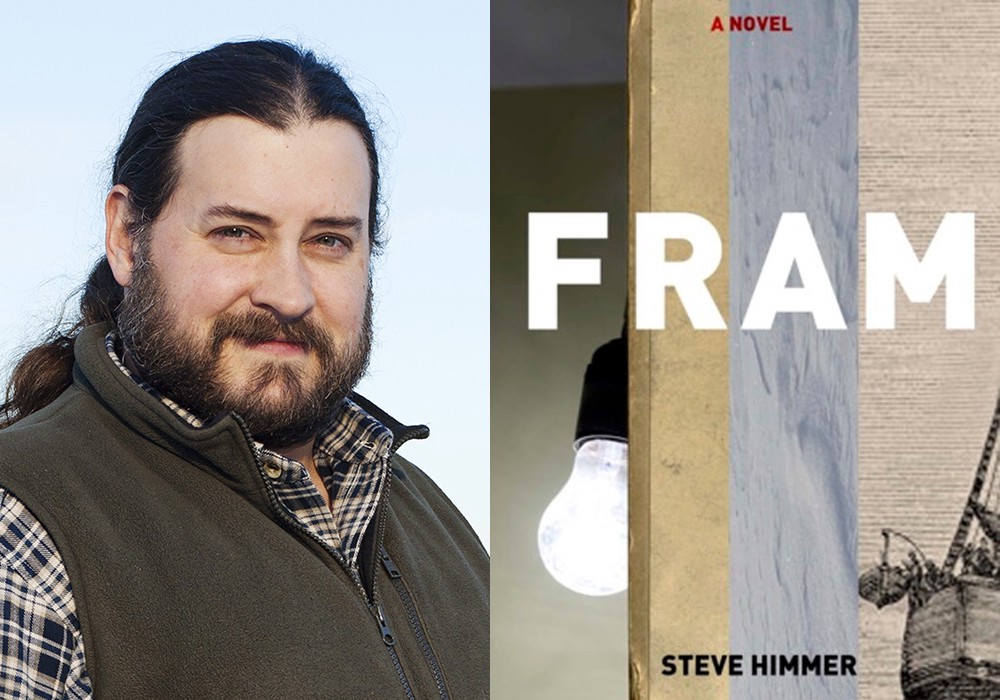
“My Curiosity Has Always Leaned to the North”: A Conversation with Steve Himmer, author of Fram

When I think of writers who participate fully in and nurture what we call the “literary community,’”Steve Himmer is one of the first who comes to mind. He’s long been teaching, mentoring and helping newer writers, participating in panels and literary discussions and workshops, and running a well-respected literary web journal, Necessary Fiction. He also happens to be the full package — a terrific writer and teller of stories as well as a full-time community member. And — disclaimer, I suppose — he’s a friend of mine as well. So it was fun to have the opportunity to talk with him about his new novel, Fram, just out from Ig Publishing. The novel is part spy thriller, part Arctic exploration story, part meditation on work, and mostly something completely new — as Will Wiles calls it, “a miniature bureaucratic epic somewhere between David Foster Wallace and Jules Verne.”

Amber Sparks: Okay, first question! I think anyone familiar with you and your work would recognize in this book that great passion for the world’s most remote places, and at the same time that skepticism that humans today are equipped to visit such remote realms — mentally or physically. There’s that jarring sense that we do not belong, that nature red in tooth and claw does not quite welcome us in the ways that we might hope. Is this off base, or do you feel that way? Are modern humans destined to be at odds with nature? And do you think that’s changing, and for better or for worse?

Steve Himmer: I do tend to write about remoteness and isolation, don’t I? But you’re right, it’s a skeptical attraction. I’m drawn to places and lives that look solitary but always, if you dig into them, turn out to be more connected and complex than they seem. Even the connections between humans and the lives we share landscapes with when we think we’re most romantically, poetically alone. I guess I don’t so much think we don’t “belong” anywhere as I’m compelled by our human — western, at least, or in this case southern — ability to be somewhere and act like we’re somewhere else. To stubbornly assume we’re in an empty, uninhabited “blank page” of a place when we’re in an Arctic full of human culture and history and geopolitics, not to mention plant and animal lives and millennia of microbial and bacterial experience. And, yeah, those places don’t always welcome us as they hope but mostly because we arrive blinded by a refusal to see where we actually are and that tends to backfire — which makes for bad trips but great stories.

So I guess I wouldn’t say we’re at odds with nature so much as befuddled by an insistence on seeing ourselves as the most important thing — the only thing, more often than not — that matters in any particular landscape. I don’t see that changing any time soon, we’ll just give it new manifestations. Like the emerging idea of an “Anthropocene” age, which I’m both compelled by and cautious about. And the stories I want to read, and most want to write, are those that let me explore that befuddlement and the overlooked complication of isolated places and lives.

AS: You’re right — there’s the modern tech world always lurking in even the wilds of your fiction. And I really appreciate that as a reader — I have an awfully hard time excusing writers who write about contemporary times but don’t mention, say, cell phones, or the Internet. It certainly feels natural in your writing, but do you ever struggle to incorporate modern technology and communications into your work?

SH: It’s remarkable how many writers seem to avoid writing about the networked world they live in, isn’t it? From a practical perspective I get the frustration — cellphones undo so many of the classic plots and tropes of fiction, all those missed connections and late arrivals. But why complain about it? Because those technologies also create so many new opportunities, new kinds of stories and new kinds of loneliness and distance, even new structures for narrative, that it seems like writers should be excited — it gives us so much more to explore.

So to answer your question, no I don’t really have any trouble incorporating technology and communications. But I do struggle with the specificity of it — whether to write about “social networks” or to write about “Facebook.” Because while I’m very interested in the impacts of these KINDS of communication, I’m not very interested in the particular companies or products. It’s the larger cultural force I’m curious about. And I wonder sometimes if having a character use “Facebook” can be SO familiar to a reader that they take it for granted, assuming they know what it means to their life, whereas finding some way to strip that experience out of a branded context, to look at what’s actually happening when we live in networks, can force a reader to consider it afresh. I guess it’s the equivalent of writing about a character’s car versus their Chevy or Ford. I honestly couldn’t care less about the difference between one car and another, though of course I realize what car a character drives can reveal something useful about them in many circumstances. But I am very much interested the presence of the car — or the presence of the internet, or the cellphone — and what it changes about that character’s world and their experience of it.

AS: I totally agree — it seems like an opportunity for new stories rather than the same old ones. I recently read a book by a favorite author, set in modern London, and was so disappointed because the entire novel hinged on A CHARACTER NOT BEING ABLE TO FIND A PHONE. I mean, I was so distracted because of this, it completely took me out of the story. I didn’t believe it.

That said, I think there is something lasting about non-specificity. I hate branding in novels anyway, where I have to know, I guess, that a character drinks Moet, wears Miu Miu, buys Keds. I like how in the movies a character just asks for a beer at the bar. This somehow seems more timeless and I think the same could be said for any sort of social media, too. It’s all about balance I guess.

But back to your novels. Unlike your first novel, your protagonist in this one has a (mostly) happy marriage. He loves his wife! It struck me, in a funny way, how old-fashioned (and rather refreshing) it’s almost become to write about a happy marriage. Why did you?

SH: The easy answer, though I feel strangely hesitant to say it, is it’s because my own experience of marriage has been happy. But it was a deliberate choice to make Oscar and Julia’s marriage strained — and this isn’t a spoiler — not because of anything dire or dramatic or some awful thing one of them has done to the other. I wanted it to feel more inevitable, for lack of a better word, a strain that’s the result of time and their jobs and each of them retreating into their own worlds over the years. Their own obsessions. Especially Oscar, of course, with his unrepentant “polar fever” and inability to step out of that obsession to relate to other people on non-Arctic terms. I also, in a way, wanted to set myself a challenge. I realized a while ago that all three of the novels I’d written before Fram were set almost exclusively outdoors and avoided the domestic to a degree that started to worry me. My default had become protagonists who had no one. So this was my attempt to write a novel in which people spend more time indoors and in which marriage and more domestic concerns matter not only for Oscar and Julia, but along several of the sidetracks of the story as well. I won’t say how strictly I managed to meet that challenge by the time the novel was finished, but that’s where I began. Anyway, the domestic sphere left behind is always the overlooked, undervalued foundation of the kind of strictly gendered exploration Oscar is so obsessed with.

AS: That’s interesting — I hadn’t really thought about how gendered Arctic exploration is (or just exploration in general) but I suppose it is, extraordinarily. Do you see that same interest in yourself? Does it bother you that it’s gendered, or Euro-centric? I like the way you examine it critically — rather than coming from a place of complete adoration/awe.

SH: It does bother me, and I suppose that’s a tension I was trying to work through by writing the novel — I’m drawn to the exciting stories of these explorers because they ARE exciting, and yet I’m always aware that behind the scenes are lives equally important but less “thrilling,” whether it’s the explorer’s wives, or indigenous guides, or any number of others who didn’t get full credit for their own contributions during the heyday of “polar fever,” who pop up in the novel in a number of cameos. I hope the reader can feel those absences in my story, too, because I’m not making any claim to have written some expert text on the Arctic, which is why the absurd approach to it all seemed crucial. Because the possibility of both seeing the problems with a kind of story and still enjoying — which we all do, whether it’s books or TV or whatever — is totally absurd. And unavoidable.

I think that’s why the “thriller” framework seemed important to the story, too — as a genre thrillers are often so oversimplified and ridiculous and full of stereotypes and erasures, not necessarily for malicious reasons but maybe there’s something inherent in telling such a fast-paced story that means not slowing down to acknowledge the subtleties. And I know all that yet I STILL love to watch big, loud movies full of explosions and car chases and everything else. And I feel bad when I’m watching them, too, because of everything I’m gladly ignoring.

AS: Speaking of car chases and explosions — inside this very smart, very witty, very savvy novel, there is a little bit of old-fashioned spy thriller. Was that conscious? What were your influences when writing Fram?

SH: Oh yes! Very conscious. I love spy thrillers with their conspiracies and secret organizations. And I loved the idea of an unlikely protagonist — Oscar — who obliviously finds himself in such a chain of events. Very different from a James Bond or Bourne or even Holly Martins. The biggest influence in that regard was Jean Echenoz, whose first few books are these awesome, frantic takes on spy novels and detective novels. The specifics of the conspiracies or events aren’t so important but they’re so precisely executed that they come to FEEL important. Plot is so often rejected as artificial and historically problematic, which it is. But Echenoz seems to say, “Yes, we know it’s ridiculous, this plot, but let’s revel in the ridiculous until it becomes something or reveals something.” One of the jokes I made about Fram while writing it was I’d set out to imitate Echenoz until I inevitably failed at it and ended up with something of my own. Maybe that’s not such a joke.

Another influence was Keith Ridgway’s novel Hawthorn & Child, which I read at just the right time because Fram had stalled and I wasn’t sure why. Hawthorn & Child got me thinking about a more fragmented story, one less constrained to the primary thread, and that really opened it up. Also JM Ledgard’s Submergence, which is just an incredible book and made me want to acknowledge a wider world than just what happens to the main characters. And it’s not fiction but Lisa Bloom’s Gender on Ice was a hugely important not stylistically but intellectually, first when I read it fifteen years ago for my undergrad Arctic research, and later when I returned to it while writing Fram.

AS: Oh! Tell us about your undergrad Arctic research — so this is a long-running obsession, eh?

I think my curiosity has always leaned to the north. I know lots of people who daydream about tropical islands or the south of France or Spanish beaches, but for me it was always colder places. Mostly northern Atlantic islands. Then in the summer before my last year of college I was in Canada visiting someone and read Barry Lopez’ Arctic Dreams, and it just caught me. Especially a section about the polar bears who wander into Churchill, Manitoba. I couldn’t stop thinking about that. We had a rental car and some extra time in central Canada so I looked at a map to plan a route to Churchill, only to discover we couldn’t drive there. There was no route. Which was frustrating but also so evocative — the Arctic as an idea versus the Arctic as an attainable place coexisting so literally, something Lopez had explored quite a bit in his book.

And when I got back to campus to finish my anthropology degree, all of that became not officially a “thesis” but a seventy-something page research essay about the Arctic and in particular polar bears and indigenous people taking on complex, often troubling metaphorical uses in the south. I thought I was going to continue that research toward a PhD but not a single anthropology program I applied to offered me a place. Which was crushing, an awful series of rejections. But in the midst of that frustration I got serious about fiction instead, and all those rejections become good practice.

Steve Himmer is author of the novels Fram, The Bee-Loud Glade, and Scratch (coming 2016). He edits the web journal Necessary Fiction and teaches at Emerson College. You can purchase his new novel, Fram, at your local indie bookseller or online here.