I probably read more in tweets than any other form this year, so who better to take this on than me? Somebody, probably, because my methodology was deeply flawed. I decided to go about compiling this list by combing through my own favorites. The problem is, I have over 17,000 of them. It took me hours just to get back to September, then Twitter suddenly freaked out and auto-refreshed. There was no way I was scrolling through all those tweets again, so here you have it: some of the best lit tweets from the last few months of 2014. (One further caveat: These tweets are a selection from the ones that I saw. I’m on Twitter a lot, but if I don’t follow you and nobody I follow follows you, you’re probably not here. My loss!) So here we go with 30 or so of the year’s best lit tweets, in reverse chronological order, plus commentary where applicable.
Wait, this works with all books. The “Twelfth Night.” The “Middlemarch.” Etc.
“Ever tried. Ever failed. No matter. Try Again. Fail again. Fail better.” — Jonah Lehrer — Lincoln Michel (@TheLincoln) November 11, 2014
Norman Mailer’s journalism is good except for the Norman Mailer parts, which are more than half of it. — John Cotter (@smalllights) November 10, 2014
Dark Confession: Sometimes I only read articles so I can read the comments. — Michalle (@Senneteer) November 5, 2014
That is really, really dark.
If Lena Dunham didn’t want criticism, maybe she should have left that part about murdering millions of Jews out of her memoir. — Mark Peters (@wordlust) November 4, 2014
Too soon?
Novelists are like “help, my work is becoming vibrations in the air, wtf” — Gabriel Roth (@gabrielroth) November 4, 2014
Funny although not true, poets give terrible readings. See?
I’d like to personally apologize for every poetry reading ever — Michael Robbins (@alienvsrobbins) September 11, 2014
“I’m sorry, I don’t remember. To be honest I spent the summer in a bit of a haze.” — Humbert Humbert — Walter Crunkheit (@fakeAPchekhov) November 3, 2014
Too gross?
I’m so pleased with something I just did in the new novel that I’m almost guaranteed to have to kill it later. — Cari Luna (@cari_luna) October 23, 2014
My protagonist’s last name is Salinger, as a subtle, clever nod to J.D. Salinger. — Guy In Your MFA (@GuyInYourMFA) October 22, 2014
One of the breakout Lit Tweet accounts of the year! Big fan of these ones too:
Character idea: a slut ex-fiancée who doesn’t understand good literature and who blows the assistant manager at Bennigan’s. — Guy In Your MFA (@GuyInYourMFA) October 16, 2014
why can’t I write a beautiful effortless yet complex book that is an instant game changing classic — Alice Bolin (@alicebolin) October 21, 2014
We were all thinking it.
Writing prompt: have a trust fund. — Mike Ingram (@mikeingram00) October 15, 2014
In other cutting Mike Ingram tweets:
If you don’t touch your face in your author photo, readers might assume you don’t have hands. “How did (s)he even write this?” they’ll say. — Mike Ingram (@mikeingram00) October 7, 2014
The 141st character in my tweets is the city of New York — Megan Amram (@meganamram) October 15, 2014
Yesterday my mom told me the first read through she does of my work is called a “panic-read” — Chloe Caldwell (@Chloe_Caldwell) October 14, 2014
Alexander and the Terrible, Horrible, No Good, Completely Fucked Up Day — Mat Johnson (@mat_johnson) October 9, 2014
I find it weird when poets are shocked that some people don’t like poetry, and even more shocking, specifically their poetry. — Daniel Zomparelli (@dannyzomps) October 7, 2014
Brad Pitt is easily one of my favorite actors that I think might think his dog can read — Sam (@danceremix) October 7, 2014
Has the word “read” in it so it counts.
most beautiful sentence in the english language? ‘a tale as old as time a song as old as rhyme something something beauty and the beast’ — Laura Leidner (@laurablorah) October 4, 2014
Alt-lit isn’t the problem. Everything is the problem. — Michael Schaub (@michaelschaub) October 2, 2014
Top 10 Overrated Writers Who Get All The Attention While Your Brilliance Is Tragically Ignored — Mat Johnson (@mat_johnson) October 2, 2014
I think “fake listicle headline tweet” might have been the lit tweet category of the year.
This gyre isn’t widening enough for both of us. — Duchess Goldblatt (@duchessgoldblat) September 30, 2014
Sometimes I recycle The New Yorker without opening it. — Duchess Goldblatt (@duchessgoldblat) September 29, 2014
i love reading books by dead people because there’s no chance i’ll meet them — Paul Ford (@ftrain) September 29, 2014
dude.. you had me at “bonfire”, and then again, twice as much, at “vanities”, & then a 3rd time, moreso, when you said its written by a wolf — John V (@wettbutt) September 19, 2014
Finally: Colson Whitehead, one our best lit tweeters, hasn’t been tweeting since June, which is a damn shame, so let’s close with two of his best lit tweets from the first half of 2014:
Turn-offs: Bad reviews. Turn-ons: Bad reviews with a lot of quotes that make the book sound good anyway. Favorite Animal: Giant Panda. — colson whitehead (@colsonwhitehead) May 9, 2014
“The Present Tense is more immediate.” So’s crapping your pants instead of using the bathroom, but I wouldn’t do it all the time. — colson whitehead (@colsonwhitehead) May 2, 2014
The Folio Prize, which was first awarded this year, has quickly become one of the most talked about literary awards. The prize is considered a more literary rival to the Man Booker award. Any fiction book published in the UK is eligible. The winner this year was THE TENTH OF DECEMBER by George Saunders, which beat out a short list that included Anne Carson, Rachel Kushner, and Eimear McBride.
Yesterday, the Folio Prize announced an 80-book loooong list of nominated books (the short list will be announced in February). These 80 books constitute a pretty fantastic year-end list of the best fiction books published in the UK this year. The list includes everyone from literary luminaries (Marilynne Robinson, Dave Eggers, Peter Carey, Martin Amis, Lydia Davis) to up and comers like Electric Literature contributor Peter Tieryas Liu.
Here is the full list:
10:04 by Ben Lerner (Granta) A GOD IN EVERY STONE by Kamila Shamsie (Bloomsbury Publishing) ACADEMY STREET by Mary Costello (Canongate) AFTER ME COMES THE FLOOD by Sarah Perry (Serpent’s Tail) ALL MY PUNY SORROWS by Miriam Toews (Faber & Faber) ALL OUR NAMES by Dinaw Mengitsu (Sceptre) ALL THE DAYS AND NIGHTS by Niven Goviden (The Friday Project) ALL THE LIGHT WE CANNOT SEE by Anthony Doerr (4th Estate) ALL THE RAGE by AL Kennedy (Jonathan Cape) AMNESIA by Peter Carey (Faber & Faber) ANNIHILATION by Jeff VanderMeer (4th Estate) ARCTIC SUMMER by Damon Galgut (Atlantic Books) BALD NEW WORLD by Peter Tieryas Liu (John Hunt Publishing) BARK by Lorrie Moore (Faber & Faber) BE SAFE I LOVE YOU by Cara Hoffman (Virago) BOY, SNOW, BIRD by Helen Oyeyemi (Picador) CAN’T AND WON’T by Lydia Davis (Hamish Hamilton) DEAR THIEF by Samantha Harvey (Jonathan Cape) DEPT. OF SPECULATION by Jenny Offill (Granta) DISSIDENT GARDENS by Jonathan Lethem (Jonathan Cape) DUST by Yvonne Adhiambo Owuor (Granta) EM AND THE BIG HOOM by Jerry Pinto (Viking) ENGLAND AND OTHER STORIES by Graham Swift (Simon & Schuster) EUPHORIA by Lily King (Picador) EVERLAND by Rebecca Hunt (Fig Tree) EYRIE by Tim Winton (Picador) FAMILY LIFE by Akhil Sharma (Faber & Faber) FOURTH OF JULY CREEK by Smith Henderson (William Heinemann) HOW TO BE BOTH by Ali Smith (Hamish Hamilton) IN SEARCH OF SILENCE by Emily Mackie (Sceptre) IN THE APPROACHES by Nicola Barker (4th Estate) IN THE LIGHT OF WHAT WE KNOW by Zia Haider Rahman (Picador) J by Howard Jacobson (Jonathan Cape) KINDER THAN SOLITUDE by Yiyun Li (4th Estate) LILA by Marilynne Robinson (Virago) LIFE DRAWING by Robin Black (Picador) LOST FOR WORDS by Edward St Aubyn (Picador) LOVE AND TREASURE by Ayelet Waldman (Two Roads) NORA WEBSTER by Colm Tóibín (Viking) ON SUCH A FULL SEA by Chang-Rae Lee (Little by Brown) ORFEO by Richard Powers (Atlantic Books) OUTLINE by Rachel Cusk (Faber & Faber) PERFIDIA by James Ellroy (William Heinemann) ROAD ENDS by Mary Lawson (Chatto & Windus) SHARK by Will Self (Viking) SOME LUCK by Jane Smiley (Mantle) STAY UP WITH ME by Tom Barbash (Simon & Schuster) STONE MATTRESS by Margaret Atwood (Bloomsbury Publishing) THE BALLAD OF A SMALL PLAYER by Lawrence Osborne (The Hogarth Press) THE BONE CLOCKS by David Mitchell (Sceptre) THE BOOK OF GOLD LEAVES by Mirza Waheed (Penguin) THE BOOK OF STRANGE NEW THINGS by Michel Faber (Canongate) THE COUNTRY OF ICECREAM STAR by Sandra Newman (Chatto & Windus) THE DOG by Joseph O’Neill (4th Estate) THE FEVER by Megan Abbott (Picador) THE HEROES’ WELCOME by Louisa Young (Harper Collins) THE INCARNATIONS by Susan Barker (Doubleday) THE LIE by Helen Dunmore (Hutchinson) THE LIVES OF OTHERS by Neel Mukherjee (Chatto & Windus) THE NARROW ROAD TO THE DEEP NORTH by Richard Flanagan (Chatto & Windus) THE NIGHT GUEST by Fiona McFarlane (Sceptre) THE PAYING GUESTS by Sarah Waters (Virago) THE TELL-TALE HEART by Jill Dawson (Sceptre) THE TEMPORARY GENTLEMAN by Sebastain Barry (Faber & Faber) THE WAKE by Paul Kingsnorth (Unbound) THE ZONE OF INTEREST by Martin Amis (Jonathan Cape) THEIR LIPS TALK OF MISCHIEF by Alan Warner (Faber & Faber) THUNDERSTRUCK by Elizabeth McCracken (Jonthan Cape) TO RISE AGAIN AT A DECENT HOUR by Joshua Ferris (Viking) TRAVELLING SPRINKLER by Nicholson Baker (Serpent’s Tail) UPSTAIRS AT THE PARTY by Linda Grant (Virago) VIPER WINE by Hermione Eyre (Jonathan Cape) VIRGINIA WOOLF IN MANHATTAN by Maggie Gee (Telegram Books) WE ARE NOT OURSELVES by Thomas Matthew (4th Estate) WHAT YOU WANT by Constantine Phipps (Quercus) WITTGENSTEIN JR by Lars Iyer (Melville House) YOUNG SKINS by Colin Barrett (Jonathan Cape) YOUR FATHERS, WHERE ARE THEY?… by Dave Eggers (Hamish Hamilton)
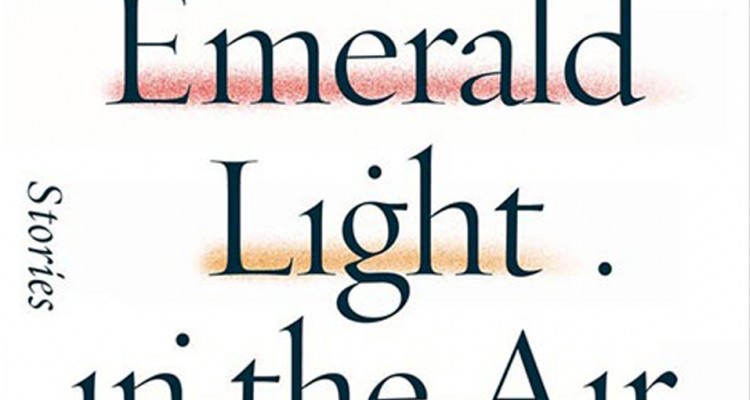
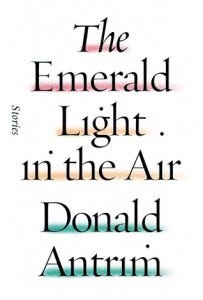
The title story of Donald Antrim’s harrowing collection of stories opens with a man named Billy French driving to the town dump where he plans to dispose of his ex-wife’s paintings and a box of his boyhood comic books. Along for the ride is a Browning .30–06 rifle. We are told, ominously, that Billy “wasn’t a gun nut, and he didn’t hunt.” Later, in one of the story’s many flashbacks to Billy’s time in a psychiatric hospital, he recalls a burning sensation that he felt in his temple, “a beckoning, an itch, a need for a bullet.”
Fans of Antrim’s debut novel Elect Mr. Robinson for a Better World might expect this story to end in death, perhaps even a hilariously grotesque and grisly death, but Antrim is up to something very different, and something very personal, in The Emerald Light in the Air, his first book of short fiction. The one exception is the opening story, “An Actor Prepares,” which pulses with the same energy as Antrim’s novels (in addition to Elect Mr. Robinson for a Better World, Antrim is the author of the equally excellent novels The Hundred Brothers and The Verificationist). This absurdist tale of an absurdist staging of A Midsummer Night’s Dream is alone worth the price of admission. The story stands apart in both tone and theme from the rest of the collection. The other six stories feature men hobbled by self-doubt and self-loathing, a history of ex-wives and clinical depression, but instead of feeling repetitive or one-note, these stories read like shards from the same broken mirror, a mirror that reflects a writer looking back on his life and career and wondering if it was worthwhile.
Much of the self-doubt and self-loathing in these stories is borne of a comically heightened sense of self-awareness. In “Pond, With Mud,” we meet Patrick Rose, a hobbyist poet who is tasked with taking his fiancée’s son to the zoo. Patrick spends most of day jotting down lines of imagist poetry in his notebook and wondering things like, “Would he never know what it was that he was trying to think about himself?” In “Ever Since,” we learn that after Jonathan’s wife left him he “had taken up a new side of his personality.” This new side of Jonathan apparently involves butting into peoples’ conversations at a book party and then worrying about whether or not he has said something offensive. The story “Solace” stars a man named Christopher who frets over whether or not he is really, truly funny as he and his girlfriend hop from apartment to apartment, eating takeout and having sex in the beds of the various people for whom they are housesitting.
Another way this comical self-consciousness is manifested throughout the book is an obsession with clothes. Again and again in these stories we find men watching women dress, men being critical of way women dress, and this sartorial awareness serves as both a mask for these men to hide behind, as well as a useful metaphor. In the story “He Knew,” Stephen takes his young girlfriend on a Madison Avenue shopping spree. We are told in Antrim’s droll narrative voice that Stephen “was an occasional clotheshorse himself, of course, at times when he was not housebound in a bathrobe.” In fact, Stephen is the kind of guy who can carry on a conversation about the relative merits of an Empire waist. And while he is attracted to the craftsmanship involved in the making of fine clothes, he is also aware of “the danger of seeing himself — literally reflected in the mirror of a bar, perhaps — as somehow faintly ridiculous.” This is the conundrum all writers face: is the pleasure of the process worth the possible embarrassment of exposing yourself in print?
The dark side of all this manic shopping is revealed in “Another Manhattan,” the most painful story in the collection. This story uses cell-phones to mimic the internal voices of a breakdown as Jim bounces between phone calls from all four corners of a love square (Jim’s wife is screwing his friend Elliot while Jim is screwing Elliot’s wife), all the while attempting to buy his wife a $341.60 bouquet of roses. Jim is bi-polar, and he has been in and out of the hospital because of his problems with “anxiety and suicidality.” Like many other characters in this collection, Jim’s manic highs result in the profligate spending of money, his wife’s money in this case because “he made all the gestures; she absorbed the costs.” We are also told that “on his way home from day care, as sometimes called his ongoing treatment, he’d got excited about life and jumped off the crosstown bus at Fifth Avenue and run into Bergdorf Goodman and ridden the elevator to the second floor and tried on clothes until closing.”
The collection closes with the title story, “The Emerald Light in the Air,” which is the best of the bunch. The beginning of Billy French’s story, the one with the ex-wife and the Browning .30–06, reads much like the other stories, almost eerily so. The figurative rut that all these men’s’ lives are stuck in is dramatized by Billy driving off a rural Virginia road and sliding ten feet down into a ditch, but Billy rejects the stasis and decides to drive his 1958 Mercedes down the rocky creek bed. In between electro-shock therapy flashbacks, Billy is flagged down by a boy who, for some reason, thinks Billy is the doctor come to help his dying mother. The boy takes him to their broken-down shack, and there, Billy is faced with a woman who reminds him of his own dying mother. Billy, of course, is not a doctor, but like nearly all the other men in this collection, he does have pills hidden in his pocket. Finally, he says to the worried husband, “I can help her.” This moment serves not only as Billy’s redemption, but also as an affirmation for the healing powers of Antrim’s own art. The closing paragraphs of this story are too beautiful to describe, and the reader is left with the feeling that they have just witnessed the writer’s moment of salvation.
As noted in the preamble to my favorite fiction list, my reading in 2014 was rapacious but had no particular focus or methodology behind it. However, I must admit to a difference between my fiction and nonfiction reading. My fiction reading was wide and various while my nonfiction and art book selections had a more narrow focus. I mostly ferretted out books on subjects I am keenly interested in because of my own ongoing nonfiction projects. These subjects included maps, getting lost for no good reason, mixed martial arts, creativity, weird fiction, surrealism, and, um, Moomin-lore, because the Lord sure does love a Moomin and little old mortal me does as well. (If you don’t know what a Moomin is, read this.)
All of these books are great gifts for the general reader. Many, however, double as great gifts for the writer in your life.
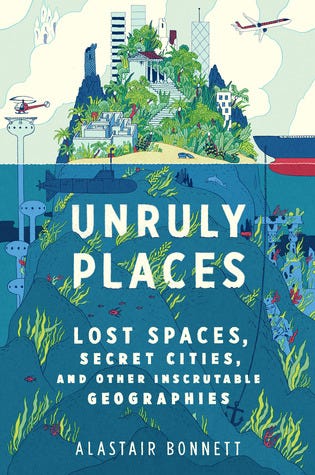
Want to know about pumice and trash islands? How about an island that didn’t exist but appeared on U.S. Navy maps for decades? Or the Archaeological Park of Sicilian Incompletion? Yes? Well, then, you’ve come to the right book. Bonnett not only knows how to coax the most interesting storyline out of his subject matter but comes to this endeavor with a definite point of view. So when Bonnett explores lost feral places and forgotten islands, he’s almost inevitably expressing the idea that we need to be able to get lost every once in a while — that knowing exactly where we’re at all the time is a liability and blunts some important curiosity or impulse. At the same time, Bonnett’s telling us the world we think we know is more of an artificial construct than we realize, although he does it without ever condescending or lecturing. There have been other books on this subject but this one is the best written and most compelling. Prepare to be disoriented…and re-oriented.
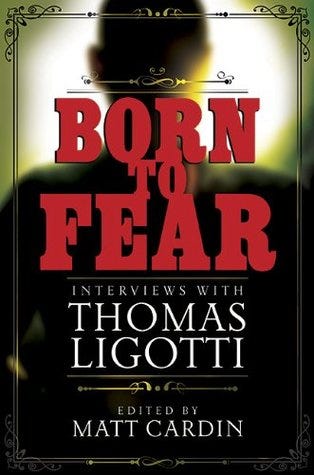
If you haven’t heard of Ligotti, all you need to know is that he’s a protean talent in weird fiction comparable only to Kafka and Poe. He’s by far one of the best short fiction writer of the past 25 years, along with Caitlin R. Kiernan, and also fascinating in his interviews. Earlier this year I wrote about him over at Vulture, in part due to a controversy involving the TV show True Detective. Because Ligotti’s turned his macabre attentions on the modern workplace in the past dozen years or so, he also exists in a unique space that’s both universal and topical. In this handsome Subterranean Press edition, Ligotti answers a variety of fascinating questions from a number of interviewers, each interview hypnotic to anyone who loves reading or writing short stories. You also get a sense of the evolution of the writer, along with snippets of his philosophy on life and fiction. (Full disclosure: I have two interviews with Ligotti in the book.)
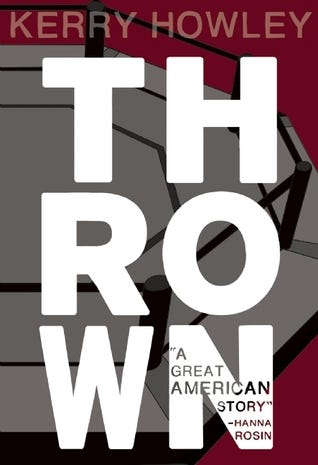
I have many things to thank Harper’s for this year, but at the top of the list is their decision to run an excerpt from this creative nonfiction book about two mixed martial arts fighters — Sean and Erik — one on the downswing and one just starting out. It’s unlikely I would have bought Thrown otherwise, which would’ve been a shame, because this is electrifying stuff. By inserting herself, or some version of herself, into the narrative, Howley could have distracted readers from her subject matter. But it proves to be a brilliant maneuver that gives readers a much more complete experience. The juxtaposition of the fighters’ lives with the author’s clever (but not facile) turns of phrase helps the reader to more clearly see both MMA and the human dynamics of involvement with that scene. Deft concealment of certain bits of information until the right time helps to build tension but never feels forced or manipulative. The author’s ability to write about actual fights is also superlative. I watch a fair amount of MMA matches and I know that it’s very difficult to describe a fight in an interesting yet accurate way. Howley’s methods in accomplishing this feat provide a clinic for nonfiction and fiction writers alike. Her success is also highly entertaining for readers. Also, despite the possibility here for exploitation, Thrown is a sincere undertaking and the two MMA fighters who form the beating heart of Thrown are treated with a core respect. My favorite nonfiction book of the year, to go alongside my favorite novel, Richard House’s The Kills.
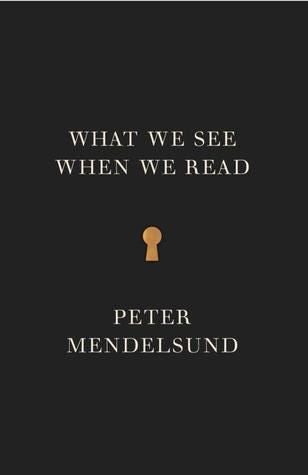
An intriguing book that uses a combination of image and text to explore the reading experience. Sections titled “Memory and Fantasy,” “The Part and the Whole,” and “It Is Blurred” will provoke and delight simultaneously. Visuals like a passage from Kafka’s vision of New York with arrows to indicate a mass of other associations suggest that if you were to thoroughly map certain fictions an even more gnarled mass of arrows would result, signifying an almost infinite wormholes of connections. But the whole book is a kind of down-the-wormhole or rabbit-hole experience, as Mendelsund’s on a continually quest for different image structures to talk about how people read. Stereo-like balance indicators of Dream, Hallucination, Veridical Perception, Reading Imagination exemplify the approach; they’re both practical and whimsical. The author clearly loves the immersive, unique qualities of the reading experience but only someone with Mendelsund’s unique talents in both prose and art could have created this wonderful book.
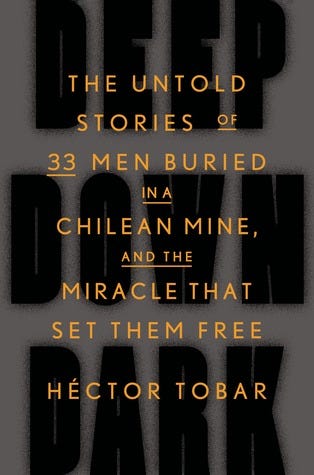
The Chilean mine disaster became sensationalized by the press, as might be expected. This book, which documents the disaster and its aftermath in almost novelistic detail, reclaims the disaster through a humane and thorough approach. The value of words on a page as opposed to fancy infographics and three-dimensional maps in giving us the full story cannot be understated; I don’t really know how, for example, we otherwise could learn as much about the families of the miners. Deep Down Dark starts by following each of the 33 miners from their homes that fateful day and attaches to that narrative a useful and panoramic history of the region and the mine. Once the disaster strikes, the author doggedly follows the story deep inside the mountain with a precision and clarity that makes the events even scarier. The scale of the mining operation — that trucks were driving into the lower levels — is one thing that stuck with me. But also that a slab of stone the height of a 45-story building separated from the inside of the mountain and plunged down through the levels. I read on in horror and fascination, struck equally by the miners’ struggles and the way in which Tobar provided so much useful information and context that I just simply didn’t know before. Along with Thrown, this book deserves all the nonfiction awards.
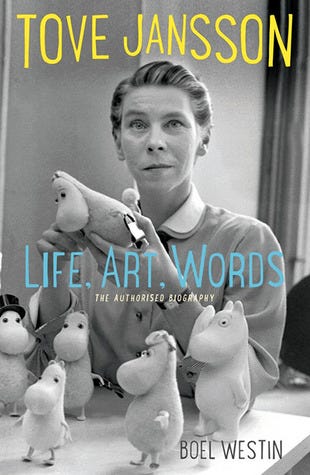
Finally, I address the Moomins in the room. Specifically, Westin’s excellent authorized biography of the iconic Tove Jansson. An artist and writer, Jansson may be best-known for her Moomin comics and stories — about a family of creatures (people?!) unlike any other — but she also wrote and drew for adults. Westin’s lively, loving book brings Jansson to life on the page. We learn about her artistic parents, her early life, and early successes with her art. In particular, Westin is careful to portray the parents and the creative space in which they, and thus Jansson dwelt, as being pivotal to the flourishing of Jansson’s imagination. In robust detail, Westin also charts the story arc of the iconic writer-artist’s most significant creative accomplishments. Perhaps these are the elements you would expect from a first-rate biography, but they are imbued with extra life by the evident love Westin has for her subject matter. The lavish abundance of photographs and reproductions of Jannson’s art is a wise choice. The saturation of the biography with images on almost every page turns what is already three-dimensional into something much more delectable. This is one biography where you could just look at the pictures if you wanted to — and be richly rewarded.
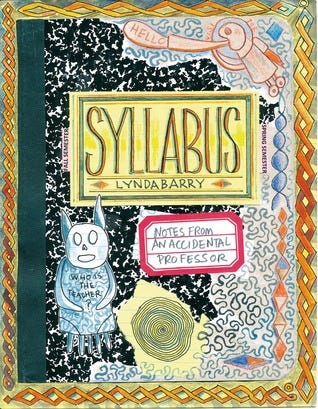
The two-hundred pages of exercises and observations in Syllabus are guaranteed to stimulate your creativity, whether you want to write or draw. Some of the pages feature practical ideas and others are whimsical in the best possible way. “Let’s Draw a Car and Then Let’s Draw Batman” proclaims one page. “Hate Crayon” adorns another, but in an ambiguous “Maybe I actually love Crayons” way. Barry’s approach is non-elitist, democratic, and all about helping you express yourself. But, on another level, this is “just” another gorgeous art book full of Barry’s idiosyncratic, often surreal illustrations. Which means you should buy it even if you’re not looking to spark your creativity.
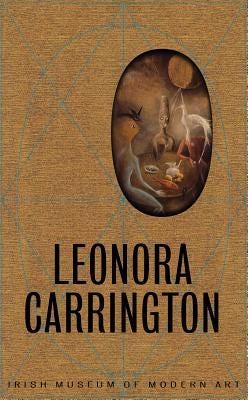
I love both Carrington’s fiction and art. Someday a book may encompass both. But for now this elegant package focusing on the art is most welcome, especially because it includes a plethora of nonfiction too. The analysis of her art by experts is fascinating enough, but “A Celtic Window” by Carrington’s son Gabriel Weisz Carrington is my favorite. His argument for separating the art from the person — and from her relationship with Max Ernst — convinces, but also provides little personal snapshots. “Whenever my birthday came around,” Gabriel writes sarcastically, “[my mother] would always cook a surrealist cake. It was such an extraordinary event, because this delicious food would levitate at least six feet from the ground, barking ferociously at me.” There have been other coffee table books collecting Carrington’s art, but they’ve always seemed too staid to properly capture the genius of this particular artist. This new one, however, has a welcome wild energy running through it.
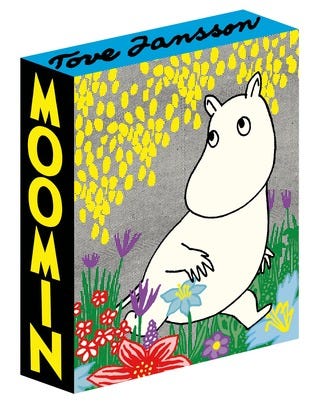
Utterly delightful for children and adults, Jansson’s Moomin comics feature the titular characters, along with cohorts like giant rats, white finger-looking creatures, and others, all engaged in strange and wonderful adventures. Now you can get all of Drawn & Quarterly’s previous slim volumes of Moomin comics in one huge omnibus, complete with several pages of sketches and some lovely full-page full-color compositions. Technically, I guess this is a graphic novel, but I’m treating it as an art book due to its sheer scale and beauty. Moomin and the other creatures Jannson drew are rendered in an appropriately simple style, while the backgrounds are often nuanced and complex. In less skillful hands, this would be fodder for sticking one’s finger down one’s throat in revulsion at the treacly whimsy of it all. However, Tove Jansson was a pragmatist and also, if her work is any indication, a wise person. Beneath the gentle surface of Moomin there is a sly, wicked wit and much non-didactic commentary about the world and people’s place in it. First run in the 1950s in the London Evening News and syndicated around the world, Moomin has a timeless quality. I know that no matter when I return to the Moomin comics and stories, I find something I didn’t see before.
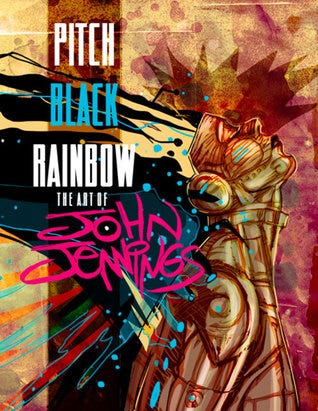
I first saw John Jennings’ artwork on the cover of the highly recommended fiction anthology Mothership: Tales from Afrofuturism and Beyond. Then I tracked down everything I could online, before encountering this stunning coffee table book — which collects some of the best. What do I love about Jennings’ work? The vibrant use of color, the kinetic sense of motion even in static portraits like “Wildseed Lion,” the sense of strength and playfulness in the compositions. Also, as Tananarive Due says in her introduction, “A survey of Jennings’ art is a survey of black popular and political life,” including African American superheroes. Also, it’s just damn beautiful work. You really have to pick this up — and buy it for friends.
Ian Miller is among the most brilliant and most idiosyncratic of those artists whose oeuvre trends toward the dark, disturbing, and fantastical. This sharp, smart overview features over 300 of his best black-and-white and full-color work. In addition to stunning originals, Miller has created commissioned art for such iconic events as the publication of the “Difference Engine” novella that became the famous novel by Sterling and Gibson. He’s also illustrated avant garde graphic novels by M. John Harrison and created images for Peake’s Gormenghast. The art is uncompromising, sometimes stark, but always also with a trapdoor of black humor and absurdism lurking underfoot. Miller’s commentary is illuminating if sometimes terse. For example, he writes, “I often think of the sea as a powerful animal or beast because of the way it claws and paws the shoreline.” This may seem a simple observation but perfectly explains the sense of almost sentient motion in his Maelstrom illustrations. A lifetime of spectacular achievement can’t be summed up by any one collection, but this book comes close.
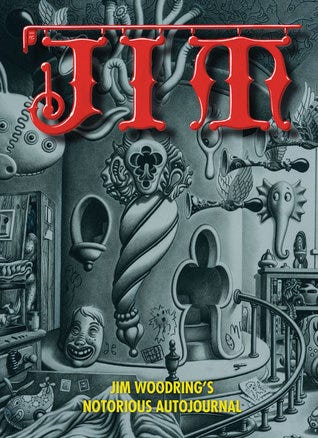
Confession time: I never ask myself what Woodring’s art means; I just love his weird critters. I love them so much I could just watch them prancing around doing almost anything and be quite happy. Making a ham sandwich. Getting groceries. Kicking a can. So I picked up Jim expecting perhaps some proto-versions of the acclaimed Woodring style. Instead, a lot of what’s contained therein seems to suggest Woodring’s worldview was always expressing itself in unique surreal ways. Some of the comics that appear to feature him or a him-version are almost Escher-like in their logic. A sequence in which the main character has a series of encounters dressed in his pajamas is particularly interesting. Other sections go all the way to chaotic Dreamville and the wilderness beyond. The value of reading work by artists who allow their subconscious to reign supreme is that you get very little self-censorship, or at least a sense of that kind of freedom on display. Even if you’re not a Woodring super-fan, this is a valuable and entertaining collection.
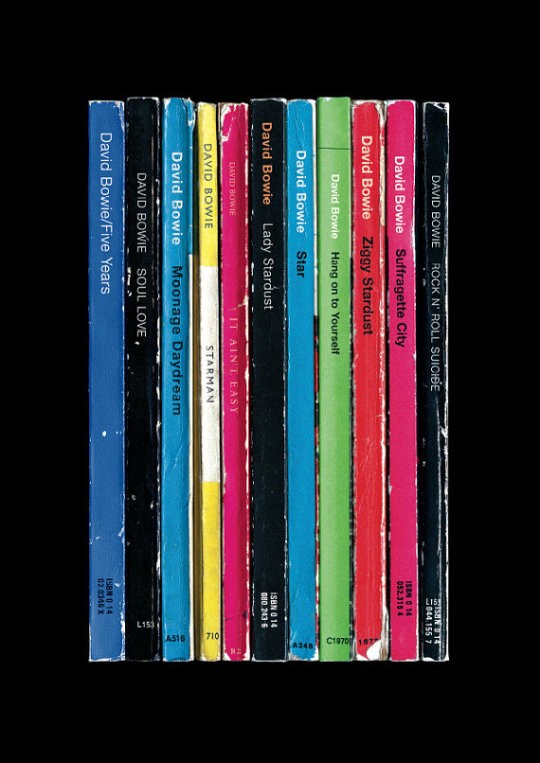
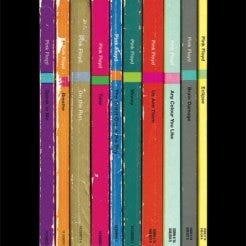
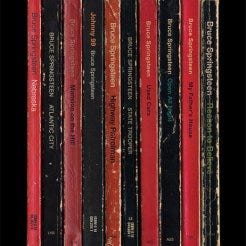
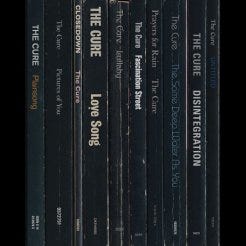
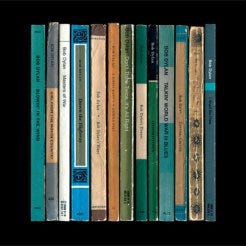
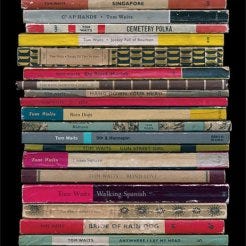
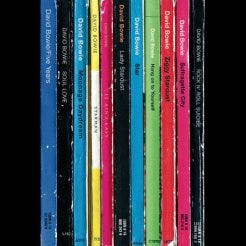
Would you be interested in a book called “Starman?” How about some of the author’s other titles, like “Five Years,” “Moonage Daydream” or “Suffragette City?” If those titles ring a bell, it’s probably not because they’re on your bookshelf, although London-based artist Simon Jones has imagined what that might look like. Rock fans will recognize those titles from David Bowie’s album The Rise and Fall of Ziggy Stardust and the Spiders from Mars, one of several classic LPs which Jones has imagined as a book collection.
In Jones’ poster prints, used-looking paperbacks are lined up with each book’s spine featuring the name of a different song from the same album, organized by the tracklisting. Featured titles include albums from Radiohead, Pulp, Led Zeppelin, Kate Bush and Leonard Cohen, as well as works from musicians-turned-authors like Patti Smith, Morrissey, Nick Cave and Bob Dylan. You can check out more of Jones’ prints on his Etsy page, and post what record you’d like to see in book form (or whether “Jockey Full of Bourbon” or “Cemetery Polka” would be a better read) in the comments.
Writer friends: everyone’s got ’em. They’re the person slumped in a chair at the end of the table, bags under their eyes, shoving leftovers into Ziploc bags to take home on the Greyhound. They’re the college friend who’s sort of employed, only not really, and they always have pockets full of cocktail napkins covered in verse. Maybe you’ve got a token family writer, the niece or nephew who’s just been published in their campus lit mag and has book deal-shaped stars in their eyes. Maybe that person is you. If it is: that’s ok. You’re not alone. Like the rest of us, you’re probably tired of getting socks, beard trimmers, and gift certificates to Chili’s, and if that’s true, just forward this list to Mom and Dad and your lawyer sister. You always thought they were more proud of her, but you read The New Yorker and write lots of poems. You’re special too, and you deserve something literary this holiday.
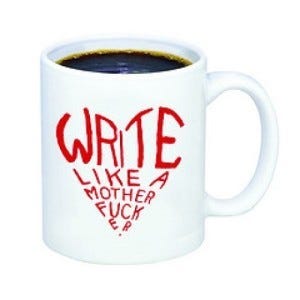
1. “Write Like a Motherfucker” mug: It’s on every list for a reason. There’s something about sipping from a profane mug that makes charging ahead with a daunting short story/essay/MFA recommendation request less harrowing. You know at the beginning of a yoga class, how the teacher asks you to think of your intention, your hour-long raison d’etre? Well, here it is. On a mug, motherfuckers.
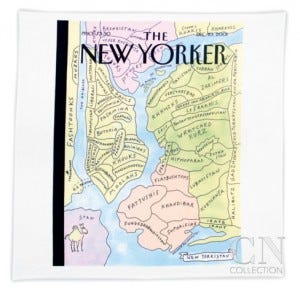
2. The New Yorker’s New Yorkistan shower curtain. Instead of projecting their neuroses onto the vast blankness of a plain white shower curtain, your favorite writer can spend their mornings mapping out the boroughs of New York in Maira Kalman’s winsome script. Bonus: houseguests at parties will know that the owner/renter of said bathroom has high falutin’ literary tastes and has probably spent some time drinking overpriced PBRs in Perturbia (aka Williamsburg).
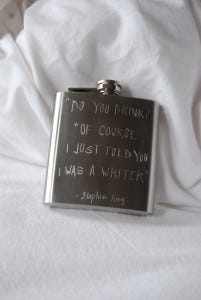
3. Stephen King flask. When those overpriced PBRs start biting into your Submittable fees, it’s time to get inventive, and by inventive, I mean it’s time to go to the liquor store for a liter of Fireball and stick a flask in your pocket. Pull a Dorothy Parker and make heavy drinking and wordplay your (or your flask-recipient friend’s) “thing.”
4. A subscription to Freedom. By now, maybe it’s clear that these “gift ideas” are actually just “things I want.” Why continue with the pretense? Also: do you know how many times I checked Twitter during the drafting of this list (I hope you don’t, it’s an egregious figure)? Freedom, lauded by many a writer (including Dave Eggers, Emily Mandel, Naomi Klein, and Neil Gaiman) as a time saving, distraction-barring wonder-app, keeps one from accessing the Internet during a certain pre-determined period of time. Leaving Facebook island is like stepping out of Times Square and onto one of those Sandals beaches. A caveat, though: pets, fellow humans, and your iPhone will continue to trifle.
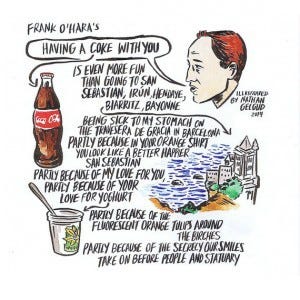
6. Frank O’Hara illustrated print. There is no lovelier poem than Frank O’Hara’s “Having A Coke With You” (play nice in the comments section, poets). This illustrated print by artist Nathan Gelgud combines the first few lines with bright, breezy images of Coke bottles and yoghurt cups, and would add some affordable color to an apartment wall. Writers are nothing if not self-identifying, so this also helps visitors know that yes, the person whose house they are in has many books and many ambitions and writes many things, oh yes, wow.
7. Lamy Safari fountain pen. Ain’t nobody got the money for a Mont Blanc unless they’re bankrolling scholarships to the Tin House writers’ conference, and if you’re that person: #blessyou. Otherwise, Lamy pens are durable, colorful, and a dream to write with. I like this neon-pink color, but if you’re trying to go business-professional — I don’t blame you, really — there are a variety of other shades. These are refillable by either cartridge or inkwell, and they make writing grocery lists or late rent checks feel downright luxurious. Bonus: lots of indie bookstores sell these, so check there if you want to try one out!
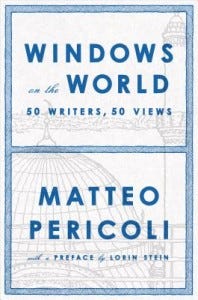
8. Windows on the World: 50 Writers, 50 Views by Matthew Pericoli. The Paris Review anthologized the charming pen and ink sketches of artist/architect Matthew Pericoli, who chronicles the desk-views of famous writers. Windows on the World lets you see Chimamanda Ngozi Adichie’s Lagos, Nigeria vista & John Jeremiah Sullivan’s Wilmington, NC vantage point. It’s something you wouldn’t necessarily buy yourself (but if you do, high five). Writers love borderline-creepy voyeurism into craft, environment, and process, and this cool-looking volume (whose book jacket is translucent, like an architectural rendering) delivers on all those fronts.
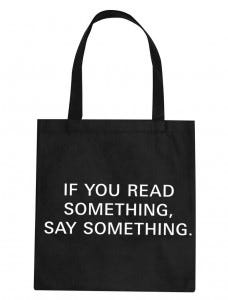
10. BOMB’s “If You Read Something, Say Something” Tote. For any child of the 70s, 80s, or 90s, or rider of any sizeable public transit system. Heaven knows we all own something close to our body weight in ratty tote bags; heaven knows I leave mine just about everywhere I go, like an earth-friendly breadcrumb trail. You can never have too many.
11. People I Want to Punch in the Face notebook. Pocket-sized and easy to wield should someone start a conversation with you in a coffee shop, on a train, or when you’ve got a pen in your hand and you’re trying to write, damn it. Maybe this will work similarly on relatives, when you’re holed up in a room in your parents’ house with a laptop and a stack of books and OH MY GOD, YOU’RE JUST TRYING TO FINISH THIS ONE PARAGRAPH THAT’S NOT QUITE RIGHT, OK, YOU’LL BE DOWNSTAIRS IN A MINUTE! NO I CANNOT WALK THE DOG RIGHT NOW!
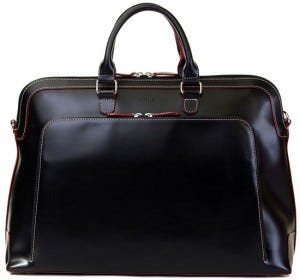
12. A briefcase. When the going gets tough, writers could use a little something fancy. This number (which you should obviously get in bright red) is swanky Italian leather, and reminds me of a favorite college professor who stored his rejection letters in a bag that he’d open at the beginning of the semester, as if to say, “See, it takes a lot of headaches to become a beloved professor who’s written a bestselling novel and sold movie rights and owns two adorable dogs!” That’s actually 100% true: rejection will be a part of any writer’s life, and we’d all be lucky to end up with a book deal (and cute dogs and movie rights) to our names. To cheer up yourself or a writer friend, celebrate the rejections too. Store them in a briefcase (or a file on your laptop), so they (or you) can take them out and relish the difficult path to victory. Bah humbug, am I right?
One of the things I love most about being Editor-in-Chief of Curbside Splendor is working with all of the amazing and unique authors. The range of personalities and aesthetics is crazy and delicious. So when I was asked to put together a Holiday Mix featuring my authors I kept envisioning what it would be like if I had them all over to my mom’s house for a big holiday meal. All these weird questions began bubbling up in my mind like: Who would show up drunk? Which one would bring a tiny bowl of salad? What author would say something really earnest and make my mom cry? Would any of them flake out altogether? Who would blend into the wallpaper and who would hog all the attention? And would any of them play metal? So I opted to make answering these and many other pressing questions the challenge of my mix.
The following tracks are songs that I feel would define the vibe each of my authors would roll with as they sat around the monstrous dining room table at my old homeplace in West Virginia, eating ham and roast beef and mashed potatoes and candied yams and stuffing and a world of casseroles.
1. Franki Elliot, Piano Rats & Kiss As Many Women As You Can — “Good Feeling” by Violent Femmes because Franki would be really sad about being there in that moment and knowing it would be ending soon and not wanting it to end soon but also wanting it to end soon because it’s sad in that moment.
2. Michael Czyzniejewski, Chicago Stories & I Will Love You For The Rest of My Life: Break-Up Stories — “Shady Lane” by Pavement, because Czyz would be both charming and ironic and would undoubtedly note how my parents live in a somewhat idyllic old Victorian house and everybody wants one of those.
3. Amber Sparks, May We Shed These Human Bodies & The Desert Places (co-authored with Robert Kloss) — “White Chalk” by PJ Harvey because Amber would know the history of the labor movements in Southern WV and all the bloodshed during the mine wars and would radiate some sort of awareness of how horrible things are for coal miners (plus Robert Kloss would be really into the story of Syd Hatfield and think this song speaks to that somehow).
4. James Greer, Everything Flows — “Everything Flows” by Teenage Fanclub because, well, it just makes sense and is also unexpected due to its obviousness and that’s exactly the sort of thing James would say once he’s drained his third pint of beer and is beginning to feel more comfortable — that the obvious is so often the most unexpected thing and this is what makes it deceptive and gorgeous.
5. Joseph Bates, Tomorrowland — “White Christmas” by Bing Crosby because Jody’s a sentimental type even if he does look like a hero from a spaghetti western and would be earnestly moved by the whole event, especially my mother’s Christmas tapes which she has played every year since the late ’80s and which have a tape hiss he’d aptly note makes them all that much more gorgeous and decayed.
6. Chris L. Terry, Zero Fade — Craig Mack “Flava In Ya Ear” because Chris is one of the warmest dudes I know and he’d use old school Hip Hop to lure my junky brother out of his benzo-laced stupor and get him goofing and telling stories about the days when all the girls in the trailer park called him the cheeseburger pimp.
7. Samantha Irby, Meaty — Trans-Siberian Orchestra “Carol of the Bells” because Sam would totally light up the room and immediately be the apple of my mother’s eye, the two of them chatting idly about recipes for squash and the unique pains of neuropathy, and, being on the level with her, Sam would sense that my mother really wanted to have little bit of of amaretto in her coffee and she’d enable that and my mother would tell the story of how nice Samantha Irby is for the next decade.
8. Ben Tanzer, Lost in Space — “Rocket Man” by William Shatner because Ben wouldn’t believe my dad’s never heard this amazing cover and would play the Youtube clip for him and my dad would love it and tell a corny Star Trek joke and it would be like old home week.
9. Tom Williams,Don’t Start Me Talkin’ — “Nine Below Zero” by Sonny Boy Williamson II because Tom would bask in the warmth of the crowd gathered around the table eating and laughing and know that it could only be truly appreciated in direct contrast to the cold, constant rejection from the world outside.
10. Bill Hillmann, The Old Neighborhood — “My Bucket’s Got a Hole In It” by Hank Williams because Bill would instantly bond with my Pawpaw as they are both self-made men and complete extroverts and they’d start swapping raunchy jokes and telling tall tales about jobs they’ve worked and women they’ve known and Pawpaw would take him into the family room and whip out his acoustic guitar and make Bill listen to him while he sings his favorite Hank song.
11. Tim Kinsella, Let Go and Go On and On — “Little League” by Cap’n Jazz because Tim would feel awkward in the packed room and slip outside to smoke and he’d notice the little league baseball field in the park across from my parents’ house and this song would flash across his brain-pan as he ponders the best way to leave without anyone noticing.
12. Megan Stielstra, Once I Was Cool — “Three Days” by Jane’s Addiction because Megan would get me talking about my past and we’d somehow stumble onto the topic of bands we love and Jane’s Addiction would come up and I’d tell her the story of how I was driving drunk when I was twenty and totaled my Toyota truck while this song was blasting and I was lucky to have lived and she’d listen and then reply with a story of her own marking time, making me feel heard and understood.
13. Lauren Becker, If I Would Leave Myself Behind — “Last Christmas” by Wham! because Lauren is still thinking back to that year with him before he started making the scones she likes, before she knew he still loved her, before she could hurt him — and these thoughts occupy her as she idly pokes at her plate, the conversation swirling around her.
14. Marvin Tate, The Amazing Mister Orange — “White Christmas” by The Drifters because my mother would learn that Marvin is a singer in a soul band and would tell him all about dancing to her James Brown records when she was in high school when her mother wasn’t home and Marvin would smile and make her feel loved and bust out a few verses of this song all a capella and in the style of The Drifters and my mother would blush and get flustered and ask if we are ready for dessert.
15. Ryan Kenealy, Animals In Peril — “Mele Kalikimaka” by Bing Crosby because Ryan has an old soul and would realize immediately that my grandmother secretly loves jazzy songs that my Pawpaw never plays and he’d put this song on and get her to dance around the room for a little bit while we all laugh and cheer and my grandmother forgets she’s 93 for a few beautiful moments.
16. Dmitry Samarov, Where To? — “Candy” by Morphine because this song would get stuck in his head when Dmitry is sketching still lifes of all of the candy my mother makes for the holidays and he’d eat a few too many chocolate-covered peanut butter balls and laugh a dry laugh at his own gluttony.
17. Susan Hope Lanier, The Game We Play — “Crazy” by Patsy Cline because my Pawpaw would ask her if she knows any Patsy Cline songs and she’d admit that she does in fact know one and it’s this one and he’d make her promise to sing it with him after supper and she’d spend the rest of the meal nervously wondering if he is serious.
18. Erika Wurth, Crazy Horse’s Girlfriend— “I’ll Be Home for Christmas” by Frank Sinatra because like all of the fire-breathing, shit-talking, hard-as-nails people I know, Erika is the most sentimental softy out there and this song would come on one of my mother’s Christmas tapes and she’d have to stop herself from crying by busting into the conversation between my Pawpaw and Bill Hillmann to tell the dirtiest joke she knows, one so hardcore it leaves even the two of them afraid to laugh.
19. James Tadd Adcox, Does Not Love — “No Children” by The Mountain Goats because Tadd would find his thoughts drifting perversely to a holiday meal in a world much different than this one and he’d smile and when my wife Diddle asks him what’s so funny he’d say, ‘Oh nothing, just thinking about love.’
20. Brian Costello, Losing in Gainesville — “Santa Baby” by Eartha Kitt because Brian can’t help himself from rising to the occasion after imbibing a little too much of my mother’s amaretto and delivering a slithery rendition of this infamous number, a decision he’d immediately regret.
21. W. Todd Kaneko, Dead Wrestler Elegies — “Silent Night”by Pro Wrestling Noah because, much to Todd’s dismay, there is nothing on YouTube when you search for professional wrestlers singing Christmas carols except for this mess and this really bums him out because he has been hoping to mention a cover of a holiday classic sung by a notorious wrestler as a conversation starter during dessert.
***
— Jacob S. Knabb is Editor-in-Chief of Curbside Splendor and teaches in the English Department at Lake Forest College, where he resides with his gorgeous wife, his fat and sassy baby, and his two chihuahuas.
Atticus Lish’s Preparation for the Next Life is this generation’s most significant novel about “otherness.” Using the story of two individuals that end up in a relationship as a vehicle to explore life on the fringe, Lish delves deep into the realities, challenges, and feelings of an undocumented immigrant and an Iraq war veteran whose body and psyche have been affected by three consecutive tours filled with fear and carnage. Packed full of details, vivid descriptions, and unflinching honesty, Preparation for the Next Life offers readers a touching and brutal look at the way those on society’s margins manage to keep on dreaming while they struggle to survive.
The narrative kicks off with Zou Lei, an ethnic Uighur from northwest China who barely speaks English. She slips into the country without papers, with no one to reach or ask for help, and is in desperate need of shelter and a job. After a short stint in a prison, effectively serving as her introduction to life in the United States, Zou holds a string of dead-end jobs in stores, kitchens, and even selling DVDs on the subway. Finally, she ends up working in the kitchen of a Chinese restaurant in Queens where she’s at the bottom of the chain of command and no one understands her language. She is eager to learn and move up in life, but desires clash with the harsh reality of her cramped existence in an overcrowded place that offers her only a roof and a dirty mattress. When not working, Zou occupies her time exercising and developing a relationship with Skinner, a severely depressed and mentally unbalanced veteran with a back full of scars. Skinner goes to New York trying to escape his nightmares and rents a basement apartment in Queens. He spends his time smoking and reading fitness magazines. When they meet, Zou and Skinner find comfort in each other, a way to momentarily put an end to their loneliness, but solitude is only one of their problems.
Lish masterfully juggles a lot in this novel, but there are two items that stand out the most, confirming Preparation for the Next Life as one of the most powerful narratives of the year. The first is the unapologetic lack of sentimentality. Preparation for the Next Life is a love story, but it’s also as far from the romantic aesthetic as one can get. The characters are broken, flawed, deracinated. Lish shows them drinking, having lazy afternoons of pizza and sex, and sometimes seeking each other with the eagerness of new lovers, but being together is only a small respite for their loneliness and not an all-powerful solution to their plethora of problems. There is love and talk of better times in the future, but there’s also crippling depression, callused hands from working, and a gun that sometimes seems to offer the only way out.
The other element that is truly outstanding is his ability to showcase his knowledge about everything from the city of New York to the unifying discourse of struggle and survival that most undocumented workers share.
“Everyone have to be careful, right? You know the saying, every man for self. The man, woman, kid, also. This is the life. You want take my time, what you give me? Think about. That’s America. Everyone come here the same story.”
The prose with which he communicates this familiarity is at once sharp and focused but also unhurried, unexpectedly elegant, and not afraid to explore that strange space outsiders share, a tense space where they are forced to communicate in a language they don’t fully dominate. Lish seems to be aware of what it means to be desperate, and this awareness allows him to recreate the streets of Queens, Zou’s job environment, and the Iraq war in vivid detail. It also allows him to create characters that feel real. Zou works hard without complaining, is generally optimistic, and thinks a better future is possible. On the other hand, Skinner is tormented, taking pain medication for his back, the victim of suicidal thoughts and horrible nightmares. Despite these differences, they somehow manage to embody the same thing: the incessant battle of those on the wrong side of the tracks. The result of this mix of familiarity, truth, and writing skills is a novel that seems to have been distilled from the essence of the many generations of natives and foreigners who have toiled in this country searching for a piece of the American dream.
“They took the subway from Queens down to Canal Street in Manhattan. It was full of African, Bangladeshi, and Chinese vendors, selling I Love New York shirts and counterfeit Rolexes. From here they walked down to the city buildings. The big gray granite buildings took up block after block. At the criminal and family courts, the doorways were four stories high and there were crowds outside waiting to get in through the metal detectors.”
Preparation for the Next Life is devoid of unfilled promises. The narrative successfully and entertainingly moves forward despite the fact that everyone involved is wary of letting hope sneak its way in. And that is a very smart move. In a literary landscape that often favors narratives about well-off Caucasians enjoying what the city has to offer, Lish has crafted a masterpiece full of accents, religions, and grit, the building blocks used to create New York City. Strangely enough, the author’s emphasis on grittiness also contributes to making this novel a memorable and very poignant homage to the Big Apple. Lish’s candid look at life on the wrong side of the tracks is both heartbreaking and beautiful and signals the arrival of a gifted voice with a knack for too-real fiction.
To purchase Preparation for the Next Life, click here to be directed to Tyrant Books’s site.
Year-end lists are always subjective and incomplete, but they are especially tricky for books. A dedicated film critic can watch every wide release film and a theater critic can go to most every play, but the book critic is faced with an insurmountable mountain of books each year. The sheer number of books is inspiring as a reader, but it can make “best of” lists laughably subjective when the critic has only read a fraction of the hundreds of thousands of books published each year.
With that in mind, I decided to crowd source Electric Literature’s year-end lists. On Tuesday, we published our 25 Best Novels of 2014. Today, we are publishing our 25 favorite story collections. To get the list, I asked sixteen Electric Literature contributors and friends to pick their favorite collection published in 2014 to write about, and then asked them to send me a short list of other collections they loved. The books that got the most mentions have been included with everyone’s top picks. Our hope was to have an eclectic list of books that included more than just the obvious names, and I think you will find at least a few books here that you hadn’t heard of. Our list also includes two collections of prose poems and one collection of comic stories. Keeping in mind that if I’d asked a different set of writers and critics we would have a different list, here are the definite 100% objective best story collections of 2014:
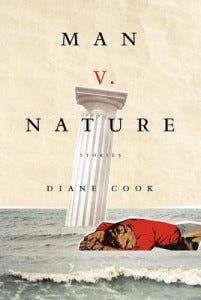
Cook’s collection dips and dives between the real and the refreshingly unreal, with a perfect balance of imagination and morbidity. Man V. Nature is a breathtaking standout and perfect introduction to a future literary force of nature.
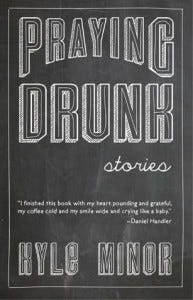
Kyle Minor’s second collection of short fiction abounds with stories that come at life from all sides. Questions are raised of faith, sexuality, and family; they channel the grittiest of realism and feature magnificent surrealism, depending on the occasion. What they share is a haunting quality, and the ability to remain locked on to a reader.
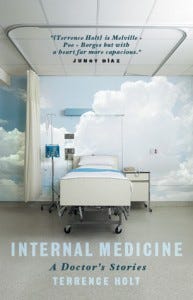
Holt should be a household name. He’s an unbelievably talented prose stylist and inventive writer — see his excellent first short story collection, In the Valley of the Kings. And…he also happens to be a doctor. This collection is a gorgeous, melancholy, thoughtful group of stories loosely based on his time in residency. And if you happen to be — like me — obsessed with work, illness, death, and the body, then you need to put this on your list immediately.
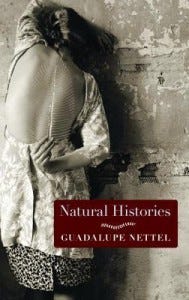
It’s been a really great year for short story collections. I really enjoyed dipping into Snow In May by Kseniya Melnik, The Corpse Exhibition by Hassan Blasim, The Emerald Light in the Air by Donald Antrim, J. Robert Lennon’s See You In Paradise, and Ben Marcus’s Leaving The Sea. One that stood out for me in particular among these very good books is Natural Histories by Guadalupe Nettel, translated by J. T. Lichtenstein. Nettel is a wonderful Mexican writer, and each of the stories in this slim collection, published by Seven Stories, takes a wry philosophical look at the relationship between people and the creatures they live with — whether a pair of pet fish or an infestation of cockroaches.
Rivka Galchen’s fictional world, no matter how fantastical, remains our world. Regardless of its walking furniture and time travel paradoxes. Her commitment to a kind of scientific dream logic always delivers me to some true place I’ve never been or imagined. Or as she says in one of her stories: “Surely our world obeys rules still alien to our imaginations.” I could say the same of this uncannily beautiful collection.
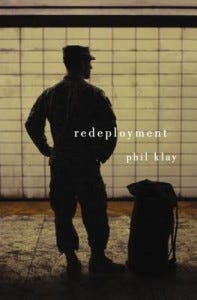
I’m biased here: in 2012, we published Phil Klay in Recommended Reading, and he just became a 5 Under 35 Honoree and National Book Award Winner. Fortunately, in making lists of the best book of the year, objectivity isn’t top priority. And, in any case, Redeployment isn’t just an important book for 2014 (it focuses on the experiences of Marines in Iraq and how to reconcile a return to civilian life), but it’s also a remarkably written book that handles language, psychology, and narrative reliability in ways that I’ve never seen before.
– Benjamin Samuel, co-founder of Recommended Reading and Program Manager at National Book Foundation
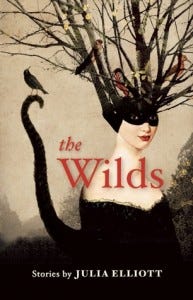
Although a lot of collections these days are said to be “beyond genre,” Julia Elliot’s stories truly are — I can’t think of anyone they wouldn’t appeal to. By turns terrifying, anxious, delicate and fantastic, Elliott has a Bowie-esque range (and sometimes similar subject matter). Free of the irony that can spoil a good tale of killer dogs, robotic grandmas or recreational brain surgery, Elliot, more than anyone else writing today, is the heir to the bedroom kingdoms and true-to-life fairy tales of Angela Carter, Barry Hannah and Ballard.
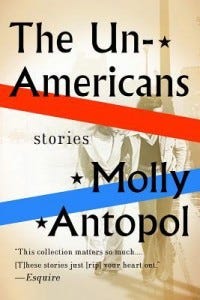
I grew up with this idea that there was always going to be an abundance of great Jewish fiction out there since I came of age in the shadow of all the Roths, Bellows, Ozicks, etc. And yes, there are plenty of great Jewish writers, from Michael Chabon to Jami Attenberg, who give us books with unforgettable Jewish characters, and very Jewish problems. But an entire collection? That would seem tough, like everything has been done before and getting a handful of original tales would be nearly impossible. But not for Antopol. This is a book filled with Jewish characters and stories, sure, but anybody from any walk of life will find the greatest of pleasures in its reading.
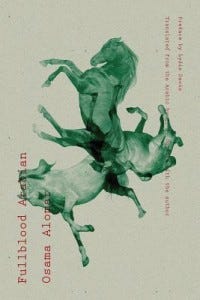
Brief, imaginative, and wonderfully subversive, Fullblood Arabian is Syrian writer Osama Alomar’s first collection of very short stories and parables to appear in English. These are stories in which a clock on the wall might enviously regard a bucket in the sink as a rival clock, stories in which we might be asked to reimagine the act of applause — from the hand’s point of view. Drawing from influences such as Khalil Gibran, Aesop, and Kafka — and championed by America’s resident short-prose master Lydia Davis — Alomar takes aim at the absurdities of political and social status quos, joyously upending them with humor, wit, and élan in stories as short as a single sentence.
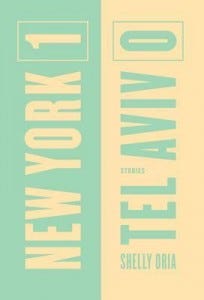
Read Shelly Oria’ debut short story collection if only because her dialogue is either scarily reminiscent of your own life, or, at turns, better than real life.
– Ryan Britt, author of the forthcoming book Luke Skywalker Can’t Read: A New Geek Manifesto
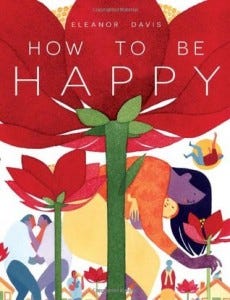
In a year chock full of gorgeous story collections, one that stood out for me was, gasp, illustrated. (Which is perhaps less shocking given Roz Chast’s inclusion on the National Book Awards short list this year.) Eleanor Davis reminds us in her introduction that How To Be Happy is not about how to be happy. Instead these deeply imaginative and beautifully rendered stories show us the quiet struggles (and loveliness) of the everyday, no matter how wild the premise of the story. Each of the stories included here is entirely its own — moving from a lonely man’s failed attempt to create a present-day utopia, the simple beauty of a teenage summer love affair or a relationship failing, to an exploration of a dystopian future. Davis’ voice is entirely original, her range exceptionally broad, her artwork stunning and flexible, and her storytelling elegant and moving.
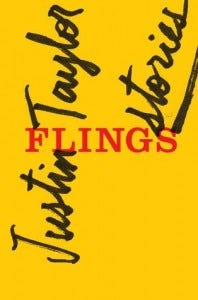
Not much to say about Flings that I haven’t already declaimed from a barstool throne: This book is Da Bomb! But it’s also a bomb, a small explosive device that will destroy you if you get too close. I dare anyone to tell me your heart’s still in tact after reading “Adon Olam”, a modern tale of drugs, Jewish summer camp, and bromance gone bad that sucker-punches at the end with its deep emotional resonance. I dare anyone to tell me you didn’t explode with laughter after reading the mushroom-suit monologue that opens “Sungold”. I dare anyone to finish this book and not be blown away.
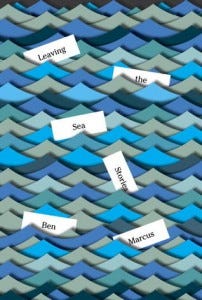
I’ll always have a special place in my heart for “Watching Mysteries With My Mother,” the story that opened Recommended Reading over two years ago. “I don’t think my mother will die today,” it begins, and by the story’s conclusion the underlying fear of that statement has been thoroughly excavated. I like that word, “excavated,” to describe Marcus’ writing, because many of his stories have a burrowing quality, the way they lodge themselves in the base of your brain and continue to work. Other tremendous stories in the collection include “I Can Say Many Nice Things,” about teaching writing on a cruise ship, and “What Have You Done?”, about the time-travel that is returning to childhood hometowns.
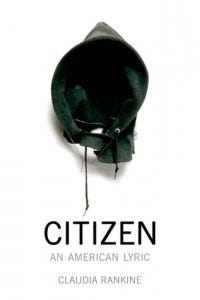
We need to have a better conversation about race and I want Claudia Rankine at the head of the table. I want her to read us the stories and poems in Citizen, with its micro-aggressions, its pain, its wisdom, and its invitation to empathy and the right anger. This book is powerful and unsettling. I’ve read it three times and I think everyone in the country should too and then we should have that conversation.
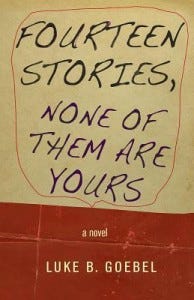
Written in a gonzo-style cadence which mixes prose poetry with outlaw confession, Luke B. Goebel’s stunning debut, Fourteen Stories, None of Them Are Yours, just may be the irascible yet heartfelt contemporary of Hunter S. Thompson’s Songs of The Doomed. As Goebel’s teacher — Gordon Lish — once said, the role of fiction is “To displace the other, yes. […] Delusion, the will, yes. Project your voice louder than the other, sure. Have the loudest voice. Wasn’t that the title of Grace Paley’s story? ‘The Loudest Voice’?” Goebel’s voice in 14 Stories is not only loud, it is in turns brave and endearing and self-critical. It reminds us that indeed the sentence need not be a “lonely place” — and recalls many masters of the form. I’m thinking here of Mark Richard (his story “Strays” from his collection The Ice At the Bottom of the World.) And of course I’m thinking too of writers like Denis Johnson and Barry Hannah. What I admire most about Goebel’s work as a piece of fiction is its attention to the story as an organic body — a rhythmic, fractured, irreverent and yet irretrievably whole vessel.
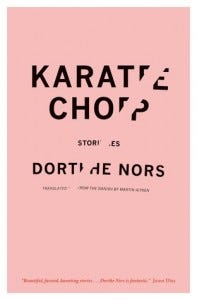
Karate Chop is a slim little knife of a book, and the collection that has stayed with me the most this year. Nors’s stories are compacted gems that don’t try to hide the inclusions of life. As I said in an earlier list, “The fifteen short stories are realist stories, but realist in the bent way of Diane Williams, Lish-edited Raymond Carver, or Amy Hempel. Nors keeps readers on their toes and isn’t afraid to be a bit nasty with her characters. Highly recommended for fans of very short, minimalist fiction.”
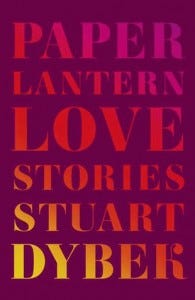
Stuart Dybek is a writer’s writer, so no surprise his latest collection of gorgeous stories made our list. Donna Seaman at the Chicago Tribune said, “Dybek summons up the wonder of the unexpected and the improbable, he achieves a low-key form of magical realism that places him in a constellation of writers that includes Joyce in ‘The Dubliners,’ Italo Calvino, Gabriel García Marquez and Chicago’s own Leon Forrest.” -LM
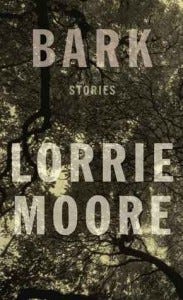
This is why I read Lorrie Moore: “If you were alone when you were born, alone when you were dying, really absolutely alone when you were dead, why ‘learn to be alone’ in between? If you had forgotten, it would quickly come back to you. Aloneness was like riding a bike. At gunpoint. With the gun in your own hand.” That piece of depressive wisdom is from “Thank You for Having Me,” the story that anchors Bark, Lorrie Moore’s first collection of new stories in 16 years. If you followed her work during that time in places like The Paris Review, Granta, and The New Yorker, the stories found in Bark are old friends, which is also how I often think of Moore’s characters. Invigorating and enraging, with quick tongues and slow hearts, pro-nuke pacifists, selfish do-gooders, over-indulgers, poor wedding guests, and mortally offended by rat-kings. For new readers and for old fans, Bark was definitely worth the wait. — HM
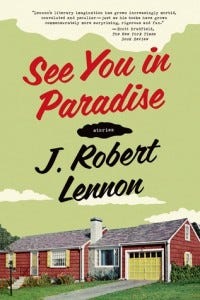
The mind of J. Robert Lennon holds a seemingly endless supply of extraordinary fiction, full of darkness, magic, and intelligence. “Hibachi,” which originally appeared in the fifth issue of Electric Literature’s now retired quarterly anthology, “unleashes the unexpected cathartic power of a hibachi grill on a paralyzed marriage.” “A Stormy Evening at the Buck Snort Restaurant,” which originally appeared in A Public Space, takes what might have been an innocuous diner, and makes it the center of the terrifying universe. Graywolf Press continues to publish excellent short story collections, and See You In Paradise is yet another feather in their festooned cap. — HM
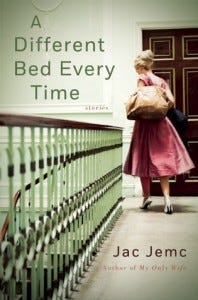
Jac Jemc’s follow-up to her PEN/Robert W. Bingham Prize finalist debut novel has been called “an emotional, catastrophe-strewn story collection” by the Chicago Tribune and “bright, sharp, mysterious gifts, designed to enchant and unsettle” by author Laura van den Berg. -LM
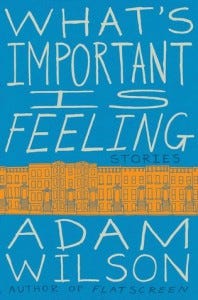
Adam Wilson’s shot stories are easily some of the funniest and most heartfelt around. Wilson was called “one of our best young writers” by Flavorwire and The New York Times Book Review said, “The buoyant comedy and insight of Wilson’s prose carries these stories farther and farther past taboo, into sensitive and complicated territory.” -LM
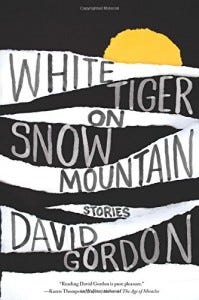
David Gordon’s White Tiger on Snow Mountain is named after a behemoth of a short story seething with bondage, chat rooms, impotence, and long jogs along the Westside Highway. Gordon himself is a runner, and other ordinary aspects of the author’s life are also featured, distorted by noir overtones and extraordinary encounters. In “What I Have Been Trying to Do All This Time,” a writer, also named David Gordon, is the subject of an Argentinian grad student’s thesis because he was thanked in the liner notes of a Bad Religion record. The grad student sleeps with him because he was a character in a Rivka Galchen story, seducing him with the line, “Please, I have never met a real fictional character before.” That overlay of extraordinary on ordinary is what makes Gordon’s stories such a pleasure to read; it’s a familiar world, but with more (sexual) possibility. — HM
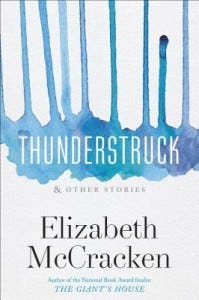
Elizabeth McCracken’s first story collection in 20 years was called “delightful and destructive, packed with electricity, fascinating to watch unfold from the safe harbor of a comfortable chair” by Salon.The New York Times Book Review said, “Elizabeth McCracken knows how loss can melt reality, forever altering a person’s sense of time” and called Thunderstruck a “restorative, unforgettable collection.” -LM
Antrim’s fifth book is his first story collection, but our panelists agree he’s as brilliant at the short form as he is at the long. Lydia Kiesling at The Millions called it “a landmark, almost cartographic document, showing a profound recalibration of style, voice, and form” and noted that “we should always say yes to genius, yes to that emerald light in the air.” -LM
DON’T MISS OUT
Sign up for our newsletter to get submission announcements and stay on top of our best work.
YOUR INBOX IS LIT
Enjoy strange, diverting work from The Commuter on Mondays, absorbing fiction from Recommended Reading on Wednesdays, and a roundup of our best work of the week on Fridays. Personalize your subscription preferences here.