Deck the Halls: 12 Gifts for Your Favorite Writer (or Yourself)

Writer friends: everyone’s got ’em. They’re the person slumped in a chair at the end of the table, bags under their eyes, shoving leftovers into Ziploc bags to take home on the Greyhound. They’re the college friend who’s sort of employed, only not really, and they always have pockets full of cocktail napkins covered in verse. Maybe you’ve got a token family writer, the niece or nephew who’s just been published in their campus lit mag and has book deal-shaped stars in their eyes. Maybe that person is you. If it is: that’s ok. You’re not alone. Like the rest of us, you’re probably tired of getting socks, beard trimmers, and gift certificates to Chili’s, and if that’s true, just forward this list to Mom and Dad and your lawyer sister. You always thought they were more proud of her, but you read The New Yorker and write lots of poems. You’re special too, and you deserve something literary this holiday.

Write Like a Motherfucker

1. “Write Like a Motherfucker” mug: It’s on every list for a reason. There’s something about sipping from a profane mug that makes charging ahead with a daunting short story/essay/MFA recommendation request less harrowing. You know at the beginning of a yoga class, how the teacher asks you to think of your intention, your hour-long raison d’etre? Well, here it is. On a mug, motherfuckers.

New Yorker pillow

2. The New Yorker’s New Yorkistan shower curtain. Instead of projecting their neuroses onto the vast blankness of a plain white shower curtain, your favorite writer can spend their mornings mapping out the boroughs of New York in Maira Kalman’s winsome script. Bonus: houseguests at parties will know that the owner/renter of said bathroom has high falutin’ literary tastes and has probably spent some time drinking overpriced PBRs in Perturbia (aka Williamsburg).

Stephen King flask

3. Stephen King flask. When those overpriced PBRs start biting into your Submittable fees, it’s time to get inventive, and by inventive, I mean it’s time to go to the liquor store for a liter of Fireball and stick a flask in your pocket. Pull a Dorothy Parker and make heavy drinking and wordplay your (or your flask-recipient friend’s) “thing.”

Freedom logo

4. A subscription to Freedom. By now, maybe it’s clear that these “gift ideas” are actually just “things I want.” Why continue with the pretense? Also: do you know how many times I checked Twitter during the drafting of this list (I hope you don’t, it’s an egregious figure)? Freedom, lauded by many a writer (including Dave Eggers, Emily Mandel, Naomi Klein, and Neil Gaiman) as a time saving, distraction-barring wonder-app, keeps one from accessing the Internet during a certain pre-determined period of time. Leaving Facebook island is like stepping out of Times Square and onto one of those Sandals beaches. A caveat, though: pets, fellow humans, and your iPhone will continue to trifle.

When-I-Write-About-You-300x200

5. “When I Write About You Later I’ll Change Your Name” letterpress card. A generous sentiment, really.

Frank O'Hara

6. Frank O’Hara illustrated print. There is no lovelier poem than Frank O’Hara’s “Having A Coke With You” (play nice in the comments section, poets). This illustrated print by artist Nathan Gelgud combines the first few lines with bright, breezy images of Coke bottles and yoghurt cups, and would add some affordable color to an apartment wall. Writers are nothing if not self-identifying, so this also helps visitors know that yes, the person whose house they are in has many books and many ambitions and writes many things, oh yes, wow.

red pen

7. Lamy Safari fountain pen. Ain’t nobody got the money for a Mont Blanc unless they’re bankrolling scholarships to the Tin House writers’ conference, and if you’re that person: #blessyou. Otherwise, Lamy pens are durable, colorful, and a dream to write with. I like this neon-pink color, but if you’re trying to go business-professional — I don’t blame you, really — there are a variety of other shades. These are refillable by either cartridge or inkwell, and they make writing grocery lists or late rent checks feel downright luxurious. Bonus: lots of indie bookstores sell these, so check there if you want to try one out!

Matteo Pericoli

8. Windows on the World: 50 Writers, 50 Views by Matthew Pericoli. The Paris Review anthologized the charming pen and ink sketches of artist/architect Matthew Pericoli, who chronicles the desk-views of famous writers. Windows on the World lets you see Chimamanda Ngozi Adichie’s Lagos, Nigeria vista & John Jeremiah Sullivan’s Wilmington, NC vantage point. It’s something you wouldn’t necessarily buy yourself (but if you do, high five). Writers love borderline-creepy voyeurism into craft, environment, and process, and this cool-looking volume (whose book jacket is translucent, like an architectural rendering) delivers on all those fronts.

hobart shirts

9. One of these lit journal t-shirts. If your friend or family member’s the irreverent type, go for Hobart’s “Money&Cars&Clothes&Hoesbart.” If they enjoy singing unironic Christmas carols, try this traditional and tasteful Paris Review tee. If they cover their notebooks in scratch ’n’ sniff stickers, this Rookie t-shirt’s a sure bet. If they’re in a program, well: this one from N+1, duh.

BOMB magazine tote

10. BOMB’s “If You Read Something, Say Something” Tote. For any child of the 70s, 80s, or 90s, or rider of any sizeable public transit system. Heaven knows we all own something close to our body weight in ratty tote bags; heaven knows I leave mine just about everywhere I go, like an earth-friendly breadcrumb trail. You can never have too many.

people in the face

11. People I Want to Punch in the Face notebook. Pocket-sized and easy to wield should someone start a conversation with you in a coffee shop, on a train, or when you’ve got a pen in your hand and you’re trying to write, damn it. Maybe this will work similarly on relatives, when you’re holed up in a room in your parents’ house with a laptop and a stack of books and OH MY GOD, YOU’RE JUST TRYING TO FINISH THIS ONE PARAGRAPH THAT’S NOT QUITE RIGHT, OK, YOU’LL BE DOWNSTAIRS IN A MINUTE! NO I CANNOT WALK THE DOG RIGHT NOW!

leather bag

12. A briefcase. When the going gets tough, writers could use a little something fancy. This number (which you should obviously get in bright red) is swanky Italian leather, and reminds me of a favorite college professor who stored his rejection letters in a bag that he’d open at the beginning of the semester, as if to say, “See, it takes a lot of headaches to become a beloved professor who’s written a bestselling novel and sold movie rights and owns two adorable dogs!” That’s actually 100% true: rejection will be a part of any writer’s life, and we’d all be lucky to end up with a book deal (and cute dogs and movie rights) to our names. To cheer up yourself or a writer friend, celebrate the rejections too. Store them in a briefcase (or a file on your laptop), so they (or you) can take them out and relish the difficult path to victory. Bah humbug, am I right?

DECEMBER MIX by Curbside Splendor

CURBSIDE’S SPLENDOROUS DECEMBER SONGS

One of the things I love most about being Editor-in-Chief of Curbside Splendor is working with all of the amazing and unique authors. The range of personalities and aesthetics is crazy and delicious. So when I was asked to put together a Holiday Mix featuring my authors I kept envisioning what it would be like if I had them all over to my mom’s house for a big holiday meal. All these weird questions began bubbling up in my mind like: Who would show up drunk? Which one would bring a tiny bowl of salad? What author would say something really earnest and make my mom cry? Would any of them flake out altogether? Who would blend into the wallpaper and who would hog all the attention? And would any of them play metal? So I opted to make answering these and many other pressing questions the challenge of my mix.

The following tracks are songs that I feel would define the vibe each of my authors would roll with as they sat around the monstrous dining room table at my old homeplace in West Virginia, eating ham and roast beef and mashed potatoes and candied yams and stuffing and a world of casseroles.

1. Franki Elliot, Piano Rats & Kiss As Many Women As You Can — “Good Feeling” by Violent Femmes because Franki would be really sad about being there in that moment and knowing it would be ending soon and not wanting it to end soon but also wanting it to end soon because it’s sad in that moment.

2. Michael Czyzniejewski, Chicago Stories & I Will Love You For The Rest of My Life: Break-Up Stories — “Shady Lane” by Pavement, because Czyz would be both charming and ironic and would undoubtedly note how my parents live in a somewhat idyllic old Victorian house and everybody wants one of those.

3. Amber Sparks, May We Shed These Human Bodies & The Desert Places (co-authored with Robert Kloss) — “White Chalk” by PJ Harvey because Amber would know the history of the labor movements in Southern WV and all the bloodshed during the mine wars and would radiate some sort of awareness of how horrible things are for coal miners (plus Robert Kloss would be really into the story of Syd Hatfield and think this song speaks to that somehow).

4. James Greer, Everything Flows — “Everything Flows” by Teenage Fanclub because, well, it just makes sense and is also unexpected due to its obviousness and that’s exactly the sort of thing James would say once he’s drained his third pint of beer and is beginning to feel more comfortable — that the obvious is so often the most unexpected thing and this is what makes it deceptive and gorgeous.

5. Joseph Bates, Tomorrowland — “White Christmas” by Bing Crosby because Jody’s a sentimental type even if he does look like a hero from a spaghetti western and would be earnestly moved by the whole event, especially my mother’s Christmas tapes which she has played every year since the late ’80s and which have a tape hiss he’d aptly note makes them all that much more gorgeous and decayed.

6. Chris L. Terry, Zero Fade — Craig Mack “Flava In Ya Ear” because Chris is one of the warmest dudes I know and he’d use old school Hip Hop to lure my junky brother out of his benzo-laced stupor and get him goofing and telling stories about the days when all the girls in the trailer park called him the cheeseburger pimp.

7. Samantha Irby, Meaty — Trans-Siberian Orchestra “Carol of the Bells” because Sam would totally light up the room and immediately be the apple of my mother’s eye, the two of them chatting idly about recipes for squash and the unique pains of neuropathy, and, being on the level with her, Sam would sense that my mother really wanted to have little bit of of amaretto in her coffee and she’d enable that and my mother would tell the story of how nice Samantha Irby is for the next decade.

8. Ben Tanzer, Lost in Space — “Rocket Man” by William Shatner because Ben wouldn’t believe my dad’s never heard this amazing cover and would play the Youtube clip for him and my dad would love it and tell a corny Star Trek joke and it would be like old home week.

9. Tom Williams, Don’t Start Me Talkin’ — “Nine Below Zero” by Sonny Boy Williamson II because Tom would bask in the warmth of the crowd gathered around the table eating and laughing and know that it could only be truly appreciated in direct contrast to the cold, constant rejection from the world outside.

10. Bill Hillmann, The Old Neighborhood — “My Bucket’s Got a Hole In It” by Hank Williams because Bill would instantly bond with my Pawpaw as they are both self-made men and complete extroverts and they’d start swapping raunchy jokes and telling tall tales about jobs they’ve worked and women they’ve known and Pawpaw would take him into the family room and whip out his acoustic guitar and make Bill listen to him while he sings his favorite Hank song.

11. Tim Kinsella, Let Go and Go On and On — “Little League” by Cap’n Jazz because Tim would feel awkward in the packed room and slip outside to smoke and he’d notice the little league baseball field in the park across from my parents’ house and this song would flash across his brain-pan as he ponders the best way to leave without anyone noticing.

12. Megan Stielstra, Once I Was Cool — “Three Days” by Jane’s Addiction because Megan would get me talking about my past and we’d somehow stumble onto the topic of bands we love and Jane’s Addiction would come up and I’d tell her the story of how I was driving drunk when I was twenty and totaled my Toyota truck while this song was blasting and I was lucky to have lived and she’d listen and then reply with a story of her own marking time, making me feel heard and understood.

13. Lauren Becker, If I Would Leave Myself Behind — “Last Christmas” by Wham! because Lauren is still thinking back to that year with him before he started making the scones she likes, before she knew he still loved her, before she could hurt him — and these thoughts occupy her as she idly pokes at her plate, the conversation swirling around her.

14. Marvin Tate, The Amazing Mister Orange — “White Christmas” by The Drifters because my mother would learn that Marvin is a singer in a soul band and would tell him all about dancing to her James Brown records when she was in high school when her mother wasn’t home and Marvin would smile and make her feel loved and bust out a few verses of this song all a capella and in the style of The Drifters and my mother would blush and get flustered and ask if we are ready for dessert.

15. Ryan Kenealy, Animals In Peril — “Mele Kalikimaka” by Bing Crosby because Ryan has an old soul and would realize immediately that my grandmother secretly loves jazzy songs that my Pawpaw never plays and he’d put this song on and get her to dance around the room for a little bit while we all laugh and cheer and my grandmother forgets she’s 93 for a few beautiful moments.

16. Dmitry Samarov, Where To? — “Candy” by Morphine because this song would get stuck in his head when Dmitry is sketching still lifes of all of the candy my mother makes for the holidays and he’d eat a few too many chocolate-covered peanut butter balls and laugh a dry laugh at his own gluttony.

17. Susan Hope Lanier, The Game We Play — “Crazy” by Patsy Cline because my Pawpaw would ask her if she knows any Patsy Cline songs and she’d admit that she does in fact know one and it’s this one and he’d make her promise to sing it with him after supper and she’d spend the rest of the meal nervously wondering if he is serious.

18. Erika Wurth, Crazy Horse’s Girlfriend— “I’ll Be Home for Christmas” by Frank Sinatra because like all of the fire-breathing, shit-talking, hard-as-nails people I know, Erika is the most sentimental softy out there and this song would come on one of my mother’s Christmas tapes and she’d have to stop herself from crying by busting into the conversation between my Pawpaw and Bill Hillmann to tell the dirtiest joke she knows, one so hardcore it leaves even the two of them afraid to laugh.

19. James Tadd Adcox, Does Not Love — “No Children” by The Mountain Goats because Tadd would find his thoughts drifting perversely to a holiday meal in a world much different than this one and he’d smile and when my wife Diddle asks him what’s so funny he’d say, ‘Oh nothing, just thinking about love.’

20. Brian Costello, Losing in Gainesville — “Santa Baby” by Eartha Kitt because Brian can’t help himself from rising to the occasion after imbibing a little too much of my mother’s amaretto and delivering a slithery rendition of this infamous number, a decision he’d immediately regret.

21. W. Todd Kaneko, Dead Wrestler Elegies — “Silent Night”by Pro Wrestling Noah because, much to Todd’s dismay, there is nothing on YouTube when you search for professional wrestlers singing Christmas carols except for this mess and this really bums him out because he has been hoping to mention a cover of a holiday classic sung by a notorious wrestler as a conversation starter during dessert.

***

— Jacob S. Knabb is Editor-in-Chief of Curbside Splendor and teaches in the English Department at Lake Forest College, where he resides with his gorgeous wife, his fat and sassy baby, and his two chihuahuas.

REVIEW: Preparation for the Next Life by Atticus Lish

Atticus Lish’s Preparation for the Next Life is this generation’s most significant novel about “otherness.” Using the story of two individuals that end up in a relationship as a vehicle to explore life on the fringe, Lish delves deep into the realities, challenges, and feelings of an undocumented immigrant and an Iraq war veteran whose body and psyche have been affected by three consecutive tours filled with fear and carnage. Packed full of details, vivid descriptions, and unflinching honesty, Preparation for the Next Life offers readers a touching and brutal look at the way those on society’s margins manage to keep on dreaming while they struggle to survive.

The narrative kicks off with Zou Lei, an ethnic Uighur from northwest China who barely speaks English. She slips into the country without papers, with no one to reach or ask for help, and is in desperate need of shelter and a job. After a short stint in a prison, effectively serving as her introduction to life in the United States, Zou holds a string of dead-end jobs in stores, kitchens, and even selling DVDs on the subway. Finally, she ends up working in the kitchen of a Chinese restaurant in Queens where she’s at the bottom of the chain of command and no one understands her language. She is eager to learn and move up in life, but desires clash with the harsh reality of her cramped existence in an overcrowded place that offers her only a roof and a dirty mattress. When not working, Zou occupies her time exercising and developing a relationship with Skinner, a severely depressed and mentally unbalanced veteran with a back full of scars. Skinner goes to New York trying to escape his nightmares and rents a basement apartment in Queens. He spends his time smoking and reading fitness magazines. When they meet, Zou and Skinner find comfort in each other, a way to momentarily put an end to their loneliness, but solitude is only one of their problems.

Lish masterfully juggles a lot in this novel, but there are two items that stand out the most, confirming Preparation for the Next Life as one of the most powerful narratives of the year. The first is the unapologetic lack of sentimentality. Preparation for the Next Life is a love story, but it’s also as far from the romantic aesthetic as one can get. The characters are broken, flawed, deracinated. Lish shows them drinking, having lazy afternoons of pizza and sex, and sometimes seeking each other with the eagerness of new lovers, but being together is only a small respite for their loneliness and not an all-powerful solution to their plethora of problems. There is love and talk of better times in the future, but there’s also crippling depression, callused hands from working, and a gun that sometimes seems to offer the only way out.

The other element that is truly outstanding is his ability to showcase his knowledge about everything from the city of New York to the unifying discourse of struggle and survival that most undocumented workers share.

“Everyone have to be careful, right? You know the saying, every man for self. The man, woman, kid, also. This is the life. You want take my time, what you give me? Think about. That’s America. Everyone come here the same story.”

The prose with which he communicates this familiarity is at once sharp and focused but also unhurried, unexpectedly elegant, and not afraid to explore that strange space outsiders share, a tense space where they are forced to communicate in a language they don’t fully dominate. Lish seems to be aware of what it means to be desperate, and this awareness allows him to recreate the streets of Queens, Zou’s job environment, and the Iraq war in vivid detail. It also allows him to create characters that feel real. Zou works hard without complaining, is generally optimistic, and thinks a better future is possible. On the other hand, Skinner is tormented, taking pain medication for his back, the victim of suicidal thoughts and horrible nightmares. Despite these differences, they somehow manage to embody the same thing: the incessant battle of those on the wrong side of the tracks. The result of this mix of familiarity, truth, and writing skills is a novel that seems to have been distilled from the essence of the many generations of natives and foreigners who have toiled in this country searching for a piece of the American dream.

“They took the subway from Queens down to Canal Street in Manhattan. It was full of African, Bangladeshi, and Chinese vendors, selling I Love New York shirts and counterfeit Rolexes. From here they walked down to the city buildings. The big gray granite buildings took up block after block. At the criminal and family courts, the doorways were four stories high and there were crowds outside waiting to get in through the metal detectors.”

Preparation for the Next Life is devoid of unfilled promises. The narrative successfully and entertainingly moves forward despite the fact that everyone involved is wary of letting hope sneak its way in. And that is a very smart move. In a literary landscape that often favors narratives about well-off Caucasians enjoying what the city has to offer, Lish has crafted a masterpiece full of accents, religions, and grit, the building blocks used to create New York City. Strangely enough, the author’s emphasis on grittiness also contributes to making this novel a memorable and very poignant homage to the Big Apple. Lish’s candid look at life on the wrong side of the tracks is both heartbreaking and beautiful and signals the arrival of a gifted voice with a knack for too-real fiction.

To purchase Preparation for the Next Life, click here to be directed to Tyrant Books’s site.

Electric Literature’s 25 Best Story Collections of 2014

Year-end lists are always subjective and incomplete, but they are especially tricky for books. A dedicated film critic can watch every wide release film and a theater critic can go to most every play, but the book critic is faced with an insurmountable mountain of books each year. The sheer number of books is inspiring as a reader, but it can make “best of” lists laughably subjective when the critic has only read a fraction of the hundreds of thousands of books published each year.

With that in mind, I decided to crowd source Electric Literature’s year-end lists. On Tuesday, we published our 25 Best Novels of 2014. Today, we are publishing our 25 favorite story collections. To get the list, I asked sixteen Electric Literature contributors and friends to pick their favorite collection published in 2014 to write about, and then asked them to send me a short list of other collections they loved. The books that got the most mentions have been included with everyone’s top picks. Our hope was to have an eclectic list of books that included more than just the obvious names, and I think you will find at least a few books here that you hadn’t heard of. Our list also includes two collections of prose poems and one collection of comic stories. Keeping in mind that if I’d asked a different set of writers and critics we would have a different list, here are the definite 100% objective best story collections of 2014:

Best Collections
MvN-201x300

Man V. Nature by Diane Cook

Cook’s collection dips and dives between the real and the refreshingly unreal, with a perfect balance of imagination and morbidity. Man V. Nature is a breathtaking standout and perfect introduction to a future literary force of nature.

Michael Seidlinger, author of The Face of Any Other and other books

[Read a short story from Man V. Nature and our interview with Diane Cook]

Elegy-193x300

Elegy on Kinderklavier by Arna Bontemps Hemenway

An intricate, ambitious, and thoroughly devastating collection. This is Hemenway’s debut and it is stunning.

Laura Van Den Berg, author of The Isle of Youth and other books

PrayingDrunk-193x300

Praying Drunk by Kyle Minor

Kyle Minor’s second collection of short fiction abounds with stories that come at life from all sides. Questions are raised of faith, sexuality, and family; they channel the grittiest of realism and feature magnificent surrealism, depending on the occasion. What they share is a haunting quality, and the ability to remain locked on to a reader.

Tobias Carroll, managing editor of Vol.1 Brooklyn

[Read our review of Praying Drunk]

doctor-193x300

Internal Medicine: A Doctor’s Stories by Terrence Holt

Holt should be a household name. He’s an unbelievably talented prose stylist and inventive writer — see his excellent first short story collection, In the Valley of the Kings. And…he also happens to be a doctor. This collection is a gorgeous, melancholy, thoughtful group of stories loosely based on his time in residency. And if you happen to be — like me — obsessed with work, illness, death, and the body, then you need to put this on your list immediately.

Amber Sparks, author of May We Shed These Human Bodies

natural-189x300

Natural Histories by Guadalupe Nettel

It’s been a really great year for short story collections. I really enjoyed dipping into Snow In May by Kseniya Melnik, The Corpse Exhibition by Hassan Blasim, The Emerald Light in the Air by Donald Antrim, J. Robert Lennon’s See You In Paradise, and Ben Marcus’s Leaving The Sea. One that stood out for me in particular among these very good books is Natural Histories by Guadalupe Nettel, translated by J. T. Lichtenstein. Nettel is a wonderful Mexican writer, and each of the stories in this slim collection, published by Seven Stories, takes a wry philosophical look at the relationship between people and the creatures they live with — whether a pair of pet fish or an infestation of cockroaches.

Jonathan Lee, Associate Editor of A Public Space and author of the forthcoming novel High Dive

Rivka-200x300

American Innovations by Rivka Galchen

Rivka Galchen’s fictional world, no matter how fantastical, remains our world. Regardless of its walking furniture and time travel paradoxes. Her commitment to a kind of scientific dream logic always delivers me to some true place I’ve never been or imagined. Or as she says in one of her stories: “Surely our world obeys rules still alien to our imaginations.” I could say the same of this uncannily beautiful collection.

Scott Cheshire, author of High as the Horses’ Bridles

Redeployment Phil Klay

Redeployment by Phil Klay

I’m biased here: in 2012, we published Phil Klay in Recommended Reading, and he just became a 5 Under 35 Honoree and National Book Award Winner. Fortunately, in making lists of the best book of the year, objectivity isn’t top priority. And, in any case, Redeployment isn’t just an important book for 2014 (it focuses on the experiences of Marines in Iraq and how to reconcile a return to civilian life), but it’s also a remarkably written book that handles language, psychology, and narrative reliability in ways that I’ve never seen before.

– Benjamin Samuel, co-founder of Recommended Reading and Program Manager at National Book Foundation

[Read a short story from Redeployment]

20763852-193x300

The Wilds by Julia Elliott

Although a lot of collections these days are said to be “beyond genre,” Julia Elliot’s stories truly are — I can’t think of anyone they wouldn’t appeal to. By turns terrifying, anxious, delicate and fantastic, Elliott has a Bowie-esque range (and sometimes similar subject matter). Free of the irony that can spoil a good tale of killer dogs, robotic grandmas or recreational brain surgery, Elliot, more than anyone else writing today, is the heir to the bedroom kingdoms and true-to-life fairy tales of Angela Carter, Barry Hannah and Ballard.

JW McCormack, a writer, editor, and teacher

MollyAnt-200x300

The UnAmericans by Molly Antopol

I grew up with this idea that there was always going to be an abundance of great Jewish fiction out there since I came of age in the shadow of all the Roths, Bellows, Ozicks, etc. And yes, there are plenty of great Jewish writers, from Michael Chabon to Jami Attenberg, who give us books with unforgettable Jewish characters, and very Jewish problems. But an entire collection? That would seem tough, like everything has been done before and getting a handful of original tales would be nearly impossible. But not for Antopol. This is a book filled with Jewish characters and stories, sure, but anybody from any walk of life will find the greatest of pleasures in its reading.

Jason Diamond, associate editor of Mensjournal.com and founder of Vol 1 Brooklyn

fullblood-200x300

Fullblood Arabian by Osama Alomar

Brief, imaginative, and wonderfully subversive, Fullblood Arabian is Syrian writer Osama Alomar’s first collection of very short stories and parables to appear in English. These are stories in which a clock on the wall might enviously regard a bucket in the sink as a rival clock, stories in which we might be asked to reimagine the act of applause — from the hand’s point of view. Drawing from influences such as Khalil Gibran, Aesop, and Kafka — and championed by America’s resident short-prose master Lydia Davis — Alomar takes aim at the absurdities of political and social status quos, joyously upending them with humor, wit, and élan in stories as short as a single sentence.

James Yeh, co-editor and publisher of Gigantic

20307086-204x300

New York 1 Tel Aviv 0 by Shelly Oria

Read Shelly Oria’ debut short story collection if only because her dialogue is either scarily reminiscent of your own life, or, at turns, better than real life.

Ryan Britt, author of the forthcoming book Luke Skywalker Can’t Read: A New Geek Manifesto

[Read a story from New York 1 Tel Aviv 0 and our review of the collection]

howtobehappy-230x300

How To Be Happy by Eleanor Davis

In a year chock full of gorgeous story collections, one that stood out for me was, gasp, illustrated. (Which is perhaps less shocking given Roz Chast’s inclusion on the National Book Awards short list this year.) Eleanor Davis reminds us in her introduction that How To Be Happy is not about how to be happy. Instead these deeply imaginative and beautifully rendered stories show us the quiet struggles (and loveliness) of the everyday, no matter how wild the premise of the story. Each of the stories included here is entirely its own — moving from a lonely man’s failed attempt to create a present-day utopia, the simple beauty of a teenage summer love affair or a relationship failing, to an exploration of a dystopian future. Davis’ voice is entirely original, her range exceptionally broad, her artwork stunning and flexible, and her storytelling elegant and moving.

Lisa Lucas, publisher of Guernica

Flings-198x300

Flings by Justin Taylor

Not much to say about Flings that I haven’t already declaimed from a barstool throne: This book is Da Bomb! But it’s also a bomb, a small explosive device that will destroy you if you get too close. I dare anyone to tell me your heart’s still in tact after reading “Adon Olam”, a modern tale of drugs, Jewish summer camp, and bromance gone bad that sucker-punches at the end with its deep emotional resonance. I dare anyone to tell me you didn’t explode with laughter after reading the mushroom-suit monologue that opens “Sungold”. I dare anyone to finish this book and not be blown away.

Adam Wilson, author of Flatscreen and What’s Important Is Feeling

[Read our review of Flings]

leavingsea-202x300

Leaving the Sea by Ben Marcus

I’ll always have a special place in my heart for “Watching Mysteries With My Mother,” the story that opened Recommended Reading over two years ago. “I don’t think my mother will die today,” it begins, and by the story’s conclusion the underlying fear of that statement has been thoroughly excavated. I like that word, “excavated,” to describe Marcus’ writing, because many of his stories have a burrowing quality, the way they lodge themselves in the base of your brain and continue to work. Other tremendous stories in the collection include “I Can Say Many Nice Things,” about teaching writing on a cruise ship, and “What Have You Done?”, about the time-travel that is returning to childhood hometowns.

[Read a short story from Leaving the Sea]

Halimah Marcus, editorial director of Electric Literature and editor-in-chief of Recommended Reading

Citizen-200x300

Citizen: An American Lyric by Claudia Rankine

We need to have a better conversation about race and I want Claudia Rankine at the head of the table. I want her to read us the stories and poems in Citizen, with its micro-aggressions, its pain, its wisdom, and its invitation to empathy and the right anger. This book is powerful and unsettling. I’ve read it three times and I think everyone in the country should too and then we should have that conversation.

Kenneth Coble, bookseller at Elliot Bay Book Co.

14stories-194x300

Fourteen Stories, None of Them Are Yours by Luke B. Goebel

Written in a gonzo-style cadence which mixes prose poetry with outlaw confession, Luke B. Goebel’s stunning debut, Fourteen Stories, None of Them Are Yours, just may be the irascible yet heartfelt contemporary of Hunter S. Thompson’s Songs of The Doomed. As Goebel’s teacher — Gordon Lish — once said, the role of fiction is “To displace the other, yes. […] Delusion, the will, yes. Project your voice louder than the other, sure. Have the loudest voice. Wasn’t that the title of Grace Paley’s story? ‘The Loudest Voice’?” Goebel’s voice in 14 Stories is not only loud, it is in turns brave and endearing and self-critical. It reminds us that indeed the sentence need not be a “lonely place” — and recalls many masters of the form. I’m thinking here of Mark Richard (his story “Strays” from his collection The Ice At the Bottom of the World.) And of course I’m thinking too of writers like Denis Johnson and Barry Hannah. What I admire most about Goebel’s work as a piece of fiction is its attention to the story as an organic body — a rhythmic, fractured, irreverent and yet irretrievably whole vessel.

Ann DeWitt, writer, critic and essayist

[Read a short story from Fourteen Stories and our review of the collection.]

Chop-197x300

Karate Chop by Dorthe Nors

Karate Chop is a slim little knife of a book, and the collection that has stayed with me the most this year. Nors’s stories are compacted gems that don’t try to hide the inclusions of life. As I said in an earlier list, “The fifteen short stories are realist stories, but realist in the bent way of Diane Williams, Lish-edited Raymond Carver, or Amy Hempel. Nors keeps readers on their toes and isn’t afraid to be a bit nasty with her characters. Highly recommended for fans of very short, minimalist fiction.”

Lincoln Michel, online editor of Electric Literature and co-editor of Gigantic

NOTE: the following novels received the most votes from the panelists.

Paperlantern-195x300

Paper Lantern: Love Stories by Stuart Dybek

Stuart Dybek is a writer’s writer, so no surprise his latest collection of gorgeous stories made our list. Donna Seaman at the Chicago Tribune said, “Dybek summons up the wonder of the unexpected and the improbable, he achieves a low-key form of magical realism that places him in a constellation of writers that includes Joyce in ‘The Dubliners,’ Italo Calvino, Gabriel García Marquez and Chicago’s own Leon Forrest.” -LM

bark-183x300

Bark by Lorrie Moore

This is why I read Lorrie Moore: “If you were alone when you were born, alone when you were dying, really absolutely alone when you were dead, why ‘learn to be alone’ in between? If you had forgotten, it would quickly come back to you. Aloneness was like riding a bike. At gunpoint. With the gun in your own hand.” That piece of depressive wisdom is from “Thank You for Having Me,” the story that anchors Bark, Lorrie Moore’s first collection of new stories in 16 years. If you followed her work during that time in places like The Paris Review, Granta, and The New Yorker, the stories found in Bark are old friends, which is also how I often think of Moore’s characters. Invigorating and enraging, with quick tongues and slow hearts, pro-nuke pacifists, selfish do-gooders, over-indulgers, poor wedding guests, and mortally offended by rat-kings. For new readers and for old fans, Bark was definitely worth the wait. — HM

[Read our review of Bark]

jrl-200x300

See You in Paradise by J. Robert Lennon

The mind of J. Robert Lennon holds a seemingly endless supply of extraordinary fiction, full of darkness, magic, and intelligence. “Hibachi,” which originally appeared in the fifth issue of Electric Literature’s now retired quarterly anthology, “unleashes the unexpected cathartic power of a hibachi grill on a paralyzed marriage.” “A Stormy Evening at the Buck Snort Restaurant,” which originally appeared in A Public Space, takes what might have been an innocuous diner, and makes it the center of the terrifying universe. Graywolf Press continues to publish excellent short story collections, and See You In Paradise is yet another feather in their festooned cap. — HM

jj-198x300

A Different Bed Every Time by Jac Jemc

Jac Jemc’s follow-up to her PEN/Robert W. Bingham Prize finalist debut novel has been called “an emotional, catastrophe-strewn story collection” by the Chicago Tribune and “bright, sharp, mysterious gifts, designed to enchant and unsettle” by author Laura van den Berg. -LM

adamwilson-198x300

What’s Important Is Feeling by Adam Wilson

Adam Wilson’s shot stories are easily some of the funniest and most heartfelt around. Wilson was called “one of our best young writers” by Flavorwire and The New York Times Book Review said, “The buoyant comedy and insight of Wilson’s prose carries these stories farther and farther past taboo, into sensitive and complicated territory.” -LM

[Read a story from Adam Wilson]

DG-199x300

White Tiger on Snow Mountain by David Gordon

David Gordon’s White Tiger on Snow Mountain is named after a behemoth of a short story seething with bondage, chat rooms, impotence, and long jogs along the Westside Highway. Gordon himself is a runner, and other ordinary aspects of the author’s life are also featured, distorted by noir overtones and extraordinary encounters. In “What I Have Been Trying to Do All This Time,” a writer, also named David Gordon, is the subject of an Argentinian grad student’s thesis because he was thanked in the liner notes of a Bad Religion record. The grad student sleeps with him because he was a character in a Rivka Galchen story, seducing him with the line, “Please, I have never met a real fictional character before.” That overlay of extraordinary on ordinary is what makes Gordon’s stories such a pleasure to read; it’s a familiar world, but with more (sexual) possibility. — HM

Tem-199x300

Thunderstruck & Other Stories by Elizabeth McCracken

Elizabeth McCracken’s first story collection in 20 years was called “delightful and destructive, packed with electricity, fascinating to watch unfold from the safe harbor of a comfortable chair” by Salon. The New York Times Book Review said, “Elizabeth McCracken knows how loss can melt reality, forever altering a person’s sense of time” and called Thunderstruck a “restorative, unforgettable collection.” -LM

DonaldAntrim-203x300

The Emerald Light in the Air by Donald Antrim

Antrim’s fifth book is his first story collection, but our panelists agree he’s as brilliant at the short form as he is at the long. Lydia Kiesling at The Millions called it “a landmark, almost cartographic document, showing a profound recalibration of style, voice, and form” and noted that “we should always say yes to genius, yes to that emerald light in the air.” -LM

Bar Joke, Arizona

by Sam Allingham, recommended by Marie-Helene Bertino

A man walks into a bar. He walks over to the bartender and says, “Can I get a drink?”

The bartender looks up from the fan he‘s been tinkering with and says, “Sure. What would you like?”

“Well,” the man says. “The problem is, I don’t have any money.”

“I see,” the bartender says.

“But I do have…”

The man then breaks off, hesitates, and begins again.

“I have… oh… wait… hold on…”

The bartender shakes his head and starts washing some glasses.

“Look, I have — you know,” the man mumbles, gesturing in the air. “Oh, I used to remember this one. Gimme a second.”

Finally he gives up and stares at his hands.

The bartender finishes washing the glasses, throws the rag over his shoulder, and gives the man a hard look. It’s a stifling day, the bar has no air conditioning, and with the fan broken the heat’s beginning to bother him.

“You forgot the punchline, didn’t you?” the bartender asks.

The man nods sadly.

“It happens,” the bartender says. “You have good days and then you have bad days.”

“What do we do now?” the man asks. “Where do we go from here?”

The man looks he might cry, which makes the bartender feel a little queasy.

“All right,” the bartender says. “C’mon now. Buck up.” He checks the door. The barflies are all at home, sleeping through the heat. Nobody ever comes to the bar this early on a Saturday.

“Look,” he says. “Let’s start this whole thing over.”

“Really?” the man says, perking up.

“Sure. But on one condition. You get behind the bar.”

The man shakes his head.

“I don’t have any bartending experience,” he says. “I wouldn’t know the first thing about it.”

“It’s easy,” the bartender says. “I’ve been doing it for years. Your parts all logical.”

“I’m not too good with logic,” the man says.

“Do me a favor,” the bartender says. “It’d be nice for me to get out from behind here for a few minutes. It’d do me good.”

The man takes a deep breath and rubs his temples with the tips of his fingers. “All right,” he says. “I‘ll give it a try.”

The bartender smiles and wipes his hands on the rag. Without taking their eyes off of each other, the man and the bartender circle the bar and exchange places. All of a sudden, the broken fan rumbles and begins to whir.

“Go ahead,” the man says. “I think I’m ready.”

“Can I get a drink?” the bartender asks.

“Sure,” the man says. “What would you like?”

“Well,” the bartender says. “I have to tell you, I’m flat broke. I don’t have a red cent to my name. There‘s nothing but lint in my pockets.”

“In that case,” the man says, pulling a beer out of the cooler, “this one’s on the house.”

He slides the beer across the counter.

The bartender just stares at it. “Hey, look,” he growls, pointing his finger at the man’s chest. “What are you trying to pull? We had a real simple deal here. You’re the straight man. It’s all logical. A monkey could do it.”

“I know, I know,” the man says. “But let me tell you something. It‘s nice back here. Look at all these bottles of liquor, lined up by type. It’s really something.”

The bartender looks at the bottles, amber and light brown, white frosted glass.

“They‘re all right,” he admits.

Do yourself a favor,” the man says, putting his hands out, palms up. “Drink your beer. Relax. Take a breath. Didn’t you say yourself that you needed a break?”

The bartender considers this. “I’m tireder than I’ve been in my entire life,” he says. “It seems like it’s the same bit every time, over and over.”

“That’s because it is,” the man says.

The bartender doesn’t respond. He takes a sip of his beer.

After a minute, the door swings open, and a duck waddles into the bar.

“Hey,” the duck says, hopping onto a barstool. “Got any duck food?”

“Look,” the man says, “I’m new here, and I know this might seem strange, but how about we just cut the whole routine and I give you a drink. On the house. Because we’re all a little tired here today, and we’re not in the mood for gags.”

The duck turns his beady eyes toward the man, then the bartender, and then the man again. He flaps his wings, shakes his ass, and hunkers down on the barstool.

“Jesus Christ,” the duck says. “I sure could use one.”

“What are you having?” the man says, smiling.

“Give me a Wild Turkey, straight up,” the duck says. “For starters.”

“How’s the week coming, Duck?” the bartender asks.

“Just fucking dandy,” the duck says, chuckling. “Thanks for fucking asking.”

Before long, a man with a large hat walks through the door. He moseys up to the bar, takes off his hat, and sets it on the table.

“Let me guess,” the man says. “You’ve got a little guy inside that hat.”

The man with the hat blushes.

“Is it that obvious?” he asks.

“It’s just one of those things,” the man replies. “Does he want a drink?”

“Are you kidding me?” a muffled voice shouts from inside the hat. “I’d love one!”

Soon the place starts filling up with men: guys with speech impediments, guys with eyepatches, sailors with wooden legs talking to tax attorneys. The animals arrive, too. People keep tripping over a boa constrictor and cursing. In one corner a bear and a sperm whale are communicating through grunts and clicks.

“Don’t tell the management,” the bartender whispers to the man. “We haven’t made any money all day.”

“But look how happy everyone is,” the man says. “It’s a beautiful thing.”

“It won‘t change anything,” says the bartender. “Just you wait.”

As if to prove this point, a man bursts through the door and runs full-tilt towards the bar, his head hung low like a bull charging the cape. A priest, a minister, and a rabbi all grab onto his coat to restrain him, but even with their collective strength they can barely keep him from slamming his head into the wood.

“What are you people doing?” the bar-rusher yells. “Let a man do his goddamn job! Let a man DO HIS MOTHERFUCKING JOB ALREADY!” And since he can’t make physical contact with the bar itself, he starts to shout “Ouch! Ouch!” over and over again.

“Be still, my son,” the priest says, wiping his forehead with a damp rag. “Be still. You have seen the trials of life, but you will be forgiven in the life to come.”

“Have some bourbon,” says the minister, handing him a glass. “There’s no law against it, on heaven or earth.”

“If you ask me,” says the rabbi, “the boy needs therapy.”

The three holy men lean over the bar-rusher and whisper comforting words. The other customers begin to take notice and turn towards the scene. Some make the sign of the cross; others murmur prayers.

“I’m sorry,” the bar-rusher says, sipping his whiskey. “I’m so sorry. I’m a basket case, I can’t relax. My hair’s starting to fall out and I can’t sleep. My wife left me for a man who writes ad copy. How can anyone keep up these days?”

The whole bar nods in agreement.

“Let me ask your opinion,” the bar-rusher says to the three holy men. “I know God’s view on the meek and the lowly, but what about the middling kind of shit-kicker? What about the overgrown suburban lawn with the unpruned rosebushes, the ungrateful kids, and the low-paying 401k? I need to know: does God smile on mediocrity?”

“Of course,” says the priest.

“Maybe,” says the minister.

“No,” says the rabbi.

The bar-rusher lays his head in the priest’s lap and weeps.

“I feel for you,” says the man with the hat. His little man is punch drunk, passed out on the table and snoring. “My dad was a bricklayer who hung out at the Polish Society Hall. Now people talk to each other on computers, no one knows how to fix an engine, and I’ve got dyspepsia like you wouldn’t believe. I take pills upon pills and it never gets any better. It‘s a beat-up dog of a world.”

Night falls. It’s a perfect example of a Southwestern American sky, clear and nullifying all humanity. The stars are like pinpricks in a cloth that keeps everybody ignorant of what’s really going on. Everyone fumbles around by the light of a sickle-cell moon.

Under cover of darkness the conversations get lower and less animated. Stories emerge from the chatter. Eyes grow damp. The alcohol pulls secrets and failures out of everybody’s wobbly mouths.

“I remember I was lying in bed once,” a giant moth says, his diaphanous wings glowing in the light of the ceiling lamp, “with my wife. ‘You’re a one trick pony,’ she told me. ‘It’s always a cycle with you, one joke over and over again, a bad ride that never ends.’”

The moth has a small, buzzing voice, like someone over a bad long-distance connection saying words nobody wants to hear. It shakes a little from too much crème de menthe.

“All I could think of,” the moth says, “was her spinning slowly in a Ferris wheel in the middle of an empty county fair, stuck in a seat with a guy like me, who didn’t have much to say. That was the night she left me for a man who sells funny T-shirts over the internet. They can travel whenever they want, she tells me. They’re globetrotters now.”

The moth’s wings fall to his sides, and his wide gray feelers wave in the dim light. His drunken friends, two large fruit flies, are drinking sweet liquor through straws. They rub their legs together in a penitent fashion and buzz mournfully.

The clock edges towards closing time. Most of the customers have already fallen asleep in their beer. The sperm whale has beached himself against the long far wall, and three bears are sleeping in his shadow, wrapped in each other’s arms. The bar-rusher sleeps with his head on the priest’s shoulder, face pressed against the cool cloth of the holy man’s vestments. Half asleep himself, the priest strokes the bar-rusher’s soft, thinning hair. The minister and the rabbi sleep with their faces turned to the heavens.

By the time the duck hops onto an empty table in the middle of the bar, the only constant sound is the wheezy pull of the whole bar breathing, strained and rough, like a giant set of smoker’s lungs. He gives a couple of loud honks. Everyone pricks up their ears.

“Friends,” the mallard says, flapping his wings. “I’d like to tell you a story. It’s not a funny one, but it’s something I’ve been wanting to tell for a long time and I’ve never really known how to do it. So I thought I’d tell you all tonight, since you’re all now my friends and it’s been a pleasure knowing each and every one of you. You’ve really made a duck feel welcome. That’s a rare thing in this world.”

Little calls of joy and affirmation flare up around the room, like ineffectual sparks. The duck waits for them to die down before going on.

“When I was a younger duck,” he says, “I lived in a large city on the eastern side of this fair nation. It was a hell of a fucking town, let me tell you. There were lights on all twenty-four hours of the day and places you could crawl into at four o’clock in the morning where someone would buy you a drink and scratch your tailfeathers for you, if that was what you were in the mood for. Paradise on earth.

“And of course, I had a girl. A beautiful fox who lived in a second floor walkup, right over a club where they played jazz on Wednesdays and Saturdays. Now in those days, and even now, a relationship between a fox and a duck wasn’t very common, and there were only a few places we could go and not get looks, even threats. The club where she lived was one of them. We spent a lot of nights there before going up to her room. The Wednesday band was good; the Saturday band was better. They had a trumpet player who made big gorilla men weep tears for love.

“But you get tired of the same old thing, y’know? So one day my fox, she says to me, Let’s go to the symphony. I’ve never seen the symphony. I think a fox ought to have seen the symphony at least once in her life.

“Now, I‘m strictly a whiskey and beer sort of bird; not what anyone would call sophisticated. But I thought, hell, why not, the lady wants a bit of culture, I might as well accompany her on this particular social engagement. We got dressed up on a Friday night, and went off to the symphony.

“The hall was a big place with gold leaf all over. It was a real class joint, and I didn’t feel like we fit in, but we found our seats and waited for the show to begin. All those people in black ties had their instruments ready. Have any of you ever heard an orchestra tune up?”

Nobody makes a sound. The duck sighs and examines his wings.

“I didn’t think so. The orchestra,” he continues, “was all right. I don’t really remember what they played. I remember I enjoyed it at first, but as it went on I had a hard time staying awake. My fox didn’t much care for it either. She liked dressing up, she liked the pomp and circumstance, but the music left her cold.”

“So you could ask me why I remember. Why I’m bringing it up. A fair question. Because although the music wasn’t really all that thrilling, there was this one thing that stuck with me. After the musicians had tuned, after the conductor came out and there was a big round of applause for him, after the musicians had all settled into their seats — that was when the whole hall filled with a moment of absolute wonderful silence. Quiet like you wouldn’t believe. Bows raised, lips on mouthpieces, and of course my fox in the seat next to me, her heart hammering, like it always did whenever she was waiting for something she thought might be exciting. A whole room waiting, absolutely quiet.

“After the show we went back to her apartment. We were weirdly tired, and we went to bed without touching each other much. I listened to the traffic noise in the night like I always did when I was trying to go to sleep, but for the first time it didn’t seem soothing. It just made me wish for a kind of silence that wasn’t there.”

The duck gets quiet for a second. Outside some drunk is singing a tuneless song. It makes the duck wince. The drunk passes on, and the song dies away.

“There isn’t really a good end to the story,” the duck says, in a softer voice. “Suffice to say, the thing with the fox and me didn’t work out. I started wandering all over the city at night; it was spring and I was restless. I went to the symphony a few times by myself, but in that silence I was telling you about I felt so lonely I couldn’t even stand it. So I stopped going.

“I moved to Arizona try to get away from her. It’s quieter here. I stopped talking to people. I even made a pilgrimage out into the desert once, with a bunch of Buddhist mystics who wanted to live totally mute. They never said a word to each other the whole time we were out there. The whole vow of silence bit.

“But despite my best intentions, I could never do it. I would walk over to a cliff and sit and watch the sky, and I’d feel that itching in my throat. It started at the back, close to my spine, and worked its way upward. My beak twitched. I started muttering, mumbling. And then it would start. I would be sitting on a cliff and I’d start talking to the canyon.

“’How’s the weather?’ I’d ask. ‘How’s your parents? A man walks into a bar. Are you married? I love you. I miss you. Where were you born? I’m lonely. Do you have any duck food?’

“Just me talking to the canyon,” the duck says, his beak trembling. “And then I’d get up and go back to the Buddhists. They’d nod at me. I’m pretty sure they knew what I was doing, but they never let on.”

“Someday,” the duck says. “Someday I’m going to shut up, and it’ll be the happiest day of my life.”

The duck gets quiet. He shakes his tail feathers, lays down on the table, and closes his eyes.

Men are sleeping, slumped in chairs or spread across the dirty floor. Nobody speaks, except for the occasional whisper from someone’s lonesome dream. The man and the bartender consider one another. The clock reads 2:15. Outside people are stumbling across the road, falling into one another, stumbling all over the place.

“We ought to kick them out soon,” the bartender says. “You can’t let people stay all night.”

“Show some kindness,” the man says. He starts wiping the bar in long, slow strokes, shaking his head softly. “Show a little kindness for once in your life.”

Electric Literature’s 25 Best Novels of 2014

Year-end lists are always subjective and incomplete, but they are especially tricky for books. A dedicated film critic can watch every wide release film and a theater critic can go to most every play, but the book critic is faced with an insurmountable mountain of books each year. The sheer number of books is inspiring as a reader, but it can make “best of” lists laughably subjective when the critic has only read a fraction of the hundreds of thousands of novels published each year.

With that in mind, I decided to crowd source Electric Literature’s year-end lists. First up: novels. (Best story collections, best graphic novels, and more to come.) I asked sixteen Electric Literature contributors and friends to pick their favorite novel published in 2014 to write about, and then asked them to send me a short list of other novels they loved. The novels that got the most mentions have been included with everyone’s top picks. My hope was to have an eclectic list of books that included more than just the obvious names. I think we succeeded here with a list of 25 excellent novels that should include at least a few that you haven’t read yet. (Indeed, the lack of household names like Murakami and Denis Johnson is more evidence that 2014 was the year of the debut.) Keeping in mind that if I’d asked a different set of writers and critics we would have a different list, here are the definite 100% objective best novels of 2014:

Best Tweets
Boy, Snow, Bird

Boy, Snow, Bird by Helen Oyeyemi

The bulk of my 2014 was spent transfixed by Helen Oyeyemi’s fifth novel. Although I could see how the book’s structure could throw some readers off, I’d caution them to keep going to the end because they’ll see that Oyeyemi is undoubtedly one of our great storytellers who is able to weave a complex story into something that you think is magical, and just might actually be.

Jason Diamond, associate editor of Mensjournal.com and founder of Vol 1 Brooklyn

Catherine Lacey

Nobody Is Ever Missing by Catherine Lacey

I’m not a fan of the picaresque. Even the most classic examples of the form often feel tedious and without direction. But Catherine Lacey’s novel defies the conventions of her chosen genre. Her character Elyria is undoubtedly lost, an American in New Zealand who can go home anytime she wants, but doesn’t, and doesn’t know why. And it’s that not knowing that envelops us. We don’t know when or if she’ll go home, and, in a way, we don’t care. Lacey brings Elyria’s experience so close that the reader feels just as rudderless and just as liberated as she does. Just like Elyria, we feel like we want to be set adrift and get lost in an adventure, although, as we continue, we become painfully aware that getting lost cannot be an act of will.

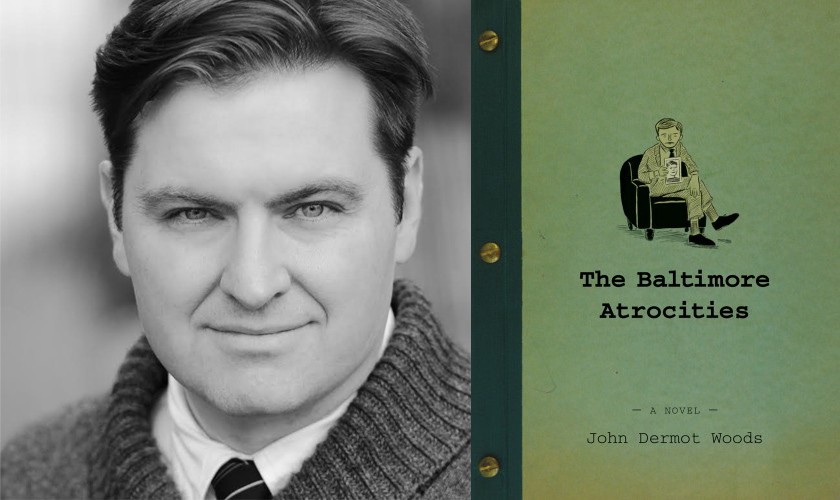
John Dermot Woods, author of The Baltimore Atrocities and other books

[Read our review of Nobody Is Ever Missing and our interview with Catherine Lacey]

Faces in the Crowd

Faces in the Crowd by Valeria Luiselli

This novel is a mysterious wonder, a jigsaw of identity and ghosts and storytelling, and unlike anything else I read this year.

Laura Van Den Berg, author of The Isle of Youth and other books

[Read our review of Faces in the Crowd and our interview with Valeria Luiselli]

Kinder Than Solitude cover

Kinder Than Solitude by Yiyun Li

One of my favorite novels of 2014 was Yiyun Li’s Kinder Than Solitude. I understand she’s a fan of William Trevor, and maybe I like her work for the same reasons I like his: the smooth elegance to the sentences and the willingness to explore intense feelings. It takes courage to do that; she takes risks. Also: one thing her work rarely gets credit for is being funny. There’s a great humor shimmering under so many of her sentences, sometimes wry and sometimes beautifully vicious.

Jonathan Lee, Associate Editor of A Public Space and author of the forthcoming novel High Dive

Atticus Lish

Preparation for the Next Life by Atticus Lish

Here’s the kind of book that shows up, if we’re lucky, every five, maybe ten years. It’s a book that masterfully anchors itself in the literary “novel” form while going leaps and bounds over a dozen of its kin in its authenticity, Lish’s command of the sentence capturing a dizzyingly accurate worldview from street level and up.

Michael Seidlinger, author of The Face of Any Other and other books

Station Eleven book cover

Station Eleven by Emily St. John Mandel

Emily St. John Mandel’s fourth novel is, flat-out, one of the best things I’ve read on the ability of art to endure in a good long while. It’s about the ways that civilization is kept alive in a world devastated by a plague, sure, but it’s also about the way artists live, about the way people live, about flawed relationships and creative pursuits and how the unlikeliest of connections can bring transcendence.

Tobias Carroll, managing editor of Vol.1 Brooklyn

[Read our review of Station Eleven]

Blake Butler

300,000,000 by Blake Butler

This is the book we needed in 2014 — this monstrous year of continued economic, physical, and structural assault, of consumerism and indifference, of power grabs and surveillance and empty, gilded decadence. We needed this book to cut open the corpse of America and expose the full extent of the rot inside. Butler’s book is not an easy read — intellectually or emotionally. But it’s a necessary one, because it’s the rare book that comes along and tells us something essential about who we are — and even rarer that a writer does so in an experimental yet accessible text that works, because it mirrors our own 21 century media-fried brains.

Amber Sparks, author of May We Shed These Human Bodies

[Read our review of 300,000,000]

Dept. of Speculation

Dept. of Speculation by Jenny Offill

It’s no secret how much I loved Jenny Offill’s Dept. of Speculation. I even wrote about it (among other things) for Electric Literature here. Not sure what I love more about it — that it’s so lovely and unique and, dare I say, experimental a book, or that mainstream contemporary publishing embraced it the way they did. All around a real highpoint in book culture and one of the most assured and impassioned novels of the year.

Scott Cheshire, author of High as the Horses’ Bridles

Marlon James book cover

A Brief History of Seven Killings by Marlon James

An absolutely unique and necessary novel of diaspora, bloodshed, reggae, drug addiction and corruption centered loosely around the attempted assassination of Bob Marley in 1976, A Brief History of Seven Killings spans countries, languages and color barriers, taking us from the slums of Kingston to the heyday of crack cocaine in 80’s New York — the story that emerges from the cracks in both cultures is not only a definitive novel of Jamaica but probably the best novel to address recent history (70s through the 90s) to be released in the 21st Century. For fans of Delillo, Vollmann, Pynchon et al.

JW McCormack, a writer, editor, and teacher

MT

Love Me Back by Merritt Tierce

Books that make us uncomfortable, that make us confront drug abuse, sex, and violence — especially without glamorizing them — are often praised as fearless, unflinching. Those terms, however, are a judgment, a reader acknowledging that there are parts of us we ought to be afraid of, be ashamed of, parts of life we must conceal. But it’s not that there is absence of regret or accountability in Love Me Back. Merritt Tierce’s narrator is anything but naive. This novel is not confessional, it’s not brave, it’s not post-bravery, it’s honest, it’s vulnerable, it’s necessary.

– Benjamin Samuel, co-founder of Recommended Reading and Program Manager at National Book Foundation

alena

The Word Exchange by Alena Graedon

I can’t believe more people didn’t talk about or love this book. In the swirling concern over what all our little gadgets are doing to our minds, Alena Graedon’s novel about a sci-fi “word flu” sweeping the Earth was about as timely as it gets. This book was practically screaming for people who love reading — and view reading as our salvation — to love it. In the novel, reading is literally our salvation, which means reading The Word Exchange is an obvious meta-experience of the themes Gradeon is trying to convey. The Word Exchange made me feel guilty for my failing memory and over-reliance on search engines and online-info depositories, and the only thing I could do with that guilt was to hope the story I was reading would get better. And it did. Underrated doesn’t begin to cover how great this novel was and how much it should mean to hardcore readers everywhere. Alena Graedon turned the jokes of Super Sad True Love Story into frighteningly cautionary, and serious, science fiction. Oh, and it’s her first book.

Ryan Britt, author of the forthcoming book Luke Skywalker Can’t Read: A New Geek Manifesto

Jess Row

Your Face in Mine by Jess Row

Jess Row’s Your Face in Mine boldly begins with an epigraph from James Baldwin: “And I suggest this: that in order to learn your name, you are going to have to learn mine.” This invocation of Baldwin let’s us know what we are about to encounter some real talk about race, and Row deftly navigates this space with the wild tale of Kelly Thorndike, a widower and public radio executive, who reconnects with a childhood friend who has undergone “racial reassignment” surgery and then signs up to document the story of how a white man from Baltimore comes to make the decision to elect for plastic surgery that will allow him to live as a black man. On a sentence by sentence level, Row is a beautiful writer and deeply engaging storyteller, capturing the voices and complexities of his characters over time, across countries, and across racial divides. On a political level, Row manages to speak frankly and elegantly about race and identity in America at a time where reading about race, across race, couldn’t possibly be more urgent.

Lisa Lucas, publisher of Guernica

Ben Lerner book cover

10:04 by Ben Lerner

The events that concern 10:04, which is bookended by Hurricanes Irene and Sandy, are still so vivid that reading this novel gave me the experience of life being simultaneously narrated. It was fitting, for a novel concerned with “multiple futures,” to feel that my present had multiplied. Particularly for New Yorkers, 10:04 is thrillingly sentient. Though nearly two years have passed, I still believe that, if I hurry, I can go see Christian Marclay’s The Clock (the work that gives 10:04 its title) at MoMA before the exhibit closes. Also recognizable from “real life” is Ben Lerner’s story, “The Golden Vanity,” which was published in The New Yorker in 2012 and becomes a central plot point of the novel (the story is reprinted verbatim). Which is all to say, the boundaries between 10:04 and real life are porous, and it’s exciting. But none of that would matter if it weren’t for Lerner’s excellent prose, which is galloping yet precise, his humorous, complex scene-settings (including one of the best extended party scenes I have ever read), his charming obsessions, and poignant world-view.

Halimah Marcus, editorial director of Electric Literature and editor-in-chief of Recommended Reading

[Read our review of 10:04]

Two Serious Ladies

Two Serious Ladies by Jane Bowles

Finally — rightfully — Jane Bowles’s criminally underknown 1943 masterpiece Two Serious Ladies is back in print. Uproarious and mesmerizing on the sentence-by-sentence level, Two Serious Ladies is a rare and marvelously twisted comedy of contradictory characters and unpredictable behavior and speech that, almost inexplicably, manages to convince and delight as it also eludes.

James Yeh, co-editor and publisher of Gigantic

Women book

Women by Chloe Caldwell

I am nothing like the characters in Chloe Caldwell’s fiery and honest novella of women in love. These are not my affairs, my mistakes, or my love-drunk disasters. Also, I am not a woman. Yet, Women is my biography. I am in these words. I felt every word, every storm, and every heartbreak in my throat, my bones. This book tore apart my internal organs. I am still recovering. I am hoping I never recover.

Kenny Coble, bookseller at Elliot Bay Book Co.

sister

Sister Golden Hair by Darcey Steinke

Darcey Steinke’s work has always been deeply engaged with perception — the perception of religion, the body, and the text as a kind of spiritual reservoir which must capture a sense of authenticity through struggles with form. Set in the 1970’s in a decade of “devolution,” where one could count “ten Nixon signs on the highway as they passed,” in her new novel, Sister Golden Hair, Steinke’s work branches out and engages with the physical presence of a decade and those crises which defined it — feminism and the crisis of self-fulfillment; the “throbbing amazingness of a round full female body;” spiritual “Devolution;” Grandness and An Unconstant God; and the architecture of physical place.

Ann DeWitt, writer, critic and essayist

[Read our interview with Darcey Steinke]

McBride novel cover

A Girl Is a Half-Formed Thing by Eimear McBride

I’ve heard it said that great novels teach you how to read them, and that is certainly true of McBride’s brilliant debut. A Girl Is a Half-Formed Thing is a difficult book, but a very rewarding one. In an era when so many people look down on fiction that takes any effort, it is heartening to see McBride’s debut not only be published, but get great acclaim and win several awards.

Lincoln Michel, online editor of Electric Literature and co-editor of Gigantic

NOTE: the following novels received the most votes from the panelists.

Annihilation

Annihilation by Jeff VanderMeer

Annihilation was the first 2014 book I read that blew me away, so I’m thrilled to see it make the cut here. The novel was book one of the Southern Reach trilogy, all three of which were published in 2014 and then collected as the hardcover omnibus Area X. Here’s what I wrote when I interviewed VanderMeer back in March: “VanderMeer writes in taught, atmospheric prose filled with mysteries and uncanny unease. Fans of speculative fiction — especially the subgenre of weird fiction — and great writing should put this at the top of their to-read list.”

[Read our interview with Jeff VanderMeer and VanderMeer’s own list of favorite 2014 books]

McGlue

McGlue by Ottessa Moshfegh

Ottessa Moshfegh is a writer that everyone will be talking about soon. She’s been publishing brilliant fiction in The Paris Review and elsewhere, and her novella, McGlue, was chosen by Rivka Galchen for the Fence Modern Prize in Prose. We published an excerpt of the brilliant sea-faring story in Recommended Reading, so go give it a try and then rush out and buy the novella.

Green Girl

Green Girl by Kate Zambreno

Green Girl is a novel so good that it had to be published twice. Initially published by Emergency Press in 2011, it was republished this year by Harper Perennial to plenty of acclaim. Here’s what our reviewer had to say: “Zambreno touches on a subset of society — a girl, in particular — and makes her universal and individual at the same time. Ruth is all contrasts and costumes and limbs. Zambreno invites us in to her life as a voyeur, but we finish the book with the feeling that she is our own creation.”

The Last Illusion

The Last Illusion by Porochista Khakpour

Porochista Khakpour’s sophomore novel has been racking up year-end acclaim (Kirkus, Buzzfeed, NPR, etc.) and for good reason. The Last Illusion is a gorgeously-written fable about a feral Iranian boy raised as a bird who moves to NYC. Part gritty fable, part coming-of-age-story, The Last Illusion is a one of a kind.

John Dermot Woods

The Baltimore Atrocities by John Dermot Woods

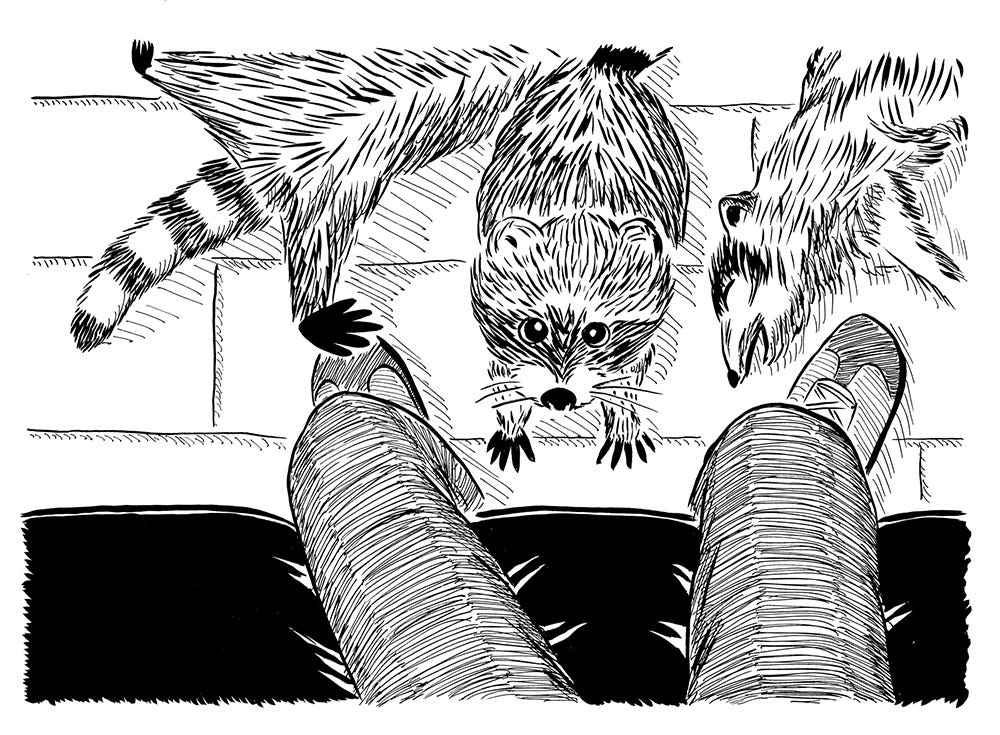
Full disclosure: I collaborate with John Dermot Woods on some projects, so I am very happy to see The Baltimore Atrocities get enough votes for this list. The novel is composed of over 100 vignettes and illustrations woven together with an overall narrative. As such, the book is a form-bending combination of novel, flash fiction collection, and graphic novel.

Ugly Girls

Ugly Girls by Lindsay Hunter

Ugly Girls is another novel making a lot of year-end lists. Here’s what Luke Goebel had to say when he interviewed Lindsay Hunter for our site: Kind of book everyone will want to read. Mass appeal, all that, killer speed book, craft out of the top of the head, with all the best prose anyone could want, plus the big story, mindblower, like at times I’m reading something written so good I think it’s As I Lay Dying only it’s 2014 or ’15 or ’16 and it’s Ugly Girls and it’s set in this trailer park — other times I’m clearly reading Lindsay Hunter and it’s still set in that trailer park — but it’s like one of those great books you read in school as a kid (though this one isn’t going to be taught in any kids’ schools anytime soon I doubt, not with some of these scenes!) and thought, HOW THE HELL DID THIS WRITER DO THIS?”

Will Chancellor

A Brave Man Seven Storeys Tall by Will Chancellor

Chancellor’s debut novel got rave reviews, but flew a little under the radar with readers. Hopefully, it’s inclusion on year-end lists will encourage readers to give this gorgeous novel a try. John Warner of The Chicago Tribune said, “it is a novel that could only be written by one person, at one particular time…the most ‘alive’ book I’ve read this year.” BookPage said, “Chancellor writes in the established tradition of the American absurd, from Pynchon and Gaddis to DeLillo and Foster Wallace. Chancellor may be swinging for the former pair, but lands firmly, and thereby accessibly, in the latter.”

The wallcreeper book

The Wallcreeper by Nell Zink

The Wallcreeper is a book that everyone I know has been raving about. Jeff VanderMeer included it on his list of favorite books, praising it’s “utterly fearless writing.” It was voted one of the top indie books of the year in our survey. And here is what our reviewer had to say: “It’s rare that a debut novel so offbeat, and with such sharp little teeth, is also a page-turner. Rarer still does one like this get past the gatekeepers of the publishing world. It’s exciting that The Wallcreeper did.” We excerpted The Wallcreeper in Recommended Reading.

Jeff VanderMeer’s Favorite Fiction from 2014

My year in reading was a chaotic and joyous one. There was nothing scientific or complete or logical about it, and I was glad I didn’t have to care about any of that. I was on the road exactly five months, two weeks, and three days. I grabbed what I could when I could and discarded anything that didn’t keep my attention in an airport, on a plane, in a cab, in a hotel room, in a cave, on horseback, talking to owls, at the end of a bar, dancing with lemurs, through a looking glass, back home for a couple of days.

So, in that context, it’s surprising what stuck and what didn’t. I lugged Richard House’s thousand-page hardcover The Kills around with me all over — undaunted by the fact that it was not built for shoving into an airplane seat-back pocket. It was the tome I could not put down, and it captured me so utterly that I begged off meal invites and bar get-togethers to finish it. I resented gigs because if I was reading my own work I wasn’t reading The Kills.

The borders of my reading in 2014 were porous and for this reason you will find a few titles from before 2014, like Submergence and Pym. I am not the kind of reader to begrudge a book its inclusion based on some arbitrary human calendar. (This will frustrate some of you; I apologize in advance.) Still, even I have some limits. I have not included “ancient” books that I read and loved this year — like Margaret Atwood’s Oryx & Crake and Robert Walser’s The Tanners. I also have stopped myself from adding the astonishing Thrown by Kerry Howley, “creative nonfiction” about MMA fighters that should appeal to any fiction reader due to its unique approach.

Throughout the year, whether they have books on this particular list or not, the publishers who made me happiest were, in no particular order, Two Dollar Radio, Coffee House, Melville, Milkweed, Dorothy Project, New York Review of Books Classics, Sarabande, Dedalus, Drawn & Quarterly, Subterranean Press, Europa Editions (and Picador generally), Tin House, Farrar, Straus and Giroux, and New Directions.

Here, then, are my carefully curated favorite reads of the year. I have divided this list into the following rigid genre categories: fiction.

***

City of Stairs

City of Stairs by Robert Jackson Bennett (Broadway Books)

Author of the highly recommended American Elsewhere, Bennett returns with a fantasy novel that will appeal to a wide range of general readers. This novel has everything. Set in a fantasy world with dead gods, City of Stairs can be read as a spy novel infused with political intrigue. But Bennett also tackles colonialism, religious fanaticism, economics, the environment, and gender issues. On top of that, this layered and complex novel throws in magic, credible action-adventure, long-held family secrets, and a fresh take on mythology. All related from the point of view of Shara Thivani, who has been tasked with solving a murder. A murder? Why yes, it’s also a crime drama.

Corpse book

The Corpse Exhibition and Other Stories of Iraq by Hassan Blasim, translated by Jonathan Wright (Penguin)

Redeployment by Phil Kay has been juxtaposed, in some reviews, with The Corpse Exhibition as if allied by being on opposite sides of the mirror, or allied by a shared subset of geography, boots on the ground or of the mind. But I’d like to break that link here and say they aren’t allies. One is something we’ve seen before, even if done well. The other, The Corpse Exhibition, isn’t something we’ve seen before. There’s a welcome unchecked and unruly strain of surreal horror running through this collection, one that serves as a delivery system for a matter-of-fact grotesquery and absurdity. These stories do not support a comfortable view of the human condition. They do not support the status quo. These sophisticated and layered narratives chronicle how reality can seem like a dark dream, and how you have to live within that reality or that dream. We may be living in times where mimetic realism in fiction isn’t up to the task of describing the intra-dimensionality of experience.

ideo

Idiopathy by Sam Byers (Faber & Faber)

What do you get when you combine self-absorbed people, a cattle epidemic, rehab, a bio-dome, pregnancy, and a barbed writing style? Idiopathy. Since this novel skewers everyone and everything in modern consumer society, it’s no surprise that the Amazon reviews are dire. The more formal reviews were hit or miss, too. It’s not nice to be told that everything you value is for shit. Not nice! Not nice! Oh well. I guess we’ll have to live with it. Anyway, Idiopathy is a deeply hilarious and absurd novel full of unlikeable characters and inventive set pieces. A misunderstood book that deserved better than it got on this side of the Atlantic.

inve

The Investigation by Philippe Claudel (Quercus)

Why be Kafkaesque when you can just be Kafka, returned from the dead? Claudel prefers stealing to borrowing — and it works due to a cringe-worthy beautiful unease. An Investigator is sent to a far-distant town to find out why so many people at an anonymous company are committing suicide. But the Investigator doesn’t even get to the company until several chapters in, such are the vagaries and disturbances of modern life. From weird hotel owners to strange rituals, The Investigation contains more than a hint of Robert Aickman, especially his story “The Hospice.” The Investigator is stymied not just by the people he encounters but the systems that have created the ridiculous words that spill out of their mouths. Surreal, hilarious, and disturbing, this is the novel about the modern world that Kafka didn’t live to write.

lydia davis book cover

can’t and won’t by Lydia Davis (Farrar, Straus and Giroux)

I think of this collection as a series of personal diary entries, probably not by the same person, that I get the privilege of reading through even though I’m not part of the family. Because of Davis’ reputation I’m happy to wrestle with a three-line short-short that seems banal; I don’t care what spark or stance reveals to me the resonance. So I read this collection in an odd state of dueling boredom and deep interest. I must admit I like the longer pieces best, but there’s a kind of hypnotic hold exhibited by the shorter stories that I can’t quite explain. Even when ennui took over it was a kind of active ennui and I couldn’t stop reading.

The Wilds, Tin House

The Wilds by Julia Elliott (Tin House)

My favorite collection of the year by a writer whose first novel comes out in 2015. The stories in The Wilds adhere to a nominally realistic view of the world, but there’s also a strong sense of the absurd running through them. Sometimes it’s overt and sometimes it’s sly. The randomness and spontaneity of the world often manifest through the dialogue. It’s an incredibly rare gift to make speech sound both off-the-cuff and essential to the story rather than just random. “The Wilds,” “Feral,” and “The Whipping” are three personal favorites, with a Southern flare that doesn’t degenerate into stereotype. But Elliott’s also doing really interesting and unique things with stories like “Regeneration at Mukti,” which is science fiction. These stories don’t owe anything to any writer, but sometimes there are glints and glimmers of Shirley Jackson and Kelly Link.

Fowler book cover

We Are All Completely Beside Ourselves by Karen Joy Fowler (G.P. Putnam’s Sons)

I read this novel by Fowler on the plane, next to someone who I hadn’t spoken to all flight. So I imagine the person was surprised when I burst into tears just as we started our descent. I’d reached the end of the novel. I’m not a sentimental person, but somehow Fowler’s tale of an unusual family, a terrible scientific secret, and the inequities of animal research got past all of my defenses.

Cat town

Cat Town by Sakutarō Hagiwara, translated by Hiroaki Sato (NYRB Press)

A Japanese writer considered one of the foremost poets of the Taishō and early Showa periods, Sakutarō was interested in exploring madness, hallucinations, and obsession in his works. To do so, he largely rejected naturalism and used colloquial language, impressionistic images, a sense of personal intimacy, and modern subject matter. The classic “The Town of Cats” (1935) or, as here “Cat Town,” is the poet’s only short story and explores themes of disorientation and the illusory nature of reality. It depicts a surreal urban journey that presages the work of Haruki Murakami. But this lovely collection includes potent evidence as well of the author’s gift for poetry. “Signs of crimes and sins appear in heaven, appear on piling snow, glitter out of treetops…shining beyond midwinter.”

SH

Fourth of July Creek by Smith Henderson (Ecco)

This debut is just flat-out brilliant from beginning to end. Set in Montana around 1979, it chronicles the conflict between a dysfunctional social worker and a crackpot preacher who has become a dangerous survivalist. As I wrote in The Guardian, “Henderson is committed to showing us unhappy and unstable people existing at the edges of any safety net. But they’re also people struggling to find a kind of truth, and they’re portrayed with compassion and humanity, in a voice that crackles and lurches with the intensity of a Tom Waits song. Here, at the beginning of his career, Henderson has come within shouting distance of writing a great American novel.” This one deserved all the prizes.

wildeyes

With My Dog Eyes by Hilda Hilst, translated by Adam Morris (Melville House)

As more and more Latin American women writers are translated into English, we begin to have a better sense of the true range of the surreal, irreal, and fantastical. This expansion is as yet incomplete and there is much, much more to come — many writers from the past whose fiction has yet to appear beyond single story translations in literary journals. But Hilst helps, especially with its disdain for literary tradition and for middle class mores. It’s scatological, merrily sexual, and not interested in telling a conventional story. A slim but potent text, this one will sear your brain. Translator Morris’s introduction provides great context and suggests treasures yet to come.

kills

The Kills by Richard House (Picador U.S.)

This long novel split into four self-contained, interlocking parts is probably my favorite read of 2014. The basic set-up involves embezzled money, predatory military contractors, and illegal U.S. waste burning sites in the Iraqi desert. From there, The Kills metastasizes and transforms, continually shedding its skin. You can also think of this novel as a mimic with a through-line of exploring every ramifications of the decisions explored in part one. There are definite traces of Le Carre and other espionage writers but also war reportage, horror fiction, theater of the absurd, and much more. Moreover, The Kills is a sustained examination of the lies and myths we tell about ourselves. Comparisons to Bolano’s 2666, Catch 22, and Thomas Pynchon all make sense to me, even if The Kills is a unique creation. For this reason — this sense of encountering something unique — I found every page captivating in some way, but the shape of the story didn’t become clear until the last pages. At which point everything locks in place with impressive power; brilliant and brutal. I would suggest that The Kills and The Corpse Exhibition share a certain resonance. I see both books as harbingers of a paradigm shift — that, for example, what has baffled some critics about the sometimes brutal The Kills is exactly what makes the novel more relevant to and reflective of our times than a dozen more lauded books. There’s no escapism here, and nothing juvenile or nostalgic.

Jesse Jacobs book

Safari Honeymoon by Jesse Jacobs (Koyama Press)

I read this graphic novel or it read me. I’m not quite sure which. A demented exploration of unfamiliar wilderness, Jacobs’ absurdist horror story deftly comments on and sends up invasive species and Western explorers alike. Jacobs has a gifted eye for the plant or animal detail that resonates and seems true despite ignoring the fidelity of biological illustration. As the two lovers on their honeymoon encounter an increasingly phantasmagorical ecology, their guide demonstrates hidden depths of both devotion and perfidy. Meanwhile, swarms of weird centipedes and other creatures look on, wide-eyed and innocent. (Or are they?) The adventures are surreal, creepily informed by a good working knowledge of parasites, and come with an underlying message: Intruders either succumb to bad ends or become assimilated…and sometimes being assimilated ain’t so bad.

pym

Pym by Mat Johnson (Spiegel & Grau)

The oldest title on this list (from 2011), Pym was absolutely one of my top five reading experiences this year. This exploration of race and fiction through a modern riff on Poe’s classic yet at times problematic The Narrative of Arthur Gordon Pym of Nantucket is laugh-out-loud funny but also deadly serious. It’s beautifully layered and deep. The novel manages, somehow, to seem at times like the best essay on Poe ever written, without this in any way diluting its authority as fiction. It also reads like the best expedition story to the Antarctic, too. Somehow Johnson has managed to successfully wed the conventions of literary criticism, historical fiction, adventure fiction, literary fiction, and weird fiction. I loved it.

borrowed

The Woman Who Borrowed Memories: Selected Stories of Tove Jansson translated by Thomas Teal and Silvester Mazzarella (NYBR Classics)

One unfortunate thing about the popularity of Jansson’s wonderful Moomin comics and stories is that her so-called “adult” fiction has seemed for decades to play second-fiddle, at least in English translation. New York Review of Books has done a fine job of rectifying this situation. The latest salvo is the selected stories of Jansson, with a useful introduction by Lauren Groff. The curation helps quite a bit because Jansson’s short stories have always seemed like the most hit-or-miss category in her creative output. This omnibus gives readers the best possible experience. I must also use this anchor to put in a plug for Jansson novels, in case you have not yet encountered them. The Summer Book is an elegant and wise exploration of the relationship between a granddaughter and her grandmother on a Finnish Island. The True Deceiver is a sharp knife between the shoulder blades, a clinical and unsentimental look at art and real-life relationships.

Catherine Lacey

Nobody Is Ever Missing by Catherine Lacey (FSG Originals)

This uncompromising novel, in which a woman recounts leaving her husband and traveling through New Zealand is a brave, often darkly funny story about trying to find or lose your self while coping with loss and dysfunctional societal norms. It’s also a damn fine road novel. More than anything else, though, I admire how Nobody Is Ever Missing commits to the eccentricities of its narrator through its use of language. The spiraling, long sentences that I love so much. The returning to certain ideas or phrases, as a way of testing the walls of a prison. It threatens a repetition that could be tiresome but escapes the trap. The ending is just as fraught and messy as the beginning and middle. Nothing will ever be the same. Thankfully so.

Ledgard

Submergence by J.M. Ledgard (Coffee House Press, 2013)

A staggering accomplishment, with twinned narratives that join in the middle and are genuinely moving, ecstatic, terrifying, and profound. This story of a hostage and a woman who studies the deep ocean contains more interesting ideas about science and philosophy than any science-fiction novel I’ve read in the past decade. I was astounded by the layered compression, how the narrative manages to achieve so much in such a short span. I’ve never encountered anything quite like Submergence and I am rendered largely speechless and wordless by it. Thus, I guide you to Matthew Cheney’s marvelous review, for a more articulate reaction.

2dolalr

The Absolution of Roberto Acestes Laing by Nicholas Rombes (Two Dollar Radio)

I very much enjoyed this weird, disturbing, sometimes effed-up novel about strange films, lost films, and the fragile faith in the difference between our fictions and our realities. A journalist and film buff interviews an eccentric filmmaker/professor. It is profitable for the reader’s entry point into the novel to think of it as consisting of a series of loosely interlocking short stories, in the form of film descriptions. The section involving a quest by an engineer to repair an abandoned well is particularly stunning. An image of dark drones so thick across the sky it becomes night is incredible. One passage in particular had a truth to it that I cannot forget: “The end of the world is really a reactionary fantasy, the dream of thin-blooded tyrants, spun into popular narrative by writers and artists and movie makers. The landscape around her — the broken roads and disfigured buildings and polluted rivers — is not some dystopian fantasy of the slate-wiped-clean but something far more dangerous: things as they are. The present is always the present, even when it seems like the future.”

paulsh

Lesabendio: An Asteroid Novel by Paul Scheerbart, translated by Christina Svendsen (Wakefield Press)

First published in 1913, this German novel is credited with helping found “German SF” as well as serving as an influence on German Dada and Expressionist writings. Its surrealism and fantasy pushed back against the dominant realism of the era. Episodic and hypnotic, the novel describes life on the planetoid Pallas where “rubbery suction-footed life forms with telescopic eyes smoke bubble-weed in mushroom meadows under violet skies and green stars.” There’s definitely an early ecological theme here, a sense of trying to create a new perspective. Intriguingly, the writer and painter Alfred Kubin created illustrations for the novel — yet another link between Scheerbart and the weird. (Kubin’s own classic novel, The Other Side, was reissued this year by Dedalus and if you haven’t read it you must run out and buy it immediately.)

ew

All the Birds, Singing by Evie Wyld (Pantheon)

In All the Birds, Singing Wyld creates an unforgettable character in Jake Whyte, a woman with a troubled past who, in the present, lives on a farm she owns on a remote British island. The story of her encounters with a strange beast and neighbors she wants nothing to do with is interwoven with a narrative about the past that gradually delves farther and farther back in time. Wyld’s also not afraid to just give the reader the blunt, brutal truth. There are aspects of Whyte’s past — because of what’s been done to her and what she herself has done — that you get full-on, in detail. To describe them here would be spoilery, in that the life of the novel is in the moment and in the particulars of sometimes fairly brief scenes. But my point is that we begin the novel with a mystery about Whyte — who she is and why she’s now on the island — and on some level the rest of All the Birds, Singing is nothing but exploration of her character, a kind of clear-seeing that creates empathy even through the most disturbing sequences. The truly exceptional prose is supported by a vision for the novel’s structure that has both clarity and substance.

22237292

The Wallcreeper by Nell Zink (Dorothy Project)

Frank is not a proper noun in The Wallcreeper; it’s a way of life. But so is an inventive and layered approach to narrative. As this story of a woman, her husband, and encroaching commitments to other people and to environmental causes progressed, I marked so many pages because of an original turn of phrase or some stark assertion some other writer would have circled around…that I had to stop. For that reason, too, I’m not going to share any quotes because a huge part of the pleasure of the novel is encountering the surprises at the sentence level. Even as The Wallcreeper can be cynical, arch, and satirical about its eco-pushing characters, it contains a useful critique of certain approaches to environmentalism. A lot of what’s on display is utterly fearless writing.

***

Jeff VanderMeer author photo

photo by Kyle Cassidy

Jeff VanderMeer’s The Southern Reach Trilogy made Entertainment Weekly’s list of the Top 10 Fiction of 2014, in addition to the best-of lists of the Los Angeles Times, Buzzfeed, and many others.

REVIEW: The Wallcreeper by Nell Zink

by Jenna Leigh Evans

Nell Zink’s compelling, sexy, weird, and highly intellectual novel opens, tellingly, with this quote by Ted Hughes: “I kill where I please because it is all mine.”

This is an apt introduction to a take-no-prisoners jaunt through an anthrocentric, patriarchal culture as seen through the eyes of Tiffany, a young newlywed who undermines her connection to nature, eros and self by impulsively marrying (and cleaving to) a man who more closely resembles a fencepost than a human being, and by fiercely resisting finding meaningful work in favor of puttering aimlessly around the house.

Steven is a DJ who dances as if he had never seen another human being dance, a birder more tuned in to his tally than the creatures he tallies, and eventually a political activist with no real convictions. At the opening of the story, he drives smack into a rare bird (the Wallcreeper) and is so thrilled by being able to tag it for his list he exclaims, “I identified it before I even hit it” — because dead birds don’t count for sightings. Tiffany, meanwhile, is miscarrying her baby. When she sobs inconsolably, a grief Zink refers to specifically as bodily distress, Steven clamps his hands over her ears. “Much later he told me he thought if I couldn’t hear myself I might stop,” Zink writes.

These threads of male disconnection in the midst of female primal experience are wound tighter and tighter. Tiffany finds that a foray into anal sex, rather than helping her overcome her fear of intimacy as she’d hoped, brings nothing but simple physical pain (albeit very amusingly described pain), while Steven emerges from the experience radiant with delight. Later, he admits that it had been on his list — the joy of drawing a line through it the joy of the conqueror.

But Zink doesn’t let her female characters off the hook. Unapologetically, neutrally, the novel probes Tiffany’s desperate (and disparate) craving for both domesticity and wildness. When its need for sex makes it unmanageable, Steven and Tiffany’s captive bird has to be banished from their home — but they can’t bear to let it go as it is. So, newly microchipped, clipped, banded, and trained to return, the Wallcreeper is released into the wild, where it meets a comically horrible fate. The dullness of Tiffany’s self-created captivity drives her to an affair with a beautiful, clueless Turkish man named Elvis, which makes her feel daring and wild. Steven, while espousing desire for Tiffany’s sleek poise, launches his own clandestine relationship with a messy, mangy-looking ecological activist, who draws them both into a world of high-stakes yet completely inept eco-terrorism. At this point, the novel’s sly, pointed humor takes a turn for the utterly unsparing.

It’s rare that a debut novel so offbeat, and with such sharp little teeth, is also a page-turner. Rarer still does one like this get past the gatekeepers of the publishing world. It’s exciting that The Wallcreeper did.

The Wallcreeper

by Nell Zink

Powells.com

INTERVIEW: Valeria Luiselli, author of Faces in the Crowd

Faces in the Crowd

Valeria Luiselli’s debut novel Faces in the Crowd (Coffee House Press, 2014; translated from the Spanish by Christina MacSweeney) is one of those rare books that manages to upend one’s idea of what might be possible in fiction. Masterfully fusing form and content, it is a book that feels compiled, brick-by-brick, a slow accretion of fragments. It is a “vertical,” “simultaneous” novel, told in storeys, like a building to wander through. The soundtrack of the comings-and-goings of the upstairs and downstairs neighbors — past and future — is always superimposed on the present. Yet this narrative, this life, is a wobbly structure, a house “full of holes.” Such a structure can protect, but it can also hide away or destroy. It can be refuge, exile, or death trap. What happens when these walls we erect around ourselves make us invisible or unrecognizable to others? What happens when these walls come crumbling down?

Faces in the Crowd has attracted a number of notable admirers. Enrique Vila-Matas has called this book “the best of all possible debuts…” while Laura Van Den Berg urges everyone to “Read her. Right now.” This year she was named as one of the National Book Foundation’s 5 under 35.

Last week, I met Luiselli at a Greek restaurant near Columbia, where she is currently completing a Ph.D. in Comparative Literature. We talked mostly about the theme of ghostliness in her novel, of hauntings and vertical time.

Anelise Chen: Your novel begins with an epigraph from the Kabbalah: “Beware! If you play at ghosts, you become one.” Why is this novel populated by ghosts?

Valeria Luiselli: There were many different levels at which I was trying to explore the theme of ghostliness. The initial seed of the idea came because I wanted to write about the modernist poet Gilberto Owen, the male narrator. He is a ghost inasmuch as he belongs to a literary and social niche that has no clear labels. He was a Mexican poet living in New York during the Harlem Renaissance, but he was always in the periphery, practically unknown. Because he left for America so early in his life, he became a ghostly figure in Mexico as well. So I was interested in talking about a particular group of Latin-American intellectuals, of Mexican writers, who don’t belong entirely to existing cultural or social structures.

Gilberto Owen

Gilberto Owen

AC: Did you initially want to write a story about peripheral literary figures and not specifically about ghosts?

VL: I wasn’t going to frame it as a ghost story. But I was intrigued by the fact that Owen used to weigh himself in the subway every day. He wrote in his journals from the 1920s that indeed he was losing weight, disintegrating, becoming a ghost. Also, when he got older, and got sick from alcoholism, he was gaining weight and growing breasts and becoming blind. He would play with the idea that he was disappearing, instead of becoming blind. The idea of ghostliness came from that character. That, plus the rhythm and experience of ghostliness in the subway. That was the initial intuition that I started following. But I never thought to myself: Write a ghost story. Especially because one of my favorite Mexican writers, Juan Rulfo, is the modern ghost story teller. His novel Pedro Páramo is one of the most brilliant books ever. So it wasn’t at all in my interest to write my own take of his book. I would never have aspired to do it. What is fascinating about Rulfo though, and I reread him when I was writing the novel to figure out how he had done it, is that in one single time frame, he lets the dead and the living coincide. Have conversations. They’re not dead…they’re not even ghosts.

Pedro Paramo

AC: They all seem to inhabit the same membrane of time. I remember in one scene, Owen, almost blind, looks in the mirror and sees Nella Larsen’s reflection instead.

VL: Yeah. Passing. That is a kind of haunting as well. You’re caught between two worlds, neither black or white. Yes. It’s very much a novel about passing too, especially in Gilberto Owen’s story. Of course I was thinking a lot about Ralph Ellison’s Invisible Man and a bunch of other books and poems and plays I’d read from the Harlem Renaissance, including Lorca’s own poems about Harlem.

But I don’t like to address “issues,” especially not in a novel, not directly. I don’t want to be pedagogical. Fiction is interesting because it enables you to take another route, to say things indirectly, through another channel. Because when I arrived in Harlem in 2008 and lived there for a while, one of the things that was very present to me was the status of Mexicans in the US. I’m speaking about the problematic invisibility of migrants now, which I write about too. But I didn’t want to write a contemporary realist novel about migration and border crossings, so Owen’s story is what allowed me to touch upon those subjects in a way that tends toward ambivalence and complexity.

Nella Larsen

Nella Larsen

AC: Actually that is another layer of haunting that I hadn’t thought about. Because in the book, you’ve folded time in this really cool way so that past, present, and future are all layered, simultaneous. I was mostly thinking about temporal intrusions and breakages. But in fact there are groups of people we just don’t see, even though we’re all inhabiting the same physical space and time together.

VL: Absolutely, and it’s good that you say that, because there are other instances of present ghostliness. I don’t know if I should label it the “emotional” sphere or what. But I also wanted to explore this problem of building a life that you are not able to inhabit fully. Right? The woman narrator is in that situation, in a way. She’s writing about her past but she’s not there anymore, and she’s not entirely in her present, though her present is very demanding and urgent and there are diapers to be changed and things to be written and a marriage perhaps to be saved. There’s an urgency in the present, but she doesn’t fully inhabit the house that she lives in. She’s a bit of a ghost there too.

AC: Is this inability to be present in the life you’ve made for yourself a consequence of being a woman, a writer, or is this just what happens to everybody?

VL: That’s a good question. I wouldn’t put it in any one category. I don’t think womanhood itself puts you in a position of self-effacement. Of course in certain cultures it’s more predominant. But I don’t think in terms of gender when I write. I think in terms of characters and people and their problems. I don’t even think I think in terms of political problems. These themes of course arise because I’m trying to write about people and their problems, right? But I didn’t think about disappearing as a gender issue in particular.

AC: I’m really curious about the scene where her roommate Dakota is singing into a bucket so she won’t disturb the neighbors, while the husband is working really loudly at his desk. Did you mean for that to set up a sort of contrast?

VL: My mind tends to think in analagous imagery, so it’s likely that it was one of the connections. But it wasn’t deliberate. It wasn’t some statement about women artists having to hide. No, it wasn’t a metaphor. I guess when I wrote this novel I was very much under the influence of imagist poetry: Ezra Pound, William Carlos Williams. I was very much in conversation with that when I was writing. I like to think of the novel as a sort of imagist novel, as a succession of images, or an “intellectual and emotional complex,” as Pound used to say. Not metaphors; just images.

AC: So there are literary hauntings too. At one point the woman narrator hallucinates drinking with William Carlos Williams at a bar.

VL: That’s another level of course. Our relationship to books and reading is a dialogue with the dead. Quevedo said literature was a “dialogue with the defunct,” no? Does that even exist in English? It’s a horrible sounding word, defunct. Deceased is probably the right word.

AC: Was that anecdote about Ezra Pound real? Did he really compose “In a Station at the Metro” after seeing a recently defunct friend?

VL: I’ve heard and then read a version of that anecdote. What I wrote is not the entire version that I heard, but it’s very similar to it. But it is true, apparently, that he wrote the poem as a response to having thought he saw a friend of his, recently dead, Henri Gaudier-Brzeska. Plus, the experience itself was so fleeting, the poem had to retain that fleetingness. The subway is like that, no? Happily I’m not seeing dead people there all the time but I often see people that I knew long ago.

AC: Owen and the woman narrator haunt each other in the subway also. Why is that?

VL: I think, in the first half, the woman narrator is just starting to prepare the ground for the Owen novel. She is beginning to write Owen into her space so she can actually start writing the novel. What happens is not that Owen’s voice comes in to take over, it’s more like her voice unfolds into his voice.

AC: She’s using him as a medium…

VL: Yes, to tell her own story. I used to draw arcs between each character. I linked Dakota to Garcia Lorca in Owen’s story, Pajarote to Zukofksy. This is sounding like the Wizard of Oz but it’s not. [laughs] I wanted there to be a subtle correspondence between the characters in the two stories. Though Owen is a bit like her husband, no? They have the Philadelphia correspondence, they’re both unfaithful, decadent. Nothing is completely symmetrical. That would be a really boring novel, like a puzzle you have to figure out.

AC: The woman narrator could have just continued telling her story of her own past, but that wasn’t her intent. She wanted to write a story about Owen.

VL: Well, it could be both. Owen was an important presence in her past life, so in order to write about him she has to go back to capture the initial…you know when you find an idea for a novel, you have a moment, like, This is it! Or not! She has to go back, travel back to a moment of connecting to the origins of her emotional attachments to the idea of writing about Owen. Then she can really start to make the story.

AC: Would that be the roof scene?

VL: The roof scene is the moment that reconnects her. After that Owen starts coming in more and more.

AC: And the hauntings extend outward too, to the readers. After I read this book, I became obsessed with ghosts. It described something I was feeling exactly, about feeling not quite present, not dead but not really alive. I started researching, reading books about Victorian ghosts. Then my friend told me about Derrida’s documentary, Ghostdance. It turns out there’s a whole school of thought now called Hauntology. The term comes from Derrida’s Spectres of Marx.

VL: No… I wasn’t aware of any of this.

AC: Right, it was pure coincidence…but anyway it’s this idea about being perpetually nostalgic for the future, mourning the loss of the future. There’s a sense that we’re in no-time. Mark Fisher writes about this in his new book The Ghosts of My Life. “Even loss is lost.” It’s like everything you can imagine happening or existing has always already happened, so you can’t project yourself into any kind of future. And of course nobody can be really mentally present because we’re all on our devices. So anyway, I thought, wow, ghosts. This is really rich stuff…

VL: Yes, I do think ghosts really resonate with our time. Not being able to inhabit your life fully. It’s sort of trite to say, but the velocity of our lives, the emails we answer every day, it’s hard to have a conversation. It’s hard to have bonds and relationships that feel lasting and slow….

Waiter, in Spanish: Can I take this coffee? [As an experiment in tasseography, Valeria has reversed the grounds of her Greek coffee into the saucer to see what it would say.]

VL: No, es para leer el futuro. [Waiter laughs, puts his hands up in surrender, retreats.]

AC: We should have asked him to read the future!

VL: Yes, or we could ask my daughter. She’s very good at interpreting images. [We look back at her…she’s drawing happily at her own table.] Anyway. The fact that you connect to the ghostliness in the novel is telling. I think many people who’ve read this book connect to that very strongly.

AC: It’s like we can’t seem to stop comparing ourselves to ghosts, zombies, monsters. We just feel dead.

VL: I have a friend who’s a brilliant poet. I think he is the most interesting poet writing in Mexico right now. Luis Felipe Fabre. His third book is a kind of critique, particularly of Mexican society, called Poems of Terror and Mystery. Basically it’s all about zombies and monsters or certain poets as monsters and others as zombies. Imitating trash horror. It plays with pop culture, but somehow by using this very common language and these trite concepts, he gets to the core of these very fundamental things.

AC: Yeah, I think so too. Well, now maybe we can talk about this form you’ve created for the book, which seems particularly conducive to hauntings. There are all these holes where past and present can poke through.

VL: The form very much reflects my own mode of proceeding in thought, at least at the time. Not all my books are like that or will be like that I’m sure. In that particular moment of my life, my thought structure was very much in short bursts, pieces, images, fragments if you want. I think the rhythm followed my own rhythm and also the rhythm that I was allowed because my daughter had just been born.

AC: You wrote it after she was born?

VL: No, I started writing it before I was pregnant. My writing experience, at least in two of my books, has been like this: I have an idea, and then I take notes for a long time and I read but then I transition to a period of distance where I just take notes, less intently, and read a lot, but less focused on the novel itself. This is a period of two years, maybe, and in the third year I write intensely for many, many hours a day. I wrote this novel in about nine or ten…or maybe twelve months. Before that there had been twenty-four months of reading and note taking.

AC: I love how the novel feels more architectural than like the prototypical MFA novel, with a catalyzing event, rising action, climax, etc.

VL: [laughs] Does my novel even have a climax? No, I never thought about stuff like that…

AC: But that’s what I love so much about it! When I’m reading I can’t imagine you charting it out in that way. Instead the novel has a mirror structure, a rhetorical structure, prolepsis and analepsis, and it’s also a palimpsest. History gets layered, like a city, it gets built vertically. I guess that relates also to your research in architecture…

VL: I read a lot about urbanism and architecture. I’m interested in ways of articulating space and talking about space. I talk about books in terms of their spatiality. In terms of architecture of space and the way we move inside stories. Spatial analogies come more naturally to me than other types of analogies.

AC: I think that’s what I liked so much about the book was that it felt like I was exploring a building…

VL: It is like that, I guess. I used to be a dancer. I think dance trained me to be very conscious of space and how we relate to it. Dance works like that. Dancers don’t just move around space. They create it, making it visible to the other by moving through it and inhabiting it. That particular consciousness of space is what I try to pull back into my work as a writer.

Sunday Sundries: Literary Links from Around the Web (Dec. 7th)

Looking for some Sunday reading? Here are some literary links from around the web that you might have missed:

How writers read: a Believer round-up (Vol. 2)

Reading Literature Makes Us Smarter and Nicer

INFOGRAPHIC: The Most Popular Books of All Time

100 Notable Books of 2014

Was 2014 the Year of the Debut?

50 Great Dark Books for the Dark Days of Winter

President Obama’s Indie Bookstore Haul

The Winners of the 2014 Goodreads Choice Awards

10 Writing “Rules” We Wish More Science Fiction and Fantasy Authors Would Break

What Makes the Russian Literature of the 19th Century So Distinctive?