The Lit List: May 6–12

The Lit List is a sometimes-weekly compendium of New York’s finest literary events and readings. Something we should know about? Email dish@electricliterature.com

Monday, May 6

Ben Greenman launches his novel The Slippage at Franklin Park with Sam Lipsyte, Touré, Claire Vaye Watkins, Amelia Grey. You might have heard of them.

Sackett Street folks Nick Dybek, Julie Sarkissian, Amy Shearn and Jill Di Donato read to the masses at Book Court.

Tuesday, May 7

Benjamin Percy launches Red Moon at Book Court. Boom!

Did you ever “come of age”? Then you might be into these stories by Susan Kirschabaum, Nathaniel Kressen, Paula Froelich and Anthony Haden Guest at No. 8.

Wednesday, May 8

The woman as literary critic — a discussion. Panelists Kate Bolick, Ruth Franklin, Laura Miller, Miriam Markowitz, Michelle Orange, Parul Sehgal, and Michelle Dean break it down at Housing Works.

First it’s a reading then it’s a party: Noon reading with Brandon Hobson, Noy Holland, Lincoln Michel, Christine Schutt and James Yeh. Center for Fiction.

Thursday, May 9

Literary Death Match finally comes to Brooklyn. Judges: Baratunde Thurston, Elissa Bassist, Dale Seever. Readers: Tayari Jones, Alina Simone, Alexander Chee, Dan Wilbur. Audience: You + then some. Union Hall.

Friday, May 10

How’s that adulthood thing going? Commiserate with Alida Nugent for her It Gets Worse launch at Powerhouse.

Or get silly with David Sedaris and a zillion other people, i.e. the crowd, at McNally J

***

— Erika Anderson is one-half of The Outlet’s editorial team. (The other half is here.)

CRITICAL HIT AWARDS: April’s Best Book Reviews according to Slate’s Dan Kois

Welcome back to the Critical Hit Awards for book reviews. This is a round-up, a recommended reading list, and — why not? — a terribly prestigious and coveted prize. Winners receive a bang-up gift from Field Notes, our beloved sponsor. Nominate your favorite review of the month by tweeting it at @electriclit with the hashtag #criticalhit, or cast your vote in the comments section below.

Our guest judge is Dan Kois, editor of the Slate Book Review.

Electric Literature: The Slate Book Review had its first birthday in March. Happy birthday!

Dan Kois: Thanks! I’m really proud of our first year. As a mode of covering books, it’s working: Traffic and conversation are both up on our books coverage as compared to pre-SBR times. Our VIDA numbers could’ve been better, though. [EL covered the VIDA count here.]

Electric Literature: If your reviews carried no identifying marks — no Slate logo, no byline — would a reader be able to guess that they came from the Slate Book Review? Should they be able to?

Dan Kois: Every review I edit contains hidden within its text the name of my daughter, Nina.

Electric Literature: ‘Critical Hit Awards’ is really just an anagram for ‘Rad Satirical Witch’. What kind of editorial balance do you try to bring to the Slate Book Review overall? Balance between what and what?

Dan Kois: I’m looking to achieve a balance between old and new books; books from big houses and books from small ones; traditional reviewy reviews and critical essays that use the book as a diving board. And I want a balance of fun books and serious books and great books and not-so-great books.

Electric Literature: You have reviewed books, movies, graphic novels, and music. There’s a guy at The Awl who reviews the weather and a guy at The Rumpus who reviews the world. Is there anything that can’t be reviewed? Anything that you would not review?

Dan Kois: I imagine anything can be reviewed. When was the last time your fellow human beings didn’t have an opinion about something?

Electric Literature: I have no opinion on that. What’s your favorite review that you published recently? What is the other publication whose reviews you most admire?

Dan Kois: I really liked Julia Turner’s handwritten review of Philip Hensher’s book on handwriting. And while I read reviews from all over the place, there’s no publication that I specifically seek out the way I rummage through the various sections of the Sunday New York Times in search of the Book Review.

Bring up the Bodies and Wolf Hall by Hilary Mantel

Reviewed by Namara Smith in n+1

As a crazed Hilary Mantel fan, I’ve read a lot of reviews of Hilary Mantel, but this piece (which is sort of about the two Cromwell novels but really about her whole career) is very smart and thoughtful about the way Mantel uses language, and has a killer kicker.

Fifty Shades of Grey by E.L. James

Reviewed by Heather Havrilesky in The Baffler

Haters, take heed: As we learned in our Audio Book Club discussion, Fifty Shades of Grey is an extremely rich text, and Havrilesky’s post-capitalist critique is fascinating. My favorite takeaway: That the obvious precedent to Fifty Shades is, of course, American Psycho, and the book would have been more believable if Christian Grey were a serial killer.

The Woman Upstairs by Claire Messud

Reviewed by Alison Lurie in The New York Review of Books

A totally great and angry– angry not at Messud, but at a world in which humans like Messud’s protagonist are created.

p.s. Ron Charles’ “Totally Hip Book Review of The Woman Upstairs in the Washington Post is the best Dr. Elaine Showalter cameo ever!

Top of the Morning by Brian Stelter

Reviewed by Ed Bark in The New York Review of Books

Bark wasn’t completely over the moon for Brian Stelter’s book. He wrote a review which explained why, very clearly and convincingly. Stelter fans everywhere accused him of being jealous. Bark stuck to his guns. (Stelter, to his credit, was game.) This was a very solid daily-paper review that I appreciated for its willingness to go against the zeitgeist. It also has going for it that it’s completely right. Top of the Morning is not The Late Shift.

Oprah Winfrey, Book Critic

Reviewed by Jennifer Szalai in The New Yorker’s Page-Turner

Jen Szalai is one of my favorite critics, and she’s been busy this year helping out at the Times Book Review. So it’s a delight to see her byline on this engaged, open-minded piece about Oprah’s effect on the literary marketplace.

2012 Best of the Year Anthologies: SF/Fantasy

Reviewed by Paul Kincaid in the Los Angeles Review of Books

This review of two best-SF/fantasy-of-2012 anthologies isn’t a piece I would necessarily think to assign, and if I assigned it, I wouldn’t want it to come in exactly this way. But then as a reader it turned out I loved that the piece was written from completely inside the science-fiction world, and takes as granted that readers would understand what Paul Kincaid means when he notes that one story feels like “a British catastrophe story of the 1950s transposed to contemporary America.” I don’t understand, but I’m gonna go try and figure it out now! I also love that he dismisses the story by George Saunders in half a sentence.

Congratulations to our winners! You may contact Brian Hurley to claim your Field Notes prize. And thanks to Mark Molloy for nominating book reviews this month!

Read a good review lately? Nominate it for a Critical Hit Award by tweeting it at @electriclit with the hashtag #criticalhit or cast your vote in the comments section below.

***

– Dan Kois is a senior editor at Slate, where he edits the Slate Book Review, and a contributing writer to the New York Times Magazine.

— Brian Hurley, curator of The Outlet’s Critical Hit Awards, is an editor at Fiction Advocate.

Shut the Fuck Up — It’s Opening Night

How Monday’s Opening Night Reading for PEN’s World Voices Festival of International Literature began: Salman Rushdie walked on stage and said super eloquent things like, “The other meaning of courage is real artistic risk… When we try and find new ways of saying things.”

Then a man with an anti-government sign yelled out, “You were for the war in Iraq!” He held up his smartphone, “I have it right here in front of me! A war based on lies that killed a million people!”

“The only lies being told here is by you, Sir,” Rushdie said. “As president of this organization, I led this organization against that war, so you can shut the fuck up. It doesn’t matter how you shout, sir, it doesn’t make what you say correct. That is the technique of the bully throughout history — to try and shout other people down.”

With those words, and Rushdie’s cold-eyed stare hardened by assassination attempts and knighthood, the man shut the fuck up.

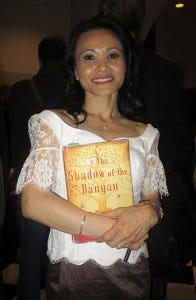
1. Vaddey Ratner with her book on display 2. Jamaica Kincaid reads from Paradise Lost

Host Baratunde Thurston, author of How to Be Black, introduced a story by Nigerian writer A. Igoni Barrett’s forthcoming collection Love is Power, or Something Like That. Barrett on trying to encapsulate love with words: “You will never be able to write anything of this importance to anyone.”

Proving that lit power isn’t dependent on size, the diminutive writer, Vaddey Ratner, followed Barrett with a reading from her debut novel, In the Shadow of Banyan. Set in war-torn Cambodia, Ratner’s reading showed us a young girl’s father saying his last words before being taken away by military officers. He tells his daughter, “Do you know why I told you stories? … I told you stories to give you wings.”

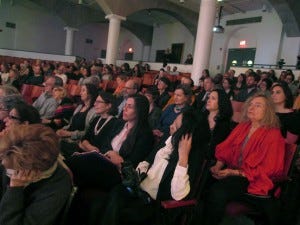
1. What people look like from far away 2. And from close up!

Not quite as heartbreaking, Jamaica Kincaid fell in love with the devil when she was seven, so she read from Milton’s Paradise Lost: “The mind is its own place, and in it self/Can make a Heav’n of Hell, a Hell of Heav’n.”

Also, Earl Lovelace was once an extra commanded to die on cue: “When I was a kid, I composed my dying like a poem. There was poetry in my dying… Now here I was, a grown man, in a real movie, and I was dying like a fool — like a ass!”

Comedian and cabbie John McDonagh took it home with a poem condensing 20 years of cab driving in NYC: “New Yorkers used to yell at each other. Now they tweet! … Watch out for the red-light cameras! Don’t go in the bus lanes! Stay out of the bike lanes! What the fuck has happened to my city!?”

Twitter. Twitter is what happened.

***

–Sean Campbell lives, writes, and occasionally updates his blog in Bed-Stuy

MAY MIX by Kendra Grant Malone & Matthew Savoca

The Incongruent Mix

We like to play this game when we’re on the train or in the car on a long ride where we try to surprise the other person by playing songs that are really different from each other. One of us will deejay, and just pick song after song, each one as least like the last as we can manage, but you only have the duration of the song that’s currently playing to think of and find the next song that’s least like it. It’s a pretty fun game, so we decided to play it for you. Here’s your incongruent mix.

1. The Knife — You Make Me Like Charity

“Matthew doesn’t listen to a lot of synth pop, so I decided this would be a confusing place to start.” — Kendra

2. Emry Arthur — I Am a Man of Constant Sorrow

“It seemed obvious to go to a hillbilly song next, and I just really like this one.” — Matthew

3. Stevie Wonder — Superstition

“Matthew dances like Elaine Benes and I really just wanted to see him move, and everybody dances to Superstition.” — Kendra

4. Erik Satie — Gymnopedie No. 1

“I was trying to think of classical music that wasn’t from forever ago and this song came to mind and I forgot how damn slow it is.” — Matthew

5. T.I. — What You Know

“Satie is so calm and modest and nobody’s cockier than T.I.” — Kendra

6. Tiny Tim — Tip Toe Thru’ The Tulips With Me

“I felt like this one had to go next so I made Matthew pick it.” — Kendra

7. Nirvana — Pennyroyal Tea

“Whenever I play this game, I am always looking for the perfect spot to put in some Nirvana and this was my chance.” — Matthew

8. Britney Spears — Toxic

“dfkajhlshjskdti jklashd jkuilejflkajslkdf jkd jksajdlijt a ld;asfjk” — Kendra

9. They Might Be Giants — Particle Man

“I wanted to think of a song that was more talky than singy and this was the first thing I thought of.” — Matthew

10. Peaches — Fuck The Pain Away

“They Might Be Giants are pretty cute and Peaches is pretty not cute.” — Kendra

11. Flight Of The Conchords — Think About It

“From serious-unserious to unserious-serious, if that makes any sense. We have this song memorized.” — Matthew

12. Motorhead — Ace Of Spades

“Once I saw my friend Adam Robinson do a seizure-like dance to this song in a bar. He was bewitched. “ — Kendra

13. Andrea Bocelli — Besame Mucho

“This was both our tiny Italian Grandpops’ favorite song.” — Matthew

14. Midnight Juggernauts — Into The Galaxy

“I just wanted to see Matthew bust a move again.” — Kendra

15. Lucinda Williams — Changed The Locks (WXPN Live At The World Cafe)

“I was starting to get hungry.” — Matthew

***

— Kendra Grant Malone was born in 1984. Her first book of poetry, Everything is Quiet, was published by Scrambler Books in 2010. Her second book of poetry, Morocco, co-written with Matthew Savoca was published by Dark Sky Books in 2011. She lives in Brooklyn. Read more about her at kendragrantmalone.com.

Matthew Savoca was born in 1982 in Pennsylvania, and now lives in New York and PA where he works as a carpenter. His novel I Don’t Know I Said just came out from Publishing Genius Press last month.

A Questionable Shape

I hastily left the narrow street at the next turning. However, after wandering about for some time without asking the way, I suddenly found myself back in the same street, where my presence began to attract attention. Once more I hurried away, only to return there again by a different route. I was now seized by a feeling that I can only describe as uncanny. Other situations share this feature of the unintentional return. One comes back again and again to the same spot. To many people the acme of the uncanny is represented by death, dead bodies, revenants… The return of the dead.

– Sigmund Freud, “The Uncanny”

Human love is implicated with death, because it implies either resurrecting the beloved or following the spouse into the death realm. It is fitting that the lost one is a synonym for the dead one, since the dead are lost de jure and one loses them de facto in the labyrinth. Marriage requires the spouse to follow his wife into the labyrinthine realm of death… To follow them into undeath, as Orpheus did. Orpheus is the model spouse.

– Jalal Toufic, Undying Love, or Love Dies

WHAT WE KNOW ABOUT THE UNDEAD SO FAR IS THIS: they return to the familiar. They’ll wander to nostalgically charged sites from their former lives, and you can somewhat reliably find an undead in the same places you might have found it beforehand. Its house, its office, the bikelanes circling the lake, the bar. “Haunts.” The undead will return to the neighborhood grocery store and shuffle down its aisles, as if shopping. They will climb into their own cars and sit dumbly at the wheel, staring out the windshield into nothing. A man bitten, infected, and reanimated fifty miles from home will find his way back, staggering over diverse terrain — which, probably, he wouldn’t have recognized or been able to navigate in his mortal life — in order to stand vacantly on a familiar lawn. No one knows how they do it — whether by tracking or instinct or some latent mnemocartography — nor why, but it’s an observable phenomenon. In fact, what it calls to mind are those homing pigeons, the ones famous and fascinating for the particles of magnetite in their skulls: bits of mineral sensitive to electromagnetic pulls and capable of directing the pigeons, like the needle of a compass, homeward over vast and alien distances. It is as if the undead are capable of “homing” in this way. [1]

At seven this morning, an hour before Mazoch usually arrives, I sit down with a sheet of loose leaf to write out some of the sites where we’ll be searching for his father today. The list is for Rachel, who’s still asleep. I’ll leave it on the coffee table by our copy of FIGHT THE BITE, the infection-awareness pamphlet that the Louisiana Center for Disease Control doled out back in May, at the beginning of the outbreak (chapter titles include “1. A Bite’s Never Alright [sic],” “5. A Knock To The Head Will Stop ’Em Dead,” et cetera). Recently Rachel has been requesting a list of those places “you two go every day,” so that, if I’m worryingly late coming home, she’ll at least be able to tell the police where to start looking. She’s right, of course. At the heading of the sheet, first item on our itinerary, I write down Mr. Mazoch’s old address.

He went missing from his house in Denham Springs several weeks ago, and Matt emailed me shortly afterward to enlist my help. We gave ourselves the month of July, just before hurricane season hits, setting this Friday as our deadline. Assuming that Mr. Mazoch hasn’t been detained, quarantined, or put down already, he might still be wandering, compelled, toward his remembered places. We figured it was only a matter of determining what places these would be, staking them out each day, and waiting for our routes to overlap. If our trip to his house in Denham coincides with Mr. Mazoch’s, then he and Matt will be reunited. To inspire us each morning, Matt copied out two Thomas Hardy quotations on separate post-it notes and taped them to the dashboard of his car: “My spirit will not haunt the mound/Above my grave,/But travel, memory-possessed,/To where my tremulous being found/Life largest, best./My phantom-footed shape [2] will go/When nightfall grays/Hither and thither along the ways/I and another used to know” from “My Spirit Will Not Haunt the Mound,” and, “Yes: I have entered your old haunts at last;/Through the years, through the dead scenes I have tracked you;/What have you now to say of our past — /Scanned across the dark space wherein I have lacked you?” from “After a Journey.” Each poem seems to speak to the other across the inch of dashboard leather that divides them, just as I imagine Mr. Mazoch letting out an unearthly moan, and Matt humming out the open window to keep awake as he drives, and that moaning and that humming speaking to one another across Baton Rouge’s fields and highways, across all the remembered and misremembered suburbs that separate Mazoch from his father.

I place the list on the coffee table and check my cell phone for the time. 7:15. Matt is no doubt doing his morning pushups right about now. He completes sets of a hundred before setting out each day, and always manages to arrive at eight sharp, giving his familiar, hearty knock at the door. With equal regularity he manages to drop me off by four, and — if Rachel and I don’t invite him over for dinner — goes home to read his “book a night.” He’s been this way since undergrad: a mesomorphic litterateur, who keeps his square jaw clean-shaven and his blond hair buzzed close, like a wrestler, and who’s succeeded, too, in cultivating a wrestler’s physique (the perfect inverse pyramid of his back; the chest like a breastplate; the forearms thick as my calves), even though he’s never grappled with anything bigger than an OED. Back when he was LSU’s model English major, the bodybuilding always struck me — a stereotypically scrawny philosophy student — as a waste of his time: something that he would grow out of eventually, or else replace with a new routine. But not even the outbreak has altered his regimen. In the living room of his apartment a used bench press abuts a floor-to-ceiling bookcase, brimming with paperbacks, while in the doorway of his bedroom a pull-up bar is installed, with a fifty-pound weight belt coiled beneath it. It is this same self-discipline and rigor that Matt has been bringing to bear on the search for his father.

In his initial emails to me, he compiled a brief assortment of some of Mr. Mazoch’s likely haunts. Since starting the search, we’ve made surprisingly few additions to that list. There’s the house in Denham, which is my first item for Rachel, plus a number of other places that Mr. Mazoch would have frequented: the Freedom Fuel gas station; Louie’s Cafe; the grocery store, auction house, and antiques mall; the plumbing warehouse where he reported every morning for forty years (even into his sixties, when finally a debilitating heart attack forced him to retire). I write all of these down, in a column beneath the house’s entry. Then I add some of the fast-food restaurants — McDonald’s, Taco Bell, Jack-in-the-Box — where Mr. Mazoch took his lunch breaks every day (causing him to accumulate weight ruinously in later life, ending it, according to Matt, near three hundred pounds). The Goodwill, the Salvation Army, where he bought the used boots and ripped jeans he worked in. These businesses are all boarded up by now, but they’re still places where his father might be. Places where Matt’s sensitivity and agitation reach a kind of peak, where he holds his breath at the appearance in the distance of every undead silhouette, trying to determine by the height and breadth of its fatherly shape whether it’s worth lifting the binoculars for. [3]

Mr. Mazoch was sixty-four when he went missing. From what little Matt’s told me about his life, I gather that the man ordered his adult existence almost exclusively around these spaces: never worked another job than plumbing; only ever lived with Mrs. Mazoch, spending his last decades alone in that one house in Denham; and had as his single hobby (his only reason for traveling elsewhere) “antiquing,” i.e., driving to garage sales at dawn on the weekends and buying up refuse from families’ attics, which he could then put on display in his own home or sell for a profit to dealers. Not an avid traveler, not a sampler of novelties: just a workhorse who lived and loved at a few addresses, where even now he might be found. Where, at any rate, Matt still expects to run into him.

At each of the sites, Matt’s MO is to case the perimeter, looking for traces that Mr. Mazoch might have left there. But in the past three weeks we’ve turned up nothing. Day after day the premises remain undisturbed and blank. That is how thoroughly the police have been patrolling the streets: any remaining strays are quickly apprehended and sent to the quarantines. When Matt first emailed me (when I-10 was still jammed with mass-exodus car wrecks), it was impossible to imagine conditions ever stabilizing to this degree. But now we really are learning to live with undeath. The federal government has standardized its plan for handling the epidemic, and Louisiana has been faring no more or less poorly than any other plague state. Though most schools, businesses, and malls remain closed for decontamination, FEMA has begun providing relief in the form of refugee shelters and welfare checks. It’s FEMA relief that is funding Matt’s search, in fact, and funding the shelter where Rachel volunteers every day. The worst that’s going to happen appears to have already happened, and life in the city is returning to some version of normal.

Other than the quarantines — which Matt and I visit on Fridays — I’m not sure what else to include on Rachel’s list. There are a few extra sites, but none that we bother to check on our rounds: Matt inspects his apartment himself, and he also visits his mom’s house (the one that she won in the divorce, and raised him in). Now, as we’re heading into the final week, he’s begun suggesting that we revise our itinerary. Maybe stake out some new sites. For instance, there are places from his own childhood that he’s brought up before: like his elementary school, where Mr. Mazoch had to wait in carpool for him, or Highland Road Park, where he used to take Matt to play chess on those weekends when he had custody. I add these to the list with asterisks, in the event that we end up going, then explain in a footnote [4] that they’re provisional.

One site that Matt has mentioned in a passing way is Tunica Hills, a pine-forested park up near St. Francisville, with hiking trails winding along red-clay cliffs and down through precipitous waterfalls. He and Mr. Mazoch had gone on day trips there when Matt was a kid, and they always remembered the hikes fondly together, promising they’d do it again sometime. But once Matt was grown, Mr. Mazoch was already too out of shape — his back too wracked from manual labor — to attempt anything so physically strenuous. Then, after the heart attack, it was out of the question forever. So Tunica may well be a site on Mr. Mazoch’s radar, a locus of nostalgia and regret. Matt’s said that he might expect himself to wander there, eventually, if he were undead. I doubt we could actually go — it’s a three-hour drive; the area’s too large to feasibly locate one body in; and, because of the travel ban that’s been enforced, we’d have to circumvent border guards simply to leave Baton Rouge — but it’s nice to talk about.

I myself remember Tunica fondly (even though I’ve been only once), and could almost be guaranteed to return undead to it, so strong a pull does it exert over my memory. Rachel and I went on one of our best dates there, late last summer. Like Matt and Mr. Mazoch, we hiked along the cliff trails, and at the end of one steep uphill slog we rewarded ourselves by splashing around and otherwise disporting in the algid waters of a wading pool, and by showering beneath the thundering brainfreeze of its waterfall. We must have stayed in that same place for hours, passing the entire afternoon — or at least this is how I remember it — kissing and smiling goofily at one another. In fact, I find that most of the frames of this memory are just of Rachel’s smiling face: her jagged blond hair plastered wetly against her cheeks, her green eyes gleaming as I cradle her head in my hands. Everything’s shot through with a burnished yellow light, as if there were actually lens flares in my memory. I’ve discussed this effect with Rachel — the color saturation of my memory of that day, its emphasis on amber — and she says that she experiences the same thing, that what she can recall of Tunica is more like a music video than a memory. She thinks that it’s a result of our having paid such close attention to the quality of light in the park. On our hike, she kept stopping to admire the sun’s suffusion in the air, pointing out the way that it punched through the pine branches in great gold shafts, so like the conical tractor beams of hovering UFOs that all those backlit motes of dust, which were in fact being circulated in every direction, seemed to float only upward, in abducted currents. Given the level of attention we paid to scenes like that, it’s possible that our memory is a little sundrunk, Rachel said. The moment that even now, a year afterward, we still recall to one another is the one when Rachel cupped her hands beneath the waterfall and withdrew them, holding them up so that a scattering of sunlight was reflected there, between her hands, lambent in the water and over the skin of her palms. The sun was diffracted into a dozen small spots of glare, wriggling white oblongs, like larvae of light. We stared at them for a full minute, delighted. Because they were caught in her handful of water, Rachel was able to slosh them around, and to make them appear to sift through the creases between her opening fingers, and finally to make an offering of them: to extend her hands to me, the way the moon rises, and proffer her handful of the sun’s light. As she ladled it over my head, I didn’t shiver, or feel reinvigorated by solar forces, but I pretended to.

A few weeks into the outbreak, Rachel wrote me an email reminding me of this afternoon — as if I needed to be reminded — in which she referred to the lights in her hands as “Bethlehem stars” (I knew at once what she had in mind, but to me those slivers of brilliance had always seemed, all wriggling whitely in her hands, more like lampyrid maggots than stars). She asked me whether I remembered Tunica, and specifically whether I recalled the constellation that she had caught, “as bright as Bethlehem stars.” Of course I did. The entire day was — to adopt a photic vocabulary — ”seared” into my memory, and it was this episode especially, the quiet magic and mad happiness of watching sunlight play on each other’s bodies, that Rachel and I had incorporated into the mythos of our courtship. We always referred back to it with semi-tragic nostalgia, as if for a prelapsarian period in our love. We might ask, in the middle of a fight say, why things couldn’t be now as they were then, or remark, in acute distress, that we hadn’t watched light together in weeks. That was the rhetorical strategy of this particular email, which exhorted the two of us — this was after a string of nasty fights, induced in part by the cabin fever of our staying inside the boarded-up apartment for days — to exhibit only our best selves: to try getting out and going on a sunset walk together; to recuperate the love we’d displayed at Tunica, when we spent whole minutes staring patiently into her hands, into the lights there, as if stargazing. A bath of Edenic goldness, a trace of our best selves: it is this kind of life that that afternoon has taken on in our imaginations. And because neither of us has been able to visit Tunica Hills since, we both, if we were infected I mean, might be expected to head straight there, bypassing other sites (our crappy apartment even) in search of this one memory. Following, as it were, our Bethlehem stars. [5]

After some hesitation, I decide to write “Tunica Hills*” at the bottom of Rachel’s list. We won’t be going there today — or any other, for that matter — but I suspect that Rachel will appreciate its presence on the page. At the very least she’ll savor the coincidence of our sharing the site with the Mazochs. Of course, it’s unlikely that the hills hold the same significance in Matt and his dad’s relationship as they do in hers and mine, or that Mr. Mazoch could be expected to wander so far afield. But maybe they do, and maybe he could, in which case Matt might devise a way of driving up there after all. Probably, though, we’ll just keep visiting the same handful of sites, until we find Mr. Mazoch or until Mr. Mazoch finds us. Or, failing that, until Friday arrives, and Matt abandons this search and gives up.

  1. Sometimes I wonder whether we, the living, are constantly generating the magnetoreceptive memory pellets that will guide us in undeath. Could it be that each time a place leaves a powerful impression on us, it deposits into our unconscious these mineral flecks of nostalgic energy? Eventually, over the course of a lifetime, these might accrete and calcify into little lodestones in our minds: geospatial anamnestic kernels, capable of leading us back to places, but activated, for whatever reason, only in undeath. In that case, the undead mind would really just be a chaff cloud of remembrance, this mass of pellets causing sharp pain as it shifted magnetically in the direction of various homes. And the undead wouldn’t remember memories so much as be shepherded by them, tugged by headaches toward recalled geographies. (It occurs to me on clear nights that the Pleiades, clustered like buckshot in Taurus’s thigh, might be like memory pellets of this type. When the Pleiades shift, the bull’s thigh aches in that direction, and it is a kind of homesickness that leads him sinking beneath the horizon.)
  2. I like the phrase “phantom-footed” because I’ve often imagined the footprints of the undead phosphorescing beneath moonlight, as if ectoplasmically, such that they glow in determined trails toward particular houses, restaurants, live oaks… wherever that undead had found life “largest, best.” It would be like reading a map of remembering to look down on all the ectoplasmic paths glimmering through the city at night. Like Hardy’s spirit, our “walking dead” don’t simply walk: anytime an undead is walking, what it’s really doing is remembering. It’s retracing steps from its former life and moving blindly along a vector of memory. In this way, the tracks that it leaves (of rainwater, of dirt across a carpet, of blood) record more than a physical path: they also materialize a line of thought, the path of that remembering.
  3. A far-off infected usually constitutes our great excitement for the day: Matt will peer at it awhile through the windshield, then — shaking his head — pass on the binoculars to me (though I still haven’t worked up the nerve to look through them. I’ve only ever seen one undead in person — up close I mean — and it was eerie enough from two blocks away, by the naked eye).
  4. Since the outbreak, I have often reflected that the footnote is the typographic mark most emblematic of undeath. By opening up a subjacent space on the page, the footnote digs a grave in the text, an underworld in the text. The words that are banished there are like thoughts that the text has repressed, pushed down into its unconscious. But they go on disturbing it from beneath, such that if the text were ever infected, they are the words that would guide it. Footnotes are a text’s phantom feet.
  5. All that Rachel meant by the phrase when she first wrote it — little was known at that point about the homing of the undead — was that the lights were brilliant and beautiful. It’s a happy coincidence that these Bethlehem stars happen also to have matured in our memories in the way that they have, and that they might serve — like the Pleiades, like memory pellets — as the guiding lights that will shepherd our undead bodies.

The Lit List: April 29-May 5

The Lit List is a sometimes-weekly compendium of New York’s finest literary events and readings. Something you think we should know about? Email dish@electricliterature.com

Monday, April 29

Slice contributors play exquisite corpse at Housing Works. Theme? Obsession. What will happen? C’est mystère … More informations here.

PEN World Voices begins with just a few notables: A. Igoni Barrett, David Frakt, Darrel Vandeveld, Joy Harjo, Jamaica Kincaid, Ursula Krechel, Earl Lovelace, Vaddey Ratner, Mikhail Shishkin, Najwan Darwish and host Baratunde Thurston. Cooper Union for $20/25 (member/nonmember)

Tuesday, April 30

Fiction Addiction turns two! Come and celebrate at 2A.

An evening with McSweeney’s at the PEN World Voices festival. See you at Joe’s Pub.

Renata Adler, brought to you by Vol 1 Brooklyn and Community Bookstore

Michael Barron, Catherine Lacey, Ross Simonini get real at KGB Bar’s True Story Nonfiction series

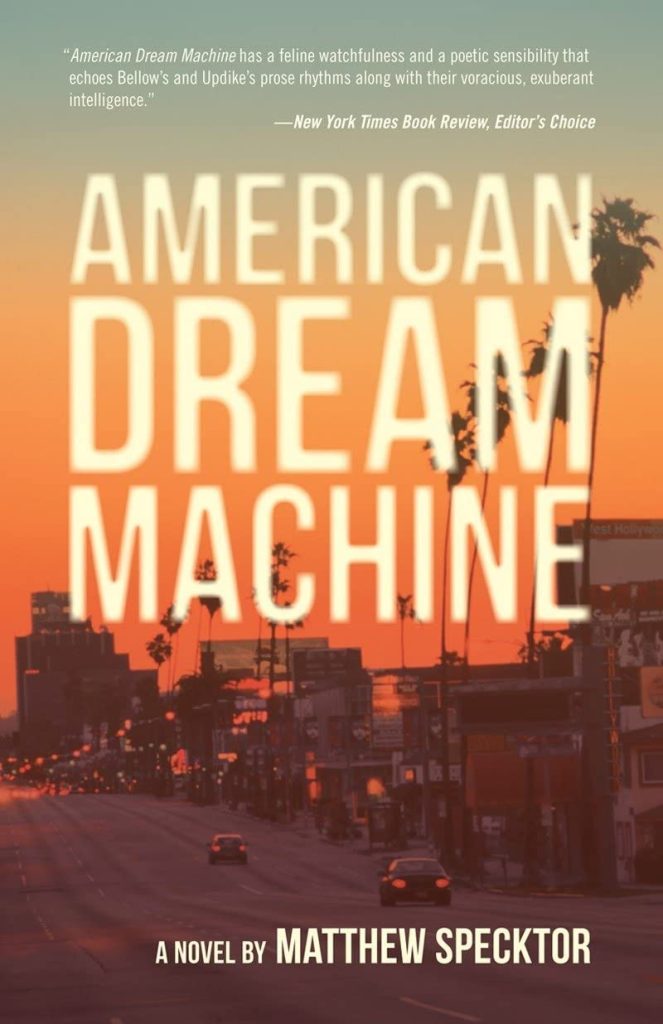
Matthew Specktor, author of American Dream Machine, in convo with Victor Lavalle at McNally J

Wednesday, May 1

Hey, did you just call that memoir brave? Was it by a woman? Ruh-roh! Guernica/PEN World Voices to the rescue. Speakers: Benjamin Anastas, Trisha Low, Anthony Swofford, Agata Tuszynska, moderated by Rachel Riederer.

Who talks to Caroline Leavitt about her new book Is This Tomorrow? Sarah Weinman does! McNally J, people.

Thursday, May 2

Sweet! Actors reading writers. Because let’s be honest — actors do it best. At Three of Cups.

Hey, is that Matthew Specktor again at Community Bookstore? Looks like! This time he’s talking to Chuck Klosterman.

Saturday, May 4

Mia Cuoto’s The Tuner of Silences launches at powerHouse. In case you didn’t know, Cuoto, who is from Mozambique, is sort of a big deal.

Sunday, May 5

Zie First Literary Manhattan Symposium: Beat Generation Writer Joyce Johnson, Sackett Street Writers’ Workshop Founder Julia Fierro, storyteller/ musician David Amram, and three time national poetry slam competitor Shane Romero get literary. In Manhattan. At a symposium. At Library Hotel.

***

— Erika Anderson is one-half of The Outlet’s editorial team. (The other half is here.)

CELEBRITY BOOK REVIEW: Art dealer Larry Gagosian on “American Dream Machine” by Matthew Specktor

Editor’s note: Any resemblances to actual celebrities — alive or dead — are miraculously coincidental. Celebrity voices channeled by Courtney Maum.

Oh, I can tell you about the American dream. The son of Armenian immigrants, I spent the early 1970s living in a friend’s walk-in closet on Venice Beach, working as a valet because I’d been fired from my secretary position at William Morris. And then I started selling posters beachside, except I already had an eye for added value. I sold mine framed.

Today, I’m at the head of the most expansive art enterprise in the world. So when Peter Brant suggested that I read a book about a man with a journey similar to mine (from arriviste, to demigod, to whatever it is I am now), I listened. I mean, the man is married to Stephanie Seymour. He’s got pretty good taste.

American Dream Machine is the name of the novel Peter’s secretary sent along. I’m not usually a reader, but the book’s arrival coincided with a trip to visit our Hong Kong outpost, so I had a lot of time to kill on the plane. I mean, you can only see so many rom-coms featuring Paul Rudd.

This rather large novel tells the story of multiple men’s lives, but focuses in on one of them, the story’s hero, a film agent named Beau Rosenwald. The whole thing is narrated by his bastard son, a fellow who doesn’t seem to have inherited his father’s wit, but he does strike me as judicious, which Beau is not.

The book documents the changing face of the Hollywood film industry as experienced by a set of close male friends. Because this is Hollywood, and because we’re talking about men, and because one plus the other usually equals money, Beau finds himself betrayed by the very men who facilitated his rise from talent scout to co-founder of a visionary production company, called “American Dream Machine.” By this time in my cross-continental flight, the stewardess had informed me that they were out of Citadelle gin, so betrayal was very much on my mind.

When I first arrived on the LA art scene, I was considered an upstart. I was an English major, a former bookseller, my father was a civil servant, an accountant for the state. I’d never even stepped foot in a museum before the time I turned eighteen. But what connects me to this novel’s protagonist is simple: energy. I’m not a forward thinker, but I’ve always had great instincts in the now. And so does our friend Rosenwald: signing actors that others let fall by the wayside, recognizing something in them that would translate, and transform. When I signed Andy Warhol in the early eighties, everyone thought his dollar painting signs were vulgar. Well, no one’s laughing at me, now.

Another coincidence between Specktor’s protagonist and I: we facilitate the businesses we’re involved in. Over the course of the narrative, Beau played every part but actor: writer, director, producer, casting agent, lover, bankroller, friend. I, too, have never been the person holding the actual paint brush, but I’m my clients’ biggest cheerleader — I sell, and I collect, and I go behind the scenes into the badlands of the industry to negotiate with the auction houses to protect my clients’ worth. Some people call me a crook, a controller, even “carpetbagger.” I prefer the nickname they gave me in my early LA days: “Go-Go.”

Great men are often destroyed by their own friends. Just as Beau was betrayed by his closest confidante, Williams Farquarsen, so too have I been deserted by my numero one client, Damien Hirst. You give a man all eleven of your galleries to fill up with pastel-colored dots, you expect he’ll stick around. You confuse loyalty for friendship. You take money instead of words.

You can read the accounts of my other defectors online and in the papers: Tom-Friedman, Philip Taafe — and now there’s word of Yayoi Kusama leaving me, too. They’re discreet in Japan, her people don’t like that I drive up her prices. But I got her a collab with Louis Vuitton, not a fucking WalMart. I aim for brand continuity, and everyone is shocked.

Beau Rosenwald, at heart, is loveable and likeable to the people who know him best. Interchangeable, contagious, his very flaws become a part of his friends’ makeup, like a skin defect you tolerate, even as it reddens and worsens in the sun.

Ultimately, American Dream Machine aims to create a bellwether for that great big word: success. Some people measure it by the legacy they’ll leave behind them. Others, like yours truly, judge it in terms of the life they’re living now.

It’s too bad that Beau doesn’t exist. We’re kinfolk, really, this bumbling fictional dreamer and I — we’re both restless, terrified of satiation. We have to keep moving through the ugliness to stay vital and alive. We have sequin cartilage. We are shining sharks.

Reader as Endangered Species: Renata Adler at the Center for Fiction

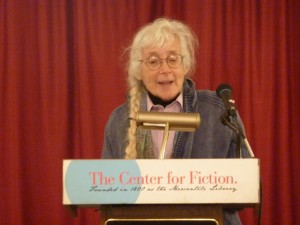
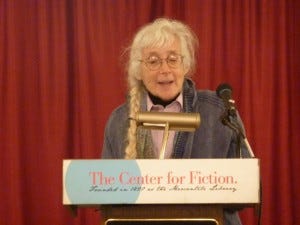
At the Center for Fiction, on the occasion of the rerelease of Renata Adler’s novels Speedboat and Pitch Dark (in beautiful new editions by the New York Review of Books), Adler speaks not quite anecdotally, not quite aphoristically — and a crowd of readers and writers, apparently an endangered species, crane delicate necks, laugh well-timed laughs.

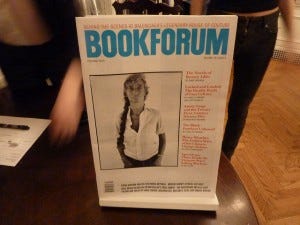
1. “Do you all write? It looks like you all write.” 2. Richard Avedon’s iconic 1978 shot of Adler in Saint Martin

“Maybe we are all the last generation of readers, and writers too,” Adler says, but I hope she doesn’t believe it. I must concede that she’s certainly at least considering it — like her narrators, Adler will not say what she doesn’t mean.

Every few minutes, Adler checks in — should she keep going with this weird hybrid thing, this reading, this conversation? Emphatically the audience says yes. We nod. We laugh. She continues. The books, those weird hybrid things we keep saying yes to.

1. First you await Adler’s reading (anticipation!) 2. Then you await Adler’s signing (contemplation!)

“Pitch Dark has more of a plot,” she says, “but people don’t seem to like it better.” The bits taken from life, she says, are often ridiculous, and the made-up ones are not unlikely to have happened. For instance — a passage from Pitch Dark, about Penelope, who couldn’t have been doing all that weaving and unweaving, not really: “we’ve known ever since we learned, not what love us, but what reporting is and what public figures are … how much more than we were ever taught to expect is really lies.”

Outside what was once the largest circulating library in the United States, night settles. We line up for autographs, all carry an image of an eternal braid outside with us, determined not to be the last.

***

–Elina Mishuris is in a perpetual state of cat-sitting.

Photographs provided by the Center for Fiction

LIT LINKS: We’re perverts & more! (4/26/13)

In case you missed it, here’s what happened this week at Electric Literature and elsewhere…

In other news, you can get 20% off the PEN World Voices Festival’s opening night with the code PEN13. Get your tickets now.

***
— Benjamin Samuel is the co-editor of Electric Literature. He one day hopes

PEN launches new website, parties IRL (with photos!)

This slideshow requires JavaScript.

PEN America has a sweet new website, and their World Voices festival, kicking off April 29, is truly stacked. Two perfect reasons to throw one raging party on Wednesday night at Chez Andre, the sexy basement of the East Village’s Standard Hotel. The room was packed with PEN friends and lovers from start to finish. F.S. Fitzgerald himself would have swooned at the sheer volume of gin and tonic among the crowd, courtesy of liquor sponsor Hendrick’s. And even from the darkest corners of our subterranean space, spring was springing in the form of pretty party dresses. Event co-hosts Lauren Cerand and Uzoamaka Maduka had two of the best. Adam Wilson and Tea Obreht played guest DJs for the evening, though there was no actual record spinning involved. Fear not, the DJ booth — complete with gaping mouth wall art in relief — still saw its share of action, serving as scenery for more than one outrageous photo series. PEN’s Paul Morris was doing his typical thing, somehow engaged with everyone at once. The whole thing was swanky without being stuffy and just the right amount of boozy to boot. If this is what the rest of the lit party scene looks like this season, we’re in for treats.

Editor’s note: Missed your chance to Party with PEN? Don’t fret, join them Monday, April 29 for the launch of the World Voices Festival. Use promo code PEN13 for 20% off your tickets.

***
 — Kai Twanmoh
is a sometimes contributor to The Outlet. You can find her here.