When I began writing, I imitated. I didn’t know what writing involved, but if it was a craft, then imitation seemed an intuitive place to begin. I approached composing a short story the way I might cook dinner.
The process involved timing, taste, intuition, and some theatrical flair. But what was served up never looked anything like the originals. I practiced with the scale of an Annie Proulx story, attempted Jhumpa Lahiri’s method of letting the story quietly unravel, and channeled Sandra Cisneros’s playful metaphors. Admiring what other writers are doing is still the only way I know to write, but over time I’ve found new archetypes set outside the English-speaking world. These collections were closer to what I was trying produce about Thailand. So in the course of writing Welcome Me to the Kingdom, these are the story collections I learned from.
Any globetrotting story-collection list must begin with Bharati Mukherjee’s The Middleman and Other Stories, which I bought over a decade ago knowing nothing about Mukherjee or the collection. I went purely on the opening of the first story. And then the opening of the second story. I should just list here first sentences, because Mukherjee’s beginnings are all aces. To read its cover, it’s a collection about immigration, but I was not prepared for the range of experiences, languages, and boundaries crossed. Mukherjee runs the gamut of North American migrant origins: India, Italy, the Philippines, Sri Lanka, Vietnam, and more. She gets away with this because of the confidence and verve of her writing, evident in a first sentence like this one from “Fighting for the Rebound”:
“I’m in bed watching the Vanilla Gorilla stick it to the Abilene Christians on some really obscure cable channel when Blanquita comes through the door wearing lavender sweats, and over them a frilly see-through apron.”
I love the sense of periphery in Daniyal Muenuddin’s story collection, In Other Rooms, Other Wonders. The stories revolve around K. K. Harouni, a declining patriarch of Pakistan’s old landowning class, which is fitting given that the collection is also a lens onto the country’s changing feudal system. We see how this system is tapped by wily servants or infiltrated by outsiders hoping to improve their stations. Declarations in an early story (“you came with nothing, you leave with nothing”) echo into a later one, as if we readers were, as the collection’s title suggests, drifting from room to room on the failing estate, among characters waiting for their time to come.
In her collection, What it Means When a Man Falls from the Sky, set in Nigeria and the US, Lesley Nneka Arimah masters time. She collapses it, as in the opening story, the threateningly titled The Future Looks Good, in which an entire family history is unspooled in the time it takes for a character fumble with her keys at the door. In Second Chances, Arimah rewinds time, allowing the narrator’s dead mother to step from an old photograph into the room. But my favorite use of time is in how the father in Light hoards the time—a single moment, really—he has left with his daughter, who will soon leave Nigeria, and him, behind.
Edwidge Danticat’s collection skillfully retells a period of Haitian history. In Children of the Sea, a boat of refugees stranded between Haiti and the US becomes the vehicle a love story between a fleeing dissident and a lover left behind. The woman in Nineteen Thirty-Seven visits her mother in prison, who survived a mass killing of Haitians in the Dominican Republic only to be rounded up in a witch hunt. By the end of the collection, we feel we’ve walked the political landscape of François Duvalier’s brutal regime, passing historical landmarks, moving from Port-au-Prince to the fictional country town of Ville Rose, from the “Massacre River” on the Dominican border to a churchyard where dissidents murdered by the new regime have been buried.
Japan: The Diving Pool by Yoko Ogawa, translated by Stephen Snyder
The Diving Pool was Yoko Ogawa’s first collection (three novellas) to be translated into English. It’s a study in control. All three stories are narrated by women, and all three narrators share an uncanny detached voice, as if the narrator were not in the story but observing from the same distance as the reader. By taking control of this distance, Ogawa draws us readers in slowly, holding back enough to lure us into an uneasy empathy. By the time we realize what’s happening, we’re already aligned the narrators, implicated in their cruelty, as if to show us what we’re capable of. One of the narrators describes this tension thusly: “As the tip of his finger ran over the inside of my mouth, I fought the urge to bite down with all my might.” Which becomes what the reader feels: the want to bite, the will to hold back—initially, anyway.
Nam Le’s story collection exists in counterpoint to Mukherjee’s—where I started this list. If Muhkerjee’s is a collection about the world coming to the States, then Le’s is about writing away from the US into the world. The opening story finds a fictional Le in an MFA program, facing down a visit from his Vietnamese father while deciding whether succumb to the book market’s appetite for “ethnic lit.” The story opens the door for the collection’s ethnic wandering. Le’s sentences have the daring and energy of Mukherjee’s, but the stories take place in Colombia and Japan and Iran. Le channels Medellín gangsters, Hiroshima orphans, and an Australian schoolboy before finally coming full circle to a story about Vietnamese refugees.
In their Grammy-winning comeback song “Not Ready to Make Nice,” the (formerly Dixie) Chicks sing, “They say time heals everything but I’m still waiting.” The lyrics claim power in not healing, in refusing to shut up and let it go when those in power continue to benefit from that very expectation. The Chicks were reflecting on a rather specific experience—being threatened and silenced after they criticized George W. Bush—but the implicit questions they pose remain relevant. What happens when time doesn’t heal us the way we expect? Is healing possible in the terms we have laid out for it?
This reading list features eight books published in the last twenty years, plus one book published fifty years ago (it’s worth the trip back in time, though, I promise) that challenge traditional healing narratives. In the COVID-19 pandemic, discussions about health and healing remain all too relevant; many of us are realizing that illness permeates many of the spaces we exist within, and still more of us are reckoning with our vulnerability to illness and our (in)ability to recover. Memes like “nature is healing,” a phrase that has endured in our lexicon since it first appeared in March 2020, ironizes the premise that the world is restoring to order, as if “order” is possible.
But our acute interest in healing has not just emerged in the last two years. Indeed, many of these texts predate the pandemic, and yet already engage with the demands our desire for healing incur. Reading them helps us rethink our existing narratives about healing and recognize that if our arc of recovery deviates from the template, then at least we’re in good company.
Even though it is now over fifty years old, Le Guin’s 1971 novel The Lathe of Heaven stands the test of time, featuring a ruthless, robust examination of the costs underlying the promise of endless advancement. George Orr desperately wants to be cured of his condition, one that prompts him to dream so vividly that his dreams begin to change the world around him, but when he gets caught attempting to self-treat with drugs, he is sent to dream specialist Dr. William Haber. Haber possesses a capitalist’s faith in progress, prioritizing ends over means, and is certain that, if he can just unlock the brain’s full power, anything is possible—even utopia. Reading The Lathe of Heaven teaches us that there are no shortcuts to paradise, or to finding a cure. With Orr’s habit of manifesting Dr. Haber’s instructions in unexpected ways, Le Guin indicates that salvation might lie in the unruliness of imagination.
In her 2019 memoir, Anne Boyer expertly weaves together her experience with cancer and her research on the industries and images that have arisen around illness. In prose that is both accessible and personable, as well as neatly divided into digestible chapters, Boyer charts a conversation between everyone from Aristides to Audre Lorde to Siddhartha Mukherjee, and cites sources ranging from prestigious medical journals to YouTube comments and Wikipedia pages. Boyer not only invokes the traditions we have developed for speaking of illness, but also investigates them—and then initiates her own tradition. Contrary to convention, Boyer insists that pain doesn’t destroy language. It changes it. And with this very book, Boyer develops a new language, demonstrating how it might become possible to talk about illness more fully, in all of its intricacy and incongruity.
Maps of Our Spectacular Bodies might be one of my favorite books. Maddie Mortimer narrates her novel from the points-of-view of a cancer patient named Lia, her husband, her daughter, her mother, and her actual cancer. In entangling these perspectives, Mortimer depicts with both candor and compassion what happens to our bodies, our minds, and our communities when we are sick. Making cancer a narrator itself, with surprising insight into and even sympathy toward Lia, unsettles our narrative expectations of healing—an unsettling that is also mirrored in the novel’s inventive form. Throughout, words take the shape of spirals, doves, and fireworks; they are scattered, bolded, and boxed on the page. In giving illness a voice and a shape, Mortimer creatively addresses a central question in all illness narratives: what language effectively represents the experience of being ill? Maps of Our Spectacular Bodies shows us how unexpected, unconventional representations best capture not just a dense and difficult experience, but also the myriad ripples it makes on the lives it touches.
It has become a truism that “healing isn’t linear” a concept that Ward makes literal and also the subject of scrutiny in her 2013 memoir. Her reflections on the young Black men she has lost represents an utterly unique approach to narrating one’s own past, especially significant amid the current memoir boom. In alternating chapters, Ward moves forward in time from the 1970s and backward in time from 2004, desperate to make sense of the loss of her brother by approaching it from every angle. This structure prompts readers to see traces of the past in the present and of the present in the past. With heartbreaking honesty, Ward endeavors to show the tangled, traumatic reality of living with grief and of how healing can be strikingly nonlinear. Indeed, Ward reveals herself to be less healed than haunted, except in Ward’s framing, the haunting is itself a privilege, a reminder of her loved ones’ enduring presence. The memoir functions as an ode to these men’s lives, a critique of the systems that endangered them, and a testament to storytelling for its power to sustain connections.
Joan Didion’s The Year of Magical Thinking deserves all of the acclaim it receives—it’s really that good. In her typically masterful way, Didion narrates the year following her husband’s sudden death, a year during which her daughter also had two dire health scares. Another memoir that defies any sort of orderly timeline, this book brings its readers into the worldview of the grieving. In Didion’s desperate attempts to determine a cause and a chronology of both her husband’s and her daughter’s illnesses, we see both the desire to predict any and all vulnerabilities and its impossibility. In her search to locate her grief in myths, literary traditions, and her own memories, we see Didion come to terms with all that loss entails, including the stories that will go untold and the questions that will go forever unanswered. Didion opens her wounds for her readers, sharing her worst moments in astoundingly lucid writing that offers an intimate look at what it takes to live on.
This 2006 novel from Colson Whitehead is not always considered among his best, but it’s my favorite and for good reasons! The novel features a plot so odd it feels like a fable: a nomenclature consultant has been hired to rename a town in order to settle a dispute amongst the community leaders, who respectively represent old money gone stale, new money on the hunt for the next shiny thing, and a local political dynasty. Given this plot, it is no surprise that the novel considers the particular rites and references involved in any name. But it also dwells with profound effect on what happens when we paper over our wounds instead of confronting and caring for them. Like many of Whitehead’s novels, Apex Hides the Hurt has no interest in redemption. It tackles the long-term consequences of the structures, from racism to consumerism, that have harmed its characters, and traverses the uneasy path of navigating a world with our injuries visible and still bleeding.
Eimear McBride’s 2016 novel Lesser Bohemians takes some getting used to; her distinctive writing style omits most of her sentence’s subjects. That said, adjusting to McBride’s extraordinary syntax is worth the effort, as it fosters its own rhythm and, perhaps more notably, the grammatical fragments neatly reflect the narrator’s fragmented experience as she begins university in England, as well as a complicated love affair. A novel that understands love to be as fragile as it is forceful, The Lesser Bohemians depicts a couple learning to care and be cared for—even after extensive traumatic experiences. As the characters speak of, and, at times, become subsumed by their pasts, they come to recognize the ways in which they are scarred and are brought to wonder if they can ever build a future together. McBride depicts in beautiful form the gradual realization that imperfect lives, bodies, and loves need not become perfect to be precious.
Zaina Arafat’s debut novel gives us a queer Palestinian protagonist who craves belonging, but continually destroys, or doubts, her chances for it. You Exist Too Much is a story of her relationships—the romantic entanglements she stumbles into, the friendships she refuses to form, and the passionate affairs she can’t stop visualizing. In her quest for healthy intimacy, the unnamed protagonist begrudgingly foots the bill for a rehab center called The Ledge, which is the most recent in a series of treatment attempts for her eating disorder and supposed “love addiction.” Her desire to fixherself ricochets through the glimpses we get of her life, but the novel provides no easy answers or endings. Instead, Arafat asks her protagonist and her readers to occupy the murky but meaningful connections that demand and define so much of us.
In meditative prose that can be disconcerting in its frankness, DeForest’s debut unpacks the toll that the business of life and death takes on its practitioners. In short chapters titled after segments of the medical chart, DeForest details a doctor’s perspective on the inner workings of the body and of the hospital. Her narrator provides scathing illustrations of her colleagues’ disregard—a function of their training, she admits—alongside searching depictions of her patients. As the narrator points out, everyone is eventually a patient—a framing that reminds us how we are implicated in the system she depicts, in which our lives and stories often don’t matter to those caring for us. The novel ultimately asks its readers a difficult question: how can we reanimate the significance we attach to our own and others’ bodies? A History of Present Illness might not have answers, but its questions linger.
In Maria José Ferrada’s lucid, minimalist How to Turn into a Bird, Ramón’s job is to take care of a Coca-Cola billboard in a Chilean community. Already an “odd, but not a bad person” who is “fond of a drop,” Ramón decides to ascend to the skies and takes up full-time residence in the billboard. The move gets the housing complex gossiping about his move and state of mind.
His nephew 12-year-old Miguel, who narrates this novel of curious, philosophical vignettes, visits and begins his own inquiry about the nature of life, conformity, madness, and freedom. Back on the ground, the community’s children are similarly enthralled. Then one of the children disappears, sending the adults into a panic, and reviving older memories of a disappearance. Miguel, ever questioning humanity, observes as the community descends into violence directed towards a family of homeless people.
I spoke to Ferrada via email with a translation provided by Elizabeth Breyer, who translated this novel and Ferrada’s previous novel,How to Order the Universe, about loners, the pursuit of happiness, and the spirit of childhood and how it is the antithesis of a dictatorship.
J.R. Ramakrishnan: Where did this book begin for you? What inspired Ramón, the billboard, and little Miguel?
Maria José Ferrada: I was drawn to write about someone who marginalizes himself by choice. Someone who could live like everybody else but decides not to. The idea interests me because it is the kind of reflection that makes you question the choices you have made in your own life, and whether you made some of them out of a desire to fit in, rather than as a response to what you truly wanted or needed. Ramón, the central character of the novel, goes to live up a Coca-Cola billboard because he decides to stop bowing to that extrinsic pressure. The central image is real: ten years ago, I read a newspaper article about a man who had started living up a Coca-Cola billboard. I wanted to imagine how his neighbors, his family, his community would interpret this decision. And above all, how a child would see it.
JRR: You have a prolific history publishing children’s books in Spanish and this is your second novel for adults with a main character who is a child. Would you talk a little bit about writing from the perspective of a child for adults after having written books for children?
I was drawn to write about someone who marginalizes himself by choice. Someone who could live like everybody else but decides not to.
MJF: I count on the adult reader having more context than the child reader. Adult readers can use their own experience to fill in the gaps, to grasp all that the child narrator does not say. On the other hand, a child narrator does not have many discursive tools with which to describe his perceptions of what is happening around him. But he still needs to say it. We adults allow ourselves to be vaguer. We can go around in circles and ultimately say nothing really engaging. A child narrator doesn’t do that because children don’t generally do that. It’s closer to reality: there’s less of a discourse mediating between them and what they observe.
JRR: In the novel, you have the conflict of the homeless children and the concern that they would affect the children of the housing complex. This ultimately leads to violence by the residents. Is there really such a thing as childhood innocence? And would you say Chilean writers of your generation (having grown up in the Pinochet era) have a specific fascination with childhood? I am thinking of your literary compatriots such as Nina Fernández (especially in Space Invaders) and Alejandro Zambra.
MJF: I believe that everyone has such personal motivations, so it is difficult for me to speak in general. In my case, I would not speak of fascination, but of great interest, because it is a time when we ask ourselves fundamental questions, we look for meaning—children ask themselves why we are alive, and why we die one day—and it is a very serious quest. Those of us who were born in Chile in the ’70s or ’80s lived through a dictatorship. And a dictatorship is precisely an affront to that search for meaning: the dictator wants to be right and does not want you to ask questions. It is the absolute reversal of the spirit of childhood. In fact, it is very difficult to imagine a dictator as a child.
As for innocence… I think it’s a word that is a bit discredited. It is associated with naivety. I prefer to understand it in the sense of someone who has a fresh perspective. In that sense I think there is innocence in certain children and in certain people who seem to maintain a connection with a kind of original simplicity.
JRR:Ramón makes a successful (?) escape from the capitalistic society through the Coca-Cola billboard while others are resisting in smaller ways. Paulina and Miguel stealing, and Paulina dreaming of being a film extra while arranging her products. Ultimately, all three escape the community and perhaps, capitalism? Have they achieved the “OPEN HAPPINESS” promised by the Coca-Cola billboard at the end?
MSF: I think the characters realize that happiness as a goal is an invention—an effectual one—of Coca Cola. I like to think that as the novel progresses, the characters shed the anxiety that is generated when pursuing something like that. They lose things, of course, but they get closer to something like freedom, because no other person has decided anything for them. That other has many faces, it can be a mother, a school, but it can also be a group that, with the best of intentions, ends up dictating the rules and being terribly cruel to those who do not fit the mold. My characters are loners and respect their own need for solitude. It is not easy for them because their environment—their family, their school, their neighborhood—wonders, How could it be possible that this person does not want to live like us? How could he or she not want to believe in the truths we believe in? The easy way out is to quickly decide that the person who has chosen to live differently is “weird” or “crazy”—or any other derogatory label—and from there, dismiss him or her. We see it every day.
JRR:You have published a memoir of your time in Japan, and I am curious, how your time there informs how your work, and perhaps specifically this novel?
MSF: I am a passionate reader of Japanese writers. Among them, some poets who practiced Zen Buddhism. I am especially interested in their relationship with language. For them language is a trap, a kind of wall that stands between the self and reality. Their quest has to do with reaching a direct experience that is not mediated by language. And I think children know that experience. Because there is a moment when they approach reality without words that allow them to order it. And on that path, they can catch glimpses of meaning that escape us. I think that in some sense that is the same thing that the characters in this novel do.
JRR: I tried to read both English and Spanish versions simultaneously and it was super interesting as someone with unsophisticated but very functional (Mexican) Spanish. What was your reaction to reading your novel in English for the first time, which I am assuming you did? For example, the title is different in Spanish (El Hombre del Cartel). Tell us about the conversations you and Elizabeth Breyer had about changes like this.
MSF: This is the second time I have worked with Elizabeth as a translator and I marvel at her ability to find the right words and silences. Because there are many things that a child narrator does not understand, so she leaves gaps in the text. Translating those gaps must be difficult, but when I read the English version I see that they are there and that the text gets a particular rhythm from them.
The process was very nice, because in the case of this novel there were very concrete spatial things: where the sign is located, what I mean when I talk about a village or a dirt field. We came to the conclusion that the best thing to do was to send images. I imagine they helped Elizabeth to tell that landscape in her language. Anyway, I think that, as in the previous novel (How to Order the Universe) she found the words that a child would have used: simple words, which are not necessarily the easiest to find.
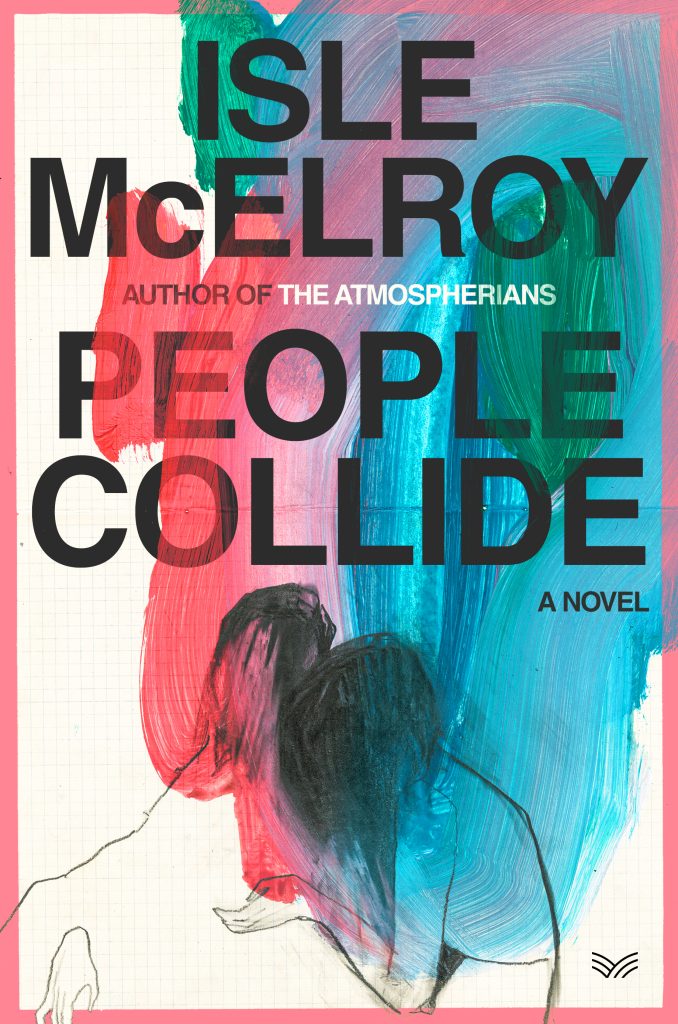
Electric Literature is pleased to reveal the cover for acclaimed writer Isle McElroy’s sophomore novel, People Collide, which will be published by HarperCollins this September.
When Eli wakes up alone in the cramped Bulgarian apartment he shares with Elizabeth, his more organized and successful wife, he discovers that somehow, he’s in her body. His male body has vanished, as has the personality that once resided inside Elizabeth’s body. As Eli searches throughout Europe for his missing wife, he embarks on a no holds barred exploration of gender and embodied experience.
People Collide follows Eli as he comes closer to finding Elizabeth—while learning to exist in her body—and as he questions the impact this metamorphosis will have on their relationship. He wonders: how long can he maintain the illusion of living as someone he isn’t? Will their young marriage wither completely under the pressure of a new and sudden existence in bodies they thought they knew?
People Collide is rich and rewarding, a tender portrayal of ambition, sacrifice, desire and loss, and shared lives and bodies. It shines a refreshing light on everything we thought we knew about love, sexuality, and the truth of who we really are.
Here is the cover, designed by Stephen Brayda, and with art by Tina Berning.
“The cover for Isle McElroy’s People Collide had to be striking and bold to match the novel’s enticing premise,” Stephen Brayda, Art Director for HarperVia told Electric Lit. “I explored various solutions for cover art but one artist’s work in particular resonated most. Berlin based illustrator Tina Berning has a portfolio full of figurative, expressive work, and her piece When It Hurts IV aligned perfectly. The combination of strong type and considered art complements the many detailed layers in McElroy’s writing.”
McElroy feels similarly, noting their immediate connection to this cover. “My editor Rakesh Satyal originally sent four cover options. I knew immediately which one I wanted. While the other options were great, this was the cover that truly embodied People Collide. The designer, Stephen Brayda, and I went through a few rounds of revisions before landing on the version seen here. Changes included adding a border, making the paint a bit brighter, and a minor tweak of the font. Brayda did an incredible job through the revisions—even though I felt immensely needy asking for any changes—and I think the final version is perfect.”
“Tina Berning’s figurative drawing captures the fraught and erotic codependency at the center of the novel. How might two individuals twist into a shared creature following a few years together? Where, in a relationship, does one person end and another begin? Brayda’s decision to texture the cover with such vivid brushstrokes not only makes for an evocative image, it speaks to one of the most crucial moments in the book: a sex scene set in the Pompidou. Over the process of choosing a cover, I discovered something about my book that I hadn’t previously been able to articulate. The hand reaching out of the border, for instance, reveals the novel’s deeper anxiety about partnership. Even as these two figures are so intimately embraced, one hand appears to be testing out an escape. To paraphrase Newton: for every collision, there is an equal and opposite separation. It was my curiosity about this emotional space—the action and the reaction—that drove me to write People Collide.”
People Collide will be published by HarperVia on September 19th, and is available for preorder here.
Excerpt from I Have Some Questions for You by Rebecca Makkai
“You’ve heard of her,” I say—a challenge, an assurance. To the woman on the neighboring hotel barstool who’s made the mistake of striking up a conversation, to the dentist who runs out of questions about my kids and asks what I’ve been up to myself.
Sometimes they know her right away. Sometimes they ask, “Wasn’t that the one where the guy kept her in the basement?” No! No. It was not.
Wasn’t it the one where she was stabbed in—no. The one where she got in a cab with—different girl. The one where she went to the frat party, the one where he used a stick, the one where he used a hammer, the one where she picked him up from rehab and he—no. The one where he’d been watching her jog every day? The one where she made the mistake of telling him her period was late? The one with the uncle? Wait, the other one with the uncle?
No: It was the one with the swimming pool. The one with the alcohol in the—with her hair around—with the guy who confessed to—right. Yes.
They nod, comforted. By what?
My barstool neighbor pulls the celery from her Bloody Mary, crunches down. My dentist asks me to rinse. They work her name in their mouths, their memories. “I definitely know that one,” they say.
“That one,” because what is she now but a story, a story to know or not know, a story with a limited set of details, a story to master by memorizing maps and timelines.
“The one from the boarding school!” they say. “I remember, the one from the video. You knew her?”
She’s the one whose photo pops up if you search New Hampshire murder, alongside mug shots from the meth-addled tragedies of more recent years. One photo—her laughing with her mouth but not her eyes, suggesting some deep unhappiness—tends to feature in clickbait. It’s just a cropped shot of the tennis team from the yearbook; if you knew Thalia it’s easy to see she wasn’t actually upset, was simply smiling for the camera when she didn’t feel like it.
It was the story that got told and retold.
It was the one where she was young enough and white enough and pretty enough and rich enough that people paid attention.
It was the one where we were all young enough to think someone smarter had the answers.
Maybe it was the one we got wrong.
Maybe it was the one we all, collectively, each bearing only the weight of a feather, got wrong.
#1: Omar Evans
In the morning I couldn’t remember what I dreamed, except that it was troubling, that it was about water, that I dreamed about texting friends about the dream. I didn’t feel rested in the slightest. I knew, as the sun finally came through the blinds, that I couldn’t get up until I’d stayed there with my eyes closed fully picturing the night Thalia died. If I could do that, if I could think it all the way through, I could get up and leave behind me whatever had tangled these sheets into a sweaty mess.
So—may the universe forgive me—that’s what I did.
Thalia changes from her costume, the tulle smelling of sweat and sawdust. She puts on the jeans and sweater that will later be found neatly folded on the pool deck bench. They never found a shirt, just a green cashmere sweater, so let’s assume this is all she has. Hiking boots. No coat; the more foolhardy of us are done with them.
She grabs her backpack (reported contents: hairbrush, lipstick, tampons, calculus book, Toni Morrison’s Beloved, Granby-issued weekly planner, assorted pens and scrunchies, mini deodorant, dorm room key), slips past the other changing girls, exits via the backstage fire escape. No one will miss her: All her friends in the cast and a lot of other kids, Robbie among them, are heading to the woods to drink by those two disgusting old mattresses.
Her footprints melt into others’, and in any case, they’re rained away by the next night, the soonest anyone would think to look.
She avoids the floodlights till she’s behind the gym where there’s no light at all, her fingers on the building’s bricks to guide her. At the emergency exit she knocks three times, and Omar disables the alarm. He’s been waiting right there, impatient. They go to his office couch.
Thalia’s still in her stage makeup, the green eyeshadow that matched her dress. Omar says she looks hot.
Or no—he says she looks slutty, and she bats her eyes, pouts.
Maybe he asks if the makeup was for Robbie. He asks why she needs to look trampy for the play, asks if she’s looking for more boyfriends, because he knows she doesn’t care about him, she’s probably fucking Dartmouth guys, too.
Sometimes this is foreplay for them. Sometimes she says, What if I went to a frat party and saw how many guys would screw me?
But he’s not in the mood, and he stands over her, still high on whatever he took while he waited for her, and he grabs her throat and maybe he didn’t mean it till this moment. If her face hadn’t seized with terror, he could still play it off as a joke, but it’s too late; she’s seen what’s in him, and the only way he can fix things is to stop her from seeing him and judging him and remembering this. He slams her head against a new CPR poster taped to the cinder-block wall above the couch. She claws him, makes the deep scratch the police will find nine days later behind his right ear, down to his collarbone, the one he’ll say he got from his neighbor’s dog. There was no skin found under her fingernails, but hours in chlorinated water could account for that. He chokes her harder, and when her arms go limp he steps back.
If her face hadn’t seized with terror, he could still play it off as a joke, but it’s too late.
No. This couldn’t be it.
This was the version we were all handed—this was what he said in his confession (drugs, his office, the couch, the wall, a poster no one ever remembered seeing), but I couldn’t make it work. The movie director who lived in my brain wanted to scrap it, send the actors home for the day.
Omar was someone who noticed the stress in your shoulders before you felt it yourself—not someone who bottled up rage till it exploded.
So maybe instead—maybe there’s someone else there. Maybe Omar has a violent friend, one whose temper erupts. And Omar decides, later, to take the fall for them both.
Maybe Omar has taken tainted drugs, ones that make him hallucinate.
I had to leave it at something happens. Because it did. Because there was no other explanation. Because there was no one else in the gym that night. Something very bad happens, and he can’t call for help.
She’s breathing still. He has enough medical training to know, even in his haze, what he’s done, and also to know she could still survive this. But if she survives this, he won’t.
He checks the hall, carries Thalia over his shoulder the twenty-six feet to the pool.
He strips her rag-doll body on the pool deck, wrangles her into a spare suit from the equipment locker. He’s reminded of dressing his little brother, pushes down the thought. Her breaths: ragged but steady. He rolls her into the water, doesn’t notice till she’s in that there’s blood on the pool deck cement. This must mean there’s blood on his wall, blood on the hallway floor. Her dark curls had been hiding the wound.
Omar grabs the pool net, uses the handle end to hold Thalia’s body a few inches below the surface. She doesn’t struggle. This is what he said in his confession, a detail that always destroyed me: the idea that someone who’d been so alive could be killed—so gently, so slowly—by a pool net.
Omar racks his brain to think who’s seen them together, who might know. He can’t deny being here in the gym; he’s been making calls all evening from his office phone. He’ll have to say he saw nothing, heard nothing. (So why, then, when they first questioned him, did he volunteer that his door was open?)
He waits ten minutes, longer than anyone could possibly survive without air. To his surprise, she sinks a little. Her feet lower than her head, but both below the water’s surface. He folds Thalia’s clothes, puts them on the bench. He knows where the maintenance guy keeps the bleach, industrial strength, and he goes to the cabinet, uses his shirt cuff to lift the bottle, to pour it onto the bloody pool deck. He watches it fizz white. He scrubs with a forgotten towel, and it’s a long time before he can step back and not see a pinkish blur. He turns on the lights for a second, to check. He uses the same bleach and the same towel on the drops that dot the tiled hallway. He’s lucky: In his office, there’s blood visible only on the CPR poster. Still, even after he peels it off, folds it, stuffs it in his backpack, he scrubs the wall. He returns the bleach to the maintenance closet. To do this, he has to reenter the pool, has to see Thalia bobbing below the surface.
He’s sobered a bit, and it’s harder now to look. The smell of chlorine starts to sicken him, and the last thing he needs is his own vomit at the scene. The water keeps moving her. Her arms don’t stay by her sides, her head hits the lane line. She’s close enough to his end of the pool that he can reach one lock of her hair to pull her closer. He rubs the hair in his fingers, because oh God, what has he done, such a beautiful girl—he ruins everything. He breaks things. He broke his own marriage. This is who he is, and he hates who he is, hates that he’s the same boy who once broke his grandmother’s crystal hummingbird. Look at him. Look at her. He wraps her hair around the lane line, getting his sleeve wet. He wraps it around five, six, seven times, to anchor her in place, to keep her from—what? He doesn’t even know.
He locks the pool door behind him; maybe it will buy him time, delay the moment her body is found. He takes the towel, to burn with the poster.
All that night, all the next day, his hands smell of chlorine.
(Was I satisfied with my story that morning? I told myself that despite the missing pieces, I ought to be. Perhaps the dull nausea I felt had something to do with last night’s dining hall lo mein. In any case: I was able to get out of bed. I was able to start my day.)
#2: Thalia
The products of that night’s insomnia:
Half-dreams about you and Thalia, you looking into the dumpster, you keeping Thalia hidden in your house all these years. You morphing into the guy who assaulted me in college. Me trying to put my contacts in, but they were the size of dinner plates, stiff, wouldn’t fit in my eyes.
An itching on my thighs that worsened the harder I scratched, an itch that arranged itself in long, hot welts.
Another story, another film reel I made myself watch all the way:
Thalia takes off alone.
She wants to get away from Rachel and Beth, who pretend to be her friends but aren’t, and from Robbie, who’s bound to be drunk and insufferable in the woods. She wants to get away from you, wants to make sure you don’t find an excuse to keep her back as everyone leaves, that you don’t look at her with puppy eyes and tell her she’s the one with all the power, she’s the one who has your heart in her fist. So she changes quickly, slips out the back.
Earlier, she took a few tokes off Max Krammen’s joint, a soggy thing he kept in the pocket of his Merlin robes. And late in the second act she sipped from Beth’s flask—but she isn’t wasted, just lighter, full with her own ideas.
She floats to the gym and finds the front door unlocked. She finds the pool door unlocked, too, and locks it behind her because she can change right here on the deck into the spare suit she’s found, one Omar spotted the last time he passed through, scooped up wet from the floor—and what, sneezed into? wiped across his sweating forehead? would that be enough?—and dropped on the bench with his DNA in the knit.
She knows if she gets in slowly it’ll be too cold; she’ll chicken out. So she climbs to the observation deck, because if she can fly in—and she’s seen people do it, knows it can be done—he’ll be irrevocably in the water.
She climbs over the two bars of the rail, painted Granby green, holds the top bar behind her, stands with only her heels on the edge. It’s a matter of force; the only danger is not jumping hard.
She used to have conviction. As a ten-year-old, grass-stained and sunburnt, swinging from branches; as a twelve-year-old athlete, diving racquet-first for the ball. But something has happened to her lately, even on the tennis court, a failure of the body to go full bore, to surrender to her will. It’s an instinct, perhaps, for self-preservation, but one that always betrays her.
And how does a seventeen-year-old girl lose that control? Did it crack the moment the bingo chart went up in the bathroom? If a thirty-three-year-old music teacher takes possession of a teenager’s body, does he take agency from her muscles as well? Does he fray the line between body and mind? Perhaps not entirely. But enough to make an inch, three inches, five inches of difference?
She springs, but she hesitates slightly, doesn’t push off with the legs of a ten-year-old but with legs that have been told what they are until she believes it.
She knows, in the way you always know, in any bad fall, that the earth is rising for you, and she manages to twist. Not to right herself, but to turn like a barbershop pole so it’s the back of her head that hits the pool rim. And not even the outer rim, but the inner one, the one under a few centimeters of water. Her head leaves no dent; her blood billows through the water in faint pink clouds.
She struggles a minute, drifting in and out of consciousness. She can’t pull herself out but she follows the lane line to the shallow end, draping herself on the green and gold rings, nestling them under her chin, slipping under, coming up, slipping under, coming up on the far side, but now something has her hair, something’s pulling her head back and down, and the easiest thing, the only thing, is to sleep.
#3: Robbie Serenho
He has split himself in two.
There’s a Robbie Serenho who goes to the mattress party, who’s captured on film, seen by friends, who checks in only twelve minutes late, who shows up at breakfast the next morning and jokes around and finds out that afternoon with the rest of us that Thalia’s dead. This is the Robbie who loves Thalia, the Robbie who’ll be a decent father and teach his kids to ski.
But there’s a second Robbie, the entitled jock, the one who’s gotten everything the easy way, the one who can’t control his anger or his fists, the one whose hard edges come out when he drinks. This is the Robbie who meets Thalia outside the theater.
The first Robbie takes off with his friends while the second Robbie needs to ask Thalia about all the time she’s been spending with you. He noticed something tonight, when he snuck backstage before the show. He saw you leaning too close to Thalia, your hand on her elbow. He noticed the way she looked at you, tilting her face down, her eyes up. He lingered backstage, tried to get her attention during her scene, which made her turn her head to the wings and mouth What? He goes to sit in the audience then and seethe. Dorian leans over to tell him one of his Thalia jokes. “Your girlfriend’s not a slut,” he says. “She’s just a volunteer prostitute.”
Robbie’s backstage again at curtain call, beckoning her into the wings.
He says, “Let’s go for a walk.”
He interrogates her, won’t stop asking about you. He’s drunk. There were Poland Spring bottles full of cheap vodka floating around the audience, and Robbie, for all he drinks, can’t hold his liquor. While the other Robbie sips his first beer at the mattresses, flashing the camera a peace sign, this Robbie is wasted.
They end up behind the gym, and Thalia tells him she has to leave because she needs the bathroom. But there’s a bathroom in the gym, he tells her. He has a master key in his pocket, because he always does—and this back door accepts it, doesn’t need the special pool door key. The exit alarm doesn’t sound. (Things always work out for Robbie.) They go through the pool, quietly, quietly, and down the hall—not past Omar’s office, where the door is open and the light is on, but just into the girls’ locker room, where Robbie won’t stop asking questions even while she pees.
She takes so long that he steps into a shower stall with his clothes on, turns on the water. He must have fallen asleep for a second, leaning against the wall, because she’s in here now with him, slapping his cheek, telling him to wake up.
If they’re in the shower they might as well have sex, and he tries to take her wet clothes off.
She gets mad and yells, pushes him away. She’s making too much noise. He asks why she won’t have sex, asks if it’s because she already had sex with someone today, asks if that person was you.
She tells him he’s an idiot and tries to leave the shower stall.
This Robbie grabs Thalia’s neck, shakes her, just wants to shake sense into her, needs to shake her against something hard, against this wet and slippery wall, and he feels like an animal, feels like when he’s flying down a hill in snow, when the fire flows into his muscles, when his body is a machine. He doesn’t tell his body what to do because it knows, it follows the hill, it follows gravity, and that’s what he’s doing now, following gravity, until Thalia starts seizing, her eyes rolling back. She slides to the bottom of the stall, the water washing the blood on the wall from red to pink to nothing.
She slides to the bottom of the stall, the water washing the blood on the wall from red to pink to nothing.
He sobers up, or at least the things in front of him come clear: He needs to fix this. Not fix her, because it’s too late, she’s twitching like she’s electrocuted—but fix all of this, this bad movie, this problem, this thing that’s befallen him.
He drags her small, wet body out of the locker room and back to the pool, gets her clothes off, gets her into a swimsuit he finds. He has all the time in the world, because meanwhile the other Robbie, the one in the woods, is singing along with the boom box, a falsetto rendition of “Come to My Window.” That Robbie is hamming it up, spinning with his arms out, as this Robbie slides Thalia into the pool, knowing, to the extent he knows anything right now, that she’s still alive, that what he did in the shower might have been an accident but this is intentional, this is murder, is murder, is murder. He has time to find the bleach, to use it on the pool deck and in the hall—Omar is gone by now, his office light off—and in the locker room. He has time to vomit in the sink, to wash it down the drain, to wash his hands and face.
There are extra clothes in Thalia’s backpack—a green sweater, jeans, some underwear—and he folds these neatly on the bench as if this were what she’d worn. He’ll take the wet, bloodstained clothes and find a way to burn them.
He slips back out through the emergency exit. In the morning, it occurs to him that he should have left the key with Thalia, given her a plausible way to have entered the pool alone.
But then, this version of Robbie is not the one who’ll wake up in the morning, because this Robbie vanishes. He becomes molecular, floats away in the damp March air.
The real Robbie is hurrying back to his dorm now with his friends, crossing North Bridge, happy and only a little drunk and only a little late for check‑in.
He’ll get married and have kids and live in Connecticut, and he’ll never know what he’s done.
#4: Me
I did it myself. I don’t remember it, I don’t know how it’s possible, but I did it in a fit of jealousy and I blocked it from my mind completely, and all the subconscious tugs bringing me back to Granby, leading me to this moment, came from the molten core of guilt in my soul.
A ridiculous thought, but as I spiked a fever Sunday morning, as my body paid for those hours in the ravine, I half slept and rechewed the same dreams and occasionally became convinced that I’d followed Thalia to the pool. No, I’d led her to the pool. Or I found her in the pool, and we swam together until she looked at me and held a hand to her bleeding head.
What alibi did I have? That I shut down the lights and the soundboard, that I reset the props and locked up the theater, went back to the dorm, studied alone until the fire alarm went off.
What if my memories were as false as dreams? What if my dreams were really memories? What if we swam together in borrowed suits until the water became heavy and thick, until Omar tried to throw us the life preserver, but it only sank? There you were, throwing rocks from the observation deck, and they kept missing us, so I grabbed one and helped you, I lifted it over Thalia’s head and brought it down. Then I sank to the bottom, a rock myself; I sank there and lived there for years.
My last day in North Carolina, I got teary watching a junk removal company cart off my couch. I spied self-conscious from the window as it teetered on the trailer. It was a couch, a bland couch, designed to disappear, a grad school couch that I’d been dying to send on its way. And yet the moment felt significant, a bookend. I’d bought it the day I moved to town three years ago in a torrential August downpour. Now it would stay in North Carolina (as junk!) and I’d be on my way, leaving a home I’d unwittingly come to love. My stuff was boxed up, bookshelves and lamps sold on Facebook. I didn’t know when or whether I’d be back.
There was more to it, too. The night before the junk removers came, I’d sat there and cried through the series finale of Better Things. Some symmetry connected the show to this very small moment in my life.
Better Things is a plotless show thatfollows Sam Fox (Pamela Adlon), a mid-career actress in Los Angeles who’s raising three children and dealing with her mother who’s slipping into dementia. Each episode is comprised of several micro-episodes, Seinfeld-like in that it’s “about nothing” but more of a collage of the everyday things that compose a life. In the first episode of the show’s final season, Sam accompanies her daughter Max to an apartment showing, goes with her brother to a genealogy appointment, fights with her mom about purging her house, and celebrates her child Frankie’s friend who got into Harvard over dinner at a sushi restaurant, stressing to Frankie, “It’s important to celebrate life and life’s rituals.”
…if you asked me what color my childhood bedroom was painted, I would genuinely draw a blank (maybe beige?).
A subtle theme emerges in this episode to frame the show’s send-off. Sam teaches Max that you can’t just tell the management company, “I love it. I’ll take it,” minutes after entering the unit (and Max later bemoans how Sam’s credit is as bad as hers). With her mother, Sam insists that she should go through her boxes of junk and save mementos from her late brother instead of consigning it all to the dump. People are building their homes, and Sam’s is on the brink of change.
Most importantly, though, when Sam and Frankie get home from dinner, the power goes out. Upstairs, Frankie panics, calling, “Mom!” on a loop. Triumphant when the generator comes on, Sam knocks over the statue at the top of the stairs, a little man wearing a beanie whose head everyone touches when they pass, a family superstition. The shot of the smash is raw, the lighting high-key. The moment is catastrophic. Sam passes speechless by the wreckage, spitting with her fingers to her mouth to dispel the bad juju.
While it might not be much for plot, the significance of the crash is clear. Building upon seasons of theme and narrative structure, Sam’s home has been thrown into disarray.
I’ve never had an eye for design. I have no clue what “goes” together, andif you asked me what color my childhood bedroom was painted, I would genuinely draw a blank (maybe beige?). While interning for my home state’s monthly magazine in college, I wrote copy for their various special publications. Because I was an intern with time on my hands and access to Google, this meant that I was charged with writing descriptions of local artisans’ wares for the annual home design magazine. I described a cutting board as “handsome and serviceable.” I wrote the sentences, “Rustic design with a modern industrial edge? Yes, please,” and, “Who says you can’t have your eco-friendly cake and eat it too?” When I watched Better Things almost a decade later, home design was still an afterthought. Previously, I’d lived with a roommate who had visions of how our home should look so I deferred to her, or else I was in somewhat transient living situations without disposable income.
Facing the end of graduate school, Better Things changed that for me. My friend Jon and I had started watching it in the thick of the pandemic; now both the show and school were ending. Over the series’ five seasons, I’d always loved the Fox family home. Their house is beautifully Californian, meaningfully furnished with the beloved artifacts of Adlon’s personal collection. Decor is colorful, vibrant, eclectic: vintage Falkenstein lamps by Sam’s bedside, gallery walls, bright yellow chairs in the kitchen, the touchpoint statue at the top of the stairs (they all need it for the Feng Shui).
In the zone in her kitchen, making food for her family––it’s evident that these are all things she loves.
I’d always been open to adventure, finding a point of pride (and a moderate annoyance) in that I’d only ever lived in the same apartment for more than one year, once. There’s romance to being unencumbered, always ready to up and go. But something about the post-MFA move felt different. Every time one chapter of my life was ending, the next had already been arranged––fellowship to job to graduate school. Leaving the MFA, I was stepping into one of my life’s biggest unknowns. For years, the program had been a target, something to look forward to and organize my future. What would I have after graduating, to structure a “life as a writer,” which now seemed so formless? Single and without any clear, logical next steps in my career, it felt like I had to pack up my life, dog, and battalion of houseplants and find somewhere new for myself.
Unpeeled from the structure of the program and the friends who’d guided me through the pandemic, I started an album of apartment inspiration on my iPhone. I saved pictures of places I’d seen before and loved, along with photos from the set of Better Things, its patterned quilts and scarlet rugs, its yellow couch with mismatched pillows. Constantly, I found myself thinking of Sam, her squad of cool LA friends, her little laugh, and serendipitous encounters around the city. When she cooks, the kitchen is chaos––wooden spoons tapping pots, halved limes desiccated on the countertop, one of her kids comes in and she makes them taste. In the zone in her kitchen, making food for her family––it’s evident that these are all things she loves. Her whole house feels this way, and over and over again, her design choices influenced mine. I wanted creative chaos, colors, life, activity.
When I moved to Portland, Maine, I learned about things I’d never cared about––color coordination and poufs and washable rugs. I learned my style could be described as “transitional” and fell in love with the deals of Home Goods. Whenever someone told me that my place looked good, I was thrilled.
Even if I was moving into a life more alone, I was starting to see that there was a point to picking rugs with intention or spray-painting picture frames. I could bring life and joy into my home. This was why people cared about interior design. The sentimental part of me––a very large part––took to this too. My dresser? Jon and I found that at the vintage store on Castle Street. The ottoman? My mom and I made an enemy at Home Goods when she equivocated over the color and we scooped it up in the interim. These objects that constitute a home could be imbued with meaning.
Yet, I know it’s bigger than that. I don’t just like things because they make me think of people. Better Things doesn’t narrate the story behind every artifact. The sum is greater than its parts. Something alchemical occurs when I bring all these artifacts together.
Designing my home base was especially potent because of my loneliness and grief over life’s changes.
As much as I love the aesthetics of Sam’s house, what really mattered to me was what became possible within it. Through her care and attention, Sam builds a home. In the show’s final season, this space becomes an important sanctuary for her gay friends and nonbinary child. She stumbles through early conversations with her child Frankie about their gender identity and asks for patience––she’s trying to get it right. One night, her gay friend Rich comes over for a celebration. Sam cooks a dinner for Frankie’s friends, and it feels like they’re all being welcomed into this space and their adulthood as themselves.
Better Things is organized around Sam having joyful, ordinary encounters with old friends, strangers in waiting rooms at the doctor’s office, or white-knuckling seatmates during airplane turbulence. Both in her home and in her life, she creates space for the life she wants to live and for others to join in, being themselves. Though the show eschews traditional plot, it collages a life that’s bright and real. As I pick through the stuff of a home that’s sunny and colorful, the collage reveals a lot of heavy moments in Sam’s life, too. So often I cried on that couch, watching her confront shifting sands in her friendships, disappointments in her career, the challenges of relating to and caring for her mother, her children coming into their own lives with their own attendant trials. And always, her house is somewhere they return. That her home is so resonant as a sanctuary is in large part because of everything going on outside of it. Designing my home base was especially potent because of my loneliness and grief over life’s changes. I was creating somewhere for myself to go back to.
As the beginning of the final season indicates, Sam’s home and life are undergoing a sea change. She acquires her British citizenship and the whole family makes a trip to London to visit relatives. On the trip, both Max and Sam’s mother decide to move to the UK, so Sam and the other two children return, quiet and uncertain. The finale opens with Caroline, Sam’s sister-in-law who everyone hates and fought with in London, giving her a new statue for the top of the staircase. The figure is grotesque––a gray and bloated ballerino with crystals jutting from his head––and Sam loves it. Caroline tells her, “You are the essence of this family. You keep it going.” With the new statue’s guidance, their home will be right again.
That night, Sam hosts her friends’ wedding in her home. All her friends come together for an evening, and Sam’s youngest daughter says to her, “You’re a really good person. You have a way of bringing people together and making people feel good, and I don’t know, I like it. I like you. I like the way you live your life.” Her daughter leaves “to take a shit,” and Sam takes one look at everyone assembled in her home and is overcome with emotion.
Before “curated” became a despised buzzword, synonymous with turmeric lattes, minimalism, and beige, it had a specific meaning. There’s real value behind curation, resonance to choosing what to bring into your life, whether throw pillows or friendships. Seeking to curate my life the way Sam does has provided me more direction than I could have anticipated. When I took the time to design my life and make my apartment into a home, form arose from formlessness. I saw this unknown chapter worthy of embracing and settling in. I started reconnecting with old friends. I’ve sought out the gay community, emboldened to go to book club or the gay bar alone. Maybe my expectations had come unyoked from a clear narrative, but I could approach life like Sam. Could I look back on my day and find a better thing?
A few months ago, one of my best friends from college got married in Los Angeles. The couple kept the guest list to only fifty people, and I was at once surprised and touched to be invited. I hadn’t seen May since we graduated, and now she was getting married.
When I took the time to design my life and make my apartment into a home, form arose from formlessness.
I traveled to the city with another friend, reuniting for the first time since the pandemic; my long weekend an endless hang and catchup around Venice Beach and West Hollywood. The night before the wedding, we went to a welcome dinner in the couple’s backyard, tacos sizzling in the heat of Culver City. The evening was surreal, spellbinding. I sat beside May’s friend from Italy, someone I hadn’t seen in eight years, and while he rolled cigarettes, I felt all these periods of a life weaving, colliding. The night glimmered with the bliss of these unexpected reunions.
May’s high school mentor hosted the wedding in her gorgeous backyard in Santa Monica. The couple walked down the bocce court to the altar, where family members officiated the ceremony, everyone so joyous I could feel myself wanting to cry. May and her husband left personalized, handwritten notes on each place setting, and throughout the reception I caught up with old friends and met the people who were important to May’s life. I flew home the next day, convinced I had to move to LA. This was the life I’d been looking for on TV but better––it was real.
The wedding was homemade, thoughtfully curated, not for a life lived but the life that the couple wants to lead. May said that in the invitations, she thought about who she wants in her life, now. In Santa Monica, it wasn’t just that I felt how this could be one of Sam’s backyard parties with her eclectic assemblages of friends, but the intention behind it all was built around building––friendship, connections, intimacy, and love.
At the airport flying out, I got an interview request for the job I’d later take, launching me all the way to Maine. Choosing joy in that courtyard (dancing so emphatically an old woman clasped my arm at the end of the night and said, “You were the best dancer”), I was pointing myself forward. With some help from Sam––her vibe in the home and out––and the people and places I choose, I could find a way.
Like its playfully long title, Jemc’s novel gallops across the lives of Ludwig and Sisi, snorting at their royal duties with the irreverence of a wild horse. The cousins don’t take well to monarchal reins, their bodies still lanky with teenage freedom when they reluctantly assume power. Half-feral in her love of forest and field, Sisi becomes engaged to the Emperor of Austria, also her cousin. Her life’s purpose, she is told, is to produce an heir. She gives birth to four children, neglecting all but the last, and travels around Europe’s spa towns, after diagnosing herself with tuberculosis to ensure she’ll remain undisturbed. Ludwig is a misanthropic dreamer who prefers Goethe to geopolitics. He plays hooky anytime he hears the word “military” and recites poetry to avoid signing edicts. A naively devoted patron of the composer Richard Wagner, Ludwig throws money at operas, reaping the benefits when Wagner’s company performs just for him. Both rockstarishly excessive, Ludwig and Sisi’s disinterest only makes their people love them more.
I spoke with Jac Jemc over Zoom in late January 2023. We discussed the erasure of Ludwig’s queerness in royal documents, the relationship between creation and connection, and the cousins’ haunted inheritance.
Elizabeth McNeill: You’ve written six books to date, mainly horror exploring the nature of reality by creating discomfort and instability in the reader. Did this background draw you to Ludwig and Sisi, figures who created discomfort and instability in their own day? Was this fascination at first sight, or a slow burn?
Jac Jemc: Ludwig was the start of this project. The thing that drew me to him was the story of his death, which I talked about in the prologue of the book. So, there’s no spoiler alert needed to say at a certain point he’s declared insane by a doctor who’s never met him, and then found murdered within basically 36 hours. He and his doctor are both found murdered, and no one knows what happened. There’s all of these historical conjectures. I just love the theories and that kind of mysterious element of his life, to say nothing of all of these apocryphal stories and trying to parse what’s actually true, and what are just rumors. That definitely seems related to an interest in horror that runs through some of my work. But also, the fact that he was so obsessed with building these huge castles that he almost saw as stage sets more than architecture. These haunted psychological spaces ties back to my last novel, which was a haunted house story. So, that’s what drew me in and then everything expanded out from that in terms of finding other people in his life I was equally fascinated by and wanted to explore more.
EMcN: Speaking of exploration, in the acknowledgments, you call this “a fiction based on many personal fictions.” Could you elaborate? I really want to know how you gathered all of this data. It’s just so rich!
JK: So many of the characters wrote these self-mythologizing memoirs, or were keeping diaries or writing letters for very specific purposes, where the truth might be slightly obscured behind what they’re trying to attain with the information they’re sharing. And, of course, there are these royal spin doctors deciding what they want to be public about the different kings’ and queens’ lives.
The biggest thing that it’s hard to work through and find factual information about is the fact that King Ludwig was absolutely queer, and the royal documents have tried to erase that to the best of their ability. When I was looking back at the documents, at the diaries that they haven’t destroyed entirely, it’s very easy to see. I think the danger of that, too, is that one of the relationships Ludwig is most well known for is his patronage of the composer Wagner, and everyone I talked to about this project will say, oh, well, he was in love with Wagner, right? Like, he was romantically in love with him? No, I don’t think so. I think that part of his life was so obscured and covered up that we just assume that. I think he was in love with lots of people, but his love for Wagner was really focused on the music and the art Wagner was creating. And so, disentangling the theories and reinterpreting the sources and trying to come to my own understanding of these historical figures was a great challenge and a lot of fun.
EMcN: So, the two monarchs at the novel’s center, as the wonderfully long 19th-century title puts it, are “in pursuit of beauty and connection.” But despite getting everything they could possibly dream up, beauty and connection elude them. How did your own understanding of beauty and connection change over the course of writing about these lonely, yet beloved figures?
JJ: In the beginning of working on the project, I was more focused on the art aspect. The initial title that I wanted for the book was the German word “Gesamtkunstwerk.” It’s a term Wagner coined to mean “total work of art,” that coming together of all the properties, in his case in an opera production. But it could be for any type of art being created. Think of all that goes into it to create that immersive experience. And my agent said, bad idea, an inscrutable word as the title. We sold it as Total Work of Art, just the English translation. As we were working on it more, my editor said, is this the right name for the book? I am grateful to her for that, because I think that, ultimately, the book did become more about this attempt at finding ways to connect more than it was about creating a beautiful world to inhabit, and realizing that connection is a big part of that. And if you’re missing that, you’re missing out on everything. One of the reasons that happened is that, as I was researching Ludwig, I started to bring in all of these women who were present in his life or his family’s life. Sisi, his cousin, is one of his best friends and a parallel iconoclast. At one point, there were two other major threads in the book: Lola Montez, the courtesan who wooed his grandfather and made him abdicate the throne. And a sculptor, named Elisabeth Ney, who’s still in the book but in a more minor role. I started to pull in these other people who are similarly trying to achieve something outside of what was expected of them, but often falling on the human relationships in their lives as a consolation for ways those careers didn’t go as they expected, or not even falling on them as a consolation, but sometimes those relationships suffering because of the effort they were putting into trying to achieve these very large scale goals.
EMcN: It’s a shame you couldn’t keep the title “Gesamtkunstwerk!”
JJ: I know, I love a long German word! If I saw a book with that title on the hardcover table at a bookstore, I would be like, snatch, I want it! But I am attentive to the idea that maybe that is not true of everyone.
EMcN: One of the things that initially struck me was the long title. It’s getting at the same sort of thing as “Gesamtkunstwerk,” without being a German word. It really captures that time.
JJ: I did like that we eventually added the long subtitle and I found a way to make it a little cheeky.
EMcN: Going back to the theme of connection, so much of Sisi and Ludwig’s unhappiness comes from punishing themselves to fit these narrow expectations of gender, sexuality, appearance, and even royal duty. Considering your love of feminist horror, I’d be interested to hear what you think is haunting Sisi and Ludwig, and what the necessary exorcism is, if an exorcism is required at all.
JJ: I think it is the expectations placed on them and their inability to escape them. I think that both of them would have been happier if they weren’t royalty. They were put in positions where they were being asked to do things they were not made to do, or they were not talented at. And so, it meant that they tried to rebel in whatever ways they could, but they still felt like they had failed to a certain extent, because everyone expected one thing, and they did something else. They’re both descendants of this Bavarian line, the Wittelsbachs, and they were very aware of the inbreeding and the line of madness in that ancestry. I am also really curious about the way in which they distrusted themselves. They had an aunt who believed she’d swallowed a glass piano, and they knew there was this possibility something had gone amiss in their genetics. I feel like that was haunting both of them: this fear that their opinions or desires would be discounted because of a certain familial history.
EMcN: I’d love to talk about how art functions as an escape from Ludwig’s kingly duties. He creates this dream world through his patronage of Wagner and his obsession with castle-building. Fittingly, the Ludwig of your novel is such a romantic, operatic character. Do you think Ludwig was an artist in his own right? He seemed to have a unified vision.
They tried to rebel in whatever ways they could, but they still felt like they had failed to a certain extent, because everyone expected one thing, and they did something else.
JJ: People don’t realize that so many aspects of modern-day theater were started by Wagner. The fact that the house lights are dimmed, that the orchestra is put under the stage. Wagner did these things to make everything feel like you’re in the show you’re watching on the stage. There’s a reason Wagner was the one Ludwig attached himself to in terms of the opera or stageplay he wanted to exist in. So, Ludwig is an artist to a certain extent, but he’s more of a producer. He has the money and an idea of what he wants to support and see more of in the world, and he finds the people who are able to to materialize his visions.
EMcN: You’re trapped in the smallest room in Ludwig’s smallest castle for a month. You can’t leave or admit anyone else into the room, except for either Ludwig or Sisi, who is also trapped in the room with you. Whom do you choose and why?
JJ: This is such a hard question. I would have to choose Sisi because I feel like Sisi would at least potentially talk to me or communicate with me in some way. I am not convinced that Ludwig would not just shut down and rock in the corner and ignore the fact that I was there with him. He would be so much more tormented in that situation, and I think Sisi could deal with it a little better. I say that with great difficulty because, when push comes to shove, I am more fascinated by Ludwig. But he’s more of a wild card. And I don’t know if that’s what you want for a month.
Mother finally came for a visit. We don’t know why it’s taken this long.
We were happy like the end of fall. The day glimmered. We went for a walk in the woods with the dog in the all together mode of what was cut out of us.
Sunlight dappled the path, maybe that was it. Roots, of course, bulged irregular veins, maybe that was why. Perhaps it was her unexpected decline.
Mother fell without a sound. We turned when we heard her cry out. She was sitting on the ground, we were holding a handful of her blood. The hand is not a good cup. Good thing I have tissues, Mother said. Mother didn’t have enough tissues. Yet somehow the bleeding stopped. We decided to turn around and go back home. The dog lagged behind to smell and re-smell Mother’s blood and to retrace her fall.
I won’t do that again, Mother said. Her face had swollen. My face is fat, Mother said, I hit my face. Mother said, I’ve had enough of the woods. We decided to stick close to home. That sounds good, we all thought. Let’s not overdo it, we said. There’s nothing worse than overdoing it.
Then Mother fell in the yard. Or rather she stumbled hard. A little foot clip on the grass and she couldn’t walk. She couldn’t sit down. She stood. She hobbled. We supported her as best we could. Mother didn’t say she wanted to go home, but she wanted to go home. We could tell.
Mother said, I’m tough.
Mother took aspirin. Mother took heating pad. Ice pack. Bathtub. Arnica. Gin.
The foot’s worse than the face, Mother said. Right foot, right foot, lead with your right foot, Mother said. Mother will not come back to visit again soon. It’s not our fault, but it happened on our watch. It’s time. Catching up with her. Time to rest. By the time it was time to go home, Mother sat in the back seat. She didn’t say much. We drove her. We wanted to climb inside her. We wanted to steer the rest of her life. We wanted to be her eyes. We wanted to be the light underneath her feet. We wanted to always catch her blood and put it back in. We looked at her in the rearview mirror. She seemed unsteady even within her seat belt. We wanted to be closer. We wanted to be too far away. We wanted it all. At once. It stripped us of ourselves, the way we all used to be. Together. We saw Mother onto a bus. Goodbye, Mother said, it’s time for me to go. We drove away empty of everything. Time got the better of us.
When my father was born there were three astrologers in attendance at the hospital in Kolkata. You could never be too sure, my grandfather said, about who had the most accurate wristwatch, and the good astrologers care about time, deeply. That is their life’s work, of course, to understand when and where the planets move and to extract from these orbits the history of our lives.
But sometimes the paths that we’ve been pre-destined for aren’t the ones we end up taking. We fall outside of the pages of the divine ephemeris, groove away from destinies that have been handed to us. I’m especially drawn to stories where characters are lurched off their well-trodden paths. Expectations are vanquished: the unfamiliar is where we see who they really are.
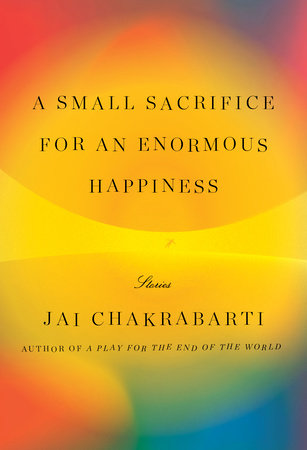
In my story collection A Small Sacrifice for an Enormous Happiness, I explore these rifts in our astrology through characters who through choice or chance transition from their birth families to cultivate chosen families, finding new ways to make it in the margins. I think the short story is a powerful technology for anyone trying to figure out what it means to live a good life, and for any of us for whom that good life is beyond usual boundaries, these story collections illumine possible paths. They reshape personal histories. They welcome dreamers and misfits. They allow us to leave our charts behind.
Alvar understands home isn’t a singular place but rather a constellation that we carry with us. The conflicts in these stories—for instance in the first story, Kontrabida, where a young pharmacist returns to the Philippines to visit his sick, dying father and his mother who may have dark motives—explore moral ambiguities. They defy easy categorizations and allow readers to empathize with characters whose actions might be described as more ethically gray than good. This is something I love about the story form: the speed at which we’re thrown into the woods, as it were, kept away from any surefootedness about what’s wrong or right.
The primary instrument writers have is the sentence. Books are built on these, of course, and writers decide the rhythm of each line, forecast how the words might land in the reader’s brain. Reading Marie-Helene Bertino’s sentences is like watching the world through an alien mirror, with the distortion that’s provided taking us closer to the heart of the heart of the matter. Take a fictionalized Bob Dylan for example, who visits a family for Thanksgiving, and who the narrator eventually describes as, “He was supposed to create some sort of lather, and he barely summoned enough energy to behead a pile of string beans.” What is beheaded in these stories are ordinary expectations and what is revealed is worthy of many rooms of family albums.
Few places remain the same from our youth, and when I visit Kolkata, the city of my birth, I’m especially attuned to the ways in which the old guard rubs up against the new, and in her second collection of short stories I love how Divakurni describes these transitions between the traditional and the modern, and the city beneath the city. In “Mrs. Dutta Writes a Letter,” a widow now living in Sunnyvale struggles to provide a glowing review of her new life in America. What she can offer in the confusion of new devices and disappointing grandchildren is a feeling of living outside the margins that I think many of us have felt in those particularly challenging and liminal moments of our lives.
I’ve always admired how Colm Tóibín refuses to shy away from the most difficult parts of family life. With candor and compassion, he’ll examine choices from years past that may have left characters doomed to their loneliness. Somehow, memory becomes evidence that the heart exists, that it does what it does despite a lifetime of missed consolations. Perhaps my favorite story, and one I return to every few years, is “The Pearl Fishers.” In it our narrator has a meeting with a lover from his past and his lover’s new wife. We explore the complexity of this situation as we do the modern Irish moment, and what it means to be a gay man with the “true Catholic church” casting its judgments.
A Good Place for the Night by Savyon Liebrecht, translated by Sondra Silverstein
In Savyon Liebrecht’s sixth story collection, translated from the Hebrew by Sondra Silverstein, characters find themselves away from home: in America, Munich, Hiroshima, Jerusalem, even a futuristic world blighted by nuclear catastrophe. Throughout, Liebrecht explores the sanctity and relevance of place because as those who’ve crossed borders know, nothing holds us more in our orbits than our relationship to what we consider home. These are unsettling stories that ask us to question where and how we find comfort and love. Still, there is always warmth, even in the title story with its apocalyptic landscape where new family bonds are stubbornly formed.
The Boat by Nam Le
What does it mean to write an “ethnic story?” the narrator of Nam Le’s opening story wonders. In fiction, we’re often working to make the familiar unfamiliar, which poses an interesting challenge for writers whose heritage takes them outside of a “conventional” literary milieu. Returning to my starting metaphor, perhaps our astrology is in part a function of our cultural capital, of what is venerated by the world we live in. Except, all the other worlds deserve their due, and Le explores them with a sense of adventure. Columbian assassins, Hiroshima orphans, all get their time on the page, as does the desperately real and the gritty, a thirteen-day boat journey across an unforgiving ocean.
I first came across Nathan Englander’s first short story collection in a dusty bookshop in Jerusalem. So many who come to the holy city are looking for an altogether different sort of life, a reclamation of a spiritual or religious self, which the hallowed old city walls might provide, but in this seminal collection Englander’s characters are often fighting against the social walls that limit their search for love and expression. They are striking out, miserably, honorably, always evoking a great empathy, to make their own life within or outside orthodoxy. No astrologer could predict the turns of fate these characters face and that’s some of the joy of these stories.
So many libraries, so little time! As writers and readers, we here at Electric Literature know there’s nothing quite like stepping into a space that has been specifically designed to invoke and perpetuate a love of reading. With book-banning efforts escalating across the country and funding for these important public institutions often not regarded as a priority, libraries of all ages, languages, and architectures deserve some extra love and admiration. Below is a list of several of the world’s most stunningly beautiful libraries, from Seoul to Melbourne to Rio de Janeiro, to add to your bucket list.
We also encourage the EL community to support your local libraries, which are equally awesome and won’t require a pricey plane ticket to access!
Photo via Wikimedia Commons
Abbey Library of Saint Gall in St. Gallen, Switzerland
Founded in the year 612, the Abbey Library of Saint Gall is the third oldest library in the world. Designated a World Heritage Site in 1983, the library currently houses around 160,000 volumes. Back in the day, Benedictine monks used the library to work on manuscripts by firelight. Now, visitors can walk through the space and admire the beautiful, medieval architecture, but they must wear fuzzy slippers provided by the library in order to preserve the original wooden floor. Mandated library slippers? No resistance here.
Built in 1776 and designed by the architect Joseph Hueber, the Admont Abbey Library is the largest monastery library in the world. Hueber, committed to the Enlightenment period, wanted the library to reflect the expansion of human knowledge, stating, “Like the mind, the rooms should also be filled with light.” The ceiling is painted with exquisite frescoes depicting the stages of human knowledge up to the Divine Revolution. The library is often cited as the inspiration behind the enviable library that the Beast gifts to Belle in Beauty and the Beast. If you want to live out your Disney Princess fantasy and twirl among breathtaking bookshelves, you can do so here!
Photo via Wikimedia Commons
The Bibliotheque Nationale in Paris, France
Located in Paris and established in 1461, this stunning and studious-looking library is the repository of all that is published in France. The library is home to hundreds of thousands of books as well as incredible cultural artifacts, including Charlamagne’s ivory chess pieces, the first globe to use the word “America,” and Mozart’s handwritten score of “Don Giovanni.” After undergoing twelve years of renovations totaling approximately $256 million, the national library is reopened to book lovers and history lovers alike.
Photo via Wikimedia Commons
Biblioteca Vasconcelos in Mexico City, Mexico
Located in the downtown Buenavista neighborhood of Mexico City, the Biblioteca Vasconcelos was established in May 2006 and is named after the philosopher and former president of the National Library of Mexico, José Vasconcelos. The library celebrates contemporary architecture with its primary materials of steel and concrete, and its hanging stacks and catwalks. The space also holds the giant art sculpture “Matrix Móvil” by plastics artist Gabriel Orozco. The sculpture displays the real skeleton of a gray whale, bearing graphite designs on the bones. Suspended from the ceiling, the sculpture has become an iconic part of the library’s identity.
Byeolmadang Library in in Gangnam-gu Seoul, South Korea
Located inside the Starfield COEX Mall in Gangnam-gu Seoul, South Korea, the Byeolmadang Library is massive, awe-inspiring, and will look great on your Instagram story. The two-story library is sprawling and spacious, featuring towering walls of books and a ratating glass art installation. The space is also commonly used for major events, including talk shows, visiting authors, and even concerts.
Photo via Deichman Bjorvika Website
Deichman Bjorvika in Oslo, Norway
Opened in June 2020, the Deichman Bjorvika library is the new and beloved public library of Oslo. Made up of six floors that include literature collections, reading and study spaces, stages, and cinema halls, this library is home to over 450,000 types of media, both print and digital. Each floor of the library has a different atmosphere and offering, with the first floor featuring a cafe and restaurant for those who want to spend the day reading or working while having a hot coffee or bite to eat. The second floor is home to children’s literature, and the third floor features music, film, and comics, and also allows visitors the opportunity to rent out 3D printers, podcast studios, and DJ stations. In short, this library is cool as hell.
Klementinum National Library in Prague, Czech Republic
Located in the heart of Prague’s Old Town, the Klementinum National Library dates back to the 11th Century and is the largest library in the Czech Republic, housing around six million documents. The library’s name comes from the boarding school that monks of the Jesuit Order opened in 1556. Founded in 1837, the library houses a Mozart Memorial that is now a centerpiece of the library’s Music Department. Klementinum also hosts regular classical music concerts put on by the symphony orchestra, such as Vivaldi’s “The Four Seasons”, which will be performed this February.
Photo via Wikimedia Commons
The Morgan Library and Museum in New York, New York
What started as a personal library for collector and cultural benefactor Pierpont Morgan is now a popular and treasured public institution in the heart of Manhattan. Built between 1902 and 1906, the library is majestic yet intimate. The library features three-story inlaid walnut bookshelves and, we kid you not, two staircases concealed behind bookcases. A variety of rare books and artifacts are on display, including writing by Henry David Thoreau and Johann Gutenberg. The library also has a number of rotating exhibitions, making each visit a unique experience.
Photo via Wikimedia Commons
Royal Portuguese Cabinet of Reading in Rio de Janeiro, Brazil
First off, let’s take a moment to admire the name of this library. Cabinet of Reading? How very official and mysterious! Located in the center of Rio de Janeiro, this stunning library was established in 1837 when a group of forty-three Portuguese emigrants gathered at the house of Dr. António José Coelho Lousada and decided to create a library to expand knowledge and instill a taste for reading among their social circle. In 1900, the library became a public institution and remains open to visitors today.
Photo via Wikimedia Commons
Sarasvati Mahal Library in in Thanjavur, Tamil Nadu, India
Founded in the 16th century, the Saraswathi Mahal Library is one of the oldest libraries in Asia. The name “Saraswathi” comes from the Goddess of Wisdom and Learning. The majority of the collection is written in Tamil and Sanskrit, and all materials are preserved via microfilm, with library officials encouraging attempts to publish rare pieces from the Medieval collection. The library is free and open to the public!
Photo via Wikimedia Commons
Seattle Central Library in Seattle, Washington
The first thing you’re likely to notice about the Seattle Central Library is its unusual appearance. Coming in at eleven stories tall, the glass and steel building was designed by Rem Koolhaas and Joshua Prince-Ramus to ensure that the building’s architecture served the needs of a library space, rather than forcing the library to cohere to a more generic structure. The architectural gambit has certainly paid dividends to Seattle locals and visitors alike, as the library includes a “Book Spiral” that continuously exhibits the entire nonfiction collection, a massive, 50-foot “living room” reading area, and, of course, its unforgettable exterior.
Taking inspiration from such disparate sources as Noah’s Ark and Stanley Kubrick’s 2001: A Space Odyssey, Stadtbibliothek Stuttgart was designed to be a calming, meditative monolith at the heart of Stuttgart, Germany. The cubic structure is encased by a glass block façade, and the library features a bistro, cafe, and rooftop terrace that provides visitors with a breathtaking, all-encompassing view of the Stuttgart Valley. The future is now, and it rules.
Founded in 1854, the State Library Victoria is not only Australia’s oldest and busiest library, but also one of the first free libraries in the entire world. The library is home to several permanent exhibitions and art galleries, as well as a number of massive and luxurious reading rooms, including a huge collection of Victorian newspapers, a wide-ranging assemblage of reading materials exploring the performing arts, and La Trobe Reading Room and Dome Gallery, commonly referred to as the Dome Gallery. Built to accommodate over a million books and hundreds of readers, the Dome Gallery was the largest in the world when it first opened in 1913, and it’s still a pretty remarkable place to post up with a book.
Photo via Wikimedia Commons
The Library of Strahov in Prague, the Czech Republic
Completed in 1679 inside Prague’s Theological Hall as an addition to the long-standing Strahov Monastery, the Library of Strahov features beautiful stucco ceiling decorations as well as artwork and paintings from the 1700s. Home to approximately 2,000 volumes, the Library of Strahov is one of “the best preserved historical libraries,” and is a dream come true for book lovers and history enthusiasts alike.
Boasting over 1.2 million books, China’s Tianjin Binhai Library has been nicknamed “The Eye” in honor of the large, spherical auditorium at the center of the building, which, when viewed through an opening at the top of the structure, bears a striking resemblance to an iris. The futuristic, five-story building first opened in 2017 and features rows upon rows of bookshelves that line the walls from the floor to the ceiling. You’ll forgive us if we can’t help eyeing this spot!
DON’T MISS OUT
Sign up for our newsletter to get submission announcements and stay on top of our best work.
YOUR INBOX IS LIT
Enjoy strange, diverting work from The Commuter on Mondays, absorbing fiction from Recommended Reading on Wednesdays, and a roundup of our best work of the week on Fridays. Personalize your subscription preferences here.