Heaven Being All Ice Now, Sing Me, Sister, Your Little Song of Fire
I.
The green bùbá of my country felt
silly in that spectral white of heaven. But it was
all Border Control would allow—the cloth
on my neck, futile against a fury
of snow that did not fall
like water off a duck’s back, but stuck
instead like leeches to my wine-
dark skin and sank
their hundred fangs of ice. I could not
speak of the inherent racism that followed
from earth, the obsidian jealousy.
On earth, birds-of-paradise have
long blue tails. What a shame
to have missed such brilliant foreshadowing.
The music of heaven is the blues.
No one here will hold
my frostbitten hands; no one here will pull me
back into the warm blanket of human viscera
I, in earthspeak, call a body—
a life. Heaven is the largest polar
desert of the afterlife, though you may think,
first, of hell. In this pleistocene epoch,
Prometheus, having burned in 27,760 degrees
of god's lightning bolt looks at humans
with no fucks or fennel fronds to give.
The light in the ice is the eye
of Abu Fanus. The mouth that opens
is of the black van of damnation named Maria.
Handcuffed, I am walking towards it.
Take a last look, sister—though this, I don't
say out loud because the big boss forbids,
above all, the evidence of the eye in his land.
II.
Pardon me, sir, but those wings
look ridiculous on you. This, I say
to the smallest angel, knowing he lacked
that righteous anger of god. Light
is what angels are made of,
but he's a white man in heaven, clad
in Armageddon's gear, so what else
to call him but that. An angel—
built too small, dodo-flightless,
he beats me down because he must. Duty-
bound, pathetic as one hand
of a glove—the blind obedience
as five fingers work their way
up its ass—he beats me down
with hands that have never felt god.
And this is where I tell him
of the kinder god that came before,
the greater lord who took the mud
that made us in his hands and reached
for no napkin after. Yes, I was born
in the old heaven—a tropical garden
west of the Nile. It was beautiful
before the bombs. No, there were no
angels in my history of joy. I earned
the destiny that led me here;
struck its stubborn cast-iron till it bent.
No, my dark skin does not mean I escaped
from hell. Or yes, yes it does.
But ask the big boss who made hell hell?
The first nature poem where white is good/night bad—but fear not, there are no ghosts in this one
The little bear jumps up and down; stands
on two hind legs; puffs itself big
and cuddly like a pink smoke
bomb; like a cute human baby saying
with all two feet of body, look,
I’m a big boy, raaahh! What a scene.
In the mirror of instinct, it must
look so scary and tough—intimidating
the small man that stood a few feet away
with his camera black as a gun. Imagine,
in the land of bears, a ramshackle
house of honey and bees, a mother
holding a lesson of survival in her mouth
like herbs—neem leaves, lemongrass—
chewed frantically to cud and waiting
to be spat into the mouth of her young—
those tiny vanities (forgive me),
evolutionary totems of our childhood
and then youth. Imagine then,
the same lesson we teach of bears
and survival, that odd lesson of
colors: If black, fight back. If brown,
lay down. If white, good night (you’re
already dead). The little bear makes
its home midair, running furiously
between the ground and sky.
And so, the hand that holds the flash
is black. And so, camera might
as well be clarinet and this
is nature’s jazz. Because, look again,
the bear is dancing; dancing
as it takes its first human steps,
and mama bear is watching;
watching from the trees, proud.
Between 1910 to 1970, millions of African Americans left the South in search of greater opportunities for freedom, rights, and economic mobility. Due to sheer scale, this human movement became known as the Great Migration. Richard Wright, one of the twentieth century’s seminal writers, was among those millions and described the experience in his 1945 memoir, Black Boy: “I was taking a part of the South to transplant in alien soil, to see if it could grow differently, if it could drink of new and cool rains, bend in strange winds, respond to the warmth of other suns and, perhaps, to bloom.” Over 50 years post-Great Migration, many of its core questions remain resonant for Black people: Where can we build a better future? Where can we gain a sense of security and belonging? Where are there well-paying jobs and economic opportunities? Where can we live a bit more free?
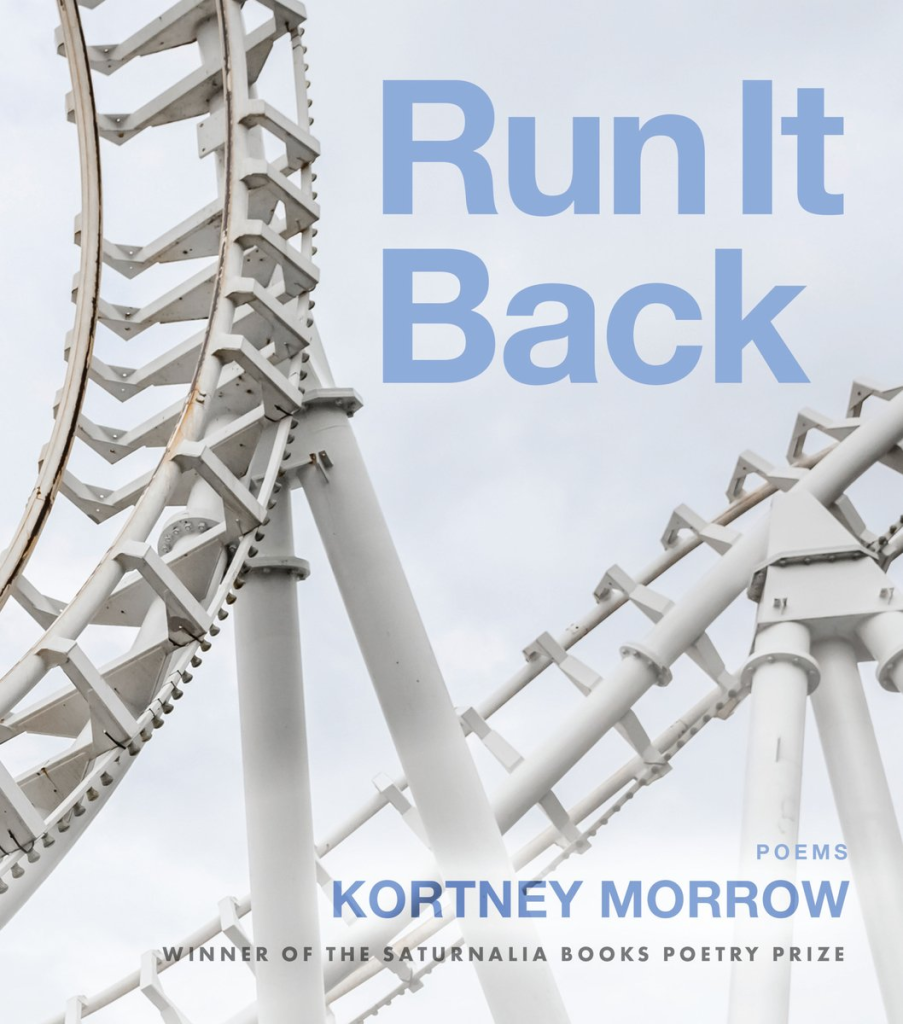
Given this long history of Black people leaving the South, it’s striking that moving to the South catalyzed my creative work. Run It Back, my debut poetry collection, loosely follows my journey as a middle-class Black “transplant” moving from the Midwest to the South and then back home again. On the eve of the 2016 presidential election, I moved from Illinois to Louisiana to help open up a youth writing center in the 7th Ward of New Orleans. Two generations removed from the Great Migration, I was eager to be in a majority-black city where I could gain propinquity to Southern culture and traditions that I imagined were lost or diluted with each generation before me anchoring in the North. This is an impulse felt by many—according to census data, Black populations in the Northeast and Midwest have seen a steady decline since the 1990s, while the percentage of Black people living in the South has steadily increased during that same period. De-industrialization and the false promise of Northern city centers have co-produced a new trend—the Great Reverse Migration.
The two years I spent in the South were both harrowing and mobilizing. I experienced how Black Southern culture has shaped so much of the vibrancy of this nation, but I also witnessed how many of the conversations sparking division across the nation are proximate to the people of New Orleans—disaster capitalism, climate crisis, mass incarceration, immigration and labor rights, the takedown of confederate monuments, and larger racial inequities all float on the surface of this Black, Southern city. To see the touristic flattening of its rich culture and history was to witness a version of Jamaica Kincaid’s A Small Place in real-time. Being in the South taught me that freedom is a practice that can become a place, but cannot be a place without the praxis. The books below guided my thinking around place-based liberation, the hopes we put into geography, and the complexities of reclaiming an ever-changing place in search of freedom.
Jacob Lawrence: The Migration Series compiles Lawrence’s iconic 60-panel series documenting the Great Migration alongside the paintings’ original captions, which reflect months of primary research conducted at the 135th Street Library. The captions give depth and complexity to the reasons for the Great Migration: labor shortages in the North, increasing racial violence in the South, and climate and crop devastation that made sharecropping fruitless. Arrival in the North also meant new forms of discrimination and the loss of a Southern way of life—a life rooted in soil and earth shifted toward industry. The book ends with a suite of ekphrastic poems written by acclaimed poets ranging from Rita Dove to Lyrae Van Clief-Stefanon. This contemporary chorus brings Lawrence’s panels to the present day, weaving in personal histories, meditations that illuminate the intimacies of this mass movement, and the implications of what was lost and which direction are we heading in now.
During the Great Migration, hundreds of thousands of African-Americans moved to Harlem, making the 3-square-mile neighborhood the largest concentration of Black people in the world, according to the National Museum of African American History and Culture. In Harlem is Nowhere, Rhodes-Pitts, a native Texan, moves to Harlem in search of what was once known as the capital of Black America and a quasi-mecca and safe-haven for Black liberation, creative expression, and freedom rights. As culture-altering gentrification seeps into the neighborhood, Rhodes-Pitts documents Harlem at a threshold moment in history. With a mix of reporting, historical documentation, and personal narrative, Rhodes-Pitts asks: How did Harlem become a dreamscape in the minds of many? What happens when a place can no longer live up to the promise of what it once symbolized? How do we inhabit and move through communities that are not our own? And how do we both preserve the Black cities that hold our histories while also moving forward into the future?
Margo Jefferson expands the memoir genre by blending a historical documentation of the rise of the Black elite in America with her own personal narrative of growing up in Chicago’s Black upper class. Jefferson coins the term “Negroland” to help describe the pre-civil rights wealthy enclave she was born into and raised within. By her definition, “Negroland” is a particular demographic of upper socio-economic Black people who are hyper-concerned with perceptions and ascension. Jefferson explores Black respectability, exclusivity, and the false promise of both—using personal narrative to describe the psychological challenges of forming a sense of self and community while entrenched in Negroland. This is a must-read to better understand how distancing—geographically from the South and categorically via class—served as a type of escape but not quite a freedom.
These poemstell the story of Hurricane Katrina in minute-by-minute detail through a myriad of voices, including the storm itself. Smith looks at the wake of the storm, the lack of relief or repair, and bears witness to the racial and class violence of that historical moment. It’s important to remember that Smith isn’t a native daughter writing about her home, but a poet who took up the work of documenting this particular place in this particular moment in history with grave responsibility. Should a poet write solely from their own experiences or bear witness to the world? Smith’s book wrestles with these ethical questions about place, geography, and ownership. Blood Dazzler is a lesson to emerging writers that writing the record requires immense specificity and care. In doing so, Smith honors geography and then transcends it—revealing the intimacy of community and catastrophe in a new light.
Tiana Clark’s debut served as a North Star during the writing of Run It Back. I Can’t Talk About the Trees Without the Blood probes contemporary Nashville for historical echoes of racial violence, giving gravitas to twenty-first century racial traumas and touristic voyeurism rooted in the surface-level consumption of Black culture. Here we see Tennessee landscapes superimposed atop one another across time in order to confront exactly what it means to navigate race, class, sexuality, and girlhood in the present.
In South to America, Imani Perry strengthens the ties between American history and Southern history in a travelogue-style book partly inspired by Albert Murray’s 1971 travel narrative South to a Very Old Place. Perry, originally from Alabama, journeys across the South to document its complex culture, history, and landscapes. From Appalachia to New Orleans, Perry is our guide, documenting race and place through in-depth research, on-the-ground interactions, and personal narrative. The South becomes the central character, and Perry unveils its contours—the beauties and struggles that reveal how far we’ve come and how far we have to go as a nation.
In 2020, Charles M. Blow faced a reckoning. In the wake of George Floyd, Blow felt called toward urgent radical action instead of the ongoing incremental movement toward freedom rights.. Blow moved from Brooklyn to Atlanta and wrote The Devil You Know, a manifesto encouraging Black people to move back down South as a pathway toward reclamation and equity. Inspired by the 1970s liberal call-to-action take over of Vermont, which led hundreds of thousands of liberals from New York and Massachusetts to move and flip the political status of an entire state, Blow suggests a mirror movement in which hundreds of thousands of Black people move to Southern states to flip the political majority. Similar to Lawrence’s contextualizing captions, Blow’s bold proposition posited political consolidation as yet another reason to fuel the Reverse Great Migration.
Broom’s debut memoir, The Yellow House, recounts the post-Katrina transformation of New Orleans East through the material history of her titular family house. On and off again, Broom returns to, journeys away, against, from, and towards the mythology of her city, her family, and the South. When Hurricane Katrina displaces Broom’s family—going from 24 family members in New Orleans to two brothers in all of Louisiana—her family’s house receives a letter from the city government announcing its demolition. Broom is forced to come to a new understanding of home beyond materiality. The Yellow House ends with the line “the story of our house was the only thing left.” In doing so, it becomes clear that the stories we hold and share can act as an embodiment and a transference of memory, of foundation, and shelter.
Those with ties to the Great Migration know that the lore of the family farm is strong. Those who are lucky still have memories of summers down South or, even better, still have family living on those acres. In Rooted, Brea Baker documents her family’s history of land loss and ownership—sharing how her family farm has served as a safe harbor across multiple generations. In telling her family’s story, Baker reveals the larger history of land theft, including forced indigenous removal and rising barriers to successful Black land stewardship, which led to Black Americans losing about 90 percent of their farmland. Baker argues that reclaiming family property and returning to stewardship of land is one way Black people can heal the earth and racial wounds.
Ruth Wilson Gilmore is a pioneer in the field of carceral geography—a term she helped coin—which explores how racial capitalism infuses itself into placemaking, resulting in landscapes and cityscapes that confine. Abolition Geography is a compilation of Gilmore’s essays, written over the span of 30 years, documenting her abolitionist ideologies. This book is a masterclass, weaving post-reconstruction ideas with contemporary lessons on the limits of decarceration, ultimately presenting a vision of abolition that is synonymous with freedom-making and placemaking. Gilmore wants us all to reflect on our role not just inhabiting place, but building place. She argues that it’s our daily actions in place that move us all towards freedom.
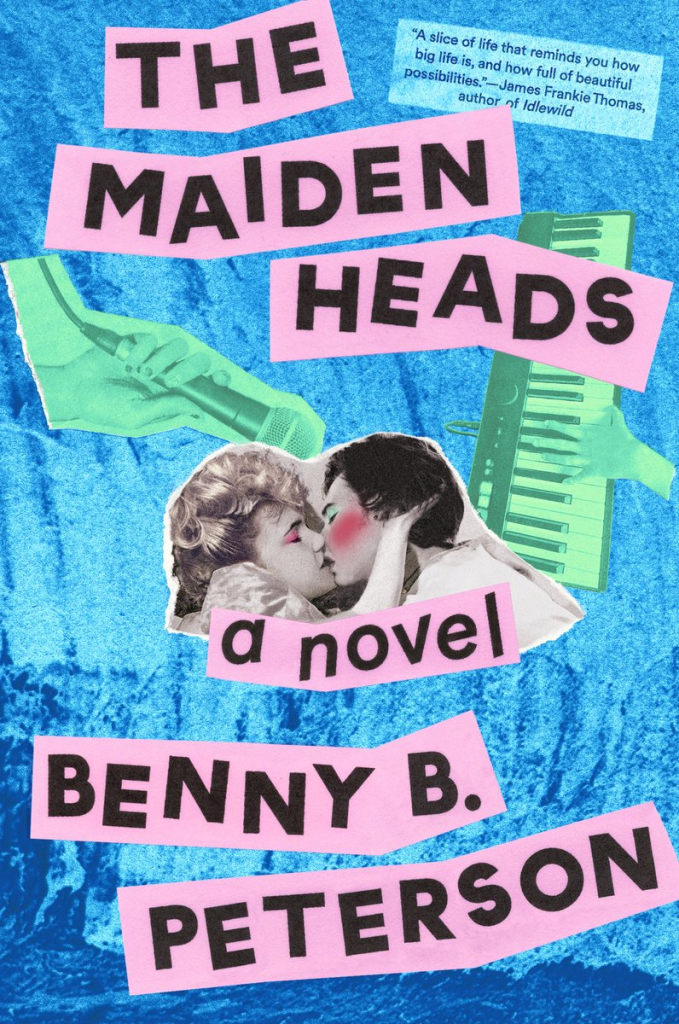
Researching my debut novel, The Maidenheads, which is set in the DC music scene from the late 1990s until 2012, sent me down some curious rabbit holes. I toured backstage at venues in DC, read all I could about the DC punk scene of the 1980s and 1990s, and listened to so much music from the years when my book takes place. The ’00s were a period when guitar-heavy bands like the Strokes and the White Stripes existed alongside more electronic, Brit Pop-inspired groups like Interpol and MGMT; what held it all together was that you could dance to it. The bands I created for my novel—the Maidenheads, a raw but promising art-punk duo, and Les Somnambules, a more introspective and polished indie-folk group—are less pop-inflected, but they have some of the same influences.
As I immersed myself in this period of music, I also read books that felt in conversation with my own, which tells the story of two queer musicians falling in and out of love, repeatedly, over the course of about a decade. Specifically, I read novels about queer heartache. I was hungry for books that showed queer characters making morally complex choices around romance and experiencing the painful consequences. Over time, my playlist and my reading list agglomerated in my head, becoming a mutant beast of ’00s indie rock and sad gay novels.
Below is the unholy result: eight queer heartache novel recommendations, based on your favorite ’00s indie anthem. The protagonists of these novels aren’t always sympathetic—which is part of the pleasure—but we are still drawn into their struggle, even when it’s clearly their own fault, and cheering for them to emerge whole, if perhaps chastened, on the other side. In truth, whatever your musical preferences, you should just read them all.
If your favorite song is “Last Nite” by The Strokes, read Nevada by Imogen Binnie
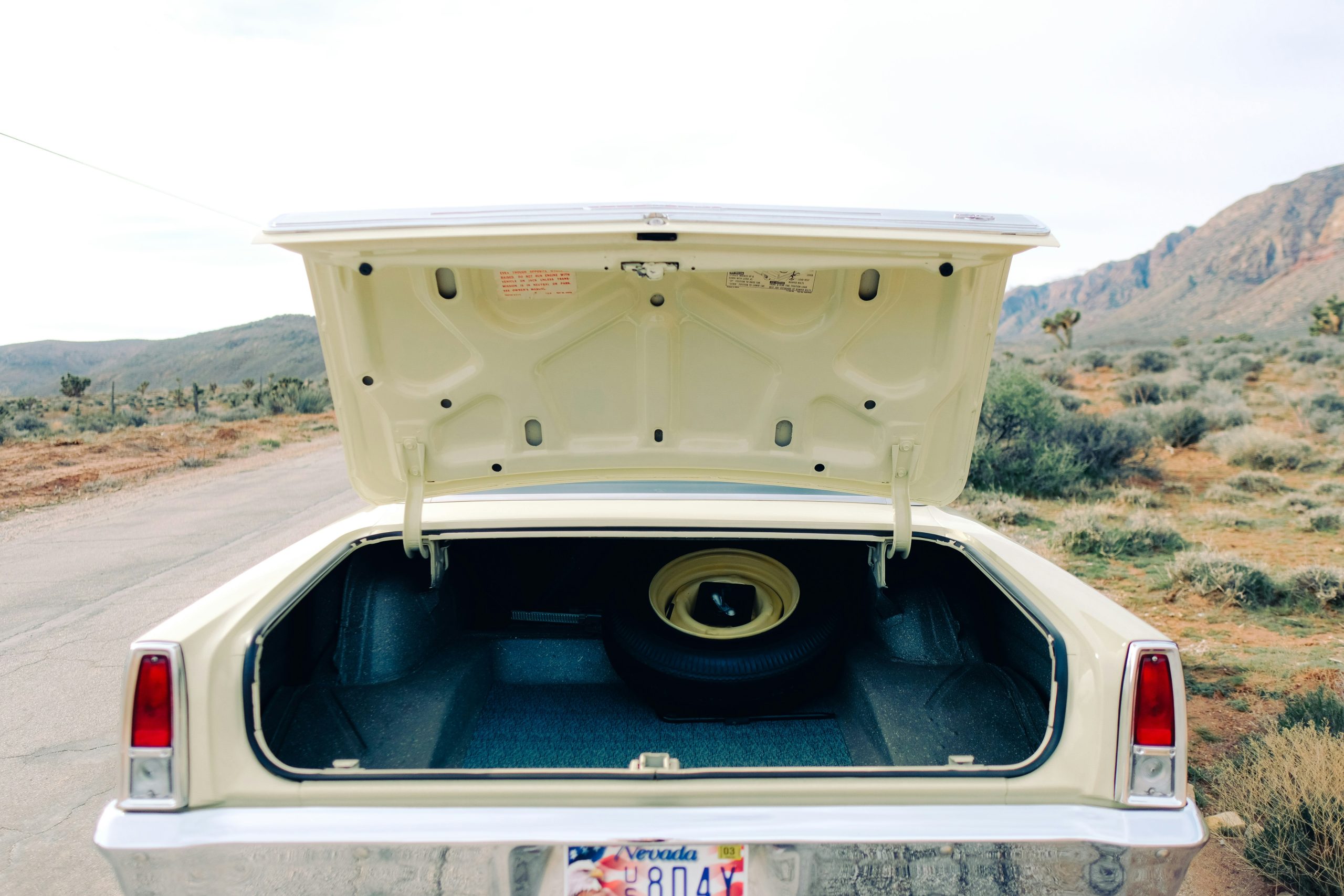
This song is so fundamentally heterosexual, but reduced to its core elements (girlfriends not understanding and walking out the door) it’s a story of bolting when a relationship gets overwhelming—relatable to all! Nevada, first published in 2013 by Topside Press and reissued in 2022 by FSG, tells the story of Maria, a woman fleeing her cis girlfriend and bookstore job in New York to road trip out West, where she foists her intimacy issues onto a Walmart employee she has determined is an egg-phase trans woman. A classic bolter road trip novel (Maria even steals her ex-girlfriend’s car) as well as a seminal novel of messy trans lives.
I love the manic earnestness of this song so much, as well as the implication that holding yourself together and caring for the people around you can be an act of epic heroism. All This Could be Different conveys some of that same energy. The protagonist, Sneha, has moved to Milwaukee for a corporate job immediately after graduation, right in the depths of the 2008 recession. Overwhelmed by the strictures of her sketchy boss and her immigrant parents, Sneha cordons herself off from vulnerability, allowing a new girlfriend to believe that her parents have died when in fact, they self-deported home to India. The novel is a beautifully told story of how the slow, tentative opening of connection—with a partner, with family, with a community—can change lives, change the world.
The narrator of this song is deeply in love in a way he knows is going nowhere good; the object of his affection has another partner and only seems interested in him as a source of novelty. So, too, does the unnamed narrator of Mrs. S find herself at the outset of this gorgeous, very sexy novel: working at a British girls’ school and helplessly in love with the headmaster’s wife, who may or may not be queer and is certainly married to a man. I’m fairly sure Jack White’s wasn’t intending to write about the mindfuckery of desiring girls who may be straight, but if any lyrics ever described the feeling better, I’ve not heard them.
Maybe you are familiar with the internet lore of this song, according to which “Maps” stands for “My Angus, please stay”: Karen O wrote the song for her then boyfriend Angus Andrew, the lead singer of the band Liars, expressing despair over how conflicting touring schedules were tearing them apart. I didn’t have that information 20 years ago, though, and just experienced this song as a pure, cathartic rip of pain. Similarly, Mac Crane’s A Sharp Endless Need, while on one level an expertly crafted basketball novel, is also a book-length wail of dogged hurt, the most elemental queer adolescent version: “they don’t love you like I love you,” when “they” is undeserving teen boys and “you” is your soul mate/best friend/sexual awakening, who again, may or may not be queer herself.
Tom Ripley, protagonist of this perfect novel, is the ultimate Modern Girl: happy, hungry, and angry all at once, fighting to construct a world that looks very much like “a sunny day” but in fact is a fabrication of his own dark desires. Both fueled by capitalism (his lust for the accoutrements of an elegant life) and doomed by it (because even with those accoutrements he’s still a working-class queer who will never, ever fit in, no matter how many people he murders), Ripley exemplifies the song’s lines about what money can and can’t buy, and the emptiness caused when we conflate the two.
Deduct points immediately for matching an Irish novel with a quintessentially English song, made famous by its inclusion in the quintessentially English film Bridget Jones’ Diary—apologies, Chloe! But hear me out: Sunburn is a paean to manic queer teen love, the kind of love that makes you sure you’ve met your soulmate when you’re in high school, the kind of love that makes you want to kiss someone every minute, every hour, and every day.
“Boy From School” is a classic peppy-sad song (maybe my favorite kind), and Bellies, Nicola Dinan’s debut novel, has some of that same poignant exuberance. It’s a very funny, very sad novel, the story of a couple who fall in love when they are, literally, boys from school, and then fall apart over years when one transitions. The no-fault defeat described in “Boy From School” echoes closely the ache of the central relationship in Bellies, in which both members of the couple are trying, but they just don’t belong.
Songs and novels about parties always feel sad to me. Why do we “party hard,” if not to pretend, briefly, that the world makes sense? Andrew W.K.’s most famous song is an almost mechanically enthusiastic tribute to good times, but we sense the insecurity and sorrow lurking underneath. So, too, in Andrew Holleran’s classic Gatsby-esque novel of Manhattan and Fire Island in the 1970s, do we experience the tragic emptiness beneath the glitter. There are dated aspects to this novel, but its campy mournfulness feels eternal.
We’ve been driving through Pennsylvania for almost two months. People give us stunned looks when we tell them: “How long?” When they ask what brings us through, we tell them we’re traveling children’s entertainers, or we’re land surveyors scoping out sites for a new mall, or we’re searching for our troubled niece Paula, she’s been missing since December, have you seen her? Sometimes they offer to buy us vodka sodas, flagging down the kid slinging drinks at the Best Western Plus. Sometimes they silently mouth the word “wow.” Sometimes they actually say the word “wow,” and each time I’m struck by its fundamental vacancy, its desolation. There is no true wonder at the core of “wow.” The core of “wow” is an IV bag filled with lemon-lime Gatorade. The core of “wow” is a dog eating grass to make itself vomit.
“It says here 16th-century Scots first used ‘wow’ as an exclamation of delight or amazement,” Derf says when we’re back in the car, thumbing through search results. I can picture with near certainty the precise mental image he’s conjured up, visions of Scottish hordes cresting the highlands in their fur and flannel, “wow”-ing at each other dementedly. By now, I don’t need to look at his face to know what he’s thinking.
Although the sky is still dark, the world outside the car is bright with gas stations and loading docks and fast casual restaurants. Beyond them, the faint outlines of foothills—never mountains, always foothills, sanded off on top like the glaciers couldn’t be bothered to finish the job.
“We’re getting there,” Derf says after a moment, quietly, when I don’t respond.
But I know we aren’t. We’ll be driving through Pennsylvania tomorrow, and the day after that, and the day after that. We’ll glide in our midsize sedan past the same hills, the same convenience stores. The same billboards, tucked into the far ends of sorghum fields, advertising Amish buffets and stump-grinding.
“We’re getting there,” he says again, not believing it either.
A little before lunchtime, we stop at a pull-off with a Walmart and a Panera Bread, and I get out to check on Trunk Girl. From afar, it looks like I’m digging around in the back of the vehicle, sorting through groceries or luggage. But really, I’m refilling her water, applying barrier cream to her pressure ulcers, manually repositioning the parts of her body that most closely resemble limbs. Today, Trunk Girl has a happy pinkish color about her, and when I rub in the lotion she relaxes further into her labrador-sized dog bed. “Hi, Trunk Girl,” I say. Trunk Girl never says anything.
Derf is already sitting when I go inside the Panera, bent into a goblin-like position over his Pick Two.
“This Panera Bread is a good Panera Bread,” he says. As he chews, the centipede-shaped scar beneath his earlobe wriggles. Derf’s name is really Fred, but he had it legally changed because he has a cousin in North Dakota who is also named Fred, except that Fred has curly red hair and sells Kias. Derf, on the other hand, has curly brown hair and steals Kias. Due to some clerical oversight on Derf/Fred’s part, the change was rendered effective only within Ohio state lines; at the federal level, he is still considered Fred.
“Her skin is getting dry back there,” I tell him. “Can we please buy some lotion that’s not from the dollar store?”
“Does she look uncomfortable?”
“Would you be uncomfortable?”
He ignores the bait and opens his turkey avocado melt, removes the turkey and the avocado, leaving only melt. I glance past his shoulder toward where the car is parked—it’s a hot day and I’ve left the trunk cracked open. A man walks by with no socks or shoes and a huge rolling suitcase, but he doesn’t seem to notice.
“I’ll pick up new lotion,” Derf says. “We’re low on root beer anyway.”
When we’re done, I duck into the women’s room and fill my empty soda cup with foaming handwash. I dump tampons out of the dispenser and reach into the metal box in one of the stalls to dislodge the toilet paper. There’s a back exit just outside leading to a dumpster area, followed by a huge garden center. Big enough, maybe, to slip inside and vanish among the ornamental grasses.
But just as I’m about to rise, the toilet paper box closes around my hand like a trap in a “Saw” movie. I contort myself into a series of Twister poses to avoid being degloved. When I finally get the roll loose, a tiny envelope slips out and lands on the tile floor.
RETURN TO YOUR VEHICLE, the note inside reads.
There’s a pair of American Express gift cards, both marked $200 and bearing the words Happy Birthday! As always, the message has a palm tree emblem stamped in the corner, and I stare at it, the image growing hazy as my eyes glaze over. Then, with a sigh, I tear the paper into strips, put each piece in my mouth, and swallow them.
I stopped trusting geography a long time ago. Maybe I never trusted it. The world can trick you, can expand and contract at will, sprout mystery appendages or fence you in like the invisible wall at the edge of a video game world. When I was younger, I’d sit in my bedroom gripping an N64 controller and fling my 1992 Dodge Viper into the ocean, while one floor up my mother watched “Judge Mathis” and slowly went insane. I’d watch as the car careened across the bay, holding my breath in anticipation before it inexplicably burst into flames. Maybe, soon, the same thing will happen to us. Out of nowhere we’ll collide with the boundaries of the rendered world, collapsing the car and our earthly selves with the hollow thwank! of a cartoon cat getting smacked in the head with a frying pan.
“They didn’t have A&W, I had to get Mug,” Derf says when I pick him up in front of Walmart.
“You forgot the lotion?”
“Oh, son of a bitch.” He hoists the 12-pack onto the roof of the car, groaning like it represents the great burden of his life. “I’ll go back in and get it.”
“It’s fine,” I tell him. “Just get in.”
The first few weeks hadn’t been so terrible. Each morning I’d cue up the song “Mr. Maybe” by the 1960s vocal group Fillmore Dave and His Tru-Vettes, from an old CD I’d had as a kid. There was something hopeful in the thin jangle of Eisenhower-era guitars, as if we were charting some unexplored northern territory instead of the necrotic rest stops along I-80.
I once was Mr. Maybe
I once was Mr. Sad
Baby, one thing you know for sure
You’ve made me Mr. Glad
But there were only so many repetitions until those breezy open chords began to feel like stasis, not momentum. Only so many half-acknowledged disquisitions on why Kevin Costner never produced a sequel to “Dances With Wolves” until they were exasperating, not endearing. And there was so much Pennsylvania. Days of Pennsylvania. Weeks of Pennsylvania. Pennsylvania silently unfolding itself, forming acres of new nerve and muscle and semi-rigid asphalt.
As we drive, there’s an occasional muffled thump-thump-pause, thump-thump-pause behind us—Trunk Girl communicating that her battery-operated portable fan needs new batteries. When we get to the next exit, we pull up to a tobacco store with a statue of a wooden Indian by the front door, and I walk to the back of the car.
“Everything okay, sweetie? Your fan need fixed?”
Trunk Girl doesn’t respond, just looks straight at me with her one watery blue eye. In it, I can see my own silhouette reflected back, bent into a funhouse shape. Pinched-in shoulders. A head like a swollen eggplant. The words repeat in my mind unbidden: Baby, one thing you know for sure.
One thing you know for sure.
You know.
You know.
And I hate that I do.
She was already in the car when we left Ohio. SILVER COROLLA, the text read when it came through, just before 5 AM. FRISCH’S BIG BOY. PENNSYLVANIA PLATES. Three sunny digital chirps from Derf’s phone, each bringing the edges of the room at the Duct Avenue Comfort Suites into sharper focus.
The car was waiting for us two parking lots over, the doors unlocked and a key fob with a metal palm tree charm tucked beneath the floor mat. A square of paper on the dash: KEEP HER ALIVE. EAT THE NOTES. WE ARE WATCHING.
“Definitely not a Lexus,” Derf said, and put it in reverse. “Lying fucks.”
He never told me who we were working for. Just that the connection had come from Geno P.—yes, he said, the Geno P. he used to owe a bunch of money—yes, the Geno P. who once kicked the shit out of him and poured gasoline all over his head, but like, that’s Macedonian humor for you, okay? Beyond that, he only offered a vague allusion to a pair of Polish gangsters called the Zjawiński brothers, who allegedly operated out of an abandoned glove factory in the Cleveland flats. Another time he told me there were bikers involved, which made even less sense. If we’ve been hired by bikers, I said, why are they willing to outsource anything involving long-haul transportation, especially when the cargo appears to be A) Illegal, B) Alive, C) Not thrilled about it?
I wondered what would happen when we got there—wherever “there” was. I pictured a generically distressed warehouse, a biker dude walking out with a duffel bag.
Instead of answering the question, Derf would just stare at me with a dyspeptic look, as if my skepticism about the opportunity—a Capital O Opportunity, he’d called it—was giving him heartburn. He’d stand there and scratch at the nape of his neck, waiting for me to press the case. I never did. And anyway, I had nowhere else to go.
It took me a few days to open the trunk. I’d heard the sounds as we were driving, of course—the taps, the thump-thump-pauses, and a wet, throaty noise that was almost like laughter. Usually Derf would ignore these sounds until we parked for the night, then he’d creep around to the back of the car with a bag of Pirate’s Booty, raise the hatch a couple of inches, and fling the bag inside, jerking his hand away like he was tossing a piece of trout into the crocodile habitat at the zoo.
At first, I’d ignored them too. The same way as a kid I’d ignored the room in the house where a pregnant opossum once chewed through the wall, returning night after night to scrabble and hiss in the dark. I’d hear it as I crept up to the attic to bring my mother saltine crackers and warmed-up cans of chicken and dumpling soup, and then again through the floorboards while I sat there to make sure she remembered to eat them. Eventually the opossum had babies, and I had to start sleeping in headphones so I wouldn’t hear their cries. I listened to my one CD, playing “Mr. Maybe” again and again until I couldn’t tell what was music and what was an opossum sound. After a few days I stopped hearing them at all; it was just Fillmore Dave and his golden sunshine voice.
Then, one morning, Derf was taking a shower at a Love’s Travel Stop when it happened again, louder than before—that half-exhale, half-whimpering laughter that wasn’t laughter. Opossum sounds, I thought—and in fact, they were distinctly opossum-like. Still, I turned off the radio and slipped through the door. I unlocked the trunk. I opened the trunk. I closed it. I opened it again.
I saw fingernails, but no fingers.
Kneecaps, but no knees.
A mouth, maybe.
I was frightened. I could tell she was too.
We wake up from a nap in front of the tobacco store, and beneath the wiper blades there’s a greeting card with a picture of an ice-skating cat and the words Meow-y Christmas! in big red letters. In the corner, the familiar palm tree stamp, rain-saturated and beginning to leach through the paper.
PROCEED ALONG THE ROUTE, the inside reads, and another clutch of Amex gift cards tumbles to the floor mat. Derf tears the message into strips but doesn’t swallow them. Instead, he balls them up and drops them out the window.
“I’m gonna go check on her,” I say, and open the door.
“Didn’t you just check? It’s been like 40 minutes.”
“I’m checking on her,” I say again. And I’m glad I do, because something is off with Trunk Girl. Her happy pinkish color has taken a pale cast. The parts that most closely resemble limbs are heavy and limp, like bags filled with pennies, but everywhere else her skin is bone taut. Her fingernails, I notice, have grown longer.
Something is off with Trunk Girl. Her happy pinkish color has taken a pale cast.
I ask her if she’s okay, reaching out. She’s warm to the touch. Trunk Girl doesn’t say anything.
“We have more Pirate’s Booty,” Derf calls out the window, not looking at me. His phone chimes with a text message, but as I’m walking back, he flips to a live video of a large, blindfolded man comparing brands of specialty barbecue sauce.
“Can you run in and see if they have Advil or something?”
He flicks his eyes toward the store, announced by its sign as FRANK’S SMOKS. A shirtless man in gym shorts comes out the door and rubs the wooden Indian’s neck in a sensual way, then flattens an empty can of Red Bull against its head. Derf glances back toward his phone, giving the barbecue sauce man a long look as he adjusts his bib. Then he sighs loudly and reaches for the door.
“It’s fine,” I tell him. My endless refrain. “I’ll do it. Leave the car running.”
The inside of Frank’s Smoks isn’t much more welcoming than the outside. There’s a single dark refrigerator filled with beer and energy drinks. A wall of tobacco and tobacco-adjacent products, CBD powders, kratom gummies. The floorboards have sunken in on one side, and when a nickel falls out of my pocket it rolls diagonally across the shop, past the fridge, and clinks against a back door where “Employees Only” has been etched into the glass in old west lettering.
“It’s unlocked,” says an elderly gentleman in a vest, perhaps Frank, who emerges from behind a rack of candy.
“What?” I hear myself reply. My voice sounds higher, more alarmed than I’d intended. It’s only then that I notice my hands are shaking and I’ve been staring at the rear exit.
“Sweetheart, listen,” Frank says, speaking softly. “There’s a path behind the shop. You follow it a half mile, you’ll hit 30A. There’s a police station. Or I can call someone for you. Here,” he says, reaching for the sign, “I’ll close up shop.”
“Are we near the end?” I ask, and this time Frank is the one who says “what?” He’s one of those old people with a face that’s both rugged and weirdly smooth, like it’s been sandblasted.
“Do you have Advil, Tylenol, something?”
He regards me for a moment, then flips the sign in the window back to “open.” “Right over here,” he says, and I follow him.
Here’s the thing about opossums: They’re committed, stubborn creatures. For months they scraped and slunk behind the closed door of the former sewing room, dozens of opossums proliferating through the space they’d adopted as their generational home. Occasionally I’d find my mother at night, nudging a shallow bowl of milk through the gap beneath the door. “Hungry babies need to eat,” she’d say in the strange, clotted voice she used the rare times she ventured out of her room. “Hungry babies get big and strong.” By then, she’d dropped almost 50 pounds, and her nightgown hung from her frame like a magenta parachute.
Gradually, the opossums migrated to the bathroom, then my bedroom, then took over the upper level entirely. When they expanded their territory downstairs, we moved into the unfinished basement, where we had an open-air bathroom configuration known as a Pittsburgh toilet. I came and left through the rusty cellar door, sleeping on a bag of fuel pellets, never entering the main part of the house. The house wasn’t our house anymore. The house was now—the words dissolved into view like a movie title—The House of the Opossums.
“That’s crazy,” Derf said when I told him about The House of the Opossums—he was still Fred then, before we started messing around, before he started stealing more than Kias. “Why didn’t you call an exterminator?”
I didn’t have an answer for him. Actually, the question had never occurred to me. An air of inevitability hung over the opossum situation, as grim and impenetrable as Midwest cloud cover.
“We did,” I lied, “They sealed the place off and did some kind of gas bomb thing, and all the opossums died.”
“Damn, that must have stank when you came back.”
“It wasn’t that bad. The team was very helpful and efficient.”
“You must’ve been pissed at your mom, though. For letting it get like that.”
“She did the best she could.”
Now, Derf is asleep in the passenger seat, his breath forming islands of condensation against the window. When he’s unconscious, it’s easy to see him again as Fred. His face has that slack, puppyish look, like he hasn’t quite grown into his own skin. Even the centipede-shaped scar has an innocent quality, like a playground injury instead of Geno P.’s Macedonian handiwork. Without thinking about it, I reach over and push his hair out of his face.
We pass a Hampton Inn by Hilton. We pass a Hilton Garden Inn. We pass a Hilton Extended Stay Homewood Suites. We pass a wastewater treatment plant. SHE DID THE BEST SHE COULD reads a billboard at the end of a sorghum field. LET BANKRUPTCY MANAGEMENT SOLUTIONS HANDLE THE REST.
In moments like this, I don’t mind so much that we’ll be driving through Pennsylvania tomorrow, and the day after that, and the day after that. As in The House of the Opossums, there’s a brittle comfort in knowing what the future holds. Tomorrow, there will be more opossums. Tomorrow, there will be more Pennsylvania. I will drink flat root beer. I will visualize Scottish hordes. My eyes will track the words written on the faces of mile markers as they glide into view, each stamped with the outline of a tiny palm tree:
KEEP
HER
ALIVE.
EAT
THE
NOTES.
WE
ARE
WATCHING.
There’s this one song by Fillmore Dave and His Tru-Vettes where they sing about a guy named Bill, who drives a Cadillac Coupe de Ville. In the song, Bill has a girlfriend named Sally, who’s always hanging ’round the alley, which I took to mean the arrangement between Bill and Sally is not so much romantic as transactional in nature. Anyway, Coupe de Ville Bill takes Sally from the alley to a drive-in movie, and after that they go to some kind of soda fountain/diner/non-alcoholic teen hangout-type place, where Bill catches Sally—the song assumes his version of the events—quote, “making eyes” at another man. So while Sally is in the bathroom, Bill decides, in the heavily sanitized language of early “beat” music, to kidnap her (“take her”), non-specifically violate her (“shake her”), and dispose of her body in an old oil drum (“dispose of her body in an old oil drum”). The song ends with Sally walking back to their table at the soda fountain, innocent of what the coming hours hold.
By the way, the name of the song is “Fun Times USA.”
Years ago, listening in my room, I’d go cotton-mouthed with dread as the song progressed from verse to chorus. By the time it reached its bridge section, the anxiety had become almost too much to bear: “Get out of there, Sally,” I’d scream in my mind. “Sally, he does not have your best interests at heart.” And I’d hit the skip button in anticipation of the song’s ending, unable to suffer the terrible knowledge of Sally’s fate. (The next track was called “Cheeseburgers,” and it was just about cheeseburgers.)
Now, though, I wonder: What if Sally knew something bad was coming? What if she sensed, as she studied her reflection in a cloudy bathroom mirror, that the world had quietly coiled against her? What if, though—what if she just didn’t care?
“Do you want a scratcher?” Derf says as he wanders out of a liquor store, his hands full of lotto cards and airplane bottles of coconut rum. “I just got a butt-load of scratchers.”
I don’t, but I take one anyway, not asking what he’s doing with six sheets worth of Double Buck Blowouts when we haven’t had to spend our own money in weeks, then realizing I’ve just answered my own question.
“Oh shit,” Derf says, rubbing a coin over the scratcher. “I won five dollars.”
MAINTAIN AMBIENT TEMPERATURE 70–73 F, the text reads on the card’s underlayer, after the wax has been rubbed away. MINIMIZE INTAKE: TERT-BUTYLHYDROQUINONE, PROPYL GALLATE, ANTI-CAKING AGENTS.
The Advil helps for a day or two. I crush it up with the palm tree charm and sprinkle it into cups of strawberry Ensure. For a few hours Trunk Girl’s color returns to normal, and the cold film of perspiration on her skin evaporates. She sinks back into her dog bed, deflating further with each exhalation, until finally she falls asleep.
That night, though, she goes feverish again. I sit on the lip of the trunk outside a Kwik Check, holding the straw up to her maybe-mouth as the wind bites my ears. She draws on it ferociously, glomming the stuff down with abandon. Then I feel something close around my wrist, and when I look down, I nearly drop the drink: not just fingernails, but fingers, attached to a hand, attached to something like an arm. “The core of ‘wow,’” I think. Her grip tightens, then releases. Her one blue eye stays fixed on mine.
“I’m telling you, something’s off,” I say to Derf. It’s late now, and we’re winding our way through another sawed-off foothill, the guardrail on the left side of the road punched open where a vehicle must have crashed through it to the valley below. “To be honest, it’s kind of freaking me out.”
“I promise you, there’s nothing to worry about.”
“You can’t know that.”
“Actually, I can,” he says, suddenly defensive. “Are you trying to piss me off? Because it’s working.”
He presses down on the accelerator. The engine groans, and the glove compartment’s bad latch rattles.
“Listen,” he says, a contrite note entering his voice. “I’m not trying to be a dick. I’m just saying, I’ve got the situation under control. The situation is my bitch. Okay?”
I almost say: Enough of the bullshit. I almost say: I think you’re lost here too. But instead, I drop it, and we drive in silence the rest of the night, both staring directly ahead at the next dim stretch of road. It’s dark enough that the dashboard casts the ghosts of our reflections against the windshield, and I’m reminded once more of the invisible wall and the 1992 Dodge Viper. Maybe, it occurs to me now, there would be no great eruption upon impact. Maybe I’d hit the wall months ago without even realizing it—before Fred became Derf, before the gray, wordless morning I left my mother to herself in The House of the Opossums and boarded an eastbound bus. I’d fallen asleep with my head pressed against the window, the sound of some kid’s iPhone game invading my dreams. When I woke up, I was in Ohio.
“I have to take a piss,” Derf says eventually, and eases the car onto the berm.
Moths flit back and forth in the twin beams of the headlights. I watch as he struggles over the guardrail and unzips in front of a half-collapsed farmhouse. He’s left his phone in the cupholder, and when a text comes in—ping!—dozens of bats erupt from a hole in the roof. For a moment, against the thin light of the moon, it almost looks as if they spell out some kind of message. But they don’t. They’re just bats.
It wasn’t so much that I made the active decision to leave. By the time I finally walked away from The House of the Opossums, I was on emotional autopilot—sleep-deprived, subsisting on boxes of expired breakfast cereal, ears ringing at a high-pitched marsupial frequency. If the Pittsburgh toilet wasn’t enough to produce lifelong trauma, there was also the reality of my mother’s diminishment, her physical and cognitive decline having finally intersected on the line chart of total collapse.
By then, she was almost entirely dwarfed by her nightgown, which lay around her on the cement floor like a fried egg. She rarely spoke. When she did, it was in response to whatever was playing on the ancient CRT TV I’d dragged out of deep storage and set up on a card table. I’d wake in the middle of the night to find her face awash in the screen’s hospital glow, murmuring over the sound of a “Jeopardy!” rerun.
Then I walked out of the house in my pajama pants, crossed the street, and never went back.
“What is tarmac?” she said. There was a strange urgency in her voice, a vinegary rasp of accusation. It was only when my pupils adjusted that I realized she wasn’t looking at the TV, but past it, straight at me. “What is tarmac?” she said again.
Instead of going back to sleep, I got up and wrapped her sweater around her shoulders.
“I’m up $200,” she said, her expression softening.
I rubbed her back. Her spine felt like a string of pearls. Then I walked out of the house in my pajama pants, crossed the street, and never went back.
The background image on Derf’s phone is an enormous, pixelated photo of Kevin Costner’s head. He has two browser tabs open, a porn clip (“Apolitical White Girl Sucks for SBA Debt Relief”), and the same taste test livestream he’d been watching three days earlier. “Please,” says the guy with the bib, still blindfolded and wiping barbecue sauce from the corner of his mouth. “I don’t want to do this anymore.”
The text message reads ENJOYING THE SCENERY?, followed by a series of photos, taken at a distance: Derf at a gas pump, smoking a cigarette. Derf in a Taco Bell, squeezing hot sauce onto a chalupa. And then, a Derf-free shot of the hood of the car, with a lone matchbook balanced on top.
I scroll backwards, past a series of increasingly arcane directives (41.19683731741196, -75.93131217837407 MISTY), past the note about Frisch’s Big Boy and the silver Corolla, to the start of the conversation. CONFIRM: TWO (2) PACKAGES, it says at the beginning of the chain. There’s no response from Derf, just an appended thumbs-up icon in the corner.
Two.
I see the same desolate warehouse, with the biker and the duffel bag. Derf stepping out of the car, opening the trunk. I picture myself staring straight forward while, in the background, the wet, throaty sound that’s almost like laughter slides a step higher, into a pitch that’s more like a scream. And then—
I don’t tell Derf I’ve looked at his phone. But as the days pass, I begin to have more reservations that the situation is, in fact, his bitch. He disappears into restrooms for extended periods and returns in a sweat, nervously scratching the back of his head. He leaves the radio on scan mode without noticing, letting it climb repeatedly to the snowy heights of the FM band. When we wake up in a Holiday Inn Express with the TV on and the words WRAP HER IN BLANKETS flashing against a palm tree background, he becomes agitated and throws his sneaker at the screen. It bounces off the edge, leaving a brown tread mark, and tumbles beneath a curtain.
“Could you get that?” he says. His phone buzzes again. He turns it upside down on the bedstand, groaning.
“Get your own fucking shoe,” I tell him, and walk off to the bathroom. Behind the door I hear him whining: Why do I have to be so mean to him, can I please give him a break, please? Then he starts to cry.
There was a time when I could overlook these moments. I thought about how, after the Geno P. incident, Derf sat in a bathtub with his knees tucked against his stomach, holding a fistful of sodden medical gauze against his jaw. “You’re gonna stick me with that thing,” he’d said, smiling, then grimacing as I held a lighter beneath the needle.
“It hurts to smile,” he’d said.
“Well, lucky for you,” I’d replied, “You won’t be smiling long.”
Now, sitting on the closed lid of the toilet, I kind of wish I’d stuck him after all. I hear him moving around outside the door, groaning and grunting. I turn the water on, and after a minute, I don’t hear him anymore. The lights buzz. The room fills with steam. I don’t hear anything at all.
After a few hours we leave the hotel room, take the stairwell down to the parking lot, and unlock the car. As we approach, I’m overcome by a sweet, chemical smell that burns my nostrils, and I rush to open the trunk.
Overnight, the not-limbs have resolved into actual ones: two arms and two legs, each terminating in a fully formed hand or foot. A flat purple scab has appeared a few inches from Trunk Girl’s eye, sealing over what had previously been a fold of skin. The sound of her breathing is no longer pinched, opossum-like. It sounds like mine.
Quickly, the sweat-soaked dog bed is discarded and replaced with a vinyl inflatable pool float shaped like a pineapple. In the afternoon I take the pineapple out of the trunk and hose it down at a truck stop, where a jellied buildup sloughs away and gathers in clumps around the floor drain.
Across the street there’s a squat, windowless medical building next to a Honey Baked Ham. I consider pulling into the pavement-patched cul-de-sac by the drop-off area, popping the trunk. “We’re gonna get you some help, okay?” I’d tell her. “I’ll be right back.”
Instead, we keep going—through service depots and toll roads and drive-thru windows. Through small towns. Through gridlocked traffic where, when we reach the choke point, there’s a nude man with a pillowcase over his head wandering blindly between lanes, holding his hands out in front of him.
“This is yours,” Derf says as he drives, handing me a greeting card with a picture of a winking cartoon gopher and the words Gopher it! in sparkle-foil letters. When I open it, a piece of paper falls into my lap. It’s blank, no note.
I stare at it for a long time.
“Are you going to eat it?” he says, and I sense him trying not to look at me.
“What happens if I don’t?”
“Well,” he says, putting on a dopey action hero affect. His Costner voice. “I’ll have to kill you.”
I think of the texts on his phone, and it occurs to me I’ve never seen what happens when Derf is cornered. I notice now how firmly he’s gripping the steering wheel, how tightly he’s clenching his jaw. I fold the paper twice and put it in my mouth.
The night before we left for Pennsylvania, in the vinyl-planked darkness of the Duct Avenue Comfort Suites, there was a moment—not even a moment, a matter of seconds—where I fluttered awake—not even awake, briefly, liminally alert—and realized Derf wasn’t asleep anymore. He was sitting in the overstuffed floral-print chair where, hours earlier, we’d thrown our two duffle bags in a pile. He was fully dressed even though it was the middle of the night, and he was looking at me the same hard way my mother had looked at me in the basement of The House of the Opossums. But unlike my mother’s, his gaze didn’t soften when he saw I was awake. “Go back to sleep,” he’d said instead, and after a few seconds I did. When I woke up again, he’d slung the duffle bags over his shoulders, and I remembered it was time to go.
It’s beginning to get dark when I notice we’re no longer on the highway. To our right, there’s some kind of vacant industrial site. RESIDENTIAL INFILL NOTICE: MISTY OAKS SUBDIVISION, a sign reads, zip-tied to a chain-link fence. A PALM TREE COMMUNITY.
Derf nudges us past the sign and around a pile of rebar, pulling onto a dirt track surrounded by the frames of unfinished one- and two-story homes. With a chill, I think once more of the imagined warehouse.
“Hey,” I say, and it’s then that I realize Derf looks edgier than I’ve ever seen him before. He’s drumming the fingers of one hand against the side of his seat, digging his nails into the soft part of the steering wheel with the other. When he turns his head toward me, I can’t tell if he’s about to throw up, or start crying, or both, and I almost—almost—put my hand on top of his.
“Where are we going, really?” I ask him, and as he opens his mouth the centipede scar twitches above his throat.
But then: a sound from the back of the car. Thump.
Thump thump.
“I’m not stopping,” Derf says preemptively. “So before you say anything—”
Thumpthumpthumpthumpthumpthumpthumpthump
thumpthumpthumpthumpthumpthumpthumpthump.
There’s a hollow thwank! as the latch of the trunk tears open, so loud, sharp, and sudden that I feel it in my teeth. I hear metal grind against metal, then a shriek from the car’s tires as we come lurching, swerving to a stop. As my head snaps forward, I shriek too.
I look at Derf, but he’s not looking at me. He’s staring, his eyes impossibly wide, at a faint outline about 20 feet behind us, near the mound of rebar. Or actually, two outlines. One is an inflatable pineapple. One is something else.
The core of “wow” is a dream of the house you grew up in, with its crabgrass lawn and spent shingles and portable TV playing “Judge Mathis” on repeat, and in the dream it’s late at night and you’re tiptoeing down the hallway, leaving a shallow bowl of milk at the foot of the bedroom, the bathroom, the narrow stairs leading to the attic. The core of “wow” is knowing your mother probably died in that house, alone, not understanding what was happening to her, while you were asleep in a motel three states away. The core of “wow” is realizing you never really woke up.
“Son of a bitch,” Derf says, stepping out of the car. It’s not just the rear latch that’s been destroyed. The entire trunk has been obliterated off its hinges, bent and steaming at the foot of a tree. The pineapple pool float slides listlessly along the road, still inflated, buoyed by the wind.
The something-else has vanished. I can see, in the light of the car’s emergency blinkers, a row of dark smudges in the dirt, headed toward the skeleton houses. Handprints.
“Son of a bitch,” Derf says again. I barely hear him. In my mind there’s only the idiot gallop of “Fun Times USA”—slap backed guitar chords and Fillmore Dave. Somewhere far away, Derf’s phone rings, rings again, and on the third, he slowly brings it to his ear, the color draining from his face.
“Yeah,” he says quietly, cupping the phone with his palm. And then, glancing at me: “Yeah, she’s here too.”
I don’t hear what he says after that. In the distance, at the edge of my vision, there’s a murky figure, not much taller than myself, slowly moving towards us.
Dark hair. Long, pale arms. With each flash of the car’s emergency lights, a clearer image forms in my mind. Shiny skin—still fresh, still fragile. A pair of bright blue eyes. A flicker of something like recognition.
I don’t speak as she silently places herself behind Derf, who’s bent over the trunk, still talking on the phone.
The emergency lights flash.
A shadow, a smeared thumbprint.
An opossum, a magenta parachute, the “Jeopardy!” theme song.
As she looks at me, moving closer to Derf, I realize there’s more than recognition in those eyes. There’s a question. One I already know the answer to.
A mouth, maybe, or many mouths.
“Wow,” I hear Derf say, ending the call. “I never realized, there’s like barely any storage in here.”
I take a step back. I look straight at Trunk Girl. And I think: Hungry babies need to eat. Hungry babies get big and strong.
“You must’ve been pissed at your mom, though. For letting it get like that.”
“She did the best she could.”
“Hell yeah, she did,” Fred says, turning on his elbow across from me. And then, to an imagined audience: “Let’s hear it for all the moms.”
Hear what? I almost ask him. Do you hear something?
I’ve been driving through Pennsylvania for nearly 22 hours. At first, I drove in silence, watching the rearview, holding my breath with every passing vehicle. Once, a white pickup truck hovered behind me for an exit, two exits, and I was seconds from flooring the gas when it pulled into a police turnaround and started heading the other way.
Eventually, I stopped glancing over my shoulder.
I take Fillmore Dave out of the disc player and turn on the radio, scanning through a jumble of pop and country before landing on an oldies station. After a while, I turn the music off and just listen to the high, hovering sound of the car’s wheels as they move against the pavement.
I pull off the interstate, drive a quarter mile past a strip of boarded-up pet stores, and double-park next to a hair salon. I reflexively walk back to check the trunk, held together with bungee cords and duct tape, before remembering there’s nothing in it. “I’ll be right back,” I say anyway.
It’s a cool evening and I feel like walking, so I follow the sidewalk one block, then another, until I arrive at a convenience store at the end of a cracked parking lot. Inside, I walk from aisle to aisle, pick up a bag of chips and a bottle of A&W root beer. I take my time, perusing each row. I catch a glimpse of my reflection in the beer fridge and briefly mistake it for someone else, mirroring my movements. But no. It’s just me.
“Twelve bucks,” the cashier says. She’s around 19 or 20, with a two-tone dye job and tired eyes.
I’ll take a scratcher too,” I say, nodding toward the back. She slides one across the counter and I take a dime out of my pocket, rub it against the thin wax coating.
“Look at that,” I say, holding the ticket up to the light. “I didn’t win anything.”
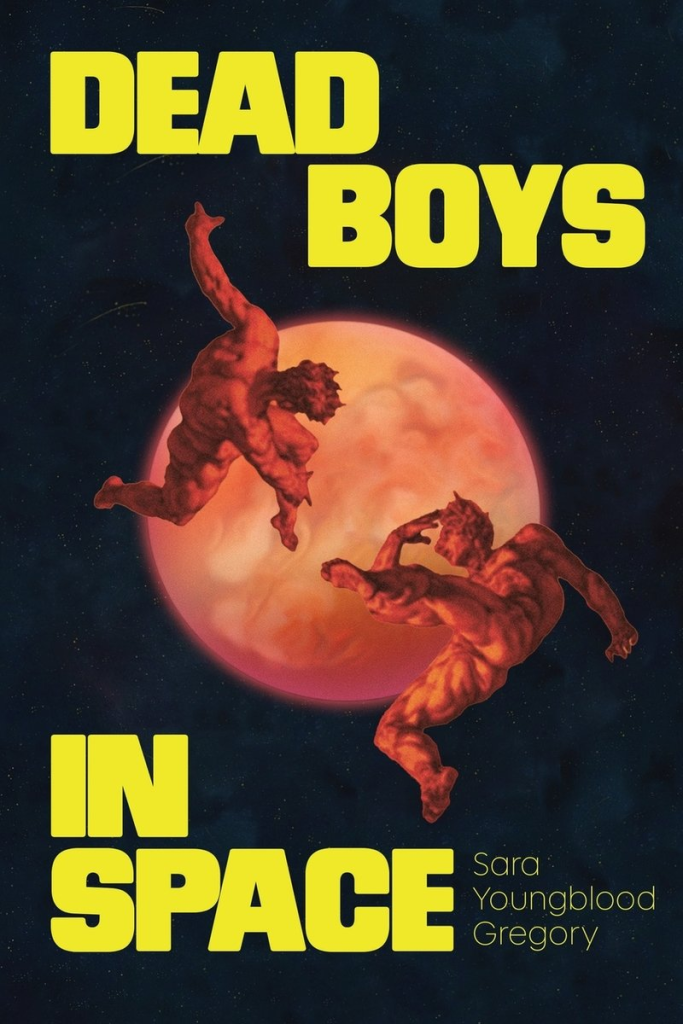
Steven Reigns and I had been emailing for months. As I prepared for the release of my debut poetry collection, writers and editors from multiple regions of the queer writing universe strongly encouraged me to reach out to Steven. This was partially due to the similarities in our work; Steven and I are both writing around queerness and AIDS. My collection DEAD BOYS IN SPACE uses speculation, sci-fi and space travel to think about the AIDS crisis, generational grief, memory, sex and sickness.
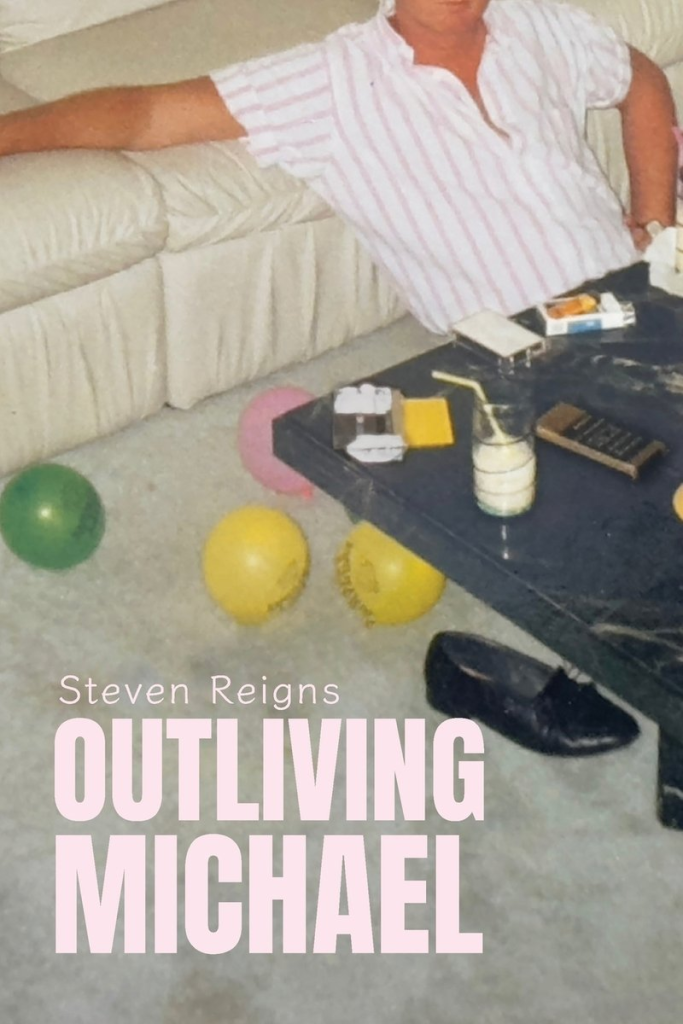
Meanwhile, Steven’s 2025 collection Outliving Michael is both memoir and memorial, and is written towards Steven’s close friend Michael Church, who died of AIDS in 2000. Now, of course, I’ve come to realize that people pushed me towards Steven because he is generous and warm, as well as talented and prolific.
So we emailed. I asked for advice and, more daringly, a very last-minute blurb. The conversation kept rolling and we dreamed up an interview to formally bring our words together. But I never expected to meet Steven in person, at least not any time soon. He was on the West Coast, where I essentially never venture, and I was in New York City. So you can imagine our mutual surprise and delight when we spotted each other at the Publishing Triangle Awards this month. Since 1989, the Publishing Triangle has championed and connected queer writers and publishers.
Afterward—and once again back on our prospective coast lines—Steven and I discussed how the AIDS crisis of the 80s and 90s has shaped our work and lives, generational memory and the beauty of the dance floor.
Sara Youngblood Gregory: I was so moved by Outliving Michael and there are so many moments of emotional and thematic overlap between our two works. Tell me how Outliving Michael came about.
Steven Reigns: The poems in Outliving Michael, like most of my work, came out of my trying to make sense of things. I realized I had lived longer than Michael, something I, for some reason, hadn’t thought possible. The poems were my reminiscing on his friendship and its lasting impact on my life. This book feels like a personal companion to my previous collection A Quilt for David. I spent over a decade researching and writing about a dentist who was accused of transmitting HIV to his patients. I didn’t know David and so, for the next book, I focused on and honored a best friend, Michael.
I actually have a similar question for you because I thought of it when I first had your book in my hands. DEAD BOYS IN SPACE is more than a meditation, the GRID series of poems is a perfect example. I imagine some of your poem’s creations were quite intense.
SYG: Oh, I’m glad the GRID poems stuck out to you. Those are a series of three poems in the collection, and they all follow the same format—literally a four by five grid on the page—and each column works to define or capture or snapshot the feeling of a specific word. Words like “bird,” or “mother,” or “apology.” You can read the poem straight down, or straight across, or I guess even go tic-tac-toe style.
I was writing in this confined form and all along that containment was already built into the history and language of AIDS and homosexuality.
– Sara Youngblood Gregory
Originally these three poems were pretty pastiche. I was playing around with the form of one of Franny Choi’s poems—I think it’s from Soft Science. I wrote some poems in this grid format, but they weren’t fully formed. Then a few years later, I was at the point where my heart was set on writing a manuscript fully dedicated to thinking about the AIDS crisis. I was reading a lot of different books about AIDS and I learned an early name for the virus: Gay-Related Immune Deficiency. GRID. There it was again. It was like lightning struck. It felt eerie, almost. Here I was writing in these small boxes and columns—in this confined form on the page—and all along that same containment was already and very explicitly built into the history and language of AIDS and homosexuality.
Now, as I ask you questions, I am thinking of your poem about working on a different interview for a different magazine. Michael had advice for you: Respond as if your soulmate will read it. Were you writing directly to Michael with your poems? Was he your soulmate?
SR: Not at all. In every reading, I stress I never had sex with Michael. We were friends. I’m not offended by the suggestion but what gets lost is the concept of nonsexual connection and friendship. Gay men, particularly in straight people’s imaginations, are wildly sexualized. It’s also an important point to stress because we don’t have as much art about friendship. I was probably 22 when Michael gave me that advice. At the time, I was overly romantic and believed in soulmates, in some cosmic connection with one other person.
SYG: Yeah that’s so true—the sexualization. I didn’t even think about it, though of course as a lesbian that sexualization certainly, and unfortunately, informs my own interactions with straight people and heterosexuality.
SR: Exactly! I think this imaginative sexualizing by straight people is why there’s so much discomfort with queers around children. Drag queens reading to children is scrutinized for that exact reason. The data far from suggests that queers are the issue. If facts were prioritized over fantasy, gun violence in schools would be the biggest conversation point, not drag queens with books.
SYG: It does feel particularly sharp that it’s drag queen with books that are under such fire. Plus all the queer book bans. They hate when school kids know us, and read about our lives and relationships on our own terms, which is what Outliving Michael does so well . . . It felt really clear to me when reading how grounded and how deep-running your friendship was, and also that it was firmly platonic, firmly a friendship. I do think sometimes about friends I’ve had and how strongly they’ve impacted me and how fated it’s felt. I can get a little bit woo-woo though. [Laughs]
SR: I’m not opposed to woo-woo. I have a poem in the book about me during an insufferable New Age phase and how Michael teased me about my seriousness. Did you have a reader or certain audience in mind?
SYG: Not at all. In my day-to-day as a freelance writer and journalist, I’m constantly thinking about the reader. What do they need to know? Do they have enough context? What’s the takeaway? But when I write creatively, the exact opposite is true—I don’t want to write for anyone, or with anyone in mind. I actually have to banish the people in my mind and the possibility that the work might one day be read by others. Otherwise, I feel distracted or self-conscious. Like someone is reading over my shoulder.
SR: Keeping one’s vision the primary focus in writing creates singular work. Writing with a committee in your head creates too much caution and fear of experimentation in disclosure or structure. What I want to do is create the best work I can. I’m asking readers for their time and attention. I’m not going to create fluff or phone anything in. I want to honor the time they’re giving the work.
SYG: In DEAD BOYS IN SPACE and Outliving Michael, nightlife, dancing, parties, sex and desire are strong throughlines. You mention a few times the feeling that the party would never end, the fear that the party was already ending, knowing and not knowing that AIDS “was already in the room.” Tell me about what it felt like to be young and gay during the AIDS crisis.
SR: I didn’t know gayness without the threat of death or sex without the threat of seroconversion. I was so young and gay and sexually active that I didn’t know any other way. I did know, even back then, how loaded and charged every moment was for me and my friends. It was only in 2010 when reading Alice Walker’s poetry book Hard Times Require Furious Dancing, that I reflected on all that time we spent on dancefloors and in beds. It was our release and shared expression of joy.
The times I’m referencing were before you were born and yet it has its own draw to you because you have a beautiful poem “The center of the universe is a small-town gay bar” where dancing and finding rhythm are part of it.
Gay men, particularly in straight people’s imaginations, are wildly sexualized.
– Steven Reigns
SYG: It is interesting. The durability of dance, the dance floor, how strongly so many people associate queerness with nightlife and music. There’s also a ton of dancing and music in Pamela Sneed’s Funeral Divaand Natalie Adler’s novel Waiting on a Friend.
In my poem, the speaker’s desire is focused on a single person—a butch lesbian to her femme—but that desire also goes in every other direction too, tossed around and toward all the other queer people around her. Not a sexual desire, but this broader erotic gesture towards these different generations of gay men, trans people, lesbians, homosexuals . . . For me, the dance floor is a place of reunification and memory and remembering. It is a chance to look around and wonder who should still be here, but isn’t, and who might still be here moving and sweating and laughing, just out of sight.
SR: Community is how we’ve survived. For many of us, the gay bar is the first place we encounter queer community and witness unabashed queer joy. The sacredness of queer clubs is hard to describe. It’s why there’s a mourning of clubs that close and another reason why the Pulse Massacre hit so deeply.
SYG: I was born in the late 90s so my coming of age as a lesbian was really in the late 2010s and early 2020s . . . You remember and have to live with those memories of the AIDS crisis, which I imagine is a blessing and a great grief. I don’t remember and have to live without those memories, which is a blessing and a great loss.
I want to ask you about memory—specifically generational memory. When I was writing DEAD BOYS IN SPACE a lot of my grief and frustration stemmed from my complete lack of memory. The inability to recall, to know, to learn and feel connected to the history of my people and the history of my family. What’s been lost and found between the generations “after” and “during” the AIDS crisis?
SR: I had a fake ID at age 16 and was befriending and having sex with men older than me. I had such an early exposure to it. I don’t see myself as active or engaged in the height of the crisis. Queer women played a big role during the AIDS crisis. This is sometimes under-represented by the media, the connections between LGBT people.
SYG: I think about this, too. Sometimes, I felt a little strange or self-conscious being a lesbian writing about AIDS when there’s such a strong association with gay men. But all women—trans, queer, cis, heterosexual—are bound up in the history and active, ongoing reality of HIV/AIDS . . . The main narrative I’ve heard, or been exposed to, is that lesbians were caregivers. For example, the San Diego Blood Sisters who organized blood drives to support people with AIDS. And that’s an incredibly powerful and important history to uplift. That solidarity. But when the story starts and ends there, it falls flat. There’s this mother-izing that happens.
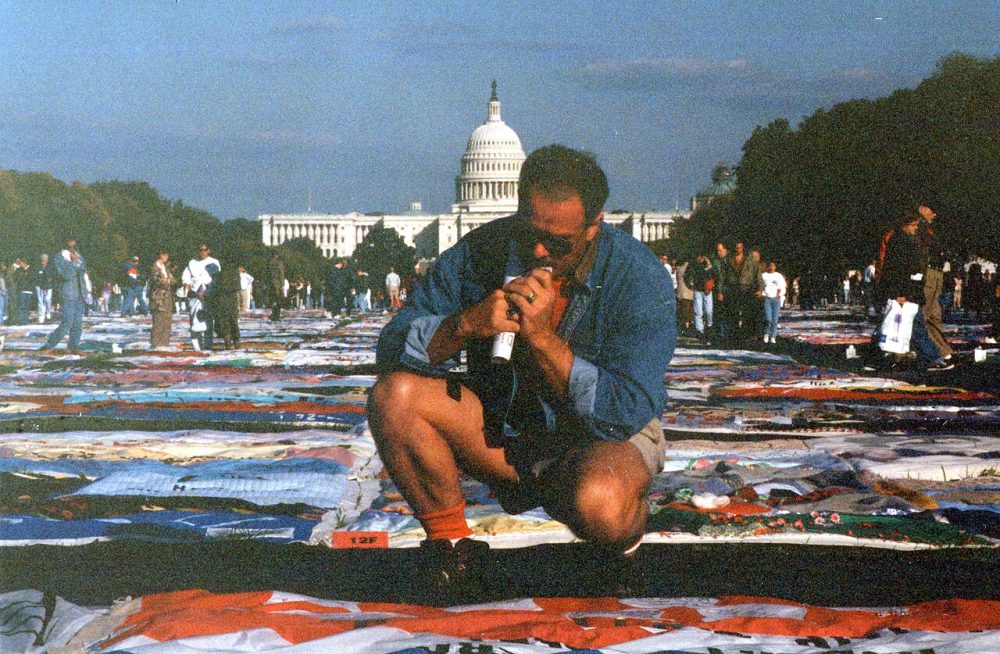
Then and now there are active, reciprocal relationships with gay men full of solidarity and love and strife. Keiko Lane’s memoir Blood Loss is an example, so is Mattilda Bernstein Sycamore’s novel Terry Dactyl. . . I’ve been reading the anthology Sister and Brother all about gay men and gay women and their relationships. It was published in the 90s and I read an essay from Jewelle Gomez there. She mentions speaking at the Gay Pride rally in Central Park when the New York section of the AIDS quilt was dedicated and writes: “I think it is fitting that a womanly art—quilting— has come to embody a memorial instigated largely by gay men. When we try to discern what ‘gay’ culture is, it is often found in the combination of things that highlight an irony or a difficult truth.” There it is. The connection, the layers, how interwoven—quite literally—we are with one another.
SR: I love these books you’re mentioning. Sister and Brother has this incredible story “The Night Danny Was Raped” by Lucy Jane Bledsoe. It is a perfect literary example of storytelling, insight, compassion, and coming of age. I feel for Lucy because I mention that 1994 story to her every time I see her at conferences. That anthology is the only place it’s been published and that’s reason enough to get it.
What was fueling your pursuit in this collection?
SYG: A main pursuit of my collection was imagining and creating a world in which gay men did not die of AIDS, and instead were able to live in new worlds. I used sci-fi and speculation and space travel to do that. I didn’t fully realize what I was getting at until Bryan Borland, the editor of Assaracus: A Journal of Gay and Queer Poetry, put it to me simply: I wanted to re-arrange the universe around this generational absence. Around queer loss and joy and sex and anger.
So I was incredibly moved when I read the following from Outliving Michael:
Michael had feet in both worlds, yet now
he’s not in any world except my memories
and this writing—that is neither
Holleran not Sheindlin—but the compulsion
to write about him, honor him, memorialize him
is the only way I can give back an ounce
of what he gave to me.
Writing with a committee in your head creates too much caution and fear of experimentation.
– Steven Reigns
SR: Thank you. Grief causes such a strong nostalgia. We want the world we had with them to last forever. In some ways, I’ve captured Michael and our friendship. These ways I find satisfaction in, and I’m pleased more people get to know Michael because of my book. In other ways, no one can fully capture a person or relationship. There will always be a gap, some slippage. Since Michael’s impact was so great, attached to my appreciation for him is also a sense of debt. What I’m noticing in the excerpt you pulled of my poem, is the form.
I’m curious about the topography of your poems and the format. “BLOODSHIFT,” the GRID poems, and “If You Ask Me Why I Read Science Fiction” come to mind. This collection is experimental in many ways.
SYG: I love to play with format and form. I’m one of those people that never imagines their work will be read out loud, ever. [Laughs] That’s how I often end up with dramatic and strange poems like “BLOODSHIFT,” which uses long lines across the page and between words to force a feeling of submersion and depth and of going deeper and deeper underwater. Then with “If you ask me why I read science fiction” the idea was something windy and loose on the page, your eyes sort of move all over the page as you read, back and forth like a swing.
GRID was, as I mentioned, about containment. Later on in the collection, I sort of put this image on its head and draw parallels between cages, grids, and the look and beauty of quilt squares. Which also brings us back to the AIDS quilt.
SR: While you’re talking about that, can you say something about the structure of the book itself? It’s divided into four sections. How did you arrive at this format?
SYG: Structuring and ordering the poems was the hardest part of the manuscript. My editor, KMA from YesYes Books, and I went back and forth a lot. So there was a lot of re-ordering. But what always felt clear to me was the middle section—also called DEAD BOYS IN SPACE—as the creative and speculative center. That section is one long play that can be performed with a few people. It’s one of the only times I actively thought about the work being real aloud. It’s also where the sci-fi is most present, and the world building is the most concrete and specific.
I always meant for world building to be taken very seriously, at face value. It’s not metaphor. To me, the speaker really does live in a very real universe where her brother didn’t die of AIDS, but escaped the Earth, escaped forced displacement to the moon colony, and very much outwitted the United States government. Her grief is no less real because her brother isn’t dead. It isn’t even more complex. It’s just a different grief for a different, slightly more righteous world.
All writing, at some level, grows out of obsession—the need to get our most intense and unwieldy feelings down on paper so that we might begin to see them clearly, or persuade others that our passions matter. But sometimes the obsession is right on the surface of the plot—is the plot. An obsession makes a strong engine for a novel, engendering intense prose and risky choices.
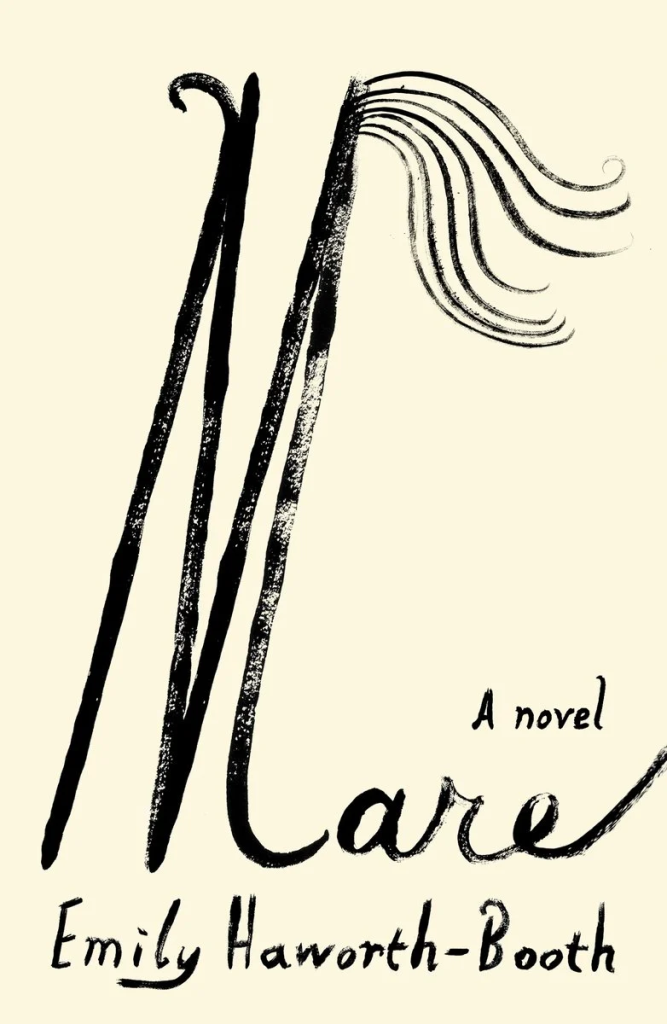
All of the books on this list were on my desk and in my mind when I wrote Mare, a novel based on my own experience—and my own obsession. In Mare, the protagonist takes on the casual, part-time care of a horse, in part to avoid thinking about a future in which she will not have children. When her feelings about the horse turn into affection, and, later, obsession, she struggles to explain their strength to herself or others. After all, as another character insists—the mare is “just a horse.” Sure, in pony books girls are obsessed with horses. But once you’re past the age of about 16, you’re expected to move on to more adult obsessions. I failed to find any other books about a woman obsessed with a horse. What I discovered is that the quality of obsession in literature is transferable across objects. The books on this list spoke directly to me as I swam in the dark waters of infatuation, trying to work out what kind of story I was in.
More often, the female protagonists of novels are obsessed with other people, often men. Of course, there are Tolstoy and Flaubert’s famous novels of the affair, in which Anna Karenina and Madame Bovary’s obsessions with their respective male objects reach tragic ends. But for this list, I was interested in female obsessives written by women. At first the list seems to be sameish, with many of the narrators fixated on an out-of-reach man. But when you look closer, it becomes evident that even apparently similar obsessions can take very different forms. What is fascinating in most of these books (no spoilers!) is how the obsessed woman, appearing at first to be powerless, is ultimately empowered by her obsession. To be obsessed is to have a mind, a heart, and a body—to actively want something—to be, in other words, centered in one’s own story. In the grip of obsession, a woman’s gaze is returned to herself.
By Grand Central Station I Sat Down and Wept is one of the most obsessive books on love ever written. Like the love it chronicles, it is itself uncategorisable—a memoir that reads like a novel, a letter, a sermon and a prose poem. Divided into ten breathless sections, By Grand Central Station tells the story of the unfolding love between Elizabeth Smart and George Barker. Smart had chanced upon a volume of Barker’s poems while in London in 1937 and fallen in love with his writing. Her book brings to life the affair which began when she flew Barker and his wife out to stay with her at an artists’ colony in Big Sur, amid the drama of redwoods, thunder and canyons. It shows us a woman in the depths, and at the heights of, her obsession—one that led not only to social castigation but, at times, actual imprisonment.
When Keiko begins her job at the convenience store she becomes what she most wants to be: “a normal cog in society.” Not only has the store supplied her with a personality, a purpose, and a behavioural code in the form of the store manual, it is literally the stuff she is made of: “When I think that my whole body is made up of food from this store, I feel like I’m as much a part of the store as the magazine racks or the coffee machine.” She thinks of the store on her days off; she even dreams of it at night. When the novel begins, Keiko has been working at the convenience store for 18 years. What follows, as the events of the novel threaten to dismantle her obsession, is not the whimsical comedy we might expect from a story set in a supermarket, but a provocative investigation into societal pressure.
It is never quite clear why the narrator is obsessed with the Woman in the Purple Skirt. Maybe it’s because she reminds me of my sister, she wonders aloud, or someone from school. Perhaps it’s because she’s striking, or is it because she’s boring? Likewise, the narrator herself remains obscured, hidden within the margins of the story. “I observe her from a distance,” she writes, “a silent spectator in the drama of her life.” But when documenting turns to string-pulling, the narrator invisibly manages to arrange for the Woman in the Purple Skirt to get a job at the same hotel she works at, setting in motion a chain of events leading to a dramatic conclusion. And yet, as the novel closes we are left with no answers, nothing that will put to rest the obsession with the Woman in the Purple Skirt, so that it lingers on within us, becoming our obsession, too.
I’m a Fan plays with all the conventions of obsession, both traditional (stalking, creepy letters) and contemporary (endlessly refreshing instagram stories). “The woman I am obsessed with” is what the narrator names the woman that “the man I want to be with” has left her for. Yes, the narrator of I’m a Fan is obsessed with the man with whom she is having an ill-advised affair. But it is this foundational obsession that carries the more interesting one: the painfully perfect object of his obsession: a pretentious Californian influencer whose fans fawn over her online. “She would be complimented for farting,” thinks the narrator, “someone would write, ‘I usually hate farts but when you do them, my god, so floral and unusual!’” Over the course of the book, in short vignettes that criss-cross time and space, the narrator sharpens her scalpel and gradually dismantles the woman she is obsessed with.
The Possession by Annie Ernaux, translated by Anna Moschovakis
Even more so than I’m a Fan, Ernaux’s short memoir is monotropically focused on the woman she has been left for. She embarks on a quest to discover the identity of the woman who has replaced her, each new piece of information causing a shift in her attitude towards the entire world. On discovering, for example, that the woman is a professor, “I discovered that I hated all female professors—though I myself had been one, and many of my friends still were.” The obsession is of course painful, a boil that needs to be lanced, a problem seeking resolution—and yet, one of the beautiful surprises of this book is the energy Ernaux gains from the obsession. “This woman filled my head, my chest and my gut; she was always with me, she took control of my emotions. At the same time, her omnipresence gave my life a new intensity.”
Reading I Love Dick sometimes feels like listening to a very clever, very funny and very drunk friend going on and on about her crush, showing you what she wrote to him and what he wrote back (if at all), when she called and whether or not he answered. Chris Kraus’s passion for Dick, a boring “English cultural critic” who she has only met once, appears entirely unjustified. But it is his blankness that allows her obsession to become a kind of enlivening game. In fact, Chris, an artist and filmmaker, might be more in control than she first seems: far more interested in the project of obsession than in Dick himself. On the surface the novel is about a woman’s infatuation with an unworthy man. What it’s really about is who gets to be obsessed with whom. “Who gets to speak and why,” Kraus writes, “is the only question.”
My Husband by Maud Ventura, translated by Emma Ramadan
My Husband tells the story of a different kind of obsession: here, the object is within reach. There he is, with a wedding ring on his finger, already committed to a life with the narrator. So why is she still so “lovesick,” as she calls it? Yes, she admits straight away, her obsession is both unlikely and unusual. Her love hasn’t followed the “natural” progression from infatuation to something milder. She has no fictional heroines who can show her “how to behave.” The unnatural intensity of her feelings towards him feeds the sinister, gothic atmosphere of the book, the sense of something brewing, about to boil over. In My Husband, obsessive love is the monster looming in the shadows of the house. But as the plot twists towards its conclusion, we discover that there is more to her obsession than meets the eye. Is there one monster in the house, or two?
“The Last Analog Childhood,” an excerpt from My Badby Hugh Ryan
Señora was my favorite teacher for the first half of seventh grade, one of the few who didn’t seem to hate spending her wild and precious days getting tweens to care about something. She had us write skits where the characters from Beverly Hills, 90210 inexplicably found reasons to discuss our vocabulario words, every girl doing her best Shannen Doherty (RIP), pulling on a scrunchy and asking, “Don-DE ES-ta el presiDENTe?” Our other teachers were old, ancient, forty; Señora did a Mariah Carey impression that was fully off-key but got the essence of her. (In that, she was my early training for understanding drag.)
It was 1990 in Irvington, New York, a sleepy town on the outskirts of New York City where my parents and their extended Bronx Irish clan had landed post White flight. My middle school Spanish class had maybe fifteen students total, and we’d all known each other since kindergarten, to our great regret.
In elementary school, I mostly had incidental friends—neighbors, classmates, or the children of familial acquaintances. With the transition to middle school, they peeled away. I remember sixth grade mostly as a procession of phone calls where embarrassed parents made obvious excuses for why their sons couldn’t come to the phone right now, or ever again. It was a little like being dead, and I haunted our cold, brick middle school like a scrawny ghost in a ginormous Ocean Pacific T-shirt that read, “Surf Legend: Gateway to the Sun.”
(Why did I own that shirt? The closest I’d been to a surfboard was getting tangled up in a buoy and nearly drowning on the Jersey shore when I was ten.)
Other kids were rarely mean to me because the school punching bag—Booger—was in almost all the same classes I was. When that mob energy whipped up and the playground became a school of piranhas looking for something to eat, we usually turned on Booger. Yes, we; I’d have done anything to be part of something. I kicked that kid because he was lower than I was, a smudge on my soul that will never come out. But it got me nowhere, because shared hatred is not the same as friendship; it just sings in the same key for a minute.
So perhaps I was particularly open to Señora’s kindness, but we were all a little ensorcelled by her. Other teachers wanted us to like them, but we all wanted her to like us.
She listened to us—not our feelings; it was 1990, no one cared about that shit. But Señora eavesdropped on our conversations and found ways to work Nintendo and Vanilla Ice into our lessons (“Yo, yo, yo means I, I, I”). That’s how it all started, on a gray day in late fall or early winter. I have a hard time remembering the rest of that year, and as I’ve grown older, that block has worked its way backward, devouring the seventh grade quiz by quiz and week by week, leaving a few unforgettable moments bobbing unmoored in an indistinct ocean.
Shared hatred is not the same as friendship.
It was cold, I remember that, and Stevie C. was being a little shit. He was one of those kids who never came at you directly but was always talking smack just loud enough for you to hear. As we settled into our metal chairs with desks attached and waited for the bell to ring, he kept up a steady string of gay jokes directed at the air around me: “Know what GAY stands for? Got AIDS Yet?!” etc. And he and his friends all laughed.
I don’t think he came up with any of them; he was just a hateful parrot who hadn’t yet graduated to edgier racist jokes. Like most Americans, he understood AIDS as a disease that infected only homosexuals and Ryan White, the apple-cheeked poster child for the “innocent victims” of the crisis, who contracted HIV from a blood transfusion when he was thirteen.
The bell rang, and we all quieted. Stevie’s last fusillade rang out in the silence, a homophobic riff on the tagline for Trix cereal: “Silly faggot, dicks are for chicks!” Then he barked his signature manic laugh, a highpitched parody of Woody the Woodpecker. “HahahaHAha, hahahaHAha, hahahahahahahaha.”
Stevie and a handful of boys like him (it was always boys) were my primary education up until that point in what it meant to be gay. They taught me that my light blue sneakers were gay, that skipping was gay, and that if you looked at your nails by holding your fingers out instead of curling them in, you were definitely gay.
It was an odd but undeniable paradox of the time: Everything could be gay, but no one actually was gay. Not in my family, not in my classroom, not on sitcoms, not in books, not in the past or the present or the future. AIDS had put homosexuals on the news, but they were vectors for disease, not people. Occasionally, you’d hear a fag joke about San Francisco, but that might as well have been Oz. And in the absence of real queer people talking about real queer lives, boys like Stevie got to define our existence for us. I think Gen X queers placed such a high priority on visibility because we grew up in a black hole of representation. George Michael wasn’t gay, and neither was Ellen, or Peewee Herman, or Doogie Howser, MD.
Just me.
And somehow, boys like Stevie all knew it. Or half-knew it. My sexual orientation was invisible, unclockable, and frankly a little confused, but my gender was a Lisa Frank Trapper Keeper: bright, weird, and obvious. Not feminine exactly, but not masculine, not boy, not straight, not right. And while some adults might pretend that gender and sexuality are unrelated—that being gay and being trans are entirely separate phenomena—children, bullies, and the Republican Party instinctively understand that the line between the two is porous and unimportant. I’d learned in elementary school to hold my tongue and never mention the inchoate feelings I had about other boys, but my body was ungovernable. When Stevie called me a faggot that day in class, it had nothing to do with whom I was fucking (no one) and everything to do with my limp little wrists that flapped like broken wings when I got excited.
“Stevie!” Señora snapped at him, and in that last instant before everything changed, I loved her more than I ever had.
We all waited for the hammer to drop, which in our small, suburban public school meant at worst being held for a day’s detention. But Señora seemed unsure what to do once we were all staring at her. She had a high-key sensitivity for that oily, mocking tone children use to signal an insult, but she couldn’t tell whom Stevie was making fun of. I wouldn’t even look in her direction in case I somehow intimated I was the butt of the joke. After a long moment, she shrugged.
“Cómo se dice faggot en Español?” Señora asked, in that chipper voice she used to hype her fun lessons.
It was an odd but undeniable paradox of the time: Everything could be gay, but no one actually was gay.
I’d heard adults use the word faggot before. I had both an older brother and access to my parents’ cable, so films like Blazing Saddles and Eddie Murphy: Delirious entered my life very early. I liked the Dire Straits song “Money for Nothing” because they said faggot—or, more specifically, because they described what a faggot was: “See the little faggot with the earring and the makeup? Yeah buddy, that’s his own hair.” And I loved the comeuppance in the next lines: “That little faggot got his own jet airplane / That little faggot, he’s a millionaire.”
But this was different—official. Sanctioned. Like the pope when he spoke ex cathedra. We were in uncharted territory, and none of us knew if we were really supposed to answer her question (also I just don’t think any of us knew how to say faggot in Spanish). Shock faded quickly to numbness, a sense that I should have expected this. I wasn’t angry at Señora, just disappointed in my own vulnerability.
“Pato!” Señora announced brightly. “Pero . . . ”
She held up one cautionary finger, walked to the front of the class, and unscrolled the vinyl map of the world tucked at the top of every chalkboard. (Remember those? Old and rarely used, with an unpredictable number of Vietnams and Koreas.)
Spanish, Señora explained, was spoken in many places. Each had its own peculiarities, but we were learning textbook American Spanish, which would sound a little stilted to native speakers, so today she was going to teach us about Spanish slang. Words we knew already—like pato, which meant duck—had other connotations in other countries, and we had to be prepared for that.
For the next forty minutes, she pointed to different Spanish-speaking countries and explained their words for faggot—where I would be a pato versus a mariposa versus a maricón—with a bonus lesson at the end on dyke. I noted with a glazed and mild interest that truck driver, when combined with a female pronoun, meant lesbian—as did crazy person.
Years later, I’d discover for myself how easy it is to fail as a teacher, so I have some sympathy, but Jesus Christ, what the fuck was she thinking?
Sorry. I’m not sure why I’m writing this. Doing this is like channeling. When I open my mouth, dead selves come pouring out, each a poppet made from memory, using my tongue to repeat the only story it knows, the one it whispers constantly in the back of my head. Or maybe I’m just a cat with a hairball, horking up bits of myself I’ve never been able to digest. This isn’t a thank-you letter or an accusation. I thought this might be an exorcism, but the ghosts haven’t gone anywhere. They can’t go anywhere. That’s what makes them ghosts.
So call this a recognition: Señora taught me that day that the nicest motherfuckers I knew could accidentally curb-stomp my heart at any moment. I don’t think Señora disliked queer people, and if she’d known Stevie was making fun of someone specifically, I don’t think she’d have taught that lesson.
Señora was simply engaging with the world as it was, and as it was, the world was dangerous for me.
I get it: This was 1990—homophobia was funny! And mean. And everywhere. There was not one out student or teacher in our town. We played a game called “smear the queer” at recess, a sort of reverse tag, where one person was the queer and everyone else tried to tackle him. Until the end of that year, the World Health Organization still categorized homosexuality as a mental illness, and US immigration law still saw being gay as a “psychopathic personality disorder” that was grounds for deportation. There were two high-profile antigay murders just in New York City that year alone (but also: until 2009, homo- and transphobic violence was not included in federal hate crime legislation, so who knows how many murders went unmarked). Señora was simply engaging with the world as it was, and as it was, the world was dangerous for me.
I wanted—want—to believe she didn’t do this out of cruelty, but on some level, she felt this kind of hatred was trivial or acceptable, and without an apology, I can never forgive that. It’s a small stone, but it’s one that’s been lodged in me since the seventh grade. Maybe I’m writing this so that if she ever reads it, she has to carry it too. For all I know, she already does. But that doesn’t lessen the burden. Someone I trusted hurt me in a novel way, and that still hurts, no matter how many candles I light or jokes I crack.
And maybe, I’ve come to realize recently, I’m writing this because Stevie and all those other boys are still out there. Gen X went harder for Trump2024 than any other age group. But it’s not just us. If there’s one thing that growing up queer in the Nineties gave me, it’s an antenna for danger, and it tells me that bad days are here, and worse are coming. A week ago on the subway, I heard one high school boy call four others faggots in the hateful-playful way I knew so well in the seventh grade. “You can’t say that,” the other boys gasped, and he yelled back, his face wide with joy, “It’s 2025, FAGGOTS!”
And they laughed they laughed they all laughed.
Who am I kidding? My ghosts aren’t even ghosts; they’re cops, fathers, doctors, monsters, and sons. So maybe I’m writing this as a warning and a promise to the queer kids of today: We’ve made it through before.
The Gothic is a genre with recognizable tropes: witches and vampires, haunted houses and cobwebby tombs. It’s eerie, it’s morbid, it’s campy and over the top. When I was writing my novel Immersions, based on the fairy tale “Bluebeard,” I wanted to write into this Gothic tradition, so I included a big creepy house, a mysterious older man, and a sister who disappeared.
In early drafts, I kept escalating these elements, making the disappearance more mysterious, the house more menacing. I worried that if my novel wasn’t melodramatic and shocking enough, it wouldn’t count as Gothic. But in my reading life, I was beginning to see that a novel didn’t need a bombshell revelation to count as Gothic. In fact, a subtle, pervasive Gothic-ness occurs in all kinds of novels: lyric, realist, and satirical. These novels don’t have literal ghosts, but they do have hauntings, doubles, and uncanny inklings. They understand that, even absent its overt props and set pieces, there is something in the Gothic and its ability to convey the consequences of repression that makes it essential for engaging with some of literature’s greatest themes: knowledge, history, the return of the past.
What’s more, through my reading I began to see that the Gothic is not only the terrain of personal terrors. Historical atrocities live there, too. Even in nineteenth century British classics, the Gothic is used to express the racism, sexism and colonialism we’d rather not see, the painful history—and present—we’d like to keep locked in the attic. Jane Eyre’s Rochester, who makes a fortune from the enslaved laborers on Caribbean sugar plantations, has a mad first wife in the attic—a symbol not only of his troubled romantic past, but the corruption and violence at the root of his fortune.
The haunting at the heart of the Gothic is the unbearable truth at the heart of empires: they rest on slavery and genocides, land theft and resource extraction. The lords and ladies in English manors and Southern plantations would prefer not to think too deeply upon this. But the violent truth insists. Repressed, submerged, it bubbles up in Gothic form.
That Beloved is a Gothic novel is a fact both obvious and ignored. Nearly 40 years after its publication, Toni Morrison’s masterpiece has the status of a classic, something too revered to dwell in the lowly realm of genre. Yet to tell the story of Sethe, a formerly enslaved woman, and her anguished decision to save her baby from slavery, Morrison employs a haunted house and a baby ghost; there are uncanny doubles and inexplicable magic. On the surface, the novel is about Sethe’s individual grief, but Beloved is more broadly about what slavery does to people. The house and the ghost are not only symbols of a specific murdered baby and a specific anguished psyche, but manifestations of our damaged nation. With its bold reckonings, Beloved asks us to take the Gothic seriously.
Helen Oyeyemi’s White is for Witching, which takes place in a house that forcibly ejects anyone non-white, is bracingly political. This racist househas been occupied by four generations of the Silver family, who are all white. The last woman in this line, Miranda, falls in love with a Black woman, Ore. When she brings her home, the house begins to torment Ore, who eventually flees, forcing Miranda to reckon with her hateful matriarchal home—and herself. Here, whiteness is a troubled, even self-destructive state. Miranda wants to believe she does not bear direct responsibility for the crimes of her home. But knowledge, insidious, imperfectly ignored—that is to say, Gothic—insists otherwise.
Rhys published Wide Sargasso Sea, her feminist, post-colonialist prequel to Jane Eyre, after nine years of labor and 27 years of literary silence. It tells the story of Antoinette Cosway, a young white Creole woman in Dominica whose family is pushed into poverty after the end of slavery. Her opportunistic marriage to Mr. Rochester, meant to save her family from destitution, brings misery to all. He disdains her Creole identity; she mocks how poorly he understands the people and land around him. Rhys’s prose is lush, dark, and gorgeous. By giving literature’s famed “madwoman in the attic” a (new) name and a voice, Rhys showed that behind every fearsome Gothic monster is a wounded child bearing the mark of difference. Wide Sargasso Sea takes the subtle colonial critique of Jane Eyre and makes it explicit.
After the death of her more talented, successful friend Athena Liu, June Hayward, a young white writer, steals Athena’s work and passes it off as her own. A withering satire of cultural appropriation and a bravura channeling of white grievance and entitlement, Yellowface is also a stealth Gothic novel. As June’s guilt and anxiety mounts, she begins to see Athena’s double everywhere, and starts chasing Asian women down on the street before admitting that they look “nothing like” Athena. At the novel’s climax, June finds herself alone on the “Exorcist steps” of Georgetown’s campus, screaming her confession into the cold dark night, convinced she is communing with a ghost.
First published in Australia in 2023,this novel centers on an unnamed white protagonist who has devoted her life to do-gooder causes. Tired and shaken after a divorce and the death of her mother, she makes her way to a convent. Though she’s secular, she finds herself drawn to the rituals of prayer and communal living, and soon a brief retreat becomes a permanent living situation. But the convent proves anything but quiet. A plague of mice reaches foul proportions and the bones of a murdered young nun return to the convent’s care. Finally, a woman whom the narrator teased horribly when they were both children comes to stay. In other words, the mess and violence of the world arrives. There is no peace. But unlike most Gothic heroines, the narrator of Stone Yard does not panic. In Morning Prayer one day, flooded with strange heat, she thinks, “This is either a ghost, or it is God.” Here, the divine and the Gothic touch.
This novel (and now movie), which portrays the brief life and untimely death of Shakespeare’s only son, is a weeper, more likely to make you cry than cower. But O’Farrell sprinkles the Gothic throughout: Agnes, Shakespeare’s wife, can read the future in the stretch of skin between one’s thumb and forefinger; her work with herbs earns her the reputation of witch. And at a key moment, the doomed young boy at Hamnet’s center performs a bit of Gothic magic, tricking Death into taking him, rather than his ill sister. Rolling her aside, he implores Death to “turn away…close your eyes,” before thinking that, if only one of them can live, it must be her. “He wills it . . . He, Hamnet, decrees it. It shall be.” Though the boy is only a small child, vulnerable to his grandfather’s fists and his father’s absences, he finds agency in the Gothic realm.
For those with courage, the Gothic world can offer surprising power. Nowhere is this more splendidly demonstrated than in this 1926 novel, which tacitly argues that to secure her freedom, a woman must become a witch. For 20 years, spinster Laura Willowes has been treated like doting “Aunt Lolly” by her family. But then she becomes moody. Visiting church graveyards, wandering by the river, she courts “loneliness, dreariness . . . a kind of ungodly hallowness.” Soon she is buying extravagant bouquets of chrysanthemums, then a house in the countryside. One day, she finds a small black cat in her kitchen, and understands that she has metamorphosed into a witch. In a long final speech to the Devil, she explains that she became a witch not to perform mischief, but “to have a life of [her] own.” For Laura—and countless others, dispossessed and delegitimized—what has been hidden is knowledge of their own power. In the Gothic, they can seize it.
The following story was chosen by Simon Rich as the winner of the 2026 Stella Kupferberg Memorial Short Story Prize. The prize is awarded annually by Selected Shorts and a guest author judge. This story will be performed by an actor this spring. To hear more great short stories performed by great actors subscribe to Selected Shorts wherever you get your podcasts.
The Flamingo Café
There is nothing worse than working breakfast. The breakfast people, they’re in a hurry, they’re usually alone, which means they allow themselves all kinds of behavior, and they are very specific. Dark toast, toast lightly burnt, runny eggs, overcooked eggs, crispy bacon, burnt bacon, bacon on fire.
I bet the lunch people are OK with whatever color the toast is. Not that I would know. And I bet they use whole sentences. Not like the guy who comes in at the peak of the breakfast rush and when he wants more bread he yells, “Hey, Miss! What, bread?” This is how he asks for more bread. It’s not even a sentence. You see what I mean, they would never do this at lunch, not that I would know.
Petie is a waitress who cries all the time. She is four feet ten inches tall and weighs sixteen ounces. You fear for the health of her brittle, little bones, and her hair looks like it is falling out, from stress, probably. Also, she is always apologizing even when things are not her fault. If you step on her foot, she’ll say, “I’m sorry!” If, when she is balancing six plates of eggs Benedict on one arm, you plow into her and send the plates flying, she will say, “I’m sorry!” I worry about Petie all the time. When the Bread Guy yells for more bread, Petie cries. When the manager says the eight-top needs their check, she cries. Every day I think Petie is not going to make it and every day she somehow gets to twelve o’clock and then shows up the next morning with a little less hair, a little less of her dignity.
One day, it’s a mad rush at seven-thirty, every table’s full, everyone’s yelling, and I already smell like fermented ass mixed with bacon grease. I can see Petie starting to tremble. She drops a whole tray of drinks all over the guy at the deuce in the corner—Bread Guy. And now he’s wet and mad. The manager yells at Petie to clean it up and what the hell is wrong with her is she a simpleton or what, and I think this time she’s really going to crack, she’s going to go into shock or have a seizure.
But she goes all stony and serene. She gets taller and her neck gets long and curvy. When she starts to turn pink is when I believe what I am seeing, not sunburned pink, but hot pink. Neon pink in places, lighter pink in others, almost white in others. And the pink—it’s feathers. Petie has pink feathers on her arms and her back that look so soft I want to touch them. They are everywhere but her skinny, white, funny-looking legs. And now she’s standing on one foot. Everyone in the place goes quiet, Bread Guy, the manager, some people have little bits of sausage spilling out of their open mouths. And no one knows what to say because Petie is a seabird in the middle of the diner. I start to cry, and I see other people start to cry too, because what did we do to deserve her, you know? Petie stands there on one foot, the other one tucked up under her proud, pink rump. She turns her beak this way and that like she is looking way off in the distance and she doesn’t care about any of us. And why should she? She is the most magnificent thing in the whole world. And she knows it.
We didn’t know then if Petie would ever turn back into Petie, or if she would turn into a flamingo every time things got hairy, or what it would cost her, or if it would give the place a certain class and maybe people would quiet down at breakfast. We didn’t know that word would get around, or that there would be imitators—the Real Flamingo Café, the Original Flamingo Café—and that we would be OK with that.
But that day, as we started moving again, we moved around her because no one would dare ask a flamingo to bus a dirty table, because we didn’t want to spook the bird, to find out if she could fly. The sound was a puff, a wing seeing what it could do. A pale feather rose. It hovered pink in the light, and we waited, watching, wanting to believe it could last.
Lorraine Boissoneault spent her twenties and thirties getting sicker. Her thyroid dysregulated. Her heart became arrhythmic. Doctors told her to manage stress and lose weight, but the diagnoses kept coming—inflamed joints, then endometriosis—and the medical advice never changed. Meanwhile, Boissoneault was working as an editor for The Weather Channel, tracking hurricanes and atmospheric changes.
After being diagnosed with six autoimmune diseases, Boissoneault began mapping her body’s systems onto weather patterns—thyroid onto temperature regulation, heart onto storms, uterus to floods, guts to landslides, and joints to wildfire. In Body Weather: Notes on Chronic Illness in the Anthropocene, Boissoneault argues that chronic illness and climate chaos connect: Regulatory systems that once self-corrected are breaking down and warnings are dismissed. Those most affected are told we’re overreacting.
Since 2025, the Trump administration has terminated and frozen thousands of climate science and medical research grants, while gutting the Environmental Protection Agency. Meanwhile, chronic diseases are rising worldwide. People are getting sicker while the infrastructure meant to cure them is collapsing. Boissoneault’s book lands in that collision.
Boissoneault’s book gave me a way to talk about my own experience with illness. I was diagnosed with lymphoma at 29 and spent months convincing doctors that something was wrong before they found tumors the size of baseballs crushing my heart and lungs. I’m in remission now, but I still wake up checking what hurts, or wondering if today is the day something will appear on a scan. Body Weather gave me a way to talk about that: My body is weather I cannot predict. We spoke over Zoom in late March, a few weeks before her book’s release. She was smiling inside her home near Chicago on an unseasonably warm, sunny day—the type of stable weather, she told me, that her body responds to best.
Leslie Nguyen-Okwu: You’ve published in The New Yorker, Smithsonian, JSTOR Daily, and more—a lot of science and history journalism. When did you decide to turn inward and write about your own body instead of reporting on other people’s stories? I spent years as a foreign correspondent covering displacement and statelessness, and that pivot from external reporting to internal experience feels like crossing a different kind of border.
Lorraine Boissoneault: Yes, absolutely. I love that way of putting it. It is crossing a different border, and I was very resistant to crossing that border. When I started envisioning writing about health, I was interested in the question of autoimmune diseases and why women are so much more likely than men to develop them.
At a certain point, it started feeling very disingenuous not to disclose that I have, depending on how you’re counting, five or six autoimmune diseases, [and] that I have a personal stake in the issue. Even after I made that realization, it still took a little longer to feel comfortable sharing my experiences and writing about them.
I started with shorter things, essays like the one for The New Yorker, and I did a couple for Catapult to get a sense of, do I feel okay emotionally putting this information out in public? Because there’s a lot of stigma still around talking about illness, especially chronic illness. I wanted to see what the reaction would be. The reactions were overwhelmingly positive, and I felt pretty good about it.
One of the most challenging parts of being human is that we’re alone in our bodily experiences.
The other thing was, at the point when I started writing this book, I had been living with chronic illnesses for a decade. So it was not something new to me anymore. It’s not that all of my feelings were perfectly cemented, but I wasn’t so fresh to it that writing about the experiences would be retraumatizing. Whenever you’re crossing from being an outside observer to being the observer of your own experience, feeling in a place where you’re emotionally ready to do that—to me, that’s almost the first thing that needs to happen before you can start.
LNO: You’ve structured the book roughly around the stages of grief—denial, fear, anger, grief, and radical love—and mapped body systems onto weather patterns. When did you first recognize this connection between your body’s dysregulation and our climate systems breaking down? And what made you organize the book around the stages of grief?
LB: When I started thinking about what was happening at the same time around me in the world, that’s where the weather aspect came up. I was having these heart issues at the same time as I happened to be living through a lot of intense storms, tornadoes, hurricanes, and that’s an interesting coincidence. That was the first piece of putting the body and weather systems together. And from there, it was like, oh, that might be a useful organizing principle for writing about this.
As for the stages of grief, I realized that there was an emotional aspect to each of the sections in how I was thinking about my body and climate change and the weather. I hadn’t meant for it to be the stages of grief initially, but there was something about denial in the first part, and in my experience with first getting diagnosed with thyroid disease—it was real, and I also almost couldn’t believe it, I couldn’t absorb it. I’ve heard from other people with chronic illnesses and disabilities that that’s a common experience. You don’t know how to process it at first.
That immediately reminded me of the ways people talk about climate denialism and even how we go about our daily lives a little bit in denial of it, because for most of us, it’s hard to grapple with, to know what to do. And from there, it was easy to pull out the other emotions like anger and grief. I think it also helped with forward momentum, so it doesn’t feel like disparate essays but like an emotional journey.
LNO: Let’s talk about “body weather.” The phrase itself captures something that clinical language can’t. What does that term mean to you? How is it different from how doctors talk about chronic illness? When I was diagnosed with lymphoma at 29, my oncologist used words like “aggressive” and “dysregulated,” terms that sounded more like storm warnings than medical explanations.
LB: I love that reframing of medical language as weather warnings, that’s awesome. Body weather was a way to capture both the hugeness of what I was experiencing and what I felt like the world has been experiencing with climate change and the individual nature of it.
One of the most challenging parts of being human is that we’re alone in our bodily experiences. We can try to use language to convey what’s happening, and with medical technology, we have so many ways to see inside the body. But it’s like with the [1-to-10] pain scale: Everyone I know who has used it says it sucks. It doesn’t communicate very well what our physical experiences are like.
For me, body weather is finding nonmedical language to express what it’s like to be alive in this moment. And I don’t think it’s limited to chronic illness or disability. I think everyone has their own body weather. It’s a matter of paying attention to it. We live in a culture where we’re so often meant to be distanced from our bodily experience, separated from it, whether that’s because we have to push through work or childcare or illness because we don’t have good health insurance, or other different things. I want body weather to be a way to reintegrate with the way we experience the world outside of us, and the way we experience our bodies and our inner worlds.
LNO: You spent years being told your symptoms were psychosomatic while your body was genuinely breaking down. The book connects this medical gaslighting to climate denialism. When did you first see that parallel?
LB: What it came down to for me is recognizing power systems, because medical gaslighting is a lot about maintaining power for those who are at the top of the systems. This is not to say that all doctors are bad or nefarious or unwilling to see their patients, but a lot are. A lot do not take seriously the fact that patients are knowledge holders of their own bodies and experience.
Any time war is waged, that is always ecological damage as well as human damage.
I think it’s similar to climate denial. The science has been there for a long, long time that this was happening, and there were powerful forces in the oil and gas industry trying to sow doubt about that, because they have the power to do that. They have the money and the lobbying groups to go to the government in a way that individual citizens don’t. They want to keep that power. They want people to be in doubt, so that the large majority of the population that is not oil and gas executives won’t use our concerted energy to push back against this and demand change. And so far, it has worked.
I think a lot about how, in both the energy and environment sectors and the medical sector, systems of power are upholding structures that are damaging to the people underneath but beneficial to the people who are on top.
LNO: The final section includes essays on “Colonial Control” and “Our Disabled Ecologies.” You’re connecting chronic illness to larger systems of extraction and control. How did you make that connection feel concrete when you’re writing from lived experience rather than theory?
LB: One of the hardest parts of writing this book, apart from the emotional side of it, was recognizing that I have colonizer ancestry: French Canadian, German, a few other things. I am part of the story of the environment being ravaged for resources, and of other people being subjected to horrible displacement, to murder, to slavery. It was hard to figure out how to situate myself as experiencing the harms of the medical system and [also] wanting to highlight all of the ways that people who aren’t me, people who look different than me, have very different life stories than me, are harmed even more. The system is bad for pretty much everyone except the people who are at the very, very top. But it’s worse for a lot of people than it is for me, and that’s important. It’s not necessarily that I think those are my stories to tell, but I don’t want to ignore or downplay them either.
That’s the part of the book I’m honestly most nervous about. I don’t know how people will react. Some people might get angry. Some people might feel I’ve done it wrong. And I have to be okay with that. The writing process is a continuous process of changing and growth.
LNO: How do you make meaning from something that’s ongoing, that doesn’t have an endpoint or resolution? I’m writing a memoir about cancer, and I keep running into this problem—the experience won’t stay in the past tense.
LB: I love this writerly question, because I think it is something that anyone writing a memoir about ongoing issues, especially sickness, has to grapple with. I wish I had a better answer. When I wrote the first part of the book about my thyroid disease, there was nothing about me having hyperthyroidism—where your thyroid is overactive—because it hadn’t happened yet. Never in a million years did I think I could develop Hashimoto’s and Graves’ disease. I still don’t understand it. When it did happen, it was like, oh, I guess I have more to add to the story. It fit well with the Death Valley material I had been writing about already. It’s not that I wanted to have another thing go wrong, but for the sake of storytelling, it worked well.
But I also didn’t include anything about developing a vocal cord disorder because I didn’t know what to say about it. It was so fresh and raw when it happened. The disorder is called spasmodic dysphonia, and it’s rare. People generally haven’t heard of it. I didn’t know how to talk about it. I felt a little embarrassed.
In writing, because it’s a static thing—once a book is in the world, you have to decide where the narrative stops for your readers. That’s a personal decision. And making meaning out of your experiences, that’s also personal. I know a lot of people who completely reject any sort of meaning in their experience of chronic illness, because it’s suffering and it sucks. That’s totally fair. It is suffering and it sucks.
For me, it felt very psychologically healing, if not physically healing, to find a way for it to mean something. I still don’t exactly know what it means, but I think it gave me a different lens through which to view the world and the environment, and I’m grateful for that. I still wouldn’t choose to get sick. But I am grateful for that.
LNO: It’s empowering, I think, to tell your narrative in the way you want to tell it, especially if you haven’t been able to do that for whatever systemic reasons—the medical system, the racism of this country, or the immigration system. With that, your book doesn’t offer false comfort. It also ends with radical love rather than despair. And it publishes on Earth Day. That timing was intentional. What does it mean to you?
LB: I love Earth Day, so it’s an honor and exciting that my little book gets to be paired with this bigger connection to our planet. But to what you were saying—the moment that we’re in, where these crises are accelerating—it’s hard not to feel depressed sometimes, because we’re seeing such a wanton desire for destruction and harm, both in the U.S. and abroad.
Any time war is waged, that is ecological damage. That is always ecological damage as well as human damage. I think of the black acid rain falling in Iran because of the bombs on oil refineries. That’s terrible for the people. That’s terrible for the ecosystem. It’s almost always both things.
What gives me hope, and why I want the book to end with radical love and not doom and gloom, is that there are so many people resisting these destructive forces. I’m in Chicago, and there were ICE agents here last fall, and people were joining brigades and showing up for their neighbors. Community members standing up and saying, we don’t want this. That gives me so much hope.
Disability and illness will happen to everyone if you live long enough. That is as inevitable as death.
It’s easy to be despairing of the human race, but I think most people are doing their best on any given day and are deeply in opposition to the things that are happening, even if they don’t fully understand a lot of the connections between climate change and human health. I think we have to make the choice to turn away from despair, because that means giving in and becoming complacent with the terrible things that are happening.
LNO: What do you want readers who are living with chronic illness to take away from this book? What about readers who aren’t yet sick, but might be?
LB: For readers living with chronic illness or disability, I want them to feel less alone, because there were moments when I felt so alone in it. I want them to understand the frameworks of ableism that can make us feel terrible about our bodies, about what we can and can’t do. And to not be afraid of considering themselves disabled or thinking that they might never get better, because for a long time that tormented me—the idea that if I did all the things right, I wouldn’t be sick anymore.
Once I started developing a disability community, it was so much easier to accept that I have chronic illnesses. They’re not going away. I’m doing the best I can, but I don’t have to solve them. I don’t have to fix them. My life is just as valuable and worthy as anyone’s regardless of what I do in my day.
For people who aren’t sick yet, my number one message is that disability and illness will happen to everyone if you live long enough. That is as inevitable as death. Pretending otherwise is willful delusion. It’s not that you have to be thinking about it every minute of every day, but upholding ableist values and beliefs about what a good life is, what a good body is—I want people to start rethinking that, because you don’t know what’s gonna happen to you tomorrow, a week from now, three years from now. Nobody knows.
If we as a society are more willing to view all bodies, all people, all life experiences as equally valuable, dignified, worthy—I think we would save ourselves, individually, a lot of pain and suffering when bodily change comes for us.
My life is harder than it was before I got sick, and some days are definitely worse. But I have a good life. I try to emphasize this to everyone. I have a good life. I’m lucky in a lot of ways. I have health insurance and a partner who’s very loving and supportive and stable income, and all of those things make a huge difference in the experience of illness and disability. But getting sick, having a new disability, does not mean your life is over. It means learning a new way of living.
DON’T MISS OUT
Sign up for our newsletter to get submission announcements and stay on top of our best work.
YOUR INBOX IS LIT
Enjoy absorbing fiction from Recommended Reading on Mondays, strange, diverting work from The Commuter on Wednesdays, and a roundup of our best work of the week on Fridays. Personalize your subscription preferences here.