Like Anne Rice, I Wanted To Pursue My Own Strangeness, Darkness, and Power

I get ready in front of the big mirror in the front, taking the black crushed velvet cloak from where it hangs between my mother’s fur coats and sweeping it over my black jeans and black t-shirt, fastening it under my chin, pulling up the hood. I set the fangs inside my mouth, feeling the familiar sensation of plastic against my gums and molars. With the tube of fake blood I always keep in my pocket, I draw two stripes beneath my lower lip, each extending from the approximate location of a top fang. I smudge the blood to make it more real.

My dad appears behind me in the mirror. “Ready?”

I follow him through the kitchen, cloak dragging on the tile as I gather a stack of thick hardcover books from the counter, and out to the gray Saab. We drive to the shopping development on the edge of our town with a Walgreen’s, a Coconuts Music & Movies, a Boston Chicken, and a Super Crown bookstore. 

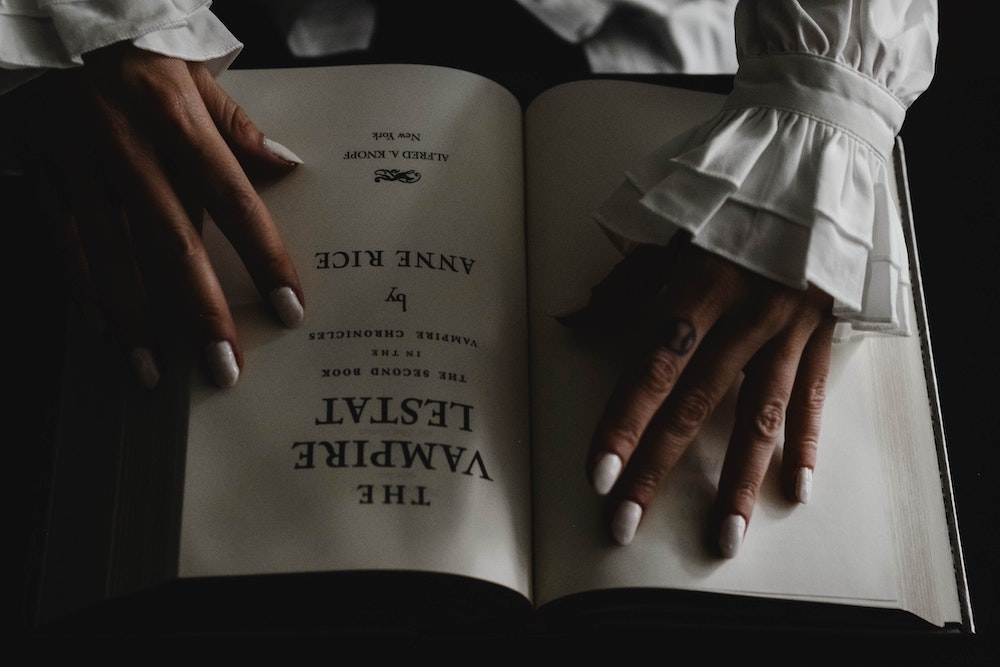
It is August 29, 1996, and Anne Rice is signing books in celebration of the release of her latest novel. The line extends out the door of the Super Crown, under the El tracks, and around the corner. We make our way to the end of the line, but almost as soon as we take the last spot, a woman in a Super Crown polo approaches and tells us to follow her. Because I am eleven years old and dressed like a vampire, we get to cut the line. Inside the store, we approach Rice, who wears a frilly white shirt and her trademark blunt salt-and-pepper bangs. She smiles at me and tells me she likes my costume—”Nobody else dressed up tonight!”—as she reaches for our pile of books. Her signature costs $6 per book, $20 for the one we have her personalize to my mom, who is also named Anne. My mother is Rice’s great admirer, the reason my dad and I are fans, but she doesn’t come with us to Super Crown. 

To Anne, Anne Rice writes. Anne Rice.

When Anne Rice dies twenty-five years later, I will want to ask my mom why she didn’t come. How did she discover Anne Rice’s work? What about it so captivated her? Why did she make it such a big part of my childhood? And what is the connection between her, Anne Rice, and my career as a novelist? But I can’t, because when Anne Rice dies, my mother will be dead, too—for almost two years.

An obvious connection is that both Anne Rice and my mother had difficult, traumatic, peripatetic childhoods spent partially in Texas. It could be said that Rice’s incredible literary success—150 million copies of her books have been sold—was the product of transmuted grief. In childhood, Rice suffered first the death of her grandmother, the stabilizing force in a household rocked by her mother’s alcoholism, and then she lost her mother, too. After that, Rice and her sisters were placed by their father in a Catholic boarding school that Rice later described as “something out of Jane Eyre.” At twenty-one, Rice married the poet Stan Rice, and had a daughter, Michele, who died of leukemia at five years old. Her first novel Interview with the Vampire was written in the wake of all of these losses.

Elements of Rice’s biography—being raised by loving grandparents and then losing them, neglectful parents, being sent off to Catholic boarding school—line up uncannily with my mother’s childhood. But that alone can’t explain the link my mother felt to Rice’s work. After all, Rice’s vampires entranced millions and millions of readers.  

Interview with the Vampire came out in 1976, well before the vampire renaissance: before Lost Boys, before Buffy, before Twilight, before True Blood, before The Vampire Diaries, before Underworld and What We Do in the Shadows and Let The Right One In and A Girl Walks Home Alone at Night and Vampire Academy. Or perhaps it’s better to say that Rice’s vampires inaugurated the vampire renaissance. Before Rice, vampires were popularly understood to be Nosferatu-style monsters whose sexual charisma, if it was depicted at all, wasn’t seductive but instead was horrifying, explicitly connected to fears of rape and murder. Only Dark Shadows, the intergenerational vampire family soap opera that orbited the tortured Barnabus Collins and ran on ABC from 1966 to 1971, heralded an elegantly anguished vampire at war with his elemental nature and on an existential quest for meaning. (It was also my father’s favorite childhood television show.)

Before Rice, vampires were popularly understood to be Nosferatu-style monsters whose sexual charisma wasn’t seductive but instead was horrifying.

Rice said that she drew her inspiration from an earlier source, the 1936 film Dracula’s Daughter, when she created the tortured creole vampire Louis de Pointe du Lac, his Gothic love affair with his blond French maker Lestat de Lioncourt (Rice’s most famous character—my mother loved Lestat; all her life she had a taste for beautiful, foppish men), and Claudia, the five-year-old girl who Lestat turns into a vampire in an attempt to cheer Louis up.

In Claudia, Rice created a child with the complexity of an adult, a being who lived a whole Grand Guignol in a small body—a child who had the extraordinary story Rice’s daughter was denied, or perhaps the extraordinary life Rice observed in Michele’s short existence. Claudia dies twice in the arms of her mother: first when she is first bitten by Louis while clutching the corpse of her human mother who has died from plague, and again when the sun burns her to death as she is embraced by the vampire mother she has demanded Louis make for her. 

In Our Vampires, Ourselves, Nina Auerbach writes that “Claudia is an adult male construction, a stunted woman with no identity apart from the obsessions of the fatherly lovers who made her.” But I don’t think Claudia is made by men at all. She is a little girl made immortal by her longing for her mother—the bottomless hunger from which she derives her dark power—and created by a mother longing for her own lost daughter.

I first saw the film version of Interview with the Vampire when I was myself a little girl. I was curious to watch the movie my parents had so enjoyed. My mother showed me the movie in the manner she screened many films deemed inappropriate for children that she nonetheless wanted to show me: by starting and stopping the videotape, telling me to look away while she fast-forwarded to the next scene she wanted to show me. Sometimes this style of watching annoyed me, and sometimes it made me uncomfortable, but I never looked away. I always saw what my mother wanted me to see. I don’t remember liking or disliking the movie, but I remember the feeling of being so close to my mother, so deep in her world and mind and pleasure. I always loved being with her, even when I had trouble figuring out where she ended and I began. Togetherness with her was, and remains, the thing I wanted most in the world. It was automatic for me to emulate her tastes. I’m not sure it was even emulation so much as a kind of osmosis. Transfusion.

I don’t remember liking or disliking the movie, but I remember the feeling of being so close to my mother, so deep in her world and mind and pleasure.

I had my first experience with a vampire during another of these movie screenings. I was seven years old and my mom showed me a vampire movie from the 1970s with a heavy, innuendo-laden atmosphere. I fell asleep in her bed, but I didn’t rest. All night I was in and out of dreams of ravishment and fangs. I couldn’t escape. By morning I didn’t want to. After that it was automatic. Of course I loved vampires.

In a video assembled by the Associated Press in remembrance of Anne Rice following her death, there is a shot of the long, shiny, chrome tour bus she traveled in the summer I met her. I’ve attended hundreds of book signings and readings in the years since the night I met Anne Rice at Super Crown, including my own book tour following the release of my first novel, but I’ve never again experienced anything like the crowd, excitement, and money that she drew that evening. In the video clip, her tour bus is emblazoned with the words “ANNE RICE SERVANT OF THE BONES 1996 INTERSTATE BUS TOUR.” We bought a copy of Servant of the Bones that night—it was required for entry, and it was the one we had Rice sign to my mother—but I never read it. In fact, although my parents both loved Rice and read many of her books together, I only ever read one, a paperback of The Vampire Lestat that I received in a Secret Santa years later. 

Rice wasn’t my favorite author. She wasn’t even my favorite vampire author. That honor belonged to Poppy Z. Bright, whose work I discovered on the other side of puberty. But I think she was my originating idea of the author: a powerful and mysterious woman. Even without reading it, I knew that her work was dark and sexy and infused with the supernatural. It was also, both in the culture of my home and in the wider world, indisputably important. She was a far more interesting and accessible model of the writer than Ernest Hemingway, the hometown hero whose grizzled, black and white image decorated the walls of my favorite restaurant. It was from Anne Rice that I gained my sense of what writers were, of what a writing life could be.

I decided to be a writer when I was very young, for the simple reason that I was good at writing and enjoyed doing it.

I decided to be a writer when I was very young, for the simple reason that I was good at writing and enjoyed doing it. I read constantly, anything I could put my hands on, and I thought that the world was full of people like me, who adored books and considered their creation the highest and most important work. It wasn’t until I was an adult that I learned that the literary establishment looked down on horror, science fiction, fantasy, and comic books—the genres that my parents introduced me to, and that I most enjoyed reading. I didn’t know that there was a literary establishment that didn’t include Anne Rice.

Over the years of writing my first novel while supporting myself with a PhD stipend, a patchwork quilt of adjunct teaching jobs, and the occasional freelance assignment, I was haunted by the image of the writer I met that evening at the Super Crown: a woman behind a laminated folding table, receiving supplicants like a queen. I would think back to the way her supersized hardcovers asserted themselves on our bookcases, their shining gold and black dust jackets, their unquestionable importance. The idea of Rice made it seem not just possible but obvious that I would make a life telling stories, regardless of the pushback I might receive. This sense of artistic mission has sustained me through many low points.

But often, at those low points, I resent this innocent, grandiose idea for leading me into a line of work that, I have been surprised to discover, is neither glamorous, well compensated, or even interesting to most people. Did I become a writer for art’s sake? Or did I get myself into this mess because I thought that my career would be like Rice’s?

In a 2018 interview with Locus, the author and screenwriter Tananarive Due describes how, as a young journalist struggling with her desire to write fiction about the supernatural despite the disapproval her interest in writing genre elicited from peers and professors during her education at Northwestern University, she was assigned to interview Anne Rice.

I never told [Rice] I was a writer. I just slipped it in with my questions, like they teach you in journalism 101. “How do you respond to criticism that you’re wasting your talents writing about vampires?” I cringed and waited for her to answer. She just laughed. I think she literally laughed. She said, “That used to bother me. But my books are taught in colleges.” She went on about how freeing it is to write genre, and the way that big themes can play out in genre in ways that are harder to get away with in contemporary realism and smaller stories. She lit a fire under me. […] The interview was literally a pep talk, even though Rice didn’t know it.

Rice was an idiosyncratic figure: a serious, cerebral writer whose contemplative, over-the-top Gothic novels took genre mainstream. Her popularity defied the high-low paradigm and expanded what was possible for writers. Pursuing your own strangeness, darkness, and power, Rice’s career showed, could help writers tell stories millions were dying to hear. In its remembrance of Rice on Instagram, the literary agency Janklow & Nesbit (whose founder, Lynn Nesbit, was Rice’s longtime agent) remarked on the fact that Rice’s books “importantly, at the start of the AIDS epidemic in the early 1980s—allowed space for eroticism and sexual pleasure across straight and queer characters.” Many have followed in her wake, not least of all her son Christopher Rice, who himself writes supernatural, crime, thriller, and romance fiction.

Pursuing your own strangeness, darkness, and power, Rice’s career showed, could help writers tell stories millions were dying to hear.

The writer could be not just known but a star, and not just a star but an ideologue, a beacon of tolerance and openness, a glamorous—and for much of her career, fat—woman with a sense of humor and an unabashed appetite for sex and gore who understood her books to be novels of ideas and philosophy, concerned with the great questions of history. “My private life, my private adventures,” Rice said in a 1996 interview with her friend Michael Riley, “really are in this realm, sitting at home on the floor, cross-legged with books, trying to figure out why the Roman Empire fell.”

Maybe my mom didn’t come to the book signing because of her dislike of crowds. She often stayed at home, in the house she had decorated, where nearly every room bore a Rice book or two, while my father and sister and I went out into the world. But in the same way that Rice’s fans felt that she transformed their imaginations, my family understood that to be close to my mother was to gain entry to a world of magic and fortune where the impossible became real and dreams came true. We brought everything home to her, cast our spoils before her, waited for her to tell us what they meant.

“Look at Anne Rice,” my parents said, encouraging me to pursue my love of writing and, implicitly, suggesting that I could make a career of it. Both of them believed I had talent. Both read my writing and saw beauty and meaning in it. They made the sacrifices other families make for grueling sports schedules so that I could attend weekend writing workshops, pursue literary internships, and complete multiple graduate degrees.

From the beginning my writing was always about my obsessions, which included big moods, secrets, sex, and, yes, vampires. As I kept writing, a strange thing started to happen: as much as I wanted to write about magic and the supernatural, the worlds I evoked became stranger, surreal, propped between our world and others, concerned with labyrinthine and internecine interior landscapes, as a hidden order made visible. Like Anne Rice, I became a writer, but different, writing my own kind of stories, about my own kind of supernatural occurrences and ecstatic revelations.

Like Anne Rice, I became a writer, but different, writing my own kind of stories.

There is a ligamentous connection between my two Annes and my own writing. I find myself wanting to articulate the impact they had on me, how they made me a writer through the act of exposure, through the things they showed me, the way they encouraged my artistic reaction. I keep coming back to Rice’s definition of romanticism as “an abandonment to the realm of senses and feeling where you don’t restrain yourself, there’s nothing ironic or cynical holding you back in your art. You give totally.”

Her words describe not just Rice’s books but also the way my mother lived and taught me to live in the world. With the help of the example of her favorite author, my mother gave me permission and encouragement to live—and write—with generosity and sincerity and open-heartedness. She gifted me the freedom to follow Anne Rice, who said that to write well, all you have to do is “let the blood gush.” My mother taught me to smudge it, to make it more real. 

Job Opportunity: We’re Hiring a Social Media Editor

The social media editor of Electric Literature is responsible for ensuring the widest possible audience for Electric Literature articles, using both targeted outreach and organic sharing. You’ll be actively engaged with our 225,000 Facebook, 270,000 Twitter, and 36,000 Instagram followers: scheduling posts, interacting, and establishing a consistent, informed, and appealing social media voice. But you’ll also be a creative thinker, constantly coming up with new ways to get Electric Lit work in front of the readers who will appreciate it most.

Our mission is to make literature more relevant, exciting, and inclusive. Here’s how you’ll contribute to those goals:

  • Familiarizing yourself with every piece on the site and expressing its content in clear, engaging, motivating ways.
  • Keeping up with news, conversations, jokes, and the general zeitgeist so you can foreground content that’s on people’s minds.
  • Generating innovative strategies to reach and appeal to diverse audiences beyond Electric Lit’s existing fans.
  • Engaging with Electric Lit’s most loyal readers to foster a sense of community.

This is a part-time remote position. Electric Literature’s staff is based in New York, and the bulk of your work must be completed during east coast business hours. As a result, we can only consider applicants with a maximum 3 hour time difference from Eastern Time. Compensation is a monthly stipend based on a commitment of 20-25 hours a week at $20 an hour.

Qualifications 

  • You demonstrate a capacity for both voicey, funny posts and more straightforward presentation of serious work; you can entice people to read an article without flattening or misrepresenting it.
  • You’re an avid reader of contemporary fiction and criticism (being a writer of fiction, essays, or criticism yourself is a plus, but not required).
  • You thrive in a collaborative environment where you’re trusted to do your own work well, but may also engage in brainstorming or strategizing with your coworkers.

Skills and Expertise

  • You’re familiar with the technical side of Facebook, Twitter, and Instagram, including scheduling posts and monitoring stats.
  • You are able to adapt your strategies based on evidence and analytics.
  • You are comfortable with social management platforms such as Tweetdeck and Facebook Creator Studio. 
  • You follow news about popular social platforms and are able to draw actionable insights from that news.
  • You’re plugged in to new innovations and developments in social media.
  • You think conscientiously about how (and whether) Electric Literature can best use social media to respond to news in progress.

Responsibilities

  • Schedule tweets, Instagram posts, and Facebook posts for each article published on electricliterature.com, as well as sponsored posts, “evergreen” articles, and articles that can be tagged to current events at predetermined minimum intervals.
  • Create original social media content, including memes and graphics. 
  • Regularly monitor notifications on Facebook, Twitter, and Instagram, and engage judiciously with mentions, retweets, comments, and messages.
  • Share articles, posts, and information from other publications that connects to Electric Literature’s work and broader mission.
  • Stay informed on major literary conversations happening on social media and share information with staff.
  • Brainstorm, propose, and carry out special engagement campaigns.
  • Occasionally create press lists for special projects and marquee articles.
  • Monitor social media analytics and performance, including maintaining a monthly spreadsheet to track engagement stats; experiment with different posting times, formats, and framing to increase reach and engagement.
  • Stay informed about best practices for social media, and changes in platforms’ algorithms, tools, and policies.
  • Track engagement on sponsored posts and provide metrics for sponsorship reporting.

To apply, please send a cover letter and resume through Submittable by 11:59 PM ET on Monday, February 7, 2022. In a separate document, please write copy for 2 tweets for each article below. Please also create a sharable meme on a literary subject. 

“Would Taylor Swift Eat My Gimbap?” by Giaae Kwon 

“Doll’s Eyes” by A.S. Byatt

Link to apply: https://electricliterature.submittable.com/submit/215431/electric-literature-seeks-part-time-social-media-editor

John Darnielle Subverts the True Crime Genre in His New Novel “Devil House”

John Darnielle wants to get under your skin. His third book, Devil House, follows Gage Chandler, a true crime writer embarking on an obsessive downward spiral. Chandler, like Darnielle, is unbothered by the gory details of the crimes he covers. But he’s starting to be disturbed by the ethical implications of his work. Using true crime to look inwards, The Mountain Goats songwriter offers a procedural more immediately interested in the violence of the pen than it is the sword.

Searching for the truth behind a decades-old double homicide, Chandler moves into the Devil House itself, a former porn shop-turned-crime scene whose notoriety has been glossed over with a fresh coat of paint and new floors. No convictions were made in the case, even if those high schoolers that turned the scene into a Satanist art installation before fleeing fit the bill almost too cleanly. In telling the story of this unsolved crime, is Gage committing an act of violence in itself?

Speaking to Darnielle over the phone felt eerily similar to reading Devil House. He is a detailed and generous speaker, as willing to share the details of his Magic: The Gathering deck as he is to talking about the abstractions of storytelling. More than anything, Darnielle was eager to dig into the ethical questions of storytelling, and how readers might just be implicated in the true crimes they love to read.


Harry Todd: I get the sense that you’ve got some complicated feelings about true crime. Is that a fair characterization?

John Darnielle: The book is not a critique of true crime—it stands in place of storytelling generally. When you are telling stories, there are often real lives involved. There’s a sense in which any act of writing implicates people. In true crime, you’re writing about crimes that had profound effects on people. You’re doing so in order to publish your book, maybe you’re doing it to educate, but also you’re probably getting paid for it. And those are issues in play, but they’re not unique to true crime. 

HT: There’s a sense of voyeurism that goes into all forms of storytelling. I think it’s fascinating that Devil House is largely set in an abandoned porn shop. Tell me about the thematic connection there. 

When you are telling stories, there are often real lives involved. There’s a sense in which any act of writing implicates people.

JD: Our need to be entertained is, I don’t want to say it’s pathological, but it is a little weird. The forms of entertainment that we have developed seem like they’re meeting some needs that we’re not getting met elsewhere. That’s sort of how I feel about storytelling. 

It’s like Joan Didion’s line, “We tell ourselves stories in order to live.” That’s a big beacon for me. The side effects of that are considerable, of casting things as narratives that may or may not have a tidy narrative. When we frame a narrative around something, we’re always leaving a bunch of stuff out. Narrative is an imposition. It’s like you’re actually trying to put borders around what usually are almost always is considerably more chaotic and less tidy.

HT: You make explicit connections to our need to be entertained throughout Devil House. You often mention the movie River’s Edge, which is based off a real crime that took place in Milpitas. That’s the same town that Devil House takes place in. You frequently mention the community’s adverse reaction to that movie; what inspired that element of this story?

JD: I lived in Milpitas, briefly, as a kid. It was several years before Marcy Conrad was murdered. So much that is said [in Devil House] is true—I had a friend who would tell all these urban legends and would insist that they were all true. That’s where I became exposed to the way urban legends work, and how reality works among children. 

I saw River’s Edge when it came out and when I lived there. I don’t really know anything about that place because I was seven years old. So this was the earliest contrast between the story I’m telling myself about a town I once lived in, and the story that gets told in Hollywood about the same town. When I watch the movie, I don’t see anything that I recognize. It’s all about questions of perspective. Perspective is profound. It’s like the first time you learn to draw a cube on a piece of paper. 

HT: I dug up an article from the Los Angeles Times written by the reporter that broke the Marcy Renee Conrad story. It’s called River’s Edge Not Quite As He Recalls”, which grapples with the very same questions that Devil House does. Questions of perspective and entertainment that exploits true stories. 

JD: I read that story when it ran! I was living in Southern California at the time. When disaster hits someplace, everybody wants to talk about it. And I think the people who are closest to it often might have questions about whether their standing counts for something. Whether they might be justified in asking other people to tread lightly. That’s a lot of what this is about.

HT: There’s also the element of fully fictionalized characters made up for entertainment’s sake in River’s Edge, which is a point of contention in your book. 

Devil House asks questions about the consequences of telling stories, about the responsibility of the author. But it also asks, ‘what do you mean by responsibility?’

JD: The actual story is extraordinarily different from what was presented. In many ways, it’s a lot sadder. I’m not super intimate with the case, my main familiarity with it is seeing a story and then reading a story of people going, “Hey, you really portrayed our community as a place where people don’t care about their children.” It was part of the moral panic, when people would say that the kids are nihilistic and they’re not getting the values of their parents and all that.

That’s the thing that comes up reliably every seven or eight years. There’s always panic stories about whether the kids are losing their moral center. It’s practically a reflex of adulthood to fret about whether the kids have lost it when, in fact, it’s hard to be a teenager and it’s especially hard if you’re, if you don’t have the tools to deal with your friend who’s lost his mind. What is the adult’s responsibility when looking at that child? That’s where the responsibility rests.

HT: The ending of the book might be the most unsettling part, more than the more explicitly violent scenes. There’s a certain lack of finality to it that I think might be divisive. Is that where you started with the book?

JD:  I don’t begin with a premise as a general rule. I find out what I’m writing about as I write, and then I revise as I come to understand it better. The notion of sitting down and wanting to make a point here—that’s what a lot of 19th-century novelists really do. They’re programmatic, didactic. If I make up a character and once enough situations happen, the character is going to become more complex than originally envisioned. I don’t map them all out at first, I learn who they are, and what they’re doing as I write. 

And that informs how I think there’s a whole process, how I think of it as the posing of the question, instead of the answering of one. Devil House asks some questions about the consequences of telling stories, about the responsibility of the author. But it also asks, “what do you mean by responsibility?”

HT: Devil House has a lot of different sections that span decades and perspectives. We start with Gage, a true crime writer, before reading a section from The White Witch of Morro Bay, his breakout success. Later, there’s medieval scripture and vignettes written from the perspectives of the suspects in the murders. It’s a lot of spinning plates. 

JD: I came up with this idea of seven parts that would mirror each other with something in the middle. I had the idea of things being reflected at one another, showing you the inverse of the same thing. Another way that this was distinct is that the first part is in first person, the second in second person, the third in third person, and then the fourth is something different. Then mirror that backwards.

That’s how I built a framework. It’s open enough that you get to choose the wood you’re going to use for the doors, the types of windows you’re going to put in, the type of ceiling you’re going to have, or maybe no ceiling at all. You can do whatever you want. 

HT: The use of second-person felt very fitting for the true crime story Gage is telling. You use it in the book-within-a-book, The White Witch of Morro Bay. What prompted this choice?

JD:The fact that it implicates the reader is neat. This is supposed to be Gage’s book that made a splash, that they made a movie out of. So I thought, how can I assert that this book made a splash? Well, one way is that it has a style that’s unique, a style that sets it apart from other things in true crime. 

That would be quite a true crime to view, to get something addressed entirely to the perp. One of my favorite things that he says in the book is that the perp is the hero. And the perp is not the hero, but he is in most true crime books. That’s the epiphany Gage has: The perp is the hero of his first book, and now he’s interrogating that position.

HT: It haunts him. That certainly fits with the larger philosophy of Devil House—it doesn’t have many easy answers.

JD: What I’ve chosen to do with my writing is to sit with paradox. I resist tidy conclusions. At the same time, I’m obsessed with sonically and rhythmically ending on a note that feels like a proper stopping point. For the tonal aspect, I want it to feel that way, but from a philosophical aspect, I want every ending to feel like an opening.

The Best Sex Takes Three Loads of Laundry

Lint

Before my lover and I have sex, I cover myself in lint.

It’s not that we only have sex on lint day—as we call it—but it’s the best sex and on the days leading up to it, we get more and more excited.

It takes three large loads of laundry—only all-cotton, because we like to do things natural. We run the wash loads in the morning, one after the other, then take the screen and filters out of the drier and put the first load in. 

I go outside, naked except for shoes and a filtered painter’s mask, and stand in front of the drier vent. We live in the country, down a long dirt lane with no other houses around, so there’s no one looking. But the weather has to be just right—cool enough to make me want to stand in front of the drier vent for an hour without freezing or sweating.

Then I slowly turn like a rotisserie chicken, occasionally lifting my arms and legs, letting the moist hot air beat against my body. Of course, just standing outside naked on a cool day, having hot air caress my skin is pretty nice in itself. 

I don’t know how this all started exactly. I do remember one day my lover plucked the lint from my belly button and said how he liked the feel of it. Then he rubbed the tiny piece over me, as though he were buffing my skin with a tiny pad. It just evolved from there, I guess.

You might think that it wouldn’t work, that not much lint would gather on the skin, but it does. I don’t look like that hairy of a guy, but I heard that all humans have as much hair as an ape—it’s just finer. If you’ve ever seen the silhouette of a child’s cheek in the sunlight, you’ve seen them, hundreds of fine, silver hairs, like a wheatfield at dawn. 

It takes a while for the first lint to stick, but then it begins to cling to itself, like dust does as it forms cobwebs. I can feel it gather, a soft pink-grey fur slowly covering my skin. Sometimes I close my eyes as I rotate beside the heat of the drier and imagine that I’m a baby chick under an incubator, downy soft.

After each load’s done, my lover puts in a new load and starts the drier back up, quickly, so that I don’t get cold standing there naked. Then he folds our clothes as I return to turning slowly in front of the vent. 

It takes about two and a half loads to get a good coat. Once it’s thick enough, I take off my shoes and socks—and the mask, of course—and come inside. 

My lover is there at the door, already naked himself. He takes my hand, my incredibly soft, fluffy hand, and we walk together to the bed downstairs, which he has covered in a sheet, to gather the lint. Sometimes as we walk, I imagine that this was how he was as a child, heading off to bed with his favorite stuffed animal. 

On the way, we pass a mirror, and I can see myself, just for a moment. My head is easy to make out, full of detail—but my body is fuzzy, all its lines out of focus. It’s as though I have become a mere impression of myself, as though the edge where my body stops and the air begins has disappeared.

My lover lies on the bed on his back, and I gently climb up on top of him. He slides his fingers over my skin, his eyes gracing my grey furred body. I feel the softness I’ve become when he touches me, though I suppose he doesn’t exactly touch me. We are always aware, both of us, that he is touching something else, which is why, I think, we do this. We know there’s always that layer between us, the accumulation of tiny fragments of dust, the discarded fabric of our lives. And then as we have sex, we watch as it slowly sheds away, until we begin to feel again what it is that lies underneath.

7 Novels About Very Bad Rich People

If you spot a wealthy person in fiction, they’re very likely to be the villain—just like in real life!

Good Rich People by Eliza Jane Brazier

My novel Good Rich People is about a bored, wealthy couple who play games with disadvantaged people—just like in real life! 

There are many (allegedly) fictional stories about how privileged people take advantage of the less fortunate. You almost have to assume it happens all the time…

From a murder mystery unfolding in an elite private member’s club to a family road trip with an inheritance at stake, here are some stories about Very Bad Rich People.

Such a Fun Age by Kiley Reid

Privilege is at the center of this story about a Black babysitter with a wealthy, white client. When her client calls her in for a late-night emergency, babysitter Emira gives up her own plans to help. When she takes the child out to a fancy supermarket, she is accused of kidnapping. Emira’s client’s efforts to “make it right” only serve to underline the self-obsession and need for control inherent to privilege. 

Nanny Needed by Georgina Cross

This one is another story about the dangers of transactional relationships. When Sara Larson desperately answers an ad for “Nanny Needed, Special Conditions Apply,” she had no idea that she is walking into a world twisted by privilege, where her wealthy clients can ask for anything, and usually do. 

Quartet by Jean Rhys

An older book, but I had to sneak this in as it was one of my influences for Good Rich People. Based on Jean Rhys’ own experiences with Ford Madox Ford and his wife, this book tells the story of a woman in Paris who is taken in by a wealthy English couple after her husband is jailed. She is pressured by the pair to become their high society plaything. As usual with Rhys, the story contains devastating insight into human nature. 

Bittersweet by Miranda Beverly-Whittemore

When Mabel is invited to summer at a beautiful estate in Vermont, she is at first enchanted by the blue-blooded Winslow family. But as the summer unfolds, Mabel uncovers the dark lengths this family has gone to in order to keep their power, their home and their perfect all-American summer.  

Malibu Rising by Taylor Jenkins Reid

Taking place over the course of an epic end-of-summer party, this novel tells the stories of the uber-successful Riva family, who built their wealth on a stack of secrets so high, they can only come tumbling down. 

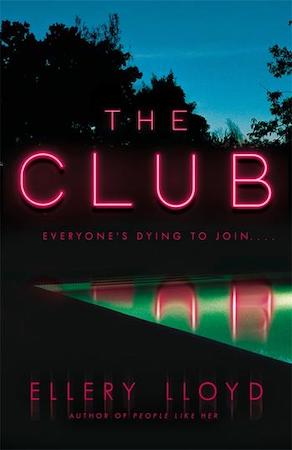
The Club by Ellery Lloyd

The Club is a murder mystery set in the exclusive world of a private members’ club. This story is told with such ruthless accuracy, you would swear it’s not quite fiction. The club at the center of the story was designed to protect the privileged from consequences, but over one wild weekend on a private island, nothing will go according to plan. 

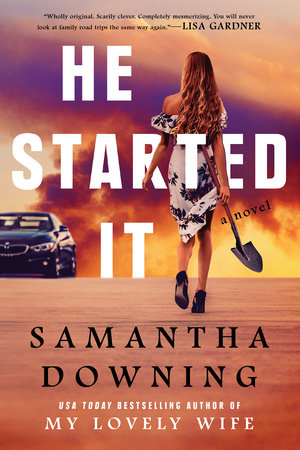
He Started It by Samantha Downing

He Started It by Samantha Downing

The siblings at the center of this story are forced to take a family road trip in order to claim their inheritance.  Of course, everyone has a reason for needing the money—and everyone will do just about anything to get it. 

12 Mauritian Women Writers You Should Be Reading

I relish the fact that our most celebrated living writers are women. 

There are of course the constant evocations of JMG Le Clezio, the Franco-Mauritian winner of the 2008 Nobel Prize in Literature. It is also true that the literary history we are taught is dominated by names such as Marcel Cabon, Malcolm de Chazal, Robert Edouard Hart, Savinien Meredac. 

But the Mauritian writers in my home, the ones my friends were (and are still) excited about? The authors that are garnered with global awards and praise? Nathacha Appanah, Ananda Devi, Lindsey Collen, Shenaz Patel, and—though they are lesser known today, unfortunately—Marie-Therese Humbert and Renee Asgarally. These women didn’t just carve out a space for themselves in a deeply patriarchal island: they cut into the heart of the country with their hard, coruscating brilliance. It is impossible to understand Mauritius as it was and is today without reading their work.

While researching this piece, I came across other writers who, although lauded in their time, are forgotten today: their books are out of print, stored in archives. They do have historical and literary interest, though, so I’ve included them. It’s important to note, too, that none of the last five writers in this list has work that has been translated into English (or translated work that has survived, at any rate).

Nathacha Appanah

Nathacha Appanah’s novels are poised, brutal, tender. The Last Brother, translated by Geoffrey Strachan, is a coming-of-age novel set in World War II Mauritius. Raj, a nine-year-old boy from Beau Bassin, meets and befriends David, one of the 1500 or so Jewish refugees kept in the town prison during the war (this really happened, by the way). Both children strike a swift, intense friendship. The much-lauded Tropic of Violence (also beautifully translated by Strachan) is about Moïse, the abandoned son of a refugee from The Comoros, who must fend for himself in Mayotte, a French colony in the Indian Ocean.

Lindsey Collen

A firebrand of devastating talent, Collen won the regional 1994 and 2005 Commonwealth Writers’ Prize for The Rape of Sita and Boy. She was born in South Africa in 1948 and has lived in Mauritius since 1974. In both countries, she has been repeatedly arrested for her work as an activist. She is a member of Lalit, a left-wing political party that advocates for feminism, environmentalism and anti-capitalism, and which has produced an incredible amount of texts for these causes and on the Kreol language (including a dictionary).  

The Rape of Sita is a banned book in Mauritius. I haven’t seen her other novels sold in the usual places around the island either (though strangely enough, the National Library of Mauritius apparently does have a copy of the book in their stacks). I urge you to read it: a brilliant, complex, darkly comic, story of rape and oppression. Collen’s talent in this novel reminds me of Salman Rushdie at his best (and as you may have guessed, The Satanic Verses is also banned in Mauritius). 

Ananda Devi

“Too violent” is what Mauritians often say about Devi’s work, but probe a little more and they’ll often say “violent and true”. No one blasts the whole notion of “paradise island” like Devi, Mauritius’ greatest literary stylist, whose slim novels are capable of haunting you for years (if not for the rest of your life). She has won many Francophone awards and some of her novels and stories have been translated into English. Her novel Eve Out of Her Ruins, translated by Jeffrey Zuckerman, is narrated by four Mauritian teenagers in Port-Louis caught in a cycle of poverty and destruction.

Just look at these opening lines:

“I am Saadiq. Everybody calls me Saad.
Between despair and cruelty the line is thin.
Eve is my fate, but she claims not to know it. 

When she bumps into me, her gaze passes through me without stopping. I disappear.”

Shenaz Patel

Shenaz Patel and Lindsey Collen are undoubtedly the most important—and active!—writers living in Mauritius at the moment. Before reading and seeing her much lauded novels and plays, I read Patel’s work in Mauritian newspapers: her pieces were always exacting, investigative and correct. Her literary projects are similarly excellent, and I’m glad that her work is being translated into English. Silence of the Chagos, translated by Jeffrey Zuckerman, is a gorgeous, poignant story based on the uprooting and forced exile of the Chagossian people by the U.S. military and British government.

Priya Hein

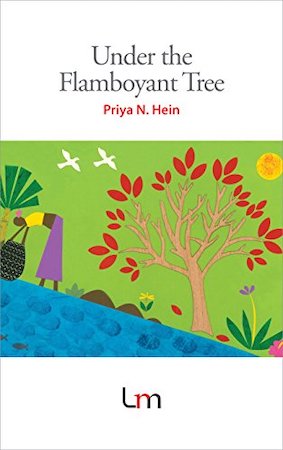
Priya Hein is a successful children’s book author, with stories published in English, French, Kreol, and German (I have the delightful Blue Bear at home, which teaches children about respect). In 2014 she published Under the Flamboyant Tree with La Librairie Mauricienne, a collection of traditional Mauritian stories passed down from generations. Her manuscript, Riambel, has won the Prix Jean Fanchette in Mauritius this year.

Natasha Soobramanien

Native Londoner Natasha Soobramanien tapped into her Mauritian heritage to write her prize-winning debut Genie and Paul—a postcolonial retelling of Bernardin de Saint Pierre’s Paul et Virginie—about a sister who travels from the UK to her birthplace in the Indian Ocean to find her missing brother.

Her forthcoming novel Diego Garcia, written in collaboration with Luke Williams, will publish in May 2022. I’m very excited about this one: it’s about the anxieties of sharing a story that’s not your own to tell, but more importantly, about the collaborative fictions authored by the American and British governments to diposess the Chagos Islanders of their home.

Saradha Soobrayen

Born in London to family of Mauritian descent, Soobrayen is an award-winning poet whose work has been anthologized in several publications, most recently in Stairs and Whispers: D/Deaf and Disabled Poets Write Back. She has greatly involved herself in producing art and raising awareness for the Chagossian cause, and describes herself as a creative activist.  

Marie-Thérèse Humbert

Marie-Therese Humbert studied comparative literature at Cambridge and the Sorbonne, and has lived in France since 1968. To put this kind of education in context: in the early 1940s when Humbert was born, girls were excluded from formal education; when schools for girls eventually opened in the 1950s, they were almost exclusively reserved for wealthy, white students.

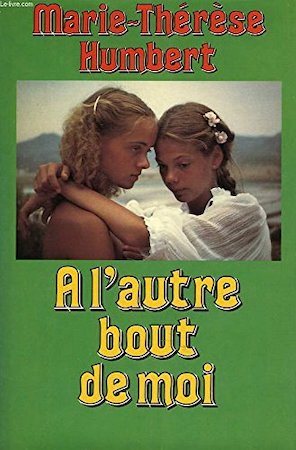
A L’Autre Bout de Moi, her most famous work (and her debut!) must have sent absolute shockwaves through Mauritius when it was published in 1979. I only read it rather recently and was amazed at its direct, agonizing portrayal of racism on the island. Anne and Nadege, the novel’s protagonists, suffocate under the strictures and structures of racism. The twins are “gens de couleur:” barely bourgeois, light-skinned but not white, with hush-hush African and/or Indian ancestor(s). Anne and Nadege’s parents are desperate to keep up appearances:

“they appraised their gestures, they counted their steps, they assessed, with mute concern, their degree of métissage. Sometimes this was enough to fill up their lives!”

But of course, all their hard work won’t keep the family from rupturing. The novel won the Grand Prix litteraire des lectrices de ELLE in 1980. Even with the foreign accolades and prestigious publisher, the book—and her other novels, in fact—aren’t easy to find in Mauritius. Remarkably, too, A L’Autre Bout de Moi doesn’t seem to have been translated into English yet.

Marcelle Lagesse

Born in 1916, Lagesse was a highly prolific writer despite having no formal education whatsoever. Her life is fascinating: I’m on the lookout for the manuscript of her memoir, in fact.

Lagesse was raised by her grandparents: her mother died when she was three from the Spanish flu, and her father left her in Mauritius to work as an administrator on the Salomon islands (part of the Chagos archipelago). She married her husband at 17, and when he died five years later she moved to the Salomon islands to live with her father and his new family. World War 2 broke a year upon her arrival; she moved back to Mauritius in 1942, when she started writing and publishing seriously.  She wrote a good deal of historical fiction and a number of her novels garnered Francophone awards; she also published plays and historical tracts and worked as a journalist.

I only own one book of hers: Cette maison pleine de fantômes, which my husband was assigned to read at school. It was serialized in a newspaper from 1962-1963. Written in the first person, it follows the recollections of Marie-Francoise Lehelle, whose father was the director of the military arsenal found in Turtle Bay. She unofficially keeps the arsenal’s accounts and surveys the operations, a role she keeps even after his death; her brother, who becomes head of the family, is more interested in the pleasures of white society. Though her life is duty-bound and stale, all changes when she meets an Englishman.

Magda Mamet

Born in 1916, Magda Mamet was a Franco-Mauritian poet who lived and died in the vibrant commercial town of Rose Hill. She studied at the Sorbonne and worked as a literary critic for a racist white-run newspaper here. I hadn’t heard of her before I started writing and researching this piece; her work isn’t sold anywhere, and can only be found in the National Library of Mauritius and the Institut Francais de Maurice.

Her most famous work is Cratères, a collection of free-verse poems that won the Prix France-Île Maurice in 1954. They are very much concerned with Catholicism and the human soul; you’d be forgiven for thinking that they weren’t even written in Mauritius, if it weren’t for the constant references to our astringent sun and harsh light. She was hailed a poet of social inequality, but her poems about beggars seemed quite condescending to me: as if, even in real life, they only existed as symbols.

Renee Asgarally

Renee Asgarally made Mauritian history by being the first female Mauritian author to write in Kreol with her début Quand montagne prend difé. Again, some context: Kreol—our national language spoken by most Mauritians—has only been taught as a subject in primary schools since 2012, and Kreol is still not officially spoken by MPs in the National Assembly. Our language was (and is still sometimes) often disparaged, considered inferior to English and French. To publish literature in Kreol in the late 1970s would have been considered scandalous and a mark of bad taste—which makes Asgarally even more formidable, obviously.

Beyond the language, the novel’s subject matter would also have riled Mauritians up: the protagonists, Soonil and Caroline, are forced to keep their relationship a secret since their interracial and interfaith love is forbidden. Nothing ends well (unlike, thankfully, Asgarally’s own happy interracial marriage). 

Her work, alongside other Mauritian writers at the time, paved the way for Mauritius’ post-independence linguistic and cultural identity. She continued to publish in Kreol with Tension gagne corne in 1979, and also wrote novels in French. It is shameful to note that I have only found Asgarally’s work in the National Library of Mauritius and the Institut Francais de Maurice. 

Raymonde de Kervern

De Kervern is possibly the first woman writer of the island. Her poetry earned her the Prix de La Langue Francaise in 1949 and the Prix d’Académie in 1952. Most (if not all) of her work was gathered into a book (Oeuvres Completes) and published by La Librairie Mauricienne in 2014. Little is known about her: she was a white Franco-Mauritian woman who was born in 1899 and who died 74 years later. Her father was a doctor of local eminence. She was elected for life as the President of Mauritian writers in 1950 and emigrated to France at some point.

From her poetry, I gather that she had a clear interest in mythology, the Bible, Europe, dancers, nature, women. She didn’t write exclusively about Mauritius. Her verse is heady, physical, with a Romantic sensibility. I wonder how some of her more physical poems were received here, if they caused any outrage.

She did have some talent, take some of these lines from Raz de Marée:

“Ah! What is this voice?

It is the deep swell,

Lilac scrolls under the nervous sun

The Indian Ocean, hissing like fire

Twists and circles under the wind of the World.”

Some of her poems are racist. In Aspara La Danseuse, for instance, she creates an excruciatingly Orientalist image of the “Indian dancer”; Aspara is fetishized, turned into a symbol of the “mysteries and wisdom of the East”:

“your dance is sin

under your intimate veils

your wide bronze eyes

lead to the abyss.”

It’s almost as if her verse expresses a longing for the indentured Indian women she saw toiling in the fields of Mauritius (some of these women would also undoubtedly have worked at her home) and who are mentioned later on in the poem:

“on their slender arms

the sweet water of the wells,

Chaste, their eyes lowered,

shadowed by fatigue.” 

As A Woman, I Never Feel Safe Traveling Alone

When I was driving from Pennsylvania to Atlanta with all of my earthly belongings in my trunk, I stopped overnight in a North Carolina mountain town to split up the trip. Someone told me Boone was beautiful and underrated and it landed about halfway between where I was coming from and where I was going. I booked an Airbnb that was an attachment to a woman’s home, someone who looked friendly, and was smiling in her host picture. That she’d be present on the grounds during my stay offered me the illusion of safety. 

Of course, my mom was still concerned. I booked the Airbnb without telling her, rightly assuming that she’d prefer me to stay in a hotel. “Why would you stay somewhere all by yourself? 

“I’m not all by myself,” I told her, and mentioned the host living upstairs. I told her about the glowing reviews. She told me that it didn’t matter, it wasn’t safe. I argued with her, but deep down I agreed. As a woman, I never feel safe traveling alone. When we travel solo, we do so with our well-grounded fears in tow. We learn how to cope with the weight of their presence. 

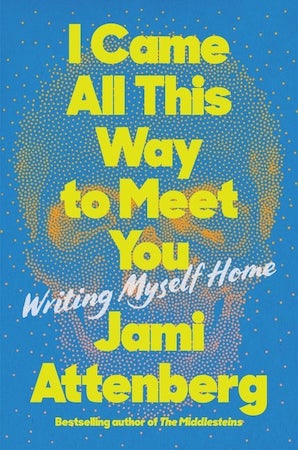
In her new memoir I Came All This Way to Meet You: Writing Myself Home, Jami Attenberg rarely stays put. She sleeps on friends’ couches and travels cross-country in her van and flies to Lithuania and China and Italy. In a chapter titled “Track Changes,” Attenberg writes of the time she spent backpacking in Europe and passing as a man to avoid harassment by other men, especially on night trains, where she planned to sleep to save money. 

“My first evening alone,” she writes, “outside of Paris, I found a cabin where an elderly gentleman sat. We spoke for a while in Spanish and in French, and then he took one side of the cabin and I took the other. I woke up to find him standing over me, fondling my breasts.” After that she chose to disguise her femininity in favor of safety.

At one point on a trip from Hamburg to Stockholm, now disguised as a man, Attenberg found herself sharing a night train cabin with a “young blonde man who smelled of booze” and “an older woman who smelled of perfume.” The young man asked the older woman, after winking at Attenberg, why she was going home so late. The older woman said she had been visiting her uncle in Hamburg. The young man replied to the woman “roughly” in German, while Attenberg tried, unsuccessfully, to make “sympathetic eye contact” with the woman. “I did the only thing I could: I took off my hat and jacket,” Attenberg writes. “I didn’t know if it would embarrass him or shock him; I just hoped it would change the conversation. And it did.” 

As a woman, I never feel safe traveling alone. When we travel solo, we do so with our well-grounded fears in tow.

Once the young man was without his sympathetic audience, he lost his gusto. When the older woman exited the train, the young blonde man told Attenberg she was a prostitute because “no one travels from Hamburg this late at night because they’re visiting their uncle.” Attenberg listened. She had to—this cabin was the only empty one on the train. In the morning, when the young man had sobered up, he transformed into a perfect gentleman. Attenberg writes, “I thought, with a bit of envy, how easy for him to become that kind of man. How easy for him to be whatever he liked.” 

I wasn’t as clever as Attenberg when I traveled to Ireland alone while studying abroad in college. On both nights I stayed in Dublin, I returned to my accommodations by 6 p.m. I didn’t feel safe staying out any later alone. I wanted so badly to drink Guinness in a pub shoulder-to-shoulder with Dubliners and listen to a live band singing Irish shanties. I wanted to live, for the night, like a local. But would I get home safely if I stayed out late? Perhaps if I had worn my hair tucked into a beanie and worn a  sports bra under my baggy sweatshirt; perhaps if I’d bought pants with a looser fit, I’d be able to disguise my attention-attracting features, the way Attenberg had on the train. Still, I can’t imagine feeling really and truly unwatched and at ease on my own at night. Not as a woman. That sort of freedom has never been within my reach. 

I can’t imagine feeling really and truly unwatched and at ease on my own at night. Not as a woman.

Nor has it been in the reach, it would seem, of most women travelers. When one Googles “travelogue,” less than one-fifth of the resulting 50 books are written by women. When thinking of the more well-known travel shows—No Reservations, Parts Unknown, Somebody Feed Phil, Man Vs. Wild, Dark Tourist, to name a few—one is hard-pressed to identify one hosted by a woman. Regarding travel, almost all of the books written and shows hosted by men take the perspective of an outsider looking to become an insider. They’re indifferent to how the customs of the place they visit might conflict with their own. In other words, the world is theirs for the taking, no consideration given to the dangers they might face, or might perpetrate. For those of us whose lives are marked by danger because of our mere existence, this sort of risk is something we must constantly negotiate, moving ourselves farther away, as opposed to closer to. Most of the time, white cis men have the freedom to opt in or out of safety, the freedom to be whatever they like, as Attenberg puts it. As I was unable to even imagine an instance in which I’d feel carefree and insouciant alone in a pub in Dublin, Attenberg was writing about feeling haunted in Vilnius, Lithuania by the specter of danger in the dark, while walking with a female friend on the cobblestone streets at night: “Nothing happened, but I pictured it anyway: the possibility in the darkness. Even when no one was around, there was a chance of danger. I saw something in the empty space.”

We should consider that another reason we lack examples of women in travel media, specifically in literature, is that we’re calling their writing something different when they do write about travel. Jami Attenberg’s new book belongs to a growing collection of women writing about navigating the world, theirs and ours, alone. Books like Under the Tuscan Sun by Frances Mayes, Eat, Pray, Love by Elizabeth Gilbert, Wild by Cheryl Strayed, Mastering the Art of French Eating by Ann Mah, and The Long Field by Pamela Petro feature a female protagonist contemplating the contours of her life while traveling to new places. Instead of travel writing, though, we call them memoirs. Perhaps, because they are portraits of their authors as well as their authors’ travels. But lots of travel writing is like this, by men and women alike. In Granta 10, which was published in 1983 and focused on travel writing during the genre’s peak, Saul Bellow and Gabriel Garcia Marquez are two featured writers who incorporated personal details into their pieces, “Old Paris” and “Watching the Rain in Galicia.” Why then, do we call it memoir, when women do the same?

It wouldn’t really be a big deal what we call this hybrid memoir-travel writing thing if not for the fact that critics writing on the fate of the genre have identified memoir as antagonistic of travel writing, rather than a boon for it. In November 2021, Thomas Swick wrote about the discontinuation of The Best American Travel Writing series, crediting the beginning of the end of the genre to the growing and then surging popularity of memoir in the late 80s and early 90s. Similarly, Tom Chesshyre argued earlier this year in an op-ed titled “Too woke to travel write?” that the genre has declined because we’re all too preoccupied with the perceived and real negative impact of traveling and writing about it, i.e. contributing to carbon emissions and othering those whose cultures differ from the author’s. His point, paraphrased, is that our thinking too hard about what it means (individually, globally) to travel today comes at the cost of telling a good story from a perspective that otherwise is erased.

But what if it’s the other way around? What if more introspection led to a renaissance in travel writing, if only we reframe our idea of what the genre should be? Maybe it’s less about making our subjects places that are far from, and alien to us, and instead about making our subject place in general, especially during this prolonged moment when we’re all supposed to be staying put. What details of our own blocks, our own communities could we examine and interrogate? What stories might arise from time spent on our daily strolls? To someone who doesn’t live where you live, your account of your home is travel writing. 

Living like a local and becoming totally, unselfconsciously immersed in one’s surroundings is an exercise in arrogance available only to cishet white men who can move throughout the world without a sexualized or racialized gaze tracking them. To survive, travel writing needs to withstand the legitimate criticism that any form of cultural reporting by outsiders is appropriation. Embracing what it means to be an outsider could revolutionize travel writing. 

What if more introspection led to a renaissance in travel writing, if only we reframe our idea of what the genre should be?

What does it look like to travel in our own skin? Recent work by Anne Morea, Bryan Washington, and Abeni Jones highlights the nuances of occupying sometimes unfamiliar space in non-white or gender non-conforming bodies. For Morea, a Kenyan writer, traveling anywhere means having to go through a lengthy visa application process because as someone from the “global south,” she has a “not-good” passport. For Washington, a trip to Japan meant googling “Black in Japan,” “Black Japan expat,” and “Black Japan living” in order to prepare for what to expect. For Jones, an outdoor recreation enthusiast and a Trans, Black woman, even routine domestic travel means looking up which states have legislation permitting anti-Trans discrimination because if she gets injured, she can be denied care. What if travel writing, more broadly, actively confronted these kinds of conundrums, which so many individuals must navigate?  

Attenberg writes about what it means to travel as a woman and feel unsafe, but she also writes about what it means to travel as a writer whose willingness to spend money on self-funded book tours will determine her failure or success. During one point in her travels, her periods “began to destroy” her. She often bled through her clothes in flight if forced to sit for too long. Her anxiety was so severe that she had to take Xanax every time she stepped on a plane. She didn’t feel she could stop because if she did, she’d have to face “all the days of making art [she’d] lost to the business side of things, all the friendships that had fallen by the wayside.”

Making uninformed conclusions based on our biased observations has been, in many ways, a tenet of travel writing.

Making uninformed conclusions based on our biased observations has been, in many ways, a tenet of travel writing for far too long. Where Attenberg deviates from this norm is in her observations of how she occupies a place. I Came All This Way to Meet You asks how does it feel in this body, at this age, with this loneliness, this joy, this fear, this hunger, this desire, these sore feet, these tight jeans, this clingy dress, under this sun, that moon, to be a stranger in a strange land? What does it look like to not feel at home, at home? Attenberg answers these questions, and then she invites her reader-writers to do the same: “[…] we receive so much from other writers when they show us how it’s done … We learn from them, but also, they tell us we can. Without even knowing it. Enter here. Start here. Begin now.”

Attenberg has written a guidebook, in more than one sense, for the resurgence of the genre. I Came All This Way to Meet You instructs us on writing about navigating our own, particular worlds through the lens of our own experiences. If travel writing is to persist, writers must turn their gaze equally inward, and outward.

7 Books About Medieval Protofeminism for the Modern Feminist

Modern day feminism is a messy endeavor. More than 50 countries have liberalized their abortion laws in the past few decades while Roe v Wade hangs in the balance in the United States. Trans activism is reaching new heights and yet even once-celebrated feminist authors seem to struggle to legitimize trans women’s experiences or accept progressive shifts toward accurate, inclusive language. With each step forward, the waves of intrafeminist and external backlash can feel like they dampen the wins. 

Perhaps that’s why when Lauren Groff released her most recent novel Matrix, a fictitious account of French poet Marie de France’s life in which she lives as an abbess for a 12th-century nunnery, readers were quick to gravitate toward the seemingly clear-cut, utopian depiction of an all-female community. From unfussy descriptions of sapphic desire to a protagonist who is ambitious rather than beautiful, the story allows women to exist as more than reproductive vessels. When Marie arrives, both the abbess’ structures and inhabitants are in a state of decay, but her arduous path toward rebuilding the community is not detached from her quest for individual status to garner the attention of Queen Eleanor, with whom she is in love. Marie is no selfless, submissive, sacrificing leader—she undertakes her given motherly role alongside a perhaps lifesaving belief in the morality of her own desires. 

Marie goes to great lengths to keep her nuns and power safe, building a near impenetrable labyrinth, expelling men from the grounds entirely, and developing an international network of spies. In having or claiming to have mystic visions, she weaponizes religion (which is not to say she does not believe) to justify architectural projects that reinforce the self-sufficiency of the community. And although Marie is the visionary, her nuns prove no less formidable as they establish themselves as engineers, laborers, and even warriors, defeating jealous villagers using feminine wit rather than brute force. 

There’s something universally enticing about the feminist impulses explored in Matrix. The characters are living in an inherently darker, more repressed era, and perhaps it makes the smaller wins—allowing women to write, for example—so compellingly welcome, so indisputable. The version of feminism enacted in the nunnery poses no threat; it feels safe and cozy to modern readers. But even Marie’s most faithful nuns were distraught by her assuming the duties of a priest to administer mass or hear confession. Immersing ourselves in the feminist impulses of the past may remind us that progress often feels uncomfortable or radical, but that when a woman, “Of her own mind and hands … has shifted the world,” it must be celebrated.

For those of us who want a reminder of how far feminism has come, the following 7 novels promise equal levels of historical immersion, women unafraid to claim agency in a time period unwilling to permit it, and the same celebration of female solidarity Groff so effortlessly crafts in Matrix

Gunnar’s Daughter by Sigrid Undset, translated by Arthur G. Chater

Better known for Kristin Lavransdatter, her trilogy about a young girl sent to a 14th-century nunnery, Sigrid Undset first wrote a different historical fiction novel equally worthy of recommendation. Gunnar’s Daughter is set in 11th-century Norway and Iceland and follows Vigdis Gunnarsdatter, a young woman who conceives as a result of rape and raises her son by herself. Just as Marie is distrustful of men and the trouble that seems to too often accompany their presence, this story is haunted by male violence and its lasting impact on Vigdis. In a Norway newly accepting of Christianity, religion also towers over these pages as we watch a young woman battle for her autonomy in a patriarchal and carefully socially coded society.

Empress by Shan Sa

While Marie had to cling to what little power she had outside of the Royal courts, the woman at the heart of this Shan Sa marvel manages to sleuth her way into extreme power as China’s first and only female empress. Empress Wu’s intelligence and political know-how not only allow her to assume the elite position, but also see her use it to great effect: opening international trade routes and quelling insurrections while also allowing the arts to flourish. This 7th-century story brings to light the brilliance of a woman who helped shape the Tang Dynasty’s Golden Age, without sacrificing suspense or romance along the way.

Queen by Right by Anne Easter Smith

British historical fiction so often focuses on the kings and knights and not the wives and mothers and daughters lurking in the shadows, playing pivotal roles in the making of history. In this novel, readers follow Duchess of York Cecily Neville, an ancestor to every English monarch to date, as the War of the Roses unfolds. While a far more political novel in terms of historical context than Matrix, we still get a close look at Cecily’s homestead and the intimacies of her love marriage to Richard of York. We even see her, like Marie, experience visions from the Virgin Mary. For readers who enjoyed Matrix’s subtle hinting at the wider politics of the era, this book explores a high stakes political situation in the region while still centering a domestic perspective.

The Changeling by Kate Horsley

Peasant girl Grey is raised as a boy until the revelation of her womanhood in adolescence alters the course of her life, forcing a journey to discover her true identity—and who she will be in spite of it. The Church, political tensions of 14th-century Ireland, and the ever-terrifying Black Death shape Grey’s life as she meditates on the various privileges of being raised a boy while ultimately still succumbing to certain feminine vulnerabilities, including her sexual exploitation at the hands of men and the toils of motherhood. Grey is a character who prevails despite the unfairness of her circumstances, a character I think Groff’s Marie would respect. 

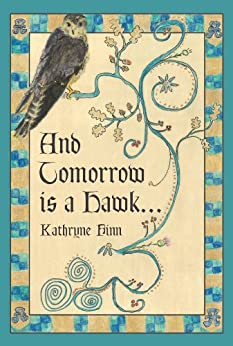
And Tomorrow Is a Hawk by Kathryne Finn

While Matrix deals surprisingly little with Marie as poet, the written word proves itself an incredible lifeline for heroine Julyana Berners. While under the care of 14th-century Queen Anne, Julyana meets the greatest of literary teachers: Chaucer. He teaches her not only to write, but also the power of the written word and being able to tell one’s own story. Her resulting chronicling of her life makes for a welcoming and remarkable look at Plantagenet England. 

The Corner That Held Them by Sylvia Townsend Warner

In a nunnery rendered as richly as Marie’s, this story similarly spans many decades of both everyday life and more dire turns of fate in a 14th-century Benedictine convent. This is a quiet and somehow still miraculous novel, immersing readers more in the feeling of this life and the priory’s inhabitants than specific plot points. 

Hamnet by Maggie O’Farrell 

Taking place in Warwickshire in the 1580s, this work technically misses the medieval mark but still predates the origins of feminism by a few hundred years. Just as Groff reimagines the life of a true historical figure, O’Farrell draws from Shakespeare’s personal life and the loss of his son, Hamnet. However, the novel refocuses the narrative on Agnes, Shakespeare’s wife, to tell a distinctly feminine story of marriage and the gut-wrenching loss of a child. We can’t help but celebrate writing women’s voices more tangibly into the historical record.

My Slut-Shaming Ghost Can Go to Hell

Here Preached His Last by Gwen E. Kirby

The first time I see the ghost of George Whitefield, I’m fucking my neighbor Karl. We’re going at it with more enthusiasm than finesse, the way you do when things are new. I lift my head, I’m going to kiss or perhaps bite Karl’s neck, and that’s when I see him: George, sitting at the end of the bed in knickers, vest, and long coat, hair tied back in a cue. Whore, the ghost whispers, and damn, he knows what gets me off. Whore whore whore. I come so hard I get a foot cramp and Karl says fuck yeah. He can’t see George. Karl lacks imagination. It’s one of his best qualities. 

I’ve never seen a ghost before, but then I’ve never had an affair before either. Karl and I have known each other for a few years— I teach English at the Academy, he teaches physics. Karl’s handsome of course and we’d drunkenly made out once, ages ago, after a faculty party, stupid and sloppy like the teenagers we teach. Neither of us ever brought it up again. When we finally have sex, it’s because I ask him to come up to my apartment. I’m going to lend him a book. I stand by the bookshelf, he stands by the bed, and then I move to him and we’re on each other. Now, Karl is lying on my breast, breathing hard, while George Whitefield looks slightly up and away from our tangle, reminding us that though we’ve forgotten our modesty, he has not. Outside, the academy kids are hurrying down the sidewalks to their dorms, hunched into the cold wind. I run a finger down Karl’s belly. I’m less lonely than I’ve been in a long time, warm inside with a lover, a ghost, and a secret to keep me company. And I don’t mean the affair, though that’s a secret too. No, the secret I’ve just learned is that I can fuck without caring for the other person at all. 


The fucking seems momentous, the beginning of an adventure, and at first I’m in a bit of a fog: horny, guilty, and proud. Whore, George says every day when I leave and again when I come home. He’s perched atop his stone marker in the strip of grass between the road and the sidewalk outside my house. It reads: George Whitefield Here Preached His Last Sermon, September 29, 1770. Moss grows in the letters and the snow almost buries it. I like to blow George a kiss, which makes him scowl. For a few glorious months, I feel like I’m getting away with something, fucking Karl and still living my boring life. Do you have to call it fucking? Karl will sometimes ask and I say, Isn’t the fact that it’s fucking what makes it fun? Sometimes he laughs. Every so often, though, he rolls his eyes and looks away instead, like I’ve hurt his feelings, and I have to coax him into feeling better, which I hate. Are you okay? What’s wrong? Karl says nothing’s wrong, but do I have to be so crass? 

Karl, I think, doesn’t like to be reminded that we’re doing a bad thing for no other reason than it feels good.

“I’m sorry,” I say to him even though I’m not, and before he distracts me with a kiss, I wonder why I’m risking so much just to have another person to apologize to. 


When I’m not teaching, coaching the varsity soccer team, or having an affair, I am busy worrying about my daughter Emmy. She is six, and so happy I think it can only be a bad sign. She loves pink and princesses, which I was prepared for, but she also makes friends easily and never seems to bully or be bullied. I don’t see myself in her, which is good, but now I fear that a happy, well-adjusted child will be even more wounded by the world than an anxious, angry child with a large gap between her two front teeth. My daughter does not know what it is to hesitate. When she comes home from school, she throws herself into my arms. When she gets out of the car in the morning, she throws herself into the playground, scattering her classmates like crows. At swimming lessons, she doesn’t notice that the water is different than the air— she leaps. My husband tells me that I am literally making trouble out of happiness. I tell him he’s a man and doesn’t know any better and then we fight. My best friend, Suze, agrees with me, of course. She knows the world is hard for girls who haven’t learned to be cautious. 

The varsity soccer team is the opposite of my daughter. They seem to do nothing but hesitate. You’re never going to win a header by asking permission, I tell them. But they refuse to attack the ball. They’d rather lose than look like they’re trying to win. It’s a feeling I remember, though as a teenager I preempted failure in different ways. Baggy shirts, scuffed sneakers, thick black eyeliner, a belly-button piercing. I didn’t know if I wanted boys to look at me— men had already been looking for a while—and so I made sure if they did look they’d see a girl who didn’t give a shit. The belly-button piercing got so infected after a month that I had to tell my mother, who instead of being furious with me was just exasperated. Ten days of antibiotics and a scar that, when I was pregnant with Emmy, stretched in an angry twist away from my navel. I liked to trace it with my finger and wonder what scars my baby would get someday. Ones, I hoped, with better stories behind them. 

I yell at the girls on the field that they better start hustling or we’ll be doing extra sprints at the end of practice. I loved playing soccer in high school, running until I was about to collapse, letting the work of it hollow me out. 

“Shoot the ball!” I yell as the center forward passes to her teammate even with a clear shot on the open net. The center forward kicks the grass with her cleat and looks at her watch. We’re running over, she’s telling me.

Practice goes long. Then I meet with three students about their papers. Then I answer a series of emails all from the same parent. Emmy and I eat macaroni and cheese with chopped up hotdog. Emmy takes forever to go to sleep, excited that tomorrow her class gets to visit Mr. Lettuce, the school guinea pig. I get in bed beside her and read her favorite book, about a little girl mouse who writes all her wishes on pieces of paper and plants them in the garden. When the little girl mouse wakes up the next day, the garden is bursting with strange plants: polka dot flowers, a tree that reaches to the clouds, a fly trap so big it could eat little girl mouse in one bite. Noomf! I say, and my hand bites Emmy’s arm. One day, the little girl mouse plants a wish for a best friend and the next morning she finds an egg. When she breaks it open, a bright red bird cries out and flies away, to the top of a hill, then a mountain. The little girl mouse plants wishes on her journey, so that when she finds the bird, they can both go home. I read the book to Emmy twice before she admits that she’s sleepy. Before she drifts off she asks if tomorrow we can plant some of her wishes. 

Whore whore whore, he whispers, and I keep drinking, more than I should on a Wednesday night, or any night, and eventually he switches to glutton glutton glutton.

My husband is not here to help with this. He’s gone a lot, helping companies whose workflows aren’t flowing. Right now he’s in Japan. At least I have George, who sits with me in the kitchen. He’s decent company. A little doom and gloom, but he likes to laugh. 

“We’re going to get creamed by Valley City High on Saturday,” I tell George. I pour a glass of wine and pull out a stack of papers to grade, the gesture entirely symbolic. I take a deep drink. 

You are an adulteress who is destined for hellfire, George responds. But fear not. I reside in heaven and, for all its beauties, its holy ecstasies, it is not everything which man has promised. 

“Is that right?” I ask. He laughs and laughs.

No, he says. Do not be absurd. And Hell is not the way you imagine it. The ways of Satan are more subtle, more inventive. 

“Really?” I ask. 

No. He does not laugh. There is no need for subtlety. Only foolish sinners like you imagine there is some thing worse than pain. 

I pour myself another glass of wine. 

“It’s a big game,” I say. “We need to win it if we want a chance at the playoffs.” 

George doesn’t respond. He seems to have lost steam and reverts to the tried and true. Whore whore whore, he whispers, and I keep drinking, more than I should on a Wednesday night, or any night, and eventually he switches to glutton glutton glutton


Next afternoon, I’m in a hurry, late to get Emmy from afterschool care. Spring is mud season in New Hampshire, and I pick my away across campus, avoiding the puddles that have formed in the sidewalk’s depressions. It surprises me every year, how the melted snow discovers this hidden topography, everything flat revealed to be craggy. I’m almost there when I get a text from Karl. you free for a faculty meeting tonight? Karl’s wife is not in Japan and he worries a lot about his wife seeing our messages. busy with emmy, I reply, and usually I’d send a little something else, a sorry or a let’s reschedule the meeting, with an emoji that is friendly without being obviously sexual, an ear of corn or a fireman, but in the brief moment that my typing distracts me I step ankle deep into a small lake. The water is so cold I feel the bite before I realize I’m wet through my shoes and my socks. My first impulse is to swear but I laugh instead and put my phone away. I am a woman who lacks the sense to watch where she’s going. When I pick up Emmy, I tell her I’ve been playing in puddles and I offer to carry her on my back while I do it again. I tell her that since my shoes are already wet, it doesn’t matter if I get them a bit wetter, but we have to make sure her feet stay warm. We splash and splash until my jeans are soaked too and shiver our way home.

Thursday night is Spring Fling! at Emmy’s elementary school and I am in charge of making her costume. Her grade is performing “Twist and Shout” and I’ve sewn together a pink poodle skirt, the kind I would have killed for when I was six. Emmy stands on a box for fitting. The hem is crooked and the poodle’s eye is weeping with dried super glue like it’s infected.

“You look great,” I say. Emmy does a twirl. I wonder if she is too young to see the flaws. The other mothers will certainly notice. The other little girls will too.

My pocket vibrates. Karl has texted me again. we need to talk, he says. 

everything ok?? 

having some thoughts on faculty meeting 

I tell him I’ll see him tomorrow after his class. Emmy is twisting hard in her skirt, jumping up and down, and then she’s fallen over and she’s crying. A pin holding the hem of the skirt has stabbed her leg.

“Look, baby,” I say, and I hold up the skirt to show her the smallest dot of blood on her skin. “You’re okay.” The poodle gazes at me, sick and hateful. 

My pocket vibrates again, Emmy has stopped crying and is inspecting the blood now, blotting it with the tip of her finger, about to get it on the skirt, which is the last thing that skirt needs, and I am done with Karl, I swear, I am already writing him the message that ends everything when I see that the text is from my husband instead. It’s very early in the morning, too early for him to be awake, but he can’t sleep. He says he misses me. He says the cherry blossoms will bloom soon, but he’ll be home just before they do. Figures, he texts, and adds a smiley face, as if to say, oh this wild dance we call life, what can you do, and right about now, as I try to remember if Emmy has white tights with no holes, as she yanks on the hem of the dress and I wait for the howl that says she’s stabbed herself again, I hate him. 


When I get to the kitchen, George is there. My eyes are red and I’ve stabbed my own fingers on the skirt’s pins too many times to count, too many times for what is still an ugly, hopeless thing. George shakes his head and says, These are the wages of sin, and I throw my wine into his face and it passes right through him, stains my perfectly nice kitchen chair, surprises us both. 

“Shit,” I say, and grab a roll of paper towels, yanking off sheets and pressing them through George’s body, and though of course we can’t touch and he tries to pretend he cannot see me (oh George, I know your looks now, how you gaze into the middle distance when you aren’t comfortable with what’s happening right before your eyes), I can sense him squirm. I slow down just a little, patting the seat dry gently and thoroughly. The wine has stained the cheap wicker. I’m kneeling in front of George, the mess absorbed into a dripping clot of paper towels. I wonder, whore that I am, if he ever had a woman on her knees in front of him. I want to ask but, I admit, I’m afraid. I’m afraid I’d ask and when he said no, offer to suck his cock. I get up, throw the paper towels away, and pour myself another glass of wine. I sit primly and say, “I forgive you.” 

And the best thing happens. George smiles, which I’ve never seen before. It’s short lived and after he calls me whore with such enthusiasm that I know he means it but I also know he wishes he didn’t like me. 

“Have you ever been in love?” I ask, which is not the question I had wanted to ask, but maybe in George’s time love and a blowjob had been one and the same. George does not answer. 

“I have,” I say, which is obvious. I’m married, aren’t I? But I think married people aren’t given enough credit for being in love. For being in love with each other— which everyone treats as a given, as mandatory, which is the hardest way to love— but also for remembering what it’s like to be in love with someone else, for knowing that every love is different and sticking with the love you have. Of course I’ve loved other men. That boy in Introduction to Astronomy who had sex with me in my dorm room— we’d been studying the names of star clusters— and then told me he had a long-distance girlfriend. A man who restored furniture and cooked elaborate meals for me. I could think of no greater sign of devotion. I moved to New Mexico with him for three months and for the last month he refused to touch me, called it a religious practice, but eventually confessed he had gotten chlamydia from another woman. Eventually my husband, who I do love, even though some days that love is hard to find. 

I don’t say all of this to George. Good old George, who sits on his stone and watches the academy kids walk by, the small dogs in sweaters, the old couples who lean close but still can’t hear each other. George feels Jesus’ love for all of them, but no sympathy for me. At this point I’m a little drunk and edging dangerously close to self-pity. 

It is love which brings man closest to God, George says. 

“Thank you, George,” I say, and I’m so surprised by his kindness that I almost cry. 

Love and sincere repentance

“Okay, George,” I say. “I get it.” 


When I get to his class, Karl is at the whiteboard, spraying then rubbing at the traces of past lessons. He looks good, better looking and a little younger than me. His wife is better looking than me too. The two of them go hiking and cross-country skiing on the weekends. Though we’ve had sex many times, I am often struck with the improbability of it. Why bother with fucking me? I shut the classroom door behind me, ready for him to break up with me, assuming he will and hoping for it. I’d break up with him but I don’t have the energy. I’m thinking about whether I put Emmy’s dance shoes in her bag for the show tonight. 

“I have to tell my wife about us,” Karl says. He puts down the whiteboard eraser, runs his hand through his hair. 

“What’s happened?” I ask, but I already know. “I have to tell her how I feel,” he says. 

“You don’t have to do anything,” I say. 

“She deserves to know.” 

“We can stop seeing each other.” 

“It isn’t fair to her.” 

“We have to stop seeing each other.” 

“I know you feel the same way I do.” Karl takes my hand in his and presses a tender kiss to my knuckles, something he has never done before. I yank my hand away. This is absurd, I want to say. We don’t feel anything. And as I clutch my hand to my chest, I imagine my mother in the audience, shaking her head at this mess, saying, sweetie, you always did make life harder for yourself

George Whitefield sits beside her. Good madam, he says, this is why I turned away from the passions of the stage to become a preacher. Your daughter is already a fornicator and a sinner. All this pageantry will not save her immortal soul. 

“She knows about us,” I say. 

“No,” he says. “She suspects.” 

He backs me up against the desk, angry, a little scary. I’m afraid but also turned on and confused, because I’ve never had the kind of sex we’re about to have. He lifts me up onto the desk, pulls my underwear down, and then we’re fucking and he’s not even trying to get me off. I look over his shoulder at the periodic table. Karl is a good teacher. He knows a lot about baseball and loves football but doesn’t watch anymore because he thinks it’s morally wrong. He has a scar on his arm from where a small tumor was removed and sometimes I feel an urge to touch it, as if scars are where we’re most vulnerable and not the thickened skin where we feel the least. 

After he comes, he holds me, murmurs in my ear that he’s sorry, that he loves me. He’s confused me, what we just did, for someone and something else. 

“I don’t love you,” I say. He flinches. “Don’t do something you can’t take back.”

“We’ve already done that,” he says. 

“You don’t love me,” I say, but he insists he does. As I said, he lacks imagination, and so he imagines that love is the only excuse for what we’ve done. 

Oh, Karl, I think. You’re an idiot. 


I want to go home and pass out and forget that I’m a wife and a mother and a lover and a teacher but it’s Spring Fling! so I put on fresh deodorant and get my daughter into her costume. She wiggles with so much excitement while I put it on her that the zipper breaks again and Jesus fucking Christ I feel my cell phone vibrate and I bet it’s fucking Karl and I have one of those moments where I think I’m going to lose it. But I don’t lose it because I can’t. I safety pin my daughter into her skirt and say, “Hope that holds, munchkin.” 

I brush her fine hair into a pony tail. Other mothers will have made better skirts and done fancier hairdos.

Other mothers aren’t fucking the science teacher either, I think, and sigh. George Whitefield leans against the wall as I work, no help at all, and when my daughter is out of the room I tell him to not even start with me. A horn honks outside and there’s Suze, who has a son in the same grade. We choose seats in the back of the auditorium like delinquents and watch the kids perform. My daughter’s poodle skirt stays on and she’s front and center and happy to be there. Suze’s son is in the back row of kids and his hair is gelled into a helmet. He doesn’t twist much but boy, oh, boy the kid can shout. 

Suze knows about Karl but not about the ghost of George Whitefield. 

After the show, while the teachers are talking to their classes, I show Suze Karl’s latest texts: 

still thinking about what happened 

don’t think you meant to be hurtful 

i have to do what i think is right 

Suze has never approved of me fucking Karl, but she doesn’t say I told you so. 

“If I were you,” she says, “I’d say you were lying, that you do love him too. That way, he’ll say it’s too much pressure and realize he doesn’t love you after all.” 

Suze says that this has worked on countless of her past boyfriends. 

I wonder what I can do to hurt Karl so badly he’ll never think of loving me again. I try to remember who I’ve alienated and how. A girl in fourth grade was my friend until I realized that no one else liked her. So I told the girl she smelled weird and stopped eating lunch with her. I had a boyfriend who said I never opened up to him, which wasn’t true. I’d told him everything there was to know about me; it just turned out that there wasn’t much to know. So I started to make up things to confess until he left me because I was too much of a burden. My childhood cat never liked me. She pissed in my room. 

“Maybe I can wait him out,” I say, and Suze shakes her head. “He’s a man,” she says and leaves it at that. 


I take my daughter for ice cream as a special treat for doing such a great job twisting and shouting. Mint chip for me, bubble gum with chunks of real blue bubble gum for her. We sit outside even though it’s a little too cold, our sweaters pushed up our arms because our cones are dripping. She sees a spider and she tries to feed it ice cream. She dabs the melted drips in the spider’s path. The spider walks around the ice cream. I tell her that some spiders are picky. “For that spider,” I say, “ice cream could be like pickles.” My daughter hates pickles. “Pickle ice cream!” she giggles and she wipes her hand against the poodle skirt and the poodle’s eye comes away on her sticky finger. She gazes at the eye, jiggles it to watch the pupil dance.

“I’m going to plant this,” she says. “It’s a wish.” Emmy screws her eyes shut and thinks hard. I want to ask what she’s wished for, but I don’t. I know wishes are sacred and secret. I’ve taught her that. And I think for the first time that that’s a mistake. Why, of everything we think, should our wishes be unspoken? 

I regret that it took me this long to learn to use my body for its own sake, to let my only emotion during sex be lust, be greed.

“Now you too,” she says, and hands me a piece of bubble gum from her melted ice cream. 

I would like to plant a wish and watch it grow, but right now I don’t know what to ask for. I suppose I should wish that I’d never had sex with Karl. I would like to wish that, but I can’t. I don’t regret cheating on my husband, even now. Instead I regret other things. I regret that it took me this long to learn to use my body for its own sake, to let my only emotion during sex be lust, be greed. I don’t know what to do with this information, wasted as it seemed on my forties, on my marriage. I did not expect my affair to make me so angry. I regret that my husband is a good man but far away. 

Sometimes, I wish I could tell my daughter about all this. Not now, of course, but when she’s older. I want to tell her, sweetheart, before you get married, have casual sex and remember: nothing matters. 

I suppose that sounds bleak. I suppose that’s not what I mean. 

And remember: be selfish.

I plant the bubble gum as deep as I can and pat the dirt down over it. 

Emmy smiles and I lick my finger and dab her cheeks as she tries to wriggle away. Her ponytail is half fallen out, the poodle skirt filthy. My phone buzzes in my pocket. She sees a friend of hers and runs over to her, and the other mom waves at me like we’re confirming a prisoner transfer. 

Karl texts again. Each buzz is aggressive. 

meet me tmr at soccer practice, I text to him, just to make it stop. 


“Maybe I’ll become a nun,” I say to George.

After this, George says, no man will cleave to you. Including God. He laughs and laughs. Whore, he chuckles.

“Whore,” I agree. 

George has never asked me why I fuck Karl. To him, there are no degrees of wrong, there is simply the wrong itself. There are no degrees of repentance, only absolute abasement, and I have failed. I think George likes that I never try to explain my actions to him. But I’ve explained them to myself. Justified them, I suppose. Here is what I think. Every day I wake up. I shower but I don’t pay much attention to how it feels. I eat what I always eat and I chew my bite of toast as I chase my daughter around, and button her up, and feed her too, and I couldn’t tell you what the bread tastes like. Half the time I’ve burned it. I go to work and I use my mind and sometimes my students use my mind and other times they let their minds wander and it is just my mind and their bodies in the room. I would love for them to see the beautiful poem or passage I’m showing them, I’m straining at them with love for it, but they aren’t there. I go home and take care of my daughter, who is all body, and I strain with love for her and talk to her father on the phone and miss him some but not enough because I am so angry that he has left me here all alone and at night I am finally, finally, truly alone and I drink a glass of wine or three, anything to put my mind to sleep, to knock myself unconscious for as long as I can before it starts all over again. 

Why would I not fuck Karl? 


Soccer practice isn’t going well. It’s cold for late March and though it’s above freezing, the sky is somehow spitting flecks of snow. The game is tomorrow and the girls are scrimmaging, ten on ten, no goalies. They’re supposed to be taking it easy but also focusing on keeping wide, keeping the field open, creating space for opportunities.

“Amanda,” I shout, “You are the left wing, left!” I wave my arm and she moves slowly back toward the far side. “Do you not see Rachel open at the post?” I yell, when, instead of crossing the ball, my midfielder dribbles straight into a clump of defenders. 

I blow my whistle. The girls jog over, gather up. I tell them that since they don’t seem interested in playing, we’re going to run sprints instead. I shouldn’t do this. They need their legs fresh for tomorrow. Karl hasn’t arrived yet. 

I send them to the goal post and back. Fence and back. The tall bush at the end of the field and back and every girl has to bring me a leaf or, if there aren’t enough new leaves, a twig. When one doesn’t hand over anything, I make them run it again. I know how they are feeling, I remember it— legs limp, mind empty, pushed to the edge of what I could endure. It had felt good when I was young, to be run like an animal. The leaf trick— my own high school coach used that. I think it was meant to show us that we were all in it together, that if one of us tried to cheat we would all be let down. But that wasn’t the lesson I’d learned from it. I’d learned that people cheated even when they knew they’d be caught. That sometimes getting caught is a form of defiance. 

“Again,” I say, and on the run back one girl falls to her knees and throws up. Number twelve kneels next to her, holds her ponytail out of the way, pats her back until the girl is done. These girls who don’t play as a team all look at me with the same expression of loathing and I realize that I hate them too, a little, for not loving the same thing I did. 

I say, “Okay, girls.” Practice is over. 

I turn to start putting the equipment back in the bag and there is Karl. I don’t know how long he’s been watching but it’s long enough. It is easy to read his face. Disgust at first, at the vomit, at me turning away instead of moving toward the girl on the ground, as I should. Disbelief, briefly, and then every other emotion is chased away by anger, like I’ve tricked him, made him believe I was someone else. 

He holds my gaze for a few moments and then turns and walks away. No need for me to say anything more. I am bad enough, exactly as I am, and I wish George were there to simply say it aloud, to comfort me with his honesty. 


That night, George isn’t at my kitchen table, though I sit and wait for him. Eventually, I go upstairs and fall asleep atop the covers, still dressed, and when I wake, it’s a little after two in the morning. My phone says I have eighteen text messages from an unknown number and after seeing the first one, you fucked my husband— straight to the point— I turn my phone off. The street light is shining in my window and when I go to close the curtain, I see George, standing beside his stone as if waiting for something. In the kitchen he usually looks solid, though he seems to hover rather than sit. Right now, though, he looks spectral, emitting an almost pagan blue glow. I put on my coat and go out into the street. 

It is snowing in earnest now, drifting sideways across the streetlights, landing in my hair, sticking to the flower stalks that have misjudged the arrival of spring. George doesn’t notice me. There is no trace of contempt on his face, only anticipation. He paces a little, directs unseen spectators to give him more room and I realize I know what he’s preparing for. I’ve researched George, of course. Went to the library and read about the ghost who sat outside my house, who kept me company. He came to this town to preach in the town hall but when he got here there were far too many people, thousands too many, and so even though he was very sick, he decided to preach outside. George loved to preach outside. Outside there was room for everyone. Room even for me. He placed a wooden board across two barrels, right at this spot where the granite marker is, so that people could see him. It is cold and my toes are getting numb in my slippers but I have to stay. George is about to preach his last sermon. 

I can’t see the hand that George takes to help him up onto the stone. Every time he coughs, his body shakes like his soul is trying to rip free. He raises his hands for silence and waits several beats, his face fierce. When he begins to speak, I can’t hear him. I clench my jaw to keep my teeth from chattering. His right hand slices wide, his eyes flash. He coughs. At times, he pauses, as if unsure he’ll go on, but then he does, more frantically than before, gesticulating, serious one moment, then smiling the next as if he can see the Lord before him, is conjuring him here for the assembled to see. He is so sure of himself. Oh, George. You know, don’t you, that those thousands of ears are like cracked bowls, like the ears of my students, my daughter. You fill them, yes, George, but most of what you say leaks out onto the wet earth and disappears. Not everything, though, I suppose. Someone remembered to plant this stone. 

I know that when George is done, the story will change. I will go upstairs and read those text messages. I will face my colleagues, who will all know what I’ve done. My husband will come home, just before those cherry blossoms bloom. Everything will become messy. But right now, the story isn’t about him. The story is about me, and I watch George preach until he can barely stand, until I can’t feel my fingers. When he finally gets down from the stone, he turns to a man I cannot see and shakes his hand. He turns to another and claps him on the back, puts a hand to his own powdered wig to steady it. His step is slow and tired through the invisible crowd. He has a word for everyone, and though I can’t hear what he says to the others, though he leaves me farther behind every moment, in my ear I can still hear him whisper joyfully whore whore whore

And I say yes yes yes. Yes, I’m here, I’m here, a body, just a body, and it’s not promised to anyone, it’s mine, only mine, and I miss that, God, oh God, oh George, I miss it.

Heroes Will Not Save Us From the Climate Change Crisis

Too often, popular fiction welcomes convenient last-minute solutions to the end of the world, even if the old cliché that things are darkest just before the dawn doesn’t match our lived experience. This misleading pattern lends itself well to epic-scale narratives largely reliant on a hero/villain dichotomy. Set the stage for total societal demise and no character can remain unaffected or out of the action. Think of Game of Thrones, Star Wars, or The Avengers—the direst situation in each plot revolves around a genocidal crisis, a whole society or galaxy on the brink of oblivion. The looming reality of mass death in these narratives is glossed over; the resolution hinges on nothing more than an easy and well-timed gamble at salvation. A snap of the fingers and everything returns to normal, a symbolic triumph becomes an all-encompassing pardon. The universe is saved. The good guys win. The buzzer beater is a sure thing.

The drama of this narrative pattern is irresistible. Audiences thrive on the ups and downs of these scenarios and subconsciously maintain faith that humanity will overcome. For writers, I imagine the matter is usually much more practical—this pattern leads to a surefire narrative fix. Sustainable change takes time and doesn’t provide the instant satisfaction of a brief climax. It’s more effective to save the day, fade to black, and include some iteration of, “there’s still so much more work to be done.” At best, this resolution is optimistic, but it’s precisely the feel-good nature that’s the problem. These dramatic swings mask the reality of humanity’s slow downfall, and suggest a convenient panacea is inevitably around the corner, when the truth is that there may be no such thing. 

Sequoia Nagamatsu’s debut novel, How High We Go in The Dark rethinks and challenges the specious plot devices deployed in stories of humanity on the verge of an apocalypse. In this case, the primary threat comes by way of an arctic plague that emerges in melting Siberian permafrost. While Nagamatsu does ultimately launch a crew of characters (many chosen by lottery) on an interstellar search for a new world to colonize, the mission is not introduced until the second half of the book, long after extensively exploring how the unflinching pandemic decimates communities and economies around the world. This is to say the author grapples with the reality of unimaginable death for more than 150 pages before the idea of space travel even enters the picture. Instead, How High We Go in The Dark finds an orchestral cast of Japanese characters across interlinked stories working at euthanasia theme parks for terminally ill children, experimenting on hyper-intelligent pigs to develop donor organs, fixing malfunctioning robot pets to cope with grief, and preserving corpses in hotels as they await long lines for cremation, all while dealing with ongoing anti-Asian racism in the midst of global chaos. 

It is precisely the author’s willingness to stare down the acute horrors of a world unprepared for environmental and societal collapse that makes it special.

If this description hits close to home—and, yes, the word “prescient” appears on the jacket copy—Nagamatsu’s practical imagination is a major part of what makes this novel so impressive. It is precisely the author’s willingness to stare down the acute horrors of a world unprepared for environmental and societal collapse that makes it special. Rethinking how we tell stories of immense tragedy could be essential to changing attitudes toward a sustainable future before it is too late. Another way of thinking about this: why are we so willing to simply adapt to the horrors of our current reality, waiting passively for a convenient cure to imminent mass extinction?

Nagamatsu writes:

“But something snapped in us when the dead could no longer be contained, when people didn’t really say goodbye. Cryogenic suspension companies proliferated, death hotels, services that preserved and posed your loved ones in fun positions, travel companies that promised a ‘natural’ getaway with your recently departed.”

We’re already experiencing the deleterious consequences of climate crisis in real time—the trauma is especially intense for people of color—but meaningful change remains sluggish and inconsistent. Recommendations too often pivot toward individual responsibility—eat less meat, don’t fly, recycle—rather than against government and corporate greed. With its first chapter beginning in 2030, How High We Go in The Dark portrays a rapidly approaching future that sees society shift toward industries profiting off death. The urgency shifts to an economy of grief and mourning. 

For example, Dennis, a specialized worker at an elegy hotel, reflects: 

“They gave bereavement coordinators like me studio apartments on the top floors of the elegy hotels. Some of my colleagues had native ideas about saving the world, but really we were just glorified bellhops for the mountains of Arctic plague victims awaiting cremation, for the families who wanted to curl up in a suite beside the corpses of their loved ones and heal. On any given day, the deceased from local hospitals lined the basement halls in biohazard bags, waiting to go through the three-part preservation process—sterilization, embalming, and our antibacterial plasticizing treatment. This bought families time to say goodbye while our crematoriums struggled to keep up with demand.”

The idea that the rich and powerful will swoop in and save the day is not only counterproductive to action, but also reinforces systemic oppression using a narrative formula that has become all too recognizable. After all, billionaire white men have the least to sacrifice, because if their fraudulent philanthropic ventures to clear their conscience don’t pan out, they imagine a well-stocked bunker or oceanic ark or lonely rocket available to whisk them away to permanent safety. How High We Go in The Dark, instead, reveals a brand of capitalist pandering that pivots mostly toward loss, while hinting at the ongoing protection of the most privileged. 

How High We Go in The Dark reveals a brand of capitalist pandering that pivots mostly toward loss, while hinting at the ongoing protection of the most privileged.

This is to say that a colony on the moon or Mars is precisely the type of distracting narrative boondoggle that stunts progress toward any kind of actually sustainable solutions regarding our current environmental catastrophe. The space travel dreams of the ultra-rich neglect to mention that only a select few will ever have a chance at survival beyond the atmosphere while billions of people on terra firma deal with the realities of famine, rising tides, natural disasters, fatal temperatures, and climate genocide. In Scientific American, astronomer and JustSpace Alliance co-founder Lucianne Walkowicz argues, “I’m sure the extremely wealthy will continue to take expensive joyrides, occasionally offering seats to others and perhaps hoping that their antics will distract us enough to forget that the gluttonous accumulation of wealth wouldn’t be possible under any kind of just system.” Even if space were to become a feasible solution, the systemic inequities by which opportunities for space travel are dictated would need to dramatically change if there was any hope for those without tremendous wealth. 

Yet, Nagamatsu never takes the easy way out. The irony of How High We Go in The Dark comes in its concluding chapters. While the space crew spends thousands of years, mostly frozen, bouncing from planet to planet in hopes of finding a safe home, humans back on Earth gradually come together to create a stable environment for future generations. In other words, interplanetary colonization is a moot bandage by the time it’s viable. The crew populating Earth II might tangentially contribute to saving the species, but since they spend most of their time preserving their bodies, in terms of the technological developments that have taken place back home they are in fact thousands of years behind. Those remaining on Earth, then, end up much more technologically advanced. The death toll on Earth continues to rise until a cure for the pandemic is developed, and that’s where and when the real progress begins. 

On this interstellar mission, an artist tasked with painting and providing notes on the expedition, mentions, “When we arrived at the Centauri system, we received a decades-old message from Earth, informing us that a people began to rebuild their lives. Funerary corporations expanded to focus on climate projects, building seawalls around coastal cities, sponsoring the solar shade project until the end of the century.” The answer was there the whole time, then, even if the action comes long after the interstellar mission ship departs. There’s some trenchant wisdom in Nagamatsu’s suggestion that eventually those remaining have to deal with being left behind, and that it’s the money-flush funerary corporations that can take advantage of this society-wide need, and spend money to look like saviors right after having struck it rich exploiting so much devastation. Is this so different from Amazon advertising about its climate initiatives while Bezos simultaneously invests his vast personal wealth in vanity trips to space, a half-a-billion-dollar mega-yacht, and the ongoing underpayment and exploitation of Amazon’s warehouse employees? 

Eleutheria by Allegra Hyde

Of course, Nagamatsu isn’t the sole writer developing this brand of climate fiction, but the attention the novel has already received is noteworthy, a sign that perhaps publishing is willing to see the commercial value in the literary portrayal of a more realistic kind of future. For another example, Allegra Hyde’s debut novel, Eleutheria, forthcoming in March 2022, could nearly be imagined in the same world as How High We Go in The Dark, if you don’t spend too much time overthinking it. 

Years after the deaths of her doomsday prepper parents, as the environment collapses and late capitalism remains fruitful for the privileged few, Willa Marks, Hyde’s protagonist, inserts herself in an environmentalist cult in the Bahamas felicitously called Camp Hope. Willa’s perspective on climate crisis is clearly influenced by her upbringing, but the realities of the present are clear: 

“Meanwhile, a real plague, unthawed from the Siberian permafrost, wreaked havoc in Russia. The global water shortages had started, along with local water contaminations…Bad news was heralded with grim constancy—and yet, in Boston at least, such news was forgotten with equal regularity. As difficult as everything had become, people looked ahead.”

Where the plague in How High We Go in The Dark is swift and worldwide, Eleutheria explores a more gradual decline, a kind of mass indifference lulled by routine comforts. After Willa finds Camp Hope, she opines of humanity, “We were moored in apathy, in the comfort of willful blindness…In America, we still had our guns, our flags, our stranglehold on exceptionalism. We still had the distraction of virtual realities, the Hollywood phantasmagoria, the pharmaceutical raft of painlessness. We still had the audacity to call climate change a problem for another time—another country—as if we weren’t already proverbial frogs, our skin sloughing off in hot water.”

Willa eventually discovers the environmentalist utopia she has committed herself to is not so far from the control of the privileged few who want to take advantage of the optics of a green future for political gain. “Everyone was talking about Geoengineering. Cap and trade. Smog futures. Undergirding the platform, the same old principles applied: consolidation of power, resources for the elite. A dead planet, after all, wouldn’t keep anyone in bratwurst and brandy and sixty-foot sailboats.” It’s the same con with new branding. 

Much like many of us, their characters are trapped in banal, unquestioned patterns and rituals that ultimately cause a great deal of harm.

Nagamatsu and Hyde’s novels are distinctly different in genre and tone, but there is an underlying connective tissue between them found in their mutual intention to not look past the gritty details of real-time environmental decimation. They both find the tragedies of ecological disaster in the mundane. Much like many of us, their characters are trapped in banal, unquestioned patterns and rituals that ultimately cause a great deal of harm. But their characters also reveal how our survival instincts as humans can falter as we attempt to maintain a deleterious sense of normalcy. 

In a recent article in The Nation, Mary Annaïse Heglar argues the imagination will be central to our fight against climate crisis: “For too long, the climate fight has been limited to scientists and policy experts. While we need those skills, we also need so much more. When I survey the field, it’s clear that what we desperately need is more artists.” It’s unfair to expect writers to solve everything or to uproot an established tradition of dramatic structure, but it’s not unreasonable to challenge the narrative crutch that a cure-all solution will always be waiting. The eureka moment has long since passed. We can’t cue the clean-up montage. There’s too much at stake for us to continue to wait for a last-second save.