The holiday season—which I (arbitrarily!) define as beginning in mid-November and continuing through the first of the year—is a minefield. If you’re lucky, the bombs are carbohydrate- or confetti-filled. If you’re not, you’re facing roughly two months of celebratory gatherings and realizing that alcohol, while perhaps a helpful social lubricant, does not actually have the power to silence your mother’s unsolicited opinion about your ticking biological clock. However full or empty your cup of holiday cheer, these essays, stories, and lists are perfect for “the most wonderful time of the year.”
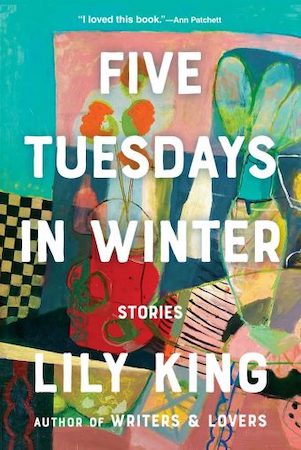
Sometimes the best gifts are curveballs. This story is like that. If you have a my-glass-is-half-empty perspective this holiday season, read this story. It’s seasonally appropriate, but it’s not saccharine—I promise you will not leave it feeling like Santa’s elves have sneezed Christmas glitter all over you. You will leave it with “a knife, instead of coal, in your stocking.”
At the end of the night it stopped snowing. The early dawn was pearl gray and the day would be fair and very cold. At sunrise Ken put on his overcoat and went downstairs. At that hour there was no one on the street. The sun dappled the fresh snow with gold, and shadows were cold lavender. His senses searched the frozen radiance of the morning and he was thinking he should have written about such a day—that was what he had really meant to write.
As any voracious reader knows, the only thing you really want for Christmas is a book, which also happens to be the only thing your loved ones refuse to give you (in their defense, it’s not their fault, you’ve read everything). Unfortunately, this dilemma often results in the purchase of book-related garbage—and do you really need another bookmark? No, no you do not. If you’re worried about being on the receiving end of yet another pillow embroidered with a literary quote, I recommend sharing this list of alternative ideas with your friends and family this year.
The holiday season can often feel like a one-dimensional menagerie of glee, as enthusiasts fail to ask important questions like: just how many Christmas lights does this desiccated evergreen actually need? In her thoughtful essay, Blankenbiller discovers a book on Christmas in midcentury America that prompts her to unpack her own holiday traditions in the context of her own unusual cultural moment.
This collection I’m now surrounded with for the remainder of my quarantine holiday is the answer to a question I wouldn’t have dreamed to ask. How did you know it would get better? This sparkling, melancholy, fading world is its own reply. We didn’t. But we celebrated anyway. As you do. As people always have.
If you decorated your Christmas tree last year with pretty lights and festive ornaments, might I suggest mixing it up? This list is bursting with ideas for those interested in tossing tradition to the wind. Projectile vomiting, anyone?
Build Your Own Christmas Movie Romance, written by Riane Konc, is, in Bassist’s words, “a choose-your-own-escapade that spoofs every Christmas rom-com ever made.” In this fun and enlightening interview, Riane and Bassist discuss everything from Hallmark movies (in which “big city businesswoman is the worst thing you can be or do”), to the Venn diagram overlap between funny people and sad people, to the best way to end any story.
… the best way to end a story, no matter the genre or medium, is to slowly pull back to reveal that actually, the entire story has been taking place inside of a giant snowglobe this whole time. Imagine how much better A Little Life would have been if Hanya Yanagihara had done this. Imagine how much better The Wire would have been. And how much better this interview would have been. This is the only real way to end any story, and deep down, I think everybody knows it.
If your family is anything like mine, disaster—or maybe just the possibility of disaster—looms large in the month of December. If you’re anticipating capital-F holiday Fails, you’re not alone. In fact, you’re in famous company. This list contains 11 sparkling examples of festive full-blown catastrophes. Cheers!
Charles Dickens’ A Christmas Carol is one of the most iconic and beloved of holiday tales. In her essay, Reina Hardy reconsiders the story and its applicability—or lack thereof—to America’s political woes.
The fantasy of A Christmas Carol, that the hearts of the powerful can be magically changed, has never felt more seductive than it does this year — and it’s never been clearer that it’s a fantasy.
Christmas may have a monopoly on the commercial market, but it’s by no means the only holiday worth celebrating. Pencil in time for the literary holidays on this list in 2022—to which I’d add World Poetry Day (March 21), Banned Books Week (last week of September), and Mad Hatter Day (October 6).
If I’m being simplistic, Christmas-themed tales tend to come in two varieties: heartwarming and cozy, or dark and despairing. Georges Simenon’s classic “Christmas story for grown-ups” isn’t a Hallmark movie—it opens with a suicide, the protagonist is a prostitute, and it’s replete with lines like:
But does anybody want to go home on Christmas Eve knowing there is no one waiting there and with the prospect of lying in bed listening to the sound of music and happy voices coming through the wall?
That said, this short story still manages to capture the Christmas spirit. I can’t explain it, but it is nevertheless true.
While Saint Nicholas has historically bogarted all the cultural glory associated with the Christmas holiday (at least in the United States), Krampus is a figure who might appeal more to those reluctant to hang up their Halloween costumes for snowmen and caroling. If you’re looking to shake up your tinsel-laden December with a little gore, get in the Krampus spirit with the grisly tales featured on this list.
Look, maybe Christmas isn’t for you. It’s not your style! You’re allergic to peppermint! There’s nothing wrong with that! If that’s the case, this story about an alternative holiday might appeal. Christmas isn’t for everyone, but surely Love Day is.
Tom thinks about a designated sex day. Everything around him is dreary. The economy droops. Winter is nigh. He takes solace in the fact that the whole city seems to have reached the sloppy bottom place, has sunk to the pond-scummy floor and that anything, it seems, would be an improvement. Tom begins to draft an announcement for the newspaper. He changes the name of the holiday to Love Day.
The celebrity cookbook is a curious genre: its essential premise is that a person who is famous for something other than cooking can, on the basis of that fame, also teach us how to cook. At the same time, it’s a tried-and-true publishing gambit: Gwyneth Paltrow and Stanley Tucci are following in the footsteps of Sophia Loren, Patti LaBelle, and, fabulously, Liberace.
My favorite celebrity cookbook addresses this disjuncture right in the jacket copy. A note from the author confesses, “I’ve always wanted to write a cookbook. There’s just one problem. Moi doesn’t cook … moi eats!” It’s the unmistakable voice of Miss Piggy.
In the Kitchen with Miss Piggy, from 1996, is a celebrity cookbook par excellence. Miss Piggy, the plump and plush porcine puppet, is the narrator and “author” of this book. (It was actually written by Muppets staff writer Jim Lewis, but his name doesn’t appear anywhere in the text; the Library of Congress cataloging data lists the author as “moi.”) Each recipe, more than fifty in total, is the contribution of Piggy’s famous friends, so the table of contents doubles as a Who’s Who of 90s pop culture. Think Larry King’s “Favorite Tuna Health Salad,” Kristi Yamaguchi’s chicken scaloppine, and dueling recipes for pesto from Lauren Hutton and Melanie Griffith. The book was a fundraiser for Citymeals on Wheels, and while I haven’t been able to ascertain how much money it brought in, I know the venture succeeded in its other goal: to goof on celebrity culture, and one celebrity in particular. As Piggy says in the introduction, “When I was approached to write this cookbook, moi thought: Why not? If Oprah can do it ….”
In the Kitchen with Miss Piggy is a spoof of In the Kitchen with Rosie, a slender volume that went on to become the bestselling cookbook of the 1990s. It was the first and basically only book by Rosie Daley, whose fame and legitimacy came from her relationship to her employer: she was the personal chef of Oprah Winfrey. (Her only other book, 2003’s The Healthy Kitchen, was co-authored with another Oprah acolyte, Dr. Andrew Weil.) In the Kitchen with Rosie: Oprah’s Favorite Recipes was a publishing supernova. It came out in May 1994 with an initial print run of 400,000; by November of that year, it was already the fourth highest selling cookbook of all time. According to the New York Times, In the Kitchen with Rosie was outsold only by The Betty Crocker Cookbook,Better Homes and Gardens New Cookbook,and The Joy of Cooking (an ode to Joyhere), all of which had been in print for decades. And whereas those books are encyclopedic, In the Kitchen with Rosie is a tight 130 pages. (Piggy’s page count is 128.) Daley’s book would eventually sell five million copies.
Oprah’s struggles to maintain a “healthy weight” and positive body image have played out in the public eye throughout her career.
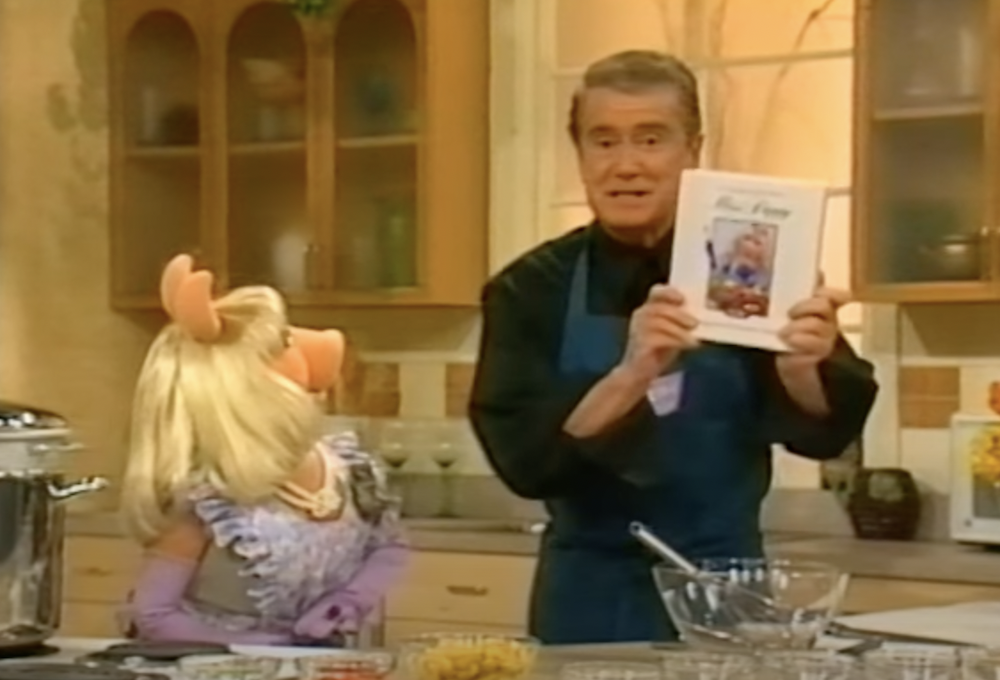
Still wielding massive cultural clout today, Oprah was at the height of her powers in the mid 90s. The runaway success of In the Kitchen with Rosie established Oprah’s abilities as a kingmaker in the book business, leading to the formation two years later of Oprah’s Book Club. Any book that Oprah endorsed, whether it be by Toni Morrison, Lev Tolstoy, or a previously unknown spa chef, sprinted up the bestseller list. (Although Miss Piggy promoted her book during a riotous appearance on Live with Regis and Kathie Lee for their 1996 Celebrity Cooking Week, the world is still waiting for her Oprah interview.)
But the cookbook also illustrates a more complicated aspect of Oprah’s brand: her very public weight loss campaign. Oprah’s struggles to maintain a “healthy weight” and positive body image have played out in the public eye throughout her career. In a memorable 1988 segment on her talk show, she wheeled a wagon containing sixty-seven pounds of fat, representing a recent weight loss “triumph” achieved through crash dieting; she now considers this one of the most regrettable moments in her career (on which the podcast Maintenance Phase has an excellent episode). More recently, in 2015, Oprah bought $43.5 million dollars’ worth of stock in Weight Watchers, leading to a revival of the company’s fortunes, and an instantly iconic commercial in which Oprah declares, “I love bread!”
Because in some ways Oprah herself is the product she sells, it’s impossible to disentangle her body, body image, and monetizing of her complex body image issues from her public persona and media empire. Historians and cultural theorists have argued that centuries of mainstream media, from 19th-century World’s Fairs to 1990s rap videos, treat the Black female body as being “in excess.” In her chapter “Excess Flesh” from the book Troubling Vision: Performance, Visuality, and Blackness, the art historian Nicole R. Fleetwood, writes:
… the context of mass culture and the ways in which visual spectacle is manufactured and widely distributed muddies issues of intentionality. The relationships between corporate sponsorship and the black body in contemporary mass culture are deliberately sensationalized, as black celebrities self-consciously produce hypervisible representations of themselves as commercial vehicles.
The narrative of In the Kitchen with Rosie is how Oprah learned to stop being so excessive. The media mogul penned the book’s introduction in her trademark style, equal parts rousing and confessional. In it, we learn about Oprah’s journey to what she calls “clean eating.”
I grew up eating well. Cheese grits, homemade biscuits smothered in butter, home-cured ham, red-eyed gravy—and that was just breakfast. […] Back then food meant security and comfort. Food meant love. It didn’t matter what you ate, just that you had enough. I’ve paid a heavy price for believing that. It took me a long time to change the way I thought about food. I once believed that eating healthy meant eating food that was missing something—TASTE. I once believed eating healthy meant being unsatisfied. I once believed eating healthy meant no security, no comfort, no love.
I’ve struggled with body image as much as the next person, and I count myself lucky that my livelihood is not tied to my physical appearance, so I sympathize with the pain that’s perceptible between the lines of this girl-boss manifesto. But even more painful for me is the fix the cookbook proposes: decoupling food from love.
Piggy’s book, in stark contrast, celebrates food as a vehicle for affection: through dinner parties, romantic suppers, and, above all, satisfaction of one’s own appetites. Surprisingly, although this is a Muppets production, it isn’t a book for kids, or for parents trying to teach their kids how to cook. Frankly, it’s too horny to be kid lit. The opening chapter consists of Piggy’s tips for entertaining, including a section on ideal seating:
Traditionally, the seating chart at a dinner party is boy-girl-boy-girl. But who cares about tradition when John Travolta and Harry Belafonte are coming to dinner? […] moi has devised an ingenious boy-boy-boy-MOI-boy-boy-boy-boy seating arrangement.
Yes, this joke depends on a gender binary, but I let it pass for two reasons. First, this reflects the mainstream understanding of gender in 1996. Second, and more importantly, Piggy has always been performed and voiced by a man—she was brought to life by the legendary Frank Oz and is now played by Eric Jacobson. The actual author of this book is a man, the aforementioned Jim Lewis. So, Miss Piggy is a queer character, and with her larger-than-life persona and exaggerated hungers for food and attention, she’s something like a drag queen. While Piggy dedicates the book “To Kermit, who has always been the hottest dish in moi’s life,” she also gives herself space to flirt at the male contributors. Each recipe is punctuated by her chaotic, hedonistic commentary; accompanying Samuel L. Jackson’s spinach linguine and ground turkey sauce is the note: “Samuel is in all of those darling little shoot-’em-up movies with big sweaty men and guns. Like his movies, I’d rate his recipe ‘R’ as in: R you busy tonight, Samuel?” For Piggy at least, food still means love.
Miss Piggy is a queer character, and with her larger-than-life persona and exaggerated hungers for food and attention, she’s something like a drag queen.
But it’s Piggy’s commentary on recipes from female contributors that most meaningfully differentiates this from the Oprah cookbook. Many of these women faced the same pressures as Oprah, so their recipes similarly skew low-fat. But in her almost fifty-year career, Miss Piggy has never expressed interest in losing weight, so she is equally uninterested in recipes that advance that goal. Of Lauren Bacall’s recipe, for example, Piggy notes, “Her Spinach and Sesame Salad is perfect for her svelte figure. Of course, for more full-figured women, like moi, some fries and a burrito make it all happen.” A recipe for fruit crumble from Gael Greene, New York Magazine’s restaurant critic and the founder of Citymeals on Wheels, suggests a topping of “mock crème fraîche”—brown sugar, vanilla, and nonfat plain yogurt. By way of comparison, the dessert section of In the Kitchen with Rosie also has a recipe for “mock whipped cream,” made of evaporated skim milk with vanilla and brandy. While not disparaging the recipe itself, Piggy champions eating indulgently by asserting, “Unlike Gael, moi could never be critical of food. In fact I never met a meal I didn’t like!”
The recipes in Piggy’s book vary widely in terms of complexity, sophistication, and instructional detail, all of which amounts to a recipe writer’s voice. This diversity reiterates that each of these recipes really was contributed by a different celebrity (or their personal chef). You can learn how to make Maya Angelou’s jollof rice or Ivana Trump’s beef goulash (of which Piggy quips, “I wouldn’t think of naming a recipe after a rain boot”). Perhaps the most incongruous contributor is Norman Schwarzkopf, the U.S. Army General who led the efforts during the 1991 Gulf War and shared with Piggy his recipe for sour cream peach pie. Indeed, our associations with the contributor may impact whether we find the recipe appealing. For my part, I’m intrigued by James Earl Jones’ Chilean sea bass (the most 90s of all fishes) and Paul Newman’s “Tasty Thai Shrimp and Sesame Noodles,” but I find Barbara Bush’s “Bologna for a Cocktail Buffet” downright repulsive. Even Piggy struggles to say something nice about this appetizer which consists of roll beef bologna, mustard, soy sauce, rosemary, ginger, and salad oil. The best she can muster is, “Bar is such a dear, dear friend. I usually never have enough good things to say about her, but this recipe leaves me speechless ….”
They make use of processed foods and sneaky substitutes, typical for 90s cooking but at odds with today’s fashion for full-fat ingredients.
The recipes from In the Kitchen with Rosie are accompanied by nutritional information. They make use of processed foods and sneaky substitutes, typical for 90s cooking but at odds with today’s fashion for full-fat ingredients. A black bean and smoked chicken soup, for example, includes light vegetable oil cooking spray, chicken stock (fat skimmed off), barbecue sauce (“no-oil variety”), and evaporated skim milk. Brooke Shields’ contribution to Piggy’s book may well show the influence of Rosie Daley: the model-actress uses just a spritz of oil spray to start her “Vegetable Health Soup,” skims the fat from her canned chicken broth, and tops the finished product with cottage cheese.
Daley’s book has all the consistency that Piggy’s lacks, but none of the warmth. In a 1994 New York Times review of diet cookbooks, Richard Flaste wrote of In the Kitchen with Rosie, “… if there is a compelling and original underlying philosophy in Rosie Daley’s book—an approach to eating that will make you somehow just like Oprah—I can’t find it.” The exact opposite is true of In the Kitchen with Miss Piggy: the recipes are all over the place, but the volume is coherent because of Piggy’s approach to food: eat what tastes good and relish the company of those you love, whether that’s your fabulous friends, your charmingly neurotic partner, or your exquisite self.
For all its commercial success, In the Kitchen with Rosie didn’t change the way America cooked in the long run, not in the way books by Julia Child, Alice Waters, or, more recently, Yotam Ottolengthi did. Instead, it reflected the ideas about healthy eating of the time and capitalized on readymade celebrity. What’s more, Rosie herself never went further as a chef. The sales of In the Kitchen with Rosie seem to have set her up for life, so one thing we can say for the author is, she’s not a chazzer.
Of course, In the Kitchen with Miss Piggy didn’t change the way we cooked either, but there was no reason to expect it would: it’s a cookbook by a pig puppet. Still, twenty-five years after it was published, all as a charity gambit and as a joke, it feels impeccably fresh. That’s because Piggy not only espoused radical self-acceptance, she modeled it. There is no understating the importance of what Oprah has accomplished as a Black woman in entertainment and entrepreneurship; her cultural impact was unprecedented and remains unmatched. But her well-documented, decades-long struggle to maintain a trim figure is a reminder that even she has been trapped by a culture of objectification and self-abnegation. When you don’t allow food to carry the meaning of love, eating becomes a war with the self. To borrow a phrase Oprah coined, I had an “aha moment” when I realized I’d rather eat like a pig than dine like a mogul.
We as society need to accept our love of Hallmark movies. No more quietly enjoying Hallmark movies when no one else is around, no more calling them “guilty pleasures” or feeling embarrassed when someone labels you a Hallmark movie enjoyer. It’s time to end the stigma of enjoying the simple pleasures, because we could all use more simple pleasures in our lives. So what if a made-for-TV-movie about nearly impossible circumstances leading to a lasting romance is the thing that gets you through the day? I, for one, support you. Romance is fun! Lean into your love of all things romantic and delightful with this reading list.
Hana Khan’s family owns a halal restaurant that was already struggling before the fancy new competitor with the handsome son moved in down the street. As the family business continues to sink, she reaches out to listeners of her podcast for advice. But her most loyal listener might end up being closer to the situation than she realized, and he might also be dreamier than she bargained for. This book has all the staples of a Hallmark movie and then some; prepare to be romanced by Jalaluddin’s sweet, modern romance.
Like all great Hallmark movies, this book starts with an independent woman reluctantly returning to her hometown—except in this case, the woman is a struggling witch, Emmy Harlow, and her hometown is the magical town of Thistle Grove. Emmy just wants a quick trip home and some quality time with her friend Linden, but when she runs into the enchanting Talia and finds out Talia and Linden have unknowingly been dating the same guy, Emmy decides to help them get revenge. Except, maybe revenge isn’t the only thing motivating Emmy, maybe it’s also the promise of more time spent with Talia.
This book has it all! A successful, career-driven woman (Andrea Tang) who isn’t interested in romance! A hot entrepreneur who seems like her perfect match! An office rival who might be more appealing than Andrea thought! A meddling family who doesn’t want Andrea to be the only unmarried Tang of her generation! This swoony book is packed cover to cover with fun, romance, and joy.
PhD student Dani Brown doesn’t want romance, she just wants the perfect friend-with-benefits. When hot, ex-rugby-player-turned-security-guard Zafir rescues Dani from a fire drill gone wrong, she thinks she’s found the FWB to end FWBs. But of course, in the world of romance novels and Hallmark movies, nothing is ever so simple. Zafir’s heroism is caught on camera and the pair blow up online, leading him to beg Dani to pretend they’re in a relationship in order to get publicity for his children’s rugby charity. Dani’s fine with the arrangement—until she realizes Zaf is a hopeless romantic who’s going to test her anti-love resolve.
What’s better than a queer love story that involves fake dating and astrology? When Darcy’s brother sets practical, analytical Darcy up with his business partner, eccentric Twitter astrologer Elle, she thinks he couldn’t have found a worse match for her. However, in an attempt to stop her brother from meddling in her love life, Darcy tells him the date went great and begs Elle to play along. Thus begins Elle and Darcy’s fake relationship, which will definitely never, ever turn into something real—or will it?
Delilah Green doesn’t want to go back to her hometown. She’s busy in New York, becoming a successful photographer and sleeping her way through a string of beautiful women. When her estranged stepsister guilt-trips Delilah into coming back to their hometown to photograph her wedding, Delilah reluctantly agrees. But when she runs into her stepsister’s best friend, Claire, a single mother who runs a bookstore, her feelings about her hometown change. Every word of this description sounds like the perfect, gay Hallmark movie.
After Nathan Bird’s father dies and his mother falls apart, he decides he doesn’t believe in happy endings. An aspiring screenwriter who loves movies, Nate thinks happy endings only exist on film. But when his best friend Florence decides to prove him wrong, he ends up being reintroduced to his childhood best friend and crush, Oliver. A main character who’s given up on love? A charming but meddlesome best friend? A childhood friend turned romantic interest? Hallmark fans, this one’s perfect for you.
Grace just completed her PhD in astronomy, and heads to Vegas to celebrate with her friends. Drunkenly marrying a woman whose name she doesn’t know wasn’t part of the plan, but when Grace wakes up to find out she’s done just that, she decides to embrace it. Kicking her stern father’s intentions for her life aside, Grace runs away to New York to spend the summer with her wife, until, of course, reality catches up with her. This is an official petition for more Hallmark movies to feature accidental marriages.
I get home to Vermont from my first semester at Williams for winter break after a long, snowy ride on a Greyhound bus redolent of urine and the alcoholic tang of Wet Wipes to find my mother has had a brainstorm. She is amped up, the manic gleam of destruction in her eyes.
“I know what we’ll get everyone for Christmas,” she says.
She ashes her cigarette and pauses, looks at me. She is referring to her mother and three sisters, whom we mostly see on holidays. I sit patiently, trying to seem expectant. When she senses I can’t take it anymore, she tells me what our gift is going to be.
“Nothing,” she says.
We are sitting at the kitchen table. I am still wearing my wool coat, snow melting in the folds of the hood. Though it is five degrees outside and icicles hang from the eaves, my mother has opened the window to accommodate a fan, which faces away from us, whirring softly, blowing her smoke out of the house. I push my chair back, away from the cold air pocket by the window. My backpack hangs from my shoulder. I shrug it off, set it on the floor.
“Nothing?” I say.
“Nothing.”
I look at her and wait. There’s more to come, I can tell.
“They don’t deserve anything,” she says. “They wouldn’t know what generosity was if it punched them in the face.” She offers this up with a pleasure that tells me she’s been turning the phrase over and over in her mind until it’s acquired a high sheen.
They wouldn’t know what generosity was if it punched them in the face.
“We can’t really give them nothing,” I say. “I mean, how would we wrap it?” I am kind of kidding, kind of not. For me, a lot of the joy in Christmas is in the wrapping. I love shiny stick-on bows and curling ribbons, tissue paper and cellophane, all the exuberant excess and waste.
“Well,” my mother concedes, “we won’t really give them nothing. What we’ll do is give money to charity in their names, and then we can write it in a card.”
She takes a drag on her cigarette and blows the smoke into the window fan.
“That’ll teach them,” she says. “That’ll show them what charity is.”
My mother’s plan is to write in the cards that we have donated more money to charity than we really have. She doesn’t want the relatives to think we’re cheap.
“Fifty dollars to the poor?” I say. “When did you give fifty dollars to the poor?”
“I put some canned pineapple in the donation box at Price Chopper,” she says. “You know, the Feed the Thousands one.”
“Fifty dollars’ worth?”
“Close enough.”
This is kind of true, if you look at it like we are the poor and whatever money my mother saves on presents, she can put toward the grocery bill. Still, I don’t want to sign my name to it. When my mother offers me the cards—sympathy cards from a pack of twelve she bought during the Gulf War, when she decided to write to everyone in town who was affected and realized too late she could only think of one person—I tell her she should write mine and Agnes’s names in for us. But she insists we each sign our own name, and, not wanting to disappoint her, I cave.
The cards are pretty: they show a tall stand of birch, silver bark striated and stripping off. Sitting down to sign four times, I see she has taped pieces of paper with “Happy Holidays” written in green felt-tipped pen over the black script sympathy message.
“Decorative, huh?” she asks as I examine her handiwork.
“Definitely,” I say. I write my name, Kate, under hers, fighting the urge to smudge the ink.
I copy out Agnes’s name on a napkin, along with holiday messages she dictates to me, and she sits down to sign the four cards. Agnes is nine. Though smart, she has dysgraphia and struggles with focus. I skipped two grades; she attended pre-first, an extra one. “It takes youngest children longer,” my mother always says. If forgiveness is not my mother’s strong suit, Agnes is the exception that proves the rule; about Agnes, my mother interprets everything with an almost artistic disregard for the facts. When a little boy with pointy eyeteeth named Pete killed the classroom hamster by dropping it in the toilet to see whether it could swim, inspired by Agnes’s assurances that this was the best way to learn, and, discovering the answer was no, rescued the poor thing too late, an accident that took place in kindergarten and left Agnes heartbroken and speaking wistfully about the fragility of life for weeks and her teacher permanently pissed, my mother said, “Agnes is an empiricist. She has a scientific mind.”
Agnes is wearing a leotard, though she has stopped ballet lessons, which we could never really afford, and she taps a ballet-slippered foot against the table as she works. Her hair, pulled back in a wispy French braid, has lost the honey brown streaks it acquires at the public pool each summer. It takes her an eternity to sign the cards, what with the frequent theatrical breaks to shake out her hands, more for my mother’s amusement than her own relief, but she gets it done.
“Perfect,” my mother says. “Absolutely beautiful.” Agnes beams.
“Let’s seal the deal,” my mother says, and lets Agnes lick the gluey rims of the envelopes. She loves the taste. If you leave her alone with an envelope, she’ll lick it until it’s useless. She licks each envelope carefully, smacking her lips in between.
“Once’ll do,” my mother cautions. “If you’re not careful, you’re going to get a papercut on your tongue.”
Agnes rolls her eyes. When my mother’s back is turned, she licks the final envelope twice.
My grandfather, who was an engineer, had an explosive temper. He made my grandmother very unhappy. She treated her daughters with a coldness that transmitted this unhappiness to my mother, who remains angry with her. When my mother was fourteen, my grandfather got transferred from Michigan to an engineering lab in New Jersey, and, as a teenager, she snuck into the city, cutting school and going to the Bronx botanical gardens and getting stoned with older boys, running off to Maine as soon as she turned eighteen. She became a hippie: no religion, only love. Before I was born, she lived in an abandoned house without running water deep in the woods outside Bangor, surviving on blueberries and fresh-dug clams and whatever the boyfriend who would become my father could buy with the money he made doing odd jobs. She barely ever called home.
It’s not much better now. My grandparents have divorced; they seem happier, but my mother does not. My grandmother comes in for all the blame, though I suspect she was not the worse parent, only the one more present.
“Your grandmother let a man pull out my tooth with pliers,” my mother likes to say. “Without anesthetics. She had to hold me down.” I once asked my Aunt Rosemary about this. She was noncommittal.
To my way of thinking, the past is the past, and there’s not much you can do about it.
“Your mother tells it one way, my mother tells it another.”
“What’s Grammy’s way?”
“General anesthesia was too dangerous, so the dentist gave her Novocain.”
“The pliers?”
“You know,” she said, swirling her hand. “One of those thingies they use at the dentist’s.” She made a squeezing gesture, clamping a phantom instrument.
My mother snorted when I told her this. “I think I’d remember someone sticking needles in my mouth,” she said. “I think I know what pliers look like.”
This is just one of a list of hurts she remembers and feels acutely, one of many disappointments and sadnesses that have never lost their sting. To my way of thinking, the past is the past, and there’s not much you can do about it. For my mother, though, the past is the present, its pain still sharp, and there is no comfort to be found in the months and years that go by.
Three days before Christmas, I borrow the car and take Agnes to the movies. Afterward, we get pizza and sodas at Frankie’s Pizzeria, and I give her quarters to play the arcade games. She loves the racing game and plays until she gets nauseous.
While we wait for Agnes’s stomach to settle, I buy her a ginger ale. She sips it and breathes heavily through her mouth. Then she says she feels better, and we drive across town to Ames to do our shopping. The store has been in bankruptcy proceedings for months, so it always has good sales.
We are getting presents for the relatives, I have decided. My mother can’t really have meant that Agnes and I weren’t to buy them anything ourselves, could she? Of course she could; I know this, but I choose to believe otherwise because it would be too embarrassing to show up empty-handed. We pool our money: the hundred dollars I’ve saved from my work-study job in the lab, the twenty dollars my mother has given Agnes to buy me a present. We agree the presents will be from us both. Agnes hands over her share, all in rumpled ones. Then she asks for ten dollars back.
Agnes has an eye for the gaudy and the plentiful. She makes a case for buying everyone a ham-sized set of pink and purple seashell-shaped soaps packed in shrink-wrapped baskets of wood shavings. They reek of cheap perfume. She also likes cheap gold-plated charms shaped like angels.
“Snazzy,” Agnes says. It is her new favorite word. She holds a charm up to the fluorescent lights and the gold glitters.
I talk her into a compromise position: one thing each person might actually want, and the gold charms.
Picking out the other presents, I total the cost in my head, including tax, and when we pay, I am happy to find my math confirmed by the register. I have thirty dollars left, what I need to buy Agnes the Lego castle set she wants. “It’s got turrets,” my mother wrote on the list she transcribed.
But then, on our way out, a pair of earrings in the jewelry display case catches Agnes’s attention.
“Wait,” she says.
I have already walked through the security sensors, triggering the store alarm, which has just finished sounding. I walk back through to get Agnes, sounding the alarm again. The cashier glares at me, as though I’ve shoplifted and returned in order to make her do extra work. I shrug at her and join Agnes at the glass case.
“Those ones,” she says, pointing to a set of earrings on the display case’s top shelf. I crouch next to her. The earrings are shaped like elephants. Each elephant hangs in three pieces on a wire loop: in front, the head with its thick curved trunk; then the front half of the body, a heavy circle with two fat legs; then the back half, with the other two legs and a little tail poking off to the side. The saleswoman lifts the rack from the case, the hoops sway, and the elephants seem to walk.
Up close, you can see the detailing. Agnes points out the wrinkles carved into the elephants’ trunks, how the ends are notched. “Like real elephants,” she assures me, as though biological accuracy were the hallmark of a quality earring. She points out that elephants are our mother’s favorite—news to me, but quite possibly true—and that we have thirty dollars left. She points out that it’s Christmas.
I ask the saleswoman how much. “Twenty-five,” she says. “Plus tax.”
I tell Agnes that I haven’t done her shopping yet. They are nice elephants, but maybe next year. She gives me a look that says next year is bullshit. Okay, I say, maybe Mother’s Day.
“Thanks for showing us,” I tell the woman. She puts the earrings back in the display case, setting them swaying again.
Agnes stands there, chewing her lip.
“You could use my money,” she says, tentatively. She means the thirty dollars.
“Then I wouldn’t have a present for you, goose,” I say.
We leave the store. The alarm wails.
We’re almost to the car when Agnes says, “I want to go back.”
“Back where?” I ask.
“To get the elephants.”
I am cold and want to be in the heated car. I open the door.
“Hop in,” I say to Agnes. She stands in the middle of the parking lot. Her nose is reddened and wind-chapped. Her long brown hair, done in two pigtails, peeks from under her pink wool hat. “We’ll discuss this inside.”
“Use my thirty dollars,” she says. “Other people will get me presents.”
“Agnes, that’s sweet, but, really, we can’t,” I say. “Mom wouldn’t be happy if she knew.” This is true. She loves Agnes with a breathtaking ferocity. “What if we return the bird feeder we got her and buy the earrings instead?”
“No,” she says. This time it’s with conviction. “I want the elephants to be my present.”
So we buy them. At my request, the saleswoman puts them in a black velvet case for us, even though they usually come in a plain white box. Agnes strokes the velvet as I hand over the rest of our money.
On the way home, though she cannot possibly believe this anymore, Agnes says under her breath, as if reassuring herself she’s made the right decision, “Santa always brings the things I really want.”
What bothers my mother about her family, she says, isn’t that they have more money than we do and look down on us. It’s that they are greedy. Every year, Aunt Rosemary asks for an expensive German-made bread knife. Why she hasn’t bought it herself is a mystery; she loves to shop, and she spends a ton on seasonal decor, which my mother finds ridiculous. She hasn’t, though, and each year, she asks again. “I can hope, can’t I?” she says.
Having called to arrange plans for Christmas dinner, which we eat at Aunt Rosemary’s house, my mother hangs up and says, “That goddamn bread knife. She brought it up again.”
I remind my mother that Rosemary includes inexpensive items on her list too: kitchen gadgets, cheap gloves, paperback mysteries with identical breathless blurbs.
I am not sure what upsets my mother more: when people want things from her, or when they don’t.
“Yes,” my mother says, “but we all know she doesn’t really want them.”
The rest of the family is, in my mother’s view, no better. Aunt Clare is rich, or what we consider rich, with her consultant husband and nice house in Massachusetts, which automatically makes her greedy. Aunt Ivy, a middle-school teacher, is friends with Rosemary and Clare, which makes her guilty by association. In my mother’s mind, my grandmother is greedy too, but more subtle about it. Every year, she insists that she doesn’t want anything for Christmas, and every year my mother says, “This year, she just might get it.” My mother thinks her mother’s self-renunciation is a greediness for piety, for superiority. It is a rebuke of my mother’s desires, small though they are, a rebuke of the very act of having them. It makes her furious.
I am not sure what upsets my mother more: when people want things from her, or when they don’t.
“What should Grammy do?” I ask. “Make up things she wants?” “Noooo,” my mother says, considering.
“Maybe she really doesn’t want anything.” “Maybe.”
“So why should she pretend to?”
“It’s not what she says, exactly,” she concludes. “It’s more the way she says it.”
The day before Christmas, I go back to Ames and use my credit card to charge the Lego set with the turrets. I have only used the credit card—really my mother’s, which has a five hundred dollar limit and is only for emergencies, and which I pay off myself—two times: once to buy a bus ticket home, and once when my paycheck was delayed because of a clerical error in the college payroll office and I worked late at the lab and missed dinner and had to buy a meal. I don’t like owing money. I’d rather go without than charge. But this is for Agnes. I hand the card to the cashier and tell myself it’s the American way, that it is, in fact, anti-American not to go into debt for Christmas.
Christmas Eve, after Agnes has gone to bed, I show my mother the Lego set.
“Oh, good. It’s the one with turrets,” she says, examining the box.
I help her wrap Agnes’s presents. She sorts them into Santa presents and Mom presents, reserving the best for Santa, including a little pistol that lights up and makes an ack-ack-ack noise when you press the plastic trigger. It sounds to me like a cat choking on a hairball.
It is, in fact, anti-American not to go into debt for Christmas.
“I thought you said no guns?”
“I did. Then her best friend got one. The school play was about Bonny and Clyde, and they’re obsessed.”
Agnes is a funny mix of feminine and tomboy. My mother doesn’t want her to grow out of this, to grow up. She looks nostalgic as she wraps. The presents are numerous; she has, as usual, gone overboard. It takes us an hour. We use special wrapping paper for the Santa presents—blue, with embossed white snowflakes—and my mom writes those gift tags with her left hand.
“When are you going to tell her about Santa?” I ask. “I mean, she’s nine. The other kids in her class definitely know.”
“Pass me the clear tape,” she says. She anchors a small, already wrapped present—batteries, the size suggests—to a bigger one so the boxes resemble a wedding cake. “You believed until you were nine.”
I remember knowing when I was seven and pretending to believe for several more years to make her happy, and wonder if Agnes is doing the same. The world loves a little girl’s innocence, her trust; she surely senses this. But I think of her reassuring herself in the car. The moment seemed too guileless to have been faked. Of course, this might be a false dialectic. Maybe she doesn’t think of it as faking. Maybe pretending to believe is, to her, a different kind of truth.
Christmas morning, Agnes wakes us at dawn. In the early morning darkness, the tree’s fragrant green branches glitter with ornaments, strings of lights blinking on and off through the tinsel, casting a warm glow on the presents beneath. Outside, the rising sun glimmers pink on our snowy front yard, ice-coated pine needles bright and glasslike. We admire the sight, and my mother goes into the kitchen to heat oil for fried dough. We aren’t allowed to open presents until we’ve eaten, but Agnes kneels, checking name tags, shaking boxes. She smells a few for good measure.
After breakfast, we open our presents. Agnes loves the Legos and the pistol that makes the hairball noise. My mother loves the bird feeder. I love the cashmere blend sweater my mother has bought me, a gray crewneck like the ones my classmates at Williams wear, and pretend to love Agnes’s present, a unicorn pin with fake inlaid jewels, which I plan to return after wearing once.
We finish, and I realize the elephant earrings are missing. I feel a moment of panic, and then Agnes says, “And now for the grand finale.”
She runs upstairs, taking the stairs fast, and comes back down with a box she’s wrapped herself. The paper’s corners, folded into chunky triangles, strain against the Scotch tape. To compensate, she has run many loops around the box like see-through ribbon. My mother disentangles the box from the tape while Agnes stands, poised with the disposable camera.
My mother flips open the black velvet case. When she sees the elephants, she grins, just positively glows. The hooks are sunk into cotton padding—the case is meant for brooches—and she pulls them out carefully, setting the case on the couch’s arm. She holds up the earrings like she’s caught a fish and Agnes snaps a picture. She hugs us both and puts them in her ears.
The phone rings and Agnes goes to answer it.
“Hello,” she says into the cordless phone. “And a merry Christmas to you.”
“She said elephants were your favorite,” I say.
My mother laughs. “They’re her favorite,” she says. “She likes the idea that they have elaborate burial rituals for their dead. The herd revisits the burial sites every year. They can find the bones even after they’ve trekked a hundred miles away and back.”
“That’s pretty amazing,” I say.
My mother shrugs. “I find it kind of creepy. That, and their trunks.”
Though my mother usually makes fun of women who wear dresses in the winter, when we get ready to go to Aunt Rosemary’s for dinner, she changes from her sweatshirt and sweatpants into a long red flower-print shift.
“A dress?” I say.
“I want to look nice.” “For the relatives?”
“No,” she says, pulling on snow boots. “Who cares what those people think? For myself.”
Her hair has tangled in the elephant earrings. She tries to pull it loose, winces, and I go to help her.
Agnes slides across the floor in her socks, holding her pistol with both hands, stops in front of us, and takes aim. She shoots me, and I wait for the ack-ack-ack noise to stop before I resume freeing the elephants.
“Agnes, we discussed this,” my mother says. “Not at people.”
“Then what am I supposed to shoot?”
“Things,” my mother says, making a general, expansive motion with her hand.
“You look beautiful, Mom,” Agnes says. Then she shoots her.
“Agnes!”
“You gave it to her,” I say. Agnes shoots her again.
“The gift that keeps on giving,” my mother says.
Before we leave, my mother tucks the cards into her purse. I go upstairs and, with a sense of misgiving, load the presents Agnes and I bought into my backpack.
When we pull up to Aunt Rosemary’s house, the windows are ablaze with Christmas lights though it’s daytime. A gigantic plastic light-up snowman glows brightly on the lawn like the radioactive survivor of a world war.
“Here we go,” my mother says.
Aunt Rosemary greets us at the door. She is wearing a green-and-red sweater with gold pom-poms.
“Merry Christmas,” she says. She gives my mother a smile and nod and me a friendly one-armed hug. Then she goes to hug Agnes, but Agnes is reaching to touch the tiny ring of pom-poms on Aunt Rosemary’s sleeve, so instead, Aunt Rosemary holds out her wrist as though offering her hand to be kissed.
Agnes takes her hand and turns it to examine the pom-poms. “Snazzy,” she pronounces.
“Macy’s was having a sale,” Aunt Rosemary says. “It was half off.”
I hear a snort behind me. I hope silently that my mother won’t say anything. I look over my shoulder, and she smiles at me in a conspiratorial way. Aunt Rosemary has already stepped inside and is saying, “Come in, it’s freezing out there.”
In the kitchen, Aunt Ivy is taking the turkey out of the oven. “Come in, come in!” she calls. “Dinner’s almost ready.”
Despite her recently renovated kitchen, Rosemary doesn’t cook. She’s more of a microwaver. Ivy, the family peacemaker and a sixth-grade teacher used to tolerating outbursts, handles holiday meals, offering food or retreating into chores when tensions rise.
“Smells good,” I say.
“Rosemary’s doing the sides this year,” Ivy says. She means it as praise, but it sounds like a warning.
My grandmother hobbles over to us, dressed, as usual, in a matching powder blue nylon pantsuit, hair permed in tight, sensible spirals, looking trim and no-nonsense. She has started using a cane since I saw her last. She gives me a hug and then goes for my mother. My mother avoids the hug, pats her shoulder gingerly.
While my mother is occupied, I sneak into the living room and put Agnes’s and my presents under the tree. “Better to ask forgiveness than permission,” my tenth-grade history teacher used to say, “or so Nixon believed.” Agnes lives her life by it.
The gifts here are few. I’ve wrapped our boxes in plain red foil paper, but the other presents are wrapped in green tissue paper, so ours shine like roadside flares. Seeing them, conspicuous and exposed, I begin to lose my nerve. Maybe I should put the gifts back in my backpack, hide them until we’ve said our goodbyes and then duck into the house and leave them with the relatives? But Agnes is sure to ask if I’ve forgotten them, unless I can get her alone and explain. And what will I say? I can’t justify my mother’s logic to myself, let alone to Agnes. I stand by the tree, debating, until my mother walks in.
“There you are,” she says.
I steer her into the dining room.
Aunt Rosemary has set the Christmas china. This year, there’s a new addition: bronze napkin rings shaped like reindeer. They stand on duty by the plates, legs planted solidly on the wood, antlers rising skyward, middles run through with red and green cloth napkins. It occurs to me that Aunt Rosemary is wearing camouflage; if things get ugly, she can hold still and she’ll blend right in.
The world loves a little girl’s innocence, her trust.
Agnes fingers an antler.
“Aunty Rosemary,” she calls to the kitchen, where Aunt Rosemary is scooping mashed potatoes into a bowl held by Aunt Ivy, “when you die, can I have your Christmas plates?”
“What?” she calls back.
“She says she likes the reindeer,” I call.
Before eating, we hold hands and bow our heads while my grandmother says grace. Agnes and I pretend, like we always do. My mother keeps her eyes open.
Dinner is quiet. No one knows what to say. It is like dinner with strangers, but more treacherous. We pass the serving dishes efficiently, a line of sandbaggers moving to stanch a leak. The green beans are the frozen kind, and the cranberry sauce is still shaped like the can it came from. We eat fast.
“I wish Clare and the boys could be here,” my grandmother says, as she does every year. Aunt Clare is skiing in Colorado with her family. My grandmother doesn’t like Clare’s husband, so he doesn’t get mentioned. Her way is to ignore what she doesn’t like.
“I don’t,” my mother says. The table goes quiet. “Well, I don’t.” “Could you pass the green beans?” my grandmother asks.
“Clare dropped my kids the second she had her own,” my mother says. “She was Kate’s favorite aunt. Kate was crushed. Now Clare can’t be bothered to remember their birthdays. She and Tom don’t even get us presents for Christmas, they just send whatever free crap is lying around the house.” This is, in fact, the case—during the holidays, they wrap up product samples from whatever company Tom is consulting for and give them to my grandmother to bring to us—but we aren’t supposed to say so.
“That’s enough,” my grandmother says.
“No, I don’t think it is,” my mother says, but she leaves it at that.
Five Christmases ago, my mother baked bread as our family gift. That was a bad year, our first welfare year. We didn’t have cash, but we had food stamps. My mother looked up recipes for zucchini bread. She grew the zucchini herself in her vegetable garden out behind our house, deer-besieged but capable of producing more tomatoes and peas and squash each summer than we could eat. She spent a whole weekend baking. She compared recipes, trying three ways before settling on the best. Once the bread was done, she asked me to make the loaves pretty. I wrapped them in colored cellophane and tied the ends with ribbon. Agnes helped me make cards out of scraps of wrapping paper.
Examining her package, Aunt Rosemary had announced, “I’m on a diet.”
“Clare’s been making wheat germ bread,” my grandmother said. “She’s got me eating it now.”
“But you like zucchini bread too,” my mother said.
“Oh, I do,” said my grandmother. “It’s delicious. I just don’t eat it anymore.”
Aunt Ivy, ever the peacemaker, said, “Well, then, I’ll eat both of yours.” But she only took her own when she left.
A few days later, we stopped by Aunt Rosemary’s to return the two Tupperware containers we’d borrowed for leftovers. She was outside on her lawn, feeding the zucchini bread to a flock of birds. My mother slowed down, took in the scene, and then sped up. She said she’d remembered an errand she had to do at Price Chopper. When we got to the supermarket, she said, “Wait here. It’ll only take a minute.” Then she walked over to the big trashcan outside the automated doors and threw away the Tupperware.
After we eat, we troop into the living room to open presents. My grandmother moves slowly in the direction of my mother, who, seeing her coming, darts into the bathroom to avoid her. Turning to me, my grandmother pats my arm affectionately. Then her fingers dig into my skin and she leans in and I realize that without her cane, she needs me to hold her up. She is shorter than me and frail, too small, it would seem, for the weight on my arm. I help her to the couch, and she says, “Now, where did your mother go?”
“Not sure,” I mumble.
Aunt Rosemary and Aunt Ivy herd Agnes into an easy chair. She is fidgety with anxiety and caffeine, having been allowed a milky cup of Earl Grey tea. She raises and lowers the footrest, repeats this maneuver until Aunt Ivy asks her to stop. My mother comes in, having pretended to use the bathroom for a reasonable length of time. She carries her purse, cards tucked inside. Catching my eye, she grins at me, excited for our big moment.
Aunt Rosemary sits near the tree and hands out packages, reading the gift tags aloud. She always buys me and Agnes identical presents. This year, we both receive clock radios. She keeps passing over the presents Agnes and I have bought.
The past is a place I’m glad I don’t live
Then Aunt Rosemary says, “Oh, look—from Agnes and Kate.” My mother gives me a quick, sharp look. I shrug as innocently as I can manage. The joy is gone from her face. I see in her expression what I knew all along: what was important about giving our relatives nothing was that we do it together. As a family. I feel a queasiness that isn’t located in my stomach, but my heart.
“That was nice of you,” my mother says to me. She means it, I can tell, but she is also hurt and struggling to hide it.
“What?” Aunt Rosemary says.
“Nothing,” she says.
As everybody opens our presents, my mother looks down. No one else seems to notice. They thank us, and Agnes looks pleased. I want to apologize to my mother, but I don’t know how.
“We forgot to write that our presents are from Mom, too,” I say. “On the tags.” I look at Agnes as I speak so she’ll catch on. “Remember, Mom? We talked about it?”
“No,” my mother says. “You and Agnes picked those out. Those were just from you.”
My grandmother has her own cards, which she hands around. The aunts, Agnes, and I each receive a gift certificate for twenty dollars.
My mother does not receive a gift certificate. In my mother’s card is a check.
She stares at it, stunned. She doesn’t say anything. Everyone waits, and finally Rosemary says, “What is it?” but my mother doesn’t answer. I scootch next to her on the couch, look over her shoulder. The check is for twelve thousand dollars.
“I’m not getting any younger,” my grandmother says. “It’s important to plan ahead. I’m going to rotate between you kids from year to year. That’s—” she nods at the check—“the per person cap.”
“I can’t take this,” my mother says. Her hands tremble a little as she tries to give my grandmother back the check.
“Oh, honey, don’t be silly,” my grandmother says. “I don’t want your money.”
“And I don’t want your excuses.”
My mother shrugs. She puts the check in her purse. She is shaken, her mouth drawn, on the verge of tears.
Beneath the tree, no more packages remain. My mother looks around the room at each of us, torn gift wrap at our feet, presents in our laps. She examines the tree for a minute. Then, slowly, she takes the cards from her purse and hands them around.
My grandmother is the first to read her card. “Well,” she says, “that is very generous.”
Aunt Rosemary and Aunt Ivy open their cards.
“I was hoping for a bread knife,” Aunt Rosemary says. She laughs in a way that says she isn’t kidding, but her laugh is more bemused than covetous. “But this is very nice.”
“Thank you,” Aunt Ivy says. “What charity did you give to?”
“Feed the Thousands,” my mother says.
“Very generous,” my grandmother repeats. “How nice that you can give back, after that tough time you had.”
My mother flinches. Then she looks down at her lap and nods privately, as though something’s been confirmed. We all sit quietly. Finally, my mother pulls a pack of cigarettes from her purse. She waves them at us and says, “I’ll be outside.”
“Oh, dear,” my grandmother says to me after my mother closes the door. We can see her through the window, standing on the steps, lighting up. The sky is gray. “Your mother always was a sensitive girl. Whatever I say, it’s never enough for her. Whatever I do, it will never be enough.”
We have coffee, but still my mother doesn’t come in. After twenty minutes, I go to get her for dessert and find her under the maple tree on the edge of my aunt’s lawn, sitting in the tire swing, smoking her fifth or sixth cigarette. The snow is packed down and dirty. Butts litter the area by her feet. She has put on a coat, but it doesn’t cover her legs. Her bare calves are goose pimpled and white.
“That woman,” she says. “She always finds a way.”
I don’t know exactly what she means, but I know it’s not good. I search for something to say, something ambiguous.
She gets out of the tire swing and kicks at the snow with her boot, scattering it over the butts. I take her place on the tire, push the swing back and forth with my feet and look up at her. She waits.
“She loves you,” I say.
“She’s got a funny way of showing it,” my mother says. “Couldn’t she just once say thank you and mean it?”
“She could,” I say. “But then what would you hate her for?” I regret saying it as soon as I’ve spoken, but my mother laughs.
“Oh, I’d find something,” she says.
I look at my mother’s bare legs, and I think, the past is a place I’m glad I don’t live.
“That money,” I say. “It’s your inheritance. You’re just getting it early. You should keep it.”
“Maybe,” says my mother. “Maybe I will. I guess I will.”
The wind picks up. The snow is granular, little needles stinging my face. My mother clutches the neck of her coat. The bottom of her dress blows up and she clamps it between her knees.
I climb off the swing. “Inside?” I say.
“Oh, hell. I guess so,” she says.
The path to the house is frozen and slippery. My mother has on her snow boots, but I am wearing regular shoes, and walking toward the house, I almost fall. My mother tucks her arm through mine, and we pick our way across the icy lawn. The giant plastic snowman bows in a gust of wind, casts his glow across the snow.
The house looks deserted. Aunt Ivy is, I’m sure, serving dessert, as if a little sweetness can undo all the bitterness and pain, make our hearts swell like the Grinch’s until they burst the magnifying glass. My mother tries the knob. The door is locked. The wind whips our hair in our faces, the snowman bobbing crazily toward us, reversing direction as the wind changes. We knock and wait, blowing on our hands and stomping our feet. Then we knock again.
Caught in traffic on I-95, my boyfriend asked me to put some music on. I had come back east for a friend’s wedding, and Harry and I were driving together to a small town in Connecticut for the ceremony.
“Time for ‘Silk Chiffon,’ ” I said, unlocking his phone.
Harry glanced over at me, then back at the road. “I have to tell you something,” he said.
The truth is, I already knew he didn’t like the song. I was baiting him. I blame Harry’s mother for teaching him that if he doesn’t have anything nice to say, he shouldn’t say anything at all. The trouble is, he also hates to pay out even a nickel of fake praise. So while my friends and I raved about MUNA’s latest single, widely considered one of the bestsongs of 2021, playing it on repeat and bleating the word silk like a queer species of goat, Harry held his stingy tongue.
“I just think it could go harder,” he said. “Like, bigger.”
I rolled my eyes and pressed play.
This past September, my friends Tyla and John—two ex-evangelical queers—came to visit me in Columbus, Ohio. They drove east all day to get there from Missouri, a long, flat drive of humorless billboards. Our plans were mostly loose, except that we had tickets to see MUNA and Phoebe Bridgers on Saturday. The concert was Tyla’s idea. She’s the last person anyone wants to disappoint, so we all signed up for a sad-song kind of night. Then, a week ahead of the show, MUNA released “Silk Chiffon,” a song that effervesces with queer joy. “Like, life’s so fun, life’s so fun,” insists lead singer Katie Gavin, “got my miniskirt and my rollerblades on.”
When I came out in 2012, a senior in college, I went about the business of remaking myself. I painted my nails and thrifted floral leggings. I read gay novels and tried to recreate their sex scenes with my first boyfriend. My politics radicalized, too, as I came to terms not only with having had my love life looted, but also with the inadequacy of marriage rights in a murderously unequal country. I started to write. I pinned my earworm to the page—an eight-year, three-letter hum—then dissected it.
I also wanted to hear my new desire reflected back at me. I hunted for explicitly queer music and learned that a good love song was hard to find. Sam Smith, who came out soon after I did, scrubbed the boy clean from their Whitney cover: “How will I know if you really love me?” Frank Ocean wrote “Forrest Gump” from Jenny’s perspective, but I wore it out anyway. I got really lucky just once, when I saw My Gay Banjo play a house show. Queers sat snug as Owen Taylor crooned, “You got a limp wrist / and a steady hand / Don’t gotta strong arm me / to be your man.” My boyfriend and I bought t-shirts.
I hunted for explicitly queer music and learned that a good love song was hard to find.
In the last decade, the genre has exploded. Janelle Monáe traveled from her cyborg future in vagina pants, Lil Nas X twerked on a muscle-daddy devil, and Troye Sivan bloomed. On the shoulders of queer ancestors, many of them necessarily oblique, these and other artists make unambiguously queer music. It still feels like a balm.
So too MUNA’s music, where women and enbies love each other—not exclusively, but specifically, and often politically. The final track on their 2019 album Saves the World opens, “You’re gonna move to New York / and experiment with communism / Go down on a girl / after reading her some Frantz Fanon.” The song goes on to address addiction and suicide, but the chorus swears, “It’s gonna be okay, baby / It’s gonna be okay.” It’s a falsetto I can believe in.
The tender lyrics of “Silk Chiffon” similarly situate both Gavin and Bridgers, who identifies as bisexual and features on the song’s second verse, in relation to other women: “Silk chiffon / That’s how it feels when she’s on me.” On the car ride to the zoo, windows down, most of us singing off-key, Tyla shouted, “Is this what love sounds like without patriarchy?”
The music video for “Silk Chiffon” complicates the pop song’s joy. It translates the 1999 teen movie But I’m a Cheerleader, which follows Natasha Lyonne to conversion therapy, for today’s internet generation. Like the cult classic, the band’s music video trucks in camp, the queer sensibility that toggles between irony and cheese. Katie Gavin arrives at conversion therapy dejected but in uniform, pompoms and all. The male counselor’s shirt reads STRAIGHT IS GREAT. The female counselor played by Bridgers, her hair dyed the same pink as all the girls’ clothes, coaxes Gavin inside. As the campers sit through a lecture, one slide instructs them to STOP DOING GAY, and the girl next to Gavin sneaks her hand on Gavin’s arm: “She said I got her if I want / She’s so soft like silk chiffon.”
Each time Gavin sings “life’s so fun,” we watch the campers suffer—first during the slideshow, later as the girls wash the floors and the boys chop wood. But as she builds to the chorus, the video cuts to joy: Gavin cheerleads on the lawn. A boy winks lasciviously at his counselor, whose whistle then dribbles out of his mouth.
It translates the 1999 teen movie But I’m a Cheerleader, which follows Natasha Lyonne to conversion therapy, for today’s internet generation.
At the end of the music video, the campers escape to freedom in the bed of a green pickup truck—an homage to The Miseducation of Cameron Post, a darker, more recent film about conversion therapy that ends the same way. While Cameron Post stops there, however, the camera zoomed in on its three runaways, their backs against the cab and their futures uncertain, MUNA delivers on the queer utopia of But I’m A Cheerleader. Inverting the video’s first scene, the campers all rush inside a gay bar, the bartender ironically wearing his own STRAIGHT IS GREAT t-shirt. They clink beer cans. Then MUNA takes the stage, and queer couples dance close in the crowd.
Raised evangelical, Tyla and John had it much harder than I did coming to queerness, let alone queer joy. When John was young, he fooled around in secret with the son of a family friend and flirted with a varsity running back. But then his father, a preacher, sent him to conversion therapy to save him from the sin. John studied his Bible. John married a woman. Only last year, finally, did he leave the church. He divorced his wife, came out as gay, and started to date. Though he felt held by the men he met, John quickly realized he wasn’t ready, two decades of dissonance still lodged like a splinter in his brain.
To cleave herself from the church, Tyla went to therapy. She read insatiably and transferred out of Bible college. By the time I met her, she already identified as queer. She glittered at Pride parades in Kansas City and skated on a roller derby team. Last summer, she and her husband sloughed off another layer of Christian shame and opened their marriage. Tyla called me to recount the bliss of her first time with a woman. And after she and her husband talked some more, all three of them climbed into bed together, nervous at first, but then sure of themselves and their bodies, her husband’s goldenrod in bloom out front.
Tyla and John arrived at my apartment Friday night sweaty and slaphappy. The next day, we explored Columbus. At Dough Mama, John studied the post-its on the mensch-y wall and redeemed a free coffee purchased by one “country queer” for another. At Rag-o-Rama, he picked out a sweatshirt for his ex-wife; Tyla got a denim vest. I strung up a hammock in the park and we assembled a playlist of perfect pop songs. We swapped coming-out stories over falafel before the show. On the ride over, we listened to “Silk Chiffon” once, twice, a third time, the whole car belting the bridge: “It feels good to me / who I want to be.”
And what I love about MUNA is that the joy in their music doesn’t turn its back on suffering. It just asks to cut in.
And yet—how ethical is joy, even queer joy, in the rattling deathtrap of late capitalism, hurtling toward eco-crisis? The lesbian poet Mary Oliver quickly dismisses my guilt: “If you suddenly and unexpectedly feel joy, don’t hesitate …There are plenty of lives and whole towns destroyed or about to be … Still, life has some possibility left. Perhaps this is its way of fighting back, that sometimes something happens better than all the riches or power in the world …” Sometimes, that something is a pop song, or a ten-hour road trip, or a blonde wig brought back to Missouri for doing drag with.
And what I love about MUNA is that the joy in their music doesn’t turn its back on suffering. It just asks to cut in. With “Silk Chiffon,” for example, the band mines even conversion therapy for its radical potential, converting Christian misery into queer joy. MUNA extends a hand to heretics of all kinds, inviting us into what the band calls “queer church, where God is a mystery and Jesus is a metaphor,” where we are all chosen family.
Growing up, I learned it was impolite to talk politics or religion with family and friends. But our lives are marred by politics, and MUNA’s religion is resistance. In perhaps their most popular song, “I Know A Place,” Katie Gavin preaches to her queer choir: “Somebody hurt me / but I’m staying alive.” If she can, then maybe we can, too. We take her hand when she asks if we want to go dancing because we have known pain and Gavin knows a place “where everyone’s gonna lay down their weapons.” She intones on the bridge, “They will try to make you unhappy / Don’t let them / They will try to tell you you’re not free / Don’t listen.” MUNA promises protection from a they that needs no elaboration. Tyla, John, and I can conjure our own faces and forces of oppression. We all can.
When the band performed the single on Jimmy Kimmel Live early in Trump’s presidency, Gavin debuted new lyrics: “Even if our skin or our gods look different / I believe all human life is significant / I throw my arms open wide in resistance / He’s not my leader even if he’s my president.” Far from spoiling our fun by singing about politics, MUNA reminds us that we can’t have joy without resistance, cunnilingus without communism—not in a conservative Christian country often hellbent on stealing joy out from under us. The band’s inclusive queer church, then, is a necessary refuge, one where we recommit to loving ourselves and each other, as we fight to make that love increasingly possible.
Is it too much for me to say that we were more than just parishioners that night?
At the concert, we came ready for worship. We wore our Saturday best—short shorts, mesh tops, brightly-colored hair, nose piercings—and we were on our best behavior. We doled out compliments in the bathroom. We pulled our masks on when we had to clump together and said excuse me if we had to squeeze by. As MUNA started to play, my friends and I found spots on the lawn near a genderfucked throuple and a crew of dyke Zoomers in plaid. The air was cool. Gavin shimmered on stage with her red hair and pale skin, her tank top satiny and green. She danced silly. We wiggled a little, too, Tyla passing a joint and mooning over the bassist, but mostly we waited.
Toward the end of their set, Gavin finally grabbed the mic and said, “This one’s for the gays.” The crowd erupted. And then again, when Bridgers joined the band on stage for her verse about catching a girl’s eye at CVS. We knew every word. As they dueted on the chorus, my friends and I jumped like mad, using each other’s shoulders to get more and more air. Is it too much for me to say that we were more than just parishioners that night? That we were saints, divinities even, no one on their knees, but flying, the whole pantheon of us better than all the riches and power in the world, screaming silk as loud as our queer lungs would let us?
You know what, who cares? It was joy, and it was ours.
The wedding reception took place at one of Connecticut’s state parks. Over the course of the night, Harry and I made friends with another queer couple. I knew one of them from school, and they introduced me to their partner as we caught up by the charcuterie board.
“Would you believe,” I said, my chest hair on display in my jumpsuit, “that my boyfriend shit-talked ‘Silk Chiffon’ on our drive up here today?”
“So your boyfriend has bad taste?” they said.
“Thank you!” I said, pointing him out on the patio. “No respect for our people.”
And that’s how two strangers came to be at Harry’s neck as the sun set over the Atlantic. They read him to filth. To his credit, he stood there and took it, handsome in his penny loafers and suspenders, cracking up, unable to get a word in edgewise. How nice to be together, all of a sudden among family.
Writing conferences serve many purposes. They’re places to meet other writers and build community. They’re places to help polish up existing writing or generate new work. They’re places to reset and get inspired. They’re places to meet agent, editors, and other members of the publishing literati. They’re even places to party. Still, they can feel difficult to get into, mind-boggling to research, and like an insular club that only established writers seem to know about. Grown out of this short Twitter thread, here is a list of 19 writing conferences to consider applying to.
Two caveats:
1) Things are in flux because of the COVID-19 pandemic, which means many of these conferences could switch to an online format or choose to temporarily pause applications to because of a backlog of accepted attendees from 2020/21. Keep an eye on the application deadlines and updates.
2) Because many of these conferences, especially the older ones, come from a long tradition of upholding the supremacy of white, and often male writers, many writers from marginalized backgrounds, including myself, have faced discrimination and microaggressions at them over the years. However, like most institutions confronted with the ways they have failed people on the margins, these conferences are working to make changes.
The Historic
These conferences have been nurturing writers for many years, and typically attract a significant number of applicants.
Held on the campus of the University of the South, 90 minutes from Nashville, the Sewanee Writers Conference is a twelve-day conference that provides workshops across fiction, nonfiction, poetry, and playwriting. The conference fee for “contributors” is $1,800, which covers food and lodging for twelve days. Financial aid is available for “Scholars” ($700 tuition, applicants should have a number of genre-specific publications) and “Fellows” (full scholarship, applicants should have a book published by an academic or commercial publisher). Past notable agents and editors who have attended and taken meetings with writers at Sewanee include Michelle Brower, Renee Zuckerbrot, Margaret Riley King, Sally Kim.
Held on the campus of Middlebury College in Vermont, Bread Loaf is an eleven-day conference with workshops for fiction, nonfiction, and poetry. The conference fee for “contributors” is $3,810 and includes tuition, room, and board. Substantial scholarships are available at three different levels—the contributor (earlier stage writers), scholar (has publications in journals, prizes, or other wards), and fellow (must have published their first or second book within the last four years) level. Bread Loaf in 2019 eliminated a controversial program called the “Wait Scholar” program where recipients of financial aid were expected to provide service at the conference as waiters to other attendees. Writer Alexander Chee is a known friend of Bread Loaf, as are the literary agents PJ Mark and Miriam Altshuler, among others.
Held twice a year, the Tin House workshops include both summer and winter sessions, for short fiction, novel, nonfiction, and poetry. The larger summer conference is normally held over a week on the Reed College campus, while the smaller winter conference is held over four days at the Sylvia Beach Hotel on the Oregon coast. Anecdotally, the Tin House conferences are known for prioritizing diversity—both among attendees and among faculty and guests. Attendees meet one agent and one editor during the conference and are usually required to write a query letter and/or synopsis ahead of these meetings, which can be a helpful way to codify one’s writing project. The cost for the summer conference is about $1,600 which includes tuition, accommodation, and all meals; the cost for the winter conference is approximately $1,300 for tuition, accommodation, and some meals. Full scholarships are available, though an additional essay of up to 1,500 words is required in order to apply.
Held on the campus of Kenyon College in Gambier, Ohio, about 90 minutes from Columbus, the Kenyon conference distinguishes itself by being focused entirely on generating new work. For seven days, writers are expected to produce new work (fiction, nonfiction, poetry) daily to be shared in workshop. The environment is warm and welcoming, which makes the prospect of sharing new, raw work much less daunting. Scholarships are only available up to 50%, total fees are $2,295 for tuition, lodging, and food.
Held for a week at the University of Massachusetts Amherst, Juniper offers fiction, poetry, and nonfiction workshops designed for sharing works-in-progress for feedback and for generating new work. Tuition is $2,000 and includes some meals. Accommodation on the campus is a separate cost. Five full scholarships are available and include tuition and accommodation.
The Genre-Inflected
Writers of speculative fiction, sci-fi, and fantasy should consider applying to workshops built to support genre fiction.
Held on the University of San Diego California’s campus, Clarion is a six-week intensive focused on fundamentals particular to the writing of science fiction and fantasy short stories. Tuition is typically $5,150 for the six weeks, including accommodation and meals. Partial scholarships are available and range between $150 and $4,000. Typically, 18 writers are accepted.
Held on the campus of Saint Anselm College in Manchester, New Hampshire, Odyssey is a six-week intensive curriculum designed for both workshopping existing work and generating new work in the genres of science fiction, fantasy, and horror. Tuition is $2,450 and includes a textbook and dinner; housing on campus apartments is an additional cost, as is additional meals. A handful of scholarships are available.
The Community-Driven
Founded in response to the challenges of white supremacy and cisheteropatriarchy in literature and publishing, these prestigious writers’ conferences help marginalized writers build community.
For LGBTQ writers across genres (fiction, nonfiction, poetry, young adult fiction, playwriting, screenwriting, and speculative fiction), the week-long conference is typically held at Otis College of Art and Design in Los Angeles, though the 2022 session will be held virtually. Tuition for the 2022 session is $950 and both full and partial scholarships are available.
For Asian American poets and fiction writers, the highly selective retreat is held at Fordham University’s campus in the Bronx, NYC. The conference fee, which is $375, covers tuition, room, and board for five days. Additional scholarships are sometimes provided to applicants after acceptance.
For Black fiction writers, the week-long retreat is held at Southern Methodist University in Taos, New Mexico. Tuition is covered by Kimbilio, but room and board fees vary depending on the accommodation chosen.
For Latinx poets, the retreat accepts 25-30 poets a year and is currently held at University of Arizona Poetry Center in Tucson, Arizona (venue changes based on ongoing partnerships). Workshops are designed to be generative.
Founded in 1995 by Sandra Cisneros, the weeklong Macondo workshops, held in San Antonio, Texas, are open to Latinx writers across poetry, fiction, and nonfiction. Participants pick between reading/response workshops and generative workshops held for three hours daily. Partial scholarships are available.
The Locales
At higher price points with limited financial aid, these conferences are more expensive than the others, but make up for it by providing beautiful surroundings or new cities to accompany your week of writing.
Held in Lisbon, Portugal over two weeks, the conference brings writers from North America into conversation with Portuguese writers and features workshops in fiction, memoir, nonfiction, poetry, and writing the Luso experience. Tuition is $1,950 and does not include accommodation, food, or airfare. Disquiet holds an annual writing contest which provides conference scholarships to the winners of the contest.
Held at the luxury Le Sireneuse Hotel in Positano, Italy, the conference is six days, typically in April. Fees are $5,000 and cover accommodation and food. Workshops are mixed genre across fiction and memoir, and are taught by authors Jennifer Finney Boylan, Hannah Tinti, Dani Shapiro, and Jim Shepard.
Held at Olympic Valley at the foot of the ski slopes at Lake Tahoe, California over six days, the conference is open to fiction, nonfiction, and poetry writers. Several scholarships are available across the genres.
Located in California’s Mendocino Coast, the conference is three days long and features workshops across fiction (novel and short fiction), nonfiction, poetry, and more, as well as agent pitching events. Financial aid is available to emerging writers in various categories.
Held in Aspen, Colorado, workshops are available for fiction, memoir, narrative nonfiction, middle grade, and book editing. Partial scholarships are offered on need and merit basis. The conference also provides a cohort of “Emerging Writer Fellows” with full scholarships to attend the conference. Fellows are nominated by writers, agents, editors, and other members of the Aspen Words community.
Held at Napa Valley College over six days in the heart of California’s wine country, this conference holds fiction, poetry, and translation workshops. Tuition is approximately $1,000 and does not include accommodations, food, or travel. A small number of full and partial scholarships are available.
Spanning dreamy teenagers to furious parents, violence to kindness, each of the ten short stories in Five Tuesdays in Winter is rendered with Lily King’s signature longing and wit. We are all learning to carry our grief, this collection argues, yet still hoping to scrape together a few more moments of passion and connection. From the first story, King’s cleverness, emotional depth, and range pulled me in and glued me to the couch.
Take one favorite of the collection, “When in the Dordogne.” In it, a couple of college guys come to stay with a lonely young boy in his home while his parents are away for the summer. “The two boys stood responsibly beside me as we waved my parents off…. And then, after a respectful pause, they let loose.” Loose is exactly how King’s work reads as she ponders why we build boxes around ourselves and what it takes to climb out. As the boy in the story says, “I had only seen people behave one way in this house, prudently laconically, in codes I could not understand but had learned to imitate. And now here was another way.”
Indeed, King’s specialty is creating emotional change on the page. The final story holds a unique thrill for anyone who has spent time in a writing workshop. In “The Man at the Door,” an Olympic level mansplainer arrives to goad a new mother about her desire to write novels. “Women are at their best when they’re writing about men: their husbands, their fathers, their lost loves. It’s when they start writing about themselves that they become unreadable,” he says, growing ever more outrageous with each line, infuriating the protagonist until she explodes into mad creativity.
I spoke to Lily King via phone about whether her short story collection is a rebellion against the times we live in, unsolicited male advice, and the spirit of hope in her work.
Amy Reardon: There’s so much warmth in Five Tuesdays inWinter. Is this book a rebellion against the times we’re living in?
Lily King: I wrote the stories over many years, so these times were not in my mind for a lot of them. But a number of people have said, “You’re not afraid of a happy ending,” and I’ve been thinking a lot about that, and why that is true. It’s funny, everybody kind of sees what they want to see. I think even in stories that don’t have cleanly, purely happy endings, I am in the business of hope. I do believe in hope, and I do believe in change, and I do believe that we’re better than we think we are, and we’re better than this time we’re in. We are. I just… I hope we can get there before the world ends.
There is probably a part of me that does want to fight against these times because they can seem so dark, and I refuse to go there. Nobody needs to be reminded of it. We’re living in it every day. We see the incredible dysfunction at every level, the miscommunication, the misinformation, and the lack of connection. I just don’t feel like I need to remind anybody of that right now. I don’t want to. That’s not where I want to live. I see it, we all see it, let’s feel other things.
AR: There’s a certain releasing your characters experience, from difficult situations, and into love or acceptance, is that intentional?
LK: Certainly, as a short story writer, you present a knot that the character is twisted into, and somehow you want to pick at that knot and loosen up—at least a little bit—that person emotionally. I think that’s always my interest. A lot of times, I use a claustrophobic situation to get there. I put them in some compressed place where they can’t really move around a lot, and they have to deal with it without a full escape. I guess I think about “North Sea,” and they’re stuck on that island together. In “When in the Dordogne,” they’re in that house. I was interested in that kind of pressure cooker situation, and I’m really, really interested in emotional changes and an emotional arc. That’s what I’m writing about. It doesn’t really matter to me what happens and what the plot is. The plot is all in service to an emotional arc that I’m trying to create.
AR: When I finished the final story, “The Man at the Door,” I felt elated by how the story captured all those familiar “dude in workshop” comments and used them to empower the protagonist’s creative breakthrough. What’s the origin of that story?
LK: I wrote that story in probably the darkest hour of writing and mothering and trying to figure out how I could do either of them well. I had a two-year-old and a newborn, and I was trying to nurse my younger child and write in the two naps that she would take in the morning and the afternoon. Maybe someone came to the door, or I had a dread of someone coming to the door or something. I remember so well how I used to prop her up with all of these pillows and get her to latch on and then hopefully, hopefully, hopefully fall asleep for just a little bit so I could write. I was writing a second novel. It wasn’t going well, and I took a break to write this story.
It’s a very fictional story, not my situation. I’d already published a novel. I didn’t have any novels in the basement, I didn’t have a husband like that, and I didn’t have kids in school, but I certainly did have a lot of men in my life over the years dispensing all kinds of male advice. I had an alcoholic father, so he shows up in all kinds of forms. I didn’t expect him to show up there. I honestly feel like that story came out of some sort of hallucination from lack of sleep for two and a half years straight. Because I don’t write a lot of surreal stories. Paranormal stuff, that’s not my thing. I can only attribute the lack of sleep to that happening.
AR: Is that story the completion of the book’s arc then? Because the collection begins with “Creature,” about a teenage girl reading Jane Eyre, fantasizing about her own agency when she gets assaulted in the bathroom. Then at the end, “The Man at the Door” give us a woman reaching full agency. Not so different from Jane Eyre’s path from powerless girl to grown woman with agency. Is that how you see the emotional arc of the collection?
As a short story writer, you present a knot that the character is twisted into, and somehow you want to pick at that knot and loosen up that person emotionally.
LK: Well maybe not as sophisticatedly as that, no. When we were putting it together, we were trying to figure out what we were going to do with these three stories that have people who become writers in them. I definitely felt like they were the three pillars of the collection. There was a part of me that wanted to put them separately, at the end, boom, boom, boom. Then, I really felt like it would be better if it were over the course of the whole collection, to start at a younger age and go to the mid-20s, to the mid-30s or late 30s, or whatever she is in “Man at the Door.” I felt like “The Man at the Door” absolutely had to be the end. I do feel like those three women are holding up the collection, definitely. I didn’t really think about it in terms of Jane Eyre and agency, but I think that is so accurate. I’d give an A to that paper.
AR: Thank you, that’s very exciting. And yet there’s so much more to this collection, isn’t there? I don’t know that I’ve ever read a more lovable story than “When in the Dordogne.” The two college boys in that story hold such a gentleness and tenderness. They take this sad, lonely kid into their care, and they see him, and in doing so, they change his life. There was a similar gentleness in “Hotel Seattle,” a story that also holds violence and horror. Can you talk about the choice to write tender boys and men?
LK: That’s really nice to hear, especially after the way [the book] begins with “Creature.” You kind of feel like perhaps we’re going get a lot of men like that [who are abusive]. I really love writing about men and in the voice of men. I’ve had some very, very, very difficult men in my life, but I have also had just incredibly tender, kind, kind male souls in my life too. I think it’s important for us to all remember that, especially in these times where everything is increasingly black and white and vitriolic.
AR: In “Hotel Seattle,” a story about homophobia and violence, but also love and commitment, the characters begin with one way of looking at the world, and then you change their lens, and suddenly they see more. They are changed, and that extends to the reader too. You mentioned a fascination with emotional change, how do you approach that?
LK: I think that’s why I’m writing. I guess, I don’t really have an interest if people don’t change in some way. I feel like I’m changing all the time, and I feel like it’s the most interesting thing about life. You don’t see things the same way from year to year. It’s so cool. I feel like I see a person in a particular situation, and I just wonder what happens to her or him. I think in hindsight, I can tell you maybe some questions that I was asking, but when I’m writing it, I am just following along, seeing what they would do, what feels right. Kind of experiencing the pleasure of watching my imagination at work. I don’t know why that’s so pleasurable for me, but it always has been. I’m following closely behind, trying to put words to what I see.
AR: How do you get yourself into such a generous, hopeful state of mind?
LK: It’s so funny. Okay. Generous hopeful state of mind? I mean, I’m looking at the table of contents: “Creature,” sexual violence. “Hotel Seattle,” more sexual violence. “Mansard,” some sort of absent, creepy CIA father. “Waiting for Charlie,” girl in a coma. [Laughs]
AR: Oh my God, you’re so right.
I do believe in hope, and I do believe in change, and I do believe that we’re better than we think we are, and we’re better than this time we’re in.
LK: So, I don’t know. Maybe I like a really, good fraught situation that can be resolved with a little hope. Every story does not have the exact same arc by any means, but for me a lot of it is a vehicle for humor. Humor in despairing situations is really important, and I think there’s something about contrasting certain things that produces some humor for me.
AR: I wanted to ask about your novel Writers & Lovers. It was my gateway book back into to reading during lockdown. Are you hearing that a lot?
LK: I’ve heard it before, which is just so, so, so nice to hear. I’ve just had a couple of in-person events, and I have a new readership of young women. It’s so exciting because the average age of my readers before Writers & Lovers was about 87. It’s amazing to have all these young people coming up to have their book signed and telling stories of reading that book. It’s beyond my wildest dreams that it actually reached that segment of the population that I really most wanted to reach. I really wanted to reach the person that I was 20 or 30 years ago.
AR: When you mentioned emotional arcs earlier, I thought about Casey, the protagonist of Writers & Lovers. How you withheld all the good stuff from her until she was true to herself. I tried to draw a picture of her arc, and I ended up with a circle, because she started and ended in the same park, with the geese. By returning her to the same place, you showed us how much she’d changed, is that right?
LK: I love that. I honestly never thought about that. I was aware that the geese were recurring, and I was playing on that for sure. But I didn’t really think about returning to the same place and I’m seeing it afresh. That’s really accurate about Casey needing to be in a better place where she accepts things about herself and who she is and her life choices fully before she can really feel love and receive love from somebody else.
Extrasolar Teas— Xenobiotic teas, grown where they grow, cultivated by their cultivators
Flower of Suhwill
Behold our oldest tea. A sharp, herbaceous cup with a smooth soothing finish sure to assuage your stress and awaken your yeetsu.
(Top)
Our Story
In 2438, Lee Paoder made the discovery of a lifetime. Studying the flora of the Suhwill archipelago, he observed a murmuration of 100,000 Suhwill people. This was the ceremony of Hushueeo, “Yearly Obeisance,” in which all the Queen’s subjects imbibe Flower of Suhwill tea and take flight in the throes of yeetsu.
Paoder fell in love with the tea, but knew it could never grow on Earth. So he founded Extrasolar Teas. Eighty years later, we stand by his belief that xenobiotic teas grow best in their native ecosphere, and machine harvesters are no replacement for our brilliant indigenous workers.
(Left)
When traditional Suhwill tea masters lost their sight and flight, they would retire from growing tea to serving it. Follow their ancestral wisdom and brew a cup fit for ceremony.
Instructions
1. Heat 6 oz. water to 90º C.
2. Place one Flower of Suhwill on the water’s surface.
3. When the flower sinks, the tea is ready. Sip tranquility.
(Bottom)
The Flower of Suhwill tree is as ingenious as the Suhwill people themselves. The soothing effect it delivers is a natural pesticide which kills insectomorphs and causes an intoxicating addiction in larger, root-devouring vermin. But don’t worry—to humans, it only brings a gentle serenity.
The Old Masters …
Traditional Tea Masters dug tunnels beneath their groves to access the deep roots of the tea tree and gouge them with their beaks. This gouging mimicked the bites of vermin, inducing the trees to synthesize their tranquilizing pesticide in high concentrations.
At midday, when the flowers bloom, the masters would pluck the topmost blossom of each tree.
… And the New
Our daytime harvesters are equipped with protective eye gear, and our root gougers take flight breaks outside the tunnels every two hours. Unlike old tea masters who “lost sight and flight” after a decade of tending grove, our new master cultivators will enjoy long, healthy careers—some may even work their whole lives!
(Right)
Ingredients: FLOWER OF SUHWILL, DUST ORANGE (A PRESERVATIVE).
Better End Certified • Member of Orion Arm Organic • 0 Profit Certified • Graded A+ by UNCEB • Trust in Us™ Verified • Signatory to the Jakarta Pact • We Hire Indigenous • Rated 3800 on the Orickson Equity Index
Extrasolar Teas is a founding member of the Better End Initiative. Scan hereto learn more.
Extrasolar Teas is a proud MATCO company
(Back)
The Extrasolar Commitment
We believe tea can’t be enjoyed if you’re worrying that the workers who grew it were mistreated. That’s why we founded the Better End Initiative, ensuring that indigenous workers always get the better end of the deal. Our indigenous employees are compensated for the full value of their labor +10%, as calculated by the UNCEB networked intelligence. Drink with satisfaction, knowing your money has gone to the right people.
Spotlight on Suhwill
Meet Huotseetsa. She’s a Suhwill mother of seven, and a master root gouger for Extrasolar Teas. Through our partnership with the Kingdom of Suhwill government, her children are guaranteed seats in the Queen’s University and premium healthcare. Not to mention, Huotseetsa is never short on Flower of Suhwill—all our Suhwill employees take home three flowers every day, culled from the most vital and potent flowers of the harvest.
(Individual Packets)
Party all day
Though the Suhwill are nocturnal, they make special exception for ceremony days
Powering Suhwill
For every thousand boxes of tea we sell, we donate one MATCO receiver plant to the Kingdom of Suhwill
Bigger than M-Day
The largest murmuration of Suhwill ever contained 537,000 individuals
New Masters
Traditional tea masters plucked 400-500 flowers per day. A skilled Extrasolar harvester can pluck up to 800!
Untranslatable
Yeetsu, meaning “surrender” or “docility,” is the state of carefree calm which millions of Suhwill achieve on ceremony days
Forbidden Temptation
Traditional tea masters were forbidden from drinking the tea they spent their lives growing and serving
(Catalog Insert)
The Extrasolar Bulletin
Mountain Centenar — We can’t get enough of our latest discovery. Grown only in the polar mountains of Centenar, this spicy, invigorating loose-leaf is your perfect morning wake-up, and a great mid-day energy boost too. Scanto purchase
Branch-dried Chat*a — The Ina’’grasa people have been perfecting this sophisticated fermented tea for millennia. Enjoy it cold and taste the secret delicacy the Ina’’grasa have hidden away all along. Scanto purchase
Orion Arm Medley — A new blend of our favorite dried-leaf teas, including smoky Black Chat*a, herbal Illi Long, and sweet floral Golden Tsee. Scanto purchase
What’s new?
This year we celebrate our 80th anniversary by giving back to the people who’ve brought us this far—our brilliant indigenous workers. Starting this Spring, all Extrasolar farmers will receive lifetime supplies of Flower of Suhwill and a MATCO Home Brewer to match. Drink up, Extrasolar family—you’ve earned it!
About the Illustrator
Leanne Renee is a Cuban American illustrator who has been telling stories for over a decade now and will continue to do so even with whiskers and wrinkles.
In a year marked by epic highs and devastating lows, we’re taking a look back at our archives to see the essays, reading lists, and interviews that resonated the most with you, our readers. In a time of both hope and turmoil, you looked for reading lists to help you make sense of the world, from combating anti-Asian violence to books that center the voices of Afghan women. You read essays that reckon with the colonial legacy of English and how the myth of universality favors white women. But alongside our insightful pieces grappling with racial equity and feminism, we also published fun, entertaining fare, like seasonal literary horoscopes and a round-up of the coolest literary tattoos on the internet.
Here are our most popular posts of the year, starting with the most read:
In our most popular post of the year (by a lot!), Martin writes about why Hollywood can’t allow women to revel in their wickedness without adding a gratuitous redemption arc. In her essay, she analyzes how rehabilitated villainesses rely on outdated ideas of women’s virtue:
“American culture tends to want to explain away the evil actions of women—mostly fictional women, but sometimes real ones—because female villainy rests uncomfortably with lingering cultural perceptions of women’s purity and virtue.”
Klein, a former high school English teacher, writes that George Orwell’s classic novel is no longer the cautionary tale it was intended to be—at least not in high school classrooms:
“A reading of 1984 in an American classroom has almost always brought with it comparisons between our system of government and the ‘evil’ regimes against which we’ve historically placed ourselves in relief; we read it as being about those people, not about us.”
This perennially popular book list, curated annually by R.O. Kwon, has become an Electric Literature tradition. As more and more people are increasingly intentional about diversifying their reading habits, Kwon’s reading list is one of the best resources for readers:
“My extravagant hope is that, one day, publishing will be so inclusive, so much more reflective of an increasingly and splendidly diverse country, that we’ll have no need for such a list.”
We asked our readers to send us their book inspired tattoos and boy did they deliver! Favorites include ink inspired by Langston Hughes, Angels in America, Phillis Wheatley, and the Wayside School series:
“Books and tattoos have one major thing in common: ink. Maybe that’s why book-lovers like getting literary tattoos so much. I asked our social media followers to send us their literary tattoos. I expected ten, maybe twenty responses. Instead, we got over 250. 250! Our feed was all skin and ink for days.”
Michelle Zauner’s memoir Crying in H Mart helped Zhu cope with anticipatory grief after her mother was diagnosed with cancer:
“Crying in H Mart made me realize how important it was to cook, to root myself in some form of action. Finally, here was something tangible I could do that wasn’t wallowing or weeping. Building muscle memory and a reference point for different tastes were ways I could hold onto my mom and by extension, my Chinese culture. In this limbo of anticipatory grief, there could also be joy.”
Growing up in India, Mishra was taught to view English as more ambitious and educated than Hindi—but now she struggles to reckon with its colonial legacy:
“For my family, friends, relatives, and teachers, English was seen as a language of access. It could land you better jobs, remove limitations, and open up avenues. English speakers were high achievers, often conflated with the colonizers who ruled over us for about 200 years. It was ironic that the language of our colonizers was seen as aspirational, something that could lift us out of the discomfort that our parents’ mid-level jobs put us through. In reading all the subjects at school in English, we were made to understand that English was the language of possibilities.”
To Waalkes, Meg Ryan’s iconic romantic comedy isn’t about fall at all, but it’s really about what adults do with their leisure time over the weekend:
“Weekends might be the background for the film, but they’re also what makes the relationship possible. Sure, When Harry Met Sally wants us to think that a scene at the Met is important because it’s the first time Harry asks Sally out. But if we can look past the plot of the film, we’ll see a relationship that unfolds over weekends. With Harry and Sally, weekends are an opportunity for connection, for catching up.”
Most famous for his iconic novel The Scarlet Letter, Hawthorne’s lesser known, eerily prescient short stories examined “the supposed innocence of the early American character” in search of the “darkness that lies beneath”:
“Hawthorne was the descendant of New England Puritans, including his great-great-grandfather John, who served as a judge of the infamous Salem witch trials. Hawthorne’s familial guilt over being involved in such a grotesque undertaking colors much of his work.”
In this essay, Berger examines what it is about Jessica Fletcher and her murder-solving escapades that she found particularly comforting during sleepless nights in the early months of the lockdown:
“The comfort in Murder, She Wrote is in what is known. We know that there will be a murder, a motive, and a confession. Jessica uncovers the truth as if she’s brushing dust off a fossil. All it takes is time.”
In 2021, reports of anti-Asian hate crime has risen by more than 164% in the United States (and in New York City, that increase is a staggering 361%), but anti-Asian discrimination has a much longer history in the United States. Yoo (a former intern at Electric Literature) and Kuo curated a reading list of fiction and non-fiction for readers to gain insight into the systematic structures of racism, inequity, and oppression operating against Asian Americans:
“In the last year, the Asian American community has seen an onslaught of verbal harassment and physical attacks, triggered by the onset of COVID-19—still called ‘the Chinese virus’ by many Americans…
We’ve compiled this list as a way to better understand the deep roots of Asian American discrimination in the U.S. We hope we can help amplify the urgent need to acknowledge anti-Asian racism and the complexity of Asian American identity today.”
We’re obviously past the summer at this point, but if you’re looking to relive the sunny days, why not start with a summer reading horoscope divined by Coyle, our social media editor and resident astrologer:
“As both a Virgo and a lesbian, I love talking about books, and I loved talking about astrology, and I’m always right. Therefore, you can be assured that this list is scientifically accurate and you’ll definitely love the books assigned to your sign. I’m not here to tell you who you are, I’m just here to tell you what to read.”
Why aren’t we seeing branded coffee trucks and bucket hats promoting the books of women of color? In this essay, Kannan writes about the hype around Normal People and how the myth of universality keeps white women at the center of the literary ecosystem:
“If you are an angsty white girl seeking media representation, there’s never been a better time to be alive. But if you are a girl of color like me, you’re more pressed for options—while authors like Akwaeke Emezi, Carmen Maria Machado, and Jacqueline Woodson are writing us gloriously into narratives, few of them receive Rooney levels of hype or status. For a time I wondered: Where are theNormal People of Color?”
What is it about crossing the boundaries of acceptable social behavior that we find so irresistible? Joukovsky recommends books that resist the pressure to conform:
“What norms and etiquette convey, above all, is social class. It is no wonder that bad manners offend us so profoundly. A subversion of social norms is tantamount to a subversion of society, a threat to our delicately calibrated place in the world. And yet, we are often drawn to taboo even in its repellence, be it due to schadenfreude or morbid curiosity; it seems to be a fundamental aspect of human nature that sheerly being told not to do something makes us all the more attracted to the idea.”
It’s clear that our readers are craving a seaside vacation. From lighthouses and ocean liners to mysterious Thai islands and the glittering Mediterranean, Stonex recommends books that revolve around the seascape:
“I might argue that the sea is literature’s greatest character, living as she does among the best mysteries ever written. And yet she is modest. She rarely takes center stage. Instead, she washes around the drama’s edges, an ever-present, ever-changing companion. She is a shining, shifting backdrop, quietly reflecting all that’s worth knowing about the story and its players.”
In his experiment, Hoel tested GPT-3 to see if the natural language processor could write his debut novel. He discovered that it didn’t do a better job than him—but we should maybe be worried that it didn’t do much worse:
“Consider that when I was born, language, whenever I encountered it, was always generated by human consciousness. When I die, will most language come from a source separate from consciousness? Things that speak and things that feel are now entirely dissociable. I grew up in my mother’s independent bookstore, so to me this is anathema, a debasement of the holy. Why is no other writer in the world freaking out about this new Babel?”
Written five months before Afghanistan fell into the control of the Taliban, Hashimi’s reading list of literature that centers the lives of Afghan women is more important than ever:
“In a time when Afghan women have been forgotten from the world’s consciousness and priorities, it feels more vital—either as an act of protest or desperation—to collect books that center them.”
In this essay, McKenny examines novels and short stories that are using horror to convey how utterly dehumanizing motherhood can be and to question what the act of the mothering transforms women into:
“Motherhood is monstrous this year—an impossible debit when emotions and workloads are already maxed out. The only word that comes to mind is horrific, and the literature that helps me come to grips with this time period weaves in elements of horror.”
The Partition is the largest human migration in history, cleaving the British Raj into India and Pakistan. In her reading list, Enjeti recommends literature about the severing of the Indian subcontinent that “capture some of the most harrowing events of the era, but also the courage, sacrifice, and generosity of the human spirit.”
“What I hoped to convey is how Partition has lived on. It is not so much an event in the past, but one that continues to influence the descendants of those who survived it.”
For the past two years, we’ve hailed restaurant workers as heroes for performing the essential work of keeping us fed and giving us a place to gather. But The Great Labor Shortage of 2021 has made it clear that the restaurant industry as a whole can’t survive without structural labor reform. In this reading list, Tucker recommends books on the good and the ugly of working in food service:
“What I want to share with you here are some stories that capture the powerful highs—and crashing lows—of food service, as well as the intoxicating tug of restaurant life and why it’s often so difficult to quit.”
David F. Walker and Marcus Kwame Anderson’s graphic novel The Black Panther Party charts the history of the Black Power organization from its 1966 inception in Oakland to its demise over a decade later. Former contributing editor Jennifer Baker interviews the authors about how the past repeats itself:
“I would like young people to look too, as they wonder why nothing has changed in their mind, look at why it hasn’t changed. Look at what’s happening. Look at what happened to the Panthers, understand how they were infiltrated, how they were turned against each other. And know that those same tactics are being used against you right now.
Whether it’s disappearing ink or rejection erasure poems, The Commuter, our weekly magazine dedicated to the weird, wonky, and off-kilter,gives a bite-sized sample of dazzling work from writers willing to experiment. Receive a delightful literary amuse bouche in the form of poetry, prose, or graphic narrative every Monday morning by signing up for The Commuter’s newsletter. Out of the 52 issues of The Commuter published this year, here are our top ten, starting with the most read.
These erasure poems made from actual rejections received by the author will make you feel better about your own submission tribulations, or at least help you laugh at them.
Helping a parent move is never fun, especially when that parent is a hoarder. The narrator cycles through rage, bargaining, and guilt directed toward his immigrant father for not overcoming his impoverished youth.
A young woman starting a new job has a singular, odd task. If the phone rings, she is to not pick it up. Will she be able to ignore the ringing and her curiosity, or will she find out who is on the other side of the ringing?
It might seem like a good idea to cure mange in the feral foxes, however the city of London learns it quickly spirals to religious mania and nationalism.
A new mother with a bubbling contempt for her situation contemplates herself as a werewolf, dubbing herself Night Bitch. Does this make her son a rotten little cock and her husband a computer nutsack? And what is the hair that suddenly grows at the base of her spine?
An aunt and her niece shop, gossip about the men in their lives, and garner stares from the white Ohioans who are not used to brown women showcasing joy.
A boyfriend is slowly coming undone, thread by thread. What is a woman to do but pull the threads? Maybe use them to sew something more permanent than a lover.
Laying on the basement floor and letting the hermaphrodite snails crawl over your skin might be the best way to handle being eleven.
DON’T MISS OUT
Sign up for our newsletter to get submission announcements and stay on top of our best work.
YOUR INBOX IS LIT
Enjoy strange, diverting work from The Commuter on Mondays, absorbing fiction from Recommended Reading on Wednesdays, and a roundup of our best work of the week on Fridays. Personalize your subscription preferences here.