The Transformative Joy of A Good Breakup

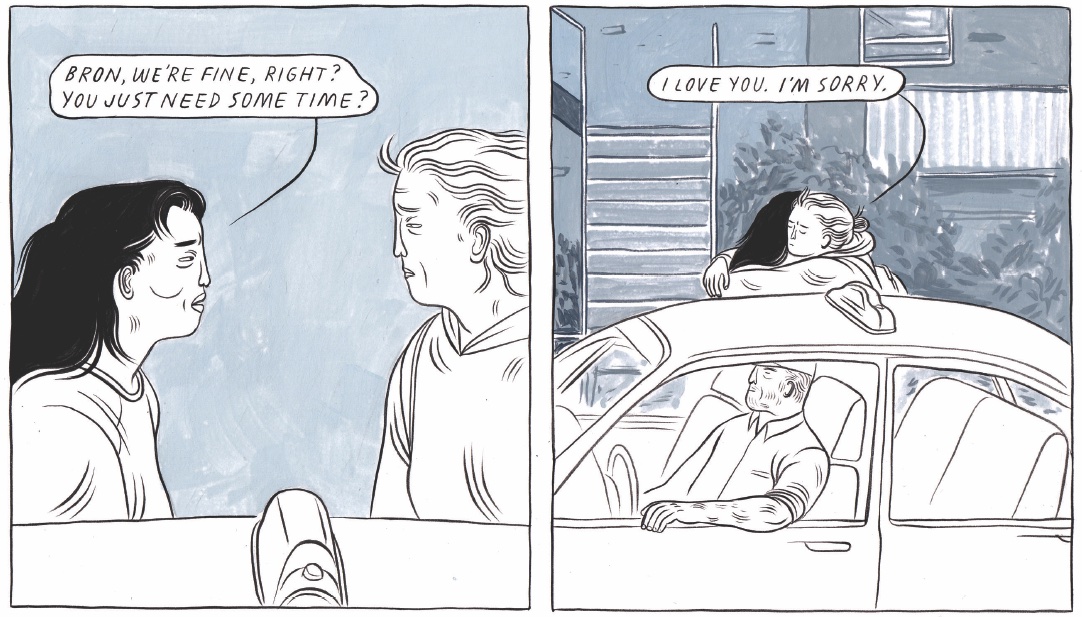
Lee Lai’s Stone Fruit is the kind of book that stays with you. Since I finished reading it, the graphic novel has been lingering in the corners of my mind, sticky and sweet as a nectarine. It’s a book about family, breakups, queerness, childhood, sisters, and healing, but most of all, Stone Fruit is an act of playfulness. It’s a promise that playfulness and joy can be found even in the face of great difficulty. The combination of Lai’s feral illustrations and the painfully honest emotions that guide the story create a delicate balance of lighthearted, magical fun, and real, complicated problems. 
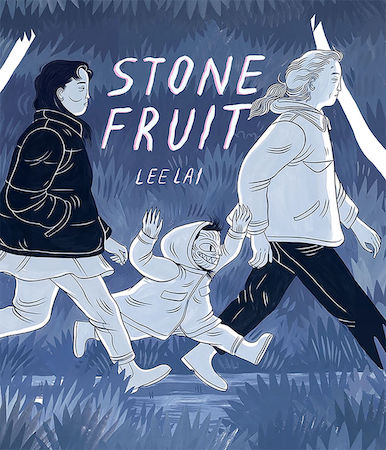
Stone Fruit follows Ray and Bron, a queer couple who’ve been together for years, as their relationship ends. The pair spends two days a week watching Ray’s niece, Nessie, while her mother, Ray’s estranged sister, works. When Ray, Bron, and Nessie are together, they enter a world of childhood and play and imagination that the three of them have built together. However, as Bron becomes more concerned with reconnecting with the biological family she left behind, Ray and Bron’s relationship falls apart. Separately, Ray and Bron must deal with the pain of their breakup and mend their complicated relationships with their biological families. 

Lai’s graphic novel is a story of grief and loss, but also of rebuilding and healing. The characters in Stone Fruit struggle and mess up, but they’re always trying to be better. Over Zoom, I talked to the National Book Foundations “5 Under 35” honoree Lee Lai about transformation, playfulness, and My Neighbor Totoro


McKayla Coyle: I noticed that one of the major themes of the book is transformation, and especially the way that queer spaces facilitate transformation. Do you believe that the transformations in the book could only have happened in queer spaces? 

Lee Lai:  There are spaces in the book other than queer spaces, and I was looking to explore the tensions between and inside both of those spaces. I set the book in a timeline where the characters have been in an exclusively queer space for a second, but the queer space that they’re in is quite small and insular, and pretty stuck. If I’d written the story earlier in the trajectory between the two partners, the queer space that they’re running towards, or rushing into, would have felt a lot more expansive. It would have been a more joyful book in some ways. 

I’m a bit sick of the queer escape story, and the coming into queerness story. Like, I’m not coming into queerness any more myself.

But I’m a bit sick of the queer escape story, and the coming into queerness story. Like, I’m not coming into queerness any more myself. I’ve been doing the thing for my entire adult life. I wanted to show a story where they’re double-backing on themselves a little bit. They’re leaning back into straight straight spaces, the family spaces that they were pushing away from earlier, to figure out what parts of themselves they left behind and the connections that they have with their family. A big part of my adolescence was that initial struggle to get away from origin family narratives, and then hitting a certain age and realizing that, actually, those things still exist in my body. I need to still give them some worthwhile consideration.  

MC: I have a sister who I’m super close to, so I’m very tuned in to sister relationships. This book is dedicated to your sister and it’s all about sisters—almost every major relationship in the book is sisters—which I love. How do you feel that sisterhood is different from other relationships, or more pertinent to your work? 

LL: I like joking that I love a good breakup. I love the transformation that can come out of it. I love change, as much as I’ll be kicking and screaming when it’s happening in my own life. The thing that’s interesting about sister relationships is that, I haven’t been estranged from my sister or any biological family member, but I think there’s something interesting about how they don’t actually stop being your family, even if you don’t talk to each other. I mean, I think that there are absolutely exceptions to that, which I can’t speak to. But there is this weird indispensability aspect to bio-family. 

I think it’s interesting that sisters and siblings can really bring out your fucking worst because you’ve known each other your whole life, and you really know how to piss each other off. You have such a clear picture of someone’s personality and the flaws that they’ve hustled to get away from and all the skeletons they try to push into the closet. But there’s also a sense of safety and familiarity in the fact that you can’t kick them off the bill, so to speak. You can’t make them entirely go away. For me, there’s a sense of belonging in knowing that I have a sister. Even though she lives on the other side of the world now, there’s something anchoring in just being able to say that I have a sister and that she’s got me. That’s a relationship that is constantly going on and that we’re constantly getting to know each other. 

MC: Nessie’s world is only ever accessed by Nessie, Ray, and Bron. What did Ray and Bron’s ability to access this world mean to you? 

LL: One of the things I knew I wanted to include in the story was play scenes where Ray and Bron and Nessie get to have a real time together. I wanted to show their play as a coping mechanism, particularly for Bron. She’s having a bit of a rough one outside of those spaces, so she’s using those spaces for escapism. I thought it was an interesting responsibility for Ray to be the initial gateway to Nessie for Bron. 

Siblings can really bring out your fucking worst because you’ve known each other your whole life, and you really know how to piss each other off.

There’s a scene where Ray tells Bron that maybe she needs to spend some time on her own with Nessie, and Bron can’t come. I had a few people give me feedback that that was a really heartbreaking moment for them as as non bio-family members to kids in queer situations, because they’re constantly scared that someone is to restrict their access since they don’t have biological legitimacy to that kid. Those play scenes were a chance to up the ante of the ways in which Ray and Bron value spending time with that kid, and the ways that they can access certain kinds of freedom in themselves. 

I also wanted to create problems between people that didn’t involve anyone acting like an asshole. I think when someone’s really acting like a jerk, the conflict resolution is relatively straightforward. Someone asserts a boundary or sets a standard, and then the other person checks themself and we move on. But conflicts where one person is genuinely just trying to get their needs met and it’s not suiting the other person, that shit is hard. It continues to be hard. It’s more interesting to me. 

MC: Since there’s this theme of transformation, I feel like there’s also a theme of bodies. Ray and Bron both need and want to leave their bodies often. When they spend time with Nessie, they’re able to leave their physical forms, or have freedom from their bodies. What do you think that Ray and Bron are offered in their feral forms that they aren’t offered in their human forms? 

LL: I think they’re offered sensation. When I’m dissociated and I’m struggling to get out of my body, I can’t experience a lot of sensation. But there’s such a joy in coming into the body and experiencing sensation. It means, on the flip side, you experience heaviness and pain and illness and all the undesirable parts of having a body. And for some people, that’s chronic stuff. But being embodied means you get to experience all of your senses more. 

I’m discovering more and more that there’s no limit to how much sensation you can experience if you’re willing to pay attention. That’s something a lot of people feel nostalgia about in their childhood, their ability to experience so much sensation. To be enthralled with dust in the air, or tasting a watermelon, or sticking your feet in pebbles. All of those things become really big, and they come with a lot of excitement and stimulation and pleasure. As an adult, being very preoccupied and busy, you get out of touch with experiencing sensations as much as you can. There’s something very childish about trying to take the time and hone in on sensations just for the sake of it. 

MC: I guess in a sense they’re becoming more embodied when they’re these beasts, instead of becoming less embodied. 

LL: It’s kind of both, maybe. There is escaping involved in that kind of play, and there’s a kind of hysterical momentum they get into, too. I think there’s just multiple ways of being in the body. It’s complicated. It changes a lot for me when I’m in company versus when I’m alone, and I don’t think either of them are better or worse, or more or less legitimate. I think they’re just worth paying attention to. 

MC: It seems like sometimes this transformation—or play—is a good thing. Nessie is able to indulge in her imaginative side and engage with Ray and Bron as equals, and they all have a world that they can escape to. But sometimes this expectation of transformation causes pain. Like how Ray wants really badly to be everything to Bron, and how Bron wants to be transformed, but isn’t always sure how to do the work. When do you think transformation crosses the line from being a good thing to a painful thing? 

LL: I don’t think those two things are mutually exclusive. The transformations in my life have been excruciating, all of them, and they’ve definitely been good. I love a good breakup and I’ve hated every breakup I’ve been through, whether that’s with friends or with partners or with anyone who I had closeness and intimacy with. I’ve gone through all the changes I’ve gone through, mostly kicking and screaming. But in retrospect, they’ve been very good for me, and they’ve probably been good for the relationships I’ve been in. I don’t know how much good change there is without pain and discomfort for some or all of the parties involved. 

To make it a literal thing, transitioning as a transformation for me was mostly quite joyful, but it does also come with a ton of physical pain, and a ton of pain around how it changes the way I walk through the world and the shit that happens because of that. I’m a big fan of change, but I think it’s always angsty, I don’t think anyone’s very good at tolerating it. 

MC: I’ve seen a lot of people talk about how there’s moments like that in Studio Ghibli movies, where it’s just quiet. Kind of like letting you pause with the story for a minute. One of the most poignant moments to me was this panel at the end where Nessie is waving to Ray and Bron. There’s no words, but it’s such a nice moment where they’re together and they’re having this moment of connection. 

LL: I learned a lot from cartoonists who do pauses in books and have panels without any dialogue in them. Do you know Bottomless Belly Button by Dash Shaw? There’s so many great panels where one person just blinks or gestures with their body in some way, and they’re such good moments for the read. It’s a wonderful read because of those moments. 

MC: I’ve seen a lot of people talk about how there’s moments like that in Studio Ghibli movies, where it’s just quiet. Kind of like letting you pause with the story for a minute. I really respect taking time to let the emotion of the moment sit. I don’t think enough people do that. 

LL: Speaking of Studio Ghibli, I definitely drew a lot from My Neighbor Totoro. When I watch that film, I can’t stop thinking about the animators who have to draw their clothes rippling in the breeze slightly while they do nothing. That’s hundreds of frames while they have this moment of pause. They have to draw that moment of pause. There were so many times drawing this book where I was like, “Oh, do I really have to put this panel in? It’s not serving the story.” I had to remember stories that I’ve enjoyed where it really does serve the story to do that extra bit of labor in order to have a moment. 

There’s this phrase that I wrote down when I was first getting into comics because it really did it for me at the time. I think it was like 17, and it was after reading Craig Thompson’s Blankets. That book really rocked my world, and so I got online and read every interview Thompson ever did. He said the term “sensuous comics” and that really did something in my brain, so much so that I wrote it on a Post-It note and stuck it on my wall. I think those kinds of pauses really help with sensuality in stories, and in comics, particularly, because I’m looking at a page and it’s all these panels and so my eyes just swallow it all up in one go. Having panels that make me chill out for a second is really helpful. When I’m reading stuff or watching films, if the balance is right between a story that’s pulling me along and then those slow moments, it’s fucking compelling. I feel fully arrested by it. 
In the Eyes of a Father of Daughters

“First and Second Children” by Matthew Neill Null

At the police auction, Glover ran into Jeff Daugherty, an old friend of his from the plant. “There ain’t no deals here,” Daugherty was saying. Word had gotten out—too many people. Three papers had featured the drug bust prominently. Daugherty had hoped for welding equipment; Glover heard seven vehicles were up for auction, and maybe one would do for Monica, who, at twenty years old, still lived in Glover’s home with a young child. Glover didn’t know who the father of his granddaughter was. His wife said, “Don’t you dare say a thing.” Some wouldn’t be brave enough even to come home, she continued; Monica might have ended up in one of them clinics. Glover held his tongue; as much as he adored his new granddaughter, he had a different opinion on said clinics. Today, he wanted to buy Monica a little car on the cheap so she could drive herself to work. Two sedans were on the block, but the one was bid out of reach before Glover could lift a hand. The other, plain rattletrap, went unbought. “I was under the impression that drug dealers was a little better off,” Daugherty said. “Watched too much Miami Vice. Not that I expected a cigarette boat nor nothing. And here I go, burning up another Saturday.”

Glover glanced around. The confiscated property filled an entire stock barn at the fairgrounds. “Had a lot of stuff.”

“Yeah, but it’s all junk. Look at them cars. Sell five and buy yourself one good one, you know what I mean?”

Even the auctioneer’s nonsensical droning could not entertain them. Glover bought a turkey leg off a vendor, and Daugherty treated himself to a roasted ear of corn. Men of their trade, both wore polka-dotted, short-brimmed welders’ hats, as if they had coordinated outfits. They sat on square bales of hay near the edge of an open barn, watching rain fall. Come October, the fairground would host the Black Walnut Festival—a meager, oily, acrid food that, once a year, everyone had to pretend to like. In terms of agriculture, it was the best that the county’s rocky, impacted clay could offer up. Glover doubted he’d bother coming back till then.

Laughing, two women carried a forty-two inch flatscreen through the drizzle, a coat flung over and protecting about a third of it. The wet screen shimmered like verdigris. Daugherty whistled. “Look at all this humanity, like you kicked over a damned ant hill.”

Glover was about to take another bite when Daugherty added quickly, “I got to tell you, I don’t like saying it, but I seen Monica last night. Riding in a truck with Brian Lassiter. Up on the ridge. I waved. She wouldn’t wave back at me.”

Glover chewed his lower lip, looking at the rain turn milky as it hit the fresh gravel. He had known about Brian Lassiter for a few weeks—like a firehose, Lassiter had scattered unclaimed children all over this county and the next one—but now Glover had to act surprised. With his free hand he rubbed his brow. “I’ll kill him,” was all Glover could find to mutter. He didn’t really mean it but didn’t know what else to say.

Through some tremor of the blood, Daugherty sensed his friend was aware of Lassiter’s exploits, but he was graceful enough to play along. “She’s young,” Daugherty said. “She ain’t the first. But Brian, hell, if the Lassiters are all bad, she picked the worst of the bunch.”

Glover was honestly sickened now. He tossed the uneaten turkey leg to someone’s dog, which rolled and groveled.

The grass of the overflow parking lot had been torn to mud. “Sold!” the auctioneer cried, banging the gavel so loudly that Glover jumped. Enough. He put his truck in four-wheel drive and wallowed out of there. He gave brief little waves to all he passed.


Brian Lassiter couldn’t be father to Monica’s child—Glover had done the math in his head. Thank God, Lassiter had logged a year at the prison farm in Huttonsville during the period in question. You could learn all about the sordid tale in the paper. Working as a repo man, Lassiter had been caught stealing stereos and other middling items from the cars he repossessed, perhaps the dumbest crime Glover ever heard tell of. Police didn’t exactly have to throw a dragnet. But Lassiter slithered out of a long sentence by agreeing to wear a wire and buy pills by the handful, and managed to put several local men and women in the penitentiary. Doty, Young, Postlethwait, Hamblin—all these families lost people to Lassiter’s testimony. The Grand Jury indictment read like the local white pages.

Men saw her out there, too. On display. But he couldn’t shut her up in here, as much as he wanted to.

Yet the county had a grudging respect for Lassiter, for he had returned home after his reduced sentence, here where surely a family member of someone he’d imprisoned would put a bullet in his head. Lassiter had an aunt down in Florida—why not dart South and start over? But Lassiter was pure brass and swagger, always had been, a little redneck gamecock, and he’d picked up an Oxycontin habit while performing his civic duty. Daugherty had said that Monica’s new beau was cut-man on a timber crew, the lowest respectable job you could get around here, though after child support garnishment cut four-five ways, it was hard to fathom how it amounted to anything. Maybe just a way to get a W-2 in his pocket and the probation officer off his back. Lassiter would be stealing copper and selling pills in no time, if he weren’t already. Lassiter was the type to live forever and populate the earth. Or the county, at least.

Monica and Lassiter, alone in that truck. One child, out of wedlock, with some stranger, could have been a mistake, to be chalked up to bad luck, a fleeting poor decision, but two of them amounted to something, a pathology, some buried imperfection of blood or of raising. She’d be doomed to a certain type of life. And never leave Glover’s house. The path was branching in front of her—he had to say so.

When Glover pulled into the driveway, he could see his wife and daughter in the kitchen cooking together, the cakes and pies they sold to Internet strangers. He began to lose his resolve.

“Hi, Daddy.”

“Hi, there.” His girls were his pride, his granddaughter Virginia on a mat in the living room teaching herself to roll over, the TV glowing bluely on her face. He bucked himself up again: worth fighting for. “Monica, could I talk with you a minute in the other room?”

“Sure, Daddy,” she said, but not before exchanging a look with her mother. He knew this moment would be endlessly discussed later on. On a typical day, Glover might utter twenty words, and he was eating into his allotment—he’d always felt you oughtn’t reveal yourself too much or people’d find a way to use it against you. Monica wiped flour from her hands. They walked back through the modest house, to her teenage bedroom that she once shared with her sister Justine, the one place you could get a little privacy unless you were willing to go out on the porch or under the butternut tree. The crib stood in the corner.

“What is it?”

“Well.” He looked past her, over her shoulder: picture of the graduating class. Was Lassiter in there? Lassiter with his sneering lip, like the purfling on a fiddle. Beside it, a bootcamp photo of Monica’s sister in front of the flag, hair in a single regulation braid. Glover said, “I didn’t find you a car. Sorry. Just had trucks.”

“I’d drive a truck,” said Monica, chipper now, relieved.

“Would you?”

“Be great for winter. These roads.” True: Monica flagged on construction sites way back in the mountains while the crews knit together vast well pads that glowed like space stations in the night. Glover had seen his daughter at work with her hardhat and walkie-talkie, tossing her a grin and a wave. “And I wouldn’t have to hitch with Cassie no more,” she said.

Men saw her out there, too. On display. But he couldn’t shut her up in here, as much as he wanted to. Glover could hear his wife, whose name was Minerva, cooing to the baby. After a silence, Glover said, “I’ll see what I can do.”

Monica gave him a hug. Something about that small room had sapped him. His other daughter, Justine, had died in a helicopter collision in Mosul, Iraq, not ten days into her deployment, and he sensed her there watching him. Justine was shaking her head, telling him to call a spade a spade, speak up, give her sister a healthy jolt of God’s honest truth. She was forever his tough girl, as tough as the boys.

A man like Lassiter reached out, Justine would have snapped his arm off at the shoulder, tell you that much. She would have seen his kind coming and going.


After the child was put to bed, and Minerva had retreated to her room and a library book, Glover and his daughter looked between the TV and their phones, as they did of an evening. A rerun of a talk show that was popular ages ago when the girls were in pigtails (the one on which a man once married a horse, complete with bridal veil) played on the screen. Glover wasn’t paying attention until the episode became too outrageous to ignore.

A smartly dressed account executive from San Francisco was explaining that she made her home with her husband and her boyfriend. Glover chuckled. “Would you look at that?” he said, making Monica glance up. Then the woman’s two children were trotted out, and the host asked them, these dewy-eyed middle schoolers, what they thought of it. We love having two dads, they cried. And now we’re gonna have a third! The audience gasped. “Bring him out!” the host boomed into the mic. “Bring him out!” A spindly, tattooed character strode on stage and kissed the executive on the mouth.

“And we’ll all be living together!” the children cried. The executive was pregnant again. The audience howled like wounded beasts. The meaty security guard warned them back.

“That’ll be you in a few years,” Glover said to Monica. “All them fellers you’re chatting with. Hard to pick just one!”

He meant it as a joke, but, after giving him a wounded look, she tucked her chin into her chest and began to weep. Glover blushed. When he tried to apologize, she scuttled back to her room. Should he follow? Doors opened and closed. He kept watching the show. Soon his wife came out.

Minerva turned off the television and said, “You’re gonna give her a complex, always bringing stuff up like this. You’re fixated on it.”

“Oh, I am not.”

She picked up Monica’s empty pop can to throw away. “We raised her. Now we got to trust her. Don’t you go saying another word to her.”

“How’re you gonna feel when she shows up with another baby? There ain’t nothing wrong with putting a little fear in these kids.”

“Dear, there are a hell of a lot worse things than a girl fooling around before marriage.”

“Not many, not around here!” he cried. He settled back into his own body, exhausted. “I’ll go back there in a minute, tell her what needs to be said.”

Minerva sighed. “No. No way. You worried over this? Then I’ll find a way to bring it up. You got a way of going off half-cocked. Then we got to live in an uproar a week. She ain’t like Justine. She ain’t tough like that. I’ll talk to her.”

Before leaving the room, his wife turned the TV back on, where the episode was rolling its credits and its outcome, for him, was left in doubt.


The time for talking was over. Later that night, Glover slipped out and drove to the trailer where Brian Lassiter lived. It sat where the two forks of Bear Run joined like a wishbone.

Glover had a .40 caliber pistol beneath a flannel shirt on the bench seat beside him.

People would suppose an imprisoned man’s relative had drifted out here to the trailer: tooth for tooth. The Youngs spoke openly about wanting to shoot Lassiter, the father braying it down at the tavern, saying the kid ought to watch himself. Glover felt himself change, rising like a fiery bird to the occasion.

As he passed through the notch in the ridgeline, the black sky flared orange and blue with burn-off, where long-neglected farms had sprouted industry. The bands of color flashing on his face, he drove through the county that had been his home forever, that he hardly recognized. The doldrums of the 1990s and 2000s were imprinted upon him, when work was scarce and coal prices low, when Oxycodone scythed down the young people and an expensive war lured away many of the rest including a child of his, but now they had the boom, with Chesapeake Energy drilling fresh wells on every ridge and all the work a man could want, the galling agent and ethylene pumping into the busted shale, the Schlemberger trucks crowding you off the roads and the courthouse packed every day with land agents. One-eight hundred signs on the roadside begged to be called if you owned mineral rights (Glover’s people, of course, did not). Glover had been born too early­­—or too late. He was amazed when commerce began again, as if God had flipped the switch. Chain hotels and restaurants, EPA inspectors and pilot cars, Texas roughnecks and lines out the Post Office door for money orders.

Only now did he understand how it had played out in that small house, how his alliance had crumbled.

If only it had been like this when Glover was in his prime, his thirties and forties. He still worked hard but, paunchy, breathless, diabetic, he couldn’t pull time-and-a-half like a young dog. Ten hours on the torch wore him to a nub. He had been lucky to wriggle into the pipefitters’ union back in ’81 when apprenticeships were scarce; the son of a shade-tree mechanic, he had wanted nothing more than to be respectable, and a union job accorded respect. Even if he lacked seniority. But reality was unkind those years: drive out at six a.m. to the Clarksburg labor temple, wait for the steward to call out jobs, get sent home half the time. He might bank twenty hours a week at a chemical plant, with healthcare and benefits, true, but no real money to speak of. Breaking contract, he took side jobs for cash like other guys did. Cut grass. Bale hay. Mark timber. Two daughters to feed. What else could he do? Minerva had run an unregistered daycare out of the house until a disgruntled parent reported her to the state; after back taxes, it caused more heartache and aggravation than it was worth. Yes, with today’s money, they could have had more children, a big house, and really set the kids up in the world.

They wouldn’t have had to scrape by. Bought new cars instead of prowling auctions. Justine wouldn’t have needed army money for college—she wanted to go to the state university, be somebody.

Two spike bucks appeared in the roadway and leapt to either side, like ballet dancers. Glover didn’t even have to tap the brakes.

“She don’t know how hard’s raising a kid,” he had said the night he learned of Monica’s pregnancy, true fear on his face. If only they had infinite money…

“Oh please,” his wife had said. “You’d be kicking up a fuss either way. Always worrying over what people think of us.”

“I just wanted better for them.”

“We are what we are,” she whispered.

No. That he could not accept. He reached over to touch the pistol, to make sure it was still there. A good Sig Sauer, bought when pills and break-ins hit the county.

His plan for tonight was vague. He would show Lassiter the pistol and say, “See here?” hoping the fellow would understand, drift off from their little lives. But he knew enough that someone like Lassiter might not let it stop there, that Lassiter would crave the final word.

But time for talking was over, he reminded himself. In a bitter turn, Glover found himself hoping that Lassiter didn’t rate Monica too highly, that he wouldn’t want the hassle. Just another lay. Glover shook his head, sad for her. In all his life, Glover had slept with a single partner and couldn’t understand why that wasn’t enough for everybody. He had never been able to understand a life other than his own.

When his daughter swelled with child, friends like Daugherty looked askance. Acquaintances laughed. Teachers smirked. In a small place, everyone knows everything. And his wife acted like nothing could be more natural. “It’s common now,” she’d said with a shrug. “We wanted grandchildren, we got one, ought to count our blessings.” Unsaid: Now we got something to think about other than Justine. Oh, at least Justine was spared all this. He could hear her sardonic voice: “I’m not surprised in the least!” Justine had never rated her younger sister too highly. Father and Justine, mother and Monica—only now did he understand how it had played out in that small house, how his alliance had crumbled.

Maybe soon there’d be five under his roof. The thought made him wince.

He knew there was a chance that, no matter what he did tonight, Monica would begin to show in the months ahead with the second child. Too early, too late: Glover almost had to laugh at himself. He should have done this weeks ago.

Unless.

Maybe he should take Lassiter aside, offer him the right path, mention marriage, put in a word for the boy at the Pipefitters’. Working overtime for Chesapeake, a young buck on the welding torch could pull in eighty thousand dollars a year, easy. But no. The Pipefitters’ wouldn’t take a felon. Glover was thinking crazy, thinking himself out of his decision—a Lassiter won’t change.

He didn’t pull into Lassiter’s drive but into a clearing across the way—Tom Beverlin owned that clearing, he wouldn’t care. Indeed, Beverlin would welcome the killing. Someone sharp would buy the trailer for scrap and haul away the junk cars that Lassiter foundered there during his incarceration. It would be as if Lassiter had never existed. The low meadow would bloom again, then turn to briar, to laurel, to red oak. Time would rewind like a YouTube clip, Glover’s hand dragging the icon back. No one would miss Lassiter except for weeping, half-known children who couldn’t understand that fate had done them a favor by sparing them decades of disappointment. Indeed, they could live on under the illusion that Lassiter had been a decent man, a tragic loss, no trifling reality there to prove them wrong. Maybe Glover’s own grandchild would come to think that way. He parked the truck, checked his pistol once again (yes, a round pulled into the chamber), and took it out, still wrapped in the flannel.

He was amazed when no dogs barked out his presence. This was the one trailer home in West Virginia with no dogs. Only the tree frogs sang.

Maybe he wouldn’t have cared so much if Justine were living. Justine would have taken care to marry in church, raise right the children, pay off her mortgage, parlay her service into a career. At least one part of the family would branch right. Even as a little girl, Justine seemed to sense a shining path in front of her, and she followed it down. All Glover had to do was stand in silence and look on, cheer in his heart.

Glover stalked through the high grass, seeing himself like a man in a movie. The porch light was off, what luck! He navigated by a moon near full—a cloudless evening, so rare here, with its humid spring and curtains of rain. It was as if God had made this night for him. For once God had him in mind. Glover rapped on the back door, where no one could see him.

When no answer came, he pounded.

Only then did he notice the broken shutters, the open window and the curtain lifting gauzily on the breeze. Even in darkness, he could sense the rot and abandonment inside. No one had lived here for ages. The car in the driveway, he now saw, was up on blocks. Glover couldn’t help but blush. He didn’t know the county as well as he thought. Out there on ridges lit by burn-off and floodlight, Lassiter was driving.


Glover wouldn’t try again. He knew it the moment he backed away from the trailer, shuddering at what he’d almost done. Another way of living flickered in front of him. Now it was gone. Would anyone be waiting up for him at home? Surely, in that small house, they had noticed him missing.

They should have talked, father and daughter. “Don’t worry,” Monica would have comforted him, had she known of his concerns. She would have said, “Brian’s just a friend of mine.” There would be no second child. Even up here on the ridge right now, as Lassiter took her elbow in his hand and turned her arm slightly, she had no romantic designs on him, he was like a little brother more than anything. She leaned forward, to be closer to him here in the truck, in this bubble of light. “Feels good to be out of that damn house,” Monica was saying. “Everybody watching you. Feels good to relax.” She and Brian would always be close, she suspected. He would figure prominently in the next two years of her life. Gently, he slid the syringe into her arm, not too far, the orange cap in his mouth like a tiny cigar. “You good?” he asked. In just a month or so, she’d be up to doing this on her own. He might try and kiss her afterward, but that meant nothing, compared to the everything that she felt right now.

8 Books that Capture the Essence of Tennessee

Growing up, I didn’t know that writers existed in Tennessee. We have songwriters and musicians, of course. They are in your family. You go to school with their children. See them in line at the grocery store.

But as far as someone with their work published and waiting to be read on the shelf of a bookstore, I’d never met anyone like that. Writers were a foreign thing. From different states, different countries. Places more interesting than the place that I came from. I could never have imagined that Tennessee was a place worth writing about. It took me years to realize I was wrong about that. And I hope to be wrong about that for a long time. 

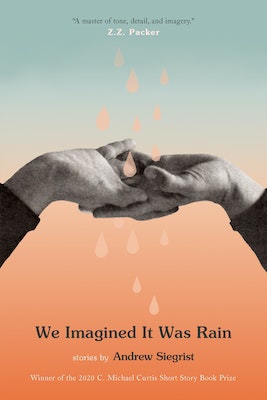
When looking back at my collection We Imagined It Was Rain, stories that take place in Tennessee, I realize that almost all of them were written when I was away from this place. Living in cities with vibrant cultures, beautiful settings, and interesting people. Places with very much to write about. But whenever I sat down to write, I always came back home in my imagination. This place has etched its initials into my bones, and will always influence the stories that I try to write.

Here are 8 books that capture the essence of Tennessee:

The Overstory by Richard Powers

Though this would not be considered a Tennessee novel, the inspiration behind the writing of it definitely derives heavily from the state. In interviews, Powers regularly described the impact that the old-growth forests of the Smoky Mountains had, and still have, on him and his writing. So much so, that after researching the trees of the eastern part of Tennessee for this novel, he decided to make his home there. He describes the awe of entering a forest, of the light change, the sounds and the smells. This book demands the reader pay attention to what we so often take for granted, the things that grow all around us. 

Having lived in a rural community in Tennessee that is constantly under threat of development, this novel reinforced my belief in the critical importance we share to save any bit of nature that we can. No matter how big or small. His writing calls us to take the time to look around us and appreciate what this earth has blessed us with.

A Good Cry: What We Learn From Tears and Laughter by Nikki Giovanni

Nikki Giovanni says: “I write a lot about Knoxville because Knoxville is my heart.” Her work set in Tennessee— including her poem “Knoxville Tennessee” and her famous “400 Mulvaney Street” essay—is a celebration of Black life in Knoxville, specifically the street in town where her grandparents lived in the 1950s, now completely changed since Giovanni’s childhood summers with her grandparents, who were prominent members of Knoxville’s Black community.

Giovanni’s voice in poetry and prose is unmistakably Appalachian, and has chronicled the experiences of Black Tennesseans over Urban Renewal and the Civil Rights Movement. Her work holds surrounding communities accountable through an expression of what has been lost.

Late Migrations by Margaret Renkl

The essays in this collection weave together the personal with the universal. Stories of her family matched against the observations of a devoted lover of nature. Renkl writes in a way that you can hear the birds calling out from the pages of this book. You feel the inevitable grief that time demands of us as families begin to wither. Reading these essays is an emotional and sensory experience. 

Much of this book is set in Nashville. The place where I grew up. Reading these essays, I could smell the woods she described walking through. Much like Richard Powers The Overstory, this book put me in a heightened state of awareness of the world around me. The sound of summer cicadas. The momentary pause of a caterpillar on a leaf. 

Renkl also reminds you that life is fragile. She writes:

“Hold still.”

“Be quiet.”

“Listen.”

This is the experience I had reading this book. It made me be quiet and listen. Listen to the birds and the summer cicadas. Listen to the breath of the ones I love sleeping beside me. It made me hold still long enough to be grateful for all of it. 

Maps for the Modern World by Valerie June Hockett

I first became aware of Valerie June Hockett through her music. She is a singer/songwriter from West Tennessee with a very distinctive voice and style. Both eerie and beautiful. I have often listened to her songs sitting by the river near my house. They are always inspiring. Always put me in a place where I want to create something, to get out the notepad and start to write.

Maps for the Modern World is her first book, and the poems in it read almost like short meditations. Quiet mantras to repeat to yourself in the morning while waiting for the coffee to cool. 

Like the other books on this list, June Hockett’s poems ask you to take a minute, reflect, breathe. Consider yourself and the universe around you. 

Basin Ghosts by Jesse Graves

In this collection of poems, Jesse Graves proves himself to be a craftsman of imagery and detail. Graves is a writer from East Tennessee and with these poems, it feels as if he is handing you photographs of the place and letting you discover it yourself. In the poem “Tennessee History,” he writes:

There are many ways to study Tennessee history,

One of them is to sit on Malcom Walker’s front porch

As late afternoon unspools across his yard,

And the hills of John Jess Lay Hollow rise up around us.

Graves transports you to the place. His place. You come away with a sense of a deep personal history that the place he comes from holds onto. It’s a glimpse into the lives of people who were born and died there. “Stories held within the earth,” Graves writes. And that is what this collection feels like. It’s the stories that a place holds. 

Southernmost by Silas House

The story begins with a flood. In the aftermath, Asher Sharp, a local preacher, takes in a gay couple in need of shelter. His decision to do so causes a division between Asher and his community, which eventually causes Asher to flee Tennessee with his son and travel to Key West. Set in part in a small town in Tennessee, Southernmost deals with themes of love and tolerance and what it means to reassess the deep-rooted parts of ourselves and the communities we come from.

I read Silas House’s early novels while in college. I was first drawn to him by the lyricism of his prose. His sentences are beautifully written. But what sticks out to me most in looking back at everything he has written, and Southernmost is no exception, is the love that is apparent in the way that he brings his characters to life. There is an abundance of heart in his stories. 

Oftentimes, Southern literature tends to lean into the dark, the gritty, the violent. What I think House does so well in all his writing is he shows a tender side to this region of the country. He shows the love that abounds here. 

Suttree by Cormac McCarthy

Speaking of the dark, the gritty, and the violent, this book has all of that. McCarthy is one of the figureheads of contemporary Southern fiction. Though much of his later work is set outside of the region, Suttree is set in Knoxville, Tennessee where McCarthy spent his childhood. He is known for his distinct prose style. Often times Faulknerian and poetic. The opening line to Suttree reads:

“Dear friend now in the dusty clockless hours of the town when the streets lie black and steaming in the wake of the watertrucks and now when the drunk and the homeless have washed up in the lee walls in alleys or abandoned lots and cats go forth high shouldered and lean in the grim perimeters about, now in these sootblacked brick or cobbled corridors where lightwire shadows make a gothic harp of cellar doors none shall walk save you.”

This is a sprawling novel, following a main character who shuns his privileged upbringing to seek out the dregs of society. We follow him from misadventure to misadventure. From bad relationship to bad relationship. However, the darkness of the plot is difficult to turn away from, in large part to McCarthy’s mastery of the prose. When thinking about Tennessee literature, Suttree is a hard book to overlook.

Truth & Beauty: A Friendship by Ann Patchett

As a child, I used to ride my bike to a local pet store and look at the hamsters and the ferrets. This was years before I ever had any idea I wanted to become a writer. I’d calculate on a scrap of paper how many lemonade stands I needed to run before I could afford a cage. Now, years later, the pet store is gone. In its place is Parnassus Bookstore. The owner is the novelist Ann Patchett. 

Now, I still go to this store regularly. But instead of saving nickels for ferret food, I go to see my favorite writers read. To buy collections of short stories. To imagine what it would be like to see my book on the shelf.

Truth and Beauty is a memoir about friendship. About a bond throughout difficult years and difficult lives. It is brutal and honest. Heart-wrenchingly so. 

It is the story of Patchett and her friend Lucy, who she met in graduate school while studying creative writing. Patchett describes their years together. The struggles they shared together. It is not an easy read, but there is certainly enough beauty on these pages to keep a reader transfixed.

How To Write About Trans People

“The way we see things,” John Berger writes in Ways of Seeing, “is affected by what we know or what we believe.” I always liked that line, but I only felt the full weight of it after I started transitioning: every day I watch other people cut me into parts and put those parts together in ways that make sense to them. Old straight people are visibly confused by me, or else overcompensate and call me “lady” over and over, as if to convince themselves. Transphobic people look at me and insist I must be a delusional girl trying to escape the traumas of womanhood. Some people find me pitiable, or threatening, or exotic, and they’re usually hungry for gory details about bodies like mine, which form the basis for their feverish and alienating fantasies. But their responses to me inevitably reveal more about themselves than they do about me.

In the first part of this series, I talked about how trans characters have become a common feature in literary fiction novels by cis authors, but this decision is rarely acknowledged or discussed by cis reviewers and critics, because people are uncomfortable talking about transness and implicating themselves as they discuss it. In this second part, I’m going to look at how cis authors use trans characters, how their ways of seeing trans people shape their writing, and how trans rep might be done better, more interestingly, and more authentically.

To break a certain taboo: cis authors gain something from writing about trans people. That isn’t meant to imply that cis people shouldn’t ever write about us, or that cis people’s relationship to transness can only be mercenary and cruel. (Some of my best friends are cis, you are valid, etc.) It just means that most cis people must reach substantially outside their comfort zone and lived experience to write about transness, so, when they choose to do so, it tends to be for a few common reasons. Transness has plot utility and immense cultural power; it’s connected to modernity and a liberal, cosmopolitan sensibility that values diversity; it’s a key source of fascination and existential anxiety; and it’s the source of an ongoing liberation struggle, so it can genuinely be impactful to include trans people non-pejoratively as book characters.

To break a certain taboo: cis authors gain something from writing about trans people.

But talking about a complex and fraught phenomenon like transness means being honest about the roots of the discussion: what do trans characters do for cis people? What messages, anxieties, and ways of seeing are being encoded in trans rep today? And where does that need to change?

Use 1: Plot

Transness can be very useful for instigating plot. In Rachel Kushner’s The Mars Room, a riot at a women’s prison over Serenity Smith, a trans woman, joining the prison provides a distraction so the main character can escape, while transition itself is the core plot arc for the “Gender Novels” I mentioned in Part 1. Transness also has a lot of metaphorical and magical dimensions surrounding transformation, though I’ve generally seen trans writers explore this more than cis writers (Callum Angus’s A Natural History of Transition and Jess Arndt’s Large Animals both craft magic and horror out of a wider sense of changing, unstable bodies). When cis writers use transness as a plot instigator, they tend to be interested in the violence and conflict that transness draws, from the position of a witness. We see Serenity endure a lot of violence in The Mars Room, but we see little of her character when she’s not being attacked, and little of her attackers’ thinking. Ultimately, the whole riot just serves to progress the main cis character’s arc. 

Anti-trans violence and the anxiety that prefigures that violence is, to me, a very apt subject for a novel (note: this is a plug for Alison Rumfitt’s Tell Me I’m Worthless, please read Alison Rumfitt’s Tell Me I’m Worthless). But you have to get your hands dirty, by which I mean you have to chase that violence to its roots, to the people who derive pleasure and comfort from that violence. Even liberal, accepting cis people are voyeurs of trans pain; we’ve seen the movies, we’ve seen how “pre-transition photos” auto-completes every time you type in a trans person’s name on Google. And anti-trans violence can often trace its roots back to respectable people with reasonable concerns about the safety of young children, the same as anti-gay violence can. Portrayals of anti-trans violence are neutered if anti-trans violence is just a plot device or a mute, inevitable event, like the weather, and if the only people who contribute to that violence are individual extremists.

And anti-trans violence can often trace its roots back to respectable people with reasonable concerns about the safety of young children, same as anti-gay violence can.

Plus, if trans characters just come in to advance the plot arc of cis characters, there’s a similar problem to the “Black side characters assist the white protagonist and then die” or “saintly disabled person imparts wisdom to the abled protagonist and then dies” phenomena. It implies that trans life, Black life, and disabled life only meaningfully exists when white, cis, abled people are basking in its inspirational light. It’s not difficult to evoke a character’s independent life, even if the book doesn’t have space to talk about it much.

Use 2: Setting

It’s the 21st century, baby, and you can tell because the transgenders are here! Put a trans person in your book and it works as an immediate tone and setting marker: your book is now modern, cosmopolitan, clued-in, identity-conscious, wise to the diversity of the world. It possesses that earnest liberal flavor that conservatives sometimes mean when they talk about “wokeness.” Nostalgia Nalan, the trans sex worker character in Elif Shafak’s 10 Minutes 38 Seconds in This Strange World, is an effective microcosm of Shafak’s Istanbul and its bright underbelly: contemporary, scrappy, smart, motherly, she’s the heart of Istanbul, though Istanbul wouldn’t want her on its billboards. Her transness, as well as her status as a sex worker, immediately signal a certain authenticity of the underclass, the kind of person that chimes with the story about Istanbul that Shafak wants to tell. You get a sense of Shafak as a writer: warm, kind, socially conscious.

The problem I have as a trans reader, I suppose, is that if a book is using trans and sex-working and refugee and disabled characters to signal a certain worldliness, then it’s automatically addressed to people who don’t hold that status. The characters in 10 Minutes can express anger at femicide and at generalized hatred of LGBTQ+ people, because those are angers that the intended reader – likely a white, liberal, middle-class woman – shares. But they don’t get to have the kind of insights and angers that might cause discomfort in such a reader. I can’t even imagine a character like Nalan using the word “cis,” because cis people don’t use that word, and it would separate her from the reader who is supposed to happily pour their warm sympathy over her head.

Use 3: Anxiety

Hm. So. Transness takes what are considered the foundational texts on being alive and makes some significant changes. This can freak people out. What does it mean to be a woman now? To be a person? To anticipate your own gendered future? To address and relate to others? I don’t know! But I sure am going to worry about it. And if I write about a trans woman being rude to a plucky moderate cis woman who just wants to understand her, maybe I can work out my anxieties about trans people in the privacy of my own New York Times bestseller.

What does it mean to be a woman now? To be a person? To anticipate your own gendered future?

Trans characters often ventriloquize cis anxieties, either to combat them or stoke them. This can manifest as trans characters giving rehearsed spiels – I knew from a fetal age that truly, my brain was male – and pleading for their lives and dignity while elegantly countering common transphobic talking points. It can also manifest as Bibi, the trans woman character in Girl, Woman, Other described as “a woman with male confidence,” who over-explains feminism to an AFAB character, then apologizes for presuming to know more about womanhood than someone who was born a woman. The former is saviorism; the latter is indulging the fantasies of an in group (here, cis feminists over 40 who are suspicious and resentful of trans women and wish to relegate them to second-order womanhood, if that). Both are a way of using trans figureheads to communicate with other cis people over the heads of trans people.

Girl, Woman, Other would be a better book if Bibi was a full character who could talk to the other main characters, and they could discuss their mutual anxieties around the history of feminism and the realities of womanhood. So many books would be better books if they understood trans people for what we are, canaries in the gender coal mine, rather than thinking of us as disturbing the gendered life that was definitely super peaceful and fine before we got here.

Use 4: Inclusivity

Some books just have trans characters because they want to; they want transness to be an ambient part of their world. So, how do you make transness an ambient part of your world? You casually make some characters trans. But how do you recognize a trans person? How do you convey that a person is trans?

Cis authors tend to have a default answer to this question, as we can see in our introductions to the transness of two characters in N.K. Jemisin’s The Fifth Season:

One girl has sharp teeth because it is her race’s custom to file them; another boy has no penis, though he stuffs a sock into his underwear after every shower.

She does this in front of you, shamelessly stripping down and squatting by a wooden basin to scrub at her pits and crotch and the rest. You are a little surprised to notice a penis somewhere amid this process, but, well, not like any comm’s going to make her a Breeder.

I’ve seen people cite The Fifth Season as a favorable representation of transness, presumably because these descriptions explicitly include transness in a way that is designed to be matter-of-fact and accepting: yeah, this woman has a penis and this man doesn’t, that’s fine. What they miss, however, is that these gestures of acceptance are endorsing cis-normative, objectifying ways of seeing trans people, in which trans people are dissected by a cis Eye and that Eye goes straight to the groin area (or the stubble, or the breasts, or the relative diameter of hands/feet). It’s the same kind of base impulse to gawk and fetishize that drives so many male authors to over-describe their female characters’ bodies.

A slightly better introduction to a trans character might be Fiona in Daisy Johnson’s Everything Under, who is initially introduced through affinity: Margot, who later turns out to be trans, is drawn to Fiona, though his mother is unsure why. Then, a few years later, this exchange happens:

Once – she was eleven or twelve – Laura sat her down and told Margot that Fiona used to be a man.

Sometimes, Laura said, we don’t want what we’ve got. Eat your porridge.

The next time she saw Fiona, in her garden hacking at weeds, Margot put her mouth to the earring-heavy lobe.

Secret? Margot said.

Fiona nodded, raised her hand and pressed it loosely over her chest. Not a soul.

Margot told her what Laura had said, that Fiona was a woman in a man’s body.

That’s the truth, Fiona said, like a fish still alive in the body of a heron.

It fascinated Margot. For weeks she thought about that fish, pushing through the feathers, searching for salt water. In the mornings Fiona would be sitting in her garden and Margot would hand over a cup of tea. Can you? she’d say, and Fiona would take the eyeliner from her pocket, bend down and draw a thin mustache over Margot’s lip.

This is so interesting to me because space is given here to trans perspectives: we get to see Fiona’s evident discomfort (“like a fish still alive in the body of a heron”) at the description “a woman in a man’s body,” and we get to see Margot processing Fiona’s discomfort, seeing Fiona push through the reductive terms given for her existence and finding space for her life. Fiona’s perspective and Margot’s interest in Fiona give Fiona’s transness meaning and complexity, and they mean that Laura’s perspective – generally accepting, but oversimplified and a touch outdated – is given context. Unfortunately, thirty pages later, we get a gratuitous reference to Fiona’s “bulge.” The impulse to gawk so often wins out.

Avoiding reductive ways of seeing and representing trans people requires engagement with how trans people see and represent themselves. With trans characters, it depends a lot on the specific character and their relationship to the world around them. Are they very publicly out, and likely to crack jokes about transition? Do they have an affinity with another trans character; might they subtly signal to another trans person (“Hey, I think I know you”)? Can you cue their transness situationally rather than siting it in their body: awkward reunions at the all-girls school, moving cities to access healthcare? How might the character introduce their transness to you if you asked them? Would they just say they’re trans? Including transness is good, but doing it casually without examining these cis ways of seeing risks perpetuating the exact same cruel standards that casual inclusion of transness is supposed to oppose.

Can you cue their transness situationally rather than siting it in their body: awkward reunions at the all-girls school, moving cities to access healthcare?

The binary of “anti-trans” and “pro-trans” people is facile when it comes to art. It fails to account for the thornier issue of people who accept that trans people exist, and that we deserve rights (thanks!), but who think that belief frees them from introspection and responsibility. A lot of pro-trans people are letting their id run unchecked in their books, and it is embarrassing to watch. Sorry. But I don’t like the idea that we should just expect cis authors to zone in on the penis, like that’s the only thing they’re capable of doing. It isn’t. I really do have cis friends! And I genuinely would be excited to see more authors talk about transness after engaging with their own cisness. We’re all in this gender coal mine together, after all.

It is intimate and humbling work to examine your own eyes, to try to alter how you instinctively see people when it conflicts with new knowledge. It’s the same work, non-coincidentally, that people often do when they or their loved ones come out as trans. It’s slow, but transformative. It’s good work, and worth doing.

A Dinner Party About Lost Selves and Lost Chances

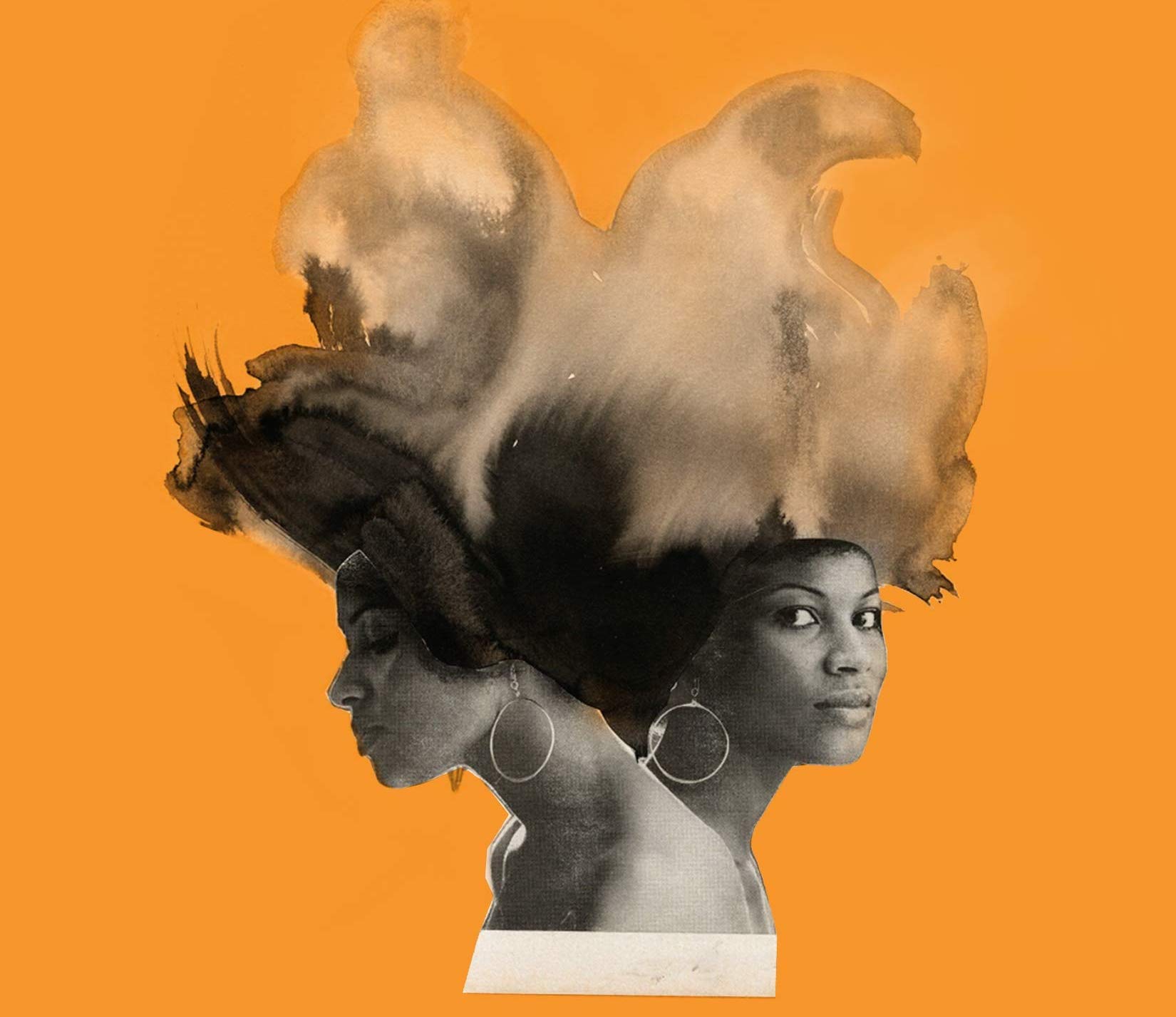
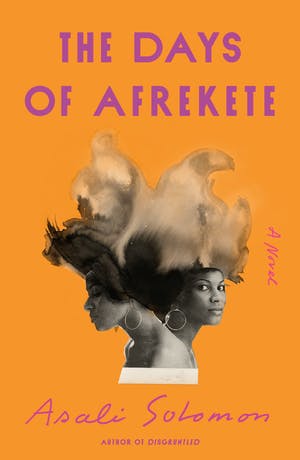
Asali Solomon’s The Days of Afrekete follows the searing, tempestuous love affair of Liselle and Selena, two young Black women who grew up in Philadelphia. This is a complicated love, a buried love, but one that refuses to be forgotten. And yet Liselle, the novel’s main character, tries very hard to forget. 

The Days of Afrekete

The novel opens on a dinner party reminiscent of Mrs. Dalloway—mushroom tarts, a catered spread, a cast of characters no one actually wants to sit beside at the table, including Win, Liselle’s husband. It is not entirely clear even to Liselle why she has married Win, a wealthy white real estate lawyer from Connecticut whose trust fund and inflated sense of self has driven him to run for state legislature. Only Liselle, in the crowded room, knows that her husband is being investigated by the FBI, and that the knock might come at any minute.

Out of fear of ending up like her mother Verity, alone and struggling financially, Liselle entered with Win into an uneasy “alliance and conspiracy against various imprisoning realities” that only now brings regret. Yet what begins as a story about a Black woman reeling from her husband’s corrupt failed bid for office becomes, very quickly, a reckoning with lost selves and lost chances. Over the course of the evening, everything that is artifice in Liselle’s life begins to crumble—her marriage, her lifestyle and comfort, the insularity and protections that have come at the cost of authenticity and desire. And we eat it up, thanks to Solomon’s humor and bite, and lines like: “It was the beginning of a parable: a parable or that Billy Ocean song,” and “Promise me you won’t wind up with some ugly white bitch.” 

Liselle and Selena, apart for twenty years, come back to one another in surprising, witty, haunting recollection. The Days of Afrekete is a book about queer Blackness, friendship, and the power of reclamation. 

I interviewed Asali Solomon in West Philly, where we both live and participate in the Claw, a salon for women and nonbinary writers. 


Annie Liontas: Asali, I did not know you were writing a sexy book!  

Asali Solomon:: It didn’t come up!

AL: I remember you describing it as a dinner party that draws on Virginia Woolf and this friendship, but I am thrilled to be reading a queer Black romance that raises questions about class and security. 

AS: You never think about what you’re writing in the terms that are the headlines for other people. I did base the structure on Mrs.Dalloway, but that wasn’t what I was thinking consciously about as I wrote. The idea for Afrekete initially came after reading about Chirlane McCray, Bill de Blasio’s wife—a Black lesbian poet—when they were still campaigning. I thought, this is crazy, how does that happen! But there were other sources and influences, some of them random. Middle age, for instance. The Good Wife. Sula, which is one of my all-time favorite books and is about two women whose relationship is the most important one in their lives, but they are not romantically involved. So I was like, what if that actually was part of it?  

The queer romance has to do with thinking about how marginalized but essential Black women are to the functioning of the world. Liselle, particularly, is anxious about making an alliance that will bolster her socially and socioeconomically, and the risk that is involved in forming her strongest alliance with a Black woman. That there could be something saving or recuperative about that. 

AL: The relationship between Liselle and Selena is the novel’s most moving—if volatile—connection. What about those early loves that define us and which we carry, even after they’re gone?

AS: Part of that comes from thinking about middle age and how memory works. This is a time when people think of the relationships they’ve had. You’re sort of doing a forward moving review of your life as you live it. Liselle is thinking about the choices she has made and how she didn’t really get what she wanted out of those choices. The subplot of the FBI is the universe’s way of more strongly suggesting that to her. 

As far as the effect of early loves—this really does harken back to Sula. In middle age, you’re looking for people to meet you where you are. But in youth, there is this sense that the people you meet actually shape who you are. What Liselle is realizing without naming it is how much this connection with Selena shaped her. It’s a revisiting of a time when she had a much stronger sense of possibility. What she was in that relationship, her sense of erotic power. It’s about not just capturing the relationship, but who you were at that time. 

AL: Liselle, in her marriage to Win and a “life of comfort with moments of joy” is in a constant state of “twoness” or double consciousness. We are told, too, that “Liselle had never had Verity’s easy way with regular Black folks. First she had been shy, then she’d been a lesbian.” What does this split existence mean for her? How does it constrict her, even as it allows her certain luxuries?  

AS: I like the way you’re naming the different types of double consciousness she experiences. Everything I write is about people who are somewhat present in their own lives, but who also watch their own lives from a distance, and feel marginal or like an observer. For Liselle, there’s a value in that, because there’s an ability to move between different spheres—but it also means never being fully present in any of them. She spends a lot of time figuring out who she is by looking at herself from these various angles. That’s a big part of this book: who is Liselle, ultimately?  That’s the question she asks when she’s interacting with Xochitl, when she’s talking with Verity, when she’s with Jimena. With Win, they’ve agreed she’s this person and he’s that person, but that starts to fall apart, too. No one is fully authentic all the time—in every relationship, you’re always performing something. But I do think that she is much more genuine in her actions with Selena than anybody else. 

AL: What are the external forces responsible for Liselle’s unhappiness?  Or should we believe that her unwillingness to claim her life for herself a tragedy of her own making?

In middle age, you’re looking for people to meet you where you are. But in youth, there is this sense that the people you meet actually shape who you are.

AS: In Wayward Lives, Beautiful Experiments, Saidiya Hartman writes about Black women—and, to a lesser degree, men—who in the early 20th-century moved from the South and came up North, and how the lives they built for themselves spawned a lot of policing. These are people who were experimenting with different kinds of relationships, some queer, who were written off as slovenly, trifling, and promiscuous. One of the things Hartman talks about is how when people would fall in love—working-class Black people in the city—the only thing they had going for them was that love. So much of what we think about as the bonds of family and the bonds of romance are about socioeconomic alliances, but these people making this family or home together weren’t thinking about socio-economic alliances. Though college is a moment where Liselle feels a sense of possibility in her relationships with women, she’s not ready to take the risk of making a life with someone who can’t protect her socioeconomically. Liselle is afraid of is being caught out there like Verity. Verity lives a lower-class life and is a single parent. Verity struggles with loneliness and low-level depression. This terrifies Liselle. 

AL: It does seem that the reader is a secret keeper for Liselle. We are witness even to what she withholds from herself these twenty years, and we are let into her private thoughts even as she is playing the role of host at the party. We return to the past with lines like, “Pressed up against a woman, her face buried in a woman, she had definitely felt like a woman. Certain Black men made her feel, in their treatment of her, like a weak man.” 

How do you think of the intimacy between reader and a character like Liselle?

AS: I hadn’t really thought of it like that!  It’s such a crowded scene!  

AL: And no one is real.

AS: Yeah, exactly. In crafting those scenes, I was conscious of the way that the mind works. By being the only audience for Liselle, you’re also privy to everything she’s bringing to those moments mentally that no one else is aware of. That’s something I’m interested in—how we’re haunted by memories. The intrusion of memory, the intrusion of anxiety. But hopefully, the scene is constructed to suggest the possibility that anybody in the room could be having some version of that experience. It’s a lonely scene, even though there are a lot of people. 

AL: You evoke the city of Philadelphia through ’90s pop culture—the Power 99 Countdown, South Street and Ishkabibble’s chicken cheesesteaks. But you also recall Black spaces that now only exist through shared or mutual knowledge, such as the Richard Allen projects and MOVE. What is the Philly that you call home?  How have you seen it change?  How have you seen it defy change?

AS: West Philadelphia has changed a lot in the last few years—it’s a lot whiter—and the ways it’s become a much queerer space is something that wasn’t always the case, though it was suggested by the mix of cultures that were true even when I was a kid. You had super eccentric groups, really traditional communities, the mosques, there was the university. You had a lot of people who were into different stuff, and there was a real sense among the Black people of West Philly of multiplicity. But as far as working, lower-middle-class Black people—that population has definitely reduced here.

No one is fully authentic all the time—in every relationship, you’re always performing something.

This question gets at something I didn’t realize until pretty recently, which is that if you’re a Black person and you write about major cities during the era right up until the 2000s, you’re writing in a time capsule. You’re actually doing historical archival work. I published my first book in 2006—everything I write is set in Philadelphia—and I thought I was writing about a currently very Black city that would eternally be a very Black city. Writing an account of Blackness in big cities is like that scene in Raiders of the Lost Ark when Indiana Jones is running from the big boulder, you’re just trying to stay ahead! It takes a while until the cultural imprint shifts to the degree that you can recognize what’s happening, but I guess part of what I’m doing is keeping that alive. It’s really meaningful to live in a major city that’s also a Black city. I’ve thought about Edward P. Jones in this respect. You feel like he is documenting D.C., but the reality of D.C. is so different from those stories.

AL: It’s like looking at a black and white photo.

AS: Right. And it happened so quickly. The way he painstakingly says, It was at the corner of this and this street. At the time, I thought, oh, that’s the way you mythologize a city. But in reality, that’s how you document what happened.

The MOVE fire is mentioned in almost everything I write. In the past year or so, that story has gotten more mainstream attention, but it’s a story everyone should know about. It’s extremely informative not just about Philadelphia, but about how the state works in America, what it means to be Black in America, the limits of Black representation in terms of political power. And to remember.

AL: This book is also about the women who shape Liselle and Selena. There is flawed Verity (“no matter how distant, abusive, judgmental, unloving and useless one’s mother was, one called her when things fell apart”), Aunt Baby, who with the word “slumlord” invokes “dazzling Black women,” and Alethia, who in seeing Selena through her writing helps to save her. How does The Days of Afrekete honor Black mothers and aunts?

Writing an account of Blackness in big cities is like that scene in Raiders of the Lost Ark when Indiana Jones is running from the big boulder, you’re just trying to stay ahead!

AS: This whole thing is a love letter to Black women. Often a daughter’s relationship with a daughter is really central to development, and this is certainly something a lot of Black women have written about, and I always feel like there’s more to say. It’s endlessly fascinating and endlessly literary. You have these complementary mothers:  maybe Liselle might appreciate Alethia’s respectability and uptightness, maybe Selena would appreciate somebody asking her about her bowel movements in the grocery because she needs to talk. But this also implicates Zami, a book whose mission is to give an account of the relationships with women that Audre Lorde had that made her who she was. I was interested in that as a model, too.

AL: Parties, in literature as in real life, can be joyous or a complete mess. What attracted you to the clock of a party?

AS: Everything I’ve written has a party scene, and usually the party scenes involve dancing. Middle school dances, when I was in private school, were the scene of the crime. I’m trying to write through that over and over again. And then the dance floor was the scene of other crimes. I studied abroad in the Dominican Republic, and we would go dancing and it was all about not being asked to dance and being forced to contemplate the history of slavery. No matter what a white girl was bringing to the table, they were treating her like Madonna at the club. So I spent a lot of time on various dance floors thinking about the long march of history. I’ve written a lot of parties, but this is slightly different because it’s a dinner party. At some point, I was thinking about how dinner parties are totally overrepresented in American literature.

AL: That and marital affairs.

AS: All those corny things are in this book. Not just an affair, but a marital problem. And I thought well what if I had a marital problem and a dinner party but it might actually be about everything. All these things these people are thinking about and talking about. It was a joke with myself. The original title was American Dinner Party. A long time ago, when people put “America” in things with people of color, it was ironic, but now if you read “America” in the title you’re like, this is going to be about some people of color.

And I also like how the dinner party, which is set during the Obama era, has this sense of—you’re just socializing, you’re just drinking your wine. But the dinner party is a contrast to Selena’s life. There is no escaping—there’s numbing, but there’s no escaping the savage realities that these people get to bandy about in this conversation. It’s the dinner party at the end of the world.

I Will Not Call My Body a Temple

Poem About My Mouth

Small, not especially
sensuous, not the kind
of shape to give one
power, not a flower,
soft yet sharp, scolded
as smart (not to know it
from what's gone in—
all manner of poison
and men—nor from
the waste come out,
words and in low hours
matter), flirt, pretender,
trying accents on
like dresses, meanwhile
wedded, fitted to
a single tongue, if
pretty, numb, probably
forever scarred
by a teen magazine’s
kissing advice: lips
should form, slow, over
and over, the syllable
peach—
painted, poised,
prone to embarrass me,
site of desperation,
set for combat or allure,
sometimes I think
impossible to hold
naturally, even now
this poem, can’t
help it, can't stand it,
wants to like me,
wants you to want me,
wants you to, needs
you so bad—


I Let You

Because I am sick 
of the holy 
impenetrable, 

I will not call 
my body 
a temple, 

rather render 
the cunt 
a casino, my 

eye in the sky, 
my house 
always wins— 

bring me 
your thirsts, 
lay them out 

like bad bets, 
your hand 
when you fold,
 
smokes crushed 
to smolder 
in ashtrays 

keep turning up 
empty, forgetting 
the hours, 

your promise, 
your wife. Maybe 
another life 

could have left 
or found me 
innocent, humble, 

a tabernacle, 
a garden 
shed, clothes 

drying like well- 
tended ghosts 
on the line, 

but I was born 
for the taking 
of what isn't mine,
 
what I am 
given, 
however it's got. 

Dolled up, I’m 
if you want it, 
and as much of as, 

your free 
roulette round, 
your all-you-can 

eat, your elite 
hotel suite— 
I come 

at cost hidden 
only from who 
would not seek: 

your golden idol 
a cancer of debt, 
burnt offering 

a country 
blown clean 
to glass, souvenir 

cleaved now 
from memory, 
language forked 

in the mouth 
like the crotch 
of a root.
 
What could grow 
here, desert built 
to wander forever, 

heat drunk 
for honey, play 
money for milk? 

—who sold who 
paradise, claimed 
it was yours if I 

named the right 
price? To feel 
flush, lucky, 

loved, is 
fleeting, and by 
design, who draws
 
the game up 
bound 
to lose at its end, 

no bigger sucker, 
all appetite, 
in— 

so’s the trouble 
with gods 
who are hungry 

and angry, human: 
a story, first, 
to devour the sun, 

then one to split 
the beast’s belly 
open—told, 

a fortune, 
wheel spinning, 
but whose? 

Who makes 
me, who 
lets you, 

who says 
I do 
what 

I have 
power 
to. 

Announcing the Winner of Electric Lit’s 2021 Book Cover of the Year Tournament

Last week, the Electric Lit team stayed glued to our phone screens as we tasked our social media followers with anointing the best book cover of 2021.

The tournament was full of close calls determined by razor-thin margins (Mona at Sea prevailed over Black Girl Call Home by just five votes in the quarterfinals) and surprising twists (Nightbitch, a staff favorite predicted to be the winner, suffered a resounding defeat by Crying in H Mart in the very first round) as we tried to guess which cover would appeal the most to our readers—the kaleidoscopic neon pinks of Three Rooms or the tension of the noodle pull gracing Crying in H Mart?

From 32 visually stunning works of art, here are the semi-finalists:

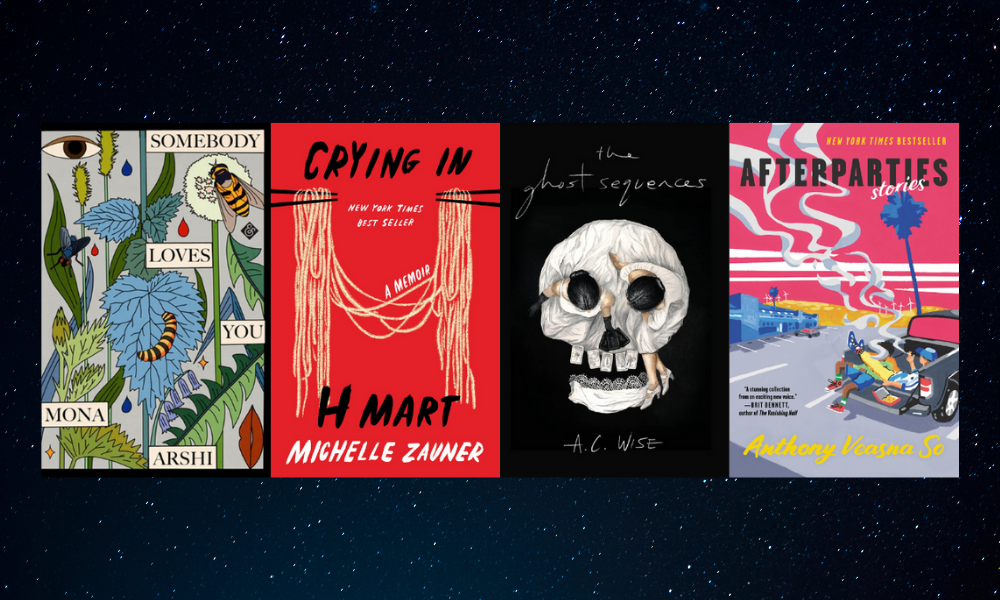
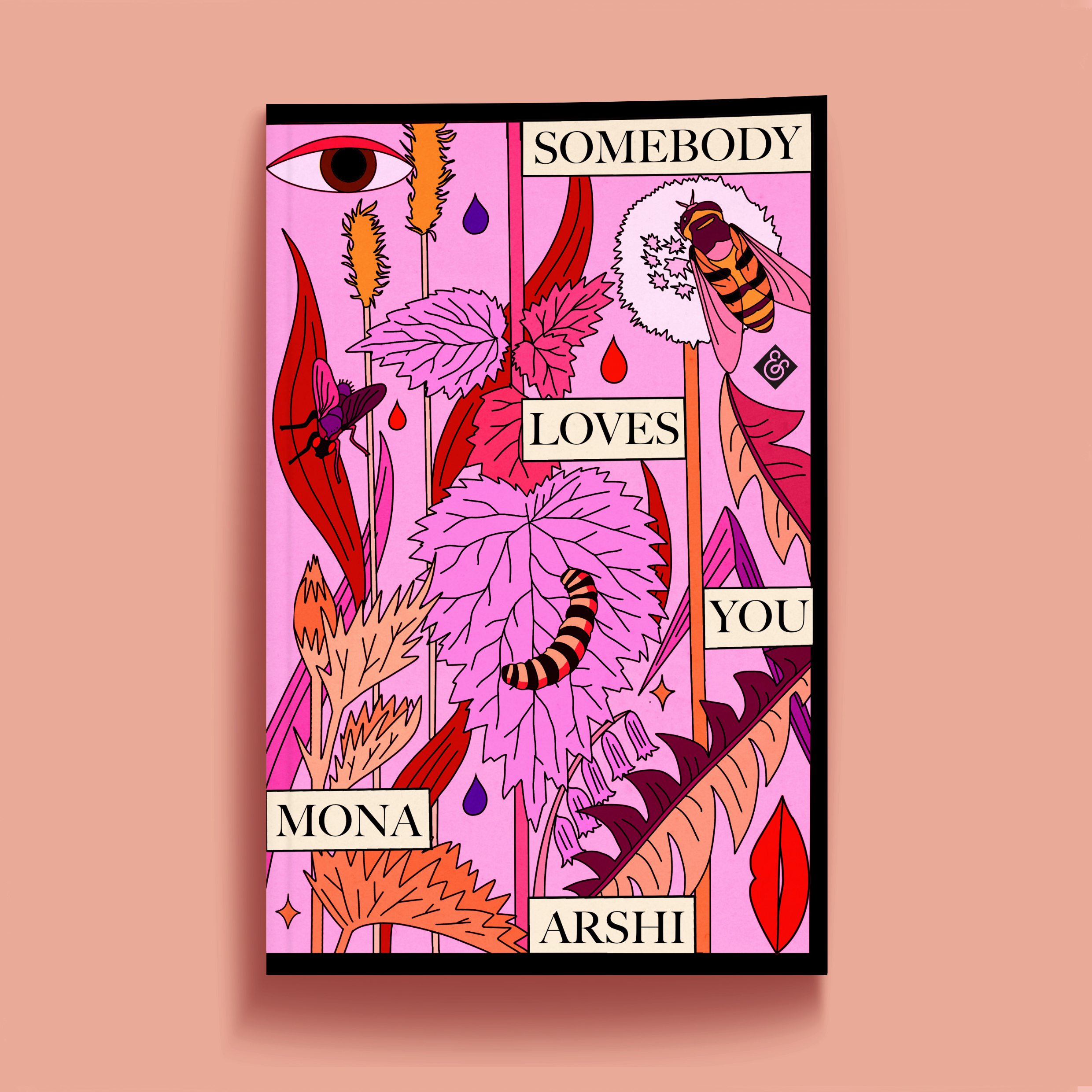
Somebody Loves You by Mona Arshi, cover design by Holly Ovenden

Crying in H Mart by Michelle Zauner, cover design by Na Kim

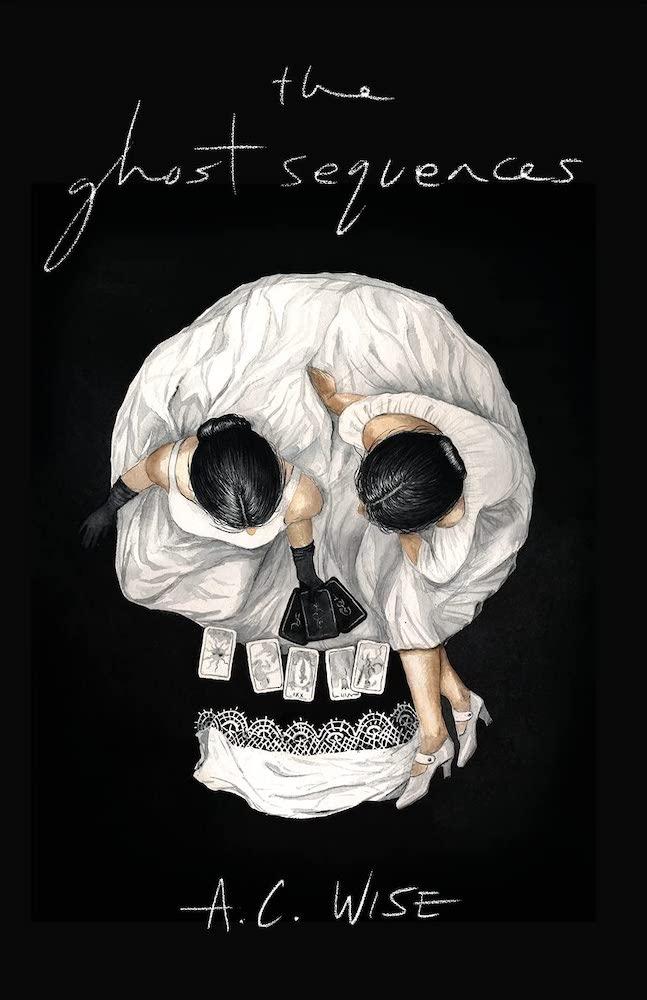
The Ghost Sequences by A.C. Wise, cover design by Vince Haigh, artwork by Olga Beliaeva based on the photograph “Morning Tea” by Serge N. Kozintsev

Afterparties by Anthony Veasna So, cover design by Elizabeth Yaffe


From the Final Four, now we’re down to the two very aesthetically distinct finalists:

We spoke to the designers of Somebody Loves You and The Ghost Sequences about creating their book covers:

Holly Ovenden, designer of Somebody Loves You

Tell us about your design process for this book cover and what you wanted to convey through the artwork?

Somebody Loves You is a beautiful and piercing debut novel, about a young girl called Ruby who decides to give up speaking from a young age. The book portrays a family dynamic which is overshadowed by Ruby’s mother’s mental illness and the way she finds solace in the garden.

Click to enlarge

I wanted the cover to feature the garden weeds that Ruby’s mother becomes obsessed with, as if the reader is peering through the plants into a snapshot of the family’s everyday life. Her mother’s eye and Ruby’s lips slightly open set against a melancholy grey pressurized suburban atmosphere.

Did you have any interesting false starts or rejected drafts you can tell us about?

I worked up three different designs for the cover, the two other directions were photographic, and they decided to go for this illustrated route—which I was overjoyed about!

What’s your favorite book cover of 2021, besides your own?

There are so many to choose from this year. One that I really loved was U.K. design of Kazuo Ishiguro’s Klara and the Sun by Pete Adlington. Such a beautiful and clever package with gorgeous endpapers and also how the design has been so cleverly applied to the backlist covers! Real wow factor! Also, anything book cover designer Anna Morrison creates is always spectacular!

Vince Haig, designer of The Ghost Sequences

Tell us about your design process for this book cover and what you wanted to convey through the artwork?

Undertow’s publisher, Michael Kelly found Olga Beliaeva’s artwork, so the design was entirely led by that—it captures the elegance and ambiguity of Wise’s work to an almost uncanny degree. With an image this strong, my job was mostly to get out of the way and to some extent, all of my final designs de-emphasized the text in favor of the image. It’s a bit of risk doing something like that, but A.C. Wise has a following who would actively look for her work and the image was so strong I was confident that it would draw attention from new readers. 

Did you have any interesting false starts or rejected drafts you can tell us about?

I experimented with a more intrusive idea, in which handwritten chalk text was arranged in a circle around the image as though it was part of some kind of ritual the two figures in the painting were taking part in. However this felt like it was adding something to the image which wasn’t necessary and ultimately, it unbalanced it. I kept the chalk hand-lettering, but I kept it separate from the image.

What’s your favorite book cover of 2021, besides your own?

I’m very jealous of Jamie Keenan’s U.S. cover for Keith Ridgeway’s novel A Shock, which takes a simple image from the novel’s first chapter and runs with it. It’s tactile, ingenious and while it cheats outrageously (look at the S!), it absolutely gets away with it because the eye actively wants the visual gag to work. 


Drum roll please, here’s the winner of 2021 Book Cover Tournament:

The Ghost Sequences by A.C. Wise! Congratulations to Vince Haigh, Olga Beliaeva, and Undertow Publications.

Baba Yaga Is a Lesbian

In some stories about her, the path in the woods splits like a lip. It’s easy to picture if you try—there are birch trees standing close as teeth, dirt packed and hard. The fork in the road flicks quick like a snake’s tongue, with just as much bite to it. Picture it and know that no matter which road is taken, high or low, a witch waits at the end in a house standing on chicken legs, a fence dotted with human skulls surrounding it. Hold that house in your mind. See it loom.

In March of 2014, I read Catherynne M. Valente’s novel Deathless for the first time. I was seventeen and closeted, living in the south, loyal only to fantasy novels and house plants. Women, as familiar to me as the body I saw in the mirror, were the epitome of terror. Every crush I had was a reinvention of the world in which the rules for adoration could not be taught. Instead, they were moments of fearful discovery, of hunger so huge it couldn’t be understood until after the inevitable crash. I kept the reality of my desire close to my chest and felt ashamed in its overwhelming totality.

Deathless introduced me to Baba Yaga, the wizened and cannibalistic witch of Slavic lore known to challenge the naïve protagonists who stumble across her hen hut with seemingly impossible riddles and tests. Maternal in some tales, menacing in others, she’s consistently an enigma—her actions are unpredictable and determined only by the nature of her fickle mood and desires. Throughout Valente’s novel, Baba Yaga is cruel and nasty to the protagonist Marya Morevna while simultaneously easing her into the reality of her choices; one moment threatening to swallow her whole, the next offering her the chance to abandon the idea of power in favor of a home, a mother, a bed and a book and a fire in the hearth.

In those years, I was starved for queer content in media. When I devoured Deathless in a single sitting and reached the line where Baba Yaga is revealed to be queer herself: “Do you have any idea how much I know about men? And women! Don’t look so shocked—after an eon or two of being a wife you’ll want one of your own, too.” I felt seen. I felt found out. I read the line over and over again, filled with sick and private pleasure—at that point in time I was considering that I might be bisexual, an idea that I’d later roll around in my mouth slick as a lozenge until I landed with the hard and sweet concept of lesbianism—and thought, of course. It was only natural that this terror of a woman wanted women to be hers, too. After all, hadn’t the thought of queerness always risen in me dark and fast as a wave, a compulsive violence that refused to be shoved to the corners of the mind?

It was only natural that this terror of a woman wanted women to be hers, too.

Baba Yaga became central to me—a private expression of my own wants and needs, this scapegoat for me to project my fears through. There seemed no safe word for what I was. It was simpler to see her, to want her, to feel her as close to me as a mother unashamed of my awfulness. 

It wasn’t until a few years later that I found others drawn to the witch and her prevalence as a morally gray character in folklore, particularly in online spaces dedicated to art and writing. This demographic was overwhelmingly queer and embraced a previously unfamiliar presentation of violent and othered femininity. As a mythical figure, Baba Yaga was Other. She was not the wicked witch I recognized in fantastical readings, nor a wise goddess waiting with an outstretched hand. Her cruelty was demanded of her—her goodness was a reward. Adhering to no standards, she provided a new moral code where isolation was a choice she made to protect herself, and kindness was shown only to those who were deserving.

Baba Yaga’s ambiguity made her difficult to pin down and understand. How do you categorize an unknowable woman? When she came to me, I was locked away in the safe interior of my private world. I found that her selected isolation pushed her beyond the standards of typical “monsters” in lore. Now more than ever, there is an increasingly lesbian desire to be secluded on the outskirts of the world, one that Baba Yaga presented as safe and familiar. I spent years as a teenager dreaming that one day I might live with my best friend in the countryside where nothing was expected of us, our increasingly close and unwillingly toxic relationship pushing the boundaries of typical friendship.

When she came to me, I was locked away in the safe interior of my private world.

I found Baba Yaga most compelling in my closeted years because I felt that coming out would cause me to lose everything that I held dear, even when it seemed the only possible choice to keep me sane. My relationships dissolved in secret. I couldn’t seek comfort from anyone as my world imploded. I felt unknown, unseen, raw as a wound. Every crush and kiss felt like swinging an axe, wearing down the blade until the cut seemed too deep to reach. Both before and after coming out, it was instinctual to retreat and dig my heels into soft loam, answering those questions of self inwardly rather than splaying them open for public consumption.

But in myth, Baba Yaga embraced the crash. She was hungry and wanting but sought no one out. She waited at the edge of the forest and made a choice when the young girl showed up at her door, begging for help. The decision was clear; eat or assist. But the method was a sharper blade, a different animal. In her earliest tales she was a representation of Mother Nature, a being intertwined with death and rebirth as the deviated norm in Pagan ideology. Throughout the centuries her tale warped into a warning symbol for young girls—she was the future that awaited them if they chose the wrong path. In some stories, she devoured the girl whole. In others, she chased the girl across the countryside, creating rivers and mountains in her wake and bringing new life to the universe. And in one, she gifted the young Vasilisa the Beautiful a guiding light that burned up her wicked family and abusive home. In her assistance there was violence, and in her violence, there was ambiguous respect.

In Carmen Maria Machado’s memoir In the Dream House, Machado speaks of the queer villain in popular media, often reflected only in the margins as excommunicated representations of horror. When posed as an antagonist, Baba Yaga with her wild femininity is undeniably a representation of consequence in folklore. But I found her actions justified, seen in the clear correlation between her cruelty and her hunger, her hate and her desire. Regarding villains like Baba Yaga, Machado writes in her memoir, “They live in a world that hates them. They’ve adapted; they’ve learned to conceal themselves. They’ve survived.”

When posed as an antagonist, Baba Yaga with her wild femininity is undeniably a representation of consequence in folklore.

Baba Yaga’s representation in media has canonically queer roots, ancient and tangled. But there is no celebration in traditional stories. The warning to susceptible women is clear—Baba Yaga gives into her desire, then stands scorned and reviled along darkening tree lines. Yet she’s completely unburdened by a heteronormative world—she seeks only pleasure, only power, only the electric connection between her and another woman, and retreats to revel in her own wants. But as this othered villain, the starved witch is denied her redemption and humanity, and in turn I felt separated from my own.

After coming out, I expected to feel freed—instead, I was more lost than I had been when my sexuality belonged to me alone. In the scrambling rockslide of my identity, I sought a semblance of power. Baba Yaga’s lack of attention to public perception and moral repercussions provided me with a beacon. So much of my desire left me feeling monstrous. Who was I, if not a woman with a womb awaiting a cherry-picked path? My future felt narrow enough to fit through the eye of a needle. It seemed that any choice other than the life predetermined for me was one that would leave me despised, alone, and vulnerable to those around me.

But Baba Yaga is not hated. She is ancient, chaotic, untethered. In establishing that unpredictability, she regains power, cementing herself as a godless creature who owes nothing to the world that reviled her. I felt reflected in the concept that I could exist as something beyond the traditional. Baba Yaga did not demand goodness of me—only the answer most right in the world that I had carved for myself. And my rightness could be subjective and mine, no longer needing to adhere to the presented set of rules.

Baba Yaga did not demand goodness of me—only the answer most right in the world that I had carved for myself.

Through art, I pulled the repeated symbolism attached to Baba Yaga into my work. Her anthropomorphic house standing high on its chicken legs became a character itself as I painted it over and over, a space closed off from all traditional interiors. A skull on a stick took the place of a lamp. Dark water, thin birch trees, and mountainsides as sinuous as a woman lying on her side were common settings for the silhouetted girl I placed among them.

The dark shadowed shape of my character darted through Baba Yaga’s mythological land. That shadow self could perform the strange actions I never felt capable of. She could walk for miles into the wood. She could aim an arrow at a bird in the sky. She could sink into dark water, known only by reeds and snakes. She had choices, and these choices had no consequences—there was no good or evil, only one option or the other without repercussions waiting on the other side.

At times this creation felt like the only true expression of my queerness, despite being lucky enough to be verbally accepted by the people around me. I didn’t feel that I could be open with my family, for fear of being perceived as something twisted and wrong. Though I had supportive queer friends I didn’t entirely understand myself enough to feel seen by them. There was a barrier between my internal and external language—no matter how hard I tried to voice my feelings, the words didn’t fit, never conveyed the truth of me. Through the paintings I could piece together fragments of my own history. I could create a codex of symbols that represented the metaphoric language of my own folklore, with Baba Yaga guiding me along the way and forcing me to make choices that I felt might separate me from the truth of my own body.

It was so easy to look to Baba Yaga and dream of her—wicked with her speech, feeding her desire when the whim presented itself, protagonist and antagonist all in the same moment. In a genre where a moral lesson is typically the point of telling a tale in the first place, she denied logic and thrived as a paradoxical leader. She existed as an example that even if I told the truth and annihilated myself in the process, there would always be power in the choice. 

In a genre where a moral lesson is typically the point of telling a tale in the first place, she denied logic and thrived as a paradoxical leader.

In the final pages of Valente’s Deathless, Baba Yaga states that she liked to help a woman most “when her perversity has made me proud.” I spent so much of my life feeling perverse—my wants, my fears, my needs all seeming like foreign thoughts meant for another mind that ended up trapped within my own. But that statement alone was permission for wildness, deviation clicking into place like an igniting gas range where I stepped out of one life and into the next. I could be who I had always been, or I could notch the arrow in a waiting bow and prepare to watch it fly.

Before leaving the older and harder Marya Morevna behind to choose her fate, Baba Yaga asks, “How did she turn out, the woman you might have been?”

By forgiving my desire, I let the woman I might have been walk past me. Her world would be her own. I unfurled the tethered part of me that always felt most terrifying and fell in love with my own lesbianism. It was a beautiful thing when finally considered, sharp enough to hurt when I stared directly at it. I turned my eyes to it and did not look away.

It seems sensible to take the hate of a world and let it turn you into a hag, pull your darkness inward until it is a hard and heavy coal in your throat. But to sharpen it is the challenge. To desire is the challenge. To watch what you want walk through the door and snatch it up is the test of all tests, the mettle in the moment, the deciding factor that declares otherness and turns it into choice. The path splits in the woods. There is no delineation—each dirt road seems to glitter with promise, to grow deeper with a threat. The power is in walking, one step after another, exposed in the dark just waiting to be seen. Through Baba Yaga, we see the beauty in unabashed identity. She wants and she eats and she becomes more ancient than death.

I saw her, and I wanted. I hadn’t permitted myself hunger in so long.

A Queer Novel About Falling In and Out of Love in Seoul

Smoke a frozen Marlboro Red with your best friend. Fall in love (stupidly). Dance in a sweaty gay club in Itaewon. Go on vacation. Fall in love, again (perhaps even more stupidly). Eat frozen blueberries alone. These are some of the many things Love in the Big City makes you want to do, inducing nostalgia for things you may or may not have experienced. Sang Young Park’s English debut novel depicts the life of a lonely gay man in Seoul with verve, vulnerability, and a hearty dose of ironic humor.

Like the flashing 24-hour neon lights of Seoul, the prose is filled with exuberance and brilliance; simultaneously, it also illuminates those seemingly insignificant, quieter details, the overlooked corners of life. Young, the first-person narrator of the novel, meanders through jobs, relationships, and life goals. The novel is divided into four sections, loosely centered on Young’s relationships with four different people. Given the title, I was expecting the book to be an exploration of modern urban romance. What I wasn’t quite expecting was how Park also probes at different ways of loving (like the narrator’s friendship with Jaehee) or lack thereof (his tenuous relationship with his ailing mother). Ultimately, for me, Love in the City is about both the absurd comedy and aching tragedy of growing up; more accurately, of growing up and then realizing there’s not really anywhere left to go.

I corresponded with author Sang Young Park and translator Anton Hur over email, where we chatted about the role of humor in Park’s work, the ecology of Seoul, and the current-day movement of queer Korean literature in translation. 

Translations from Korean to English in this interview are done by Anton Hur, the translator for Love in the Big City. This interview was produced with support from the Literary Translation Institute of Korea.


Jaeyeon Yoo: How did you decide on the structure of the novel? Could you speak more about the title idea of “love,” and how it’s explored in the different sections?

Sang Young Park: As you mentioned, this novel is a kind of exploration of the different kinds of love that happens in a city. I wanted to cover friendship and maternal instinct and love between lovers, which includes sexual love as well. We often put all of these emotions under the umbrella of the word “love.” As a writer who enjoys exploring emotions, I wanted to show all the facets of an emotion that is so often reduced to a single word. I think the word “love” is often used in a positive sense, but the love that I’ve experienced hasn’t been unambiguously positive so much as complicated and sometimes even violent. I wanted the main character Young to show the reader the A to Z about love, which is what drew me to the structure I ended up with. It’s because I wanted to show a different kind of love in every chapter that I ended up with four interconnected stories, a composite novel.

JY: The narrator of this book has an irresistible way of talking. I admire the dexterity of your prose, how he’s able to shift between varying moods even within a paragraph; ironic, vulnerable, crass, wistful—he’s got it all. Were there any particular inspirations for his voice?

We often put all of these emotions under the umbrella of the word ‘love.’ I wanted to show all the facets of an emotion that is so often reduced to a single word.

SYP: To be honest, the narrator’s voice includes a lot of my own values and tone. I have what’s basically a cynical worldview but at the same time, I try every day to overcome such cynicism with laughter. I think this attitude comes through in my style. 

JY: Yes, I was struck by how the narrator uses dark humor and irony as a coping mechanism, not only for dealing with his medical condition but also for heartbreak, mother-son issues, and financial troubles. Could you talk more about the role of humor in your writing?

SYP: I think life is basically tragic. Everyone has their cross to bear, and it’s how you accept this fact that’s just about the only thing we get to choose. I’ve always thought laughter and humor was my defense mechanism and only weapon. Which is why the characters in my work also have no choice but to laugh in the face of sadness. I may write a bit differently in the future, however.

JY: Speaking of the narrator, I noticed that there are some clear similarities between the main narrator and what we learn of you, Sang Young Park the author. The narrator is referred to as “Young-ah,” studied French, and is an aspiring author, constantly scribbling stories. I read this as intentional emphasis on the act of self-creation/representation—could you speak more about these choices? 

SYP: For some novels, making assumptions about the distance between narrator and author takes on a literary and political meaning. I thought about this distance a lot while writing Love in the Big City. This novel is and always will be a work of fiction, and the “Young” in the novel isn’t me. But by adding certain details that I, the writer, happen to be familiar with, I hoped the novel would read with more verisimilitude.

JY: You state in your wonderful essay on K-pop that “the ecology of cities has shaped every aspect of my thinking, writing, and way of living.” Many Anglophone readers won’t be as familiar with Seoul, and I wonder: how would you describe the “ecology” of Seoul, and how has it shaped your fiction? Perhaps a different way of framing this question is: what drew you to write about this city, which is as much of a character in the novel?

In Seoul, the neon signs are on 24 hours a day, you can get a drink at any time of the night, things change very quickly, and you meet all sorts of passionate people.

SYP: Seoul is one of the world’s largest, most populous, and most dynamic cities in the world. I’ve traveled to many cities during my twenties and thirties, mostly to those places referred to as metropolises, and of those, I still found Seoul the most fun. The neon signs are on 24 hours a day, you can get a drink at any time of the night, things change very quickly and it’s always the state of the art, and you meet all sorts of passionate people. I think that’s the Seoul that shines through in my work. Moreover, Seoul is a place where minorities can maintain their anonymity, which makes it extra meaningful in the particular context of my narrative. All these thoughts coalesced to create the city in my novel.

JY: This book also got me thinking about the expectations around growing old(er). Could you talk more about these societal pressures of aging in Korea, which surface throughout the novel, and how these pressures might operate differently for queer people like the novel’s narrator—who already don’t fit into the heteronormative “get married and have a nuclear family” model?

SYP: Things are different now, but just a few years ago, we were very much in the thrall of “nuclear family romanticism.” There was this belief in a “normal family,” and a young man and woman coming together to have babies was considered the ultimate answer to the question of life. This ideology enabled all sorts of violence against anyone who attempted to break the mold of the “normal family,” a violence against not just queer folk like the ones in my book but all individuals.


JY: I’ve been very excited to see more queer South Korean literature surface in the Anglophone world! Do you think it’s a growing movement, or simply that readers are now more aware of the Korean authors that are writing queer literature? 

There has always been queer literature in contemporary Korean literature—the first modern Korean short story is a queer story.

Anton Hur: If you’re asking about Korean queer literature in general, I think it’s a combination of both. There has always been queer literature in contemporary Korean literature—the first modern Korean short story is a queer story, and I’ve talked about queer Korean literature at length elsewhere.

But if you’re asking about Korean queer literature in translation, that’s a different story altogether. This latest plethora of queer Korean translations is definitely a deliberate movement on the part of certain Korean translators including Soje, Victoria Caudle, Paige Aniyah Morris, me, and a few others working very much in concert and as a movement. We very deliberately set out to translate outside of mainstream Korean literature and to bring out queer representation into translation. “What gets translated into English” is an extremely political question; note that the generation of translators before us are mostly missionaries or old white academics translating middle-aged cishet Korean men. We basically took out a legal pad, wrote “What would really piss off these dinosaurs?” at the top, and began listing them one by one.

JY: I know you previously translated a short story by Sang Young; what drew you to his writing?

AH: Basically what it came down to was, I read his sentences and thought, “This would lend itself really well to English translation.” Because some authors really don’t, and that’s fine, but Sang Young’s prose was very translation-ready. I asked him no questions during the translation, except one, which turned out to be a minor error that was corrected in printings later than the edition I owned. Because I have a certain style, the author I’m translating has to have a style that combines well with mine. (Translators who don’t think they have a style are either delusional or lifelessly flat.) It’s alchemical, and I know it when I see it. My mind immediately begins to translate the sentences as I read them, and that’s when I know I have a winner.

JY: You did such an amazing job at crafting a distinct Anglophone voice for this narrator! What were some distinguishing characteristics about Sang Young’s prose in Korean, and how did you try to convey these in English?

AH: Thank you! Sang Young’s prose is very Anglo-Saxon. It drips with irony and humor. My instinct was to play this up and almost exaggerate it. I think the book in Korean is more chill than my translation, but I require a work to approach me as much as I approach it. I don’t want my translation to read like an academic exercise, I want it to “work” in English as well. My authors have been very generous in this regard when it comes to translating them. They’re much more interested in what I come up with than me mindlessly adhering to some polite idea of what a  translation ought to be.

JY: Love in the Big City is deeply rooted in Seoul, scattered throughout with many local references; how did you choose what to contextualize?

‘What gets translated into English’ is an extremely political question; note that the generation of translators before us are mostly missionaries or old white academics translating middle-aged cishet Korean men.

AH: I feel like Sang Young does extremely well in contextualizing the different places. I recall that whole thing in the book where the horrible pseudo-progressive straight couple thinks Young lives in Apgujeong, and you don’t need a footnote or whatever to explain what Apgujeong means to Korean readers because Sang Young’s contextualization is so clear. So this wasn’t really an issue in this translation, or really any of my translations as I recall. I think we should give readers more credit. I don’t think any reader steps into the world of a book and expects to understand every single nuance of every single thing. We should help the reader, and I feel like I help the reader a lot—some have said I help them to a fault—but readers, on the whole, have been extremely generous in their readings of my translations, especially for Love in the Big City.

JY: What are you most excited for Anglophone readers to encounter in this book?

AH: I just want them to know that queer Korean culture exists. I used to have, say, Korean Americans come up to me and go, my parents say there are no gay people in Korea, and I’d be like, your parents when they lived here were obviously not very observant because there have always been queer people in Korea. There are queers in the Annals of the Joseon Dynasty for effing sake, give them a copy. But now, instead of the Annals, everyone can read Love in the Big City and have a lovely dinnertime book club chat about the topic. I am invested in the narratives that surround Korea and its literature. I think we have a really dynamic and incredible literary culture and it has been my mission as a translator to showcase that and change the colonialist and racist discourse around Korean literature to something that actually matches my lived experience as a Korean reader.

Twitter vs. MFA

Dear Readers,

Some years ago, long before I had any writerly visibility, I listened to an audio interview with Elizabeth Strout, one of my literary idols, in which she talked a bit about her philosophy around teaching. At that point she was still a faculty member of the MFA program at Queens University, Charlotte. I had applied there, specifically for the opportunity to work with her, having devoured Olive Kitteridge and then quickly, and rabidly, fallen in love with her entire body of work. But it was her thinking as a teacher that motivated me to apply. Every writer can point to the people and moments that either kept them going, or got in their way—those small encouraging or discouraging moments that have an outsized effect. I can’t find the interview online, but I remember clearly how Strout spoke about keeping her students writing as her primary responsibility: persistence above all else. This was the first time I’d encountered this sort of generosity in my newfound industry. It was welcoming, aspirational in a way. I came away from reading that interview with the distinct feeling that being a writer meant being community minded, a perspective I’d taken to heart during my four years at a liberal arts college with Quaker roots. I didn’t yet understand the many and varied difficulties that accompany the writers’ life, but I promised myself I would adopt the same attitude should I ever make something of myself in the literary world. I would do my best to keep those coming up after me writing.

A year or two later, in graduate school, in the same workshop I wrote about in September’s letter, our professor took the last day of class to reflect on our semester, the publishing industry, and to offer the best advice he could. He told us that literary success (however you defined it) had less to do with talent and more to do with will. He employed an oft-used metaphor: a fleet of racers jumping from a dock into a lake. The successful writers, he said, swam to the other side. Many would turn around—most within months of graduating the program. This had nothing to do with talent, he impressed upon us—it simply had to do with who was willing to keep swimming. I was determined to keep swimming. 

My MFA program was my earliest literary gathering place. But in the years since, Twitter has become the writer’s town square. There’s something wonderful about this: a democratization of sorts. Twitter has made literary discourse far more accessible to anyone who’s interested in participating; we are no longer limited to the voices of white, heterosexual, highly educated men speaking from the ivory tower of creative academica—we are Black and brown, immigrant and indigienous, cisgender and trans, and everything along each of these spectrums. 

My MFA program was my earliest literary gathering place. But in the years since, Twitter has become the writer’s town square.

When given the chance to advise writers who are just starting out, I tell them to get on Twitter. I tell them to follow both their peers, as well as the more established authors they admire. I encourage them to keep up with the scuttlebut. Follow the heat, develop a presence and voice, and alongside that work, do the writing that needs to get done. I tell them to pay attention—look for the pearls of wisdom that their literary heroes will drop. I’ve come to believe that amidst the never-ending “should I, shouldn’t I” debate about MFA programs, a well-curated Twitter presence and a year or two of community workshops and national conferences are a legitimate low-cost, and often low-trauma, alternative—particularly for those who might not have access to graduate programs due to systemic barriers. I even have friends who use Twitter as a forum for writing prompts, craft exercises in concision. 

But alongside the benefits of Twitter, there is something far more troubling at work. All of a sudden, writers have a vocal and quantifiable audience—and boy do we revel in it. The line between public and private has certainly blurred, if not disappeared altogether. There may be no echo chamber more secure than that of an author and their Twitter followers. All I have to do is say “cat person” or “kidneygate” and an impassioned debate rises from the ashes of the most recent discourse. Serious conversations that explore the boundaries of what is, and isn’t, acceptable artistic practice are vital, but what happens when those conversations devolve from high-minded, intellectually curious rhetoric to personal insults and condescension? What happens when there’s a significant, and often unacknowledged, power imbalance between the loudest voices in those conversations? What happens when that power imbalance incites a virtual pile-on—hundreds, sometimes thousands of likes, retweets, and nasty comments from individuals and trolls alike, often directed at one person whom none of these bad faith actors even knows? What if that person looks up to the author they’ve angered? What if, in a more formal setting, they might someday become that author’s student?

What happens when there’s a significant, and often unacknowledged, power imbalance between the loudest voices in those conversations?

Situations often arise on Twitter that almost certainly would be handled differently if they arose in a classroom. Writers who are still cutting their teeth make mistakes, as do all of us. Unspoken codes of conduct are broken, bad assumptions are made, boundaries are crossed. All of this is part of the learning process. MFA-alternative classes hire writers with a wide-range of experience to teach, and enroll writers with a wide range of experience as students. And social media allows writers with varying degrees of experience some influence. Essentially, writers of all experience levels are teaching each other, online and off.    

But appropriate classroom conduct doesn’t only apply to teachers, of course. In my junior year of high school, I took a course called “Ethics and Religions.” Our teacher encouraged spirited debate. And one day, in the middle of such a discussion I called another student’s opinion idiotic. My teacher immediately stopped the class, told me why my classmate’s opinion was legitimate, and made me apologize in front of everyone, before continuing the conversation. There was no structural power imbalance between myself and that student, but my teacher reminded me of what I’d forgotten in my fervor: decency, respect, and good faith. I remain grateful to him for that moment; simultaneously, I hope I never recreate it. 

We could ask ourselves to engage in ways that we wouldn’t be ashamed to engage with our students, or our classmates.

If we thought of literary Twitter more like the classroom it’s become, we could raise the level of discourse. We could ask ourselves to engage in ways that we wouldn’t be ashamed to engage with our students, or our classmates. It will, of course, forever remain important to have safe spaces, both private and public—to critique, to question, to vent. To be silly, and to be thotty. But it’s also important that our public spaces maintain room for education, for intellectual, literary, and personal growth. It’s important that we refrain from creating those discouraging moments that have an outsized effect. I want to keep people writing, editing, and criticizing, and play a part in their growth in these areas. I want to keep people swimming to the next shore.

Warmly,

Denne Michele Norris