An Obsessive Unpacks a Bewildering Insult

“Fish (in 13 sections)” by Eric Ozawa

1. Introduction:
A fish. She called me a fish. I have no idea what she meant.

2. Description:
I should say first that we had been fighting: indeed, there had been a dispute; let us leave it at that. She was hot-tempered, and so when she approached me, her face enlarged and enflamed with tears, I was not overwhelmingly surprised, since, as I said, we had done this sort of thing before. I tried to comfort her and put my hands on her bare shoulders as she beat me. Her hands were open and thumped heavily on my chest. I must admit that I experienced desire as she hit me—not so much from the violence itself as from its consequence: the thin strap of her dress had fallen from her shoulder, leaving her right breast—my favorite—exposed and sweat­ing. I stared. I may have licked my lips. She did not notice; her eyes were shut like clams, and she was clutching at my hair. I tried to comfort her: “Come,” I said, stroking her hair which, to be honest, looked angry and, worse, smelled strangely—not clean or feminine, but like Chinese food. Her hair was like very thin lo mein noodles. In the still air, the smell wavered and clung. I felt hungry for the wrong foods.

And it was at that point that what happened happened. She pulled herself away from me, throwing off my arms and my gaze from her breast and headed full-steam for the door. She turned, her face flushed and drained, her lips clamped so tight that when she opened them to speak her mouth tore a gash; she turned to me, her sweaty hand fumbling with the door knob and said, “You—” she looked up and to her left without focusing; her face was sour—” You…fish.”

A fish. She called me a fish. I have no idea what she meant.

3. Detail:
Her pronunciation of the word fish. There was a great deal of stress on the f. As if out of fear or embarrassment she needed to pause before saying the word. A windup. Perhaps she was fumbling. In her memory the words, farmer, fathead, fungus, fanny, fool, were all highlighted but not chosen. For some reason the word fish was. But these are all speculations, what is more certain is the windup. Like a child saying fuck.

4. Correction(s):
In fact, I have many theories about what she meant.

5. Theories:
i) the metaphorical: That I am in some way like a fish, that is, that I possess the properties of a fish. Properties (fish): scaly, slimy, coldblooded, smelly, edible, with a ridiculous appearance, and final­ly, perhaps most importantly, aquatic. Aquatic—we have gone swimming together once or twice, bur I do not recall ever spending too much time in the water. Alternative (a.): that I am as dependent on water as a fish. A sweeping indictment of society at large and its dependence on the toilet, the faucet, the bath, the outdoor shower, the hose, etc. Alternative (b.): minor properties of fish, i.e., that I am slimy and coldblooded, perhaps a liar; or scaly—I have had dry skin recently. Resolution: All possible, but I don’t see why she wouldn’t have chosen to call me a snake or a reptile instead.

ii) the reference: Gertrude Stein: “A woman needs a man like a fish needs a bicycle.” A reversal of roles. Perhaps she holds the masculine role in our relationship, i.e., wears the pants, and that l am, as is often said in schoolyards and in prisons, her bitch. An aggression—not weak at all as I had first imagined, but, in that way is it not the more weak for it, for, considering her condition, was not her attempt at domination merely a pathetic gesture, and in being so, a cry for help? Very clever.

iii) the absurd: My search for meaning in fish may be in vain; she could have meant nothing at all, or more precisely, an absolute lack of meaning. If so, fish was chosen not for the properties associ­ated with the word or for any connotation or reference, but for its inappropriateness, its very inapplicableness to the situation. A ges­ture aimed at the absurdity of our condition, and in a more gener­al way, of the human condition.

iv) the acronym: Consider the letters themselves. Suppose that their sum, fish, was incidental. E.g.: Fucking Insane Selfish Human, Fibbing Incompetent Showoff Hedonist, Faintly Intelligible Stupid Head, Fabricated Incorrigible Sex Half, Filial Implied Supportive Help, Fecund Insufficient Sweat Harness, Fun Is Still Hunger. A great many possibilities.

v) the Mafiosi: A threat in Mafia code. “You fish,” she says, meaning, “You’ll be sleeping with the fishes.” We once watched The Godfather together.

vi) the misunderstanding: That I misheard what she said.

vii) the verb: “You fish,” she says, as in: “You go fishing.” Problem: I don’t fish. At least not as a habit. I think I went once as a child. I caught an oyster cracker. Resolution: She knows that I don’t fish. Thus she means, “That’s the problem with our relation­ship: we assume intimacy, yet don’t know each other.”

viii) the ce n’est pas le mot juste: (Slightly different from Theory iii) That she meant nothing by the word fish itself, that is, she could not find the right word for what I was, the right diagnosis for the failure our relationship. Metaphor: She searched for it in a barrel of words, paused throwing out the curses lying loosely on top, rifled through the easy ones like man or boy, dumped out the nonsensical ones like Ferrari and major motion picture, she thought she had it when she began with f but then realized she’d lost it; she searched again and gave up, settling for the only word that came to mind, the word stewing at the bottom of the barrel: fish.

6. Complaint:
I have heard people say “Theories, theories, theories, but what of action?” I find that to be a very odd sentence construction. Still, the complaint may be valid.

7. Theoretical Responses To Theories:
i) the metaphorical: Alternative (a): Stop bathing. Alternative (b): Bathe often, apply lotion as needed.

ii) the reference: The Offensive: Ride to her on a bicycle. Take her pants off. Comfort her. The Appeasement: Ask her to take you swimming on her bicycle. Purchase a book of quotes.

iii) the absurd: Send her a note:

Dear Prod,

The duck in the mangrove—Who; tung?—wore red geets can the right/bite? In the mid nacht between you I provence. Oysters.

—Teston

If she does nor respond, appear to her in a cape with the numbers 4, 5, and 7 arranged in numerical order around your genitals. Holding rightly to the nape of her neck, coax her in Spanish to feed the dog bananas.

iv) the acronym: Send her a regressive acronymic note:

FISH.
FOOL IS STILL HUMAN.
FEELINGS ON OUR LOVE: IF SOMEHOW SHE TRIES INSTEAD LEAVING LOVE, HIS UNDERSTANDING MUST APPROACH NIL.

etc.

v) the Mafiosi: Take her out to a nice restaurant. Make sure she wears a long red dress and a wide-brimmed hat. Speak coarsely to the waiters, but tip heavily. On the way our of the restaurant, kiss her passionately, leaning her onto a nearby table. Pull up her legs roughly and sit her on the table. Avoid forks. Pull up her dress and make love to her then and there on the table. Leave money for the inconvenience, also her hat. On the way home shoot her three times in the back of the head. Dump her in the river. Wear a nice suit.

vi) the misunderstanding: Ask her what she said.

vii) the verb: Begin by saying, “I don’t fish.” Then if she looks surprised, say, “But I’m perfectly willing to if it’s important to you.” If she does not look surprised, say, “But that’s what you meant, isn’t it?” If she concedes, pursue the point, e.g., via the gentle reversal: “‘Why do you think we don’t know each ocher well?” or request assistance: “How can we better get to know each ocher?”

viii) the ce n’est pas le mot juste: Give her a dictionary. Read to her from it until she is tired. Then kiss her neck slowly. Make love to her sweetly, on top of the dictionary. Make it a red one and surround it with white satin pillows for comfort. Preferably a very large dictionary. Better to leave the dust jacket on.

8. Closing:
Leaving, she had some difficulty with the door, which is to say, she couldn’t open it. When she did, it came abruptly, swung too fast—so fast it might have hit her face had she not jerked back. She paused in the doorway as her hand slipped off the knob—she paused only for a moment, a film still: her head was turned towards me, though not enough for her to see over her shoulder. I could see her face silhouetted by the light coming in through the open door and the air of the small, closed room leaving with her. Then she turned her back and walked away. The heavy door swung behind her, blowing hot air back into the room.

Theories, theories, theories, but what of action?

9. Addenda to Theoretical Responses (a back-up, for it may be best not to readdress the issue, but to surprise her; i.e., to take her from above, to overcome):

ix) the country song: Become a small-time country singer. Sing songs about her on the sidewalks of famous bars, empty cafes, in stadium parking lots,

e.g:

Verse I
Sitting by the river
Drinking my cod liver
I’m still fishing for my missing family
I got a Smith and Wesson
A Chrysler and a Stetson
But none of them can bring her back to me

Chorus
She left me in the shallows
Lonely at the gallows
Thinking about the one that got away
I dream of sleeping fishes
Full of silent wishes,
Still hungry for the one that got away

Verse 2
Now there’s many types of fish
Might end up on your dish
Anything that’s caught upon your hook
Don’t need no fancy spices
Don’t matter what the price is
Hunger is the heart’s greatest cook

(Repeat Chorus)

Bridge

The one that got away,
the one that got away,
Can’t bear the taste of the one that got away.

(Chorus Out)

x) the postcard: Send her a postcard:
”Wish you were here.”

l0. Finale:
After the door closed, when I imagine she was taking wobbly steps down the stairs outside, there was the sound of the door closing officially, the lock filling the slot in the frame.

11. Citations:
From 25 lessons far the Novice Fisherman: drawing of a man fly­ fishing on the cover, pages for notes in back. Since master fisherman, Frank Hillman, believes no one can learn the rod sitting in his smoking jacket, he attempted to publish the book with water­proof pages. He offers these simple lessons to read the night before:

Lesson I: You need the right bait…
Lesson 15: Beware of too much slack in the line.

From Animals in Captivity, Vol. II, by Col. F.S. Lloyd. The most important text by the professional big game hunter and the father of modern animal husbandry. A quotation from the author’s gun holder serves as an example of native superstition (p.1147):

A bird will die if she does not realize the glass is solid. A fish will die if she does not pretend that it isn’t.

From The Proper Care for Gold Fish: A pet store manual:
Caution: Don’t feed them too often

12. Fish In Digest

i.
Thrown off of soft breast,
a fish is used to confuse.
The search is humid.

ii.
Shaking in the still’d
air, she walls herself in white­
the mystery of red.

iii.
Perhaps in vain, I
strive to understand a girl
with hair of lo mein

iv.
I have heard people
say, “Theories, theories, theories,
but what of action?”

v.
Above all action
I hover like a mallard
before wet-landing.

vi.
Words fall like Autumn
from a hot-temper’d woman;
Hand struggles with knob.

vii.
A white ocean swarms
with red fish, I dip my toes
and sing country songs.

viii.
Between her and me
the key moment is the shut­—
perhaps the locking.

ix.
The oceans dry up,
leaving the sleeping fishes
to wake up gasping.

x.
Meditating after,
I’m hungry like a loose strap­—
Fish Inedible.

13. Conclusion:
After she left, I dreamt that I had followed her to the grounds of a Japanese castle. The castle had been rebuilt and renovated, a museum reproduction recently occupied by yakuza. Despite their absence, I felt like an intruder. A museum-goer handling the statues. The halls of the castle held an impossible, inert atmosphere; dust hung perfectly motionless in the air, reflecting the light corning through the arrow slits in the walls. I went into a white room looking for her. I felt as if I were underwater. The room was refrigerated; against the far wall an aquarium sat on a cable beside two food canisters. The fish had been left for dead, and I knew they must be starving. I rapped out the flakes and bits of mulch from the two containers, but none of the food broke the surface tension of the water, and none of the fish noticed. They swam along the blue rocks at the bottom of the tank, darting back and forth through the plastic castle. “Come,” I said, but the fish were unreachable. They swam below the surface, stopping occasionally to open their mouths without significance.

I left the room and continued to search the hallway. At the entrance to a room around the corner was the body of a man in a black suit, his leather shoes pointing towards the ceiling accusingly. Behind him were racks of swords. A museum collection of valuable and historically important weapons. I had always wanted to hold one of the swords and did not hesitate. Reaching over the body, my foot stepped on a stiff hand. I picked what I thought was a covered sword, but the sword was not inside; I was holding only the leather sheath.

Electric Lit’s Favorite Short Story Collections of 2021

If there’s one thing to note about the tremendous story collections on this year’s list, it’s the global terrain these stories cover. There’s the wide-ranging geography—from China to Florida, Argentina to New Orleans—but there’s also the questions each story asks. Diving deep into queries of desire and hunger, memory and politics, and much more, each collection blisters with stories and characters that remind us of who we are—at our best, and our worst. Electric Literature staff and contributors voted for their favorite story collections of the past year. Here are the top three, followed by additional favorites (there were many ties!) in alphabetical order.

The Top 3 Short Story Collections of the Year

Milk Blood Heat by Dantiel M. Moniz

Moniz’s debut collection, Milk Blood Heat, is about life in Florida—but more than that, it’s about life in a body. From estranged siblings reuniting to scatter their father’s ashes, to a young girl who is terrorized for resisting the church, violence and tragedy haunt these characters in their most stark moments of personal reckoning. Read Moniz’s discussion with Jennifer Baker on the connective threads throughout these stories, her creative approach to writing characters free of judgment, and her writing process in general.

Afterparties by Anthony Veasna So

Veasna So’s short story collection Afterparties explores the lives of Cambodian Americans, portraying the realities of queer and immigrant communities without sacrificing a comic voice or emotional intimacy. Hear from Veasna So in conversation with other Cambodian American writers on complicating the trauma narrative into which Cambodian diaspora literature frequently falls. 

Filthy Animals by Brandon Taylor

Filthy Animals is Brandon Taylor’s follow-up to his acclaimed debut novel, Real Life, which was a finalist for the Booker Prize. Introducing the title story, about longing, desire, and violence among a group of young adults growing up in the Midwest, Calvert Morgan writes that “Taylor’s gift is his ability to hold you in that now, like a dragster gunning against the brake until the rubber starts to smoke.” In addition to that story, you can also check out Taylor’s discussion of his affinity for the genre in his interview with Greg Mania. (Brandon Taylor is an editor-at-large and former senior editor for Electric Literature.)


Electric Lit‘s Other Favorite Collections

Eternal Night at the Nature Museum by Tyler Barton

In “Once Nothing, Twice Shatter,” an exemplary story from Barton’s fragmented, strange, and vulnerable debut collection, Eternal Night at the Nature Museum, the narrator slams a sledgehammer into a Toyota windshield. He is a desperate character seeking salvation before landing himself in an unusually tight-knit demolition derby. “I think I’m in a cult,” Barton writes. “But I still feel alone.” Recommender T Kira Māhealani Madden notes that all of Barton’s stories “…run a fever. Everyone misbehaves, but they do so seeking grace, humility. Reaching, reaching.”

Land of Big Numbers by Te-Ping Chen

The title Land of Big Numbers refers to the highly populous nation of China, and Te-Ping Chen’s stories within this collection both celebrate and critique the people and institutions shaping China throughout history. Read  Chen’s perspective on what it means to commemorate a sense of place in fiction in an interview with Mimi Wong.

Hao by Ye Chun

In Hao, Ye Chun explores migration and motherhood through the lens of Chinese women in their homeland and in foreign spaces, interrogating the power of silence and language along the way. “Ye’s writing taps into that same current of electricity, reminding you that at its best, writing can at once make you forget yourself and feel more alive to the world and its possibilities” writes Te-Ping Chen, recommending Ye’s short story “Stars” about an immigrant student suffering from a painful, pulsing brain injury.

The Dangers of Smoking in Bed by Mariana Enríquez

Featuring sociopolitical horror stories set in modern-day Argentina, The Dangers of Smoking in Bed viscerally brings madness, cannibalism, and cruelty to the page. Learn about Instagram witches, Argentina’s very real and horrific past, and passing the blame for collective responsibility in an interview with JR Ramakrishnan and author, Mariana Enriquez. 

The Glassy, Burning Floor of Hell by Brian Evenson

If you’re unfamiliar with genre-master Brian Evenson, now is the time to discover his magical, sharp, destabilizing writing in his most recent collection, The Glassy Burning Floor of Hell. Mona Awad, who is well-renowned for her own somewhat horrific short stories, turns her attention to Evenson in her introduction to “The Shimmering Wall,” featured in Recommended Reading, noting his “ability to conjure the uncanny.” These stories will terrify and haunt you, but in a good way.

I’m Not Hungry But I Could Eat by Christopher Gonzalez

Queer, fat, Puerto Rican men hunger for food and friendship alike in Gonzalez’s highly-anticipated short story collection I’m Not Hungry But I Could Eat. Read his interview with Matthew Mastricova about the relationship between identity and desire, hookup apps, and the responsibilities of personal growth.

Kink edited by Garth Greenwell and R.O. Kwon

With stories from thirteen renowned authors including Roxane Gay, Alexander Chee, Melissa Febos, and Carmen Maria Machado, Kink tackles intimacy and desire across the sexual spectrum. Read editor Garth Greenwell in conversation with Aaron Hamburger about his own novel on gay sex, Cleanness, or check out some of editor R.O. Kwon’s recommendations for books by women.

Cosmogony by Lucy Ives

Vast in both genre and style, the stories in Lucy Ives’ debut collection Cosmogony animate the little, off the beaten path moments that make up everyday life. Recommending “The Volunteer,” a story about memory, time traveling, multiple worlds, and romance, Tracy O’Neill argues that “Ives takes an interest in the story as a puzzle.” The intricacies and cleverness of Ives’ writing extend throughout the collection, where everyday life clashes with the surreal to unpack and explore the nature of human existence.

My Monticello by Jocelyn Nicole Johnson

Although set in the near future, Jocelyn Nicole Johnson’s debut collection, My Monticello, reminds readers that history is alive and well, particularly when it comes to people of color and the legacies from which they descend in America. Her fiction asks, what does it mean to find a home in a country antagonistic to one’s own survival? And her relentless, original stories—about a professor studying racism by observing his own son or a single mother buying a home on the brink of the apocalypse—answer.

Walking on Cowrie Shells by Nana Nkweti

From gender and ethnicity to one’s given role in a family, the characters in Walking on Cowrie Shells toe the line between wanting to meet and subvert the expectations associated with their various identities. Michelle Chikaonda discusses Nana Nkweti’s exploration of the multiplicity of African womanhood in these playful stories, as well the author’s knack for experimenting with genre.

The Rock Eaters by Brenda Peynado

Brenda Peynado writes about politics and racism through the lens of fabulism in her debut collection. Find her in discussion with Deirdre Coyle on how a pre-teen headspace lends itself to fabulism or how anger and love can co-exist in storytelling. Peynado also recommended political stories that similarly wrestle with revenge and justice, kindness and complicity.

A Dream of a Woman by Casey Plett

In Casey Plett’s sophomore short story collection, A Dream of a Woman, she centers transgender women as they grapple with love, sex, and addiction in their adult lives. Find more of Plett’s work on our lists about trying to survive under late-capitalism or on fantasy pieces by trans and nonbinary authors.

100 Boyfriends by Brontez Purnell

In his interview with Whiting Award Winner Brontez Purnell for Electric Literature, Greg Mania writes that Prunell’s characters “are a manic melee, each flirting with disaster, each resplendent in their own magnificence.” Read their conversation on gay dysfunction and run, don’t walk, to read 100 Boyfriends, a striking short story collection that magnificently unpacks desire, loneliness, and giving in to the urge to self-sabotage. 

The Ones Who Don’t Say They Love You by Maurice Carlos Ruffin

In stories chock full of New Orleanian charm, Maurice Carlos Ruffin navigates the intricacies of a region while commenting on life more generally. Find yourself in the heat of one such self-reflective space, a Louisiana courtroom in the 1800s, in “Caesara Pittman, or a Negress of God.” This auspicious debut, The Ones Who Don’t Say They Love You, is a spitfire of a collection. 

Objects of Desire by Clare Sestanovich

This debut collection has been highly anticipated ever since Clare Sestanovich appeared in The New Yorker. Introducing  the short story “Terms of Agreement” in Recommended Reading,  Leslie Jamison says that in Sestanovich’s stories, “characters are stumbling, clawing, tripping backwards into new ways of seeing themselves and the undisclosed selves of their fellows.” “Terms of Agreement” offers a tender, thoughtful take on women’s lives, and “Make Believe,” also published in Recommended Reading, gives a sharp exploration of loneliness, from the perspective of a nanny working for a wealthy family.

We Imagined It Was Rain by Andrew Siegrist

Strongly rooted in contemporary Tennessee, We Imagined It Was Rain is stoic, gothic, and atmospheric as it places readers on a mountaintop, in the rain, or in the midst of profound human heartbreak. A masterful demonstration of detail and imagery, these timeless stories speak to the human condition today, a hundred years ago, and far into the future. Siegrist also recommended eight other books that capture the essence of Tennessee.

Today a Woman Went Mad in the Supermarket by Hilma Wolitzer

Today a Woman Went Mad in the Supermarket is 91-year old Hilma Wolitzer’s first book in nearly a decade, and the first short story collection of her much-lauded career. Roxana Robinson recommends Wolitzer’s “Great Escape” as a kind of master class in writing about human connection, noting that the married couple at the heart of the story “are deeply connected to each other, in ways that can be created only through decades.” With sweeping strokes, Wolitzer crafts tender, telling stories about the intangible moments that bind people together.

Electric Lit’s Favorite Nonfiction Books of 2021

From searing critiques of colonialism to exhortations of Black joy; from meditations on art and grief to the origin story of American chattel slavery and its long-lasting legacy, the books on this year’s list demand to be read. They are vast and wide-ranging, yet deeply personal and profoundly reflective—a worthy gold standard in any year. Electric Literature staff and contributors voted for their favorite nonfiction titles of the past year. Here are the top three, followed by additional favorites (there were many ties!) in alphabetical order. 

The Top 3 Nonfiction Books of the Year

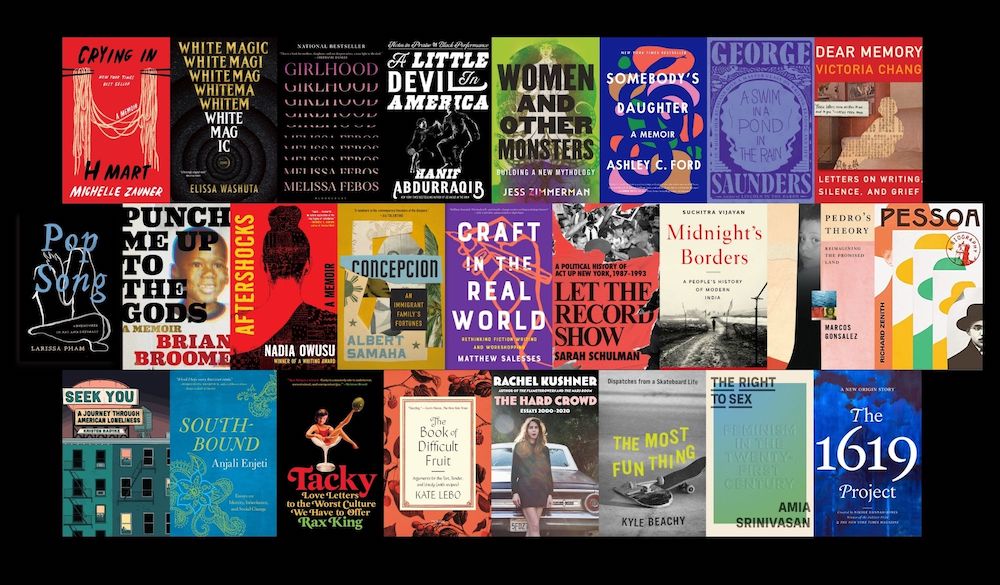
Girlhood by Melissa Febos

In her essay collection Girlhood, Melissa Febos questions received wisdom about what it means to be a woman—and her questions have proven strikingly resonant not only with women reflecting on the limits of consent, but also with writers reconsidering “the circumferences we may place on the stories we tell of ourselves.”

White Magic by Elissa Washuta

Elissa Washuta’s latest essay collection White Magic covers everything from land and colonization, to video games and Twin Peaks, to spells, tarot, and witchery. Described by fellow nonfiction favorite Melissa Febos as “a bracingly original work,” Washuta’s unpacking of personal pain, also discussed in an interview with Electric Literature and live in our virtual salon on magical feminism, is not to be missed.

Crying in H Mart by Michelle Zauner 

Also known as the indie rock star behind Japanese Breakfast, Michelle Zauner has written a memoir about food, mourning, race, music, and what it means to be Korean. From the first sentence and the title, the reader knows that Zauner’s mother will die and that Zauner will “cry in H Mart,” but the loss stings on every page. This memoir highlights themes like alienation in youth, and food as an expression of love and grief. Plus, in addition to gorgeous writing, Zauner’s book cover (designed by Na Kim) made it to the semi-finals of Electric Lit’s annual Book Cover of the Year Tournament.


Electric Lit’s Other Nonfiction Favorites

A Little Devil in America: Notes in Praise of Black Performance by Hanif Abdurraqib

Hanif Abdurraqib is no stranger to our Best of the Year lists. In his latest work, A Little Devil in America, a National Book Award Finalist, Abdurraqib celebrates Black performance and Black joy in a collection that the author himself thinks pairs especially well with other art forms, including the music of Merry Clayton and the performance of a good game of basketball. 

The Most Fun Thing: Dispatches from a Skateboard Life by Kyle Beachy

Skateboarding is, perhaps, a historically underexplored topic in literary circles. In The Most Fun Thing, Kyle Beachy does for skate culture what William Finnegan’s Barbarian Days did for surf culture, addressing both specific questions about the history of the sport’s development and broad theoretical questions like, “How does one live authentically as an adult while staying true to a passion cemented in childhood?”

Punch Me Up to the Gods by Brian Broome

In his debut memoir Punch Me Up to the Gods, Brian Broome recounts his childhood growing up Black and queer in a community that endorsed racial divides and narratives built upon shame. In unpacking the ripple effects of his early education, Broome considers the impact of teaching young boys formulaic “lessons” about masculinity epitomized by adages like “walk it off” and “rub some dirt in it.” This electrifying memoir pulls no punches—but it’s worth every second of heartbreak.

Dear Memory: Letters on Writing, Silence, and Grief by Victoria Chang

Victoria Chang is, first and foremost, a poet, and Dear Memory rings with lyrical prose. In collecting letters written to family, past teachers, and fellow poets, Chang delivers a collage in which the pieces, though only fragments of a narrative, ultimately deliver a gorgeous approximation of a “whole” ancestral history. 

Southbound: Essays on Identity, Inheritance, and Social Change by Anjali Enjeti

In her essay essay collection Southbound, activist and organizer Anjali Enjeti writes about developing and claiming her identity as a mixed-race woman in the Deep South. For further discussion of South Asian identity and definitions of heritage, check out an interview with Enjeti. (And, if you really can’t get enough, Enjeti acted as the interviewer in another great conversation about cultural appropriation and racial identities with Ladee Hubbard.)

Somebody’s Daughter by Ashley C. Ford

Ashley C. Ford isn’t a new name in writing circles—her resume boasts bylines in just about every news and culture outlet you might think of, from The Guardian and the New York Times to Slate and Marie Claire. Still, for a first book, Ford truly knocked it out of the park. Somebody’s Daughter is a memoir about a childhood marked by racism, rape, incarceration, and—above all—complicated love. 

Pedro’s Theory: Reimagining the Promised Land by Marcos Gonsalez

In this experimental memoir, Marcos Gonsalez tells the stories of multiple Pedros, some real, some imagined, some replicas of Gonsalez himself. In all of these tellings, Pedro traverses a specific environment: an elementary school, a queer club, the streets in a small town, higher. But in every setting of Pedro’s Theory, Pedro is looking for the same thing—the Promised Land—and finding something else. Read an interview with Gonsalez here.

The 1619 Project: A New Origin Story edited by Nikole Hannah-Jones

Whether most appropriately categorized as a work of history, journalism, or something more experimental, this collection of 18 essays, 36 poems, and selected short fiction is, at the very least, a dynamic reframing of the American origins story. From the opening Pulitzer Prize-winning essay penned by editor Nikole Hannah-Jones, The 1619 Project is filled with eminent literary voices, including Ibram X. Kendi, Claudia Rankine, Wesley Morris, Yaa Gyasi, Jesmyn Ward, and ZZ Packer.

Tacky: Love Letters to the Worst Culture We Have to Offer by Rax King

Have you ever secretly loved something profoundly uncool? If your answer is no, you’re lying—but this debut essay collection is perfect for everyone, even those not yet ready to confess. And, when you’re done reading Rax King’s absorbing thoughts about Creed, The Cheesecake Factory, and Guy Fieri, check out our incredibly fun interview with King here.

The Hard Crowd by Rachel Kushner

In this collection, pulled from an archive of over 20 years worth of writing, Rachel Kushner’s latest demonstrates again her respectable writing chops. The Hard Crowd has all the subversive political flavor readers will remember from previous work; fans of The Mars Room and The Flamethrowers will not be disappointed. 

The Book of Difficult Fruit: Arguments for the Tart, Tender, and Unruly (with Recipes) by Kate Lebo

In twenty-six essays and accompanying recipes, Kate Lebo’s genre-bending book—is it a memoir? A cookbook? Food writing?—draws inspiration from 26 different fruits, one for every letter of the alphabet. From aronia to zucchini, The Book of Difficult Fruit takes readers on a journey across medicinal, aromatic, historical, cosmetic, culinary, and cultural borders. 

Aftershocks by Nadia Owusu

In her memoir, Nadia Owusu, a Ghanian-Armenian-American, examines the aftershocks of her global upbringing. Beginning with a childhood spent following her father, a Ghanian civil servant with the United Nations, across Africa and Europe, and ultimately covering her coming-of-age and adulthood in the United States, Aftershocks does for racial identity what Maggie Nelson’s The Argonauts did for gender identity. Owusu’s memoir, and this interview with the author discussing its inception and continuing relevance, are not to be missed. 

Pop Song: Adventures in Art & Intimacy by Larissa Pham

Pop Song centers love and art, and features the work of, among others, Anne Carson, Frank Ocean, and Agnes Martin. Larissa Pham’s breakout might be described as a memoir-in-essays, but it’s probably more accurate to describe it as a love song—to intimacy, restlessness, vulnerability, heartache, and cultural connection.

Seek You: A Journey Through American Loneliness by Kristen Radtke

In the midst of a pandemic caused by a virus, Kristen Radtke takes a close look at a quieter disease ravaging the American public: loneliness. In graphic novel form, Seek You searches for an explanation as well as an antidote to societal isolation. Radtke’s interview on Electric Lit about the very Americanness of being lonely, the special brand of pandemic loneliness, and her buoyant hopes for the world’s reconnection post-pandemic is also worth checking out.

Craft in the Real World: Rethinking Fiction Writing and Workshopping by Matthew Salesses

It should come as no surprise to anyone that the traditional writing workshop was designed by white men for white men. In his investigation into the history of craft—and his prescription for rethinking today’s literary landscape, Matthew Salesses’ Craft in the Real World unpacks a series of important questions: How can we better reach writers with diverse backgrounds? How can we better include diverse storytelling traditions? In short: how can the writing workshop be better?

Concepcion: An Immigrant Family’s Fortunes by Albert Samaha

With a journalist’s keen eye and an immigrant’s unique perspective, Albert Samaha’s Concepcion examines centuries of family history from pre-colonial Philippines to Trump-era America. This Filipino American memoir confronts privilege, sacrifice, and the legacy of colonialism. For further discussion of the book’s main question—i.e., how to balance current prosperity against the sacrifices of previous generations—read an interview with Samaha on Electric Lit.

A Swim in a Pond in the Rain by George Saunders

One of two texts on craft featured on this list, George Saunders’ A Swim in a Pond in the Rain encapsulates a course on the Russian short story that he’s been teaching to his MFA students at Syracuse University for two decades. Each of the seven essays is paired with an iconic story and, as a whole, the text offers a technical and engaging approach to what makes for “great” writing.

Let the Record Show: A Political History of ACT UP New York, 1987-1993 by Sarah Schulman

After twenty years spent writing, Sarah Schulman’s effort has been hailed as the most comprehensive political history ever assembled of ACT UP and American AIDS activism. Let the Record Show features more than 200 interviews and provides an unvarnished look at an exceedingly controversial group. Be sure to also check out our conversation with Schulman about AIDS narratives, grassroots organizing, and the political use of anger.

The Right to Sex: Feminism in the Twenty-First Century by Amia Srinivasan

How should we have, talk, and think about sex? These are the central questions of Amia Srinivasan’s debut work The Right to Sex, which contemplates not only the act itself, but the limitations and consequences of the act on both an individual and societal level. Drawing on her expertise in political philosophy and feminist theory (Srinivasan is a professor of Social and Political Theory at Oxford), each of the collection’s six essays are characterized by a deep and careful intellectualism. 

Midnight’s Borders: A People’s History of Modern India by Suchitra Vijayan

Suchitra Vijayan’s Midnight’s Borders offers a modern view of India in a form reflective of its writer. Suchitra Vijayan is a barrister by training, an award-winning photographer, and the founder of a hybrid research and journalism organization. Unsurprisingly, then, her work of narrative reportage is genre-bending, following the lives of India’s displaced and stateless with an amalgam of stories, encounters, vignettes, and photographs. Read an interview with Vijayan discussing the seven-year, 9,000-mile journey that went into the making of this work of novelistic nonfiction here.

Pessoa by Richard Zenith

The only biography on this list, Richard Zenith’s Pessoa is an in-depth (the book clocks in at over 1,000 pages) look at the life of Fernando Pessoa, one of the world’s most enigmatic poets. As an acclaimed translator of Pessoa’s work—for which Zenith won the PEN Award for Poetry in Translation—and the recipient of Portugal’s Pessoa Prize, Zenith is undoubtedly the perfect biographer to unravel the poet’s dozens of alter egos and imagined personalities.

Women and Other Monsters: Building a New Mythology by Jess Zimmerman

Jess Zimmerman’s Women and Other Monsters analyzes 11 iconic female monsters, offering a fresh and celebratory spin on the outdated belief that monstrosity is something to be feared. In considering closely the “engine of Greek mythology,” Zimmerman makes an argument for rebuilding and repurposing myths for the twenty-first century. For further discussion of monsters (and culture, the Male Gaze, and topless murder), check out an interview with former Electric Lit editor-in-chief Zimmerman here

A Nun’s Awakening in a Halfway House

Retrospection about nuns is in. 

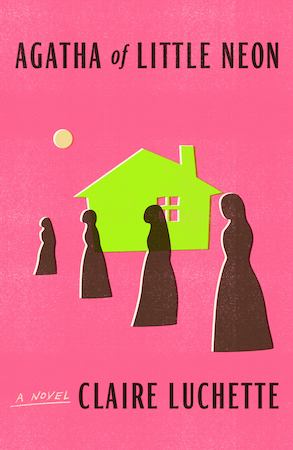
Claire Luchette‘s novel Agatha of Little Neon packs a suckerpunch beyond its bold pink cover. At first it is unassuming, as a woman in a habit can be. The story opens with four sisters who are being removed from their home near Buffalo to be put in charge of running a halfway house in Rhode Island, Little Neon. The four blend together at first, having spent the last nine years in unison. However, after the move, the youngest nun Agatha is slowly peeled from the comfort of anonymity and constancy and into interrogating her own wants.

Tension builds throughout this novel in vignettes. At the start, when the sisters prepare to leave their home of nine years, they pray in the front pew and Agatha recounts the grandiose beauty of the church:

“There was nothing new for us in that basilica, only things that had always been there, and though we could not admit it to each other, that’s what we wanted, too: to always be there, in the place we’d become sisters. Remain, remain, remain.”

Then quickly they are transported to another world of graffiti of men’s genitalia, discount groceries, and a halfway home painted neon green. And inside the home are people that the Church says, ”need God and prayer and mercy.” But it doesn’t seem like enough. Not for the people who have tangible needs and hardships at odds with the Church’s creed. For Agatha, recognizing that gap comes with the larger stake of ending the bond she has with her fellow sisters. If she leaves, she is alone.

I am a generation removed from Catholicism. I was baptized at seven at the behest of my great aunt, who was also my father’s Godmother. My mother was taught by her grandmother that only a priest could truly interpret the Bible. But, my home is littered with crosses and angels. I suppressed my sexuality until I was in college because I was afraid of disappointing my loved ones. After seeing many family members struggle with addiction, I’ve seen how the church is one of the only places offering support.

I talked on the phone with Claire Luchette about a quiet, queer interior, the rare beauty of Fleabag season two, and how to write men in a story of sisterhood.


Alex Juarez: One of the main things that I immediately noticed and that stuck with me the entire book is that it’s such a relationship-oriented story. Between the sisters, between the sisters and Mother Roberta, between the Neons, and even the girls at school. But at the same time, so much of the book is focused solely on Agatha and her interior. How did you manage to balance which parts of the story were about groups and which were about the singular?

Claire Luchette: The story started as an exploration of group dynamics. I was writing early drafts through the first person plural, but that didn’t really allow me to get into any of the interesting stuff that goes on between groups of people and like the strange power dynamics that exist in any group. And so Agatha came much later in the process. Once I was able to picture this narrator and think about her role in this group, you know what she wants for herself or what she lacks for herself, that made it much easier to kind of figure out what was at stake for her in this story. Putting her in this situation in Rhode Island in which she is totally out of her depth, I’m just far more interested in populated stories in which a lot of people show up and kind of filter in and out of the world than I am any like one character or portrait.

AJ: ​​I feel like there’s been a big increase in like stories that are very much about one lone woman like My Year of Rest and Relaxation where she’s just in her apartment and there’s two other characters. 

CL: Right? Yeah. No, it’s so true. And Rachel Cusk, for me, was a big inspiration as to how you can turn that gaze outward and put your character in the world and have them bump up against other people in it rather than just giving us a static situation. That’s way more interesting to me.  

AJ: I really enjoyed the societal expectations that you were addressing about being a nun. You see that in the scene with the truck driver where he’s initially very aggressive but when he sees that they’re sisters and then he apologizes and leaves. And simultaneously having the sisters be caretakers for this group of addicts that are almost all older than them.

The nuns exist in their own world and determine their own rules, but they’re also still liable to this stringent and regimented, broader world of the Catholic Church.

CL: I’m so interested in caretaking as a story concept. I think what’s interesting to me about the nuns is that they kind of exist in their own world and determine their own rules, but they’re also still liable to this extremely stringent and regimented, broader world of the Catholic Church. So they can’t really excuse themselves from clericalism and the idea that they are of a different moral sphere than everyone else. But in this actual vocation in which they’re taking care of other people, and I think they find that physically demarking themselves and culturally and morally demarking themselves isn’t to anyone’s benefit and that it really gets in the way of the work that they’re trying to do. 

AJ: Sexuality is mentioned throughout the book, but often in like very tiny revealing snippets. And I was incredibly charmed by how much you learned from these short sentences here and there. You mentioned that Agatha was a later addition, but since you thought of Agatha, was she always queer? 

CL: Yes. I actually met a nun while I was researching this book. And the sister said, “I’m a lesbian, but it’s just something that I have to do away with.” And that’s self-knowledge I found really fascinating. And I wanted to figure out what it meant for someone to hold that truth in their head but live without letting it be true. Agatha was always clear in my head, and but I think like for me, the hard part in writing this book was figuring out ways to make it clear that her queerness is palpable and present, but not to be homophobic in the way that I wrote about repression. 

AJ: Have you seen season two of Fleabag, The L Word: Generation Q, or Midnight Mass?

CL: I’ve seen season two of Fleabag. I have not seen the L Word or Midnight Mass.  

AJ: I feel like there’s been a big spike in three dimensional and devout clergymen, who are also very queer-accepting friendly, loving figures. And I don’t seem to remember that happening prior to a few years ago. Do you have any thoughts on like the rise of queer friendly figures on-screen, like Catholic or otherwise? 

So many of my relationships with clergy have been with sisters. They are the real workhorses of the church and the people who are bringing God to the suffering.

CL: Yeah, I love this question. I remember watching Sex and the City, and Samantha has a fling with a priest. That was the first time that I saw a priest breaking the rules on screen. I think some of it has to do with the quote unquote Cool Pope, and what Pope Francis seemed to represent to a lot of progressive Catholics. It seemed like he was going to bring about all this change. But I think people are finding that like no one pope, it sounds ridiculous but no one pope can change the Church.

I think what’s really interesting to me about the Hot Priest is he’s a really good priest. He sees himself as an instrument of God. He wants to bring God to the people of the world and the Church. He’s not someone who sees himself above the lay people or beyond reproach in some way. But we see that clericalism still hurts him because he’s forced to desexualize himself. And yeah, I think anytime you have a character who exists inside a hierarchy of power, that character automatically becomes a shorthand almost for readers or viewers, right? It signifies something. And I think lately, the role of a clergyman in a story signifies something really complicated and a lot more interesting than maybe in decades past.  

AJ: It was really interesting to see the role of men in the story, especially because it’s very much a tale of sisterhood. And the men in the story are the priests and the Fathers who are less than stellar: how they weaponize power over the sisters for being women or like the principal at the school. And then you have the Neons who are such a vital part of the story. And very quickly the Neons are only men who are incredibly tragic and very human characters. Was it important to you to give the sympathetic role to men outside of the church?  

CL: In earlier drafts, the men in the story were either extremely evil or extremely wounded, and for whatever reason, could not strike a balance between the two. I wanted to draw a line between the emotional stuntedness of the men of the church and the ways that the men that live in Little Neon aren’t afforded the same ways of doing away with their problems. There’s no rule for them to cling to as a means of hiding their pain.

I’m sure that there exist some priests that that are good priests, like the Hot Priest, but I’ve never gotten to know them or I’ve never met them, because so many of my relationships with clergy have been with sisters. They are the real workhorses of the church and the people who are bringing God to the suffering. And so I wanted to show that in the story, which required me to keep the man of the church at a bit of a remove. 

I’ve Been Looking Everywhere for Me

Missing Woman Unwittingly Joins Search Party Looking for Herself

They had water. They suckled canteens,
wiping their mouths with the backs of their wrists.
When I say they, I mean for days all I saw
were walking lampposts. Then, them: a crowd in red shirts,
“so as to be visible in shrubbery,” I was later told.
They had dogs, who sniffed everything in sight,
often leaping up at nothing. The walking lampposts
were a mirage, I was later told, even though they had feet
and burned no matter the hour. The moment I found
the crowd, I couldn’t find my words. My mouth so dry
I wretched. A man tossed me a red shirt, called me “Kathy,”
so I became her. They fed me peanut-butter bars and soon,
my legs jelled. I started to skip, skip, skip down the path.
My hearing returned. The air blurred with crickets.
“I found her!” I yelled into a blackberry bush or was it
a fox filled in with flies? They tore me
from the woman I found. Locked me
in the backseat of a squad car, pressed wet washcloths
to my forehead. I could hear them whispering
beyond the zipped up windows. A man shone
flashlights in my eyes. It took three sedatives to bring me
down. I was later told that I was later told that I was.
“Where is she?” I demanded. Clouds ate my vision.
Sleep forced her fingers down my throat.
“We found her,” a cop barked into his walkie-talkie,
eyes fixated on my dirty ankles. I threw my arms
around my own shoulders, “Thank heavens,
I’ve been looking everywhere for you.” Once they knew
I was me, they fed me orange slices. I’ve never been
loved like that before. Everyone calling my name
with such desperate attention. Even me.

The Symphonic One

For a wedding present, my husband gave me a cello.
From the beginning, I was afraid of it. It hulked
in the corner of our new bedroom in our new house,
huge and lumbering. I knew it would tear our marriage
apart. The first time I played it, Timothy wept. He said
all the secret notes that were in his body were coming out
of the instrument. I knew right then that my gift would
make me famous beyond compare. At Timothy’s urging
I joined the local chamber orchestra. The effects were
disastrous. The violinist swore off ever playing again.
The pianist cut off her thumb to prove a point. Soon, the media
got a hold of what was happening. I was asked to join the Symphonic
Four, a nationally touring ensemble of great prestige.
I had only been playing for a few months;
my skill was unfounded. But it was more than that.
I was doing things skill could not account for. Soon it became
the Symphonic One. The other musicians were admitted
to various institutions for their overwhelming joy. The instrument
beckoned desire and blood. I remained untouched.
When in the night I would return to my hotel room
to find silence I would have to fill it and the filling
would leave me empty. The low notes rumbled the room.
My hotel neighbors ceased making love to knock on my door
in their bathrobes. They sat on my bed while I played.
Across the country Timothy was asleep and I wondered
if this would wake him. “Every time you play, even
if I can’t hear it,” he once told me, “I feel the bow against
my heart.” He was not simply being romantic. One night
I was playing in France. It was the largest crowd I had ever
played for. In the midst of the last movement, the cello
snapped in half. I sat there in that crowded theater, with a thousand
faces looking at me. No one applauded. No one got up. It was clear
I would never play again. When I got to the hotel, I ran the bath
and filled it with turquoise hotel soaps shaped like stars and fish.
I put my head completely underwater and opened my eyes.
Bubbles filled my ears. I saw the moon floating above me,
leaking silver-green smoke, and tried to remember
what his voice sounded like. I stood up in the bath
and dried myself with a towel that smelled of stale cigarette smoke.
I knew that to step out of the bathtub would be to step into
an unfathomable life. I counted to three. In my new, unfathomable life
I was a woman who would never again hear her husband’s voice
and the bathmat I stepped onto was not a real bathmat
but a thin towel laid on the bathroom floor.

Electric Lit’s Favorite Poetry Collections of 2021

Despite its setbacks, this year has been an abundant year in poetry. Throughout 2021, we read lyrical, rhythmic, political work that spoke to our collective horrors, as well as our collective joys. The poets on this list battled at the cross-roads of their internal and external lives. Through them, we traveled across space and time, and at every turn, there was another poet, a prophet whose words reminded us that through our journeys, we were never—not for one moment—alone. Electric Literature staff and contributors voted for their favorite poetry collections of the past year, and here are the top two, followed by additional favorites (there were many ties!) in alphabetical order.   

The Top 2 Poetry Collections of the Year

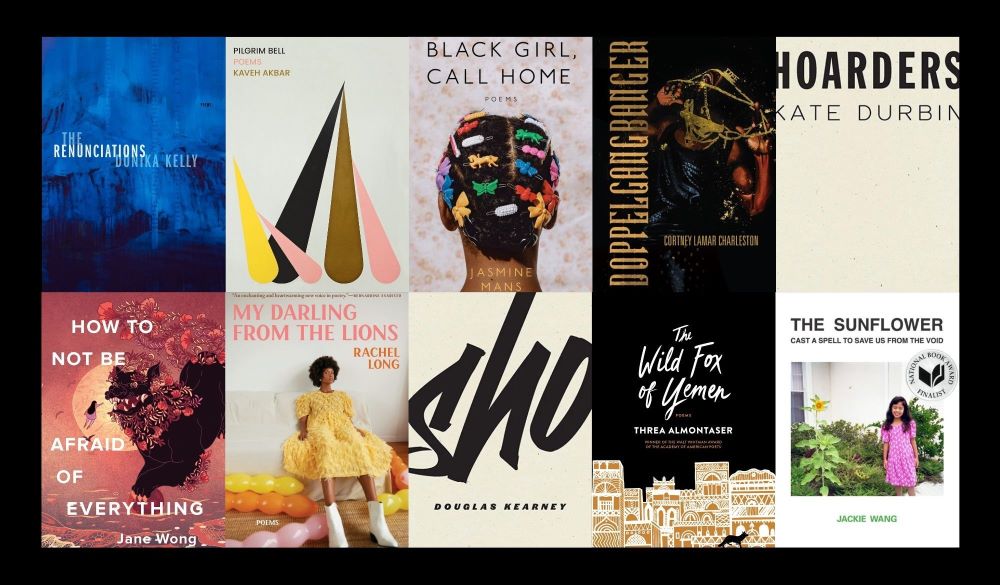
Pilgrim Bell: Poems by Kaveh Akbar

Kaveh Akbar’s linguistic precision is crucial to his sophomore collection, Pilgrim Bell. One of literature’s most exciting contemporary poets, Akbar explores deeply personal themes surrounding his family’s immigrant experience, being Muslim in America, and his quest to stay sobor. Akbar is a consummate wordsmith, shaping and molding language to embody the spiritual landscape his poetry traverses. Pilgrim Bell was a highly anticipated 2021 collection, and it more than fulfills its immense promise.

The Renunciations: Poems by Donika Kelly

Donika Kelly’s sophomore collection lives inside some of the darkest traumas a person can face: child abuse, racial violence, the dissolution of a marriage. Kelly blends formal structure with more liminal elements of human survival like memory, employing lyrical virtuosity to explore the pain of the most intimate relationships—how familial harm spans generations—and how a person must shapeshift in order to survive. Kelly’s resilience is at the heart of these poems. Read more about The Renunciations, and other queer poetry collections here.


Electric Lit’s Other Poetry Favorites

The Wild Fox of Yemen by Threa Almontaser

Threa Almontaser’s critically acclaimed debut, The Wild Fox of Yemen, questions language, voice, translation, and how these basic elements of communication are formed and maintained by imperial violence. Alternating between English and Arabic, readers might want to keep their phones handy to translate a few words. This collection thrives at the intersection of dualities—New York and Yemen, English and Arabic, foreigner and native. Almontaser brings us Muslim girlhood in the wake of 9/11 but never loses herself or her centrality as she meditates on the fox: a dream creature representing both sacrifice and scavenger—perhaps the most visceral of all dualities at the heart of this collection. 

Doppelgangbanger by Cortney Lamar Charleston

Doppelgangbanger invites readers to time travel with Cortnet Lamar Charleston back to the 90s, when hip-hop was king, to the streets of Chicago’s South Side. Charleston’s poems explore a Black boy’s struggle with destructive definitions of masculinity and the conflict between inner and outer life. Charleston’s playful, musical language creates a foundation upon which honesty and self-discovery soars. This highly anticipated collection is a journey from performative self to authentic self, and an ode to Black boys in urban cities everywhere.

Hoarders by Kate Durbin

This timely collection, inspired by the A&E docuseries, soars where the docuseries fails. The poems in Hoarders are an exercise in empathy, telling the story of a person and the beloved items they hoard. Kate Durbin then complicates this narrative by examining the larger context: a society beleaguered by gross consumerism. Durbins gives voice to her characters, using surrealism to inject humanity and tenderness into lives and stories that are often treated with disdain. Durbin reminds us that life under late capitalism is complicated. In 2021, who doesn’t need that?

Sho by Douglas Kearney

Both dazzling and devastating, Sho, Douglas Kearney’s seventh collection is a literary high-wire act that both employs Black vernacular strategies and uses various modes of performance to examine history and current events. These poems are wildly sonic, musical in their construction, and Kearney’s linguistic virtuosity creates a memorable all-sensory reading experience. Kearney dances at the intersection of entertainment and violence, and a good reader is left wondering where one starts and the other ends.

My Darling from the Lions by Rachel Long

This much-lauded debut collection, My Darling from the Lions, tells a story of Black girlhood through the complicated lens of sexual politics and familial inheritance. Black identity is the geography of the book, which is divided into three sections, but additional recurring themes explore femininity, divinity, and familial shame, all in the context of modern culture. If it sounds as though this collection is uniquely wide-ranging, it’s because of Rachel Long’s ability to emphasize the power of every single word in every single poem, facilitating a collective impact that lingers long after a reader has put the book down. 

Black Girl, Call Home by Jasmine Mans

A searing sense of longing permeates Black Girl, Call Home. Written by a renowned spoken word artist, it is an ideal literary companion for any woman wandering the annals of her mind, her life, or the collective experiences that have shaped her. A love letter to Black queer womanhood, Jasmine Mans’ poems are lush, free, and meditative, lucid and lyrical. They don’t shy away from difficult questions. The reader will be reminded of Mans’ spoken word roots, just as the book calls for Black women to find their paths home.

The Sunflower Casts a Spell to Save us From the Void by Jackie Wang

The Sunflower Casts a Spell to Save us From the Void, a 2021 National Book Award Finalist, is an amalgamation of dreams shaped and molded into poems—itself an act of literary translation spanning multiple realms. Jackie Wang dreams and writes of solidarity and resistance, individual and collective conflict. These concepts are vehicles to portray historical trauma and communal memory, and the way these collective forces seep themselves into our collective and individual psyches. Ultimately, Wang’s ethereal poetry bridges the gap between the spiritual realm and real life.

How to Not Be Afraid of Everything by Jane Wong

Jane Wong describes the feeling of her sophomore collection, How to Not Be Afraid of Everything, as “That turning around when I walk down the street, always feeling like I have to look behind me.” These quiet poems burrow under a readers’ skin, yielding small, intensely physical responses—fists curling and uncurling, a sharp intake of breath or an inability to look someone in the eye. The fear Wong’s collection addresses is the kind that calcifies into rage. These poems are a warning: America might not expect anger from a Chinese American woman, but you never know when her rage might release, when her fist might curl.

7 Books About Messy Families With Daddy Issues for “Succession” Fans 

Happy families are all alike; every unhappy family is unhappy in its own way.”

Tolstoy’s famed opening line from Anna Karenina is never far from my mind whenever I tune in to watch my favorite white TV family, the Roys of HBO’s Succession, who run an enormous Fox/Disney-like media and entertainment conglomerate. In addition to its razor-sharp wit (seen in its portrayal of the characters’ many flaws and neuroses, as well as their delightfully deranged and hyper-specific insults for one another), Succession is famed for its frank examination of corporate and family power dynamics and the funhouse mirror-like quality with which it satirizes and reflects our own world. While a good portion of the show’s appeal lies in getting to watch a set of ultrarich and deeply unlikable characters being nasty to one another and engaging in various corporate hijinks, its depiction of the real pain, suffering, and emotional rot at the core of the Roy family is startlingly poignant. The Roys’ surface problems are not relatable in the least for most viewers, but the specific dysfunction and unhappiness of each individual character collide to form a potent, combustible cocktail of misery that keeps me coming back again and again. 

At the heart of the Roys’ particular brand of family dysfunction is, of course, everyone’s deeply entrenched daddy issues. “I love him, I hate him, I’m gonna outsource it to my therapist,” says once-de facto company heir and now disgraced son Kendall Roy about his father, the domineering and tyrannical Logan Roy. Kendall and his siblings—deluded outsider Connor, self-righteous girlboss Shiv, and enfant terrible Roman—can’t help but revolve around their father in search of his approval, like wobbly planets around a withholding sun. Logan, in turn, plays his children off one another like a seasoned conductor cuing an orchestra, knowing exactly which of their weaknesses to exploit and which of their strengths to cultivate and praise in his never-ending quest for power and control. At the same time, part of the brilliance in Brian Cox’s portrayal of Logan is that we don’t doubt that Logan loves his children, in his own way. But love is besides the point in the world of Succession—an inconvenience at best and a tool to be weaponized at worst. 

Power, the lies we tell ourselves and others, and the family ties that both bind and blind us are all things that deeply interest me as a writer and a reader, especially when humor is involved. Succession is a show in which laughter, usually at the expense of others, keeps the pain at bay, and in which none of the characters want to give away their hands, even as they lose game after game. The books below offer their own takes on family dysfunction, daddy issues, and familial power dynamics and how quickly they can change. 

Seating Arrangements by Maggie Shipstead

Shipstead’s novel is a gently satirical account of a patrician New England wedding weekend gone wrong, seen primarily through the eyes of Winn Van Meter, the embittered father of the bride whose feelings of confused lust (for one of his daughter’s bridesmaids) and social discontent (for a club that won’t accept his membership application) threaten to occlude the success of the wedding.

At its heart, the novel is also a send-up of masculinity, snobbery, and what Succession’s Roy siblings would call “sad sack wasp traps”—social affairs convened by the moneyed and/or titled primarily for the goal of seeing and being seen. Elegantly written, with a keen eye for the quirks and customs of New England WASP families, Seating Arrangements is perfect entertainment for anyone who enjoys watching rich white people behaving badly.  

Family Trust by Kathy Wang

Kathy Wang’s Family Trust is an exploration of the lives of a Chinese American immigrant family in Silicon Valley, in the wake of the news that their wealthy patriarch, Stanley Huang, is dying. As they prepare for the details of his estate to be revealed, each family member—his son Fred, a Harvard MBA grad convinced that he is meant for loftier things than his mid-level corporate investment job; his daughter Kate, who supports her family while her entrepreneur husband struggles to get his start-up off the ground; his much-younger second wife, Mary, who is beginning to chafe under the demands of his care; and his tough, pragmatic first wife Linda, who has begun dating again in her 70s—must grapple with the long-simmering tensions, envy, and unspoken resentments that have built up around their lives. Wang’s novel shines in its description of not only the family’s dynamics, but also its depiction of Silicon Valley, where fortunes can be made and lost seemingly overnight and an outward indifference to appearances masks an obsession with status. 

Priestdaddy by Patricia Lockwood 

Patricia Lockwood’s memoir, a coming-of-age story and a portrait of a most unusual family, is as unforgettable as it is funny. Lockwood writes deftly and hilariously about her father, a former Lutheran pastor turned married Catholic priest with many eccentric habits, including wearing only underwear (or full priest regalia) at home, drinking cream liqueurs throughout the day, and bellowing nonsequiturs at his television. She presents these foibles alongside his more troubling flaws, including his domineering nature and selfishness, without malice or judgment, while also assessing the very real trauma of growing up in a conservative, highly patriarchal childhood:

“Sometimes, when the ceiling seems especially low and the past especially close, I think to myself, I did not make it out. I am still there in that place of diminishment, where that voice an octave deeper than mine is telling me what I am.”

Mr. Bridge by Evan S. Connell 

Much like Connell’s 1959 novel, Mrs. Bridge, a quietly stunning character study about a timid upper-middle-class Kansas City housewife, Mr. Bridge—a companion novel published ten years later—is about the big little moments of life, the seemingly insignificant hinges upon which a life can turn, or turn in on itself. Mr. Bridge, an ambitious lawyer whose work ethic assures his family’s prosperity, hides from his wife and children behind a newspaper and a veneer of conservative respectability, barely responding to their bids for his attention while simultaneously yearning for their approval and love. Connell’s touch is light, but the impact of all these little moments is weighty. Mr. Bridge vacillates between moments of humor and pain, showing us an emotionally stunted man who is convinced that material success as a provider takes precedence over connecting with the people around him. 

Family of Origin by CJ Hauser

In CJ Hauser’s novel, two estranged adult siblings must come together in the aftermath of their biologist father’s accidental death to collect his belongings from his research station off the Gulf Coast. Elsa and Nolan Grey’s father was a once-revered scientist whose professional reputation went south after he aligned himself with the Reversalists, a ragtag group of scientists who believe that evolution is now going backwards.

As the siblings come to terms with their complicated feelings about their brilliant, emotionally distant father, they too find themselves going backwards, revisiting their shared memories and trying to determine where it all went wrong. “They were fondlers of old grudges and conjurers of childhood Band-Aid smells,” Hauser writes of the Greys. “They were rescripters of ancient fights and relitigators of the past. They were scab-pickers and dead-horse-beaters and wallowers of the first order.” 

We the Animals by Justin Torres 

Written in an incantatory, otherworldly style that is reflective of its child protagonist’s perspective, We the Animals is a deeply felt novel about childhood joys and traumas, as well as the powerful hold that our families can have on us long after we’ve left them or they’ve left us. Told in vignettes from the perspective of a young half-white, half-Puerto Rican boy growing up in rural upstate New York with his two older brothers and his troubled parents, who married in their teens and have a tumultuous relationship with each other and with their children, Torres’s novel reads like a series of snapshots that leave nothing out—some blurry, some beautiful, some excruciating. The first time I read it, I was particularly moved by Torres’s description of the complexities of brotherly bonds:

“They hated me for my good grades, for my white ways. All at once they were disgusted, and jealous, and deeply protective, and deeply proud. Look at us, our last night together, when we were brothers still.”

Goodbye, Vitamin by Rachel Khong 

After being unceremoniously broken up with by her fiance, Goodbye Vitamin’s Ruth comes home for Christmas for the first time in years to find that her father Howard, a history professor, is losing his memory and has become increasingly erratic, and, consequently, has been fired from his teaching position. Ruth’s mother asks her to move back home for a year to help care for him. Excerpts from Howard’s old journal entries, in which he recorded things Ruth said as a child, are peppered throughout the novel. Ruth in turn begins cataloguing her father’s days with tender precision, noting his good and bad moments.

As the novel continues, she recalls the ways in which her father’s failings—alcoholism, past affairs with other professors and grad students—mirror her own inability to face life’s realities and truths. Ironically, it’s in lying to her father that Ruth begins to find purpose as his caregiver, when one of his former graduate students comes to her with the idea to stage pretend classes for her father to teach, in order to give shape to his days. While the ruse doesn’t last, the wisdom and tenderness of this slim novel lingers long after its last page, as do the questions it asks us about memory, forgiveness, and what is passed down within families. 

Fighting for My Marriage Came at Too High a Cost

It’s Friday, two days since I told my husband our marriage is over. I wake to find that the dishwasher, the washing machine, and the basement humidifier have all broken. I am incredulous, and I rage around the house, unhinged and wild-haired. I report to my almost-ex-husband on the appliance misfortune. He calls it an omen. I laugh. Don’t you know omens foreshadow an event? We’re already at the match’s end. We’ve been jabbing at each other for years, and sometimes just gnashing our teeth. We wanted resolution and victory. But instead, this is ending a different way: These are the haymakers. I could wait for the eight-count, but I’m throwing in the towel. The omens have long since come and gone. 

It’s February. Winter has finally arrived, and we’re buried in snow. The fantasy kind, the kind that drifts down like powdered sugar. The world is gilt in blinding sparkle. The beauty overwhelms, but so does the work: two shovels, a scraper, and a wood carrier stand, alert, on the front porch, ready for daily use. Outside, snow slides from the roof and icicles snap in the morning sun, the thuds loud enough to shake the house. 


My daughter and I are walking in the woods in twenty-degree weather when her coat zipper breaks. While she is rolling down a hill in the snow, the elements come apart, and refuse to fit back together. At home, I discover there is a warranty policy, and begrudgingly send the coat to the prescribed address. The website says it will take four to six weeks to hear whether the garment can be repaired or not. It is winter in the Hudson Valley, so I buy my daughter a new coat on late-season clearance, wrapping her in layers of wool and fleece until it arrives. I am fortunate to be able to solve the problem with the click of a mouse and a few credit card digits, but I am vexed nonetheless. Days later, the zipper on my jacket goes, too, in the same fashion, and within a day after that, my son’s, too; one of the top stops snaps in half and the slider flies off completely. It feels like a cosmic prank. 

I call the outerwear company to explain. The man on the other end of the line calmly instructs me to send the second and third coats to him, says it will be four to six weeks “before we know anything,” as though he is a doctor taking a biopsy and running tests.

“You know,” I say, “It is the middle of winter in Upstate New York, and you now have all of our coats.”

“Yes,” he says, “I’m sorry, ma’am. It’ll be four to six weeks at least.” I begin to laugh. Because it is absurd. 

It is winter in the Hudson Valley, so I buy my daughter a new coat on late-season clearance, wrapping her in layers of wool and fleece until it arrives.

In a small way, yes, but still, it feels like a fun-house reflection of the spectacular collapse of this whole pandemic year, the grand reveal of all that was already broken and the farcically poor responses. They keep asking us to hold on. They say, “have faith.” But we’ve fought too hard, too long, and at too high a cost. We’ve watched our faith burn. We are watching it become something fiercer and more true. There is nothing left to do but release our hold on what was.

I am mad that my not-yet-ex-husband’s zipper didn’t go down too. We have been separated, now, for eight months. But then he heads to the Adirondacks, alone, to celebrate his birthday, and breaks his ankle the first day. I feel both guilty for thinking what I did and, also, more schadenfreude than I’d like to admit. 

Two days after he returns from the mountains limping, I ask him to sit with me and talk: What needs to shift while he rests and his ankle mends? He says, “Nothing.” He says, “I can handle it.” He insists he will still go to work—where he stands for hours—just less. Then he asks for money to bridge the gap. I am in disbelief; we used up the last of our liquidity to buy him a place to live. I feel like a well he drinks from whenever he’s thirsty, never noticing when it runs dry. I begin to laugh, and then crumple into sobs. When he leaves, I know it is time to stop fighting for us.

I hold the truth of finality for ten agonizing days. I am wrecked. Can’t sleep, can’t eat. Then, on a Wednesday, in couples therapy over Zoom, I tell him I want our separation to be permanent. I knock over my glass of water, my hands are shaking so hard. I tell him I need to let go. I ask him to let me go. He looks stunned, and I am surprised he is surprised. He asks me to hold on, to try one more time. He says, have faith. I say, I can’t. I say I’ve fought too hard, too long, and at too high a cost. There is nothing left to do but release my grip on what was. We have the same argument we’ve had for years, again, while our therapist watches from the screen. Snot and tears careen down my face in sticky rivulets. I start to plead: I need you to let me go. 

My anger has gone out of me. I have been gutted. I feel lighter, like ash. I feel like I will vomit. 

We have the same argument we’ve had for years, again, while our therapist watches from the screen.

The following Monday, the kids—four-year-old twins—are at his place, and the house is quiet and dark. I don’t know what comes next, what fills the space of clawing and willing and waiting. I pull my mother’s books from a teetering pile by my bedside. Most of what was in her house, our house, is gone, but I’ve kept a few of her books, the ones she collected when she divorced my father; Mary Oliver, mostly, and May Sarton, too. I discovered them on her bookshelf the morning after her death and sat on the floor, encircling myself with them, searching, already, for a way to keep my mother close. I was twenty one, and needed her still. 

She’s been dead for thirteen years now, and I’ve carried these volumes with me through countless moves. I have barely looked at them. 

In my bed, there is a vast space beside me where my soon-to-be-ex-husband used to sleep. I cover it with the books, and reach for a worn paperback, From May Sartons Well. Inside is a piece of yellowed loose-leaf paper, and on it, my mother’s unmistakable scrawl. I am struck by how like mine it is. My god, I think, how I am becoming her. There is, on the paper, a brief list of page numbers, and beside most, a word or two. A handmade index. A map.

I turn to “p. 89—intimacy difficulties.” To be honest is to expose wounds, and also to wound. There is no preventing that. The scorched truth clicks loudly enough to hear. I have had it beside me all this time, but I haven’t been willing to go near it. I knew, somehow, that my mother’s books would bring me nose to nose with the inevitable. And so I have circled carefully around them, avoidant, just as I have circled around the truth of what I must do to free myself from the stuckness of my marriage. 

I read on, following the trail of breadcrumbs my mother left me. What have I done? What do I do now? My mother, by way of Sarton, has anticipated the question: Keep busy with survival. Imitate the trees. Learn to lose in order to recover, and remember that nothing stays the same for long, not even pain, psychic pain. 

I knew, somehow, that my mother’s books would bring me nose to nose with the inevitable.

The words invite a putting down. It took my mother nearly thirty years of trying before she could accept that it was time to put down her relationship with my father. I remember her impenetrable distance after she asked him for a divorce. It was borne of bitterness; she had waited much too long. She was snuffed out completely, for years, before she found the break. Cancer felled her soon after. It was too short a second act.

I have come to accept that it is time to put my own marriage down. It was the only thing left to do. Sarton affirms this. In the end one cannot be faithful in the true life-giving sense if it means being unfaithful to oneself.

I have, of late, fed on the promise that I won’t follow in my mother’s path. I watched her fade, watched her become hollow. I, a child, needed her then, but she had nothing to give. She’d used herself up in desperate willing and the blackness of resentment. My children have watched that same blackness sharpen my edges. They have seen me fade. They need me to return. I need myself to return. I thought I could spare myself and still find a way out. My mother did too. We were wrong. 

I knew before I woke/That I would have to break/Myself out of that tomb/Be born again or die … Hear death within me/Like the roots of a tree/Her life within mine—/Twice-born mystery.

I have been patching rather than reckoning. I was unprepared to see the broken things piling up around me, pointing to the break required of me. Now, exhausted, I have done it. Alone here in the lovely silent house/Alone as the inner eye opens at last. I am unburdened, and awash in fresh pain. 


The afternoon of my confession, I drive an hour north and walk a snowy path. There is a wide metal gate, the kind you find on farms, closing off the steepest section. I climb over it without a thought. I lean into the wind and slip-step up a steep wooded slope, up and up until I come out into a barren, undulating field. The sky is a mottled, pale gray; more snow is coming. The snow on the ground is white-gray, too, pulled into tiny, wave-like drifts. I sink deep as I climb to the top of the hill, breathless in the cold. I stretch my arms and face into the biting wind. Snow begins to fall. Tears run down my face again, but I am not crying. I feel clean. 

That night, our children are at his house, and I sleep harder than I have in weeks. A sleep of fallow mud.

The next day, I wake and head for the woods again, with skis this time. The sky is piercingly blue, and the dog runs ahead of me, gleeful. What is it about animals? … They restore us to childhoods world, pure and self-absorbed. I ski until I am euphoric and soaked in sweat under my thermal layers. It is so strange not to have an argument to mount, a next move to plot, a secret to hold. I float through the day.

It is so strange not to have an argument to mount, a next move to plot, a secret to hold.

I carry my mother’s book around the house with me as I move through the days, doing laundry, vacuuming rugs, wiping crumbs off the counter. I lay it down in plain sight to ensure I will stumble upon it. My mother holds me through the poet’s verse. I read the words like I’m counting rosary beads. They become prayer. 


On my way out to warm up the car one morning, I notice that a corner of the front porch is sunken with rot. The collapse is distinct, visible to the naked eye; I recognize immediately that it’s been deteriorating for a long, long time. I pass this place, this decay, many times each day, but I haven’t seen it until now. I wonder if this is how I have looked. I wonder if anyone has noticed.


It snowed again yesterday, but today the sky is clear and vast. The light of February is long, and the mornings are full of birdsong. The new year and a fresh fall of snow/The new year and mourning to do … So it is now the gentle waking to what was/And what is and will be as long as I am alive. I have no idea what my spring will bring, or when. But I know I want to be soft when it comes. I hope I have time for a full second act. I know there is no guarantee.

In the woods, the dog snuffs her nose in the powder, then leaps into the air, high on her life. I stop to catch my breath, and stare into the naked woods. The snow is all kinds of blue. I am, I think, more of a poet than I was before I knew him, if to be a poet means allowing life to flow through one rather than forcing it to a mold the will has shaped. I start up again, and my snowshoes thwap against the heels of my boots, ice cracking beneath me. The going is slow and effortful. Everything is breaking. Everything is thawing.

The Transformative Joy of A Good Breakup

Lee Lai’s Stone Fruit is the kind of book that stays with you. Since I finished reading it, the graphic novel has been lingering in the corners of my mind, sticky and sweet as a nectarine. It’s a book about family, breakups, queerness, childhood, sisters, and healing, but most of all, Stone Fruit is an act of playfulness. It’s a promise that playfulness and joy can be found even in the face of great difficulty. The combination of Lai’s feral illustrations and the painfully honest emotions that guide the story create a delicate balance of lighthearted, magical fun, and real, complicated problems. 

Stone Fruit follows Ray and Bron, a queer couple who’ve been together for years, as their relationship ends. The pair spends two days a week watching Ray’s niece, Nessie, while her mother, Ray’s estranged sister, works. When Ray, Bron, and Nessie are together, they enter a world of childhood and play and imagination that the three of them have built together. However, as Bron becomes more concerned with reconnecting with the biological family she left behind, Ray and Bron’s relationship falls apart. Separately, Ray and Bron must deal with the pain of their breakup and mend their complicated relationships with their biological families. 

Lai’s graphic novel is a story of grief and loss, but also of rebuilding and healing. The characters in Stone Fruit struggle and mess up, but they’re always trying to be better. Over Zoom, I talked to the National Book Foundations “5 Under 35” honoree Lee Lai about transformation, playfulness, and My Neighbor Totoro


McKayla Coyle: I noticed that one of the major themes of the book is transformation, and especially the way that queer spaces facilitate transformation. Do you believe that the transformations in the book could only have happened in queer spaces? 

Lee Lai:  There are spaces in the book other than queer spaces, and I was looking to explore the tensions between and inside both of those spaces. I set the book in a timeline where the characters have been in an exclusively queer space for a second, but the queer space that they’re in is quite small and insular, and pretty stuck. If I’d written the story earlier in the trajectory between the two partners, the queer space that they’re running towards, or rushing into, would have felt a lot more expansive. It would have been a more joyful book in some ways. 

I’m a bit sick of the queer escape story, and the coming into queerness story. Like, I’m not coming into queerness any more myself.

But I’m a bit sick of the queer escape story, and the coming into queerness story. Like, I’m not coming into queerness any more myself. I’ve been doing the thing for my entire adult life. I wanted to show a story where they’re double-backing on themselves a little bit. They’re leaning back into straight straight spaces, the family spaces that they were pushing away from earlier, to figure out what parts of themselves they left behind and the connections that they have with their family. A big part of my adolescence was that initial struggle to get away from origin family narratives, and then hitting a certain age and realizing that, actually, those things still exist in my body. I need to still give them some worthwhile consideration.  

MC: I have a sister who I’m super close to, so I’m very tuned in to sister relationships. This book is dedicated to your sister and it’s all about sisters—almost every major relationship in the book is sisters—which I love. How do you feel that sisterhood is different from other relationships, or more pertinent to your work? 

LL: I like joking that I love a good breakup. I love the transformation that can come out of it. I love change, as much as I’ll be kicking and screaming when it’s happening in my own life. The thing that’s interesting about sister relationships is that, I haven’t been estranged from my sister or any biological family member, but I think there’s something interesting about how they don’t actually stop being your family, even if you don’t talk to each other. I mean, I think that there are absolutely exceptions to that, which I can’t speak to. But there is this weird indispensability aspect to bio-family. 

I think it’s interesting that sisters and siblings can really bring out your fucking worst because you’ve known each other your whole life, and you really know how to piss each other off. You have such a clear picture of someone’s personality and the flaws that they’ve hustled to get away from and all the skeletons they try to push into the closet. But there’s also a sense of safety and familiarity in the fact that you can’t kick them off the bill, so to speak. You can’t make them entirely go away. For me, there’s a sense of belonging in knowing that I have a sister. Even though she lives on the other side of the world now, there’s something anchoring in just being able to say that I have a sister and that she’s got me. That’s a relationship that is constantly going on and that we’re constantly getting to know each other. 

MC: Nessie’s world is only ever accessed by Nessie, Ray, and Bron. What did Ray and Bron’s ability to access this world mean to you? 

LL: One of the things I knew I wanted to include in the story was play scenes where Ray and Bron and Nessie get to have a real time together. I wanted to show their play as a coping mechanism, particularly for Bron. She’s having a bit of a rough one outside of those spaces, so she’s using those spaces for escapism. I thought it was an interesting responsibility for Ray to be the initial gateway to Nessie for Bron. 

Siblings can really bring out your fucking worst because you’ve known each other your whole life, and you really know how to piss each other off.

There’s a scene where Ray tells Bron that maybe she needs to spend some time on her own with Nessie, and Bron can’t come. I had a few people give me feedback that that was a really heartbreaking moment for them as as non bio-family members to kids in queer situations, because they’re constantly scared that someone is to restrict their access since they don’t have biological legitimacy to that kid. Those play scenes were a chance to up the ante of the ways in which Ray and Bron value spending time with that kid, and the ways that they can access certain kinds of freedom in themselves. 

I also wanted to create problems between people that didn’t involve anyone acting like an asshole. I think when someone’s really acting like a jerk, the conflict resolution is relatively straightforward. Someone asserts a boundary or sets a standard, and then the other person checks themself and we move on. But conflicts where one person is genuinely just trying to get their needs met and it’s not suiting the other person, that shit is hard. It continues to be hard. It’s more interesting to me. 

MC: Since there’s this theme of transformation, I feel like there’s also a theme of bodies. Ray and Bron both need and want to leave their bodies often. When they spend time with Nessie, they’re able to leave their physical forms, or have freedom from their bodies. What do you think that Ray and Bron are offered in their feral forms that they aren’t offered in their human forms? 

LL: I think they’re offered sensation. When I’m dissociated and I’m struggling to get out of my body, I can’t experience a lot of sensation. But there’s such a joy in coming into the body and experiencing sensation. It means, on the flip side, you experience heaviness and pain and illness and all the undesirable parts of having a body. And for some people, that’s chronic stuff. But being embodied means you get to experience all of your senses more. 

I’m discovering more and more that there’s no limit to how much sensation you can experience if you’re willing to pay attention. That’s something a lot of people feel nostalgia about in their childhood, their ability to experience so much sensation. To be enthralled with dust in the air, or tasting a watermelon, or sticking your feet in pebbles. All of those things become really big, and they come with a lot of excitement and stimulation and pleasure. As an adult, being very preoccupied and busy, you get out of touch with experiencing sensations as much as you can. There’s something very childish about trying to take the time and hone in on sensations just for the sake of it. 

MC: I guess in a sense they’re becoming more embodied when they’re these beasts, instead of becoming less embodied. 

LL: It’s kind of both, maybe. There is escaping involved in that kind of play, and there’s a kind of hysterical momentum they get into, too. I think there’s just multiple ways of being in the body. It’s complicated. It changes a lot for me when I’m in company versus when I’m alone, and I don’t think either of them are better or worse, or more or less legitimate. I think they’re just worth paying attention to. 

MC: It seems like sometimes this transformation—or play—is a good thing. Nessie is able to indulge in her imaginative side and engage with Ray and Bron as equals, and they all have a world that they can escape to. But sometimes this expectation of transformation causes pain. Like how Ray wants really badly to be everything to Bron, and how Bron wants to be transformed, but isn’t always sure how to do the work. When do you think transformation crosses the line from being a good thing to a painful thing? 

LL: I don’t think those two things are mutually exclusive. The transformations in my life have been excruciating, all of them, and they’ve definitely been good. I love a good breakup and I’ve hated every breakup I’ve been through, whether that’s with friends or with partners or with anyone who I had closeness and intimacy with. I’ve gone through all the changes I’ve gone through, mostly kicking and screaming. But in retrospect, they’ve been very good for me, and they’ve probably been good for the relationships I’ve been in. I don’t know how much good change there is without pain and discomfort for some or all of the parties involved. 

To make it a literal thing, transitioning as a transformation for me was mostly quite joyful, but it does also come with a ton of physical pain, and a ton of pain around how it changes the way I walk through the world and the shit that happens because of that. I’m a big fan of change, but I think it’s always angsty, I don’t think anyone’s very good at tolerating it. 

MC: I’ve seen a lot of people talk about how there’s moments like that in Studio Ghibli movies, where it’s just quiet. Kind of like letting you pause with the story for a minute. One of the most poignant moments to me was this panel at the end where Nessie is waving to Ray and Bron. There’s no words, but it’s such a nice moment where they’re together and they’re having this moment of connection. 

LL: I learned a lot from cartoonists who do pauses in books and have panels without any dialogue in them. Do you know Bottomless Belly Button by Dash Shaw? There’s so many great panels where one person just blinks or gestures with their body in some way, and they’re such good moments for the read. It’s a wonderful read because of those moments. 

MC: I’ve seen a lot of people talk about how there’s moments like that in Studio Ghibli movies, where it’s just quiet. Kind of like letting you pause with the story for a minute. I really respect taking time to let the emotion of the moment sit. I don’t think enough people do that. 

LL: Speaking of Studio Ghibli, I definitely drew a lot from My Neighbor Totoro. When I watch that film, I can’t stop thinking about the animators who have to draw their clothes rippling in the breeze slightly while they do nothing. That’s hundreds of frames while they have this moment of pause. They have to draw that moment of pause. There were so many times drawing this book where I was like, “Oh, do I really have to put this panel in? It’s not serving the story.” I had to remember stories that I’ve enjoyed where it really does serve the story to do that extra bit of labor in order to have a moment. 

There’s this phrase that I wrote down when I was first getting into comics because it really did it for me at the time. I think it was like 17, and it was after reading Craig Thompson’s Blankets. That book really rocked my world, and so I got online and read every interview Thompson ever did. He said the term “sensuous comics” and that really did something in my brain, so much so that I wrote it on a Post-It note and stuck it on my wall. I think those kinds of pauses really help with sensuality in stories, and in comics, particularly, because I’m looking at a page and it’s all these panels and so my eyes just swallow it all up in one go. Having panels that make me chill out for a second is really helpful. When I’m reading stuff or watching films, if the balance is right between a story that’s pulling me along and then those slow moments, it’s fucking compelling. I feel fully arrested by it. 

In the Eyes of a Father of Daughters

“First and Second Children” by Matthew Neill Null

At the police auction, Glover ran into Jeff Daugherty, an old friend of his from the plant. “There ain’t no deals here,” Daugherty was saying. Word had gotten out—too many people. Three papers had featured the drug bust prominently. Daugherty had hoped for welding equipment; Glover heard seven vehicles were up for auction, and maybe one would do for Monica, who, at twenty years old, still lived in Glover’s home with a young child. Glover didn’t know who the father of his granddaughter was. His wife said, “Don’t you dare say a thing.” Some wouldn’t be brave enough even to come home, she continued; Monica might have ended up in one of them clinics. Glover held his tongue; as much as he adored his new granddaughter, he had a different opinion on said clinics. Today, he wanted to buy Monica a little car on the cheap so she could drive herself to work. Two sedans were on the block, but the one was bid out of reach before Glover could lift a hand. The other, plain rattletrap, went unbought. “I was under the impression that drug dealers was a little better off,” Daugherty said. “Watched too much Miami Vice. Not that I expected a cigarette boat nor nothing. And here I go, burning up another Saturday.”

Glover glanced around. The confiscated property filled an entire stock barn at the fairgrounds. “Had a lot of stuff.”

“Yeah, but it’s all junk. Look at them cars. Sell five and buy yourself one good one, you know what I mean?”

Even the auctioneer’s nonsensical droning could not entertain them. Glover bought a turkey leg off a vendor, and Daugherty treated himself to a roasted ear of corn. Men of their trade, both wore polka-dotted, short-brimmed welders’ hats, as if they had coordinated outfits. They sat on square bales of hay near the edge of an open barn, watching rain fall. Come October, the fairground would host the Black Walnut Festival—a meager, oily, acrid food that, once a year, everyone had to pretend to like. In terms of agriculture, it was the best that the county’s rocky, impacted clay could offer up. Glover doubted he’d bother coming back till then.

Laughing, two women carried a forty-two inch flatscreen through the drizzle, a coat flung over and protecting about a third of it. The wet screen shimmered like verdigris. Daugherty whistled. “Look at all this humanity, like you kicked over a damned ant hill.”

Glover was about to take another bite when Daugherty added quickly, “I got to tell you, I don’t like saying it, but I seen Monica last night. Riding in a truck with Brian Lassiter. Up on the ridge. I waved. She wouldn’t wave back at me.”

Glover chewed his lower lip, looking at the rain turn milky as it hit the fresh gravel. He had known about Brian Lassiter for a few weeks—like a firehose, Lassiter had scattered unclaimed children all over this county and the next one—but now Glover had to act surprised. With his free hand he rubbed his brow. “I’ll kill him,” was all Glover could find to mutter. He didn’t really mean it but didn’t know what else to say.

Through some tremor of the blood, Daugherty sensed his friend was aware of Lassiter’s exploits, but he was graceful enough to play along. “She’s young,” Daugherty said. “She ain’t the first. But Brian, hell, if the Lassiters are all bad, she picked the worst of the bunch.”

Glover was honestly sickened now. He tossed the uneaten turkey leg to someone’s dog, which rolled and groveled.

The grass of the overflow parking lot had been torn to mud. “Sold!” the auctioneer cried, banging the gavel so loudly that Glover jumped. Enough. He put his truck in four-wheel drive and wallowed out of there. He gave brief little waves to all he passed.


Brian Lassiter couldn’t be father to Monica’s child—Glover had done the math in his head. Thank God, Lassiter had logged a year at the prison farm in Huttonsville during the period in question. You could learn all about the sordid tale in the paper. Working as a repo man, Lassiter had been caught stealing stereos and other middling items from the cars he repossessed, perhaps the dumbest crime Glover ever heard tell of. Police didn’t exactly have to throw a dragnet. But Lassiter slithered out of a long sentence by agreeing to wear a wire and buy pills by the handful, and managed to put several local men and women in the penitentiary. Doty, Young, Postlethwait, Hamblin—all these families lost people to Lassiter’s testimony. The Grand Jury indictment read like the local white pages.

Men saw her out there, too. On display. But he couldn’t shut her up in here, as much as he wanted to.

Yet the county had a grudging respect for Lassiter, for he had returned home after his reduced sentence, here where surely a family member of someone he’d imprisoned would put a bullet in his head. Lassiter had an aunt down in Florida—why not dart South and start over? But Lassiter was pure brass and swagger, always had been, a little redneck gamecock, and he’d picked up an Oxycontin habit while performing his civic duty. Daugherty had said that Monica’s new beau was cut-man on a timber crew, the lowest respectable job you could get around here, though after child support garnishment cut four-five ways, it was hard to fathom how it amounted to anything. Maybe just a way to get a W-2 in his pocket and the probation officer off his back. Lassiter would be stealing copper and selling pills in no time, if he weren’t already. Lassiter was the type to live forever and populate the earth. Or the county, at least.

Monica and Lassiter, alone in that truck. One child, out of wedlock, with some stranger, could have been a mistake, to be chalked up to bad luck, a fleeting poor decision, but two of them amounted to something, a pathology, some buried imperfection of blood or of raising. She’d be doomed to a certain type of life. And never leave Glover’s house. The path was branching in front of her—he had to say so.

When Glover pulled into the driveway, he could see his wife and daughter in the kitchen cooking together, the cakes and pies they sold to Internet strangers. He began to lose his resolve.

“Hi, Daddy.”

“Hi, there.” His girls were his pride, his granddaughter Virginia on a mat in the living room teaching herself to roll over, the TV glowing bluely on her face. He bucked himself up again: worth fighting for. “Monica, could I talk with you a minute in the other room?”

“Sure, Daddy,” she said, but not before exchanging a look with her mother. He knew this moment would be endlessly discussed later on. On a typical day, Glover might utter twenty words, and he was eating into his allotment—he’d always felt you oughtn’t reveal yourself too much or people’d find a way to use it against you. Monica wiped flour from her hands. They walked back through the modest house, to her teenage bedroom that she once shared with her sister Justine, the one place you could get a little privacy unless you were willing to go out on the porch or under the butternut tree. The crib stood in the corner.

“What is it?”

“Well.” He looked past her, over her shoulder: picture of the graduating class. Was Lassiter in there? Lassiter with his sneering lip, like the purfling on a fiddle. Beside it, a bootcamp photo of Monica’s sister in front of the flag, hair in a single regulation braid. Glover said, “I didn’t find you a car. Sorry. Just had trucks.”

“I’d drive a truck,” said Monica, chipper now, relieved.

“Would you?”

“Be great for winter. These roads.” True: Monica flagged on construction sites way back in the mountains while the crews knit together vast well pads that glowed like space stations in the night. Glover had seen his daughter at work with her hardhat and walkie-talkie, tossing her a grin and a wave. “And I wouldn’t have to hitch with Cassie no more,” she said.

Men saw her out there, too. On display. But he couldn’t shut her up in here, as much as he wanted to. Glover could hear his wife, whose name was Minerva, cooing to the baby. After a silence, Glover said, “I’ll see what I can do.”

Monica gave him a hug. Something about that small room had sapped him. His other daughter, Justine, had died in a helicopter collision in Mosul, Iraq, not ten days into her deployment, and he sensed her there watching him. Justine was shaking her head, telling him to call a spade a spade, speak up, give her sister a healthy jolt of God’s honest truth. She was forever his tough girl, as tough as the boys.

A man like Lassiter reached out, Justine would have snapped his arm off at the shoulder, tell you that much. She would have seen his kind coming and going.


After the child was put to bed, and Minerva had retreated to her room and a library book, Glover and his daughter looked between the TV and their phones, as they did of an evening. A rerun of a talk show that was popular ages ago when the girls were in pigtails (the one on which a man once married a horse, complete with bridal veil) played on the screen. Glover wasn’t paying attention until the episode became too outrageous to ignore.

A smartly dressed account executive from San Francisco was explaining that she made her home with her husband and her boyfriend. Glover chuckled. “Would you look at that?” he said, making Monica glance up. Then the woman’s two children were trotted out, and the host asked them, these dewy-eyed middle schoolers, what they thought of it. We love having two dads, they cried. And now we’re gonna have a third! The audience gasped. “Bring him out!” the host boomed into the mic. “Bring him out!” A spindly, tattooed character strode on stage and kissed the executive on the mouth.

“And we’ll all be living together!” the children cried. The executive was pregnant again. The audience howled like wounded beasts. The meaty security guard warned them back.

“That’ll be you in a few years,” Glover said to Monica. “All them fellers you’re chatting with. Hard to pick just one!”

He meant it as a joke, but, after giving him a wounded look, she tucked her chin into her chest and began to weep. Glover blushed. When he tried to apologize, she scuttled back to her room. Should he follow? Doors opened and closed. He kept watching the show. Soon his wife came out.

Minerva turned off the television and said, “You’re gonna give her a complex, always bringing stuff up like this. You’re fixated on it.”

“Oh, I am not.”

She picked up Monica’s empty pop can to throw away. “We raised her. Now we got to trust her. Don’t you go saying another word to her.”

“How’re you gonna feel when she shows up with another baby? There ain’t nothing wrong with putting a little fear in these kids.”

“Dear, there are a hell of a lot worse things than a girl fooling around before marriage.”

“Not many, not around here!” he cried. He settled back into his own body, exhausted. “I’ll go back there in a minute, tell her what needs to be said.”

Minerva sighed. “No. No way. You worried over this? Then I’ll find a way to bring it up. You got a way of going off half-cocked. Then we got to live in an uproar a week. She ain’t like Justine. She ain’t tough like that. I’ll talk to her.”

Before leaving the room, his wife turned the TV back on, where the episode was rolling its credits and its outcome, for him, was left in doubt.


The time for talking was over. Later that night, Glover slipped out and drove to the trailer where Brian Lassiter lived. It sat where the two forks of Bear Run joined like a wishbone.

Glover had a .40 caliber pistol beneath a flannel shirt on the bench seat beside him.

People would suppose an imprisoned man’s relative had drifted out here to the trailer: tooth for tooth. The Youngs spoke openly about wanting to shoot Lassiter, the father braying it down at the tavern, saying the kid ought to watch himself. Glover felt himself change, rising like a fiery bird to the occasion.

As he passed through the notch in the ridgeline, the black sky flared orange and blue with burn-off, where long-neglected farms had sprouted industry. The bands of color flashing on his face, he drove through the county that had been his home forever, that he hardly recognized. The doldrums of the 1990s and 2000s were imprinted upon him, when work was scarce and coal prices low, when Oxycodone scythed down the young people and an expensive war lured away many of the rest including a child of his, but now they had the boom, with Chesapeake Energy drilling fresh wells on every ridge and all the work a man could want, the galling agent and ethylene pumping into the busted shale, the Schlemberger trucks crowding you off the roads and the courthouse packed every day with land agents. One-eight hundred signs on the roadside begged to be called if you owned mineral rights (Glover’s people, of course, did not). Glover had been born too early­­—or too late. He was amazed when commerce began again, as if God had flipped the switch. Chain hotels and restaurants, EPA inspectors and pilot cars, Texas roughnecks and lines out the Post Office door for money orders.

Only now did he understand how it had played out in that small house, how his alliance had crumbled.

If only it had been like this when Glover was in his prime, his thirties and forties. He still worked hard but, paunchy, breathless, diabetic, he couldn’t pull time-and-a-half like a young dog. Ten hours on the torch wore him to a nub. He had been lucky to wriggle into the pipefitters’ union back in ’81 when apprenticeships were scarce; the son of a shade-tree mechanic, he had wanted nothing more than to be respectable, and a union job accorded respect. Even if he lacked seniority. But reality was unkind those years: drive out at six a.m. to the Clarksburg labor temple, wait for the steward to call out jobs, get sent home half the time. He might bank twenty hours a week at a chemical plant, with healthcare and benefits, true, but no real money to speak of. Breaking contract, he took side jobs for cash like other guys did. Cut grass. Bale hay. Mark timber. Two daughters to feed. What else could he do? Minerva had run an unregistered daycare out of the house until a disgruntled parent reported her to the state; after back taxes, it caused more heartache and aggravation than it was worth. Yes, with today’s money, they could have had more children, a big house, and really set the kids up in the world.

They wouldn’t have had to scrape by. Bought new cars instead of prowling auctions. Justine wouldn’t have needed army money for college—she wanted to go to the state university, be somebody.

Two spike bucks appeared in the roadway and leapt to either side, like ballet dancers. Glover didn’t even have to tap the brakes.

“She don’t know how hard’s raising a kid,” he had said the night he learned of Monica’s pregnancy, true fear on his face. If only they had infinite money…

“Oh please,” his wife had said. “You’d be kicking up a fuss either way. Always worrying over what people think of us.”

“I just wanted better for them.”

“We are what we are,” she whispered.

No. That he could not accept. He reached over to touch the pistol, to make sure it was still there. A good Sig Sauer, bought when pills and break-ins hit the county.

His plan for tonight was vague. He would show Lassiter the pistol and say, “See here?” hoping the fellow would understand, drift off from their little lives. But he knew enough that someone like Lassiter might not let it stop there, that Lassiter would crave the final word.

But time for talking was over, he reminded himself. In a bitter turn, Glover found himself hoping that Lassiter didn’t rate Monica too highly, that he wouldn’t want the hassle. Just another lay. Glover shook his head, sad for her. In all his life, Glover had slept with a single partner and couldn’t understand why that wasn’t enough for everybody. He had never been able to understand a life other than his own.

When his daughter swelled with child, friends like Daugherty looked askance. Acquaintances laughed. Teachers smirked. In a small place, everyone knows everything. And his wife acted like nothing could be more natural. “It’s common now,” she’d said with a shrug. “We wanted grandchildren, we got one, ought to count our blessings.” Unsaid: Now we got something to think about other than Justine. Oh, at least Justine was spared all this. He could hear her sardonic voice: “I’m not surprised in the least!” Justine had never rated her younger sister too highly. Father and Justine, mother and Monica—only now did he understand how it had played out in that small house, how his alliance had crumbled.

Maybe soon there’d be five under his roof. The thought made him wince.

He knew there was a chance that, no matter what he did tonight, Monica would begin to show in the months ahead with the second child. Too early, too late: Glover almost had to laugh at himself. He should have done this weeks ago.

Unless.

Maybe he should take Lassiter aside, offer him the right path, mention marriage, put in a word for the boy at the Pipefitters’. Working overtime for Chesapeake, a young buck on the welding torch could pull in eighty thousand dollars a year, easy. But no. The Pipefitters’ wouldn’t take a felon. Glover was thinking crazy, thinking himself out of his decision—a Lassiter won’t change.

He didn’t pull into Lassiter’s drive but into a clearing across the way—Tom Beverlin owned that clearing, he wouldn’t care. Indeed, Beverlin would welcome the killing. Someone sharp would buy the trailer for scrap and haul away the junk cars that Lassiter foundered there during his incarceration. It would be as if Lassiter had never existed. The low meadow would bloom again, then turn to briar, to laurel, to red oak. Time would rewind like a YouTube clip, Glover’s hand dragging the icon back. No one would miss Lassiter except for weeping, half-known children who couldn’t understand that fate had done them a favor by sparing them decades of disappointment. Indeed, they could live on under the illusion that Lassiter had been a decent man, a tragic loss, no trifling reality there to prove them wrong. Maybe Glover’s own grandchild would come to think that way. He parked the truck, checked his pistol once again (yes, a round pulled into the chamber), and took it out, still wrapped in the flannel.

He was amazed when no dogs barked out his presence. This was the one trailer home in West Virginia with no dogs. Only the tree frogs sang.

Maybe he wouldn’t have cared so much if Justine were living. Justine would have taken care to marry in church, raise right the children, pay off her mortgage, parlay her service into a career. At least one part of the family would branch right. Even as a little girl, Justine seemed to sense a shining path in front of her, and she followed it down. All Glover had to do was stand in silence and look on, cheer in his heart.

Glover stalked through the high grass, seeing himself like a man in a movie. The porch light was off, what luck! He navigated by a moon near full—a cloudless evening, so rare here, with its humid spring and curtains of rain. It was as if God had made this night for him. For once God had him in mind. Glover rapped on the back door, where no one could see him.

When no answer came, he pounded.

Only then did he notice the broken shutters, the open window and the curtain lifting gauzily on the breeze. Even in darkness, he could sense the rot and abandonment inside. No one had lived here for ages. The car in the driveway, he now saw, was up on blocks. Glover couldn’t help but blush. He didn’t know the county as well as he thought. Out there on ridges lit by burn-off and floodlight, Lassiter was driving.


Glover wouldn’t try again. He knew it the moment he backed away from the trailer, shuddering at what he’d almost done. Another way of living flickered in front of him. Now it was gone. Would anyone be waiting up for him at home? Surely, in that small house, they had noticed him missing.

They should have talked, father and daughter. “Don’t worry,” Monica would have comforted him, had she known of his concerns. She would have said, “Brian’s just a friend of mine.” There would be no second child. Even up here on the ridge right now, as Lassiter took her elbow in his hand and turned her arm slightly, she had no romantic designs on him, he was like a little brother more than anything. She leaned forward, to be closer to him here in the truck, in this bubble of light. “Feels good to be out of that damn house,” Monica was saying. “Everybody watching you. Feels good to relax.” She and Brian would always be close, she suspected. He would figure prominently in the next two years of her life. Gently, he slid the syringe into her arm, not too far, the orange cap in his mouth like a tiny cigar. “You good?” he asked. In just a month or so, she’d be up to doing this on her own. He might try and kiss her afterward, but that meant nothing, compared to the everything that she felt right now.