Viet Thanh Nguyen’s “The Committed” Is a Spy Thriller Where the Real Enemy Is Colonialism

The promise and problems of the protagonist of Viet Thanh Nguyen’s two novels—2015’s Pulitzer Prize-winning The Sympathizer and 2021’s sequel, The Committed—spring from his two faces. He is both a South Vietnamese communist spy and an American CIA operative, a nostalgic Vietnamese and a lover of Western culture, a loyal friend and a liar. 
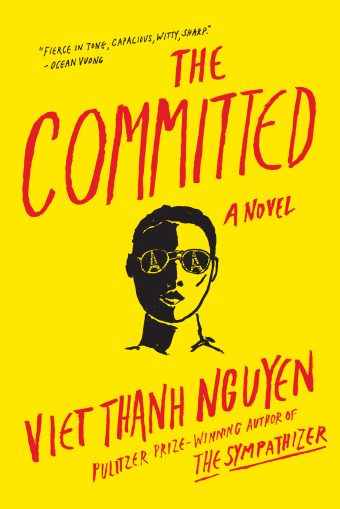
After encountering and enacting violence in Vietnam and the United States in The Sympathizer as a dual agent, the protagonist gets a fresh start as a refugee in France, where he tells authorities his name is Vo Danh—or vô danh, “anonymous” in Vietnamese. It is a joke on gullible immigration authorities as well as a commentary on what it means to move through France as a person of Vietnamese descent, anonymized by a colonially inflected gaze. A family-less name is also appropriate for the unacknowledged child of a French priest; in Paris, the protagonist grapples with the memory of his missing father.

The protagonist’s “two minds” allow him to weigh theories of communism and revolution even while engaged in the rather bloody work of capitalism in his newly adopted role as a gangster, delivering drugs for a Vietnamese mafia that battles an Algerian one. The Vietnamese mafia’s goal is to prime privileged and empowered whites for blackmail—including a pretentious politician named BFD who Nguyen says was modeled, in part, on Dominique Strauss-Kahn, or DSK.

It turns out the protagonist’s tendency toward the dialectic is shared by his creator. Over Zoom, Nguyen gave a two-pronged take on subjects ranging from Frantz Fanon, whose theories fuel much of the novel, to the current uptick in violence against Asian Americans, a side effect of coronavirus discourse that continues a Western tradition of othering people of Asian descent.


April Yee: Reading The Committed, I got a picture of France as a place full of armchair liberals and microaggressions. Obviously it’s France in the ’80s, but reading The Committed didn’t make me immediately want to go to Paris. Why is this the place you’d like to be right now in real life?

Viet Thanh Nguyen: In writing The Committed, I wanted to set it in Paris because I wanted my narrator to confront French colonialism. What it means to confront French colonialism—for him and for me—is to acknowledge both the horrors and the atrocities of what the French did, but also to acknowledge the fact that we’ve been mentally colonized, many of us by the French, and seduced by French culture. The French have exported all kinds of romantic and nostalgic images, both of France itself but also French colonies. 

Now all that being said, I still enjoy being in France. It’s still for me an interesting and compelling place to be, even with its difficulties. In the 15 months or so total that I’ve spent there, I’ve been called more racial epithets to my face than I’ve ever been in the United States. That’s interesting. I don’t think that the French are perfect. I just think they’re people, which means we acknowledge both what is great and what is terrible about them, just as I can about the United States.

AY: Is that a relief that it’s to your face? In the U.S., we walk around and we think that everyone else has this monologue inside their head that we’re not hearing, that the epithets are there but unheard. What does it mean for you to hear those epithets?

VTN: Maybe it is kind of refreshing to be called chinois by both Black and white people in France. Because I think you’re right—especially during the Trump era—about the internal monologue. You bring up this idea that the people you encounter may actually be secretly thinking these things that Trump and his supporters are saying out loud. Maybe it’s liberating for some people who want to hear those things said or want to be able to say those things. But for me, when I would encounter white people, I’d be like, Are you one of the 50 percent that supports what Trump is doing? 

AY: It’s interesting to follow now that this unheard monologue is manifesting in a physical way that is suddenly apparent to people outside of the Asian American community. What is the route out for Asian Americans? How do Asian Americans maintain hope?

VTN: There is a sense, obviously, of pain and anger at what’s being done to Asian Americans and a lot of confusion about how to respond—but also an awareness that this is repetitive, that this is not new. If we go back a couple of decades, a century or more, we’ve seen this before. It’s affirmative to see that the Asian American mobilization on this issue has been pretty strong, even if the national response has been slow. 

We’re trying to articulate a complex analysis of this anti-Asian violence in a country that wants to reduce the complexities of race.

But we’re still caught somewhat flat-footed, because we’re trying to articulate a complex analysis of this anti-Asian violence in a country that wants to reduce the complexities of race. People want to reduce this violence to the question of perpetrator and victim. Of course, if you have a historical understanding of race and violence in this country, it’s never just about the perpetrator and the victim. It’s always about the system that puts these perpetrators and victims right next to each other so they can conduct or be the victims of this violence. I’m talking about this question of Black perpetrators and Asian victims. If you go back to the Los Angeles riots, that narrative of Blacks and Koreans had already been put into place, a narrative that was being rejected by many Korean Americans themselves. 

So on the one hand we have to have this complex historical and structural analysis that puts the blame on the histories of colonization and white supremacy that have created these racial conditions of division and conquering and self-hatred and all this to begin with. And on the other hand, it’s trying to acknowledge or articulate the visceral feelings of rage and fear that are there in both Asian American and Black communities, and are directed at the Other within reach.

AY: That’s a good segue to what I felt was the heart of your book, this multifaceted response to Fanon: the Fanon writing about the potential of Third World solidarities and revolutions before we saw what actually happened with them. When I came to the end of The Committed, I felt that these Third World relationships weren’t fruitful in the way that we want them to be when we read things like Fanon’s “Concerning Violence.” Can we still place hope in theory? Does theory lead to freedom?

VTN: I think we can place hope in theory, in ideas, in philosophy. Because when we look at the revolutions that have happened, they’ve been driven by people doing action, taking action, mobilizing themselves—but they’ve been driven also by ideas. Ideas that have given so many of us the language by which we understand our oppression, our anger, our hatred, our feelings, and how to direct those feelings into political action.

But, of course, everything is dialectical. When we look at theory and philosophy of revolution, it liberates––and it also has the potential to destroy. Looking at the Vietnamese communist revolution in my family (coming from the losing side, as we would see it), on one hand, communism liberated and unified the country, and on the other hand, it led to reeducation camps. 

How the longer history will judge all this is unclear. Maybe in 100 or 200 years, no one will care about reeducation camps, and Vietnam will become a completely different symbol, which is what we’ve seen in the aftermath of the American and French revolutions. 

So I don’t want to overprivilege what theory and ideas can do, but I don’t want to demonize them either. When we talk about, let’s say, communist revolutions, people automatically want to point to the aftermath and the excesses of those revolutions (which they should), but it invalidates the power of these ideas to mobilize literally millions of people to do something, and the conditions of injustice in which they were caught.

AY: I want to ask about another philosopher of sorts. I was intrigued by this character Said in your work, and I couldn’t help but think of Edward Said. He appears so little in the novel, but he has such a strong presence. Is he a mirror to the narrator, or is he something else?

VTN: The Committed is trying to respond not just to the 1980s in Paris, but to the present moment in France as well. In the 1980s in Paris, you have this moment in France where France is starting to confront some of its colonial legacies, because all of a sudden there are more visible people of color in France: the Algerians being brought to France in the aftermath of colonialism or as manual workers. Then the French had to confront the presence of the second generation, the French of Algerian descent. They’re still dealing with that legacy, and not just with the Algerians, but with other North Africans and West Africans as well. 

Oftentimes what colonialism produces is fracture and division.

So in writing this novel—and going back to the question about solidarity—I wanted to show that France is not just a country of white people and whatever minority I happen to be dealing with, but that it’s already a country with many different groups in it, and I want to acknowledge the presence of other people of colonial descent. 

But I didn’t want to write this as a novel of solidarity where everybody just gets along, and automatically says, Yes, we’ve been colonized, so therefore we should be brothers and sisters. Instead, oftentimes what colonialism produces is fracture and division. In this case, instead of Blacks and Koreans, I have Algerians and Vietnamese. They should have a shared colonial understanding, but oftentimes that’s not what happens. Here that’s rendered as a gangster conflict as Vietnamese and Algerian gangsters fight over their turf. 

I wanted to allude to what was happening in Afghanistan and Soviet Union—that this was the period of the rise of jihad, which the United States was partly responsible for. So this where Said comes in. I thought it would be important to allude to this paranoia that the French have that the Muslims in their midst are all secretly terrorists or potentially terrorists, but also to acknowledge that one person’s terrorist is another person’s freedom fighter. Said is a very intelligent person. He was a drug dealer, but he found another kind of cause in revolutionary ideology, and he comes back, armed and dangerous—not just with weapons, but with ideas. The name is obviously a gesture briefly to Edward Said, but also this idea that people are dangerous because of ideas.

AY: Names have such a significance in this work, with Bon and Man and all these names with huge resonances. In other ways, text itself is used to signal types of meaning and performance, like the chopsticks font in your novel. Could you speak about your textual choices? It’s quite unusual to see fonts used that way in a literary novel.

VTN: When I wrote The Sympathizer, I wanted it to be a universal novel that would be understood not just as a novel of the Vietnam War––which was how I knew it was going to be read. I wanted it to be understood as a novel of the critique of American power, of American imperialism, and of colonialism in general, and The Committed continues that in a way that I think would force people to acknowledge that what I’m writing about is not just Vietnam or the Vietnam War. 

One way to achieve this more universal effect was to think about the names. I knew that if I populated the novels with Vietnamese names, people who weren’t Vietnamese would have a hard time remembering these names and how to pronounce these names and then just get hung up on that. On the one hand, maybe it would be a defiantly positive gesture to force readers to deal with those names, as Nguyễn Phan Quế Mai does so wonderfully in The Mountains Sing

I wanted The Sympathizer to be a universal novel that would be understood not just as a novel of the Vietnam War, but as a critique of American power, American imperialism, and colonialism.

But this other strategy that I adopted was to be very selective about the use of Vietnamese names and just foreground a handful. And in the rest of the cases––not just for Vietnamese people but for everybody else––to turn the names into epithets. I was thinking about specifically what Homer was doing The Iliad. Characters are identified with a characteristic. So in The Committed we have “the eschatalogical muscle.” 

As for the fonts and the play with the text, I was deeply influenced by two things, one of which is poetry. Poets are not bound, unlike prose writers (or at least American prose writers), by certain kinds of conventions. I have a big beef with American literary realism, which I think is the dominant mode of American prose fiction today. There are all these rules and conventions that you’re supposed to follow, spoken and unspoken. Poets, in their playfulness with the look of their text, the fonts, all those kinds of things that you as a poet are familiar with––I just borrowed a lot of that energy from the poets that I was reading. 

And then children’s literature. My seven-year old-son and I, we read a lot, and children’s writers don’t care about conventions. Children don’t know what conventions are. 

AY: I want to pick up on this need/desire to universalize. Is there a point in the future when not just Vietnamese writers but all kinds of writers writing from various backgrounds no longer feel the need to do the universalizing project?

VTN: Universalism is a very contradictory thing. Is it possible to be universal? And when we say we’re universal, is that a mask for imperialism? The language of universalism has been used to marginalize people of color, women, anybody who’s basically not an elite white man, and so should we even aspire to that idea? 

Obviously I go back to Toni Morrison’s argument that there is no such thing as universal; there’s only the specific. In her case, she focused almost exclusively on Black people and mostly on Black women, and from that conjured up a set of experiences that are arguably universal, which is that anybody can read these books and understand, to some degree or another, what she’s talking about. 

That’s also partially the ambition of The Sympathizer and The Committed. This idea of the universal is completely caught up in the contradictions that Fanon already talks about in Black Skin, White Masks. There, he’s wavering back and forth between Blackness and humanity, acknowledging that he can’t escape being Black and wanting to be human, but acknowledging also that we can’t get to the human part unless we deal with being Black. 

And there’s no way out of this problem, except through these very difficult and problematic revolutions. Literature itself cannot solve the problem. We can only talk about the problem. So I’m deeply aware that I’m writing novels that are about these problems, and that I’m also an author who cannot escape from these problems.

And if I can’t escape from these problems, then I am going to have to confront them, which means that I don’t feel that I can just pretend that I’m not going to be read in the ways that I’ve been read as a Vietnamese American writer. I have to make a polemical point about universalism. Just as being a so-called minority is something that you cannot not choose to be, as Gayatri Spivak has said in another context, being a so-called universal writer is something that I feel that I cannot not want to be in this environment that is still saturated by the legacies of racism and colonialism.

AY: Fanon’s work makes me think of the masks that you include in the photo in your book. I really enjoyed having that sense of realism infused in the text, and I found it poetic how the masks (in the world of the novel) were originally yellow, but on the page they looked white. I thought that spoke to this idea of Asianness in its approach toward whiteness. Can you talk about your choices in including that photo?

VTN: I’m deeply influenced by W. G. Sebald. I think of myself as a failed novelist because my novels cannot do what he does in books like Austerlitz. Sebald is a very noble kind of writer. I’m crass. I want to write crime fiction and get into all these bodily functions and things like that. But obviously, photographs are a very important part of Sebald’s writing in the way that they gesture at memory and history and representation. 

The language of universalism has been used to marginalize people of color, women, anybody who’s basically not an elite white man, and so should we even aspire to that idea?

So I’ve always wanted to include photographs but couldn’t really find an aesthetic reason for doing so until this book. In the novel, I’d already written about the faceless man wearing a mask. Then I came across the photograph of these masked protesters, and I thought, This is perfect! I wanted to include the 1984 march in the novel.

I was fortunate to have also met some French of Vietnamese descent who were around during that time in Paris. When I was trying to track down the photo and its attribution and all of that, I must have mentioned the masks to one of them. And he said they were yellow masks. I thought, That’s even better! 

The presence of the photograph, if it introduces history into the book, is perfectly compatible with my vision for these novels, because the books are structured in a way to both acknowledge fiction and nonfiction. They’re clearly novels, but they’re both written as confessions, which means that they’re technically, in their own world, nonfiction. It makes perfect sense that you could do things like put in photographs or anything else from the real world.

Our Relationship is Doomed in Every Universe

“The Volunteer” by Lucy Ives

Some people employ a theory of parallel universes to explain time travel. Maybe I am one of them.

If you ask me, a science simpleton, what I mean by “parallel universe,” my answer may vary depending on the day, but usually I mean something like, a hypothetical plane of reality, coexisting with, yet distinct from, our own. The main difficulty here is that I do not know what I mean when I call something “hypothetical.” Maybe I mean that that hypothetical plane of existence (a.k.a. parallel universe) is elsewhere and unseen, yet actual. Maybe I mean that that plane is something I want to think about right now and sort of cherish, not a combo of time and space where I plan to attempt to exist but rather a pattern I have not yet perceived. It’s not, actually, actual. It’s a thought I’m mentally cuddling. 

I’m not sure that I believe in time travel, strictly speaking: certainly, not into the past. I don’t think “I” can go back to the Middle Ages and wander the reeking, pissed-upon hallways of a poorly illuminated castle. I wouldn’t want to do this, anyhow. People seem to forget how common murder used to be.

What I do believe in are coincidence and symmetry, even as I believe in movement (travel!) into the future. Events have a tendency to repeat, and often we can’t tell that they are repetitions, even when they are.

Take for example: me. It is morning and I have gone for a run. I haven’t gone back in time. I mean, I am running in a circle, so I will return to the original point in space from which I departed eventually, but meanwhile time will flow forward, onward, on, rippling along with the space I’ll cover, and soon I’ll be back at my hotel, and then I’ll be showered, staring confusedly at my naked self in a steamed-up mirror, and, then, eventually dressed and ready to depart. And there will be nothing unusual about my day. I won’t get “back” to anywhere.

I’ll only keep on going. I’ll move ahead, out of the present, even as the mirror displays to me an image of myself as I was a fraction of a second before the instant when I looked.

This is my general experience. I am this organism that is knit in space and time.

The one thing I have not told you yet, and that I have to suppose you therefore do not know, is that the place where I am in this instance is a small city in America where, many years ago, I used to live. Thus, I’m currently engaged in more than one type of spiral.

Let’s call this city “Iowatown” (not its real name).

Now imagine me running.

I am not a thin person, but I am strong and have biggish calves that carry me quickly. I’m bounding through all the new construction, listening to a song about female aggression. The singer is going to date your boyfriend. The singer can’t help it. Your boyfriend is extremely persistent and the singer is casual about her entanglements. You, addressee of this song, don’t stand a chance. I listen, running and panting, directing myself along my one-point-five-mile loop, and I identify with the singer, not with the person to whom the song is allegedly addressed. I believe myself to have the correct disposition toward these lyrics.

I’m far enough into town now, into the residential part of “Iowatown,” and I do regret my inability to drop the quotes, that I seem not merely to be moving in a standard fashion into space. This is the tricky part of my experience that I was attempting to intimate. I feel, in that cliché, like I am going back in time.

But I’m not, I think to myself, I’m not, I’m not, although here I am, planted in front of the old house, a warren of slapdash rentals, where we used to spend all our time together, and where your downstairs neighbor was a grinning monomaniac who claimed he’d been a professional boxer in his youth and told you about how he had gotten a certain well-known female memoirist “hooked on heroin” when she had come through town in the late 1990s. Maybe you said he said “horse.” I can’t remember. He was proud of it, though. “That bitch was wild for it,” you said he said. You claimed he made you call him “Greenie.” “Greenie” was not his actual name and bore no resemblance to the two suspiciously common Anglo-Saxon monikers taped to his mailbox. John Smith called you “Stud,” presumably because of sounds we made in your attic efficiency. “Hey, Stud!” John Smith cried after you, from out his open window. “I’m watching you, Stud!” he yelled. Sometimes I was there. John Smith had a high-pitched voice and was an otherwise nondescript middle-aged man who was never without a hooded sweatshirt, even in summer.

The house is still white, bluish. It still has that porch in front with the pattern of circles punched in the wood below the railing. There is still the elaborate fire escape, the one that touched your bathroom window. Someone else must live up there now. Someone may, even at this moment, be standing on that same police-blue wall-to-wall carpeting, gazing out the window at a pausing jogger.

Meanwhile, the prehistoric sun beats down upon the little sidewalk where I stand in my running attire. The sun warms me, although I feel extremely far from my skin. I may have begun running inside a narrative, but now that I am here, here before the residence where you used to live and where we lived together, I see that this is not merely my destination. It is a net or a kind of a mirage, and it has caught me.

And when we met, if you will recall, we were both walking on the street not far from here. I felt, that day, that I was being watched, as if from some point in the sky, a pinprick. You, meanwhile, didn’t look, not at first. You were engrossed in a copy of Kurt Cobain’s diary, which you had borrowed from the university’s library, and which I thought was an ingenious thing for a graduate student to be reading, although I did not tell you so at the time and, then, never told you later. Something started in that moment that was different from all other things that had begun in my life thus far. That tiny piercing in the heavens stayed there, unblinking. You lifted your hand from the page you were reading; eyes previously cast down went up. You seemed to hear a voice: you were being notified. You recognized me from somewhere, from some hallway or classroom. You beckoned. There was no pause in this, no flinch. You were not shy. You seemed to have practiced for this encounter for months. And when, in the subsequent one point five decades, I thought of it and you, I sometimes wondered if everything had indeed been rehearsed, if not predetermined.

I approached you willingly and we walked and saw a miraculous sight: a tree filled with small yellow birds, in the branches of which there was also an abandoned cell phone charger, the kind you plug into the cylindrical cigarette-lighter cavity in a car. The charger had a long, coiled cord, of the sort you never see these days. It was elaborately tangled. And I never saw any of those small yellow birds in Iowa ever again. Yet, they were there on this day. They twittered piteously, as if the air was being squeezed out of them by unseen human hands, and I remember the sound as deafening, but that may only have been an internal tectonic shift, the squealing of heavy stone against heavy stone as forgotten hope was released from the spiritual prison I still did not realize I had inherited from certain of my ancestors.

We would retrace this route many times. Nothing about this was remarkable, except that it began. It felt to me, if not like the will of god or the CIA, then like a glitch. We had gained access to a parallel timeline. I had stepped out of my previous path, whatever that had been.

You told me a story early on, and I sometimes think it could have helped, if only I’d understood you. You were warning me, but neither of us knew how to decode your narrative, which appeared, erroneously, to be mostly a story about you. You told me that when you were in college you had fallen in love with an older woman.

“How much older?” I asked. I didn’t know you well at this time.

“She was five years older,” you said. You said it would have been less than that if things had, if I could understand, gone as normal.

“Normal, how?”

You explained that this woman, whose name was hazily tattooed, stick and poke, into the flesh of your upper right arm, had several years before you met her been hitchhiking with her then-boyfriend in the desert in New Mexico.

“What was she doing there?”

“They were just there. Camping or something. Like they’d try to do crazy things for free.” And you said that they had gotten a ride one afternoon that was going to take them pretty far back across the country, something insane, like all the way to Chicago. “You have to watch your luck,” you told me.

I must have nodded. We were up in your apartment and maybe it was a month after we’d first met.

You said that they were driving with the people who picked them up in a Jeep and this woman, whom you later loved, fell asleep in the backseat with her boyfriend. They were sleeping with their heads on each other, you said. I never knew how you would have known this detail or why it was important. It had nothing to do with what happened next, either in the story or, I don’t think, in our lives. But I did have the thought that this woman you loved was amazingly lucky and liberated. She could hitchhike and she could fall asleep.

She had a boyfriend who did these things with her. Her head rested on him. She would be carried back across the country, essentially for free, because she willed it.

“Later,” you said, “they woke up and the car was going really fast. They turned around and looked behind them and they could see lights.”

I wanted to know how fast.

“They were going over a hundred miles an hour.”

I didn’t ask you why. I let you explain about the Jeep rolling. I had never been in a serious car accident, but somehow I could imagine that period of time, how images yawn before the passengers, outside of any temporality. And you said that she had described it to you, solemnly; how the only way to survive is to go limp. How she knew about that somehow. How she credited her survival to this particular information gleaned, I guessed, from film.

The couple who had picked them up had drugs in the car. Not an insignificant amount. They were inexperienced professionals, apparently. Rather than be pulled over, they’d decided to make a run for it.

No one survived except for the woman you loved. And she was in the hospital for a long time and it was several years before she could return to school. She moved back to Iowa to be close to her parents. This was where she met you. You said you were pretty sure she understood how you felt about her, but it was like something in her was bent and couldn’t catch. Not that she couldn’t form new memories, but that people were, at some deep level, nothing more than animate sacks to her. And there was a whole year after the crash that she could not remember, a substantial portion of which she had spent in a medically induced coma.

When you told your father you wanted to marry her, he threatened to disown you. You never told me if it was because of the accident or something else. You said you locked yourself into the non-working sauna at your parents’ home outside Chicago for a full day, on Christmas no less, but they wouldn’t budge.

Later, when she eloped to Ecuador, you were glad, you said. You still despised your father, but you recognized that he had saved you from certain humiliation. It was unclear what role your mother may have played.

You said that none of it mattered and how you’d been stupid. You hadn’t known anything. You said that sleeping around was part of her condition. You claimed that this was common when it came to traumatic brain injury.

“I’m sorry,” I told you.

“Don’t be.” You were embracing me. You were saying that your younger self was very, very dumb.

One might have thought that because I had never been in love before I would not have had an analogous story, but I was a reader and because of this I was seldom without something to say, at least when it came to plot.

I told you then that I thought a lot about going back  in time. I had recently learned of Hugh Everett’s so-called many worlds interpretation, broached in his 1957 dissertation and entirely disbelieved until the 1970s. I was probably mostly misunderstanding, but I had become obsessed with the idea that by regressing, temporally speaking, one travels down the limb of a metaphorical decision tree. One moves in the opposite direction to time’s arrow and therefore against the grain of the increasing entropy that pulses inexorably into the future of our universe, according to the second law of thermodynamics. Even as I was saying this to you, I said, given quantum events, there were worlds coming into being in which I changed the subject, or a bat flew in through the unscreened window, or you interrupted me to insist that we should head to the bar.

“Wait, what time is it?” you wanted to know.

If we could go back, I said, to the first word of my first sentence, these worlds would not exist.

You were digging around your desk, in search of the cordless phone.

“I’m not done!” I called from the kitchen.

“Hey, man,” you were telling somebody. You covered the receiver and asked if I wanted to join.

“I want,” I said, “to talk about the time traveler’s dilemma.”

You said more things, re-buried the device.

“At your service,” you told me, reappearing. “What’s this about brains in vats?”

This was before you knew, I think, that you hated ambiguity. You idolized Robert Frost, not Borges. Where paths diverged, you’d squeeze out a token tear for the road not taken and move amiably on. What wasn’t or didn’t or couldn’t, for you, simply disappeared. You liked to pare things down, is what I’m saying. I do remember all your folding knives, inherited from your grandfather, an engineer, or purchased secondhand—how you kept them in a yogurt container as if they were a kind of art supply.

“The time traveler’s dilemma. Because once you go, you can’t go back.”

“Haha,” you said. “Back to the future!”

“Well, except you can,” I clarified. “I think. Sort of.” And I started recounting the plot of an old sci-fi story that had really impressed me, embellishing as I went:

Once upon a time in the late twenty-first century there is a research corporation that has a bunch of agents who are able to make use of time-travel vehicles to go into the past. They’ve noticed the tree of entropy; in fact, it’s a major reason for their interest in the past at all. Since quantum events in the present always double the world, and since what happens is composed of many quantum events, everything that can possibly happen is happening in some world unconnected to ours. We live in one world, but there are many others. The alternate worlds are full of interesting things: the predictable victorious Nazis, among other historical mutations; speaking cats. But if you go back in time, you follow, as I was saying, what amounts to a coalescing, unifying stem. You slide back away from those moments of doubling.

“Sounds complicated,” you said.

“Not really,” I assured you.

For an obvious problem arises when you want to move forward again: How will you be able to recognize the world-strand you came from, particularly when it closely resembles a number of others?

Here I grew enthusiastic, leaning across the table. I felt sure you had to get on board with this: The time-traveling agents solve this problem by leaving a signal on in the garage where their time machines are kept. The signal has a specific frequency, so they know in which strand to dock. The signal matches, of course, in a range of original-esque worlds, worlds with an identical time-machine garage, with identical devices to make a signal, with near-identical events around the programming of the signal. They’re all similar enough to one another that who really cares if things are a little off. This is still late capitalism, after all, and risk accrues to the freelancer.

But speaking of risk, there’s another problem. (This was my grand turn and I really tried to bring it home.) The research co. has lost a ship. There’s nothing but charred remains outside one dock. HR, ever thrifty and enterprising, offers a reward and finds a volunteer to loiter in local time lines, keeping an eye out. The volunteer follows past versions of the dead man and discovers: This pilot, anxious over the maintenance of his precious personal identity, tried so hard to return to the exact thread and exact moment he had left that he fatefully overstepped. He met himself on the way out of the garage in a catastrophic accident! I guess future fuel is highly combustible.

But this is only the first in a series of accidents, deaths, and disturbances. The fear of losing one’s original narrative proves contagious. It troubles some, while others succumb to many-worldly nihilism. Some pilots elect to return to a world that precedes their departure by several hours. They park their time vehicle behind a bush, stalk themselves, commit murder. Meanwhile, others, less confident types, live in constant fear of self-slaughter and destroy their time machines or preemptively end their own lives. Still others don’t return. And others still, recognizing that it doesn’t matter, for in a parallel world they will decide differently, walk out of windows or—

You interrupted. “I don’t get it,” you said. “What’s the dilemma?”

“Don’t you see,” I told you, “how time has changed?” 

“Not really.” You were scrubbing your face with your hands, as if to ward off sleep.

And so I did not say that it’s not being out of time that’s weird for the time traveler but the retreating uniqueness of the self of the time traveler, the rise of a nonsensical style of interpersonal competition. That in this universe the time traveler’s dilemma is whether to kill themselves or die, although in truth the two options are hardly very different.

But here came you again, brushing aside the web of slumber and characteristically in search of a protagonist: “What happens to the volunteer?”

“I don’t know,” I said. I felt defeated. “They’re just a plot device.” In this I was wrong, but it wasn’t until much later that I knew why.

Maybe now you informed me cutely how I made you nervous. I can’t recall. Maybe you laughed and squeezed the top of my knee; maybe my knee jumped. Perhaps you frowned and licked me.

At night you would jerk around like a windsock and you talked to yourself, nattering on about presences and tasks. Sometimes you got up and paced, wailing incoherently. I’d find you on the floor in the bathroom and you wouldn’t know where you were or how you’d got there.

On my run, I could not have been stopped for more than ten seconds, fifteen at most. On I pounded, and the white house and its spectral signal fell away.

I used to like to think, what if I could go back in time, back to that year and day and meet us on the narrow side walk in the grass, perhaps at the very moment when you’re showing me the page on which Kurt Cobain begins waxing melancholic about his alter ego, “Kurd.” What if old me snatches the book out of your hands and starts beating you savagely about the head until you are either incapacitated or fully dead? Or, what if old me walks up to young me and uses impeccable logic, along with what I’ve since learned about human psychology plus epigenetics, in order to convince young me that I can do better? I’ve thought about transforming myself into a sort of speaking particle and somehow journeying into my own naïve mind, to beg myself to reconsider. I’ve also thought about the time traveler’s dilemma and the fact that I am living. And therefore wasn’t there.

It’s Time for Women to Reclaim Their Monstrosity

I met Jess Zimmerman in 2017 at Madame X, a velvet-swathed Manhattan lounge, where she and Liz Gorinsky were releasing the party game Goth Court. Afterward, I followed the courtiers to a post-punk danse macabre, where Zimmerman and I talked about goth business and this website (where she has been the editor-in-chief since 2017).

Now, we are here to talk about monsters.

Women and Other Monsters by Jess Zimmerman

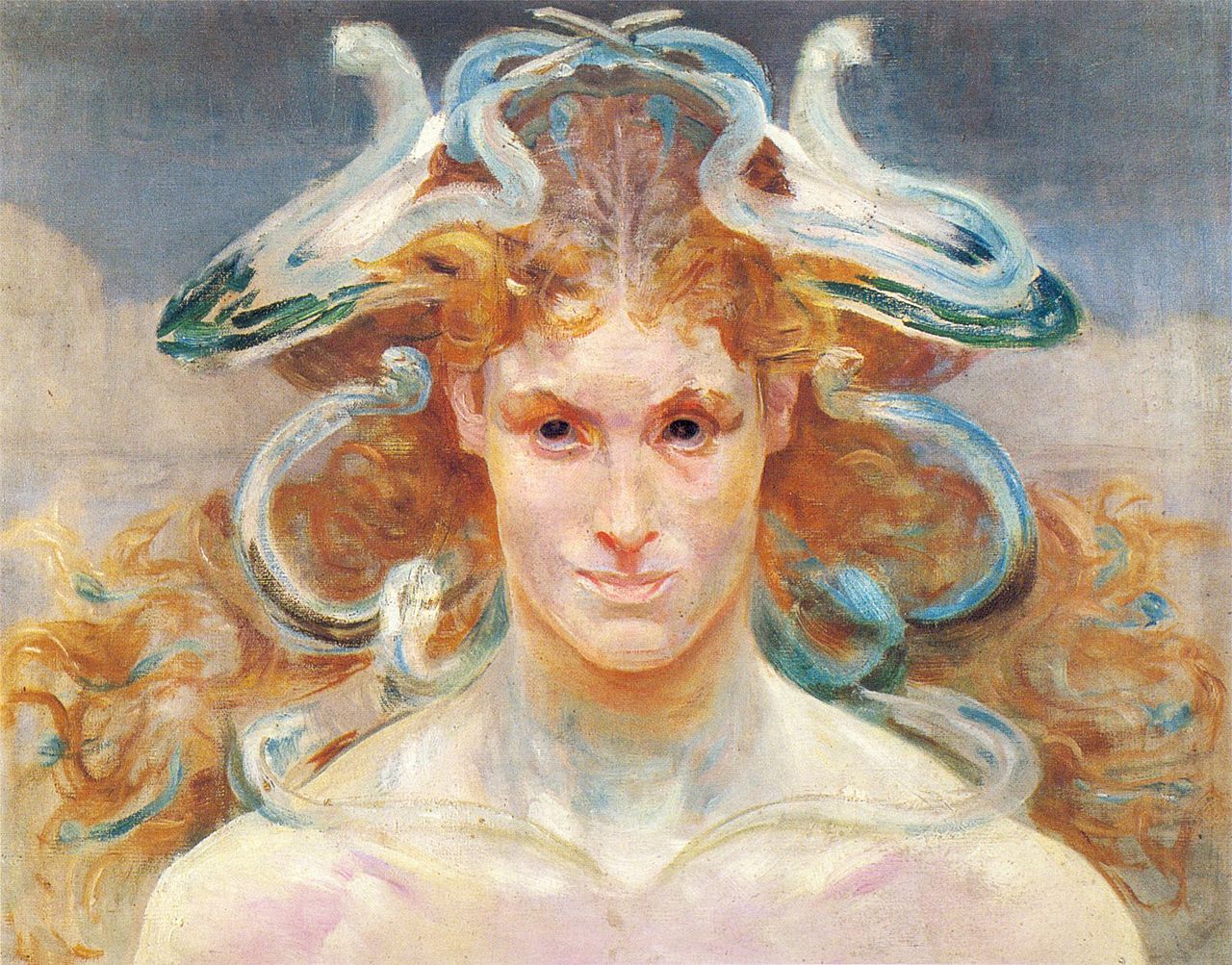
Zimmerman’s essay collection, Women and Other Monsters, takes female monsters from Greek mythology and explores their grotesqueries as patriarchal metaphors. Feminine anger, sexuality, ambition, and other hungers manifest as dog-crotches, whirlpools, talons, and bird-bits.

Medusa offers “Ugliness for an infinity of options, a universe unconstrained by any desire except your own…Beauty may be a key, but a key is not the only way to open a door; you can do it with a battering ram.” Today’s Furies are “Social Justice Warriors,” the “supposed taunt” that “accidentally sounds cool as hell.” Charybdis—the deadly whirlpool who began life as “a voracious woman who was cast into the sea by Zeus as a punishment”—personifies hunger, “a cautionary tale, not only to sailors, but to women: hunger destroys those around you.” Echidna, the Mother of Monsters, speaks to creation: “even the woman so tightly yoked to her shame that she no longer knows which one of them is the parasite, can bring something ferocious and valiant into the world. It may not feel good, but then again, birth never does.”

Over G-chat, Zimmerman and I discussed our shared childhood obsession with D’Aulaires’ Book of Greek Myths, whether or not harpies are bulletproof, how to get in Scylla and Charybdis’ group chat, and the universality of living inside a rotting meat-coated vehicle.


Deirdre Coyle: First of all, shoutout to D’Aulaires’ Book of Greek Myths.

Jess Zimmerman: THE GOAT. Literally the goat, since all the gods were fed by a goat as babies. No gods without goats.

DC: Personally, it really blew my mind when I hit middle school and realized that the women D’Aulaires’ referred to as Zeus’s “many wives” were actually his mistresses, and not always consensually so. Did you have any moments of shock when you moved from D’Aulaires’ to Ovid and Homer?

JZ: Oh, that’s a great question! I must have, because I was a D’Aulaires’ obsessive from literally preschool, so not only was I getting this slightly predigested version of the myths (I say that with love!) but I was also processing them through an exceptionally oblivious mind. For sure there’s more sex in mythology than I initially understood! The whole Ares/Aphrodite/Hephaestus love triangle is kind of played down in D’Aulaires’ and, in my recollection, played very up in Edith Hamilton for instance.

DC: Yes! There is a lot of euphemism in the way those stories are filtered for children.

JZ: And not only sex but sexual assault, which is often still euphemized even in the adult texts. We had a great essay about the translation of “rape” in the Metamorphoses; people find ways to say anything else. You get Daphne and Syrinx in D’Aulaires’, but I definitely remember reading the Metamorphoses in college and getting to Myrrha and being like “HANG ON.”

There’s a degree to which the engine of Greek mythology is women’s pain and exploitation. And that absolutely doesn’t come through when you’re reading these stories as a kid, or even in school (I did a Greek mythology unit in 6th grade, and the Odyssey in high school, and Ovid in college). But that’s a pretty apt metaphor for the patriarchy, right? All the stories you’re being asked to analyze and in many ways internalize are built on women’s pain but nobody mentions it. Not only sexual assault but also the forcible mutation of feminized bodies, basically all of Ovid is women turning into other stuff often through no choice of their own. And sexual punishment, like Pasiphae and the bull.

DC: Right, and by actually focusing on these monsters’ origin stories—as these essays do—we can see how those patriarchal metaphors are still in play in the way people still use monster terminology.

JZ: This is a good spot to say that I’ll sometimes say “feminized” because when I talk about women I’m talking about people who are treated as and interacted with as women, some of whom aren’t women at all—when society puts you in the space it’s designated for “women” it often doesn’t ask about your identity first! So in mythology Hyacinth also ends up in a similar role, even though he’s a man.

DC: I also wanted to talk about your decision to focus on Greek mythology particularly. You write that you focus on monsters from Greek antiquity “not because they’re the most interesting stories, but because they’re complicit,” that they’re “tight little packages of expectation seeded into the culture.” What are some of your favorite monstrous women from other folkloric traditions? 

All the stories you’re being asked to analyze and in many ways internalize are built on women’s pain but nobody mentions it.

JZ: Oh absolutely the penanggalan, which is a Malaysian monster which takes the form of a woman’s head detached from the body but with the intestines still attached. I believe she has a body also but can detach her head at will. There are some great monsters in other traditions that simply aren’t mine to talk about—Jami Nakamura Lin has been writing about some of them for Catapult. And I would be so delighted if someone did this exact same book for other cultures! I just can’t really put myself in a position to be like “this monster from a tradition that has nothing to do with mine? It’s SEXIST.” Whereas the stories of Greek antiquity are really baked into Western culture, like there’s a reason Classics and “the classics” use the same term.

DC: Hence the frequent use of the term “harpy” in recent U.S. politics.

JZ: Yeah, so many of these stories have seeped into our everyday speech! Harpy, Gorgon, “between Scylla and Charybdis.” People talk about ingenues as “screen sirens.” I think it’s significant that when I first read Ovid in college, it wasn’t for anything in the Classics department—it was for an early modern literature class.

DC: Right, because understanding the Western literary canon (however one may feel about “the canon”) requires a certain knowledge of classical mythology.

Western literature is very autophagous, people are always looking back at something in the past to tell them what’s valuable in the present.

JZ: Yeah, you basically need mythology and the Bible. The people who were creating the literature and art that we think of as sort of the wellspring of (Western, European, and therefore privileged in the literary canon) culture were looking back to these stories as their guides.

DC: Which seems strange in 2021, but it still applies to so much of pop culture.

JZ: The Rosetta stones of Renaissance literature and art! And therefore of any literature and art that looks back to Renaissance literature and art as the baseline of quality. Western literature is very autophagous, people are always looking back at something in the past to tell them what’s valuable in the present.

DC: So these essays are hybrids themselves—CHIMERAS IF YOU WILL—of folklore, memoir, and history. Can you talk about the experience of grafting your own life—as well as historical and current events—onto these ancient powers?

JZ: I think for me writing is fundamentally always a process of metaphor. And so in a sense, I didn’t even think of it as “here I am kind of suckering my life story onto the side of this big myth like a male lanternfish,” which when you think of it is an act of great hubris! Which lord knows the Greeks did not countenance. It’s more like, okay, in many ways a myth is already an extended metaphor, stories exist and persist in order to stand alongside the world and give you a framework for understanding it. So what happens if we sort of dissolve and rebuild that metaphor? What happens if we take it apart, show how it was put together, and then use it to form another shape? Like Legos, but figurative language.

A myth is already an extended metaphor, a framework for understanding the world. So what happens if we dissolve and rebuild that metaphor?

Essentially I didn’t think of it like “I am putting my life story into conversation with this myth.” I thought of it as, okay, this myth is already supposed to be in conversation with my life. Stories like this carry a message, which is not always one we are led to recognize, but it influences us all the same. So rather than creating that relationship, I’m reformatting it. And of course, the “I” here is just a stand-in for anyone! There’s plenty of personal anecdotes, but I don’t think of it as a memoir, because to me if this were really about me it wouldn’t be interesting, who cares. What’s interesting is that it’s about us. And I’m simply the one of us I know most about.

DC: And I think any woman (in the broadest sense, again) will relate—I certainly do—to concepts like “Nobody really likes to think about how we all ride around in vehicles of meat that are rotting underneath us for most of our lives, but for a straight man looking at a woman—or anyway, for the Male Gaze looking at a woman—that fact feels like not just a downer but a betrayal.” Sorry, that’s a comment more than a question, and the comment is “YUP.”

JZ: Hahah yes! I mean the whole idea of “us” in writing is… vexed. Like, I obviously can’t write for everyone, because my experience is very limited by being white, American, middle-class, any number of things, so I can be conscious of trying to look beyond those limits but at best I’m putting peep holes in the walls. But there are a few things you can truly say “us” about and “all our bodies are rotting under us” is one of them!

DC: We are all made of meat. Did any particular monster—or concept—act as your point of inspiration for the collection as a whole?

JZ: That is a great question and requires me to think back to a time I can barely remember, which is “before 2020.” When this started to become the germ of an idea, I think I’d already written the essay “Hunger Makes Me” for Hazlitt, which became the substrate of the chapter on Charybdis. So I wasn’t necessarily thinking in terms of mythological monsters but I was thinking in terms of desires and traits and needs that are seen as somehow grotesque in women.

So I think if I can pin it all on anyone it’s probably Charybdis, whose origin story literally is “she was so hungry she became a whirlpool.” And then of course if you’re thinking of Charybdis, you necessarily think of Scylla, and then it’s all over for you bitches. (Even though actually I wrote the Scylla essay way later! It took me a while to figure out what her story means, even though in retrospect it’s both obvious and kind of goes hand in hand with the idea of hunger and bodily needs.)

DC: How does one become part of Scylla and Charybdis’s group chat, is the real question.

JZ: I feel like the way in is almost certainly Circe, she’s the one who started the chat and keeps renaming it.

DC: Yes, I’ve always been obsessed with Circe—and thinking about her relationship with Scylla is…fraught, to say the least.

JZ: And actually reading Madeline Miller’s Circe may well have been part of the thought process here, like thinking about the stories underneath these stories, the lessons we’re supposed to be learning from them that we can refuse to learn. By the time it came out I’d been writing these monster essays for a year or so, but that book certainly convinced me that this was something we were ready for.

DC: If you could pick two traits from any of these monsters, what would they be and how would you use them?

JZ: Ooh! We’re talking like real monster traits here, right, not the excesses they’re supposed to warn us against? Like wings and snake hair, and not “anger”?

DC: Yes, real monster traits. No parameters.

JZ: Well one thing I didn’t talk about much in the book, but which is relevant here, is that Harpies are essentially bulletproof. And I think right now, of all times, it would be really nice to feel indestructible! Aeneas’s men try to hit the Harpies with swords and it simply does nothing. I know I said “bulletproof” but I guess that has never been tested. Let’s just assume there’s a certain nigh-invulnerability there though.

DC: Yes, “sword-proof” seems like it would lead to “bulletproof,” given a few centuries of Harpy evolution. I was terrified of harpies as a child because of The Last Unicorn, but now they seem pretty hot to me?

JZ: Oh man I rewatched that not too long ago and boy people’s idea of what children could handle was different in the ’80s. I was OBSESSED with The Last Unicorn but not only is it wildly dark, the Harpy absolutely has naked boobs if I recall correctly?

DC: SHE DOES, and she loves Doing Topless Murder. An icon.

JZ: Topless Murder is a trait shared by almost all of these monsters. Some of them can’t be said to really have breasts or human torsos but that shouldn’t stop anyone from doing topless murder. 

DC: Agreed.

Sphinx power is that instead of a ‘mute’ button on Twitter, I have an ‘eat’ button.

JZ: I’m inclined to say I’d also like Lamia’s ability to pop her eyeballs out of her head, but honestly I don’t know what I’d use that for except as a party trick, and who’s going to parties right now? Oh, another niche one: blood from one side of Medusa’s body had healing properties! But that doesn’t go very well with being bladeproof. Imagine the keen irony of having healing blood but you can’t get at it. Okay so let’s say from the Harpies, nigh-invulnerability, and from the Sphinx, the ability to eat men if they don’t answer your questions properly.

DC: Powerful combo. That is kind of what happens on the internet, but usually it’s women getting eaten. The literal power seems preferable.

JZ: Sphinx power is that instead of a “mute” button on Twitter, I have an “eat” button.

Why Do I Write in My Colonizers’ Language?

When I started keeping a diary at twelve, it was in English. The daily newspapers we read at home were in Hindi, but to foster a better understanding and faster learning of the language, my father had subscribed to an English business daily as well as an English national daily. In school we were penalized a hefty 5 rupees for every word spoken in Hindi. At age five, I was awarded Best in English by my class teacher. In the subsequent parent-teacher meeting she asked my parents the recipe behind my success in the language, to which my father had replied jokingly, “We talk in English at home.” We didn’t, but it sounded good.

For my family, friends, relatives, and teachers, English was seen as a language of access. It could land you better jobs, remove limitations, and open up avenues. English speakers were high achievers, often conflated with the colonizers who ruled over us for about 200 years. It was ironic that the language of our colonizers was seen as aspirational, something that could lift us out of the discomfort that our parents’ mid-level jobs put us through. In reading all the subjects at school in English, we were made to understand that English was the language of possibilities. My cousins who studied in Hindi schools wouldn’t have all the opportunities that would have been available for me.  

Torn between these two worlds, I found accidental love in the language that was imposed upon me.

Torn between these two worlds, I found accidental love in the language that was imposed upon me. From a young age of six or seven I started voluntarily, subconsciously veering towards reading and writing in English. Every April we would get new books for the next class. I would cover them with brown paper, stapling all four corners secure, and then dive into the stories within. 

After the end term exams in March, we would get a short ten-day break before starting the new session. During this break we would get to buy new books, notebooks, prepare school uniforms and bags for the new session. By the end of the week before school re-opened, I would have finished reading all the short stories in the English and Hindi coursebooks. An introverted child prone to reading in heaps almost always alone, I would then go on to keep a notebook called the “rough copy” and jot down all the thoughts I had after reading those stories. I chose to write them in English to keep my parents thinking that I was doing something of value, importance and related to school. In fact, subliminally I was drifting further into a self-structured culture of reading in the language of my colonizers.

The year 2020, full of challenges as it was, was also the year I started publishing non-fiction.  When I graduated from writing for myself to writing professionally, my chosen language of publication was English. I had worked as a reporter for several national English dailies before, but this writing was for myself alone. It did not come as a surprise to me. Through the last five years I had tried to rebuild my relationship with Hindi. I bought books, read them, albeit very slowly. I sometimes wrote in Hindi, too. When the mood struck, I would type messages in the Devangiri script to friends, family, and especially my mother on WhatsApp. I tried hard to read and re-read Hindi literature writers I had grown up reading, to reignite a spark where there was a long-existing deadness. Despite it all, I kept falling behind. One way or the other, I would lose patience, procrastinate, or simply lose interest and put off reading or writing in Hindi to another day.

Learning English was equivalent to being aspirational, ambitious, and striving.

In April 2020, when my first personal essay was published, I found myself at an impasse. A dilemma confronted me: Why was I writing in English? The more I tried to think about it, the more the answer eluded me. Once again I sat through long afternoons watching interviews of writers in Hindi on YouTube. Understanding the language was not a problem, but I had been brought up to think of Hindi as an obsolete tool. A knowledge of Hindi language alone did not ensure a great career. Drab government jobs, teaching opportunities in the heartland, and a clutch of other such limited avenues would be available to people who did not know the English language. Learning it was equivalent to being aspirational, ambitious, and striving. As kids, my brother and I were often produced before relatives and family friends to recite a poem in English, or just reel off a passage from Shakespeare. Back then, it was a marker of respect, class and being upwardly mobile. But personally, English meant a remove from my daily life, a place wherein I could hide and be by myself reading, writing, existing. 

And English had its own talismans. In standard five my English teacher Priyanka Gulati told us, a class full of about 47 children, that any student’s best friend is a dictionary.  She made this remark specifically to English, making me think about the language in another new way. While we did have a Hindi to English dictionary at home, getting an English to English one piqued my interest. It opened up my vocabulary, loaning me more time and showing me ways in which the language could be used. This was more than fifteen years ago, and I remember those words crystalize in the inner recesses of my mind. Since then, till about five years ago, I would buy a small English dictionary every now and then, keeping it in the pocket of my clothes, or in the small sling bag I always carried. A pencil, a dictionary, a notebook—these have forever since kept me company through my three big career moves across seven cities in two countries.

Whenever I sat with an English storybook, or an English language newspaper in hand, reading it, that paraphernalia—pencil, notebook, dictionary—was my little fort of protection. The language opened vistas for me that were inviting. They were happier, lighter places of joy, winters, snowfalls and Daffodils. Short stories by Kathrine Mansfield, Anton Chekov, Leo Tolstoy and Guy De Maupassant in English, became a portal to a new, richer place I was not content being a mere visitor to. Bengali writer Rabindranath Tagore’s short story The Postmaster was inviting to me because the details in English language kept me hinged. It was a thrill to discover that a place in India could be written about in a foreign language (English) in a way that would become accessible to me. Similarly, I felt a pull each time I read something in English, realizing that my experiences in Hindi could be translated and written in English for someone, anyone to read. 


I was raised speaking French, and did not begin learning English until I was nearly 7 years old. Even after that, French continued to be the language I spoke at home with my parents. (I still speak only French with them to this day.) This fact inevitably affects my recall and evocation of my childhood, since I am writing and primarily thinking in English. There are states of mind, even people and events, that seem inaccessible in English, since they are defined by the character of the language through which I perceived them. My second language has turned out to be my principal tool, my means for making a living, and it lies close to the core of my self-definition. My first language, however, is coiled underneath, governing a more primal realm.

This passage from Luc Sante’s essay Living in Tongues correctly captures the crux of my relationship with English and Hindi. With liberalization, modernity, and technology making their way into our lives after 1991 (the year of national economic reforms, and also the year when I was born), the Hindi that I was so closely attached to also underwent a change. English so densely permeated the air outside our houses that we didn’t even realize when it started drifting inwards. With liberalization, privatization and globalization, as a nation we were moving forward, using English as our crutch to get ahead. In the years that followed, English started assuming a bigger role in the lives of all of us middle- and upper-middle class Indians. From being a luxury, it was moving towards a necessity. My mother’s office graduated from the use of typewriters to computers. This meant she shifted to using English has her modus operandi in office, coming home with books on the Gandhi family written in English. In this way, Hindi began fading farther back into my life as the lingua franca of my daily life with parents, relatives and close friends. A link to my own history, Hindi became the cotton pyjamas I wore at home, while English would be my uniform for school time.

Born to an erstwhile British colony, I have come to understand that heritage comes with burden of maintenance.

In 2021, while my speaking and thinking still continues to be dominated by English, I dream in a no-language grammar or in the Hindi of my childhood. When interacting with our house help or the vegetable vendor, I flit to the Hindi of my hometown. In this I get a peek at the myriad ways in which language dominates and controls how I navigate through life. Among the several parallels between life in my hometown, Kanpur, and Delhi (250 miles away) where I work,  the omnipresence of Hindi is one of the most significant. In the years before, I noticed the small ways in which English took over my life; now I notice Hindi overlapping and projecting itself, almost as if asserting its tiny presence over the larger-than-life façade that English casts over us. While talking to my boyfriend, at times, I slip unknowingly into Hindi. This is new—it didn’t used to happen in mid-2018 when we started going out—and it makes him uncomfortable, because his first language is Bengali. I make him understand then that as I am growing older in Delhi, so close to home, my English is beginning to gather a thin patina of Hindi.       

Born to an erstwhile British colony, I have come to understand that heritage comes with burden of maintenance. And it has certainly not been easy for India to chart its own path after independence. Some of the more enduring legacies of the British Raj continue to form a big part of our identity and symbolize much of what is right and wrong with it. The English language tops the list. India’s 2011 Census showed English as the primary language of 256,000 people, the second language of 83 million people, and the third language of another 46 million. This makes it the second-most widely spoken language after Hindi.

In my 30 years of life in India, I have traversed the long route of understanding and learning English as the ticket to a better life to now dealing with the language English in a routine, almost mundane way. When I went to school, my parents wanted me to learn the language so as to secure a better career. Now, English has become the language across all kinds of workplaces. Across these diverse workplaces, it is a unifying language, but the way in which it is employed and spoken differs vastly.

Each morning, when I buy vegetables from the vendor outside my house, we talk in Hindi, but we always sign off the transaction in English. I say a thank you and almost always, if he’s not in a crushing hurry, Raju replies with a simple, “You’re welcome, didi.” The recent Census confirmed that English in India is no longer a foreign language, and I see this in my life as well. The colonial language has also become a unifying medium of conversation. 

But it still carries colonial legacies. Since I arrived at the language from school and in the spoken way, I tend to use long, complicated words for seemingly mundane things, words that no native English language speaker would use. When I get a word wrong in its meaning or usage there is an instant pang of shame, that is unlikely to be found in any native speaker. A lot of Indian writing in English still continues to be in a “flowery” version of the language that makes for difficult reading. Friends have found it tough to read some of my earlier writing without referring to a dictionary. I now realize that these are colonial burdens, shames that we have carried forward without realizing their nature and gravity. 

The fact that English is my colonizers’ language makes me queasy. It was an unintended gift, acquired at the cost of a lot of lives.

The fact that English is my colonizers’ language makes me queasy. It was an unintended gift, acquired at the cost of a lot of lives, money, and years of suppression. Shashi Tharoor, Member of Parliament, Lok Sabha, in his book Inglorious Empire writes, “That Indians seized the English language and turned it into an instrument for our own liberation was to their credit, not by British design.” The English language in India has now moved on from being just a language to a way of life, a common ground. But it’s important to remember that it was initially employed as a tool to rule, divide and suppress us. These were the words of Lord Thomas Babington Macaulay when he wanted to introduce the language in India: “We must do our best to form a class who may be interpreters between us and the millions whom we govern; a class of persons Indians in blood and colour, but English in taste, in opinion, in morals, and in intellect.” 

Writers like Sante and Vladimir Nabokov, who also learned English as a second language as a child, have a control that is superior to that of most native speakers. They write fluidly, with grace, pulling the reader intuitively into their worlds. While I am yet to let go the pedantic ways in which I use the English language, I also continue to read and mend my relationship with Hindi. While I am acutely attuned to the ways in while English defines the colorisms of my daily experience of life as it is lived, I also look at being once again a fluent reader and writer of Hindi. 

Luc Sante in his essay Lingua Franca writes, “In order to write of my childhood I have to translate. It is as if I were writing about someone else. As a boy, I lived in French; now, I live in English. The words don’t fit, because languages are not equivalent to one another.” This mirrors much of my life as a kid, so much of which was lived in Hindi. Now, at 30, as I continue to find my place in the writing world, I believe I could live in either of the languages—Hindi or English—but I choose English. It’s a burden, carrying the heavy weight of a colonial legacy forward, but in doing so, I have also found a struggle and language unique to me. Sometimes it does occur to me that I might not have an authority over either of the languages, but like Sante, it also lends me an advantage of mobility. In drifting between them, I could be anywhere or nowhere at all.

How Can You Feel Lust if You’re Suppressing Your Hunger?

Walking into a frozen yogurt shop is akin to arriving in a land of possibility. Rows of gleaming machines hum with a veritable buffet of flavor. The toppings bar is all texture and color and heat. But for Rachel, the protagonist of Melissa Broder’s Milk Fed, her wildest fantasies are only imagined: “red velvet yogurt dripping in caramel, freckled with slivers of Snickers,” and “a dulce de leche yogurt in marshmallow sauce.” Day after day, she returns to Yo!Good for the same plain serving of yogurt, ensuring that the Orthodox boy behind the counter doesn’t fill her cup beyond the lip. She finds meaning in the withholding of pleasure; the only thing she consumes with abandon is the illusion of control.

Milk Fed

Rachel’s kingdom of calorie counts and arduous gym sessions begins to crumble when she meets Miriam, a zaftig young woman who takes over for her brother at Yo!Good and fills Rachel’s cup beyond measure. Once Rachel gets a taste of pleasure, she wants more. She not only starts to crave the ice-cold Scorpion Bowls and abundant pu pu platters that she eats with Miriam at the Golden Dragon, but she hungers for validation from her estranged mother. Good sex. Fulfillment. As Rachel begins to undo the myths about thinness instilled in her from a young age, she is forced to reckon with who she is and come clean about what she really desires. 

Broder, who has authored hits like The Pisces, So Sad Today, and Last Sext, brings her characteristic humor and whip-smart cultural commentary to her latest novel in order to explore rich intersections between food, sex, and religion. As Pickles, her dog, fought off one of his archnemeses (a leaf blower), Broder and I talked by phone about what it means to be devoted to control, unmaking harmful myths, and the weirdness of living in a human body. 


Jacqueline Alnes: Milk Fed was the kind of book that I couldn’t look away from but also didn’t want to look at all the way because it felt too real. Because of the diet-obsessed culture we live in, I’m sure a lot of people, like me, see themselves in Rachel who vacillates between eating nothing and binging. She is always calorie counting. 

Melissa Broder: I say that my oldest relationship is my challenging relationship with food and my body. It wasn’t something I had to go research on Wikipedia or interview anyone. I had all of the resources within me to write this book. 

JA: You have said that eating disorders are a “monotheistic religion” which I find to be so compelling. Rachel, who is a lapsed Jew, views food––and her perceived control over it–– as salvation, while Miriam finds pleasure in consumption. What intersections between Judaism and food or observations about the idea of religion in general came to light while you were writing this book?

MB: My own relationship to the Jewish religion is inextricably connected to food. It’s a very tuna-salady religion. That’s number one. Number two: I remember reading my dad’s copy of Goodbye, Columbus when I was young and reading about Neil Klugman’s diagnosis of his Aunt Gladys as a mayonnaise-salad kind of Jew, sort of like an OG Newark versus Brenda Patimkin as a clean, fresh-fruit eating, nose-job sporting goods Jew. Never in my eleven-year-old life had I felt something to be so true on a bones-level.

In the same way that we use a religion to help us make sense of the world and to also compartmentalize existential anxiety, so too does an eating disorder, at least in my own experience. There is a comfort in the reductive. It is a reason people love religion. The human mind wants to simplify and I think that an “answer” is more comfortable to us, even if it’s not the truth. An answer that we can perceive as the truth, like an eating disorder, like certain myths we are raised on––I do think parents are our first gods––there’s something soothing about that, even in its pain. There’s a sort of devotion; you have to be an orthodox disordered eater to really fulfill all the commandments. 

JA: The rules are so familiar to me. I was reading a study about how during this pandemic more people have returned to eating disorders, and I think it’s partly because we cannot control so much right now that food becomes this magic system. In an eating disorder, you believe you have control: there are results, and it’s kind of comforting.

We use religion and eating disorders in the same way to help us make sense of the world and to also compartmentalize existential anxiety.

MB: 100%. It’s a way to make order out of the chaos. It may only be an illusion of control, but so is religion. It works until it doesn’t. And I think that’s the problem. My relationship with eating disorders is ultimately different than with a god of my choosing because god is the only thing I can have infinite quantities of. God is the infinite frozen yogurt, the religion is not. God, whatever that is to me on a given day, is the ultimate buffet. But how do you remember that the buffet is even in there?

JA: There is less instant gratification there.

MB: It’s a lot slower than food. It’s nebulous. You can’t see it, can’t taste it, can’t buy it, can’t put it in your pocket. Who is going to turn to that nebulous buffet when there are so many things easier than that? We make gods out of so many other things: eating disorders, validation, shopping. I mean, I find new ones every day. 

JA: I’m kind of obsessed with the idea of religion and food in the way that conceptions of women’s purity are tied up in food or tied up with sex. If you abstain from either, we have these harmful myths that tell us we are cleaner, better, people. 

MB: Yes.

JA: Rachel’s mother instills those ideas in her, and the mothers are so important in this book. Why the mother instead of the father?

MB: Probably because I don’t have daddy issues. We write our obsessions, so what can I tell you. 

We make gods out of so many other things: eating disorders, validation, shopping. I mean, I find new ones every day. 

Our parents are our first gods and I think particularly the mother creates a lot of the liturgy, so to speak, about how much pleasure we are entitled to and how whether it has to be earned or our birthright for existing. I wanted to explore the way that all these appetites––our actual hunger, spiritual hunger, desire, familial yearning––are all interconnected. You can’t separate them. For Rachel, I mean Rachel has performed sexuality during her eating disorder. I’m going to go so far as to say, even though this isn’t in the book, that Rachel is a woman who has mimicked things she has seen on porn. She has performed pleasure but she has not allowed herself to experience pleasure with another human being because that’s a loss of control. That’s parallel to her experience with food. 

JA: The idea of control is so prevalent in this book. It pops up at the gym, with food, during sex, with her mother, at therapy; it’s so pervasive. I was interested in that tension between comfort and control. Comfort means this loosening of boundaries in regard to food and sex––it allows for lust––while control means relying on a denial of pleasure. Have food, sex, and longing always been a holy trinity of sorts?

MB: If my longest relationship has been between food and my body, then my second longest relationship is with longing and desire. They have gone hand in hand. Again, the performance of desire and pleasure and what we are supposed to look like is very synonymous and wrapped up in what I as a woman believed was the truth about what I was supposed to look like. How, if you’re not allowing yourself to feel your hunger, are you supposed to feel other things? It’s not like all the other things are going to make their way through. How are you going to feel pleasure or lust? 

I’m not a huge fan of feelings. I’m scared of negative feelings. But then, once I have one, it’s not that bad. I think that the problem with cutting off the negative feelings is that you don’t get to experience the heights of joy that are their antithesis. It’s similar: if you’re numbing your feelings of hunger because it is a danger to you, how are you then going to be able to feel your sexual desire? It’s another feeling of equal intensity. When we cut off one sensation or one appetite, we are also cutting off others.

JA: What was interesting while reading is that Miriam and Rachel are almost foils to each other in the beginning. They seem so oppositional, but in reading, you start to realize that they are both harmed by these myths that have kept them where they are. 

MB: Absolutely. At first, to Rachel and the reader––and me––it seems like Miriam is so free while Rachel is not. As we progress, we begin to wonder: who among us is totally free? No one. Miriam may be free in some ways that Rachel is not, but she would have to be a mythological creature in order to be completely free from all ties. There’s a sort of self-love industrial complex we all are sold where it’s like, “Buy the ticket and you shall arrive!” Self-love becomes a product and a destination. 

God is the infinite frozen yogurt, the religion is not. God is the ultimate buffet. But how do you remember that the buffet is even in there?

In my experience of recovery, it’s quite the opposite. Every day, self-love takes a slightly different recipe and there is not an arrival. Instead, it’s more a question of how you live with it and how you do things to make yourself okay. We decide how much we are willing to sacrifice, especially when we are giving up messages that have been imparted to us as the truth by our families. Even if the messages are wrong, there is love there. It makes it so hard to give up. You don’t dismantle it like it’s a game of Operation; it’s very gooey and sticky. 

JA: And untangling those beliefs is an untangling of the self. Once you do, it’s like, who am I now? What am I without these things?

MB: Right. It’s like when people leave a church. Who am I without my eating disorder? I’ve just been numbers for a really long time. 

There are things that we begin to question as we grow up, like we understand that some things we were taught as truth are just opinions, but then I start to wonder: how much of how we view the world is still based on “truths” that were instilled in us at a young age? I enjoyed exploring the notion of certitude in Milk Fed. Right now, certitude is very trendy: moral certitude, political certitude. But what about when two groups are certain of opposite things? Can they both be true? Maybe. Or when we hold opposite beliefs within ourselves, what do we do then? 

JA: The discomfort that you have to get comfortable with means that it’s hard to get away from the black and white myths we make for ourselves. It’s easier to navigate the world when you are sure of something. 

If you’re not allowing yourself to feel your hunger, how are you supposed to feel other things? How are you going to be able to feel your sexual desire?

MB: You’re right. I think that’s why we latch onto certitudes and eating disorders and religion. It is painful to not know. We feel weird in uncertainty.

JA: I love that this book is set in L.A. because we’re sold this idea that we are our best selves, as you write, when we’re drinking “Moon Juice and using organic lip tint.” What was it like writing a book set in such an aesthetic-obsessed place? 

MB: Here’s the thing. We all live in bodies, so we take these issues with us wherever we go. The challenges of living in a body can come up any place. However, I will say that on an archetypal level, L.A. was an awesome place to set this. It’s a little extra focused on the external, so that dichotomy can be more pronounced. The performative versus the felt.

JA: That’s a perfect way of putting it. Alexandra Kleeman wrote about the fluidity of humans versus the norms we are supposed to adhere to and the tension between control versus wildness in your book. What prompted you to explore the line between these things? 

MB: I feel like that’s the struggle of my existence. The experience of being a soul in a body who didn’t ask to be here—I don’t remember asking to be here in this incarnation—that’s a challenge to begin with. The body feels finite and the body is finite. You’re born and you’re like, “Thanks for the gift of death!” But then, to pile all of these other expectations on a body, it’s quite an undertaking being a human. For me, it’s all very natural to write into these dichotomies. That tension is the itch that drives me to make something. It’s very itchy.

7 Novels About Women Who Reject Expectations

There’s a sentence in my novel The Girls Are All So Nice Here that has remained largely unchanged from first draft to final copy: “It would be years before I realized that girls weren’t supposed to own their ambition, just lease it from time to time when it didn’t offend anyone else.”

When I wrote this line, I knew I had unearthed a major source of my main character Ambrosia’s anger: not toward anyone in particular but toward a society that asks her to have a certain attitude about her goals and achievements. She feels the need to act modest, humble, and surprised when successes happen to her, even when this is much too passive: she has worked hard to make things happen. Amb has been raised, like many of us, with the old adage: good things happen to good people. But while this sentiment is well-meaning, it fails to encompass the unspoken double standard, which is that women are expected to be good at the expense of their own desires. 

Girls Are All So Nice Here

The events that unfold in The Girls Are All So Nice Here are rooted in Amb wanting more than what she perceives that the world is willing to give her. When her desires mutate past the cookie-cutter shape of societal expectation, her envy takes a deadly life of its own. This book, unsurprisingly given its title, is laser-focused on girls and the labels we inherit, the assumption that we will be palatable and grateful and above all, nice. Amb comes to resent nice so much that she goes in the altogether opposite direction, to horrific consequences. 

I have long been fascinated by the burden of expectations placed on women—particularly, how those constraints can be responsible for what happens when we attempt to cast them off— and I tend to gravitate toward stories that put this dynamic at the forefront. These books are ones wherein the woman at the helm wants something very different than what everyone else expects from her, and in that dichotomy, the dark underbelly of expectation is revealed. 

Luckiest Girl Alive by Jessica Knoll

Ani FaNelli lives a perfect life on the surface—a glamorous job, handsome fiancé, and lavish wedding to plan. But she has built this life on top of a very dark past. As much as she has reinvented herself, cleaving her way to her dream life with ambition and willpower, the teenage girl she used to be still lurks under the glossy facade. She feels like she should be grateful for what she has, but the pull to her past is about to resurface. As the title implies, Ani is expected to feel lucky, but the truth is so much more complicated. 

Necessary People by Anna Pitoniak 

Violet has long existed in the shadow of her charismatic best friend Stella, and she’s expected to feel grateful for Stella’s attention and content to fulfill her role as the hardworking, steadfast friend to Stella’s endless drama and intrigue. But when the career Violet worked hard for is threatened—by Stella herself— she discovers that she’s capable of darker deeds than she ever expected. 

Social Creature by Tara Isabella Burton

Social Creature by Tara Isabella Burton

Louise is as plain as Lavinia is dynamic—or so we think. As their friendship plays out, Louise is the less glamorous, less interesting one, a role she plays eagerly at first as the price to pay for entering Lavinia’s orbit, until she gets a taste of what Lavinia’s life is really like—and wants more for herself. A glittering, searingly written exploration of the expectations within a friendship. 

Precious You by Helen Monks Takhar

Precious You by Helen Monks Takhar 

This piercingly sharp story focuses on women at two different stages of life: Katherine, in her early 40s, is a magazine editor, and Lily, in her early 20s, is an intern. Katherine is drawn to Lily at the same time as she calls her a “snowflake,” an entitled millennial. The twisted events that ensue speak not only to competition between coworkers, but how women are saddled with generational expectations and stereotypes depending on our ages. 

Queenie by Candice Carty-Williams

The titular protagonist, Queenie Jenkins, is a 25-year-old Jamaican British woman living in London and working at a newspaper. After a breakup with her white boyfriend, Queenie is sent into a tailspin of bad decisions and questions her place in the world. She faces pressure to compare herself to her white peers and finds temporary solace in men who aren’t right for her, leaving her sense of self-worth even more precarious. Her attempts to figure out exactly who she is on her own terms are raw and authentic to read.

Whisper Network by Chandler Baker 

What I was immediately drawn to in Baker’s stunning debut is the use of a Greek chorus of women addressing the reader as “we,” a voice that made me feel seen and heard as a woman by airing the grievances many of us have felt at times in our lives. This story centers on the mysterious death of a male CEO and the four women who may or may not have been involved, and dives deep into toxic workplace culture and the many injustices women are expected to put up with to be part of workplace culture. The women in Whisper Network are expected to smile, put up with harassment, and never let emotions get in the way of their jobs—and at what cost? 

Such a Fun Age by Kiley Reid

Such A Fun Age by Kiley Reid 

In Reid’s astute, incisive debut, Emira is a Black babysitter to a wealthy white family. While watching the family’s young daughter at a local market, a racially charged incident occurs, which is captured on camera. Emira wants to move on with her life, but her employer, Alix, fixates on the event and attempts to ingratiate herself deeper and deeper into Emira’s life. Emira faces expectations from not only Alix but also Kelley, the boy she’s dating (who happens to be the one who took the video), her friends, and her employers. The intersection of other people’s demands and Emira’s own wants comes to a head in such a satisfying way.

We Can Only Save Ourselves by Alison Wisdom 

Alice Lange is the popular golden girl who every parent loves, so when she goes missing, her idyllic neighborhood is left fractured. Everyone fixates on what happened to Alice—where she went, and how the signs that she was receding into a darker world might have been there for much longer than anyone suspected. This haunting story investigates the cult of suburbia, and how this can provide an expectation in and of itself: that a girl from a good family in a good neighborhood should turn out a certain way, and what happens when she wants something other than what everyone else wants for her. 

The Hunting Wives by May Cobb

The Hunting Wives by May Cobb

This bold, unapologetic novel, releasing in May, has already garnered big buzz, for good reason. Sophie has recently abandoned her Chicago career for a slower-paced lifestyle in small-town Texas with her husband and son, a lifestyle within which she’s expected to be satisfied and fulfilled. But Sophie finds herself bored quickly, and her fixation with a beautiful, charismatic socialite fills the void. She joins up with the Hunting Wives, but this is no clique of suburban moms: these women play games, some with devastating consequences. What I loved was the upending of the “old boys’ club” stereotype. These women have big sexual appetites and aren’t constrained within any sort of framework. 

Keep Your Entrails Out of My Baby Shower

Eating for Two

Bad things happen when you don’t invite the right people to your parties, my mom said. I explained why I didn’t want Alice at my baby shower: She sucked the life out of everything she touched.

I didn’t mail her invitation. I burned it at the kitchen sink at midnight. The gold lettering flared and hot metallic air blasted up my nose. I dropped the invitation in the sink, where the flames went out in a puddle of stinking spaghetti sauce, and spent the next hour googling whether breathing gold fumes was bad for the baby.

And yet: There she was, gliding down the path, all lipstick and neat white teeth, trailing her signature frilly pink entrails. I was halfway through tying balloons onto the lamp outside the door of my mom’s house. I backed into the doorway and stood there filling it. If there was one thing I could do, it was take up space.

“Jessa, darling, you look gorgeous! You’re as big as a house,” she said.

“What are you doing here?”

“Don’t be silly. It’s your baby shower! I’m here to celebrate you!” She shook out the ropes of shining organs and viscera that dangled from her pale neck. Only Alice could make entrails look like a party dress.

“Would it have killed you to come with a body?”

Her eyes glinted. “Maybe if you’d invited me properly I would have.” She floated closer and all the hairs on my arms pricked up. I crossed my arms over my stomach.

“Oh, relax, Jessa,” she said. “So much negative energy.” She slid past me into the party and left me on the front porch. My nostrils burned with her perfume.

I could have just walked down the steps, down the street, around the corner, and into the 7-Eleven. They had a table outside, a white plastic chair. Sometimes I liked to close my eyes, whatever I was doing, and think about how I could be sitting in that chair drinking a Blue Shock Mountain Dew Slurpee. For just a dollar ninety-nine, I could be doing that instead.

Alice’s voice tinkled through the open door. She was telling the story again to all my mother’s friends. How she went on a wellness retreat in West Palm Springs and came home with the ability to lift her insides right out of her body.

“It was completely life-changing,” Alice said. “Away from everything like that, you can really get in touch with your true self.” She hovered next to my mom’s chair. Her hair was perfectly coiled. Below her neck a cloud of delicate veins and organs drifted, not quite touching the floor.

I had a resolution: Once I had a baby, I would be a better grownup, the kind that didn’t care what Alice did with her life. So I went back to the party.

“If only Jessa could do one of those,” said my mom’s best friend Gladys. “It expands your horizons.”

“Jessa’s always been a homebody,” said my mom. “Oh, Jessa! There you are.” She pinned a ribbon on my chest that said “Mom-to-be” and whispered in my ear: “You’re neglecting your guests.” She steered me around to all of her friends, so that each of them in turn could congratulate me and touch my stomach. Through it all Alice floated nearby, chatting away in her mosquito voice.

Pat pat pat. “Carrying high! Must be a boy.”

(“Of course I wish she could have come! Well, she’s doing something much more important right now, isn’t she?”)

Pat pat pat. “My dear, you look exhausted! Must be a girl. Jealous little things, they steal all your beauty.”

(“Oh, you’re so sweet. I certainly didn’t master it right away. It took weeks of self-reflection.”)

Pat pat pat. “Only seven months along! It can’t be! Are you sure it isn’t twins?”

(“Diet, too. Eliminating toxins. Nothing processed or artificial.”)

Pat pat pat. “Are you getting any sleep, Jessa? Get it while you can! You won’t be sleeping at all once the baby comes!”

(“People feel so entitled to women’s bodies, you know? It’s so liberating to leave all that behind and force people to see you, really see you, right down to the guts!”)

I turned around and came face-to-face with Alice, who was hovering by the cheese plate.

“That looks delicious,” said Alice.

“It’s processed.”

“So dramatic, Jessa. One bite won’t hurt me.”

“Take some, then.”

“With these?” She waved her intestines at me. “It would be awfully rude.”

“You could have come to the party with hands.”

“You don’t know what it’s like. I can hardly bear to walk around inside my body now. I feel so objectified.”

“What’s wrong, dear?” said Gladys from across the dining room.

“Oh, I’m just wishing I could have some of this cheese plate.”

“Don’t be silly! Jessa, pass her some cheese.”

Alice turned to me with a faint smile and opened her mouth.

“I can’t,” I said.

“What are you afraid of, Jessa?” said Alice. Her voice was loud, and other conversations around the room paused. Everyone was watching us.

I speared a piece of cheese on a toothpick and held it to her lips. She opened her mouth and took it between her teeth, chewed, swallowed. The lump worked its way down the thick red cord of her esophagus and landed with a plop in her stomach.

“Won’t you have some?” said Alice. “You’re eating for two.”

I swallowed down vomit. “Heartburn,” I said.

“Let’s open gifts,” said my mom. She arranged me in an armchair with the pile of pink packages and bags. What I really needed was cash, but my mom said it was gauche to ask for it, so instead my plan was to unwrap them, pretend to love them, and keep the receipts.

I was almost through the pile when Alice floated towards me with something wrapped in her intestines.

“You haven’t opened mine yet,” she said. Barely visible in the nest of wriggling entrails was a tiny gold box.

“No,” I said.

“Don’t be rude, Jessa. Take the gift,” said my mom.

“No.”

Alice began to cry. “Why did you even invite me if you hate me so much?”

“I didn’t invite you. I don’t want you here!”

“Jessa!” said my mother.

Alice cried harder.

“Take the gift, Jessa.” said Gladys. “Look what you’ve done.”

“No.”

Gladys grabbed my hand and shoved it into Alice’s entrails. I felt acid burn my fingers, then nothing. I was out of my body, looking down on the top of my head from somewhere near the kitchen ceiling. My body took out Alice’s gift and opened it. Inside was a gift certificate. Gold lettering.

“It’s the same place I went!” said Alice. “You’ll have to wait until after the birth, of course. But it will be the perfect way to get your body back.”

I tried to imagine myself somewhere else, in a plastic chair. But I couldn’t get away from the tug of my body, sitting in my mom’s house, covered in bits of pink tissue paper. My mom cleared her throat. My body smiled and said thank you, she loved all the gifts.

War Is a Trauma That Follows Us from Home to Home

“That house has become a mausoleum,” Idris Nasr tells his daughter, Ava, as he breaks the news that he is selling the family’s ancestral home in Beirut. In Ava’s mind, the house comes to life through memory: she feels the swampy summer heat and visualizes walls speckled with the blood of mosquitos. But Idris sees it differently. “The life has been taken out of it,” he says.

Home is a tenuous concept in Hala Alyan’s second novel, The Arsonist’s City, a sweeping family saga that examines the insidious long shadow of war. The Nasr family—made up of a Lebanese father, Syrian mother, and three American children—live in far-flung places: Austin, Brooklyn, Beirut, and Blythe, a small town in California. However distant they are from one another, and however far they might be from Beirut, they cannot escape the histories of violence that have left their family reckoning with intergenerational trauma. When they return to Beirut to mark the sale of their family home, long-held secrets and difficult memories begin to unravel, and political tensions in Lebanon escalate into thawra (revolution). 

An award-winning Palestian American poet, clinical psychologist, and writer, Hala Alyan brings her talents to examine the ongoing crisis of Palestinian displacement in The Arsonist’s City through deeply imagined characters, place-based descriptions that teem with life, and attention to conflicts from past to present day. Over Zoom, we talked about how Alyan’s work as a clinical psychologist serves her fiction, the idea of home, the intimacy that secrets can offer, and the effects of intergenerational trauma. 


Jacqueline Alnes: There is a line early in the novel, “They’d hurt that young man for no reason other than that people were hurting people.” One of the most poignant parts of this book for me is the ways you so deftly capture both the immediate impact of violence as well as the way that trauma radiates outward, oftentimes for generations. What draws you to write about all these different wounds?

Hala Alyan: The ways in which sociopolitical turmoil, occupation, and war trauma have spidered their way through my family’s history is something that I definitely keep gravitating back towards. It is a story that I feel the reverberations of on a daily basis, even as someone who is so privileged and so sheltered. I’m in Brooklyn now, I’m in a safe place, and my family is safe––thank God––but there are ways in which I see traumatic histories play out in myself, my family, and my community, in the anxieties that people have, in the ways that people are waiting for the other shoe to drop, in the ways that there is a deep mistrust of history, of certain institutions, of certain countries, of certain parts of the world. There’s a defeatedness in a lot of people I know around certain countries in my home region who wonder: Will those places ever be revived? Will they ever be actual options of places to live? 

It’s also something I see a lot in clinical work. As a therapist, I work a lot with immigrants, children of immigrants, and folks that have been displaced. A generation later, you see how traumatic histories have trickled down to the folks that never lived in a war-torn zone or have never actually directly interacted with their parents’ house or their grandparents’ house. You see how that intergenerational trauma can touch even the most sheltered, comfortable, suburban kid. If a part of the world has been occupied or colonized, you never fully shed yourself from those shackles. You have the shadow of that for many generations.

JA: Having a safe place to live is a theme that resonates so powerfully throughout the book. Something that I kept thinking about is that homes are often viewed as concrete or permanent in some way, but in the book, some of them are the last vestiges of a wealth that no longer exists. Or, they’re structures that are beautiful and laden with generations of money, but they are located in precarious spaces. 

HA: They aren’t safe. That’s something I think about a lot. You can have these ancestral homes that are gorgeous and so meaningful and such a part of your lineage, but if they are in a place where you can’t safely live or visit, then what are they but walls and plaster?

JA: When you mention working with people in the suburbs who still carry intergenerational trauma, I found it interesting that in the book we visit such a sprawl of places: Austin, Brooklyn, Beirut, and a small town in California, Blythe. How do you approach writing about place and home? 

HA: I constantly lament the fact that there isn’t enough life for any of us to spend our youth in like ten different places. I am someone, for example, who always felt like I was supposed to live in Boston. I’m very attached to the idea, and I don’t know why. Same thing with Santa Fe and Tucson; I feel like I’m supposed to be in the Southwest. I’m someone who thinks a lot about factored timelines and the way that if you took this turn and you ended up in this place, you’d live an entirely different life. Not only would you have a different history, but your children would have a different history. Place colors the texture and the fabric of everyday life and zooming out also changes the entire trajectory of what happens to you: the opportunities you have, the people you fall in love with, where you go to school, etc.

This book feels to me like a love letter to Beirut. 

JA: The novel alternates between present day and the 1960’s through the 1980’s. What drew you to those time periods? 

If a part of the world has been occupied or colonized, you never fully shed yourself from those shackles. You have the shadow of that for many generations.

HA: I knew I wanted it to end in present day and I knew I wanted it to span the civil war, so in some ways, those became logistical markers; if I had a character coming of age as the civil war is happening, I would have to adjust the years accordingly. You see this in writers who write about things close to home, I’m fascinated with my parents’ generation. I’m interested in folks who moved to the States in the ‘70s and ‘80s. My parents didn’t move until ‘91, but people who moved during that era fascinate me. It was a time when there was still a high demand on assimilation. You got rid of your accent, taught your kid English; those were values that were being prioritized and communicated to immigrants and people seeking asylum. It’s interesting to really get inside the families that had that pressure. If they had moved to Chicago or New York City, it would have been a different story. But in a small town, the pressure to assimilate is higher.

JA: I felt like the present was a place in the novel where you could lean into queerness. 

HA: Naj was one of the first characters I wrote and it was interesting to think about these different tension points of a queer character who is living very authentically to herself, but is in a position where telling her family doesn’t feel like it’s feasible. Playing with that tension also was important for me because there is this narrative––and it’s mostly a Western narrative–—that coming out is the graduation of queerness, that the end goal or destination of being queer is to come out, and I don’t think that’s something that resonates with people in different cultural backgrounds. 

There are certainly people who are Muslim and Arab who want to ultimately come out, but imposing that narrative on people gets dicey. Writing a character who does live in this borderland space––and in a lot of ways is fulfilled in it––was really interesting.

JA: The book opens with Zakaria, who lives in the refugee camps outside of Beirut, and an epigraph from Svetlana Boym: “the main feature of exile is a double conscience…a constant bifurcation.” You have written about the Palestinian diaspora in your previous work. What aspects of this ongoing crisis did this book in particular allow you to explore?

HA: In some ways, Palestine is the shadow of the book; Palestine trails story. It’s in many ways the most central plot and one of the most central characters, but the book doesn’t center straightforwardly Palestinian characters or take place in Palestine. I was called upon to research these other countries and conflicts in the rest of the region. I have put a lot of attention on Palestine, and I always will, but writing this book enabled me to learn more about the Lebanese Civil War. I lived in Lebanon for a long time, I’ve taken all the classes, I read all the books, but there is still so much that is incredibly nuanced. The version of history you get depends upon the person who is telling it. Because it was a conflict so marked by sectarianism, many people, even now, will tell different stories of who started the civil war. It enabled me to research that more, to speak with people from different groups, and it also enabled me to think about that region as a gestalt. 

These borders are arbitrary. The land kisses each other, these places are close to each other, and what happens in one happens in the others. What happens in Palestine spills over to Lebanon, spills over to Syria. What happens to Syria––I mean, we just saw this in the last decade. Their fates feel inexorably linked. This book allowed me to dig deeper into the history of the region as a whole and just to think more about this relationship between sister countries that have this reciprocal, sometimes mutually symbiotic, and at times a really divided dynamic. It let me dig into it in a way I hadn’t before.

JA: Why was it important to you to write this book now? 

HA: When I finished writing this book, the revolution in Lebanon had not begun. The publication date got pushed back, which enabled me to go back and write things in. It was tricky. There was the inflation, the hunger, the poverty that people are experiencing, and I kept needing just one more paragraph; I felt an intense responsibility to capture what was happening in Lebanon. The publishers were very accommodating and generous, but they reminded me that at some point the story has to end; you’re not going to know what happens next. 

JA: That’s so interesting. In fiction, I feel like there are varying degrees to which you have to be married to “truth,” however we want to define that. How much of an allegiance did you feel toward representing the world accurately in this book, even though it’s a novel?

There’s a defeatedness in a lot of people I know in my home region who wonder: Will those places ever be revived? Will they ever be actual options of places to live?

HA: I’ve got to be honest with you: I’ve never had any issues playing fast and loose with things in fiction. But, what happened in Lebanon post-thawra (revolution) starting, was such a different chapter. It set such a different tenor for the country, and set into motion so many unprecedented things, that I knew I had to allude to it. If I didn’t, it would have been really odd to anyone who knows anything about Lebanon. 

Normally, I try to get the facts right so I speak with historians, and I do my research, but the past is much easier; the past is static. Writing about something that was dynamically shifting as I was doing edits was a whole different experience.

JA: They vary from being trivial to not, and some are only revealed when a body can no longer physically hold them. What intrigues you about this withholding of information, which, in itself, seems like a kind of an intimacy?

HA: I am fascinated with why we keep secrets and fascinated by how people decide what the truth is. I’m less interested in how people lie to other people than I am in how people lie to themselves. I am interested in how people decide what needs to be hidden and how it’s almost always tied to some narrative or some story they have about what will be accepted or loved. It’s very rarely tied in reality. It’s connected to their own story about what’s okay and what’s not okay. Writing that out is so gratifying to me.

I’m also, particularly with families, fascinated by the ways that the secrets we keep in families trickle down across generations. So the secrets that my great-grandmother might have kept, have impacted me. They have shot out backwards and forwards. They did something with the trust that my great-grandmother had with her mother and how that trickled down to my grandmother and mother. We learn how to hide things from the people we grow up with. We learn how open we are or how guarded we are from our families or caretakers. This idea that something that happened way before you were born can have a direct influence on you and how you move through the world –– what you share and what you don’t –– is such fertile territory to explore.

JA: I was going to ask if that’s why you love writing these rich, intergenerational stories.

You can have these ancestral homes that are so meaningful, but if they are in a place where you can’t safely live or visit, then what are they but walls and plaster?

HA: Totally. I think this is where psychology comes in. Something that happens to you is going to impact like three generations later. It just is. There is the epigenetic passing of trauma, but then also these subtle things that we pass down and inherit. This isn’t exclusive to people you’re genetically linked to; it’s also caretakers. We inherit things emotionally and psychologically from people. The fact that that is something I really believe means that the idea that something can go wrong at some point and then fast forward to see how something plays out means that it requires a family to really explore. You have to have several generations to see how a secret plays out so that’s why I think I end up writing these sweeping, long stories.

JA: I’m sure you are asked this often all the time, but you are a clinical psychologist who specialized in trauma and addiction work while earning your PhD. How does that inform your writing and the stories you’re drawn to? 

HA: The training that you have to do in order to be a psychologist has been super useful to me as a writer. When you meet somebody for the first time as a therapist, you are taking a few fragmented, unconnected pieces of a story, and someone’s history, and over the few months or however long, you’re trying to help that person create a cohesive narrative. That’s very similar to writing a story: fiction, nonfiction, whatever. You have pieces of interests, hypotheses, interests of characters, and then you’re trying to create something that’s whole.

That kind of sleuthing feels very similar, as do the questions that you ask yourself when you’re doing therapy that have to do with client motivations: why do people do the things they do? People are constantly doing things that don’t make sense from the outside. Both you and I, in the span of the next two days, are going to do things that seem super irrational to people outside of us. There are such multifaceted, complex reasons for why people do things. To write good characters, you have to ask those questions about what moves somebody and what are a person’s desires and feelings and what they are moving toward.

How to Arrange a Poetry Collection Using Mix Tape Rules

Nearly a hundred pages arranged in 22 stacks of varying thickness reached from one wall of my apartment to the other. Lorde’s “Hard Feelings / Loveless” played from the bluetooth speaker on my bookshelf. I tried to pinch back tears—mostly of frustration and doubt—and failed.

It was late 2019, and I was finishing up edits on my debut poetry collection, due out from Big Lucks Books the following summer. I had the content: thirty-some poems in varying conditions, some complete or near-final drafts, others mere placeholder pages. I had a subject: love, including the desire, conflict, heartbreak, bitterness, and spectacle that accompany it. I had a name: That Ex, the charged eponym of the book’s speaker. But the manuscript held shape in only two dimensions: length, mass. It didn’t exist in that third dimension that makes a manuscript a book: It had no arc, that yearning of meaning against the gravity of language itself.

It had no arc, that yearning of meaning against the gravity of language itself.

I had ordered the manuscript chronologically by the approximate date of each poem’s completion, and this arrangement reflected nothing but the chaos of those years. These were the poems of my twenties; I had written them over the course of many relationships, crushes, and flings. But I wasn’t interested in writing a memoir-in-verse. (Worse, I knew readers wouldn’t be interested, either.) I shuffled the pages around the hardwood floor like enormous cards in a game of solitaire. I needed to bring order to the disparate experiences that produced these poems, but the possible plays seemed endless.

I tried grouping the poems together by form, but quickly discovered that no form appeared more than twice. This failed experiment offered an unexpected insight, at least: The shifts from monostiches to couplets to zig-zags to lines swimming in open space reflected the experience of the speaker trying out different inherited models for how a woman can navigate her world in the widening wake of a breakup.

I thought I could lean into this by dividing the book more explicitly into two parts, with poems twinned in form mirroring one another’s placements in the opposite half. It was fun to play with point and counterpoint in form—before and after, cause and effect, exterior and interior, conscious and subconscious, public and private—but I ultimately didn’t want to risk the oversimplification of obvious binaries.

I tried approaching the sequence like a scavenger hunt, with a word or phrase in each poem determining which one came next, a playful gesture toward the traditions of the ghazal, pantoum, or villanelle. This was interesting on a poem-to-poem level, but once I stepped back, I saw it as a purely formal exercise: The book still had no arc, no story. What I wanted was an emergent meaning. I wanted to mimic the setup and payoff of an individual poem within the expansive space of a book.

Following themes, I stacked the poems into four piles: crush, love, conflict, and heartbreak. I began to give in to a subtle narrative arc—I did want my little brat of a speaker to come out on the other side of something—but I thought it would be boring to tell the story of a woman who falls in love and gets her heart broken, or who gets her heart broken and then falls in love again. I had to be careful about what I centered as the book’s climactic feeling—and how it would leave the speaker transformed in the denouement.

If poems have always sung to me, then a well-ordered book of poems can feel like a pop album.

Sometimes when I’m stuck on something I’m writing I’ll try translating it into another art form to see if it’ll help me identify a resolution. I’ve reordered the images in a poem by thinking of them as clips in a film montage; I’ve reformatted a poem by imagining it as a building.

Most often I turn to music. So many of my poems begin with a realization: I like the way that sounds. I know I have to follow that first feeling to finish the poem. While this isn’t true for all poets, I’ve found that I can’t successfully access the abstractions available in poetry—metaphor, allusion, etc.—without grounding them in rhythm, harmony, and the play of assonance and consonance—all fundamental elements in music.

And if poems have always sung to me, then a well-ordered book of poems can feel like a pop album. Looking at the pages still spread across the floor, arranged and rearranged unsuccessfully, I thought of the albums from my twenties that I considered expertly ordered—In Colour by Jamie xx, Lemonade by Beyoncé—and I decided to turn—or rather, return—to music. I thought that if I could reflect on how the best albums work, I’d be able to use those same principles to bring structure to That Ex.

The first song of any great album is an invitation. A voice—that we can trust, or that echoes with something of ourselves—piques our curiosity, offers a wager, shows us that something is at stake.

After we’re hooked, the early tracks establish a range in mood, tone, and theme, which surprises and delights us; each one advances the musical and narrative ideas of the album and leaves us eager to discover what the artist will try next. The listener’s experience of this range requires thoughtful transitions: In Colour, for example, segues the end of each song into the beginning of the next, while the stark transitions of Lemonade, in contrast, emphasizes the nonlinear quality of stages of grief.

Also critical: The hits, bangers, and singles are spread out. Albums that fail to do this are top-heavy, clustered, and inevitably forgettable. Artists want the listener to experience tension and release, so they intersperse the album’s standout anthems with longer, mood-establishing pieces and short tracks to slow us down and offer moments of relief: Think of Beyoncé preceding “Freedom (ft. Kendrick Lamar)” with “Forward (ft. James Blake).” 

Toward the end, most great albums offer an unexpected complication: a change in tone like Jamie xx’s “I Know There’s Gonna Be (Good Times)” or a narrative surprise like Beyoncé’s “All Night.” In this way, they evade narrative cliché and the boredom of expected resolutions. Then there’s the outro: loose ends are either tied up or left playfully unresolved, and musical ideas from earlier in the album are reintroduced, a roll call of favorites and familiars before the final curtain. And, if we’re lucky, there’s a bonus track—a tonal coda, a narrative epilogue, or a flirtatious gesture in an entirely new direction.

With these principles in mind, I jumped back into the poems. I went through my music library and assigned a song to each poem to match its harmonies, and then, leaving the paper on the floor, I turned to my computer to pick up an effort that had been familiar to me since junior high: I started making a mixtape. (Instead of addressing a crush, I addressed my speaker: from one ex to another.) I arranged the tracks until I arrived at a playlist that felt complete and coherent—and then I returned to the floor of my apartment to reorder the poems accordingly.

Making the playlist took several tries, but none was frustrating; the experience of momentarily stepping out of the poems to look back at them through another form—in this case, music—was fun. Thinking of the book as a mixtape for my readers refreshed and reconnected the project with some of the feelings I had set out, years before, to capture: intimacy, candor, vulnerability, mischief, and play.

This Novel About Ebola Can Teach Us How to Recover from Covid-19

A virus outbreak makes us aware of the presence of death in our lives. Or one could say that the threat of a virus makes us aware of the fragility of life in a progressively estranged world. Older virus outbreaks provide information to fuel medical awareness. Scientists are currently researching the similarities between survivors of Ebola and patients with “long Covid” in order to develop treatments to combat the coronavirus. By the same token, reading about the human toll of Ebola can help us understand how our communities can be a driving force on the road to recovery.

In the Company of Men by Véronique Tadjo

“The history of Ebola is punctuated with speculations, questionings, incomplete answers, and a whole lot of theories,” notes a narrator in the novel In the Company of Men (original title: En compagnie des hommes) by Franco-Ivorian writer Véronique Tadjo, translated by Tadjo and John Cullen. 

What are the facts? The Ebola virus first emerged in West Africa in 1976 but from March 21, 2014 to June 2016, it had a deadly effect in Guinea, Liberia, and Sierra Leone with 11,323 confirmed deaths. The difference with coronavirus is that Ebola is less contagious but more deadly—the virus has a 50 percent mortality rate. The Ebola virus is transmitted through bodily fluids and can lead to fever, muscle aches, vomiting blood, and death by organ failure. 

Tadjo’s first-person narratives reveal a varied ensemble of storytellers who recount their experience: a doctor, a gravedigger, a foreign volunteer, a distant relative of an orphan, a man who loses his fiancée, the Congolese researcher who discovered the virus, and more. But humans are not the only narrators in the novel. The author also writes from the point of view of the sacred Baobab tree who represents nature and serves as the voice of reason; the criticized Bat who spreads his wings to reveal its consciousness and wisdom; and the omnipresent Ebola virus itself. The novel’s layered story highlights the faith and commitment of those who were involved in the management of the epidemic, and the ones who’ve bravely battled the virus.  

Relying on African oral tradition, the story unfolds through the wisdom of the ancestral Baobab, the mythical symbol of the bond between nature and mankind. The voice of the Baobab calmly and powerfully leads us through the crisis. The tree shows the link between humanity’s exploitation of nature and the epidemic and warns that if human greed lingers on, nature will give us more viruses, pandemics and disasters. “Humans today think they can do whatever they like,” whispers Baobab. 

The multiple angles in Tadjo’s story together form a poignant reflection on the Ebola crisis, which is underlined by the perceptiveness of all characters. Through the polyphonic narrative the author informs us how a viral threat exposes our weaknesses, but also highlights our connection. A crisis gives us space to reconsider how we depend on one another in society, because the death threat discards cultural hierarchy and economic privileges. In the ongoing pandemic this interconnection has become glaringly visible: people in “low-status” jobs are most essential. 

The Ebola virus outbreak, as described in Tadjo’s book, unraveled through a chain reaction. The poor and socially disenfranchised were the first affected, and the least likely to have a safety net. The people who were desperate to survive and hunted and ate the Bat, unleashing the virus; they were then condemned to fight the battle against Ebola alone, as if their lives were deemed worthless.  

The crisis accelerated through fear and ignorance. One of the narrators Tadjo inhabits states that religion can be an obstacle because some prefer to listen to a priest who full-heartedly believes that Ebola is the incarnation of Evil, which will punish people who have strayed from the word of God. Others are villagers holding on to indispensable rituals of death because they can’t accept the idea that their loved ones will be buried in plastic in a mass grave—after all, memorials are essential to navigate grief where one needs human connection to handle the pain—but fueling hundreds more deaths by gathering for a funeral. 

But despite tinges of despair and chaos, solidarity rings through the accounts of all narrators. As a prefect, responsible for the outreach teams in his region, notes: “I’ve understood one thing: scientific reason can’t satisfy every human need. In the fight against Ebola, human beings have always been more important than everything else. They are the agents of their own recovery, their own safety.” 

Tadjo captures layered and poetical moments of humanity in her narrative: from the traditional healer who uses ancestral knowledge to bring relief to the sick; to the burial teams who make concessions so families can cloth the diseased and visit the grave from a safe distance; to the Bat who regrets that he let Ebola escape from his body, and reminds us how Man and all living creatures in nature depend on another, despite long-standing divisions. In a broader context, the author reminds us that we have to respect the global ecological system in order to survive. It’s through the deforestation and the disturbance of flora and fauna that the Bat was able to get closer to society and transfer the virus: “the bats seek the company of Men.”

A crisis gives us space to reconsider how we depend on one another in society.

Building on the rich history of African literature, Tadjo mixes historical facts with testimonies. She uses the Ancien combattant, a song from the Congolese singer Zao,  African legends inspired by the ethnologist and writer Amadou Hampâté Bâ,  biblical quotes (John 20:1–18), and poems from the Cameroonian author Nsah Mala, Congolese poet Gabriel Okoundji, and her own collection of poems (Red Earth/ Latérite).  

In the Company of Men shows a beautiful pastiche about the ebb and flow of a health crisis, renewal, a fable on the bond between human and nature. Despite the anonymity of the protagonists, and vagueness of the location, the author humanizes the crisis. Because the unnamed first-person discourse blends into layered polyphony, one can easily draw a parallel to our present-day reality. It’s in the moments of urgency and despair from the doctor who fights the virus in an ill equipped hospital, the Baobab who warns that the virus could cross borders, families are afraid of gestures of affection because of fear of contagion, to the lingering symptoms after patients have recovered from the virus, and more. Tadjo sharply shows how during a catastrophic health threat humanity can crumble which encourages introspection. 

The fight against the Ebola virus was fought through scientific, social, economic and religious means. While Ebola did not have the same societal and economic disruption in our society as the coronavirus, it contained a warning that humans are certainly not the masters of the universe, and that the world is not our personal playground. 

The 20th century Senegalese poet and storyteller Birago Diop wrote in Souffles: “Those who died never left/ They are in the shadow that lights up…/The dead are not under the earth/ They are in the tree that quivers,/They are in the woods groaning/ They are in flowing water … the dead are not dead.” Tadjo embodies his poem and creates a moving story where she beautifully harnesses the ability to weave spirituality into a contemporary African tale. 

The Covid-19 pandemic highlights how fear and ignorance play a significant role in our behavioral responses during a health crisis. Mass media outlets have influenced how we react when faced with a modern imperceptible enemy. The media should combat fear and prejudice, but as Tadjo’s prefect notes during the height of the Ebola crisis: “Instead of inspiring compassion and support, the increased media coverage caused the opposite reaction: self-preservation and withdrawal.” Our current crisis-related individual and collective behavior continues without a break: a never-ending cycle of risk and prevention of infection, life and death, loss and remembrance. 

The coronavirus is a viral wake-up call that holds up an unforgiving mirror to humanity: all our lives are interconnected and must be protected.

The coronavirus has altered the way we live, and the way we die. It’s a viral wake-up call that holds up an unforgiving mirror to humanity: all our lives are interconnected and must be protected. 

Today, the coronavirus continues to surge in the U.S., U.K., India, and other parts of the world. It targets those with preexisting health conditions and continues to fuel massive social inequalities. It’s accelerated by the rise in consumerism during the global lockdown: the intricate capitalist ties that bind us all. 

Whether you live in Los Angeles, Amsterdam or Istanbul, In the Company of Men reminds us to hold tight to our humanity when it comes to the elderly, vulnerable or the sick. We are all connected to the overworked healthcare professional in Barcelona, the exhausted Korean delivery driver who works from dawn to midnight, to the unheralded Amazon warehouse worker in Indianapolis. 

The lesson for the future is clear: solidarity is humanity’s best hope for survival.