Toni Morrison’s “The Bluest Eye” Showed Me How Race and Gender Are Intertwined

I am a literature professor because when I was 18 years old and in my first year of college, I read Toni Morrison’s The Bluest Eye. Okay, maybe it’s not that simple, but it’s pretty close. When I encountered Morrison’s debut novel, which celebrates its 50th anniversary this year, I was at a point in my life where I had reluctantly admitted to myself that race would always matter, but I had not awakened to how gender was shaping my experiences. Once Morrison’s work opened my eyes, I began noticing how frequently people tried to make me prioritize either race or gender whenever things got intense. Because we were college students enjoying freedom from parents, gender and race often intensified dorm room debates about issues of sexuality, but tensions also ran high in classes—when discussion centered on seemingly staid matters, such as merit. 

Compared to the obliviousness that preceded it, I gained super-vision after reading The Bluest Eye that would help me navigate this racist, sexist world. Growing up, my mom would often say, “Girl, you better act like you know.” I could now appreciate the wisdom of those words. As a Black woman in the United States, it’s always best to act like I know that this is a racist, sexist, heterosexist society. Operating as if I don’t know that is foolish. Perhaps more important, knowing that truth keeps me from believing the nation’s lies. 

The Bluest Eye by Toni Morrison

I encountered The Bluest Eye in a women’s literature class. The professor structured the course around How to Suppress Women’s Writing, Joanna Russ’s study of the many ways that women’s literary contributions have been denigrated. For example, women authors are often denied authorship or agency; critics say that she must not have written the work herself, or if she did, she shouldn’t have because its content was unbecoming or the concerns were trivial, rather than lofty or universal. I found the entire book engrossing and I kept scribbling in the margins, “Why can’t you see that this applies to Black-authored works???”  

I never let on that I was frustrated by never having this question answered. I liked the class and the professor, and I didn’t want to bring negative attention to myself. But in the final weeks of the semester, we read The Bluest Eye, and I no longer cared about what I believed to be a hypocritical silence in all of our discussions of “women’s literature.” Because my professor introduced me to that novel, I gained an understanding of my surroundings that I doubt could have come from her or my classmates. 

The novel felt like it had been written for me. I am dark-skinned and was called “fat, black, and ugly” nearly every day of my teenage years. Claudia MacTeer, one of the novel’s narrators, is also dark, but she has something I instantly realized I didn’t: an ability to question assessments of beauty and worth. When her peers have “a loving conversation about how cu-ute Shirley Temple was,” Claudia narrates, “I couldn’t join them in their adoration because I hated Shirley.” Likewise, other children love blue-eyed baby dolls, but Claudia relishes dismembering them. To my mind, these were unthinkable displays of strength. And this was a strength particularly valuable for African American girls. 

It was not simply being Black or being dark-skinned that mattered; it was being those things while also being female.

I didn’t have the gift of Kimberlé Crenshaw’s concept of “intersectionality,” but The Bluest Eye revealed how, in my presence, racism and sexism would always collide to produce negative experiences that others could dodge. It was not simply being Black or being dark-skinned that mattered; it was being those things while also being female. When I was called “fat, black, and ugly” at the bus stop every morning, I was not the only Black child, nor was I the only dark-skinned child in the group. We were all Black, but I was the only girl… and I was dark. As a girl, though I did not realize it then, it was my duty to look a certain way so that I would be pleasing or at least acceptable. Not doing so came with a price. My peers were being American; they had learned the racist, sexist lessons the United States relentlessly teaches.

Besides questioning beauty standards, Claudia gives voice to feelings with which I was too familiar. At one point, Claudia and her sister Frieda have an argument with Maureen Peal, a middle-class girl with a fair complexion. The disagreement ends with Maureen’s declaration: “I am cute!  And you ugly! Black and ugly black e mos. I am cute!” Claudia explains her and her sister’s response in these terms: “We were sinking under the wisdom, accuracy, and relevance of Maureen’s last words. If she was cute—and if anything could be believed, she was—then we were not. And what did that mean? We were lesser. Nicer, brighter, but still lesser. Dolls we could destroy, but we could not destroy the honey voices of parents and aunts, the obedience in the eyes of our peers, the slippery light in the eyes of our teachers when they encountered the Maureen Peals of the world. What was the secret? What did we lack? Why was it important?” 

These were questions that I had never asked, but I was familiar with the feelings that I suddenly believed should have inspired them. 

Surely, if I had had the confidence Claudia possessed, I would have asked those questions, but before I could become preoccupied with criticizing myself, the novel gave me reason to show mercy. Morrison has Claudia continue, “And so what?  Guileless and without vanity, we were still in love with ourselves then. We felt comfortable in our skins, enjoyed the news that our senses released to us, admired our dirt, cultivated our scars, and could not comprehend this unworthiness.”

I was pressured to prioritize either race or gender, like so many Black and Brown women before and since.

Determined to raise awareness, including my own, I became interested in moving out of the dorms and into campus housing that supported student activism. The Women’s House sponsored programming on women’s issues, including sexual harassment, rape survival and prevention, and negotiating society’s beauty standards. Soon, it was settled; I would move in at the beginning of my junior year. During the same time, the House of Black Culture became co-ed for the first time in its history. Because I was active in Black student organizations, some asked why I would opt for the Women’s House rather than the House of Black Culture, and some were bold enough to say I made the wrong choice. Their criticism was frustrating, but over time, I had reason to be frustrated with my peers in the Women’s House, too. My white housemates would sometimes suggest that healthy body image or domestic violence, for example, were clearly “women’s issues” that had nothing to do with race. In other words, I was pressured to prioritize either race or gender, like so many Black and Brown women before and since. 

By then, The Bluest Eye had helped me see that gender and race equally and simultaneously factored into the experiences I would have. This fact became even clearer when a scandal developed around a popular, beloved interracial couple on campus. They had been dating for quite some time when the white woman accused her Black boyfriend of rape. As was common for small liberal arts colleges, the university scheduled an arbitration hearing, which would determine disciplinary action without involving the police. 

What most shaped my experience of the controversy was the fact that student leaders encouraged “all members of the Black community” to rally around “our brother” by lining the hall leading to the room in which the arbitration hearing would take place. The intended result: the complainant, defendant, and school officials would have to walk through a silent crowd of African and African American students. The Black defendant would feel supported and the others would know that he had backing. 

A friend and I decided not to attend the demonstration because we did not know enough about what happened to take sides. We were disappointed that so many of our peers showed up without having any more information than we had. Date rape exists, but they had learned the sexist lessons American culture relentlessly teaches. And those sexist lessons erase how rape, including date rape, exists for Black girls and women, too.

Gender and race, power and vulnerability, alienation and allegiance were writing the scripts.

There was no denying that white women’s accusations easily lead to death and destruction for Black communities. But there was also no avoiding what it meant for my obedience to be expected without hesitation. Gender and race, power and vulnerability, alienation and allegiance were writing the scripts in which I was expected to play particular (even if contradictory) parts. How would I navigate these forces? 

I still live with that question. Decades after that college controversy, I see suspicion swirl around the work of Black women addressing sexual violence. “Race traitor” accusations and reprimands about “airing dirty laundry” hound #MeToo founder Tarana Burke as well as Salamishah and Scheherazade Tillet. And that’s to say nothing of the pushback to Dream Hampton’s Surviving R. Kelly and the criticism Oprah received for planning to support On the Record, the documentary about the many women victimized by Russell Simmons. As Megan Thee Stallion wrote, protecting Black women and girls shouldn’t be controversial, but it often is.

The semester after I encountered The Bluest Eye, a guest speaker visited another literature class. Because he was invited by my favorite professor, it never occurred to me to view this guest with anything other than awe. He dazzled us with readings from his own work and discussion of literary traditions more generally. Toward the end of the class period, he asked whether we could name the latest winner of the Nobel Prize for literature. Someone offered, “Toni Morrison.”  The guest confirmed the answer and asked if we could list past winners. A string of men’s names followed. I had heard of most of them, but not all. Soon, familiarity with the authors proved irrelevant because the purpose of the exercise became clear. The guest declared, “Toni Morrison won this year’s Nobel prize. You know, it’s a good time to be Black and a woman.”

Suddenly, I felt several sets of eyes on me. Students’ eyes. The guest speaker was too caught up in himself to look in my direction. I was uncomfortable and avoiding the glances that came my way, but I remember looking at my favorite professor, who was watching his guest with pride. The presentation delighted him. 

Somehow, I was vaguely aware that I was in the middle of an age-old scenario. This educational experience was shaped by the easy confidence of the white men at the front of the room, the racial affirmation my white classmates had not requested but nevertheless received, and the rejection affecting the posture of the lone Black student. This scenario enacted strong beliefs, but I couldn’t quite name them. I now realize that the speaker believed neither race nor gender factored into the Nobel Prize… until Morrison earned it. Being white and male had nothing to do with the success of most winners, but being Black and a woman had everything to do with the recognition of Morrison and her work. I was being encouraged to believe this too, and I wasn’t sure I didn’t because I had no tools for questioning the assumptions. Still, I suspected that accepting those beliefs would doom me to a life of mediocrity. 

This incident stayed with me for the rest of my college career, and though it did not keep me from applying to Ph.D. programs, it certainly haunted me while I did so. If Morrison’s achievement could be so easily diminished, what would happen to me? 

The Bluest Eye helped me eventually gain language for articulating a simple truth: whiteness is not neutral.

Because it revealed how much gender and race factor into all experiences, The Bluest Eye helped me eventually gain language for articulating a simple truth: whiteness is not neutral; it carries meaning in all interactions. Those meanings translate into the person being respected, whether or not it is deserved. Whiteness is privileged and advantaged, but everyone is taught that the respect granted to white people is based on actual qualifications or “merit.” However, white professors (for example) are not “just” professors or “just” scholars. They are professors whose racial markers lead most of their students to assume they are smart and lead most of their colleagues to assume they deserve their position. (Several examples of ineptitude won’t be enough to undo the presumption of competence or even excellence. Lackluster performance must be continual for any question to emerge about whether they are qualified.) 

To put it plainly, U.S. universities do not look like they do because white people are brilliant or deserving, but because these institutions are set up to ensure that they are viewed that way. Because Morrison opened my eyes when I was 18, I know this. Best believe, I act like I know

In countless ways, Toni Morrison lived by the wisdom of “Girl, you better act like you know.” I hope you’ll join me in celebrating the 50th anniversary of The Bluest Eye. Whether you read it for the first or the 20th time, it will help you act like you know, too.
8 Books About Feminist Folklore

When I was ten years old, the fairies won a court case. More precisely, Irish protestors successfully diverted a proposed new motorway route which would have destroyed an old “fairy” tree thus leading to countless fatalities on that particular stretch of road. 

You hear a lot about Ireland’s relationship with the Church, but beyond Catholicism and Protestantism, there is another set of beliefs which, in some corners, still prevails; an older, stranger set of superstitions rooted in the land and the country’s pagan past.

I wanted to write a novel about what happens when these ancient ways clash with ideas of progress; when tradition and modernity come face to snarling face. I also wanted to write a novel set in rural Ireland that focused, not on the men whose stories tend to make up our canon, but on the women.

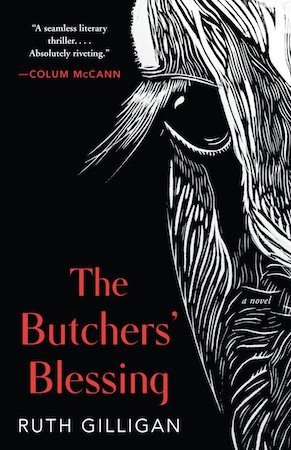
In The Butchers’ Blessing, a group of eight ritual slaughterers wander around Ireland, killing cattle according to an ancient custom. However, given it is 1996, belief in this archaic practice is dying out, generating a tension that eventually spills over into hostility and, ultimately, into unspeakable violence. 

Rather than follow these eight men on their travels, the novel prioritises the wives and daughters they leave behind, exploring what the lore of the land might mean for them. So I turned to other books that combine feminism and folklore; books where uncanny tales are used to empower female voices (and, crucially, female bodies). Here are just eight of the weird and wonderful bunch:

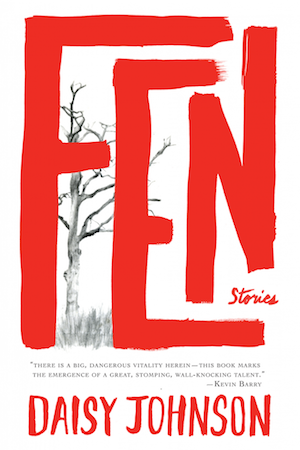
Fen by Daisy Johnson

Daisy Johnson sets her sinister short stories in the East Anglian fenlands, a marshy landscape on the edge of everything where girls find themselves on the edge of womanhood. They also find themselves gorging on the flesh of men or starving their bodies until they turn into eels, becoming as slippery as this brilliant, boundary-shifting collection. 

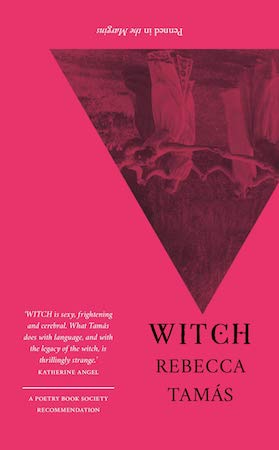
Witch by Rebecca Tamás 

“the hex for a penis isn’t really all about / the penis”—so declares the opening poem in Rebecca Tamás’s debut collection, which is really all about the primal power of femininity. Fusing the occult with the ecological, these 21 poems follow the titular character over the course of history, casting an elaborate spell of sexual empowerment. 

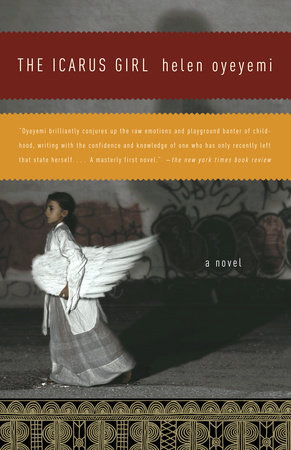
The Icarus Girl by Helen Oyeyemi

Icarus Girl by Helen Oyeyemi

From Cuban folklore in The Opposite House to fairy tales in Gingerbread and Boy, Snow, Bird, all of Oyeyemi’s books are somehow tangled with ancient stories. I recommend starting with her debut Icarus Girl, where eight-year-old Jessamy struggles to reconcile her British Nigerian identity, finding strange possibilities in the Yoruba myths of her mother’s homeland.

Image result for follow me to ground

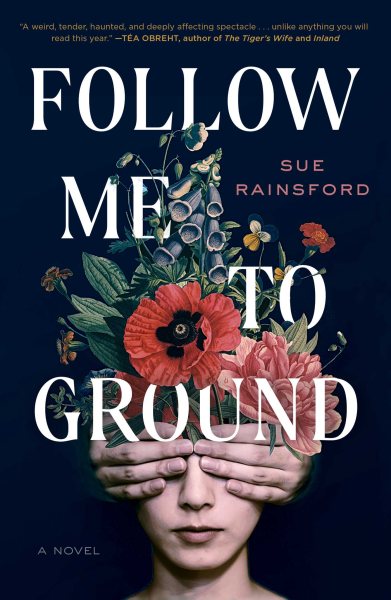
Follow Me to Ground by Sue Rainsford

In this deliciously dark and twisted eco-fable (written by an Irish author, but set in a nameless small town), Ada and her father are healers to whom the cynical yet grateful locals bring their various ailments. There is no cure, however, for the lust that is awakened when Ada encounters a boy named Samson and begins to claim agency over her own body, her own intimate desires. 

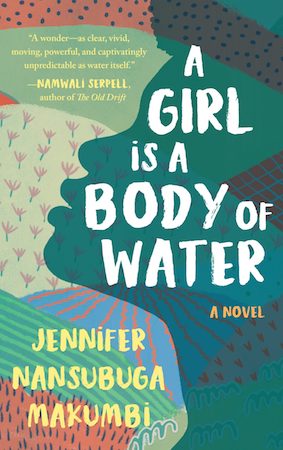
A Girl is a Body of Water by Jennifer Nansubuga Makumbi 

Having been abandoned by her mother as a baby, Kirabo now lives with her paternal grandparents in rural Uganda under the reign of Idi Amin. Desperate to figure out her role in the world, she turns to the local witch Nsuuta who introduces her to Ugandan folklore and reveals the “huge, strong, bold, loud, proud, brave, independent” potential that lies within all women, despite society’s attempts to keep it suppressed.

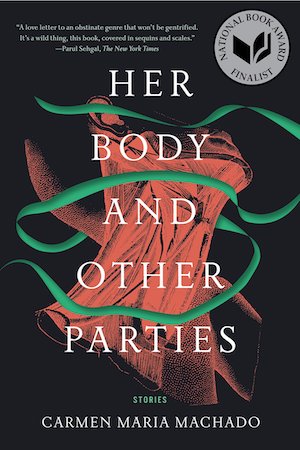
Her Body & Other Parties by Carmen Maria Machado

Combining fairy tale, fantasy and folk horror, Carmen Maria Machado’s wildly inventive collection offers a monstrous inventory of the different forms of violence and shame that can be exacted on women’s bodies. Yet, for all their darkness and political rage, these stories are shot through with a wonderful humor, a kind of irresistibly freewheeling gothic glee. 

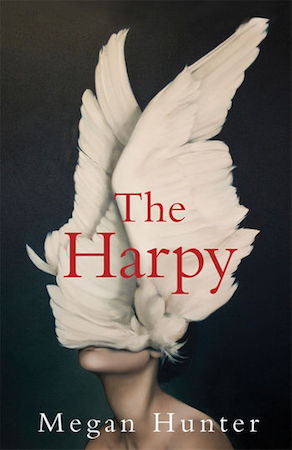
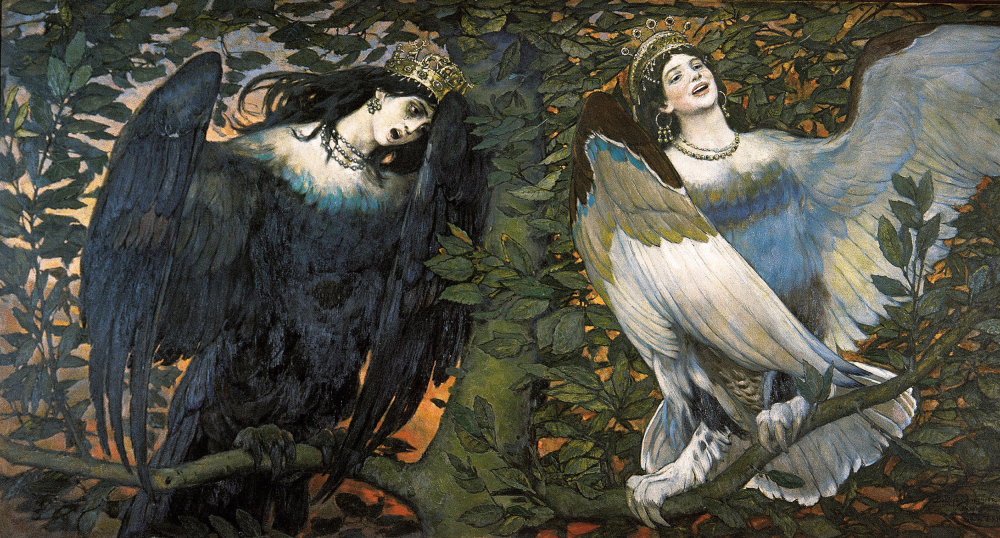
The Harpy by Megan Hunter

Megan Hunter’s premise is as bizarre as it is simple—Lucy’s husband has been unfaithful, so now in return, she is allowed to cause him pain exactly three times. As the mythic and domestic begin to merge, Lucy becomes increasingly obsessed with harpies—those classical creatures of revenge—until she undergoes a shocking metamorphosis of her own.

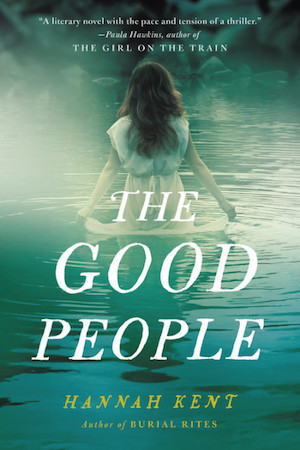
The Good People by Hannah Kent

Finishing back in Ireland—this time as written by an Australian—Kent’s second novel is just as atmospheric as her bewitching debut Burial Rites. Set in 19th-century County Kerry, Nóra, Mary, and Nance form an unlikely sisterhood, drawn together by ancient rituals and forgotten superstitions.

A Slacker Dramedy About Two Men of Color in Love

Bryan Washington’s debut novel, Memorial, is about Benson, a Black daycare teacher, and his boyfriend Mike, a Japanese American chef, who find themselves at the four-year mark of a messy relationship without a clear path forward.

Memorial by Bryan Washington

Much like with Lot, his lauded 2019 short story collection, the novel offers Washington’s trademark empathy and compassion for characters who struggle to step outside of themselves, who long to open up, who make mistakes and hurt one another, who are doing their absolute best to get by. It’s a novel built on quiet moments, touched by equal measures of grief and joy. As Benson and Mike navigate dating, work, and the death of loved ones, they reflect on their time together and apart, disrupting the static life they once knew. As a writer, reading Washington’s fiction makes me want to do better for my characters. And as a reader, I always walk away from his work reexamining the construct of my own heart. 

Bryan Washington’s Lot earned him a number of awards and nominations including the 2020 Lammy for Gay Fiction, the Dylan Thomas Prize, and the Ernest J. Gaines Award for Literary Excellence. He is a National Book Award 5 Under 35 honoree, and his writing has appeared widely in such places as The New Yorker, The New York Times, BuzzFeed, Vulture, The Paris Review, McSweeney’s Quarterly, Tin House, One Story, and Catapult. 

I had the pleasure to speak with Washington about mundanity, hookup scenes, cooking as a love language, and doing right by the communities and people we care about most.


Christopher Gonzalez: I’m obsessed with the fact that you refer to Memorial as a “gay slacker dramedy.” Can you unpack what “slacker” here means? For me, it speaks to this kind of everydayness, how life is always mundane even when it’s not, if that makes any sense.

Bryan Washington: The intention on my end was certainly leaning towards mundanity. The book I wanted to write was about the creases in relationships. Sometimes that’s romantic relationships or familial relationships or even just platonic relationships, and so much of that is mundane. You look up at some point and your partner is your partner, or your relationship with your mother or father has changed, or you know a sibling or someone who you see as a person and not just a brother or a sister or a partner become something else. The transitory periods between those plateaus are often filled with things that are mundane. I was trying to find a way to write about that as remarkable, because I think there is a lot of remarkability in mundanity. 

CG: I don’t necessarily want to talk about representation with a capital R. 

BW: Ha, OK, appreciate you.

CG: But there was something remarkable, to use your word, about reading a novel about Benson and Mike, two gay men of color, having a lot of sex, and how commonplace it all was within the work. Can you talk a little bit about that?

BW: I don’t have the sexiest answer for that beyond the hackneyed notion of wanting to write the narrative that you want to see, and taking experiences that I’ve had and experiences that my friends have had, the stories that we told one another. I wanted to see a simulacrum of that on the page, because I feel like when you’re telling stories to your friends, you’re not thinking about how a white audience would interpret the narrative. When you tell a story to your friend, you just try to tell the story. I wanted to write a narrative that features the communities I am a part of and also the ones I care deeply about.

CG: You tapped into this casual cruelty that can exist within the hookup scene. This rang painfully true for me. I’m thinking specifically about the racism and fetishization Mike encounters on the apps and the comments he gets about his body. And the fact that, like many of us, he still sleeps with the assholes.

BW: It was deeply important to me to try to paint as full of a picture of these very particular experiences and these very singular experiences as possible without being prescriptive or being definitive as opposed to being illustrative of what those interactions can look like. What does it say when that character goes through with it? What does that say about them? What does it say about the interaction itself? What does it say about the construction of that interaction? And what is owed and what is expected between two bodies? I just wanted to paint a picture for the reader and have them take it for what it is, and have them come to conclusions given their respective experiences, their respective canons. 

CG: Another type of narrative might have instilled the idea of an educational moment, but that doesn’t happen here. There is a withholding of judgment, not only with writing about sex and cheating but also some of the violence that occurs in Benson’s and Mike’s relationship. It’s part of their dynamic. There’s no morality tied to it, which I found fascinating. Was that the goal?

BW: I feel like when we’re telling stories about people we care about to people we care about, the inclination to be moralistic or to be judgmental isn’t nearly as strong. You’re just trying to tell the story about what happened to these folks and trying to do it in such a way that it retains the dignity of each of these characters while still not shying away from the fact that sometimes they do fucked up things and fucked up things happen to them. 

CG: Something that strikes me is how conscientious you are about how you portray your characters. This also comes across in how you write about Japanese cuisine, not only in this novel but also in your nonfiction. How did you approach this thread for the novel? And did anything surprise you when it came to writing about food?

What is the menu for someone who gives comfort and pleasure and nourishment predominantly through the foods that they cook?

BW: I was really interested in writing about comfort and writing about pleasure and the different ways that people give and receive comfort and pleasure. Food was one way to do that. For Benson, what does a culinary education look like for someone who is learning about how to care for others in this way? What would he start to cook and where would he end up so that his trajectory from being shocked about Mitsuko cracking an egg to cooking Mike’s favorite dish at the end of the book makes structural sense. Whereas for Mike, my question was, what is the menu for someone who speaks and thinks and gives comfort and pleasure and nourishment predominantly through the foods that they cook? And, because Mike’s been cooking for a while, that gave me a lot more options as far as what that could look like. But that didn’t really make it any easier, because each of those meals is supposed to be saying something about how he feels or intends the recipient to feel. 

CG: I love the dynamic between Mitsuko and Benson. She’s similar to Mike, in that both never stop talking, while Benson is very quiet and reserved. Mitsuko is able to shake him a bit. It makes me wonder about communication more generally within the book. You’ve touched on food as a means of communicating love and giving comfort, but I’m also thinking about how communication breaks down for Benson and Mike at the start of the novel and how distance exacerbates this issue with text messaging becoming insufficient for them as they both fall into separate day-to-day lives. 

BW: There’s a certain reading of the book where you could argue that Benson’s arc is of someone who learns how to speak up for what they want, whereas Mike’s arc is someone who ultimately learns how to listen to other people, which is an extremely, extremely, like extreme shorthand of the book. I’m really someone who takes stock in a character’s love language, and the ways in which they relate to other people that might not be immediately discernible as being deeply significant but that are significant for them. That tells me that this is how they communicate when they’re trying to get affection across or trying to entice someone or even if they’re just trying to tell someone to go away. If I know what a character wants and I know what they desire, I know what they don’t want, and I have a pretty general framework of who they are and how they relate to the folks around them.

CG: We’re at a point now where social distancing and the lockdowns have afforded us time for great introspection and reflection as well as time we might not have previously had to devote to learning something new. To speak to the book, distance is what Mike and Benson ultimately need in order to figure out where their relationship is headed. And in that space, Mike is able to connect with his dying father, and Benson learns what opening up to other people feels like, and they both see opportunities for new love. Is there anything in the last seven months that you’ve finally had time to sit with and learn about yourself? Is there anything new you’ve tried to master? 

BW: Something that I’m hyper-conscious of now, even if I was just very peripherally conscious of it prior to our being in a pandemic state, is trying to really expand on and to calcify what generosity and what being there for someone can look like. While the medium has changed in which we can show up for one another, whether it’s for a capital-B Big reason, or if it’s for someone just wanting to have you around, the need certainly hasn’t. The need has grown and extended itself. So, I’m trying to figure out the many different forms that that can take for folks, whether it is a romantic relationship, whether it’s more platonic, or a familial relationship. It’s just something I’ve been thinking about a lot as of late. Is there anything for you?

CG: I guess for me, personally, I’m thinking about what loneliness can yield and how it’s always been something I had run away from or feared. I’m thinking about how I might need it to, as you were talking about, be there for other people. And the big question I’ve been working through these last seven months is how to be there for myself, too. Have we gotten there? I don’t know.
BW: Do you feel like you need to get there?

CG: That’s a very good question. I guess, and maybe you can relate, I’m always in my own head in some way. And never have I ever had to confront a lot of things about myself on this level.

I take stock in a character’s love language, and the ways in which they relate to other people that might not be immediately discernible but that are significant for them.

BW: I never feel like I’m deeply and integrally comfortable anywhere. And by way of that, it makes it extremely difficult for me to be uncomfortable anywhere, if that makes sense. I’m not someone who feels like I’m in uncomfortable situations very often or, rather, I have a very high tolerance for what that can look like. I wouldn’t say whether that’s a good thing or a bad thing, but having to think about that in the context of the pandemic as someone who generally has a tendency to take everything extremely seriously—but also I don’t take very many things terribly seriously—and wanting to put myself in a position where I’m not constantly dissociating. Ideally, you want to be present in the moment, but when the moment calls for long stretches of time in solitude, whether that’s solitude with a partner or solitude by yourself, or if you and your kids are trying to find a way to be present, that’s been a big challenge.

CG: You’ve talked a lot about trying to do right by characters in your book and also by people in your life. I think that’s what we’re trying to do better as writers, be there for people whether they’re fictional or not. That level of empathy and compassion you have and that is so prominent in your work, how do you maintain that? Not even just in considering the current moment, I mean, pick any year. There’s so much to be angry about. I guess I’m mainly asking or myself, but how do you channel what might be anger into empathy?

BW: As far as the context of work specifically, I care quite a lot what my friends think of my work. I care quite a lot about what those who are close to me think of my work and the projects that I’m trying to do. A lot of not too good things happen in the book. A lot of terrible things happen to each of the characters. There’s the dissolution of relationships, there is a drifting apart, there is literal death of loved ones. I think about what the characters need to carry them through to the next page. Whether they’re sharing a meal or sharing a glass with someone in a bar or they’re sharing a chat with someone or they’re sharing a smoke with someone or sharing a drink with someone or they notice something in the road, that may be enough. And that’s very much how I approach things generally and, more specifically, as of late, as far as really being appreciative of the generosity that I’m privy to and the generosity that I have been privy to while acknowledging that things are still very much fucked up and it’s deeply unlikely that they will unfuck themselves over the course of my lifetime. But that doesn’t negate the small pleasures and the small generosities and the small comforts I’ve been privileged to have and that, ideally, I can be privileged to share with friends and loved ones and folks I hold dear. 

We are the 300-year-old big bois of the sea and we did not come to play

In the tidepools we felt an absence. No longer hummed the starfish and anemones, the dumbfounded krill. The shifting, blurred shapes of palm trees loomed out there, on the shore. Their fronds, which sometimes skated on the surface of the water, fell to the sand like the balconies of the condominum towers. When those fell into the water, they sank. The waves still smoothed in over the shore to foam there a moment before they receded. Us, well. We remained.

We are the three-hundred-year-old heckin big bois of the sea, grown larger than any of our kind has ever been before, covered in carapaces made of titanium custom-molded to our bodies, the embodied dreams of our elders who gradually decayed until they collapsed into fleshy heaps on the floor of the sea, fortified with the language we developed to sustain us, suited up in our cyborg flesh probably able to live forever, placed here in the time where we have a fighting chance at taking over the rest of this water planet, kind among our kind, moulting with the assistance of bigboi doctors and bigboi scientists, investigating the future-focused potentialities of telomerase manipulation, well-armored against enemies of any size, and we did not come to play.

We remember when the hands of land mammals came down through the water. A red cloud bloomed in the water. The hands themselves tasted of sand and the tiny bones of the endoskeletons. Sometimes, when we are very hungry, we eat the flesh of land mammals whose bodies sink. Despite knowing their flesh, we have questions. What would it take to have so many bones and so small? How did they regrow them once they got old? Could their flesh wrap around the bones, as ours did? Could they replace their bones with titanium rods and have flesh grow around those? What happened when their outer layer of skin moulted? Do they make telomerase? How do they feel about being soft? Do they feel vulnerable most of the time?

The land mammals up above gather the rock crabs in their nets. When the motors buzz and we detect the stink of their machines, we hide. We are not proud of this. We watch the bodies of the rock crabs sink down toward us through the water, trailing bubbles against the light. Octopuses who wait nearby snatch a few right out of the water and pass them from tentacle to tentacle, tearing their skeletons from their meat and eating as much of them as possible.

When they come back to us—if they come back to us—the rock crabs are missing hands, unable to tell us what happened. Instead, they skitter into crevices and freeze whenever the land mammals glide by at the surface. Sometimes the rock crabs die after anyway. We try to care for them by leaving soft bits of clam outside their dens even though many leave them wholly untouched. Their flesh shrinks inside their hollow shells and their eyestalks rot away.

Us lobster monsters lug our bodies to the shore. Our claws hang heavy from our bodies as we lumber toward the fisheries. When weighed, our claws break three hundred pounds. We do this sometimes. On nights like this one, we snap through the gates that face out to sea. It takes so little pressure from our huge claws—a little snap, maybe two—before the mesh parts and our friends swim out toward us. Some are dazed and some maimed. Before moonset, we walk back all quiet-quiet to the place below the surface where we know we will be safe.

Near our safe place, we smell hybrid beasts and listen to their keening. The silhouettes of their bodies glow against the moonlight. Though the upper halves of their bodies mirrored the land mammals, the lower halves were smooth and gray as the skin of manatees. We have been alive long enough to assume that we have seen it all—the rise and fall of maritime empires, the construction of offshore pleasure islands and their decay—but we have never before seen a beast or being like them. They are something new.

The hybrid beasts came into being in the lagoon by the power plant, after decades of their presence in the coastal waters, infected by the seaweed, attracted by lingering warmth and the force of habit, their bodies gray and smooth as stones, as fluorescent snot trailed from their nose-holes like mucosal wings, as they surfaced to suck at the air in great gulps, breathing radioactive wastewater, slowly adapting the membranes of their bodies, now a viral vector, the nuclear manatees float in the gloaming. 

On the edge of the lagoon, a concrete beach sloped gently down to the water. Land mammals came here. They lay in the water a long while, until their legs closed together, until they grayed out. Gills slice in matching horizontal lines into the sides of their torsos. Though their genitals sense softness, when water rises up over them they redden. They slip into the water with the manatees. Their sideways mouths unnerve us, so we try to avoid looking at them.

When we the heckin big bois next emerge from the sea, we drag deep lines in the wet sand. It’s an inversion of the first night newborn turtles make their way to the sea. The night’s art project looms before us in the empty shells of condos built by land mammals who “invest” in “property” whose “value” might “rise.” We obliterate. Tarps flap with the regularity of waves. We snap our claws all together and the sonic boom when they all go at once shatters the thin panes of the front windows. With the serrated edges of our teeth, we chew on the drywall boards. We decide to call our deconstructive art project THURSDAY FINGERS, after a sign with removable letters we can see from the water. With their high squeaks the dune mice thank us. We retreat.

On some spectrums of light, the land mammals shift entirely to sea creatures; on others, they stay hybrids. Whether wholly mammal or wholly manatee, their physical features blur. Lactation sacs poof and deflate from their chests. By our age, we are used to so much change happening in the sea—change we do not witness.

The manatees travel toward the hybrids, and the hybrids scrub the manatees of the dank algae which collects on their sides. Under their touch, the manatees groan. We sense when the hybrids snot on the manatees and the manatees snot on the hybrids. Where the snot touches, it spreads, and it encloses all of their bodies in a limegreen glowing layer of protection; it heals scarred places on their torsos. From scalpel or motorboat we know not. In the sea, change happens without witnesses, and the continual movement from one state to another is as natural as the tide.

The next darkness, we lurk below the long bridge over the shallows. The concrete pillars which hold it up loom above us. We pound our claws at the base of one, over and over, the vibrations reverberating deep into the earth. With each other we coordinate exactly, as though we were smaller parts of one larger creature. The concrete of the bridge cracks and into the cracks we spew water at high velocity. From the large cracks sprout smaller ones, which spiderweb across the surface of the concrete until pieces fall into the water around us.

We help the hybrids take the land mammals across the gap left after the bridge is gone. The gentle ones, some hairy and some hairless, wear small pieces of fabric on their bodies. They screech as the hybrids lift them across the gap. Most of them shrink back from us like our prey, and so instead of touching them we focus on blocking the worst of the waves so the water near them remains still. We are so close to each other that the plates of our bodies squeak against each other.

The manatees low beside us and their bass vibrations shake up our world. Seven versions of ourselves split off from each one of us, and from them sevenfold more. There are so many antennae that they tangle. Collectively we receive long-wave radio from the last towers. A toothache in land mammal language, mostly messages repeated over and over. Like the stone crabs, sometimes we think that our rage is the only thing keeping us alive.

7 Books About Families in Exile

All my life, I heard stories about Cuba. From my father, from mis abuelos on my mother’s side. We made a home in Miami, from stories about the home in Cuba that was lost before I was even born. Our Sunday night dinners, talking about a place where I had never been, where my father and mis abuelos had never been back, felt like home—because I had no home that didn’t include stories of Cuba, a place I wouldn’t see or smell or touch until I was in my 20s. Once I did visit, it became my job to tell the stories to my father and mis abuelos every time I returned, about the home they hadn’t seen, besides in their dreams, for decades.

These stories of home are especially important to the exile. In its most basic form, exile literature focuses on how people cross from one country to another—the physical and emotional toll it takes. But exile literature tells not only the stories of exile, but of homes left behind, and the hope of constructing a new home in the future, safe from the dangers fled. In other words, exile is not a story that can be told through just one generation.. This is true in fiction and in nonfiction.

The books on this list show how stories of the lost homeland affect every one of us who is a product of exile, not only the people who originally left home. They range from stories about the exiles themselves, to those who are generations away from the exile but who still fight with their displacement. (A great example of this dynamic of telling stories between sons and their fathers and mothers would be the recent Recommended Reading story “Pestilence” by Jonathan Escoffery.) These are books that helped shine a light on the importance of these stories to me, to exiles, to everyone.

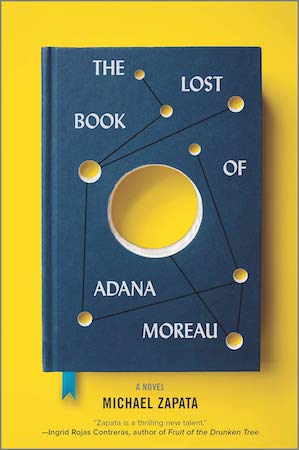
The Lost Book of Adana Moreau by Michael Zapata

In so many ways, The Lost Book of Adana Moreau is a story about stories. It follows two protagonists and goes through multiple storylines and migrations. Saul tries to carry out his grandfather’s dying wish of delivering a manuscript to the long deceased author’s kin. He has to uncover the steps, interviewing people and chasing down their stories. One line in the novel in particular embodies exile literature: “Incan history breathed, and I breathed too because of it. At some point, he said that maybe in a way were both right, that ‘history casts itself across our existence like a shadow of another world.’” The history of these characters breathes into the present, fleshing out the present, for a beautiful climax of intertwined storylines and homes.

Brother, I'm Dying by Edwidge Danticat

Brother, I’m Dying by Edwidge Danticat

Brother I’m Dying is a story about two brothers, Danticat’s father and uncle, who take turns raising her. The book starts with one brother calling the other, whispering, “Brother, I’m dying” on the phone. The story follows Danticat from childhood to adulthood, from Haiti to New York and Miami, as she tells her own story, and of the two men who helped raise her. Danticat’s memoir in and of itself is the telling of a story of her family, of their exile. The fact that the brothers write each other notes and send each other letters only makes it more of an act of exile. Danticat writes “Exile is not for everyone. Someone has to stay behind, to receive the letters and greet family members when they come back.” For an exile, there has to be a place, a family, to go back to. A story to be told, from the land left behind, to the land that received you.

The Distant Marvels by Chantel Acevedo

Maria Sirena, the protagonist of Chantel Acevedo’s The Distant Marvels, is a lectora, or a reader of stories to the cigar rollers. The story follows her and a group of women who hide out in a fort during Hurricane Flora near Santiago de Cuba in 1963. Maria Sirena is “a marvelous storyteller, as well, as is true of many Cubans, for whom it seems the knack of weaving a tale comes naturally.” This ability is so important for an exiled people.

Maria Sirena ends up telling stories to the women, about her mother, and about her child, slowly telling more and more of her story that she has hid from the world, and tried to hide from herself. The stories spanning multiple wars and generations. Near the end of the novel, Sirena says “I am dying. The stories will die with me.” By telling the stories, she hopes they can survive another generation, hoping her stories can reach the generations she has lost.

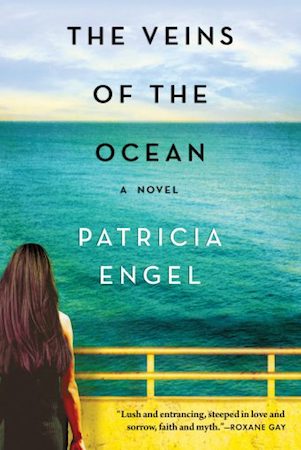
The Veins of the Ocean by Patricia Engel

Patricia Engel’s The Veins of the Ocean: A Novel follows Reina, a Colombian-American, as she tries to keep some semblance of home through stories. She visits her brother Carlito, who is in prison, as she tries to share stories with him so that they can stay as connected as possible. Carlito is the closest to a home Reina has, and telling him stories is her greatest sense of purpose in the beginning of the novel.Stories are also an important part of her relationship with Nesto, who is an exile from Cuba she meets in Florida. They both trade stories of their families, of their homes, before she goes to her home, Cartagena. She then visits Nesto and his family in La Habana. But stories are important to these characters, and vital to the novel, even when they aren’t the most truthful, which becomes apparent when Reina says how her mother talks about “going back to Cartagena to live, as if this North American life were just some interlude and we ended up here by accident.” Even if that story is a retelling of a falsehood, or a half-truth, it is what the mother needed in order to continue on with her story.

The Book of Lost Saints by Daniel José Older

The Book of Lost Saints plays off the ghost story trope, by having the ghost both tell its story, and want to learn more of her own story. Marisol has to haunt Ramon, who has been pushing aside his Cuban heritage, in part because of his own skepticism of the fantastical family histories he was told as a child. It is the only way she can get her story across to him, and get him to investigate the parts of the story that she herself is unsure of. But Older plays off the importance of heritage and family history, as Ramon not only must hear a story told to him by Marisol, but discover a story to tell his own ghost, the story being important to generations in multiple levels.

In Cuba I Was a German Shepherd by Ana Menéndez 

Ana Menéndez’s In Cuba I was a German Shepherd plays off the joke, “Here in America, I may be a short, insignificant mutt, but in Cuba I was a German shepherd.” It’s a common joke among Cuban exiles who live in Miami and elsewhere in the United States, who mostly only have their stories (and sometimes, their embellishments) of who they were and what they had in Cuba. These eleven short stories share the theme of self-mythologizing, and how people can keep a part of their home (and pass on something of their home to the next generation) through stories.

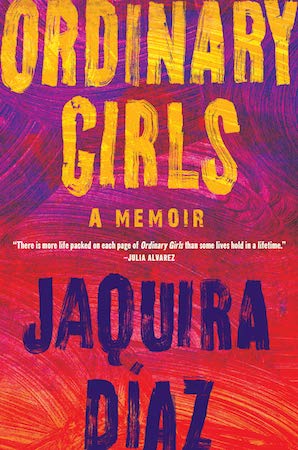
Ordinary Girls by Jaquira Díaz

Jaquira Díaz’s Ordinary Girls follows Diaz and her family as they move within Puerto Rico, and eventually to Miami Beach, after her family deals with some traumatic experiences in their home. Díaz is young when they move, and she idolizes her father. She writes down how when she tries to go back to Puerto Rico as an adult, to her old school and neighborhood, a child tells her to leave, that “You don’t belong here.”

The importance of stories to Diaz is clear to the reader from the beginning, as she fantasizes about her dad telling her “all his secrets, all the stories not meant for children…And I would write it all down, determined to remember. Prohibido olvidar.” Díaz knows this as she says, “how quickly a home can drop you.” So she tells her story, about her family (both blood and chosen), and herself, not only for herself, but for her girls, and the girls to come.

7 Literary Translators You Need to Know

Imagine bookstores, libraries and life really, without Anne Frank, The Little Prince, the Quran, and Murakami. This is what a world without literary translators would look like—our literary travels would be devoid of global textures and much, much less rich.

Through the work of translators, whose labors are unseen and intensely-detailed, English readers are able to enter the afterlife of a Japanese laborer who toiled for the 1964 Tokyo Olympics, the complicated family dynamics of Italian immigrants of Somali and Argentine origins, the joys and despairs of queer Indonesians, the dramas of provincial life in northeastern Brazil, to pick just a few of the worlds translators in this list permit us to inhabit. 

In the first part of this list of translators, I spoke to authors who translate and render linguistic, literary, and cultural nuances from Japanese, Spanish, Brazilian Portuguese, Catalan, Indonesian, Italian, French, Korean, and Thai to English. The list is skewed to emerging translators, women, and people of color, who’ve translated some of the most vibrant of classic and contemporary global literary voices. These elegant and expansive conversations, greatly truncated here for space reasons—translators are very possibly the most thoughtful subset of the literary world!—include their early acts of translation, secret languages of their childhoods, quirks of the languages they work in, and moving meanings between languages.

Morgan Giles: Japanese to English 

Morgan’s Giles’ first book-length translation Tokyo Ueno Station, by the Japanese outsider novelist Yu Miri, debuted in the U.S. on the eve of what was to be the 2020 Tokyo Games, and shortly after landed on the 2020 National Book Award longlist for translated literature. The diaphanous novel features the 1964 Tokyo Olympics from the point of view of a dead laborer. The London-based Giles is taking on another Tokyo Olympics, that of 1944, which was canceled by World War II via Yu Miri’s The End of August, a novel about the author’s grandfather who might have represented Japan as a marathon runner in those games. Considered in Japan to be Yu Miri’s masterwork, the novel is set amid the Japanese occupation of Korea and a mash-up of Japanese and Korean languages. 

A first act of translation: “Putting my thoughts into ‘standard’ English. It’s something that most people from Appalachia learn early on they’ll have to do to get ‘anywhere,’ even from the first day of school. It took me years to perfect; now when I go back people say I don’t sound like I’m from around there, which is painful. I feel like I translated myself out of my home.”

Tokyo Ueno Station by Yu Miri

How a girl from Kentucky ended up translating Japanese literature: “There’s a pretty big Japanese community in Kentucky because of the Toyota factory and all the companies that supply it. At the school I went to, students didn’t start learning another language until high school. I was picked to go on a short exchange to Japan due to a Sister Cities relationship and I started learning a little Japanese before I went. After I came back home, I decided to keep studying Japanese and when I finished all the classes that were available, my teacher suggested I pick a Japanese book and read it with her. Reading became translation, as a way to help me understand better, and now here I am today. I don’t know if I chose it or it chose me, but Japanese has been part of my life since I was 13; it’s hard to imagine what my life would be without it.”

Aaron Robertson: Italian to English 

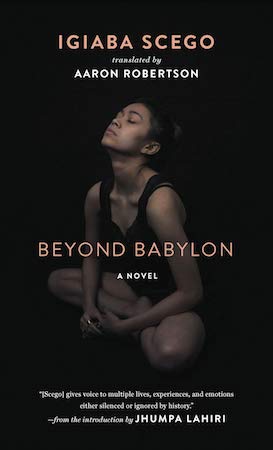
When Aaron Robertson encountered Italian Somali writer Igiaba Scego’s Beyond Babylon in a library in Bologna, Italy, he wasn’t very impressed with the boot illustration on its cover but once he cracked its pages, he was enchanted. The encounter led to him translating the exuberant 400-page book as his undergraduate thesis at Princeton, where he studied with the American literary Italophile, Jhumpa Lahiri. His undertaking is extra impressive because he completed the book’s translation a mere five years after this first-ever Italian lesson. Robertson has also translated Scego’s shorter works and is exploring books by and about Black and POC Italians to translate. Robertson, who is in the midst of writing his own non-fiction book about African American utopianism, was named in September 2020 to the board of the American Literary Translators Association (ALTA).  

In Detroit, dreaming of Italy: “In middle school, I had a very faint interest in the Italian Renaissance and I just wanted to go to Italy and study art. I had a very mythological view of the country, you know, with statues on every street corner. In college, I studied Italian and African American studies, which connected the language and the African diaspora for me.

I was familiar with Igiaba Scego’s work but I didn’t know about Beyond Babylon. After I read it, I thought that she had echoes of Toni Morrison, but she was doing something that I had always wanted to see someone do. It is similar to what James Baldwin did when he moved to France. He bridged the experiences of Blackness and brought Blackness to a space where traditionally people, in the U.S. anyway, don’t really think that much about, that is what Blackness looks like in France or what it looks like in Italy. Scego bridges not only this experience of being a Black woman in Italy, but she looks at what this experience is like in Argentina, Somalia, and Tunisia. This alone is not necessarily a recipe for a great book, because you could ask, ‘Well, why is she looking at all these places? Isn’t it kind of scattered?’ When I first read the book, I didn’t know exactly why it worked, but I was stunned by it. Only by reading it constantly and by actually translating it, did I start to understand what it was that she was doing that was so effective.”

Translating race: “In Beyond Babylon, Mar talks about being the ‘fruit of the Third World’ where she’s wondering what to call herself like, ‘semi-negress,’ for example. She even uses ‘semi-n****r.’ Scego is constantly questioning the language you use to call yourself. Are you Black? Are you Somali-Italian? Italo-Somali? Afro-Italian? The character of Mar has roots, in a certain sense in the tragic mulatto character, although her end is more optimistic than that trope usually tends to be.

The novel celebrates the ambiguity, but also sees it as something both destabilizing and liberating. Scego uses the plot of her work to reflect on the whole process of translation. There are moments where the characters are talking about the translation of poetry, but there’s also the question, how do you transport who you are across boundaries? In every sense of the word. The inexhaustibility of that question is why the text is so rich, because you can approach that question from so many different angles. 

Scego’s newest novel, which was published in Italian this February, is called The Color Line. It looks very specifically at the intersection of Italian and African American history. The main character is a Black woman abolitionist in the 19th century, who moves to Italy and becomes a painter. Her work has shown me that the points of cultural specificity will always be there. In terms of our experiences, not everything will be on a one-to-one ratio, but if you look, you find links between peoples, cultures, and time periods. In the new novel, she’s saying, ‘Let’s look at an African American woman in the 19th century, and how her story is also kind of the story of the Italian unification process.’ Her nonfiction has dealt with international solidarity too.”

Tiffany Tsao: Indonesian to English 

Indonesian was the language of the elders in Tiffany Tsao’s Chinese Indonesian family. Tsao, who was born in California and grew up in Indonesia and Singapore, reimmersed herself in the language while working on her Ph.D. in English at UC Berkeley. The now Sydney-based Tsao’s translations include Norman Erikson Pasaribu’s poetry collection Sergius Seeks Bacchus, Dee Lestari’s novel Paper Boats, and Laksmi Pamuntjak’s The Birdwoman’s Palate. She’s currently translating a collection of short stories by Budi Darma, called Orang-Orang Bloomington, or The People of Bloomington, set in Bloomington, Indiana (read one of the stories here). Also on the way is a collection of Norman Erikson Pasaribu’s short stories, Happy Stories, Mostly (check out at Catapult and The White Review). After that, Tsao will switch translation seats—her own English-language novel, The Majesties, will be translated into Indonesian by Norman Erikson Pasaribu. 

On the gender-neutral pronouns of Indonesian: “Because translating Sergius Seeks Bacchus made me much more aware of it, nowadays I make much more of a conscious effort to replicate the effect than I did in the past—and if there is a passing ‘someone’ mentioned, I’m much more likely to just refer to them as ‘they/them.’ The gender-neutral pronouns make me realize how language shapes what is important and what is not. It becomes completely irrelevant whether the voice on the phone, or the doctor the protagonist sees, or the person working at the cake shop (just to use examples from The People of Bloomington by Budi Darma, the short-story collection I’m currently translating) is a he or a she or a they—the reader’s imagination doesn’t have to know the gender in order to get a complete and deep grasp of the stories or the scene, even if the author did have a gender in mind but didn’t specifically convey in the story text itself.”

On linguistic relativity: “It is taboo for someone who works with words to say this, but language and the abilities of language don’t always reflect or determine reality. As Norman and I have discussed in a conversation we had for AAWW’s The Margins—Does A Face Need A Mask?”—assumptions about gender and gender differences obviously are still rife in Indonesia, and often when the gender-neutral pronoun is used ‘dia/ia/-nya,’ a listener or reader will often fill in the gender for themselves, the same way an English speaker might still automatically think ‘man’ when they hear ‘doctor,’ and ‘woman’ when they hear ‘nurse.’ I do think it is really awesome to have a language that easily accommodates inclusivity and gender fluidity. But I don’t think language is the magical antidote in itself—at least not when non-gendered pronouns are already conventional.”

Julia Sanches: Spanish, Portuguese, Catalan to English 

By adulthood, Julia Sanches spoke Portuguese, English, Spanish, and French. During her master’s degree in Barcelona, she added Catalan to the impressive list. The Providence, Rhode Island-based translator worked as a literary agent at the Wylie Agency before switching her talents to translation, and is a founding member of the Cedilla & Co. translators collective. Her recent translations of contemporary Brazilian writing include Twenty After Midnight by Daniel Galera, Amora by Natalia Borges Polesso, and The Sun on My Head by Geovani Martins. She serves the chair of the Translators Group of the Authors Guild.

Early multilingualism with periods of languageless-ness: “I was born in Brazil, and I left when I was three-months-old. We lived in the United States until I was eight. We were lucky in that we were able to go back to Brazil once a year. Around five or six years old, whenever we went to Brazil, I would spend a week without speaking at all. I wouldn’t speak English and I wouldn’t speak Portuguese. And then suddenly I would speak fluent Portuguese, I wouldn’t mix anything, I would just need apparently this period of languageless-ness, a period of emptiness of language to be able to switch from one to the next one. The same thing would happen when I went back to the U.S. I would just sit at my desk in silence as I tried to get used to English again. I don’t have any memory of this, but apparently it happened, according to my mother.” 

Dealing with problematic language: “I translate from a lot of languages that are having similar discussions as we are in the States, but they are at different points in the discussion. I’ve been co-translating this book with a friend and there was a metaphor that we thought was like gratuitously colorist in a way that added nothing to the text. We decided to take it out. I don’t know all the answers and I don’t know what the balance is. The conversation about language in the U.S. is having an influence in Brazil, in the way people talk about race and people talk about gender, which I think is quite positive because in Brazil for the longest time they were selling the story that the country was a racial democracy, which it is certainly not. I think also there’s a lot of danger of looking to the U.S. for moral guidance because of the proxy wars that they fought in Latin America and around the world. 

Translators might know and might see both sides more clearly than other people, but I’m not sure that they’re the best people to be making decisions, especially since most translators are white. Not that many translators are heritage speakers. A grand majority of translators are people who grew up in monolingual families, studied the language at university, spent a year living in that place, and then came home as experts. I feel very uncomfortable with the notion of expertise, especially for a place as complex as Brazil. I’m a white Brazilian. There’s a lot that I don’t know. There’s a lot that I learned from my family that is incorrect because that’s what they learned at school. We’re in an interesting position. I’m not sure we have all the answers. We can mediate the answers but I am not sure if we are correct or incorrect in any given case.”

Emma Ramadan: French to English 

Between them, Emma Ramadan’s parents spoke four languages, but to Emma and her brother, they only spoke in English. When they didn’t want their kids to know what they were saying, they spoke in French. To eavesdrop, Ramadan learned French. The childhood curiosity led her to bring English readers some of the most intriguing of literary works in French, including the much-acclaimed, genderless love tale of Sphinx by Anne F. Garréta and The Shutters, the poetry of Morrocan writer Ahmed Bouanani. Ramadan and her husband (and French translator!) Tom Roberge own Riffraff, the bookstore and bar in Providence, Rhode Island. Together, they’ve also translated a novel, Marcus Malte’s The Boy.

Relating to the struggles of the narrator of Brice Matthieussent’s French novel Revenge of the Translator: “At the end of Revenge of the Translator, the narrator announces that the book has an American translator named Mike Kirkfeld. When I first met Brice Matthieussent, I asked him what he thought about me changing the name of the American translator to my own name, because otherwise the conceit of the book falls apart, doesn’t add up. The American reader needs to realize that they’re holding in their hands the very translation that’s being spoken about. Matthieussent agreed immediately that I should put my own name. And then during an event for the book when Matthieussent was touring the U.S., someone in the audience asked about future translations of the book into other languages and whether the American translator’s name would be left as Mike Kirkfeld or instead changed to Emma Ramadan. Matthieussent insisted it should stay Mike Kirkfeld, but I argued that it should be Emma Ramadan because the book has an actual American translator now! That way the joke of the book keeps proliferating with each new translation. We’ll see what future translators decide to do.”

Translations from the perspective of bookselling: “I think American readers have proven they will embrace translations if they’re not sidelined in a translation section of a bookstore or only spoken about on that level. The success of Elena Ferrante is a perfect example of this. No one cares that those books are translated, they buy them because they’re fantastic reads. And that’s how translations should always be sold, I think: as fantastic reads, just like any other book. In my bookstore we put translations on the tables next to books originally written in English, we recommend them based on a customer’s taste, we treat them like any other book, and we have a very easy time selling them.”

Mui Poopoksakul: Thai to English

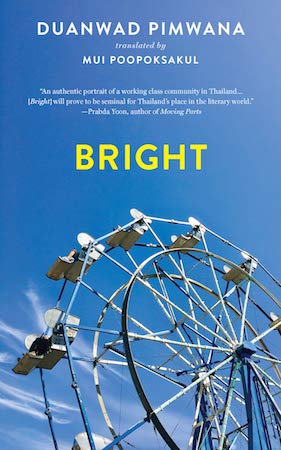
While Thai food and culture is beloved around the world, its literary riches are less known due to the dearth of translations of works written in the country’s rich language, which has many-pronged roots in Pali, Sanskrit, and Old Khmer. Enter (to our gratitude!): Mui Poopoksakul who has debuted works by contemporary Thai literary stars, Prabda Yoon and Duanwad Pimwana in English, via the courageous Tilted Axis Press (founded by translator Deborah Smith, who brought us Korean novelist Han Kang’s The Vegetarian). She practiced law in New York City before embarking on an M.A. in cultural translation at the American University of Paris. Her thesis eventually became Prabda Yoon’s The Sad Part Was, which was her first book-length translation. Mui, who guest-edited the Thailand issue of Words Without Borders, speaks fluent English and Thai, French (she reads “decently” in the language), and enough German to get by in Berlin, where she lives. 

A quirk of Thai that is tricky to translate to English: “A term that’s been in the news a lot recently is ‘mob moong ming’ (ม็อบมุ๊งมิ้ง). It was used by a former army spokesperson to disparage pro-democracy student protestors as a ‘cute and cuddly crew’—I tried to replicate the alliteration there, but ‘moong ming’ is a word many people, myself included, weren’t previously familiar with (I’m not sure if the spokesperson newly made it up or if it’s super new slang), though you can sense the meaning from the cutesy sound. Not that I’m endorsing it, but the phrase is catchy for the reasons that make it so hard to translate.”

Contextualizing Prabda Yoon and Duanwad Pimwana and Thai literary movements: “Though they are writers of the same generation, Duanwad is a daughter of Thai social realism, which was a major literary movement in Thailand in the second half of the 20th century. Prabda, on the other hand, was seen as taking Thai literature in the direction of postmodernism when he came onto the scene in the late 90s. Now, given what’s going on in the country, we’re seeing a resurgence of social realist themes, or themes that are progenies of social realism, but narrative modes have become less straightforwardly realist.” 

Padma Viswanathan: Portuguese to English 

Padma Viswanathan

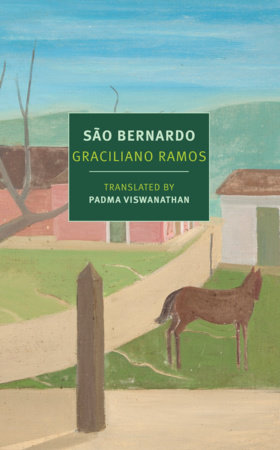
In May 2020, the Canadian novelist and playwright Padma Viswanathan debuted her first full-length translation, the late Brazilian novelist Graciliano Ramos’s São Bernardo, which was originally published in 1934. Viswanathan came to Brazilian Portuguese through the research she did on syncretic religions for her own first novel, The Toss of a Lemon—and then through a series of encounters, including a devotional music radio show she hosted, which brought her to Brazilian music. Viswanathan was mostly raised in English with parents who spoke Tamil as their secret language from their children, this parents-only language tradition was carried on by Viswanathan and her husband, the translator and poet Geoffrey Brock. French was their secret code—until their children picked it up. 

São Bernardo by Graciliano Ramos

Path to Graciliano Ramos and translating São Bernardo: “We had moved to Arkansas and I felt I was losing my Portuguese without opportunities to practice, and my husband recommended I try retranslating something, suggesting that, as a novice, I might look for a book in need of retranslation. My impression of Graciliano Ramos had been that he was a social realist whose claim to fame was a sympathetic portrait of the downtrodden poor in his region. Opening his final and most famous novel, Vidas Secas, I found it to be very different from that: it was a complex portrait of a poor family fleeing drought, but of extraordinarily ambitious in its form and language. I translated and published the first chapter before learning rights to the book were unavailable in the U.S., but by then, I had read São Bernardo, a very different book, tough and ironic and full of incidental poetry, and another that could use a reintroduction into English freshening in various ways. I felt an even greater kinship with this book: one of my books is, as this one is, from the point of view of a relatively unlikeable man; another dives, as this one does, into provincial concerns in a remote and largely invisible region.” 

Only-in-a-translators’-household conversations: “The classic one is watching a foreign film and quibbling with the subtitles. Then there are times when one of us walks into a room with some piece of writing translated by someone else, and says, ‘Look!’ Either the corresponding spouse is in the middle of something else and so passively receives the indignation or puzzlement or admiration, or, in another mood, engages, which means worrying the phrase, its possibilities and limitations, until it’s lying on the page like a dissected caterpillar. My husband is on a panel about retranslation next month with friends who have translated Anna Karenina, The Stranger, and Kafka’s The Metamorphosis, works of fiction with some of the most famous first lines ever. Apparently, they might just focus on different renderings of those famous opening lines—the sort of deep nerdiness translators love, and that I love in translators. I’ll be eating it up.”  

Stephen King’s Experiment with Online Self-Publishing Was 20 Years Before Its Time

Journalists like Anne Helen Petersen, former culture writer at BuzzFeed, and Casey Newton, former tech reporter at The Verge, have recently been making waves in the news industry by ending long-term stints at established publications to focus on subscription email newsletters hosted by Substack. Founded in 2017, Substack is a platform that allows writers to create newsletters delivered directly to subscribers’ email inboxes, either for free or at a price. According to Axios, most writers of subscription newsletters work primarily in technology, business, and political news and analysis — but that’s not to say fiction won’t soon find its place on Substack as well.

Indeed, Stephen King attempted such a gambit with The Plant nearly two decades before Substack was founded. While there was no consensus on the success or failure of King’s experiment in digital self-publishing, the attempt remains valuable for what it can teach Substack’s fiction writers to come.

While there was no consensus on the success or failure of King’s experiment in digital self-publishing, the attempt remains valuable for what it can teach fiction writers to come.

The Plant is a serialized novel about a publishing house whose office plant demands human sacrifice in exchange for financial success. It first germinated as a series of three limited-edition, printed installments that King gave to family and friends for the 1982, ‘83, and ‘85 holiday seasons. According to an interview with The New York Times, King initially discontinued the series due to its coincidental resemblance to Little Shop of Horrors, which hit theaters the following year, in ‘86.

The Plant grew into an experiment in online self-publishing after an incident with King’s e-book debut, the novella Riding the Bullet. Published by Scribner in March of 2000, the novella was encrypted to prevent piracy, but the encryption crashed many would-be readers’ computers — and was broken by hackers anyway. Looking back on both Riding the Bullet and The Plant during an interview with The Paris Review in 2006, King explained:

With “Riding the Bullet” there was all this talk about people trying to hack the system to get it for free. And I thought, Well, yes, this is what these Internet people do. They don’t do it because they want to steal it, they do it because they want to see if they can steal it. It’s a game. And so I thought, Well, if you just say, look, here it is—it’s like a newspaper honor rack. If you really want to be that much of a schmo, that much of a palooka, go ahead and steal it! Hope you feel good about yourself, turkey!

Perhaps just a little peeved at Scribner as well, King also told The Paris Review about his interest in potentially cutting publishers out of publishing: “The Internet publishing experiment was probably a way of saying to the publishers, You know, I don’t necessarily need to go through you.”

With the intent of self-publishing an e-book without encryption, and with readers paying based on the honor system, King re-released The Plant online in installments beginning in July of 2000. Each installment was distributed through King’s website, with the author requesting $1 to $2 per chapter, stipulating that he would only continue writing if at least 75 percent of readers voluntarily paid. Altogether, King released six chapters before announcing the project’s hiatus five months later. The Plant remains unfinished, though free to read on King’s website.

King insisted that his work on The Plant was suspended due to a lack of inspiration, rather than any financial or technical failure. To the contrary, in his conversation with The Paris Review, King estimated that The Plant had brought in almost $200,000, but that “the story was just OK.” Contemporary news coverage, however, was skeptical. King’s introduction to The Plant, which he had also published on his website, included an explicit challenge to publishers — “My friends, we have the chance to become Big Publishing’s worst nightmare” — and critics were not going to let that go. The New York Times announced “Publishers one, authors nothing,” in an article entitled “A Stephen King Online Horror Tale Turns Into a Mini-Disaster,” which claims that King abandoned the project after sales “steadily faded.” Even King’s assistant, Marsha DeFilippo, acknowledged to WIRED that, by The Plant’s fourth chapter, only 46 percent of readers were paying — a technical failure, according to the metrics the author himself had laid out. But both King and DeFilippo have pointed out that The Plant isn’t dead; it remains in hibernation, just as it was between 1985 and 2000.

Social media provides writers with an avenue for self-promotion, but it remains incumbent upon them to do the long-term work of building and engaging with their subscriber base.

Regardless of whether or not The Plant will bloom once more, there are lessons it has to offer fiction writers considering subscription newsletters. When speaking with The New York Times, DeFilippo identified marketing as one of the biggest challenges in self-publishing the serialized novel, which is why “King would never give up traditional publishing. They provide a huge service, actually selling the work.” The modern advent of social media provides writers today with an avenue for self-promotion, but it remains incumbent upon them to do the long-term work of building and engaging with their subscriber base. The other challenge mentioned in all contemporary coverage of The Plant is one of expectations: both what King expected of readers and readers expected of King. Expecting 75 percent of readers to pay seems unrealistic — according to a recent article in The New York Times, even the most popular Substack sees only 18 percent of readers pay — and even if there’s only one paying reader out of a thousand, they’re probably going to expect a completed novel no matter what. In other words: Keep expectations realistic, and commit to delivering.

Lastly, when striking out on a new venture, regardless of how promising or innovative, maybe don’t burn your bridges. Substack is, after all, only the latest email newsletter platform. Founded in 2010, TinyLetter blazed the way for Substack, but was nearly shut down two years ago, illustrating the often fickle nature of tech companies. Their platforms come and go, but the publishing industry remains — thus, it’s wise not to trash one for the other. Otherwise it can be a long walk back from “Big Publishing’s worst nightmare” to “They provide a huge service,” and most of us don’t have assistants to do the trek for us.

7 Essential Works of Punk Rock Literature

From the first time I heard Dee Dee Ramone shout the count-in to “Blitzkrieg Bop,” I was hooked. I couldn’t get my hands on the records fast enough. Soon, I began not only listening to punk music but also creating it myself. Punk became an opportunity to push myself socially and artistically, leading me to spend the better part of 20 years playing in punk bands up and down the East Coast. 

Despite the stereotypes of punks as troglodyte, apathetic, and uneducated, as well as the reputation of punk lyrics as “simple,” punk rock music actually has a strong literary tradition. Early punk artists like Patti Smith, Richard Hell, and Jim Carroll are all deeply connected to the New YorkY school of poetry, and it’s this tradition that I’ve engaged with in my first collection of poems, Count Four. It’s a highly personal book, and I explore not only my time playing punk music but also the liminal spaces on society’s fringe, the people who exist in these spaces, and the ways in which identity is constructed through social experience. The goal of Count Four is to challenge these experiences and identities, and to shine a light on the dangerous hypocrisy that often inhabits our personal and social mythologies. 

However, I am far from the first punker to take a step back and interrogate their surroundings using the written word. With this long tradition in mind, let’s take a look at some of the people who have done it best.

Our Band Could Be Your Life By Michael Azerrad

Michael Azerrad’s book takes its name from the opening line of a Minutemen song called “History Lesson—Part II.” This line, like Azzerad’s stunning chronicle of punk and D.I.Y culture, summarizes the essential spirit of punk music in general—creating art out of necessity, because it is what one needs to do. While many other punk histories focus on the salacious and sordid details of sex, drugs, and rock ‘n’ roll, Azerrad tells the story of a community of bands who were dedicated to passionate artistic and sonic exploration in order to create meaningful music outside of mainstream conventions. This book is the essential history of the underground that would eventually become the “mainstream.” 

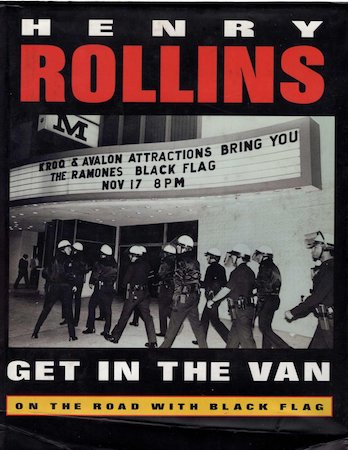
Get in the Van: On the Road With Black Flag by Henry Rollins

This journal-style memoir of Henry Rollins’ time spent on tour as the singer of Black Flag is more than anecdotal reveries of “life on the road.” It is a revealing look into the monotony, the poverty, and the violence that plague this often-idealized wanderlust lifestyle. Get in the Van is filled with Rollins’ trade-mark honesty. Through his candid observations, the book documents Rollins’ metamorphosis from defiant rebel to embittered nihilist. But this memoir is more than just one man’s story. Get in the Van is representative of so many young people’s experiences with the self-fulfilling prophecy of alienation that is often at the core of the punk ethos.   

Violence Girl: East L.A. Rage to the Hollywood Stage, A Chicana Punk Story by Alice Bag 

Alice Bag, born Alicia Armendariz, was one of the earliest frontwomen in punk rock. Bag’s memoir chronicles her time in the punk scene and the sexism and violence that she battled, as well as the community that she found in the formation of her band the Bags. On a societal level, it is also the story of how Mexicans and Mexican American culture played an important role in the growth of punk rock, especially on the West Coast.   

American Hardcore: A Tribal History by Steven Blush

Hardcore punk music is a subculture within a subculture. If the intensity of punk rock writ large is the metaphorical equivalent of walking across hot coals with one’s bare feet, hardcore is taking that same walk across hot coals AND razor wire. Contemporary hardcore music is heavier, faster, louder, and more intense than its genus categorization. Steven Blush’s book documents the emergence of this music through interviews, along with his written accounts of first-hand experiences with bands like the Bad Brains and Minor Threat. Hardcore music is one of the most complicated, misunderstood, and controversial genres of music, and this book introduces readers to how and where it all began. 

Girls to the Front: The True Story of the Riot Grrrl Revolution by Sara Marcus

Riot Grrrl—created in the early 90s and embodied in bands like Bikini Kill, Bratmobile, and Heavens to Betsy—was a complicated blend of socio-political awareness, fashion, performance art, journalism, straight-up activism, and musical expression. In her book, Sara Marcus explores the complicated intersections of these different elements within the subgenre. The book is an essential portrait of one of the most largely ignored feminist movements in America, and it is essential reading for a new generation who is facing an arguably even more complicated world of gendered subjugation and exploitation.

Tranny: Confessional of Punk Rock’s Most Infamous Anarchist Sellout by Laura Jane Grace with Dan Ozzi

This memoir explores the musical and personal life of Laura Jane Grace, the lead singer of Against Me! who recently, and very publicly, came out as transgendered. This transition is an essential part of her story, but the power of this narrative to bestow epiphany on readers comes from Grace’s skilled retelling of her journey as a punk musician, and the hypocrisy that she encountered in the scene’s supposed “freedom.” This backdrop of sanctimonious myopia allows Grace to explore her dysphoria in a unique way that illustrates not only personal growth and courage but also the ways in which the constructs of our individual worlds, gender-based or otherwise, hold us back and keep us feeding into the systems that are ultimately put in place to control us. 

Please Kill Me: The Uncensored Oral History of Punk by Legs McNeil and Gillian McCain

Legs McNeil and Gillian McCain start at the beginning. This alone is enough to make the book an essential read. They tell the simple story of how a bunch of messed up, unstable people pooled their limited talents to make some noise. Against all odds, these misfits made something beautiful and lasting: punk rock. This book is a portrait of the people behind the punk “movement.” It explores their humanity without the kind of exploitation that led to Sid Vicious’s face being printed on t-shirts and then sold in Hot Topics across America. Instead, this is the often ugly and very unromantic portrayal of, as Richard Hell puts it, the “blank generation,” who can “take it or leave it each time.” These are stories of death, love, friendship, fights, parking tickets, and bodily fluids. This book is, in a word, “authentic,” for better or for worse, and you can’t get much more punk than that.  

If Only Your Life Was as Heroic as Your Novel

“There Aren’t Tornados in Brooklyn”
by Kristopher Jansma

Marlene inhaled the final third of a Parliament on the front step of the brownstone. Diane, her six-year-old, wouldn’t let her smoke inside anymore, which meant she now had to do it in full view of the rest of President Street. A mother barreled by in a fuchsia Athletica track suit, pushing a double-jogging stroller, also fuchsia. Her twin infants, strapped down like reluctant parachutists, stared impassively at the never-ending parade: impatient sandaled dog-walkers; tiny young women with thick glasses; dopey young men in skinny jeans carrying skateboards they only ever used to go downslope. One of them now came rolling down the opposite side of the street, generating a low, rumbling noise. Like an airplane coming in low out of the sky. These boys had been in Kindergarten when she’d heard that terrifying noise up close. Nine years ago. Now there was the world before it and the world after it, and she hated them for not knowing the former. All day long, the butts of their crushed Camels piled up on her bottom step.

You’re going to love Park Slope, Jonathan had said when Marlene had first told him of Diane’s impending arrival. It’s a real neighborhood. Perfect for kids. Not like Manhattan. It’s a real—whatsit? Community. Marlene eyed the last millimeter of her cigarette. Some community. A lithe seventy-year-old woman across the street, doing Tai Chi on her rooftop in the same gauzy robes she always wore. Bending and swaying and strutting, as oblivious to everyone else in the world as they were to her. But then looking. They all looked. Everyone. Just little sniping stares, that was all anyone ever risked. Quick sidelong judgments into other galaxies and then—snap—back to their own special spiral of stars.

Gray ashes began to fall over her fingertips and Marlene tossed her Parliament down among the Camels. The air was chilly for mid-September and the skies were a threatening Prussian blue.

Then, finally, she heard Ginny Thompson’s voice coming down the block.

“I wound up on the G train!” Ginny called.

“Gin, that’s impossible.”

But of course it was entirely possible. Ginny still got confused inside the new World Trade Center stop. Her memory had always been atrocious—part of the reason that she’d been fired from Percy, Lowry & Graber, the financial consulting firm where she and Marlene had temped together, nine years ago.

“I swear to God, I was in Queens,” Ginny shouted.

“Goddamn it,” Marlene called back. “You shouldn’t be allowed to cross the street by yourself.”

As Ginny almost lost her breath laughing, Marlene whisked her old friend inside, where Ginny confessed to having been distracted by her Stell Eklünd book—the latest in the seven-book series—and Marlene asked how she could possibly read anything on, “that Kindly-do,” and Ginny admitted that she did sometimes skim whole pages without realizing, partly because it was just too much fun watching the thousand little ink-pixels spinning around to form static, and then divide into new words. The book, she further admitted, was subpar but sexy, even by murder mystery standards.

Soon they were drinking something called a Bella Noche that involved elderflower and Plymouth gin and since each of them claimed to have eaten something earlier and neither actually had, they got pretty drunk, pretty quickly.

“Will Mr. Wallace be here later?” Ginny asked, flipping through one of his architecture magazines as Marlene poured out more drinks.

“Ginny, you’re not making his copies anymore. You were at our wedding for Christssakes. You can call the man Jonathan.”

She giggled again. “It just doesn’t sound right.”

Marlene rolled her eyes expertly and brought over the two crystal glasses—filled to their brims but not spilling. “He’ll be home whenever,” she said. “He’s always home whenever.”

Ginny, suddenly remembering something, set her drink down on the table. “I saw— on the subway. On the G train. I saw someone reading your book! And I went over to her and said, ‘That’s my dearest, oldest friend’s book.’”

Marlene unsubtly shoved a coaster under Ginny’s glass. She had never been on the G train before, despite having lived in Brooklyn for years. Her husband made her swear to always take a car—to bill it to the firm and not to worry. Jonathan was of that older school for whom the subways would forever be subterranean dens for junkies and rapists. “You don’t survive New York in the seventies,” he used to say at parties, “Without developing some healthy prejudices.”

“And I said, ‘That’s my—’ Well, like I told you. And this woman, she said, ‘It’s just absolutely… Heart. Breaking.’ She said it like that. Like two words like that. Heart. Breaking. ‘I’ve read it a hundred times and I cry every time when that sweet boy dies.’”

Marlene picked at the corner of her eye and said dryly, “Yes, well. That’s just what I wanted, really. For women on G trains everywhere to cry and be heartbroken.”

Marlene’s novel, Stone Towers, was about a firefighter named Stone who saves the lives of eighteen people in the smoldering South Tower. He then rescues his childhood friend, Jerry, before being trapped himself under a toppled filing cabinet and caught in the collapse. In the second-half of the novel, Jerry becomes a school teacher in the Bronx and helps the children band together and raise money to construct a neighborhood 9/11 Memorial Wall and there is a big scene at the end where a little boy is nearly killed during the construction when a piece of the Wall falls onto him, except Jerry lifts this stone off of him and, well, you get it. The book wasn’t very good, Marlene thought, but her editor, a friend of Jonathan, had liked it, and it had sold a number of copies after being mentioned on The View.

There was a little, not-entirely-awkward silence and then the familiar twin rumbling of another pair of skateboarders going down the sidewalk.

“Those kids and their damned—” Marlene scooted to the window, but the kid was gone already. “They’re everywhere. Makes you long for the days when this was a bad neighborhood. I’d take a bunch of roughneck Italians over these gawky wisps any day.”

“You know what I saw when I was walking down here?” Ginny said, “A girl pulling bedsprings out of a mattress someone had left on the street. She almost hit me with one! Anyways, I asked her just what in the hell she was doing, and she said, ‘I’m an artist?’ Like she wasn’t all that sure herself.”

“It is insanity in this place. I’m not even joking. I’m losing my goddamned mind. Diane’s got this older girl tutoring her in Math. And she’s just got this piercing right through where her ear connects to her head. That little bony bit in the middle—”

Ginny dutifully prodded her own ear until Marlene nodded, yes, she had the correct spot.

“And I said to her, ‘B.’—that’s her whole name— ‘B, I love your little ear piercing!’ and B says, ‘That’s my targus, Ms. W… targus piercings are the bomb right now.’”

“‘The bomb,’” Ginny laughed.

“Everything’s ‘the bomb’ with her. She’s twenty and just taking some time off from the New School and she’s into making pictureframes and listening to The Dolls and her friend is in a Renaissance Klezmer band, and she’s very concerned about the planet and utopic formalism and she’s getting a Gerhard Richter tattoo and she’s starting a flashfiction initiative and last week she told me I’m a bigot—very sweetly and all—for being against the mosque downtown.”

Ginny exaggerated a gasp.

Marlene grinned wickedly. “And I told her, ‘Honey, when some Saudi blows up the office that you work in and kills almost everybody you know, then you can talk to me about being a bigot.’”

Ginny was practically off the couch. “What did she say?”

“She goes—” and Marlene laughed despite herself. “She goes. ‘Well. I don’t work in an office.’”

They nearly passed out, they laughed so hard. Marlene surprised herself, for she had been genuinely upset about it, but with Ginny around, her own twenties seemed a little nearer. She’d probably have said the same kind of thing, then.

“So were you there or not last Saturday?” Marlene asked Ginny. “I looked around for you when it was all ending, but it was an absolute madhouse.”

There had been a protest on the proposed mosque site, and Marlene had been there, though she didn’t stay very long, considering that the crowd was mostly too disgusting. Not at all what she’d expected. She’d needed Ginny there, but she hadn’t showed up.

“I got stuck,” Ginny lamented with a prolonged sigh. “On the ferry. For hours and hours. That woman jumped off; didn’t you hear about that?”

Marlene waved her hand around as if swatting flies, her rings catching the daylight coming in the window. “Something about it. But what on earth were you doing on Staten Island? Don’t tell me you were at the prison.”

“Tim asked me. I thought it might be good research for my next Louise Cassidy story—”

Timothy Wales was a boy Ginny had dated during her days at Monsignor Farrell High School who was presently doing ten years at Arthur Kill Correctional Facility for getting drunk and driving his father’s Cadillac into the front window of Thriftway Pharmacy and killing a little girl and her mother. He was due to be freed in December. Not a single one of Ginny’s stories of how he’d quit drinking, found Christ, or taken up writing letters for Amnesty International had chipped off a speck of Marlene’s disapproval and both women quite indelicately barreled on to different subjects at once, like a pair of boats being spun oppositely in the same storm.

“I said to B that if they want to build that damned mosque they’ll have to do it over my exploded corpse.”

“Why would a woman try to drown herself in the East River of all places?”

Both were frozen in these utterances by the sound of the front door opening.

“Is that little Diane?” Ginny shouted.

Diane walked solemnly inside, as if reporting for jury duty. This was how she walked when she came home now. Marlene couldn’t understand it. Behind her, B was carrying Diane’s backpack and a bag of groceries and, for some reason, a telescope.

“I found this in the trash out there,” she announced.

“Don’t bring it in here.”

“Diane wanted to look in it.”

“Diane can look through a telescope that isn’t covered in bed bugs, thank you.”

Ginny laughed and introduced herself to B without getting up. As she did, there was another loud rumble outside.

“Are those skateboarders still out there?” Marlene interrupted.

“They’re leaving now, Ms. L. Don’t worry. I told them to fu— to get off your step,” came the high and confident voice of B.

“They were on my step?” Marlene shouted.

B did not reply, and there was the sound of a great struggle from the foyer, and then Diane raced into the room to greet Ginny before her nylon windbreaker had hit the ground.

“Aunt Gin!” she yelled. Her bear hug sent half a Bella Noche flying onto the carpet.

“Diane!” scolded Ginny.

“B!” called Marlene.

“Aunt Gin!” sang Diane again. “Aunt Gin, I’ve got to tell you about Samuel and Abraham and Emmanuel and—”

“That’s a lot of people to tell me about!” Ginny said. “With such funny names!”

“They’re all made-up,” Marlene explained. “She dreams up these people she thinks live upstairs with her.”

“They’re ghost people,” Diane whispered loudly. “They all lived in our attic, which is my room, and they were hiding up there from the Nazis because they were all Jew people—”

“Diane, I told you,” B said, coming in to mop up the spilled gin with a rag. “Say Jewish people or just Jews.”

B looked apologetically at the two women, who could not have cared less. “They did Anne Frank last week at school.”

“—and they were all in my room behind a fake door and the Nazis kicked it open and hung everybody up from nooses and then put their heads into Fed Ex boxes and sent them around to all the houses in Brooklyn like a warning and then—”

“You’re too much.” Ginny patted her straight blonde hair, which was held back by a small red headband with a perfectly cock-eyed bow. “What a little brain in there!”

Her mother didn’t seem to think so. “Diane, that’s enough! Go on up and start your homework. B’s only here for another hour.”

B tried to clear the young one out, but Diane seemed aware this was her only chance to make an entertaining impression upon her Aunt Gin—who might not be back for months again—and so she wriggled free and swirled around her mother.

“Momm-o, Momm-o there’s going to be a tornado!” she sang. “At school, they said. Like in Dorothy.”

“There aren’t tornados in Brooklyn.”

“But Momm-oooo—”

“That’s why we live here and not in Kansas!” Ginny chirped.

Marlene’s family was, actually, from Kansas—there were two stepbrothers living in Lawrence, last she’d heard, which had been quite a long time ago. But Diane didn’t know about them.

“But Aunt Gin—”

Marlene swatted playfully at Diane. “Go on up and do your math before B has to go!”

The girl bounded up the stairs, calling out as she rose to her invisible friends. “Emmanuel, Abraham! There’s going to be a tornado!”

It was several minutes before the women had settled down with fresh drinks, because there was a rumble again of skateboarders outside and Marlene flung open the window to yell at them to fuck off and then gave the finger to a stroller mother who had the gall to look affronted. Then Marlene forgot to shut the window and even though the air outside was starting to smell sharp, like rain, Marlene declared that it seemed like a lot of trouble to get up and so she didn’t.

“You’re such a character,” Ginny sighed, pulling her little ratty Moleskine from her purse and making some cursory scribbles. Marlene never minded this—in fact she rather liked it—for as unpublishable as all of Ginny’s ridiculous detective novellas were, Marlene always felt a warmth at recognizing one of her own marvelous quips coming out of the mouth of their protagonist: Louise Cassidy, Private Investigations. No crime too big. “And no man too small,” Ginny liked to joke loudly in the wine bars where they met every other month, more or less, usually less, for their writing group.

Louise Cassidy did have quite a lot of sex, for a Private Investigator, and it was a bit remarkable that any crimes ever got solved between all the “quickening pulses” and “dastardly grinning” and the “throbbings” and “stirrings” that Louise tended to feel “deep-down inside.”

Everything that Ginny wrote was dreadful, and Marlene told her so, and Ginny nodded agreeably and jotted Marlene’s comments down as if they were Commandments. Everything that Marlene wrote was phenomenal, and Ginny told her so, and Marlene wrote none of it down because she knew it was bullshit and this only made Ginny adore her more.

“How is the new book coming?” she asked.

“I can’t,” Marlene said irritably. “You know I can’t discuss it until it’s on the page.”

Ginny giggled and they each had a fourth drink and at last Ginny reached the familiar, pleasant point where she forgot the little difference there ever was between the things she thought and the things she said out loud.

“Do you ever run into Susan Dunby anymore around here?”

Marlene picked at the corner of her eye again. There was something, an eyelash, in there.

“She left Park Slope years ago. She couldn’t afford it even then.”

Ginny nodded knowingly. “I thought maybe with David’s pension.”

“Ugh,” Marlene said, rubbing her eyes with her thumb and forefinger. Whatever it was, wouldn’t come out. “Those a-holes at UPS never paid. Can you believe it? They said because he wasn’t actually in the towers to deliver anything that day. I made all these calls to MetLife or whatever and told them he was coming to pick something up from me, but they don’t have it in their records.”

“He wasn’t really though, was he? Picking something up, I mean.”

“No of course not,” Marlene said dryly. “He was coming to bang me in the supply closet again.”

Ginny more-or-less swooned, spilling the remainder of her fourth drink onto her own dress. But it was hardly enough to worry about.

“He hated living here,” Marlene sighed. “You know what he told me once? This place was originally called Solipsist Slope. Back in ancient Brooklyn. Isn’t that hysterical? Did I ever tell you that?”

Marlene leaned into the great cloudlike pillow of her couch and closed her eyes. “David said it’s from a Lenape Indian myth—this is what he said. This guy named Solipsissus, who was a complete and utter charmer, was walking along by the big lake in Prospect Park. And then Crazy Jack, he’s like a mischievous kind of spirit, flies by and shoots him right in the ass with one of these little arrows that make people fall in love with the next person they see. Like Cupid.”

Marlene mimed the shooting with dramatic poise.

“So Solipcissus is like, ‘Ow. Damnation and tar feathers! Whooooooo shot me?’ That’s just how David said it exactly. And so, he drops his trousers and bends over the lake to see if he’s all right and then bam. Falls in love.”

“With his—” Ginny was shaking, she was laughing so hard. “With his own—?”

Marlene thought again that she ought to get up and close the window, because the wind was really picking up out on the curb. She could even hear the trash cans blowing over and she didn’t want the mess but she also didn’t really care.

“He said— he said— ‘You’ve heard of naval-gazers? Well. Around here we’ve got that beat.’”

Ginny was still laughing. “He should have been the writer.”

“David should have been a lot of things,” Marlene said, shutting her eyes and wishing it wasn’t absolutely howling outside now. The brocade curtains her mother-in-law had picked out without permission were beginning to whip around. She wanted a cigarette straight away. “I told him that once. I said, ‘David! You should be a writer’. We were all down there at Mexicana Mama. You remember—’”

Finally, Ginny stopped laughing. Marlene was relieved. In nine years, they’d never spoken about this.

“David took me there all the time. Mexicana Mama. Only place downtown you could get sangria any time, day or night. That’s how I knew, that morning, that’s how I knew we should go there to get plastered when Jonathan fired you.”

Marlene could still picture it. Sitting there, at a waist-high counter covered in old tequila bottle labels. Sipping peach sangria at 8:45 in the morning. Ginny sobbing about how she was going to pay her rent and that she was going to have to move home with her mother. And then it had all happened. Then it had all really happened. That whole horrible, bright morning turned black, in an instant.

“We were there at Mexicana Mama,” Marlene started over. “And I was telling David all about taking that class in college and John Irving came, and then David was staring out the window at these guys hauling trash bags off this dumpster. Big black bags. They were sort of steaming in the cool air. They were loading them into a big truck and he said, ‘That Irving guy’s a hack,’ and I said, ‘Well let’s see you write something,’ and he said, ‘I’d rather be a garbageman than a writer. Selling everybody else’s secrets. That’s no way to live.’”

There in the living room, Ginny started to cry, and Marlene shouted, “Oh now what are you crying for?” and got up to console her friend.

But before Marlene had staggered even two steps across the room, the world outside the window went inky black and a spiral of wet wind exploded into the room.

Marlene heard a scream from upstairs. Ginny fell over. The two emptied crystal glasses sailed halfway to the door and smashed into pieces. A porcelain lamp toppled and the bulb inside popped with a flash and the air was filled with architecture magazines and Ginny howled and covered her mouth with her sleeve and Marlene looked all around but couldn’t find the stairs, and then it was done.

Outside Marlene could hear a great cry of car alarms—everywhere, car alarms. She rushed to the open window and saw the whole sidewalk had been ripped up by the tree out front, uprooted and then dropped back down again onto a station wagon.

Ginny was yelling but Marlene didn’t help her up. She was hurrying to Diane’s bedroom. Stairs, two at a time. With each step she was surer and surer that when she got there her daughter would be—she couldn’t even think it, but of course she was always thinking it. She was always waiting for it to happen and now it had. This was how she’d lost the first thing she’d ever loved, and this was how she imagined losing the rest, all the time. She tried, so hard, not to love them so much, but there she was anyway, hardly breathing at all and wondering why there was no more screaming. Only the sound of her own shins hitting the steps when she missed. Her own hands grabbing the bannisters to stay upright.

At last she got to the door, got it open, and saw the window open behind B on the bed. She was holding a squirming Diane.

“Let me go!” Diane yelled, as she clawed at B’s arms. Marlene saw that the older girl was frozen solid, totally paralyzed.

“Honey. Let her go,” Marlene said, leaning above her to shut the window. “Let her go, honey.”

Now that she could see they were alive, she was suddenly incredibly calm. She felt like she was floating an inch in the air. She coolly pulled the teenage girl’s hands off her daughter and lifted Diane away. The girl was still shouting something, trying to get away, and Marlene couldn’t see why. She kept pointing to her dresser, which had toppled onto the floor. Marlene had asked Jonathan to secure it a hundred times; it had such spindly little legs.

“I’m going to throw up,” B said in a high voice. “I’m pretty dizzy.”

Marlene told B to stay on the bed, “Go splash some water on your face. It’s just shock. It’s fine.”

B’s mouth moved a few more times but nothing came out.

“Do you always get like this? When these things happen?”

B blinked twice and swallowed roughly. “When what things happen, Ms. W?”

“Come on, let’s go splash some water on your face. Come on.”

And she set her squirming daughter down at last and helped B to her feet. And it was then that Marlene noticed that on the floor, just knocked off her daughter’s nightstand, was a copy of Stone Towers. Marlene picked it up and turned it over in her hands. It was not one of the hardcover remainders that she kept in the basement. It had a little public library call number on the edge.

Marlene turned and saw her daughter, now trying to lift the fallen dresser, which was at least three times her size.

“Where did you get this?” Marlene asked. “B did you check this out for her?”

B shook her head, still looking bloodless.

“Momm-o, Momm-o, he’s stuck under there!” Diane was crying.

“Young lady, you tell me where you got this!” Marlene said. She dropped the book so that the barrel-chested fireman on the front cover was facing the rug.

“David got it for me!” Diane sobbed. “Momm-o help.”

Marlene’s eyes narrowed. She wrenched her daughter away from the dresser, and Diane wailed, because she’d wedged her fingers tightly underneath. Marlene kissed them in apology. She didn’t know what was happening.

“David who?” Marlene shouted. “Who is David?”

“David’s my friend. He’s one of the Jew— the Jewish people who hides up here.”

“Diane, stop it right now.”

“He reads it to me at bedtime!” Diane tried to get free of her mother. Her cheeks were shot crimson with tear stains. “He’s stuck. He was hiding from the Nazis.”

“Listen to me. No one’s under there!”

But she let Diane go, and her daughter ran back again to try to pick the dresser up. She squeezed her tiny hands underneath, but she could not budge it even an inch. Marlene stared at her daughter, who looked as if she would surely disjoint her own fingers before she’d stop. Marlene felt as if her still-quick heartbeat had just propelled her into another world, the old one falling down behind her.

It’s real to her, she thought. He’s real to her.

Marlene steadied herself and squeezed past her daughter beside the dresser. She eased both of her hands under the front end and heaved up. It was so heavy that it began to fall again, and she screamed at Diane to keep away, and then Ginny was there and they were lifting it up together.

At last the dresser was back up against the wall where it belonged.

“Would you believe a tornado!” Ginny was shouting. “Diane! You were right!”

B sat down on the bed again. She still looked like she’d seen a ghost.

“Oh, Gin,” Marlene whispered, turning to lay her head onto her friend’s shoulder.

Marlene thought, as she often thought, that if it hadn’t been for Ginny getting fired—

“I called him,” she sniffed. “You know? I told him to come pick something up.”

Ginny stopped her smiling and sat down, totally serious, beside her friend.

“Hey. Come on. That’s not important,” she said.

“I didn’t have anything to pick up.”

“That’s not important,” she said again.

“He’s all right,” Diane shouted happily, “Momm-o. Aunt Gin. He’s all right!”

Together, the two women watched as the girl closed her eyes and squeezed at the thin air just in front of her.

Our Favorite Essays About Radicalism and Resistance

I’m writing this before knowing the results of the American election—and depending on how long things take, you may be reading it before knowing the results, too. But in the midst (or, hopefully, towards the end) of a season of unprecedented uncertainty, there’s one thing we can say for sure: we will need courage, action, and resistance in the months and years to come, no matter who wins, no matter what else happens. Here are some of our favorite essays celebrating radical thought and action on and off the page.
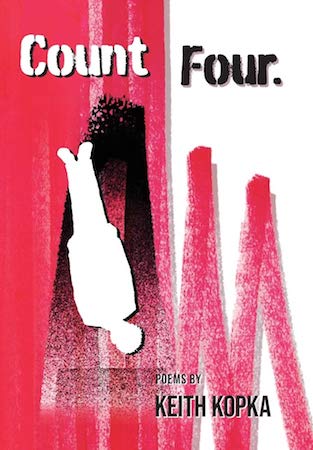
50 Years Later, the Demands of ‘The Black Manifesto’ Are Still Unmet” by Carla Bell

In a guerrilla address to the congregation of the Riverside Church in 1969, civil rights activist James Forman demanded that white Americans recognize and re-enfranchise the Black Americans they’d been exploiting for generations. People weren’t ready to hear it—and they’re still not, writes Carla Bell.

The Manifesto is symbolic of America’s accruing and compounding indebtedness to black people, a stolen people, who built the nation and its economy through generations of labor, whose blood is in the soil. 

Writing Behind My Country’s Back” by YZ Chin

The characters in YZ Chin’s Though I Get Home deal with censorship in Malaysia, but in this essay, Chin breaks down what that censorship meant to her personally.

I have no exact memory of my first realization that I live in a censored world. It is hard to be aware that a thing you have never seen is missing. But I imagine it had something to do with watching choppy programs on state TV, and seeing one scene blink into a totally different one with no semblance of transition.

Czech Dissident Writers Can Teach Us How to Protect Language from Lies” by Erica Eisen

State control over communication doesn’t only take the form of censorship. Sometimes those in power break down language by reducing it to absurdity—say, by lying so flagrantly that words cease to carry meaning. Czech political dissidents had some experience in writing about this kind of collapse, writes Erica Eisen.

With the current global rise of the far right, when phrases like “post-truth” and “fake news” are uttered by pundits and plutocrats alike without so much as the bat of an eyelash, the literary investigations of writers from the Eastern Bloc can take on an eerie second life, like Cassandra’s prophecies recollected as Troy burns.

Oscar Wilde’s Gay Socialist Vision” by Arvind Dilawar

Do you think of Oscar Wilde as an aristocratic dandy? You’re not wrong—but, says Arvind Dilawar, he was also a committed libertarian socialist.

In libertarian socialism, Wilde not only saw the potential for his realization as an artist, but his liberation as a gay man.

The Poetry of Black Women Shows Us How to Move Forward” by Patricia Spears Jones

Change doesn’t just come from the strength to fight—it comes from the compassion and vision to see a way forward, says poet Patricia Spears Jones in her closing address from the 2019 LitTAP conference.

If a new world is coming, then let us use our power to shape it and the privilege to leave those forms to those who follow. As we take the outrage, the anguish and the joy, that these and other revolutionary poets have given us. This has been your time to feast on the power of language and the people who make best use of it. It is a privilege to engage with this world in thoughtful, ethical and caring ways.

How Austrian Literature Taught Me to Stop Worrying and Hate America” by Jeffrey Arlo Brown

If your country has done terrible things, shouldn’t you have the guts to call it terrible? Jeffrey Arlo Brown admires Austrian writers who treat their country’s Nazi past with frank disgust.

I’ve been immersing myself in Austrian literature while watching America’s shift to the far right. The artists’ anger makes a different kind of sense to me now. In recent years, as America lurches from black sites and torture to drone strikes on civilians to the abuse of Central American children, I find the relentless negativity of Austrian literature consoling. At least it’s honest. The terrible truth is better than a balanced lie.

The Children of Latinx Immigrants Need a New American Dream” by Ruby Mora

In this essay, Ruby Mora explores what how the American Dream has failed the children of Latinx immigrants, while she reads My Time Among the Whites by Jennine Capó Crucet.

For her, and other immigrants of her generation, that’s what the American Dream meant: financial stability, no stress, the ability to provide for her family. But for the first-generation children of these true believers, it’s becoming clear that the dream is more complicated.

Orchard House. (Photo by Smart Destinations)

The Politically Radical Family That Inspired ‘Little Women’” by Rebecca Long

Louisa May Alcott created one of literature’s best-known families—but the family that created her was no less remarkable. Rebecca Long takes the reader on a tour through Orchard House, birthplace of Louisa’s books and her parents’ revolutionary ideas.

Bronson was a teacher, philosopher, educational reformer, and failed-utopian-commune founder; he was the first educator in Boston to admit a Black student into his class, and we have him to thank for inventing recess. Abigail was one of the first paid social workers in Massachusetts, as well as a passionate suffragist. Both were Christians, transcendentalists, abolitionists, women’s rights advocates, and vegetarians; it was with these beliefs that Bronson and Abigail raised their four daughters, affording them much more freedom and agency than young women at the time were generally given.

The Words That Will Bring Us Through the Chaos” by Michelle Chikaonda

Reading Octavia E. Butler’s Bloodchild and Other Stories got Michelle Chikaonda through her father’s death. During a summer of protests in Philadelphia, she realizes that the story “Speech Sounds” has more to teach her about what it means to be heard.

In these protests it is not that people have finally spoken: some of them have, certainly, but most have been speaking for a long time, and some for their whole lives. It is that this particular death—which happened in the eye of an unprecedented countrywide shutdown for which the entire country was brought to a standstill, and in that national silence was forced to finally see truth—shattered the comprehension barrier between speakers and their willfully unhearing audience.

The Antifascist Message Hidden in This Greek Coming-of-Age Novel” by Niko Maragos

Three Summers looks like a conspicuously apolitical novel, the story of teenage sisters growing up in the suburbs of Athens in the mid-1930s. But in fact, says Niko Maragos, the novel puts bourgeois complacency in the crosshairs.

Yes, this book is a chronicle of both a girl’s coming of age and an artist’s development. But in the context of post-war Greece, such a book was political. Beyond being an Arcadian withdrawal to better times, Three Summers is a bittersweet indictment of a culture’s reluctance to confront its own pathologies—and each individual’s complicity in it. 

Confederate Statues are History — So is Taking Them Down” by Rebekkah Rubin

Does toppling a confederate statue mean destroying history—or creating it? Historian Rebekkah Rubin talks about how we can read and, crucially, revise the statues and their place in our communities.

Statues can tell us how the past was remembered by some, but they don’t tell us that the statue was privately funded by a few supporters. They don’t tell us about those who resisted and opposed the building of the statues. A statue only tells part of the story, amplifying the voices of the few.