Stephanie Danler’s memoir Stray invites us to look closely at our own life: our family dynamics, our loss, our trauma, and the moments of happiness that still exist within that fragile frame.
With deep introspection and stunning prose, Danler tells us about the years she spent after writing her first novel Sweetbitter. Leaving New York for a return to California, painful memories emerge, she recounts being brought up by an alcoholic mother and an absentee father addicted to meth, raising a sister whose life is seemingly miles away from her own despite their living under the same roof for most of their childhood, falling in love with a married man.
Danler tells her story candidly, without summarizing cause and effect or tying a neat bow on the end. The honesty she brings to her reader allows us to think about our own story, the parts that make up a whole without trying to fit our identity into a preordained box.
Frances Yackel: The title of your memoir—at once a noun, an adjective, and a verb—can elicit so many things. What are you trying to capture with this word?
Stephanie Danler: Originally it was the noun that drew me—an animal in exile, surviving on the kindness of strangers. And as a verb, I’m drawn to this idea that there are paths—often prescribed—that we stray from in our lives and that it’s often in the straying that we grow.
FYl: In an interview with The Paris Review you said that your first novel, Sweetbitter, reflects the city in which you lived but that the narrator was decidedly not you. How, or why, did you decide on a memoir for your second book?
I believe in a lot of cases, your life depends on being able to say ‘No More’.
SD: I was in denial for years that I was writing a memoir. I wanted to start a novel, but the writing that felt most urgent to me was about my parents and about California. I pitched an essay to the Sewanee Review about California and this new relationship I was in, and about how damage lives on in us, and that’s when I knew there was a book. Even at that point, I didn’t want to call it a memoir because the expectations that come with the genre felt too heavy. I didn’t have a big ending with catharsis or a major change of direction. It’s the story’s ongoingness that I most wanted to convey. And how little decisions can build up over time to create change. I—like most people—had preconceived biases about what memoir was. As I read more and more from that world, I realized that there were absolutely no rules and that deeply inventive, experimental, and emotional writing happens even when you’re telling the truth.
FYl: Similarly to your novel, Stray brings deliberate attention to your environment, telling the reader about the history and beauty of California’s cities and landscapes. You treat your setting like you would another character. In what ways is your environment important to your writing or your writing process?
SD: Being back in California as an adult was extraordinarily eye-opening—it was familiar but mostly it wasn’t! We often take the landscapes of childhood for granted, and I know I did. I thought we always had homogenous, good weather, that our produce was season-less, that the hills were brown year-round. None of that is true. We have rainy seasons, fire seasons, gray Junes, frost in December. The citrus trees all peak together. The hills in March after a rain are as green as the Pacific Northwest. The love interest in the book uses the phrase “desert eyes” to mean when our eyes really start taking in the details and nuance of a place, and that’s what it felt like to be back here. I also believe that the physical landscape mirrors the psychological one—things look threatening when you’re scared, benevolent when you’re at peace, even if it’s the same view. And so it became important to show, first how flawed, corrupt, and damaged this environment is, but then also, how I began to fall in love with it.
FY: Toward the beginning of the book, you mention working on a piece about your father, mentioning how difficult it was to write about him. Did you face the same difficulty writing about your family in Stray? How did you overcome this struggle?
SD: Writing Stray was awful. I want to say something writerly and wise about the struggle, but the remembering and recreating a woman in a depression who doesn’t believe she’ll ever save herself, well, just experiencing it again in my mind felt a lot like depression. And I wrote this book during a beautiful time in my life. My son was 5-months-old and I would come out of my office to nurse him and not understand which life was real. The one where my sadness is swallowing me up, or the one where I have a family and we’re safe for the moment. I cried every day of writing. I worked late and slept late. And there were scenes I resisted until the last possible second, scenes that filled me with so much shame I felt nauseous. The only way the book progressed is that the writer in me knew that anything hurting was probably important and needed to be examined. It did get easier on the second and third drafts to see it as a book and read it a bit more dispassionately. But no. Sweetbitter was fun. This wasn’t fun.
FY: I love the theme of boundaries in Stray, of creating your identity through the ways you separate yourself from the people in your life. You say, “Here is where you end and I begin. However, while boundaries are powerful, they’re unfortunately not solid.” Do you think our individual identities are created by our family and friends or we build boundaries against them?
Part of my learning curve in moving into non-fiction was owning how powerful it can be to just tell your story.
SD: I think our identity is formed in differences. That’s true when we’re toddlers—it’s necessary to differentiate from our parents, establish an ego, a will. That fades as children want to blend in, take comfort in groups and webs of relationships—which is natural and can be beneficial. I still imagine other people with loving families and the deep comfort it must be— my husband has it and I adore being with his family. But a lot of those relationships or group identities aren’t constructive—they’re built on guilt, abuse, codependency. That’s when relearning boundaries is so necessary—and it feels impossible as an adult because you’re so conditioned to taking on other people’s pain, to rescuing, to ignoring your instinct. But I believe in a lot of cases, your life depends on being able to say “No More”.
FY: A classmate commends you after finding out that your story is “not just a love story” and the comment sets you on a search for the meaning of the phrase. Do you think you found the answer? Did writing your memoir help you in this search?
SD: Calling anything “just a love story” is a barely-veiled sexist comment. It reveals a sentiment that has so infiltrated academia that even well-meaning feminists like myself still want to disown stories of love, the domestic, sensitivity, sexual trauma. We’re embarrassed by these stories, that they’re somehow too personal and we need to make them more abstract, more allegorical. Part of my learning curve in moving into non-fiction was owning how powerful it can be to just tell your story. That I didn’t have to make excuses for it or embellish it in order for it to be “literary.” Whatever that word means.
FY: You often question and explore the definition of happiness in Stray, did you discover anything about this indefinable word while writing about it?
SD: Ha, no I did not discover anything about happiness, except that it’s one of those catch-all words – like love – that is made up of a mosaic of highly subjective, ever-evolving context and storytelling. With my son, I try not to use it because I will never be able to explain the meaning of it to him. He’ll know it when he feels it, but the second he can describe it will probably be gone.
After weeks of living under a lockdown meant to curb the spread of COVID-19, many of us are complaining we’re losing our grip on reality. What we really mean is we’ve lost control—of our jobs, certainly of our government, our children, eating habits, routines, and feelings—and we’re reacting to those losses in sometimes unpredictable ways, like dancing, playing make believe and dress-up, or singing across balconies at our neighbors. We have wild, frightening dreams and drink heavily to alter our consciousness. A friend of mine ritually howls at the moon with her neighbors. Someone somewhere is likely scheduling a primal scream session on Zoom right now.
But for how long can we hold on, and how do we make it through till then? Perhaps it helps to remember we aren’t the first humans in history to flip out. In fact, “losing it” played a part in some of the earliest religions that shaped Western culture. Our ritualistically frenzied forebears, the Greek maenad and Viking berserker, are complicated figures from history and myth that embody the dichotomy of the primal versus cultured, the violent and restrained, straddling that distance that exists within all of us, and which we have good reason at times to traverse. In their stories, we find opportunities to renew independence, but accept marginalization. We also uncover cathartic frenzy that could restore our humanity, or violently take it away.
‘Losing it’ played a part in some of the earliest religions that shaped Western culture.
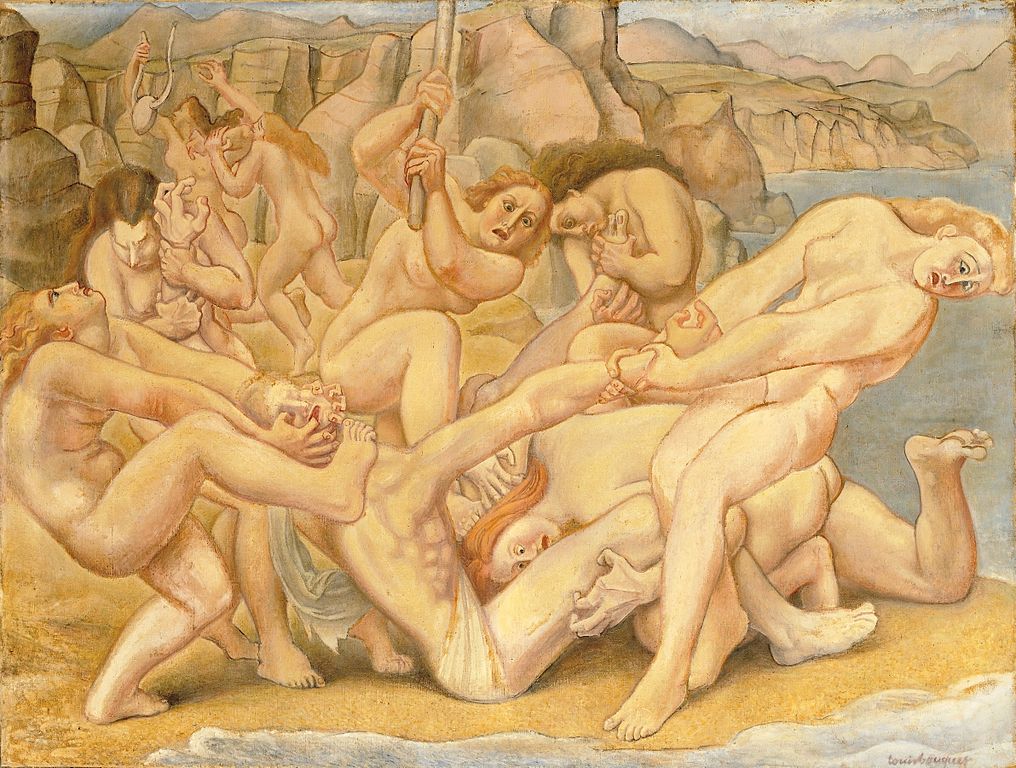
A ritualistic form of frenzy can be found in the tale of the wild-haired maenad, a symbol of liberation—especially for women. Clad in animal skins, she worships in the deep forest and mountains, keeping to the “old ways,” by dancing to ensure crop growth, foraging for food, and sleeping in the open. A cultic devotee of the wine-god Dionysus, the maenad is the prime example of a spiritual enthusiast, characterized by worship in the form of possession by a god “or inspired by a divine afflatus,” as Lewis Hyde puts it. In Greek literature, the maenads are called to frenzy by Dionysus himself and achieve ecstasy partly by drinking lots of wine. Once “mad”—meaning altered consciousness—they can engage in violent, orgiastic behavior, tearing apart humans and animals alike with their bare hands.
In Euripides’s disapproving play on Dionysian madness, The Bacchae, it’s self-destructive to resist the god’s call to unravel. In her analysis, Brown Emerita Professor Ross S. Kraemer warns, “those who struggle against the god invoke a second level of possession far more dangerous than the first. It is insane to be sane, sane to be insane.” From the perspective of the present global health and economic crisis, “it is sane to be insane” sounds prescient; one must be divorced from reality to pretend our current crisis is anything other than what it is, as our president has done. We are already outside ourselves and changed in ways that may be irreversible. Resisting that reality is equally self-punishing. So if you find the call to get drunk and cut loose a tough one to resist right now, imagine the point of view of the maenad, who would see that resistance as not only futile, but counter-productive. If you want to experience the spirit of liberation, she’d say, you have to let go.
For the maenads, the ritual cult of Dionysus also offers an escape from Greek patriarchy. In “The Maenad in Early Greek Art,”scholar Sheila McNally states, “There is no question women played a prominent role in Dionysian religion. The mysteries might have renewed women’s sense of their significance: a kind of ‘consciousness-raising.’ The men might then be thought to view the ‘raving’ of the bacchante as some today do the ‘craziness’ of liberated women.” Such “craziness” is really a frenzy of rage induced by oppression. Yet McNally argues there’s no ancient work of art that serves as a feminist poster for maenads. Instead, these images depict an “[…] escape from consciousness into another sort of existence,” a kind of inner journey that enables the adoption of an entirely new identity, like high-stakes roleplaying. “Madness” for the maenad is an altered state of awareness, one that embodies both woman and animal, a marginalized yet liberated existence.
‘Madness’ for the maenad is an altered state of awareness, one that embodies both woman and animal.
The dichotomy of the maenad’s free-wheeling nature-love and violence mirrors the duality in the story of her chthonic wine-god, who both blessed and destroyed man (blame it on the alcohol). Just as the vine bears grapes and then withers, so is Dionysus a god of rebirth, represented at once in the three stages of human life. In Greek myth, he is torn apart, a physical death as well as a metaphoric one. Then he comes back to life, like the vine. “He was more than a suffering god,” writes famed classicist Edith Hamilton, “He was the tragic god.” Yet his cultic celebrations are largely cheerful fertility rituals, complete with phallophoria, where villagers parade through the streets waving phalluses. Fertility and revelry are juxtaposed against suffering and death to represent the circle of life. Though Dionysian worship may seem like an exercise in excess, through these rites, the balance of Nature is maintained.
The maenads’ spirituality offers an opportunity to buck gender roles by abandoning the loom to frolic in the woods, suckling animals instead of babes, a grotesque exaggeration of performative womanhood within a patriarchal society. Hence the appeal of Dionysus to marginalized women, such as the widowed or childless; in their surrender to the divine, they are transformed from outsiders into dangerous, unpredictable, and avidly sexual figures who can roam freely. By unleashing the animalistic nature within, they shed the artifice of polite, confined womanhood to liberate the raw, unmitigated, and powerfully “real” self. Right now, it’s hard not to find that appealing.
The maenad’s Viking brother cuts a darker figure, however. The Vikings value wisdom and honor, but they also plunder their way to Constantinople while creating one of the most intimidating fighters in history, the marauding berserker. In some accounts, berserkers are impervious to iron and fire, capable of turning into an animal, or dulling swords with a look. They endear themselves to royalty and nobles, but are otherwise a threat to those around them. University of Minnesota linguist Anatoly Liberman sums it up: “In legendary sagas, they are elite troops, and in the family sagas, they are represented as plundering, raping gangs.” From our modern perspective, the berserker is the epitome of toxic masculinity: violent, impulsive, and seemingly without empathy. He represents our deepest fears that extreme circumstances—such as, say, a world-wide pandemic that ends civilization—will force us to discover, to our horror, our propensity for violence.
The berzerker represents our deepest fears that extreme circumstances will force us to discover our propensity for violence.
Like most Vikings, berserkers are well acquainted with the apocalypse. They are devotees of Odin, the complex leader of the Norse pantheon who, as Edith Hamilton explains, “had the responsibility more than all the other gods together of postponing as long as possible the day of doom, Ragnarok, when heaven and earth would be destroyed” and sink into a boiling sea. The inevitable end of the world as the Vikings knew it is set to begin with the death of the tree of life, Yggdrasil, which plays a key role in Odin’s resurrection. The god gives up an eye, falls on his sacred spear, then hangs himself upside down from the sacred ash tree for nine days and as many nights. His sacrifice increases his power.
Ragnarok isn’t actually the end of all consciousness, but only a few gods (not Odin, and not any of the other original creators) will go on to make the world anew, plus two humans. That’s it. This raises the question: what if the apocalypse is not the end of just the body, that touchstone of our reality, but the soul as well? What if the end, unlike the Christian vision of Armageddon, eliminates any possibility for resurrection, transformation, or transcendence? It’s a terrifying thought for those who believe in some kind of eternal consciousness, predicated upon an eternal soul. For those who have lost loved ones, it’s devastating. Nevertheless, as we imagine the demise of our known reality, we should remember Ragnarok is both an ending and a beginning, a creation story of the future. Put another way, the myth reassures us we are living in the prequel. The best is yet to come.
It appears paradoxical that Odin, a wise, cultured, and intellectual god responsible for postponing the end of the world, is the cultic deity of the savage berserker, intent upon destruction and death. But Odin isn’t a peace-loving god for civilians. He accepts human sacrifices and enjoys causing strife, the characteristic human quality of any war god. Likewise, the berserker is a monster of mythic proportions. In his article “The Berserk Style in Post-Vietnam America,”author and UMASS Amherst Professor Emeritus Kirby Farrell describes the contemporary berserk warrior as existing in a “godlike state” that is “outside of culture, beyond any protective bonds. He is out of his ordinary mind, outside the magic circle of everyday reality. In the wisdom of slang, he is ‘beside himself’ or ‘out of it.’ We say he has ‘lost it.’ ” It is the very inability to reconcile humanity with inhumane action that induces his frenzy. Like the maenad, the berserker transcends into another form of existence, one that is “crucially ambiguous,” imbued with chaotic madness, while also signifying “exceptional valour and stamina.” This renders the line between legendary hero-warrior and murderer rather blurry. (Just look at famed Odysseus).
The very things that define us as humans—our compassion and freethinking—are ritually destroyed in the trained warrior, whose purpose is to end life on command. Going berserk is a rebellion against that imposed order: “Stripped of psychic defenses, the berserker plunges into reckless emergency action,” Farrell writes, a maelstrom which may also paradoxically ensure his physical survival, even if his sense of self is irrevocably altered. In the werewolf, a mythological being believed to have derived in part from the berserker, his compulsive transformation eclipses reason and turns the human into a raging creature with magical strength and a penchant for gore. He is cursed. Farrell references My Lai and other horrific massacres as he describes berserk warriors “running amok,” killing indiscriminately, while mutilating and cannibalizing their victims. What we fear most when we contemplate giving ourselves over to frenzy is surrender to an inner monster we cannot cage or hide from those around us, who will never look at us the same way again. In this scenario, we equate our true nature with violence, as if killers are all born, never indoctrinated.
Unlike the maenad, who is set free by marginalization, once unhinged, the berserker must transform in order to achieve the pinnacle of masculine ferocity, where he commits terrible deeds, and is then marginalized from a society that fears him. Though this may increase or preserve his god-like power, he will suffer the consequences as a man. It may come as no surprise that in AD 1015, Erik Jarl “outlawed” berserkers in Norway. In 1123, anyone in Iceland who “went berserk” faced banishment.
Not for the first time, we fear our humanity—what it means to be humane—is at risk.
Not for the first time, we fear our humanity—what it means to be humane—is at risk. Keeping a lid on baser instincts and passions is what makes us civilized, we tell ourselves. But a beast has no compass. The calculating moves of beings driven by intellect lead to large-scale cruelty and destruction.
Our world has been blindsided by a pandemic experts predicted years ago, the damage exacerbated by the administration of an incompetent tyrant. Cooped up with our own thoughts, we’ve shed the artifices of clothing, haircuts, and rote politeness. Now there’s no escape from who we really are, for better or worse. We fear our own Ragnarok is upon us, with one crucial difference: the story of Ragnarok spells out the end of the world in excruciating detail, while promising a new one. But there are many possible and equally terrifying outcomes to the predicament we find ourselves in, none guaranteeing a future, causing scientific projections and predictions to feel like prophecies of doom. The only sure thing about the future is that it is uncertain. Nevertheless, history shows us humans have marched on through wars and plagues before, collectively orchestrating atrocities along the way. It’s not the sound of our own howl we should fear, that barbaric yawp, as spiritual enthusiast Walt Whitman put it. If we desire catharsis, not destruction, accept the risk of marginalization and commune with the wolf within, we embrace the possibility of transcendence. Gods know, we have the time to try.
On the sixth day of the transition, of The Invasion, or Second Coming, or whatever else we’d taken to calling it by that point—having at first time-stamped it in the singular, a la 9/11 or 22 March, and later, with each revelation, by the hour and minute, e.g., 2:46, as was eclipsed by 16:14, then 9:36:36a, etc.—and which was next classified by global taxonomic consensus as The Consummation, and/or the viral media moniker, The Shiver, before at last designatingitself care of a species-wide, intercortical audio tone, a sustained thrum which lifted gently in pitch (Over days? Weeks?) (The tone served to shoehorn us into a trancelike, post-time), akin to a Shepherd-Risset Glissando, paralytic, yet as calming as a grandmother’s hum, dolce accarezzevole, a tone which finally dolloped into a single, rapturous pulse, like some baptism-in-a-sink-drip—bwoop!—and to which everyone was subjected…we were given Everything.
We were provided an instant, mille-feuille layering of lessons that were at once vast and horizontal, fixed in meaning and without hierarchy, but which somehow still accelerated forward, a linear simultaneity: learn learn learn! Feel feel feel! We knew in heart, mind, and muscle what it was to live an entire life in another body. Another geography, another era. We were gifted the experience of being schizophrenic, or free sexed, or killed; we became astronaut and Aztec and Natterjack toad—and they became us. Our collective consciousness surfed the wave-rolls of both the first and second Big Bangs, and we were tickled to take in de facto, toss off appendices, such as the final decimal point of Pi (which rendered Pi a sputtering joke). In filmlike manner—so much of this portion was?—we were shown the lost landing points of Abu Bakr II’s expeditions. The scale and membranes of multidimensionality. We found everyone’s lost keys, and lost children. We understood asymptotic carbon star evolution as macro mitochondrial decay, and on and on and…
And having been made all right, all one, we understood that we’d been living all wrong: all of us some of the time, and some of us more than others. We thus consumed the last major correction, and were nourished by a collective empathy so vast that we could barely conceive of a time in which we worried or argued, let alone slaughtered over interpretive humanity. This immersive interiority, this shared transcendent meld, was fused to every neuron and synapse, to our very fermion marrow; “truth” was no longer up for debate, let alone definition, even conception. We were completed. Blossomed.
We couldn’t feel our toes. We had ripened somehow into a collective tissue, a biosocial, historical, scientific, and cosmic, heterotic gob of understanding—though love (best we could process its magnificence, anyway), was the overtone of all, given the joy that conjoined us in cytoplasmic, post-orgasmic trance.
Love. Omniscience. Immobilization by awe.
And then God came down and ate us. So here we are, waiting to be reborn.
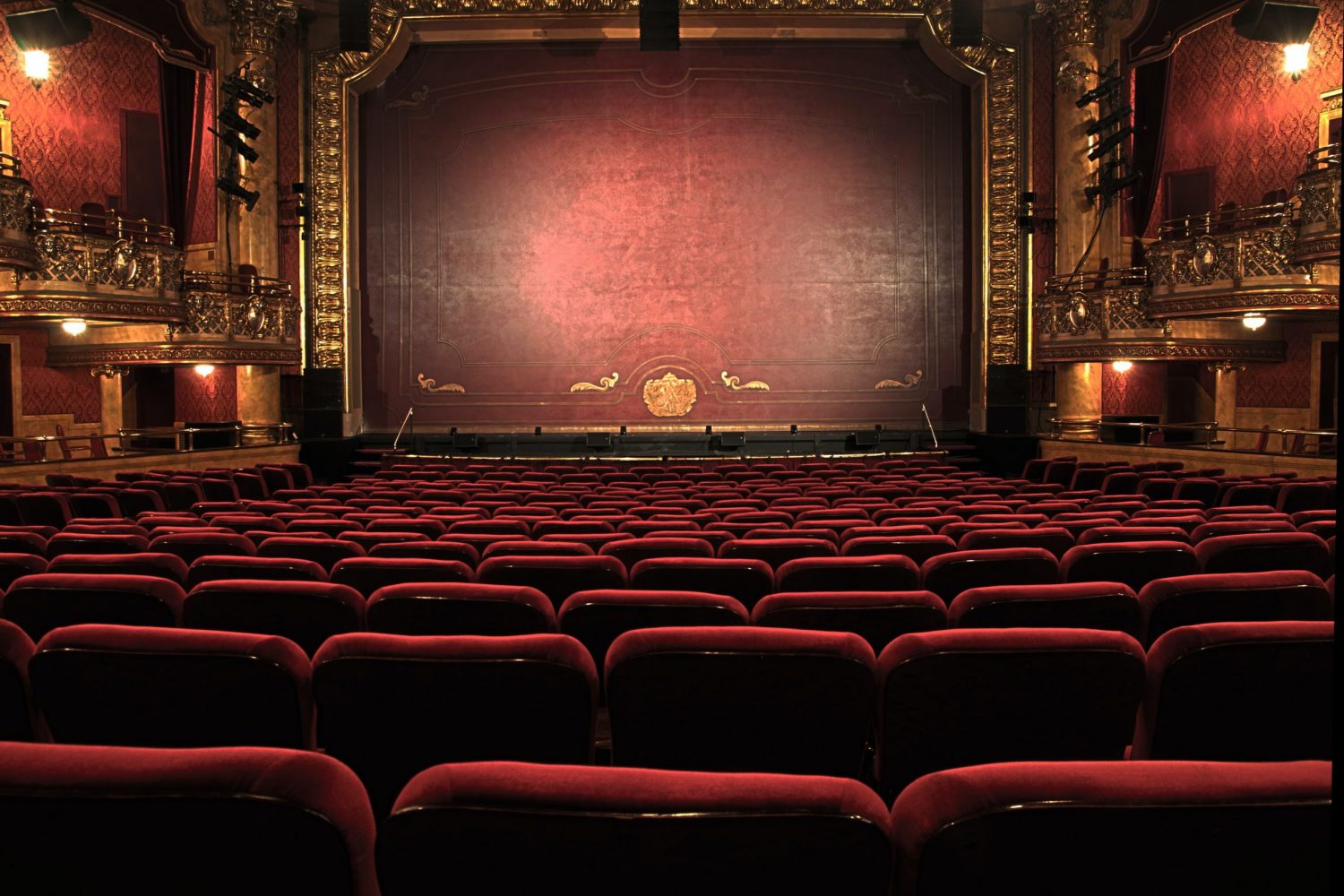
Right now, Broadway houses, high school auditoriums, community theaters, and regional concert halls are hollow and quiet. Who knows when these performances will be able to come back? The very nature of drama makes this difficult: performances are communal experiences, shared between the surrounding audience, the tech crew and orchestra, the performers, and of course, your own imagination. When so much of life has vanished in the last several weeks, I’ve been incredibly grateful for books. The hours I spend in someone else’s imagination have been salvation. But as a theater lover, I miss the shows.
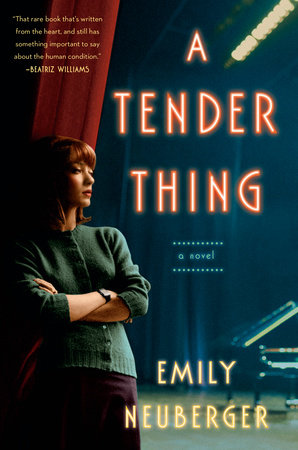
Even while the theaters are closed, there are still ways to enjoy the art form. In my new book, A Tender Thing, the main character Eleanor falls in love with musicals from afar. She listens to cast recordings and reads the scripts for years before ever taking the train to New York, to audition for a Broadway musical. I chose to set the book in 1958 because of the transgressive and brave musical theater writing happening at the time—a tradition that persists today. Musicals, with their dance numbers and glittery costumes, often examine complicated themes under a pretty varnish. A Tender Thing focuses on one such musical, but it’s in company with dozens of others.
It shouldn’t be a surprise, then, that many musical theater writers look to literature for inspiration. Some are obvious, huge hits with recognizable names: Les Miserables, Wicked, or The Color Purple. But there are many others whose musical counterparts are diamonds in the rough, or don’t share a title.
I’ve put together a list here of musicals and their literary counterparts. I love listening to how a musician imagined the works of great writers, and to hear the story in another way—sometimes a very different way. Each of these interpretations brought something new to their source material.
One of the most famous musicals, and also a 1972 Oscar-winning film, is based on the story Goodbye to Berlin by Christopher Isherwood. Set in a seedy cabaret during the Weimar Republic, its depiction of a society melting down is harrowing. The film and stage production interpret the source material differently—if you’re not one for characters breaking into song, I recommend the film, where the characters only sing when performing in the cabaret. With a fantastic score and choreography, this dark musical is great in its own right.
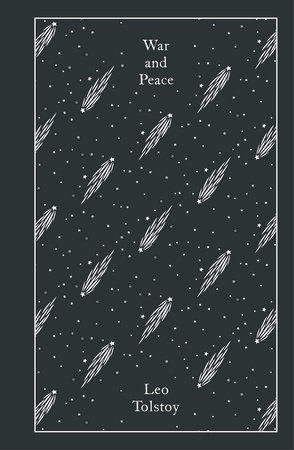
Natasha, Pierre, and the Great Comet of 1812, based on War and Peace by Leo Tolstoy
This musical presents a tight 70-page selection of War and Peace, which is probably the only way to adapt War and Peace into a musical. It focuses on Natasha’s affair with Anatole, and Pierre’s search for meaning. It’s delightful, surprisingly funny, and moving, with a fantastic cast recording. If you aren’t in the mood to tackle the tome during quarantine, perhaps the musical will do? Somehow they manage to help you keep all the characters straight!
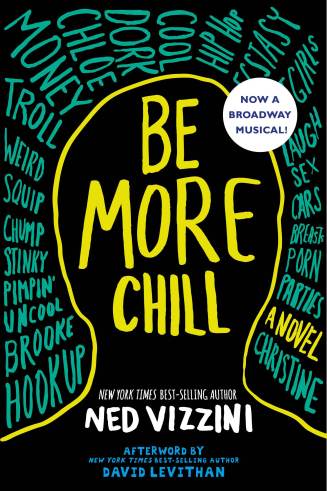
Based on a book by the writer of It’s Kind of a Funny Story, this musical follows Jeremy, a social outcast high school student who discovers a pill that will tell the user what to do and say to be cool. A chill pill, if you will. It’s delightful and sad, and Vizzini has a knack for writing about feeling lonely, and true friendship.
Man of La Mancha, based on Don Quixote by Miguel de Cervantes
One of the most iconic works of musical theatre, including the standard “The Impossible Dream,” this work is not a true adaptation of the 1615 classic. In the musical, Cervantes is a character, and he’s just been arrested. In the courtroom, he asks to tell a story as his defense, and transforms himself into Don Quixote. The musical follows a few hours of Quixote’s life.
This romantic novel about a three-day affair was on the New York Times bestseller list for 164 weeks. But while the source material is a bit thin and maudlin, Brown’s composing skills lend real stakes and desire to the moments here. The cast recording is beautiful.
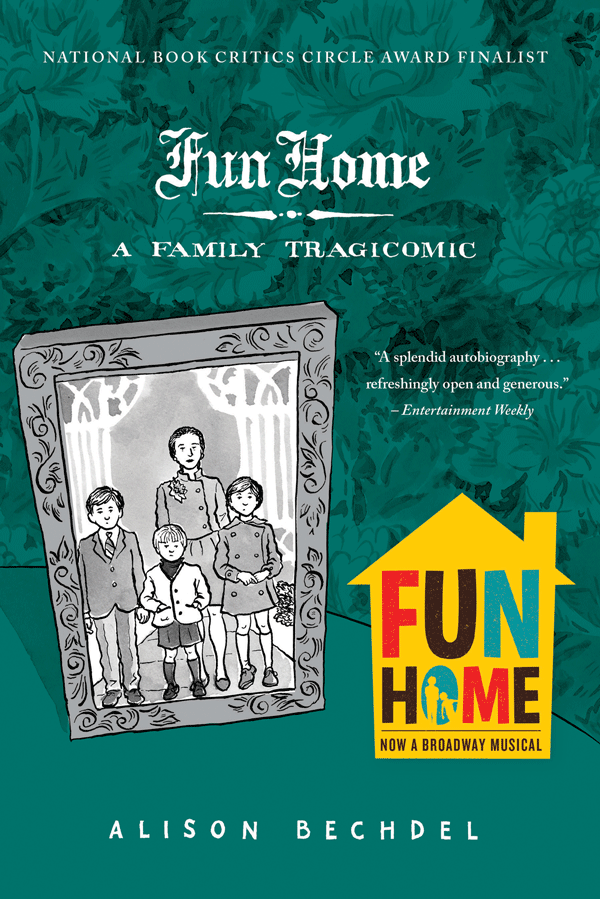
If you love Bechdel’s sharp and evocative graphic memoir, you must check out the musical adaptation. This work, the very first on Broadway with an all-women creative team, captures the heart of Bechdel’s story of growing up, coming out, and struggling with parental expectations. Told by three Alisons—child, college student, and adult—you’re taken through the life of the MacArthur-winning cartoonist as she grows up in a funeral home with a closeted father.
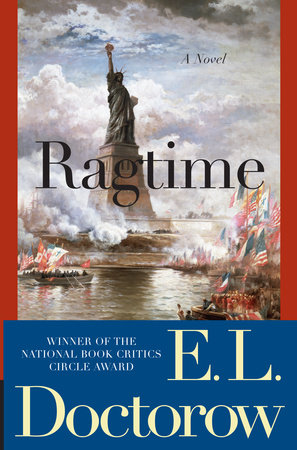
This musical mixes Broadway sweep with ragtime music, and splays out Doctorow’s dozens of characters, and real historical figures, onto an enormous canvas of the early 1900s. The 1998 cast recording features incredible performers like Audra MacDonald, Brian Stokes Mitchell, Marin Mazzie, and even a child Lea Michele. This is a prime example of music deepening already great material. It’s a truly gorgeous show.
One of my favorite books of all time, I was thrilled when I found out this was going to be a musical. Until… it wasn’t. With $1 million in advance ticket sales, this show looked like a hit waiting to happen. But in true De Maurier style, something was afoot. It turned out that four of the major investors in the show … did not exist! When it came time to pay up, the main investor reportedly “dropped dead.” After some investigation, all four vanished into a pile of fabricated email addresses and false receipts. A ghost story meets The Producers.
The old internet has its familiar charms, from the screeching dial-up sound to the winsome screen names of its users. But what I find most fascinating about the internet, as it was more than 20 years ago, is the voice that people used when they talked to each other on it.
There is a dreaminess to their language, from posts on Usenet to AOL chatroom exchanges. Anonymous, usually, and communicating with strangers often, unmoored from real world identities; users spoke to each other in language that was strange, vulnerable, vivifying, and often deeply confessional.
Here are seven texts that capture the emotional charge and atmospheric qualities of the internet, especially in its early years. These authors express what it felt like to be present and part of the free-ranging internet populace that was cyberspace and is the internet now—sometimes—in its more secretive corners.
Cyberville by Stacy Horn
I tore through this memoir by the proprietor of Echo, an online conferencing service founded in NYC in 1990. Horn is outrageously funny and the book is full of stunning insights about online communities that remain relevant. Cyberville does something no other writing about an online community has done before: it makes me wish I could have been there.
This novel is a unique for its depiction of cyberspace in literary fiction. Although it is set in the early ’90s, the internet here already feels like a grounding presence instead of something science fictional. The technology isn’t presented as extraordinary; rather it is the intense confessional spirit of its users that takes center stage.
A wide-ranging and consistently fascinating anthology of texts that adds complexity to notions of the “digital divide.” One of the highlights is an interview with Vivek Bald about his 1996 documentary “Taxi-vala.” He talks about immigrant taxi drivers hacking CB radios to create channels for discussion as a “virtual community,” using technology to form safe spaces not unlike the kind of backchannel group texts and Discord chats favored today.
A bizarre and poignant work of personal essay, theory, and gossip, that goes to show that NSA surveillance and online harassment is nothing new. Written at a time when the online service Prodigy could be criticized for focusing on e-commerce while failing to notice its users actually paid to connect with each other. (Thanks Riffraff Bookstore for the recommendation!)
An eye-opening academic account of race and representation on the internet. The author is careful not to conflate the erasure of race in cyberspace with lack of access, and does not over-idealize commercial spaces built for communities of color.
This feel like a cheat because it’s a play and I haven’t even seen the play, just clips on Youtube, but Churchill has such a handle on the polyphonic experience and voiceyness of internet users. An exquisite depiction of how the ambiguities and uncertainties of human experience are flummoxed by machines designed to collect data.
An enigmatic recent work of science fiction rendered in technical and aching prose. This wash of curious language makes me feel, as I might, in moments in front of a monitor at 4 a.m.: baffled and intrigued.
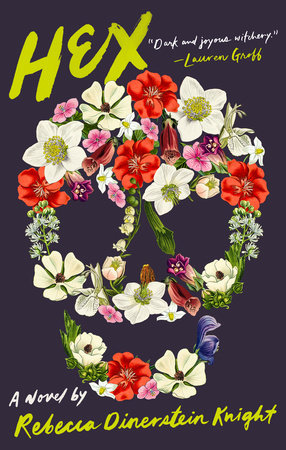
During these strange, pandemic times, desire has entered our lives on the heels of restriction. We are learning first-hand the spiraling madness that comes from obsessing over what we can’t have, whether it be social interaction or toilet paper. And so this is the perfect time to read Hex, Rebecca Dinerstein Knight’s brisk, darkly funny second novel about an expelled Ph.D. candidate in botany whose obsession with her mentor is rivaled only by her desire to discover new ways to detoxify poisonous plants.
At its core, Hex is an exploration of the dualities that exist within people, relationships, and even plants. I spoke to Dinerstein Knight from her home in New Hampshire about this relationship between allure and toxicity, how to write fiction while screen writing, and her own obsession with devotion.
Carrie Mullins: I loved learning about botany and poisonous plants while I was reading Hex—I will never look at a potato the same way again—so I wanted to start by asking you, how did you get interested in botany? What kind of research did you do around that subject?
Rebecca Dinerstein Knight: I came to it from a really aesthetic start, which gave the book a lot of atmosphere, but also set up a challenge for me in terms of buttressing that basically visual appreciation of plant life with a scientific background that could actually support and draw it out. I am an English major and I really didn’t have the kind of background it takes to describe what’s going on inside an organism.
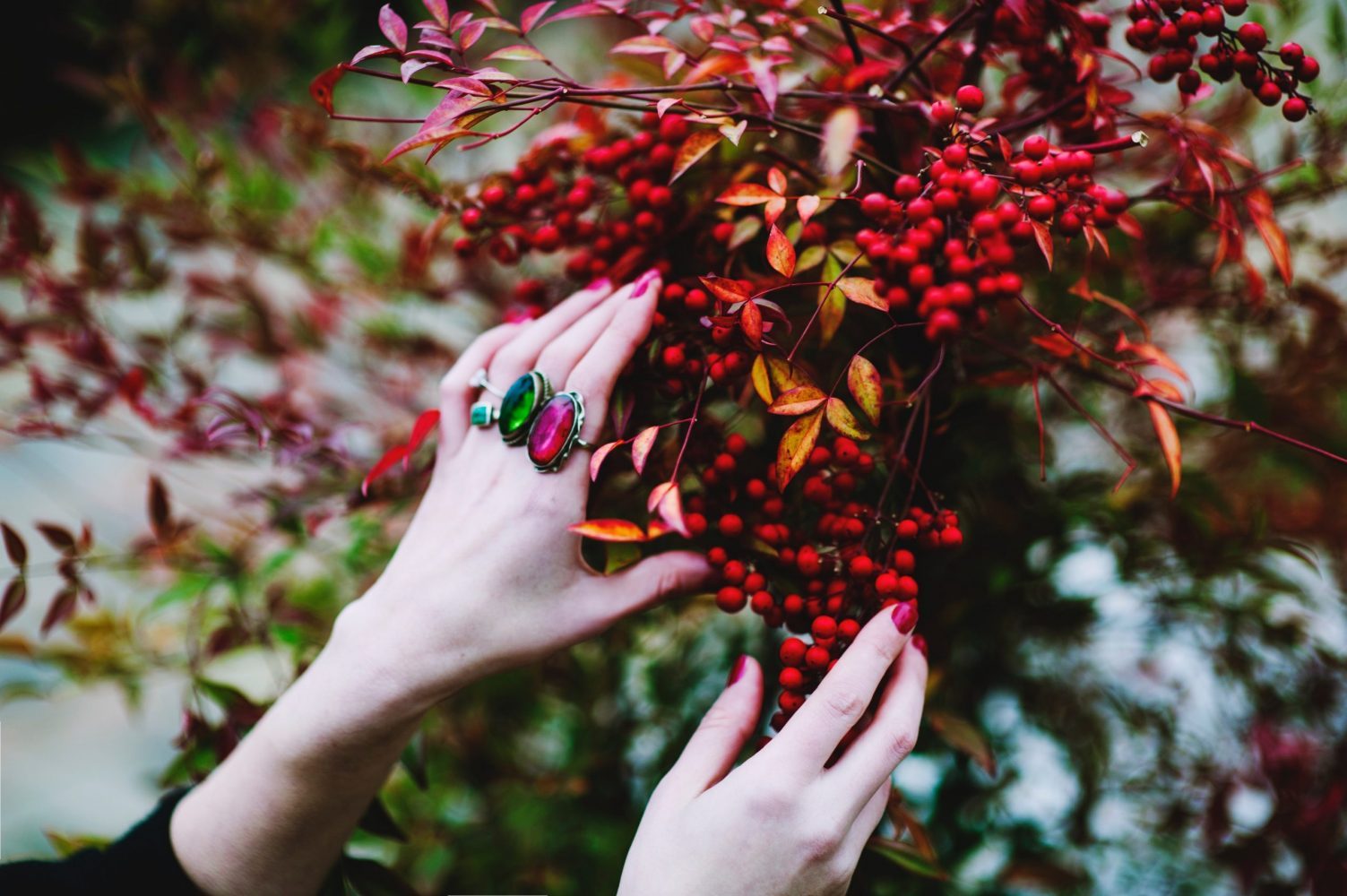
I first started thinking about the interchangeability of temptation and danger when I was working at a rose garden in Norway. All the plants were labeled in either Norwegian or Latin and there were berries of all kinds, many I’d never seen before. I realized that their beauty and their luster and their attractiveness not only had nothing to do with their content and their chemistry, and in many cases were explicitly misleading in terms of the ratio between beauty and threat. The shiniest and reddest berries are often the most poisonous, we know that, but the gradations there are so nebulous and I started to think about how in the world mankind ever came to navigate the infinite array of available natural resources and how we came to sort them into what is beneficial and what is harmful. That was back in 2012, so I’ve sort of been sitting on that basic curiosity for a long time.
I came back to the States and I spent a couple of years in New York, and that basic confusion between what is alluring and what is ultimately harmful came to resemble the human relationships and dynamics I saw in the City, where there is so much presentation and so much toxicity and so much betrayal. So I started working on how to combine the natural world and its pitfalls with the world of human relationships and human attraction, and that’s where it came from.
CM: It’s a really interesting dichotomy to explore and, in the book, each character couples this idea of presentation and toxicity differently.
RDK: Yes, it was a pleasure to design six characters from scratch and put them in maximum exposure to each other. It was like a math problem, and different from my first novel, which came from a trip I actually took, though it ended up being more fiction than fact. One thing I love about Nell as one of these six units is that she’s both competent and blasé about herself. She has very low vanity, and she’s willing to suffer the indignity of her own indulgence in return for the pleasure of her indulgence. In an environment where everyone is striving for more health and more productivity and more success, it was refreshing to write a character who is really not trying to prove anything or impress anyone.
CM: I also found Nell refreshing because of her straight-forward physicality. It reminded me a little of Lara Williams’ Supper Club—this willingness to embrace a woman’s unvarnished human body and desires, which we don’t see enough of. Likewise, it was a pleasant change that you chose a male character, Carlos, as Nell’s counterpoint, i.e. the character who was most concerned with his status and allure, when it’s classically women who are cast in that role.
RDK: I think the complexities of male vanity are super interesting because
they often get to sneak by, and there isn’t as much of an industry built around them. But vanity is really across genders and in some cases, it’s far sneakier and punishing in men because one is perhaps less trained to recognize it immediately.
CM: I wanted to ask you how you came to the central relationship of the book, which is between Nell, a grad student, and her mentor Joan.
RDK: You know what, I just love romance. I really love devotion. I just love it when somebody loves the shit out of someone else—like one of my favorite things about George Saunders is how much he loves his wife.
I enjoy the texture of abject adoration and obviously, if requited, it gives the novel less to chew on, so I thought that if I could really dwell in the texture of that extreme love while still giving the novel the energy of the friction of a love that has to be won, it would most please me and my interests. So I set Nell up as something of a worshipper. I wanted her excellence and her ambition as a scholar to confuse her more personal and sentimental dedication to her mentor.
In my experience, it’s so often the case that at a certain level of admiration and intellectual connection, the question of romantic connection comes up almost as a matter of course whether or not there is an actual sexual attraction, whether or not either party is available. There is almost this if/then logic system in place where if there is an intellection connection then there might be a sexual connection. I wanted to break down that logic chain a little bit because it’s so problematic and I think it leads many people astray as one becomes conflated with the other.
CM: Are there any works that have inspired you as you’ve been thinking about this more intellectual approach to romantic love?
The shiniest and reddest berries are often the most poisonous.
RDK: Fleur Jaeggy’s Sweet Days of Discipline really did a lot for me while I was working on Hex. It’s a biting and sort of rigid account of two women who are brilliant and navigating how to honor each other, how to compete with each other, how to win each other over. There has historically been so much silence around when two females recognize the power in each other. There’s been such a shallow exploration of that, whereas there’s a long history of men inspiring each other and being moved by each other and creating these lasting bonds.
CM: Totally. When men are writing about women, I think the lens tends to be much more physical than the one you used. The character of Joan, for example, while she’s attractive, she’s isn’t this overtly sexual or voluptuous character.
RDK: Right, and I think demonstrating one’s force in non-voluptuous terms is going to be increasingly possible for women. I look forward to it because there is so much there.
CM: I just wanted to go back to your comment about how you thought of the book as a math problem. How did you decide on the format of the book, which is broken into shorter, individually titled chapters?
RDK: That was actually one of the founding impulses I had about the book. I wanted it in these short, named sections that moved quickly because this wasn’t a book that asked to linger or soak in one moment or mindset too long. There is a restlessness to it, an interest in moving quickly, that felt really zesty and really fun to write and true to the personality of the book.
CM: The pacing reminded me that you recently wrote a screenplay for your first novel, The Sunlit Night. Did you find a connection between those formats, or are they totally separate beasts?
When there’s admiration and intellectual connection, the question of romantic connection comes up, whether or not there is sexual attraction.
RDK: It’s a great question and I’m glad you asked. I’ve never addressed this explicitly, but I think of Hex as more or less of a screenplay because I wrote it while working on the Sunlit Night screenplay. We were casting the movie while I was writing Hex but, because we wound up casting, for example, Zach Galifianakis as the Viking Chief, who had originally been a Norwegian character, I had to do pretty extensive rewrites to the screenplay while I was working on Hex. So I was really in a dialogue frame of mind and I think of Hex as operating at basically that pace. It’s really focused on dialogue, every scene changes something in the most classical film scene structure sense, and it’s way zippier in its timing than Sunlit Night was as a novel and I really enjoyed that. I’m continuing to move back and forth between prose writing and screen writing and I’m excited to adapt Hex into an actual screenplay. So it’s all very related.
CM: You wrote a book of poetry, Lofoten, as well. How does that fit in? I sort of see it as the third point on the triangle.
RDK: Yeah that’s such a nice question as well. I started with poetry—my thesis at Yale was in poetry—and in some sense, it’s the essence of my education in writing. It’s what got me interested in writing, it’s what inspired me to write, and I think that lyricism and an interest in image and romantic beauty have always been my primary focus and that continues even as I get formally very far away from verse. In some ways, screenwriting is as far structurally from poetry as you can get, and yet all three forms will include as much beauty as you want to put into them.
The Sunlit Night movie is very lyrical visually. My book of poems, The Sunlit Night and The Sunlit Night movie, all three of those are about the same landscape, they’re all about Arctic Norway. They all express the ravishingness of that landscape even across the different formats. I’m trying to get the most beauty into the tightest phrasing no matter what form I’m in.
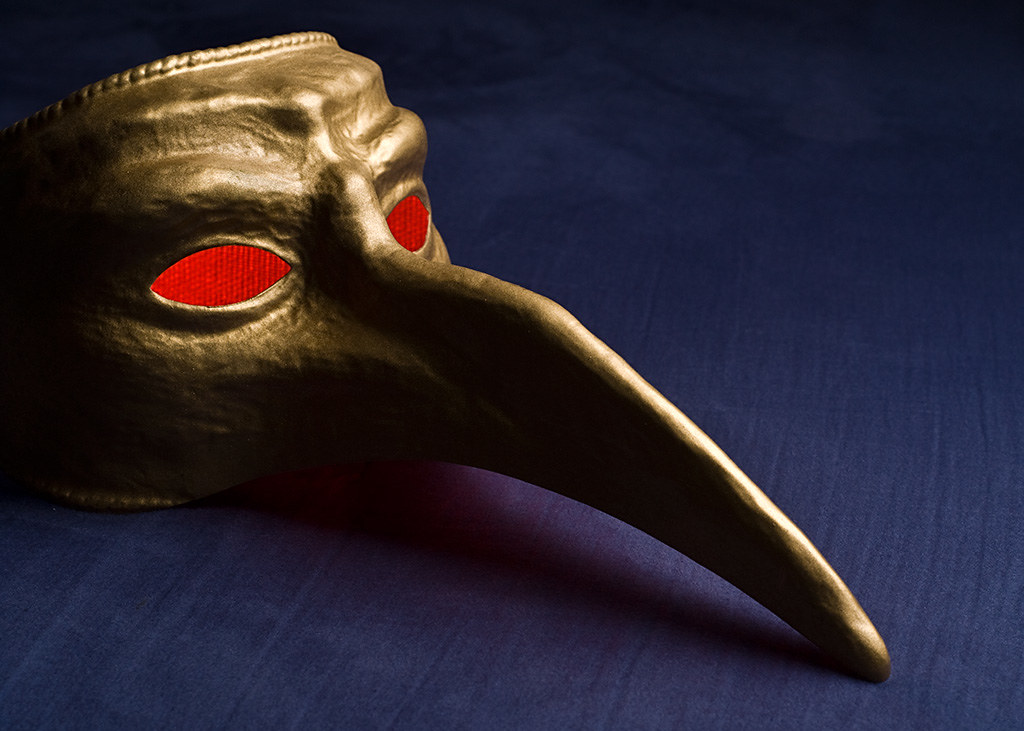
A doctor who recognizes the first symptoms of an illness that threatens the population. Authorities who dismiss his warnings as fearmongering, until an epidemic is inevitable. A city that goes into quarantine, with no one able to enter or leave. The residents who must find a way to keep on living as death stalks them invisibly.
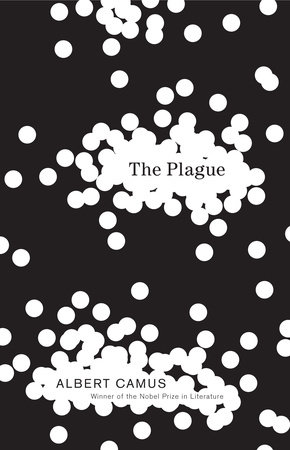
This isn’t Wuhan, in eastern China, where COVID-19 is thought to have originated. It’s Oran, on the Algerian coast, in the 1940s, as described by Albert Camus in his novel The Plague. Although the story of Oran’s plague is a product of Camus’ imagination, it can nevertheless help us understand our current crisis—not as one of cures, vaccines, and quarantines, but as a preexisting emergency that is now reaching new depths.
The Plague focuses on Bernard Rieux, a doctor in Oran, then part of colonial French Algeria, who first warns the city’s prefect of an impending epidemic of bubonic plague. Initially ignored, Rieux is later appointed head of an auxiliary hospital which opens to accommodate the overflow of patients after the metropole in Paris puts Oran in a state of indefinite quarantine. So begins an almost yearlong lockdown, during which the people of Oran suffer from both sickness and isolation, with violence, corruption, and ill-fated escape attempts breaking out. All the while, Rieux and his partners attempt to fight the plague with sterilization and serums, but Camus repeatedly suggests that, rather than being beaten, the disease eventually only retreats of its own accord.
The Plague draws deeply on Camus’ personal experience, as historian Tony Judt explains in his introduction to the Penguin Classics edition (reprinted in The Guardian). Born in Algeria, Camus began collecting material for The Plague in Oran in 1941. Suffering from tuberculosis, he sought treatment the following year in central France, where he was moored, isolated from his mother and wife, for the duration of World War II. Camus joined the resistance movement to the Nazi occupation and, after the liberation of France, returned to his novel, which was published in 1947.
Camus uses the epidemic as a lens through which to dissect the crises of his time—and we may do the same.
In The Plague, Camus uses the epidemic as a lens through which to dissect the crises of his time—and we may do the same. COVID-19 is undoubtedly a global health emergency, defying existing vaccines and conventional containment methods, but it also reveals much deeper, longer standing issues in the United States. So many columns have been dedicated to calling out our shambolic health-care system that it seems unnecessary to recite the number of those uninsured, the lack of providers, the skewering incentive of profit, etc., etc. Beyond the realm of medicine, there is the stark economic reality: The pandemic has led to record-breaking unemployment claims, but the effects of those job losses are compounded by the numbers of people who, in 2018, were unable to cover a sudden $400 expense (39 percent) or pay their monthly bills (17 percent). Politically, less than half of voters believe the country is adequately prepared to deal with the pandemic, which tracks with historic lows of public trust in government since 2014. Socially, COVID-19 reveals the most grotesque contradictions: more than 1.5 million people in prison and 700,000 in jails unable to follow basic protective measures, such as handwashing and social distancing.
The standard reading of The Plague is as an allegory for the French resistance movement, a tale of valiant though impossible struggle. Beyond the connection to Camus’ personal history, this interpretation was also advanced by his play, The State of Siege, which many still consider a theatrical accompaniment to the novel and features a personification of the disease reminiscent of a gestapo officer. But The Plague itself offers a more nuanced message than anti-fascism, as significant as that may be.
While Bernard Rieux is The Plague’s central protagonist, and later revealed to be its narrator too, Camus’ beliefs are most explicitly delivered through the character of Jean Tarrou. A former communist revolutionary from France who is whiling away his disillusionment in Oran when the quarantine is announced, Tarrou aids Rieux by organizing volunteer sanitation workers to fight the disease’s spread. The novel advances through the two characters’ perspectives, via Rieux’s recollections and Tarrou’s diary entries, sections of which read as if they are a continuation of Camus’ philosophical work on absurdism—the desire to find meaning in a meaningless world:
Query: How contrive not to waste one’s time? Answer: By being fully aware of it all the while. Ways in which this can be done: By spending one’s days on an uneasy chair in a dentist’s waiting-room; by remaining on one’s balcony all a Sunday afternoon; by listening to lectures in a language one doesn’t know; by traveling by the longest and least-convenient train routes, and of course standing all the way; by lining up at the box-office of theaters and then not buying a seat; and so forth.
Tarrou also directly addresses the plague as a metaphor for something much larger and longer-standing than the epidemic. One evening, sitting on a terrace overlooking the city to the sea, Tarrou tells Rieux:
I had plague already, long before I came to this town and encountered it here. Which is tantamount to saying I’m like everybody else. Only there are some people who don’t know it, or feel at ease in that condition.
Tarrou goes on to clarify that he isn’t referring to the bubonic plague, but to the condoing of murder—which amounts to the same thing: death. He saw this “plague” in his father, who was a prosecutor arguing for executing criminals, just as he saw it in some of his communist comrades with an authoritarian bend, who claimed to be fighting for a better world, but also committed cold-blooded murder. From this disillusionment comes Tarrou’s only certainty: “All I maintain is that on this earth there are pestilences and there are victims, and it’s up to us, so far as possible, not to join forces with the pestilences.” And so Tarrou chose to throw his lot in with the people of Oran, a strange city where he knew no one, helping them fight off a disease that ultimately claims his life.
The plague only reveals what is already there, like a virus lying dormant.
Writing in the 1940s, Camus uses Tarrou to diagnose the plague all around him. He sees it in the fascists, of course, as well as their French collaborators. But, in the character of Tarrou’s father, he also indicts the liberal French Third Republic that preceded the Vichy Government, and the Fourth Republic that followed it too, for their legalistic murders. Tarrou’s own history incriminates the communists, as he vividly describes a firing squad led by revolutionaries in Hungary—a possible reference to the Red Terror in the short-lived Hungarian Soviet Republic in 1919, but certainly to Stalinism more generally. Camus uses the plague to scrutinize the crises of his time, from the remnants of fascism, to the re-establishment of liberalism, to the expansion of authoritarian communism. The plague only reveals what is already there, like a virus lying dormant.
If The Plague gives us a fuller diagnosis of our crises, it also suggests a simple, yet painstaking cure. In his soliloquy, Tarrou admits to knowing only a few, very basic things: that we all have the plague within us, that the plague will claim its victims, and that if we acknowledge this, we must side with the victims against the plague. Whether or not we carry COVID-19, we have helped build, or at least acquiesced to, a society in which the economic, political, and social conditions allow the virus to burn like a wildfire, threatening to consume so many lives. If we acknowledge this, then we must side with the victims against COVID-19 however possible, whether by supporting striking workers, defending tenants from eviction, demanding the release of prisoners, or other means altogether. This will not end the crisis—as Tarrou claims, “it was never over, and there would be more victims, because that was in the order of things”—but it’s fighting that’s important. As Tarrou tells Rieux: “This epidemic has taught me nothing new, except that I must fight at your side.”
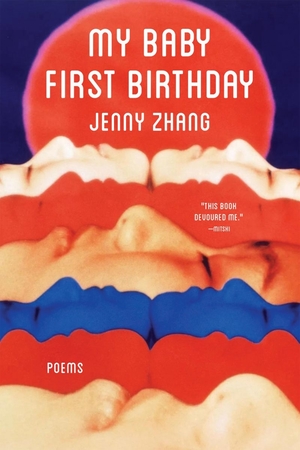
When Jenny Zhang’s debut short story collection, Sour Heart, was published in 2017, I had been reading her poetry, short-fiction and essays for a few years and I felt I’d discovered a writer who was speaking to me alone, who had invited me into her obscene and bold and wildly playful dreams.
Zhang herself refers to the poems in her second full-length poetry collection, My Baby First Birthday, as dreams: dreams for a world in which mistakes are celebrated and language distorted and ugliness and beauty collapse into each other inextricably. The poems in this funny and piercingly beautiful book interrogate notions of innocence and childhood, the fetishization of motherhood and femininity, and the ways in which imagination, humor and delight can be tooled to critique the obscenities of white supremacy, patriarchy and global capitalism. These poems ask: what does it mean to be someone in the world when none of us gave consent to be born? Who, in our society, is allowed to be nurtured and cared-for and innocent, and who is deprived of this experience? But as infuriated as these poems are with our abject and chaotic world, they are also fiercely tender and loving and hilarious, invoking friendship and love and mutual care. “I ASKED YOU TO REACH OUT,” Zhang writes, “AND TOUCH ME RIGHT THERE …/ YES THERE.”
In our phone call, Zhang and I discussed language and dreams, play and innocence, and what it means “to be baby.”
Roberto Rodriguez-Estrada: Much of your work is concerned with language — how you had to learn a second language when you moved to New York City at five, and your parent’s and your relationship to English. There are also so many ways in My Baby First Birthday that you make language a sort of playground. For instance, the ways the word “goo goo” comes up frequently. What does “goo goo” mean to you?
Jenny Zhang: That’s a really cool question… I never thought anyone would ask me about “goo goo.” I guess it is a sort of shorthand for babbling and I happen to like babbling as an actual sound that little babies make and, I think, also as a concept. Babbling is what babies do when they’re trying to communicate but they can’t do so in a way that people can comprehend, so it can just be dismissed as garble or cutesy. But I think babbling is one of the earliest forms of expression, or one of the earliest forms of communication that a lot of us try.
I think a lot of people have been wanting that, people who have been disbarred from innocence, or who never got to be innocent and never got to be a baby.
I also got really obsessed with the idea of being a baby, of being baby. I know that idea was a big thing last year and I think it’s probably because as a culture everything felt so corrupted that there was a fetishization of returning to innocence, which we wanted collectively as a culture. But I think a lot of people have been wanting that, people who have been disbarred from innocence, or who never got to be innocent and never got to be a baby, and that includes, I think, a lot of marginalized folks who are treated as guilty or dangerous from a very early age. I think all these people have been longing for babyness a lot longer than our collective culture and society has been. So I started writing and felt that I was babbling a little bit, which is to say I didn’t feel like I had mastery over poetry, I didn’t feel like I had learned it, I didn’t feel like I had gone to the depths of learning it the way other people I knew had. And maybe that’s not true because I’ve been through all these different institutions yet somehow I still came out of it feeling pretty dumb and I didn’t feel fluent in poetry or poetics. “Goo goo” felt like the best encapsulation of trying to express something in an imprecise way.
RRE: Infants and birth and motherhood are recurring themes in this book. The speakers of these poems are constantly interrogating what it means to be born, what it means to be someone in the world. What prompted this inquiry?
JZ: There was a period in my life where I felt really trapped because I felt like the first thing that ever happened to me was that I was born and I never consented to that. No one ever asked if I wanted to be born into this world. No one ever really asks anyone, it just happens. And because I was so disappointed by the world that I was born into, I just felt so trapped, like the only way out would be to end my existence, but I didn’t necessarily want to stop existing. What I wanted was to have never existed in the first place so I would never have to be put in the situation of having to make that choice. And I felt very troubled by that, and saddened by that. I guess I was just concerned with that question.
No one ever asked if I wanted to be born into this world. No one ever really asks anyone.
Then I also felt like I was at an age where I was ripe for motherhood, where I could have become a mom, but I also felt like: how can I subject another human being to what I’m subjected to, which is being born, if I don’t know if they would want that or not. Again it really troubled me because I as an individual could perhaps do the best job possible of mothering a child but I couldn’t change the world as an individual and a child that I hypothetically gave birth to would have to interact with the world. It made me feel I guess trapped is the only word I have, and at the same time I was really grateful for having experienced the world. I don’t know I sound like someone who had just watched Waking Life and smoked pot for the first time and was grappling with all kinds of existential crisis — but I also felt like I wasn’t able to graduate from that sort of adolescent existential crisis in some ways that other people seemed to have graduated from, I felt like I was still stuck in that. So I guess I started writing these poems to play around with these ideas and almost get them out of my system — of course nothing ever gets out of your system.
RRE: I think a lot of people relate to that experience, especially as teenagers when we say all kinds of hurtful things to our parents like: I wish I’d never been born! Or I hate my life!
JZ: Life is seen as a gift and that’s something we’re not always willing to interrogate. First of all, not gifts are wanted and not all gifts are received consensually and not all gifts are given without any strings attached. Most gifts are given with expectations, which I guess you could argue that’s not really a gift. And I think as a teenager, I did say all kinds of stuff to my parents. It probably was really cruel because motherhood is such an idealized state of being and we idealize mothers as naturally nurturing and wanting to give their time to the rearing of a child, and we sort of drag anyone who doesn’t want to do that or can’t do that to its fully idealized capacity. There is a way in which we expect mothers to sacrifice so much of themselves, emotionally, physically, and spiritually once they have a child, and then for the child to be like, I never wanted this; it is such a blow. So I understand both sides on some level. I guess that is the paradox. I think I was also obsessed with notions of sainthood, and that we assign sainthood to the highest ideas of femininity and martyrdom, and this idea of not wanting to be saved, which is a corollary to not wanting to be grateful. It’s all still very murky for me because I’m constantly caught between being grateful still and then rebelling and being mad that anyone ever did anything that I have to be grateful for. It feels like my brain has been colonized by that expectation and I don’t want to repeat patterns that were limiting for me.
RRE: The characters of your story collection Sour Heart are mostly young girls and, in your poems, the speaker often has a bit of a playful, child-like voice. Can you talk about the role of play in your life? Both as a child and now as a writer?
I think poetry has been a place for me to recreate a dream that maybe never was, where language could be a source of play and delight.
JZ: There was a brief period of time where I learned how to speak and all I wanted to do was entertain myself and others. It was such a delightful thing, I was finally able to control making other people laugh and making myself laugh. And it was such a fun and innocent time in that way just because I hadn’t been alerted to the ways I could hurt or oppress other people or oppress myself with language. It was a defining time when I moved form China to America and I didn’t have language anymore, and the act of acquiring language was a chore and it was a fraught experience, because it was all about proving I wasn’t dumb, rather than trying to entertain others. Or if I was entertaining others it was beyond my control, because other people were laughing at me. I think poetry has been a place for me to try to create a bubble, to create a dream, to recreate a dream that maybe never was, where language could be fun and it could be a source of play and delight, and it’s not a shameful thing to be “wrong,” and it’s actually really fun. I have to pay homage too, there’s poetry all around, not just in poetry. It’s often black and queer and POC spaces that have fucked the most with language, and that fucking with language then trickles down to the mainstream and eventually everyone is saying “it’s lit” or something—that’s the way in which language evolves. Someone first had to fuck with it and have the gall to use it in the “wrong” way. I am in awe of that process, but I’m also aware that the people who start fucking with language are always the people who get criminalized and chastised for it. Then somehow white people get a hold of it and it’s fine and fun. I wanted to create a dream where it was fun from the beginning.
RRE: There’s a way your poems can, at first, cast a sort of coyness and candor and they also oscillate between that playfulness and explosive moments of gorgeous, celestial awakening. I’m thinking about the turn at the end of “yr pubes are everywhere” or throughout “i keep thinking there is an august.”
JZ: I think epiphanies often come on the heels of extremely petty and trivial things, and I don’t mean that in a literary sense or in a spiritual sense, but maybe just sudden realizations come on the heels of something stupid. And sometimes the more stupid something is the more profound it becomes.
Sometimes the more stupid something is the more profound it becomes.
I was also thinking about humor and humor as a defense mechanism, humor as a way of expressing pain. There have been times when I’m making fun of myself with a friend and I’m laughing at myself and basically dragging myself, and then later I’ll be hurt because the friend would laugh with me and I’m like: No! You were supposed to see that I was screaming out in pain through a joke, why did you not see that? And I think there’s something really inaccessible about true true true, deep deep deep pain, because in order to access it and show it, you’d have to be so vulnerable, and you have to feel safe to be vulnerable, and not have had a history of being attacked for showing vulnerability and pain, which is pretty rare, especially as we get older. There’s also a way in which I wanted to be glib sometimes and mimic the ways that we access things that are deep, which is sometimes through being very superficial and joke-y.
RRE: I read in an interview you gave a few years ago that repetition is something that draws you to poetry. Repetition in these poems allows them to gather momentum and it works so effectively. It reminds me of Gertrude Stein who says: “always repeating is all of living. everything in a being is always repeating.”
JZ: I love that Gertrude Stein quote. I’m really interested in the ways human beings are doomed to repeat and how each time we repeat something it’s never the same, it’s actually transformed with every repetition and with every cloning of that instant. So maybe it’s some kind of spiral and not just a circle you’re retracing, even if it feels like it. I think there’s also a way we repeat things to convince ourselves of something that’s not true, like I’m fine I’m fine I’m fine, and over time it sounds like a cry for help. But there’s also a way in which people of color and LGBTQ people have to keep saying the same thing over and over and over again. And it’s very fraying to say the same thing over and over again. It’s also very enraging. There’s a way in which saying the same thing can build up a lot of rage and unleash a lot of rage, and there’s a way in which saying the same thing over and over can lead to a petering out and a giving up. Of course as I was writing these poems, I wasn’t necessarily thinking of all these things. But also too as I’m writing I sometimes don’t know how to end things. It’s always interesting to me, human beings don’t get to live through their own endings, the ultimate ending of death—I don’t know what will happen, if I’ll remember it, I don’t know if I’ll come back to report what happened—and I think there’s a way that translates to poetry, so sometimes I’m mimicking what it feels like to fall asleep at night, where my thoughts are circling and circling and circling and then I pass out.
The absence of someone or something is as palpable as their presence. I’ve discovered this—quite painfully—in my own life as the daughter of Palestinian immigrants. Naturally, I’m drawn to exploring the kind of voids that loom over us like shadows, the kind that perpetually occupy space and time, disrupting our ability to healthily exist and thrive. In the process, the questions I raise tend to produce the stories I end up telling: What does the physical absence of a sibling—or the emotional absence of a parent—look like? And, how might that absence inform grief?
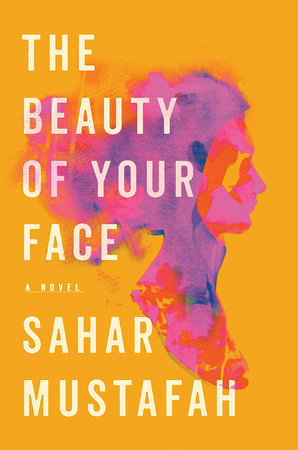
My first novel, The Beauty of Your Face, centers on Afaf Rahman, a principal at a Muslim American school outside of Chicago, who faces our worst imagined fear: an active shooter. Before her face-to-face confrontation, I spend time investigating the years that bring Afaf to this critical moment. Among the many voids in her life—a strong faith, a binding community, impermeable self-love—the most devastating, perhaps, is the absence of a present, loving mother.
The following books offer tender, and sometimes violent, representations of losing a parent or sibling and its complicated grief.
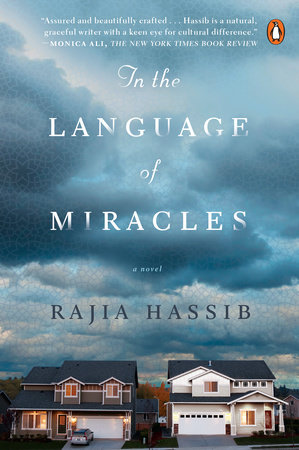
An Egyptian American family grapples with the murder-suicide of their son and their neighbor’s daughter. The parents not only lose a child, but his brother Khaled struggles to extricate himself from the dark shadow of tragedy. In compassionate and moving prose, Hassib reveals how time does not always temper grief and instead leaves us with painful questions surrounding those we’ve lost.
This aptly titled book of vignettes skillfully depicts how a mother’s dying and death spill into and disrupt every corner of her daughter’s life. As the narrator attempts to manage her grief, she discovers how biological, racial, and emotional bonds are inexorable and that, ultimately, we are our mothers’ daughters.
When a young son is accidentally killed, the two families involved attempt to physically fill his absence, creating new chasms and fresh iterations of heartache. Through hauntingly lyrical prose, Erdrich wrecks and uplifts us as she reveals how parents reckon with the loss of a child.
On the surface, this is a novel about colliding worlds. The loss of a sibling to radical ideology freshly unsettles a family attempting to overcome a dismal legacy. A sister is determined to find and save her brother amid an insidiously tangled web of political corruption.
In the mythical, elegant, and unapologetic tradition of Toni Morrison, Ward conjures the ghost of a wrongfully killed son and brother. Those left behind—River, a sturdy patriarch, whose wife is slowly dying on their bed, and his grandson Jo Jo habitually abandoned by Leonie, his grief-stricken, addicted mother—must carry on.
The loss of memory can be profound. In Khong’s humorous and fetching story, an adult child returns home to a father battling Alzheimer’s disease and gradually confronts her family history.
Woodson’s poetically lush language cradles us as she depicts the triumphs and losses of a multi-generational family. After a teen pregnancy, Iris makes an unlikely, but still natural choice to find herself and pursue her greatest potential. Her absence from her daughter’s life reverberates through shifting perspectives as ideals of motherhood are challenged in this honest, unflinching portrait.
For the first half of Margie Pifer’s pottery lecture at the Arts Council picnic, Iva Jo Hocutt thought the Russian girl was asking for a tampon.
“What?” Iva Jo whispered. “No. I don’t know.” She dodged the Russian girl’s mortified stare for the fifth time; Iva didn’t want Margie Pifer to think she wasn’t listening.
The Russian girl was shaking her head and ignoring everyone but Iva Jo. On the little stage at the front of the white rental tent, Margie Pifer was lecturing about “the mountain craft tradition.” Iva Jo sat in the second row of folding chairs, in the very last seat. She was bored and hot and thirsty, and her body felt to her today like a series of lumps. She wore a loose pair of linen capri pants and a gray Arts Council T-shirt. Iva stuck her leg out a few inches, just beyond the shade of the tent. The sun cast a bright, hot shard of July onto her freckled shin.
The tent was next to the soccer field, which was across the street from the elementary school where Iva Jo was the head office assistant. The whole complex occupied the left hand of the stippled body of Queensport, Tennessee, a valley town in the green Blue Ridge where Iva Jo spent her life. Houses dotted Queensport’s seventeen capillary-thin streets, and Main was its spine. The Arts Council picnic was held every summer in this northwestern outskirt; the buzzing tents and booths looked from above, from atop the mountains, like colorful beetles held in the town’s palm.
The Russian girl was perched alone on a bench a few yards from the tent, directly in Iva’s line of sight. The bench occupied a shadowy patch under two willows.
Margie Pifer held up a big, rustic, multicolored bowl. She was made almost entirely of angles, so the swooping arcs of the bowl’s edges looked sloppy in her hands.
“Sanitary,” the Russian girl hissed again, her smooth, pale cheeks blushing livid.
Iva Jo squinted.
“There is blood,” the Russian girl mouthed. She bared her teeth. “You have sanitary?” Her h in the word “have” was wet and phlegmy.
The mention of blood shook some compassion from Iva Jo, and she wondered briefly what she could do to help, but she didn’t have anything in her purse. Iva was forty-nine; she hadn’t had a period in months.
Poor thing, thought Iva, remembering the embarrassments of teenage menstruation. A breeze thwopped the tent’s taut roof and wafted across the crowd. She ran a ring finger under each of her eyes—blue, bright, her best feature, she always thought—to wipe the sweat pooling there and focused on Margie Pifer and her bowl. Knowing Margie, there might be a quiz later.
Finally the Russian girl pointed at Iva Jo’s feet with a rude thrust. The girl’s delicate, quivering finger compelled Iva to pick up a foot and look at her sandal.
She was bleeding all over herself.
Two scarlet rivulets were dribbling down Iva’s thick calf. Her green capris were soaked almost black, her white plastic chair an abattoir. She had no cramps, had at this moment no sense of herself emptying out. Iva Jo felt nothing now except piercing alarm radiating across her scalp.
In the universal synchrony women find in such moments, Iva Jo and the Russian girl set about a tacit, determined series of looks, signals, movements. First, Iva looked up at the Russian girl in white horror and humiliation. The Russian girl snapped into dutiful action. She rooted around and found a crumpled paper tablecloth, recently blown hither from some other tent. The Russian girl snatched it up and signaled Iva with wide eyes. I am coming. Iva eyed back, Thank you; please hurry.
The Russian girl bent over, crouched low, and weaved her way around the tent poles separating them, trying not to be seen. When she got to Iva Jo, the Russian girl bobbed her head and gave more eyes to tell her to stand up, that she would cover her with the tablecloth. She put cold fingers on Iva’s upper arm, which meant, I will walk behind you; we are going inside the school, across there, to the bathroom, together. Iva coded back with glances and tensed muscles that she needed her purse; someone would see the blood on her chair. The Russian girl shook her head and crouched even lower. Leave them; they don’t matter. Go.
Iva Jo stood up slowly and made it four steps before she passed out cold.
When she got home from the hospital that night, she found that Margie Pifer had dropped off a casserole, a get-well card full of Bible verses, and the deformed bowl from her lecture.
Hank patted Iva Jo’s shoulder as she eased herself onto the sofa. “You want a glass of tea or anything?” he said.
Margie Pifer had dropped off a casserole, a get-well card full of Bible verses, and the deformed bowl from her lecture.
She asked for a Pepsi, and her phone buzzed. She picked up. “I’m so sorry I missed your lecture,” she said, stroking her stomach. “Mm-hm. Oh, now, don’t worry, Margie. I feel fine.”
She listened for a long minute. “Hank will, but I’m not hungry. I’m just sick of myself.”
Iva listened again. Hank came in with a fizzing glass for Iva and a plate full of Margie’s casserole. He turned on ESPN and muted it, then picked at the casserole.
“They cleaned me up, did an ultrasound. Said I need hormones. Mm-hm. No, they reckon that was the heat, made me pass out. But they don’t know. I don’t know.”
She listened again, lips pursed. She fussed with the ties on her pajama bottoms. “No, Margie, I don’t want to do that. Because it’s surgery. Radical surgery.”
Iva watched the baseball players on ESPN chew and spit and whomp their bats in the sparse grass. “Mm-hm. At least it’s summer. Time off to figure things out. All right now. God bless you, too, honey.”
She hung up, drank the Pepsi, and tried to forget about the rock of fear in her gut.
Iva went to bed early. She bled through the night, so much she had to get up three times. There was still no pain, only an elevated heart rate that roared in her ears like soft static. Finally she changed into a Depends she found in the guest bathroom, left over from an elderly aunt’s visit. Iva lay in bed and longed for her mother. She wept. She prayed for a granny witch to appear in the backyard, thin and spooky like a haint, and spare her whatever health crisis was coming, to cast a spell or make her a magic poultice of roots.
Then nothing.
The next day it was like the blood had never happened. The thick, extra-long maxi pad Iva Jo stuck in her panties stayed dry apart from a few rusty streaks, and by supper time she was in a half-bright mood. She was patting out a couple of hamburgers when Hank came home from work and touched her on the shoulder.
“You all right today, girl?” he said, and sniffed the patty in her hands.
“You want more A.1. than that?”
Hank nodded and began to empty his pockets into a basket on top of the microwave. He ran his hands into the various hiding places of his long body, the folds of his work pants, his work shirt. There were pockets on every limb. He produced four pens, a thin-framed pair of glasses, then a wallet, two sets of keys, a tape measure, a handful of change. He patted his broad chest, rubbed his backside, and frowned. The lines on his tan cheeks were deep and spidery.
“I left my—” he said, and held up two fingers. “Gonna run back out to the truck.”
Iva Jo washed her hands, gathered dressings for the burgers, and opened a can of beans into a red pot on the stove. Her kitchen was dark but tidy. Theirs was a splanch-style house, and the kitchen and living room were on the sunken end. Iva’s kitchen windows were flush with the ground. When she looked out, she saw the world through the trunks of hedges.
On her way past the microwave, she peeked into the basket and checked Hank’s pocket leftovers. She looked for stray bits of paper, business cards scribbled with private numbers. Realtors liked Hank. His inspections were always spot-on and filed fast, so he got sent to a lot of the country clubs and newer developments. Lady realtors flirted with Hank. Lady realtors, Iva had observed, all had wispy hair and even, snowy teeth.
Hank returned with a thick binder, two clipboards, and a dozen spray roses wrapped in supermarket cellophane.
“There now,” he said, passing the flowers to Iva, whose palms were still pink and clammy from handling the ground beef. “You’re gonna be just fine.”
At church the following Sunday, Pastor Rob said a special prayer for Iva Jo, which she appreciated. Hank wasn’t much for religion, so she carpooled with Margie most weeks.
The church was First Baptist—large, brick, and stalwart at the base of Queensport’s spine.
“Lord, we’ve had so much cancer in our congregation,” said Mrs. Pickering after the service.
Mrs. Pickering was ninety and diminishing. She got confused about things.
“Iva doesn’t have cancer,” Margie said.
They were in line for refreshments, inching down a long, white, crowded hallway stretching from the main church into its newly renovated hall. Margie was wearing a sleeveless dress covered in tiny zigzags that matched her spiky hair.
“I had it in both my breasts,” Mrs. Pickering went on. She gripped her cane and leaned against the oak doorframe of the Sunday school hallway. “My sister, too. And my niece.”
Iva Jo tried to be helpful. “Two of my cousins had it. One was cervical. And Hank’s brother’s in remission from liver cancer.” They moved up a few steps in line as the low murmur of the congregation swelled, subsided, then swelled again around them. The rhythm of chatty crowds. “It touches near about everybody.”
Mrs. Pickering nodded. “All the local families, all the ones been here a good while.”
Margie rolled her eyes. “Here we go,” she mouthed at Iva.
“Makes you wonder. I’ve been wondering.” Mrs. Pickering shut her eyes tight, lifted her face to the fluorescent light above, and shook her head. “I’ve been wondering years.”
“Well, it’s not Twitchell, if that’s where this is going again,” said Margie. “I’ve told you, Missus P, that’s the price we pay for having jobs. Industry.”
“I never worked there,” said Mrs. Pickering. “Did you?”
Iva didn’t answer. Margie stared at her, but Iva kept her eyes on Mrs. Pickering, whose thin blouse, which looked like a daffodil, rippled as the old woman exhaled.
“My husband did,” the old woman said. “Died of lung cancer. Never smoked a day.”
“But he had benefits,” said Margie. “Y’all were better off than if we’d been a coal town.”
Stewie Pifer, Margie’s husband, was the director of planning at Twitchell Chemical, the biggest employer in the county. Margie defended the company even after they got in trouble for all those EPA violations, even after they dumped eighty thousand gallons of corrosive slurry into Jubal Creek and poisoned twenty farms downriver. No one in the county drank from their own wells anymore.
Queensport and Twitchell were not special. Similar plants, and similar spills, abounded in the region, hidden up old logging roads, behind bribes.
Queensport and Twitchell were not special. Similar plants, and similar spills, abounded in the region, hidden up old logging roads, behind bribes. There was some talk of groundwater testing, a few settlements paid out. A film crew from the university tried to make a documentary. Not much else.
“Oh, my, yes,” said Mrs. Pickering. “Coal is another thing altogether.”
“Tourism’s just as important, though, Margie,” said Iva Jo. “Tourism’s the future.”
“But Twitchell’s the last one standing. We can’t all be kayaking instructors. People have got to have real work.”
“Iva, what exactly is the trouble?” said Mrs. Pickering. “Pastor Rob didn’t tell us.”
“They’re still figuring that out,” said Iva Jo.
“Menopause,” said Margie. “It’s just the menopause, is all she’s got.”
“Ah,” said Mrs. Pickering. “Don’t you fret, now.” She patted Iva’s hand. “The Change is just terrible, but in the end, praise Jesus, you’re free.”
The Change is just terrible, but in the end, praise Jesus, you’re free.
“Why go through it?” said Margie. “Do like me and get the hysterectomy. Best thing I ever did. I’ve been telling her. Be done with the whole mess.”
“I’m going to see Dr. Philip this week,” Iva Jo said.
“Well,” said Mrs. Pickering, “I didn’t go that route. Either way, you ought to find yourself a lady doctor. A female.”
“She’d have to go all the way into Knoxville then,” said Margie.
“Don’t let a man cut you up,” said Mrs. Pickering. She shook her head, squinted again. “They always want to cut. Get yourself somebody who understands a bit better.”
The line had slowly advanced, and someone handed Mrs. Pickering a plate of cookies and offered to find her a seat. She took her leave and squeezed Iva Jo’s wrist. “You hang in there, honey. It’s just like giving birth. Just breathe full and ride it out.”
Margie bit her lip and watched Mrs. Pickering dodder off. She handed Iva a paper cup full of watery coffee and pulled her by the arm into the church hall. “She’s forgetful. That’s all.”
“Oh, I don’t mind.”
Iva knew Margie and her friends talked about her. They counted her miscarriages for years and told each other Iva Jo Hocutt puts on a brave face, that Hank Hocutt was a good man for sticking around. She never told anyone it wasn’t something she mourned. Every time she’d lost a baby, relief had washed over her, warm and keen. Hank had never pushed the subject. Iva felt, at least on that one score, at least sometimes, like the luckiest woman in town.
“I’m so fortunate; I know that.”
“Amen,” said Margie, and held Iva’s fingers in her own.
They sat at a plastic folding table near a narrow window and drank their coffee.
“I should do something for that Russian girl,” she said. “The one who helped me. She was from Blue Sunshine. I should drive out there.”
Iva knew the Russian girl was Russian because on the day of the picnic she’d seen her get off the Blue Sunshine Camp bus and herd a bunch of little ones toward the “Arts 4 KIDZ!” exhibits. The children had bounded toward a face-painting table in a haphazard stream, and the Russian girl and her colleagues had sighed and wiped their foreheads and looked for shady places to be alone.
Blue Sunshine Camp employed tons of them, more than most. The girls—mostly Ukrainian, not Russian, but Iva Jo always forgot this—worked on temporary visas as counselors in the camps throughout Sylvan County. The camps’ huts and hiking trails skirted the boundaries of the national park, and every year they brought in Eastern Europeans to work in the woods for room, board, and a pittance. Iva Jo could always pick Russians out from a crowd. They all had the same plump lips, the same severe ponytails, and a pale, quiet fear of being so far from home. Some of them must have come from steppes or other flat places, because they ogled the Blue Ridge with wide eyes. They pointed at each mountain and compared them, making the rough shapes of peaks in the air with their hands. Every summer they came. Slowly Iva Jo and her neighbors had started to see Russian girls in the winter months, too, after all the tourists left, after leaf season. Immigrants.
“Oh, no,” said Margie, pulling her hand back from Iva’s. “Don’t go getting involved with all that.”
“All what?”
“That girl’s going home in a month or two anyhow.” Margie looked around and lowered her voice. “At least, she better be. Being pregnant and all.”
Iva Jo leaned forward. “What? That tiny little thing who wrapped me up in a paper tablecloth? She barely looked eighteen.”
Margie nodded. “They found out right after she got here. Andrew said the whole camp knows. They’re pretty upset with her. They think she was…you know. Already carrying it when she came over.” Margie’s nephew Andrew ran a laundry service. He delivered to a lot of the camps and knew all the staff gossip.
“So?”
“So,” said Margie. “If she’s too far along at the end of the summer, she can’t fly home.”
Iva Jo shrugged, shook her head a little. And?
“So,” said Margie. “If she can’t fly back to Moscow or wherever, she’ll have to stay. Have the baby here. Then she’s got herself a little citizen. You know.”
Iva didn’t know.
Margie rolled her eyes. “An anchor baby.”
Iva Jo thought about the Russian girl’s wide eyes, those downy eyelashes, and how earnest she’d been about helping her to the bathroom.
“Oh, I don’t think she’d pull a scam.”
“You’d be surprised,” said Margie. “A lot of them do it. Out of wedlock and everything.”
“That’s not a big deal nowadays.”
“Iva.” Margie frowned. “Sunshine is a Christian camp.”
“But Russians,” said Iva Jo. “They go to church, don’t they? None of this sounds too terrible. Sounds to me like she’s just in a little trouble.”
Margie sniffed a concession. “At least she’s not Mexican. I doubt one of them would have helped you.”
Iva Jo didn’t say anything.
“Mexicans don’t even come to the Arts Fair,” said Margie.
“Did you invite any?”
The following day, Iva Jo drove out to Blue Sunshine. Scam or no scam, she owed the Russian girl her thanks. She waited until five o’clock, though, after all the daytime staff, the locals, the Christians, had gone home for the night.
The camp was a scatter of lodges, cabins, and metal gazebos all hodgepodged around the fork of Pigeon and Jubal Creeks. Iva’s jeep wagon crawled up the dirt road past Blue Sunshine’s stack-stone gate.
She gripped the steering wheel with both hands and ducked her head to look at every cabin and shanty she passed, trying to figure out which one might be the Russians’ barracks. A thin-shouldered girl with a foreign look about her walked across the road carrying a toothbrush and a towel. Iva Jo watched the girl disappear into a sad-looking brown lodge behind some trees. Splotches of dark moss dotted its sagging roof.
Iva Jo pulled over and got out. She looked at the brown building, then at the rustling creek. The woods here made a canopy that blocked out sound and sun. Iva knew if she kept walking east from this spot, eventually she’d hit a stand of laurel trees bordering her eldest cousin’s property. It was the biggest patch of laurel she knew of anywhere, and though it was too late in the summer for them, she still pictured their white blooms snowing the forest floor.
She walked in the direction of the lodge, then stopped in the middle of the dirt road. Iva closed her eyes and tried to imagine being young and in trouble in some foreign place. She tried to imagine sleeping in a camp counselor’s dormitory bed and chasing after other people’s children all day while suffering from morning sickness and tender breasts and the lonesome terror of a first pregnancy. Iva wondered, How did she even see me? What makes a frightened girl hold a strange woman’s hand and cover her with paper?
What makes a frightened girl hold a strange woman’s hand and cover her with paper?
“Can I help you? Are you a parent?”
She turned, and a clean-cut teenage boy addressed her again. “Are you lost?”
“I’m looking for—” Iva’s tongue stopped behind her teeth. She didn’t know the Russian girl’s name. She thought she had brown hair, but it might have been blond. She couldn’t be sure, and asking identifying questions would mean embarrassing both herself and her savior.
“Never mind,” Iva said to the boy. “I’ll find it.”
She walked back to the jeep, climbed in, and drove home.
“Now, Iva,” said Dr. Philip. “I don’t want you to worry.”
“Over what?” Iva Jo was sitting on the exam table. Her short hair was all mussed up at the back; she could tell when she touched it. The curls felt soft and twizzled, like they did after a day at the beach.
“Over what happened,” he said.
“What did happen?” Iva was dressed. Her exam was over, and the smock she’d been wearing sat in a heap beside her. “I still don’t understand why I bled like that. Out of nowhere.”
“That’s what we’re trying to determine,” said Dr. Philip. “You don’t have a polyp. In the meantime, we’ll start you on hormone replacements to help with your symptoms. It can take a while to get your dosage right.”
The lights in the exam room glowed on his buzz cut. His hair was silver, the skin under it pale and bumpy. Your head could be the moon, thought Iva.
He wrote something on her chart. “You’ll need to come back and see me in two months.”
“So this is normal?” As she spoke, she swung her feet like a little girl.
Dr. Philip rubbed the back of his neck.
“Hard to calibrate. You’re the right age for menopause.” He flipped up a stack of papers in her file, a worn manila folder with feathery, gray edges. “And you’ve never carried a child to term, so this is all”—he bobbed his head back and forth—“sort of normal.”
“I don’t want a hysterectomy.” She shifted her legs, rustling the table’s paper cover.
Dr. Philip frowned. “You might not need one,” he said. “But they work like a charm for a lot of patients. We do them all the time.”
“I don’t want one.”
“We’ll just see what’s best, Iva.” He clicked his pen. “By the way, when was your last mammogram?”
“You told me I didn’t need one until I turned fifty.”
Dr. Philip clicked his pen again. “Oh. Well, let’s get the jump on that for sure. Every woman”—he smiled—“is different.”
Iva Jo drove home from Dr. Philip’s office with a purse full of scrips. She drove past the CVS, past Kmart, and two other places where she could have got them filled. She drove past the gated entrance to the Twitchell plant and didn’t look at it. She didn’t look at its long, familiar drive or its white smokestacks that loomed above town and glowed at night. She drove right past it all, through the whole body of Queensport, without stopping.
Hank got home around six o’clock and ambled into the living room. Iva was leaned back in her squat blue recliner reading a pamphlet called Perimenopause: Your FAQs.
“He says I need tests. Wants to try me on some pills.”
“Tests?” said Hank.
“Well, a mammogram. And some blood work.”
“You want me to come with?”
Iva laughed. “Oh, I don’t think they’d let you. All those boobies everywhere.”
Hank smirked, leaned against the bookshelf opposite her, and began to say something. His shoulder brushed the ugly bowl Margie had given her the week before. It wobbled on its base, tipped forward, and crashed to the hardwood floor.
“Oh,” said Iva Jo, reaching out. She fumbled out of her chair toward the shelves.
Hank put his hands to his face, round eyed and sorry looking.
“Oh, Hank!”
“Careful, don’t cut yourself. Stay back.”
“I’ll never live it down,” she said. “That was her best piece.”
Hank crouched down as Iva Jo slumped in the wreckage. She picked up a large, jagged hunk of glazed crockery, and a tendril of crude rage began to hum and tingle inside her.
“I’ll glue it back together,” he said.
“No,” said Iva Jo. Hank reached toward the hunk of bowl. She slapped his hand away. “Get off. Get the fuck off.”
He reared back. Iva swept her hands across the floor to gather the bits together.
“The hell? You didn’t even like the damn thing,” he said. “Hell, half the time you don’t even like Margie.”
“That’s not the point,” she moaned, and ran her hands again into the breakage.
“You’ll cut yourself. All the little pieces.”
“Sshh,” said Iva Jo.
“Let me get my trouble light.”
Hank jogged into the hallway and scooted around in the closet. She listened to him rustling, then felt the vibrations of his booted feet pounding back toward her. He pulled the trouble light onto his head, adjusted the straps, and knelt beside her. He reached up and twisted the light on. Its halogen beam blazed across the floor, and each shattered piece glowed.
“Let me do it,” he said, reaching out.
She slapped his hand away again, harder this time. “Get the brush. And the dustpan.”
Iva had never slapped Hank before. The sensation of hitting him rung deep in her bicep. She couldn’t tell whether she liked doing it; she only knew she felt like hitting him again.
“Goddamn,” said Hank, standing up. “You’re worse than the girls at the office.” He cut off the trouble light’s beam. “Every woman I know is on the rag this week.”
Heat seared up her neck and across her face. She tasted sweat on her lips.
“Shut up,” she said through her teeth. “Even if we were, it wouldn’t matter. But we’re not. None of us.”
“Well,” Hank said, dusting off his hands and backing away. His voice deepened. “Means the same to me either way.”
Stop it, she thought. Stop. Stop.
“Elena.”
“Hm?”
“Elena,” said Margie. “That’s the girl’s name, the one who helped you. I asked Andrew.”
They were in a grim, dingy medical office on a rank day in August, waiting for her first-ever mammo. Margie had tagged along for support.
“Elena,” said Iva Jo, adding music to the syllables. “That’s nice.”
“Andrew said the daddy works at the same camp. I think he’s Russian, too.” Margie’s hair, normally so blond and carefully spiked, looked wilted. It was early and already humid outside.
“What’s she doing now?” asked Iva.
“Andrew said she went home,” said Margie.
“What, back to Russia? You mean she’s gone?”
“That’s what Andrew said.”
“And the father?”
Margie shrugged.
Iva blinked. “But what will she do? About the baby?”
“Miz Hocutt?”
Both women popped their heads up, and Iva reached for her purse. “Can my friend come with me?”
The mammographer gripped a metal clipboard and smiled. She wore a loose bun, no makeup, medical scrubs, and clogs. “It’s a pretty tight squeeze in there. Your friend can wait out here and meet you afterward. Why don’t you come on back?”
The exam room was about twelve feet square and filthy. The floor was strewn with thick black wires and boxes of medical and office supplies. In the center was a massive beige machine that looked like those robots in the movies—the ones that can turn into cars. Everything was coated in a thin, gray fur of dust.
The mammographer, who barely met her eyes the whole time, gave Iva Jo a paper vest and a few instructions. She asked some questions about medical history, date of birth, the usual. One of the questions was “Have you ever worked at Twitchell Chemical?”
Iva stammered a little, then said no. The mammographer ticked a box and turned to the door. “Undress from the waist up,” she said. “I’ll be back in a minute.”
Iva took off her blouse and reached back to undo her bra. She stared at the metal blinds on the window and hoped nobody could see in. She pulled on the blue paper vest and laid her purse and clothes over a chair in the corner. The mammographer knocked gently and came in.
“I’m big,” said Iva, holding herself under the vest. She nodded at the machine, and the paper scratched against her neck. “I don’t think my girls’ll fit in that thing.”
The mammographer produced a dark glass plate the size of a sheet of paper. “You’ll be fine,” she said.
For the next few minutes, Iva Jo hunched and contorted and gripped the sides of the machine like an awkward dance partner while the technician nudged Iva’s torso and squished her breasts between the glass plates. Friends had told her mammograms were painful, but Iva didn’t feel much. It reminded her of the gropings she’d giggled through with high school lovers. The plates weren’t even cold. Then it was over, and she put her clothes back on, and Margie took her out for a fancy brunch of shrimp grits and mimosas.
A week later Dr. Philip called while she was folding sheets and said there was a “spot” in her right breast, and she might need a biopsy.
“Might,” said Iva Jo.
“Often it’s nothing. Could just be a bad image.”
“Is this anything to do with that awful period I had? The bleeding?”
“No,” said Dr. Philip. “Well . . . I don’t think so.”
“Do I have cancer?”
“That’s unlikely, but we’re just going to check and see.”
Dr. Philip said the Knoxville Breast Center would re-scan the spot. If it turned out to be a lump, they would do the biopsy. He said they were very nice at the Knoxville Breast Center, and after her appointment there, Dr. Philip would give her the news one way or the other.
“How much is all this going to cost?”
“Depends on what they find,” said Dr. Philip. “But again, it’s probably nothing.”
Iva’s neck began to sweat. “When will I know?”
“It’ll take a while to get you in for a referral. A few weeks.”
“Can’t you do it? Can’t you check me?”
“I don’t have the resources here,” he said. “This is a small town, Iva.”
“Well,” she said.
“Iva,” asked Dr. Philip, “did you ever work at Twitchell?”
The dryer buzzed in the background. She leaned against the laundry room door.
“Because if you did,” he said, “they might pay for some of your treatment. There was a big case a while back. Class action. There’s a settlement fund.”
“I remember,” said Iva.
“Well, that might help some.”
They both breathed into their phones.
“All that poison,” he said. “It’s a real shame what they did over there.”
“Hank’s gonna flip out,” she told Dr. Philip, who told her not to worry.
The dingy breast clinic sent her a CD of her mammogram images to take with her when she went to Knoxville. She was curious and tried to look at them, to see inside herself, but the files wouldn’t open on her laptop. A few days after that, she got a terse, official letter in the mail notifying her she had “high density breast tissue.” State law required them to tell her that unlike average women, her boobs were mostly boob tissue, not fat, which made them hard to see through, so legally they couldn’t be held responsible for any faulty images or future errors in diagnosis.
“What in the world am I supposed to do with this?” Iva Jo asked Hank.
Hank frowned at the letter. “Frame it,” he said. “Means you got real knockers.”
Iva Jo laughed, and Hank put his arm around her.
“Maybe I’ll give it to Margie,” she said.
Then she and Hank sat down and cried and prayed for a while.
Hank drove Iva Jo to Knoxville on a Tuesday near the end of summer. They stopped for breakfast at a diner and ordered mushroom omelets and talked about what they would do if she had cancer.
“I’ll be right there,” said Hank. “The whole way.”
Iva Jo stared at the abstract watercolor on the wall above their booth. It looked like a sea.
“I don’t think I want to be friends with Margie anymore,” she said.
Hank opened a vial of creamer and poured it into his coffee.
“And I don’t think I want Dr. Philip to be my doctor anymore. I shouldn’t have had to wait this long to get all this sorted out. Lady at church told me she got all her results inside a week. All her tests and everything. And you know he hasn’t called me back once? Not once. I’ve been going to him six years.”
Hank nodded, sipped his coffee.
“We’ll do this however you want, Iva,” he said. “But I don’t think we’ll have to.” He pointed his coffee cup at her chest, moved it back and forth. “I think everything’s all right in there,” he said, and took another sip.
“That Russian girl went home. Margie waited until she was gone to tell me.”
Hank raised his eyebrows and poked a fork into his omelet.
“I guess I shouldn’t have told her we broke her bowl.”
“It was your bowl,” Hank said. “She gave it to you.”
Iva picked up her soda, took a sip. “How many people do you know have cancer?”
Hank swallowed a bite of omelet and raised his eyes to the ceiling to count. He rattled off names under his breath. “A lot.”
“You think it’s Twitchell? Everybody I know from those days got something.”
Hank cleared his throat. “Does it matter? It’s too late now. That was thirty years ago.”
Iva drew her shoulders back. “Well, I never would’ve . . . If I’d known. I might’ve had a baby, even.”
“Honey,” Hank said. “You can’t blame it on that.”
“Well, it’s obvious, isn’t it?” she said. “Whole town suffering, breasts coming off everywhere, your brother’s liver, lost babies, and nobody talking about it. They should tell us. The state. Doctors. They should investigate.”
“That plant’s been there since before we were born, Iva,” said Hank. “We’d know by now if it was anything dangerous.”
“Well, Margie should have told me, anyway.”
“About Twitchell?” said Hank. “You want her snooping around those old silos?”
“No, about the Russian girl. Elena. I’d have gone to see her. Helped her. Found out what she did about her baby.”
“Eat up,” said Hank, crinkling a paper napkin. “We’ve got to get across I-40.” He looked out the window. “All that traffic. I don’t know how people live like this.”
The Knoxville Breast Center looked like a spa. They had a fountain out front and valet parking. Hank kept his hand in the small of Margie’s back while she filled out paperwork at the check-in desk. The check-in nurse told them to wait, Iva would be called back, no men were allowed beyond the lobby.
Whole town suffering, breasts coming off everywhere, your brother’s liver, lost babies, and nobody talking about it.
They had sleek leather chairs in the waiting area. They had real coffee and fishing magazines. The lobby was full of husbands.
“Iva Hocutt?” a woman in lavender scrubs called. They both stood.
“OK, honey,” said Hank. His voice tightened. “I’ll be right here.” Iva Jo grabbed his hand.
“We’ll know, Iva girl,” he said. “At the end of this, we’ll know. That’s the main thing.”
Iva Jo nodded and kissed his cheek. Hank gripped Iva’s arm so hard she thought it might leave a bruise. Then she followed the lavender nurse through a thick wooden door.
The nurse brought her to a changing room. The doors to each room were slatted mahogany. It looked like a fancy department store.
“Everything off from the waist up,” she said, “then pick your color!” The nurse waved to a wall of shelves stacked neatly with folded scrub vests. Pink, blue, some with moons and stars. “Find one that fits, and just tie it in the front. You can put your things in a locker outside. No purses. Keep your locker key with you.”
Iva followed instructions. She chose a royal blue vest, a small locker. She put her purse, her blouse, and her bra inside, then pulled the key out of its lock and stretched its spiral lanyard around her left wrist. Her breasts flopped and swung as she walked to the waiting area. They felt soft, full. She pushed her arms against them to hold them in place, feel their warmth.
She waited. A tall woman in a pencil skirt led her into a white corner room and gave her a 3-D mammogram. The 3-D machine was fancier and cleaner than the one she’d danced with at the dingy clinic.
“We might let you go after this,” said the 3-D woman. “Or they might call you back. Depends on what we find.”
Iva waited. They called her back.
Ultrasound. A sage room. Warm and quiet. The sonographer wore pink scrubs and had a name tag. Mei. Thin face, a perfect sheaf of dark hair. She sat quietly with her hands in her lap.
“Just lie down. They’ll be here soon to explain everything,” said Mei.
Another woman arrived, then another. A fourth.
“Is all of this for me?” asked Iva Jo. “Y’all are making a fuss.”
Everyone chuckled. “I’m Pam, and this is Janelle, and that’s Maria. We’re gonna walk you through your biopsy, Miss Iva. You ready?”
Mei would find the lump on the ultrasound.
Janelle would perform a needle biopsy on the lump.
Pam would watch over everything. The needle would hurt.
Maria would hold Iva’s hand and help whoever needed assistance. A doctor would look at the ultrasound, a lab would test the biopsy sample. Iva would know soon, in a few days at most, whether it was cancer.
Hank couldn’t be with her. No men. Not even the doctor. Not for this part.
The room was dim and cozy. Iva lay on a soft exam table covered in gray blankets and tried not to cry. Maria surrounded her with pillows and dimmed the lights even lower.
“When it’s all over, I’ll give you this,” said Pam, producing a small pink disc encased in gauze. “It’s a little ice pack. We’ll put it on the spot where the needle goes in.” Pam scrunched her nose and smiled. “I think it feels good. Nice and cool. You can keep it.”
Maria put a foam block under Iva’s shoulder and positioned her for the ultrasound. She untied the royal blue vest and pulled Iva’s hand over her head, then stood behind her. Maria rubbed Iva’s hand and forearm. Mei squirted warm goo on Iva’s exposed breast and started looking for the lump.
“Will I be all right?” Iva said.
She settled her neck into her pillow. She didn’t know what to do with her free hand, so she reached for her thigh, pulled at the pocket on her jeans. The ultrasound wand coasted around in the goo, beeping and looking.
Maria asked, “Are you cold? We’ve got extra socks.”
“No thank you,” said Iva. “Just don’t let me get too hot. Might pass out. That’s what started all this.”
The wand glided to the side of Iva’s breast.
“Uh-oh,” said Pam. “Do you have a history of fainting?” She leaned over to look at Iva’s chart. “Did we know that?”
She sighed and told the story of Margie’s pottery lecture. Of the Russian girl. The tablecloth, the bowl. Meanwhile, Mei found the lump, and she and Janelle worked in tandem, cleaned her, marked a spot. As iodine sighed across her skin, Iva stared at the foam tile ceiling and felt herself sinking into the blankets, the pillows, into the goo.
“And I just…” said Iva. “I never understood. All that bleeding. There was so much.”
Pam laughed softly. “I hate it when that happens.”
Maria squeezed Iva Jo’s fingers. “Yeah, I’ve had that, too. The Flood.”
She tilted her head back to look at the women behind her. “It happened to you?”
“A couple times, right before I hit menopause,” said Pam. “Nobody tells you about that part.” She shrugged and smiled.
And that was all. Pam’s lips were full, and her hair was coarse and unruly. From Iva’s upside-down vantage point, everyone looked so plump and full in their pink and purple scrubs. They looked like berries. She thought about the Russian girl, her impossible ponytail, her impossible bright skin, her pouty lips. So I bled, thought Iva Jo. It happens.
“Pam?” she said.
“Yes, ma’am?”
“I used to work at Twitchell,” said Iva. “A long time ago.” Another cold wash of iodine doused her breast. She winced.
“Oh,” said Pam. She whispered to Mei, “Is that the petrochemical place over the mountain?”
Mei nodded and lowered her head.
“It was only a few years,” said Iva. “I quit when I met Hank. Then I was a secretary.”
“All right, honey,” said Maria. “All right.”
“Do you see a lot of patients who worked there?” asked Iva.
“A fair number,” said Pam.
“It was good money,” said Iva. “I don’t tell people. Our town’s pretty divided about it.”
“Here comes the needle,” said Janelle.
Maria squeezed Iva Jo’s hand. “You might not even feel it. Some of us don’t.”
The pillows around Iva Jo felt thick and lush. She did not think of cancer, or of those years at Twitchell, distant years full of acrid smells and thin, clanging doors, or anything but the moment as it was.
Iva turned her head away so she wouldn’t see the needle going in. A dull, distant bite pinched somewhere deep in her chest. Someone patted her shoulder, every woman hushed, and together, all together, they took a breath.
DON’T MISS OUT
Sign up for our newsletter to get submission announcements and stay on top of our best work.
YOUR INBOX IS LIT
Enjoy strange, diverting work from The Commuter on Mondays, absorbing fiction from Recommended Reading on Wednesdays, and a roundup of our best work of the week on Fridays. Personalize your subscription preferences here.