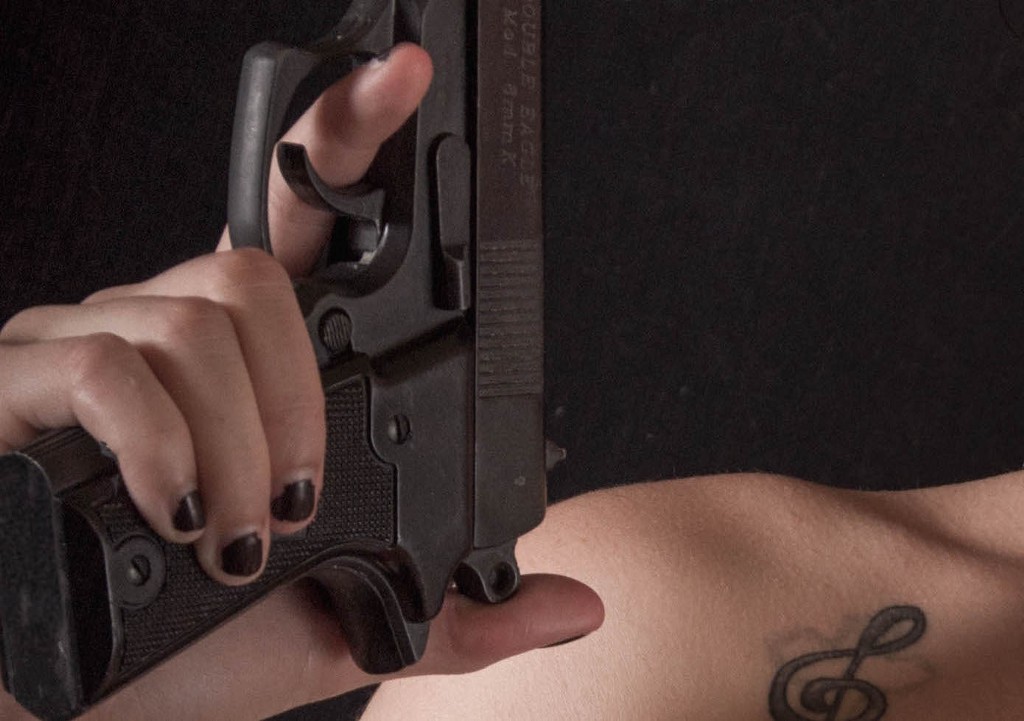
Goodbye, Dead Girl—Hello, Killer Woman

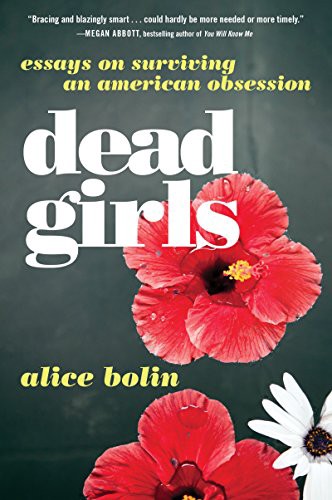
This was the year of the dead girl. Or, at least, it was the year that the phenomenon of the Dead Girl became the subject of cultural analysis, primarily in thanks to Alice Bolin’s book of essays of the same name.

Dead (usually murdered, usually white) girls have long been an American obsession as a pop cultural avatar for women’s oppression. “The Dead Girl Show’s most notable themes are its two odd, contradictory messages for women,” Bolin writes. “The first is to cast girls as wild, vulnerable creatures who need to be protected from the power of their own sexualities.” From Twin Peaks to True Detective (Bolin’s 2014 essay about which was the catalyst for her book) to Law & Order: SVU and seemingly lighter, frivolous fare, such as Veronica Mars and Pretty Little Liars, the dead girl serves as a cautionary tale: be hyper-aware of your surroundings, and know that at any time you could become a victim of harassment, assault or, indeed, murder.

But 2018 was also the year that the dead girl began to fight back.
The HBO series Sharp Objects, based on Gillian Flynn’s novel, is perhaps the clearest example of how the passive “dead girl” has been converted into a story of murderous vengeance. (This piece contains spoilers for Sharp Objects, as well as for the movie A Simple Favor and the novel Give Me Your Hand.) Reporter Camille Preaker (Amy Adams) returns to her sleepy, racist Southern hometown to cover the murder of two young women. Through Camille’s shoddy, unprofessional reporting, we discover that her alcoholism and self-harm are outward responses to being raised by her withholding and abusive mother, Adora (Patricia Clarkson), who in turn was abused by her own mother, and poisons Camille and her adolescent sisters Amma (Eliza Scanlen) and Marian (Lulu Wilson), the latter of whom died during Camille’s youth as a result of Adora’s Munchausen’s syndrome by proxy. It is implied that by making her daughters sick Adora makes them need her, highlighting the connection between society’s maternal expectations of women, especially in small towns where there are seldom other roles, and the lack of understanding and release of the sadness and rage when they break down. Amma’s climactic homicidal tendencies, too, demonstrate the inner turmoil that results from abuse and how it manifests when girls lack emotional support from others.

The big screen has also offered up an interrogation of how the abuse and trauma of girls can manifest as murder. This year’s film adaptation of Darcey Bell’s 2017 novel A Simple Favor stars Blake Lively as the enigmatic and mysterious Emily, who goes missing after asking a fellow mom, Anna Kendrick’s tightly-wound Stephanie, to collect her son from school. Through a series of dark comedic errors, we find out that Emily and her twin sister, Faith (also played by Lively), killed their abusive father in a house fire when they were teens and have been on the run ever since. Emily, whose birth name was Hope, remade her life as a fashionable, high-powered and high-functioning alcoholic PR woman, while Faith descended into addiction and only resurfaces to blackmail Emily/Hope for money. Emily, seeing no way out, kills her twin and uses Faith’s identical body to fake her own death, cash in her life insurance policy that she convinced her struggling novelist husband (Henry Golding) to take out on her, and attempt to disappear into obscurity While A Simple Favor is severely overlooked and underrated, a more sophisticated film (or series, which there was enough material for) would have explored further how Emily’s abusive childhood related to her adolescent and adult propensity for manipulation and murder. It could also be surmised that Emily’s pain, trauma and psychological issues have been dismissed because of her looks, her sexuality, and her success, leaving her to foist them on others.

Girls who might have ended up dead in a different era turn instead into fatal women.

A recent murder mystery novel, Megan Abbott’s Give Me Your Hand, is more successful at showing how girls who might have ended up dead in a different era or under a different set of circumstances turn instead into fatal women. Abbott sets her examination of female rage and murderousness in a laboratory where two prodigious young female scientists, Kit and Diane, under the tutelage of an equally brilliant woman professor, Dr. Lena Severin, are studying premenstrual dysphoric disorder, a debilitating form of premenstrual tension. In Give Me Your Hand, Abbott manages to present menstruation — inextricable from motherhood in the cissexist, heteronormative, and breeding-obsessed culture in which these pieces of pop culture reside — as inextricable from murder. Though it’s Diane who, after submitting herself to a hysterectomy to stem her lethal urges to no avail, commits the murders in the book, both Kit and Dr. Severin empathize with her plight. “Don’t we all feel we have something banked down deep inside just waiting for its moment, the slow gathering of hot blood?” Kit muses.
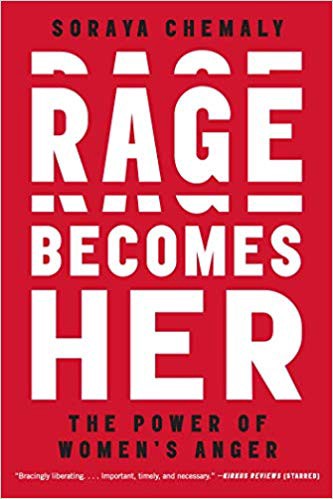
This calls to mind the misogynist taunts Donald Trump hurled at Megyn Kelly, in particular (“There was blood coming out of her eyes, blood coming out of her wherever”). Soraya Chemaly writes about it similarly in her new book, Rage Becomes Her: The Power of Women’s Anger. “There are some who believe that women’s humanity is actually not in question but rather that it is women’s humanity, taken seriously, that is the problem because it reminds us of birth, death and decay. Our physicality — the leaking, bleeding, lactating bodies that we manage — provoke terror, and the response, a defensive one, is to figuratively turn us into objects.” In the case of the dead girl, the defensive response turns her into an object literally: from a live body to a dead one. But while the dead girl is an object, the angry woman is a subject, acting and fighting back with the violence that is so often enacted upon us.

Rage Becomes Her is heavy on data mined from these experiences. Chemaly writes about how social norms for how girls and young women should behave under the male gaze — be polite, be quiet, don’t be aggressive, don’t be too ambitious, don’t wear that, don’t ask for it — have a direct correlation to how we suppress anger later in life. The murderous women above are direct, if extreme, examples of rebellion against these norms.

While the dead girl is an object, the angry woman is a subject, acting and fighting back.

Towards the end of Rage Becomes Her, Chemaly offers ways for readers to manage their anger, lest they turn into the murderous women illustrated in these fictions. But violent fictional female characters are a safe way of expressing our anger, not a cautionary tale. (It’s not unlike the way that shows like Law & Order: SVU have become a vehicle for real-life sexual assault survivors to work through their trauma; these stories give catharsis, either via justice or via retribution.)

Because look what happens when we do try to stem our rage: “The ability to… control oneself in situations that often generate a sense of risk or threat is a skill that sometimes results in women being described as ‘manipulative’ or ‘deceptive,’” Chemaly writes. I seem to remember a certain Democratic candidate for president doing exactly the same thing two years ago (and, let’s be real, for the last thirty) and having these words, along with “nasty woman,” leveled at her. And look at the vitriol faced by Serena Williams for deigning to challenge a referee’s decision about her game at the U.S. Open earlier this year.

This brings us to the current apex of women and girls’ anger, as expressed through the Women’s March, Black Lives Matter, #MeToo and gun reform. Note that many of the angry women leading the charge are women of color, and black women specifically. Women of color have been facing injustice and backlash for expressing their anger at it for a sustained period of time, not just because it’s “trendy,” as some have argued.

While depictions of white women’s anger are currently at the forefront of culture — both pop and otherwise — girls and women of color’s anger seldom is, even though the throughline between dead girls and angry women is pulled much tighter. For example, black women and girls represent 7% of the U.S.’s population but make up 35% of all missing persons but they rarely get the “missing white woman syndrome” treatment at work in Sharp Objects and A Simple Favor. If the dead girl is being reborn as an avenging angel, she has more evolutions still to go.

“There can be no redemption for the Dead Girl” archetype as Bolin sees it. But maybe there can be for the angry woman.

The Boys on the Block, and Me

“On Falling in Love with My First Love Again, The Boys on the Block Don’t Cry, When the Earth Can No Longer Protect You” by Barbara Fant

The boys on the block don’t cry
The boys on the block only cry in silence
The boys on the block don’t cry for their absent fathers
Their absent fathers don’t have faces
They wear their absent father’s faces
The boys on the block don’t cry

I grew up in Youngstown, Ohio, bottom of Tod Lane, Northside,
The trees bend themselves into the wind, hide from all the bullets
My momma used to tell me,
Bend down when the earth can no longer protect you
The earth will never protect you
Only God can protect the bones that He has created

I knew a boy once, fell in love on the last day of school, seventh grade,
He touched my booty in sixth grade
In eighth grade, he was my boyfriend
We held hands in the moonlight,
Broke up and got back together,
Whether he fell into me, or I landed into the crash of his thunder,
Nothing could put asunder this friendship
Freshman year, he needed to grow, different path,
But it didn’t last, and sophomore year, he fell hard,
and it all started and sparked all over again,
Every dance, every date, every wait, after football game, outside locker room, ready for him to take me back to his car, and then to his room,
maybe get some food, and then home,
And I found home in him,
Then momma had to go home,
And he was the first I called to tell when I got home,
Next day, he came over and became my cover,
And he covered me, through winter’s cold breath,
Every season that erupted into my life that my skin
was yet prepared for, he was there,
How he bent down when the earth could no longer protect me

The first time he said he loved me was the summer going into eighth grade,
I always wanted those stars on my ceiling that glowed in the dark,
My mom couldn’t find them,
So she found a lamp and surprised me with it,
It had stars cut out all over it and it rotated,
When you light it up, it lights up the whole ceiling,
Miraculously, starlight all across my bedroom
Instantly, my room is a solar system,
A collection of constellations,
And that day, he called, and said,
“Would you believe me if I told you I loved you?”
And I said, “Yes,” and he said he loved me that day,
and seventeen years later, my feelings are the same,
My feelings are the same on the block,
Where the boys don’t cry, I fell in love with a guy
Who understood the war outside,
so he made sure he was always the home I needed

“Bend down Barbara, I’ll be the earth that protects you”

And I want you to just be the boy
Let your past fall out of your eyes like the ocean’s gasp
And I’ll spit back to you, fistfuls of your innocence,
I want you to be that innocent again,
Before your grandmother’s hands lined the walls of a prison
Before your mother found the pill bottle,
Before my mother found the grave
I wish us sixth grade innocence
And a seventh grade summer love
I wish us summer
And bronze skin melting into a browner shade under the sun
Before the gun stole El from our lives
Before Shanice had to be found, with her boyfriend,
both of them, shot point blank range,
Did you hear, how they left the baby on the bed,
just swimming in all that blood?
I could not bring myself to go to her funeral,
Didn’t want to remember her like that
All plastic-faced and porcelain,
She will never be that innocent again,
I remember how me, Trina, Shanice, and Kia had a special kind of bond,
None of our mothers saw us graduate,
All their mothers murdered,
My grandmother, murdered,
How black girls in the hood bond in the bloodiest of ways,
How you and I bonded in the bloodiest of days

Branded our bad days into each other’s yesterdays,
And decided to hold onto each other,
No matter how aflame, or bloody, or frozen,
The block may be
How I never see the boys in the block cry,
How the boys on the block swallow the swelling oceans
back into their eyes, sweep the pain from beneath their lids
and call it the earth

Instinct of Extinct — on Leaving Black Men

Used to be so mad at your dad,
How he raised you to keep your head high, above women,
Put them in their place
Cream of Crop, boy
And then I think of your dad,
In ’58, wading through green blades, away from white fists,
And then again in ’68, swimming through Black Panther fists,
Wrists the cops want to lynch, handcuffs and silver gates,
Ask them, which way is Heaven? Is there a Heaven here?
I think of fear he must have kept swollen in his belly
As he raised black boy and spent every night on his knees,
Praying you made it home
And then you made it home,
Grew yourself a wife and career
Brought home the knife and fight,
Never learned not to bring the tornado into the house
When he brought the shotgun home, I buried my mouth
My throat, a choking target of surrender, or hiding
Why we never talk about these black women that
carry the weight of black men,
All this trauma growing in his bones,
Your hands, my throat, another birthing of racism,
bearing its teeth in our home,
Tyree loses his life, Marshawn, Eric, Mike,
all these brown men disappearing around me,
And I leave a black man at a time when black men are becoming extinct,
Why we cling to black men we want to run from
and cradle all at the same time
Was so angry at your mother,
How she birthed a myriad of sons and became shadow,
Danced the sway of a million brown women
wading their way through security and survival,
Your father could never understand all the chaos in me,
I tried to be the good Christian girl,
but her body would not fit into my skin,
Learned to swallow my own fins in obedience
Prayed to every altar I could bend myself into
How I shuffled through fields and river,
just to hold you with these charred limbs of a lover,
How I should’ve had no other gods beside you
Submitted to the sounds of your breath,
pulled pages of Scripture from my throat
And I was always the dumb, non-submissive
Perhaps I should’ve just rolled over, let you crawl on top,
Birthed you a tribe of hunters who grew to slice the voices of other women
Was I only good enough for this?
Like how your father felt he was only good enough for fields?
The ghosts of white men chasing him in the night?
I tried to understand the outstretched limbs of racism,
how she claws at backbone of children she births,
Remembers her covenant with America
And claws through every covenant that tries to escape her breath,
When she came to birth the sirens,
I tried to hold you, like a good wife,
But I pushed, released, waded my way through every blade
Of field and river gushing within me,
And let you go, like a woman

Watch Barbara Fant perform:

TEDx Columbus (2011)

Women of the World Poetry Slam (Final Stage — 2017)

About the Author

Barbara Fant has been writing and performing for 12 years. She has represented Columbus, OH in 9 National Poetry Slam competitions and placed 8th out of 96 poets in the 2017 Women of the World Poetry Slam. She is featured in the Greater Columbus Arts Council’s Columbus Makes Art Campaign and Columbus Alive named her in their 2017 People to Watch. A 2009 recipient of the Cora Craig Author Award for Young Women through Penmanship Books in NYC, she is the author of three poetry collections, a TEDx speaker, and has been commissioned by over ten organizations. She holds a BA in Literature, a Masters in Theology, and is currently pursuing her MFA in poetry at Antioch University Los Angeles, where she served as co-lead poetry editor on the literary journal Lunch Ticket. She works at The Columbus Foundation and teaches poetry at Transit Arts. Barbara believes in the transformative power of art and considers poetry her ministry.

“On Falling in Love with My First Love Again/The Boys on the Block Don’t Cry/When the Earth Can No Longer Protect You” and “Instinct of Extinct — on Leaving Black men” are published here by permission of the author, Barbara Fant. Copyright © Barbara Fant 2018. All rights reserved.

Why Doesn’t America Love the Novella?

What happens when “bigger is better” becomes an ethos for an entire society? From SUVs that will never see a dirt road to McMansions that could fit several families, American culture right now abounds with an excess of, well, excess. The normalization of this can distort priorities, creating a sense that something far larger than what we need is what we want. In arts and culture, the ramifications of this bigger-is-better ideal include the phenomenon of movies begetting franchises begetting expanded cinematic universes. But — more relevant to me personally — it also includes the trend towards bloated novels and multi-volume series, and its counterpart, the devaluation of the novella.

There are moments when being a lover of literary minimalism can feel like being part of a secret society. A particularly obscure secret society, and one that’s closer in tone to a bizarre eating club than, say, a revolutionary faction looking to burn it all down. Nonetheless, the novella (or short novel; I’ll be using the two interchangeably) can feel like an overlooked form: concise enough to be an exercise in restraint, and yet too short to be deemed commercially viable.

From SUVs that will never see a dirt road to McMansions that could fit several families, American culture right now abounds with an excess of, well, excess.

This is not to say that small novels are necessarily better than big ones. (I love a good novel that’s approximately the size of a human head.) But some novels are meant to be small — and small novels that are meant to be small are indubitably better than large novels that should have been. And yet, it seems that the U.S. would rather inflate novellas into tomes.

It’s not that there’s no market for standalone novellas — at least, there seems to be one overseas. That’s why many celebrated recent works in translation are notably slimmer than their American counterparts. Samanta Schweblin’s Fever Dream, for instance, uses a concise length to its strength, sustaining a dreamlike and surreal tone over the course of its pages. The resulting work ended up winning The Morning News’s 2018 Tournament of Books, no small accomplishment. But it’s also difficult to imagine this work being originally published by an American author, given its length.

The same is true for the concise and haunting novels of Patrick Modiano, winner of the 2014 Nobel Prize in Literature. Numerous novels being published in translation by up-and-coming presses like Tilted Axis and Two Lines Press are also far shorter than what might emerge from an American press: João Gilberto Noll’s Atlantic Hotel or Hwang Jungeun’s One Hundred Shadows both brilliantly sustain tension and atmosphere over the course of their pages–but they also don’t overstay their welcome.

The gulf in novellas being published overseas versus in the U.S. is noticeable if you’re looking for it. “When I was in Denmark and Iceland this summer, I saw so many slim novels and novellas from all over the world,” author Amber Sparks notes. It also raises the question of how many manuscripts are padded to reach a certain size—and whether a domestic publishing industry more amenable to novellas being novellas would lead to, ultimately, better works.

It raises the question of how many manuscripts are padded to reach a certain size — and whether a domestic publishing industry more amenable to novellas would lead to, ultimately, better works.

I am not without skin in this particular game: my 2016 novel Reel weighs in at around 40,000 words. When talking with agents, I was asked by one if I could add another 15,000 to it. Thankfully, Rare Bird Books, who published it, have a welcome openness to shorter literary works—a quality that they share with other independent presses, but not many of their larger counterparts.

I’m not alone in finding frustration with the American publishing market’s feelings regarding novellas. “I’ve never tried to get a novella published, because I just figured it was pointless,” says Sparks. “I’ve written a couple, and I ended up either canning them or turning them into short stories or longer novels.”

While Sparks’s collection does feature a novella, its evolution was unique among her works. “The novella in my last collection was sort of accidental; it was a novel that my editor and I thought probably should be a novella — and in fact it had been at one time — and when she read the novel she felt we should turn it back into a novella and include it in the collection,” she says.

It’s worth noting that the American publishers in question who seem to shy away from publishing shorter novels (at least outside of translated works) are largely the Big Five. When Big Five publishers have released novellas–Garth Risk Hallberg’s A Field Guide to the North American Family, or Penguin’s forthcoming edition of Ottessa Moshfegh’s McGlue–they’ve generally been new editions of older works by authors who have gone on to be widely read. And there’s also the case of novellas being paired with other novellas by the same author: A.S. Byatt’s Angels and Insects comes to mind, as does Joe Hill’s Strange Weather.

“I feel like in this country, generally speaking, it’s almost impossible to publish a novella unless you’re, you know, Denis Johnson or something — someone who publishers known will sell a book no matter what,” Sparks says.

There are some exceptions to this: FSG Originals has explored publishing shorter books, including Warren Ellis’s Normal and Jeff VanderMeer’s The Strange Bird. And there was a brief span in 2012 when ebook-only novellas from both Nick Harkaway (Edie Investigates) and Victor LaValle (Lucretia and the Kroons) were published in the lead-up to, respectively, their novels Angelmaker and The Devil in Silver. It’s probably worth noting that both the Ellis and VanderMeer books were published in digital editions first, with the physical versions following; there’s a sense of experimentation about both.

Arguably the most successful initiative in a major publisher releasing novellas has come via Tor.com, whose novellas have featured work from the likes of Brian Evenson, Victor LaValle, and Nnedi Okorafor. (Full disclosure: I am a regular contributor to the website Tor.com.) Though it’s probably worth pointing out that, even as the lines between “genre” and “literary” fiction blur, various genre awards maintain separate categories for novellas–thus creating a situation where a novella can be viewed as a standalone work on its own merits.

While independent presses may be more open to novellas, it can still be difficult for a writer to connect to one of these presses without an agent–creating a troubling scenario for writers whose manuscripts fall between, say, 20,000 and 50,000 words.

Doorstopper-sized books may have a marketing advantage as well: a giant novel is more of a conversation piece than a slim one. Though this, too, feels like a uniquely American tendency: on a recent visit to Waterstone’s in Edinburgh, I noticed a table display dedicated entirely to novellas, with a sign extolling the virtues of a quick, efficient read. I could find nothing comparable for books of 700 pages or more.

Unfortunately, there are numerous high-profile instances of some in the literary world conflating size with merit. For a prime example of this, look back about a decade to the reception afforded the release of Roberto Bolaño’s 2666 and The Savage Detectives in English translation–and the corresponding shorter novels of his ended up being classified by some critics as “minor works.” (Veronica Scott Esposito has written a good explanation of why this is troubling.) And a writer like Bolaño, whose bibliography encompasses both the sprawling and the concise, demonstrates the literary merit of both: By Night in Chile is appealing for its taut precision, while 2666 is appealing for its unruly sprawl. Treating the former as, essentially, secondary to the latter creates a situation wherein the gold standard for writers is tied to length, rather than how well the work exists as a whole.

Sparks also raises another crucial point about the importance of novellas: in minimizing them, is American literary culture also minimizing the voices of many writers who are drawn to shorter works? “Mothers (parents, really), working people, immigrants, many people of color — they’re often writing a different kind of book, slimmer but compressed, powerful,” she says. “And to dismiss that is to dismiss the diversity in literature that publishers say they want. I’m not sure why we’re so resistant to it in America but we really are.”

In minimizing novellas, is American literary culture also minimizing the voices of many writers who are drawn to shorter works?

The last year or two have brought some small signs for optimism. Lena Dunham’s advocacy for shorter books on Twitter –the #keepit100 Book Club — is one example. So too is the attention given Victor LaValle’s The Ballad of Black Tom–which includes great reviews, awards, and being optioned for television. And in pop culture, G.O.O.D. Music’s series of seven-song albums may help to convey the idea that shorter creative works are satisfying in their own right. Perhaps these factors will all help lead to a publishing industry that embraces shorter literary works for what they are.

A Reading List on Being a Black Man in Contemporary America

I was given the task of curating, yeah it’s that fancy, a reading list of books that portray black men in contemporary America in complex and nuanced ways — seeing as to how the majority of books being published are still overwhelmingly about white folks.

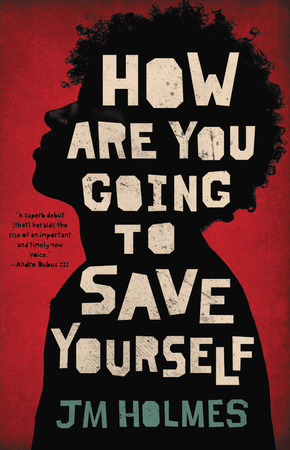
I’d like to believe that my collection, How Are You Going to Save Yourself, falls into the former category. My book follows a decade in the lives of four friends, Dub, Rolls, Rye, and Gio, from Pawtucket, Rhode Island as they struggle against themselves and the world that they’ve inherited. Much like Pawtucket and Providence, the four friends have been somewhat passed over, amongst their kin, their society, and institutionally (thanks Amazon). They are all grappling with different demons and the manifestations are varied. Throughout the decade the book documents, we witness their lives take vastly different shapes even though they are forever inextricably linked to one another. My aim with the stories was to evoke the flavor of a seasoned pan — layers of grease and seasoning, as we enter into their lives and pick up on the subtleties of their character. Some of the stories are controversial, some are quiet, but hopefully readers will find soul in all of them.

Making this list is important and I’m thankful for the opportunity. I also must acknowledge the shifting paradigm in publishing that gives me hope about the future of American lit. The doors are starting to be opened ever so slightly for the nerdy, self-proclaimed oddballs from communities of color — myself included. There are so many notable books, I won’t name any because it would take too long, (Heads of the Colored People by Nafissa Thompson-Spires, Welcome to Braggsville by Geronimo Johnson, The Sellout by Paul Beatty) from the past few years that are doing something different on the page that it gives me great joy.

These books in no way are solely about black men in America because that would be an irresponsible book since the web of human connection is too complex for us to not acknowledge the less than subtle tugging from multiple strands. This list also leaves out so many giants, but I tried to put together a list of my favorite American-centric works that disquieted me enough to stay forever lodged my emotional memory.

Some of the titles below will, or already have been canonized, and others, unduly, never got their day in the sun, but all have voluminous lungs and boy do they breathe. I tried to pick at least a few that have been slightly skipped over for some reason or another just to shed light on the multifarious voices in the black American tradition. Be forewarned, I’m a sucker for the blues, humor, and the untragic mulatto experience. I hope if you do pick up one of these titles, you open your hearts and surrender yourself to the vision.

Behold, my blacklist:

Erasure by Percival Everett

Erasure is a good place to start since it is in many ways about this very question of black art in white spaces. In the tradition of surrealist prophets, Everett deconstructs the flaws in the publishing world that typecasts black men as a certain kind of writer with a certain kind of story to tell. This book is hilarious, painful at times for its incisiveness and worth your time if you want to read something a little different.

Loving Day by Mat Johnson

Loving Day is a personal favorite: Majestic Mulatto power all day! Mat Johnson’s story speaks to some of the whiplash biracial folks in this country face — a familial love story about father and daughter replete with insight on identity politics and how it shapes our lives as people of color in 21st century America. A beginner’s and intermediate’s guide to mulattodom in the U. S. of A. if you will.

The Big Machine by Victor LaValle

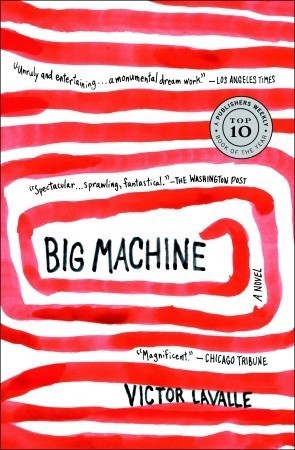
The Big Machine is a book I stumbled on in Iowa. The first book I’d read after arriving there that made me say, “what in the holy hell did I just read”. LaValle is king of the “what did I just read literature,” cue a magical baby being born by injecting a hotshot of heroin into the stomach. This tale is part black illuminati, part page turning thriller, but the prose is magnetic and in the end, it’s a tale about community uplift and survival. I don’t want to say that race is an afterthought for Lavalle, because he clearly addresses it with intention, but it never overshadows all the other exploration he’s doing into the human condition. This one is a good start if you are thinking about getting on the Victor Lavalle train.

Beloved by Toni Morrison

Not to add a classic for the sake of adding a classic, and also not a novel that needs any further explanation, but because reading the scene where Halle churned butter stripped a gear out of my chest, Beloved speaks to the contemporary struggle of black men in America. Though not a novel about contemporary characters, the vestiges of slavery and how it effects manhood, love, and psychological/spiritual healing are all on display in Morrison’s classic. In keeping with the theme of contemporary black men in America for this article, Morrison raises the question — how do we get back our dignity? The question is so inextricably linked with our sense of self and manhood and both of which are constantly tested socially and institutionally.

Delicious Foods by James Hannaham

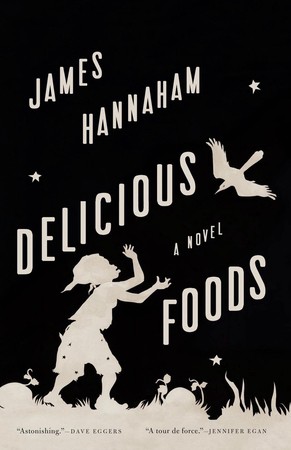
Back to another of my personal favorites, enter Delicious Foods. Hannaham’s second novel is another work that adds to the cannon of black alternate reality — a moving piece about family, politics, and modern day slavery packed with heart, adventure, and a heavy dose of the real. Hannaham delves into the vortex of drug abuse on the page and raises the most poignant question — how do we grow to love our addiction more than our kin?

Wind in a Box by Terrance Hayes

Switching gears to poetry, Wind in a Box by the juggernaut known as Terrance Hayes is a heavy hitting collection that dives into heartbreaking dance of what it means to be both predator and victim — an unpopular perspective when we talk about men in the current climate. I often open readings by reciting a Terrance Hayes poem, maybe because it’s always a haymaker, maybe because sonically you can’t help but be entranced, but almost certainly because I wish I’d written it. This collection of poems evokes the blues in such a tender and compassionate way it tests the limits of how we love.

Caucasia by Danzy Senna

Another work from a patron saint of the mulatto literati, Caucasia is a classic family story (or maybe just from my perspective) about how we love people across the bitter racial divides that have our country in a vice grip. It is a full portrait about a young biracial woman trying to reunite with her black father who is political, deified and elliptical due to his shadowy presence in her life.

Before You Suffocate Your Own Fool Self by Danielle Evans

And a story collection, in an age when collections are on the rise (shameless inaccurate promotion) to round out the list, Before You Suffocate Your Own Fool Self by Danielle Evans. Evans’s collection is largely about young women and soon to be women, but when she does write men, she captures the fragility of ego and the desperation of asserting one’s masculinity. You need look no further than the blockbuster hit of the collection, “Virgins”, to see the mercurial landscape black men must traverse in our efforts to claim our value.

Please, Margaret Atwood, Don’t Write a Sequel to ‘The Handmaid’s Tale’

Margaret Atwood announced on Wednesday that she is writing a sequel to The Handmaid’s Tale, to be published by Doubleday in September 2019. The Testaments will take place fifteen years after the events in The Handmaid’s Tale and will be narrated by three female characters. Nothing else was revealed about the plot, instead Atwood described her impetus for the work, saying, “Dear Readers: Everything you’ve ever asked me about Gilead and its inner workings is the inspiration for this book. Well, almost everything! The other inspiration is the world we’ve been living in.” We are living in the age of sequels (and prequels, and trilogies) and I’m sure that a lot of people offered Atwood a lot of money for this project. I wish she’d said no.

It’s hard to remember now, after 8 million copies sold, but the initial reviews of The Handmaid’s Tale weren’t universally positive. A common critique was that Gilead was overwrought and implausible—that, in short, it didn’t feel like a sign of the times or a warning about the future. In the scather which Mary McCarthy wrote for The New York Times, she argued that Atwood had created a scenario that was “powerless to scare.” “Surely the essential element of a cautionary tale is recognition,” she wrote, but recognition is “strikingly missing” in The Handmaid’s Tale. This timelessness, of course, turned out to be one of the novel’s greatest strengths. In many of the best dystopias, such as The Road by Cormac McCarthy, the adaptation of “real life” is so clearly tied to the present that this alt-existence feels terrifyingly plausible, but Atwood instead followed any number of real-world scenarios all the way down their slippery slopes to the worst possible outcome. In writing a book that didn’t tie itself to a specific cultural instance, Atwood gave us a text that remains relevant outside of the time it was created.

In writing a book that didn’t tie itself to a specific cultural instance, Atwood gave us a text that remains relevant outside of the time it was created.

That timelessness is threatened by proposing a sequel in this specific political moment. “Can [a cultural backlash] really move a nation to install a theocracy strictly based on the Book of Genesis?” McCarthy asked skeptically in 1985. These days, we aren’t as sure as we were that the answer is no. Atwood’s book, which has stood on its own for years as a critical text in many classrooms, has taken on fresh cultural relevancy. We can turn to it anew when Mike Pence says that he’ll only have dinner with Mother, or Betsy Devos tries to defend sexual assault on campus. I shivered seeing women dressed as handmaids hovering at the edge of Kavanaugh’s hearing, and hopefully some men did too. A book that wasn’t specific enough for 1985 turns out to be just the text we need in 2018.

Atwood risks all this by writing a sequel in direct response to the Trump era. For all that we are using The Handmaid’s Tale to help us cope, Trump’s America is not Gilead. It’s possible, if not likely, that the future will find women in this same situation of facing a threat to, if not an all-out assault on, our rights. Whatever she intended at the time, The Handmaid’s Tale isn’t political satire. The best thing Atwood can do is leave the handmaids as they are, open to future interpretations.

Misogynistic Dystopias, Ranked By How Likely They Are in Real Life

There is also the risk of undoing the power of Atwood’s creation through over-saturation, which has already started thanks to the popularity of the television show and the explosion of handmaiden memes. The book has been made into a movie, an opera, and a TV series; there is a point at which it becomes too cliche to be powerful. Which leads us to the worst case scenario, which is that Atwood is selling out. Is it possible she hasn’t been influenced by all the hype around Hulu’s award-winning television series? Maybe, though it’s telling that the press release included one sentence written in bold: “The Testaments is not connected to the television adaptation of The Handmaid’s Tale.” Atwood must be aware of the fact that people will assume she’s writing a sequel just to cash in on Hulu’s success, but even if it’s not a case where the lady doth protest too much, she’s inevitably dealing with the problem of creating original work after its source material has been adapted in a popular fashion: just look at the struggles of George R.R. Martin or Harper Lee. Add to that the simple fact that in any scenario, writing a sequel of a beloved book is tricky, and writing one long after the first book was published is doubly so, and the chances that this project is a success are slim.

Instead of writing our current predicament into The Testaments and risk creating a work that is overt political commentary and must grapple with other adaptations, Atwood should let her first novel stand alone.

10 Perfect Writer Gifts We Just Made Up

Step away from the astronaut pen. Put down the blank book. And for God’s sake don’t order another clever mug. Writers have it hard enough in this climate of low advances and little-to-no marketing budgets without getting the same tired gifts every year. This holiday season, try one of our completely fictional and guaranteed-to-please-the-literary-types-in-your-life presents, instead. Available in every price range. Money back if not completely satisfied (unless we already spent the money on vape cartridges and homebrew kombucha kits, in which case, you’re SOL).

Pre-rejected stories. Purchased from other writers just like yours, and already rejected by editors from more than 20 top journals. No need to send these babies out and have them come back with phrases such as, “Though there was much to admire here…” or “We receive many more fine submissions than we can publish.” They can simply be filed away with the writer’s other rejected stories without the hassle of actually drafting and sending them out. A gift every serious writer will appreciate. Available in a variety of typefaces. $29.95

Sweater that looks vaguely like the one Emma Thompson wore in Stranger Than Fiction. While wearing this, writers can pretend not only that they have a book deal and that someone actually cares about their writing, but that they’ve been knighted. Reeks of cigarette smoke. $59.95

Writers can pretend not only that they have a book deal and that someone actually cares about their writing, but that they’ve been knighted.

Cat named Dylan Thomas. The must-have accessory for every writer this season. Trained to knock coffee onto the keyboard, distracting writer from hopelessly flawed novel. Also chews query letters that contain the wrong agency name and contracts that specify world rights. We’ll pay you $25.00 to take him.

Reassurance cards. Preprinted with sentiments such as, “Of course you’re talented,” “That editor doesn’t know what she’s talking about,” and “I’m sure an agent would be interested in a novella about a writer living in Brooklyn who shares your physical features and neuroses and in which the main character spends the bulk of her time ruminating about whether to move to Queens to save on rent.” Comes with punch card for Bayside Dunkin’ Donuts and bus map. $19.95

Frozen sand timer. Gives the illusion time is not running out. Ideal for the older writer. Also available in analog and digital clocks that always show 5:30 a.m. $39.95

I’m Almost 40 and Still Getting My Stories Rejected—Am I Running Out of Time?

3D book cover that looks like a tablet. Her friends will think she’s on Insta and Snapchat but the truth is she’s reading an actual book! Perfect for the millennial writer in your life. $49.95

Hamster-wheel desk. For the midlist writer. Guaranteed to get her absolutely nowhere. $1,259.00 or the writer’s last advance. She did get an advance, didn’t she?

Album of random stranger conversations. Simulates working in a café, while allowing writer to drink cheap coffee at home. Includes classic tracks, such as Self-Congratulatory Business Partners, Couple Breaking Up, and Fellow Writers Name Dropping. Single-use license allows writer to incorporate dialogue into work-in-progress. $16.99

If the writer in your life is just starting out, give her a head start with the Beginner Affectations Kit.

Writer affectations kit. If the writer in your life is just starting out, give her a head start with the Beginner Affectations Kit, which includes tips for photographing a cat blocking a computer screen or sitting on a keyboard, a New Yorker tote, and images of a dozen “shelfies” featuring more impressive books than she actually owns. For the more advanced writer, consider the Advanced Affectations Kit, featuring our bestseller, The Fine Art of Humblebragging and Vaguebooking, and instructions for baking your own book cover cake. $29.95 each

Plain white mug with nothing on it. Your writer will thank you when she finally sends in that law school application and isn’t reminded by her cup every morning that she didn’t write like a motherfucker, never really cared about the Oxford comma, and never killed anyone off in a book because she didn’t write that kind of book, though if she had it would have had a much better chance of selling than the quiet domestic fiction she actually did write. Can be purchased, too, for the recovering lawyer in your life who never wants to see, let alone drink out of, another please-do-not-confuse-your-Google-search-with-my-law-degree mug. $5.99

9 Literary Party Games for Your Brainiest Friends

I t’s hard to combine literature and socializing. Reading a book is usually a solitary act. Sure, there’s book clubs, but there’s always that one guy who monopolizes the conversation. And don’t even get us started on literary twitter.

In our opinion, one of the best way to bond with fellow-lovers is to engage in some friendly competition. With these 9 literary party games, you can (finally) put your English degree to good use and have a fun time.

Here is a list of book-themed games for those who love literature and socializing.

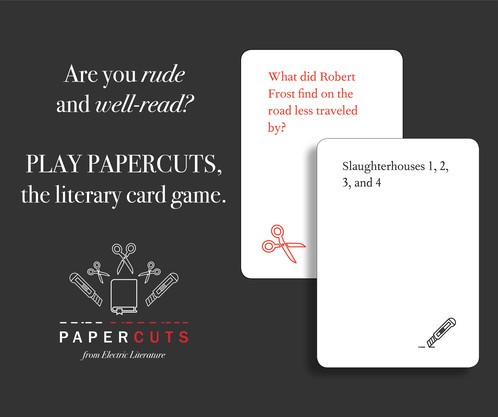
Papercuts: A Party Game for the Rude and Well Read by Electric Literature

Apples to Apples and Cards Against Humanity might be fun, but do they have enough crude and witty references to literature? I think not. Play Papercuts with your friends and family, and we can guarantee you’ll have a riotous time.

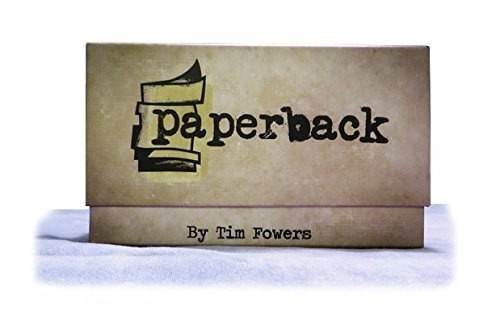
Paperback by by Tim Fowers

Let your competitive side run wild with Paperback, a word-building meets deck-building card game.

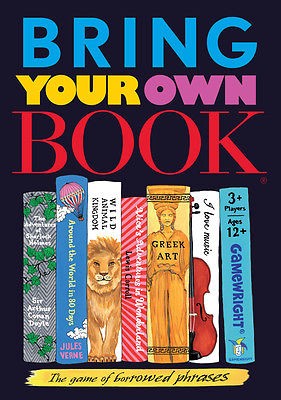
Bring Your Own Book Game by Gamewright

For this game, you’ll be playing in pairs. But you won’t have to team up with your less-than-favorite uncle, but rather your favorite book. To play draw a category card, reach for a book, and then find the most entertaining phrase that fits the prompt (and the judge!).

Guess the Book Titles Using Only Emoji

The Storymatic Classic by The Storymatic

This deck of prompt cards can serve as a cure to writer’s block, a prompt for your next story, or a stack of cues for an interesting conversation.

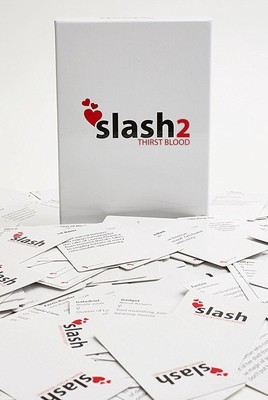
Slash 2: Thirst Blood by Play Date

Bond over your love of fan fiction romance with Slash 2: Thirst Blood. The goal of this game is to fantasize and narrate the most passionate love story between two characters from literature, pop culture, or history.

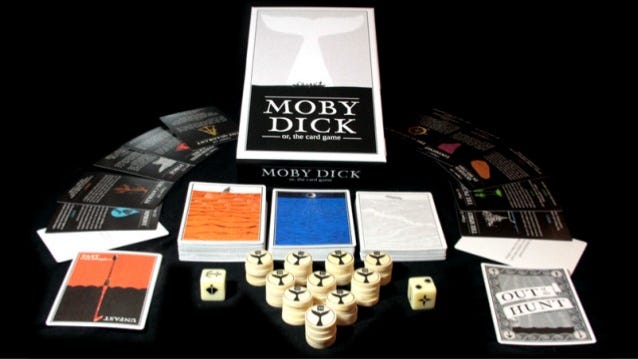
Moby Dick, or, The Card Game by King Post

Based on Herman Melville’s novel, this 2–4 player card-driven narrative adventure game lets you collect tokens, assembly a crew, and sail the open sea to capture the Great White Whale.

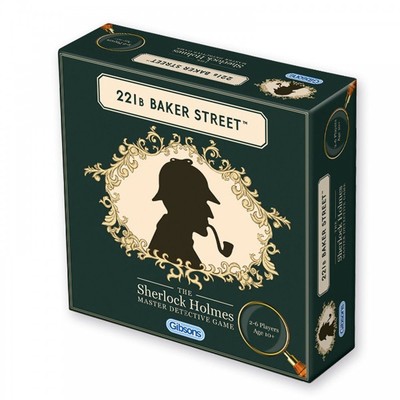
221 Baker Street: The Master Detective Game by Gibsons

Get out your houndstooth cap and magnifying glass and don your best Benedict Cumberbatch or Robert Downey Jr. impression. This detective game is similar to the classic detective game, Clue — but with a Sherlock Holmes twist.

Play Along with Our Read More Women Literary Trivia

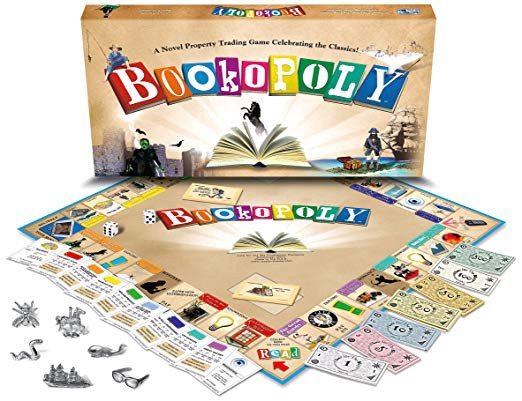
Bookopoly Board Game

Deciding which rendition of Monopoly to get isn’t always easy. There is an unnecessarily large number of different themes; Dog-Opoly, Dino-Opoly, Game of Thrones Monopoly and even a Monopoly for Millenials. But Bookopoly is clearly the best.

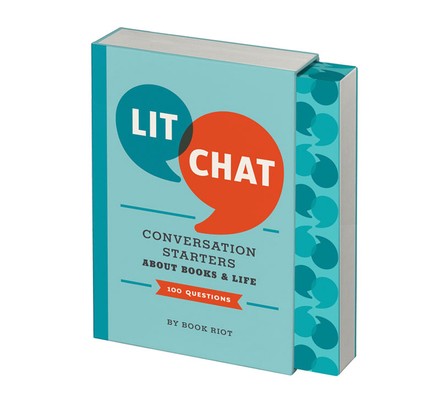
Lit Chat: Conversation Starters About Books and Life by Book Riot

Break the ice and start a stimulating conversation with this deck of 50 prompt cards.

Finally, Transracial Adoptees Can See Ourselves Reflected in Literature

I ’m nine years old and I can’t tell what library I’m in. Tampa? Or maybe we’re in Jacksonville? At some point they all start to blend together.

My parents are the Florida branch directors of an international adoption agency, here to talk about the wonders of adopting abroad. I dress a table with international flags and printed brochures, while my three sisters — ages 8, 13, and 18 — set up the chairs. A few folks start to file in, usually older white couples. Sometimes no one shows up, which seems like a bummer to me, but my parents are never fazed.

On the PowerPoint presentation is the adoption agency logo and ClipArt images of flags — China, Russia, Colombia, Vietnam, Kazakhstan. The next slide is familiar. It’s of me. The image on the left is a baby photo taken in 1996, and the one on the right is a more recent portrait of me taken on one of those cruise ship photo shoots. I have monolid eyes, thin black hair, and blunt bangs — unmistakably Asian. I’m holding a rose. The next three slides are the same, but of my sisters. My parents always started with their miracle story of how their lives changed when they brought their baby girls home from China.

My parents always started with their miracle story of how their lives changed when they brought their baby girls home from China.

At seven months old, I was the first of four girls adopted, all from different orphanages in cities throughout China. My mom, then a doctor’s assistant, and my dad, then the owner of a hardware distribution company, had gotten married a couple years before and hadn’t had a desire to have children until they saw an international adoption commercial on TV. Struck by China’s then-active one-child policy and the number of little Chinese girls being surrendered to orphanages, they couldn’t get the commercial out of their heads.

I knew this story and presentation by heart. I could’ve recited it myself. On the way out, couples would gush about me and my sisters to my parents, astounded at what “China dolls” we were, as if we were made of porcelain. Then they’d smile meaningfully to one another: This is what we could have.

I picked up Celeste Ng’s Little Fires Everywhere earlier this year on the recommendation of the literary Internet. I expected it to be good, but I didn’t expect to finish it in one sitting, staying up until 4 am, straining my eyes by the light of my bedside lamp, recognizing myself in a book in a way I never had before.

I loved the complex characters, the exploration of motherhood, the understated but arresting prose. But what I couldn’t get out of my head was the Chinese American baby. Mirabelle McCullough — or May Ling Chow, depending on what side you fell on — born to an impoverished Chinese immigrant, surrendered at a fire station, adopted into an affluent white family. Though the adoption circumstances of May Ling/Mirabelle, as I’ll refer to her, are not entirely analogous to mine, I related to this character who never speaks.

In Her New Novel, Celeste Ng Goes Home

At the crux of the story is the question of who May Ling/Mirabelle belongs to. This eventually erupts into a highly public, controversial legal battle for custody of the child. The McCulloughs are upstanding members of the Shaker Heights community: long-time residents and homeowners, him a finance professional and her a stay-at-home mom. They love Mirabelle and shower her with toys — “wooden blocks in all colors of the rainbow” and an “entire shelf of dolls” and, conspicuously, a panda plush chosen over the traditional teddy bear — all housed in the bedroom and guestroom-turned-playroom dedicated to her enjoyment. They’d spent years trying to have a child. So when the adoption agency called with news of a baby “who was theirs if they wanted her,” after four years of being on the waitlist, “it felt like a miracle.”

Bebe Chow is a twenty-something waitress, making $2.35 an hour at the local Chinese restaurant. She immigrated from Guangdong, China, to San Francisco and then Shaker Heights, Ohio, conceiving a child with a boyfriend who left her after she broke the news to him. Racked with postpartum depression and no money for formula after her milk dried up, Bebe takes two-month-old May Ling to the local fire station before passing out from hunger and being taken to a shelter herself. But when she is released, she is told by the police that she had terminated her parental rights. Even as her life becomes stable in the months after, her search for her daughter turns up no leads. She recounts, “Sometimes, I wonder if I am dreaming. But which one is the dream? That I can’t find my baby? Or that I have no baby at all?”

At the beginning, I identified with the McCullough family’s plight. I thought May Ling/Mirabelle should be with whatever family is loving and could give her the best shot at life. After all, wasn’t that what happened with me? Growing up, I had never felt an allegiance to or a curiosity over a birth family I never knew. In fact, I didn’t understand why more people didn’t adopt. Why did people insist on having their own children or children who looked like them? It seemed selfish to have a natural-born child when there were so many without a good, stable family. If they really loved a kid, couldn’t they look past their race?

Growing up, I had never felt an allegiance to or a curiosity over a birth family I never knew. In fact, I didn’t understand why more people didn’t adopt.

But as the narrative progressed, I found myself ricocheting between the two sides. Like the residents of Shaker Heights, I was conflicted. These arguments are best summarized in the text verbatim: “A mother deserved to raise her child. A mother who abandoned her child did not deserve a second chance. A white family would separate a Chinese child from her culture. A loving family should matter more than the color of the parents. May Ling had a right to know her own mother. The McCulloughs were the only family Mirabelle had ever known.”

I almost never believe people when they say a book has changed their lives. Reading is my passion and my way of reckoning with the world, but it’s hard for me to point to many books where I could identify a clear “before” and “after” reading. Little Fires Everywhere awakened something in me. Adoption has been at the bedrock of my identity since I was a child, and to hear it challenged from its status as an unquestionable societal good gave me pause. Reading the book also swept the dust off and gave language to feelings I’d had about my race and Chinese heritage my entire life. For the first time, I felt recognition.

Reading the book gave language to feelings I’d had about my race and Chinese heritage my entire life. For the first time, I felt recognition.

One of my sisters recently told me it had never occurred to her that she was Asian until middle school. Up until then, she had been marking “Caucasian” on forms and standardized tests. This came as a surprise to me, because if anything, I was hyper-aware of my Asian-ness. I can’t remember a time when I didn’t scan rooms to see if I was the only Asian or non-white person around.

When you grow up in a multi-racial family, there is no shortage of questions. Do you speak Chinese? Do you remember your birth parents? Do you miss China? And since I attended conservative Christian schools, I was usually one of only a few Asian people in my class. I had a couple recurring bullies in middle and high school who would ask me how I could see with my “slanty” eyes — usually accompanied by a demonstration of what I looked like to them — or shout at me in fake-Chinese nonsense. I don’t remember having any Asian friends until high school.

At some point in my adolescence, I grew into my Asian identity more. On some level I appreciated the novelty of not being white in a largely white space, but I also hated fielding the questions. I still hate it. It’s never the curiosity that bothers me, it’s my lack of answers. No, I don’t speak Chinese. No, I don’t know my birth parents. No, I don’t remember China. I felt like a fake, Asian in name only. I hated that my existence and my right to belong in places always came with an asterisk, begged explanation.

It’s never the curiosity that bothers me, it’s my lack of answers. No, I don’t speak Chinese. No, I don’t know my birth parents. No, I don’t remember China.

Like the “progressive” community of Shaker Heights, I was part of a colorblind family. I had always known I was adopted, but the consensus around colorblindness dictates that those differences don’t exist — or at least, don’t matter. In this pervasive philosophy, hard questions are hand-waved. This is exemplified in one character’s defense of the McCullough adoption: “Honestly, I think this is a tremendous thing for Mirabelle. She’ll be raised in a home that truly doesn’t see race. That doesn’t care, not one infinitesimal bit, what she looks like. What could be better than that? Sometimes I think that we’d all be better off that way. Maybe at birth everyone should be given to a family of another race to be raised. Maybe that would solve racism once and for all.”

Colorblindness is the most convenient worldview to have in the United States, circa 2018. To consider the proposal above a fascinating thought experiment, to use children for virtue signaling and cultural cachet, it’s the height of white privilege. While adherents to the idea that race should not be talked about may mean well, the philosophy has no legs. Beyond being an inaccurate reflection of history and today’s cultural climate, it ignores and silences any narrative to the contrary. It’s an ideal that relies upon everyone collectively — conveniently — forgetting what has transpired in the world since the beginning of time.

My family was an average American, middle-to-upper-middle-class family in every sense. Hot dogs for the Fourth of July, turkey for Thanksgiving, ham for Christmas. Disney Channel and Cartoon Network on TV. Wardrobes from Limited Too and Barbies from Toys R Us. Cats and dogs filling the hallways. English, the only language spoken at home. I felt normal and loved at home, but stepping beyond the front door, I didn’t know yet how to reconcile my insides with my outsides.

Is Love Enough When It Comes to Interracial Adoption?

In Little Fires Everywhere, the child — named May Ling, her name as indicated by a handwritten note in which Bebe asks the recipient to “give her a better life” — was renamed Mirabelle Rose McCullough hours upon her delivery to the McCullough’s house. They pored over the name dictionary for two hours before settling on a new one to “celebrate the start of her new life.” Mrs. McCullough gushed, “Mirabelle means ‘wonderful beauty.’ Isn’t that lovely?”

Like May Ling/Mirabelle, I have two names. I was born Mao Bao. It’s on my Chinese birth certificate. My given name is Taylor Moore. I was named after the singer-songwriter Taylor Dayne. According to the Social Security Administration, Taylor was the 6th most popular name for girls in 1995, cornering the market with 1 percent of births in the United States.

I have never had to go by Mao Bao, as the paperwork for my name change and citizenship went through almost immediately upon arrival in the US. But Taylor Moore feels even more foreign. I’ve always made jokes about my generic-sounding, unisex name. Everyone knows a Taylor, a Moore, sometimes even both at the same time.

A dissonance exists between my name and my appearance as a Chinese woman. It feels like a placeholder name, something that was made up on the spot, another John Smith. It’s strange to not have your name line up with your sense of self. It confuses people sometimes, that my name contains no reference to where I’m from. They assume that my father must be white and my mother Asian, to have a name like mine.
It’s strange to not have your name line up with your sense of self. It confuses people sometimes, that my name contains no reference to where I’m from.

In the past, I’ve wished I had a Chinese last name, so I wouldn’t be constantly subjected to pointed questions like, “So where are you really from?” I’d probably still get those questions, but at least I would have a tangible connection to my heritage — an allegiance, a line in the sand, a drop-pin on a map indicating, “You are here.” More often, I’ve wished that I were white. To “match” your family is to fly under the radar. We attracted attention wherever we went, especially when me and my sisters were younger. After a while, you get used to being cooed at, stared at like a novelty, revered as a success story.

Having to explain who you are and why you look the way you do is exhausting. Knowing that people have good intentions is even worse because you’re not allowed to affect anything but bright-eyed engagement. They ask, “What is it like to be adopted?” as if I’ve experienced anything else. They tell me, “I want to adopt from China someday,” as if asking for my support. There’s no way to tell people, “It was the best and most confusing thing that’s ever happened to me” and “How much have you thought about this?” without inviting more questions.

The displacement doesn’t end there, because I have never felt comfortable around Asian people either. In fact, my experience around them has been minimal because I’ve always counted myself out. I could’ve joined the Asian-Pacific Islander and Chinese student organizations at my college, but I balked each time I was invited. From my standpoint, those clubs existed to provide forums for people with shared experiences, but what experiences did I share with them? I don’t know what it’s like to, say, make dumplings with my Chinese grandmother. I don’t know the inside jokes that comes with going to Chinese language classes. I didn’t grow up with immigrant parents. Even those examples are conjectures — guesses based on the limited experience I have with people who look like me.

I’ve had both white and Asian friends tell me I’m not a “true” Asian. Those still sting. It felt cruel that I should look the way I do and be subjected to dumb lines of questioning and racist bullying and unconscious bias, only to be stripped of my identity because my parents aren’t Asian.

I don’t know yet how to reconcile the emotional struggle of not fitting in with the objectively good and fortunate life I’ve had from being adopted. Traditional adoption narratives are overwhelmingly call-and-responses of selflessness and gratitude. The selflessness of the rescuer and the gratitude of being rescued. Lost in the narrative is the perspective of the adoptee, unvarnished by platitudes and the ever-present fear of seeming ungrateful. Only recently, with books like Little Fires Everywhere and Nicole Chung’s memoir, All You Can Ever Know, has the dust been blown off to reveal the nuances of these complicated origin stories.

International adoption has been on a steep decline for years, with countries like Guatemala and Russia and Ethiopia having halted the practice. Online, it’s not uncommon to see international adoption decried, often in elite, liberal publications, as “imperialism,” “colonialism,” “abduction,” “state-sanctioned violence,” a product of the “white-savior complex.”

Nicole Chung on the Complexities, and Joys, of Transracial Adoption

But when my parents send me a “Happy Gotcha Day” text every July 24 to commemorate the day of my adoption from China, how could I see it as abduction? Can I simultaneously hold the beliefs that my family is good and that the cultural displacement that international adoption engenders can be harmful?

In one scene in Little Fires Everywhere, a reporter interviews one of the McCullough family’s neighbors, who says, “You can tell that when she looks down at that baby in her arms, she doesn’t see a Chinese baby. All she sees is a baby, plain and simple.”

“She’s not just a baby,” an Asian woman says as a counterpoint. “She’s a Chinese baby. She’s going to grow up not knowing anything about her heritage. How is she going to know who she is?”

Indeed, how am I to know?

What Does Joan of Arc Have to Do to Make You People Happy?

Joan of Arc may be a saint, but she’s still not good enough — at least in the theater community, where she has made repeated appearances in the past few years. The teenage warrior has been the subject of a foot-stomping rock musical, a lengthy drama, and a familial tale told through the eyes of her mother. But none of these portrayals of the Maid of Orleans have satisfied critics. Each of the productions earned middling reviews claiming the portrayal of the teenage soldier wasn’t good enough. Something was missing. Sometimes they couldn’t even articulate what it was.

A skeptical audience is nothing new to Joan of Arc. In the 15th century, after hearing voices in her family’s garden, she embarked on a journey to see the French crown prince, Charles of Valois, claiming that holy visions were commanding her to lead the country’s army against the occupying English. Though the Dauphin (perhaps out of desperation) took her seriously, suspicion dogged Joan and her visions, eventually to her death. Following a successful Siege of Orleans, Joan, who was praised by the French and stood alongside Charles when he was crowned King of France, was captured by the Burgundians at Compiègne and held captive. She was then charged with more than 70 crimes, including witchcraft and dressing as a man. Steadfastly defending her innocence, Joan was found guilty of heresy and burned at the stake.

In one show, she wasn’t religious enough, according to critics. In another, she was too devoted to her cause.

Joan’s story seemingly provides the perfect origins of a thrilling drama. Religious devotion and fanaticism, military battles, imprisonment and an unjust trial should make for a riveting night at the theater. But the three wildly different portrayals apparently failed to do her justice. In one show, she wasn’t religious enough, according to (mostly male) critics. In another, she was too devoted to her cause. In one she was too much of a fanatic, and in another she was too steady and calm.

Joan’s remarkable achievements are seemingly easy to dismiss when she is too passionate or too calm, too masculine or too feminine. Joan of Arc: Into the Fire was discarded as a boring production, despite its pulsing rock numbers and athletic choreography, and Joan’s certainty in her ability and cause were subject to criticism. Ben Brantley wrote in The New York Times: “This is someone who proceeds without reflection or internal debate, and who knows she’s right no matter what anyone else says. She is, in other words, a fanatic, which is a scary thing to be these days.”

By contrast, Condola Rashad’s Maid of Orleans in the 2018 revival of George Bernard Shaw’s Saint Joan was criticized for being too serene. Jesse Green wrote in The New York Times: “Ms. Rashad’s Joan is always relaxed, never riled or cowed A hero and genius she may be, but somehow also inert: not much different from a statue if it were blessed with leadership abilities.” Green did, however, remark that the production “does have the salutary feminist effect of highlighting competence instead of hysteria.” Then again, perhaps Rashad was too hysterical. The Hollywood Reporter, after praising Rashad’s male co-stars, wrote that the star “never quite gets a handle on the role, changing her demeanor and attitude from one scene to the next.” Like Hillary Clinton — too stalwart through an 11-hour grilling before the House Select Committee on Benghazi, too passionate in declaring racism “deplorable” — Joan of Arc offends both in her calm demeanor and in her emotion.

A mother’s point of view dictates Mother of the Maid, which is playing at The Public Theater with Glenn Close starring in the title role. Jane Anderson’s script focuses on Isabelle, Joan’s mother, and her reaction to her daughter’s reluctant admission that she is “having holy visions, Ma.” Joan, first introduced as a surly teenager resisting her mother’s attempts at matchmaking, is seen through Isabelle’s fierce maternal protection — that inspires her to walk more than 300 miles to visit “Joanie” at the Dauphin’s castle — and her bewildered admiration of Joan’s ascension to being a religious symbol. Interestingly, Anderson’s script fuses the religious and the sexual in a way unseen in the previously mentioned plays. Many critics hardly took note of this Joan, though, choosing to focus on criticizing the script for its uneven tone and praising Close’s performance for its devotion and ferocity. As David Rooney wrote in The Hollywood Reporter, “Matthew Penn’s handsomely appointed production has one affecting interlude close to the end, when Isabelle is granted access to Joan’s cell. She tenderly bathes and dresses her daughter, cradling her with comforting words before the convicted prisoner is torn from her arms to be executed.” Isabelle’s maternal anguish — feminine and pious — was more palatable than Joan’s tragedy, which resulted from her courageous attempt to move beyond the traditional role of a young woman.
Joan was burned at the stake in 1431, and these dramatizations of her life were performed in 2017 and 2018. But despite the many centuries that have passed, little seems to have changed. No matter how much she accomplished, or how eloquently she made her case, the teenage warrior has not been heard. Watching these productions, I kept thinking of the Presidential debates and the criticisms lobbed at Hillary Clinton. Whether a woman is a military commander, a religious symbol, a political inspiration, or simply the most qualified person to do a job, she is unable to prove herself worthy of the respect of a patriarchal system evaluating her performance.

No matter how much she accomplished, or how eloquently she made her case, the teenage warrior has not been heard.

Twenty-five years after she was burned at the stake, Joan was tried again posthumously, going on to earn status as a folk saint. It wasn’t until 1920 that Joan of Arc was declared a saint of the Roman Catholic Church, after much resistance. It took almost 500 years for the Maid of Orleans to be recognized by the church, but her story cannot seem to find a welcoming audience. No matter how it is told, be it edgy rock music or old-fashioned drama, Joan’s accomplishments are lost in the presentation of the story.

Joan steadfastly defended what she believed to be right and true, but her words were lost in the seemingly infuriating impression she made on the men judging her, who (among other infractions) were angered by her wearing military clothes and charged her with dressing like a man. We have not, as a society, moved beyond caring more about a woman’s clothes and demeanor than her principles. Consider the absurd recent slam on Alexandria Ocasio-Cortez’s suit, or the way Dr. Christine Blasey Ford, testifying before the Senate Judiciary Committee about an incident of sexual assault by Supreme Court nominee Brett Kavanaugh, was described as “pleasing” and “attractive” by Senator Orrin Hatch. Or consider the people who told Hillary Clinton she should smile more after she defeated Donald Trump in the presidential debate. It’s the same story in entertainment; sexist commentary packed reviews of the first installment of the Wonder Woman franchise, along with complaints of failed expectations, and meanwhile some observers criticized a newly-revamped children’s cartoon heroine for lacking sex appeal.

A long time has passed since Joan was recognized, and even longer since she was killed, but it appears that no matter how she, or any female hero, appears to the public, Joan’s destiny is to be deemed unsatisfactory — much like women seeking power today. Even being a saint and a hero is not enough.

17 Books Coming to TV and Film in 2019

The one thing the Academy of Motion Picture Arts and Sciences, my grandmother, and every 17–22 year old girl in the country can agree on is that Timothée Chalamet represents a new golden age of film adaptations. After Call Me By Your Name premiered last year, nearly everybody I know picked up a copy of André Aciman’s tear-jerking novel, if for no other reason than to understand how the peach scene was rendered on the page. (The answer? Markedly less shocking than the toilet scene, but you’ll have to read the book to see for yourself.) I was just thrilled to see unusual suspects throwing themselves into literature — which was, for some, the first time in years. After CMBYN’s sweeping success, it seems Hollywood took notes: nearly every huge indie flick and box office blockbuster we’ve seen this year sourced its screenplay on a book. Before the year is out, be sure to check out such budding-cult phenomena as Crazy Rich Asians, Love, Simon, Ready Player One, Annihilation, Boy Erased, To All The Boys I Loved Before, Ava DuVernay’s A Wrinkle in Time, and of course, Chalamet’s Oscar-grabby performance in Beautiful Boy, and read the books that inspired them! 2019 is ushering in a whole new wave of adaptations that you’ll surely want to get abreast of! Check them out below.

Where’d You Go, Bernadette by Maria Semple

Release Date: March 22, 2019

After the Before trilogy and Boyhood, I trust Richard Linklater with any and all off-beat romantic comedies, and with Cate Blanchett as the agoraphobic genius at the heart of Maria Semple’s novel, this adaptation is sure to be a riot. Kristen Wiig and Judy Greer round out the perfect comic cast.

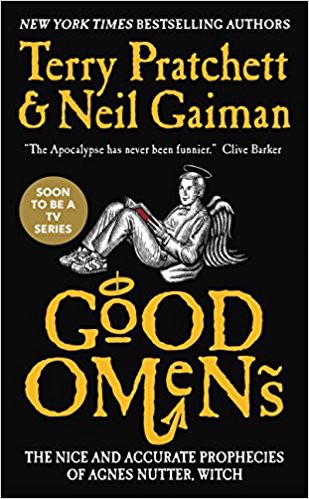
Good Omens by Neil Gaiman and Terry Pratchett

Release Date: Early 2019

With shows like The Good Place and Westworld still topping the streaming charts, it seems existential despair is the hottest entertainment property right now. Further stoking our communal weltschmerz will be this Amazon series of Gaiman’s uproarious apocalypse book. Sci-fi vets David Tennant (Doctor Who) and Michael Sheen (Passengers, Tron) are joined by Jon Hamm, who proved his own dystopian chops in my personal favorite Black Mirror episode, “White Christmas.”

Chaos Walking (The Knife of Never Letting Go by Patrick Ness)

Release Date: March 1, 2019

After we all collectively mourned the tragic death of sweet, innocent Spiderman in the latest Avengers installment, the gods seem to have answered our prayers: Tom Holland is gracing us with another role. Somehow, the producers got Charlie Kaufman to write this YA screenplay, so expect something deeply sinister and nihilistic to underscore the action. Hard to fathom the man behind Anomalisa and Synecdoche, New York adapting a plot written for teenagers, but I’m not complaining. This will definitely be a sight to behold. Plus, who doesn’t want an onscreen romance between Peter Parker and Star Wars’ resident badass Rey?

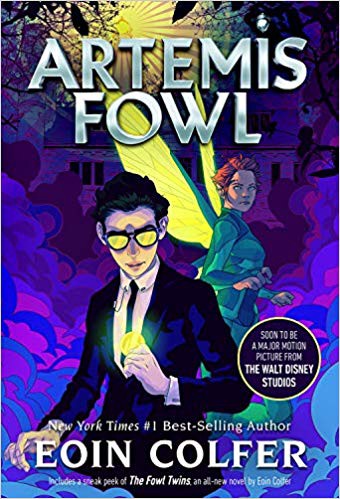
Artemis Fowl by Eoin Colfer

Release Date: August 9, 2019

Sir Kenneth Branagh is directing Dame Judi Dench. Need I say more? It’s been ages since all my elementary school classmates collectively came of age with this beloved series, but I couldn’t be more thrilled to bathe in the nostalgia. Don’t lie, when you read the books you too were convinced you were a child criminal mastermind. Just me? Well, in that case, see the film for those bloody good Irish accents.

It Chapter 2 by Stephen King

Release Date: September 6, 2019

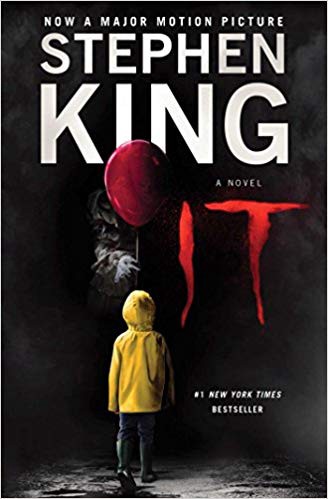
While I found the first film to be… underwhelming, I know I was in the microscopic minority. People went crazy for the (allegedly) spine-chilling blockbuster. For some reason (where were my parents?) I got my hands on the book when I was in fifth grade and, after reading the bathtub scene, didn’t sleep for three weeks. With this foundation, when I saw the movie at a special pre-release screening in theaters last year, I found it to be distinctly un-scary and a disservice to King’s talent. Nevertheless, I’ll be giving Hollywood a second shot with the sequel, in which Jessica Chastain and James McAvoy supplant Sophia Lillis and Jaeden Lieberher as likeable power duo Beverly and Bill.

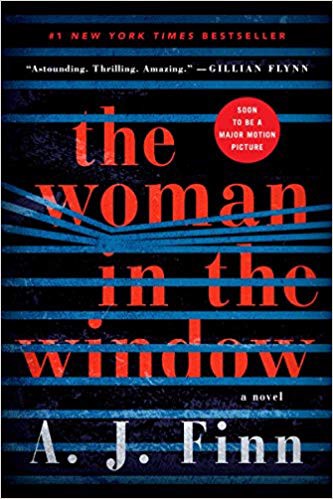
The Woman in the Window by A.J. Finn

Release date: October 4, 2019

The second story on this list about a woman with agoraphobia, the Hitchcockian New York Times Bestseller Woman in the Window boasts none of the levity and mirth of Linklater’s Bernadette. Child psychologist Anna Fox (Amy Adams) witnesses something horrifying while spying on her neighbors, launching her into a maelstrom of crime and darkness. Julianne Moore and Gary Oldman costar.

The Goldfinch by Donna Tartt

Release Date: October 19, 2019

Everybody’s choice book club book from 2013 is hitting the big screen, folks. I’m eager to see what stacked ensemble Sarah Paulson, Nicole Kidman, Ansel Elgort, and Luke Wilson bring to the celebrated Pulitzer Prize winner.

Death on the Nile by Agatha Christie

Release Date: November 8, 2019

More Kenneth Branagh, in case anyone besides me cares. More importantly though, more Agatha Christie! Branagh follows up Murder on the Orient Express as Poirot in Christie’s classic whodunnit.

Catch-22 by Joseph Heller

Release Date: TBA

I haven’t the slightest clue how they intend to cinemafy Heller’s postmodern satire (although it’s been attempted before), but I do know George Clooney does charismatic antihero as well as anyone. Christopher Abbott, otherwise known as my sexual awakening Charlie Dattolo in HBO’s Girls (r.i.p. Charnie/Marlie), will be playing the befuddled bombardier Captain John Yossarian. Coming to Hulu sometime next year, so be sure to snag your ex’s mom’s login info to stream it.

Motherless Brooklyn by Jonathan Lethem

Release Date: TBA

Truth be told, I haven’t read the book for which Lethem won the National Book Critics Circle Award, but I loved Fortress of Solitude and I feel like that gives me substantiated right to speak on the matter. Also, since it won the award, some people probably thought it was pretty good. Also also, Bruce Willis, who’s starring alongside writer/director Ed Norton, Alec Baldwin, and Willem Dafoe, lives in my hometown.

Cats: The Musical! (Old Possum’s Book of Practical Cats by T.S. Eliot)
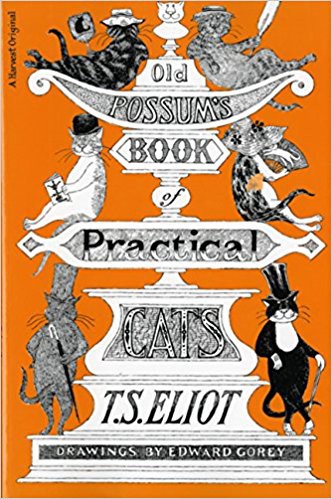
Release Date: December 20, 2019

Okay, I’ll be honest again since I’ve set the precedent for that above. I think Cats! is a heinous abomination and nobody should ever pay to see it on Broadway. Don’t @ me. Andrew Lloyd Webber, you did something unconscionable to T.S. Eliot and I do not forgive you. Listen, I’m also bitter because Universal was slated to release Wicked instead, but the seminal Oz story has been reportedly pushed back. Regardless, every time I read something about the Cats! movie it’s somehow more shocking than the last. Ian McKellen, James Corden, and Idris Elba in feline suits? Plus Taylor Swift’s in it, who recently broke her silence against white supremacy, so I guess we can like her again? While the jury’s still out on Swift’s cultural absolution, we can at least thank God that Jennifer Hudson will portray Grizabella. I already know what I’ll be listening to on my morning commutes next winter. Meeeemory, all alone in the mooooonliight…

Little Women by Louisa May Alcott

Release Date: December 25, 2018

It’s like Greta Gerwig got my Christmas list a year early. Emma Watson as Meg? Timothée Chalamet as Laurie? MERYL STREEP AND LAURA DERN AS AUNT AND MARMEE MARCH?! I’m proverbially salivating. Been psyched for this one ever since Chalamet posted a behind-the-scenes shot of repeat-costar Saoirse Ronan on set.

All the Bright Places by Jennifer Niven

Release Date: TBA

Another NYT bestseller. Though Netflix’s IMDb description of this YA flick reads like a tweet spoofing John Green — “The story of Violet Markey and Theodore Finch, who meet and change each other’s lives forever. As they struggle with the emotional and physical scars of their past, they come together, discovering that even the smallest places and moments can mean something” — I’m game for everything Elle Fanning does.

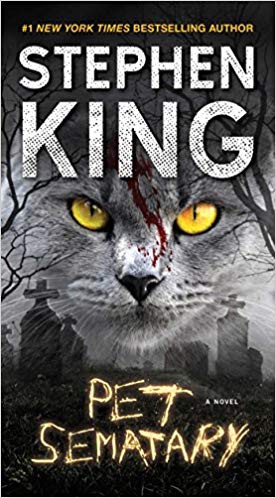
Pet Sematary by Stephen King

Release Date: April 5, 2019

In spite of my disappointment after It, I’ve got a good feeling about this Stephen King adaptation. Should be fun to watch John Lithgow use a Native American burial ground to resurrect the Creed’s dead cat.

Five Feet Apart by Rachael Lippincott

Release Date: March 22, 2019

Advertised as “perfect for fans of The Fault in Our Stars” so prepare accordingly, Five Feet Apart follows the tragic star-crossed love story of two cystic fibrosis patients, Cole Sprouse and Haley Lu Richardson, after they meet in the hospital. In the trailer, Stella (Richardson) declares, “This whole time I’ve been living for my treatment, instead of doing my treatment so that I can live, and I want to live.” Yikes. Readying my tissues and suspension of cynicism now.

The Nightingale by Kristin Hannah

Release Date: January 25, 2019

The story of two sisters struggling to survive amidst the German occupation of France during World War II, this triumphant historical fiction novel spent nearly a year on NPR’s Hardcover Bestseller List.

The Underground Railroad by Colson Whitehead

Release Date: TBA

Last but certainly not least — in fact, the bullet point about which I am personally most excited — Oscar winner Barry Jenkins (Moonlight) is developing an eleven-episode series for Amazon based upon Whitehead’s novel of the same name. Jenkins just debuted his first book-to-screen adaptation at festivals this year: the critically acclaimed tour-de-force after James Baldwin’s If Beale Streat Could Talk which hits major theaters nationwide December 14th. If you haven’t already, read Whitehead’s heart-wrenching, erudite, revolutionary Pulitzer Prize and National Book Award winner ASAP. The release date for the film has yet to be disclosed, so the clock’s ticking!