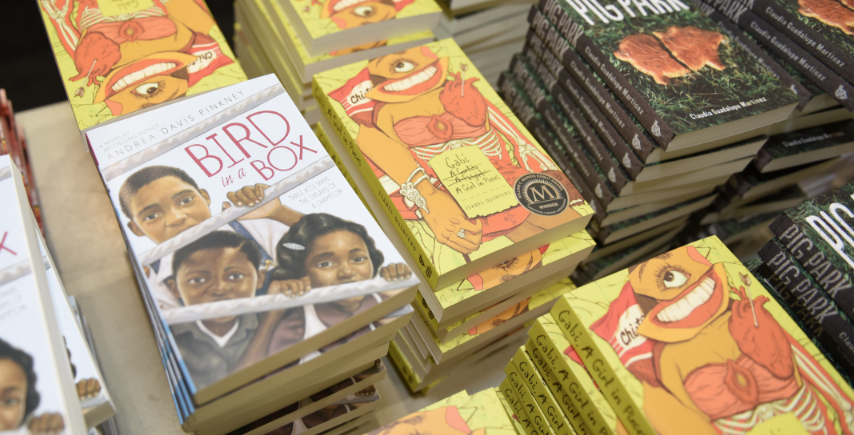
The official start to summer is fast approaching and along with sun-soaked days comes an onslaught of earnest “beach reads recommendations” from publishers, magazines, and even your next-door-neighbor. But what the fuck is a beach read anyway?
In short: a beach read is pleasurable. It’s an escapist experience that draws you in like a receding tide and deposits you right back on shore when you’re done. It could also be that book that you whip out in public so that everyone can see your dazzling wit — no judgement, we all like to show off a fancy cover every now and then.
But what if you don’t want to read a light, fluffy book with a happily-ever-after that leaves you feeling like a mermaid unicorn? From a novel about the violence of the prison-industrial complex to an anthology on rape culture to a short story collection about the ugly side of nature, these 9 anti-beach reads will leave you filled with terror, rage, or melancholia.
Set in a beautiful beach resort in Montego Bay, Jamaica, sisters Margot and Thandi live their days surrounded by white sand and breathtaking ocean views. Sounds like a perfect beach novel, right? Too bad paradise is only surface deep. Margot, a closeted lesbian, sacrifices her body to white tourists so Thandi, the family’s greatest hope, can have a good education and become a doctor, lifting their family out of poverty. Thandi, however, is more interested in becoming beautiful and secretly bleaches her skin. As the community falls apart at the hands of white developers, Margot fights for financial stability, sexual autonomy, and the hopes of a better life.
It is the summer of 1950 in Salt Spring Island, Canada, nine-year-old Willa’s childhood is upended by the arrival of her mom’s new boyfriend and his two sons, Kenneth and Patrick. Her sister Joan and Kenneth immediately form a sweet and tender relationship, while Willa finds herself inexplicably attracted to Patrick despite becoming the victim of his sadomasochistic acts. Spanning decades and countries, Willa struggles to break free from the sinister, hypnotic hold that Patrick has over her until an act of desperation that ends badly for everyone.
When twenty-six-year-old Yu-jin find his mother’s bloody corpse and a distressing gap in his memory, a combination of denial and horror sets him off on a search for those lost hours. The horror has only just begun. As Yu-jin soon discovers, uncovering one truth has the unfortunate consequence of unearthing countless more. The first of You Jeong Jeong’s novels to be translated into English, this psychological murder mystery subverts the usual cliches of its genre with a relatively early reveal, but this only adds to the tension that carries you through the rest of the story. The intense focus on the psychology of the perpetrator and the unreliability of the narrator bring out a sense of paranoia that leads one distrust their own perceptions.
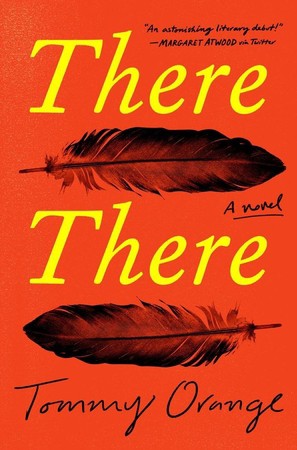
Split between twelve characters, There There crosses multiple generations in a portrait of disorientation and rediscovery. This contemporary epic traces the paths of urban Native Americans, who experience the disconnect between historical representation and collective memory. Interspersed between the twelve characters’ journeys to the Big Oakland Powwow, Orange embeds clippings of a traumatic past — stories of sacrifice, loss, and tradition that can only begin to correct a miswritten record.
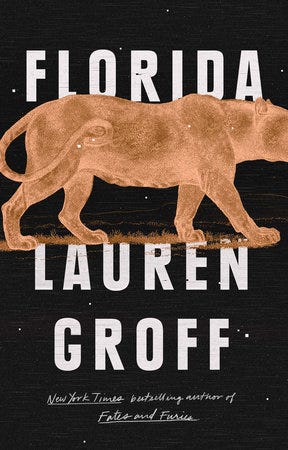
Lauren Groff’s new short story collection drowns her characters in their own emotional turmoil and tosses them to the mercy of nature. Some stories in this collection follow children, others a single person or an entire family enclosed by woods, but in every case Florida — as a state, as a landscape, as a collection of individuals — provides an uneasy backdrop. Metaphor and reality become difficult to distinguish as the wilderness looms threateningly in the peripheries of every tale.
Inmate W314159 becomes Romy Hall’s new identity the second a pair of metal shackles enclose her wrists. Life inside a women’s prison bares no resemblance to the life she lived outside in Northern California. Outside she had her son and a childhood in San Francisco. Inside she only experiences violence from other inmates, guards, and the justice system itself. Kushner witnessed life in California women’s prisons first hand, collecting personal histories to better understand and portray the world inside the system. Beautifully written, the novel depicts the painful truth of prison as an ugly, absurd place where even sunlight is a luxury.
Not That Badcollects essays and personal accounts from women who refuse to accept the silence that surrounds rape culture. The title itself drips with the indignant sarcasm that serves as a uniting theme for the book. Sad as it is to say, we live in a rape culture, and Not That Bad serves as a vehicle to speak out against that culture. Edited by bestselling author Roxane Gay, the anthology of both new and previously published pieces is tragic, moving, and a necessary read in the #MeToo era.
Translated from Norwegian, Karl Ove Knausgaard’s autobiography is framed as an attempt to explain to his newborn daughter why her mother is not around. The entirety of the book takes place over a single day. He wakes up, feeds his daughter, attends to his other three children, and suffers the quiet breakdown of his own spirit, all the while tiptoeing around the absence of his wife. Saturated with paternal affection and bitter introspection, Spring — following in the wake of Autumn, Winter, and My Struggle — borders on prose poetry as it wades into the depression that plagues a family.
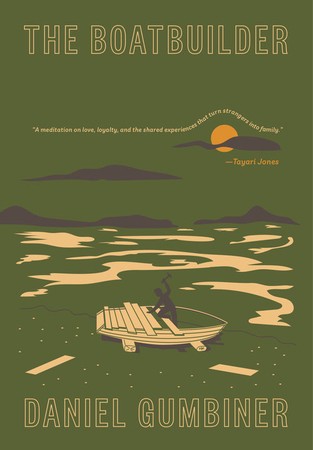
Berg was hardworking guy until a concussion left him with brain injury and an addiction to painkillers. He breaks into strangers’ houses to raid their medicine cabinets for opiates. On a downward spiral to rock bottom, Berg Berg’s path crosses with a reclusive master boatbuilder who presents him an opportunity to move forward with his life. Fear, addiction, and resilience war with one another in this small town in Northern California.
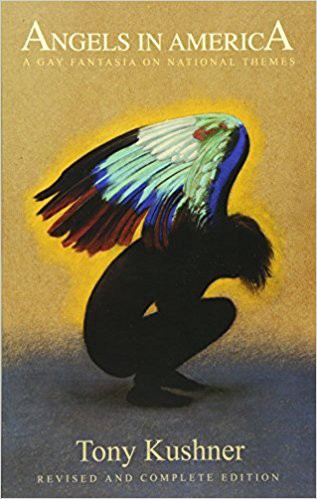
I have read Angels in America so many times, and was reading it so constantly for such a concentrated period of my life, that I have no memory of reading it for the first time. Or rather, my memory of reading it for the first time spans roughly from the beginning of high school until I moved away to college. My parents saw the play in many of its early incarnations — in San Francisco in the famously baggy, improvised, thrown-together and magical production that at once made famous and tore apart the Eureka Theater, and again, a few years later, in its original Tony-award winning production on Broadway, over the course of two consecutive nights. I didn’t attend any of these productions with them — I was too young to see a play that definitely had dicks in it.
But for some reason, a few years later I bought a copy (at the time, a two-volume laminated edition, Millennium Approaches and Perestroika each their own slim volume, Perestroika significantly heftier, held together in a plastic case), when I was maybe fourteen. I lost those copies of the plays years ago in a move or a breakup, after dragging them around with me through a significant portion of my adult life, the laminated edges curling away from each other, my spindly high-school-student notes littering the margins, my favorite passages stained and crinkled. I lost track of a lot of possessions through an irresponsible and precarious experience of my twenties, and most of them were easy to give up, shrug at, write off the loss, but these I will never quite forgive myself for losing. But anyway, I picked it up this play around age fourteen, and then didn’t really ever stop reading it for the next four years.
My endless rereading of Angels in America while I was growing up may be the closest thing I’ve ever had to a religious experience. I kept my copy next to my bed, could quote any piece of it from memory, and eventually started to use phrases from it in my own speech without even realizing I was doing so. I would open the text at random and read a few scenes as a balm whenever I had had a bad day. I understand this is basically analogous to a how a devout Christian person might form a relationship with their Bible. But even that comparison is something my obsessive reading of Angels taught me to make. Angels is a secular play obsessed with religion, a play looking for the traces of faith in every human act, a play that insists on raising the visible and familiar events of life into the grandeur of the Old Testament. It is a play unsure it believes in angels, ghosts, gods, or prophets in which angels, ghosts, gods, and prophets are all literal characters on the stage. It is a play about how we knowingly or unknowingly grapple with the religions of our country, our family, our ancestors, about the way religion is knit into the bones of how we feel what we feel. My dogged and grandiose insistence on religion-based metaphors, and probably even my tendency to date people with serious and fraught religious upbringings, likely is due to how much I read Angels in America as a teenager.
My endless rereading of Angels in America while I was growing up may be the closest thing I’ve ever had to a religious experience.
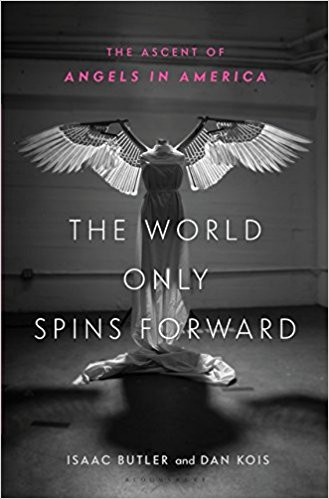
I was 32 years old when I experienced Angels for the first time as anything other than text on a page. In the wake of the wonderful Slate piece that became the even more wonderful The World Only Spins Forward, an oral history of the play, I decided that my husband Thomas and I should watch the HBO movie together. Thomas had never read the play, and wasn’t familiar with it at all, and I had never seen the HBO movie because I was too familiar with the play and was afraid to watch it.
Lots of people — I suspect I’m one of them — talk about the tender beauty of sharing the experience of a thing one loves with a person one loves when the person is unfamiliar with that thing. It’s true that it is possible for this to be a beautiful affirmation, an alchemical joining-together, but what’s more true is that this experience can only exist on the extremes of a spectrum: It is either beautiful and transcendent or extremely shitty for everyone involved. And more often, it’s the latter. It’s nearly impossible to go into this situation in a fair and reasonable way. I fundamentally don’t believe that we should decide how we feel about people based on their taste in art, but the simple truth is that Angels in America is so embedded in my understanding of not just myself but of what humans are and what love is that it would have shaken the foundations of my feelings for this person if he hadn’t loved it — which is a horrible thing to think, especially because there are lots of perfectly good reasons not to love this particular text. The stakes were way too high for either of us to enjoy it; I breathlessly watched his reaction more than I watched the movie, which in and of itself guaranteed he couldn’t actually enjoy, or even really pay attention to, the movie. I hadn’t realized — though of course I should have — that the text would be changed somewhat from the old printed version I had once had, and every time a single line was rewritten or left out, I felt like a personal injury had been done to me. If we define ourselves too much by loving a particular work of art, we risk eclipsing the work entirely, shutting ourselves out from it, in the same suffocating way it is possible to love a person and drive them away by doing so. Thomas read the play afterwards, at my urging, but never had the life-altering reaction to it I expected, at least not visibly. The truth was that he couldn’t have; I had stacked all the cards too perfectly against him.
When Marianne Eliot’s anniversary revival of Angels in America, first at the National Theatre in London and then on Broadway, was announced, I felt mostly offended and inconvenienced by it. This is how I usually feel when something I really love and have loved for a long time is made slightly more public and available in the world. It was the sinking feeling of waking up to find out that for some reason everyone on Twitter is talking about some work of art I have kneaded into the recipe for what I understand as a self, and it turns out that all these other people care about it too. It feels like coming home to discover that a crowd of other people want to sleep in my bed because they, for some deluded reason, think that this is actually their bed. Sometimes in museums, near to pieces of art that have meant a great deal to me, I want to cover the canvas with my body, block it off from anyone else seeing it, a private room between the work and myself. Seeing that many other people have had the exact same personality-forming experiences that I have had makes me want to stand on something tall and shout like a child trying to be noticed at an adults’ party. I spent way too much money buying tickets to see the revival of Angels; it was the thing there was to do about it.
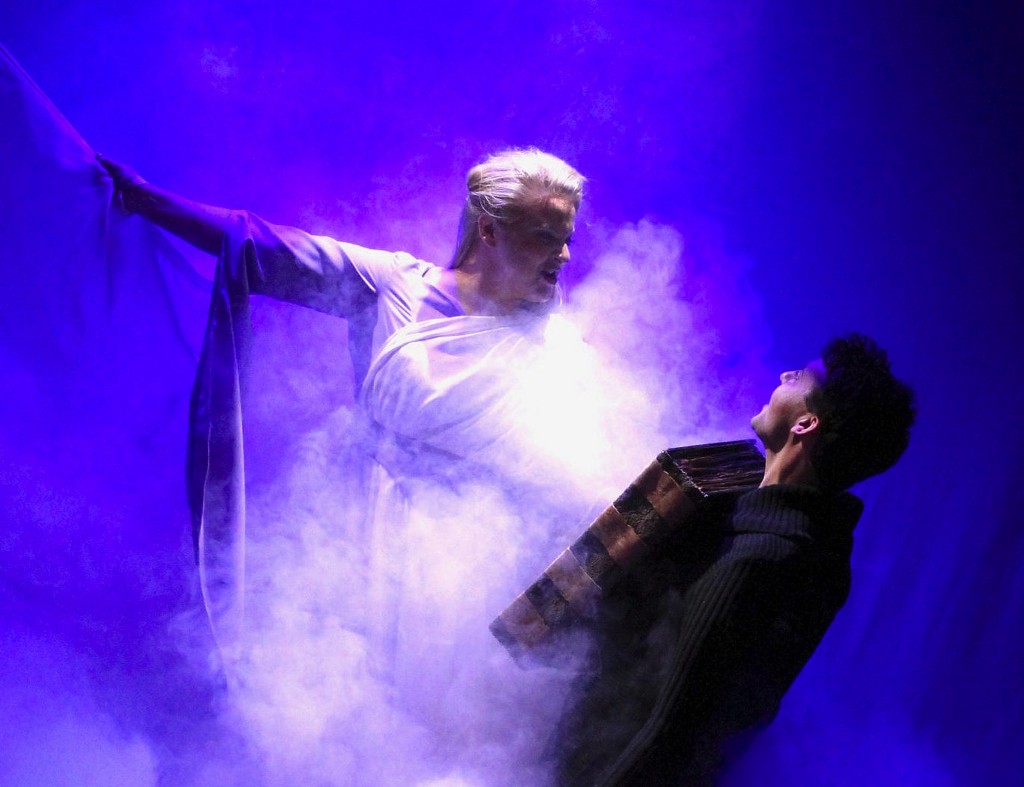
I was miserable and jumpy when I sat down to see Part One, so hell-bent on the experience being perfect that I nearly ruined it. But then the lights went down and the play itself overwhelmed all the ways I had made it about myself, which is among the best things we can hope for art to do. I got swept up in the lives of these people, these characters I have known for so long that I just think of them as people, in the way my family are people, the genderqueer, oversexed, weird-poetry-speaking Angel like an aunt you look forward to seeing at Thanksgiving. Even though the production was uneven, I had forgotten how much fun this play is, how aside from everything weighty and important and heartbreaking about it, it also works as a roller coaster ride. Part of the joy was being able to reconnect with my thirteen-year-old self through it; Angels was so much a part of my adolescence that actually seeing it onstage functioned as time travel. But at the same time, it was a meaningful record of difference, of how both my relationship to the world, and the world itself, had changed. (My tendency to over-rely on big and nebulously meaningless words like “the world” in my writing is also, by the way, the fault of Angels in America).
When I first read Angels in America, it seemed to contain the entire universe. I was at the time, at hinge of adolescence, more than anything else looking for examples of bigness, in art but in everything else as well, anywhere in the world that might offer them, in personality, identity, celebrity, love, books, cars, music, whatever. I knew I was larger — literally and figuratively — than I was supposed to be, especially as a teenage girl, and I wanted some kind of affirmation that this was a way I could live successfully, and that my relation to largeness, to my in-every-sense tendency to hyperbole did not have to be one of unending, grinding shame. I fell so hard for Angels because it was the largest thing I had yet found. Not one thing about about Angels is economical. Reading The World Only Spins Forward, I learned that most people think Millennium Approaches, the first of the two parts, is the better play, mainly because it’s more tightly written and constructed, better polished and edited. This is probably the same reason I’ve always liked Part Two, Perestroika — too long, baggy, weird, saying everything it has to say three times in three different ways to make sure it got said fully — best of the two. It is just so unreasonably large, so unnecessary, so swaggeringly magnanimous in its ridiculous size.
When I first read Angels in America, it seemed to contain the entire universe.
But seeing it on stage, what surprised me most was that Angels felt small — my experiences had gotten larger and I could see the play had edges and limits. There is plenty of life that this work does not even touch, and those omissions seem far more glaring from a greater perspective, as a person who has lived beyond her teen years. There were many scenes or statements that I found thin or with which I disagreed. I had sometimes wondered, since first reading it, why it was that as a relatively privileged teenager living in a homogenous upper-middle-class Northern California suburb, I had connected so deeply with this play about the mid-1980s AIDS crisis in New York City, but rewatching it, it was easy to say why the play’s surprisingly limited perspective would appeal to exactly that kind of person. Like many works of art I grew up thinking contained the whole world, it in fact only contained the very specific world of a very specific sort of people. At BuzzFeed, Steven Thrasher writes eloquently about Angels’ “terrible racial politics,” which “[give] the impression that black American queerness exists only in relation to white, gay men.” Thrasher points out correctly that “it’s important to ask who gets to tell mainstream AIDS stories in America, and to consider why this one — about white, gay men who don’t really engage in any political resistance — keeps getting retold.” Angels is an extraordinarily limited story, but it was easy to see why, as a sheltered white teenager, to me it felt like the whole world.
Angels is a narrow story primarily focused on the concerns of a very specific type of white man. The women, as Thrasher also points out, “are caricatures,” or at least far thinner and less sympathetic, less capacious, than their more numerous male counterparts. I can see from a distance that my obsession with this play in some ways opened my mind, but in some ways reinforced my interest in a small subset of stories, and my conviction that men’s narratives would always be more interesting than my own. Echo chambers by nature feel much larger than they actually are; that’s how they’re built to work. More than anything, I realized after seeing it on stage this year, Angels reminded me of my experience of Twitter, both how I once thought it was some strange and messy utopia, and how, in the years since then, it became clear that Twitter is not a universe but an echo chamber. The play and the website share a lot in common: Everyone is very angry and sick and everyone is horny on main. Everyone has big things to say about God and America. There are a lot of breathtaking two-sentence sentiments that sound perfect but maybe don’t hold together when examined. They both think New York City is the entire world, and talk about middle America while actually having little to no experience or understanding of middle America. There are a lot of white men yelling, and a lot of relatively questionable statements about mental health. But when each one works, it glitters and seems to offer every available answer, packed to the gills with love around every corner. It makes a very small part of human experience feel like the size of the cosmos. It creates a space in which every hyperbole is honored. Twitter once seemed to me to contain the whole world; part of the process of maturation has been realizing that it is a very small collection of voices whose smallness both represents and is a product of the limited nature of my own experience.
The work that was formative for any of us is always going to be more about ourselves than about the work. But one of the responsibilities, and the joys, of aging alongside art we love is being able to consciously step back from it, to try to disentangle it from our own personal narratives. This is a difficult process, and carries the risk of being disappointed by the thing one loves. But in return, it offers perhaps the closest thing to the experience of getting to read or watch something again as though for the first time. In 2018, Angels in America is a cultural artifact, a relic of a bygone piece of history. To ask whether it is a period piece in the same breath as asking whether it’s still relevant misses the point: It is relevant because it is a period piece. Angels is a history lesson, but it was maybe always written to be one. It can no longer even be read as a comprehensive history of the era it portrays, but it no longer seems like one. Its limited viewpoint makes it a very well-written play, rather than a bible. It is as useful for showing how and why certain people’s stories achieved an unwarranted centrality as anything else, but that in itself is a history lesson.
One of the responsibilities, and the joys, of aging alongside art we love is being able to consciously step back from it.
As a preteen reading the play for the first time, the exhortation “the great work begins” felt personal, something to pick up and run with. I was very young and naive and willing to join myself to most any grandiose statement. Watching it today, I felt almost the reverse. The most relevant and useful aspect of the play is the way in which it is about failure, both in content and form. Most of the characters in it fail, but so does the play, the “great work” itself. It’s worth noting that a great many of the productions whose history Kois and Butler’s book details were also failures, often resulting in crisis, bankruptcy, or obliteration for the theaters that staged the play. Most grandiose things fail; most stories that attempt to be comprehensive betray their own limits and smallness instead, coming to rest on the ambivalences and inabilities that characterize the play’s central characters. It is hard to believe that, as Prior tells us in the play’s last moments, “the world only spins forward,” looking from where we were in the 1980s to where we are today. But that benediction as the lights come up still feels hopeful, that in the midst of failure, we could still attempt to find a sort of magical ongoing in our small and limited lives, to see our narrow stories as vaster than they really deserve to be.
Perhaps part of the great work the play asks us to begin is the work of dismantling our near-religious attachments to art or ideas that formed our identities when we were younger, and to move outward into engagement with stories that do not so easily reflect that familiar back to ourselves. I was relieved, walking out into Times Square at the end of Part Two, to find that Angels still felt insistently magical, overwhelmingly human. Admitting the way in which the play has not entirely aged well, the way in which its limits and flaws have grown clearer, allowed me to feel able to access it again, as one work of art rather than as the whole world.
SOMETIMES BY LOSING A BATTLE YOU FIND A NEW WAY TO WIN A WAR
Herded into Walmart (big arms
profiteers)
to live in the aisles of glittering Big C
where the bare shelves says it all:
make money,
these are boys, ages 10–17.
Hate does not
dissolve like jell-o, it hardens with ICE.
The big war hero is referring to
a 1985 real estate deal
blocked by NYC tenants. He refused
repairs, begged the city to house
the homeless
in the building to get rid of the tenants
who won. Thirty-three years ago.
Even cruder men,
(meaning “mankind” except for the “kind,
but including women),
politicos (the rapt collective) call on god
to justify –
I get off FB, its talons tight,
ready to drop me from a great height.
The Walmart shelf’s empty but for
the rock
a mother gave her son (rocks survive
gassing).
Don’t forget the angry fathers,
and the shelves, their miles wicking desire –
O let me have that
like your own Felix
and the tired immigrant who is everyone’s grandfather (yes,
Native Americans came from elsewhere)
who rolls the cart fast to checkout.
(is the soap they offer stone?)
Mothers call coyotes to return
to certain death
so senators can say See
how greedy we are, O say can you see?
O the letters I write, the calls I make –
(they’ll come for us next)
the parents hundreds of miles away,
not shopping, not paying taxes
not weeding
not cleaning
not tending our children.
Stay
where you are, says the movie,
say the cowards (we get the brave ones).
They were not frozen the way we are,
waiting for elections
to be overseen by Russians,
as if our lives
depended on it.
Try to smile, we tell them.
MEN WRECKING THE GOD PLACE
Only pirates elect their captain
but we trump, trump, trump them.
Who is less responsible in the long line
of Not me from one president to the next?
Cumulative, like rain. Drums beat the main streets,
the main sheets, as rain always has.
Rations, yes, we hold our nearly empty cups
to our mouths, and our humanness, that mess,
gets excreted over the side, but this time
the ocean won’t take it. We stand in it,
we pray for more storm. Some sacrifice to the gods,
collect those oranges, drink the proffered wine.
The miracle: rainbows spread democratically
beyond the stern where imperfect sailors stand
on imagined solid ground, witless, good only for
interplanetary export, more planets that need
to be taken down or seined out of the water
reflecting us, so needy, so Narcissus.
About the Author
Terese Svoboda’s seventh book of poetry is Professor Harriman’s Steam Air-Ship (Eyewear). She has poems forthcoming in Poetry, Manoa, Juked, and Tupelo Quarterly. Great American Desert, a book of stories, will be published next year.
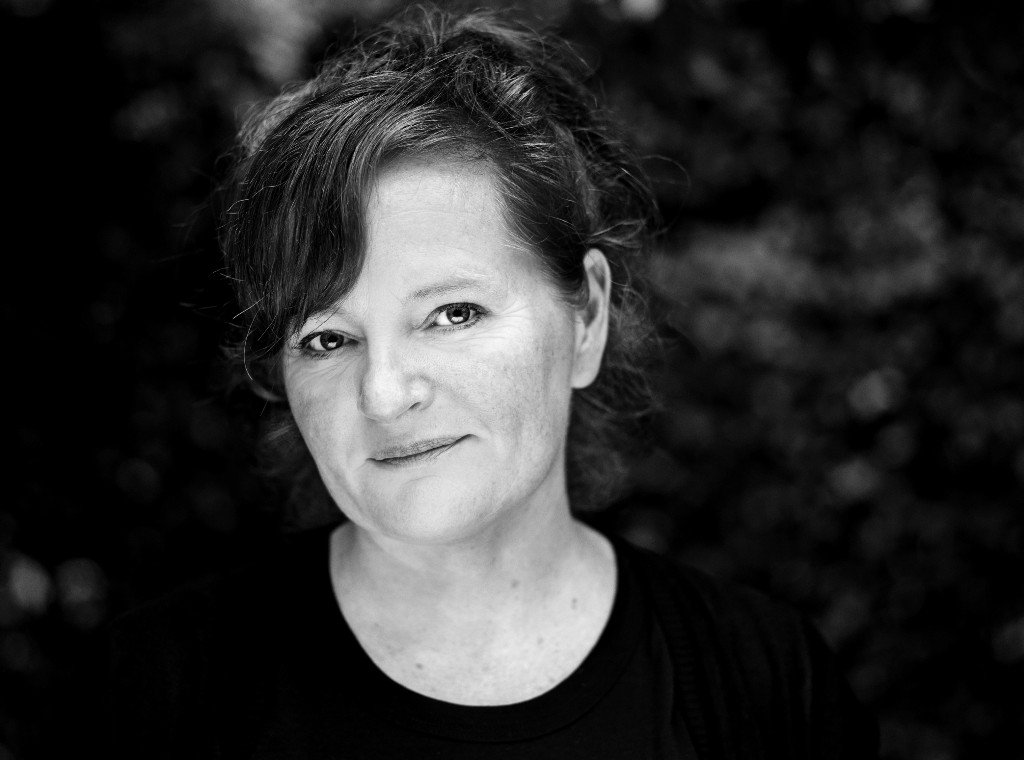
Dorthe Nors is a writer in motion: at home in the city and the countryside, observant of the changes in her surroundings, of the minutiae in the relationship she holds with the environment. It makes her more alert, creative in her work. Born in Herning, on the Danish peninsula of Jutland, she can be seen wandering on the West coast near Ringkøbing, where she now lives, or walking through the streets of Nørrebro, in Copenhagen, may be visiting friends in Århus where she studied literature and art history. She feels comfortable with both, the novel and short story form, and her collection, “Karate Chop,” won the P.O. Enqvist Literary Prize in 2014.
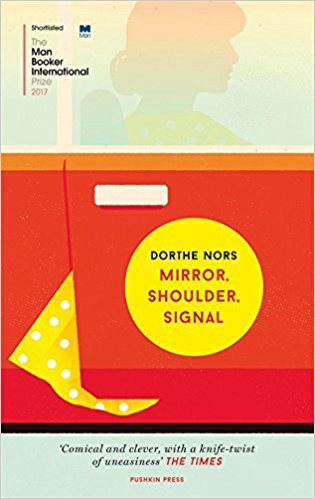
I met Dorthe Nors in early May, when she came to Bozar Centre for Fine Arts in Brussels to talk about her most recent novel, Mirror, Shoulder, Signal, which was a finalist for the Man Booker International Prize 2017. The novel will be released in the U.S. this month. She has worked as a translator and is interested in the implications of transferring meaning between two languages. Sonja, the protagonist of Mirror, Shoulder, Signal, is a translator of crime fiction, and finds herself in an existential trap. In her 40s, she’s losing the fascination she’d once found in translating crime novels. In the city she cannot escape because she cannot even drive. She can no longer find a connection with her sister Kate, who stayed back in their home town and is married with children.
In her novels and short stories, Nors explores the darker sides of human nature, exposes them to the eye of the reader because there is no point in looking away. It is the job of a writer to present the mirror of what has been ignored or overlooked. Nors writes modern fiction with a piercing yet empathetic eye and we discussed this and other topics in her work from uprooting oneself and misogyny to family and friendship.
Mauricio Ruiz: In Mirror, Shoulder, Signal, the protagonist, Sonja, is a translator of a Swedish crime writer, Gösta Svensson, who writes of violent acts against women and children. You mentioned that when Sonja lends her language to translate these kinds of stories, it has an effect on her. Can you elaborate on this?
Dorthe Nors: Language is a dangerous, wonderful, powerful and very transformative thing. Wasn’t it William S. Burroughs who suggested it was a virus from outer space? Well, language forms us. Apart from giving us the power to speak our mind, it also influences us or even manipulates us. There’s a reason why dictators speak in specific ways, and why political systems will use (and abuse) language in order to control the masses and stay in power. It’s no secret that translation can be both uplifting and damaging to the soul.
It’s no secret that translation can be both uplifting and damaging to the soul.
As a writer, borrowing your voice to somebody else’s language is a beautiful and sometimes brave thing to do. For a couple of years I translated books and found that, after spending 4–5 months with somebody else’s language, I would be able to pretty much make a psychological profile on them. I tell you this well aware that my English translator Misha Hoekstra, who I work closely with in the translation process, probably knows more about me than I think he does. A translator I know translated Shakespeare. Knowing how close a good translator gets to the material, I asked him whether Shakespeare was a nice person or not. He said he was absolutely wonderful. I asked a German translator of the Danish writer Hans Christian Andersen the same question and he immediately said, “Such an obnoxious man!” Lending your voice and your language to a writer whose literature circles around murdering women will of course have an affect on the translator. At least it does have an effect on Sonja in the book. The big difference between Sonja and the translator I used to be is that I had my own voice. I was writing my own books. I wasn’t trapped in another writer’s spectacular and perverse universe, but it was interesting to write about someone who was.
MR: One of the themes you explore in the novel is the idea of uprooting oneself, with all of its implications (adaptability, exposure to diversity of experiences, restlessness, distractions). Has modern life created a constant feeling of lack?
Dorthe Nors. (Photo by Agnete Schlichtkrull)
DN: It’s a very interesting existential situation to describe as a writer. I think a lot of growth, identity, and awareness, comes from destabilizing yourself geographically. A lot of creativity too. I, for instance, enjoy writing my books in different places because destabilizing myself makes me more aware of my surroundings and my own being in the world. In Mirror, Shoulder, Signal we have Sonja who left the rural areas for Copenhagen when she was in her late teens in order to study, and we have her older sister Kate, who stayed back home in the village where both girls were born. Kate’s values, her outlook on things, her geography, her sense of landscape and modernity is shaped by traditions. That leaves us with two sisters: one who uprooted herself, and one who didn’t feel she needed a better life, but stuck with the one that was outlined for her. These two women are hardly able to communicate anymore. Maybe they don’t even live in the same world anymore. Maybe some of the great divides we see in Western culture right now can be mirrored in the disconnection between these two sisters. Wouldn’t that be grand?
I think a lot of growth, identity, and awareness, comes from destabilizing yourself geographically.
MR: In the countryside there are fewer distractions, and one is often confronted with aspects of oneself that are otherwise swept under the rug. How has living in the city affected Sonja?
DN: I think living in the city has left Sonja dislocated and disconnected from other people. It’s made her lonely. All relationships require planning. Being with someone takes effort. She never just sits down with someone (’til very late in the story, that is) and she’s never able to “just be herself” in relationships. That’s also due to her “go with the flow” nature that has left her weak when it comes to finding direction. Urban life takes place on the streets, in cafes, in public, and intimacy suffers from that. I think Sonja is a woman who misses intimate relationships, which is also one of the reasons why she tries to call her sister back home all the time, but even that intimacy has been lost. Time, distance, different circumstances have left them with different languages, values, outlooks on life. The good thing about city life, however, is the perspective that it gives on the world. The diversity! The many different kinds of people! The extravaganza! The larger-than-life-ness. The ability to accept that people have different religions, traditions, sexualities, etcetera. All the things you can mirror yourself in! But the good thing about living in the landscape is meeting with that which is bigger and greater than you. It’s also a place where you’re forced to meet yourself and deal with yourself in a different way. To people whose life has been shaped by both the rural and the urban I think there’s a constant love for both places.
MR: Why do you think it’s so difficult, if not impossible, to go back to the place one came from? Despite the transformations caused by living abroad, away from one’s family, doesn’t the essential part of oneself remain?
DN: Just as you cannot step into the same river twice, you cannot return to the place you came from. The place you came from is in the past. You cannot return to the past.
MR: Belgian novelist Annelies Verbeke mentioned that most of Svensson’s fans are female readers (despite the violence towards women in his books). Why is that the case? What does that reveal about our society?
DN: Crime fiction has both male and female readers alike. What I state in the novel is that Gösta Svensson, because he has such a handsome and gentlemanlike appearance, appeals to women. The writer himself is a sex object, a powerful cliché of masculinity that some women buy into. That said, a lot of women read crime fiction and have no problem dealing with the sexual violence towards women you often find in them. I think a psychologist could write a very interesting thesis on why. My thesis in short is that we as women are so used to seeing violence against women in fiction that we don’t even notice it anymore. The appeal of crime fiction goes beyond that. It has the structure of fairytales and there’s always a closed ending in which we know who did it, why he did it and how he did it. In contrast to real life where we never know shit, that’s very calming. No loose ends!
MR: It is true that some women do not notice it anymore, while others not only see it but have started fighting to put an end to the constant depiction of violence against women in mainstream media. What lies at the core of this difference? Why have some seen it and begun to taken action, while others haven’t?
DN: I think big―and important―changes always take a leap forward and leave many behind. I think some people are comfortable and depend on the way things are, even if they’re wrong. A certain fatigue might also have gotten to some women: Why bother. It never really changes anyways. Both the codependency and the fatigue must of course be addressed. We must believe in change. Two steps forwards, one step back.
Crime fiction has the structure of fairytales and there’s always a closed ending in which we know who did it, why he did it and how he did it. In contrast to real life where we never know shit, that’s very calming. No loose ends!
MR: You mentioned that in your writing you like to explore the dark side of human nature, that you’re interested in the “shadows” that live within ourselves. How do you aim to achieve that in your writing?
DN: It’s a big question, primarily since I think all good literature is interested in that. And the process of writing should never be explained. It’s like trying to explain how a motor works and then messing the motor up in the process of explaining it. I know this much, though: I have, since I was a girl, been extremely preoccupied with watching and listening to people and I therefore find the contradiction between who people pretend to be and who they really are very interesting. I think people are lovely. I also think they’re pretty messed up, and it’s the messed up side of humanity I think writers should mirror and explore. The writer’s role in society (that is if we still have one now that reality has turned into fiction) is to observe all that escapes the light, all the things that hide in the shadow, search for the language that is pushed beneath the lines, and have a good, deep stare into the voids that hide right under the surface.
MR: You once wrote, “I do write books about middle-aged, childless women on the brink of disappearing — or you could say — on the brink of losing their license to live.” What does Sonja go through to avoid disappearing?
DN: I write books about all kinds of people, but reaching middle aged life myself of course had me focus on the changes that came with that. I don’t think Sonja does very much to stop herself from disappearing apart from finally trying to get her driver’s license and finding the courage to have a voice of her own. I hope people will read the novel to find out for themselves, and I hope it lives on levels that have nothing to do with gender (I think it does). Plenty of men have written about their midlife crisis and their works have been interpreted as “existential and describing humankind.” When a woman has a midlife crisis it should be viewed in the same way (i.e., as “existential and describing humankind”). There is a tendency to make books written by women with female protagonists into books on “womanhood.” But women are humans and describing female lives is describing humankind.
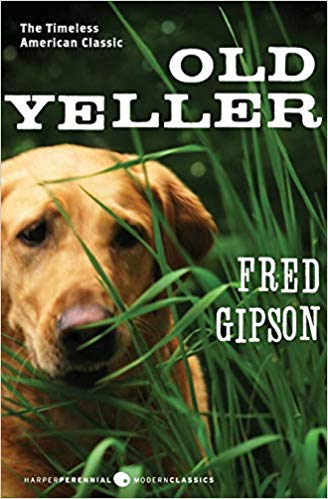
It came clear to me that Mama was right. And from everything I had heard, I knew that there was very little chance of Old Yeller’s escaping the sickness. It was going to kill something inside me to do it, but I knew then I had to shoot my big yeller dog.
“Come on out back behind the barn,” I said to him, a little too harshly, the words barely squeaking past the lump in my throat.
Old Yeller followed me back behind the barn. And that’s when I did it. That’s when I shot my yeller dog.
I don’t know if that’s the term: I think maybe I shoulda said “gave a shot to my yeller dog” instead of “shot my yeller dog,” but it don’t matter. It was still the hardest thing I ever did, because I’m dead afraid of needles, and I never dreamed I’d have to give a rabies shot to my own dog, but it was the right thing to do. Right away, Old Yeller seemed back to his old self: jumpin’ around and lickin’ me, and lappin’ up big bowls of water. He didn’t even complain too much about the shot. His rabies was gone.
“You’ve become a man today,” Papa told me later, at dinner.
“Why?” I asked, looking up from my cornbread. Giving the rabies shot was hard, sure, but I didn’t feel much ruined or much older by it. Then I remembered: Papa had also made me help him with his taxes that day. I sat up a little straighter. Maybe I had become a man after all.
Old Yeller gave a big ol’ woof, then stole the cornbread right off my plate, and we all laughed and laughed and laughed.
Marley and Me
“Do you think they’ll make a movie of this, Jen?” I murmured, my hand stroking Marley’s golden fur.
“Why would they make a movie of this, John?” Jen said, rolling over on her side and pulling the blankets up over her head.
“I’m just saying, we could spin this off into like three books and a movie, minimum,” I continued. Marley’s chest rose and fell under my hand.
“Why would anyone buy a book about two people who get married and have a dog and are happy?”
“Well, the twist is, the dog is kind of a rascal,” I said. Marley smiled in his sleep. He was a very healthy dog who would live longer than me, though I didn’t know it yet.
“That’s not a good story,” Jen mumbled. “Goodnight.”
“Jennifer Aniston would star in it,” I said.
“Goodnight, John.”
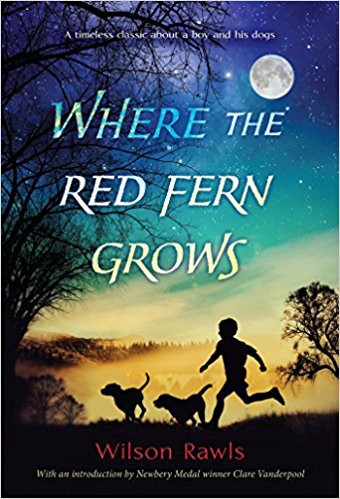
Where the Red Fern Grows
Old Dan and Little Ann stood at the base of the tree, bawling and barking and howling. There was a long, deep growl from the mountain lion, who scampered from branch to branch, its yellow eyes glinting in the moonlight. For a moment, I saw what might happen: the leap of the big cat, the slashing claws, my pups lying bloodied and helpless, dying tangled in a huckleberry bush.
But none of that happened. The big cat hissed, and my dogs howled. I strained my eyes to see higher in the tree, gauging our danger. The mountain lion and I locked eyes. She kept her eyes locked on mine while she slowly reached her paw across the branch, farther than I would have thought she could have reached, and while still staring directly at me, batted a full glass of water off the branch of the tree. It crashed to the ground next to me, right where a red fern was growing.
Eventually my dogs and I grew tired of waiting, and I think the cat fell asleep anyway. And before you ask, yes, I did name my book after what happened that evening, but only because it was so hilarious to me and my living dogs. Where did that cup of water even come from?
The Grapes of Wrath
The dog wandered, sniffing, past the truck, until he found a puddle of water and lapped at it. He raised his head and looked across the pavement. Rose of Sharon screamed. A big swift car squealed its tires and jerked his wheel, the car nearly tipping up on two tires as the vehicle narrowly missed the family pet.
“Dammit, but I won’t be a symbol for the suffocatin’ and murd’rous weight of capitalism and the myth of the American Dream on the day laborer and migrant worker by killin’ your pup with my sportscar!” the driver screamed out his window, giving the whole Joad family the finger.
And he wouldn’t. Everythin’ else — ev’ry death an’ loss an’ unjustice an’ tragedy an’ animal for the next 400 pages or so would basically drive that point home — but at least the whole time, through everything, the Joads had their beloved dog. He wasn’t very good symbolism, but he was a very good boy.
The Art of Racing in the Rain
[No book found]
The Odyssey
The dog Argos lay there, covered in ticks, But as soon as he became aware of Odysseus, He leapt to his feet And put his paws upon Odysseus’ shoulders and it was Almost as though they were hugging.
The dog’s paws wrapped around the man’s shoulders As they shook and shook. It was as though no time had passed Between man and dog.
“Who is this dog?” Odysseus asked at last, smiling through tears As though he did not know his own pup. “Who is this good boy? Who is this good boy? Who is this good boy?”
And the swineherd, though he still did not realize The identity of Odysseus Was filming the whole encounter Because he knew good content when he saw it
And later, without Odysseus’ knowledge, He uploaded the video on YouTube Where it was titled “Dog Greets Soldier Coming Home” And it received well over 3 million views.
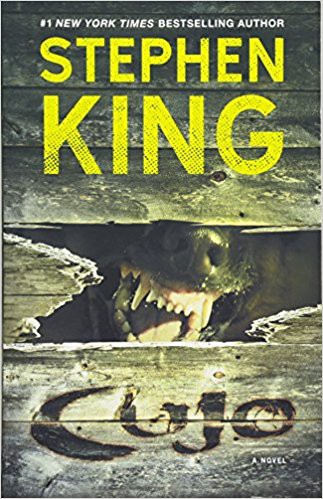
Cujo
Its snapping jaws were inches from her bare midriff, as she scrambled against the passenger seat, reaching out to try slam the Pinto’s door against the rabid dog. Cujo’s eyes met hers. Incredibly, his tail was wagging, even as he snarled, and thick strings of spittle and blood sprayed from his lips. She had a moment, then, while his tail wagged, when she could have slammed the car’s door on him: once, twice, ended it. But then she remembered what she had always said, before Cujo went and started murdering everyone in town: There are no bad dogs. Only bad owners. Or perhaps more specifically, in this case, bad rabid bats.
Did she still believe it? She still believed it. For a moment, she felt a twinge of guilt about moving the blame to a rabid bat. Could it also be true that there were no bad bats? It wasn’t talked about. Cujo roared at the door. The innate morality of dogs is well-established, but in a way, we are just beginning to have those necessary conversations around the morality of bats. She would have to —
THE BOY was screaming but THE WOMAN had suddenly become distracted and had let her hand fall from the door handle. He could tell THE WOMAN would not be smashing him to death with a door because she kept muttering “Maybe the only bully breed here is … man” but he didn’t understand what THE WOMAN meant and so out of confusion he bit her head off, and went on to bite the head off of every person in the whole town. Still, every MAN and WOMAN and CHILD agreed that they preferred to die by Cujo’s jaws than to live with the knowledge that they had killed a dog. Once all the people were gone, he suddenly felt very tired and much less murderous. He let out a big sigh and circled around three times before settling in to take a long, well-deserved nap. He was A GOOD BOY.
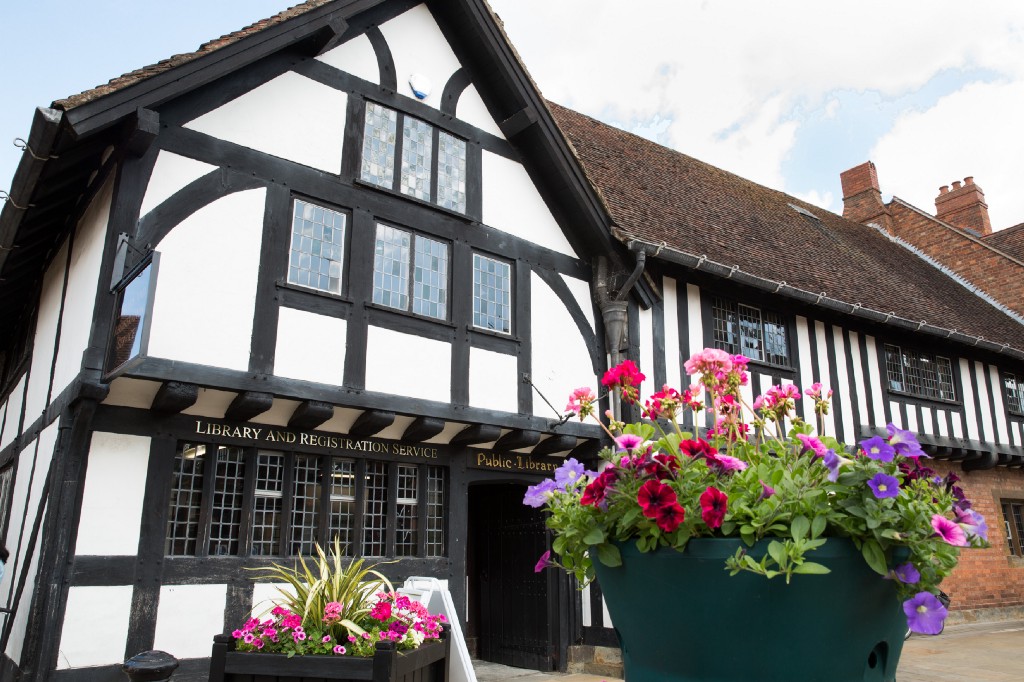
Stratford-upon-Avon is usually thought of as the birthplace of Shakespeare, but perhaps in the future it will be known as the birthplace of our greatest accidental machine poet: an RFID-based book scanning machine that turns returned titles into verse.
Patrons at the Stratford library and other libraries in Warwickshire, England can use the machines to easily check out and return books—just stack them in the scanner, and the machine can read their details from a chip embedded in the spine. If you like, it can print out a receipt confirming your return. Librarians also use the machines to record books that are dropped off, and last month, a Stratford staffer noticed that some of those receipts were downright lyrical.
Can you come up with a better poem? (Boat drawing by Kerry, 26) #RFIDpoems #StratfordLibrary
Since then, several other Warwickshire libraries have joined in—all in the spirit of fun, says Stephanie Bellew, a reader development librarian at Warwickshire Libraries: “There is no rivalry/competition between our libraries — we’re just sharing the words and hopefully others will join in or simply gain pleasure/inspiration from our offerings.” However, perhaps due to its literary heritage, the Stratford branch is still the most prolific (and, as below, occasionally disturbing).
A challenger approaches for "best RFID poem". No accompanying illustration, however
Machines are notoriously bad at generating or even interpreting literature—see, for instance, our reporting about an artificial intelligence trying unsuccessfully to write the first line of a novel, or this article on the difficulty of machine translation. Usually, when they write something decent—like those predictive text novels and scripts that blow up Twitter occasionally—it’s because there’s been a massive amount of human editing on the back end.
The RFID machine in the process of creating. (Photo courtesy of Stephanie Bellew)
Is there human involvement in this case? Well, humans write the book titles, which is probably primarily responsible for the success of the RFID poems; they’re using a limited number of input strings, all of which are already meaningful phrases. Humans also select which books to check out, which can lend a theme to a poem. But librarians swear the scanners do the rest themselves. Bellew spoke to a Stratford library staffer who insisted that selecting titles in order to force a good poem would be “going against the essence of the art.” She herself is a little more lenient: “I definitely think that there is room for ‘manipulation’ with this art form and I’m convinced that there are some very clever library staff out there who will be producing some amazing ‘carefully crafted’ poetry as we speak,” she admits. But if they are, “we should celebrate this as a win for creativity.”
Shipston Library would like to share their RFID poem entry: a poem of love and hope. What does your receipt say? #Poetry #librarylife
“We are really appreciative of our wonderfully creative staff and the fantastic job that they do, and it is so great to be able to showcase this to the wider world,” Bellew told us. And we are also proud of the machines. It’s nice to know that when they take over, we’ll still have poetry.
Wellesbourne Library getting in on the #RFIDPoetry act. Ours is a bit of a soppy one but you've gotta love a bit of romance, eh?
Electric Literature is excited to welcome Meredith Talusan, the executive editor of Them, Condé Nast’s recently-launched LGTBQ website, to its board of directors.
Originally from the Philippines (where she was a child actor in a popular sitcom!), Talusan earned an MFA in creative writing and an MA in comparative literature from Cornell University. Fairest, her memoir exploring race, gender, immigration, and intersectionality, is forthcoming from Viking Press.
Before joining Them, Talusan worked as a staff writer at BuzzFeed covering LGBTQ issues, and has received a GLAAD Media Award for Outstanding Digital Journalism, as well as awards from the Society of Professional Journalists and the National Gay and Lesbian Association. In addition to her stellar editorial work at Them, she has spearheaded special projects like an interactive map and voting guide focused on LGBTQ issues, in partnership with Google. She brings her passion for creative digital initiatives to Electric Literature.
“I love Electric Literature’s mission and the way it bridges the worlds of traditional books and whatever the future has in store,” says Talusan. “It’s vital to keep pushing literature forward, while staying rooted in a tradition of art and scholarship.”
Talusan is the first new member of Electric Literature’s board since Nicole Cliffe, writer and co-founder of the Toast, joined in December 2017. Talusan’s activism as a transgender writer, and as an editor amplifying trans, queer, and genderqueer voices, fits right in with Electric Lit’s goal of making literature relevant, exciting, and inclusive.
“The principles of our mission should be reflected by our board,” says Electric Literature’s Executive Director, Halimah Marcus. “We want our readers to feel represented in our leadership as well as in our subject matter and bylines.”
Talusan will join Cliffe and other board members Andy Hunter, Electric Lit’s co-founder and publisher of Catapult and Lit Hub; acclaimed novelist Michael Cunningham; Bookforum publisher Danielle McConnell; the vice president and executive editor of HarperCollins, Sara Nelson; and the vice president and executive editor of Farrar Straus and Giroux, Sean McDonald.
This is the summer of retrogrades. Almost every planet in the sky will be retrograde at some point this summer — Mercury, the planet of communication; Mars, the planet of action; Jupiter, planet of expansion; Saturn, planet of responsibility and work; Uranus, planet of revolution and change; Neptune, planet of dream and vision; Pluto, planet of transformation.
It’s also a summer of solar and lunar eclipses — three of them, starting in July and going through August. Two of these eclipses are in Leo and Aquarius, completing a story of eclipses we had in summer 2017 as well as early 2018; work you began last summer may feel as though it is now reaching its fullness. Alternately, if there were projects you began last summer, especially around end-of-summer eclipses, and then left for dead, now may be a time of rebirth. After all, retrogrades are a good time to do anything with a “re” in front of it. Revise the work you’ve been meaning to get to. Return to old projects, or nascent ideas, that have been on the back burner. Allow yourself the time for revitalization. And rest. Also rest. Always rest.
For writers, we will focus on two retrogrades in particular: the personal planets. That’s Mars, which will be retrograde all summer — June 26–August 27 — and Mercury, which hits us with a quickie July 26–August 18.
Retrograde is also a time to slow down — especially when it’s Mercury and Mars retrograde, which it will be for most of summer. Instead of starting something new, consider starting something old so that it feels new. A project that you abandoned. A turn to a genre that you forgot about loving long ago — turning back toward the essay form, or returning to your fiction roots. Now is a time for memory: Neptune is retrograde in Pisces, its home planet, a place where it feels comfortable to dream, to imagine.
Instead of starting something new, consider starting something old so that it feels new. A project that you abandoned. A turn to a genre that you forgot about loving long ago.
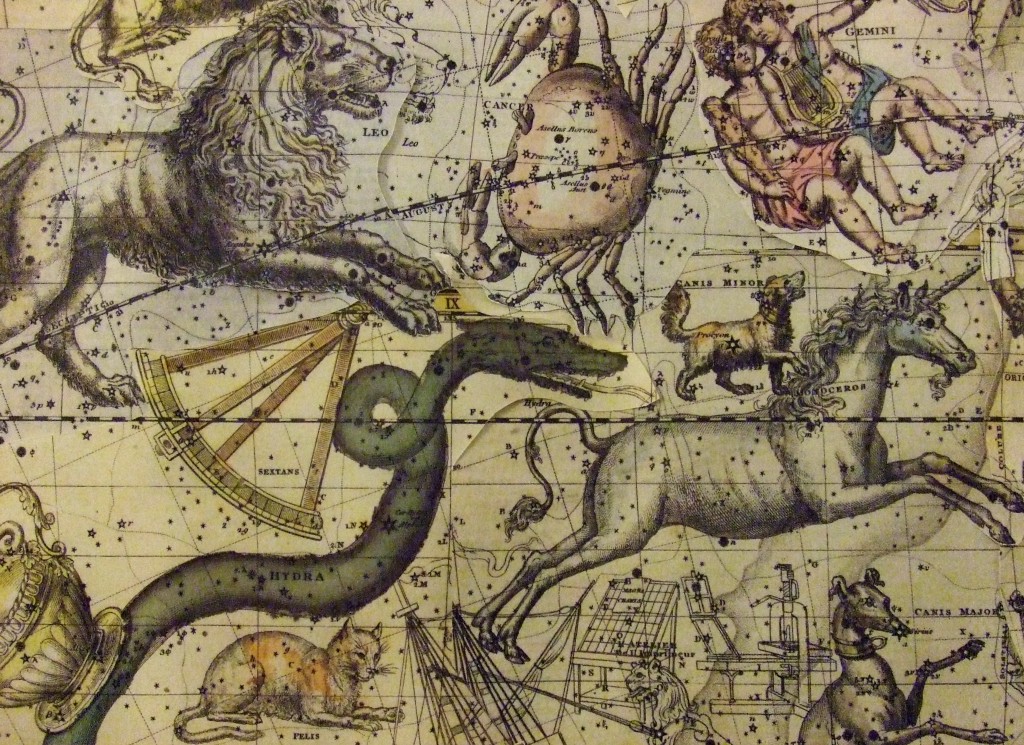
Meanwhile, the moon is active, with multiple major eclipses continuing in the signs of Leo and Aquarius. You don’t have to be a Leo or Aquarius for this to be important. These two signs are each others’ opposite; the 12 signs of the zodiac divide into six pairs, each of which tells us something unique, revealing a central tension in the human existence. Leo and Aquarius highlights the tension between the ego and the group. For Leo, all the world’s an audience, while Aquarius is known as the humanitarian of the zodiac. How do we hold these two wildly divergent creative energies within us? Both are deeply, richly creative: Leo shows us how to express the richness of personal experience, while Aquarius teaches us how to integrate our own experience with that of others within our own community.
The first eclipse of summer, though, kicks off in Cancer, which deals with the private, with the family. The moon is at home in Cancer, but at this eclipse, it is directly opposing Pluto in Capricorn — the public to Cancer’s private, though both are concerned with legacy. Pluto is the planet of transformation. The moon rules our emotions, so we’re looking at short-term emotional disruption meeting long-range emotional disruption. The feelings and realizations that this eclipse unlocks, here in the dog days of the summer, will set the tone for the rest of the season — and possibly redirect your creative course.
This is going to be a big summer for you, Aries. Uranus, the planet of revolution, turbulence, and change, just rolled into your house of value and material assets, shining a light on how you treat your cash, your budget, and your possessions. New financial opportunities coming your way? Probably — especially given that this summer is supercharging your creative energy and social consciousness. Get out there and pitch, but be extra-savvy about what you’re worth.
First, the universe wants to clean house. Mid-July boots you in the ass with an eclipse in your house of habits, work, and health, revealing that what has worked for you in the past may not work for you going forward. Does the amount of time you spend on your writing life match the value you’re getting for your career? The eclipse on July 12th is going to provide you with an opportunity to release what isn’t working and set some new intentions around newer, healthier habits.
Meanwhile, this summer will highlight your relationship between your sources of inspiration and how you implement that inspiration in your daily work. Mars retrograde through your house of social consciousness asks you to reexamine your relationship to the group, which in our case means writing communities. Whether in-person writing groups or online author communities (Twitter, anyone?), this summer gives you an opportunity to reboot how you interact in the group. Is it time to step it up, or is it time for a much-needed break? How can you revise the role you play? It’s not always on you to be the kindling.
Writing Prompt: What is the eye of the storm in your current project? Where in your life do you currently feel like you are the eye of the storm?
TAURUS
Retrograde season feels comfortable to a Taurus. Finally, everyone is moving at your pace. You know how to grow shit. You know that things take time. Everyone else is slowing down, and that suits you just fine.
But. But.
Uranus, the planet of rebellion and change, has just moved into your house of self and identity — and it’s gonna be here for, umm, seven years. There’s a massive shift that’s starting underneath your feet — in how you present yourself, in how you understand yourself. You know, better than any other sign, how to grow and nurture; how to take a seed of a project and make it something spectacular. But now you’re the seed, Taurus, and Uranus is here to disrupt the fuck out of you. If this summer starts to feel turbulent and unsettling, like a big ol’ thunderstorm watering all those new plants, remember that growth takes time.
The good news? The first eclipse of the summer, on July 12, will jumpstart your writing, hitting your house of communication and short-term plans. Now is a great time to focus on pitching, newsletters, PR — any communication that has to be public-facing.
Shortly after, the next eclipses arrive, on July 27 and August 11. These ones are hitting two diametrically opposed parts of your chart — the house of home and hearth, and the house of fame and public recognition. In other words, the relationship between your home and your career. Even if you work at home — especially if you do, or if you write at home in the morning, evening, or on weekends — you should think about where you’re drawing your boundaries. Literal boundaries, in terms of where you work and where you don’t, but also emotional boundaries, in terms of the work you bring to yourself and the self you bring to the work. Historically, what have these boundaries looked like for you? How are they changing? Where are you redrawing lines?
WRITING PROMPT
How is your concept of yourself changing? What have you discovered through therapy, spiritual work, journaling, or other self-discovery over the last few years? How are you integrating that into your overall identity? And how — if at all — has that affected your idea of yourself as a writer?
GEMINI
No one moves faster than you, Gemini — but this summer, maybe take a pause. You’ve got some major eclipses and retrogrades coming for your house of communication and short-term plans, as well as your house of travel, philosophy, and long-term plans. What does that mean? You’ll be reviewing what you want to do now, and what you want to do later — and how it all fits together. Plus, since your house of long-term plans also rules philosophy, religion, and travel, you’ll also be considering how your underlying beliefs fit in with where the heck you want to be in all of this.
Meanwhile, Uranus in Taurus is digging up some buried stuff in your most private house of rest, retreat, spirituality, and intuition. Now is a good time to journal, to meditate, to do the unconscious work of creativity and writing. Sometimes, we just need to sleep and let our minds do the unconscious connective work that our conscious minds can’t always force.
Uranus is revolution, turbulence. Uranus whips shit into shape. Uranus disrupts. And it’s transiting the house that the ancients called “the house of self-undoing.” Certainly, a good zone for a writer like you who delights in the unpredictable — but also something you want to be sure to have a handle on, to make sure you’re taking care of yourself.
WRITING PROMPT
Feed your curiosity. Get a bead on your latest interest — you know, the one that can do you absolutely no good right now (can’t make you money, can’t get you that person you’re interested in, can’t be of use to you). Something that has no utility, but something that just fucking interests you, and that you haven’t managed to make time for yet. That one. Go do that thing, and then write about it.
CANCER
The summer solstice marks the beginning of Cancer season: summer is your time, Cancer, meaning that you get an extra energy boost for your solar return even as the energy around us slows into a season of retrogrades. The first solar of eclipse of summer on July 12 is also in Cancer, in your first house of self and identity, putting the spotlight on you. The first eclipse will give you a confidence boost, that’s for certain, and it will be a great time for pitching, publishing, PR, sending newsletters. Mark your calendar.
The next eclipses highlight your zones of assets and intimacy. Mars retrograde will have you focusing on sexuality and intimacy, doing deep work; Mercury retrograde will have you reviewing your money and material possessions. Especially for freelancers, this is a time to clean up your budget, check for any unpaid invoices you have lying around, and see who owes you what. Get your money tight. You’re running a business. But also consider how your business is working for you: What do you need for your business? Have you been making do, skimping?
After the nurturing of Cancer season, Leo season comes along and asks us to invest in ourselves, to see ourselves as worthy. The Leo eclipse in your house of assets and material possessions hits the nail on the head. Whether it’s investing in gear for your desk that will prevent carpal tunnel, paying extra for a personal trainer at the gym once a week, or hiring someone to come in and clean your house, your ideas around money, worth, and value — and specifically, what is worth money, and what is valuable to you — are going to be up for review. (Also? Maybe think about your freelance rates. Just a thought.)
WRITING PROMPT
What do you most need — and deserve — to take credit for in your work life? In your writing life? Write about that, from the perspective of the person who most pumps you up. You are a great support for others, Cancer — but sometimes you need to be able to cheerlead yourself. This summer, get ready for that solar eclipse that’s going to put the spotlight on you.
LEO
All eyes are normally on you, Leo, but this summer, they’re really on you — you’ve got planets and eclipses lighting up your house of self and identity. For you, this summer is about the self you want to be. The self you’re growing into. The self you’re becoming. So the question is: how do you feel about that? Are you happy with where you are, with who you are? Is the work you’re producing an accurate reflection of you and your values?
This will particularly be on your mind since Uranus, the planet of revolution and change, has just entered your house of fame and public recognition (also called the house of career). Leos are known as performers who crave a stage, but what kind of stage do you crave? Uranus in Taurus is going to rock the shit out of your public face, out of your fame, out of your career, and this is a time to reconsider the alignment of that public self with your identity. Just because you love a stage, Leo, doesn’t mean that you always have to reveal your most private self to the world.
Early this summer, take advantage of the first eclipse on July 12, which will hit your house of rest and spirituality. Late summer — late July and August, especially — are really your time to shine. Get some rest and rejuvenation (spa days, writing days, alone time) while you can get it.
Another major theme for you this summer, although not perhaps explicitly connected to work, is committed partnerships. Eclipses later this summer will be lighting up your house of committed partnerships — which can be romance and marriage, but also major business partnerships and long-term contracts. How are you ready to partner? Is the work you’re doing bringing you into alignment with the kind of identity you are growing into?
WRITING PROMPT
If you were guaranteed an adoring audience for your most obscure, wild, mind-boggling, budget-blowing creative project, Leo, what would that project be? The sky is (probably not) the limit.
VIRGO
You don’t like focusing on yourself, Virgo, but your house of rest, intuition, and spirituality is going to have a big bright spotlight on it late this summer, unearthing all the shadows, with an eclipse and a Mercury retrograde. With your analytical, taskmaster self, you’ll have no problem identifying areas for improvement — the key this summer, with retrogrades tripping us up everywhere, is slow integration.
You have a mind for efficiency, but don’t push yourself to do everything at once. Don’t insist on finding all the patterns or needing to do all the shit now, immediately. Give yourself time to uncover new things. Time to rest. Time to recuperate. And time to integrate new discoveries into your work habits, into your daily routine; your house of daily habits, work, and health is getting an eclipse, too. Eventually, everything you’re learning about yourself and your creative process will be grist for the mill — but don’t rush it.
An idea: occupy your mind with a new class, skill, or hobby this summer, to keep yourself sharp while avoiding the unproductive hamster wheel and allowing those other parts of your mind and spirit to rest.
Also? Uranus has just entered your house of long-range plans, philosophy, religion, travel. You like security, but Uranus, the planet of revolution and change, is shaking that up. Hold things loosely, with an open palm. Uranus is in Taurus right now, and when it’s in Taurus, it likes to grow things. Some plans you’ve had for a while might be up for review, which might scare you a little. But lucky for you, Virgo, you’re the master of the harvest, adept at identifying the right time to move in, scoop up the crop, and take the win — a useful skill. Be open.
WRITING PROMPT
The devil is in the details. Make a list of all the projects you’ve been meaning to get to, or forgot about, or abandoned. Sit for a minute, and think about what you forgot about. Now: list what you want to do that you won’t even let yourself list because you don’t think you have the time or money. How can you integrate these lists? This is the list for your Summer of Retrogrades, Virgo.
LIBRA
Summer technically starts with the solstice in late June, but it really greets you, Libra, with a solar eclipse on July 12 that lights up your house of fame and public recognition. Cancer season gives your career an energy boost anyway, and this eclipse puts all eyes on you. Take advantage — this is a great time for you to be in the limelight. Get your work ready for publication, line up some PR, and get those Twitter threads ready. to. go. Since the spotlight will be super amplified, just be sure to polish up everything and make sure you’re putting your best foot forward (but we probably don’t need to tell Libras that, right?).
The opportunities you create for your career during Cancer season will continue to grow and manifest as we move into Leo season later this summer. Leo season brings with it an eclipse and a Mercury retrograde in your house of social consciousness, friendships, and the internet, which means putting extra time into reviewing your online presence, newsletters, and any social or professional commitments that come your way this summer. This isn’t to say don’t do those things — just, take time to review! Dot your i’s and cross your t’s.
Mars retrograde lasts all summer and will be hanging out in your in your house of creative energy. If you find your work changing a bit, or coming more slowly than usual, don’t sweat it. Pick up a meditative activity that helps you really sink into your process, and be gentle with yourself. Things will pick up again when Mars goes direct on August 27. Until then, enjoy the lessons that the planet of action has to teach you about the ebb and flow of inspiration.
WRITING PROMPT
Go to your favorite place to hang out and eavesdrop on an interesting conversation. (Yes, eavesdrop.) Write down some of the best dialogue — maybe even spiff it up a bit — and then imagine the backstory for the people involved.
SCORPIO
Mars, the planet of action, is moving backwards through your most private house of family, home, and nesting, scraping the nooks and crannies of your most privately held moments and memories. You’re a private person, already, Scorpio, so this summer might have you might be feeling extra raw. While this is happening, the sun shines a light on you, with a big ol’ solar eclipse in your house of fame and public recognition — great for your career, great for publicity, not so great when all you want to do is crawl into a corner and write your feelings away.
So there’s a real tension, with both the inner core of you going through some major reassessing while you’ve got some good attention coming your way. For deeply self-protective Scorpios, a solar eclipse lighting up your house of fame and public recognition is going to force you — uncomfortably — into the limelight, reckoning with owning the achievements you have been working for, all while Mars, the planet of action, is moving quietly behind the scenes, needling through your home and rooting up the most private and uncomfortable of issues from the past. Meanwhile, you’re creatively bolstered by Jupiter, the planet of expansion, which is tracking through your house of self and identity, making you even more magnetic than usual.
This summer, you’re both tremendously vulnerable and a positive magnet for attention. How do you hold all of these feelings simultaneously? How do you feel raw and exposed within, while also putting on an authentic face publicly and owning that deserved recognition without feeling fake? This summer is a time when you learn multiple things can be true.
WRITING PROMPT
If you could rewrite one myth, what would it be? How would you retell it?
The summer opens with Cancer season, including an eclipse that highlights your house of intimacy. The deep waters of intimacy are not so much your comfort zone, but we’ve been spending a lot of time here over the last year — what have you been learning about yourself in intimacy, Sagittarius? When you dive deep into Cancerian water, you can end up finding a treasure chest — and this is gold for your creative process. When you understand the depth and the darkness of what drives you, there is magic.
You can transmute that in Leo season, where you get to indulge your adventurous, freedom-loving spirit, with lots of attention paid to communication, travel, philosophy, and your plans. The catch? There’s a lot of retrograde action — which could slow you down. Remember: any word that starts with “re.” Revisit, revise, rebirth. You don’t like to be contained, and your fire always has any number of projects going — maybe take one of your projects off the back burner? With an eclipse hitting your sweet travel spot, a trip might be just the thing to help jumpstart an old project.
Meanwhile Uranus has just entered Taurus and is revolutionizing your house of work, daily habits, and health. Put extra attention on health stuff that might flare up. Drink water. And dream big.
WRITING PROMPT
What is your favorite place to visit? Why? Take us there: smells, sound, visuals. Make a map.
CAPRICORN
The summer solstice opens with a full moon in your sign, Capricorn — and not just any full moon, but one that’s right next to Saturn. You’ve been doing some intense growing, and Saturn, moving through your house of self and identity, is rooting through the weeds, pulling up everything that no longer represents who you are. The full moon is a time of releasing, doubly so since by this point in early summer, Jupiter, Saturn, Neptune, and Pluto will all be retrograde, asking you to seriously slow down and do the work.
Now’s the time to get ready, because come mid-July, the eclipses start coming in like lightning. First up is a solar eclipse in Cancer, which lights up your house of committed partnerships. Next is a lunar eclipse in your house of value and assets, followed by a massive solar eclipse in Leo, which highlights your home of intimacy.
This summer of retrogrades and eclipses — Leo and Aquarius, the signs of self and other — directly hit your houses of value and intimacy. You’ll have Mars retrograde in your house of value — how do you take action when it comes to materiality, but also to determining what and how you show what you value? You have a reputation for being all about money and finance (which are really just things that provide a means to an end for you), but this summer will really highlight how you use those energies in your life. Remember that ultimately, money is a resource, an energy, that enables you to do other things. (Writing is a business, but it’s not just a business. Are you taking on projects that you actually enjoy, that contribute overarching value to your life?)
Stewardship and legacy is a major theme of your life, and this summer will bring that out for you. Meanwhile, Mercury retrograde in your house of intimacy will highlight the deeper emotions underneath the values, getting at the root of your relationships, not only with others, but also with yourself — how do you communicate ideas around sexuality and intimacy and, yes, value?
WRITING PROMPT
Write your dream book tour. What are you wearing? Who is introducing you? Where are you going? Who are you working with? What cities and bookstores are you traveling to and why? What publications are you excerpting in?
AQUARIUS
This is a big summer for you, Aquarius. Eclipses in Leo and in your own sign of Aquarius have been rocking your houses of self and other, of identity and partnership, for the last year, and they will continue to push on that story throughout this summer. Who you are and how you partner is changing, which means your work is probably changing, too.
As an Aquarian, you get a reputation for being someone who can roll with the punches, but here’s the thing — your classical ruler is Saturn, the planet of rules and responsibility. Yes, you’re an independent and forward thinker, but you are a fixed sign (read: stubborn AF) who can be a bit particular about how things are done. With so much disruption in your life lately, the routines in your life have probably shifted dramatically over the last few months, which might have you feeling pretty unsettled. The good news is that with so many retrogrades this summer, you’re going to get to slow down a bit and get some time to adjust.
Retrogrades allow us to review, revisit. This is a good time to pick up old projects. Meanwhile, Neptune is in your zone of value and assets, encouraging you to reconsider and watch for any monetary opportunities you may have let go of (in other words: go through your inbox — and social media DMs, for that matter — again).
Uranus (your modern ruling planet) is going through your house of home and hearth, of your family and your roots. Uranus is the planet of revolution and change, and it’s coming for a seven-year ride through this part of your chart to completely reconceptualize your relationship with home, whatever that means to you. Think about the environments you work in. Where do you work, and how? A home office? A desk in your bedroom? Where is home, to you? Why? While it isn’t perhaps the time to move across the country or completely undertake a home renovation (or, idk, maybe it is), there is a lot of energy around opening up your space and making sure the world you live in is working for you, and not against you. The spaces we occupy affect us, and Uranus is here to remind us of that.
WRITING PROMPT
If you haven’t done spring cleaning around your bedroom, now is the time to do it. If you have a storage unit you haven’t visited in a while, go clean it out. Donate old clothes. Rearrange your bookshelves. Undertake a task around your work space in your home, Aquarius, small or large, and write about whatever that experience kicks up. (And then? See how changing your space affects your writing routine.)
PISCES
Just before the summer solstice hits, marking the beginning of the season, Neptune turns retrograde. But this isn’t the start of Neptune’s story for you: the planet of dreams has been trekking through your house of self and identity, rippling through your most treasured beliefs about yourself, turning over childhood fantasy and adolescent illusion. This can be a challenging transit: it can reveal fantasies and illusions for what they are just as easily as it can instil the greatest and grandest hopes and desires. But a Neptune transit done well is rewarding beyond measure, especially for a Pisces. After all, Neptune is your planet. Neptune asks, what’s the dream? Who do you want to be? Who did you dream of becoming as a child, and who do you want to become, now? Neptune delights in the unconscious, just like you. Neptune invites you to swim along for the ride.
Meanwhile, Uranus, the planet of rebellion, has just entered your house of communication, perhaps disrupting your writing and communication. What genre do you usually work in? What’s your typical writing routine? If you’ve noticed a shift — or if you experience a shift this summer — Uranus might be asking you to plant some new seeds. Don’t be afraid of experiment.
On a more practical level, the summer’s eclipses are lighting up your houses of work and daily habits, of rest, spirituality, and intuition. The everyday right alongside the subconscious and ecstatic. It can be tempting, to push through the everyday when there’s that still, small voice telling us to slow down, to tap into mystery instead of going with the known. Listen to that voice.
Plan activities or time or trips for yourself this summer that enable you to get in touch with your subconscious, with your creativity, with your spirit, with your past, with your rest. Remember: breakthroughs take time.
WRITING PROMPT
Describe a story you wrote as a child. The first one that comes to mind. Do you see any similarities to any stories you’ve written now, as an adult? Any characters, places, themes, settings?
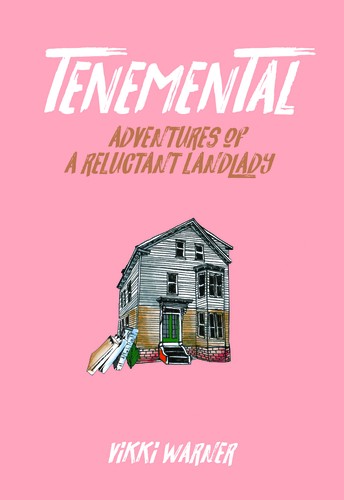
I’ m a landlady; I own a three-family apartment building in a smallish New England city. For years, I took pains not to look at this endeavor as a job, but as an adventure in collective living. My ideology focused on shirking authority, not claiming it. I’ve been more concerned with being liked than with running a tight ship. I’m still thusly inclined, but after 14 years I have grasped that using my authority (in measured ways) is healthy. I’ve only recently begun taking it easier on myself, allowing the work to be a little less crushing. And, admitting that this thing I do is in fact a job.
Purchase the novel
Not coincidentally, memoirs by tough, ambitious women are the beating heart of my to-read pile. Their immediacy is startling. The idea of a woman setting out to create a thing, do a job, achieve a goal is simple, yet it feels novel every damn time because the obstacles are vaster for us.
The authors in this list are not known to take it easy. These women push themselves to endure the pain and stress of difficult work in order to find some self-realization, or to help others, and usually both. Some learned on the job; some had long years of training or education. Some had to lie or misrepresent themselves to get a foot in the door. These women openly admit that in life and at work, flawlessness is elusive; mistakes are made; and hope is always there somewhere, scampering around at the edges.
Scurrying between her mother’s continued health crises after a nearly fatal stroke, Tessa Fontaine is tired and shut down. She has always been afraid of losing her mother, always been afraid of life’s small daily risks and pitfalls; she knows that she must conquer these fears in order to seize her own spirit. On a whim, picturing her vivacious mother pre-illness (and having lied about her skills in this rather specialized field), she joins a traveling circus sideshow. The work is grueling and uncomfortable, but also personally transcendent (the title refers to Fontaine’s eventual act, in which she runs enough electrical current through her body to illuminate a light bulb with her tongue). Fontaine’s singular debut shifts between her sideshow evolution, to stinging interactions with her mother, to historical sideshow lore that advances the narrative.
Much of the love has gone to RBG of late, but I have a persistent soft spot for the amazing story of Sonia Sotomayor, the first Latina ever to serve on the Supreme Court. Sotomayor’s memoir focuses on her early life, from her modest youth as the child of two Puerto Rican immigrants in the Bronx, to her attainment of what seemed to her a distant dream — being appointed a federal judge in New York. Young Sonia is tough and perceptive, a kid who’s already looking after herself in the face of parental strife and juvenile diabetes. Her tenaciousness continues to save her through law school and right into her law career, and we all know where that has led her. It’s a richly detailed, endearing portrait of a self-made woman.
I’m not much for ride-sharing services, but one jewel in their crown is that they’ve got plenty of women drivers — about 30% of Lyft drivers, for example, are women. In the world of the NYC yellow cab, though, that figure is only around 4%. That’s the world Melissa Plaut inhabits. In her funny and clear-eyed memoir, she laments her lack of a calling; while her friends and family settled into mostly satisfying careers, she tried a million things, but never found her thing. Enter cab driving: Plaut takes the licensing exam, nails it, and takes her pleather seat behind the wheel. The intricacies of this hidden world, and Plaut’s unusual place within it, are compelling — even mundane tasks like finding a restroom take on new meaning when one is dealing with a work culture entirely set up for someone else.
Indulging an all-encompassing fascination with death, twenty-something Caitlin Doughty seeks out a job at a crematory. Although she starts the job somewhat unaware of its duties, she quickly learns the intimacies of death and dead bodies, and how to operate a retort — the chamber where the cremation magic happens. Meanwhile, she continues to hone her free-thinking and unflappable approach to death. Doughty writes with amusing lightness about the whole affair, critiquing our modern approach to death — we just hide it away, and run in the other direction, for as long as we can. She has made it her life’s work to demystify our deaths when they’re still many years away. It’s an act of generosity and care that feels right coming from a woman.
Ford writes with gravity about her experience as a psychiatrist treating the incarcerated population at New York’s Bellevue Hospital — men charged with crimes who are shuffled and re-shuffled through the system as they await trial. Her work brings constant apprehension as her patients show aggression and anger, but also reveal deep scars from brutal childhoods, the prison system, and lifetimes of disenfranchisement. She doubts herself; she doubts her patients. But in the end, she is also able to write with hope about moments of kindness, and small victories that may bring larger ones for these men — even the tenuous possibility that some may extricate themselves from the prison and mental health system for good.
Open-water swimming may not sound like a job at all, but the risks involved with Lynne Cox’s vocation — sharks, hypothermia, churning storms, hell, even extreme bathing-suit chafe — roundly beat any missed deadline or deflating phone call I’ve had to endure at mine. So let’s just go ahead and call it a job, shall we? Cox describes heeding the call, while still a child, to leave the safety of the pool and swim in open water. By age sixteen, she held the world record for swimming the English Channel. And her feats get still more towering from there. A story of extreme endurance by a woman who defines the word “unstoppable,” this memoir is about following the mystery of crazy goals — and achieving every last one.
Back-to-the-land memoirs can be formulaic affairs, but when the land being gone back to is a wasted fragment at the end of a dead-end street next to a freeway in Oakland, the story defies simplification. Carpenter’s book is about starting a rag-tag squatter’s urban farm — complete with chickens, turkeys, ducks, and a myriad of vegetables — and growing it into a dependable food source. Her use of the word “ghetto” to describe her poor, largely nonwhite neighborhood — of which she admits to being terrified at first — is discomfiting and unimaginative. But her transformation of a scrap of city land left for dead is a story worth following.
As a child, Hope Jahren followed her scientist father, a longtime college professor, around his lab; she writes that for him, science was not just a job, but an identity. Her passionate writing makes clear that her own identity is similarly centered on science. Jahren describes an emotionally hollow family and childhood, where science was a comfort, a “safe place” that she always believed would lead her to a career despite her inconvenient gender. In beautiful, lilting language, she compares her own evolution in the lab to the growth and characteristics of plants. There is plenty of detailed yet dynamic writing about lab procedures and concepts in botany; it is juxtaposed with the story of her debilitating depression and hospitalization. We don’t often get to see scientists’ emotional innards; here, Jahren lays it all gloriously out, and the results are riveting.
About the Author
Vikki Warner is an acquisitions editor with Blackstone Audio and a freelance writer. Her work has appeared in BUST, The Boston Globe, and Zagat, among others. She is the author of Tenemental: Adventures of a Reluctant Landlady.
It’s hard to feel like there’s any way to make a difference right now. Children have been ripped away from their parents, toddlers of a “tender age” have been put in cages, families seeking asylum have been ripped apart and lost on either side of 1-800 numbers that fail to translate the trauma into anything close to an answer.
It’s important to keep paying attention to the unimaginable horror being played out in real time right in front of us. And it’s also important to make sure we continue to celebrate the organizations that have been plodding through the thick of so many of our problems for so long. “We tell ourselves stories in order to live,” Joan Didion claimed. And while many of the organizations on this list are keeping our community alive in holistic ways, others are offering specific life services like healthcare, legal services, clothing, shelter. All by way of the book. There are countless organizations advocating for writers specifically (such as Kundiman, Cave Canem, Lambda Literary, and Vida, to name a few), we wanted to focus on those nonprofits using books as a tool, as a defense of sorts against what feels like the End of Days.
“Hope” as Rebecca Solnit wrote, is “an axe you break down doors with in an emergency. Hope should shove you out the door, because it will take everything you have to steer the future away from endless war, from the annihilation of the earth’s treasures and the grinding down of the poor and marginal.”
Here are nine organizations giving the world a few more axes, and a few more reasons to be hopeful.
This one is the nearest to my heart. The Telling Room was established in 2004 by writers Sara Corbett, Mike Paterniti, and Susan Conley, who founded the non-profit writing center on the premise that children are our best storytellers. Not only do we need to listen to them, but we need to celebrate and publish their stories, too. (Anthologies of paraticipants’ stories are for sale on the Telling Room website!) This is particularly crucial in a city like Portland, Maine, where there is a growing community of immigrant and refugee families from all over the world. The Telling Room runs in-school writing workshops, after school and summer programming, publishing workshops, author mentorships, and so much more. Their Young Writers and Leaders program, which is an after-school program for multilingual students, was awarded the Youth Writers a National Arts and Humanities Youth Program Award. I worked with the organization for a year and can honestly say that I have never met a group more committed, more passionate, more engaged than the folks at The Telling Room.
How to get involved: No matter where you live — buy one of their books! There are annual themed anthologies, novels and memoirs and poetry collections written by middle school and high school writers (because I mean didn’t you write a novel before you could drive a car?), and more. You can also donate here. And if you live in the Portland area, give yourself the best gift and volunteer your time.
Barrel of Monkeys puts kids’ artistic imaginations center stage — literally. Here’s how it works: BOM teaches creative writing workshops to kids ages 7–13 in Chicago Public Schools and in after-school programs during the week. Then, a team of BOM actors and musicians take the students’ work, and adapt it into sketches and songs which they perform for the school, and then the public. How does it get any better than that? And why don’t I live in Chicago?
How to get involved: If you live in the Chicago area, you can volunteer to help out with front-of-house duties during performances. And if you’re an educator, you can even take a class from BOM on how to incorporate its teaching methods into your classroom. Or go to one of their shows! If you don’t live in Chicago, you can always donate to BOM here.
Alongside its many thrift stores, the bookstore and cafe in SoHo is home to thousands of donated books. The bookstore and cafe are run mostly by volunteers, and all the proceeds go directly towards Housing Works’ twin missions: to eradicate AIDS in New York by 2020 and worldwide by 2030 while also working to eradicate homelessness. The organization offers services and support such as healthcare, job training, legal services, and housing opportunities.
How to get involved:Visit and buy a book (or several)! Become a volunteer! Or donate here.
Poster Designed for Books through Bars by Erik Raum
Books Through Bars started nearly 30 years ago in 1990 when a bookseller in Philadelphia received a letter from a prisoner, asking for damaged or overstocked copies of books. When the bookseller, Todd Peterson, responded to that letter with a few free books, he received more letters with the same request. Thousands of volunteers are now part of the effort, receiving prisoners’ requests and sending copies of donated books directly to them.
How to get involved: If you live in the Philly area, you can drop off books for donation by following these instructions. You can also volunteer with Books Through Bars here, and make non-book donations here. There are also many other local initiatives in line with Books through Bars throughout the country—look up prisoner book programs in your area.
826 was founded in 2002 by Dave Eggers and the educator Nínive Calegari. What started as an after-school creative writing program in Valencia, CA is now an eight-city strong collaboration between centers, educators, and the community, to serve under-resourced kids between the ages of 6 and 18 by celebrating creativity and writing stories. And all the centers are super cool — 826 Brooklyn is a legit Superhero Supply Store with a secret entranceway to the writing space and library.
How to get involved: If you live in one of the eight cities blessed by 826, you can find out more about volunteering here. You can also learn about other ways to donate and contribute to the cause here.
Here’s another bookstore, and another great Chicago non-profit proving that books are to superhero work as spinach is to Popeye. Open Books is a literary non-profit that runs two bookstores. 100% of the proceeds from those bookstores go towards their literary advocacy. They deliver high-quality books to readers of all ages all over Chicago, as well as guided writing workshops and publishing opportunities for students through 12th grade.
How to get involved: If you live in the Chicago area, go donate some books! Volunteer to work in the bookstore or help out with programming. And for the rest of us, we can all donate here.
Susan Neuman, a professor at NYU, conducted a study in Philadelphia to determine how many books were available in a given low-income neighborhood. She reported to NPR that in one neighborhood, there were a total of 33 books available for 10,000 children—versus the more affluent neighborhoods, where there were 300 books per child. Access to physical books is important for children’s development, bonding with their parents, and vocabulary development. That was nineteen years ago, and change is slow to come. First Book is trying to change that by creating partnerships and marketplaces with publishers to get books and other necessary supplies to children in low-income communities in more than 30 countries.
How to get involved: You can donate in lots of different ways (fundraisers, direct contributions, partnerships, etc.) and find more about that here.
DON’T MISS OUT
Sign up for our newsletter to get submission announcements and stay on top of our best work.
YOUR INBOX IS LIT
Enjoy strange, diverting work from The Commuter on Mondays, absorbing fiction from Recommended Reading on Wednesdays, and a roundup of our best work of the week on Fridays. Personalize your subscription preferences here.