War of the Foxes, Richard Siken’s second collection of poems, begins where his debut collection Crush left off — the body. In “The Way the Light Reflects,” Siken writes, “I have my body and you have yours. / Believe it if you can. Negative space is silly.” Navigation of that space, both emotionally and physically, dominated the obsessive and hungry poems of Crush, which won the Yale Younger Poets competition in 2004. One of the recurring images in Crush was that of the poet’s empty hands, hands rendered vestigial by all they were not allowed to touch. In War of the Foxes, Siken puts those frustrated appendages to use by picking up a paintbrush. Gone is the savage sexuality of Crush, and in its place we find a painter alone in his studio; in fact, the few references to lovers in this collection describe them asleep in the next room, as if these poems were written in the quiet hours after Crush. And while the poems in War of the Foxes do sometimes read like entries from a painter’s notebook, they do, like the poems in Crush, refute the illusion of space, in this case the space between our bodies and the outside world. As Siken writes in the poem “Landscape with Fruit Rot and Millipede,” “The mind fights / the body and the body fights the land.”
If the poems in Crush were engaged in the metaphysics of alienation, the poems in War of the Foxes are engaged in the metaphysics of creation, an aesthetic theory in which the boundaries of the human mind has drastic consequences for the natural world. In this way, the relationship between a painter and a landscape is similar to the relationship between men and nature: as soon as we see it, we can’t help but change it, alter it, dominate it. In the poem “Landscape with a Blur of Conquerors,” Siken describes the process of painting a field, a field “empty, sloshed with gold, a hayfield thick / with sunshine.” This image, infused with all the beauty and innocence of the garden before the fall, appears again and again throughout the collection. But simply painting landscapes is not enough for Siken — he must introduce a figure, a man. And what happens when you place a man in an untouched field? We all know the answer to that: “Land a man in a / landscape and he’ll try to conquer it.” Siken doesn’t shirk responsibility for this state of affairs, and instead further implicates himself by painting more and more men until “they swarm the field and their painted flags unfurl.” The message is clear and it’s political: these men “those people,” aren’t “the enemy;” aren’t “Republicans;” rather, as Siken writes, “They look like me. I move them / around. I prefer to blame others, it’s easier.”
Siken continues this inquisition in the title poem “War of the Foxes.” Here, Siken moves away from the metaphorical into the allegorical, searching for the roots of war through a series of elliptical stories. In one story, two rabbits named Pip and Flip are chased by a fox into their warren, where, huddled together, Flip tells Pip to hide inside of him. In another story, a boy faces the wrath of an abusive father after he spills a glass of milk. In the final story, a fisherman’s son becomes a spy, and part of being a spy is waiting at a chain-link fence to share secrets with other spies. Siken writes, “It’s a blessing: every day someone shows up at the fence. / And when no one shows up, a different kind of bless- / ing. In the wrong light anyone can look like darkness.” This is another example of Siken implicating himself, and the reader, by showing us that we are responsible for creating the illusion of separation between “us” and “them,” and that this illusion has dire consequences. As Siken writes in the poem “Portrait of Fryderyk in Shifting Light,” “Everyone secretly wants / to collaborate with the enemy, to construct a truer / version of the self.”
If this all sounds very abstract, that’s because War of the Foxes is abstract. It’s challenging in a way that Crush was not; you read and re-read the poems in Crush just to savor the language, the images, but with War of the Foxes, you read and re-read the poems in an attempt to divine meaning. If Crush resembled the manic poems of Sylvia Plath, War of the Foxes resembles the cerebral mediations of Mary Ruefle. And like Crush, War of the Foxes is obsessive, relentless, but when the obsession was rough sex in motel rooms and cars speeding away into the night, the obsession felt like passion. In War of the Foxes, the obsession with painting, with representation, mimesis, and even mathematics and logic, makes the collection feel like a lecture. In one poem, Siken writes, “When you have nothing to say, / set something on fire. A blurry landscape is useless.” The reader can’t help but agree. We wanted to see the fire.
The winners of Locus magazine’s 2015 awards have been announced. The winners of the science fiction and fantasy award are picked by a poll of the magazine’s readers.
Congrats to all the winners!
SCIENCE FICTION NOVEL
Winner: Ancillary Sword, Ann Leckie (Orbit US; Orbit UK)
The Peripheral, William Gibson (Putnam; Viking UK)
The Three-Body Problem, Cixin Liu (Tor)
Lock In, John Scalzi (Tor; Gollancz)
Annihilation/Authority/Acceptance, Jeff VanderMeer (FSG Originals; Fourth Estate; HarperCollins Canada)
FANTASY NOVEL
Winner: The Goblin Emperor, Katherine Addison (Tor)
Steles of the Sky, Elizabeth Bear (Tor)
City of Stairs, Robert Jackson Bennett (Broadway; Jo Fletcher)
The Magician’s Land, Lev Grossman (Viking; Arrow 2015)
The Mirror Empire, Kameron Hurley (Angry Robot US)
YOUNG ADULT BOOK
Winner: Half a King, Joe Abercrombie (Del Rey; Voyager UK)
The Doubt Factory, Paolo Bacigalupi (Little, Brown)
Each month we gather some news headlines that are strange enough to be fiction. Here’s yet another batch of headlines to get your creative juices flowing along with suggested genres:
Hello, and welcome to my week-by-week review of the world. Today I am reviewing a needle in a haystack.
Don’t ever jump into a haystack for fun because you never know if that haystack will be one of the ones that has a needle in it. I learned that the hard way when I climbed out of a haystack and a nearby farmhand pointed to a needle stuck in my jowel. I thought an earwig had bit me. Boy was I wrong.
I’m no detective but logic tells me the needle was accidentally dropped into the haystack by a seamstress. Why was the seamstress hanging out next to a haystack anyway? Probably she was hiding from something and that needle was her only weapon and then she dropped it and was like, “oh no.” Or she also might have been a male seamstress. A seamstresser, I think they’re called.
There’s an easy and safer way to find a needle in a haystack. Just let a bunch of cows eat all the hay and see which one starts complaining of stomach pains. Cows are notorious complainers so it shouldn’t take long. If no cow starts crying or bleeding, you know there never was any needle and someone lied to you.
If the needle was your own personal needle, it would be best to cut your losses and just go buy a new one. They’re not that expensive. If the needle industry had their wits about them, they would start designing needles that look just like blades of grass. People would be losing needles left and right and the needle industry would be making a fortune.
This needle I pulled out of my jowel was still perfectly good, so I put it in my sewing kit. Most of the items in my sewing kit are things I found in haystacks. I’ve found a lot of non-sewing related things as well. Once I found a kitten. Another time I found a smaller haystack, and then a smaller one inside that and so on. It was a matryoshka of haystacks, and at the very center was nothing.
BEST FEATURE: Finding a needle in a haystack made me feel like I’d won a prize even though I was bleeding. WORST FEATURE: Once the needle has been found there’s nothing more to search for. No purpose or meaning within the haystack. It becomes nothing more than a stack of hay.
Please join me next week when I’ll be reviewing a towel.
If you’ve ever waited (albeit impatiently) in a Chipotle line that stretched out the door, then you already know how irresistible their burritos can be. Jonathan Safran Foer, another Chipotle fan, was the brainchild of “Cultivating Thought” — -a project that puts original short stories and essays on Chipotle’s cups and bags written by literary greats such as George Saunders, Toni Morrison, Amy Tan, Paulo Coehlo, Aziz Ansari, and Barbara Kingsolver. And unlike the guacamole, literature doesn’t cost extra.
According to the LA Times, Yale’s rare-book library recently obtained a complete set of Chipotle’s “Cultivating Thought” series. The library itself released a statement about its decision to include literature “in all its formats and in all media, documenting the ways great American writers reach diverse and unusual audiences beyond standard book publishing.”
The Atlantic reports that the Library’s collection also features poetry written on alternative materials such as pencils, postage stamps, bumper stickers, and commercial paint chips.
In order to win a spot in the prestigious library, Chipotle had to do more than bribe Yale’s rare-book collectors with burrito donations or buckets of tasty salsa. Business Insider reports that Chipotle had to apply for acceptance, just like thousands of other anxious high school seniors hoping to enter an Ivy League.
Gallagher Lawson’s The Paper Man is a rare narrative, announcing the arrival of an outstanding new voice that comfortably inhabits the strange place where literary fiction, surrealism, and gritty fantasy converge. An allegorical novel packed with emotional distress, obsessed with identity, and the role individuals plays in the machine known as the city, The Paper Man is at once an impressive debut and a novel that’s packed with echoes of many exceptional authors while retaining its uniqueness.
When Michael was 15 years old, he suffered a mysterious and devastating accident that denied him a physical existence. However, his father managed to keep him alive in a body made out of paper. A decade later, tired or dealing with such a fragile unchanging body as well as frustrated with life at home, he decides to leave home behind, running away to the city by the sea in search of adventure, change, and himself. The city is a place on the verge of a revolution, where people are buried at sea, humans perform the work of mannequins, and mermaids are found dead on the streets. To say the least, the city doesn’t give the young paper man a warm welcome. After being rescued from a violent rainstorm by an enigmatic woman named Maiko, Michael battles to find his place in the metropolis. Unfortunately, the city’s political turmoil and its weather combine to make Michael’s quest difficult. Then, to make matters worse, the paper man’s high school sweetheart Mischa reappears, opening old wounds and creating new ones. What follows is an exploration of identity and transformation and a deconstruction of the meaning of art, all of it wrapped in a smart, touching narrative about revolution and love.
The beginning of The Paper Man is somewhat reminiscent of Jacques Jouet’s My Beautiful Bus, but it quickly morphs into a surrealist narrative that walks the line between the hallucinogenic visions of Stanley Crawford’s Travel Notes and the weird elegance of Matthew Revert’s oeuvre. Lawson is fully aware of the way literary fiction’s flamboyance and attention to detail sometimes hurt the pacing, so he maintains the story moving forward at all times with a storyline that shifts between memories, introspection, dialogue, and action that goes from the purely artistic to the purely sexual.
Despite coming in at over 250 pages, The Paper Man is a quick read because Gallagher keeps the surprises coming. Part of it has to do with the fact that the main character is undergoing a perennial metamorphosis, much like the city itself, but it’s also because there is a lot of intelligent, precise commentary on everything from sexuality and employment to artistic vision and the shattering/co-opting of coping mechanisms.
“Masks were now truly multipurpose. They could protect a woman’s complexion from the ocean-side breezes to be a kind of armor, as the Paper Man had used one or to conceal and disguise; to correct the misshapen face he once had and to give alternatives to identity or celebrate the multiplicity of identity; to show nothing is fixed unless made permanent, like art.”
While Michael’s problems with his body and the unusual practices that go on in the city wouldn’t be out of place in a Brautigan novel, Gallagher’s narrative is the kind of noir-esque fable in which even the bright moments occur within a gloomy frame. No matter what he does, the main character is never the person he knows he is/wants to be. This lead to a painful search that forces Michael to transform his mind, body, art, and even sexuality, but the reasons behind each change are never as straightforward as they should be. Meanwhile, the process is constantly complicated by the feelings he has for the two women in his life, the haunting father figure who gave him life twice, and his inescapable fragility.
“After that, things became a blur of tearing sounds, mechanical clicking, and exposing his body to more. It was like the opposite of the work his father had done years ago. Instead of soothing hands that held his injured body and applied layers upon layers, meticulous detail to threading and concern with comfort, this was Mischa undoing all that. She tore, she pulled, she cut and shredded. She stepped on pieces, including his fingers, flattening his hands.”
The beauty of The Paper Man is that Gallagher created a surreal landscape and populated it with outlandish characters in order to give us a fresh look at our own reality, and he pulled it off without sounding preachy. Furthermore, there is a richness in the paper body that is explored, but not entirely, and that invites the reader to think about what the author left out, what he hinted at but never made permanent. Ultimately, this is a novel about art and identity that can be mined for hidden meanings and new interpretations as well as enjoyed for the uncanny characters and dreamlike atmosphere. Regardless of the path the reader chooses to take, this is a novel that deserves to be read.
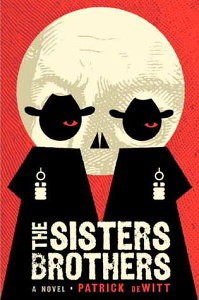
Are we in the midst of a revisionist Western novel revival? Patrick deWitt’s 2012 The Sisters Brothers earned its fair share of acclaim, including a win at The Morning News’s Tournament of Books and a place on the Man Booker Prize shortlist. This year, Colin Winnette’s Haints Stay has earned glowing reviews; its surreal story of two brothers and the wake of violence that they leave behind is a striking and powerful one. In 2008, Rudolph Wurlitzer, no stranger to the surreal and revisionist Western, released his first novel in decades, The Drop Edge of Yonder. And plenty of Brian Evenson’s novels and short stories tap into a wellspring of Western archetypes, shifting them into stories of obsession, madness, and isolation.
Call it the zeitgeist, then: revisionist Westerns are having a proper literary moment. Except that it’s been over thirty years since Cormac McCarthy’s Blood Meridian, which looms massively over the notion of the revisionist Western, was first published. Alternately: a writer who was born on the day that Blood Meridian was published might be well sitting at their keyboard, hard at work on a stunning revisionist Western of their own.
Even though Blood Meridian occupies an almost celestial position in this corner of literature, it was far from the first novel to deconstruct archetypes. Wurlitzer was doing it in the late 1960s and early 1970s, with books like Nog and Flats. And even before that, Oakley Hall’s Warlock (1958) and John Williams’s Butcher’s Crossing (1960) took less experimental approaches, but still worked with a knowing awareness of what, exactly, readers might expect from a Western narrative, and worked actively to subvert it. Alternately: revisionist Westerns have been on the scene for over fifty years. When, exactly, do the revisionists declare victory?
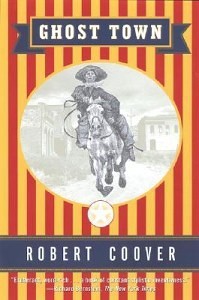
Robert Coover’s 1998 novel Ghost Town serves as one sign of where this tendency can go. Its opening sentences are both magnificently evocative and deeply aware of the imagery with which Coover is about grapple.
Bleak horizon under a glazed sky, flat desert, clumps of sage, scrub, distant
butte, lone rider. This is a land of sand, dry rocks, and dead things. Buzzard
country. And he is migrating through it.
Coover’s everyman protagonist finds himself in a town where he’ll come to inhabit several roles, from archetypal lawman to archetypal outlaw. Not surprisingly, he’ll also find himself beguiled romantically by two women who seem to occupy similarly disparate roles, the “bad” and the “good.” And so the novel continues on, setting its protagonist through a series of stock scenarios in which he encounters criminals, townspeople, and deputies, each of whom seem slightly more aware of the ground rules of the genre in which they’re all players.
Coover is aware of the fictional territory he’s referencing, but he’s also aware that he’s writing for an audience that’s aware of the tropes and tricks of the genre. He’s aware that his readers know what to expect, and winks at them by skipping past certain events. One section opens, “A lot of things happen and then he’s alone and forsaken on the desert again…” Some revisionist Westerns can be embraced by those who enjoy more traditional Westerns as well, but Ghost Town reads more like a critique, a remix in which the original text is virtually unrecognizable. There are moments of adventure, comedy, and brutal violence found throughout the novel; the protagonist’s deputy in particular meets a horrific fate. But they’re all used in the service of a critique, as though all of the tools and tropes used by hundreds of writers were laid bare, then reassembled to perform one last time, all strings and sets visible for all to see.
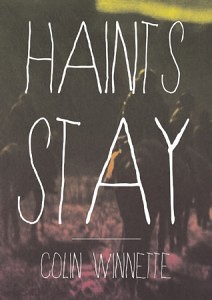
Colin Winnette’s Haints Stay generates a fair amount of friction from pushing the genre into uncomfortable territory, though it never quite turns metafictional. On paper, it might read somewhat similarly to deWitt’s The Sisters Brothers–both follow the (mis)adventures of a pair of brothers who work as killers for hire and engage in various acts of antiheroic behavior. In tone, though, they vary wildly: deWitt’s novel allows for moments of bleak humor and self-awareness; Winnette’s is equally compelling, but finds itself in unexpected places. Much of that comes from Brooke and Sugar–both their current dynamic and (shown via flashbacks) their relationship to their father, which goes beyond the stereotypical “abuse from a violent man” concept and pushes forward into something even more unsettling. It’s a matter that Winnette slowly reveals over the course of the book; without revealing too much, there are scenes that suggest a Western as reimagined through the transgressive lens of Dennis Cooper.
What Winnette does here is less about undermining the traditions of the Westerns and more about pushing them in unexpected directions: plugging in characters who don’t necessarily mesh with a reader’s expectation of what a hired killer in a Western would be like. (In this context, it also fits neatly beside Winnette’s previous book, the short novel Coyote, in which characters dealing with a familiar fictional situation take the plot in a radically different direction.) That doesn’t mean Winnette is above commenting on genre, though. A reference to “house wines” seems intentionally anachronistic: though the novel appears to be set in the past, it’s never entirely clear when; there are shades of the Alex Cox-directed film Walker here, where elements of the present seem to have embedded themselves in history. Walker, it should be noted, has a screenplay written by one Rudolph Wurlitzer.
Sometimes Winnette’s exploration of genre takes on a more philosophical tone. “What purpose do killers serve in a town that’s already dying?” Sugar asks early in the novel, and that questioning mood suffuses much of what follows. Dreamlike in its tone from the outset, Haints Stay becomes even more so as it reaches its conclusion: hidden identities are revealed; a sense of surrender pervades the novel as notions of identity slip away and blur. And the book’s final sentence shifts things from the Western realm to an even deeper strain of American literature, magnifying the subversion even more as it nods in the direction of an iconic final sentence.
That maneuver on Winnette’s part is an interesting one, making Haints Stay’s claim to revisionism extend beyond the bounds of one genre and suggesting that it permeates a wider literary field. It’s a kind of blendedness, a shifting from genre to genre, or an act of reclamation applied to certain works and styles. Either way, it serves as an intriguing spark, a push beyond certain expectations that readers might have. And, perhaps, it’s an acknowledgement of the cyclical nature of revisionist Westerns: they come in waves, even as more traditional works set in desert landscapes and charting out historical frontiers still endure.
One could also look at a certain cinematic strain from the early ’90s as bearing some influence here. In a handful of years, the films Unforgiven and Dances With Wolves were critical and commercial successes, each picking apart certain Western archetypes; less widely-seen, but no less determined to dismantle viewer expectations, were Clint Eastwood’s A Perfect World and Mario Van Peebles’s Posse. It was a brief moment out of which think pieces could be born–but it echoed a similar cultural moment in the ’70s, when films like Robert Altman’s McCabe and Mrs. Miller, with its haunting use of Leonard Cohen songs, dug their way into the psyche of many a moviegoer. Perhaps each generation needs to dismantle the Western edifice, even if no one’s bothered to fix it up since the last time it was broken down.
Perhaps it’s this cycle that also keeps the idea of the revisionist Western leaping from medium to medium, exhausting itself in one form and moving on to the next. Consider Leigh Stein’s “June 14, 1848,” perhaps the greatest poem to have been inspired by an early computer game. (Specifically, Oregon Trail.) Inspiration can transport the Western setting into virtually any medium; in the hands of a talented writer, it can yield memorable and unsettling work. Arguably the most rare revisionist work is one that can work on the levels that Coover and Winnette, respectively, work on: the structural and the traditional.
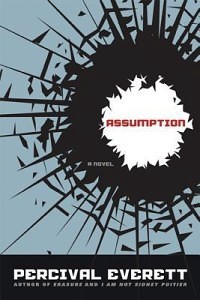
It can, however, be done. Take, for example, Percival Everett’s Assumption. It’s set in the present day, but the fact that it focuses on a lawman in New Mexico places it in squarely in Western territory. But what makes this book–theoretically, a collection of three related novellas–so powerful is the way that it bait-and-switches expectations and archetypes. Ogden Walker, the protagonist, is set up as a kind of stark lawman, world-weary and haunted by his past. And gradually, all of the expectations that the reader has about where this character will go are upended. Through meticulously precise prose, Everett creates a world where all that we rely on for guidance tends to fail us. By the end of the book, any kind of trust we’ve put in the book’s structure has fallen apart, and the uncertainty faced by its protagonist is mirrored by the haunting, howling vortex that overtakes the experience of reading the book. It’s magnificently disorienting–a work that offers a familiar narrative but reveals something much more terrifying. Approaching the Western, it seems, is like peeling back paint on a familiar structure, only to find that it’s gone hollow and rotted. You can either curse the decay or turn it into something magnificent in its own right.
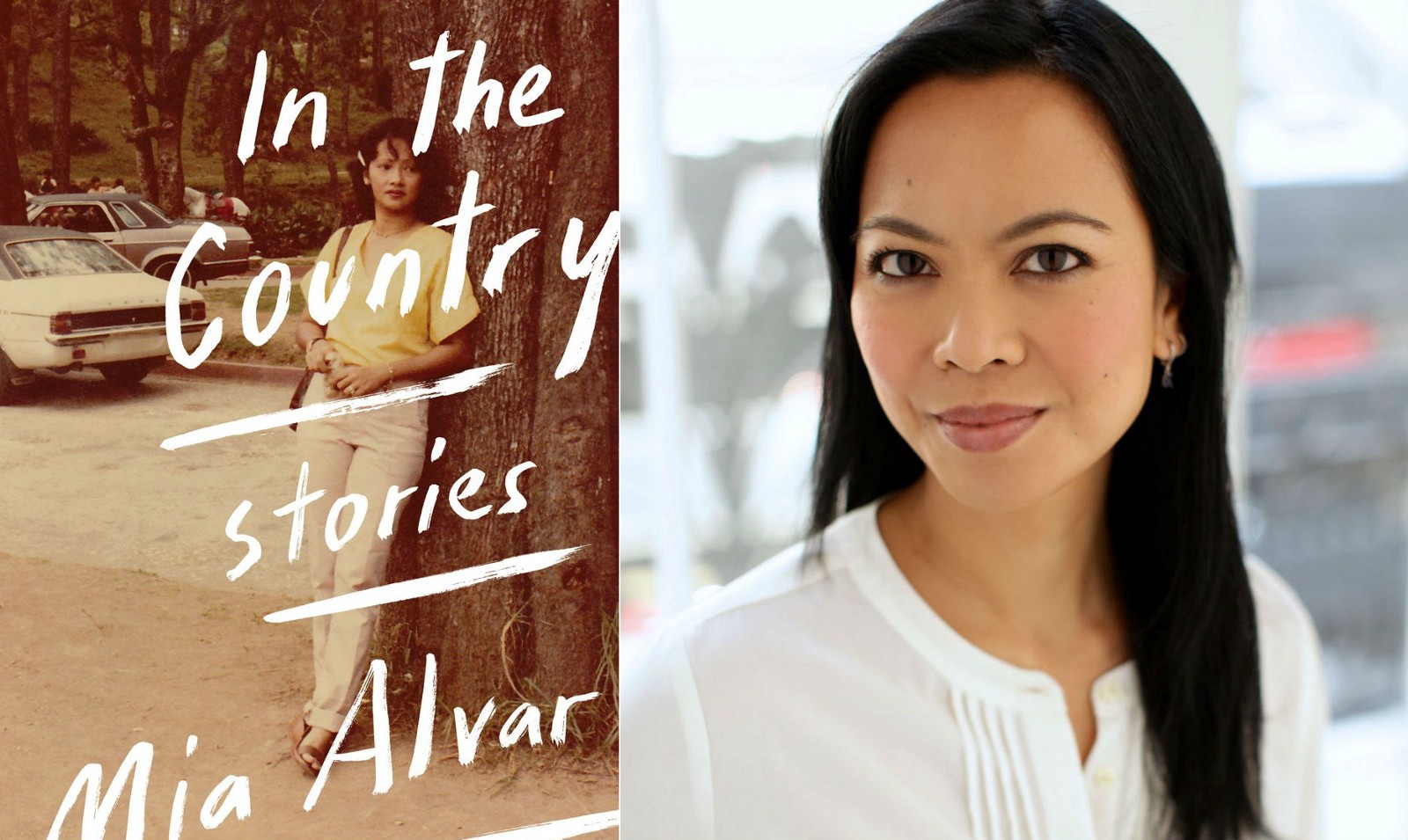
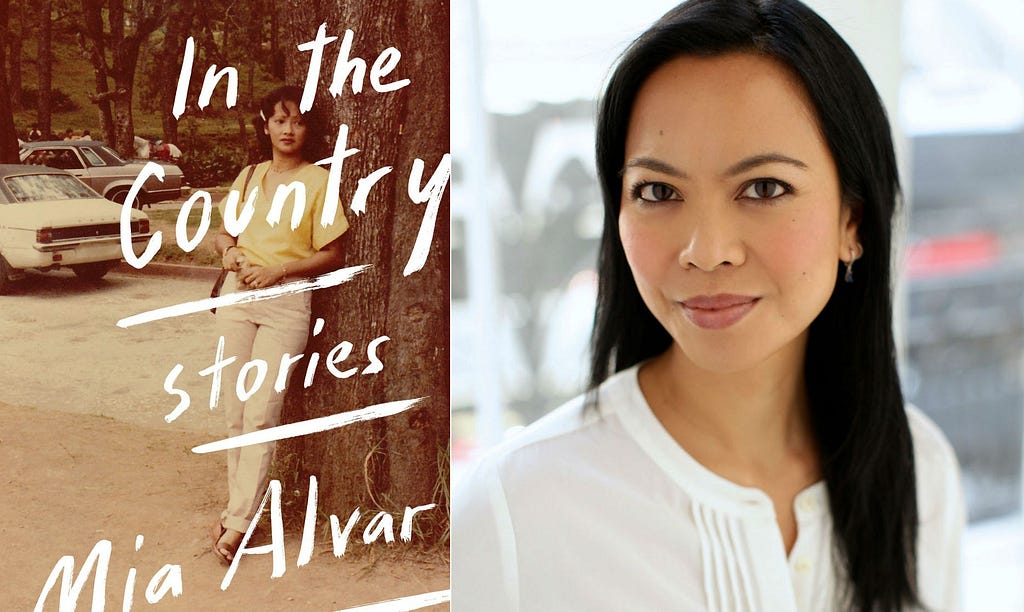
This week marks the release of In The Country, Mia Alvar’s debut book, a rich and varied collection of short stories about the lives of men and women within the Philippine diaspora.
Alvar was born in the Philippines and lived there until she was six, after which her family moved to Bahrain and eventually to New York. As a writer, she has the ability to capture that peculiar blend of excitement and pain that comes with uprooting oneself from a specific place or idea. Many of the stories in the book deal with literal border-crossings, but what binds the collection together more broadly is a sense of creative displacement. This is a book in which characters are addicted to dreaming, embellishing, or outright lying, and in one story a young woman even goes so far as to become that most heinous of fraudsters: a fiction writer. “I never could get used to the ‘withdrawal,’” the character admits. “The rude comedown from having lived so much inside a story it felt real.”
There’s a similar comedown to be experienced upon closing In The Country, a vivid debut that deserves to catch the interest of prize committees. I sat down with Alvar earlier this month to discuss it.
Jonathan Lee: Talk me through the early stages of construction. What’s your typical process for beginning to pull a story together?
Mia Alvar: If I have an idea rattling around, the only way I can start writing about it is to convince myself that I’m not. Writing for me is so much about the reading and the thinking beforehand — I’ll read all the books I can get my hands on about a subject, or that use a device or strategy I want to try (like the first-person plural point of view, when I was writing “Shadow Families”). I keep a notebook nearby, to jot things down that occur to me as I’m reading, but I tell myself it’s research, not writing, to keep from getting spooked. I could just do that — read and jot down notes — forever. But eventually my agent or editor will say, “How’s it going, that thing you were going to show me?” So I panic and type up my notes into something that looks like a story. That stage is a nightmare, trying to bully a beginning, middle, and end out of material that’s still a huge muddle. But the pressure is useful, too. When a deadline’s looming I’ll stop lying to myself and write ten hours a day, or whatever it takes, to put something together, even if it turns out to be all wrong.
Lee: When you look back through your notebooks and start typing things up, do you find yourself surprised by what’s in there?
Alvar: Definitely. That reading/thinking/jotting stage always feels so productive, and I’m always so happy in this belief that I’m generating idea after brand-new idea. But then I’ll look back to find pages upon pages of essentially the same sentence written hundreds of times, in only slightly different ways. And somehow it’s this huge shock to me every single time.
Lee: What are the kind of things you’re looking for in a sentence, and what are the things you’re looking to throw away as you revise?
I want things to feel clean and conversational, a sense that someone’s telling this story aloud to a friend or relative.
Alvar: Although I’m a maximalist in so many ways — my “short” stories all push that 25- to 35-page limit, much longer than most literary journals are willing to read — I’m always, at the word level, looking for less. If there’s a three-syllable word that I can swap out for one syllable, I’ll do that. I want things to feel clean and conversational, a sense that someone’s telling this story aloud to a friend or relative. When I get stuck I try to think, “Okay, but how would I say this to someone sitting across the table?” The idea of translation also helps: most Filipinos speak English, but sometimes if a sentence doesn’t seem to be landing right, I’ll ask myself how a narrator might say it in Tagalog, and translate that in the most direct and literal way back to English. That often points me to a clearer, more precise, and simpler expression.
Lee: As I read “A Contract Overseas”, I found myself wondering whether you identify much with the narrator of that story — her feeling of seeking out the right kinds of stories to tell, and questioning the impulses behind that desire to tell stories. She worries that her brother, who’s gone abroad in pursuit of financial security, is living the eventful life — the one better-suited to fiction. I think anyone who writes fiction has probably had at least one of those moments — a moment spent wondering whether to shake up their life in some way just to see what new material might drop to the floor.
Alvar: “A Contract Overseas” definitely felt personal to me. The narrator’s instinct to write about her brother and his compatriots in Saudi gave me a space to work out my own questions about why I was writing this book about expat families and the Philippine diaspora — and, more largely, what fiction is for. Are my stories purely a tribute? I don’t think so. Is fiction about wish fulfillment? Well, the narrator of “Contract” does sort of wind up there, writing as a way to keep a loved one close. Is it about giving voice to men and women who aren’t always represented in fiction? Or is it just about following the subjects and characters that I find most compelling, and trying to entertain the reader in the process? I think it’s all and not quite any of the above.
Lee: The first story I read of yours was “The Kontrabida”, back when it appeared in One Story in, I think, the summer of 2012. I’d just moved to New York from the UK and I bought up a stack of literary journals, including One Story. “The Kontrabida” really stood out to me, and I see that it stands as the first story in the collection too. Why did it feel right to put it first?
Alvar: That story is the oldest one in the book. I think it sets up a lot of what the other stories touch on: migration, our ties to the past, the stories we tell about our families in public and the things that happen behind closed doors, the strange places our good intentions sometimes take us. The memories that inspired that story were also the same ones that got me writing fiction, and thinking about a short story collection, in the first place. In the late ’90s I traveled to the Philippines, much like Steve did, because of a death in the family. All these rituals around death and dying that surely had been around throughout my childhood struck me, after being away for so long, as completely new and alien when I returned. Araneta Avenue, for instance, which in my mind I can’t avoid thinking of as the “death district,” was just one of the sights that completely arrested and stayed with me: a long row of storefronts, servicing every funeral-related need from headstones to flowers to cremation.
Lee: Is that a typical process for you, in creating a story — that you’ll take a real moment from your own life and build outwards from that, moving from experience into imagination?
Alvar: Sure, but imagination is the far bigger component. One thing that’s troubled me a bit in some of the pre-pub writeups about the book is the notion of “armchair tourism.” The idea that my book is a good one to read if you’d like to visit the Philippines without leaving Brooklyn? I get it, but still…
Lee:Does that idea of “armchair tourism” feel distasteful to you?
As far as I’m concerned the Manila and New York and Bahrain in my book are imaginary.
Alvar: Not distasteful; I’m just afraid my book isn’t the best vehicle for it. I’m not that interested in factual or geographical accuracy at all, to be honest. As far as I’m concerned the Manila and New York and Bahrain in my book are imaginary. They have a real-life counterpart, but so many features have been twisted and reinvented or added or erased to suit the story. So I really hope that people don’t read the book and think, “Oh, that’s what an overseas contractor who comes home from Saudi Arabia does!” Or: “That’s where I can go to get a meal.” I’ve made up rituals that don’t exist in the lives of people who don’t exist. In “Old Girl” I talk about a chain of Filipino expat households in Boston that calls itself “Manilachusetts.” That’s not really a thing. But it could be, and that’s enough for me, in fiction. I’m much more interested from a craft perspective about what makes a story work than how faithful the details are to real life.
Lee: Let’s talk about “Esmeralda”, a story that focuses on a woman who works as a night cleaner in the World Trade Center. How did that story come together, and why do you think that particular material drew you in?
Alvar: That story came together accidentally — though it was a very slow accident. I knew I wanted to write about a woman who cleans for a living, who connects with one of her clients or customers in a personal way. But I had her in all sorts of settings — on the Upper East Side, cleaning fancy apartments, things like that. The story wasn’t coming together at all. I workshopped those early drafts in grad school, and was getting a lot of negative feedback.
Lee:I feel like stories told in the second person often stir up the strongest opinions in that kind of workshop environment.
Alvar: Yes, totally. There’s this paradox where the second person seems like it should connect the reader more closely to a character’s perspective, but so often the opposite seems to happen. People really resist identifying with someone if they’re being told to.
Lee: It can feel like a pushy form of narration sometimes. You do this, you do that. There’s a heavy imperative mood to second person stories sometimes, isn’t there? I think readers can feel like the author is eyeballing them and doing a lot of passive aggressive pointing or chest-poking …
Alvar: And I did try rewriting “Esmeralda” in the third person, but then changed it back. I decided I didn’t mind having an imperative, slightly more aggressive relationship with the reader in that particular story. I was happy to point and insist that “you” imagine yourself into Esmeralda’s life, to risk refusal on the reader’s part. It seemed like a useful way to call attention to both the necessity and the difficulty of truly identifying with someone you don’t know.,
…I would arrive just as the finance guys in their suits were leaving. And I’d work into the night, when cleaners came to mop the floors and take out the trash.
Still, the story wasn’t working on other levels and I was about to give up. And then I took a residency with the Lower Manhattan Cultural Council, where artists and writers take up studio space in vacant corporate offices donated by corporations. I was working steps away from where 1 World Trade Center was being built, where the 9/11 memorial and museum had just opened. And of course I kept writerly hours, so my colleagues and I would arrive just as the finance guys in their suits were leaving. And I’d work into the night, when cleaners came to mop the floors and take out the trash. It came to me that maybe Esmeralda cleaned offices instead of apartments, her shift starting after most people had left their desks for the day. And because it’s nearly impossible to work in that neighborhood without thinking of 9/11 all the time, I found myself wondering, what if she didn’t just clean offices in a building but in one of the buildings? It occurred to me that if she did, she wouldn’t have been there in the morning when the towers were hit, but if she’d made friends with someone who overlapped with her shift when he was working late, he might be. So from there the piece sort of evolved into a story about Esmeralda working in the World Trade Center and meeting John, despite my huge fear of writing about that day. I told myself it was an experiment and I didn’t need to show it to anyone when I was done.
Lee: Did writing and reading about the events of September 11th become a way into other things you wanted to explore in the collection?
Alvar: Certainly a way into things I wanted to explore in this story specifically. Back when I had chosen the name Esmeralda, early on, I wanted New York City — its landscape, buildings and neighborhoods — to play a prominent role in her story, the way Paris and its architecture does for the Esmeralda of The Hunchback of Notre Dame. 9/11 gave me a really obvious context for that kind of hyperawareness of the city, and it gave the story a reason to be a kind of love song to New York. And I was glad to explore, through this connection between Esmeralda and John, the flip side of all my migrant narratives about alienation and estrangement: the fact that sometimes unlikely connections are forged between strangers thrown together in a strange place. And that’s definitely a narrative that comes up — forced connections and unlikely intimacies between strangers, helping each other or sticking together because they had no other choice — throughout the 9/11 archives and testimonies I was reading at that time.
Lee: I was reading a Paris Review interview this morning between Mona Simpson and Hillary Mantel. At one point Mona Simpson said something that I think relates to your work too: that “the majority of human history is lost”. It seems several of your stories show a preoccupation with the gap between the official versions of things and the lost or distorted truths underneath.
…that tension between the histories of record and the messier private dramas people contend with every day…
Alvar: I’m obsessed with that gap. When I think about what my book is really about, that tension between the histories of record and the messier private dramas people contend with every day feels as central as the geographical settings and emigrant narratives. So many characters in the book are contending not only with that gap but also with how attractive the official version can be, how much simpler and easier it is to label people saints or heroes or villains than to deal with the messy particulars.
Lee:There are lots of moments in the collection when deliberate deceptions occur, but it seems like you have a great interest in exploring moments of innocent misconception and misunderstanding, too. Often that seems to relate back to spoken language. There are some great moments of mishearing.
Alvar: Which story are you thinking of?
Lee: There’s a moment in “Old Girl” I remember where a man has been badly hurt. Through his pain he manages to explain the cause his wife, and she thinks he’s saying “black guys”. In reality, he’s saying “black ice”. An accident becomes an assault, and an act of God becomes an act of racial violence — all through a simple mishearing, the fact of people not listening hard enough.
Alvar: I later discovered that Key and Peele had done a joke about that! Devastating. My final edits had already gone in. But no, I definitely had fun playing with misunderstandings throughout the book, and I have to admit that offered some relief at times when the book’s subject matter got a little heavy. I had to find ways to be light-hearted. Those mishearings and confusions happen in real life all the time, and throughout the book, they became a way to talk about identity in ways that are both playful and problematic.
Lee: Can you think of an example of that?
Alvar: In “The Miracle Worker” the Minnie character approaches Sally by asking her, in Tagalog, why she looks familiar: whose maid was she? Sally makes light of it, as most women in my family who have had this experience would; that story of being mistaken for the Filipina maid or nanny is not an uncommon one. And someone pointed out to me recently that they appreciated those moments in “Legends Of The White Lady” when no one knows where Alice is from, mistakenly tracing her brand of all-American blondness to Kentucky or Texas in a kind of reversal of the experience minorities have all the time, and the guessing games that people are obsessed with playing when it comes to pinning down “what” you are.
Lee: There’s also this sense in the book that people don’t live one life — they can be different versions of themselves at different times.
Alvar: Yes, and transnational migration obviously dramatizes that idea — you literally leave your old life behind, in some cases adopting completely different ways of speaking and looking and being in the new world. One of my favorite writers is Joan Silber, who writes so beautifully about the passage of time and how we can sometimes barely recognize the younger version of ourselves. And yet that younger version — the young Milagros of “In the Country,” for instance, when she’s organizing a union and going on strike and meeting Jim for the first time — probably can’t imagine how radically different her life will look in the future. As with leaving home, I’m interested in both what’s lost and what’s gained in that transition.
DON’T MISS OUT
Sign up for our newsletter to get submission announcements and stay on top of our best work.
YOUR INBOX IS LIT
Enjoy strange, diverting work from The Commuter on Mondays, absorbing fiction from Recommended Reading on Wednesdays, and a roundup of our best work of the week on Fridays. Personalize your subscription preferences here.