This past summer, an auntie of mine dusted off an old cardboard box of books from a cluttered storage unit, and handed me a slim blue and gold paperback with soft, slightly frayed corners and a creased spine by Octavia E. Butler. I had never read science fiction that featured a Black girl being so undoubtedly Black while simultaneously doing things completely unrelated to her oppression. I had little context for Black literature outside of racial trauma. Like many young Black bookworms, I grew up on YA full of descriptions of fair blonde elves and moonlight-colored vampires, and avoided Black fiction to save myself from traumatic lessons in historical fiction.
While recent contributions to Afrofuturism have inspired a new age of artists to look to the future rather than the past, the role of Black writers, especially Black women writers and characters within the sci-fi genre, is almost as old as the genre itself. The term “Afrofuturism” has been around since 1994, when it was coined in Mark Dery’s essay, Black to the Future. While Black Panther was a wonderful introduction to Afrofuturism and to Black sci-fi, I’d like to point out the work of our foremothers who pioneered concepts of not only Black science fiction, but science fiction as a whole in order to build the foundation for what we see today. Here are ten sci-fi novels by Black women from the past five decades:
It would be impossible to have a list of Black sci-fi authors without including Octavia E. Butler. By 1976 she was the most prolific Black woman novelist in North America. She started writing science fiction after watching a movie called “Devil Girl from Mars,” and realizing that she could contribute more to the sci-fi genre than that. Mind of My Mind pits 21-year-old Mary against a millennia-old immortal with the power to steal anyone’s body. This immortal, Doro, cannot be killed, and commands a network of telepaths who have no choice but to serve him or die. Mary is one of these telepaths, and has been raised knowing Doro would decide the course of her life. When her telepathic ability reaches maturity, she is expected to marry and produce offspring who will hopefully also be successful telepaths. But there is only so much that someone can obey.
With a little less than 200 pages, Butler weaves together a powerful story at a thrillingly swift pace. The world of the novel is complicated, yet is artfully explained with thorough imagery to allow the sci-fi concepts to sink in.
Bloodchild is regarded as one of Butler’s greatest works, and is an exemplary piece of science fiction. This short piece published in 1984 is about the threatened extinction of an alien race, incorporates graphic body horror. The humans are sold to the aliens so that they can inhabit and eventually consume their bodies for survival. In an interview, Butler dismisses the idea of her story being an analogy to chattel slavery, saying she wrote Bloodchild as a deviation from the usual alien colonization story, where humans either violently overcome aliens or submit and become servants.
The horror and sci-fi queen, Tananarive Due, once commented in an interview that the Black writers that she admired were writing only urban or rural fiction. She had no way to know if there was a market for writing about Black people in suburban settings like herself. Like a true pioneer, she began writing My Soul to Keep on hope and faith that this new material would be received well. Now, as the author of the African Immortals, Due’s reputation is that of a master in unpredictable horror/thrillers.
The story begins with a woman named Jessica who meets the perfect partner named David, who happens to be immortal after he participated in a ritual 400 years ago where he traded his humanity for eternal life. Jessica and David start a life together, raising a daughter named Kira. However, the Ethiopian coven he originates from is demanding he return and leave his comfortable new life with a woman he loves deeply. This leaves it up to Jessica to survive the lengths that David will go to maintain his life with her.
If anyone is going to be the expert in how human beings can so badly mistreat each other to the point of creating a dystopia, it would be a Black woman. Brown Girl in the Ring follows Ti-Jeanne, a young woman living in a future inner-city Toronto that the wealthy left to crumble: “…investors, commerce, and government withdrew into the suburban cities, leaving the rotten core to decay. Those who stayed were the ones who couldn’t or wouldn’t leave. The street people. The poor people.”
Ti-Jeanne and the other inner-city inhabitants must learn to survive the way people did in simpler times—farming and bartering. But the inner-city dwellers are not alone in their challenges of post-apocalypse life; the wealthy return to harvest the bodies of the poor as well, to ensure their own survival. Hopkinson includes elements of Caribbean magical realism as Ti-Jeanne taps into an ancient power to take her fate into her own hands.
Published in 1998, Brown Girl in the Ring still reflects current realities of gentrification and run down infrastructure in majority Black neighborhoods, like Flint, Michigan and more recently, Jackson, Mississippi. It is certainly one of those science fiction narratives that is spookily close to becoming reality.
Midnight Robber is a tale of Caribbean magical realism set on a high tech planet that centers a mysterious Black woman as a Robin Hood figure. Tan-tan is the young daughter of a corrupt politician on the Carribean planet Toussaint, but once her father’s reign comes to a violent end, she is forced into less developed and dangerous lands. While she used to dress up as the robber queen during carnival, Tan-tan is now forced to don the disguise for more than just festive pageantry. Hopkinson tests the depths of the human capacity for evil in an unforgiving setting, while also illuminating the capacity for love and healing.
Published at the turn of the millennium, as the world was looking to the future more than ever, Sheree Renée Thomas created Dark Matter with expectation that it will be the age of Black fiction. In her introduction, she explains the parallels between the African diaspora’s artistic contributions to literature and the scientific phenomena called dark matter. After the 1998 Hubble Space Telescope discovered that the expansion of the universe was accelerating rather than slowing, the mysterious invisible substance inflicting gravity on its surroundings called dark matter became a topic of discussion. While dark matter can’t be seen, its gravity betrays its existence and scientists have found that it is what is keeping our galaxy intact. However, its influence on our galaxy has still, twenty years later, not been fully explored and understood. Thomas asserts that the African diaspora’s contribution to science fiction is the same way; its presence is known, but its influence has not been studied. At the time, Octavia E. Butler was the leader of Black science fiction, but the contributions of other Black authors had yet to rise to the mainstream. Thomas’s hope was that this would shed light on the mysterious forces of Black literature.
Dark Matter contains short stories from Black authors such as W.E.B DuBois’s The Comet and Henry Dumas’s Ark of Bones. It begins with Sister Lilith by Honoree Fanonne Jeffers, which reimagines on the Adam and Eve story from the point of view of Lilith, Adam’s first partner who was rejected for complaining too much. This collection of short stories is a great jumping off point down the rabbit hole of Black sci-fi authors.
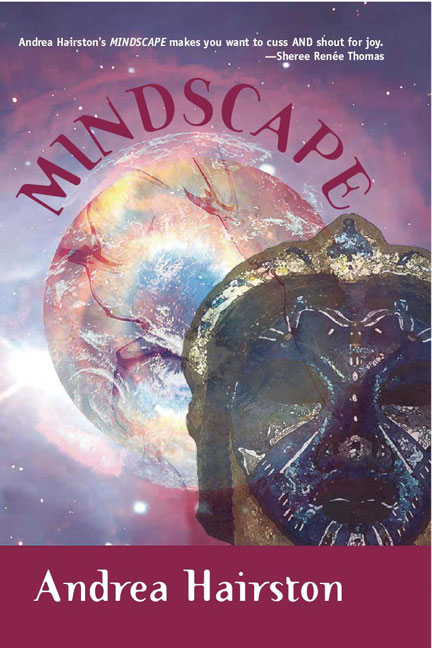
Mindscape by Andrea Hairston
In the sci-fi spirit of forward thinking, Andrea Hairston creates a different take on alien invasion tropes. While many sci-fi alien narratives use the physical presence of alien beings, Mindscape is centered around a barrier that slams down onto earth, dividing regions and throwing the world into chaos. The world comes to be dictated by gang-run states. People called Vermittler are the only ones who can safely cross the barrier, and allow others to do so as well. One Vermittler named Celestina creates a treaty to unite the divided realms, but is assassinated on the same day that it is signed, leaving her apprentice, Ellina to finish what was started.
Mindscape is a blend of magical fantasy and paranormal sci-fi told from the perspective of several characters. For a novel published in 2006, it is unapologetic in its inclusion of queer characters, however it does take a bit of an outdated outlook at transgender identity.
Onyesonwu was born as the result of her mother’s brutal assault during a time when her people were experiencing a genocide in post-nuclear-holocaust Sudan. The Nuru have decided to destroy the Okeke in order to carry out the goddess Ani’s divine punishment for the Okeke’s hubris in their technological advancement. But Onyesonwu is given her name lovingly by her mother, its meaning a fierce challenge in the face of their eradication: “Who fears death?” As the last living member of the Okeke people after the genocide, it is up to Onyesonwu to end the violence against her people. She is brought up by a mysterious shaman who introduces her to magic.
With a name that challenges death itself, it’s clear from the start that Onyesonwu is not a protagonist who is going to bend easily. She won’t accept the fate that the Nuru attempt to force upon her, nor that of their goddess. Nnendi Okorafor gives us an incredibly strong young African woman to root for. My caution for readers is that because Who Fears Death is honest about the brutal nature about violence against women in during times of intense conflict, there are uncomfortable scenes depicting graphic sexual violence.
Published in 2014, Love is the Drug almost seems to predict the COVID-19 pandemic six years in advance. Emily Bird, who is called “Bird” by most, is an affluent Black high schooler at a prestigious private school in Washington, D.C. She has a fabulous life with the perfect boyfriend, and a beautiful future at an Ivy League university. But after a mysterious encounter with a homeland security agent named David, she finds herself waking up in the hospital missing her memories from her evening. Even more disturbing, martial law has been instituted as a deadly virus rages on, forcing quarantines and curfews. Bird’s parents are involved in secret scientific work, which puts Bird under David’s suspicion. Pursued by the titans of the U.S. government, young Bird only has her conspiracy-loving classmate, Coffee, to rely upon.
Bird and Coffee remind me a lot of Chiamaka and Devon from Faridah Àbíké-Íyímídé’s Ace of Spades, being two Black kids from different sides of the socioeconomic fence forced to work together against a seemingly unbeatable oppressive force. Similar themes of mistrust and betrayal arise in this mystery thriller, and Alaya Dawn Johnson’s use of a science fiction plague brings the story in a unique direction.
As an English and biology teacher, as well as an advocate for diverse literature, N.E Davenport blends sci-fi and fantasy beautifully, with a Black girl with eyes set to kill at the helm of the narrative. The Blood Trials takes place in the fictional Republic of Mareen, where Ikenna, granddaughter of the former military leader Verne Amari, is training to be an elite fighter. But Verne taught her more than the martial skills she would need to fight—he taught her how to use the magical gift that flows within her blood, and the importance of keeping it secret. When Verne is murdered, Ikenna knows it was someone of the Praetorian guard who ordered it, and she becomes set on vengeance. She joins the Praetorian guard to uncover the truth of his murder, knowing she will face racism and misogyny because of her mixed heritage. In the long-held tradition of Black women around the world, Ikenna sets forth to disturb the peace within a corrupt system.
Heads emerge from toilets, constructed from our own debris. Birth control pills lead to pregnancy. Foxes bleed gold. People connect over ghost-watching. In Cursed Bunny,Bora Chung takes us on an unforgettable journey through folkloric caves and modern-day apartments, unearthing the horror and injustice that are engrained in the fabric of human civilization.
I refused to read Cursed Bunny while I was alone. Translated by Anton Hur, the South Korean short story collection melds together speculative fiction, horror, absurdism, folklore, and bitingly-acute observations of contemporary Korean society. Anticipating that I would be too scared if I read it by myself, I sought out public reading spaces. But after finishing the ten stories, I wasn’t certain that reading Cursed Bunny amidst other people provided any comfort. Chung has a way of revealing humanity’s deep cruelty with an absurd twist, tweaking the ordinary and destabilizing the setting around me. She highlights the struggles of the oppressed, using fantastical elements to expose systems of patriarchy, capitalism, and corruption. Hur expertly captures the tone of Chung’s prose, which is deceptively simple; some stories almost sound like the ones you read in childhood—making them all the more haunting.
Chung’s wry, dark humor and passion for activism shone in our Zoom conversation, where we (surprisingly) laughed our way through topics such as the absurdity of misogyny, urban legends, and why a cursed fetish can’t be ugly.
Jaeyon Yoo: What drew you to the fantastic and surreal elements in this collection, especially in addressing the horrors and cruelties of modern society?
Bora Chung: Especially for the minority or the marginalized, I think the fantastic or the unreal is a better approach for telling their stories. It will vary, according to people’s experiences, but if you try to criticize current society and the state of things in a realistic manner, it runs the risk of turning into a statement—not fiction. And the situation is absurd and illogical [already]. Why should a certain type of human be considered “lesser” than another, because this first type of human has functioning ovaries and a uterus? There’s no logic to it. When you’re confronted with this type of absurdity, it’s very natural to respond with absurd, illogical, and unreal narratives. That’s what fits best.
I never learned creative writing, so I learned everything I know about writing from reading other people’s words. I studied Slavic literature in graduate school, [which] has a very rich tradition of blending genres and defying the order between the fantastic and the real. Do you know Nikolai Gogol’s The Overcoat? The poor guy becomes a ghost to get the overcoat. And in “The Nose,” a man sees his nose in a uniform that is a higher rank than himself. How does a nose wear a uniform? This is considered one of the canonical works in Russian literature. It’s ridiculous! But this is one of the best writers of the Russian literary tradition. In every single Russian literature class, you read him and people fall in love with him. This opened my eyes to the fact that you can incorporate the fantastic and still make really good stories, that people will enjoy it. It doesn’t have to be realistic. I was fascinated, and thought, “If they can do it, maybe I can do it. I might never be as good as Dostoyevsky, but a girl can dream!”
JY: The story that resonated with me the most was “The Embodiment,” probably because I’ve had my share of traumatizing experiences at a Seoul gynecologist. Your fiction made me think about body as a process and a verb, one that is constantly fragmented and broken… Can you talk more about your depictions of the female body?
BC: The first part of “The Embodiment” is what I went through. When I first went to the U.S. to study, you say in Korean that you “change waters.” You’re trying to adjust to the new environment, and you have to go through this adjustment period. When I came back to Korea, my period wouldn’t stop for two weeks. I was 28 and unmarried at the time. I told my mom that I needed to go see the gynecologist. And the first thing she said was, “You’re not going to a gynecologist yourself!” If I had broken a finger, nobody would have told me I could not go see a doctor because I was unmarried. My mom eventually went with me to the gynecologist. I was not eight or 18-years-old—I was 28. By the way, my mom’s a dentist. She’s a highly educated woman and a very exceptional 1% of her generation. But the conventions, traditions, and ideology she grew up with was so strong that it prevented her from going beyond that and seeing it from a medical point of view. Around that same time, I discovered the Korean verb, “to body.” I really liked that verb. It’s an outdated term. Koreans don’t use that particular word anymore for that meaning, but it’s in the dictionary. I thought, this fits my experience perfectly. Because menstruation is something you do with your body; it’s a sign that one’s body is functioning, or a sign that one’s body is not functioning. And then all the weird guys that appear later in the story, some of them are actually from my aunts’ and mom’s stories—the weirdos that they encountered during their younger years. The guy that recites Shakespeare? That guy really existed. There are so many weird people in the world, and that makes me hyper-realistic. I wanted to be an absurdist, but there are so many people that are weirder than my imagination.
JY: Absolutely—the most horrifying or absurd moments seem to be the ones pulled from reality! You’ve talked about the influence of Slavic literature, but another reference I picked up was folklore.
BC: I think it’s common in every culture to tell children folk tales. I grew up reading a lot of folk tales, and I still love folklore and urban legends. Back in the ’70s and ’80s in Korea, there was this boom of children’s books that were 50 or 100 volumes. Usually, middle-aged women would knock on your door and try to sell you this multiple-volume children’s book series. It was a status symbol. My mom bought me this 100-volume series, and it had all kinds of fairy tales. Arabian, Japanese, European, Chinese folk tales—I loved them all. I also love Samguk yosa and Samguk sagi, two of the oldest Korean history books. They fuse seemingly realistic historic events with most certainly unrealistic events and mythical creatures. There are a lot of dragons in Samguk yosa. People are obsessed with dragons—there are dragons in every single entry. When something important happens, there has to be a dragon. There are so many various forms of folktale, and they are wild and very creative—unimaginatively imaginative.
[As for] urban legends, they’re still alive and kicking. I love Japanese urban legends—they have so many good horror stories. It constantly reminds us that what we think we know is not the entire world. Human beings are so small. We only have five senses. Some people claim to have a sixth, but it’s not empirically provable. We are so limited; there is a whole universe out there that we will never understand or never feel in a concrete way. It’s a mistake to be arrogant and think, “I am the human being. I am the superior being and I know everything.” I think there is an element of the unknown and horror living with us all the time. Urban legends remind us, in a very modern and mundane way, that the unknown is with us. I like that feeling, that there is something more to this world than what we see and hear. It’s scary, but it’s also very interesting—there will be something more than what I know and what I have now. It’s a grand statement, but that’s what makes life worth living: there will always be something more.
JY: I was really struck by was this boundary—and blurring of that boundary—between the animal and the human. (Although there are no dragons in your book.) I came away questioning what we, as a society, define as “natural.” Could you talk more about these themes of the natural/feral, juxtaposed against the human/civilized?
BC: That concept is very cultural, and it is probably very different in the West than in Asia. And it will depend on specific cultures in Asia as well—Asia is very large! As I said, I love folklore. I saw so many similarities in Slavic history books and Samguk sagi and Samguk yosa, for example. If you go back to the roughly 13th century or before, people live with mythical creatures, become mythical creatures. And these are history books! They record these fantastical phenomena and are just living among other non-human beings. That was considered natural. That is something very important, and we lost it. I can see why we lost it, too. Nature is not good to humans. If we lived in a feral environment, I would have died in three seconds. Human beings are so weak in wildlife and nature, so we have to protect ourselves with this bubble of civilization, but that is not because we’re superior. It’s because we’re so weak.
JY: And yet the society you depict in Cursed Bunny is one filled with violence and revenge; it doesn’t necessarily protect us, either. Ultimately, I thought your collection meditated on what it means to survive in our modern-day society, and how to find meaning within survival. Do you have thoughts on the connection between societal violence, survival, and literature?
BC: These stories are now rather old, and my perspective has changed a lot, especially since the Sewol Ferry disaster. I began to protest after that. Up until 2014, I was your typical couch potato intellectual who criticized society but did nothing. But when children died in front of me, and the TV stations broadcasted everything real-time, for three days, how people died and were stuck on the boat for three days—it was pure hell. The stories in Cursed Bunny are mostly from before 2014, so they are more abstract and vaguely fantastical. I didn’t know how to formulate my opinion on society. After [the Sewol Ferry disaster], I’m like, “Go protest!” and “I’m gonna kill you all!” [Laughs.]No, not everyone—I love my readers. I want to kill the bad guys. I think that is consistent in all of my work. I want the bad guys to die. That is my response to society and violence.
Urban legends remind us, in a very modern and mundane way, that the unknown is with us.
When I was sitting at home and thinking about fantastical stories, I didn’t really know how [society’s] structures worked. When I went to all these protests and met people, the one thing I experienced was solidarity. With the Sewol Ferry Disaster, the entire world came to sign the petition. They all came and listened to us and signed the petition, because they understood people should not die that way. Just a few days ago, the workers from SsangYong Motors won at the Supreme Court. It was ruled that the workers had the right to defend themselves. It took them 13 years and 33 people’s lives, but they won. And the people from SsangYong Motors came to the Sewol protest site and sat with us. We go to their protests, too. That’s where I met what became my entire world right now. I think my perspective has changed a lot, from “I want the bad guys to die” to “I love these people, and I want other people to die.”
I guess this solidarity ties back to what I just said earlier, about there being something more to life [beyond the human senses]. With my SsangYong Motors men, I was prepared to cry with them when we all went to the Supreme Court. They came out crying. But then they were glad to see me, which means something good happened. I was so terrified—all the people who went there in solidarity were terrified, and then we were all very pleasantly shocked. We cannot know the future. I guess change is possible. People suck, but they can change and suck less.
JY: Speaking of protests, could you talk about how you address capitalism, which I see as another theme in your writing?
BC: I can’t really say it’s all purely “capitalism” that I address. Capitalism is doing a lot of horrible things, but there are always some other elements that make things worse. In “Cursed Bunny,” it was corporations that colluded with power, dictatorship and totalitarianism. In “Home Sweet Home,” it’s patriarchy, that part of Korean culture that is very oppressive to young women specifically. So, it’s patriarchy, in the worst form, with capitalism. There is always some other thing.
JY: And, as you said, you turned to fiction as a way to kill these bad guys, creating this intersectionally-terrifying world that’s not so different from reality.
BC: But in reality, bad guys won’t die. Why won’t they die?
JY: In that sense, the world of Cursed Bunny (where the bad guys die) is less scary than reality!
BC: I guess…
JY: In “Cursed Bunny,” the cursed fetish-maker is obsessed with crafting something pretty—and there’s an alluring element to your prose, even as the material it depicts is often horrifying or twisted. Do you see the horrific and beautiful as intertwined?
BC: I actually never thought about it that way. I like pretty things. When I was writing “Cursed Bunny,” I belonged to this writing group called Mirror Zine. At the end of 2015, we were talking about what to write for the new year. Somebody suggested the Asian Zodiac [with 12 animals]. I was late. The fast people took all the glamorous animals—like the dragon, the tiger. The second people took all the familiar animals—the dog, the rooster, the horse. When I read the web board, there were only the bunny and the sheep left. I know nothing about sheep. We had two bunnies when I was in elementary school, and I have a very vague memory of taking care of bunnies. This was better than nothing, so I took the bunnies. Bunnies are pretty, but they are the weakest animals in the entire food chain. They don’t have any claws or sharp teeth—they have nothing to defend themselves with. I thought, “I’ll need to make them scary. If I go with the fuzzy, cute bunny, it’s going to be ordinary and boring.” But I wanted to keep the cute element, and then make them scary. That was my thought process. I wasn’t really thinking about the theme of beauty. I just wanted to write scary, fuzzy bunnies. And if cursed fetishes were ugly, nobody would touch the cursed fetish and it’s going to fail as a fetish.
JY: Something I’m struck by in your writing process is its logic! You think through the logical steps, such as, “Would I touch an ugly fetish? No.”
BC: I write about weird things, so the underlying thinking and emotion have to be understandable, come naturally. Otherwise, it will be an incomprehensible story.
JY: Do you have anything else you’d like to share with Anglophone readers of Cursed Bunny?
BC: You can go to the bathroom and you won’t die. There are no bunny curse traditions in Korea. Contraceptive pills do not make you pregnant. Do not give this book to your children.
Human beings are so weak in wildlife and nature, so we have to protect ourselves with this bubble of civilization.
In an interview I did with the BBC, the anchor very seriously asked me about the curse tradition of using bunnies in Korea. I told her that I lied: that everything is made up, and there is no curse tradition with bunnies. We do have curse traditions, but we use dolls. We don’t use live or magic or killer bunnies. She seemed very disappointed. I apologized profusely, but there is no such tradition. This made me think that people like these folk tale elements, and the specificity of my stories is something new and interesting. I specifically made sure that my stories don’t contain anything really traditionally shamanistic. Because people might try it at home!
JY: I will say, I was very careful for a few days after reading around toilets and bunnies…
BC: I’m so sorry! People complained to me a lot that they can’t go to the bathroom after reading “The Head.” Nothing will happen, it’s all made-up. I’m a professional liar and I lie very well, but these are all lies.
JY: Do you have an object you’d choose as your cursed fetish, if you weren’t last in your writing group and stuck with the bunny?
BC: Now, I kind of like the bunny. I do like cats. I want a cat—actually, I want to be a cat. [Our interview concludes with a cat show-and-tell, in which Bora meets my cat.]
In our series “Can Writing Be Taught?” we partner with Catapult to ask their course instructors all our burning questions about the process of teaching writing. This month we feature Ruth Joffre, author of the short story collection Night Beast, whose fiction appears or is forthcoming in The Florida Review Online, Lightspeed, Nightmare, and Wigleaf as well as the anthologies Best Microfiction 2021 & 2022. Check out her 4-week online fiction seminar on worldbuilding for speculative writers. We chatted with Joffre about shrimp shumai, sleeping, and the writer’s never-ending hustle.
What’s the best thing you’ve ever gotten out of a writing class or workshop as a student?
A first reader who understands my work and vision. Ultimately, the community we build as writers is more important than any assigned reading, writing feedback, or element of craft you could learn in a classroom.
What’s the worst thing you’ve ever gotten out of a writing class or workshop as a student?
As a queer Latinx woman, it’s hard not to think of all the casual misogyny, homophobia, racism, and other hate people have thrown around in critique. It’s always hard when you have classmates like that, but a good instructor can help define what constructive criticism is and shield students from such hate by establishing guardrails and community agreements.
What is the lesson or piece of writing advice you return to most as an instructor?
More and more, I think about something my instructor Benjamin Percy teaches, which is that we need to think about our characters’ jobs. Especially now, with increasing efforts to unionize at mega-corporations and the fight for workers’ rights, the question of how a character makes money—and what that does to them/what they do to others in the process—seems all the more important.
Does everyone “have a novel in them”?
Everyone could have a story of some length in them—whether that’s a novel, novella, novelette, short story, or flash. The trick is figuring out the right length and shape for that story and telling it in the best possible way. And then, of course, doing it again.
Would you ever encourage a student to give up writing? Under what circumstances?
I could only imagine doing this under some extreme circumstance, like someone turning in alt-right fascist propaganda. Otherwise, I try to be encouraging and supportive. It’s not my job to be the arbiter of what’s good writing or what could sell; it’s to help my students achieve their goals.
It’s not my job to be the arbiter of what’s good writing or what could sell; it’s to help my students achieve their goals.
What’s more valuable in a workshop, praise or criticism?
It depends on the student and their needs. I deploy alternative workshop models in my class, inspired by Matthew Salesses and Felicia Rose Chavez, and some students have said they want more praise just to give them motivation to keep going. If that’s what a student needs, far be it from me to stand in their way.
Should students write with publication in mind? Why or why not?
In general, no—unless they’re using specific calls for submissions as inspiration to get words on the page. I often encourage students to collects calls like prompts. Forget the deadline. Just sit down and write something, even if it’s a little outside your usual. You never know what it could unlock.
In one or two sentences, what’s your opinion of these writing maxims?
Kill your darlings: A clever phrase, but don’t get too obsessed with it.
Show don’t tell: Sometimes show and sometimes tell. Not every story requires the same tactics; you should learn how to modulate between them depending on the narrative.
Write what you know: Up to a point. Don’t use this as an excuse to stop learning or to avoid difficult subjects, but do make sure that you understand the emotional core of what you’re writing about and the cultural context.
Character is plot: It can be—but, then again, so can setting. It depends on what kind of story you’re telling.
What’s the best hobby for writers?
Here’s where I have to resist pushing my birding obsession on others! These days, people tend to want to monetize their hobbies or cross-pollinate in order to learn transferable skills, but I think we need to be doing less hustling and more resting. Sleep in! Learn how to make Eggs Benedict! Take up cross stitch! Whatever feels like a real break and allows you to come back to the page refreshed instead of frustrated.
I think we need to be doing less hustling and more resting. Sleep in!
What’s the best workshop snack?
Somehow this is the hardest question of all! Of late, I’ve been obsessed with the shrimp shumai from my local Asian market, but honestly anything goes in my class.
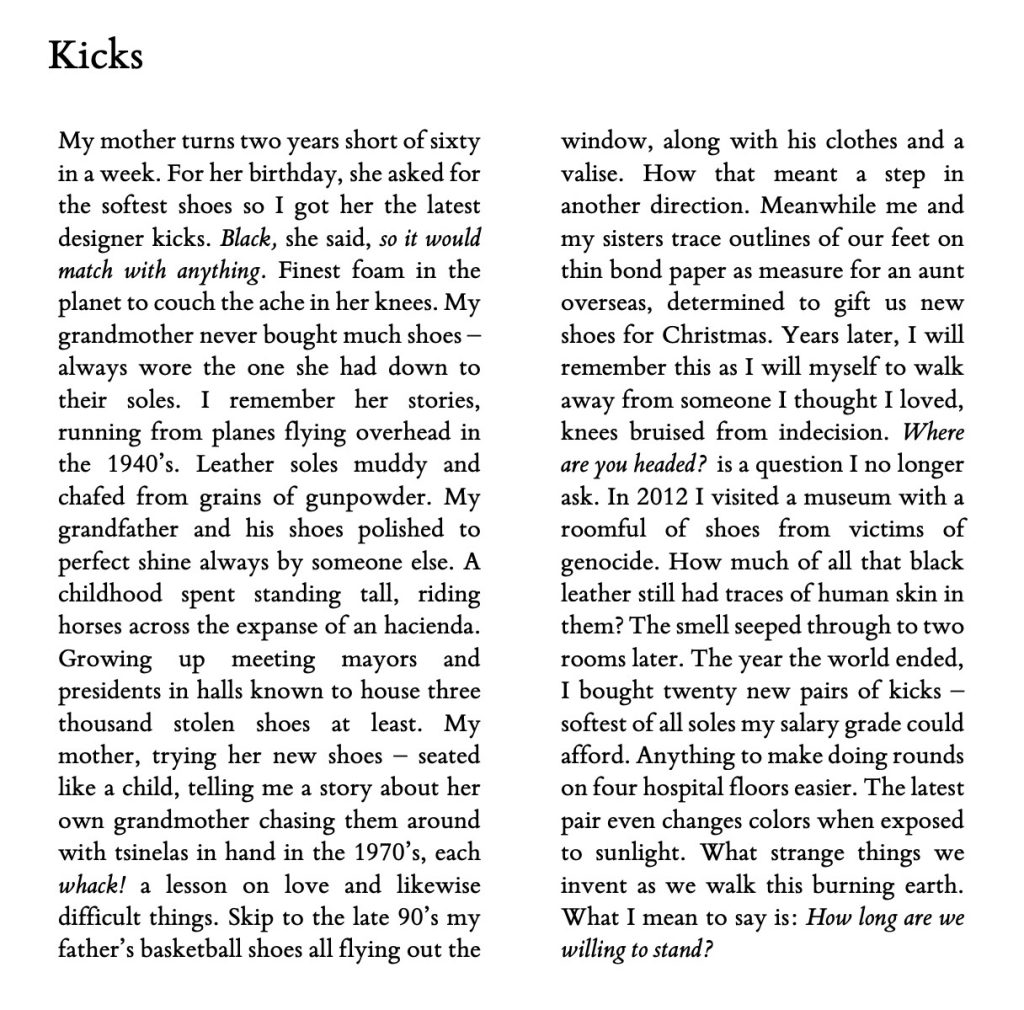
No one is allowed to speak
of the dictator’s wife
in ways not flattering. This information was procured
by our best agents and shoe-shine boys. How, in the mid-seventies, she fell
and fractured her right hip – only slightly so – non-
displaced, the orthopedic surgeon called it, needing
no direct intervention. But causing enough crack
of bone that the devil himself managed to sneak in – tendrils
and black soup, mixing itself with her marrow. How else
do you explain all the atrocities committed hereafter?
All those bare-footed workers buried alive
in scaffolding as though in sacrifice to some hungry creature
and its three-thousand feet. Steadfast in making its way
to hell. Even the ghosts refuse to whisper
through their concrete coffins.
Dear Sugar Plum Fairy, Snow King and Queen, Dewdrop Fairy, Dewdrops, Turkish Twirlers, Mother Ginger, Mother Ginger’s Bébés, Dancing Flowers, Spanish Dancers, Arabian Dancers, Chinese Dancers, Soldiers, Dolls, Rats, Producers, Nutcracker Stans, and beloved Mice:
I’m Angelina Jeanette Mouseling from Chipping Cheddar, UK, born in 1983. Better known as Angelina Ballerina, I’ve danced ballet my whole life. My life story has been made into an award winning set of childrens’ books and TV series. I have a nut to crack with The Nutcracker Ballet.
I’m a mouse. The Nutcracker has always been set against mice. Why? I have no idea. Without us there’s no conflict, no tension, and yet all anyone ever talks about is Clara and the Prince.
The plot itself is completely unbelievable. In Act One the mice attack the Nutcracker (who turns into a Prince???) for absolutely no reason. I’ve never seen a mouse attack a human in my entire life, let alone attempt to eat royalty. Are you aware of our diminutive size?
Once the mice are defeated, we’re never seen, or heard from, again. There isn’t a single mouse in the entire second half of the ballet. Whatever…
I thought MAYBE the Sugar Plum Fairy was within reach.
Then there’s the tiny problem of typecasting. At first I set my sights on landing the part of Clara, but after years without a callback, I moved on. I thought MAYBE the Sugar Plum Fairy was within reach. But no, I kept getting feedback that I was too little.
And it’s not just me! Do you know how many of my mouse friends have worked their whole lives, climbing up the ranks through the corps de ballet, only to be cast as Mouse #3 over and over again?
I’ve advocated for mice in starring roles throughout my career with no success outside of productions for mice by mice. For example my best friend Alice Nimbletoes, the talented gymnast, has never been a lead for a human audience. My rivals, the twins Priscilla and Penelope Pinkpaws, despite being Miss Lilly’s favorites, haven’t made it into leading roles either. Alice is a mouse of color, and the Pinkpaws twins aren’t always the nicest but still, none of us have ever been able to cross over.
The only time we’ve been given a human audience is in my books and TV shows, because children, unlike adults, are able to appreciate us. I mean, look at our ingrained flexibility! Whiskers provide balance and our miniscule mouse skates are perfect for dancing on point! But God forbid we take a role from a human.
The Nutcracker is the perfect ballet for mice to have our first big break, especially since we are so crucial to the storyline, but alas, we’ve never been cast.
Meanwhile, Billy Elliot gets a starring role as a swan—but then again, haven’t you heard about the mythical white man? He can shapeshift into anything, all it takes is imagination!
No, I’m not bitter or anything. Absolutely not bitter.
And we need to talk about the treatment of women in The Nutcracker. Has anyone but me realized that Clara is a minor when she’s sent off to the Land of Sweets with a man twice her age???
Have you heard of consent? Herr Drosselmeyer’s doesn’t count.
I can’t think of a single thing Clara learns.
Also there’s a real lack of character development. At least in my books I have a goal, face obstacles, and always learn a lesson at the end. I can’t think of a single thing Clara learns, except how to marry a Prince (which isn’t even that hard—look at Megan Markle.) Let’s not even consider the idea that the Prince—a man!—has anything to learn from all this.
And another thing! The Nutcracker is rife with cultural appropriation. Turkish twirlers, Spanish dancers, lots of turbans. Where’s the credit? Where’s the authenticity? I’m surprised the ACLU isn’t involved. Where’s your cancel culture now, GOP?
And someone needs to inform PETA about the treatment of animals onstage. In the Dance of the Phoenix, the bird is kept in a cage and only let out for a five minute solo. I’ve heard there’s even a Seattle-area production with a tiger on a leash.
The Nutcracker was invented in 1892 and in 130 years nothing has changed! Even the music is the same, and it was taken from Tchaikovsky! I’m going to ask an honest question here: is there anything original in The Nutcracker that wasn’t stolen from someone else?
Don’t get me wrong, The Nutcracker Ballet was, and always will be, my first love. That’s why I’ve finally had it. I’ve danced my heart out for decades, and now it’s time to say something.
As a memoirist whose audience has always been children, a lot has changed since my books were written. The time has come for us to reckon with our anti-rodent past and address the corresponding inequities in ballet. If only we could treat all animals, oppressed people, and minors with the same amount of respect and autonomy, The Nutcracker might actually deliver on its vision of a land filled with goodness, where everyone has the chance to achieve their dreams. Personally, I believe audiences would eat it up.
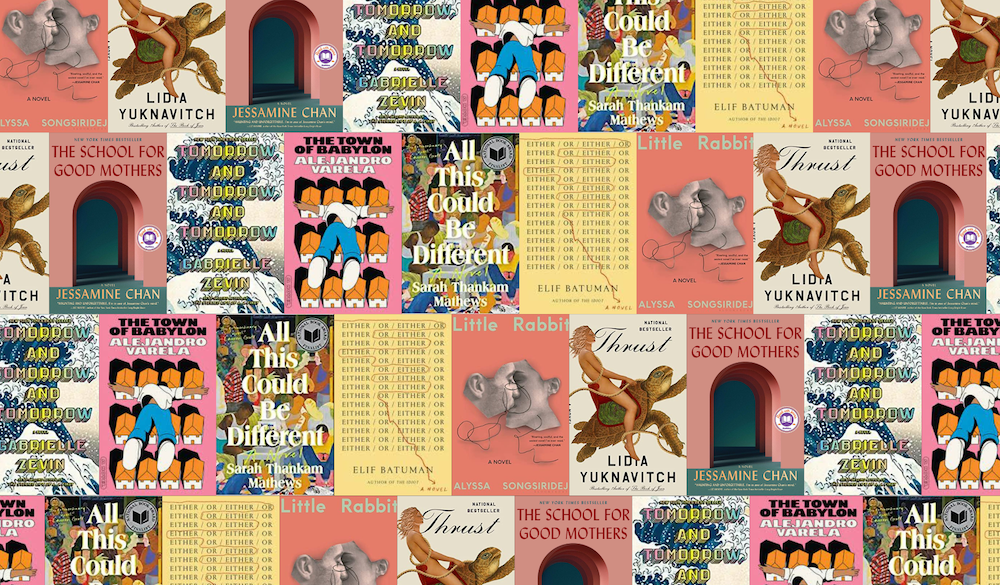
In a time of great collective precarity—both political and economic—long-held literary greats came through with novels that asked the burning questions of this era. Searing debuts pierced the literary establishment, extraordinary novels explored desire and ambition, yearning and loss. They featured protagonists with the intelligence and integrity to examine their former selves alongside their current selves, to ask more of each other and the world they inhabit. They fell in love, and into lust; they were ambitious, and they made mistakes. Most importantly, these novels gave us a mirror back into our past, and a tunnel toward our future, inevitable and damaged though it surely is. The best of this year’s novels reminded us that we must persist, that we are survivors only when we move forward together, and that our greatest gift is our collective humanity.
Here are Electric Lit’s top three novels of the year, followed by additional favorites listed in alphabetical order.
In Little Rabbit, short-listed for the Center for Fiction’s First Novel Prize, a queer woman becomes sexually entangled with the choreographer, an older cisgender man. As she navigates the heteronormative-conforming presentation of her new relationship, she grapples with questions about its dynamics: Is she more empowered with the choreographer—or less? Does he have power over her, or simply more power than her? Is a balance of power even what she wants? For discussion of these questions and more, check out this conversation between former EL staffer Preety Sidhu and current EL staffer Alyssa Songsiridej. (Note: Alyssa Songsiridej is the managing editor for Electric Literature.)
The release of Jessamine Chan’s debut garnered her comparisons to contemporary literary titans like Margaret Atwood and Kazuo Ishiguro, as well as classic greats like Orwell and Vonnegut—and from major outlets (Vogue) and writers (Diane Cook, Robert Jones, Jr.) no less. The School for Good Mothers follows Frida Liu as she finds herself in a government-run facility for bad mothers, ie, women like Frida who fail to meet the state-defined standards for appropriate parenting. The facility is less school and more, to borrow phrasing from Diane Cook, who interviewed Chan for Electric Lit in January, “dystopian apparatus.” We won’t spoil anything by saying more, but suffice say, Good Mothers is what the reviewers say it is: excellent, provocative, horrifying.
Either/Or, Elif Batuman’s much-anticipated follow-up to The Idiot, delivers more of what every Idiot fan wants: more Selin. The story picks up where the first installment left off; Selin is back from her summer abroad, a sophomore at Harvard, and as introspective as ever. Ivan, the subject of Selin’s unrequited infatuation in The Idiot has graduated from college but not from Selin’s thoughts. The novel is less plot and more meander through a fascinating mind—smart but inexperienced, ambitious but insecure, curious but oblivious. If you loved The Idiot, you’ll love Either/Or—and if you’re already hoping for a third installment, EL’s interview with Batuman is perfect reading material while you wait.
Sarah Thankam Mathews’ debut is a bildungsroman for the present moment. Its protagonist, Sneha, is a 22-year-old college graduate who has managed, miraculously, to land a corporate job in Milwaukee despite the economic recession. Like everyone else, she is desperately in search of that classic castle in the air, The American Dream. She is also brown and queer, both deeply tied to her family in India and deeply interested in forging her own future. She is, in short, complicated—and gloriously so. In an interview with EL, Mathews said she wanted her novel to “advocate for a certain kind of large-hearted, generous, and honest relational style between people.” All This Could Be Different does that—and it does it without shying away from messy topics. Sex and gender, capitalism and labor, immigration and assimilation, love and belonging—it’s all here.
Can something be both a love letter and a take-down? Big Girl is that: a love letter to 90s culture (shout-out to Biggie Smalls and Aaliyah) and a take-down of 90s culture (looking at you, Weight Watchers). In Big Girl, Malaya is a girl swimming against the current of her family’s, and the culture’s, expectations. She’s smart and curious and artistic, but those qualities seem to matter less than the fact that she is also fat. Mecca Jamilah Sullivan’s novel is a coming-of-age story with a capacious lens. For readers interested in a sharp look at Black womanhood, 90s Harlem, and the toxicity of body shame, Big Girl is a sure bet.
The conceit of Briefly, a Delicious Life is bold: Blanca is fourteen and desperately in love with George, a married woman. Frédéric Chopin (yes, that Frédéric Chopin) is her husband. Oh, and, Blanca is dead. In lesser hands, this triangle might be rendered absurd, but in Stevens’ assured prose, it’s captivating. Blanca is a charming if bizarre protagonist, and the gender politics of the 1800s are, even from a ghost’s perspective, ghastly. If historical fiction (with an emphasis on the fiction) is your genre, Nell Stevens’ debut novel is the ghost story/queer romance for you.
You may believe you’ve already read all of the choral novels you need to read. You did The Virgin Suicides in the 90s, We the Animals ten years later. You may think there are only so many times the collective “we” can be used before it becomes less of a perspective and more of a gimmick. But whatever misguided thoughts or beliefs you may be harboring, Brown Girls is proof that the first-person plural can still deliver a wallop of emotional punch. Nadira, Gabby, Naz, Trish, and Angelique are young women of color growing up in the dregs of Queens, New York. They are vibrant, beautiful, bursting with life—a collective of diverse stories buttressed and emboldened by the author’s craft decisions. As Palasi Andreades told Electric Lit: “By using the ‘we’ point-of-view, I definitely wanted to capture the sisterhood, solidarity, and diversity of Queens. . . . there’s a hybridity to the text that reflects the hybrid identities of these characters.”
The protagonist of Lydia Millet’s latest novel is a fan-favorite in today’s climate: a white cis male living off a family fortune made in Big Oil. (I’m kidding.) The setting is also the stuff blockbuster hits are made of: a quiet neighborhood on the outskirts of Phoenix. (Is this joke getting old yet?) But in Millet’s hands, Gil (the aforementioned white guy) is also something that it is very difficult to be—let alone write—without cynicism: he’s nice. And however domestic the setting, Millet is, as ever, committed to asking the Big Questions. Is it possible to do good in a world hell-bent toward bad? Is it even worth trying? Dinosaurs is the kind of novel that leaves the reader in a reflective (dare we say, hopeful?) mood. And during those fifteen minutes of afterglow, before you check your phone, dip into this interview with Lydia Millet—the world will still be teetering on the brink of catastrophe when you’re done.
The best writers defy easy categorization. Was Jane Austen a domestic author or a scathing political satirist? (I’m a Jane Austen fan, the correct answer is: both.) Elaine Hsieh Chou is like that. Disorientation, her debut novel, isn’t one thing. Instead, to borrow words from the EL interviewer who chatted with Chou earlier this year: it’s a whirlwind romp that combines academic satire with a who-dunnit mystery thriller. Honestly, that’s probably all you need to know—but I’ll also add that the protagonist is a disillusioned doctoral student mired in her dissertation and struggling with her sense of identity, until an unexpected discovery forces her into forward motion. If you’ve ever been stuck in academic hell or had a moment within which you questioned everything, this book is for you. Which is really only another way of saying this book is for everyone.
Named one of the top 50 novels published in the twenty-first century by The Times, Foster is a novella I recommend to anyone who hears “Irish writer” and thinks only “Sally Rooney.” Claire Keegan is decidedly not Sally Rooney; what she is, instead, is timeless. Much as Rooney nails the contemporary, Keegan revitalizes the classic. Her prose is spare, her tone attentive, her atmosphere quiet. The protagonist of Foster is a little girl who is left with distant relatives by her impoverished parents. As she steps into the life of a new family, readers glimpse the world, in all its beauty and failings, through her earnest eyes.
Greenland is the story of Kip Starling, a writer writing about a man (Mohammed el Adl, the young Egyptian lover of British author E. M. Forster) who lived a hundred years ago but who nonetheless resembles Kip greatly. They’re both Black, both romantically attached to white partners, both queer, both educated, both othered by the dominant culture. As Kip immerses himself in Mohammed’s story, the borders between them begin to blur, bringing Kip to new understandings about himself and the world. For more books like Greenland, check out Santos Donaldson’s reading list of novels about being a queer immigrant here.
Written in vivid imagery and breathtaking prose, Noor Naga’s If an Egyptian Cannot Speak English, winner of the 2022 Center For Fiction First Novel Prize, begins at the meeting point for two people who change each other’s lives forever. This is a novel that asks big questions—of itself and its readers—ranging from the personal to the political to the philosophical, but it asks them while having fun, too. Check out EL’s conversation between Naga and Doma Mahmoud as a preview of this extraordinary novel.
In Less is Lost, Andrew Sean Greer’s highly-anticipated follow up to his Pulitzer Prize-winning novel Less, Greer spins a wandering tale of a writer whose problems propel him through a string of nationwide literary gigs. Greer probes what it means to be an American, to be in love, and to earn the moniker of “bad gay.” The spirit of adventure, and of finding one’s way back to who one really is, permeates every page of this book.
Lucy by the Sea is Strout’s third installment in the trilogy that centers one of her most beloved characters, the writer Lucy Barton. In the early days of the Covid-19 lockdown, Lucy’s ex-husband brings her to a small town on the coast of Maine. For the next several months, Lucy, William, and their intricate past braid themselves more tightly together than ever, even as the world seems, almost daily, to irrevocably evolve into something else.
Birdsong’s captivating debut novel, written in three parts, follows three Black women coping with albinism in Shreveport, Louisiana. Suzette finds independence in her budding romance; Maple continues to mourn her mother’s murder; and Agnes is on the verge of discovering the magic within, propelling her to face her destiny. Part grief meditation, part self-affirming discovery, Nobody’s Magic balances yearning and loss with searing hope for the future. Read Darise JeanBaptiste’s essay on the role of threes and Black friendship in Nobody’s Magic and Insecure.
On the outside, the life of Olga Dies Dreaming‘s titular character seems perfect. Set against the backdrop of a bustling New York City, Olga, an in-demand wedding planner, and her brother Pietro are at the center of a romantic, comedic, intelligent novel. Both have picture-perfect public lives (Pietro is a beloved Brooklyn Congressman), yet both harbor greater challenges behind closed doors. When Olga and Pietro are forced to confront a mother who returns to their lives after her abandonment of them for a militant political cause, they are forced to reckon with the far-reaching impact of long-held family secrets.
Chantal V. Johnson’s electrifying debut, Post-Traumatic, follows Vivian, a lawyer who advocates for mentally ill patients in New York City. While successful, Vivian contends daily with the aftereffects of a troublingly violent childhood, all while living with the everyday stresses of being a Black Latinx woman in America. When a family reunion prompts Vivian to make a bold move, she begins to unravel.
Rehamn’s latest novel follows Razia, a young Pakistani Muslim girl growing up in 1980s Queens, New York. Razia’s proximity to a world that is so much bigger than her triggers a desire to experience everything—the spiritual traditions of her religion, the city she lives in, and further exploration of her obsession with pop music. Her growth engenders questions about her faith, her family, and the expectations placed upon the girl in her various and intersecting communities. As Razia grows, and deviates from the prescribed path, readers of Roses, in the Mouth of a Lion won’t be able to help but wonder what will become of her.
Towada’s first in a trilogy of novels, Scattered All Over The Earthfinds Hiruko teaching immigrant children in near-future Denmark, Japan having vanished from the earth amid a climate disaster and a refugee crisis. In search of someone who speaks her mother tongue, Hiruko travels across Europe, each destination yielding a cast of characters more vivid than the last. A sweeping masterwork, Scattered All Over The Earth will astonish and entertain every reader in its path.
Spectacularly imaginative and thought-provoking, The Candy Housefollows a number of characters (several previously seen in the fantastic A Visit From the Goon Squad) as they grapple with tech-tycoon Bix Bouton’s revolutionary technology “Own Your Unconscious.” The shiny new tech allows users to upload and share their memories, creating a sort of cloud-based collective memory that, inevitably, leads to questions and conflict surrounding ethics, privacy, and power. Egan’s writing is experimental, unnerving, and deeply captivating. If you are a fan of Black Mirror or other art that engages with the many dystopian possibilities of social media, The Candy House is right up your alley.
One of our most anticipated LGBTQ+ books of 2022, Alejandro Valera’s debut novel is a modern coming-of-age story that follows Andrés, a gay professor who returns to his parents in his suburban hometown following the betrayal of husband’s infidelity. Back home, he attends a high school reunion, which thrusts him into weeks of reconnecting with people from his past. A finalist for the 2022 National Book Award, The Town of Babylonis a beautiful story about love, family, class, and the difficult endeavor of reckoning with the past.
Yuknavitch’s latest novel follows Laisvė, a motherless girl who has the powers of a carrier, a person who can travel through time by harnessing the power of meaningful objects. Composed of intricately braided storylines, Thrustis a magical and daring story exploring the surveillance state, climate change, agency, and the power of storytelling. Learn more about this epic novel by reading EL’s interview with Yuknavitch, in which she discusses, among many smart things, the boringness of linearity.
Spanning three decades, Tomorrow, and Tomorrow, and Tomorrow tells the tender yet tumultuous story of Sam Masur and Sadie Green, childhood friends turned successful video game designers and artistic collaborators after the release of their first game, Ichigo. With a vibrant cast of characters and niche insight into the world of game creation, Zevin’s ambitious novel explores the power of love and friendship in the face of loss, disability, failure, and self-doubt. This novel is so easy to love and perfect for readers who are looking for a little kindness in their lives.
In American Sign Language, “true biz” means really, seriously, definitely, real-talk. True biz, True Biz is a must read. Set at the River Valley School for the Deaf, Nović’s novel follows the characters Charlie, Austin, and February as they face a series of crises both personal and political. Charlie is a transfer student who has never met another deaf person. Austin is a golden boy whose life becomes complicated when his baby sister is born with the ability to hear. February is the school’s hearing headmistress and the child of deaf adults (CODA). Learn more about this beautiful and kaleidoscopic novel by reading the interview between Sarah Nović and Ross Showalter, published in EL.
Aside from being a contender for one of the best book covers of 2022, Julia May Jonas’ Vladimir is a razor-sharp and provocative campus novel about obsession, scandal, and power. The narrator is a beloved English professor whose husband, who teaches at the same small liberal arts college as her, is under investigation for inappropriate relationships with former students. Yikes. At the same time, Vladimir, a young and celebrated novelist arrives on campus, and the narrator falls into some questionable behavior of her own. Bold, edgy, and modern, this novel is a page turner that will lead readers through the gray areas of desire and morality.
Whether it’s urging fellow essayists to reject conventional writing wisdom or subverting the expected emotional responses to the death of a parent, much of 2022’s best nonfiction has been about reclaiming narratives: of the body, of the self, of religion and sex and popular culture. Exploring everything from the murky depths of the ocean floor to the oil fields of Alberta, this year’s creative nonfiction is at once achingly vulnerable and bitingly incisive, reflecting serious consideration of the systems that shape our daily lives and the individual choices we make within them. All these ideas and more are reflected in our list of the best nonfiction of 2022, voted on by Electric Literature staff and contributors. Here are the top three, followed by additional favorites (there were many ties!) in alphabetical order.
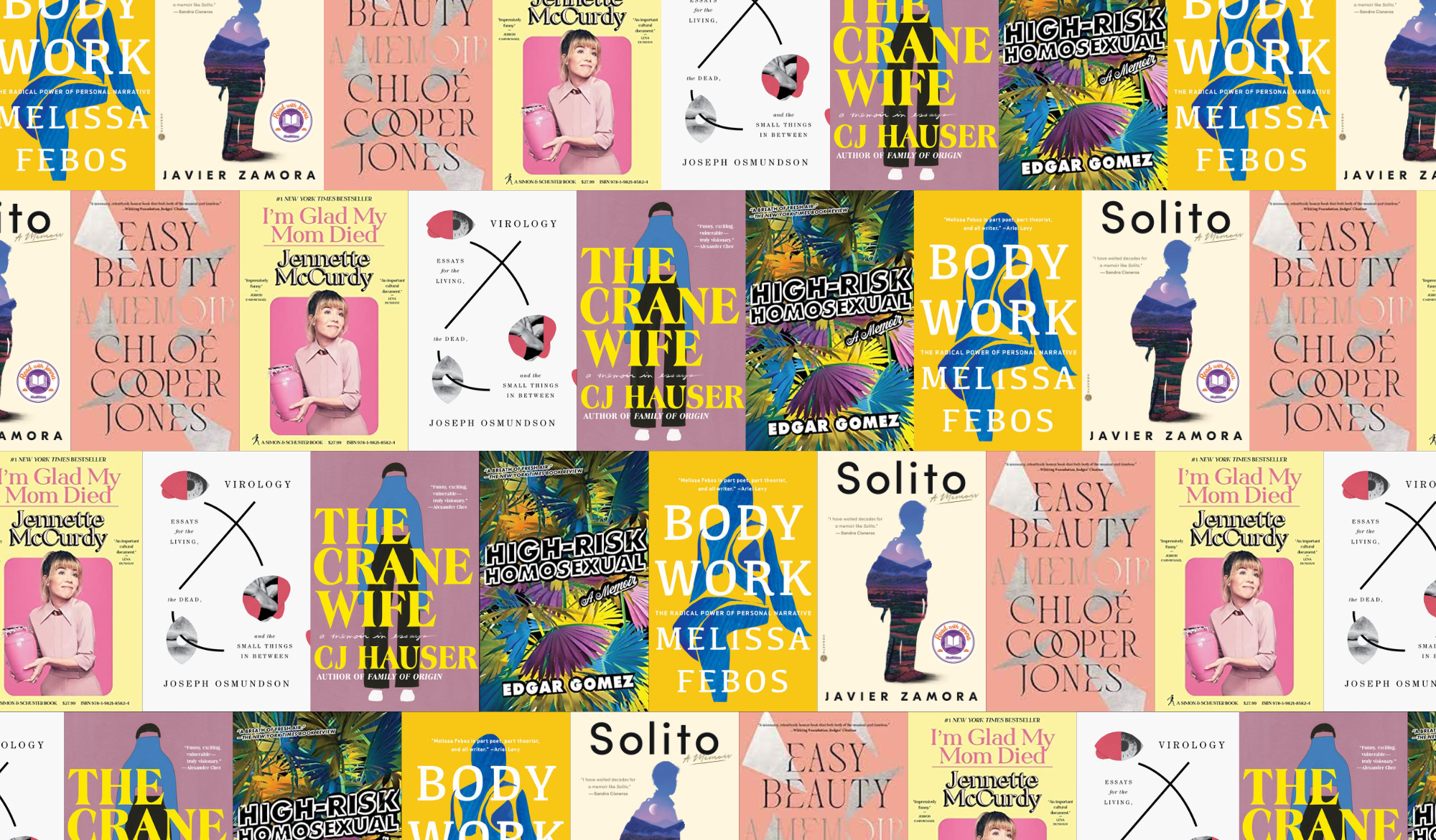
Appearing at the top of our nonfiction list for the second year in a row, Melissa Febos returns with Body Work, an invigorating blend of memoir and literary masterclass. “It’s often been taboo to talk about craft in terms of the personal,” Febos told Electric Literature earlier this year. “Our psychology, our wounds, our politics, and perhaps most of all, our bodies.” Pushing back against familiar craft advice to avoid “self-indulgence” and “navel-gazing,” Body Work celebrates the liberatory nature of autobiographical writing, calling for writers to reject the notion that their experiences aren’t worth committing to the page.
Known for starring in the teen sitcoms iCarly and Sam and Cat, former child star Jeanette McCurdy made headlines and topped bestseller lists this past summer with her memoir, I’m Glad My Mom Died. As unflinchingly honest and devastatingly funny as the intentionally provocative title and cover image of the book itself, McCurdy interrogates her relationship to addiction, eating disorders, and, of course, the controlling mother who thrust her into the limelight to begin with.
Written by Teen Vogue sex and love columnist Nona Willis-Aronowitz, Bad Sexexplores, well, bad sex. Part memoir, part history, and part cultural criticism, Willis-Aronowitz traces the lineage of sexual inequities from the nineteenth century to the present, pairing a historical deep-dive into misogyny, feminism, and consent, with the author’s own journey toward sexual and romantic liberation amid the backdrop of patriarchy, capitalism, and white supremacy.
“I found myself drawn to essays told with and through the information we take in through our bodies,” Alexander Chee writes in the forward to this year’s anthology of creative nonfiction, explaining his selection process. “If I wanted safety, it was the safety the truth provides.” Featuring work from Anthony Veasna So, Vauhini Vara, Elissa Washuta, and many, many more, this year’s anthology is an essential addition to the Best American canon.
Gritty, funny, and bittersweet, Isaac Fitzgerald’s memoir in essays, Dirtbag, Massachusetts, recounts the author’s journey through many different phases of his life: coming of age in a Boston homeless shelter, bartending in the bay area, and even smuggling medical supplies abroad. Noted on TIME’s Must-Read Books of the Year List, saints and dirtbags alike won’t want to miss this stunner.
In an attempt to pay off her student loan debt as quickly as possible, future New Yorker cartoonist Kate Beaton spent two years in Alberta working in the oil industry. Tacking labor, sexual violence, and the harm inflicted on the environment and on First Nations land, Beaton’s autobiographical comic, Ducks, tells a personal story of homesickness and loneliness while reflecting on the ethics of the oil industry.
Featuring essays centered around her experiences with pop culture artifacts like Game of Thrones, Orange is the New Black, and Entourage, Jill Gutowitz’s essay collection, Girls Can Kiss Now, blends memoir with cultural analysis to explore the recent mainstreaming of lesbian culture. Sharp, funny, and timely, Girls Can Kiss Now offers a vulnerable, kaleidoscopic look at our pop culture past, present, and future.
In her follow-up to her Booker Prize-winning novel, Girl, Woman, Other, Bernadine Evaristo returns with Manifesto: On Never Giving Up.Part memoir on her life and career and part manifesto on activism and creativity, Evaristo’s book will resonate with anyone who has felt counted out before they’ve even had a chance to begin.
In Javier Zamora’s gripping memoir, Solito, the author recounts his three-thousand-mile odyssey from El Salvador to the United States as a nine-year-old child. Communicating a journey marked by danger as well as by unexpected moments of grace and kindness, Solito is a powerful, intimate account of migration.
After being diagnosed with endometriosis at a young age, the essay writer Emma Bolden found herself struggling for decades to convince doctors and medical professionals to believe and take seriously her account of her pain and symptoms. In her memoir, The Tiger and The Cage, Bolden shares a powerful, poetic narrative of her journey with her illness and her attempts to receive adequate medical support. “I’m not super uncomfortable about [my experience with endometriosis] being out there,” Bolden told Electric Literature. “I’m just like: This happened. It happened to me. It happens to other women.”
One of Electric Literature’s most anticipated books of 2022, this compendium of Zora Neale Hurston’s essays, articles, and criticism spans thirty-five years of the beloved author’s work. Featuring an introduction by Henry Louis Gates Jr., this long-overdue collection represents the first comprehensive compendium of Hurston’s nonfiction output, showcasing her intelligence, style, and breadth as an archivist and thinker.
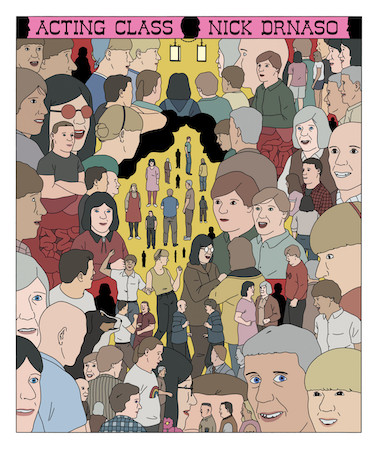
The first graphic novelist to be nominated for the Booker Prize, Nick Drnaso possesses an uncanny ability to tap into the bleak, nihilistic undercurrents of American culture, and to depict these undercurrents just before they swirl to the surface. Zadie Smith called Sabrina, Drnaso’s Booker Prize-nominated novel, about the distressed, grieving boyfriend of a murdered woman, “the best book—in any medium—I have read about our current moment.” In the wake of his girlfriend, Sabrina’s, killing, Teddy falls prey to the lies of an Infowars-style radio personality. Drnaso has long lurked in the darker corners of the internet, listening to, and discerning the appeal, of figures like Alex Jones before most knew who he was. Since its publication in 2019, Sabrina has only become more relevant.
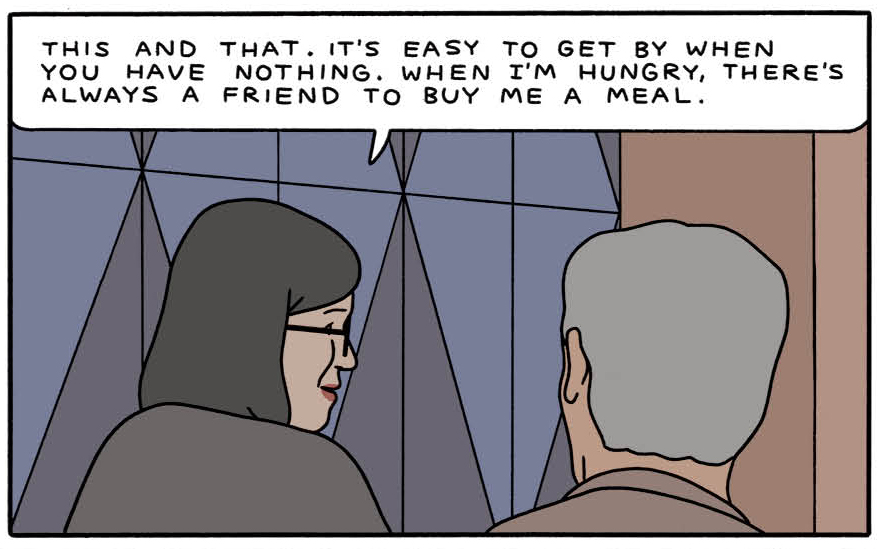
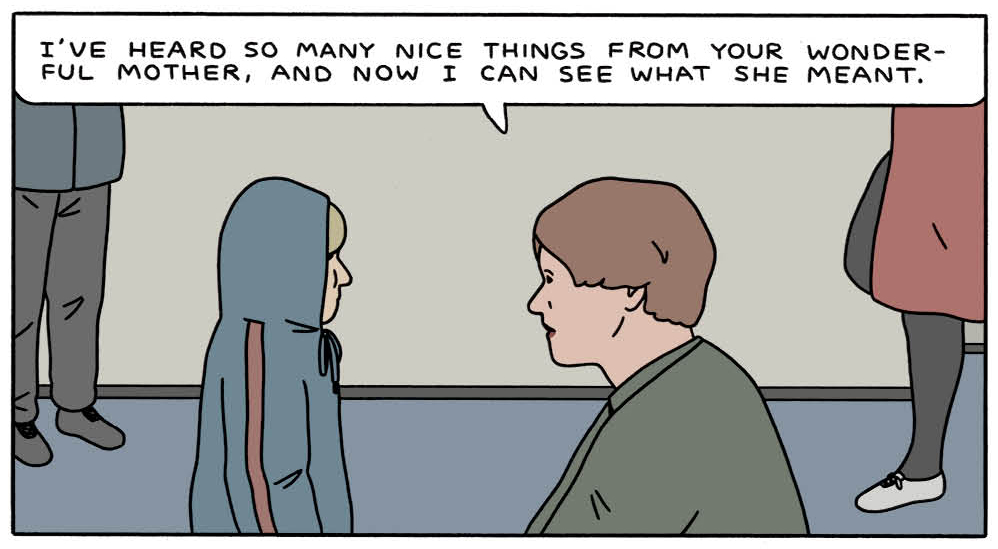
Acting Classis Drnaso’s third book. Less overtly political than Sabrina, Acting Class nonetheless resumes Sabrina’s preoccupation with the unnerving appeal of charlatanism in a nihilistic, alienated age. The ten characters, who enroll in the same evening acting class, are loners adrift in a bleak, colorless world: Drnaso’s drawings exhibit a dull, flat sameness that bespeaks internal landscapes of emotional numbness.
The class, led by a dynamic, seemingly compassionate man named John Smith, jolts the participants out of their listlessness. The method-style acting exercises are spontaneous and cathartic. Thomas, a ponytailed man who works as a nude model for figure-drawing classes, reenacts a crushing experienced of being fired from a job. Rayanne, an anxious single mother, assumes the role of a woman who’s just had her young child taken away by child protective services. Rendered vulnerable by these off-the-cuff performances, the participants begin to bond.
But John and his class are not what they appear. Bit by bit, we sense something is amiss. Angel, a lonely young woman, disappears for days, then turns up disoriented. Beth, another young participant, suffers a psychotic break. Slowly, the characters descend into a world from which they will not emerge.
I spoke with Drnaso, who is soft-spoken and self-deprecating, about the ways in which Acting Class captures our present moment, the dangerous appeal of gurus like John, and whether Drnaso would ever take an acting class.
Carli Cutchin: Acting Class reminded me at first of the HBO show Barry, where a hitman takes an acting class that leads him to want to reform. Then, as I read on, it reminded me of the Hulu series Nine Perfect Strangers, where Nicole Kidman plays a retreat center guru who drugs her unwitting subjects and pushes them to the edge in the name of self-awareness and personal growth. In both shows, the characters do walk away having experienced a kind of catharsis. Even while it leads to dangerous places, I thought there was a lot in John’s class that was pretty appealing; it almost made me want to take a similar class. I’m not sure what that says about me! Let’s talk about that appeal.
Nick Drnaso: I think I was trying to keep things in that gray area. That seemed like the best route, as opposed to clocking John as clearly as a bad person, or the villain of the story. I rode that line throughout the entirety of the book. John is acting in bad faith at times, but there’s not a moment where the mask comes off and he gives away the game.
Also, I wanted there to be some air of believability to these ten random people who have no [professional] stake in this class. They’re not interested in pursuing acting professionally. They’re just directionless and bored. And if things were pushed too far into something that’s explicitly abusive, they would probably all get up and leave. As you said, I tried to put in these [elements] that suggest that John is actually good at reading these people very quickly and sizing them up and pinpointing what they need, or what they think they need. Which is probably a skill that gurus and cult leaders and charlatans and con men have.
CC: D. T. Max, who profiled you in 2019 for the New Yorker, pointed out that while most young cartoonists focus on either the intimate (memoir) or the faraway (fantasy), your work has much in common with the traditional realist novel: “imaginary people experiencing the small conflicts and successes of ordinary life.” As with the 19th-century realist novel, Acting Class portrays a plethora of characters moving through what at least looks like ordinary life. But, as we discover, in this acting class, little is as it appears. It’s as if you’re interrogating the Real—what is authenticity, what is a mask?
You’re mirroring the behavior of your peers, or what’s socially acceptable.
ND:Acting Class was rooted in different circumstances I’ve found myself in. That kind of tweaking of your true personality or leaving your true personality at the door and assuming some kind of role in the group. I’ve always been interested in how that happens. Where I grew up [in suburban Chicago], and the kinds of people I grew up, that shaped my behavior. Once I moved out on my own and found a more like-minded group of people, I was able to express things that weren’t acceptable [growing up]. Those themes started to come out in Acting Class.
CC: When you were growing up, you were acting a lot of times?
ND: You’re mirroring the behavior of your peers, or what’s socially acceptable. Being casually religious, and going to mass, going to catechism, and really not feeling the Spirit so to speak. Knowing I’m not absorbing this. But you can’t express that yet. Feeling like everyone else seems to be on board, or relatively content, and feeling like I’m the problem in this equation.
CC: So then there’s a scrutiny of your own place in the social world?
ND: Yeah.
CC: I can relate to the sense of being frustrated that interactions stay on the surface a lot. Growing up, I was an only child and homeschooled; I was a little bit more isolated than the average kid. I’ve always longed to go deeper with people. I’m not as good at small talk. Sometimes it’s necessary to remain superficial, obviously. But there is this level of superficiality and artifice that happens especially in American social interactions. In America, you’re supposed to be authentic, but things remain shallow.
ND: That was pretty much my upbringing and the cultural norms of suburban Chicago. I felt like it was performative; the topics of conversation were narrow. I can think of instances where I would relate something to somebody and just get a blank stare. That kind of crushing, lonely feeling. In Acting Class, I imagined there being a thrill in making yourself vulnerable. Maybe that’s the appeal of performing for a lot of people.
CC: You told Grantathat you have not, and never will, take an acting class. But if, in an alternate universe, you were to take one, what do you think you might discover about yourself?
The core of the storyline [is the theme] of moving toward something that alleviates pain, or displaces pain onto something else, or temporarily puts a band-aid over it.
ND: It would take a lot [to get me to take a class]. I would have to strip away layers and layers—a lifetime of self-criticism and pure self-loathing. I imagine [there’s a] thrill of being an entertainer, using your voice and your body and your emotions to entertain somebody and transport them. I love seeing somebody who’s transcending and giving a truly great performance. It’s inconceivable to me, [that I would] be that person. If I was forced at gunpoint to go to an acting class, I don’t know what I would bring to that.
CC: I get that. Is there, though, a character in Acting Class that you most relate to?
ND: Angel, the character who is maybe least comfortable in her own skin, and vaguely stumbles into the class, and has a lot of baggage of self-consciousness. John recognizes [her baggage] pretty quickly. She’s maybe the most willing participant in the class; I’d like to think I’d be more skeptical or more of an outsider like Rosie, who’s watching [the class] with the reader’s sense of skepticism. But I kind of wonder, if I was in a situation like that, where a guru or leader was able to alleviate some of my personal problems or mood disorders, if that would feel so great I would get completely sucked in—[would I] just go along with the person who’s making me temporarily feel better?
CC: It’s a frightening thought, right? And that reminds me of radio personality in Sabrina, this kind of Alex Jones character who appeals to grieving Teddy. Teddy is looking to have his overwhelming grief and rootlessness in the world alleviated. And he hears this radio personality and believes his conspiracy theories. In fact, this happens all the time on a socio-political scale.
Since 2019, Sabrina’s themes have become increasingly, unnervingly relevant. For example, I’d never heard of Alex Jones until the recent trial, where a jury found he must pay nearly $1 billion in damages to Sandy Hook families for falsely claiming they were actors who staged the tragedy. And here he—or someone who resembles him—is in this book you began writing many years ago. Since Sabrina’s publication we’ve also had the Covid-19 pandemic; we’ve seen increasing social unrest and a growing number of mass shootings. Have you sort of looked at everything going on and said to yourself, Yep, I was on to that?
ND: It’s a bad sign if the world is starting to seem more closely linked to my comics.
I’m preoccupied with the negative side of things, with bleak subject matter. When I started Sabrina, in 2014, Alex Jones was a pretty marginal figure; Trump hadn’t even announced his candidacy. As far as the broader theme of moving toward something that alleviates pain, or displaces pain onto something else, or temporarily puts a band-aid over it—it’s at the core of the storyline in Sabrina and a big part of the storyline in Acting Class. There’s an appeal in that kind of story—the idea of some kind of supernatural transformation that I haven’t been able to figure out in my life. [For me] it’s more of a matter of dealing with things, and maybe seeking out things to help. But it’s fun to play with a storyline where that transformation is surreal, like the way Angel has an almost spiritual awakening.
As we’re talking, it reminds me of talking to a friend years ago. He went to a Trump rally leading up to the 2016 election. He described the almost primal release in the crowd. People almost seemed high, like they were in a daze of excitement. The promise of something. There was a visceral feeling [at the rally] that he said was disturbing.
CC: I honestly found it a little difficult to distinguish the characters in Acting Class from one another, since, in your characteristic style, there’s a kind of uniformity and flatness to the figures. As a reader, there’s a certain amount of labor required to tell everyone apart. But this labor strikes me as deeply connected to the themes of Acting Class. It’s as if you’re reminding us that everyone wears a mask. Was this convergence of form and theme deliberate?
ND: When I’m writing I’m thinking creatively and narratively, but once I get to the drawing and plotting out the pages it’s just purely practical and pragmatic. My drawing style always tends toward what you described as expressionless sameness. The characters look kind of dull-like. And for this book maybe it did require a bit more than I put into it. Sometimes you can get lost when you’re not getting that immediate feedback from a reader that the characters look too similar, and that they need just a few more small markers, facial hair or a different body type.
CC: I don’t mean it as a criticism—from a formal perspective, it’s really interesting! Your drawing style raises questions of, “What is a mask?” “What is authenticity?”
We’ve talked about catharsis, about how John’s class seems cathartic at first. I’m wondering if drawing and writing play this role for you. In creating these books, are you able to work out the issues of loneliness or alienation you mentioned?
ND: I sometimes lose sight of that, because [making art] is an automatic routine that’s constant. At this point in my life, I’m constantly working on comics and art. The daily process of working is therapeutic in its own way. Working in fiction and trying to find an outlet for thoughts that are bouncing around makes [the thoughts] slightly more manageable. It doesn’t make them go away completely. Unfortunately, having the book out isn’t very cathartic. It’s nice when I hear someone say something about enjoying the book. But it’s hard to internalize those things. By the time a book comes out, I’m mostly just panicking about what the next [project] is going to be.
When it comes to short fiction, the past year has been filled to the brim with stellar collections that have opened our eyes and hearts to worlds beyond the one we inhabit. These stories are liminal, surreal, and global. They celebrate families—both chosen and biological—as well as ambition, desire, myths, and the bodies that house and protect us. Broken hearts are portrayed with compassion and care, even when they aren’t mended. Characters time travel, both forward and backward, and friendship is held in the highest esteem. You’ll race through these stories, unable to put them down, and you’ll be smarter, more imaginative, for having read them.
Here are Electric Literature’s top four short story collections, all of which tied with the same number of votes, followed by additional favorites listed in alphabetical order.
Bliss Montageexplores the surreal and uncanny in true Ling Ma fashion with its brilliant, striking prose and memorable characters. While cohesive in voice and vision, the eight stories that make up this collection are wildly distinct, ranging from the messy ethics of storytelling as a young Chinese American pursues an M.F.A. to a tale about a woman who lives in Los Angeles with one hundred of her ex-boyfriends. As Ma discussed in her interview with EL’s Alyssa Songsiridej, the story premises were largely inspired by dreams: “I was trying to combine the swampy intelligence of dreams with narrative logic and see where that took me.”
Centering myth, memories, bodies, desire, and relationships between Asian women, Gods of Wantis an astonishing debut story collection. Chang’s writing, as seen in her highly acclaimed debut novel Bestiary, is whip-smart, funny, and continually surprising and enthralling at the sentence level. The sixteen stories explore themes of hunger, family, queerness, transformation, and diaspora with vividness and delicate nuance. Get a taste of this brilliant collection by reading “Xífù”, published in Recommended Reading.
Jonathan Escoffery’s vibrant debut collection of linked stories (longlisted for the National Book Award!) follows a Jamaican American family in Miami in the 1970s as they deal with the aftermath of hurricane Andrew and the many other obstacles and heartache life throws their way. The stories beautifully explore relationships between fathers and sons and questions of identity, social mobility, belonging, and forgiveness. In “Pestilence” , brothers Trelawny and Delano take it upon themselves to exterminate the pests in their neighborhood of Cutler Ridge only to have the neighborhood, and their family, be plagued by much bigger problems. Read more about this wonderful collection in EL’s interview with Escoffery here.
Set on the Penobscot Indian Nation in Maine, Night of the Living Rez is composed of twelve incredibly crafted stories that explore the particularities of boyhood, intergenerational trauma, and grief with a voice that feels both fresh and deeply truthful. The stories are linked through the character of David, a Penobscot boy living on the reservation, and his brazen and loving voice that illuminates life and death in this changing community. Experience the brilliant tenderness of this collection by reading “Smokes Last”, which was one of Recommended Reading’s most-read stories of the year!
Electric Lit’s Other Favorite Short Story Collections
A Calm and Normal Heartis a sharp and often-surprising debut story collection that illuminates the lives and desires of contemporary Native women. The twelve stories that make up this collection reckon with questions of belonging and home, asking what these promises hold, especially when one is of an identity that is constantly pigeonholed or overlooked. In an EL conversation between Chelsea T. Hicks and Morgan Talty, Hicks discusses her process and intentions behind writing her debut. Riveting and full of imagination, this collection is full of smart wit and deeply tender characters who pull the reader in from the first page.
Translated from Korean by Anton Hur, this genre-defying collection by Bora Chung blurs the lines between magical realism, horror, and science fiction. The strange and thought-provoking stories in Cursed Bunny explore the cruelties of capitalism, patriarchy, and other modern injustices in prose that is both chilling and absurdly funny. Experience the originality of Chung’s style by reading “The Frozen Finger” recently published in Recommended Reading!
First published in Japan in 2003 and translated into English by Asa Yoneda, Dead-End Memoriestells the story of five women who each have experienced unexpected, painful events and are working their way towards healing and recovery. Yoshimoto gracefully explores the beauties and sorrows of everyday life, offering an overall feeling of hope and gentleness that is refreshing in our current times. In 2018, Recommended Reading published Yoshimoto’s story “A Strange Tale From Down by the River.”
Wendy Wimmer’s debut story collection is composed of fifteen stories centered around everyday characters just trying to navigate life’s everyday obstacles and cruelties. Both hilarious and heartfelt, Entry Level explores the real and surreal in prose that is surprising, vivid, and unafraid to engage with big topics such as class, gender, and race with delicacy and emotional precision. The story “Ghosting” from this collection was Recommended Reading’smost read story of the year!
Following two friends Fiona Lin and Jane Shen from childhood to womanhood, Jean Chen Ho’s debut linked story collection is an intimate portrait of friendship, sexuality, identity, and heartache spanning two decades. The stories are told nonlinearly and occupy a wide array of points of view, creating a full and nuanced portrait of the main characters. All of Chen’s characters are so real and complex that readers will be thinking about them long after the collection concludes. Recommended Reading was thrilled to publish “Kenji’s Notebook” from Fiona and Janeback in January. Read the story here.
Set in California’s Central Valley, Heartbrokeis a moving short story collection that balances heartache and humor in understated yet lively prose. The characters in this collection are brimming with desire—to be loved, to be seen, and to be on better footing than they currently are. Bieker’s compassion for her characters is felt on the page, even though she may not mend their broken hearts. Read the stunning story “Fact of Body” from the collection, published in Recommended Reading.
New work by George Saunders is always cause for celebration, and Liberation Dayis no different. Saunders’ newest story collection is made up of nine stories written in the trademark Saunders style we’ve come to know and love—hilarious, weird, morally complex, and deeply heartfelt. The stories explore ideas of power, ethics, and justice while taking readers to unexpected places: a Hell-themed underground amusement park, the middle of a hailstorm, a years-long brainwashing scheme. Fiercely funny and compassionate, Saunders remains one of the best in the game.
Morgan Thomas’s debut collection Manywhere features nine dazzling short stories that center the experiences of Southern queer and genderqueer characters. Thomas’s writing is elegant and kaleidoscopic, exploring themes of desire and belonging through vibrant interiority and stories that delve into the past, present, and future. Recommended Reading had the pleasure of publishing two of their stories, “Alta’s Place”, and “The Daring Life of Phillipa Cook”, from the collection.
Longlisted for the National Book Award, Nobody Gets Out Aliveis an exhilarating collection set in Alaska that features women struggling to survive. Newman’s characters face the natural world, but also the wildness of interpersonal relationships that make up a marriage, a family, and everyday life. Psychologically rich and well-crafted, this collection is perfect for lovers of adventure and complex realism. Experience the elegance and electricity of this collection by reading “Valley of the Moon”, and “An Extravaganza in Two Acts”, both published in Recommended Reading.
A highly anticipated debut, Rainbow Rainbowis a vibrant, heartfelt, and incredibly crafted collection about queer people navigating the the rocky terrain of growing up, seeking connection, and merely existing in the modern world. Ranging from middle school to adulthood, Conklin’s characters are endearingly awkward, misguided, funny, and intelligent, their interiority beautifully rendered. In an EL interview with Jessika Bovier, Conklin discusses their work and the multiplicity of queerness and transness. You can also read “Laramie Time”, the first story in their collection, in Recommended Reading.
This rich debut collection of short stories by Sindya Bhanoo explores the complex and diverse experiences of South Asian immigrants in prose that is beautifully detailed and full of emotional truth. Spanning many geographical settings, from Pittsburgh to Eastern Washington to Tamil Nadu, Seeking Fortune Elsewhereconsiders diaspora and displacement and how characters grapple with what is missing or left behind. Recommended Reading published the beautifully wrenching “Nature Exchange” from the collection in February.
Moving between San Francisco and China, realism and the surreal, the ten stories in Self-Portrait With Ghostare page turning and thought provoking. Jin’s writing is intoxicating and elegant, exploring the lives of women who are complex and often contradictory, capturing the richness of their interiority with precision and pathos. Read “Phillip is Dead” from the collection, published in Recommended Reading.
As Rachel Yoder wrote her in introduction to Gwen Kirby’s story “Here Preached His Last” (one of Recommended Reading’s most popular stories of 2022), Kirby writes vibrant and refreshing stories that “undo how a woman should be and instead articulate how women are, in all their greedy, horny, callous, messy, exuberant glory.” Shit Cassandra Sawexplores the lives of mythic women from the past and present in stories that are smart, playful, expected, and a true delight to experience. Learn more about the collection by reading EL’s interview with Kirby in which she discusses her process and the stupidity of the patriarchy.
Set in a Harlem high rise, this collection explores the tangled lives of Banneker Terrace tenants in eight interconnected stories. The characters in this collection are under pressure, whether emotionally, financially, or socially, and Fofana inhabits each character with equal vibrancy and compassion. In turns humorous and heartfelt, Stories From the Tenants Downstairs takes the idea of a linked story collection to new and deeply enjoyable places. Read “Tumble” from the collection, published in Recommended Reading.
Primarily set in the 1980s in small towns surrounding Fresno, The Consequencesexplores the lives of Mexican and Mexican American farmworkers and the struggles and tenderness that make up their everyday lives. Full of nuance and heart, Muñoz’s writing is honest and unforgettable, marking him as a master storyteller. Read Muñoz’s beautiful story “Compromisos” about family, desire, and sacrifice.
In vibrant and illuminating prose, Tomorrow in Shanghaiexplores the Chinese diaspora and the complexity of family, belonging, and yearning. In one story, a doctor harvests organs to fund a wedding and a promising future for a family. In another, a white mother and her biracial daughter visit France and struggle to connect due to their fraught relationship. The characters in these stories are complex and vivid, Chai’s collection a testament to the multi-faceted experiences of characters living in an increasingly globalized world.
Teresa saw him out of the corner of her eye first, her usual lunchtime walk off the Bahnhofstrasse bringing her past a glittering section of the lake. Just a touch of the lake every afternoon to get her through the day, accounting for a transnational consulting firm, updates from her stay-at-home sister about her niece whom she loved very much. Some afternoons she hardly even looked all the way at the view to drink it, that would have been too much sugar, but this time she was interrupted by what she’d seen out of the corner of her eye. Or who.
Bill, she asked? Then shouted. Bill!
He was lounging on the edge of the grass, t-shirt tied around his neck. A JanSport backpack beside him. Could it be—the same JanSport? All these years later? His blond hair was thinner now, his cheekbones still unnaturally high.
Bill, she repeated, coming closer, the native Swiss sitting on picnic benches between them looking up disapprovingly from smartphones and espressos, their white legs so much longer than hers and crossed in a sensation of effortless grace. She had spent essentially her whole life in Switzerland ever since her father moved the family there when she was little, his chemistry professorship beckoning, but still she felt off kilter.
The man turned away from the lake, his face smiling already. As if he’d known she’d come by, as if he’d been waiting for her, just a decade and a half later.
Hey now, he said. Teresa the Great!
He had been hardly a year older than her when he arrived, a teenager. This was the reason for all the tension, the commotion. Teresa’s mother was not sure at all that it was a good idea to accept a boarder, even if it was the son of Teresa’s father’s best friend from college. The old friends had lost physical touch but still wrote letters. Teresa’s younger, sly sister Casey was as excited as Teresa. We have two daughters, Teresa’s mother implored, then added: And I’ll be left to take care of him!
Back then, Teresa herself was dreamy and full of expectations, already feeling a little stuffy in Heninger, their adopted practically medieval town. She imagined things and lived on small moments, and could make a big deal about nothing, and cried over tiny coincidences: the barking of a ragged sheepdog, a tree falling across the wanderweg. She hadn’t had much else to occupy her, she was a little (she understood this now) strange or immature even at seventeen; some of her peers had started apprenticeships at the auto parts factory on the highway towards Geneva, but she was stuck in her domestic pace apart from her love of mathematics. And so Teresa’s mother had worried (rightly) about the insertion of a young man into the equation, chaos and claustrophobia, flushes and anger and swiftness and heat, even in their capacious farmhouse a short commute from the university and Zurich.
Teresa, Bill said by the lake. You look healthy and awesome.
He had rarely said much during that summer but she had always hung on whatever he did. There were not many young men who could have stood that feminine house and all the women in it, Teresa knew—her father was often in Zurich late fussing over his experiments, in his closed-door study working. He loved his family, her father did, but he was an absent presence. Thus Bill (no other way to put it) loomed large.
Bill, Teresa shouted. She was startled and flushed already. I didn’t know you were in Europe. I didn’t know you were here.
He stood up and nudged his shoes on—sockless, she noticed. I’m taking a little journey this summer, he said. Got some work lined up at a boarding school in Arizona in September, and nothing keeping me in the States until then.
Why didn’t you write? she asked. Why didn’t you call? Or let us know? We haven’t heard from you since . . . Mother’s Day I guess. Or was that last year?
Bill smiled. He had continued writing a formal Mother’s Day letter to Teresa’s mother for years after his months-long visit. Teresa knew that they had formed a nice bond, very sweet.
I wanted to leave something to chance, see where the winds would take me. If it was right that me and your family would meet, then we’d meet. Something like that.
The old fluttering romantic impulses in her bubbled.
I see, she said.
She had to go back to the office but would love to see him for dinner or a drink. Well how about that night? Yes that was workable. They met at a small pizzeria near the Altstadt, the old town, a place Bill insisted he’d been to that summer years ago, though Teresa knew for a fact it had been refinanced and renamed multiple times over (she had always had a head for numbers, figures, and dates). Yet she didn’t argue with him. He ordered a bottle of red wine he said was a good vintage, it was Italian, he’d actually worked six months for a natural wine vintner out in California. The wine went to her feet. He told her stories about Greyhound buses, forged Amtrak passes, a wild weekend boat from Miami to Cuba he’d been a chef on once. You have such an interesting life, Teresa said. She regretted it instantly, regretted the way it made her sound small and parochial, in fact she didn’t feel small and parochial, she was a very good accountant, she’d moved her way up in the office expeditiously, recently they’d sent her to a business conference in Dubai. The airport alone had been astonishing, she’d arrived during Ramadan, the way that you couldn’t eat food in public, what a thing. Bill’s eyes widened. I’ve always wanted to go to Dubai. Then he looked at her closely. You’ve changed, haven’t you? She was filled with memories of that summer, it was like they were back in it. Although that summer had ended without sexual incident. She didn’t ask what he meant. She screwed up her courage. She kissed the corner of his mouth.
It was what she thought, it was nothing like what she thought, she was flying and bemused (she was older now). She danced away from his arm which was deliciously pulling her back for more. See me tomorrow, she said. He did.
Every day for two weeks they met on her lunch break, near the lake. One time she found him shirtless and already ankle deep in the water, again it was in a grassy area that Swiss natives didn’t really swim from, they were too fastidious. Oh don’t, she said. Come on, he beckoned. She found herself changing. She dropped her work bag next to his carefully laid out clothes and kicked off her sensible sandals, hiked up her skirt, hopped in. It was deeper than she thought and she went almost to her knees, her skirt got wet, she laughed hysterically. Yes, he yelled, yes! He dove in (he was wearing only a tight pair of underpants, the small convexity of his belly) and swam out towards the center and while he yelled back at her to come join him she begged him to be careful about the boats which sometimes went by after four along this very route. It was thrilling. She didn’t tell her mother or her harried sister, but they were dating.
It was a summer romance, maybe that’s all it was, though to be clear Teresa hadn’t had enough of those of any season. It wasn’t her physicality or her nature—she had a very becoming small beauty spot in the center of her left cheek and the kind of dimples that curl up into a crouch, marking bemusement. She had always felt, however, that men were so snide about everything: the drinks they tried to ply her with, the heavy advances of their thick-knuckled hands. Picture her at a summer festival in Kanton Zurich, all the Swiss girls dressed in “traditional” clothing and the men in dumb lederhosen, they drank so much that they couldn’t articulate full sentences in any of their multiple languages or even count the right amount of change for a bratwurst, and she was one who was always able to be counting.
For example: that summer when Bill was staying with them. Indeed she was bursting with every chance encounter. She recorded them in an absolutely secret she-would-die-if-her-mother-found-it diary, forget about her younger sister Casey with whom she had only a few years before stopped sharing a room. The diary was a star map of her days. In the morning when she had already finished breakfast and was just coming back up the stairs to change into something flowy and gorgeous, she caught a glimpse of him trudging almost groaning to the bathroom, hand on his head, shuffling his feet. The cracked open door revealed a bag of empty HB beer cans. She asked if he was ok but he didn’t answer, slammed the door. “Hungover,” she wrote.
Some lines down, Encounter Ten (she started back at zero each week), her mother had asked her to set the table for them all out in the garden, use the nice plates because she had the sense that Bill was lonely that evening, it was after all his birthday. Teresa hadn’t known this and it stabbed at her, the fact that her mother knew something about Bill that she didn’t, but she leapt to the plate cabinet because she knew that Bill was outside at the very table she’d be setting. He was reading. She didn’t say anything as she went around carefully setting down the plates, heart hammering, absolutely hammering. The black hair on his arms, the rolled up sleeves. When she came to his place at the table she said “excuse me” and “happy birthday” almost at the same time, and she regretted for days that he seemed only to hear the “excuse me.”
Encounter Fifteen: she was working on a way to ask him to do something with her, anything really. Not a “date.” There was a town about a mile down the valley but up on the side of a hill that was surrounded by medieval walls and you could make the steep bike ride up there for, at the top, a café with Diet Coke and strudel. Perhaps Bill, as a more mature individual, would have coffee. This was as far as she could imagine about a “date” with him, she had rarely tried alcohol, her peers in their apprenticeships were always drinking and (she saw now) sexually experimenting down by the train station. That was a horrid, other world to her then, small-town nonsense. She would have been mortified. Just a nice walk after a bike ride, he might reach for her hand—her mind jumped.
What she did (and this was July) was knock on his door one morning. She had been ostensibly studying for summer exams and her father was at work and her sister was out and about in the neighborhood running around and her mother was in the kitchen speaking to her own mother soulfully back in America about how lonely she was here. Teresa rolled her eyes. Though she’d prepared she blanked when Bill answered the door, the shaggy mane of his hair, his crooked nose, the tank top he was wearing so that she could see (she shivered) the smooth curve his shoulders made into his thin neck. What’s up Ter, he said. And this is what she said: Is there anything you’d like to do today?
It worked because there was something.
I really want to go swimming, you know?
Oh so do I, Teresa lied. She hated swimming. The dirty chlorine stink, the shouting of children, the way that all the other teenagers left her alone at the village pool, wide and gleaming.
Let’s go to the pool, she said.
Right on, said Bill.
He never seemed to be busy that summer but he also didn’t seem bored. He was supposed to be on a quiet period before college. His family didn’t really have money, but Bill’s father called in the favor with Teresa’s, and (it was whispered one evening before Bill arrived) even contributed a little to the plane fare because Bill’s family was on hardish times (we must be generous with our friends, Teresa’s patient father counseled). Teresa’s mother said frankly she liked having it be a feminine house but her father laughed. He’s a hot-blooded kid. He’ll hardly be here.
He was though. He didn’t appear to take much interest in the other villages of their kanton, let alone Zurich or Geneva or Paris, France. They had assumed he would use their house as a base of operations, cheap flights and trains, Euro tour, but for those first weeks all he did was sit in their garden, read books of American science fiction, doodle in a notebook, do pushups and sit-ups, sweat gathering in an inverted triangle below his neck. In the evening when Teresa’s father was home he’d disappear in the summer dusk, wandering the wanderwegs, into the forest which Teresa had always been a little afraid of above their cozy farmhouse, as if he was trying to stay out of Teresa’s father’s hair. Let him go, Teresa’s father said if Bill skipped dinner: He’s adjusting. During the night he was often in his room, from which if you tiptoed past it slowly and quietly (as Teresa did) you could smell the musk of early manhood, doors and windows closed.
But he agreed to the pool that day for Encounter Sixteen, which began in earnest when they left the farmhouse and made tracks down the dusty road. Quite honestly it was the best encounter that summer, the most enjoyable, the longest in duration. Teresa chose her sundress endlessly. Ter you ready, Bill shouted from down below. Her mother stopped them at the door. Where are you two going, she said sharply. Swim, swim, swim, Teresa chanted. She knew she could be too childish sometimes.
When they arrived Bill visibly relaxed. The pool was almost empty, it was wide and shimmering. He placed his old JanSport down next to her. Do you mind if I do some laps, he said, even as she was about to suggest they sit and chat. She hadn’t known what they’d chat about, so she was relieved. She sat with her sundress on and applied and reapplied sunscreen and watched as his thin back crossed and crisscrossed the pool.
When he came back he was beaming. His small bathing suit might as well have been underwear. She felt faint. She offered him a towel. She patted the chair next to hers, but he perched on the edge of her own. He was inches from her knees.
That’s better, he said. He arched his shoulders and flexed his arms. I was getting kind of claustrophobic, you know? I really want to get out and see something.
She cocked her head.
Why don’t you, she asked. She saw now that she understood nothing about men.
He looked down and his voice was small and low.
I don’t have enough money, he said.
Money, she trilled. Money? Oh that’s so silly. We have money, Daddy has plenty of it. You know his experiments at the university led to a patent the year we came here and beyond his salary we’ve had that for years as well.
Bill looked at her, a coldness in his eyes.
I’ve heard, he said. My dad told me about that. We don’t really have much savings. I’ve got to go back and work in August, start saving up for school.
It occurred to her, like an arithmetic answer—My parents keep money at home. It’s for my sister and I to take from whenever we need. I can give you some of it.
He didn’t look at her.
She reached out, a finger on his knee, the only time she touched him that summer, the only time.
I’ll take it for you, she said. No one will know.
She reached out, a finger on his knee, the only time she touched him that summer, the only time.
She did it the next morning, heart stammering, her mother in her bedroom working on sewing, her sister having slammed her own door, angry, in a funk. She opened the orange coffee tin from its place in the bottom cabinet of the kitchen, pulled out two hundred Swiss francs from the bottom. There were many, many more.
She knocked on Bill’s door (technically of course this was Encounter Seventeen) and looked both ways dramatically. Passed him the bills. The smell from his room of deodorant and body spray was almost overwhelming. He accepted it and grinned wildly at her and granted her her nickname. Teresa the Great! You really are!
Unfortunately the unforeseen consequence (on Teresa’s side) of the money was that Bill used half of it to buy a rail pass. Now he could ride second class anywhere in the country as far as he wanted, and he went to Zurich all the time, and Geneva, he went to Lake Como and slept on the public beach rather than making the long trip back (Teresa’s mother was very concerned), he edged up to Basel for its art festival and went to places Teresa herself had never been to: Weil, Lausanne, Lucerne, Montreux (Jazz, he reported back, amazing), St. Gallen, Zermatt, where he splurged for a bunk bed in a hostel and also stayed overnight. Teresa waited in vain, of course, to be asked to join.
Teresa the Great, he’d say as he left in the morning, tossing his JanSport backpack over a shoulder. She loved him. She watched his long elegant fingers clasp his day bag off one shoulder as he went down the road.
Reacquainting herself with Bill now, as an adult, these short weeks, Teresa noticed new things, and she might almost list them (she no longer did anything as silly as a diary). Number one: he had become a bit portly, or at least his shoulders were rounder and there was the dawn of a pot on his belly. Number two: the thinning hair, his old wavy blonde locks now swept in just such a way that you wouldn’t notice it unless the wind blew or you were staring all the time. Number three: he was not as interesting as he had once been. There was a strange emptiness at the heart of his stories. Was it that he was not changed by events? Perhaps. He was loose and ragged, always smiling wanly and shrugging, saying things like “c’est la vie.” But compared to the Swiss men she had dabbled with, who were either effete city workers or droll countryside men, like her sister Casey’s husband, there was a certain benefit to indecision. Bill seemed to drift.
It happened even in their evenings after consummation (Teresa had a habit of whispering, even in her head, the words “had sex”). He was casual with keeping a shirt on still, even in these later years, though it was hardly as attractive as it had been, the way his stomach puddled on her now, rather than being (what she’d always imagined) hard and taut. One night in her apartment (sensible modern furniture, a calculator on the dining room table) she was thrusting her way back into her nightgown when she made the same mistake she’d made all those years ago.
Is there anything you’d like to do, Bill? she asked. While you’re here? While you stay?
She had been trying to gauge a timeline, a conversation, what comes next. For them.
He looked around the room and her heart sank just slightly when the answer came. Perhaps because she had accounted for its heartache in her mental calculator already.
Boy, he said, I’d love to see the old farmhouse. The garden. That was my best summer, you know that right?
Even as she nodded she felt her ardor dampened. It wasn’t that she had fallen out with her family members, it was just that they led different lives. Not really her father, who she met sometimes for luncheons at white table-cloth restaurants in the business district, discussing mildly her spreadsheets, his experiments, which she alone of the family had the mathematical background to comprehend. She called home once a week on Sundays and cycled through the members, her mother briefly, updates on baking, her sister putting Teresa’s gurgling niece up to the phone, she would babysit twice a month usually in her own apartment in the city, and then thank god her father would get on the line, they’d trade news of the day, the coming canton elections, issues of immigration, and the refugee crisis. She would hang up and imagine her mother in her rocking chair just off the kitchen, listening, uncomprehending, already settling into that older age that would contain her until her end.
That house and the stagnancy of it these days depressed her, but the youthful impulse to make Bill happy returned. I don’t see why not, she said. I owe them a visit. You can meet my niece.
The whole train ride there Bill couldn’t get the idea out of his head, that Casey was a mother and Elle was a GRANDmother. It’s mind-blowing, he said. Y’know?
Not really, Teresa said. (She had enough of her younger sister making snide remarks about her advancing and countable years of fertility.)
Though perhaps if you considered it from the moment Bill had left that summer, it was more understandable. Casey was only two years younger than Teresa, but in those adolescent years, so far ahead. The two-year difference had meant that she learned Swiss German like a native, not a visitor, and that meant something in the end. She had been smaller and more wiry than Teresa, skin that didn’t sunburn as easily, always went down to the schoolyard and played soccer with the girls (and boys!) down there, though she was only, say, eleven. Village life agreed with her. Teresa had felt stymied all through childhood, lived for her silent tortured bedroom reveries and the times her father would take her to his office in Zurich to see the glass skyscrapers and they’d count the stories, one by one.
Casey’s husband Herman was solid and pleasant and owned the tractor that all the farmers around Heninger used to take their crops in twice a year; this meant little work but a lot of necessary business. Sometimes Switzerland could be small that way. The two of them rarely went into Zurich other than to have Teresa babysit. Herman spent his days fixing things around the old farmhouse, which Teresa’s father never had time for, and her mother was grateful.
They were all there as a welcome party at the train station, Teresa bristled at that, it felt so old-fashioned. Her father, on his head a bizarre workers’ cap he’d taken to wearing to “fit in,” her brother-in-law, her sister, working to contain a squirming Zadie, Teresa’s frantic mother looking pale and flustered. Her mother was under an umbrella just because of the sun, she and Teresa shared obnoxiously sunburn-ready skin. Teresa almost wondered if they were about to join hands and break out into song. The train shushed away to Baden, and Bill put his arms in the air like a victory celebration.
I’ve returned, he shouted.
Teresa noticed that her sister’s eyes lingered on her even as Bill was making the rounds. Her sister could be shrewd and a little evil. They had almost nothing in common during adulthood, but they understood every particle of each other’s being. The way, for example, that Casey’s feet were angled at that moment in a little T, almost ballet—this had been the way she positioned herself whenever she was in observational mode or concentrating, struggling to recite her times tables in kindergarten, which Teresa, of course, had never had an issue completing. Teresa considered her sister’s outfit. Loose sweatpants, a worn-to-softness plain green t-shirt that somehow suggested both I-don’t-care-about-my-appearance and also fell nicely on her becoming curves. It annoyed Teresa, who had dressed up a little for the occasion.
You two look good together, Casey whispered mildly, comprehending immediately, when Teresa got close.
Bill went one by one down the line, shaking Teresa’s father’s hand warmly (her father awkwardly pulled Bill in for a hug-grasp, he had never been particularly touchy-feely), another hug for Herman who had stuck out his hand at first (aw I’m almost family, said Bill, and they laughed), and a lone bony finger offered to Zadie, who gripped it with her whole fist. She’s wonderful, said Bill.
Teresa did her own hello hugs as Bill continued to her mother.
Hello Daddy, she said, I brought the croissants you like from the Bahnhofstrasse.
Wonderful, he said, just wonderful, echoing (unconsciously, she was sure) the effusiveness of Bill.
It was still morning, eleven AM almost exactly, the train had been a minute or two late coming out of Zurich, time that it would make up, Teresa knew, farther down the open line. A small calendar of sightseeing activities had been prepared for Bill, all the little local things he used to do (mostly, though she didn’t say this, in the period before she’d stolen him the Swiss francs and let him loose upon the country). First they walked all together to the swimming pool, which annoyed Teresa slightly as this had so clearly been her activity with Bill, or at least she had introduced him to it, but perhaps her family wasn’t fully aware. There were not really any sidewalks in Heninger so they all stuck in a pack on the left side of the street, and Teresa found herself next to Herman while her parents trailed behind quietly and Bill made Zadie laugh and coo up front with Casey.
He is a very nice man, yes? Herman asked. Sometimes Teresa tried to speak Swiss German with him out of politeness, make him feel at home, but this was no time for confused words.
Yes, Teresa said, it’s been fun reconnecting.
I understand this, said Herman. Casey has been very nervous all morning.
This surprised Teresa. She had never really talked with Casey about Bill that summer or in the years after, or rather she had simply monologued to her about her concerns, as was their way in those years. Casey would be out all day with the local boys and girls, but when she came home she became Teresa’s captive in Teresa’s bedroom, to hear all Teresa’s hopes, fears, and observations of the domestic day. Outside that room Casey would pretend to smirk about their evening discussions, which they called “the conversation,” but clearly Casey loved them because she kept coming back. She, sweaty and sun-kissed, lying on the floor looking up at Teresa, who sat very formally on the edge of the bed exhibiting the good posture she was always practicing. With Bill there, her calculations were all about when she and Bill would get married.
Teresa felt a jolt of embarrassment now. Young Teresa had been so over her skis, so flushed and silly, missing everything. She and Bill had never shared anything beyond the touch at the pool and, if this counted, the warm hug he gave her when he left, late that August at the international airport, their mother crying. But she was also embarrassed now because she had never considered her sister’s feelings about those Bill conversations. Their role had always been: Teresa talk, Casey listen.
She asked Herman an inane question about the distribution of barley in the too-green fields they were passing, and his sturdy attempt at an answer allowed her to simply observe her sister and Bill. There was a familiarity to their steps, the way he dipped a shoulder in her direction when he had to avoid an overhanging branch, the protective way he held out his arm when a car passed on the right. Most tellingly, Teresa saw that though Zadie was in the harness on Casey’s chest, neither of the adults were paying much attention to little Zadie at all.
They arrived at the pool which sadly was closed for the next hour for cleaning. They stood at the edge and Bill marveled at its sweep and blue. Man I loved this pool. It looks exactly the way I remembered it. The snack canteen, the high dive . . . he reached up at his shoulder as if for the phantom omnipresent JanSport.
Remember that first day I brought you over here? Teresa asked. You didn’t wait a moment, you just jumped right in.
Yeah, Bill said. Totally. And every other time I came I didn’t even have to flash the village badge to the concession lady, she knew me that well in the afternoons and she just waved me in.
Teresa didn’t remember coming to the pool with him much in subsequent afternoons.
But weren’t you always traveling that summer, she asked, a little too sharply.
Bill turned. Yeah, he said. I’d stop by right before I came back to your guys’ house. Cleanse the mind and body. It was like my daily ritual.
She hadn’t known this.
Casey pointed up at the hills above the pool. And that’s the path to the observatory tower we used to take, do you remember that?
Bill grinned. Do I ever. We must have done that hike what, one hundred times?
Really? Teresa asked. Again too sharply.
Casey cocked her head.
Yeah it was me and Bill’s dog-walking routine. Remember Lucky, Bill? She was a good dog . . .
It seemed to Teresa a too-convenient way to change the subject. Her mother however, took it up and started babbling about Lucky the German shepherd, some inconsequential fluff, she was always a little babbly, Teresa’s father chimed in that he’d bought Lucky for Teresa’s mother because she was sometimes lonely out here during the day, with him (he knew) consumed with his work and in his study, Teresa’s mother needed company, remember the way Lucky had . . .
On the walk back from the pool to her parents’ house, Teresa tried to remember what Casey’s reaction had been to her teenage monologues about Bill-romance. Could Casey herself have harbored similar feelings, and even acted upon them? The math came to Teresa quickly. If Bill had been just eighteen and Teresa seventeen, then Casey was fifteen. That would be disgusting on Bill’s part. But somehow she was madder at Casey.
Her father was beside her as they began the last incline to the family farmhouse. And what do you think about the monsoon in India? he asked. My colleagues in Geneva are putting together an aid package. I will send you the link, it’s one of the better causes and our money goes further this way as direct aid than through the Red Cross . . .
But Teresa wasn’t paying attention. They were making a stop at the soccer fields where apparently Bill had one time joined Casey and her friends and played goalie for them. Teresa also hadn’t remembered that.
Daddy, Teresa said. That summer. Was there . . . something between Casey and Bill?
Her father pulled back with a reserved smile. The field was parallel to the train tracks and Bill was running heavily across it, laughing, as if the air could make him youthful again.
Now, her father said, don’t be crass. No no, nothing like that. She was too young. You all loved Bill though, that was humorous to see. He was just like his father, bright and intoxicating.
But Teresa did not trust this assumption.
When they arrived at the house Bill gushed and let out a wooooey, in a way that dispiritingly seemed more earnest than even their intimate relations had been.
Look, the driveway here, and your living room’s just the same, do you still have that drawer with chocolate in it on the bottom right—of course you do, bonkers, I’m stoked.
He went from room to room.
They followed him like a welcome parade up the stairs where he found everything as it was. Teresa’s mother was usually a stickler for shoes off in the house but she said nothing. Teresa noticed that Casey had handed Zadie over to poor Herman, as if the baby was from a different timeline and abandoned now. Teresa went to coo over her niece but they were all still following the parade.
The sewing room, Bill exclaimed, I remember sitting in here when it was raining and looking out at the church there and the hills and having melancholy thoughts man, melancholy thoughts.
You weren’t so unhappy, Casey said, hands on her hips.
Bill grinned at her. No, that’s true.
Teresa’s eyes opened wide.
They went downstairs and Teresa felt the sensation she often felt when she came home, that nothing had changed here, it was stuck in mud rather than even amber, it all felt kitschy and youthful and reminded her of her most fluttery days, days she was embarrassed by, now that she was an independent woman and could put her dreams into reality, see example: modern Bill. Reality wasn’t the same as the dreams, it was a little flabbier and less clean, but it was something that she made happen, not something that happened to her, and the old weight of the wooden beams of the house pounded her down. When Herman offered to give Bill a ride in the tractor around some of the farm roads before dinner—absolutamente, Bill said, grasping Herman’s shoulder—Teresa retired to the garden out back, in need already of the fresh air.
Reality wasn’t the same as the dreams, it was a little flabbier and less clean, but it was something that she made happen, not something that happened to her.
It had always been a pleasant garden, and she couldn’t help but remember that summer sitting in one particular place next to a patch of basil and thyme her mother had planted. There was a wrought iron bench there with a view of the guest bedroom window, and Teresa could pretend to be reading or preparing for summer session assignments but really gazing up at the window whenever it was appropriate. One time (just once) she saw the bend of Bill’s bare hip before it was covered by a towel. Now the bench made her shudder and she was furious when her sister followed her outside, their mother as usual re-cleaning the kitchen inanely, their father retiring to his home office to answer emails from former students and research colleagues.
You didn’t say you were fucking, Casey said.
The little terror.
You’re crude, Teresa said, glancing for Zadie. But Zadie was picking up dirt and dropping it near a stand of sunflowers.
She’s heard worse, Casey said. Well, you always get what you want.
Indeed, Teresa said.
Casey lay down on the grass and kicked up her leg. Teresa was annoyed to see that she still looked skinny despite Zadie.
So how is he, Casey asked. I mean, really.
If you’re going to be mean I’ll go inside.
And help Mom re-clean something? Because you two get along so well.
Teresa paused. It was true, she had an easier way with their father, her mother for years had seemed distant and occupied with uninteresting things, though they had been very close, perhaps unnaturally close, when she was a girl and interested in dolls and papier mache and then later dresses and shampoos, close until perhaps even around the year that Bill arrived.
Bill’s return was bringing up the old bad things, which Teresa had perhaps anticipated, and why she hadn’t wanted really to come home.
Did you hook up with Bill that summer? she asked. Held her sister’s gaze bravely.
Casey looked at her. Wow, she said. Wow you’re really a psycho. The answer is no by the way, though obviously I could have. I was hooking up with Domino and Bill caught us once by the train station, you could tell he hadn’t thought of me that way before but then he suddenly did. But no, he’s not a creeper.
Teresa breathed again.
I’m sorry, she said. I don’t know what’s gotten over me. I’m liking him though, that’s all. I’m happy. Even though it’s not the same as back then. I dunno, maybe . . .
Casey smiled. Well look at you, she said. I’m glad to hear you’re thinking about someone, Ter. Sometimes I worry about you.
The idea that Casey worried about her sometimes was both heartwarming and surprising, and again it brought the old fluttery side back up within her, a side she had very well tamped down. Why had she run from this idyllic childhood place really, it wasn’t all that bad. The sun on the stones, the sounds of the sheep baaing in old man Hesse’s farm up the hill. She had slept through those sheep in her dreams until she was eighteen, when she left for university and Zurich. Now on the rare occasions when she stayed over at the farmhouse, Christmas or a snowstorm, they woke her at five am but it was pleasant, she could fall back to sleep.
Do you remember Bill’s last week here? Casey asked. She smiled and shook her head.
Of course, Teresa said.
It had been about that blue JanSport. Maybe even it was indeed the same one that she had seen him with at the lake in Zurich, worn out and weathered with years. He took it with him everywhere, it was almost what for years she had remembered him by other than that vision (briefly) of the bare hip. He had a pair of crappy plastic sunglasses he used to wear and his earnest smile and the way he would turn back at the door and wave, the JanSport slung off one shoulder. There never seemed to be much in it, she didn’t even know if he carried a book in there—he honestly wasn’t much of a reader. But the JanSport represented freedom, day-tripping, a water bottle and little sandwich or piece of fruit that Teresa’s mother had prepared for him, wrapped up in cheesecloth and set out on the table of a morning, all set to go.
Except during that last week he couldn’t find the backpack. Their house wasn’t all that big but from time to time things did disappear in it, it was that kind of place. Bill was frantic. It has the train pass in it, he hissed at Teresa as she followed him around one morning as usual. And—he said meaningfully and quietly, as her father flitted absentmindedly through the room—the rest of the cash you got for me.
She was sad but it became an event for her, and Casey got involved too. Look For Bill’s Bag. They marched around the house tossing cushions and blankets, as if it might have fallen through a slot. When haphazard didn’t work she suggested they try a systematic solution, and she drew up a grid of every room in the house and she and her sister and Bill split up the grids, walked across each one in two-foot columns, back and forth once you got to the end. Teresa’s logical mind had assumed this would turn it up since they really did go over everywhere, but—and this was a little disturbing to her—no luck.
Are you very sure you didn’t leave it on the train one day? Teresa asked.
He was disdainful. You sound like your mother, he said.
She withdrew.
For days he was frantic and grouchy, he had had big plans for the last week, he was supposed to return to Geneva to visit a friend he’d made there (Teresa figured now, a girl), there was a street fair in Basel, he wanted to get everything out of Switzerland before his dull kitchen job started back in Northern California and then college, something he wasn’t particularly motivated to enjoy. He moped around the house and didn’t even seem to have a good afternoon at the pool when Teresa coaxed him to do that with her. He jumped in and swam two laps and then asked if they could go home. She’d been watching, and hadn’t even put on sunscreen.
When she tried to talk to her mother about the bag and Bill’s departure her mother was curt and sudden: Oh stop, she said. Maybe it was stolen you know, her mother said. The way money gets stolen sometimes. Teresa ran away guiltily. It didn’t seem like her mother would punish her.
He’s sad to leave, her father told her fondly and privately, when she came to say goodnight to him one evening in his office down at the other end of the house. In her father’s study it was quiet and peaceful, her father had made it so, so that he could wall himself off from events of domesticity, click through his newspapers of America and chemical compounds, let his mind roam. But he always did have time for Teresa.
It’s nice that he loves us actually, her father said. He’ll be back.
The morning before Bill’s departure the bag was waiting for him on the breakfast table when he stumbled down the stairs, his open door leaking the old musk of beer cans again, Teresa following after him (as usual, she waited). My bag, he shouted.
Teresa’s mother spoke with her back to him, over the sink.
I don’t know how it happened, it ended up with my night things, she said, hands full of suds. I must have swept it up with the laundry. She didn’t turn around.
I better go then, there’s still one more day, he said. And he grabbed the bag from the table and walked out the door, Teresa’s mother watching him. Teresa was crying, perhaps audibly.
Teresa don’t be silly, her mother said. Had said.
I remember, Casey said in the garden, the present, their current world. That it was a lot of moping around that summer. For you. Mom too.
Yes, Teresa admitted. I guess so. I’m sorry.
Come on, said Casey, reaching her hands up for Teresa to pull her from the grass. It was an intimate warm feeling when Casey bounced into her arms. They both giggled a little. Let’s get ready for dinner.
The garden felt full and cheerful with all seven of them, the sun going down over the hills, the sheep quiet and baaing, the citronella candles Teresa’s mother had laid out in concentric circles keeping the mosquitos at bay, the smell of that orangey rind and the hot pesto pasta she made mixing in a strange and intoxicating glare—she was, it must be said, a very good cook. Teresa’s father had brought up four bottles of wine that had been squirreled in his office. These are a good vintage, he said, the same year you were here Bill.
They laughed and reminisced and talked about that summer, the way everything seemed possible and impermanent then, how they were all under one roof, how Herman and Zadie were distant premonitions in the future (Herman chortled, Zadie dribbled) and summer really was the season for Switzerland, wasn’t it, Teresa’s father said with the zeal of the immigrant. I mean just look at this, he said, sweeping his hand toward the hills. At that moment the church bells rang, it was perhaps eight or nine, they’d had all the wine so who could say or want to. Yes, Bill said, it has always been a special place in my heart, one place from a lot I’ve been to. You know I’ve gotten around. But there’s a treasure here that I’ve never been able to forget.
He looked down at his plate.
It was what Teresa had been waiting all along to hear him say. She was, she knew, that treasure. Joy flooded through her. It allowed her to give credence to her wonderings about the possibility of continuing their romance when he left the country. She had, despite herself, been logging out costs and flight times. Her firm had an office in Los Angeles. Many of the upper-level management went back and forth. It would be an unconventional relationship, but in reality, she had always considered herself an unconventional sort.
I remember, Bill said after a period of quiet, this time of night was kind of mine in the house, if you don’t mind me being a little rude—he inclined his head towards Teresa’s father, who just looked puzzled. You were working in the office and sometimes fell asleep there, haha, the girls were in bed, and you could hear every creaking thing on the floorboards, I always thought you’d know if I . . . snuck down to the kitchen for a little bite out of the chocolate drawer, or went outside for a nighttime walk, but it never disturbed you so I got less afraid of going for the chocolate. But mostly I went up to that sewing room and watched TV on my laptop, with headphones. Me and Lucky were friends then, she never even barked if I moved around.
It was a strange remembrance, and Teresa felt that there were missing pieces to it. She had slept terribly that whole summer of course, dreams of Bill that she tried to clutch onto, even before sleep. She had always tried to listen for his footsteps, in case he was tiptoeing towards her room.
Well, said Bill, as if releasing them, it’s great to be back.
We should be getting back to the city, Teresa said. The last train.
Oh, her mother said, surprised and anxious: you’re not staying?
There was much laughing and side-talking and speaking louder and everyone saying what a good idea that would be, just like old times, a packed house—Bill can have the old guest room again, Casey said snidely—Teresa glared at her.
I have to go back, she said loudly. Unfortunately. I have a work call in the morning, and I didn’t bring my laptop or my headset with me.
Everyone turned to Bill.
I should go too, he said. I didn’t bring a change of clothes.
Teresa rose and began cleaning up and her father helped her. There were so many dishes to stack, so many to wash, for some reason they’d never gotten a dishwasher out here, washing was something her mother always did—it kept her busy. But there really was a stack. She started washing a few herself just to be nice. She imagined the train ride back with Bill. He would slip her into his arms. Herman had Zadie on his lap in the living room, humming some Swiss farm melody. Teresa’s father asked for their pardon just one moment, an email, an email. He went to his office. Casey was scrubbing the stove alongside Teresa.
Sorry, she said, grinning, about the guest room. Just a joke.
It’s fine, Teresa said. I’m ready to go home now, though.
She turned defiant: My real home. It feels claustrophobic here, Bill was right all those years ago. I’ll see if there’s anything else outside.
She wiped her hands on the dish cloth, left her sister working on the stove, walked through the maze of the farmhouse to the back and the garden door, pushed it open. The garden seemed empty. There on the edge next to the basil plants she saw her mother and Bill clutched together, embracing.
DON’T MISS OUT
Sign up for our newsletter to get submission announcements and stay on top of our best work.
YOUR INBOX IS LIT
Enjoy strange, diverting work from The Commuter on Mondays, absorbing fiction from Recommended Reading on Wednesdays, and a roundup of our best work of the week on Fridays. Personalize your subscription preferences here.