This was a year when a lot of us wanted to escape into fiction, but courageous nonfiction authors—and readers—still devoted themselves to looking reality full in the face. We asked Electric Literature staff and contributors to vote for their favorite books of the past year, and here, in ascending order, are their 15 top picks for essays, memoirs, and reporting.
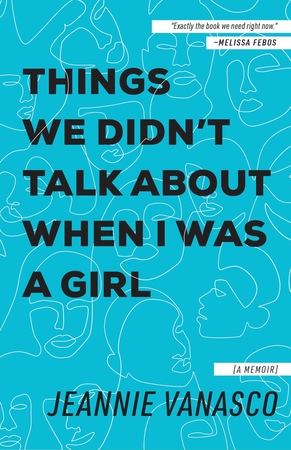
When Jeannie Vanasco was nineteen, her close friend raped her at a party; fourteen years later, she decides to interview him about that night. A necessary book in the #MeToo era, this memoir asks complex questions about sexual assault and accountability, and what trauma looks like. Jeannie Vanasco’s editor interviewed her about the book.
Diaz’s memoir tracks her childhood spent in both Puerto Rico and Florida, her mother’s struggle with schizophrenia, her friendships and depression and sexual assault, her time in the Marines and the breaking up of her family. Dynamic, moving, and full of life, this memoir is anything but ordinary. Read our interview with Jaquira Diaz about why she wanted to be “ordinary.”
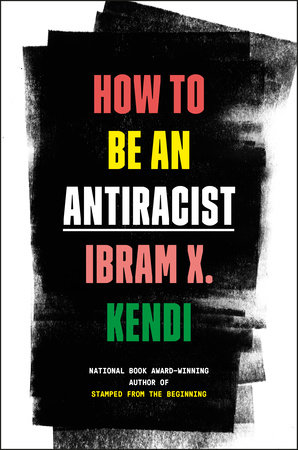
This powerful book uncovers the way racism interacts with every facet of our society, and teaches readers to recognize and fight racism. Kendi uses history, ethics, law, and personal experience to expose the racism that is always present in our lives. Here’s our interview with Ibram X. Kendi.
In this self-proclaimed love letter to A Tribe Called Quest, Abdurraqib uses various genres to express what the rap group has meant to him throughout his life. While tracing the group’s career, Abdurraqib shows how the group affected both the musical and cultural scene of the 1990s, and how the group affected him personally. Find out more in our interview with Hanif Abdurraqib.
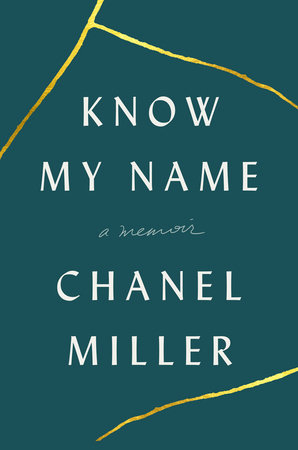
Miller’s memoir meditates on the nature of healing and the author’s quest to reclaim her life after a sexual assault. Although she was known as Emily Doe when she read her victim impact statement to Brock Turner, Chanel Miller uses this memoir to take back her name and shine a light on how victims of sexual assault are treated in America. Read an essay by Fiza Pirani about how Miller’s memoir teaches us about the value of staying in a traumatic moment instead of moving on right away.
Short-listed for the National Book Award, Forché’s memoir follows her 27-year-old self as she travels to El Salvador with a mysterious man. Once there, Forché struggles to make sense of the horrors she sees in a country on the brink of war.
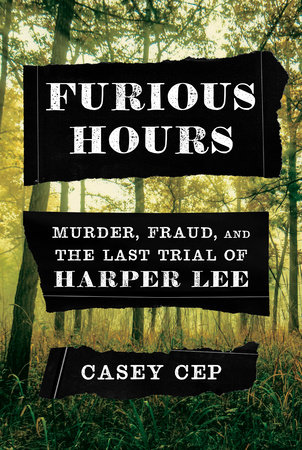
In the 1970s, Harper Lee returned to Alabama to watch and report on a criminal trial. Furious Hours combines the drama of true crime with the attentiveness of biography, and offers an analysis of both the Deep South and one of America’s most beloved authors.
Saeed Jones’ memoir ruminates on the intersections of race, sex, and sexuality as the author comes of age in the American south. With haunting prose and deep thoughtfulness, Jones reveals the ways we create ourselves over the course of our lives.
This graphic memoir recalls the tense conversations that Jacob has had throughout her life. From her own childhood to the 2016 election, Jacob uses both humor and honesty to answer her son’s questions about race. We interviewed Mira Jacob about the book and she also recommended five books for our Read More Women series.
When Lara Prior-Palmer was nineteen, she entered the world’s longest, toughest horse race. With no formal training, Prior-Palmer spent ten days racing wild horses through the Mongolian grasslands, following a path carved out by Genghis Khan’s horse messengers, and became the first woman ever to win the Mongol Derby. Electric Lit executive director Halimah Marcus interviewed Lara Prior-Palmer.
In her debut memoir, T Kira Madden describes her charged upbringing as a queer, biracial teen in Florida, the only child of parents struggling with addiction. This memoir spans years in Madden’s life and wrestles with the contradictions, complications, and powerful women that were central to the author’s life. Check out our interview with T Kira Madden.
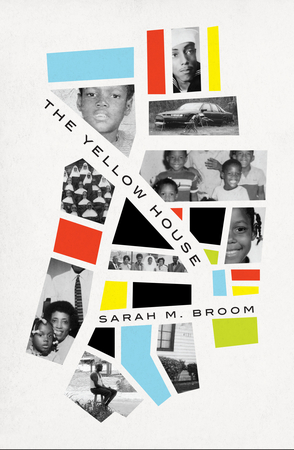
Winner of the 2019 National Book Award for Nonfiction, this family memoir spans a hundred years and explores the lesser-known corners of New Orleans. In this book, Broom takes readers into her family’s home and shows them the magic, chaos, and power the house exerts over her and her history. Here’s our interview with Sarah M. Broom.
In her essay collection, Wang writes and unwrites about mental illness and how her diagnoses have affected her life. Both a personal memoir and an analytical work, this collection shows readers what it’s really like to live with schizophrenia. We interviewed Esme Weijun Wang about mental illness and disability.
This essay collection covers the big issues from the milieu of millennial malaise, such as reality TV, the internet, and the art of the scam. Tolentino dips into modern culture with humor and sharp insight, and returns with shards of wisdom. Read our interview with Jia Tolentino here.
Before you go: Electric Literature is campaigning to reach 1,000 members by 2020, and you can help us meet that goal. Having 1,000 members would allow Electric Literature to always pay writers on time (without worrying about overdrafting our bank accounts), improve benefits for staff members, pay off credit card debt, and stop relying on Amazon affiliate links. Members also get store discounts and year-round submissions. If we are going to survive long term, we need to think long term. Please support the future of Electric Literature by joining as a member today!
At 4, Chanel Miller could not lift a gallon of milk. She needed two trembling little arms to wet her cereal with “that white sloshing boulder.” And spillage was inevitable.
When exactly she began to carry the gallon of milk with ease, “one-handed, on the phone, in a rush,” she doesn’t know, Miller writes in her new memoir, Know My Name. But to get there, she must have had to sit in the mess for a morning or two.
“I believe the same rules apply,” she writes of the narrative the world will remember her by: her time as the Emily Doe of the infamous Stanford rape trial in which Brock Turner, found guilty of three counts of felony sexual assault, would serve only half of his meager six-month sentencing.
“One day I’ll be able to tell this story without it shaking my foundation,” Miller writes. “Each time will not require an entire production, a spilling, a sweating forehead, a mess to clean up, sopping paper towels. It will just be a part of my life, every day lighter to lift.”
We talk often about the rituals and societal expectations following the death of beloved people and animals: the anguish that accompanies physical loss, codified in curated stages of grief. But what of the intangible casualties? When we lose fragments of ourselves in trauma, what is the most appropriate bereavement treatment?
For months after the assault, Miller writes, it was too painful to be here, alive. Her mind preferred dissociation. The goal was to forget.
“It took me a long time to learn healing is not about advancing,” she writes. “It is about returning repeatedly to forage something.”
Foraging is a search in the wild for provisions, its etymology traced to the Anglo-French fuerre and the Old High German fuotar, both of which influenced the Old English term for fodder and later, food. When creatures forage, they make an effort to retrieve, collect and store the sources of energy and nutrients they find. The evolutionary purpose, scientists say, was to create a positive energy budget. Foraging theory states that to survive, we must balance out the energy we expend with the energy we gain.
But most of us are not actively foraging, at least not in the physical sense, not out in the wild. Instead, we forage for food more passively. We might experiment with new eateries and markets every now and then, but we ultimately do our surviving by retrieving prepackaged nutrients off grocery store shelves or assembly-line delis, mindlessly collecting the bounty in metal shopping carts and storing our earnings in kitchen pantries and refrigerators. Those of us in urban societies have evolved to expend little energy in our modern-day foraging, hoping to gain at least enough to get by.
Research shows that the same molecular and neural mechanisms involved in physically foraging for nourishment in the savanna or sea for centuries have evolved to help regulate our attention and retention.
To gain, she must remember. And to remember, she’ll have to sit in this mess for a while.
Less persistent, more inattentive and more passive foraging––whether the provision we seek is a tangible meal or more abstract food for thought––has been linked to a decrease in brain dopamine, the “happy hormone” responsible for controlling our mental and emotional reactions.
Low levels of dopamine reduce motivation and enthusiasm and increase the risk of depression, anxiety and other behavioral disorders. In the aftermath of trauma, low levels of dopamine further impair our ability to make sound judgments. If taken as prescribed, stimulants can increase brain dopamine levels until they produce that happy, rewarding and attentive effect.
When Miller says, then, that healing has less to do about moving forward and more to do with foraging, perhaps she understands that healing involves her attention. That it involves a repetitive return to the past to produce a somewhat sensical timeline from fragmentary scenes. Perhaps Miller understands that to heal, she must gain something to make up for the depleted energy stolen by the assailer; she must gain back the energy she lost before and after each court hearing. But to gain, she must remember. And to remember, she’ll have to sit in this mess for a while.
The act of writing, Miller says, taught her “to stay in the hurt, to resist leaving.” It placed her in the driver’s seat, in control of the once uncontrollable past. The more often she returned to the scenes leading up to and the scenes following the moment she was reported unconscious behind a dumpster outside a Stanford fraternity party, the more power she ultimately accumulated in crafting the meticulous details of her truth.
Eventually, Miller writes, she could come and go as she pleased, “until one day I found there was nothing left to gather.” And when there’s nothing else left to gather, then it’s time to pack up and move on.
This idea of returning and foraging to heal––foraging willingly––gripped me as someone with an ambiguously fleeting desire to live, someone whose rumination has proven to be more dangerous than fruitful.
Successful foraging requires return and reflection. It forces us to ask ourselves: Is it time we move on?
After reading Miller’s memoir, I understand the difference. To ruminate is to sit in the mess with no end in sight, no plan to return to the present and no real desire to find understanding. But successful foraging requires return and reflection. It demands an analysis of the environment and its resources. It forces us to ask ourselves: Is it time we move on from here?
The only way I’ve been able to move forward is by time-traveling backward, turning the machine off for a while and just sitting in messy memories past, sometimes alone and sometimes on the weathered leather loveseat in my therapist’s office, foraging through the brush clouding my brain for some understanding of how exactly I wound up wanting the end. Each time I make the return trip back to my present, my basket feels a little lighter, hinting at the horizon ahead.
Sometimes, after a long afternoon of foraging, Miller regresses, as do I. Healing is no linear feat, after all. There will be forest fires and predators, more competition in the wild. But to survive, we must eat.
There is a hymn on the first few pages of Shine of the Ever. Claire Rudy Foster writes in “The Pixies”: “When we’re together, we forget that we are hopeless. We are something else and we are part of each other. We will never fit. Why would we want to be like you?…My Velouria. The chorus comes and we are a mass of bliss and fury and love and pain and truth and sound. Finally through the roof. We are going to shake you loose.” This rebellious yet tender, frank yet lyrical yearning is what Shine of the Ever is. A collection of stories for the pixies, the punks, the lovers and the loveless. Shine of the Ever has the image of a mixed tape as its cover art but I want to call it a hymnal, a psalm, for those who have wanted to see themselves in fiction and felt ignored for way too long, for those who are ready to shake loose of the traditional constraints of society and literature.
In thirteen stories, Shine of the Ever is a collection of narratives with queer characters navigating Portland, Oregon—the city a character itself. Each character is searching for a sense of understanding and human connection while they continue the work of figuring their own selves out. What is special about this collection is that each story ends not on the stereotypical dreadful tone most stories about queer characters have. In Foster’s narratives, no one ends up punished for the way they live their lives. But rather, each story ends with a hint of hope, a sentiment very much needed in this era of Trump and the all out attack on LGBTQ+ civil rights.
Claire Rudy Foster is a queer, nonbinary trans writer who lives in Portland. Foster is the author of the short story collection I’ve Never Done This Before. Their writing has appeared in The New York Times, The Washington Post, The Rumpus, McSweeney’s, and elsewhere. Foster has been in recovery from alcoholism and addiction since 2007, and co-authored American Fix: Inside the Opioid Addiction Crisis and How to End It with activist Ryan Hampton. Their contributions to the recovery movement include speeches, letters, and articles and the recovery podcast “Addiction Unscripted.”
I spoke with Foster about why Portland is a popular place to write about, happy endings as a political act, longing and belonging, and if the world is ready for queer stories from people other than cis white men.
Tyrese L. Coleman: Of course, after reading your collection, I listened to the Pixies’ song “My Velouria,” which is where the line “shine of the ever” comes from. It’s funny, I never thought that a song could completely capture the feeling of a collection of stories in the way that this song does.
Claire Rudy Foster: The collection takes place in grunge-era Portland, and the Pixies were so much part of the sound and texture of that time for me. I love their lyrics: “We will wade in the shine of the ever. We will wade in the tides of the summer.” For my characters, as well as the city where they live, it’s the last days of summer: the last days of youth, when everything seems so important and vital and new. They’re all on the cusp of massive, difficult changes, but for the moment—it’s easy living.
TLC: Is this collection a result of the vibe, the longing, in this Pixies song or of Portland or of a mix of it all or something completely different?
CRF: I’ve heard others characterize queerness as a yearning. I connect with that. I often have the feeling of being outside, observing how other people live. I guess voyeurism is a kind of secondhand fulfillment. In Shine of the Ever, I really didn’t want to create another monument to a time that has passed. Portland has enough of those: memorials to the wonderful, weird culture that was pushed out by rapid expansion and gentrification. The narrator in the book’s title story remarks, “I had that feeling I was in a movie set of my own living room, where every object looked exactly like my personal possession but nicer, cleaner, and more appealing. I hate it. These designers put in a lot of effort to make things seem natural, but I think the only people who believe it are the ones who never saw the original. They don’t understand that this isn’t Portland anymore: it’s Portlandia. A theme park of the places we used to love.” Throughout the book, characters experience a longing that isn’t necessarily for another person, but for a moment in time that can never be recaptured. It’s a nostalgia that ripples into the present and continues to inform the things my characters desire, long for, obsess over, and crave.
TLC: You and Mitchell Jackson both write about Portland as this place that has been replaced with a fictional utopian veneer, though you talk about different communities within the city. It strikes me though that you both write about the city with a reminiscing tone—a love for the good bad old days. What is it about Portland that lends itself so well to characterization in the ways you and Jackson have written about it?
CRF: Portland wasn’t really a “city” until 20 years ago. Maybe less: ten. The condos appeared in the early 2000s, followed by an infestation of ampersands. Portland wasn’t always one of New York’s outer boroughs, where people all wear charcoal grey merino wool and drink artisanal lattes. Twee boutiques obscured the existing DIY culture, the punk scene, and the grittier places. Portland’s “charm,” which was played up by travel writers, tourists, and people who’d been pushed out of their own cities by insane costs-of-living. The city’s rapid overdevelopment happened almost overnight: within only 2-3 years, we were overrun by new residents, huge buildings that are out of character with the rest of the architecture, corporate headquarters, more cars on small roads, all that stuff. Institutions protected by money stayed, but the day-to-day stuff vanished. Almost every mom-and-pop store is now a gleaming, white weed dispensary. The landscape here was altered. For most cities, these changes happen slowly, or they already happened a few decades ago. The invasion of Portland is something I’ll never forget.
The “charm,” if you can call it that, is still more reminiscent of a town than a city. It’s a frontier town with a gory history and a lot of problems. There’s rich soil here for writers. Portland’s transformation features prominently in Shine of the Ever. Yet, in spite of these changes, the core parts of Portland remain the same. It’s a small city. The longer you live here, the smaller it seems. I think people write about it because it’s easy to fit it all into one book. It’s a fraction of the size of Los Angeles or New York or Dallas and significantly less socially complex.
TLC: You both also write about the drug epidemic in the city, but again, from different perspectives. You are not shy about writing and talking about your struggles with addiction. While I don’t want to make the assumption that any of the pieces are autofiction, can you talk about how your story influenced the pieces in Shine of the Ever, if they did at all?
CRF: First, I think all writing in every genre is autofiction of some kind. Writers draw from their own experiences, impressions, and sensations. An apple tastes like an apple. An apple that tastes like a pear is invented using the linguistic concepts that define taste, fruit, and eating. I think that, even when someone is writing high fantasy or science fiction, they’re still working within the lines of human perception: the writer, like the reader, is still human.
For Shine of the Ever, I was less concerned with historical accuracy than emotional precision. The book was born from my own attachment to a city that has been erased by time, and from my grief at watching its changes as it slipped away from me. This grief is selfish, of course. Many excellent things have come from these changes. But I think most people have felt displaced in one way or another, forced to start over, or disconnected from community. Displacement is part of Portland’s history: the ultra-white city is built on the traditional lands of the Multnomah, Kathlamet, Clackamas, Cowlitz bands of Chinook, Tualatin Kalapuya, Molalla, and many other tribes. I can complain about Portland changing, but I am not a victim. I am merely inconvenienced. The white presence in Oregon is the result of an ongoing cultural genocide against Native people. The invasion I write about in my book is commercial, not cultural; I think it’s important to acknowledge the larger implications of that.
Heteronormativity erases us. Why replicate a system that wasn’t designed for you?
Addiction is part of more contemporary, urban displacement. Addiction is commercialized; it turns a profit. In my recovery, I’ve had to accept that nostalgia, the chronic and insatiable desire to reexperience the past, can be just as addictive as cigarettes, wine, or opiates. Returning to the same place, song, person, or emotion is not that different from picking up a drink: both of them feel good for a while, and they enable the person to depart from the here and now. Shine of the Ever was an indulgence of my nostalgia. Having written it, I wonder if I’m ready to move on.
TLC: The fact that this book has no sad endings is a political act. A political act as a commentary on what people think a queer story needs to be about and also a literary political act because, as we know, capital “L” Literature means sad and depressing.
CRF: If literature is synonymous with sadness, we need to change what literature means! One of the things I love about other genres—because, let’s be real, literary fiction is a genre, just like romance is a genre—is the joy and playfulness I read in them. My favorite authors, like Richard Chiem, Katherine D. Morgan, and Sam Hooker can make me laugh. It’s not hard to make a reader cry, but laughter is so much more intimate. When I was writing Shine of the Ever, I could easily have fallen into tropes and stereotypes that enact violence on the queer and trans body, especially in communities of color. I didn’t want that. I don’t want that for my characters. I thought to myself, “Fuck it. This is my city, my book, and my story. I can do whatever I want.”
The fact is, I’m a white nonbinary trans person who came out later in life. I’m 35, which is older than the average life expectancy of a black trans woman. I’m insulated by privilege in a liberal, predominantly white city. My transition, coming out as trans, all that stuff—it’s been hard. Devastating at times. But my problems weigh less than a grain of the struggle that many other people face. In my book, I give all my characters access to the same privileges I’ve had. Not all my characters are white. Not all of them are solidly middle class. They encounter issues with housing and income stability, access to medical care, real-world problems. But they are not in danger, as queer and trans people are often endangered in popular media. They have the luxury of making mistakes with minimal consequences. That’s freedom: to fuck up and be able to walk away intact. Or, as many white people do, fail up from their mistakes.
TLC: This book provides a counter narrative to the traditional queer “struggle story,” stories that are based on stereotypical struggles that marginalized groups face. A queer struggle story may involve some aspect of homophobia, self-hatred, tense family relationships, or the whole narrative would surround the protagonist coming out. Contemporary literature is shifting away from the struggle narrative—the kids have all come out if they want to, no one has time for homophobic people in their lives, etc…
But though I feel like your stories did not contain the traditional struggle narrative, I did notice that many of your characters still suffered with insecurity associated with their identity or sexuality or love life, a sense of unease and lack of trust. Where does the insecurity come from once we’ve gotten past the “struggle?”
CRF: I don’t think the struggle has changed, but the way we’re centering the queer experience has. Our voices are being heard because so many people, primarily queer and trans people of color, have led the way for trans rights. We have the right to be human and the right to be heard. If I have a voice, if I’m able to name myself on the cover of this book, I owe it to these elders and activists. The courage I have is a gift from them, and I try to live up to their generosity in my work.
Nobody’s safety should depend on whether we are lovable, appealing, or palatable. We are worthy of respect because we are human beings with equal rights.
Identity is a process of becoming, not of arriving. Practicing and experimenting with identity, gender expression and presentation, all those things—that’s a privilege. Coming out is always hard. Dealing with transphobic family members and friends will always be heartbreaking. There’s no way to eliminate those experiences, though I think we’re getting better at supporting people as they go through vulnerable transitions. I can’t speak for the entire community; in my experience, every challenge has another one after it. It’s heavy surf. You are never fully “safe,” and that insecurity can affect the happiness you have in the moment. The problems that LGBTQ people face can be blatant or they can be concealed in language or gestures. In either case, proximity to privilege determines how much systemic discrimination a person experiences. Struggle is relative: my writing attempts to dignify those struggles and weave them into daily life, which is how I encounter them.
TLC: There is also this theme of an “outsider” falling for someone who appears to be an “insider.” For example, in “Domestic Shorthair,” Amit, a nonbinary police tech deals with the unrequited love for a straight roommate. Amit is insecure, is not dealing with the trauma and sadness from their job, and is not able to maintain a relationship past dating whereas their roommate “knew how to work it.”
I use these terms loosely, but I’ve used the word “longing” multiple times in this interview and for me this is really what a lot of this collection is about: a longing for understanding, a longing for love, a longing to be seen. And then I think about the queer community and the continued fight, or longing, for equal and basic rights. What are the parallels here? The longing of your characters who appear to be on the “outside” and the longing for a community who wants inclusivity?
CRF: I’ve been out as queer since I was 15. That’s not new. However, I often felt like my identity was obscured, or reflected back to me in a way that was distorting and cruel. For me, my shame around my queerness was expressed by that longing. Like you said, the longing to be known. The refrain of those earlier years was, “Am I good enough yet? Do you love me yet?” I felt like I would never belong and that part of me would always be unacceptable. When I got older, I learned to give that love to myself—and found a community that accepts me unconditionally, too. Outside those spaces, my safety, individuality, security, and agency are all entirely dependent on whether cisgendered people tolerate me, or heterosexual people choose not to hurt me. The longing I feel now is not for myself, but for social justice. My safety, nobody’s safety, should depend on whether or not we are lovable, appealing, or palatable. We are worthy of respect because we are human beings with equal rights. We shouldn’t have to translate ourselves to those in power in order to earn our humanity.
Amit is on the cusp of that discovery. They don’t have the language yet to describe themselves. They are afraid to name their desires. They seek security in invisibility and gather crumbs of love. They are not ready to take the lead in their own life, and they won’t be happy until they become brave enough to claim it.
TLC: But it turns out that Amit’s roommate doesn’t have it all together, doesn’t know how to work it as well as Amit thought.
CRF: Yes, she’s a hot mess! Amit’s roommate is the closest person Amit has, but she’s not a model for how to live. She enjoys her relative social and sexual privilege. This juxtaposition demonstrates how ludicrous I think it is for queer and trans people to deliberately mimic cishet power structures—and why I think allies are important, but not an intrinsic part of our community. Heteronormativity erases us. Why replicate a system that wasn’t designed for you?
TLC: Do you feel as though the lit world is finally ready to embrace queer stories that are not by and about cis white men? What stories do you hope to see? Who are you reading?
CRF: I hope so, because there are plenty of us with things to say. Cis white men can be great, in their time and place, but the world is so much bigger and more interesting. I hope to see more work from queer and trans people of color, especially stories that center queer joy. I’m reading Everyday People: The Color of Life, an anthology by editor Jennifer Baker and really enjoying it. Trevor Ketner recently gifted me a beautiful copy of their chapbook White Combine: A Portrait of Robert Rauschenberg.
TLC: Your next book is going to be a memoir. Please tell me about it. Will it intersect in any way with Shine of the Ever?
CRF: My memoir, Mom-Binary, is about transitioning through my second adolescence as my son goes through his first. It includes some of the themes, landscapes, and voices from Shine of the Ever and will have excerpts from some of the essays I’ve published in The New York Times, Narratively, and other places. In a way, this book is also about queer victories. I have survived so much, and I refuse to let that trauma define me. Fuck no. I’ll define myself. Mom-Binary is about the reckoning of identity and the process of falling in love with being who you are. I hope you’ll read it; it’s very close to my heart.
Before you go: Electric Literature is campaigning to reach 1,000 members by 2020, and you can help us meet that goal. Having 1,000 members would allow Electric Literature to always pay writers on time (without worrying about overdrafting our bank accounts), improve benefits for staff members, pay off credit card debt, and stop relying on Amazon affiliate links. Members also get store discounts and year-round submissions. If we are going to survive long term, we need to think long term. Please support the future of Electric Literature by joining as a member today!
Last week at our annual condo meeting I was informed if I keep playing loud music at night it will become a legal issue so I’m on my way to Mattress Emporium. The line at the Chipotle in midtown slinks out the door and forces me to weave through a tangle of noontime professionals. I overhear one woman with expensively highlighted blonde hair say to another with expensively highlighted brown hair, “I swear to God I have PTSD from that time they ran out of guac,” which makes me consider how if all the people with actual PTSD went to war against all the people misusing the term this blonde-haired woman and her ilk would lose and yet we, the victors, still wouldn’t be able to enjoy a mediocre burrito. Lord I miss enjoyment.
The Mattress Emporium sign means I get to practice returning from a flashback. I understand the giant, stoplight-red block letters aren’t blood but somehow that’s the connection my mind makes. I focus on one particular spot of mashed pink gum on the sidewalk while identifying three current sounds so I can stay here and not go back there. If only I’d picked a mattress store with a blue logo. Eventually I enter and air conditioning blasts my face. Goose bumps rise on my arms and I stand very still while reminding myself these goose bumps are from cold, not terror. I take five breaths, inhaling on a four-count and exhaling on a six-count. As I finish doing this a short man with a thick mustache sidles up and asks if I prefer firm, medium or soft.
“Which one muffles the screams of haunting nightmares the most?” I say.
“Probably soft,” he replies, so that’s where we start. I fall face first onto the paper towel the salesman places on the mattress for hygienic purposes and then I scream. It turns out the advanced baffling techniques really do help muffle the sound and only a few people scramble out through Mattress Emporium’s sticky glass doors.
“Sorry,” I say.
The salesman shrugs. Then a few more people exit the store and I wince, regretting my actions, but the salesman just bobs his palms up in a gesture of resignation. “They didn’t seem like committed buyers anyway,” he says.
I explain that I am a super committed buyer because I haven’t had a good night’s sleep in eight months. Maybe if Brenda’s children in 3F didn’t spend two hours every night running up and down the hallway like chubby racehorses, I could properly relax before bedtime. Then maybe I wouldn’t get the nightmares. But Brenda doesn’t think that’s my problem. “Do you know what she said to me at the condo meeting?” I say to the salesman. She said, “Listen, the political climate is so terrible right now I think we all have PTSD. You’re just the only one making such a big deal about it.”
The salesman nods his jowly face and says, “That Brenda sounds like a real bitch.”
I’m really starting to like the salesman so I go ahead and ask about restraints. From the corner of my eye, the place where I catch all movement since the shooting, where I can now observe even whispers of potential movement, I see an old woman turn. Glasses slip halfway down her nose and she snorts with disgust before hobbling toward the exit. “I don’t mean in a sexual way,” I call after her, but it’s too late. She’s already opening the glass doors.
“Old people never buy mattresses anyway,” says the salesman. “Not a good investment that close to the end, you know?” Then he tells me about a sex shop up the way that sells rubber sheets. “If you tuck them in real tight, I bet they’ll keep you from jumping out of bed when you hear a noise.”
It seems like maybe the salesman also has PTSD and I hear myself myself start to ask this question aloud before abandoning the query for a ramble about the condo meeting when Charlotte in 5C stood up, actually stood up like the annual meeting we hold in the hallway of the converted-schoolhouse building that’s been parceled out into 47 versions of home was some kind of Oxford lecture hall, and said, in front of everyone, “On behalf of the Board, I just want to say we didn’t know you had PTSD when you applied and it might have been helpful to know because then we could have discussed whether this building would be the right fit for you.”
“Woo-boy,” squeals the salesman while tipping his head back in a kind of shocked excitement. “What did you say back? You said something back, right?”
“You bet! I said, ‘Well Charlotte, I didn’t have PTSD two years ago when I sent in my condo application, just like you didn’t have an Airedale named Thad who everyone knows is the one shitting in the begonias every morning when your husband walks him, and maybe if you stopped sending condo-wide emails about picking up dog shit and instead directed them at your husband, the begonias might still be alive.”
“That’s it my friend!” says the salesman. He throws his hand up for a high-five, but the motion is too quick and I flinch.
“Sorry,” I say. “That happens sometimes.”
The salesman goes quiet. He sits down on the edge of the bed and pinches the bridge of his nose for an uncomfortable amount of time. I scan the sales floor to see if anyone is watching. There are only three others still present, a couple and a tall angular saleswoman who’s reciting facts about foam and how hot it sleeps while the couple listens intently.
I take a seat on the mattress beside the salesman and to break the awkwardness I say, “They should make a hinged mattress, like an oyster. It’d be like Temple Grandin’s cow squeeze thing, but for humans. No way could I fight night terrors sandwiched between two twelve-inch layers of all-natural latex foam.”
“What about breathing?” says the salesman with alarming sincerity.
“It’d have to come with a mask, like a long snorkel kind of thing.”
The salesman nods his head. Then he says, in a tone slicked with so much kindness it makes me uncomfortable, “Why is it you think you need a new mattress?”
I take a deep breath before saying, “It’s an ineffectual loop, the not wanting to go to sleep because of the screaming I hear when I close my eyes—” I pause because I accidently said too much, because the explaining is always wrought with saying too much or too little or people getting scared or upset or having no reaction at all, and each of these responses only makes things worse.
“I understand,” says the salesman, surprising me. “Go on.”
“Okay, well I started playing the loud music to drown out the screaming, but now my neighbors are complaining and, honestly I wish I could just move, pack up and leave the city, but the whole not sleeping has kind of affected my job situation, so now’s not the right time.”
“And you think a new mattress will fix this?”
I shrug. “I heard those vibrating bases are really nice.”
“They are. If anything, you should get one that does heat. More expensive, but the warmth is nice.”
“Okay,” I say, rising. “Can you show me one of those?”
“But friend,” the salesman says as he begins to rise very slowly, something I realize he’s doing for me, which is a nice gesture, trying to keep me from flinching, but it also makes me frustrated, the need for such a gesture. “I don’t think what you need is a new mattress.”
My cheeks flush with frustration. This guy doesn’t understand how hard it was for me to drag my ass down to Mattress Emporium in the first place and I don’t have a back-up plan.
“I think what you need,” he continues briskly, seemingly wary of the way my eyes are darting about, “is headphones. Noise-canceling Bluetooth headphones. Expensive, yes, but cheaper than a mattress.” I don’t know how to reply and the salesman walks slowly to the glass doors. I follow and he points across the street to a Best Buy. I have to admit their blue and yellow logo is soothing.
I select the over-the-ear type and before I step back into the rushing streets of Manhattan I tear open the packaging. When I place the soft black foam over my ears the light compression against my skull feels like the kind of calming touch I’m not yet ready to accept from people. I hold down the noise-canceling button and the background hum of the world disappears. In its place arises a creek made of flowing static. All the way home, I wade.
For most of the world, a debut novel, memoir, or short story collection is an introduction to a writer. However, if you pay close enough attention to literary magazines, social media, or attend author events, you’ll begin to hear conversation about these debuts months or even years in advance.
These authors have remained relatively anonymous, but as 2019 ends and the new year begins, the buzz around their work begins to grow tenfold.
Here are 20 enticing debuts being released in the first half of 2020 that range from a genre-breaking true crime to timely essay collections and memoirs to heartbreaking fiction. These books are by writers whose names we suspect you’ll be reading for years.
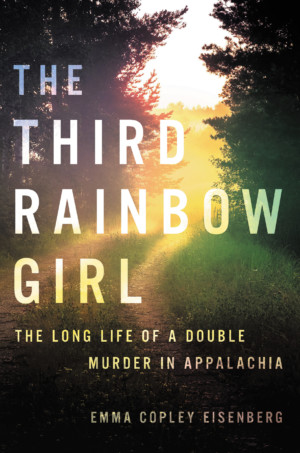
In the tradition of Truman Capote’s In Cold Blood, Eisenberg investigates a double homicide in rural Appalachia while also meditating on how acts of violence can affect a community for decades. The murders went unsolved for thirteen years until someone was convicted. However, the conviction was overturned when a serial killer confessed to the 1980 murders.
Wiener spent much of her 20s living and working in Silicon Valley where she immersed herself in the explosive male-dominated world of tech and start-ups that seemed too absurd to be true. All of the stories of the tech industry you heard but couldn’t believe happened? Well, they may have been worse than you ever imagined. Uncanny Valley is the perfect dirt-dishing memoir for anyone gleefully following the implosion of WeWork.
American-raised Liya returns to her birth country to scatter her mother’s ashes and to search for the father she has never known. Weaving the past and present, Little Gods is a haunting tale of love, ambition, and family.
A great science-fiction novel pushes readers to question their reality and Jimenez does that through space and time in this fast-paced time-traveling debut. He leans into tropes and turns them on their head to create a thrilling story about an outsider whose life is changed when a child falls from the sky and into her care.
In the wake of the #MeToo movement, Vanessa is forced to reevaluate her relationship with her English professor 17 years earlier. When a different girl accuses the same teacher of sexual harassment, Vanessa wonders whether she was a willing partner or a victim.
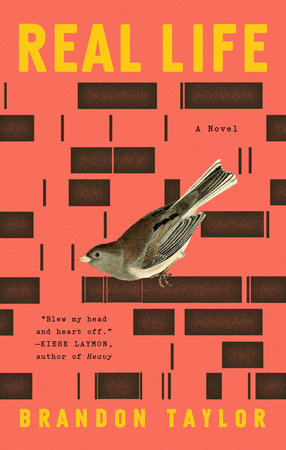
A story of sexuality and desire told through the experiences of an introverted grad student over the course of a single summer weekend. Recommended Reading senior editor Brandon Taylor’s previously published short stories have already proven he can write beautifully about the small moments in life, and this novel might prove he is a master. If you follow him on social media, you know he is an astute observer of everyday choices and actions.
Three shanty-town dwelling children scour the vast and chaotic city of New Delhi to find their missing friend. The novel draws on real events of teenagers going missing in the cities of India.
Daré’s debut is about Adunni, a teenage girl in Nigeria who is sold by her father to become the third wife to a local man. She flees to the city, striving for something more than a life of servitude. The Girl With the Louding Voice has already won the Bath Novel Award, awarded to an unpublished novel from an emerging author.
Decades after Carson McCullers’s death in 1967, Jenn Shapland discovered love letters that the author wrote to a woman named Annemarie, and decided that McCullers’s hidden life story needed to be told. This genre-defying book is an attempt to give a fuller picture of the writer, but also an account of Shepland’s own journey toward discovering herself.
The stories in Mary South’s collection range from uplifting to morbid, but all contain a sharp sense of humor and provide readers with an off-kilter lens to view the world through. From a camp for internet trolls to a women who moves from online stalking to the real thing, South shows the sometimes dark absurdity that technology brings to our lives.
A dying man has kept a secret for three decades that will change the course of his family’s life and alter everything they thought they knew. The story sweeps across time and location, from Jamaica to Harlem, to reveal the background of his choice and the effects it has had on everyone he’s encountered.
Two men, one Native American and one white, start a relationship in a small town in northern Minnesota where they must keep their love a secret. Their clandestine romance is made even more complicated when they encounter the spirit of a dog who leads them to investigate the death of a beloved teenager.
Chang’s short stories have appeared in various outlets including Zoetrope: All-Story and Catapult. In Days of Distraction, she writes about a young woman coming into her own as she juggles an interracial relationship, sexist microaggressions, twentysomething rootlessness, and the intricacies of being Asian American in a racist society.
A struggling town turns to a pastor cult leader for a sense of community. Fourteen-year-old Lacey begins questioning everything when her mother is exiled from the community and the pastor begins to push his views and goals in an even more extreme manner. Bieker’s novel is an explosive telling of girlhood, family bonds, and finding your place in the world.
Zhang’s novel is an intimate family story set against an epic backdrop. Set during the California Gold Rush, it follows newly orphaned siblings after their father dies in the middle of the night. They set out to bury him and bury their past to begin afresh live in the American West.
Thammavongsa is an award-winning poet and short story writer from Canada. Her work has been heralded for its surreal portraits of tenderness and brutality. This collection features that same sentimentality as it focuses on characters outside of their comfort zone and navigating unfamiliar territory.
Sara Sligar’s dark novel situates readers in an idyllic community where former journalist Kate is archiving the life of a controversial artist. She falls for the painter’s son and slowly discovers secrets that were never meant to be uncovered. The plot is built to be explosive and it delivers on all fronts. Each page shows us how obsession can pull us apart from the seams.
These twelve stories—including “Meat,” previously published in Recommended Reading—offer a tender, realistic portrait of life in modern rural Appalachia.
Masad is the host of The Other Stories, a podcast about and for emerging writers. In her debut, Maggie’s mom dies suddenly, leaving five sealed letters addressed to unknown men. As Maggie traverses the country delivering the letters, she learns more about herself and the mother who never fully accepted her.
As a senior editor of Literary Hub, Temple has written numerous essays and criticism of the literary landscape. She now directs her skills to her own novel to be released this summer. The Lightness is about a teen finding a group of close friends to help her navigate adolescence—and learn to levitate.
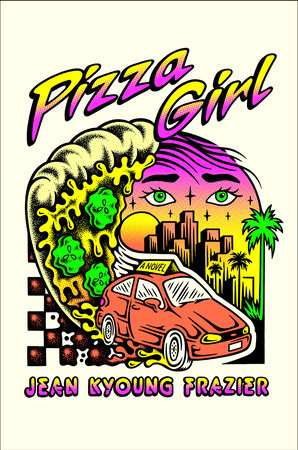
Described as a wryly funny novel in the same vein as The Idiot, this novel follows a pregnant 18-year-old pizza delivery girl who becomes obsessed with a customer. Frazier’s novel already has a lot of fans, including National Book Award finalist Julia Phillips, who said Frazier “will make you laugh with one sentence and break your heart with the next.”
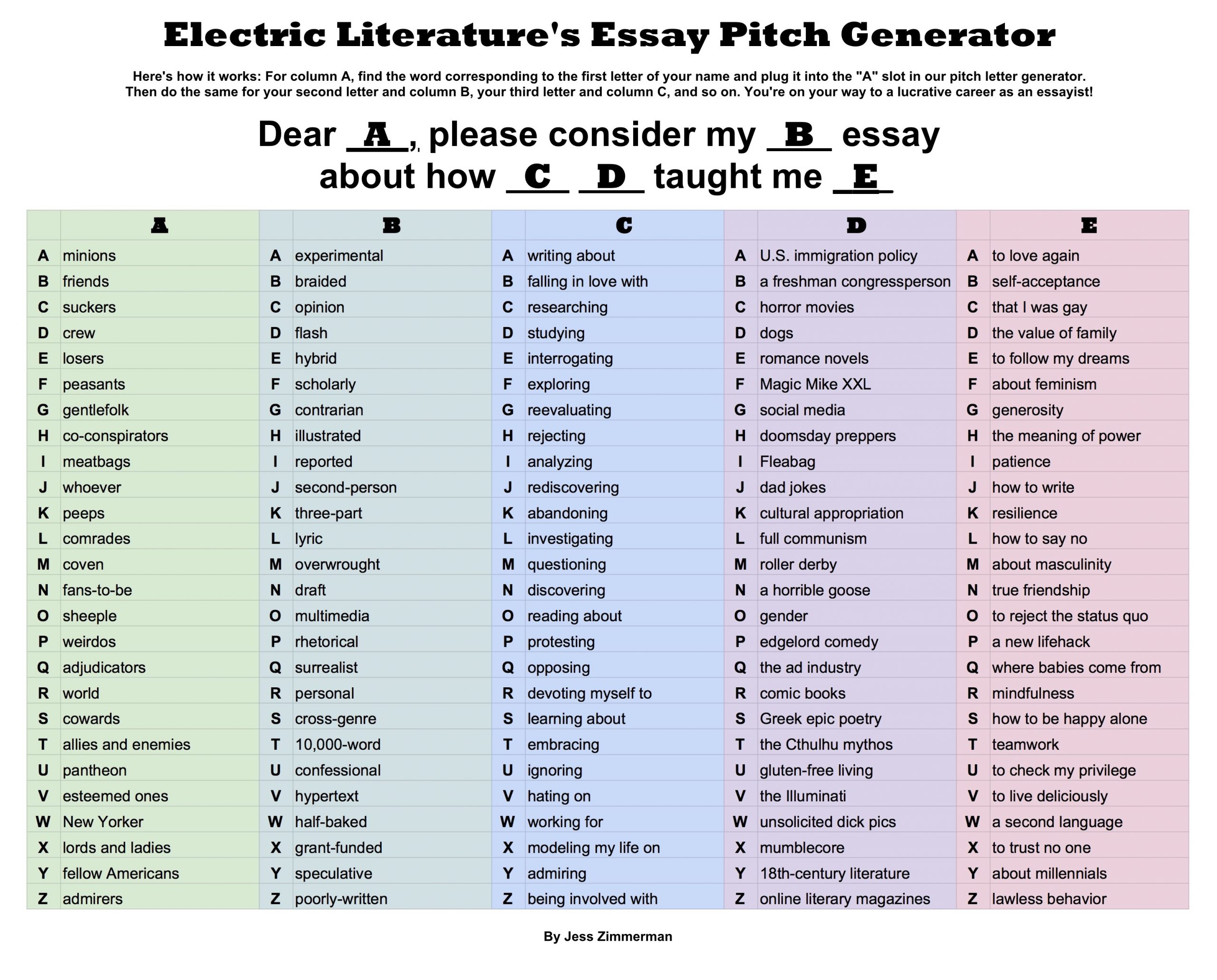
Whether you’re promoting a novel, shopping a memoir, or simply trying to get your first byline, it seems like everyone wants to write personal essays. The trouble is figuring out what to write about. Well, we have good news: the answer was in you all along. Specifically, it was hidden in the letters of your first name.
With our handy chart, you can finally figure out the personal essay you were born to write. Just find the first letter of your name in column A, the second letter in column B, and so on, and plug them into the pitch letter provided. (If you run out of letters in your first name, move on to your last—or throw your middle name in there, do what you want, we’re not your dad.) So for instance, if you’re Joan Didion, you’d look for J in column A, O in column B, A in C, N in D, and D (for Didion) in E—for the result “Dear whoever, please consider my multimedia essay about how writing about a horrible goose taught me the value of family.” Ms. Didion: we’ll take it.
This year, the White House continues its theme of horrifying holiday decor by imitating a hallway from The Shining. This follows the infamous 2018 hallway of blood-red trees, suggesting that the visitor has somehow wandered into a carnivorous forest. What ordinary citizens don’t know, however, is that this is part of a deliberate strategy! The White House is reviving the old tradition of telling spooky stories around Christmas, albeit through the medium of pine trees and strange ornaments. We’ve managed to get our hands on some proposals for next year’s decor.
Shirley Jackson
Focusing on Shirley Jackson will bring to the forefront what we really mean by asking for a return to the family values of the 1950s: a suffocating “us or them” mentality, undergirded by homophobia, anti-semitism, and misogyny, that can only be alleviated by murder.
Wander through New England pines decorated with ornaments from Faberge’s newest line of “American Poisonous Mushrooms.” The sense of creeping unease only continues the farther you go, and you begin to see, behind the trees, all the unfriendly faces of all the townspeople that hate and fear you.
Visitors will initially complain that all tickets to see the White House Christmas display are now distributed through a lottery system, but when the tour ends in a locked room filled with large piles of rocks, the reasoning behind this will become abundantly clear.
The Crucible
Keep the witch hunt going all year round! Return to the values of our founders by turning the White House into an early Puritan settlement whose oppressive atmosphere terrifies visitors guilty of wrong-doing into flinging wild accusations at each other to deflect suspicion. There’s only the dark and undecorated woods, where witches may lurk, the devil is ever-present, and your fears of human sexuality twist these metaphysical terrors into real, physical forces of evil.
Return to the values of our founders by turning the White House into an early Puritan settlement.
Children will love the Kids’ Corner, where they can pile rocks on top of a stuffed Giles Corey in a Santa hat until he breaks in two. It’s edutainment!
Edgar Allen Poe
This year we’re exchanging “ho, ho, ho,” for “Poe, Poe, Poe!” The White House will be transformed into an ancient and crumbling mansion where the leaves on all the trees are crispéd and sere, large black cats dog your footsteps, and ravens sit croaking “Nevermore!” on pallid busts of Pallas above the chamber doors.
Pry up the floorboards to find your very own red sequined heart ornament to take home. Press the button to hear it beat! Visitors can also find excellent refreshments at the end of the tour by following tour guide Montresor into the wine cellar. For god’s sake, check it out!
The Exorcist
Christmas is a religious holiday after all! Make it somber. Fill the White House with priests from the nearby Georgetown University. Nothing gets a Christmas party started like solemn chants in Latin to drive the devil out.
Plus, this will serve as a great reminder that if the Republican repeal of Obamacare goes through, an exorcism is the best and cheapest way to treat projectile vomiting.
The Handmaid’s Tale
The Exorcist feel too Catholic? Keep religious fundamentalism at the heart of the season by repurposing the red trees from 2018! Add a white bonnet on top, in lieu of a bonnet, and boom, we’re in Gilead.
Legislatively, this administration already wants to go there. Why not make it obvious?
H.P. Lovecraft
This year, we won’t fight over saying, “Happy Holidays!” or “Merry Christmas!” We’ll say, “Cthulhu fhtagn!” In this H.P. (it stands for HapPy) Christmas extravaganza, visitors will be transported to the sunken city of R’lyeh. Deck the halls with ornaments of vile, mind-arresting creatures marked by their fearsome and unnatural malignancy, and banners full of undecipherable characters.
Deck the halls with ornaments of vile, mind-arresting creatures marked by their fearsome and unnatural malignancy.
Visitors will love our crafts corner. (Get it?) The kids can make their own Deep Ones ornaments with sculpting clay. Combine together as many disparate animal parts as you like and take home your own eldritch horror as a fun souvenir!
Bonus: this author’s understanding of racial diversity perfectly fits this administration’s! No need to update anything for a modern audience.
Frankenstein
This novel’s framing device, a doomed arctic voyage, inspires our plan for the bleak and desolate foyer, where one sees only the smallness of man in the vast power of uncaring nature. Then, in the usual tree hall, we’ll get kids interested in STEM at a young age by seeing how you can put together great monstrous trees by combining bits and pieces of smaller dead ones!
If they don’t want to take their awful new creations home with them, they’ll learn a valuable lesson: the sooner you can learn how to deny responsibility for your actions, the better.
My senior year of high school, I audited a contemporary literature class with one of my favorite teachers—the kind of teacher students hang around to talk to after class, the kind who has the deepest respect for his students and also the highest expectations.
One day, after I’d been unusually quiet in class, he asked what I thought about the book we were reading; it was his first time teaching it. Truthfully, the book featured a lot of characters I had very little interest in reading about: extremely troubled anarchists. I told my teacher I wasn’t enjoying it, and I think I even went so far as to say that I didn’t think it should be on our syllabus.
When he asked why, I said, “Because I can’t really relate to any of the characters.”
My teacher leaned back against his desk and smiled like he knew something I didn’t. “So, what?” he asked after a pause. “You only read books about yourself?”
We laughed about it, and then probably had a meaningful discussion about different avenues for connecting to literature until the starting bell for the next period rang and I hurried off to math class. Internally, though, I was horrified. In part, it was cutting to take critique from a teacher whose respect I so badly wanted. But mostly, I feared he was right. At home that night, I sat in front of my bookshelves, privately confirming to myself that I did, in fact, read all kinds of books about people I’d never encounter in real life. But the question buzzed in the back of my mind for weeks, because, deep down, I knew I judged not just my enjoyment but the quality of books based on how much I could relate to the characters.
My teacher’s question, perhaps more than anything else I learned in high school, has stayed with me. After that discussion, I started to value books based on how much they challenged and expanded my “theory of mind”—essentially, the ability to understand people’s desires and perspectives different from my own.
Books give readers the opportunity to practice understanding and caring about the thoughts and feelings of others.
This probably won’t come as a surprise, but reading has been demonstrated to make people kinder, more empathetic, and more socially intuitive, among a host of other benefits. Cognitive psychologist Keith Oatley likens the act of reading to a pilot learning to fly in simulation. Books give readers the opportunity to practice understanding and caring about the thoughts and feelings of others.
This works better with fiction than nonfiction, because those books require more understanding of other minds. “The effectiveness with which literature improves social cognition may depend on how well it demands attention to others’ mental states,” writes Princeton Social Neuroscience Lab psychologist Diana Tamir. “Such high-quality practice in simulation—or the capacity to experience realities outside of the ‘here-and-now’, including hypothetical events, distant worlds, and other people’s subjective experience—then translates into real-world consequences for readers’ social cognition.” Being forced to put oneself in others’ shoes through literature—i.e. not just reading books about yourself—exercises the parts of the brain (like the medial prefrontal cortex and posterior cingulate cortex) that support our capacity for empathy.
This is great news for teenage girls, who read books with boy protagonists all the time. Unfortunately, the reverse is almost universally untrue.
With the exception of a few books like The Hunger Games series, boys almost never pick up books with a girl in the central role—nor are they asked to, which has everything to do with marketing and expectations. (I’ll also note here that The Hunger Games’ female protagonist, Katniss, fits decidedly traditional masculine stereotypes—unemotional, hunts with a bow and arrow, provides for the women in her family, etc.—perhaps making her more palatable to a male audience.) If reading about others makes us more empathetic and compassionate, is it any wonder that girls, who are constantly being asked to read about the opposite sex, have a reputation for being sensitive to the emotions of others, while the running joke is that boys have no idea what goes on in a girl’s head?
Boys almost never pick up books with a girl in the central role—nor are they asked to.
There is no question that girls are expected to read books from viewpoints outside of their own experience more than are boys. My male friends recreationally devoured great books in middle and high school like Holes,The Giver, and Ender’s Game, all featuring male protagonists. Meanwhile, my female friends read all of those, as well as works by Laurie Halse Anderson, Jenny Han, Tahereh Mafi—great authors I’ve never seen in a boy’s hand.
What would our world look like if boys were asked to read books about girls and their feelings and their unique struggles? Not necessarily girls saving the dystopian universe, although those books are important models too, but girls portrayed living their normal lives bravely? Girls facing problems many would consider fleeting or trivial?
Of course, some boys do read these books—especially the books that have garnered wide respect as classics of the genre. I asked a male friend over coffee last week whether, as a child, he read any books featuring an everyday female protagonist. He had with him a copy of Kerouac’s On The Road, so my expectations were low.
“You mean, like, Ramona Quimby books?” he asked. “Little House on the Prairie? Judy Blume?”
“Yes,” I said, “That’s exactly what I mean.”
“Yeah, I read all of those.”
“Did someone give them to you?” I asked. (He and I went to elementary school together and they certainly weren’t assigned reading.)
“I grew up with five sisters,” he said by way of explanation. No one had specifically given those books to him; those books were around, so that’s what he read.
In other words, boys can and do enjoy books about girls—as long as they have access to them. But they’re rarely getting them in school, or as gifts from parents, or from other boys. And we demean boys by assuming they won’t be interested or that there is nothing to be gained by reading Anne Brashares or Rainbow Rowell.
The idea that young women’s stories don’t matter is fundamentally disconnected from reality.
Author Jodi Picoult recently noted that the way we talk about YA literature about young women “suggests stories about young women matter less. That they are not as worthy or literary as those about anything but young women. That their concerns and hopes and fears are secondary or frivolous.” This idea that young women’s stories don’t matter is fundamentally disconnected from the reality that teenage girls are a powerful (though powerfully underestimated) group. For example, they happen to be currently leading the climate strikes and helping change the face of environmentalism—to say nothing of change brought about by young women like Malala Yousafzai, Emma Gonzalez, and Amika George.
Which means young boys aren’t the only ones missing out on a whole genre of literature when we market “teenage girl books” solely to teenage girls. Adults should be reading them too.
There’s a nearly ubiquitous snobbery towards young adult literature. Despite a long tradition of children’s/young adult books being folded into the adult literary canon (The Adventures of Tom Sawyer, Alice in Wonderland, The Hobbit, to name just a few), and despite the fact that we have no problem recognizing that films made for kids have merit for a wider audience (has anyone ever said “Toy Story is fine for kids, but…”?), YA literature — however thoughtfully written and deeply explored — is still categorized as something more trivial. And this is especially true of books about girls.
If reading books about someone other than ourselves is important for building social-cognitive skills, we should more readily embrace the books meant for teenage girls, even make them the centerpiece of the young adult reading experience. And, perhaps, the adult reading experience too.
Before you go: Electric Literature is campaigning to reach 1,000 members by 2020, and you can help us meet that goal. Having 1,000 members would allow Electric Literature to always pay writers on time (without worrying about overdrafting our bank accounts), improve benefits for staff members, pay off credit card debt, and stop relying on Amazon affiliate links. Members also get store discounts and year-round submissions. If we are going to survive long term, we need to think long term. Please support the future of Electric Literature by joining as a member today!
The beautiful cover of Kacen Callender’s new book Queen of the Conquered may belie the harshness of the world depicted within. There’s slavery, beheadings, colonialism—-all in the first chapter alone. The suspense Callender captures encourages introspection into the world we live in now along with the colonialist practices that continue to pervade so many nations, especially areas inhabited by people of African heritage. The fictional/not-quite-fictional world is based on Callender’s childhood home in the U.S. Virgin Islands.
We’re introduced to Sigourney Rose, the last of her family after a brutal massacre by the colonizers who planned the erasure of her whole family. Since that fateful day in her childhood, vengeance has been on her mind, and she sees her chance in a calculated marriage, an invitation from the King to meet with other royals during Storm Season, and her own kraft—the ability to enter and manipulate people’s minds. What unravels is when the hunter becomes the hunted and bodies pile up. Who will be given the throne? Who is killing those in Sigourney’s way? And how will this all end, especially when Sigourney may not be any better than the elite she seeks to overthrow?
I spoke to Kacen about how the fantastical meets our contemporary society, what themes were prevalent in this novel, and how we as readers and people should recognize privilege in the relationships we hold and the ways we see the world. Kacen Callender’s previous books include award-winning middle grade and young adult novels. And 2020 will see a sequel to Queen of the Conquered, King of the Rising. (This interview was edited and condensed. You can hear the full interview on the Minorities in Publishing podcast.)
Jennifer Baker: You’re switching gears big time for Queen of the Conquered. How do you go about the difference in execution, and who you were thinking about as the end reader when writing for younger and older audiences?
Kacen Callender: The difference for me for all the different age ranges comes down to the hope that’s at the end of the book. For the younger audiences, I personally feel it’s important that the reader understands there’s still hope in this world. I feel like at that age, especially because I struggled so much with depression and mental health when I was younger, I felt like there was absolutely no hope. And if I found books at that age that kind of solidified that thinking, I don’t know if I would still be here. I really needed books that suggested that, “Yeah, things are tough right now, but you will make it through.” For the adult age ranges, I hope that at this point we have lived long enough to see that there are dark times, but there is still hope for things to change, that even if it’s a cycle at this point, things can still get better. So I feel more comfortable with the ending that is just brutal and doesn’t necessarily suggest that things will be perfect for the characters in the story. YA is also kind of in the center of that, where there can be a good mix, whereas I want the middle grade to be as hopeful as possible. YA can be realistically hopeful, not completely devastating at the end, for my taste, for my personal writing. The adult books can be absolutely no hope at all for any of the characters.
JB: When we come to Sigourney, do you feel like she’s hopeful? She has a singular mission, and it seems that’s what drives her. I know she’s your character, so maybe it’s a little unfair. But that hope you were talking about: is that within her, not so much the book itself?
I wanted to take a look at the way that discrimination and oppression interact when you see yourself have privilege.
KC: She’s a very morally gray character. You hear the description [of her], and you may think, “Oh, yeah, she’s a freedom fighter. Of course I’m going to be on her side.” I wanted to take a look at Sigourney through the lens of her privilege because I think that’s an aspect we don’t always look at—even as an oppressed person, I also have my privileges. Another aspect of that is: When I was in St. Thomas, the U.S. Virgin Islands, I was privileged enough to be sent to private school. But even then, I was still the only Black person in the room, and I was bullied and discriminated for years. Then I came to the States, and I went to basically another almost all-white college, again had the privilege to attend a very expensive school, but was still discriminated against as the only Black person in the room. And then I went to New York, and it was kind of this running theme in my life. I was in publishing, and I had the privilege to be able to afford to live in such an expensive city, or even to make it into the room in publishing, but I was the only Black person there for years. So I wanted to take a look at the way that discrimination and oppression interact when you see yourself have privilege. A lot of Sigourney’s struggle with that was inspired by my own struggles with being a person of privilege but also oppressed. So the question of hope for Sigourney comes in with whether or not she can be redeemed. She’s such a morally grey character that she herself looks down on her own people. She herself is a slave owner. Even as she’s trying to free her people, she also owns slaves, and that’s something I was inspired by years and years ago when I first heard that Black people had owned slaves historically. I was a teenager. I was blown over. The question remains after all these years: “How could you do that to your own people?” Ultimately the question of hope is rooted in whether she herself can be redeemed as a morally gray character, whether she can redeem herself and all the mistakes that’s she’s making throughout the story.
JB: It made me think about Obama, too. I remember the 2008 election, and the theme was, like you said, hope. “Change is coming.” Their tagline was: Yes, we can. I could only imagine what it’s like for someone like Obama to be the first, be the only, and then get into the space, and to really come in with those “radical ideas,” and suddenly realize the power structure is so embedded in ableism, white supremacy, homophobia, transphobia. And that all made me think of Sigourney because I’m gonna admit I thought, “Girl, are you serious right now? Do you really think that once you get in there that things are gonna change?”
KC: I’m happy you said that because that is a big question throughout the book: Whether she realizes that she will really be able to change the system, or whether she’s actually a part of that system. Even as she tells herself she wants to destroy it and she wants to overcome the system of privilege and oppression by being the top person. Is she actually changing that or is she becoming a part of it by joining that system that she is the Queen of the islands?
JB: The added effect of giving her the ability to see what people think of her consistently, the pain of that and the stress of that and the appearance of strength and fortitude for her, which is just especially – she is a Black woman and a Black woman’s burden of you don’t get to be this. And then you’re in the room, and you’re the target, and she’s always dealing with it. So I’m wondering also, as creator, how did you approach it?
KC: For the morally gray aspect of things, I went in wanting to write a realistic character, first and foremost. I think it’s difficult for all of us to look at our own privilege and look at how we are also hoping the system that we’re in—we don’t really want to look at that. We don’t really want to look at how all the technology that we’re on is destroying people’s own freedoms as they’re forced to work. Or even corporations, like Amazon…
JB: Facebook.
We’re in the system of oppression, and we are going along with it rather than burning it down.
KC: It’s difficult for us to take a look at the fact that we are in a society where we are trying to get our own privileges and our own comforts and we are hoping this system of oppression justifies us existing in it. I wanted to look at Sigourney’s character as a symbol for all of us. We are Sigourney. As ridiculous as that sounds, each of us are making the same mistakes that Sigourney is making by being a part of the system. That’s ultimately what I went out to do. I wanted to take a look at the fact that we’re all morally grey and all of our choices—the fact that we’re part of the system means we’re making the same mistakes as Sigourney. I personally look at the story and think, “I hope to God I would never have to do the same things that Sigourney would do.” But it’s also so difficult to know if we were Black people with the privilege to own slaves, would we have? I really hope to God no. At the same time, we’re also doing the same thing right now where we’re in the system of oppression, and we are going along with it rather than burning it down basically.
JB: I feel like the magic helps enhance it because then Sigourney has the ability to hear people’s thoughts. Was that always part of the plot? Because I think with or without it, it still would have played out similarly to how you thought.
KC: The magical element was really important from the beginning because it was also a symbol of the ways that society has decided who is allowed to have the power. The “kraft” is actually a Danish word that literally means power, so there are some times where I have a little bit of fun with the word choice. I’ll say who gets to have the “kraft,” and I’m literally asking who gets to have the power. From the beginning, it said that the royals, that the Fjern, as they’re called—the colonizers, the oppressors—they will execute anyone who has the power, who is an islander. That’s their way of literally taking power from the islanders and saying they’re not allowed to have this ability that can further you. That’s just a metaphor for society right now. Who is allowed to have the power to go to school, to have the jobs for themselves in this society? There are people who are being oppressed in that same way.
With Sigourney’s power, it was particularly important to me for her to be able to read minds and control bodies because I used to identify as a Black woman. I’m trans. I’m nonbinary even. As a nonbinary person who is also Black, I feel like we can always kind of sense what a white person is thinking. I feel like we can always sense how we are being viewed in society as we walk down the street, and we can feel the white gaze looking at us. The way Sigourney constantly sees the white people looking at her as well as judging her for skin tone and not seeing the power that can be in her, and thinking that the way that she looks and her race equals a monstrosity because of the way that we’ve been brainwashed in this society to view Black people. I wanted her to be able to look at the racism in a way that I feel like I can see it very clearly whenever I’m walking down the street or whenever I’m the only Black person in the room.
JB: So they are Dutch?
KC: Yeah, they’re Danish. It’s based on the U.S. Virgin Islands. Historically we were owned by the Danish before we were sold to the United States. So a lot of the words, a lot of the island names, the street names, and the names of the manors, were taken from street names and island names that are in the Virgin Islands.
JB: It seems like so much of your writing is also very much embedded in the Virgin Islands, in the Caribbean, and all that stuff, which is so nice to see, but I also think it lends being born and raised stateside in New York City. it adds such a level of poetry and a dynamic-ness to your work, which is what I just loved about your writing in general. I’m interested in what were you reading and all that stuff to kind of cater to and develop your voice.
I should’ve been reading Toni Morrison in high school, not Shakespeare.
KC: As a child, because I did go to private school, I had a lot of teachers that were basically all from the States. I did feel like I got an education that was very white.
JB: Really?
KC: Yeah. I can’t blame my mom for sending me there because a lot of people have this feeling that you have to leave the island to go Stateside for school and for jobs and hope that you’ll be able to return. I think she was trying to prepare me for that. I went to a school that I felt it oppressed my education in that way because it was giving me the “classics.” I never really read a lot of empowering Black literature or Caribbean literature. When I got to school, in the States, which is really ironic, I went to Sarah Lawrence, where there were so many white people. But there were a lot of classes there of Black and Caribbean literature. I feel like that was really my awakening. It had the lyricism of the islands in my blood still when I was writing, but as far as literature, it wasn’t until college that I was reading Jamaica Kincaid and Marlon James. The Book of Night Women definitely influenced Conquered a lot.
JB: Yeah, that sounds pretty similar. I was like, “What were you reading down there? It must’ve been amazing.” “A lot of dead white people.”
KC: On the other schools on St. Thomas, I’m pretty sure it was the same thing. Wherever you go, there’s this system that forces you to think that this is what classic literature is and this is what you have to read. You have to read Shakespeare, you have to read Jane Austen, etc. etc, in order to be considered educated. I should’ve been reading Toni Morrison in high school, not Shakespeare.
Outside the Anglophone publishing sphere, the world of literature widens and widens. In 2019, English readers were lucky enough to access a part of this cannon through the work of translators, who are surely the heroes of global literature. The task of attempting to whittle down the best of the crop is nearly impossible but we’ve tried here to curate reads that are truly diverse with different gazes and existences.
Many of these titles have been honored by literary establishments in their authors’ countries and regions, and beyond. The National Book Foundation’s Translated Literature Award, in its second year of existence, boasted a stellar longlist (read all of it!) in 2019 while the Man Booker International Booker Prize, continues to introduce the world’s most incredible and experimental writing original published in languages other than English.
The below novels include period pieces, contemporary meditations, and flights into dystopias as imagined by writers from all corners of the earth.
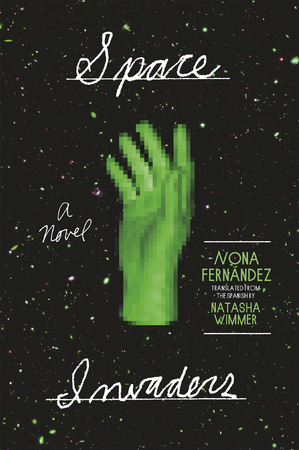
Space Invaders by Nona Fernández, translated from Spanish by Natasha Wimmer
Nona Fernández’s novella, which landed on the 2019 National Book Award for Translated Literature longlist, explores collective memory and the political violence of childhood (her own) in Pinochet-era Chile with maximal details in sparse but pointed, unforgettable vignettes within a structure that uses the classic 1980s video game of the title as its muse. It debuted in the U.S. just as Chile’s youth were once again protesting unfair government policies in November 2019.
The Older Brother by Mahir Guven, translated from French by Tina Kover
In TheOlder Brother,which won France’s Prix Goncourt for Best Debut Novel in 2018, one brother takes passengers around Paris in an Uber-like service, the other decides to bounce to Syria. With crisp pace and ample humor, Mahir Guven frames intergenerational immigrant family conflict in the context of ride-sharing service politics, radicalization of European-born Muslims, poverty, and identity, and leads us to a surprise conclusion.
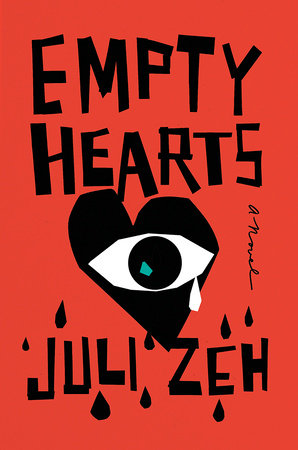
Empty Hearts by Juli Zeh, translated from German by John Cullen
In the Germany of the near future, Britta is a wife, mother, and provider of care for the suicidal. She also runs a sort of HR agency for terrorist organizations looking for suicide bombers. No attack happens without her knowing—until one does. Zeh’s imagined dystopia is as dark as the premise suggests—but grimmer and more complicated still is the society’s moral numbness in the face of authoritarianism.
Janina, an elderly woman in a remote Polish village, studies astrology, translates William Blake, and argues against hunting. When a neighbor she dislikes dies and soon other hunters are found dead, Janina suspects that the animals are responsible. Tokarczuk, the 2018 Nobel laureate in literature, weighs up questions of animal rights (and killing/murder), human rights (and killing/murder) and who the hell we are, in this provocative noir mystery, which comes with a twisty end.
Memory Police by Yōko Ogawa, translated from Japanese by Stephen Snyder
The Memory Police has shades of both 1984 and The Diary of Anne Frank. On an unnamed island, disappearance is the norm—maps, birds, and roses are gone. The Memory Police is tasked to keep them forgotten—and to remove those who remember. A novelist hides her editor, who’s in danger of being removed, in a secret room in her house. The two attempt preservation through her novel, which forms part of the text. Ogawa’s diaphanous novel was first published in 1994, a time before widespread Internet, fake news, and Facebook.
Death is Hard Work by Khaled Khalifa, translated from Arabic by Leri Price
To fulfill his deathbed promise to his father, Bolbol along with his two siblings take the old man’s corpse from Damascus to his hometown of Anabiya in Aleppo. The road trip would normally take a couple of hours but in war-ravaged Syria, it takes days. Along the way, readers get a tour of the family’s histories and traumas. Critics and readers have called it a Syrian As I Lay Dying. An intense trip into one of the most wretched conflicts of our time.
Celestial Bodies by Jokha Alharthi, translated from Arabic by Marilyn Booth
Winner of the 2019 Booker International Prize, Celestial Bodies follows an upper class family through three sisters and their choices. This complex novel journeys back and forth in time and into Oman’s history. The Gulf state was one of the last countries to outlaw slavery—the histories and legacies of which are woven into Alharthi’s novel. Celestial Bodies is the first Arabic novel to win the Booker.
In the second novel in his trilogy on Cameroonian history after Mount Pleasant, Patrice Nganang narrates the story of the country’s entry into World War II when its colonizer France is occupied by Nazi Germany. Pouka, a poet, has returned to his hometown and wants to start a poetry circle. Meanwhile, the men around him are sucked into the war. His father, who has psychic dreams, predicts that Hitler will commit suicide. A lyrical, alternative look at the reverberating effects of WWII on the African continent
Fleeing gambling debts in Argentina, Baron Bela Wenckheim returns to his provincial hometown in Hungary. With epic sentences and unending paragraphs, Krasznahorkai narrates a jammed, absurdist tale—which includes the Baron’s attempts to reconcile with his high school sweetheart—with a vast and dazzling cast of townspeople. Meanwhile, the character of the reclusive Professor offers philosophical perspectives from his hut. The novel was the ultimate victor of a very strong shortlist for the NBA prize for translated literature. The judges called the novel, “singular and uncompromising.”
DON’T MISS OUT
Sign up for our newsletter to get submission announcements and stay on top of our best work.
YOUR INBOX IS LIT
Enjoy strange, diverting work from The Commuter on Mondays, absorbing fiction from Recommended Reading on Wednesdays, and a roundup of our best work of the week on Fridays. Personalize your subscription preferences here.