“Besharam” is a Survival Guide for Shameless Brown Girls

Shameless. This is a word every brown woman knows intimately. From my British home in Brighton to my Indian home in Goa, from Toronto to New York to Lahore, brown girls everywhere are constantly called “besharam.”

It doesn’t have the same ring in English, shamelessness shorn of its cultural specificity. Besharam is an accusation that cuts deep, in all directions. It means that you haven’t just brought shame upon yourself — through your choice in clothes, your too-loud laugh, your music taste — but also upon your family, your community, a sense of cultural honor. In 2011, when Delhi women organized a slut walk, they called it a besharmi morcha [protest]. They didn’t march as sluts, they marched as women without shame. The exact opposite of what a “good” brown woman is supposed to be.

Purchase the book

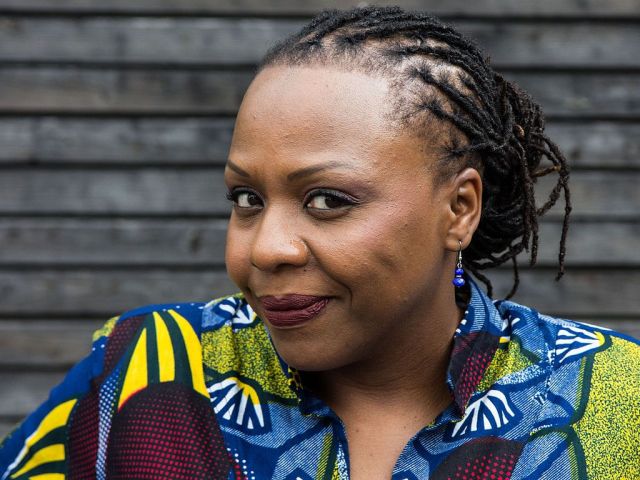
Priya-Alika Elias isn’t having any of it.

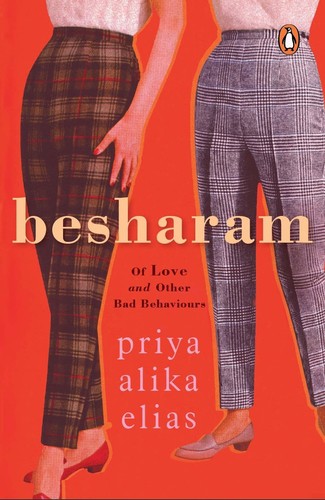
Elias’s debut book is a brown girl’s survival guide disguised as a memoir. Besharam: Of Love And Other Bad Behaviours covers far-ranging topics spanning rape culture, heartbreak, “aunties,” eating disorders, and the impossible weight of a brown body in a sea of whiteness. Set between America and India, Besharam is equal parts hopeful and heartbreaking, and despite its tenderness, calls forth the kind of rage that makes you want to set the world on fire. And I hope it inspires brown girls the world over to do just that.

In the run up to Besharam’s publication, Priya and I met over the internet to talk about white boys, self-love, Twitter, Asian parenting, and why it’s important for brown girls to stand up for each other.


Richa Kaul Padte: Priya, let’s start with white boys! Like you, I became an adult in a white country, and young men trying to chat me up would often say, “But you don’t look Indian.” They meant it as a compliment, and the worst part is that over time, I began to take it as a compliment too. In Besharam you write: “How can I describe the specific wound left left…by white men who say, ‘You’re attractive, for an (X ethnicity)’?…We know what happens to a wound when it festers.” What do you think is the result of these festering wounds? Because damn, do they fester.

Priya-Alika Elias: For me, it meant that I tried to shed my Indianness. Since white boys didn’t think Indian girls were attractive or cool, okay fine, I would no longer be Indian! Obviously I couldn’t rid myself of my identity so easily, but I stopped wearing Indian clothes or accessories. I made a conscious effort to not have any Indian friends. I never talked about India or Indianness. I was absurdly pleased when people mistook me for any other ethnicity.

It took me a long time to understand that white boys were not the universal arbiter of attractiveness. 

It took me a long time to understand that white boys were not the universal arbiter of attractiveness, or to see any desirability in myself. I imagine it’s just as difficult for many brown girls abroad. As women, we are already so aware of our looks — and what role they play. As brown women, white boys can be immensely damaging to our self-esteem, to the point that we wish to cast off our fundamental identity.

RKP: Please let’s talk about Rupi Kaur. Clearly so many white people (and men of all ethnicities) resent her success. Like you point out, she outsold motherfucking Homer. And I love that you tie this success to how she constantly preaches self-love to brown girls. You write, “What do we brown girls know about self love? Who is teaching us to love ourselves?” What is it, do you think, about a self-confident brown woman that poses such a threat to the world?

PAE: The ideal brown woman is meek, restrained, “good.” From birth we are taught how to behave around other people, aren’t we? Even how to sit. There is a compliment in my native language, Malayalam: adakkam odakkum. It means “a good woman sitting in the corner, occupying as little space as possible.” We are designated a bother, a headache. “Shrink yourselves!” we are told.

Kaur’s poems defy that dictate. They tell young brown girls to be confident, and not to be afraid to take up space. Her poems speak freely about unruly bodies and taboo desires. Most importantly, they convey to young women that they do not need to seek approval from anyone besides themselves. This poses a tremendous threat to a world whose foundations are built on policing brown women. If we love ourselves, if we are convinced of our worth, what tools do they have to control us with?

RKP: In an essay titled “Wolves,” you and a friend are getting into a car at nighttime when two men come down the street. One approaches your friend, and is persistent even after she refuses to talk to him. You write, “For that moment, I am not myself. I walk forward…I push him. It is a hard push that says I am not afraid. I know at that moment I am not…I see fear in the man’s eyes and am delighted that I have the ability to cause fear.” Priya, I cried and cried from pride and joy when I read this story. And it makes me wonder: is this where systemic, unending violence at the hands of men has brought us? Delight at a rare and precious moment in which a woman can physically intimidate a man?

PAE: It was one of the more complicated moments of my life, emotionally speaking. I have never been an advocate for violence or physical aggression. However, in a world where women are targets of so much violence, there is an aching desire to make men see our fear. Even share it. I was completely, unabashedly proud of my ability to intimidate another human being, because he was a man.

Rape-revenge narratives, horror movies in which the Final Girl survives by killing men, these are all manifestations of that desire. So often, we feel powerless. Reading the news each day feels like an act of masochism (so many women being hurt by men). If only, for once, we could be the ones with power. It’s sad that the prospect is so intoxicating.

RKP: You’ve written a wonderful fable of sorts in the form of the essay “A Cautionary Tale for Brown Women,” in which a selfless, caring woman keeps giving away parts of herself to those in need. I think many of us have grown up seeing the women in our lives doing just this — wearing themselves thin, for children, husbands, in-laws, communities. It’s what you describe in a later essay as “an endless wellspring of care, love, and attention.” Should we be teaching selfishness to brown girls instead? Or is there a middle path somewhere, a caregiving that doesn’t suck us completely dry?

PAE: Hmm, I feel like we shouldn’t be teaching anyone to be selfish. My feminism is not “Let’s teach women to be more like men.” A world in which we all act like selfish men would be unsustainable. That being said, we do need to teach women that their needs take precedence. I think you said it — there needs to be a middle ground!

So many young brown women don’t think they have a right to put themselves first. They need to hear: “Please don’t sacrifice yourselves to make your communities happy. Nurture the people in your lives, but not at your own expense.” Equally important, brown men need to learn nurture. Young brown men have to shoulder some of that burden — that’s the only way forward.

So often, we feel powerless. If only, for once, we could be the ones with power.

RKP: Desi comedians often joke about how they’ve disappointed their parents by not becoming doctors or engineers. But this joke is often an unfunny cover story for the reality that you explore so unflinchingly in the essay “Counting Black Sheep,” which is about the countless South Asian teenagers who commit suicide under the weight of their families’ demands for “excellence.” Is this some sort of cultural disease infecting essentially all of Asia, and where do you think it stems from?

PAE: It’s the worst disease. It has such a high mortality rate across — as you say — all of Asia. Even when it doesn’t take lives, it breaks hearts. Pearl S. Buck once wrote, “Stories are full of hearts being broken by love, but what really kills a heart is taking away its dream, whatever that dream might be.” Think of all the aspiring artists, the singers, the young people who want to pursue anything slightly unconventional. We simply don’t allow them to do it. Why?

I don’t know, but I’m guessing part of it comes from a deep fear of difference. We aren’t individualists — Asian culture doesn’t value being “different” in the same way Western culture does. We are taught to respect tradition, and to endeavor to fit in. I think Asian parents genuinely believe there is only one path to success, and only one mode of “excellence.” They force their children into believing the same.

RKP: Priya, you and I went to school together for a while (!), but we only really got to know each other as adults — thanks to Twitter. And it made me smile that you listed your Twitter friends in Besharam’s acknowledgments page, because I did the same in my book. For me, the internet has been a crucial place to grow into myself. Do you think this is the case for many women of color, whose offline spaces are often tightly controlled and surveilled?

PAE: People meet me sometimes and say, “Wow, you’re so different from your online presence.” I think maybe they expect me to be as sharp and unforgiving and bold as I am online? But​ that’s why Twitter has been so great for me and for so many other women of color — it gives us a space to be who we can’t be IRL.

In real life, I can’t be irreverent to aunties. I can’t be sexual and unrestrained (even though I try!). For the longest time, I didn’t know who I was, because I didn’t have the space to experiment. I imagine it’s the same for many women of color — we get the chance to be free online, to try out things and personalities until we understand ourselves better.

As brown women, we are constantly exhorted to live for other people, and not for ourselves.

RKP: You write of A Little Stranger by Candida McWilliam, a novel featuring acute eating disorders, “I closed the book. It was too real; it made me feel sick.” This is very much what reading Besharam was like for me — and I mean that as a compliment! I felt a simultaneous relief and terror at knowing that if your book made me feel so seen, it would do the same for other brown girls. Am I right in saying that Besharam itself speaks from within this dichotomy — a sense of gratitude at not being alone, but also a sense of heartbreak that other brown women suffer similarly? Where do we go from here?

PAE: Thank you, I am so moved by your kind words. That’s exactly what I was trying to do.

I wrote Besharam because I felt a profound loneliness for so long. There was nobody to tell me “I feel this way too; this is why being a brown girl is hard.” Our culture encourages silence in women. We hear the eternal, pernicious, “What will people think?” Well, I’m tired of silence.

You are absolutely right: the book is written from that dichotomy. So many of us carry similar burdens, and that is heartbreaking. But the ultimate goal of speaking out is change — I think that once we feel a sense of sisterhood with each other, we can then try to make these burdens lighter for each other. As brown women, we are constantly exhorted to live for other people, and not for ourselves. Well, maybe we can subvert that teaching, and use it to help and stand up for other brown girls. That is my hope.

8 Horror Novels that are Based on Real Historical Events

I have always gravitated toward works of horror, even at a young age. At first, I read whatever I could find on my parents’ bookshelves. John Saul. V.C. Andrews. Stephen King. They lit a fire in me, made me curious about all the things that might be out there. All the things we cannot prove. Ghosts hiding around corners. Monsters lurking in shadows.

As I got older, I began to appreciate a different sort of horror. Horror that made me interrogate the greater dangers we encounter in our day-to-day lives. The deeper evils that lie within us. What could be more terrifying?

If there is anything to inspire an even deeper dread within me, it’s stories that take already terrible events from real life and make them even more monstrous using the traditional elements of horror. Perhaps it’s because these stories hew so closely to reality, they almost seem to confirm the potentiality of dark magic and demonic creatures and other supernatural manifestations.

Here are 8 books that manage the balancing act of normalcy and impossibility in a way that is creepily satisfying.

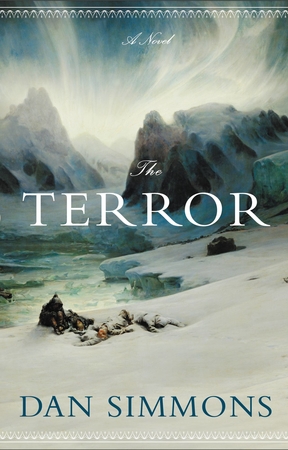
The Terror by Dan Simmons

Dan Simmons is known for the brand of horror that takes an event in history and twists it just slightly so that it becomes even darker. His most well-known work in this vein is The Terror, which takes the story of a ship on a doomed expedition through the Arctic in the mid-1840s to find the Northwest Passage—a story already filled with disease, starvation, and death—and adds in the possibility of something else unseen, something stalking them across the ice. The Terror was so popular, it was adapted for the small screen.

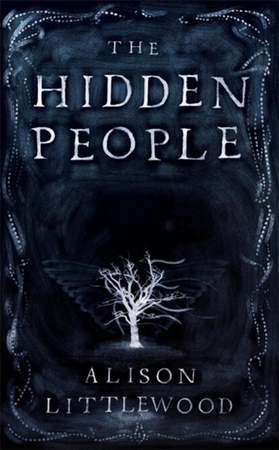
The Hidden People by Alison Littlewood

The myth of the changeling—a fairy child left in place of a stolen human child—ran rampant throughout medieval Europe. Perhaps it was so popular because it was such a convenient scapegoat for the afflictions that often beset children, diseases and disabilities that parents and medical professionals did not understand at the time. In some cases, even adults were accused of being changelings. One of the most well-known cases is Bridget Cleary who was killed in 1895 by a group of people that included her suspicious husband. In The Hidden People (a reference to the fairy folk), a man learns his cousin has been burned alive because her husband thought she was a changeling. When he arrives in town to investigate, he comes to wonder if there’s more than just silly superstition at play.

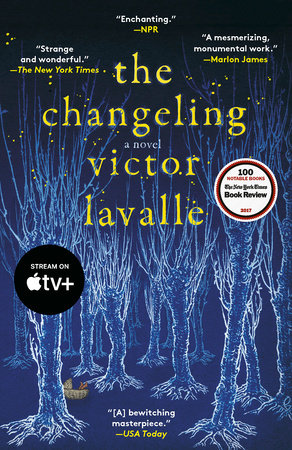
The Changeling by Victor LaValle

The Changeling by Victor LaValle

Victor LaValle has a knack for taking old folk tales and making them new. I adored his take on the changeling myth, in which he tracks trolls on their journey from Europe to America, from the past into the present. In explaining how changelings have come to be in America, he digs into the “why” behind their existence, and also suggests a level of complicity in the humans that had previously been assumed to be victims alone.

Coyote Songs by Gabino Iglesias

More than anything else, this novel is about la frontera, the U.S.-Mexico border. Rather than focusing in on a single historical moment or figure, this book uses six characters to tell the story of a shared Southwestern experience—with a dark twist. Among the six main characters are a child who turns cold-blooded after seeing his father killed; a young woman who progresses from performance art to murder; and a mother who begins to fear that the child in her womb may be something more sinister.

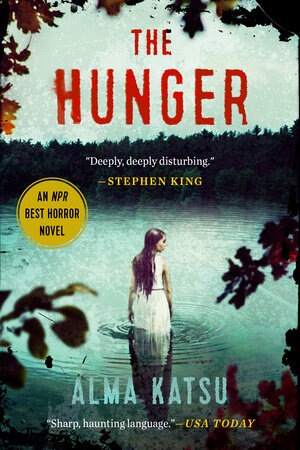
The Hunger by Alma Katsu

The Hunger by Alma Katsu

Alma Katsu’s latest book takes one of the deadliest occurrences in Western history—the catastrophic wagon train journey of the infamous Donner Party—and adds a supernatural twist. Starvation and eventually death causes the body count to rise. Members of the party are pushed to the brink, inevitably turning against each other. But as people begin to disappear, they start to wonder if something even more malevolent is at play.

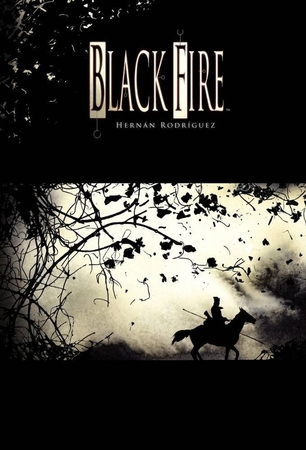
Black Fire by Hernan Rodriguez

In this graphic horror novel, Rodriguez places us in the midst of the Napoleonic Wars when, after an unsuccessful attempt to defeat the Russian army, his own military is forced to retreat. One unit is attacked by Cossacks during their journey homeward, but two survivors are able to elude the military warriors by fleeing toward an abandoned Slavic town—a place the Cossacks are unwilling to approach. But why? These men eventually come face to face with the Czernobog, a Slavic demon who proves to be a much more formidable opponent than the bloodthirsty warriors they only just barely escaped.

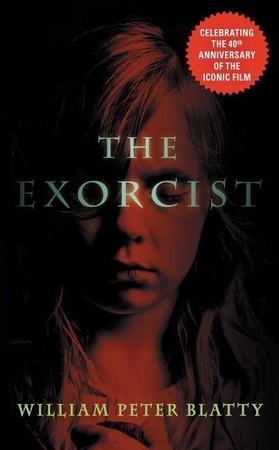
The Exorcist by William Peter Blatty

This classic horror is one of those books I can’t believe my parents let me read. At that point, having made me way through most of the books on their shelves, they’d probably resigned themselves to having a weird and morbid child. What difference would a bit of adult content make? As you likely already know, Blatty’s novel is about the demonic possession of a 12-year-old girl, and the attempted exorcism undertaken by two priests. What you may not know is that the book is based upon the true story of an actual exorcism. Wherever you stand on the legitimacy of demonic possession, by the end of Blatty’s novel, you’re forced to believe.

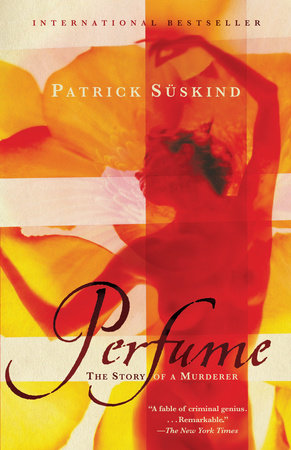
Perfume by Patrick Suskind

Perfume by Patrick Süskind

Once upon a time (the early- to mid-1800s), a Spanish serial killer known as the Wolfman killed several women and children so he could extract their body fat and use it to make soap. Some postulate that Süskind’s novel—about a perfumer’s apprentice who is obsessed with possessing the particular scent that exudes from virginal young girls—is based upon this monstrous true tale. Whatever the origin, Süskind pushes the story further, imbuing the scents his serial killer acquires with outsized powers.

Lilliam Rivera Writes Young Adults As the Face of Resistance

As I write this, right up the road, students from my alma mater are leading the largest student-led occupation in the college’s history in protest of the school’s lack of support of low income students and students of color. A few weeks ago, on the other side of the world, thousands of teenagers gathered to protest government inaction regarding climate change. And years ago, in a town in the Midwest that the country had largely forgotten, young people started a movement to resist police brutality that changed the world.

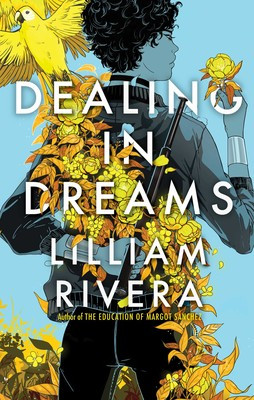
Image result for dealing in dreams by lilliam rivera
Purchase the book

Lilliam Rivera’s Dealing in Dreams, then, is set in an environment that doesn’t seem so unlike our own. In a near-future dystopia, a people are ruled by a megalomaniac with seemingly unchecked power, whose narcissism is fueled by a lifetime of wealth and access. There are gross disparities in housing, employment, education and opportunity that allow a privileged few to thrive, but only at the expense of the most vulnerable among them. And young people must take to the streets to protect their people in ways that the adults around them have failed to do.

Dealing In Dreams explores violence, privilege and the complicated nature of power, and what it means when the future of a community rests in the hands of history’s most fearless radicals: young people.


Leah Johnson: You’ve said that you wanted Dealing in Dreams, to be a book like the ones you loved when you were a kid (violent and fast-paced), but to have girls be at the center of it. In knowing that, where did the book come from and grow to?

Lilliam Rivera: I wrote the book six years ago. I wrote a draft of it and it was because I just given birth to my second daughter, and at the time I didn’t have an agent or even my first book—none of that. So I was still in that process of trying to get published, and trying to be a published author. And when I had my second daughter a lot of people were like: “Oh, you’re going to have to shelve that dream!” And a lot of that was coming from women. So out of rage I wrote this book.

It was the kind of book that I would have wanted to have read when I was in high school. I wanted something violent, I wanted something that [felt like] The Outsiders. And I wanted it from the perspective of a young Latina. So I wrote a draft six years ago and I put it away, I didn’t look at it. And then I looked at it again two years ago when I signed my two-book deal. And I saw that it was still pretty relevant—a lot of the anger I had in there was still pretty palpable. In the last year it’s been through a lot of changes, drafts, rewrites, but it still made a lot of sense. Very of this moment, even if it was set in the near future.

When I had my second daughter, people said: ‘Oh, you’re going to have to shelve that dream of becoming a published author!’ So out of rage I wrote this book.

LJ: The book is also doing a lot of work in terms of radical feminism, race, class—the whole nine yards. These aren’t topics that a lot of people normally associate with YA—which I think is a gross, gross undersell of the genre. When you were writing, how did you think about tackling these issues, while also making them accessible to a young audience?

LR: For me, when I’m writing a young adult book, I’m always thinking about the bigger thing. For my first book, The Education of Margot Sanchez, I was obviously thinking about gentrification but also colorism within the Latino community. So then with this book, again, I felt that things were even bigger, or even more complicated.

I was really thinking about government-run medical experiments that have been done in Puerto Rico. I was reading about how they use medical trials in Puerto Rico on women when they were trying out their drugs. There were little lines that would be put in these newspaper articles that were dropped in there and no one is saying: “This is insane!” Like, it’s still happening.

And I thought about during that time it was the Women’s March going on, and it was all about the patriarchy, and down with the system, and men, and all this stuff. And I’m all about that too, but there aren’t any easy answers to any of this. I feel like for most of the time the women of color who are leading on the front lines are usually cast away at one point during that revolution. So all of those questions were circulating when I was revising the book.

LJ: I found it so radical that the defense of Mega City is in the hands of these badass young women. I don’t know that I even have a question except to say that that particular choice feels so powerful and so timely right now.

LR: I feel like we saw that, right? When I think of Black Lives Matter, I think of all those young people who were on the front lines. Even in Florida, after the shooting, all of the kids became the spokespeople for that. But before that, it was Black Lives Matter. It was the young leading that. I think people forget that it’s true that they have way more power.

I’m reading about the walkouts in LA in the ‘70s and ‘60s—all of the Chicanos who led those walkouts—and they were all high school students. It’s really powerful. It should be, it makes sense, for young people to be owning the city, owning the streets. Even if it is a little bit misguided at first, for Nalah and Las Mal Criadas they do have that power.

LJ: That sort of goes back to the last question as well, that it’s not super foreign that we’re going to make these topics “appropriate” or palatable to young people—because these are topics that young people are taking on in the streets everyday. So it feels fitting.

LR: Yeah, there’s definitely like this thing in young adult where people think: “Oh, we can only handle one issue in a book!” And I’m like, that’s not even realistic for anyone who’s living. Young people are dealing with multiple things on a daily basis. While also finding joy and also falling in love and all of those things. But also just dealing with major stuff. And so I was just trying to formulate that in a futuristic world where these girls really do have power, really do have unbridled violence, in a way where they don’t see much that’s like the “[traditional] girl.”

Most of the time women of color who are leading on the front lines are cast away during that revolution.

LJ: And this violence is not just tolerated by the matriarchy, but kind of similar to The Hunger Games, it’s encouraged by this power structure.

LR: I grew up loving to watch live boxing, and I follow a lot of the Puerto Rican fighters. So, to me, it’s tied to that type of performance. I can see the beauty of boxing, and the talent and skill, but I can also see how it’s so tied to poverty and also to uplifting someone and all of those things. And it’s disturbing. And all of that is tied into how I wanted to write about violence.

LJ: This whole book is upending stereotypes. One of my favorite choices of yours was to make men props in the way that women often are. Were the papi chulos sort of a middle finger to all of the male writers who’ve constructed nameless, faceless, attractive women over the years? I might be projecting.

LR: That’s amazing! I didn’t think about that, but maybe subconsciously? Honestly, the idea of boydegas and papi chulos came to me from this documentary I watched a long time ago and it was based in Japan and it was about these young, professional women who are able to rent out men. You go to a club and you can rent them out, and it was very specifically geared to young women. So I was totally fascinated by that, and I always thought about how I grew up a Menudo fan. And Menudo was like the boy band that always had new, fresh boys so that [the members] would stay forever young. So I thought about what that would look like in the future, when guys are put in that type of subservient role, and just become eye candy for the gangs. So yeah, I had a lot of fun writing those scenes.

LJ: I want to say how important this book feels to me. Even the way language functions here was something special. There is a lot of Spanish, but the book never slows down to explain it to non-Spanish speakers, it just expects us to keep up.

LR: It felt really important. For my first book, I described words and meanings more, and for this one I was just like no. I feel like I’m just going to do that from now on. This is the world, and you should either know the words and the lingo or you don’t. It felt really liberating to be able to do that. You’re entering this world, some of it’s familiar and some of it’s not, and that’s okay.

Black Women Novelists You Should Be Reading

I’m incredibly thankful to live in a time when Black artists continue to carve out their voices in the field, making waves through self-publishing and traditional methods. While the percentages of our representation still leave much to be desired, these days it’s not uncommon to find Black women writers paving their own way and using a voice that speaks to the multiplicity within our culture. There are the legends whose names come up, deservedly, time and again, and those who are establishing themselves in the canon with each story, essay, poem, or novel including Dorothy West and Octavia Butler, Elizabeth Nunez and Toni Morrison, Beverly Jenkins and Candice Carty-Williams. There are a slew of Black women writers to add to your shelves and your reading is incomplete if you leave out this list of Black women novelists.

Black women, especially, have been a crucial part of my upbringing and solidifying my own sense of self and of the stories I want to tell. In their lives (and creativity) Black women encouraged deep levels of introspection and contemplation needed for me to recognize that there’s really no limit to what we can do. It’s with that in mind I wanted to list Black women authors who, if you didn’t know about them before, now you do. From crime to horror to historical tales, these women have established a new scope, a different way of thinking, and also mentored many upstarts, be it through their prose or through their work within the industry. Again, I am thankful to live in a time to be exposed to their work and am equally happy to share some of these powerhouse artists with you in the hopes you’ll add their work to your shelves, if you haven’t already.

Eleanor Taylor Bland. (Photo via Phallon Perry)

Eleanor Taylor Bland

Establishing herself in the crime genre with books following the life of Black woman detective Marti MacAlister, Bland became prolific within the genre, editing an anthology Shades of Black: Crime and Mystery Stories by African-American Authors and numerous short stories. Her work drew from her experience in a Midwestern town mirroring the one she wrote about in the MacAlister series, which also reflected the hardships for a woman in this type of position while pushing against the ways Black women were typecast in fiction. The organization Sisters in Crime created an award in Bland’s name to support unpublished writers within the genre.

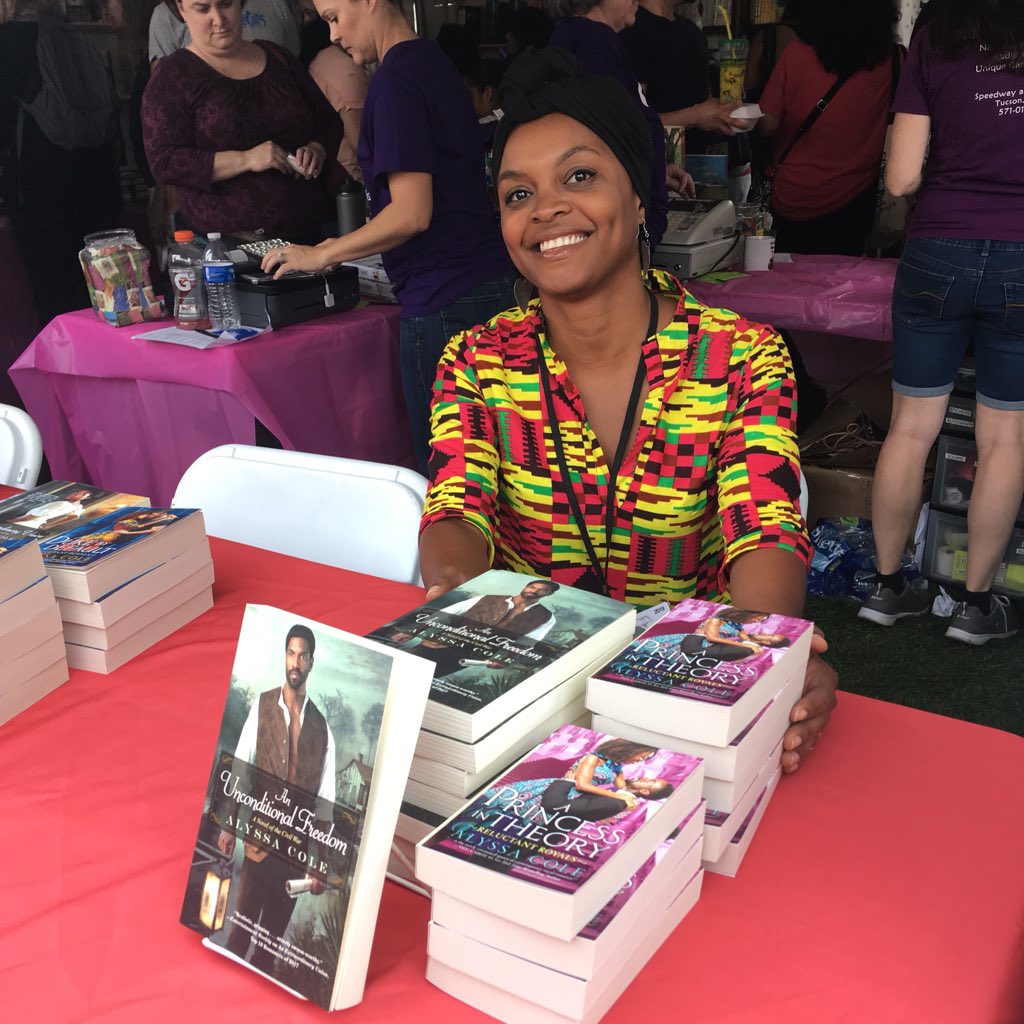
Alyssa Cole. (Photo via her Twitter)

Alyssa Cole

Cole’s work is not tied to one genre. The experiences of Black characters are always prioritized in her novels, which range from historical to romance to science fiction (and sometimes two or more of those genres mixed together). She may be best known for her award-winning An Extraordinary Union books, which take place during the Civil War—complete with spies, the looming Confederacy, and forbidden love. Cole’s stories do not ignore the travesty of war and provide agency to the enslaved, and formerly enslaved, in deciding their own destiny.

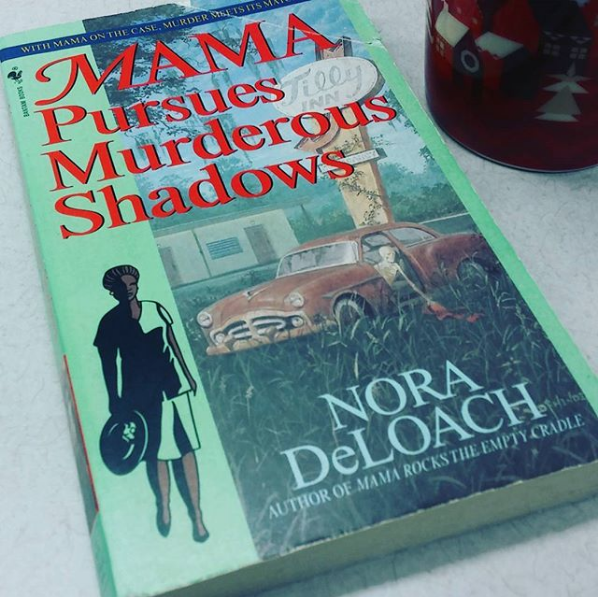
Nora DeLoach book "Mama Pursues Murderous Shadows"
Photo via Rena Reads

Nora DeLoach

DeLoach first pursued writing in her 50s, winning contests that encouraged her to keep going. She went on to pen the Mama Detective books featuring paralegal Simone Covington and her social worker mother Grace (aka Mama Candi) in Atlanta. For some reason mother and daughter always get entangled in a murder mystery ultimately working together to set things right. Written in a voice that is as warm as the honey Mama Candi’s complexion is compared to, this series pulls readers in with suspense and holds us with the family dynamics between mother and daughter. Their frustrations with each other are evident, but there’s nothing they wouldn’t do for and with each other.

Tananarive Due. (Photo via her Twitter)

Tananarive Due

Due is not only a well-known author within the speculative/horror realm; she’s also a filmmaker and the co-producer of the documentary Black Noir. (And I believe we have some new nonfiction from Due to look forward to.) Her filmmaking background may account for the cinematic nature of her writing, which draws us to her characters while weaving a larger story around place, history, and culture. Her most recent collection of prose, Ghost Summer, is a must-read, as is her novel My Soul to Keep among many others. Due has not remained pigeonholed within any one way of storytelling, yet has never separated Black experiences from the aspects of horror, fantasy, or thrillers, capturing the humanistic and relatable threads of life within a larger scope.

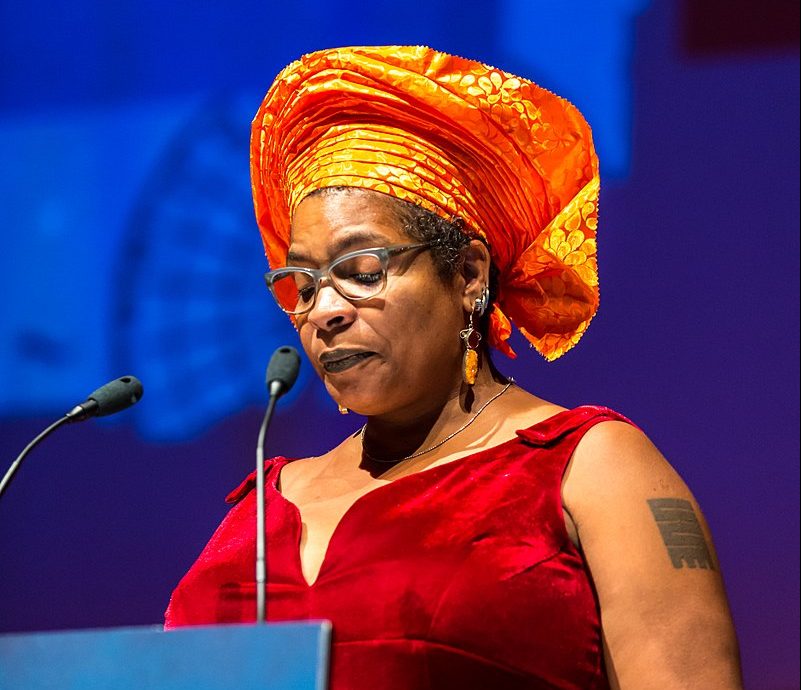
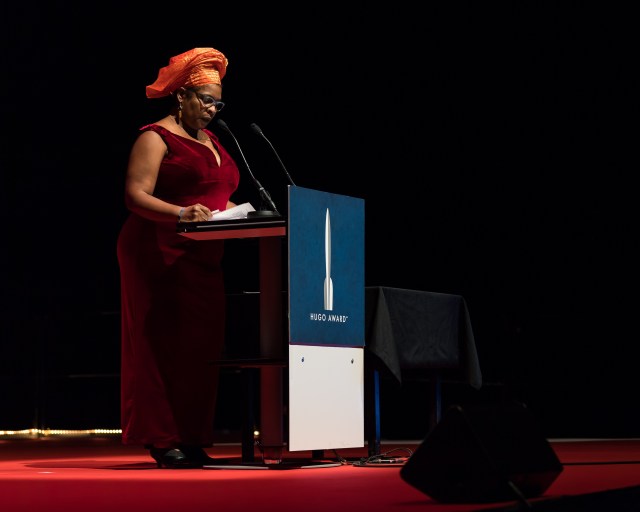
Nalo Hopkinson at the Hugo Award Ceremony 2017, Worldcon in Helsinki. Credits: Henry Söderlund CC BY 4.0. Photo link: https://commons.wikimedia.org/wiki/Category:Nalo_Hopkinson#/media/File:Nalo_Hopkinson,_at_the_Hugo_Award_Ceremony_2017,_Worldcon_in_Helsinki.jpg. CC link: https://creativecommons.org/licenses/by/4.0/
Nalo Hopkinson. (Photo by Henry Söderlund)

Nalo Hopkinson

Hopkinson’s name is often said in the same breath of legend Octavia Butler and award-winner bestseller NK Jemisin for a reason: over many books she has firmly established herself within the speculative genre having tapped into Caribbean folklore and sci-fi/fantasy. Metaphors and symbolism have larger implications in the worlds Hopkinson constructs be it in stories where nations are divided quite literally by class to characters bonding over the promise of freedom with the aid of a goddess. Her prose showcases a diverse reality and an alternate perspective. It would be hard to suggest a definitive book to introduce yourself to Hopkinson’s style, so just read all of them.

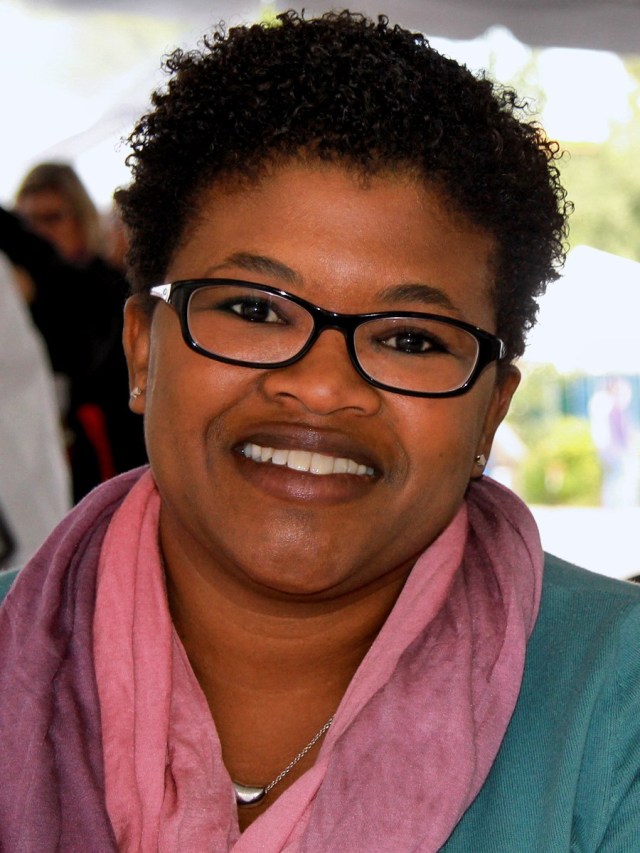
Attica Locke at the 2012 Texas Book Festival, Austin, Texas, United States. Credits: Larry D. Moore CC BY-SA 3.0. Photo link: https://commons.wikimedia.org/wiki/File:Attica_locke_2012.jpg
Attica Locke. (Photo by Larry D. Moore)

Attica Locke

Locke is one of the most renowned Black contemporary mystery writers, having won an Edgar, the Harper Lee Prize for Legal Fiction, and the Ernest Gaines Award for Literary Excellence, among many other accolades. She’s worked with Ava DuVernay and on the show Empire. Even with her busy schedule, we have more novels from Locke to look forward to, including the next installment of the Highway 59 series, Heaven, My Home, publishing this fall. Locke’s work tends to be centralized in the South, specifically Texas. Her upcoming novel and the award-winning Bluebird, Bluebird take on white supremacy, red tape within law enforcement, and the ties that bind family through the viewpoint of Texas Ranger Darren Matthews, who has a dark past he’s trying to reckon with.

Jennifer Nansubuga Makumbi. (Photo via WaAfrika Online)

Jennifer Nansubuga Makumbi

A 2018 recipient of the Windham-Campbell Prize, Makumbi has been praised for her unique writing and searing depictions of East Africa and East Africans. Her debut novel Kintu was a sweeping narrative reimagining the history of Uganda through the Kintu clan. The perspectives in her novel didn’t only seek to survive but to break the chains of a brutal history. Next up for Makumbi is a short story collection, Let’s Tell This Story Properly, publishing in April.

Bernice L. McFadden. (Photo via her Instagram)

Bernice L. McFadden

Like many of the women listed here, McFadden is prolific, with a number of novels you can enjoy. You can even purchase the Bernice McFadden collection, a package of several novels, to hold you over while waiting for her next novel. McFadden’s work has fictionalized moments in history from The Book of Harlan to Gathering of Waters, exploring the harsh truths and vivid experiences of those who navigate reinvention, sometimes at a price. McFadden’s stories have consistently taken readers into the heart of not just the land but the people, reflecting base instincts and our truest selves.

Nadifa Mohamed. Credits: Sabreen Hussain CC BY-SA 3.0. Photo link: https://commons.wikimedia.org/wiki/File:Nadifa_Mohamed.jpg. CC link: https://creativecommons.org/licenses/by-sa/3.0/deed.en
Nadifa Mohamed. (Photo by Sabreen Hussain)

Nadifa Mohamed

Named a Best Young British Novelist by Granta in 2013, this Somali-British writer has written two novels. Her debut, Black Mamba Boy, was a fictionalized account of her father’s life, taking place in Yemen in the 1930s, and her second follows several women in 1987 in the town of Hargeisa, part of the Republic of Somaliland on the brink of war. Using the personal to project larger discussions on race, class, and political upheaval, Mohamed’s fiction has tapped into a history that deserves a wider audience.

Stacey Abrams. (Photo via her Instagram)

Selena Montgomery (aka Stacey Abrams)

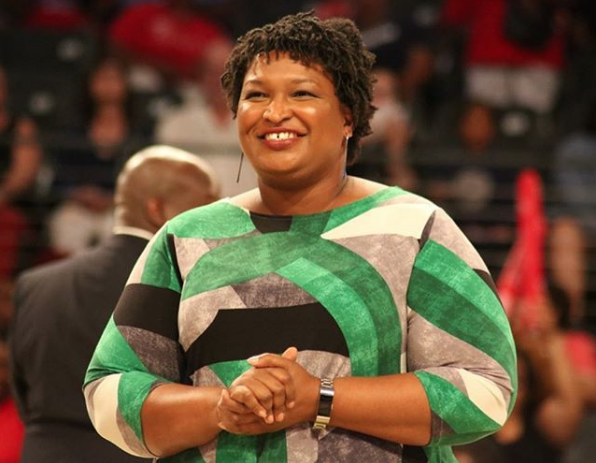
While many of us wait in anticipation to find out whether or not Stacey Abrams will declare her candidacy for president in 2020, many may also know her under her pen name as romance novelist Selena Montgomery. (Abrams has also written nonfiction with her most recent out in March.) Montgomery’s books aren’t strictly romance though: they include mystery and murder. Will the girl get the guy and help find the real culprit of a crime? It’s a recipe for success in the novels she’s produced over the years, centering Black love and personal growth in each one.

Nisi Shawl. Credits: K Tempest Bradford CC BY 2.0. Photo link: https://commons.wikimedia.org/wiki/File:Nisi_Shawl.jpg. CC link: https://creativecommons.org/licenses/by/2.0/deed.en
Nisi Shawl. (Photo by K. Tempest Bradford)

Nisi Shawl

In addition to contributing to and editing anthologies, Nisi Shawl has written the novel, Everfair, that explores a speculative history of colonization in the Congo, imagining how this historical atrocity might have played out in an alternative universe. In addition to her creative writing Shawl is committed to the teaching of better writing. Shawl composed, with Cynthia Ward, Writing the Other: A Practical Approach, a guide to recognizing and executing the responsibility of representing others outside a writer’s background. With K. Tempest Bradford and other marginalized artists, she established a workshop series, also called Writing the Other, for folks to get in the know and work towards equity and responsible representation.

Nigerian writer Lola Shoneyin at the Leselenz 2015 in Hausach. Credits: Harald Krichel CC BY-SA 4.0. Photo link: https://commons.wikimedia.org/wiki/Category:Lola_Shoneyin#/media/File:Lola_Shoneyin-1304.jpg. CC link: https://creativecommons.org/licenses/by-sa/4.0/.
Lola Shoneyin. (Photo by Harald Krichel)

Lola Shoneyin

The Secret Lives of Baba Segi’s Wives is Shoneyin’s only novel to date, and it’s one to be savored. Baba Segi’s Wives follows the participants in a polygamous marriage via the perspectives of, you guessed it, his four wives. The arrival of Baba’s new, young wife, Bolanle unraveled not only her life but those within the family she’s just married into. Shoneyin’s debut gives the women the chance to tell their tales; each wife has a fully-realized and unique personality that goes beyond cliché, showing their fullest desires and also the limitations of the choices they’ve made.

Trisha R. Thomas. (Photo via nappilyseries)

Trisha R. Thomas

You may be familiar with Thomas because of her popular Nappily Ever After books, the first of which was adapted into a movie for Netflix. While Thomas’s books are full of humor, the ongoing series is also rife with real-life circumstances ranging from relationship troubles to larger expectations of femininity in the workplace and outside of it. What Thomas’ books offer is a contemporary look at the professional and personal side of a Black woman’s journey through adulthood.

Stephanie Powell Watts. (Photo via Poets & Writers)

Stephanie Powell Watts

Another winner of the Ernest Gaines Award for her short story collection We Are Taking Only What We Need and an NAACP Image Award for her novel, No One Is Coming to Save Us, Watts has already established herself as a voice to be admired and observed. Her work has been hailed for the multifaceted explorations of Black identity on a macro- and micro-level, always embedding her characters and readers in a singular reading experience.

Mira Jacob’s Graphic Memoir “Good Talk” Makes Awkward Conversations Beautiful

There are many—and I mean many—incidents where I’ve stood agog at comments thrown my way; remained frozen after a backhanded (or full frontal) insult presented like a compliment and considered whether or not I was thinking clearly as I was left to debate what had just happened. These experiences always left me questioning myself: perhaps I was being too sensitive, not thoughtful enough, or, maybe, just maybe, I needed to be more considerate even when I felt myself on the cusp of breaking. When I heard about Mira Jacob’s new book—that it was memoir, that it was graphic memoir, that it was called Good Talk—I knew I’d be drawn to it as a fan of her work. But I didn’t realize how much this book, from start to finish, encapsulated and perfectly illustrated in a unique comic-style the ways in which these encounters had thrown me. I would see and read firsthand that I was not at all alone.

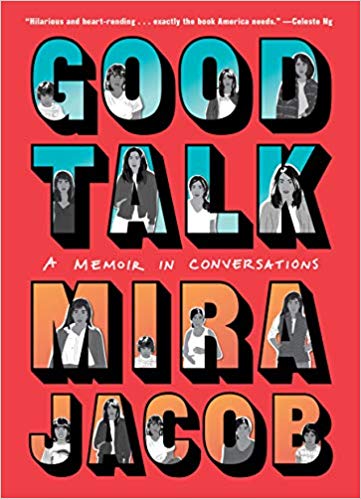
Good Talk by Mira Jacob

Good Talk: A Memoir in Conversations, Jacob’s second book, isn’t an instructional guide. Rather, it reveals a bevy of experiences for Jacob from childhood to the most recent U.S. presidential election and a bit thereafter. At times direct conversations, divulging how one really feels can feel like a losing battle depending on who we’re engaging with, especially in discord where the divisiveness of politics becomes evident along with the assumptions made about marginalized people by people in passing let alone within actual relationships. None of us are incapable of causing pain and, when we do, do we consider the other party or protect ourselves from these realizations? Good Talk doesn’t shy away from these uncomfortable questions; we’re forced to bear witness to these moments via satire, heart, and introspection. Jacob doesn’t speak for everyone—she speaks for herself—but oh how relatable her individual experience is. I was so glad to talk with Jacob about how this book came together and where the good (and difficult) conversations had may lead us.


Jennifer Baker: You’ve been publishing essays and pieces about your family, about yourself and other people, for years. Do you feel like with Good Talk people are still going to be surprised because they know you through your fiction?

Mira Jacob: I think people are gonna be more surprised by the graphic parts than the memoir parts. Because Good Talk doesn’t function the way the other memoir pieces that I’ve written function, where I feel like I kind of take a subject and really carefully lay it out. It was the opposite with this book. I was working with the opposite impulse, which was to not too carefully lay things out for people, but just to quickly put it down. Get it down and get it drawn and don’t make it into something unspeakably beautiful and refined.

JB: Really?

MJ: It just needed to come out the way it was coming out. And my aesthetic is kind of like a ‘90s zine and I didn’t want to make it prettier. I designed my own font. There are so many different ways to prettify something and I did not want to. And in that same way I didn’t want to have to use the tools of metaphor to say what I wanted to say.

My aesthetic is kind of like a ‘90s zine and I didn’t want to make it prettier.

JB: But there is a structure, because things really do seamlessly weave into this conversation and these emotions through conversations. Which leads us to harder parts of the story, which isn’t exactly linear, the election.

MJ: Exactly. With anything that I do I pay attention to structure, always, and pacing. I think America was surprised when Trump, like really surprised.

JB: Oh yeah!

MJ: And I would say, I wish I were one of the super “I wasn’t surprised at all! I knew this was gonna happen.” But I didn’t. I was surprised but not in the way I think in the same way a lot of my White friends were surprised. My surprise was the heartbreak of “Oh this is who we really are.” Their surprise was “This is not who we are!” And it was different. It was a really different way to go through that moment.

JB: We grew up in a “different time.” I mean that in terms of the digital era. I feel like things could be better hidden in terms of the accessibility of it. I was an ‘80s baby so I was very unaware of Reagan and how much his and Nancy’s whole rhetoric of “Say No to Drugs” affected my community and other communities.

MJ: Right.

JB: So the first thought I had was, “Man, this sucks.” But also, “What are the people I know with children going through right now?”

MJ: You know, Tanwi [Nandini Islam] and I talk about it. Because she and Kaitlyn [Greenidge] were both over the night of the election. And then I put [my son] Z to bed. When he went to bed I feel like everybody’s mask just slipped off. I think we were all sort of holding it together for the kid in the room. The minute he was out of the room we were just grief stricken. And falling apart. And I remember sitting on my steps outside. And it was such a sharp contrast, obviously, [with] 2008 and 2012. And I remember saying, “What do we say to him?” And we didn’t have a great answer. We never have great answers at moments like that. Even in hindsight I think to myself, “What would you say now?” What practical advice would you say going forward? And the truth is I really don’t think there is any. My practical advice is: Daddy and I are here. We’re trying to sort through this too. We are wide awake and we’re doing everything we can to help turn the country around. We’re talking to each other. We’re talking to our family.

JB: That concern can look like anxiety definitely comes through here. Especially in text, if we’re talking about formal text. We see a break but it comes off very different. I think we’re meant to kind of hypothesize how the break happens. In Good Talk we’re actually seeing so much of the narrator’s life before/during/after that it makes complete sense these questions being asked.

MJ: It was kind of a good place to channel that. It felt like a good place to kind of put it down and to let it have the space to live. In the moment that it’s happening you have to remember half of our White liberal friends were saying, “This identity politics is really what’s the problem.” In the moment that we’re feeling the anxiety for real things that are happening, our friends are saying “Part of the problem is that you’re feeling the anxiety.” I mean what the fuck is that? How the fuck do you look at someone and say that?

JB: Good Talk spoke to so many things that I know a lot of us are going through. Especially marginalized people. What happens when it’s actually close to home now? Because there’s no finality to this. This is your life and there’s no finality to any of this. Z is still a kid. He loves his grandparents. You love them too; it’s complicated. In art we see it’s complicated, but we still need that ending right? I really appreciate and respect the fact that it was open-ended here.

MJ: I’m glad to hear that. I think that is one of the things that I’ve been sort of anticipating most in this age of “people canceling people” when they crossed a line. Because they need to have a hard stop within themselves. Like, that’s enough. You’ve done enough. I no longer have to interact with you. And I understand and respect that place very much. I don’t have that. I don’t think there are many people that have that choice and go about their days feeling like failures because they’re not taking a moral high ground that isn’t accessible to them in the first place. If I’m gonna say that, I’m going to say “They’re cancelled.” I’m saying to my son, your White family, “Half of you is cancelled.” I would never say that to my child.

Mira talks to her son Z who is about six.

Z: I am not asking Daddy about it.
Mira: Why not?
Z: Because I don
From Good Talk (click to enlarge)

JB: This is all very grown up. I’m not used to this. This is all logical, I’m not used to this world.

MJ: Let’s be clear: in the moments of tremendous anxiety I’m not feeling particularly logical, but I do feel like there is a way. And people who have this fantasy of interracial relationships, the fantasy is that if people who are a different race marry it’s because they’ve reached some sort of epic nirvana to which they truly understand each other in a way that reaffirms everything this country is about. And I think the truth is much more complicated. The thing that I hate about the truth getting buried, the truth being that we fight and we don’t understand each other and we have to say things 20 times, both of us, and fight to re-understand each other because we are enormously disappointed by each other and sometimes we’re completely seen by each other.

The problem, when you don’t ever look at the truth of what it is, is that you don’t ever see how it really works and what about that faulty process is very beautiful. And I think that, to me, has been a little bit of a heartbreak from the fallout from the idea that we somehow have to sanitize all of our interracial relations in a way where you’re on the right side or you’re on the wrong side and that’s it.

JB: A lot of what happens in Good Talk is superimposing on those things that people are just making assumption of. The interracial relationships, like you said, and the assumption that you’re “self-hating.” The fact that you are dating various people means you’re “confused.”

MJ: When you actually talk to anyone individually you find out that the monolithic thinking is not really monolithic. Everybody has exceptions. Everybody has weird congealed parts of themselves that do and don’t make sense at different times. But I think for me it just felt very important. Like, I knew when I was writing it, I thought, “Oh there’s gonna be stuff that you write down that you’ll regret later.” I mean not right now. The whole point is my thinking is going to evolve. The whole point is it’s better. And of course, if we’re doing anything right in this world, of course I’m going to look back on something and think “Wow, I sucked on that one.” Of course that’s true, but what does it mean to stand in that moment anyway? What does it means to hold all the complication at once? To know you are not your most evolved self in this moment and you’re gonna write the truth of it.

JB: And one cannot always have an immediate response. I find myself being kind of dumbfounded and that causes paralysis. Realizing “Oh that was horrible.” I don’t see that a lot. It’s witty comebacks. It’s water thrown at your face. But it’s not that kind of paralysis of “Wow, this is something I’m thinking about” and therefore we move into another moment that kind of signifies what is learned or what is felt. I hope that when people read Good Talk it’s causing this kind of self-analysis. With Good Talk I thought, “Oh crap, I’m that type of person. Maybe I need to think about what I’m doing.”

MJ: Obviously I feel like one of the things that this era has pushed us into is this real invulnerability where it’s just considering the hard line of “I’m right and I’m not going to look at this anymore because I know I’m right.” Everybody’s got different moments where that could be the right thing for them, but what I mention I’m looking for is to reach the people that are not in that moment. That are often doing the slower thing and don’t know the immediate thing to say, and don’t have the kind of movie moment under their tongue. And to say I’m right there with you. This is what it looks like.

JB: And you’ve made mistakes?

MJ: Yes, of course. Big ones. I mean, so many. So many.

JB: We all have.

Often there were scenes in the book where I cringed, I cringed reading them.

MJ: Often there were scenes in the book where I cringed, I cringed reading them. You wanna unzip your skin and put it on somebody else and say, “You be me for a little while so I don’t have to feel out what moment was or why I lived it in that particular way.” But I do feel like part of that is to combat what is, I think, one of the things is that I’ve lost, probably like many people, many White friends over the last few years. What it all boils down to is usually due to this simple moment where I try to discuss something but why what they’ve done is hurtful to me and the only discussion they want to have is whether or not they are racist. They don’t even want to have a discussion about it. They want me to tell them they’re not racist. And that’s the only part of the discussion they want to pay attention to. Part of me always just wants to shake them and be like, “Of course you are! Of course I am!” How are we not going to be? In what bubble do you think you grew up where you just somehow escaped— Or what level of thinking do you think you have done that requires you to not think about this anymore and not to question this anymore? Because I feel like there’s this idea they’ve latched onto. They respond to the idea of being woke and this particularly insidious thing where it only happens once. You are woke and then that’s it! And then you are transformed from the frog into the prince. “Now I am the prince, I am no longer the frog.” Don’t you know we’re only ever in the process of waking? It took me a while to figure that out.

JB: As of this conversation, the book isn’t out yet. I don’t know if people felt automatically inclined to make the assumption or project your life into your debut novel whereas now it is your life.

MJ: They definitely did. They did to the point where they thought “I’m so sorry your brother died when you were young.” I said “My brother’s alive. That was a novel. My family is okay. Thank you for asking.” With this I really haven’t had a lot of interaction around it. I’m just sort of geared up for the hell that it will probably be because I think America’s in such a dark place and writing something vulnerable about race is, it’s risky. I think that being a woman, being a brown woman, being a mother—boy, there’s no one people love yelling at more than a mother. I feel like I’ve sort of prepared as well as I can. But what I’m hoping is that on the edges of all of that there will be people that feel seen and heard in ways that are real and matter to them.

Tim Maughan Recommends 5 Near-Future Books By Women

Does cyberpunk have a women problem? Let’s put it this way: not long ago, editor Aisling McCrea tweeted a photo of a sentence on her Kindle: “He lay on his side and watched her breathe, her breasts, the sweep of a flank defined with the functional elegance of a war plane’s fuselage.” “Men are temporarily banned from writing until we figure out what the hell’s going on,” she said, to nearly 50,000 likes and 12,000 retweets. Some self-published trashy sex book? Nah: Neuromancer, by William Gibson, the defining text of the cyberpunk movement.

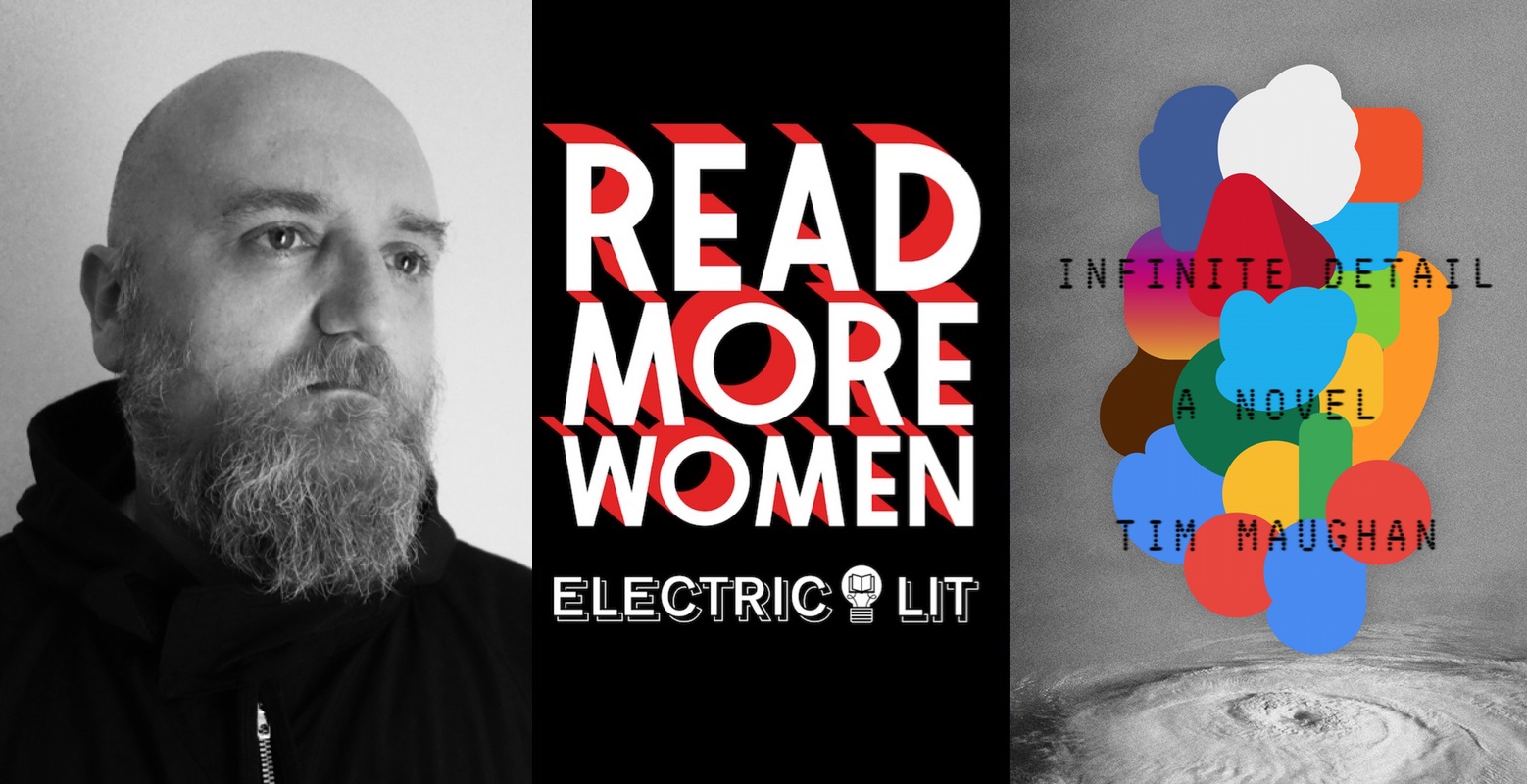
But there’s nothing about cyberpunk, or other near-future science fiction that makes us think about the potentials and perils of our current trajectory, that that has to be sexist. Case in point: Tim Maughan’s book Infinite Detail, a compelling techno-thriller with a chilling premise: what if the internet ceased to exist? Five more cases in point: the near-future novels by women that Maughan recommends below. Turns out you don’t have to compare women to sex planes in order to offer an incisive vision of where technology and class stratification are taking us.

Read More Women is Electric Literature’s series, presented in collaboration with MCD Books, in which we feature prominent authors, of any gender, recommending their favorite books by women and non-binary writers. Twice a month, you’ll hear about the five non-male authors who most delight, inspire, and influence your favorite writers.


Moxyland by Lauren Beukes

Moxyland – Lauren Beukes

Moxyland came out about the same time I first started seriously writing fiction, and as such it was initially conflicting: it was so thematically and stylistically similar to what I was trying to do that I didn’t know whether to be happy that I was on the same page or dismayed that I’d been beaten to it. None of that mattered by the time I’d actually finished reading it though —Moxyland is just too damn good. Beukes’ near-future debut follows four misfits—an artist, an activist, an internet streaming celebrity, and a corporate executive—as they hustle to make a living, political waves, or both. But it’s the setting that feels like the book’s real protagonist—a divided Cape Town that’s saturated with high-tech advertising and where gated communities, corporate campuses, and slums all sit anxiously next to each other. Moxyland was arguably the first novel to fully capture the inequality and digital chaos of the now all too familiar global mega-city, as Beukes skillfully picks apart everything from our obsession with smartphones through to gentrification and corporate surveillance.

Synners by Pat Cadigan

Synners – Pat Cadigan

Pat Cadigan was there right at the beginning of the cyberpunk movement, unleashing a string of short stories and novels that helped define the genre’s merging of politics, technology, and street culture. Synners is her third novel, released almost a decade after the movement’s conception, allowing it to both consolidate and question cyberpunk’s most common tropes. And they’re all here: oppressive corporations, body hacking, media saturation, and low-life hustlers forced to become rebellious heroes. Through its expansive cast of characters it drops the reader into a near future Los Angeles where the eponymous Synners are individuals able to turn people’s raw, sensory experiences into packaged, consumable digital entertainment. Often heralded for making its predictions about the future of technology and networks so accurately, from a 2019 perspective it’s the book’s depiction of digitally distorted reality that rings the most true. As the narrative bounces between chemical hallucinations, virtual reality, networked media, and “real life,” the boundaries between them all blur, and it’s hard not to feel that Cadigan has captured the existential panic we all face when trying to feel our way through our post-consensus, post-truth present.

The Girl Who Was Plugged In by James Tiptree Jr.

The Girl Who Was Plugged In – James Tiptree, Jr

With this 1973 novella Alice Sheldon—writing under a pen name—didn’t just predate cyberpunk by nearly 20 years, she also predicted Instagram influencers 40 years before they happened. Set in a future where advertising has been outlawed and corporations use celebrity product placement to drive consumerism, it’s the story of a depressed and deformed teenager that awakens from a suicide attempt to find that she’s been fitted with cybernetic implants. Now the property of one of the corporations, these implants allow her to remotely control Delphi, the brainless, genetically modified clone of a stereotypically beautiful 15-year-old girl as she becomes a global media sensation. With its explorations of identity, corporate controlled networks, celebrity brand influencers, mainstream definitions of beauty, and the fetishization and exploitation of female bodies, it’s a book that feels more essential now than at any point in the 46 years since it was written.  

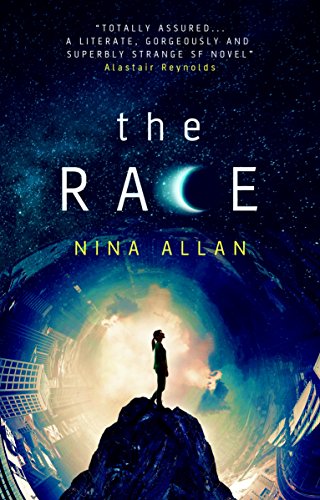
The Race by Nina Allan

The Race – Nina Allan

Allan’s The Race is actually four novellas woven into one novel, each told from a different character’s perspective, that reinforce and contradict each other in sometimes dizzying but always stimulating ways; to say much more would be to spoil much of the joy of reading the novel. What I can talk about, though, is the book’s setting—or at least the setting for some of it. Allan presents a fascinatingly convincing view of near-future Britain. Ravaged both by economic collapse and aggressive fracking that has turned the English countryside into a post-industrial wasteland, Allan’s narrative largely avoids large cities to focus instead on small towns and abandoned edgeland spaces. It’s a decision that makes the book feel all the more convincing and alive, and gives it a working-class, almost mundane, day-to-day ambience that is sorely missing from so much contemporary near-future fiction. Into this setting Allan drops smartdog racing, an illegal version of greyhound racing where the dogs are genetically modified to contain human DNA, supposedly giving them a special empathetic bond with their owners. It’s this blend of the everyday with the weird that makes The Race an essential read for anyone looking for a fresh perspective on literary science fiction.

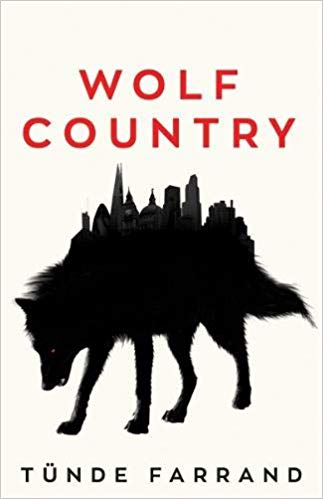
Wolf Country by Tunde Farrand

Wolf Country – Tünde Farrand

A last-minute addition to the list, as I only just finished reading Farrand’s stunning debut novel last week. Set in London in 2050, it’s an excellent example of taking existing social phenomena and divisions and formalizing them into a dystopian setting—in this case, class and inequality. Future British society has given up trying to solve wealth disparity and instead has turned it into a formal, official structure, with everyone being put into a social class based on how much they consume: Non-Profits, Low-Spenders, Mid-Spenders, High-Spenders, and Owners. Everyone now lives in the cities —the countryside apparently now little more than a nature reserve that is off-limits to everyone apart from the Owners—with your housing being allocated by the government based on your spending bracket, and those with no money being dumped in The Zone to fight for themselves. All of this seems fine at first to protagonist Alice, until her architect husband disappears and she loses her school teaching job and her Mid-Spender status, leading her to confront not just the injustices of the new society but also the secrets of her family’s past. Farrand’s real skill here is in drip-feeding the reader with details until the true horror of the book’s setting is revealed, and the skin of consumer capitalism is slowly peeled back to reveal the dehumanizing fascism that really lies at the heart of free market neo-liberalism.

How Media Coverage Undermines Women Authors

“She is dressed in jeans and a navy shirt. She is pretty, elegant and taller than I had imagined.”

“[She] is tall and elegant, with the features of a ballerina: an expressive mouth and eyes in a finely molded small face.”

These lines are about the author Rachel Cusk, taken from a 2014 Guardian piece and a 2017 New Yorker profile, respectively. Normally, hearing about a woman’s eyes or outfit in an article that’s ostensibly about her work wouldn’t even register because it’s so common. But Cusk’s lauded Outline trilogy is an exercise in restraint—we barely learn any physical or personal details about the narrator, Faye, and their absence is notable. Cusk knows you’re used to evaluating women based on certain criteria like age, looks, and marital status, and makes a case for how much more we learn about someone from the questions they ask and the stories they tell than from superficial descriptions. Reading Cusk’s work in tandem with her profiles is uncomfortable because the way Cusk presents her character is so inconsistent with the way she herself is treated by the press.

The truth is that this kind of gendered treatment of female authors is the norm—and a recent (non-academic) study called the Emilia Report adds more evidence that you’re not imagining things. The study, commissioned by the producers of a play about Emilia Bassano, England’s first published female poet, and written by journalist Danuta Kean, compared media coverage of ten writers—five male and five female— who write for the same market. Kean compared the frequency with which each gender received coverage for their books as well as the substance of that coverage, finding a “marked bias” towards male writers. For example, when looking at four bestselling fantasy writers who all had new books being released, Kean found the two men received “widespread coverage” while the women, despite their excellent track records, received none.

Female authors aren’t getting the same exposure as men, and without equal coverage, women can’t be as successful.

Ten writers is a very small sample size, but Kean’s results are in line with similar surveys about gender parity in publishing, like a2016 report that found that although two-thirds of authors in Australia are women, two-thirds of the books that are reviewed are written by men. The 2017 VIDA report found that women are seriously underrepresented in American literary publications, too; only two of the fifteen journals in VIDA’s study published as many women as men. Studies like these show that female authors aren’t getting the same exposure as men, and without equal coverage, women can’t be as successful. It’s a question of access—people can’t read books they don’t know about, and judgement—it’s easy to assume that if women aren’t appearing in prestigious publications, it’s because they haven’t earned a spot.

Of course, as the profiles of Cusk show, the problem doesn’t end at inclusion. Kean looked at how broadsheets choose adjectives and anecdotes for women writers, and found that women are seen and presented as less literary than men. For example, the women in the Emilia Report were twice as likely as men to have their age referenced as part of their coverage. Kean pointed to Sally Rooney, the young Irish author whose literary success has whipped the press into a frenzy. I wasn’t surprised to find that only five of sixteen articles about Rooney left out her age, given how the media has cast Rooney as a poster child of the female ingenue. Though she is the rare young woman who’s been acknowledged for her literary talent, Rooney’s books still aren’t allowed to speak for themselves; they are always framed by her youth and sex. Focusing on a woman’s age is the same as talking about what she’s wearing or what she ate for lunch: it sends the message that these are acceptable things to judge a woman by and it incorporates them into the discussion of her work. (How many articles about Salman Rushdie mention that he’s 71?)

According to the Emilia Report, this treatment is especially flagrant around women and motherhood. “Women writers continue to be judged by the ‘pram in the hallway,’” Kean writes, “and pigeonholed as domestic rather than taken seriously as authors.” She’s referencing a quotation by Cyril Connolly, editor of Horizon, who said, “There is no more sombre enemy of good art than the pram in the hall.” Kean’s findings confirm what I’ve seen anecdotally for years; an article invariably mentions a female author’s familial (if not romantic) status, while male writers might be husbands or fathers or dating around, but it’s not mentioned in the opening paragraph. This practice furthers the assumption that women concern themselves, and thus should write about, love, family, and motherhood, part of the general expectation that women write stories (even fictional ones) that align with our real lives. The Emilia Report includes interviews with 27 female authors, and the words of Joanne Harris hit home: “Women are still viewed as a niche group, dealing solely with women’s issues, whereas men (even in the same area) are thought of as dealing with important, universal themes.” If women are sponges whose lives influence their work while men are fortresses whose writing can exist as a thing apart, if men can write about whatever they choose, including families that resemble their own, and be granted the interpretation that they’re writing about the universal human experience, then is it a surprise that only men’s work is taken as true literature?

The media bias against women isn’t necessarily intended to be undermining; it’s baked into the culture, not maliciously targeted. But it’s damaging, as the Emilia Report concludes: the way women writers are presented in the media undercuts the public’s ability to see them as literary. It’s not just a superficial disservice to female writers to assume that they want to write about domestic issues; forcing them to do so limits their audience and their prestige. Studies have shown that stories about the female experience rarely win prizes, especially if they’re written by women.

The way women writers are presented in the media undercuts the public’s ability to see them as literary.

The Emilia Report is only the latest piece of evidence that publishing, of all genders, needs to step up. People must ask themselves if the work they are doing is furthering or helping to dismantle the idea that women are less serious writers than men. Kean wants publishers to reevaluate book covers, which she believes “undermine the credibility of fiction by women and their ability to be taken seriously.” I agree that marketing women’s fiction in the same way as men’s is an important step in changing the view of men as more literary writers, especially when this kind of mislabeling is obvious, like when Elena Ferrante’s novels end up with Hallmark cards for book covers. But we also need to go further. We need publishers to accept stories by women that break the standard domestic tropes. The media, too, must address that way it treats female authors. We need the same amount of reviews of books by women as men, and we need to stop treating profiles of women like vanity pieces, with diet and makeup tips and surprise over how great she looks for her age. The way we see the work itself is influenced by these things–the gendered book covers, the profiles that fixate on age and physical appearance, or the lack of press coverage all together–and if women are presented as less serious they’ll be treated as such, whether or not the work bears it out.

To Dress In Another Woman’s Clothing

“Alta’s Place”
by Morgan Thomas

In Sharyn Gol, Alta told me, she blamed the cold. And it was cold. On the steppe, herdsmen wrapped the tails of their cattle with wool to keep them from stiffening and snapping in the wind. In her apartment, mare’s milk froze solid in old soda bottles. Cooked rice congealed in the steamer before she could serve it. Her heating had not been turned on.

She rolled shortbread as she spoke. I drank milk tea and listened.

Alta told the landlord in Sharyn Gol, that the cold caused her to sleep with the other woman on a single cot. The cold explained the blanket of camel hair, and the cold explained their closeness under the blanket. Cousins, she said. This is what the women had said when they rented the apartment.

The landlord must have suspected them. Why else come for the rent at dawn and on a Saturday? Why else open the door without knocking, with one key from his ring of keys?

When he entered, Alta wrapped the camel blanket around herself and rose from the cot to make tea. The other woman did not rise. The other woman did not offer explanation. She sat on the cot in her undershirt.

The landlord watched the woman in the camel blanket. The landlord accepted the rent money and a cup of tea. When Alta asked about the heating, he said the heaters would come on in two weeks, on the first day of winter, as they did every year. He finished his tea. He left.

The next month, the landlord left a notice on her apartment door. The landlord’s daughter and her new husband required a place to live. There was no longer an apartment available for the two women.

Of this much, at least, Alta managed to convince the adjudicator at the asylum office in Arlington, Virginia. She did not have the notice to show him. She’d been just nineteen then, not yet in the habit of keeping things.

“Now, I keep them,” she said to me, and gestured to her filing cabinet, where she kept copies of every lease, every credit card statement, every Costco receipt and bus ticket stub.

The landlord gave them time to sort their belongings, to find another place. But he must have spoken about them to the woman who owned apartments in the Hedde District and the manager at the Arig Complex, because when she called there were no vacancies. So she slept, again, on the couch in her parents’ three-room apartment, on a pillow stuffed with her baby clothes. Above her bed, her grandmother’s wedding deel was pinned to the wall for luck.

I was alone the night Alta came to the Snow White Launders in Arlington. The pants presser and the manager had gone home. I was drawing in my sketch journal, practicing my patterning. Back then, I sketched dresses with eyelet lace and scalloped hems. I sketched dresses for dancing, dresses for weddings. I sketched dresses I couldn’t afford to make, dresses for high occasions.

She entered in a two-piece gingham suit — skirt and jacket with a wide check print and a stain darkening the right sleeve. It was December. Gingham is a summer fabric, but of course I didn’t mention that.

“What happened?” I asked her. As a counter-girl, it was my job to elicit a thorough case history, separate the brown of dried blood from the brown of honey mustard, determine whether hydrogen peroxide or a detergent stick would better lift the stain.

“I gave an interview,” she said.

“Sure, but what happened?” I motioned to her suit.

“Coffee,” she said. “Can you clean it?”

“I can’t clean it while you’re wearing it.”

I pointed her to the shabby bathroom where the pants presser, on rainy days, spent her smoke break exhaling into the cooling vent. I asked if she’d need a change of clothes. We had two men’s shirts and a trench coat in our discard pile, waiting for the Goodwill truck.

She said she had a change with her, though she wasn’t carrying anything but a briefcase so thin I’d guessed it empty.

At that time, I’d been working at the dry cleaners less than a month, working the evening shift — two to eight. I thought it would be just a summer gig. I’d studied fashion design, and I was looking for a foot in the door. Dry cleaning wasn’t quite that, but I could handle fabrics daily, gain experience with durability and stain resistance, pay rent on my one-room efficiency in Arlington.

She emerged from the bathroom in a robe of blue silk, delicate as a moth fresh-sprung from chrysalis. No seams I could see. No buttons or zippers. Just a catch of silk at her throat and a cut-cloth sash at her waist.

I was polite. I didn’t ask to touch it. I didn’t ask where it was from, where she was from. I’d seen one-piece clothing on the New York runways, one-piece jumpsuits from Cedric Charlier, origami dresses from Issey Miyake cut and folded from a single piece of cloth. Even their best attempts allowed for zippers, a blind hem. She stood draped in a robe with no stitches I could see, as if the cloth clung to her shoulders of its own accord, held there by static or gravity.

“Is it one cloth?” I asked

“It’s a deel,” she said.

I tagged her suit, told her, “It’ll be ready tomorrow after four.”

She asked me for Vaseline. The coffee had splashed on her wrist. The skin was pink there. I didn’t have any Vaseline. I watched her fingers press against the pink skin, and I told her she should complain about the coffee. It shouldn’t be hot enough to burn.

“The problem isn’t the coffee,” she said.

“What do you mean?” I asked.

In the interview, she told them she was a lesbian. This was the reason she’d left Mongolia. When she said it, the interviewer stood. He poured coffee for himself, then offered her some. She accepted, though she drank coffee only rarely and never black. When he leaned over the desk with her cup, she thought he was handing it to her. He was planning to set it on the desk. Their hands collided, and the coffee spilled.

“Why didn’t he hand it to me?” she asked in the dry cleaners.

“Maybe he was worried the cup was too hot for you?”

She shook her head. “He didn’t want to touch me, I think. He didn’t want to touch my hand.”

“No,” I said. “I’m sure it wasn’t that.” She waited, but I didn’t elaborate. Instead, I told her I’d deliver her suit when it was finished, though this was against company policy.

She told me her name was Altansharzam. She said I could call her Alta.

My name was Cory. She could call me Cory.

She wrote her address in blue pen at the top of her laundry receipt and gathered her briefcase.

“I’m a lesbian, too,” I said, in part because I suspected it was true, and in part because it was my habit, then, to remember what had been said and reflect it back to the speaker as if it were an invention of my own.

“That’s nice for you,” Alta said. And she was gone.

After she left, I traded my number five pencil for a lighter one, and I sketched her from memory. I focused on capturing the deel — its lines, its corded hem. I didn’t bother with Alta’s hands, her long dark braid. I left her face just a three-line profile.

If I could sketch her now, I’d sketch every detail of her face, her hands, keep her with me that way.

Alta lived with a woman. Oyuka. I met her, by accident, my first time in Alta’s apartment. I knocked, and she called, “Come in.” Alta wasn’t home.

I walked past the coat closet and a boy’s bike, and there she was. She sat in the bedroom in a ladder back chair, working a newspaper crossword. A catheter tube extended from beneath her skirt into a wide-rimmed bowl. She was older than Alta, though not by much. Maybe thirty. She said, “You’ll excuse me. I’d need a leg bag to get to the door,” and lifted the end of her catheter from the bowl to show me.

I said, “Dry cleaning.”

“Set it on the table there.”

“It’s for Alta.”

“She’s getting my boy from school.”

“She’s expecting me with her suit.”

“I’ll be sure she gets it.”

When I made no move to leave, she said, “Do we owe you?”

I could wait, I said. Alta might have other clothing that needed cleaning.

“I don’t know when she’ll be back.”

“I do pick-ups,” I said, though pick-ups were also against company policy. “Do you have anything, any evening wear that needs cleaning?”

“There might be a pair of pants hanging in the closet there.”

With her permission, I drew back the closet’s accordion doors. The linen pants hung beside the deel on its cushioned hanger.

“Not that one,” the woman said when I put my hand on the deel’s pleated sleeve. “She wouldn’t want you taking that one.”

“No,” I said, but I snaked my arm up through the sleeve, cuff to shoulder. I curled my fingers over the collar and fingered the silk knots for fastening. I felt I had found Alta, unsuspecting and vulnerable, tucked away among the coats.

I left with the pants draped over my arm, and promised to return.

For three months, I went weekly to Alta’s apartment. I went for her dry-cleaning, though often there was no dry cleaning. Alta preferred to wash even silks herself. I went anyway. I stayed as long as she allowed me to stay.

What was it about Alta? Alta added peppercorns to black tea and steeped it in goat’s milk for Oyuka’s son, Bat, who drank it crouched beside the baseboard heater. Alta had a whole butchered sheep delivered to her apartment by a farmer out of Reston. Alta owned a set of knucklebones with which you could play a game like dominoes. I asked her to teach me the game, but she preferred to play Solitaire with a card deck.

I didn’t see Oyuka again. Sometimes I heard her through the walls, a snatch of laughter or song. Once, Alta also paused to listen. “Oyuka’s dancing,” she said. But the bedroom door was always closed. I saw no one, not even Alta, enter that room.

When I asked Alta to introduce us formally, she told me Oyuka’s parents had come to America from Mongolia when Oyuka was eleven years old. Oyuka was a teacher. She’d had a stroke a year ago. Alta kept her company after, kept her company still.

“Does she go out?”

“To church,” Alta said. “Sometimes.”

“Anywhere else?”

“I do her cooking. You do her laundry. Where is she needing to go?”

It bothered me. I thought Alta was embarrassed of Oyuka or tired of caretaking. “Does she have guests?” I asked. “Don’t you open the door?”
 “After work, I will open it,” Alta said, but Alta was always working.

From her front room, Alta sold things. She sold watermelon pickled in old mayonnaise jars. She sold shortbread at the zakh on Saturdays. She stamped each loaf with a woodcut, called it shoe-bottom bread. She sold Maybelline cosmetics. For twenty dollars, she offered three-hour private lessons in shading and contouring, products not included.

Alta’s customers didn’t make appointments. When Alta was home, she hung a sign from her porch — Alta’s Place for a New Face — and the Mongolian women came. Alta seated them in one wicker-backed chair and wiped the skin around their eyes with a milk-soaked cotton ball. She asked about their families as she pecked with her tweezers at their eyebrows. If a woman’s eyes watered from the pain, Alta smothered the tears with her thumb. She said, “We’ll need that cheek dry.

They leaned in to Alta as if to a mirror. She painted her face, stroke by stroke, and they copied her. They cringed when she wet her thumb to wipe away their clumsy contouring.

In my sketchbook, I copied her, too. I sat on the couch beside Bat. Oyuka kept Bat’s hair short. His favorite t-shirt had “Virginia is for Farmers” printed across the chest. He liked it because it was large enough he could pull his arms and legs inside. Alta called it his turtle look. He drew velociraptors with a stylus on a hand-me-down tablet. I sketched the women. In life, they wore button-up shirts and boat-neck dresses. In my sketchbook, they wore deels.

At the lesson’s end, they blinked at Alta with eyes made large, her twin. They sipped black tea and exclaimed over the lipstick, which left no stain on teacup or teeth, and which Alta sold for fourteen dollars. They left with a tube or two, and she washed their face from hers, stored her products on the middle rack of her convection oven, waited to begin again.

Alta always sent me home with her last student. “Cory,” she would say, “Yuna is going to see Shakespeare in the park. Maybe that is interesting for you.” She said the same about an all-you-can-eat pasta buffet and a beginning guitar lesson and a dentist appointment. Maybe that is interesting for you, and she left me fated to walk beside her student until I invented a commitment which tore me away.

By the new year, we were comfortable with each other. Once, Alta even forgot about me. Her last student had gone home. She was rolling out the dough of her shortbread to sell at the zakh the next day.

I called her name from my seat on her couch. I said, “Can I go with you to the zakh tomorrow?”

Alta startled. “I thought you were gone,” she said.

This didn’t bother me. It matched my vision of intimacy, to sit silently in the corner of someone else’s life until she stopped noticing.

“Can I go with you tomorrow?”

“You are like my husband,” Alta said. “Sitting. Watching me.”

“Your husband? You were married?”

“I told him, you have time to watch, you have time to help.”

“Can I help at the zakh?” I’d never been to a Mongolian zakh.

“Maybe one day,” Alta said. She said the same thing when Bat asked her to shave his head or visit the trampoline stadium. “Maybe one day.” A polite but clear refusal.


The next week, I asked Alta about her husband. I thought she’d brush the question off, evade it as she had done before. Instead, as she washed eye shadow samples from the crest of her thumb, she said, “My husband was like Oyuka — always telling me bring this, do that. When I am a wifey wife, he was happy, she is happy, just the same.”

Alta kept her marriage certificate and her wedding deel. She brought them to her asylum interview. She brought her passport. Form I-94. Form I-589, a copy. Fifteen credit cards, including Shell, Kohl’s, and Fingerhut. She studied Yelp reviews for the top ten gay bars in Arlington. She studied an encyclopedia of social work, where she learned the word alien.

In January, I found the printed Yelp reviews in the drawer beneath her oven. I asked her about them. She told me she had heard stories. She had heard of women denied asylum, because they couldn’t list local gay locations, because they couldn’t prove they were part of the lesbian community, because they’d only ever paid with cash.

She subscribed to Curve and Pride Life to be safe. Old issues of the magazines, sorted alphabetically, filled the lowest drawer of her filing cabinet. When she got the February issues she went to file them away, still in their plastic. I knelt with her beside the cabinet. “You can take them with you if you want,” she said.

“Have you read them?” I asked her. I removed one magazine at random. On the cover, a woman stood wearing lingerie in front of an open refrigerator.
 
 “They are kind of difficult for me.”

I read them for her. I sat on her sofa and read about the five types of lesbians and about women who were triple-bi — bi-racial, bi-cultural, bi-sexual. I was not bi-anything and felt this as something of a lack.

At twenty-three, romance so far for me was standing as fit model for Bailey Watts twelve hours before her senior thesis show, holding the exhale as her hands bumped my ribs, pinning skirt to bodice for an empire waist. Or asking my studio partner to model my linen tunic, lifting her hair and cinching the drawline neck with satin ribbon. Or perhaps lying on my back on the sand of Virginia Beach — where my family rented for one week each summer a house right on the water — lying at the tide line, alone, shivering as the waves broke over my belly.

I read those magazines with an avidity that bothered Alta. She distracted me, gave me small tasks — helping Bat through third-grade math, spinning the small drums of her prayer wheels, slicing cheap apples for Bat’s father, who came for Bat on Friday afternoons and expected to be fed. He stood in the doorway of Oyuka’s bedroom, eating the watermelon Alta had pickled to sell, and told Oyuka the boy needed new cleats and a drum set. If Oyuka could afford live-in help, he said, she could afford those things.

“He is a fool,” Alta said to me. “He thinks I am sleeping every night on the couch.”

I looked away from Alta, at my fingers on the wrinkled corners of her magazines. I did not tell her that when I thought of her, in the empty spaces of those weeks, I also imagined her sitting in the evenings in the front room in her blue deel, watching Jeopardy for the English practice, spooning globes of oil from the surface of her soup. I also imagined her alone.

In Ulaanbaatar, a city of one million people, Alta had known no one. She’d moved to the city with her husband, because the jobs in the city were better. Even her husband, she didn’t know. They’d been married only two months.

“I was a lonely person,” she said. It was the end of February, nearly the end of our months together. I helped her strip white slipcovers from her couch.

The roads were better in the city. The schools and theaters were better. The air was worse. Alta wore a mask, which fit tight to her face like a palm pressed over her mouth. She was supposed to keep the windows of their apartment closed at all times, so the air inside would be safe to breathe. She refused. She liked the breeze through the windows. She liked the chill. She liked to watch crystals of ice form on the metal of the rice cooker.

In late fall, her husband caulked the windows, preventing her opening them. This was usual, necessary to keep the apartment warm in winter. He assured her there was plenty of air through the ventilation shafts.

So why did she sometimes sit at the dining table in the late mornings, alone, and work just to breathe?

She asked her husband every day when they would return to Sharyn Gol, where she could tell cattle apart by the clip of their ears and had family to visit on the weekends, had a life of her own.

When we’d finished folding the slipcovers, she asked me, “What about your family?”

Her question surprised me. I’d told my family about Alta, my friend Alta. When they called to catch up, it was her life I described in detail. But I’d never told Alta about my family. Alta rarely asked questions, and I volunteered little. What was there to tell? My mother was a divorce attorney. My father sold credit card readers to big box stores. They announced their divorce the month I turned eighteen. They’d been planning it for years, waiting for my high school graduation. They still lived, both of them, in the same Arlington suburb, and my mother often took a circuitous route home from work, driving in her SUV past my father’s colonial, checking for unfamiliar cars in the drive, for feminine silhouettes through the slatted blinds. When we talked, she talked about my job. She called it a dead end. We didn’t talk often.

“We’re not close,” I said.

“But your mother? You visit to her?”

I shrugged. The last time I’d visited my mother, I’d told her I was gay. I’d thought it would be good for her. She was vaguely Christian, vaguely conservative. Not a bad person. She volunteered at Meals on Wheels on Thursdays. On Tuesdays, she taught classes on financial independence to women at the library. She prayed for gays, but never protested them, believed protest of any kind to be wasted effort. She didn’t cry when I told her. She didn’t shout or stand or leave the room. She told me a story about a woman couple from her church who’d gone on mission to Africa and decided somewhere near Tanzania they weren’t lesbians. They were just wounded in their hearts. Take your time, my mother said to me, deciding about those things.

To Alta I said, “My mother doesn’t understand.”

Alta shook her head. “Your mother didn’t ask if you were gay, Cory. No one asked you.”

“I’m not going to wait until they ask,” I said.

“It’s nice for you,” Alta said. “It’s nice no one is asking.” Alta put her fingers to the wrinkles beneath her eyes, looking not at me but into her mirror, at her skin loose and bare of powder. They had asked her, at her asylum interview. Of course, they had asked her.

“Sorry,” I said.

“Why are you sorry?” Alta said.

I didn’t know how to answer Alta, and she didn’t wait for my answer. She piled the slipcovers into my arms. They smelled of urine. As I took them from her, I felt obscurely insulted.

Those slipcovers were the last item I dry-cleaned for Alta.

The woman at immigration services said Alta should return to Mongolia. She could live in Ulaanbaatar. According to their country reports, the Mongolian city was more tolerant than the countryside. Alta could be discreet there. She could be safe. They had found insufficient evidence of persecution, insufficient reason for fear. Alta’s asylum claim hadn’t been denied, but it had been referred to immigration court. She would need to attend a hearing there.

Alta told me this at the dry cleaners, the day after I left her apartment with the slipcovers. She’d come to pick them up but they weren’t ready. She knew they wouldn’t be ready. She came to see me, I think, to tell me her news.

I took my break right away. I led Alta outside and around to the back of the cleaners, where the hum of the air conditioner would ensure our privacy.

The pants presser was finishing her smoke break. She lit a cigarette for Alta. Alta thanked her. I wished I’d thought of a cigarette.

I expected we’d wait for the pants presser to leave, but Alta didn’t wait.

“It is impossible,” Alta said. “I can’t go back to the city.”

She’d left the city. She’d returned with her husband to Sharyn Gol, where her husband worked winters in the Canadian mine, one of the better mines, worked summers in South Korea.

“I’ve always wanted to travel to South Korea,” the presser said. “South Korea or maybe Japan. I’ve heard the food’s better in South Korea, which you wouldn’t expect.”

The presser and Alta talked about kimchi. Alta made her own. Alta knew where the presser could get kochukaru by the pound. I waited for the presser to stub out her cigarette and leave.

After she left, I said, “The woman. The woman with the camel blanket. What about her?”

In Sharyn Gol, Alta said, she met the woman again, the woman with the camel blanket. The woman hadn’t married. She taught chemistry at school number four. In the summers, when Alta’s husband was living in South Korea, she slept in the bed in Alta’s apartment, which they had to themselves.

That woman told her sister. Her sister could be trusted. Perhaps it wasn’t the sister. Perhaps it was the man who cleared trash from the apartment’s stairwell. Or a neighbor watching from the flat across the square. Alta didn’t know. She knew it was September when she lost her job. She was twenty-five. She knows her husband came home from South Korea on an evening she’d sliced tsuivan noodles for dinner and asked if it was true she’d shared his bed with a woman. She tried at first to tell him it wasn’t true.

She left, of course. She went to her grandparents in the countryside. She lived in a good felt tent beside their wooden home. Mornings and evenings, she took milk from their Kalmyk heifers and curdled it over a wood stove, sold the sweet curds. She told time by the contrails of jets that nosed across her sky. At two o’clock, the Beijing to Moscow direct swinging northwest. At six in the evening, the Moscow to Incheon freight slicing the blue the other way.

In her interview, they’d asked, Was it true that he had come to her grandparents’ home? Her husband had come to find her?

But that part was not important, she said.

Of course, it was important, I said. All of it was important.

Her husband was not among the things she was afraid of.

“What were you afraid of?” I asked her.

She was afraid the court would not believe she was in danger. She was afraid the court would refuse to grant her asylum.

“But in Mongolia,” I said. “In Mongolia, what were you afraid of?”

She shared with me the words she had found in an encyclopedia of social work. She practiced them with me, remembering not to hold the vowels too long, remembering s can be soft like switch or have a buzz like scissors, remembering to keep it soft when she says economic persecution, to buzz just lightly in the center of housing — then soft — discrimination. She could use the English she learned in secondary school — I can’t get a job. I can’t get an apartment. But she wanted the real words, the right words.

What else? I said. I had words. I had plenty of words.

She didn’t need more words.

What about the other woman? I asked Alta. The woman with the camel blanket.

What happened to the other woman? they’d asked Alta at her interview.
 She is not allowed to teach. She has no work. She has to live with her sister.

But had anyone hurt her? they’d asked. Had she been harmed in any way?

I asked her, too. “You can tell me,” I said. “You know you can tell me.”

Alta shook her head. She hadn’t come to the cleaners to tell stories. “Tomorrow, I will go to sell my shortbread at the zakh,” she said. “You still want to come?”

Of course I did.

“Tomorrow, you can come.”

“What should I wear? I don’t have anything to wear to a zakh.”

“You can wear your street clothes.”

“Will you wear the deel?”

“I’ll wear my street clothes.”

“Can I wear the deel?”

Alta considered me. “Maybe if you want, you can wear,” she said. “Maybe it is interesting for you.”

That next morning, Alta dressed me. She said I could leave my blouse and leggings, wear the deel over them, but I wanted to wear it the right way, as she would wear it. I wanted the silk against my skin. So Alta held the deel like a curtain between us and waited for me to undress and step into it, thread my arms through the pleated sleeves, fill them. Alta fastened the sleeves then the bodice, her hands quick on the knots. I imagined her buttoning Oyuka’s dress shirts, her knuckles brushing Oyuka’s chest.

“I’ve been researching immigration hearings,” I said to Alta. I’d spent the night watching videos. Videos posted by nonprofits and shared, with #refugeerights #valuetranslives. “You should wear a men’s suit to your hearing,” I said. Women wore men’s suits in the videos. A woman from Uganda wore a bowler hat and a men’s button down. A woman from Russia shaved one side of her head and cut her fingernails down to the bed. A man from Brazil considered appearing at his interview in drag, but settled finally for a pink-collared shirt and matching eye shadow.

“I will wear eye shadow,” she said. “And my suit.”
 “You should wear a men’s suit. At least a pants suit.”
 But she had bought the suit especially for these interviews. “It’s a good suit.”

I studied the deel in her make-up mirror. “You should wear this,” I said.

Alta huffed. “It’s too small. It’s not comfortable for me.”

“I can make you one, a larger one.” I saw it, then. I saw myself sitting at my Singer 100-Stitch, hemming silk flown express from Mongolia. I saw Alta behind me, one hand on my shoulder. Confident in me. I could use my sketches. I could help her. “I’ll make you a deel to wear.”

“It’s not comfortable for me,” Alta said. “They know I’m Mongolian. I don’t need the deel.”

“This is different,” I said. I pushed Alta’s hands away from the knots. “Look,” I said to Alta. “Look at me.” I faced the mirror. She would wear the deel as I wore it. We would cut her hair to be short like mine. I spiked my hair with my fingers. “Do you see?”

Alta ran her hand over my head, letting the spikes brush her palm. “This court tells everyone no,” she said. “I have heard.”

“You’re different.”

Alta wrapped the belt of the deel beneath my ribs. “All night, I made shortbread for the two of us to carry and sell. If we sell all the shortbread, next Saturday I will have a rest day.”

The belt of the deel was tight. My breath circled in my chest. “Where will you go?” I asked Alta. If she couldn’t stay in Fredericksburg, where would she go?

She knew a place outside Sharyn Gol. She had slept in this place once, slept for four days in winter. There was a place where she would go.

Then Alta walked to the bedroom door, the door which was always closed. She opened it. “The shortbread is in the bedroom.”

The bedroom. Their bedroom.

Alta said, “Come in, Cory.”

I followed Alta as far as the doorway and stopped. In the bedroom, Bat’s army men were scattered beneath a card table. His clothes hung over the dry-line nearest the radiator. Books and DVDs towered against the far wall. Six watermelons lolled beneath the window. Bat sat on one watermelon, rolling slowly back and forth, dropping a plastic parachute man from his left hand to his right.

Oyuka sat in her ladder-back chair, looked at me in the deel, and said, “What’s the occasion?”

“Cory thinks I should interview like that,” Alta said. Then somehow both women were laughing. Bat glanced up and grinned, unsurprised. I was surprised. I stood in the doorway and watched them. I couldn’t remember ever hearing Alta laugh.

“She’ll be a sight at the farmers’ market,” Oyuka said.

“Cory doesn’t mind attention.”

“You said it was a zakh,” I said. “We’re going to a zakh.”

“A zakh is a market,” said Alta. “A market is a zakh.” Alta stacked her shortbread in produce boxes — one for me, one for her.

“I can’t wear this to the farmers’ market,” I said. I could not show up at the farmers’ market in a blue silk deel.

“You’ll be a sight,” Oyuka said.

“It’s fine,” Alta said, stacking her shortbread so high we’d have to peer out between the loaves. “Come help me, Cory,” she said.

She wanted me to enter the room where Oyuka danced. Where Alta laughed. There on the bed was a blanket of woven wool. There, a cooker half-full with rice. There, an orange plastic bathtub propped against a child’s easel. There, the empty jars to be sterilized for canning, the army fort made from a cereal box, the package of Russian butter cookies open, half-eaten. There, the room where she lived.

She’d never shown me this room. Never shown me her life.

Was I angry? Was I offended? I think I was. The room embarrassed me. I had never considered there must be more to Alta, that her life might have dimensions beyond those she’d shared with me. I felt ridiculous, standing there in the deel her grandmother had made.

“Come take the box, Cory,” Alta said.

Alta lifted the box. Maybe she meant to bring it to me.

She’d stacked the loaves too high, impossibly high.

The shortbread fell.

Cascaded.

The loaves, they broke. Crumbs scattered beneath Oyuka’s chair. Into the doorway. Alta knelt and crushed one loaf beneath her knee. She lowered the box, began restacking.

Bat stole a piece from the ground and ate it.

“Those won’t sell,” Oyuka said. “Might as well leave them.”

Alta stacked.

“Get the broom,” Oyuka said.

Alta stacked. She’d started to sweat, working right up beside the radiator. She made small noises of effort. She raised her head, strands of her black hair coming loose from the braid, crushed shortbread in each hand.

“Are you going to help, Cory?” she said. “Or are you just going to look and look?”

As if I were a gawker. Some man ogling her.

Wasn’t I helping her? Hadn’t I tried?

I should have gone to her. I should have stacked the useless shortbread. But I couldn’t bring myself to enter their bedroom, their life — not like that, not for the very first time.

I said, “I have to change,” and shut the door.

I stood alone in the room where I’d thought I’d known Alta, in the room where she told her stories, practiced with me until the English words, once unfamiliar, snapped to her tongue in sequence, easy as falling to the next drum of the prayer wheels, easy as cream before foundation before blush.

When I untied the belt, Alta’s deel fell from me.

As I dressed, I listened for the women in the other room. I heard nothing. As if they’d gone, vanished together as soon as I’d shut the door.

I left Alta’s apartment without any dry-cleaning. My empty arms swung. There were no demands at all upon my person or my time. No restrictions. Nothing to wait for, nothing to dread, nothing to force me to justify my life or to change it.

I’d have folded Alta’s deel if I’d known how to fold it. I didn’t know, so I laid it over the arm of her couch, laid it out carefully. When Alta emerged from her room to hang the deel, it would be ready for her — no wrinkles, no stray hairs, no dampness in the armpits, no evidence I’d worn it at all.

I didn’t know Alta had gone until the next fall. Oyuka called the cleaners — “I have sweaters for dry-cleaning,” she said.

I held the phone with both hands. I needed to speak to Alta. Where was Alta? Was Alta there?

Alta had left in the summer. “I remember you did pick-ups.”

“I’m sorry,” I said. “We don’t, we can’t offer that service anymore.”

She said she’d try another place.

“But wait,” I said. “Wait. What about Alta?”

“What about her?”

“Where is she? How is she?”

She was in Ulaanbaatar.

Was she all right?

She was in Ulaanbaatar. She had family there.

But I knew where Alta was. She was in the brick maintenance station outside Sharyn Gol, where she’d once spent four nights. She’d slept against water pipes. She’d not wanted to return to her husband, and it was winter, and the water pipes were warm.

When Alta tells this story, she is alone, but I tell it this way: There are two women. Alta, and a woman following Alta. There she comes, after Alta, through the small high window of the maintenance station. Alta sleeps pressed not against the water pipes, but against the body of this other woman. Alta puts her head on the chest of the woman. She hears not the pulse of water through metal, but the woman’s pulse or her own pulse. Their rhythms are the same. Alta warms her hands not at the pipe’s belly, but in the pockets of warmth the two women make together. Hushed is the water. Hushed, their breath.

“The Old Drift” Is the Great Zambian Novel We Didn’t Know We Needed

Over the years, Namwali Serpell has received many accolades for her short fiction, including a Rona Jaffe Fellowship and the Caine Prize for African Fiction. We can now add her debut novel The Old Drift (Hogarth Books) to the list of epic stories spanning continents, decades, and generations. A mastery of language, a deftness in description, and a dip into surrealist and speculative elements makes The Old Drift a worthwhile study in holding together several storylines through the characterization of those searching for their calling, and the cost of those pursuits. In sections of “The Grandmothers,” “The Mothers,” and “The Children,” Namwali braids together three families’ lineages near the start of the 20th century to a more immediate future in 2023. The journey begins with the matriarchs, one of which is Matha, a young Afronaut-in-training whose exuberant spirit dissolves due to continuous loss until she becomes known in her village as the woman unable to stop crying. And we conclude in a sort of present-day with “The Children,” including headstrong millennial Nailah whose relationships are as unsteady as her rebellious aims. The women and men in The Old Drift expose the idealism of unification and the reality of floundering to find place.

The Old Drift by Namwali Serpell

My interest in The Old Drift came from my own leanings towards multigenerational stories. And Serpell’s novel satisfied my predilection, taking me from Europe to what was the colonized Northern Rhodesia to present-day Zambia. The Old Drift, a burial site of Europeans who aimed to settle in Zambia, is a character but more so a figure, a representation of what was and what is and what could be as each generation has a part to play in its construction and even its demise. From the late 19th century, where a white man makes claim to land that isn’t his, to several years into the future where technology is part of our bodies, The Old Drift laces together transcontinental narratives, the repercussions of colonization and reform through varied perspectives, including omniscient narrators who see all and playfully predict what is to come. Serpell and I discussed the work that goes into writing such an expansive novel and her aims for avoiding the binary when it came to Zambia, gender, and relationships.


Jennifer Baker: I’m a sucker for multi-generational novels/stories in general.

Namwali Serpell: Great! My ideal reader.

Jennifer: And there’s a lot woven in The Old Drift. I’m curious about organizing, process, and how the story came together, but also recurring themes. For a book of this scope, how do these elements initially come together, especially since there’s interracial and intraracial conflict along with the colonization of a nation?

Namwali: When I began [this novel], I was in college, in the year 2000, and was very inspired by certain texts—Rushdie’s Midnight’s Children and Satanic Verses, Marquez’s Love in the Time of Cholera and 100 Years of Solitude. But the one that really sparked the seed of this novel was Zadie Smith’s White Teeth, which depicted a multigenerational story that unfolded the endemic multiculturalism of London. The first characters in TOD emerged generationally—Jacob, Sylvia, and Matha. And it became clear about three years into writing off and on that there were three families. I knew there was this cycle of unwitting retribution between the families, where one family affects another, which affects the third, which affects the first. Their racial and cultural admixture was always forefront in my mind. I was never very good at history. I moved back and forth between the U.S. and Zambia at the key grades for learning the history of these respective countries. So it was only in learning more about Zambian history in the last five years or so that the historical aspects of the novel grew in. I always said the novel was like a plot of land, pun intended, and I knew its boundaries but not what would grow within in.

Jennifer: The Old Drift is its own character in the larger story, yet the families are definitely representative of how things carry on in the ways of colonialism, class, race, and loss.

I always said the novel was like a plot of land, and I knew its boundaries but not what would grow within in.

Namwali: Yes, the relationships between people in terms of race, class, gender, and, yes, human emotion were actually the easiest and thickest to write. Getting certain historical and cultural and bodily details right required more research—books, movies, but also very very kind friends and acquaintances who read for the Italian parts or for the parts set in Tirupati etcetera. The funnest research for me was the sci-fi stuff! I got to nerd out.

Jennifer: These relationships and what characters reckon with speaks to certain preferences, I guess, in your storytelling the process:, knowing the people but how do they operate in an ever-changing world?

Namwali: I mean—to make this comparison is already hubristic—but Edward P. Jones’s story about carrying The Known World in his head for years, 12 years maybe? And then writing it down, that resonates with me. Once they’re people, figuring out what would happen to them felt like the easiest part. I wish I had been able to tell the full arcs of some characters. But with a cast of characters this big, I could only give snippets of folks and follow certain people—like Matha—all the way through.

Jennifer: And it’s not as though there aren’t “resolutions.” I use quotes in that instance not to say it’s tied up, but to say there is a continuation to see how lives have been affected.

Namwali: Yes. I did want my characters to have full lives that change. I think about [focal character in “The Mothers” section] Thandiwe, who sets off this whole set of events at the salon out of a sense of jealousy or revenge and then moves to a whole new country and begins a new life there. I think that’s how lives work for me. I was very keen for people to understand in particular that Zambians (all Africans) aren’t just stuck in time and place.

Jennifer: Especially making that clarification for U.S. readers. Which is why I was so struck by the narratives of historical African countries in The Old Drift and Wayétu Moore’s She Would Be King.

Namwali: Seriously. Yes, I enjoyed Wayétu’s novel! I interviewed her at MoAD in San Francisco. She’s great. It was fun to think about our novels side by side because we do very different things with “magic.” I think she and I have some resonant experiences as immigrants, but we talked about how we weren’t wanting to write (yet) about that experience—of Africans coming to America (a la the first half of Americanah, which also came late for Adichie, after two novels set primarily in Nigeria). We were both very interested in how race plays out in these colonial spaces in more dynamic and surprising ways than people often think and using “magic” to convey that.

Jennifer: I, personally, prefer a story that takes place outside the States. Rather than about acclimation, it’s about another form of that in a way. Not culturally but socially, in terms of difference in perception and execution.

I was very keen for people to understand that Zambians (all Africans) aren’t just stuck in time and place.

Namwali: I’m glad to hear that. So far my stories are set either in the U.S. or Zambia but never the twain shall meet! (And some are set sort of “online.”) It’s a very different lens of looking at the world. Just to take the question of a mixed race people, in Zed and Zim, we have this category “coloured,” which is a word you can’t use in the States. But it is its own culture and social group, and there’s no “are you Black or White?”

Jennifer: I found myself very drawn into that idea of mixed race and how Whites and Blacks and Natives of the space and visitors who adopt it feel an ownership and interact but also get exiled.

Namwali: But it speaks to this absence of awareness about the resonances of the Black experience across the diaspora. Yes, it works itself out very differently. I grew up with a White father who became a Zambian citizen and his experience, and those of his peers, were radically different from say, the Stewart Gore-Brownes, who came in as settlers, or the Percy M. Clarks before that.

I find it all very fascinating precisely because race is so hard to pin down in that context. [The character of] Agnes is limited by her Whiteness, but she thrills to learn about African socialism. She is happy to abstract a Black experience onto Bantu people without looking very closely at her relationship with [her servant] Grace, for instance. I mostly didn’t want there to be heroines and villains, but to explore the intricacies of race over time and in relation. And that resonates a lot with Wayétu’s book.

Jennifer: Those relationships also branch out in class with siblings Matha and “Cookie.” The belief systems also act as a breaking point and made me think about gender relations.

Namwali: I’m so glad you brought this up! Very few reviews have noted the class politics of the novel. It ends with a pseudo-Marxist revolution! The ways Matha and Cookie process their romantic relationships are very different because of how money and politics get tied up in both. I mean poor Cookie never really gets to have love.
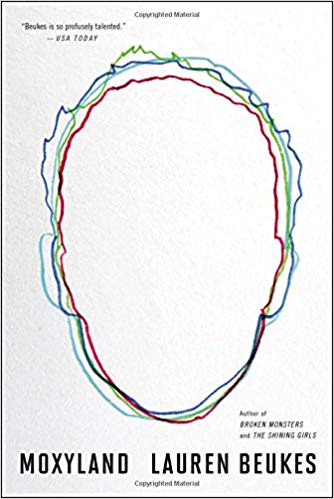
Jennifer: Do you think this is because she saw it as transactional? In a way, even Naila seems confused by love when witnessing the parental relationship of Isabella and Daddiji and how their marriage seemed very organic.

Namwali: I think Cookie is driven by lack. She wants what others seem to have—and that motivates her to stay with this older married man.

I wanted to explore what a relationship that is entirely based on sexual desire can be. Isa and Daddiji are like-minded as well. The tit-for-tat transactional nature of things works quite well for them, and maintains their relationship over trickier things, like Isa’s miscarriages. But Naila has no access to that truth of things between her parents, so she rebels against it and finds herself torn instead between these two young men. Rather than coming down on one side or the other about whether a transactional relationship is good or bad, I wanted to convey the reality I have seen, which is that, for some couples, it works well. It doesn’t make them better or worse people but money gets tangled with sex even in marriages (and not just in Sylvia and Loveness’s profession, for example).

Jennifer: And confusion on what love and sex may or may not equate to. I kind of felt like The Old Drift was quite feminist. Women are most often at the helm and not necessarily at “the whim” of men but had continual agency even when they were victims of patriarchal violence.  

Namwali: Yes, I hoped it would be without being pedantic! One interesting thing that happened in the publication process was that there was a continual slippage between “The children” and “The daughters” section. People would keep forgetting that the final generation is two men and a woman. And this raised the question of why I hadn’t stuck to all women, especially since I even slip out of the “bloodline” to write from Thandiwe’s POV instead of Lee’s.

I think my decisions had to do with how best to articulate the set of relations and desires in each generation because for me gender and sexuality are about relations and desires, not as much about fixed identities.

Jennifer: That ties into what I was thinking of. Liberation, or the idea of liberation, is at the forefront for many. This want and desire is pertinent for folks within marginalized identities and women (straight or gay), women of color, women at different ends of a spectrum. But the boys/men as well, have these inklings and urges that result in not-so-great behavior either.

Namwali: This got pared down a lot so I could focus on “error,” but my understanding of the “swerve” of error comes into being as the result of two competing forces: to stay put or to be free, to stick to a community/family/person or to be liberated from them. I was just talking to my sister about the specificity of the relationship between Sylvia and Loveness, which is a hierarchical kind of mentorship friendship, very common in Zambia, but is infused with desire and an awakening of desire in Sylvia. And this returns when she’s dying and missing her friend and it was my attempt to articulate the possibility of a sexuality beyond the binary of male/female, without presenting it in terms of a queer identity as such.
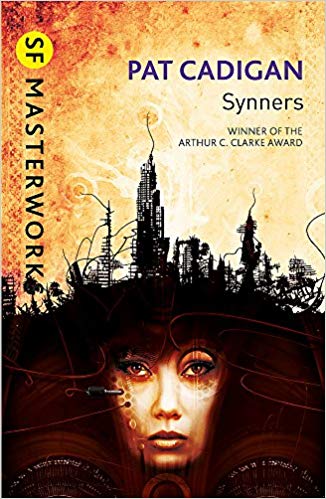
Jennifer: As a cishet woman, I did initially read that as a kind of sexual love tied to sexuality and an identity be it bisexual or queer. And then recognized that closeness in a way of friendship.

Namwali: Yes, it’s both. I am not afraid to write queerness, and I don’t want people to think I was shying away from it. I was just keen on trying to represent a sexuality that can dictate your life without you ever quite putting it on as an identity or a label. Homosexuality is illegal in Zambia but it’s everywhere in these kinds of undercurrents.

Jennifer: Makes sense and also this requires an openness of reading. This is not a novel you can really “get” in one sitting if you’re not keenly paying attention. A lot was deftly woven in, so many kudos to you.

Namwali: Thank you! I know I am sometimes too subtle, so I’m really grateful for your attention!

I think the subtleties work best and make us as readers work a bit harder as well in recognizing what comes about or what is to come.

Jennifer: Plus the lines are so beautiful. I re-read sentences due to their structure and lyricism. Yesterday I spoke about how, sometimes as readers and writers, we get so caught up on “pretty language” that we forget what we’re trying to say because we’re focused on how we’re saying it. Can you talk a bit about how you approach the writing itself and what it conveys as you put it together?

Namwali: It’s true! It is my foible for sure—-metaphor especially. My best friend from college, the first reader of lines from this novel, enforced a rule at some point: one metaphor per paragraph. I try to follow it but I’m sure I fail sometimes. You know, I struggle with understanding the concept of “beautiful sentences,” or rather how they come into being. It’s like certain concepts in Algebra II, where I just had to nod and memorize the rule because I couldn’t access the meaning. It’s true, but I’d be hard pressed to explain why.

My best friend from college enforced a rule at some point: one metaphor per paragraph.

I think it has to do with balance and rhythm, so reading my sentences aloud to edit has changed my writing completely. I know what an ugly sentence looks like. But sometimes people speak rhapsodically about sentences and I’m just baffled. There’s a preference for Germanic short words over Latinate ones in American schools of thought (MFAs), but I love Latinate words! And I like puns and wordplay and alliteration, which are all seen as indulgent.

Jennifer: I also think this comes from mentorship and personal preferences. If you’re not a fan of poetry, which I think is odd, then lyricism may not “seem” as direct.

Namwali: Yes, I sometimes try to imitate certain writers to feel how they write. I’m a big fan of poetry but (I think this might be the key) I’m not great at teaching it. I think those local insights about how poets do what they do are somewhat beyond me. I like that there are things like poetry and film that I don’t know as much about but can enjoy deeply, aesthetically.

10 Funny Novels About Obsession

Our obsessions make us and unmake us; they can drive us forward, keep us spinning in place, push us over the edge. Some lead to breakthroughs, some to breakdowns. Sometimes the line’s not so clear — it’s a heady energy, now creative, now destructive.

We’re all born into a world of obsessions: those of our families, our societies. Their most powerful, all-consuming beliefs and dreams may wear the cloak of tradition and convention. Many of us, in fact, enter this world as obsessions: dreams ourselves made flesh. That gets complicated. Obsession is the drama of belief: fixation.

It can be the comedy of belief, too. I love books like that, where someone gets so carried away with a conviction or project that the whole thing becomes absurd, giddy spectacle. (See Don Quixote or Tristram Shandy, master texts of the fixed idea.) If a distinct sensibility in art is formed by noticing what we notice over time and refining that into a vision, then obsession, fascination, and preoccupation herald — ideally — works of singular intensity and invention. Sometimes they wind up being really funny, too.

I started my own debut novel, Cheer Up, Mr. Widdicombe, ten years ago while obsessively reading P.G. Wodehouse. Every character in my ensemble is driven by an overwhelming desire for something that might seem ridiculous taken to a fanatical extreme: parental disapproval, a spread in a home interiors magazine, Artist’s Way-style creative rehab. But our hobbyhorses often point to deeper quests, a longing to complete the puzzle of a meaningful life. That’s part of what’s so amusing about them.

For anyone who’s ever gone over-the-top, here are ten of my favorite works of comic obsession.

Five Spice Street by Can Xue

“When it comes to Madam X’s age, opinions differ here on Five Spice Street. There are at least twenty-eight points of view. At one extreme, she’s about fifty (for now, let’s fix it at fifty); at the other, she’s twenty-two.” So begins this hilarious novel of proliferating theories and outlandish, relentless gossip by the experimental writer Can Xue. On the three-mile-long Five Spice Street, residents speculate about the sexual appetites and desires of Madam X., meanwhile performing the sort of occult experiments related to ways of seeing and vision that link it to Can Xue’s other works, many of which are rich with similar fixations.

Myra Breckenridge by Gore Vidal

Few voices are as commanding from the get-go as Gore Vidal’s controversial Myra Breckenridge: “I am Myra Breckenridge, who no man shall possess.” Gloriously obsessed with the Golden Age of Hollywood film — and with the sadistic domination Rusty Godowski, wholesome specimen of macho masculinity and a student in her Posture class at the Academy for Aspiring Young Actors and Actresses — transsexual Myra caused a stir in the late 60s by storming the citadel of sex and gender in subversive, high queer style. 

Do the Windows Open? by Julie Hecht

The semi-autobiographical narrator of these stories finds cause for shock and mental spiraling in one daily reality after another. Could her optician be “a Nazi (age is right for Hitler Youth)”, “the son of Nazi,” “a neo-Nazi,” or “at least a Nazi sympathizer”? Lying in bed with a headache, is she a wastrel on the order of Oblomov (“Certainly, I looked better and was cuter”), a failed adult in comparison to Jacqueline Kennedy, Hillary Clinton, or Princess Diana? Was Nantucket better when Thoreau used to come and give lectures? “Maybe that was the time of the world of ideas. But this was the new world. What kind of world was it? It was some other kind of world, and there was no escape.”

Flight to Canada by Ishmael Reed

One of the many great things about Ishmael Reed’s Civil War satire is the author’s technique of collapsing historical and contemporary references into a singular comedic vision. Described in The New York Times as a “demonized ‘Uncle Tom’s Cabin’” (Harriet Beacher Stowe gets some memorable comeuppance), it tracks the fates, primarily, of 1) Raven Quickskill, a poet fleeing slavery, fixated on reaching Canada (“Everybody had turned their attention toward Canada. Barbara Walters had just about come out on national television to say that the Prime Minister of Canada, this eagle-faced man, this affable and dapper gentleman who still carried a handkerchief in the left suit pocket, was the most enlightened man in the Western world”), and 2) slave-owning Southerner Arthur Swille, who receives Lincoln as a guest in the middle of the war and who meets a most appropriately deranged Gothic end.

Mawrdew Czgowchwz by James McCourt

When I think about this novel I want to faint. In it, gay talk and obsessive connoisseurship rise to sublime heights; a group of New York opera queens fetch the Czech diva Mawrdew Czgowchwz (pronounced, by them and by all others hence, “Mardu Gorgeous”) to America, the better to carry out their adoration of the self-proclaimed “oltrano” (a new vocal category she has invented for herself”) and their rivalry with the “Neriacs,” worshippers of Morgana Neri, “diva of yesteryear.” “Those first years began: the Czgowchwz Era. Neri commenced to frazzle; lines were drawn.”

Lightning Rods by Helen deWitt

“His first fantasy was about walls. The woman would have the upper part of her body on one side of the wall. The lower part of her body would be on the other side of the wall.” In Helen deWitt’s second published novel, a vacuum salesman’s recurring sexual fantasy leads, through a combination of sheer moxy and an obsessive, absurdist elaboration of corporate workplace logic, to a hugely successful anti-sexual harassment program involving a system of “lightning rods”: female employees who serve as anonymous sexual outlets for high-performing men. Hilarious, unsettling, monomaniacal — a book about a quixotic project made improbable, provocative reality.

The Doorman by Reinaldo Arenas

Juan, a Cuban refugee in New York in the 80s, works as a doorman at a tony apartment building. His run-ins with its eccentric tenants — a woman who has tried to kill herself countless times only to be repeatedly thwarted by fate, the owners of the world’s most expensive and intelligent dog (leader of a fantastical pet rebellion later in the novel) — crackle with satirical, tragicomic energy. And then there’s Juan’s metaphysical idée fixe: “…suddenly our doorman discovered (or thought he had discovered) that his tasks could not be limited to just opening the door of the building — but that he the doorman, was the one chosen, elected, singled out (take your pick) from all mankind to show everyone who lived there a wider door, until then either invisible or inaccessible: the door to their own lives, which Juan described as — and we must quote him exactly even though it may seem (and, in fact, be) ridiculous — ‘the door to true happiness.’”

Epitaph of a Small Winner by Machado de Assis

One of the great, timeless comedies of digression and formal play: the fictional posthumous memoirs of Braz Cubas, written from beyond the grave. “I died of pneumonia; but, if I were to tell the reader that the cause of my death was less the pneumonia than a great and useful idea, possibly he would not believe me, yet it would be true.” The idea is an “anti-melancholy plaster, designed to relieve the despondency of mankind,” and while in the process of developing it a “draught of air” catches him “full on,” leading to his swift demise. “God deliver you, dear reader, from a fixed idea; better a mote in your eye, better even a beam.” The memoirs that unfold from there, told in short chapters, are full of wit, pessimism, enchantment, and, well, melancholy.

The Hearing Trumpet by Leonora Carrington

I feel a deep fondness for Marian Leatherby, the 92-year-old woman with a “short grey beard” (“Personally I find it rather gallant”) who narrates the surrealist painter and writer Leonora Carrington’s unusual, amusing novel of mystical cronehood. Packed off to a home of sorts by her family (it’s a send-up, apparently, of George Gurdjieff’s Institute for the Harmonious Development of Man), she soon becomes preoccupied with a portrait that hangs in the dining room. “Really it was strange how often the leering abbess occupied my thoughts. I even gave her a name, keeping it strictly to myself. I called her Dona Rosalinda Alvarez della Cueva, a nice long name, Spanish style.” Turns out this obsession heralds nothing less than a cataclysmic transformation of life on earth.

Wittgenstein’s Nephew by Thomas Bernhard

No list of books about comic obsession would be complete without at least one work by Thomas Bernhard. His signature style — full of looping, repeated thoughts and phrases — typically reflects his narrators’ obsessive, searing deconstruction of bourgeois Austrian hypocrisy. The autobiographical Wittgenstein’s Nephew concerns his friendship with Paul Wittgenstein, nephew of the philosopher, who, hospitalized in the mental institution Am Steinhof while Bernhard is in a neighboring pulmonary ward. It’s an excoriating reflection on illness, friendship, and the failures and denials of society at large. “The healthy always make it particularly difficult for the sick to regain their health, or at least to normalize themselves, to improve their state of health. A healthy person, if he is honest, wants nothing to do with the sick; he does not wish to be reminded of sickness and thereby, inevitably, of death.” It has one of the most haunting conclusions of any novel I’ve read.