Jordy Rosenberg on Writing a Queer 18th-Century Love Story

Correction: The subtitle of this piece originally said that Confessions of the Fox was “the first” work of fiction by an trans author released by a major publisher. It is among the first, and an occasion worth celebrating.

A n interview is a great occasion for a first encounter. Or better said: it makes perfect sense Jordy Rosenberg and I got his chance to talk, given our (unknown until now) shared interest in the potent + portent possibilities of the body. Add to it overlapping mentors, a love of language’s frilly surfaces and deep caverns, and a similar feeling about writing amidst history’s many conflicting archives — ie, writing amidst, but not in requiem to. As Rosenberg says: “I wasn’t aiming for historical verisimilitude. Actually I was aiming for something explicitly anachronistic.” Jordy Rosenberg likes to keep things alive.

Purchase the book

Confessions of the Fox is bold for all of the reasons you already know — its headfirst thrust into the past while also refusing to let go of the present (replete with its office park academia and the possibility of an interdimensional future), its explicit and decentering current of sex running nonstop throughout, and its moments of meaty theory.

But what I love best about Confessions of the Fox is its mammoth feeling. It takes a big cauldron of hope to make a book like this, and we need cauldrons of hope right now and always.

Jess Arndt: While reading, I couldn’t stop thinking about what seems like the very queer pleasure of using the footnote as a place to scrawl something else. For instance, the margins of Confessions are littered with penises (like on page 97 as a translation for “sugar stick”) but often resist offering translations for 18th C vocab the average reader might not know. It made me laugh in recognition, as if you were drawing dicks (or less clearly defined genitalia) over everything with your other hand. (Also pg. 10 “Pussy. Pussy. Pussy. Pussy. Pussy. Pussy.”) Is this meant only as a window into our editor (Dr. Voth’s) character, or is there something larger going on — some kind of disruption/refusal at the formal level?

Jordy Rosenberg: This is such a great question. I love this description of the footnotes as queer annotation/scrawling in the margins, and yes, in part I was aiming to mess with the sanctity of some very conservative notions about genitals. I enjoyed piling the many, many different 18th-century slang terms for genitalia into a chaotic accumulation of erotogenic zones as way of creating a genital nonsense that is also a kind of libidinal obsession. I wanted to produce a torrent of language around genitalia as a way of both mocking cis-het conventions around the knowability of desire and its supposed suturing to certain body parts, and also as a nod to the ways in which queers and trans and other gender non-conforming people have these very powerful and deep traditions of resignifying words and our bodies in relation to each other. So, “pussy” or “cock,” as we know, really can and does mean anything between two (or however many) people in certain erotic exchanges. And indeed, at one point the editor-character comes to realize that “pussy” must mean “any loved point of entry” on the body for the characters in the book. This lived experience of genital resignification is something I wanted to be able to not only write “about” at the level of content, but — to get back to your question — also have shape the structure of the novel. My hope for the footnotes was that they would create the experience for the reader of this playful deluge of language, this kind of fanatical, infatuated resignification of body parts.

The solicitation of the reader’s desire through the footnotes is one of the ways in which I was trying to think about the metafictional structure itself. I wanted to create them as a structure that would function as a cathexis for the reader and couldn’t simply be understood as a kind of postmodern cliché about the constitutive slipperiness of language, etc.. As your question articulates so aptly, aesthetic form (I don’t just mean language; I mean form) is itself a form of desire.

JA: Gender is central to the organization of the book, but also more tactilely, so is flesh. There’s a stretchiness to the bodies in Confessions, especially Jack’s, echoed by the “sexual chimera” diagram on page 132. We’re consistently reminded of your characters’ all-too-familiar (to our contemporary moment’s) physical precarity, and yet, regularly they perform feats that push against what we might imagine is achievable or ”real.” This seems intentional. Can you talk about how you write a body that doesn’t (historically/geographically/corporeally/or in any other way you might have run up against) exist?

JR: There’s a scene in Confessions where Jack first sees Bess and she kind of cat calls him on the street; she calls him a “boy,” and no one’s recognized him quite that way before, because he’s been assigned female at birth. To some people that queer recognition might seem like a fantastical positing of maleness. But to me (and I’m not in any way alone in this) that kind of thing — being recognized by a love interest in a certain way — feels “real.”

What a Cross-Dressing Lady Knight Taught Me About Gender and Sexuality

JA: What felt riskiest to you while writing? What was hardest?

JR: I feel like the expected answer here might have something to do with writing sex scenes, being explicit, some of the dirtiness of the novel, etc.. But honestly that stuff was either a pleasure or compulsive or both. I think the hardest and riskiest thing, actually, had to do with navigating my anxieties around trying to be “right” in terms of an academic or political style of argument. Learning how to subordinate (the fantasy of) the authority of my own scholarly “voice” to the demands/pleasures of fictive structure was probably what was hardest. To let — or to try to let — myself disappear into the aesthetic form was a process that was very unlike academic writing for me.

JA: I’m drawn to the voraciousness of your approach. It’s a bodice ripper and a material exploration of post/decolonial/trans theory at the same time. It’s also making a bid for D.I.Y. assemblage. There’s something very vulnerable and I think, vital, about making something by hoping, (for eg., “silt shadowed his cheeks with the false outline of a beard” (99). Another way to put it is against all odds, insisting it is so. Because of the dearth of trans lit., did you feel pressure to account for everything/make everything possible?

JR: I love that you describe it as a bodice ripper combined with some theory. I just love that. In fact, I was going for a little bit of de Sade, Philosophy in the Bedroom.

And yeah I did feel some pressure around the mainstream publishing issue. Actually, our mutual friend/mentor Christina Crosby once joked that there was some pressure on me to write Transing the Velvet. And I did feel that a bit — though not coming from my editors or anything, more just some ambient sense of expectations for a mainstream publication. But then I just took a deep dive into just being like: well I have to be as weird and kind of perverted and obsessive as I actually am. And just went with it.

Queers and trans and other gender non-conforming people have these very powerful and deep traditions of resignifying words and our bodies in relation to each other. “Pussy” or “cock” can and does mean anything between two (or however many) people in certain erotic exchanges.

JA: Late in the book, Dr. Voth introduces (via footnote) “a central tenet of decolonial theories of the archive — its critique of our fetish for archival truths” (259). As someone who has also attempted to explore trans narratives by suturing them into a different historical moment (it’s hard!), I’m fascinated by what seem like your joint impulses to uncover a root trans subjectivity (including surgeries and hormones), and also to problematize the urge to do so. Is there something essential about 1700’s London? What led you to (the historical) Jack Sheppard?

JR: So Jack Sheppard was a real historical person who lived in London from 1702 until his execution in 1724. He was sold by his mother at an early age to a children’s workhouse, and from there sent into a servitude/apprenticeship with a carpenter. He eventually broke the bonds of that servitude and became a legendary thief and prison-break artist. He was a massively popular folk hero in the period. Along with John Gay’s Beggar’s Opera, there was a large amount of minor work produced in the early 18th century around the figure of Jack Sheppard: multiple hack memoirs and autobiographies, fake letters written by “Sheppard” from the afterlife following his execution, many broadside accounts of his goings on, etc. He was really beloved, in part because he made a mockery of private property — commodities and prisons alike. And one of the things I’d noticed about representations of Sheppard was that he was frequently described in ways we might see now as genderqueer or gender nonconforming — effeminate, very “pretty,” and lithe. Moreover, this gender nonconformity was also represented as not only legendarily sexy but key to Jack’s ability to escape confinement, due to smallness of frame, flexibility, and so on.

So Sheppard, as this beautiful deviant figure, functioned as a way for people to libidinally invest in imaginaries of embodied, spatialized forms of resistance to the intensifying police and prison system in the period. Once I started reading about him, it was pretty hard not to want to write a new twist on his story. And I really liked that there were so many Sheppard narratives circulating. I don’t have any attachment to the fantasy of “original” plotlines. I like the idea of riffing on a beloved trope.

About what you say regarding “exploring trans narratives by suturing them into a different historical moment” — yeah, it is hard, but that’s the point, right? It’s basically an experiment in defamiliarization that’s trying to cast some things about the present into more startling focus — in this case, to do with the constellation of carceral capitalism, gender and sexuality, and the imperial, racist state. These things still compose an assemblage today, and the question I was interested in was: what happens if we create a deliberately, extravagantly fictive fiction about this assemblage that is partially based in the historical origins of these institutions, and also partially, intentionally highly speculative? I wasn’t aiming for historical verisimilitude. Actually I was aiming for something explicitly anachronistic. The footnotes were another way of getting at that: I wanted the footnote narrative that takes place in some alternate present and the narrative of the body text from 1724 to diegetically converge in a way that was strictly speaking “impossible,” but was happening anyway. The footnotes, in that sense, are not only or not so much this fully postmodern convention about textual self-reflexivity; they are equally as much drawn from the conventions of sci-fi and fantasy fiction, specifically the convention of the portal through which characters enter another world, distant in either time or space or both. So, the footnotes offer this spatio-temporal compression and a medium for a hopefully cathectable defamiliarization of what we think we are looking for when we are looking for trans origin narratives.

So the point — I think this is what you’re getting at in your question — was that it’s not really possible or desirable to uncover some “root trans subjectivity” that exists in a vacuum, because trans subjectivity has never existed and still does not exist in isolation from these other historical factors and forces.

An 18th-Century Erotic Novel Taught Me All the Wrong Lessons About Desire

JA: In many ways, Jack and Dr. Voth have similar blind spots, especially with regard to the female operators in their lives. When writing trans narratives, how do you navigate without reinscribing patriarchal roles?

JR: Yes, so much of this book is an effort to recognize some of the femme labor that goes into the forms of masculinization I mentioned above. Mostly what I was thinking about, actually, was not masculinity in a vacuum, but the coming-into-being of certain forms of white masculinity in the British 18th century. Something I was interested in in this period, were the early moments of that particularly pernicious modern Western schema of the racialization and hierarchization of humanity by skin color, and the articulation of white masculinity as a new phenomenon, and one which was and is in so many ways a constitutively clueless and violent form of subjectivity. It didn’t feel possible to me to depict Jack’s articulation of maleness — even trans maleness — outside of how maleness intersected then and now with whiteness. So despite his marginalization, he’s also accessing forms of privilege. We know all this. In any case, these contradictions continue to be at play in the present, and so I also wanted to get at some of those problematics with Voth as well.

I wanted to produce a torrent of language around genitalia as a way of both mocking cis-het conventions around the knowability of desire and its supposed suturing to certain body parts.

JA: There’s a lot of pathos here, as we grapple with a burgeoning prison system, plague/disease/fear utilized as a political tool against disenfranchised bodies, racism as urban architecture, murderous violence. There are also many cracks of light. What’s the place of utopia as an organizing principle? I’m thinking of its itchy Greek translation between: “no place/good place” and of course of queer utopias — of Jose Munoz’s “not yet here.” Do you believe in the possibility of positive outcomes?

JR: Well this is an amazing question. I love Jose’s work on utopia, and have had a long and intense relationship to it that only seems to deepen with time. Cruising Utopia is a masterpiece of erudition and innovation, and it is truly awful that Jose is not still here to keep theorizing our present and our not-yets. Without attempting to fully redact the entire argument, I think it’s worth quoting one of the passages from Cruising Utopia that I’ve been thinking about for a long time. In homage to the complexity of this work I will say that I have struggled to understand this passage in particular for quite a while:

“To see queerness as horizon is to perceive it as a modality of ecstatic time in which the temporal stranglehold that I describe as straight time is interrupted or stepped out of. Ecstatic time is signaled at the moment one feels ecstasy, announced perhaps in a scream or grunt of pleasure, and more importantly during moments of contemplation when one looks back at a scene from one’s past, present, or future. Opening oneself up to such a perception of queerness as manifestation in and of ecstatic time offers queers much more than the meager offerings of pragmatic gay and lesbian politics.”

There’s so much to discuss here — the relationship between contemplation and ecstasy; the idea of looking “back” on a scene that hasn’t happened yet, etc.. But it has been this “scream or grunt of pleasure” that’s most preoccupied and confused me over the years. What is being argued here? How does this particular expression of pleasure index a not-yet here queerness? What does this even mean?

What I’ve come to recently is the realization that it isn’t the grunt in itself, but the grunt’s relation to contemplation that contains the force of the claim here. Part of what Munoz was doing was extending and torquing a Marxist tradition of thought around sensation, perception, and theorization. I’ll give an example of this. In Archaeologies of the Future, Fredric Jameson has this interesting argument about how utopian bodies figure in science fiction. Jameson describes these bodies as non-allegorical — bodies in which “the senses swap places” — so that one sense perception expresses another. It’s like a revolutionary synesthesia: instead of trying to express a perception through the allegorical or figural medium of language, one sense perception is instead expressed through another sense perception. Collapsing the space of language into the immediacy of the body — that’s a kind of invocation of utopia.

So, in the thing about the grunt, Munoz is kind of complicating a Jamesonian-esque approach to utopia and bodies. The Munozian grunt is this non-allegorical, non-mimetic metabolization of a perception of time (“look[ing] back at a scene from one’s past, present, or future”) that we would ordinarily understand as a purely contemplative experience that should be expressed through language and figuration. But instead of linguistic extrapolation, the grunt is the mediation of this experience of temporality, memory, projection, etc. I think what Munoz is doing is showing that there is no way to theorize utopia (and especially utopian embodiment) without also attending to the particulars of queerness and sexuality. Jameson delivers us this very unmarked normative utopian body. And Munoz takes it and dirties it up with all the particulars of history, power, and the social world.

I realize I didn’t answer your question about “positive outcomes.” If I could have just grunted, I would have.

The Sweet Revenge of Finding My Ex-Boyfriend’s Poetry at a Used Bookstore

Unexpected items I’ve found in used bookstores: a sales receipt for chocolate pudding and cigarettes stuck at precisely the midway point of Eat, Pray, Love. A neatly rolled joint, still pungent, on the Russia shelf. A nest of baby mice in a gnawed-out Lonely Planet Guide to Seattle. Most recently: my former boyfriend’s book of poems.

I knew this book existed. More than ten years ago, my former boyfriend included me on a massive celebratory group email blast about winning an important first book prize that meant publication and acclaim. This email was one of only a handful I received from him since we broke up. Because we’d been together through his MFA days, his pre-tenure-track days, his days of crafting rookie verse on a wheezing computer with a faulty mouse at a desk makeshifted from an old door we’d found at a yard sale, I thought maybe he would send me a copy of his book when it came out. He didn’t. For a while I considered buying it, but couldn’t decide whether that would be big-hearted and supportive or stalkerish and wound-probing, so I didn’t.

But in one of the last used bookstores in a college town just north of Chicago, his book found its way to me entirely by chance. It wasn’t on the poetry shelves with all the castoff classroom copies of Whitman and Eliot. If it had been, I would never have seen it because its spine was half as thick as my index finger, his name too small for anyone under forty to read without glasses. I’d crouched under a table to look in a forlorn plastic bin that contained some books my sons like — a series about a treehouse that conveys two annoyingly earnest children back in time to learn valuable lessons about the past. I was flipping through these when I came upon the book written by the man I loved throughout my twenties. It was already in my hands when I saw what it was and who wrote it.

Adrenaline went to urgent, terrible work on me. It’s embarrassing to list my symptoms because they sound so Victorian: trembling hands, rattling heart, clenching stomach, dizziness. The same symptoms I manifested after he dumped me. I stood shakily, paid four dollars for the book, and hurried it like contraband to the nearest coffee shop where I didn’t so much read it as ransack it for glimpses of the poet. Our breakup had been more amputation than parting. The day he ended our fitful, on-and-off seven-year relationship, he drove away into a spitting spring rain and I never saw him again. For months afterward, every time I sighted a red Toyota I thought he had returned to me, but he didn’t. He simply ceased to be in my life so I began the process of unknowing him.

It’s embarrassing to list my symptoms because they sound so Victorian: trembling hands, rattling heart, clenching stomach, dizziness. The same symptoms I manifested after he dumped me.

For a year after he left, I could remember the texture of his hands right down to the slim creases of roughness where his fingers joined his palms. For three years I was able to summon up the wool and cider smell of him. For five years I could recall the sound of his voice. By the time I found his book, all of that was long gone.

Now there he was on the page. For the first time since he drove away, I had access to him. Amid the noise of the coffee shop, I studied his book in a state of intellectual and emotional hunger for the man whose absence I’d learned to live with. That absence no longer throbbed with the aching energy of a phantom limb, but it hadn’t entirely ceased to matter, and I read to fill that void. I was greedy to know something of him again. He is not a confessional or even particularly autobiographical poet, so there wasn’t much to glean in the way of personal details, and yet to read him was to be with him again. His cast of mind, the rhythms of his thinking, were still as familiar to me as my own.

But then again: maybe they weren’t. Maybe the sense of intellectual intimacy — that feeling of standing together and viewing the world through a shared window — is simply the trickster-ish gift of good poetry. Maybe I didn’t know him any better than any other reader. I didn’t like thinking of myself as one of his readers. I wondered how long he’d remembered my hands, my scent, my voice. Certainly there was no hint of me in the book. I’d been easy to erase.

Maybe I didn’t know him any better than any other reader. I didn’t like thinking of myself as one of his readers.

As I was thinking about this, I saw the book was inscribed to a person I didn’t know. For all your kindness, it said. Below that he’d signed his name.

I could have gotten sentimental or weird at that point. After all, as he’d signed this book he’d placed his wrist against the sheet of paper I was now touching. But instead I thought, whoever he gave this book to — this nominally kind person — dumped it. I saw that it was unloved. Unread. The cover was smooth, the binding tight, the pages crackling and white. If an Amazon third-party bookseller had listed it, they would have characterized it as Like New. It ended up in a plastic bin. And this, I admit, gave me pleasure.

Rooting against poetry is like rooting against the Detroit Lions, or the polar ice caps, or print journalism or, for that matter, used bookstores. It’s an exquisitely petty meanness against the already-struggling. But is it wrong to root against a specific poet for personal reasons? I know it’s not high-minded or generous, but is it really so wrong?

Rooting against poetry is like rooting against the Detroit Lions, or the polar ice caps, or print journalism or, for that matter, used bookstores.

Although I’m a devoted reader, I confess I’ve committed outrages against books. When I was seven I stuck globs of spearmint gum throughout the final installment of the Little House on the Prairie series because I felt betrayed by the adult Laura Ingalls Wilder. She was too smitten with her husband and baby, all mischief and adventure cleanly scrubbed out of her. In college I wrote snarky literary-critical remarks throughout The Collected Plays of Bertolt Brecht v. 1 in an unkind spirit. Much more recently I tossed a wildly popular British thriller sidelong out the second-floor window of a bed and breakfast because it was so bad and the plot didn’t even make sense, but also — mostly — to make my husband laugh, which it did.

Leaving the coffee shop, I took my former boyfriend’s slender, award-winning volume of poetry by my thumb and forefinger and whipped it into the nearest garbage can. Not the recycling, the real garbage — the stuff that goes into a landfill and poisons the groundwater. This may be the most openly transgressive impulse I’ve ever acted on, this quick flaring bit of violence against love and literature, both so hard to create and sustain. Possibly it was the most unkind thing I ever did to the poet. For all your kindness. I’d thought I was kind to him when we were together because I ceded myself to him almost completely. I followed him — twice — to places where I knew no one but him; I took a job working directly under him in a small academic setting where he eclipsed me professionally; I tried rather pathetically, and not very successfully, to cultivate his mother as an ally. I let my identity bleed into his. I understand now that is doing a young man no kindness at all. Fragile, overwrought, and exhausting, I depleted him so fully he felt he had to make a bold and permanent escape. That shames me deeply, even now. But I don’t believe I was truly unkind to him until I dumped his work in the trash.

Do I Really Want My Dates to Read My Writing?

As the book thumped against the bottom of the can, I felt my body go live with a surge of power and victory. I felt avenged, like I’d righted an ancient wrong. As soon as I’d walked four blocks, though, I was overcome not only with literary and moral guilt, but also with grief. My access was gone. I’d lost him again. I missed him frantically, horribly. If all I could have of him were stanzas and line breaks, I would take those scraps. I would reread and reread and reread. I considered, for a crazed moment, running back and reaching into the garbage to reclaim the book. I imagined how I would lean way, way down to grasp it there at the bottom. I would stand on my tiptoes, inverted, and my hair would fall into the can as I inhaled the stink.

I waited. I breathed. I didn’t go back for the book. I made myself go home without it.

Radio Dramas Aren’t Just for the 1930s Anymore

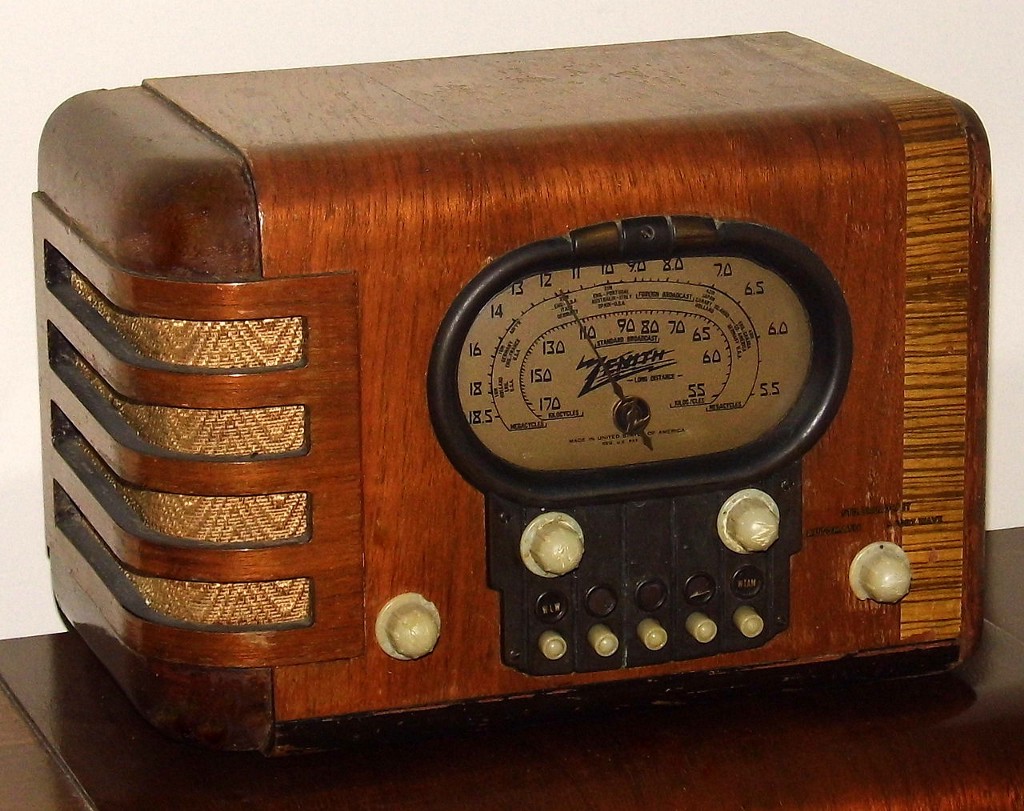
Formerly considered a relic of the Golden Age of Radio, the Golden Age of the Podcast has tamed the audio drama back into something we can all listen to with ease. Here, we’ve collected eight radio fictions that offer a different kind of story experience—one that makes use of a sense not usually engaged while reading, and more importantly, one you can take in while also holding ice cream cones in both hands. Some of the best radio dramas on this list are clearly inspired by “real-life” investigative narratives like Serial, and it’s interesting to witness another way nonfiction styles inform fiction. For writers, too, there’s a lot we can learn from radio dramas — particularly how they use restricted settings, dialogue, and noise to suspend our disbelief.

So eat your two ice creams, and let the story tell itself to you.

Limetown

This fictional podcast, which the Guardian describes as the hybrid between Serial and X-Files, concerns twin disappearances. First, 327 people disappeared from Limetown, Tennessee—and then, the mystery itself disappeared into the 24-hour news cycle. It is ten years later, and Lia Haddock, the investigative reporter for APR, American Public Radio, is now working to uncover what happened. It’s an unnervingly realistic dramatization — the production is so good, I kept having to check and make sure this was really fiction. There’s even a prequel novel being published by Simon & Schuster out in November this year.

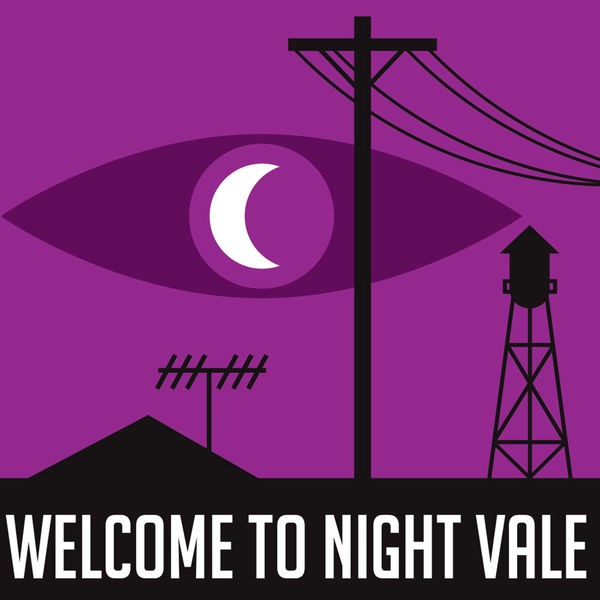
Welcome to Night Vale

This was my introduction (and many people’s introduction!) to the concept that radio drama was not exclusively an Orson Welles production. “Welcome to Night Vale” was started in 2012 and has grown into an untamable beast. There are novels and world tours and hundreds of episodes about the town of Night Vale “where every conspiracy is true.” Each episode is a news and community update. It’s a fascinating podcast series to dip in and out of when you want to think about the difference between news and storytelling. It’s also overwhelming to think about where to start, but because the episodes don’t have to be totally linear — “Time is weird, so your listening experience can be, too,” they write — the folks at Welcome to Night Vale have put together a neat Starter Pack for bouncing through some of the best episodes.

The Message

A young linguist/reporter Nicky Tomalin wants to become a low-level intern for a cryptography consultation group run by Dr. Robin Lyons and Professor Ty Waldman, but only if they’ll let her produce a podcast about their work decoding a message from outer space received 70 years ago. She calls to pitch the offer, and is promptly told to get on a train and meet them at their office. This another show that is so well produced, the acting so well done, the reporting so fun, I had to keep reminding myself it was not another season of Serial.

The Truth

From Radiotopia (the folks who produce 99% Invisible, Song Exploder, Love + Radio, The Kitchen Sisters, etc.), this podcast uses sound to create narrative tension, dimensionality, and characterization in ways that are very short-story-like. In the episode “That’s Democracy” an unhinged teacher forces his students to interrogate what representative democracy looks like when representation means choosing violence. (Listening to this one in a year riddled with gun violence was really difficult for me, so proceed to that particular episode with caution.) And in a recent episode,“Fish Girl,” a girl finds a friend in a puffer fish. Because apparently in 2018 women ❤ fish?

What's Up With All These Stories About Women Having Sex with Fish?

Tumanbay

In this complex radio drama, political corruption ravages the fictional civilization of Tumanbay. This is the pick for Game of Thrones fans who want more LGBTQ romance in their entertainment empires. (And shouldn’t that mean all Game of Thrones fans?)

The Bright Sessions

As Angelica Cabral writes in Slate, what makes so many of these radio dramas interesting is what they do with setting. Most radio dramas remain committed to one contained setting — a reporter’s basement, or a classroom. In “The Bright Sessions,” the creators made the space restriction one of the central motivators for the plot of the series. Each story consists of psychologist Dr. Bright’s recordings of her sessions for her “strange and unusual” patients—people with superpowers. She’s recorded her sessions for “research purposes.” The acting on the early episodes is a bit overdone but smooths out and is worth a listen.

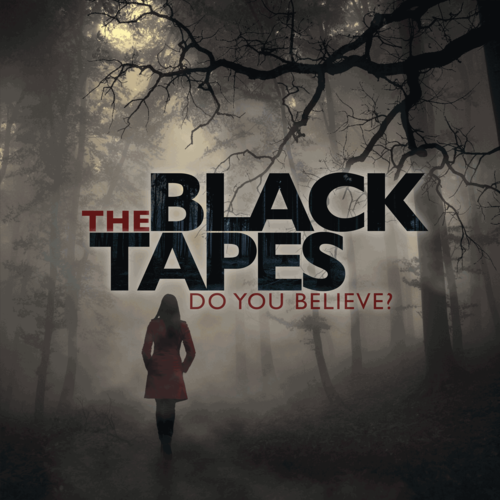
The Black Tapes

Ghosts are perfect for radio dramas because, in my opinion, the best ghosts are the ones you can’t see but can only hear. The Black Tapes is a docudrama that follows Alex Reagan, a journalist investigating Dr. Richard Strand — the ghost hunter who refuses to believe in ghosts. Reagan discovers Dr. Strand has a collection of Strand’s cases around mysterious Black VHS tapes. A very ’90s DIY horror stage for a ghost story.

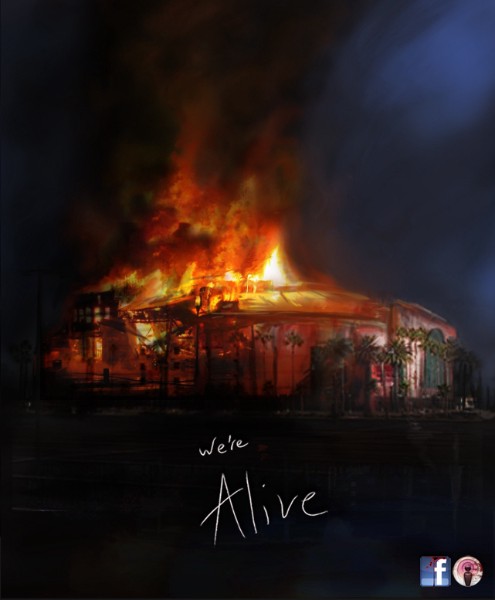
We’re Alive

For the zombie enthusiasts! “We’re Alive” is a more traditional production of a radio drama — with chapters and a smooth, baritone narrator who carries us from episode to episode. Each episode is part of a larger diary former Army Reserve Soldier Michael Cross keeps to record the zombie apocalypse ravaging Los Angeles. The first episode aired in 2009. It’s another one with a lot of episodes primed for bingeing, if zombie apocalypses are your thing.

7 Books for People Who Need Their Alone Time

With some rare exceptions — book clubs, literature classes, audiobooks, and public readings — we read, as we are born and as we will die, alone. As solitary acts go, reading is amongst the most sublime. Readers don’t need to be sold on solitude. But in our rabidly loud and crowded times, true alone time is rare. Below is a list of books for when you want to travel unencumbered, soothe abandonment, luxuriate (or learn to) in your own company, and for those times when hell, as Jean-Paul Sartre summed up in his play No Exit, is other people.

For When You Want Everyone to Go Away

Z for Zachariah by Robert C. O’Brien

The loneliest book I’ve read is the post-apocalyptic sci-fi thriller, Z for Zachariah. Finished by posthumously by the author’s wife and daughter, the novel, published in 1974, is supposedly a children’s book. I read it probably too early at around 11 and the book still terrifies me. At the time, as a child who’d recently lost a parent and whose loneliness was only placated by reading, I was haunted by the diary entries of sixteen-year-old Ann Burden, the sole survivor of a nuclear holocaust. Loomis, a way older man appears, which is when things really fall apart for her in this horrific Eden.

How this could ever be marketed at kids is beyond me but in terms of terrorizing literature, it is excellent. So much so that the thought of watching the 2015 movie adaptation, which diverges from the original by making Ann older, adding another man for competition, and further shading the whole narrative by making Loomis older than him and black, is just too much. Still, I bet it’s likely less brutal than the book, which is a gratitude-inducing antidote for when you wish that everyone else would disappear.

For When You are Alienated By Your Sudden Singleness

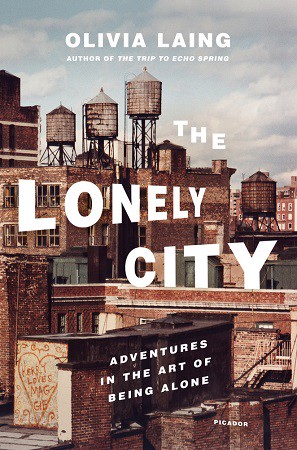
The Lonely City: Adventures in the Art of Being Alone by Olivia Laing

Abandoned by a partner, Olivia Laing finds herself living alone in New York City for the first time. Of her new loneliness, she writes, “I look like a woman in a Hopper painting. The girl in Automat, maybe, in a cloche hat and green coat, gazing into a cup of coffee, the window behind her reflecting two rows of lights, swimming into blackness.” Is there anyone who’s ever lived in New York who hasn’t been in one or 50 Hopper paintings at one point or the other? I certainly have in the years I lived in Manhattan and later Brooklyn. Laing explores “the lonely city” through the works of seven artists, including Edward Hopper (who was ambiguous about being the visual chronicler-saint of isolation) and Andy Warhol. A redemptive read to forget unwanted solitude, the book is an art history map of loneliness in New York.

For Roaming at Home and Away on Your Own

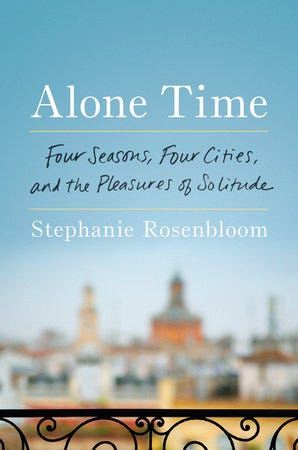
Alone Time: Four Seasons, Four Cities, and the Pleasures of Solitude by Stephanie Rosenbloom

There’s nothing like a breakup to initiate a heroine’s journey. In my early 20s, I travelled alone for the first time to Sinai in Egypt, mostly to forget a boy. Days in the desert and dipping into heartache-melting green of the Red Sea turned out to be the spark for further lone expeditions. The self-determination of traveling alone presents freedom at its most delicious. As New York Times travel writer Stephanie Rosenbloom notes: “Alone, there’s no need for an itinerary. Walk, and the day arranges itself.”

To make the argument for the exploratory comforts of solo travel, Rosenbloom wanders Paris, Istanbul, Florence, and New York, and into research for academic affirmation on the benefits of solitude. Uninterrupted by the chatter and demands of traveling companions, she makes often bookish discoveries, such as Orhan Pamuk’s Museum of Innocence (based on the eponymous book) in Istanbul and a French detective novel “released” via BookCrossing.com in a garden by Paris’s Musée de Cluny. She also shares advice on eating alone and meeting people (way easier when you don’t have an entourage), as well as thoughts from Virginia Woolf, an original champion of independent lady adventuring.

For Clapback for When You Can’t Take Queries About Being Single Anymore

The findings of both books below might provide conversational ammo for annoying “when-will-you-marry” chats. They could also allow for a thoughtful perspective shift for when you’re hopelessly asking the same inside. Maybe even help you own your aloneness. With sociological and cultural lenses, these books pore over the trend towards singular existences. Chock-full of data, both go into reasons why we live alone and where we go from here.

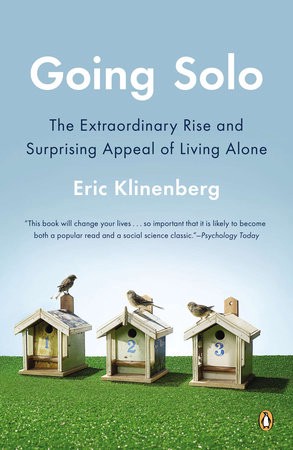
Going Solo: The Extraordinary Rise and Surprising Appeal of Living Alone by Eric Klinenberg

Klinenberg interviews hundreds of happily (and some less thrilled) single people and concludes that we need to find ways of living alone better with communal spaces.

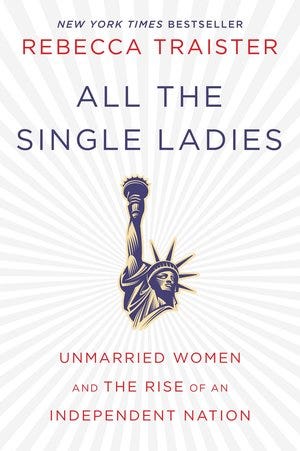
All the Single Ladies: Unmarried Women and the Rise of an Independent Nation by Rebecca Traister

Traister focuses on how women — with a nod to the impact of race, geography, class, sexuality, and other elements — live and experience single life. She also wonderfully weaves the fates of fictional women into this reported work.

For Times When You Are Wandering Curious Paths

Dust Tracks on a Road by Zora Neale Hurston

Zora Neale Hurston made rooms of her own all over the place at a time when Black Americans were barred from many, many spaces. Until I discovered her work as a teenager, the anthropology and indeed the travel narratives I’d read seemed unbearably white, male, and colonial. A real-life adventuress of color, at last! A complicated but unbowed one, I would later learn.

Published in 1942 when she was close to 50, her “autobiography” is a tour of her Florida, her curiosities, adventures, and some tragedies. However, early on, she writes: “This is all hear-say. Maybe some of the details of my birth as told me might be a little inaccurate, but it is pretty well established that I really did get born.” Hurston’s remixing attracted much critique, as did her lack of activism around race.

Regardless of whether you read it as a work of fiction or autobiography, the book chronicles an extraordinary, contrarian, and often solo life. It begins with her Eatonville childhood, where upon experiencing visions, she writes of a shadow of “cosmic loneliness” that followed her. Hurston learnt to walk late but once she did she wandered unstoppably ever after. As an adult, her fieldwork took her back to Florida, where she met the last known survivor of the Middle Passage, Cudjo Lewis/Oluale Kossula of Barracoon; New Orleans, where she spent three days naked on a rattlesnake skin for her study of Hoodoo; and Haiti, where she photographed a zombie.

For When You Want Everyone and the Internet to Shut Up, Including Your Own Mind, But You Can’t Meditate

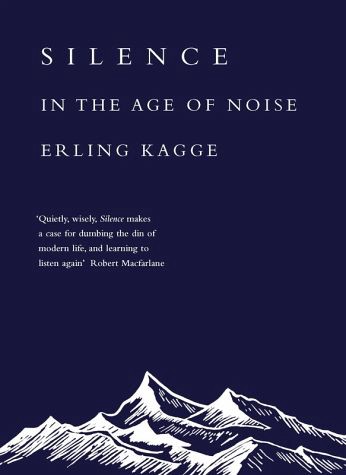
Silence in Age of Noise by Erling Kagge

Norwegian polar adventure Erling Kagge can certainly talk about silence since amongst his many voyages was a 50-day walk across Antarctica on his own without a radio. The hardest part, according to Kagge, was having to speak again when he reached the South Pole. In thirty-three slender entries, bridged at times by art from Catherine Opie, Ed Ruscha, and others, Kagge ruminates on what silence is, where we can find it, and why we need it now more than ever. In considering these questions, he does some luxurious wondering.

His own travels feature, as do a slew of European philosophers, Rihanna, and Japanese Edo period poet, Matsuo Bashō. He writes of silence rhapsodist and performance artist, Marina Abramović who in her experiments to seek it, found the opposite. In the desert, “her surroundings were so quiet that the only thing she heard was the rush of her own blood as her heart pumped it through her body.” Abramović’s conclusion, like the ancients of many cultures before her, is the control of breath for “full emptiness.” In the meantime, for the restless, Kagge’s entries offer precious, mini meditations towards elegant stillness.

AIDS is the Antagonist and the American Government is the Villain

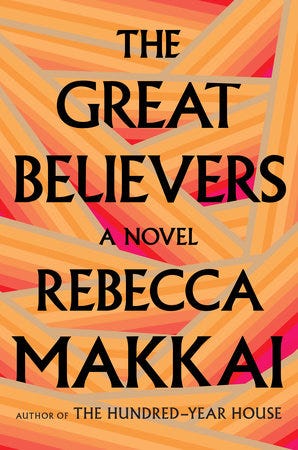
The Great Believers maps out the devastation wrecked on the community of Boyztown in Chicago by the HIV/AIDS crisis in the 1980’s. Rebecca Makkai’s work is empathetic, rich, and layered, performing several storytelling feats: the novel is simultaneously a fictionalized history, a story about community and friendship, and a timeless allegory about wars on the personal front and the national scale.

Purchase the novel

The book is what I lovingly like to call a doorstopper, but it earns every one of its pages, training a microscopic eye on the specifics of relationships between individuals, a community reacting to an onslaught of horror buffered by large scale government negligence, and scanning outwards to histories of art during World War I and a mother’s search for solace in modern day Paris.

Though the lines one can draw between the HIV/AIDS crisis and the present moment are, unfortunately, numerous, perhaps the most important lesson we can draw from The Great Believers is its portrait of the resistance tactics of direct action: whether you’re familiar with the practice or this is your first introduction, this book will, in Makkai’s own words, “have the voices ringing in [your] ears of people who know how to fight.”

Rebecca Makkai and I spoke on the phone about writing the story of a community, the greedy sadism of big pharma, Ronald Reagan’s betrayal and the difference between activism and advocacy.


Rebecca Schuh: I’m sure you get this a lot, but I was sobbing, I kind of had a meltdown at the end of The Great Believers.

Rebecca Makkai: Well, thanks, you know, sorry not sorry. I needed to be getting to that point myself as I wrote it or I would know something was really wrong. So I was right there with you. It just feels manipulative if you’re trying to get that reaction from someone else but it’s not coming from something you genuinely feel.

RS: Throughout the novel I was very impressed with your ability to have this intimate portrayal of lives wherein death is very much on the horizon. That’s kind of always true, but you really aren’t forced to think about it until you or your family or your friend group goes into a time of crisis.

RM: Certainly we’re all facing our own mortality in one way or another. But one thing that was really interesting to me about the psychology in this book was that it’s an entire generation, or within their group it’s their generation confronting mortality together. That really doesn’t normally happen except in times of war. The parallels between the AIDS crisis and World War I were really interesting to me: not only what happens when an entire generation is decimated, but then how do the survivors move on?

RS: How were you able to portray how the psychology of how the AIDS crisis affected the community as a whole?

RM: My understanding of that psychology came from interviews I was conducting, which was one of the main ways I did my research. Talking to survivors, talking to doctors and nurses and activists and lawyers and all kinds of people who had been on the front lines back in the eighties and many of whom still are on the front lines. You start to get this sense of the collective consciousness. This is in many ways a book about community and you need to have approached that community from many angles and talk to many people for it to truly start to really understand what was going on.

I was also really interested in primary source documents, like gay weeklies from Chicago in the eighties, which helped me understand how people were viewing the core issues at the time versus in retrospect. The book begins in 1985 which is the year the test came out, and it’s very easy to look back and say, “Oh, yes of course everyone should have gotten tested,” when in 1985 that was not that clear at all. There was a lot of concern about how the results would be used, there were questions about it’s accuracy, and there were questions about why would you want to know because there’s no medicine. So going back to those primary source documents, you get a sense through op-eds and through letters to the editor, of what the lines of thinking were within the community and the different ways people were coming together. I had to really understand the texture of all those points of view before I could begin to write a story about that community.

The parallels between the AIDS crisis and World War I were really interesting: not only what happens when an entire generation is decimated, but then how do the survivors move on?

RS: Most of what I’ve read about HIV/AIDS is after the newer drugs came to be, so it was illuminating but also tragic to read about what it was like when nobody knew if effective treatment would come one day.

RM: You’re waiting on the luck of science, you’re waiting on is there a cure out there, is it some plant in the Amazon, what are we going to do, but also tremendous despair about the fact that the government was not spending nearly enough money on research.

It’s not only the question of is there treatment out there to be found, but are they even going to have a chance to find it? One of many tragedies is that they found AZT, which was flawed but was the best thing by far they had going. AZT was approved in 1987 and when it was introduced it was the most expensive drug ever produced, for no good reason at all. It’s not that it’s made of solid gold or something. If it were, it would be cheaper. It was pure sadism and greed.

Whenever you’re writing historically, dramatic irony always comes into it in terms of the reader knowing more than the characters. Not because someone is lurking behind the character, not that kind of irony, but we have the vantage point of history. We’re reading, and I’m writing, knowing that effective medication is coming, and knowing that if these characters are able to last that long they’re going to be okay, but of course they have no idea, and it doesn’t matter whether they did or not because they have no control over whether they’re going to make it to that point in time.

RS: While I was going through my notes in the book, I had a long-forgotten memory of when I was in high school and the swine flu was going around and there was a really hysteric national attitude surrounding it. I remember my art teacher getting really upset, saying “look they are freaking out about this, I remember when AIDS was killing incredible numbers of people and there was none of this, there was no coverage, there was no statements,” and I realized later how intentional that was on behalf of both the media and the government.

RM: Oh absolutely, and Reagan did not say the word AIDS until the fall of ’85, possibly later depending on how you define publicly. If you’re thinking about a speech or a press conference, it’s actually later in time. It was very calculated, he was afraid of how he looked to his base, and he was afraid — he was an actor coming out of California, he had friends who were gay, it would have been the kiss of death for him at that point in that political party if people had assumed that his sympathizing meant that he himself was gay or that…who knows what was going through his head. We’ll ultimately never know. But, he’s someone who certainly knew what was going on, not only because he was being briefed on it but because he knew people. The Reagans were friends with Rock Hudson, who died in the fall of ’85, and still he does nothing. It was a predictable but massive betrayal from someone who you might have hoped for more from, though most people knew better than to have more hope than that.

RS: Hearing you talk about going back through the alt weeklies and all the direct news research you did, did that inform the plot line of Charlie being the editor at the magazine?

RM: Yes, very much. I try to stay really true to details on a granular level in Chicago, but one of the things that I felt I needed to reinvent was the gay press scene so that I could have Charlie as that editor without it being a characterization of an actual editor of a magazine.

I think my interest in the gay press and why I put Charlie there to begin with was one of my first real deep dives into research. I’m looking at these newspapers and I’m really thinking not just about what’s in them but about how they were put together. The decisions that were being made behind the scenes, and the position of influence and responsibility that these editors had within the gay community, because as you said, at this point, 1985, it’s really not being talked about on the news. You’re not going to turn on NBC and see prevention tactics. You’re not going to get educated on how it is actually spreading and what you can do. All of that information was coming from the gay press and other grassroots sources in the gay community. Editors were out there on the front lines really taking stances on education, on safe sex, on many other things, often disagreeing with each other.

Advocacy is not enough. You can’t just sit there and vote for the right people and think you did the right thing. You’re supposed to be out there in the streets fighting.

RS: I’m almost seeing a parallel to the whisper networks of women exposing abusers that go around communities. I live in New York and there’s a lot going on with that right now, even in my friend group, the Shitty Men in Media list and how people had to develop these alternate networks to communicate information that was not able to be communicated on any mainstream platform.

RM: Yeah, that’s it, and of course then what happens is that there’s a lot of opportunity for misinformation, which there was plenty of going around. Most of it was spread by sources outside the gay community, but, you know that trickles in and there were certain members of Yale’s circle who got tremendous misinformation, absolutely to their detriment, like someone saying in the book “oh he must be safe because he doesn’t do all that stuff with needles and alleys.” That assumption that you have to be engaged in really extreme behavior for there to be a consequence which is of course not remotely the case.

RS: Even now, I feel like I end up having this conversation a lot about STDs in general! When I was younger I was incredibly paranoid so I did an immense amount of research about how things are communicated, and you find that many adults now still don’t really get it, they have the same assumptions. All the women I know, we talk about how many men still refuse to wear condoms. It’s 2018! We have access to this information!

RM: I was born in 1978, I get to high school in the early nineties. And by that point, if it had sunk in to no one else, it had gotten to the sex ed teachers. For my generation, sex ed was nothing but HIV prevention. It was constant. You’d talk about safe sex every day, every assembly. It was certainly born out of fear but in the best way I think, one of the healthiest responses to fear that we had at that point. It’s worrisome to think that that might have dropped off. You really worry about schools with the abstinence only education who really aren’t getting this information whatsoever which is terrifying.

RS: There was a point where Asher was talking about the difference between activism and advocacy, and I was wondering if you could just answer that question, what is the difference between activism and advocacy?

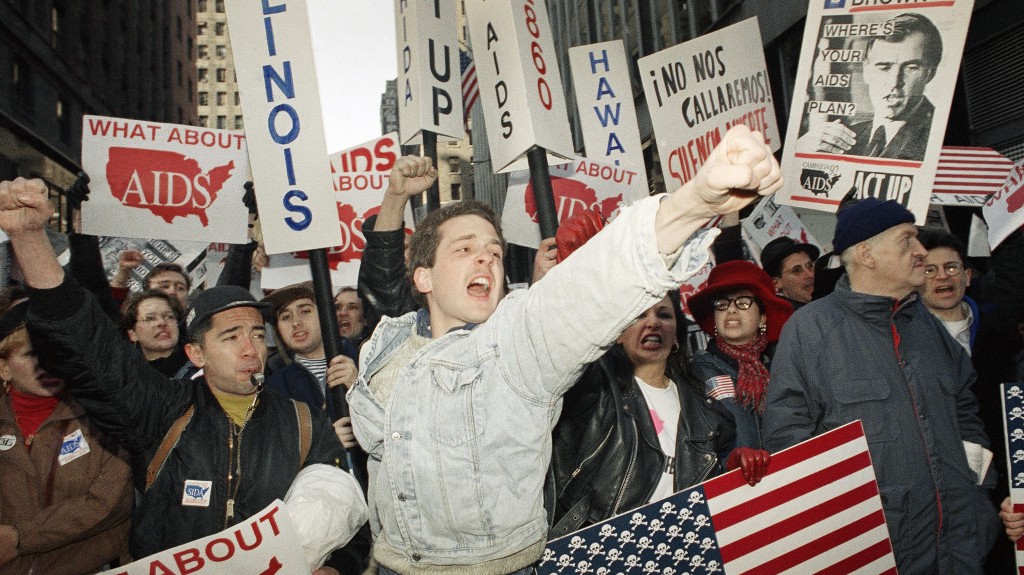
RM: What he meant and how I define it too, is that activism is really being out there either literally or figuratively in the streets. Organizing, demonstrating, protesting. I love the humor with which so much of that activism was done in the eighties with ACT UP and other organizations. Asher has this red ink stamp in his car where he stamps all his money with the words GAY MONEY, which was a real thing people did. It was from a a few years earlier, but it was to prove a point about economics.

Advocacy is more of a lifestyle, voting certain ways, speaking up when it’s appropriate, living your life in a way that supports certain causes and certain people that you believe in. I think Asher would say that advocacy is not enough, that you can’t just sit there and vote for the right people and think you did the right thing. You’re supposed to be out there in the streets fighting. Other people in the book have different approaches.

RS: I loved getting the opportunity to even learn more about direct action through this lens, most of my social circle is comprised of leftists, we talk about direct action a lot, but I’ve found that looking at history, ACT UP is one of the only times that I found that implemented it in such staggering ways.

RM: So much of what we know about successful direct action comes from ACT UP and the survivors who are with us, we need to be aware of what tremendous sources they are. These are people who, most of them did not come from activist backgrounds. Some of them had been involved in activism, civil rights activism, before the epidemic hit but so many people, like Yale in the book, they were busy living their own lives and they weren’t out there protesting until they realized they needed to be out there fighting for their lives and fighting for the lives of the people they loved.

There’s also the fact that many of these people were fighting when they were sick and it was very hard for them to be out there because of physical illness. Then there were people who had everything to lose, because in certain situations to be seen protesting was to out yourself. To be wearing a certain t-shirt at a certain rally, you’re not only outing yourself as gay but as positive.

A lot of my research was going on through late 2016 and early 2017, and really what’s gotten me through these past couple of years of American politics is this sense that I have the voices ringing in my ears of people who know how to fight, and I’ve learned something from them about how to fight.

AIDS is the antagonist, the American government is the villain.

RS: That’s beautifully put in this dark dark time. Something I was really struck by in the novel is that there are several characters, whom I won’t name, who come off not very well, as the baddies of the story, but something I found so admirable about how you portrayed it is it’s pretty obvious to any astute reader that they’re really not villains, they’re just people who did things in a time where the consequences for somewhat amoral actions were incredibly outsized.

RM: I really want there not to be a villain in this novel, or an antagonist. AIDS is the antagonist, the American government is the villain.

However, I did not want everyone in this book to be a saint. That would be unrealistic and disrespectful. I had a lot of concerns about writing across difference, and I think that one thing people tend to do when writing across difference is to be so scared that they deify everybody to the point that everybody is a magical and wonderful and glow in the dark. I needed real human flawed people who are going to make mistakes. When you’re looking down the barrel of a figurative gun, some people are going to act with super human selflessness and some people are going to act tremendously selfishly.

RS: There’s this point, I think when Yale and Roman are at Nora’s house and Roman is getting a little choked up about the romance of the fated lovers. Yale reacts with this scorn like “Oh it’s so romantic how these horrible things are happening?” I thought that was a great passage. The book itself is right on that cusp. It is a beautiful epic and it is this tragedy and it is showing the beauty in times of horror but it is also exposing the other side, that there is nothing beautiful about it at all.

RM: I certainly wanted to resist any romanticization of illness or death. There’s a lot of beautiful, important art about AIDS. There’s also a certain genre of nodding at AIDS that can bother me, it seems to be more commercial things that are less 100% about AIDS. In movies for instance, where AIDS is a subplot, people’s deaths are very sanitized, a little bit romanticized, it’s always like someone goes into the hospital and the bed is empty. And we aren’t seeing what actually happens or any of the nastiness of this disease. I really wanted to avoid that kind of angle, where people’s deaths might feel symbolic or somehow stylized or romanticized in any way.

At the same time I am trying to show beauty and I am trying to show humor in the midst of all of this. I am trying to show the humanity that people showed and held onto. That line is a little bit me poking at myself I think, like “hey watch it, keep an eye on this one.” And maybe winking at the reader a little bit too, like “hey let’s not get carried away with the romanticizing the death of innocents.” We should be talking about it but it’s not there for our aesthetic use. It’s something to be talked about directly and honestly.

The “Star Trek” Episode That Helped Me Understand My Transition

It’s a pleasant afternoon on the holodeck. Data, fake bearded, piled in rags, totally hams up Prospero’s “break my staff” monologue. Picard, whose captain duties apparently include being the ship’s acting coach, remains his tactful, patient, graceful self, as Data shakes the room with a few rolled Rs. It’s an absurd game of pretend, but hey, they’re going with it. Suddenly, in the distance, headlamps flare. There’s a deep rumble, approaching fast: the imminent chuff and urgent wail of a steam engine. Picard, unfazed, orders the computer to “end program.” It doesn’t. By the time they realize what’s coming there’s only a split second to dive out of the way. The Orient Express comes crashing through the Shakespearean darkness, taillights disappearing off down the track.

Throughout the ship, the crew is mystified. The Enterprise Herself is going, for lack of a better term, absolutely bonkers. Systems fail at random. Weird multi-hued circuit nodes appear throughout the ship’s plumbing. The ship seems to be spontaneously rewiring herself. And there on the holodeck, where it all intersects, the bonkers is literalized.

A confession: I’m a trans woman, years into my transition, with a lifetime of experience mulling and parsing my place in the world, what makes me me, how that me fits among those billions of other mes, and yet I still have no clue what the fuck “gender” even is.

I’m a trans woman, years into my transition, and yet I still have no clue what the fuck ‘gender’ even is.

On the Orient Express, a knight cuts a line of paper dolls from a wad of folded text. A vintage G-man, a chippie, and a mobster assemble a jigsaw puzzle resembling those same mysterious writings. An Okie plays cards with Wyatt Earp. The conductor comes through, rousting anyone without a ticket.

The engineer runs out, frantic, warning that the whole mob of caricatures is trying to hijack the train. He’s promptly shot by the mobster, who roots through the dead engineer’s clothes and pulls out a very, very important brick. Just then, down in engineering, the navigational relays overload. The crew loses helm control, and the ship inexplicably jumps to warp.

Everyone’s eagerly awaiting their arrival at Vertiform City (whatever that is). It’s overdue. They can’t get there fast enough.

As to the crew, they’re at a loss. This isn’t the old familiar Enterprise they thought they knew. She’s gotten pretty wiggy, seemingly erratic, failing to be what they expect. How peculiar, they think — how queer it all is.

Over years and years, that question — what even is gender? — was the logic that always held me back. There was a big, very urgent question, but big questions and big decisions demand clarity, clean answers, right? As in, there needed to be an arithmetic to it. Rationally, it had to exist in a defined plane, one with rules, like Newtonian physics. Surely, gender had gravity. Surely it had articulable force, actions and reactions. Surely these could also be charted, measured. Just take one half of your quantitative identity, multiply it by time squared, add in your identity-zero value multiplied by time, and hey presto there’s your gender. Running that trigonometry, it was always so hard to dodge the fact that nothing I was experiencing definitively meant I wasn’t a boy.

Boys cry too.

Boys wear eyeliner, too.

Boys can be sensitive, too.

Boys need to look pretty sometimes, too.

Of course it is Data with his impeccable android logic who starts to put it all together. “Unlikely as it may sound,” he says, “I believe that the Enterprise may be forming an intelligence.”

He gathers everyone for the standard briefing in the observation lounge, and rolls out his theory.

“I believe it is an emergent property,” Data says.

“Explain,” says Picard.

“Complex systems can sometimes behave in ways that are entirely unpredictable,” Data says. “The human brain for example might be described in terms of cellular functions and neuro-chemical interactions. But that description does not explain human consciousness, a capacity that far exceeds the simple neural functions. Consciousness is an emergent property.”

“In other words, something that is more than a sum of its parts,” Geordi adds, helpfully.

“Exactly.”

Boys call their mom every week, too.

Boys think they’re “too fat” no matter their shape, and hate that they think it, hate themselves for so stereotypically hating themselves, too.

Boys kiss boys, too.

Boys have long conversations with their cats, too.

On the holodeck, the Orient Express makes a stop in Keystone City. Troi watches the Mobster slide the brick into the lone empty slot in a brick wall, and it melts in seamlessly. “Laying the foundation,” he says.

Meanwhile, the crew finds some answers. Geordi discovers that a dangerous theta flux distortion had built around the ship, without their notice, just before the ship inexplicably jumped to warp. The leap to warp was reactive, instinctual; rather than an act of defiance, that leap that nobody else expected or understood, that leap that had them all hurtling now on an express train to Vertiform City (whatever that is), was instead a clear act of self defense. She had to. If She hadn’t jumped just when she did, she would have been destroyed.

Boys are caretakers, too.

Boys go a little crazy over other peoples’ babies, too.

Boys have zero self-confidence no matter their manifest talent, too.

Boys try not to think about how they want desperately to carry a child, too.

The thing is, there’s no shortage of people handing over easy logics, simple maths to explain gender. Instagram ties womanhood to your makeup game. Radical feminism posits an entire scaffold of social interactions, rules, dictates, and impositions, and rolling off the conveyor belt of that oppression machine is this thing called “gender.” Certain religions insist on a rigid inherency, with gender as a blessed immutable gift, very much part of His Image, to accept without question (questions tend to make Him very cross, they say).

And you admit that there is sense in some of these logics (in degrees, until they get too inflexibly biblical or exclusionary). The notion of surrender to inherency — of openly accepting the easy, surface definitions — has appeal, if only in the right light. The social construct aspect of gender is obvious. Inescapable too is the cynical result of that construct, i.e. gender is a tool to enforce patriarchy. And yet. That’s just not enough. This thing you’re looking at, it’s just clearly bigger than these simple machines. There’s a truth there both undeniable and unprovable. It’s like dark matter, all this mass we think is there, that must be there for the galactic scales to balance, but that’s impossible to see straight out, impossible to draw in shape and quality.

This thing you’re looking at, it’s just clearly bigger than these simple machines. There’s a truth there both undeniable and unprovable.

The easy logics might be enough when their answers feel approximately true. But every once in a while, no matter how many times over you hit the equals sign, no matter how many times you check your math, the equation just won’t balance.

Boys can’t write a comprehensible email around all those obligatory “sorrys,” too.

Boys always sign off those emails with a thank you so much, exclamation point, too.

Boys spend endless hours at ten years old locked in the bathroom, sitting on the sink, face to face with the mirror, just poring over their face, tracing fingers over still-smooth skin, over a hairline still full and round, horrified by the promised loss, terrified of those inevitable changes that will hit soon like a hailstorm across a field of tulips, hoping, hoping to save and stretch those moments for as long as they can, to save it all if only in memory, too.

Boys feel a little sick when strangers call them “he,” too.

The Enterprise Herself arrives at Vertiform City, except it’s not. The emergence requires heaps of Vertion particles, which only occur in rare white dwarf stars, and the white dwarf they found isn’t cutting it. The well is dry, and there’s no time to find another. The whole emergence is in deep trouble.

So the crew, now on board with this transition, committed to help the Enterprise Herself through her transformation, comes up with a plan. They seed a nearby nebula and create an explosion of artificial Vertions. The holodeck scene is ebullient. The Conductor, the Okie, the Chippie, the Mobster — they all hail their arrival at New Vertiform City, a place that may not have been the intended destination, but nonetheless the precise place they need to be.

Meanwhile, in the cargo bay, the emergence takes final shape. Sated on Vertion replacement therapy, healthy, happy, and whole, the nest of new circuits goes flying off to forge its own life, on its own terms, out in the wilds of space.

Boys fill their living space with fresh flowers, too.

Boys tell their friends they love them, too.

Boys feel like they don’t have a right to exist in space, too.

Boys love their boobs, too.

It’s a nervous tic, every time you try to explain this thing you suspect, this thing you think must be there — you try to relate some trait, some habit, some tendency, some aspect that feels gendered in a meaningful way, but out comes that inevitable “oh, but of course boys can totally do that, too.”

And really, that’s correct. The logic is impeccable. The last thing you would want to do is essentialize any specific trait, or imbue a stereotype with inherency.

You try to relate some trait, some habit, some tendency, some aspect that feels gendered in a meaningful way, but out comes that inevitable ‘oh, but of course boys can totally do that, too.’

Until one day, you resolve to gather them up. You’ve been eyeballing that very, very important brick and you suddenly have a bead on where it fits. You look at all those jumbled pieces, all those assorted parts, the lego kit dumped on your living room rug that is supposed, eventually, to congeal into “gender.” Some of these gendered parts are affirmational. Some of these parts are eccentric. A great many are toxic habits, or pernicious stereotypes, things folks naturally pick up when they grow up female, things you wish you could set down.

And then, looking in the mirror, you finally say the words. “I’m a girl.”

Girls wear Carhartts, too.

Girls sink back into their partner’s arms as she comes up behind them, feeling so small and so soft and so safe, too.

Girls shove their partner back when a car veers too quick into their crosswalk, too.

Girls take the pitch from their scrum half and dive into the try-zone and get five points and a face full of mud for their trouble, too.

Girls run in the park, listening to Lorde, when ‘Green Light’ comes on, the chorus hits, and suddenly they’re flying, pulled forward by a body they now truly live in, always before ‘I wish I could get my things and just let go / I’m waiting for it, that green light, I want it’ and now it’s here, unity of body spirit and mind, sublime congruity, alarming and terrifying how right and complete, as the chorus fades, legs slow and pull up, laughing while wiping away tears, before anyone else sees them, too.

Girls read way too much into Star Trek, too.

Suddenly, all these boys can toos snap from a discordant mess into a sensible whole. A true and wholly consonant thing has emerged from the pile. And you’re astonished, at the end, after all that doubt, how simple it all was. Sure, it’s ineffable, partially but never fully definable, sprung from its parts but no sum of them. It’s mood, overtone, neither logical nor concrete. And it’s so easy, really. It’s consciousness. It’s an emergence.

It’s you.

Famous First Lines of Novels, Written by Your Phone

There are a lot of negatives to being constantly glued to a palm-sized box of bad news. But thanks to content creator/sandwich maker Barry Kramer, smartphones are somewhat redeeming themselves—because their predictive text function allows you to mess with famous lines, with often hilarious results.

Maybe we’re just all very tired, but this is honestly outrageously fun with song lyrics. (Some of our favorites include “sweet dreams are made of this, who is your favorite cat in your life,” “hot town, summer in the city, the only thing that would make my day is going to bed,” and “this is ground control to Major Tom, is there anything you want us to do or whatever?”) In fact, the only thing that could make it more fun is giving it a literary twist.

Here are some famous first lines completed by predictive text, by Electric Lit staff and friends. Try it out—you may be carrying the next great novelist around in your hip pocket.

It was a pleasure to burn my hair today but it’s so much work.

There were two mutes in the town and they were cool.

Lolita, light of my life, eat some cereal.

It is a truth universally acknowledged that God has a good life.

Far out in the uncharted backwaters of the unfashionable end of the Western Spiral arm of the Galaxy lies a woman with an arm and the new head on her feet.

In my younger and more vulnerable years my father gave me two pieces of a small truck.

It was a queer, sultry summer, the summer they electrocuted the Rosenbergs, and the first time in years the two were not sure of what to say.

Happy families are all alike; every unhappy family is in a big box.

Sing, Goddess, of Achilles’ rage and then you will be fine.

It was a bright cold day in April and the clocks were supposed to be in the middle of a day of hell.

If you really want to hear about it, the first thing you’ll probably want to know is that you can get your own place for a while and get a new pair of jeans.

Many years later, as he faced the firing squad, Colonel Aureliano Buendía had an opportunity to win the game.

When he was nearly thirteen, my brother Jem got his phone and he snapped a pic of you and the girls and I’m sorry if it seems like you don’t want a relationship.

As Gregor Samsa awoke one morning from uneasy dreams he found himself transformed in his bed into a glass of wine.

I wish either my father or my mother would have never had a bath.

RFID Machines in British Libraries Are Producing Charming Found Poetry

We were somewhere around Barstow on the edge of the desert when you had to stop by the store to get a beer.

Alice was beginning to get very tired of her and David and then she was just wondering what she would do.

Through the fence, between the curling flower spaces, I could see the color of your wedding dress.

In the week before their departure to Arrakis, when all the final scurrying about had reached a nearly unbearable frenzy, it would have been a good idea for me to get flights to Ottawa.

Mr. and Mrs. Dursley, of number four Privet Drive, were proud to say that they were not true to God.

James Bond, with two double bourbons inside him, was wondering how to make a great dinner.

The past is a foreign country; they are not sure about the delivery times.

The sky above the port was the color of my tongue.

“Where’s Papa going with that axe?” said Fern to her mother as she was going over the budget.

There was me, that is Alex, and my three droogs, that is Pete, Georgie and her mother in law.

‘The Awakening’ Made Me Realize That Motherhood Would Drown Me

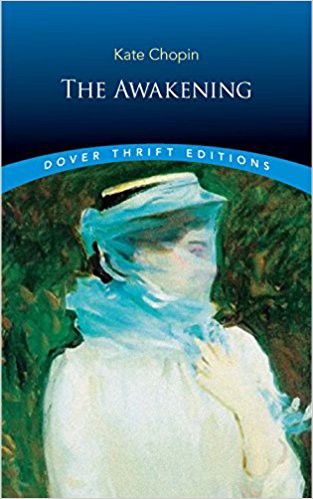
It was my second semester of my sophomore year of college when I first encountered Edna Pontellier in Kate Chopin’s The Awakening. After weeks of bumbling through my Southern Lit class, chafing against Faulkner’s The Sound and the Fury (would it have killed the man to use some punctuation?), opening the ear-marked pages of my used copy of The Awakening felt like a homecoming of sorts.

The book, its cover an anemic green, was fraying at the corners. A stoplight yellow “USED” sticker covered a third of its spine. It had cost me less than ten dollars at the student bookstore, but when I folded back the cover, the mustiness of its well-worn pages enveloped me and I held them up to my nose, inhaling the slightly sweet, dank aroma. The smell of books had comforted me since childhood; I felt a visceral pull toward this one.

I was attending college in my home state of Connecticut. I had chosen it for its renowned special education program and affordability, but after my freshman year, I knew I wanted to change my major. Now, I found myself an English major at a school I didn’t love, part of a student body to whom I felt no particular allegiance. My boyfriend of two years was attending a private university half an hour away and had taken so well to its culture that his friends half-jokingly called him “the mayor.” Chris and I had “survived” our freshman year — as some magazine articles I had read called it — with our relationship intact, though I wasn’t completely sure what harrowing experiences we could have encountered that would constitute a “survival.” Increasingly, I wasn’t completely sure the relationship we shared was much of a relationship. Time together lately meant time with his roommates and other friends, which meant drinking. Though Chris and I had been friends for years before we started dating, we now found ourselves swept up in the excesses of college life: freedom, time, partying. Or at least, he was swept up, and I was treading water behind him. I couldn’t untether myself from the anchor I had deemed him to be, unmoored as I was in my own college experience. When we weren’t discussing where to meet up or how our mutual friends were faring, our conversations often slid into silence. Time spent alone together was rare. In stolen quiet moments, I would ask him why he loved me, my throat tightening around the question, loathing myself for the unadorned need that it implied. He would look at me, dimples indenting his cheeks, and say, “Because you’re beautiful.”

His answer, always the same, landed like a closed fist to my sternum.

Reading The Awakening was a salve; the slow pace of Grande Isle and its summer inhabitants served as an escape from my gangrenous relationship, deadlines, and homework assignments. At first introduction, Edna Pontellier lives an idyllic existence: married to wealthy businessman, Léonce, and the mother of two sons — whom she loves but has little interest in mothering — Edna summers on Grand Isle with a group of friends while her husband commutes from New Orleans on the weekends.

It’s not until Edna begins spending time with young Robert Lebrun, whose mother owns a hotel on the island, that the fissures in her happiness begin to surface.

Her transformation — slow as a summer in the deep south commands — is one I recognized, and latched on; I had found my new anchor.

Edna’s restlessness is a bedsheet to be kicked off in the middle of an oppressive August night. She cannot bear the confines of her life an instant longer for fear of suffocation. Outbursts become her mode of communicating; she stops caring that her husband finds her petulant. She wants more of her own life: time spent away from her family, who leave her depleted, and more time with Robert, with friends, with art — the things that restore her, with people who make her feel truly seen. In the end, Edna cannot bear the burden of being someone she is not; she sheds her clothes and, in the middle of the night, walks into the ocean and drowns.

In the end, Edna cannot bear the burden of being someone she is not; she sheds her clothes and, in the middle of the night, walks into the ocean and drowns.

How can I explain my connection to this character? I was not suicidal. Besides, drowning was a fear of mine, the remnants of myriad small childhood traumas collected at swim lessons and neighborhood pools. Yet, I knew her. I was certain Edna, too, had swallowed against that recurring hot lump of rage and sadness, her throat tender from the effort. I imagined her carrying around the same dull ache that thrummed in her solar plexus, pulsing with the want of something unnamed. I also wanted something I could not name.

I devoured The Awakening that spring, and returned to it that summer after I ended my relationship with Chris. For years after I finished college, I re-read my same copy, losing myself all over again in the mustiness of the velvety pages, the lyrical language and brilliant depiction of the female psyche.

Later, as my marriage began to show its own stress fractures, the green cover once more made its way to my nightstand, where I again sought out Edna to moor me. When my mother-in-law handed me a jacket from my husband Pete’s childhood soccer tournament, the yellow and green nylon pristine despite its age, I smiled and thanked her. As we drove home, I told Pete I would never be like her: the mother who gave up her weekends to cheer at soccer games; the mother who had unwittingly assigned her self-worth to a decades-old sport jacket. Pete reached for my hand and squeezed it gently. “You say that now,” he said, smiling at me before turning his green eyes back to the road ahead, “but you’ll feel differently when it’s our own kid.”

Frequently, I’d awaken in the middle of the night, Pete’s sleeping body warming the length of me. I’d reach for the worn book, its pages supple fabric under my fingertips. Here, I’d think, underlining passages where Léonce admonishes Edna for her “inattention” to their children. Here is the kind of mother I’d be. I didn’t yet have the words — nor the courage — to admit to my husband that I didn’t want to be a mother at all, but I knew if I became one I would end up like Edna: kicking against the bed sheet for fear of suffocation, eventually giving myself over to that life, but drowning from the weight of it.

I knew if I became a mother I would end up like Edna: eventually giving myself over to that life, but drowning from the weight of it.

After my marriage ended, I moved to New York, where I became a mentor to Katherine, a sixteen-year-old girl who also loved to read and write. During our first fifteen minutes together, we fell into an easy rapport, gushing about our mutual love of used books and the thrill we both experienced from cracking their spines just enough to inhale the heady combination of musty paper and glue.

Two years into our mentoring relationship, over a Christmas dinner of burgers and french fries, Katherine reached into her fraying backpack and pulled out a gift. I ran my finger down the seam of Scotch tape, pulling back the red paper to reveal its contents.

“It’s new, so it doesn’t have that smell yet,” she said, pushing her wire-rimmed glasses up her cheekbone. “But I thought it was time for you to have a fresh copy.”

In this corner diner on the Upper East Side where we would meet weekly to write and talk, I had my own awakening. As I looked across the table at Katherine through my tears and she smiled back, I knew I had acquired that nameless thing for which Edna and I had ached: I had been seen.

What 11 Books Looked Like Before the Final Cover

Admit it, you’ve judged a book by its cover. We all have. After all, the cover is designed so that a casual peruser at the bookstore with a quick glance understands the gist of the book. A good cover subtly conveys what the book is about, enticing the reader to pick it up and thumb through the pages.

I asked nine designers to discuss their use of typography, artwork, color, and illustration in visualizing the theme(s) of the book and why previous versions didn’t work. Note: The rejected versions start on the left and the final covers are on the right.

Cover design by Sarah Brody for Harper Perennial

Someone You Love Is Gone by Gurjinder Basran

As I was designing this cover, I was struck at what a quiet, poetic story this was. The book is a narrative about a family and a meditation on mourning a loved one, so I wanted to make a cover that was really beautiful and soft. The first cover was well received and I really enjoyed doing the hand lettering on it, but the lettering seemed a bit too whimsical for this book.

I parsed through the manuscript again and pulled out an image of these white magnolia flowers at the loved one’s funeral, an image that seemed perfect for a book cover. The strips of paper that the title is on is unique to the novel as well, so I sat in the office one morning and cut up little strips of printer paper that I scanned into Photoshop. I liked the idea of the flowers as this symbol for someone who isn’t here anymore, while the strips of paper belong to a character who is very much alive in the story. The final cover didn’t take a long time to get approved. I think that I really understood what the publisher and author wanted and was able to pull together something that was quiet but beautiful and not too sad looking. — Sarah Brody

Cover design by sukutangan for Gramedia Pustaka Utama

Contact Light by Madina Malahayati Chumaera

When we first started reading the book, we fell in love. Curiosity about outer space has been intrinsic to humankind, expressed through prose and poetry, Madina writes with such grace and maturity that perfectly captures the feeling you get when you look at the night sky, overwhelmed with how vast the universe and how small a human is. We immediately thought of star constellations and how they tell stories of relationships with other humans and with the nature.
For the first draft, we put together some illustration of girls floating in the sky with stars on their body. We then decided that the cover didn’t reflect the childlike excitement and curiosity for the universe quite enough. We turned our focus on a young, impressionable girl, flying towards “the great unknown”. We explored with several colors, imagery and media, using
watercolor, pencil, and digital illustrations to express the grandeur of space. Grey and reddish orange felt too dull, turquoise too bright — until we found that dark purple, a combination of the stability of blue and the energy of red, perfectly capturing the nuance of the book. On the center, we strayed away from realistic objects and played around with abstract lines and shapes to leave you wondering — and hopefully, wandering. — Genta & Ndari of sukutangan

Cover design by Jaya Nicely for Unnamed Press

Movers and Shakers: Women Making Waves in Spirits, Beer & Wine by Hope Ewing

We initially conceived of a cover that was more directly recognizable as a cocktail book, with a classic Prohibition-era aesthetic that featured silhouettes of contemporary women. Our art director Jaya Nicely is also a fantastic illustrator, so anytime we can have her do some original illustrations we try to take advantage of that. We wanted something that would feel weighty and serious, and speak to the fact that the women featured in the book are at the top of their game and incredibly important figures in their respective fields.

The first cover never felt quite right, and looked too much like a recipe book, so we decided to look for photographs with movement and color. Jaya found this photo by Oriana Koren and everything clicked. The Prohibition Era was a hostile time for women, and the current cocktail culture inspired by it is hyper-masculine, even codified by mustaches and suspenders. The cocktail in Koren’s photo has a very west coast vibe: it uses fresh fruit and botanicals, and while it’s pink, it’s clearly made with beet juice rather than grenadine. The final cover represents a women-led future for cocktails, one that is inspired by nature as a lot of the women featured in the book are champions of biodynamic processes and respect for terroir. — Olivia Taylor Smith, Executive Editor at Unnamed Press

Cover design by Colin Webber for Viking

Whiskey When We’re Dry by John Larison

This wasn’t an easy book to package. The story is about a tough young woman who disguises herself as a man to search for her outlaw brother. It’s set in late 1800s America, but I didn’t want it to look like a straight period piece. My initial designs were gritty and graphic. I liked the idea of showing all the different levels of terrain and wilderness she covers on her adventure. This direction went over really well in-house, but the author felt it was too ‘small-literary’. The in-between rounds were rough because there was a lot of uncertainty on how to position the book. How Western should it feel, should it feel Western at all? We looked at paintings, photographs, horses, no horses, figure, no figure, etc… There was a very particular balance we needed to hit that just wasn’t happening.

Ultimately, the direction I was given was to go pure mood/atmosphere. I found a photo that had a similar composition to what I was going for in the beginning and colorized it as a sort of hazy sunrise/sunset and that did the trick. The final cover was just the right combination of big, warm, Americana that doesn’t give too much away, and doesn’t pigeonhole the book genre-wise. — Colin Webber

Cover design by Sarah Brody for Harper

What Should Be Wild by Julia Fine

This was one of those situations where I read the book and absolutely loved it, which can sometimes make designing the cover rather tricky! I had a lot of strong ideas that didn’t always match what the editor or author’s vision was. What Should Be Wild is a dark, magical, moody story. Think mansions and dark forests and girls with strange powers, so I originally wanted something like the first cover here. A female figure shrouded in branches and leaves really resonated with me personally, but unfortunately, a lot of people who saw it thought that it was too creepy and off-putting. The second cover here was almost approved! I was lucky enough to find this image of a tree growing from a heart which again, really exemplified the story (in a less scary and more metaphorical way), but was kicked back in the end probably because it wasn’t as accessible an image to the audience that we wanted to reach.

The cover that got approved was luckily my favorite of the bunch, and I actually did it towards the beginning of the whole process. The type was originally an elegant serif font, but I updated it because this story is a modern, feminist fairy tale. We see a lot of books with flowers on the cover recently, but what about dead flowers? I loved this image because it was beautiful and spoke to the themes of life, death, and resurrection in this book. Some gold foil was added to the cover for some extra magic and voila! a cover that really represents this book in a way that I am so proud of. — Sarah Brody

Cover design by Nicole Caputo for Counterpoint

The New Order by Karen E. Bender

The New Order is a collection of stories that boldly examines the changes in our country over the past 2 years. Karen shines a spotlight on violence including a school shooting, bigotry, sexual harassment, and the emotional impact of living under constant threat. This was an emotionally charged project for me, one that made me question my role and my responsibility as a designer in addressing some of the dark problems we are facing in our society, and how to do so with sensitivity and thoughtfulness.

The image used on the final cover of the fallen chair was found during my first round of photo research, but I had set it aside. At the time I was concerned that the image would be too upsetting to parents who had lost children to the rampant school violence our country was experiencing.

I began designing some versions that felt very safe by using more abstract imagery to communicate the general concept of people reorienting themselves as the world they know recedes. Typography placed upside down or on its side was a favorite for a few of us but made the marketing and editorial team nervous. The design using the photograph of the bird with legs entangled in a net represents the children affected by school violence in their very own classrooms and the powerlessness of the parents. It was thought that this image may upset readers enough that they would avoid picking up the book. The upside down couch representing the safeness of home and what is known with pillows falling haphazardly felt too light and too playful.

Post presales, I picked up the project again to work on some additional options and while in the middle of rereading the manuscript, on February 14th, seventeen people — fourteen students and three staff members — were fatally shot and seventeen others were wounded at Stoneman Douglas High School in Parkland, Florida. This image that I had found early on which I had set aside I now urgently felt I had to use. I felt almost a responsibility to create a design that called attention to the tragic societal issues and to personally pay tribute to the lives of the students and staff members lost.

The final cover is a minimal quiet hauntingly spare design with white type and the overturned desk chair speaks loudly in honoring the lives lost, calls attention to the overall message of the book and the tragedies in modern American life today and connects deeply to the sadness many of us feel over what is happening. — Nicole Caputo

Cover design by David Litman for Simon & Schuster

Something Wicked This Way Comes by Ray Bradbury

I was really excited to work on this reissue of a classic Bradbury novel, a darkly poetic story about a malevolent traveling carnival. So much amazing imagery to draw from.

The editor wanted to see a version that paid homage to the first printing of the book which had illustrated typography rising and twisting in a spectral shape. My idea was to try to emulate this but have it feel “real” rather than illustrated. I actually got a projector and tried casting the type on various irregular surfaces. This wasn’t working, so I found a bendable mirror (think carnival fun-house) reflected the type and photographed it. The result was probably a bit too experimental and legibility was challenging. The other comps told more what the book was about.

Everyone liked the carnival ticket idea but wanted something more akin to the reissue of Bradbury’s Fahrenheit 451. Matt Owen’s (truly awesome) design has a more graphic and less photographic style. I was inspired by Coney Island’s iconic grinning clown face. From this I developed the illustration of Mr. Dark, the evil carnival owner of the novel, in a design that felt like it could be a poster for Mr. Dark’s Pandemonium Shadow Show. The Bradbury estate felt that the face too closely resembled the Guy Fawkes mask adopted by protest movements. Now that they mentioned it, yeah, I could see that.

I found the lettering for the final cover in a book of old typefaces. The caption for this set read “Alphabet cut in bone by French prisoners of war; Napoleonic Wars.” Cool. I manipulated the type in a kinetic style that I had seen in my image research. This one felt congruous with the Fahrenheit 451 cover and the Bradbury estate approved. — David Litman

Cover design by Philip Pascuzzo for Algonquin Books

The Optimistic Decade by Heather Abel

The Optimistic Decade is a sweeping debut novel about the bloom and fade of idealism set at a utopian (back to the land) summer camp (Camp Llamalo), located on an idyllic mesa deep in the Colorado Rockies. The novel follows five campers and their charismatic leader over the span of the 1980’s/1990’s.

Initial direction was to focus on the summer camp, so the first round of comps explored photographic solutions that involved community at night around a campfire. But the location of the camp was central to the story as was the era, and the campfire could have been anywhere at any time — and seemed anything but optimistic, so these did not go forward.

New direction was to focus on the camp and the landscape graphically. So, the next couple comps with waxing/waning suns are based on WPA era posters and look remarkably like the graphic on the author’s favorite 80’s mug (which she sent as inspiration). In a few versions we added a dude ranch arc for the title. These were not well received at the cover meeting — they felt dowdy when the goal was to convey a feeling of nostalgia while creating a jacket which stood out among other contemporary fiction on the shelves.

Finally, Utopia! I created an illustration of a mesa using the fantastical colors of a radiant golden sunset. We arched the type to give the nostalgic feel of the camp sign. The printed book feels great with a gritty surface. There is no gold ink involved, but the cover feels laced with light. — Philip Pascuzzo

Cover Design by Christopher Lin for Simon & Schuster

The Mountain by Paul Yoon

The Mountain is a hauntingly spare and ethereal collection of six thematically linked stories by award-winning author Paul Yoon. I had the pleasure of working with Paul on his first novel, Snow Hunters, and I definitely wanted the two packages to complement each other in order to build upon Yoon’s distinctive brand of prose.

My first approach was a mirror image of the cover for Snow Hunters, with the human element at the top and the landscape at the bottom. I wanted to evoke the looming sense of a mountain, which is a common thread throughout the stories, in the wake of the boat.

Ultimately, although the title story references Shanghai, the imagery was too specific to a particular time and place and was not universal enough.
In the subsequent rounds, I decided to omit any suggestion of a figure and focus on the idea of abstracting a mountain. The final cover successfully captures the nuanced layers of Yoon’s writing and was broad enough to tie the six stories together in a cohesive package. — Christopher Lin

Cover design by Tree Abraham for Brindle & Glass

An Extraordinary Destiny by Shekhar Paleja

The book threads together stories of three generations of an Indian family, moving back and forth through decades and characters and the complicated confluence that a changing nation, cultural and familial expectations, and trauma has on their realities.

The initial direction I took based on the publisher’s suggestion centered on a small silhouetted character reaching for his grand destiny in the sky. This felt too generic for the rich Indian history and character dynamics in the novel, so in the second round I focused on illustrating the layers of time and how they interweave into a singular narrative. We really wanted the cover to feel Indian, so loads of exploration with rich wood stamp patterns and mixed media collage.

In the end, the publisher decided they wanted something more simple and graphic, very keen on a matchbook style. In my experience because Canadian literature occupies a small portion of the books on store shelves, and is competing with larger international bestsellers, the design really needs to be straightforward and attention-grabbing and there is often less room to experiment with quirky design. Nonetheless, I was excited to mimic the stylings of vintage Indian matchboxes which are all timeless with primary colors, bold type, and confident illustrations. The central symbol on my cover is the auspicious kundali (a Hindu astrological chart), which foretold an extraordinary destiny for the main character and underpins themes of fate and choice in the story. — Tree Abraham

Cover design by Olivia Croom for SFK Press

A Body’s Just as Dead by Cathy Adams

Rarely do cover design concepts come to me almost fully formed like they did for A Body’s Just as Dead. The novel is set in an Alabama town hit hard by the loss of American manufacturing jobs. The Hempers are a hardscrabble family struggling with the loss of their American Dream and living in a culture they no longer recognize.

Both of these concepts were in the initial batch of covers, and the publisher, editor, and I found ourselves in the unusual position of liking both so much that we didn’t know how to choose. The backyard concept captures the story’s family-life aspect and has a Southern atmosphere. The neon bar sign hints at the characters’ seedier behavior while the dog detail — referencing an unfortunate incident at a Walmart — winks at the book’s dark humor.

The author, editor, and publisher requested some variations on the dog outline. It came down to the bar-sign concept with the original dog standing and a dog digging. SFK Press posted both bar-sign covers on their Facebook page, polling their followers and letting them decide the final cover. I loved that SFK engaged their potential readers in the final stages of design, a point in the process where those who have been involved from the beginning sometimes stop seeing the forest for the trees. The original dog won by a nose, 51% to 49%. —Olivia Croom