Is There Still a Role for Literature in 2020?

Dear reader,

Every year, we re-evaluate what makes literature exciting, relevant, and accessible, and recalibrate our role in furthering that mission. We hope you’ll support Electric Literature’s work with a year-end contribution today.

Wouldn’t it be convenient if literature’s value was self-evident, and the argument for why it must be supported didn’t need to be made? But year after year, global and national events call into question the relevance of reading, of writing, of creative expression, of work that is created and experienced in solitude. What is literature’s value in a pandemic? In the face of rampant injustice and racially motivated violence? In a brutally divided, tribalistic electorate?

We ask these questions every year, as we think about the role of literature in general—and Electric Literature in particular—in helping us face national and global challenges. And at first glance, it’s hard to make the case that literature is what we need. A lone book cannot solve a country’s entrenched racism, or crisis of empathy. It cannot explain Trump voters, or reverse  the climate crisis, cure addiction and disease, or even really heal pain. Literature cannot solve society’s problems anymore than it can single-handedly fix society’s mistakes.

Literature is not the antidote to the news. It is the news’s complex, variegated shadow,

What literature can do is reflect and observe these experiences in ways that are startling, illuminating, insightful, and personal. What you do with that reading experience is up to you. Literature is not the antidote to the news. It is the news’s complex, variegated shadow—the countless volumes of human experience that get reduced to ten-word headlines. 

If you don’t know why literature matters, if you haven’t felt that truth in your bones every day of 2020—whether or you read more than ever or were often too distracted to focus—then I am not going to be the one to convince you. If you know, you know. 

But I can tell you that Electric Literature plays an essential role in keeping literature exciting, relevant, and inclusive, when every force threatens to convince us otherwise—whether that’s reductive dialogue about literature that treats art like a zero-sum game, or a publishing industry that has silenced marginalized voices for decades.

The point of our mission is that it is a moving target. What is relevant, exciting, and inclusive changes year to year and must be renegotiated. In publishing, there can be no resting on our laurels. As the world changes, we must respond. We must change what we read, and what we write. 

Every day this year, Electric Lit worked to provide a platform for writers who have been historically excluded from the literary conversation, on topics that you care about. We supported debut novelists who published into the toughest marketplace for books in recent memory, and we elevated extraordinary short stories, flash fiction, and poetry by writers who deserve your attention.

We know there are many worthy organizations vying for an end-of-year contribution, and we understand if there are other causes that you’d like to support. Many of you have already given to Electric Lit this year, either as members, donors, or attendees of our virtual events, and we are immensely grateful for your support. But if you are able, and you believe in literature’s intrinsic value and want to see us continue to fight for its rightful place in our culture, please make a donation today. 

Gratefully yours, 

Halimah Marcus

Executive director, Electric Literature

Survival Strategies for Unsupervised Children

“The Hands of Dirty Children” by Alejandro Puyana

We’re called the Crazy 9, but there are not always nine of us. We were nine before la policía took Tuki. We called him Tuki because he loved to dance all weird. Every time he heard the tuki-tuki of electronic music, he flailed his arms and raised his knees like some sort of strange bird. Tuki was funny but a little mean. I miss him, but not too much.

I feared we would be seven soon. Ramoncito hadn’t been feeling well, throwing up everywhere. He smelled really bad because he pooped his pants the other day and hadn’t been able to find new ones, so we didn’t like to stand next to him. Or sometimes we made fun of him and yelled, “Ramoncito, pupusito!” and everyone laughed and laughed and laughed, but inside I wasn’t laughing too hard; inside I felt bad. When the others were asleep, I pinched my nose with my finger and thumb and went to Ramoncito. I used to bring him something to eat too, but the last two times he threw up right after, so I didn’t bring him food anymore—why waste it, is what I say—but I still asked, “How are you feeling, Ramoncito?” and “Is there anything I can do, Ramoncito?” My voice sounded funny because of the nose pinch, and sometimes he smiled. Before, he would talk to me a little, but now he didn’t talk much. He could still walk around and go with us on our missions, but he was very slow. His eyes were sleepy all the time, and they looked like they were sinking into his skull. But we also laughed at him because he’s the youngest, only seven and a half, and everyone always gives the youngest a hard time. I was the youngest before Ramoncito came along, but even if Ramoncito didn’t last much longer, the others wouldn’t treat me like the youngest because I was the one that found the knife, and I’m the best at using it.


Here is what the Crazy 9 love.

We love our name, and we won’t change it, even if we are really eight, or seven—we love it because it sounds crazy and because we scrawl it all over the place—when we find spray cans, or markers, or pens.

We love the knife. We found it one night after running away from the lady who wouldn’t give us any money, so we pushed her and took her purse. As we gathered to inspect our loot on the banks of the Güaire River, I pulled it from a secret pocket, shiny and dangerous. We love to take turns and unfold the blade from its wooden handle and scream, “Give me all your money!” but we are just practicing. I carry the knife most of the time because I found it, but also because I can throw it at a tree and almost always get it to stick, and I can also throw it in the air and almost always catch it by the handle without cutting my hand.

We love Pollos Arturos, it’s everyone’s favorite, but we almost never get to have any, because if the guard sees us he screams and chases us away—but sometimes we will beg and someone will give us a wing. One time Ramoncito got a leg, but that was before he was throwing up. He got a leg because the youngest always does the best begging. But we have rules in the Crazy 9, so we didn’t take the leg away from Ramoncito. He ate it all by himself.

We love going to the protests. We don’t go to the front too much because that’s where the police fight the protesters—the protesters wear their T-shirts tight around their faces, or they make gas masks out of junk, or they wear bicycle helmets and carry wooden and zinc shields with the colors of the flag painted on them; they throw mostly rocks at the police, but sometimes they shoot fireworks at them. One of them holds the cohetón parallel to the ground—aimed straight at the line of men in their green uniforms and their plastic shields and their big shotguns—while another lights the fuse. They only let it go when the whistling is loud, and we think they might be holding on to it for too long, long enough for it to explode in their hands, but then we see it fly like a comet straight into the green and plastic wall of soldiers that stands down the road. We always cheer when we see that.

Sometimes we stand next to them and yell at the police. We wrap our T-shirts around our faces and scream “¡Viva Venezuela!” and “¡Abajo Maduro!” and jump and throw rocks. It’s fun, except for when the tear gas comes and we have to run away or else cough and cough and cry and cry. But we mostly stay at the back of the protests because we can beg or steal better. Because the women are there, or the older men, or the cowards that don’t want to fight in the front, like us. The begging is good at the protests. The lady will see us and tell her friend in the white shirt and the baseball cap with the yellow, blue, and red of the flag, “Our country is gone, isn’t it? Poor child. I swear, chama, I don’t remember it ever being this bad!” That’s the moment when I try them, and most of the time I get a few bolivares. But we have rules in the Crazy 9, so we always share the money we get from begging or stealing.

We love each other. We say “Crazy 9 forever!” and exchange manly hugs. I love that feeling you get when you hug someone and you mean it. But it also makes me remember things I don’t like remembering, so let’s not talk about that.

We love mangos! Mangos are our favorite because they are sweet and they are free. We walk down the nice streets, the ones that have the big trees on them, and I pull the bottom of my shirt away from my tight belly, and Ramoncito follows me, placing mangos from the ground inside it, the ones that aren’t nasty. After we are finished, when my shirt is as filled as the grocery bags the rich ladies carry when we beg outside the Excelsior GAMA, we walk all bowlegged and tired to an alley and eat mangos until night. We eat until our whole faces are yellow and mango hair grows between our teeth. We eat until each of us has a mountain of mango pits, and all we can smell is the sweet rot of the mango slime, and the flies start to go crazy. But that was before, when Ramoncito could still walk behind me and pick up mangos. When there were mangos to pick up. Now the mango trees give nothing but shade. And now we are very hungry.


There’s a dumpster in Chacao that is the best dumpster. It is hidden in an alley behind the old market. It is the best because there’s usually good food and there are also juice boxes and liter bottles of Pepsi that sometimes have some liquid still in them. One day we filled a whole Pepsi bottle with all of the remainders—it tasted a little bit like orange and a little bit like Pepsi, and I told the rest of the guys, I told them, “When I grow up I’m going to invent drinks. And the first one is going to be orange juice and Pepsi, and I’m going to call it the Crazy 9,” and everyone agreed that it was a great idea as we passed the bottle in a big circle.

When we woke up, Tomás, who is our leader because he is the oldest and the fastest, told us, “We are going to our dumpster today.” Whenever he talks I stare at his upper lip, with thin strands of black hair sprouting like seedlings. And it’s not the only place where his hair is coming in. When it rains, we all get naked and wash ourselves and our clothes. He’s the only one with hair down there. Well, a few of the others have some, but Tomás has at least three times as much.

It was a pretty morning, with rays coming down at us from between the openings of the highway bridge above. They made columns of light so thick I felt the urge to climb them. It felt nice after the cold night, so cold we huddled together—all except Ramoncito because Comiquita, with his cartoon-looking face, said, “Not Ramoncito Pupusito, he stinks!” We could hear the birds, even through the rumbling of the cars that rolled above us. The river was high and running fast. I liked it like that because it didn’t smell as bad. It was still brown and had trash floating on it, but if I closed my eyes and just listened to the water and the birds, I could pretend I was anywhere else.

It was a long walk to the dumpster, and Ramoncito didn’t look good. His cheeks sank into his face, his skin was flaky, like when you have mud on you and it dries and you can scratch it off with your fingernails. I sat next to him, and I didn’t have to pinch my nose anymore, because I had gotten used to the smell. I said, “Wake up, Ramoncito,” and I stroked his hair as he moaned. Ramoncito’s fallen hair tangled around my dirty fingers.

“Wake up, Ramoncito!” I pushed him harder, and he opened his eyes and looked at me. I knew he was angry, because I had seen that look on many faces. Every time a security guard chased us away. Or after we took the woman’s purse with the knife. But mostly before all that— before the Crazy 9—when my mom stumbled home early in the morning. Her eyes scratched red and tired. And even though she didn’t talk, she would stare at me. And I could hear her think, I hate you. I hate you. I wish I could go back and shake her and yell, “You don’t have much time left!” I wonder if she would have changed then, enough to like me, or at least enough to stay.

Ramoncito’s look changed quickly though—from anger, to pain, to pleading. He was like a little dog begging for scraps. I’ve always wanted a dog, but we have rules in the Crazy 9, and dogs are not allowed. Tomás says all dogs do is eat and eat, and we don’t have enough to share. And it’s true. But it’s also true that Tomás got bitten in the ass by a dog a while back and he’s scared of them, so I think there’s more than one reason for that rule. I helped Ramoncito up to his feet, and it was so easy. I crouched behind him and put my arms under his armpits, my chest resting against his back, and then just stood up. It was like lifting a bag full of bird bones. For a second I felt like I was so strong, like maybe I should be the leader of the Crazy 9. But it wasn’t that I was strong, just that Ramoncito was so light.

“No, chamo, let’s leave Ramoncito behind,” said Tomás, and the rest of the boys nodded their heads in agreement. “He’s only going to slow us down,” Tomás said, and then Pecas repeated Tomás’s words like he always did. “Yes, he’s going to slow us down, déjalo.” His voice broke as he spoke, some words deep, others as high as a little girl’s.

But I didn’t leave him. I told him, “Ramoncito, put your arm around my shoulder and try to keep up, okay?” and I ignored what the others were saying. Stuff like, “Ramoncito Pupusito smells so bad,” and, “He will throw it up anyway.”

So the Crazy 9 marched. The old market was about two hours away, but with Ramoncito it would take longer. We started on Avenida Bolivar. I liked this street because it had more people than trash. Everyone had somewhere to go. On a Wednesday morning no one walked just to enjoy it. I liked Saturdays and Sundays better, when I could see kids with their parents strolling along the wide avenue. I could imagine how it would feel for one of my hands to hold balloons or a cold raspado with condensed milk and for my other hand to be held by someone other than Ramoncito. But there were no kids except for us on Wednesday mornings. It was all busy grown-ups.

Ramoncito and I lagged behind, and for the first time I noticed how the Crazy 9 moved. They were a swarm of brown boys, brown from their skin and brown from their grime and brown from their stink. They were fast and wired, and people parted as they took over the whole sidewalk.

Everyone who walked past them turned around to watch them. The businessmen patted their pockets and jackets, the ladies rummaged through their purses to make sure no small hands had slid in. They formed a moving cloud of jokes and laughter and dangerous grins. Salvador, in his patched-together flip-flops and old Chicago Bulls cap, sprinted out of the cloud and quickly rummaged through a trash bag, looking for an easy bite, and then ran back to the rest, as if pulled by a rubber band. Tomás blew kisses at the younger, prettier women heading to work at coffeehouses or office buildings, and the other boys joined in, as I would have if I’d been with them and not holding Ramoncito up. “Mi amor, you are looking pretty today,” Tomás yelled—a wink and maybe a hand on his crotch, but I couldn’t be quite sure from way back.

As we neared the end of Avenida Bolivar—the rest of the Crazy 9 almost out of sight and with no intent to wait for us—I told Ramoncito, “Look, Ramoncito! It’s the Children’s Museum!” and I pointed at the huge logo of a boy riding a rainbow. He had long curly hair and a big smile. By the front doors we saw a group of little kids, younger than Ramoncito, in their red school shirts.

They formed a line, one behind the other, waiting to go in. They were happy and moved their heads around in awe and excitement. Two teachers tried their best to herd them. One little girl kept walking away, distracted by a planter full of flowers, or a pigeon eating trash, and I wanted to scream and say, “Little girl, obey your teachers! They’ll get mad at you and slap you!” but I didn’t, and the teachers never got mad, they just gently pushed her back in line and placed her hands on the shoulders of the boy in front of her. Her eyes still followed the pigeon, but she held on to those shoulders. The teacher was so gentle. Her hands must have felt so soft and clean.

I looked at my own hand. The one that wasn’t holding up Ramoncito. My nails were long, the tips of them as black as wet dirt. My palms were covered in stains, a landscape of brown and black. When I opened my hand and pulled my fingers apart as much as they would go, the landscape cracked and revealed the cleaner tone of my own skin, hiding underneath.

And then I heard the rumble, which shook me and gave me purpose. It came from deep in my belly—a wet groan so loud that Ramoncito could hear it. “I’m hungry,” I said. “Me too,” he said.

We turned onto Avenida México, which was narrower and dirtier. It led to Museum Square and then to Parque los Caobos, my favorite place in the world. We arrived at Plaza Los Museos, large and round, with its tall palm trees. Street vendors eyed us and no longer fell for our tricks. Today was no trick, of course, because Ramoncito was really sick, but many times one of us would pretend to be in peril or pain, or cause a scene, while the others snuck behind the vendors and stole their things. We are so crazy.

We walked past the plaza, past the Natural History Museum with its tall columns. “Let’s go see the elephant statue!” I told Ramoncito, and he smiled and the color came back to his face, but it might have just been the sun shining through the tall canopy of the caobo trees, brightening Ramoncito’s cheeks with specks of light.

The temperature was colder in the shade, with the breeze rushing through tree trunks. It smelled like wood and dirt—but the good dirt, the kind you want to stick your hands in and feel for worms. I wanted to run through the boulevard that split the park in two, veer off into the brush and pick up a stick and go hunting for dinosaur.

A few months ago they brought plastic replicas of the great beasts into the park. There was a tall one with a crest on her head, she looked like a chicken with no feathers; there was a fat green one with spikes on its back (but the spikes didn’t hurt, we knew because we surfed down its spine); there were brown ones and red ones; little baby ones hatching from plastic eggs; and there was the big ferocious one eating a stupid fat one that got caught. The short ones were already starting to wear out because on weekends the parents lifted their sons and daughters and gingerly placed them on the dinosaurs’ backs. They took out their phones and started snapping photos. But all the parents were working today, and all the sons and daughters were at school. We have no school, and we are no sons of nobody.

I helped Ramoncito walk to the statue while my mind stalked reptiles. Its gold glinted through the thick greenery as we rounded the dense bamboo, until finally his huge head greeted us. It always shocked me, his size, the way he sparkled. His ears were open, like the wings of some gold-scaled dragon. His trunk fell, curving gently inward, between two massive tusks. The elephant walked in the middle of a large shallow pool, the water lapping at his wide ankles. Only his front left foot was visible, stepping on a small hill of rocks that came out of the water.

Ramoncito let go of my shoulder, taking a few short steps toward the edge of the pool. He knelt on the ground and placed his elbows on the rim, so he could rest as he stared at the statue.

Ramoncito looked like he was praying. I stood next to him and put my arm around his shoulder. “He’s so beautiful,” Ramoncito said. “Do you think they’re mean in real life?”

I didn’t know. I knew that there were people who rode them, or at least I remembered a story my grandmother once told me about that. My abuelita never said if they were nice or mean. But I knew Ramoncito wanted to hear a good story, so I told him, I said, “They are the nicest of all animals, little boys ride their tusks like swings and fall down their trunks like slides and run races through their fat legs.”

He climbed on the edge of the pool, weak and unsure, but I didn’t pull him back, and without taking off his beat-up sneakers he walked into the shallow water. It came up to his shins, and every time he shuffled closer, the water rippled and traveled all the way to the pool’s edge in tiny little waves. Ramoncito placed his hand on the elephant’s haunches and stroked him kindly. He whispered something to him and rested his hollow green cheek on its golden surface. I was mesmerized by Ramoncito and his massive pet, this gentle giant, and I knew what I had told him was true. That somewhere far away someone like Ramoncito—someone like me, maybe—hung from an elephant’s tusk or took a shower from his trunk. But the spell was broken by a yell coming from the other side of the bamboo.

“Hey, you! Boy! Get out of there right now!”

Ramoncito’s body spun so fast that his weak legs couldn’t hold his balance, and he fell ass first into the water with a big splash. I could see the policeman heading toward us in a sprint. He was big and ugly, with a thick black mustache and hair coming out from wherever his clothes didn’t cover his skin. He held a wooden club in his right hand, and even from the other side of the pool I felt his anger in the way he gripped the handle.

I jumped into the pool quickly and ran to Ramoncito to help him up. He was sobbing, saying, “Sorry. I’m sorry.” But all I wanted was to get us out of there. The bottom of the pool was slick with green gunk, and as I pulled Ramoncito my feet flew from under me and I landed right on the small of my back, which sent a ping of sharp pain all through my spine. I tried to push my legs and pull Ramoncito’s weight toward the edge of the pool, but in the confusion I couldn’t see the man anywhere—just the huge elephant towering over us both. I wanted him to come to life, to swerve his enormous head, and lift his heavy feet, and shelter us under his golden belly. To blow his trunk at the hairy man, yelling, “You don’t mess with the Crazy 9!”

But he didn’t do anything. I felt the man lift me up. The elephant’s four massive feet stood still, indifferent to the waves from our thrashing as Ramoncito and I tried to escape the man’s grasp.

My arms and legs dangled, and I felt the collar of my shirt tighten around my neck. A big hole in my right sole let all the water that had gathered in my shoe out in a stream. I reached up with both hands and tried to pry the man’s fingers open, but they seemed made of cement. I kicked my feet as hard as I could, finding only air, water dripping everywhere. Ramoncito had slipped from his hold, and I saw him crawl to the roots of a caobo.

“¡Quédate quieto, coño!” the man screamed, but I kept wriggling. I felt his breath for the first time. It carried the warmth of fish empanadas and strong coffee. Finding no way to loosen his grip, I jabbed my fingernails into his hand, but instead of releasing me, he slammed me hard against the ground.

It was like all the air had been sucked from the world. I opened my mouth and tried to gulp in life, but my insides were a dried raisin. The back of my head felt wet, but it wasn’t the same kind of wet as the water from the pool. It was warm. Sticky.

The policeman stood like an angry ape above me. His hat had fallen on the ground, revealing all his features. A thick stubble covered his face, starting just bellow the eyes. His ears were big and meaty. His nose wide and crooked in the middle. The only place not covered in hair was his balding dome. He held his hand up to his mouth, sucking on the wound I had caused. When he removed it to talk, I could see a trickling of blood on his lower lip.

“Motherfucker, hijo de puta.” He spit blood and it landed next to me. “I hate street children, all you fucking do is make my job harder. Why can’t you just fucking disappear, huh?” He took a step toward me, but my breath had not come back yet, and my vision started to blur. I tried to crawl away but was too weak.

“Now I probably have to get a shot. God knows the filth you have in those fingers.” He lifted his booted foot and pinned my leg down. It felt like my shin would split in two, and for the first time since he had thrown me to the ground air rushed into my lungs, only to escape again in a scream. I didn’t cry, though.

The pain sharpened my thinking and I remembered the knife. I always kept it in my right pocket. My hand searched for it and couldn’t feel the wooden handle, the small metal dots that felt cold when you gripped it tight. It wasn’t there.

And then I heard Ramoncito. “Let him go!” he screamed, and stood in front of the huge man, his legs spread apart, his arms stretched out away from his chest, his two bony hands holding on to the knife—a stick figure facing off against a giant. “The Crazy 9 never give up. Never surrender!” he screamed, tears falling down his face.

The man released the pressure on my leg, but I knew why. He lifted his club and walked toward Ramoncito. The policeman’s eyes fixed on the knife and nothing else. I stood. As the man swung the weapon, I rushed him with all my strength and flung my body at him. It felt like running into a wall, but the club missed Ramoncito. He remained on his feet, holding on to the knife, and I was back on the ground, recovering from the impact.

Ramoncito was really crying now. Sobbing. But he wouldn’t move. He clung to the knife so tightly that his whole body shook except for his hands and the blade. They remained perfectly still. Park people had started to gather around. Not a lot, but a few. One woman walked toward us. She was old, her skin the blackest I’d ever seen. She had kind, sad wrinkles across her face. She wore a gray shirt and a beautiful long skirt with colorful flowers stitched on it. Two golden disks, as bright as the elephant still towering above us, hung from her ears.

“Stop!” she demanded. And the man did. He stopped and looked around as if he had awakened from a dream. His chest rose and fell quickly, but his eyes had moved from me and Ramoncito and scanned the faces around us, especially the woman’s. “Have you no shame?” she asked him softly, and I could see the man affected by her words. She knelt by me and held the back of my head. “They are just children,” she said to him. And the man finally lowered his club and let it hang from his side, the leather band clinging to his strong wrist. And I could see something happening to his face. Some transformation. Like he felt sorry for us all of a sudden, or sorry for himself, or sad at himself, rather. I didn’t have a word for it, but it felt like that one time I stole a box of leftovers from the old homeless man, and he didn’t even have the strength to yell at me. When I sat down to eat the food all I could see were his milky eyes looking at me. I ate the food, but felt really bad eating it.

Ramoncito dropped the knife. He was still so afraid. He mouthed a silent, “I’m sorry,” and ran off the way we had come. I have no idea where he found the strength. It was probably fear fueling him.

The woman sat me down and inspected my wounds. “Me llamo Belén,” she said, and she kissed me on the forehead. We sat together at a table and we talked as the dizziness passed. I wanted to go after Ramoncito, but Belén’s kindness held me near. She cleaned my wounds with an embroidered handkerchief and clean water from a plastic bottle. We shared her lunch of hard-boiled eggs, tomatoes, broccoli, and sweet plantains. “I can get you help, you know?” she said. “There are places that can take you and your friends in, people who can care for you, feed you.” But I also saw how thin she was, I could recognize her own hunger behind the eyes. I recognized it because I saw it every day on the faces of my friends, because I could feel it inside of me. It had already been a sacrifice to share the little she had. Plus I had heard stories about these places that take kids like me in. They were never good stories.

“I have to go find Ramoncito,” I told her. And she didn’t try to stop me. She didn’t push. “Vaya con Dios,” she said. And as I walked away I heard her say, “I’m here most afternoons, come see me if you change your mind.”

My torn T-shirt and my shorts had already started to dry, but every time I took a step my wet shoes sploshed and left a wet footstep on the boulevard leading out of Parque los Caobos.


So I searched for Ramoncito. I went back the way I came. It hurt a bit to walk because of the bump in my lower back, but I also felt stronger from my lunch with Belén. I was having fun using my tongue to free the little bits of food from my teeth, and there was one piece of plantain that made me smile because it was pretty big. I asked the newspaper vendor in Avenida México if he had seen Ramoncito go by. He said he had seen a young boy walking sleepily about thirty minutes ago. He checked his pockets as I walked away, fearing my tricks.

When I got back to our spot, Ramoncito was there. He was lying in a patch of sunlight, dirt and debris all around him. He lay on his side, like he was a little baby, or still in his mama’s belly, and he faced a little yellow flower that sprouted next to him. His eyes were wide open. But when I called out, “Ramoncito!” his eyes didn’t move. His body didn’t move. He lay frozen.

I knelt next to him and shook him, and his eyes remained open like he was still staring at that little flower even though he now faced me. “Ramoncito! Ramoncito! Don’t play games,” I told him. I thought it was all just a bad, stupid joke, so I pinched his nose and counted to ten, to twenty, to thirty, to forty, and then I knew that he was dead because no way Ramoncito could hold his breath for that long. And then I let his head drop on my lap. And I told him how much I liked him, and how he had been such a good friend, and that the Crazy 9 would never be the same without him. But I didn’t cry. I didn’t even have one tear come down, even though I felt that lump in the throat I always feel when I think I’m going to cry, like I swallowed a rock that didn’t want to go down all the way.

Now I’m here with dead Ramoncito. I think maybe I should wait for the rest of the Crazy 9 to come back and help me, but I don’t know when they’re coming, or even if they’ll come at all. We have sleeping spots all over, and sometimes when we go to our dumpster we stay in the Metro station with the nice lady who lets us in after they close. And also they’ve been so mean to Ramoncito, maybe he would want it just like this. Just the two of us.

There’s a wooden pallet that floated to our spot four days ago. Tomás told us, “I’m going to build a boat with this, and then I can sail all down the Güaire. I can bring my line and hook and I can fish and bring us back food,” and we all liked the plan, so we’d been collecting supplies, more wood and nails and an old hammer so we could make him a boat that would last. But Ramoncito is more important than the boat, I think, and I don’t care if Tomás gets mad at me. So I carry Ramoncito and put him on the pallet—well, I’ll call it a raft now, because it floats. I pick the yellow flower and tuck it right behind his ear and I tell him, “Ve con Dios, Ramoncito, you were my best friend,” and I kiss him on the forehead. He tastes like dirt and old sweat, like rotting mango, like salt, like the sound my knife makes when it sticks to gray bark, he tastes like Tomás laughing in the wee hours, like sour milk, like Belén’s hard-boiled eggs, like my grandmother’s voice telling me stories before bed, like loud police sirens in the night, like a piece of meat found in a trash bag that I know is starting to rot but I eat anyway, he tastes like my mother’s hand after she’s slapped my face bloody, like a white crane flying low skimming the brown river looking for fish, like the bubbles in a just-cracked can of Pepsi, like the boy that got hit in the head by a tear gas canister and just lay there, like the sharp end of a belt, like a limp mother with a needle in her arm, he tastes like Pollos Arturos, he tastes like loyalty, and like a brother.

I let the raft go. It starts slow, but as it gets farther away, into the middle of the brown river, it goes faster and faster. And then I don’t see him. I imagine the river taking him farther and farther from me. Away from the Crazy 9. Maybe El Güaire will take him all the way out of the city and he will arrive in some beautiful meadow, with flowers, and real elephants, and mango trees that always have fruit on them.

New Poetry Collections that Highlight the Diversity of Latinx Identity

The pandemic made 2020 a difficult time for acclaimed and emerging poets to share and promote their work. In spite of, or perhaps because of that, it has been wonderful to see community- and coalition-building among poets and writers who want to support one another by offering their time and services leading free virtual workshops, creating resources for emerging poets, and participating in mutual aid movements. 2020 has thrown into stark relief the many ways that this year is difficult for everyone, and disproportionately difficult for marginalized writers. But in response, poets and artists continue to demonstrate that the ways that we build community have to be reimagined, and that we can connect across virtual spaces in sustainable and innovative ways. 

But coming together as a community doesn’t mean erasing our differences. This year, it’s also been exciting to see poets of Latin American, Caribbean, African, and Indigenous descent challenging “latinidad” as a homogenous label (in contrast, for instance, to news articles about courting the “Latino vote,” as if that’s one thing). Instead, Latin American, Black, and Indigenous poets are writing about the specificity of their experiences, especially breaking down their relationships to immigration, gender, and queerness, and showing that there is not one Latinx experience, and not one story.

The BreakBeat Poets Vol. 4: LatiNext Anthology edited by Felicia Rose Chavez, José Olivarez, and Willie Perdomo

This anthology, the fourth volume in the BreakBeat Poets series, is a vast and beautiful compilation of poets whose work provides an array of experiences from the U.S. and Latin America. There are innumerable poems in this collection that are stirring and require further reading, but one of my favorites is “In Another Life” by Janel Pineda, who imagines a reality separate from but tied to our own in which the violence of U.S. intervention and civil unrest in El Salvador never happened and her family and community had what they needed to thrive. Other poems that I enjoyed were Mauricio Novoa’s poem “Dandelion Graves,” Samuel Miranda’s “We Is,” Julian Randall’s “Translation” and Elisabet Velasquez’s “Everybody Loves Cardi B But.” 

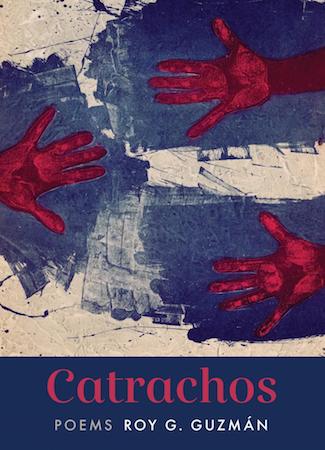
Catrachos by Roy G. Guzmán 

In Guzmán’s debut collection, they chronicle immigrant experiences with the state violence of U.S. immigration authorities, coming of age as a queer person in Honduras and in the Catholic church and communal solidarity with playful and inventive lyricism, incorporating references to paleontology, music and pop culture in their poems. A series of poems entitled “Queerodactyl” in the book depict a creature that seeks to survive in the face of violence and extinction, imagining queer people’s resilience as both necessary and mocking the excavation and study of this resilience, saying in one of these poems, “Who will, in the end, exhume our myths conclusively?” 

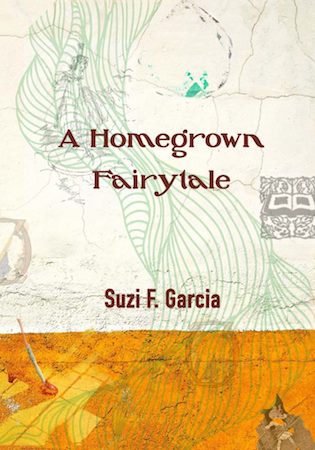
A Homegrown Fairytale by Suzi F. Garcia

In A Home Grown Fairy Tale, Garcia reimagines the Wizard of Oz and Dorothy’s story as a queer love story where fantasy, sensuality, and magic inform the voices of the poems. One series of epistolary poems in the chapbook entitled “Dear Dorothy” imagines a queer lover speaking to Dorothy about her experiences, imploring Dorothy to see the elemental magic in her being. Garcia’s work evokes accepting one’s power in the fables and fairytales that shape us.   

Thrown in the Throat by Benjamin Garcia 

Benjamin Garcia’s debut collection won the National Poetry Series. Thrown in the Throat is a rich space that honors the textured beauty of queer sex and the resilience of undocumented and migrant peoples against state violence where family is both refuge and the people who can hurts us the most. In his poem, “Huitlacoche,” Garcia writes, “Tongues make mistakes, and mistakes make languages,” showing the evolution of how we name pleasure, violence, and our own identities. 

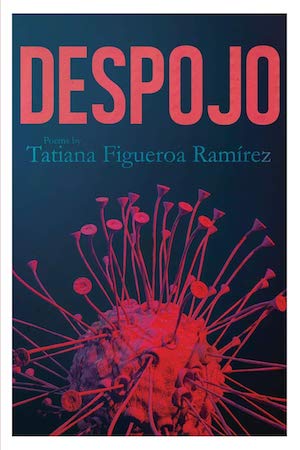
Despojo by Tatiana Figueroa Ramírez

This chapbook’s dedication begins, “These poems are for the ones who need a cleansing, a stripping, a removal, un despojo of the vibrations holding them back from living in their true light.” That is what Despojo is, a cleansing, but also a space to mark what needs to be cleansed, from the hurt of familial pain, sexual violence, medical trauma, and racial violence. Figueroa Ramírez’s work honors her Afroboriqua roots and her own connection to ancestral legacies to inhabit her most true self. 

What Remains by Claudia Delfina Cardona

What Remains is Cardona’s first book and winner of the Host Publication’s Fall 2020 Chapbook Prize. This collection is a love letter to San Antonio, Texas, where Cardona grew up. Cardona’s writing is cinematic, transporting the reader into the poems’ pulsing, beating heart filled with the impulsive desire to connect, to love, and to be recognized in the heart of another. Cardona even curated a playlist, “Pinwheel of Light: A Playlist for What Remains” to accompany her book, giving readers an entire immersive experience.  

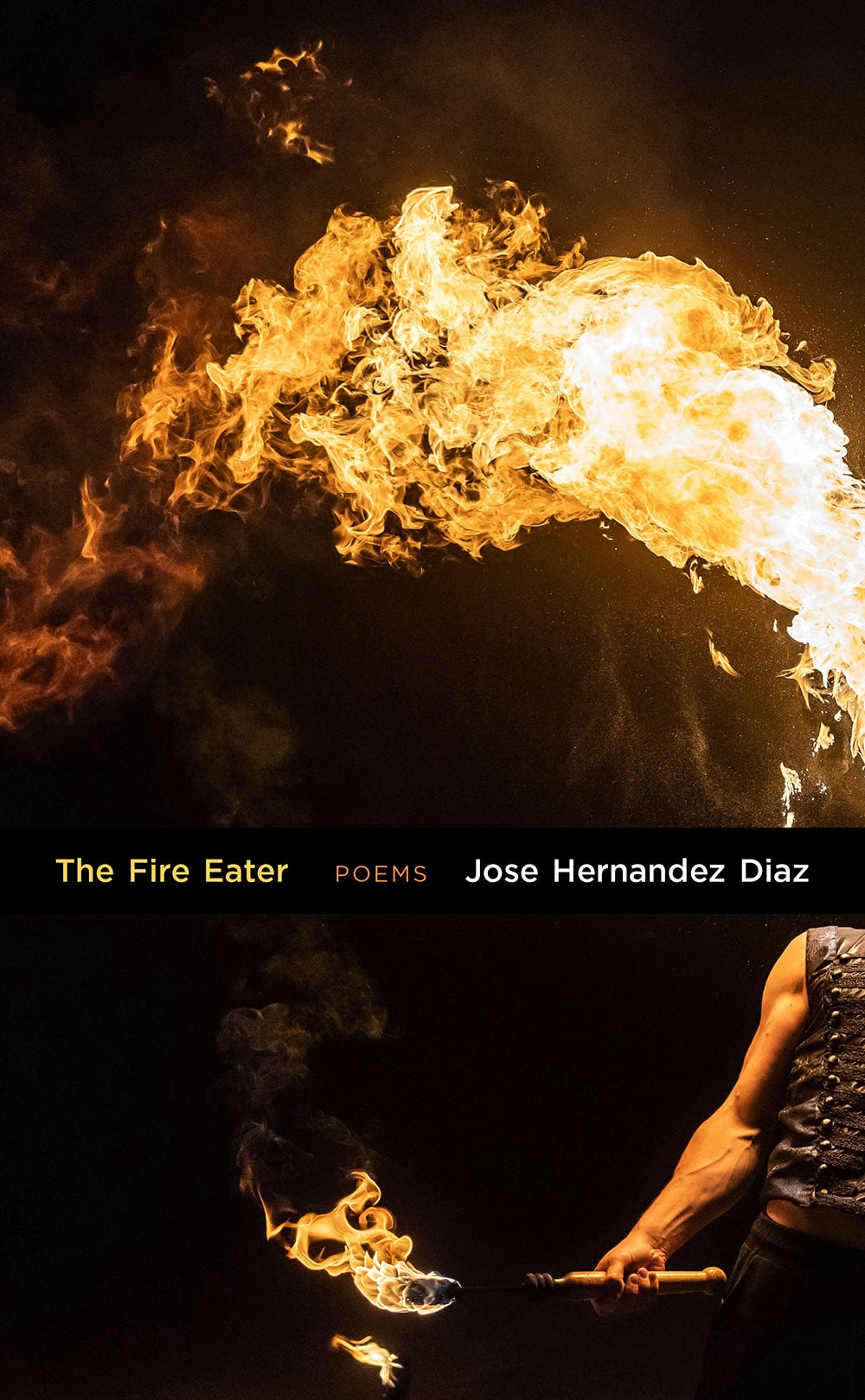
The Fire Eater

The Fire Eater: Poems by José Hernández Díaz

The prose poems in Hernández Díaz’s debut chapbook take the reader on many surreal journeys into the brief and magical lives of characters such as a skeleton in a graveyard, a seagull, a jaguar, and others set in the backdrop of the poet’s native L.A. Each poem tells a story about its subjects and lays bare their nature. One of my favorites is, “Not a Wall,” in which a man writes a scathing letter to a wall reminiscent of the U.S./Mexico border wall to strip it of its power. 

Inspired By Beyoncé's Black Is King: Creativity from Across the African  Diaspora | The New York Public Library

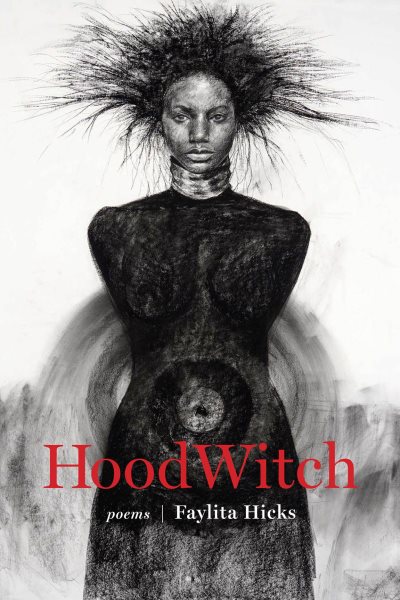
Hoodwitch by Faylita Hicks 

Hoodwitch—the debut from poet, performer, and community organizer Faylita Hicks—is a powerfully tender collection of poems that honors the care that Black women and femmes give to one another and the need to protect them from police violence, patriarchal violence, medical trauma, and grief.  These poems celebrate the beauty of Black femme sexuality, love, queer motherhood, and ownership of one’s own body and destiny.

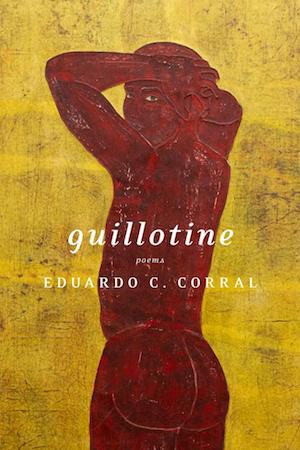
Guillotine by Eduardo C. Corral

Guillotine, Eduardo C. Corral’s second collection of poetry, is just as striking as his first collection, Slow Lightning. Corral explores and embodies both the interior voices of migrant peoples crossing the desert border and those in power who would displace or attack them. This collection depicts loss and love through an immigrant experience where unrequited queer desires are weaved through the poems.  

The Most Spectacular Mistake by Anatalia Vallez

Vallez’s debut collection is an ode to self-discovery, to tenderness, and to understanding how the lineages of love, pain, and traumalive in the body. In these poems, knowing this means to unwrap the hold of patriarchal and colonial violence from this body to love oneself more deeply with an ancestral knowledge that is inextricable from the self. “How to Have a Good Cry” is one of my favorites from this collection, and I read it when I need a reminder to be tender with myself. 

How Ireland Used Shame to Silence Unwed Mothers

Folktales are powerful because of their purpose: they teach moral through warning. This is what could befall you, they say, this is what happens to badly behaved girls. The S. Thompson Motif-Index of Folk Literature itemizes the following categories: Girl carefully guarded from suitors; Girl carefully guarded by mother; Girl carefully guarded by father; Girl carefully guarded from suitors by hag. All four motifs are attributed to several mythologies including Irish. Except for the last one. The origin of “Girl carefully guarded from suitors by hag” is specifically Irish.

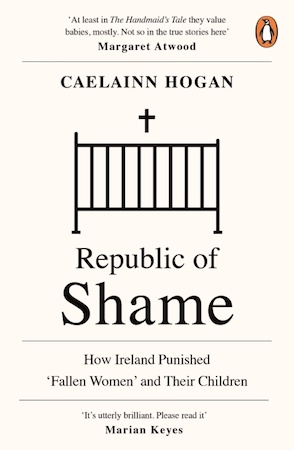
In Republic of Shame: Stories from Ireland’s Institutions for ‘Fallen Women’, Caelainn Hogan brings together the history and the personal stories of the mother and baby homes of Ireland. The homes were run by the nuns of the Catholic Church and served as depositories for women pregnant out of wedlock. Some of the homes were laundries, some were repurposed workhouses from the famine, and a surprising number survived into the early 90s. As Hogan notes, however, the system sounds centuries older to 21st-century ears. Medieval, practically. The history has enough gravesites, unnamed dead, and persecuted women that it sounds like a horrifying folktale.

With Republic of Shame, Hogan’s task was to bring the history of the mother and baby homes into the realm of the present. To this day, women from the homes are trying to locate the children taken from them, and adults are still searching for their birth mothers. The legacy of the homes could be as invidious as the system was if it remains hidden by the same force—shame. Just this week, the Irish government voted to keep the archives of the mother and baby homes locked for another 30 years, leaving hundreds of people without answers, which in some cases means an identity.

Hogan spoke to me about the personal quest of her investigation of the homes, and two of the system’s most disturbing motifs: silence and female virtue. 


Lucie Shelly: Given the volume of material and history, and how much is still unknown, how did the process of writing this book differ from your usual reporting and journalistic writing process?

Caelainn Hogan: I became, in some ways, a guide within the narrative to take people through what was a large scope of history—from the Magdalene Laundries back in the 1700s to the present day. That includes the ongoing legacy and the continued search for answers and investigations, so it was both a lot of research, and a moving news story.

I was encouraged to put myself within the narrative—to bring a level of transparency which connected disparate issues. It’s quite personal from the beginning. Across the road from my house was the provincial house of the Daughters of Charity, which is the religious order that ran the biggest mother and baby home in Ireland. Growing up in Ireland, being from Ireland, the laundries were something I knew about but I hadn’t realized this issue was so close to home literally. When I started to talk to people, I realized how many people I knew were directly affected. Using myself and my experience of discovery as a guide was a way for me to bring an immediacy to the narrative. 

My generation’s perspective is that the mother and baby homes are a thing of the past, but it has an ongoing impact. I was born in 1988, a year after illegitimacy was abolished in Ireland. I spoke to a friend’s mother who was sent to a mother and baby home, also in 1988. That alternative, that could have been my mother’s life. That had quite a deep impact on me. 

LS: The process of consciously trying to narrativize a tragedy is often a moral complication for journalists. Janet Malcolm put it more starkly and said—I’m paraphrasing—that good journalists know what they do is morally indefensible. But I wonder if drawing on your personal experience and using yourself as a guide mitigated that issue? 

CH: From the outset, I wanted to include my own experience, for the sake of transparency as well as narrative. I wanted to write this as an Irish woman from a generation that was sort of straddling a time: when we were born, the institutions were still operating. But most of us grew up thinking of them as something of the past. We grew up in an Ireland where divorce was just being legalized, contraception was just being legalized. So, we were conscious of that and I think still living with the impact of the homes, but we’re also the generation that saw Ireland change very rapidly and we feel part of that. I wanted to capture the cultural context which includes my own experience. I wanted to show my experience of coming to terms with this alarmingly recent past and understanding how it continues to impact lives, to admit to my own ignorance even when it affected people I knew, to realise there were institutions around the corner from the house where I grew up that I never knew about, a system built on secrecy but all around us still. So, in terms of narrative, it took the shape of a quest. I wanted to find out more about these institutions that impacted the lives of people I know. 

As for journalism being “morally indefensible”… Without a news story reported by Alison O’Reilly breaking around the world about the deaths of children in Tuam and the pressure this put on the Irish government, an investigation into this system of institutions might never have happened. Reports I read while researching the book quoted religious sisters admitting that records were falsified. As journalists, as writers, I think the burden is on us to do the work necessary to interrogate our motivations and approach, to realise our own preconceptions, to do better in the ways we create space and document.

I remember speaking with a sex worker rights activist who ran a community organisation in New York about the media guide they developed. She emphasised that journalists should be more aware during interviews of whether a question is crucial to the story or if they are asking out of personal curiosity or a sense of exoticism. Some people might expect speaking about trauma to automatically be cathartic or empowering. In reality it is usually exhausting for the person reliving that experience and can be retraumatizing. I write at the end of the book that I don’t believe anyone can give another person a voice. If you believe you are giving someone a voice, you might actually be silencing them in ways you don’t understand. 

LS: I’d like to talk about the generational perspectives of the topics you write about. There’s a section in which you mention a woman from Tuam, Teresa, who really captures the generational spectrum. “There were vast differences from her mother’s generation, when nothing was spoken about, to Teresa’s generation trying to put together lists of names of the dead, to her daughters’ generation now growing up in a town marked by the discovery. ‘My own girls ask, how did ye let this happen?’” The daughters’ question suggests a lot has changed, but as recently as 2018 in Ireland, the life of a foetus was more protected than the life of a mother. Adoption law still protects the anonymity of the mother—which means many people don’t have access to their birth information purely because they were born out of wedlock. Do you think the revelations about the mother and baby homes have really led to great change? 

I don’t believe anyone can give another person a voice. If you believe you are giving someone a voice, you might actually be silencing them in ways you don’t understand.

CH: Another woman mentioned in the book is Noelle Brown, an adoption rights activist. She speaks about adoption rights as an equality issue. I think that’s a really powerful way to think about it because, it’s true, we have people in Ireland who were adopted and don’t have equal rights to their birth information or even their original birth certificate. There are so many ongoing barriers to information for people who were born in these institutions, and for the mothers who were essentially incarcerated and want access to the records held on them. I think the breaking of silences around what happened in the mother and baby homes has been a catalyst for the sort of movements for equality that we’ve seen over the last few years, but I think there is still a lack of awareness of the ongoing inequalities that people face, this culture of silence and shame. 
There’s still a culture of silence around adoption in Ireland, especially when it comes to adoptees accessing their own information. Our adoption laws were always intended to keep it as secret as possible. It’s surprising that they’re presented as protecting the privacy rights of the mothers—almost every woman I’ve ever spoken to who had her child taken from her for adoption, who was sent to these institutions, they have only ever wanted information and answers. These are women who have spent years searching for their children. 

And yes, there are those who haven’t, who still keep it a secret from their husbands and other children. But that’s not because they stopped thinking about their child. It’s often that there’s still this shame. That’s the biggest reason for the ongoing silence. There’s still a culture of silence that needs to be broken. Putting the rights of the mother and child in competition with each other only serves the culture of silence—much more than it serves the mother. 

The decision to search and trace is very complicated. That was very important to the book. But in the experience of the women I spoke to, at least, the reality is that so many of these mothers spent their entire lives thinking about what happened to their child.

LS: The book really interrogates this “shame-industrial complex.” I’m interested in the role silence played in that complex—in the many kinds of silences, really. For instance, there’s the silence of the ashamed, and the silence of the oppressor. Did you perceive a difference in how these silences are perpetuated?

CH: Funnily enough, when it came to speaking with religious sisters who worked in the institutions, I was surprised by how eager many were to talk. On an institutional level, there’s a very pervasive silence. And the minute lawyers got involved, conversations shut down. 

But on a personal level it was different. I spoke to a woman who worked as a midwife in St. Patrick’s which was the largest mother and baby home in Ireland. She was a religious sister with the Daughters of Charity. She spoke to me about her memories of the women, very detailed memories. One woman coming in with two corsets on to hide her pregnancy, another woman who brought in a map so she could pretend she was off in Norway when really she was in an institution in Dublin giving birth in secret. This midwife remembered so much and shared these memories and stories, and yet I remember getting a call from a nun high up in the order to say, oh that you know that woman’s memory isn’t very good. 

I was constantly told by people within the church that I was only hearing one side, and that the media was representing this history in a very one-sided way. And yet when I went and tried to get the other side, I faced silence on an institutional level. Some nuns were eager to give their experiences but there was too much of a hierarchy. So, that was a real insight, I think. Even within these congregations, silence is imposed.

LS: I was wondering if we could talk a little bit about the idea of female virtue. There’s an idea that in post-colonial nation building, the new national identity is often staked on female virtue. How do you think Ireland’s post-colonial history factors into the mother and baby homes? 

CH: Well, look at the way “‘Kathleen ní Houlihan”’ came to represent this whole image of Ireland, a woman to be rescued or defended, being assaulted—invaded by colonial forces. It was in the nationalistic literature and art of the [1916] Rising, the country as a woman’s body being occupied. In the 30s, when [Eamon] de Valera oversaw the writing of the new constitution, he had this vision of Ireland being a land of “comely maidens” in their homesteads. It’s still within our constitution, the part that says the women’s place is in the home. It was meant to be taken out, there was meant to be a vote on it and there hasn’t been yet. 

Every mother and baby home would have an image of the Virgin Mary, in the grotto of penitence. That was the ideal woman, a Virgin Mary.

But you can see where Ireland was trying to create a new national identity that was in every way opposed to Britain, and that was primarily done through this association with the Church. A Catholic nation, a moral nation. One in which women went from being active fighters, activists within the Rising to comely maidens that were meant to stay at home. Women becoming pregnant out of wedlock defied that image. The system of institutions was to hide away anyone who defied or undermined the ideal image of what Irishness was in the eyes of the state and church. That meant mothers and babies—any other people, too. Mental institutions were used the same way. 

Every laundry or mother and baby home would have an image of the Virgin Mary, of course in what looks like the grotto of penitence. That was the ideal. The ideal woman was a Virgin Mary.

LS: You note that a 1924 report stated one in every three illegitimate children born alive was dying within a year. I’m interested in this report because it suggests awareness, which is to say, complicity. To my mind, there is intentional complicity and ignorant complicity, but it seems like the two kinds can do the same amount of damage. What kind of role do you think complicity has in silence, institutionalism, and the shame-industrial complex?

CH: I think it’s shocking how quickly these institutions became normalized. I’m still surprised when I go through reports on mortality rates within the homes and the fact that those rates were raised during the very first years the system was operating. It was no secret. The children were dying and at much higher rates because of the conditions and very little was done about it. You see even the way that the [famine] workhouses were repurposed from the workhouse system imposed by Britain. The likes of Tuam and St. Patrick’s were in former workhouses, places which separated children as well. So, we took over that system, we gave it to religious orders who really perpetuated that environment. In other words, it was never a secret, people in positions of authority knew the realities of the conditions within the institutions and they knew children were dying at disproportionate rates. There was just a sense that these lives didn’t have as much value as the lives of others. 

I don’t know if you could call it complicity, but it’s absolutely culpability and the effect of stigma that allows you to normalize some lives having less value than others. There was also a sense that these children were immoral and delicate, the children born of an immoral relationship were somehow physically vulnerable. It was as if their deaths were seen as inevitable because they were born “illegitimate”. A deeply internalized discrimination towards these children, instilled by the Church’s dogma about sex outside of marriage being a terrible sin, was replicated in politics and law. 

In terms of complicity, I think it’s hard, again, for my generation to understand the deep influence of the church people at that time, where the church was really the ultimate authority. People didn’t question. 

LS: Our generation is talking a lot about how social oppressions are systemic. Racism and sexism are deeply woven into society but there aren’t physical institutions in the same way Catholicism has churches. How do you think institutional power presents nowadays?

CH: Eliza Griswold did a great piece recently for The New Yorker on crisis pregnancy agencies, religious crisis pregnancy agencies that were given funding for doing ultrasounds and operating the reproductive health care even though really the whole intent of their operations was to prevent women seeking abortions. So, we’re seeing the rollback of rights. In the U.S., there’s the strong influence of the religious right. In Ireland, the Church does still have influence over us. I think it’s 90% of primary schools are still owned by the Church or denominational. 

Private organizations were profiting off the institutionalizing of people. We see that worldwide—this sort of treatment of marginalized people is normalized.

Look at systems like Direct Provision in Ireland where we have normalized the institutionalization of vulnerable people. That, to me, shows how a harmful system grows and is accepted for so long. Private organizations were profiting off the institutionalization of people. And I think we see that worldwide—this sort of treatment of marginalized people is normalized, it becomes acceptable. There are so many parallels—think of the forced separation of families in the U.S. 

I think that was the most surprising thing about the legacy of the religious run institutions in Ireland: how normal they were considered. It wasn’t a completely secret system that no one knew about, it was just seen as the way things were done. The people sent to those institutions were seen as people deserving of that discrimination. In order for discrimination to be systemic, it has to be normalized. 

LS: Do you think spending so much time immersed in this material has improved your ability to see contemporary parallels? How has it felt being steeped in this story for so long?

CH: I think one of the main things it showed me was the lengths to which people will go to protect an institution. When it comes to church and state, that is the purpose of silence, to protect the institution. And, I say this in the book, that doesn’t do them any favors.

I also saw how institutions grow and then have to be sustained. And yes, there are endless parallels. It’s the same with Direct Provision, and you could say private prisons in the U.S., and other carceral, for-profit institutions. The lengths people will go to when there’s an incentive to keep an institution running is shocking. No matter what the damage is. 

With the Church today, you see the same sort of stigmas and discrimination. During the World Meeting of Families a few years ago, there was a Catholic bishop who said contraception removes a woman’s right to say no to unwanted sex and blamed homosexuality for a “contraceptive mentality.” The Catholic hierarchy still seeks to influence state policy and law. 

With systems like emergency accommodation, we are still warehousing vulnerable people for profit. It’s a way to hide people away. The ongoing moralizing and pathologizing, taking away agency from people—it’s a way of taking away power and giving it to someone who thinks they know better. I think that’s probably the core of how the mother and baby institutions developed in the first place. 

This Bestselling Novel Is Confronting Argentina’s Crisis of Violence Against Women

On August 24, 2014, in the early hours of the morning, Melina Romero disappeared after celebrating her 17th birthday at a bowling alley in her hometown of Buenos Aires. Her body was found a month later in a nearby suburb, near a stream, wrapped in a trash bag. In Argentina, the crime was remarkable, in part, for how unremarkable it was—Romero’s rape and murder joined a long list of women brutally killed by men who were often their intimate partners, a crime known as femicide. Months after Melina’s death, the femicide crisis in Argentina would boil over into a countrywide catharsis of outrage.

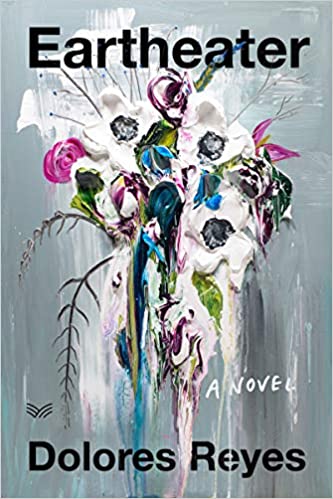
Six years after Romero’s death, as the ongoing femicide crisis continues to roil Argentina, Eartheater (translated by Julia Sanches), a debut novel inspired by the crisis and written by the Argentinian writer and feminist activist Dolores Reyes, has become a surprise bestseller and injected new energy into efforts to end systemic partner violence in Argentina. Reyes dedicates the work to the memory of Melina Romero and Araceli Ramos—another victim of femicide—who were buried near the school near where she works, and to all victims and survivors of femicide. Since its publication in 2019, the novel has roiled the conversation around intimate partner violence and the continued unsolved murders of women in Argentina.

For Reyes, the story started during a writing workshop, where a colleague’s story included the phrase “the earth of the cemetery.” As she heard these words read aloud, Reyes had a vision of a slight young girl with long hair, crouching low to the ground, eating earth. It is a scene that also opens the novel: during her mother’s funeral, a teenage girl, known only as Eartheater, is so overcome with mourning that she begins to eat the dirt from her mother’s grave. “The earth devouring you is dark and tastes like tree bark,” she says. “It pleases me and reveals things and makes me see.” What she sees is a vision of her mother’s death—her father beating her mother.

Eartheater is bullied at school for her strange habit. When a teacher—Señorita Ana—goes missing, the girl eats earth from the school’s courtyard and has a vision during art class: “I’d drawn her as the earth had shown me: naked, her legs spread-eagle and kind of bent, so that she looked smaller, like a frog. Her hands were behind her, tied to the posts of an open warehouse with the words ‘PANDA JUNKYARD’ painted on it.” The drawing leads to a meeting with the school principal, and a search of the junkyard, where authorities find Señorita Ana’s body. Afterward, Eartheater’s aunt, her only caretaker, becomes so unnerved by this power that she abandons the girl and her brother, Walter. They drop out of school and, even as Eartheater tries to block out her discomfiting powers, bottles of earth start appearing in their front yard, each one left by a desperate person in search of a missing loved one.

Since its publication in 2019, the novel has roiled the conversation around intimate partner violence and the continued unsolved murders of women in Argentina.

Even amid a global crisis of intimate partner violence, particularly against women, the situation in Argentina stands out as especially dire. According to the United Nations, as of 2018, a woman is murdered every 32 hours in Argentina—often the culmination of weeks, months, and even years of daily abuse and violence. In 2015, after the heinous murder of a pregnant fourteen-year-old, Chiara Páez, who was beaten to death by her boyfriend and then buried in his grandparents’ yard, journalist Marcela Ojeda tweeted, “Actresses, politicians, business leaders, community leaders, are we not going to raise our voice? THEY ARE KILLING US.” In response to Ojeda’s tweet, protesters organized a march on the capitol in Buenos Aires. This small march grew into a protest of 200,000 women and a sweep of other national actions, all under the viral hashtag, rallying cry, and nascent social movement #NiUnaMenos (insisting on “Not One Less” woman kept alive). Spurred on by a machismo culture that condones the harassment and ill-treatment of women, ineffectual or apathetic handling of cases by the police, and weak and poorly applied laws against intimate partner violence, Ni Una Menos has grown into a broad-scale movement not only fighting for the eradication of femicide—and the full prosecution of its perpetrators—but also for greater enfranchisement for all Argentinian women, including the right to have access a safe and legal abortion. In Reyes’ novel, while a seismic social movement like Ni Una Menos is absent, the circumstances of it remains: unable to turn to politicians or the police to prevent these deaths or, in their aftermath, to find closure, the families of the missing women and children instead form their own network and process for seeking justice. In this case, their route runs through the supernatural powers of a teenage girl, who soon becomes the only recourse for the victims’ families.  

But despite being called upon to act, Eartheater is herself a resistant heroine. Initially overwhelmed by the pain and mourning from her own mother’s death, as well as the trauma caused by her previous visions, at first Eartheater simply ignores the jars and bottles of earth that appear. Each one bears a name and, sometimes, a picture of the missing, and as the jars accumulate she instead tries to wash away her guilt and suffering through familiar teenager methods: she drinks, plays video games, hooks up with boys, and buys cotton candy at the covered market . As she says, “Beer was a blanket hug that covered me from top to bottom.” She and her brother Walter, who live together in adown-and-out and impoverished suburb of Buenos Aires, both have a keen sense of their limited future—as orphans and dropouts, there is little to work for or aspire to besides enjoying each day as much as they can. Even so, desperate people continue to track Eartheater down and beg her to help find their missing loved ones and, eventually, she concedes.

There is a version of Reyes’ novel that one can imagine being well-suited to the streaming era: a paranormal police procedural where a young girl, who can commune with murdered women through eating earth, is paired with a swashbuckling cop and, together, they bring justice to the serial killers and domestic abusers of the world, one hour-long episode at a time. But in place of fantasy, Reyes’ novel is more hard-boiled, grittier, and embedded in the reality of a failing system. The cop she does fall in with, Ezequiel, is self-interested—only coming to her to help find his cousin—as well as disinterested in much more than himself . The people and bodies that Eartheater does find lead to little closure or justice. After she tells one family that their son, who has disappeared, was not kidnapped but instead died in an accident, the family refuses to believe her, the mother instead insisting, “I’m gonna tell the other women not to let the kids out on their own. Someone might steal ’em.”

There is a sense that Reyes’ novel is itself a warning against wish fulfillment.

There is a sense that Reyes’s novel is itself a warning against wish fulfillment, and while the stymied justice for these murders is a motivating factor for a movement like Ni Una Menos, the violence is itself the result of much deeper and more sinister cracks in the social fabric. Even if, like Eartheater, you could know who caused a woman’s disappearance or death, it is no guarantee of justice, and in Argentina, such disappearances continue to have a fraught and painful legacy. The country is still grappling with the history of one of the worst military regimes in South American history, infamous for the national reorganization process, el Proceso, that resulted in the disappearance and murder of over 30,000 people during the 1970s and ‘80s. In Eartheater, the grief of disappearance is palpable. As the girl examines her yard full of bottles, she realizes that “. . .no earth tasted alike. No child, sibling, mother, or friend was missed like another. Side by side, they were like glimmering tombs. At first, I used to count them and arrange them tenderly, occasionally stroking one till it let me savor the earth inside it. That was how I usually felt. But right then, I despised them. They weighed on me more than ever. Altogether, they exhausted me. I felt the bottles piling up on me. The world must be larger than I’d imagined for so many people to have disappeared in it.” In the end, the burden of this crisis falls not on the institutions meant to address it or the people meant to solve the crimes, but on a poor girl living in a poor neighborhood, the very sort of girl, perhaps like Melina Romero, at risk of disappearing herself.
As readers, we have a clear desire for justice in a novel about crime. We want to solve the case, and for the missing women and their families to have peace. But that is not the story that Reyes is telling. Throughout the novel, Eartheater continues to be haunted by the ghost of her former teacher, Señorita Ana, imploring her to keep searching. “What about me? What about everything you promised?” Ana says. To which Eartheater responds, “I don’t want to anymore, Ana.” Ana is insistent: “But you could find them. Have them locked up. For me. They’ll keep killing, out there. Don’t you get it?” But there is no resolve in Eartheater to keep going, no desire to fight crime and bring about justice. Instead, she and Walter flee the city, overwhelmed and fed up with what’s been asked of them. “I can’t deal with the people or the earth anymore,” she says. “I’m done with dead people.” As she finds—the power of knowing, of having an answer to the question, isn’t enough. Solving the crime, and even catching the criminal, isn’t enough, not in a society complicit to women’s suffering and with those in power failing to act. For Reyes, these are the things that can’t be solved by the supernatural, but instead only by a wild, full-throated roar for change.

I Am Eating America Clean

i too do not like a party too childreny

I too do not like a party

Too childreny

Because then I think

How many will my witch eat

And will she be too bloated

When the sponge of passion

Fruit and lemon cream

Is hoisted up the altar

With its crown of fire

Obviously there are more seriousy problems

When a party is childreny

The drinking songs are all fucking wrong

The slippers shrink and my foot

Must be crammed like walnut meat

The virgin sacrifice is poorly received

My witch eats her weight in feelings

I drown my sandwich in donkeys blood

All that rich food

None of my bottoms fit right

I must walk about nakedly twelve days

The children laugh and rub a butter on me

They believe a body like me

Will not happen to them

O but they have tasted the cursed food

The costco sheetcake

Fit for a mormon family reunion

The costco chickenbake

With the blood of a caesar dressing

We jump into the air in unison

When we land the earth ruptures darkly

The blind honey of a melon

new dawn fades

Quite obviously I am living the american dream

Snakes pour from the heads of my daughters

Amnesia spills out of our pockets

The eternal in me recognizes

The eternal in your keep

It is a reading of all my trespasses

It is your forensic accountant

It is my foam and honey

Of the petri plate

Igniting a sentient mohawk

For the psychoanalyst

She slips on the gloves but

The gloves are not sterile

Or even physical because

The work is not of this world

She must reach into my dinosaur brain

That shit is deep oil

Which is why her symbolic gloves

Go fingertip to forearm

Obviously I am eating america clean

It falls from meat

Like the bones of a slow-cooked creature

It is the home of free shipping free relocation

To be unfree in this home is brave

It is a home of pillars and no roof

And voices falling from the bone

10 Literary Podcasts to Listen To if You Miss Life Before Quarantine

Remember 2019, when quarantine was only a word you heard in sci-fi movies? When getting out of bed in the morning wasn’t an activity that caused burn out? When you had IRL plans sometimes? This year has been rough, and we don’t blame you if you don’t have the mental capacity to actually read a book. Fortunately, we’ve compiled some podcasts that’ll make you feel like a bookworm while also reminding you of the world before COVID. Dig into these podcasts even if you don’t have the energy to dig into the stack of novels that’s been growing on your nightstand. 

Sentimental Garbage

Listen to if you miss: Wearing real pants and going to bars to eavesdrop on strangers as “research” for your “novel”

If you’re looking for a podcast that digs into your favorite fiction by women and offers it the same literary merit that most people offer Moby Dick or Shakespeare, look no further than Sentimental Garbage. Host and author Caroline O’Donoghue interviews her guests about their favorite chick-lit books, and then digs into the novels to discover what makes them work. Anyone who’s ever wanted their English class to ditch Dickens for Devil Wears Prada should check out this podcast.

The Stacks - The Stacks Podcast — Coming April 4th | Listen via Stitcher  for Podcasts

The Stacks

Listen to if you miss: Talking about books over oat-milk lattes with your coolest friends

Described as “a smart, bookish brunch with the literary pals you’ve been waiting for,” The Stacks is a podcast hosted by Traci Thomas that’s part book club, part conversation with a friend, and part writing masterclass. Thomas meets with guests who range from authors to actors to community organizers, and they discuss all kinds of books—from classic favorites to highly anticipated new releases. Listeners can expect to hear guests talk about their publishing experience, reading habits, and guilty pleasure books, as well as thoughtful literary criticism. 

Deadline City

Listen to if you miss: Meeting up with your writing group in whoever’s living room has the comfiest couch

New York Times best-selling author Dhonielle Clayton and award-winning author Zoraida Córdova have joined together to create a podcast about all the things nobody ever told you about being a writer. Whether you’re curious about navigating the publishing world, editing your novel, or just staying interested in writing, this podcast offers an in-depth look at what it takes to write a book, and what happens after your first publication.

Hey YA | Listen via Stitcher for Podcasts

Hey YA

Listen to if you miss: Feeling happy, hopeful, or optimistic 

Anyone who reads young adult (YA) literature knows how much fun these books can be. If you’re looking for books that are a little more playful than the stodgy literary classics, be sure to check out this podcast from Book Riot. Hey YA offers recommendations for YA books, the latest news about YA fiction, and interviews with YA authors. If you’re looking for book lists for horror enthusiasts, aspiring witches, political activists, or people with short attention spans, Hey YA has what you need.

You’re Booked

Listen to if you miss: Going to parties just to snoop around a stranger’s apartment

Listeners looking to discover how teenaged bookworms became world-renowned authors will love this bookish podcast. Host Daisy Buchanan interviews a different author every week to snoop around their bookshelf and find out which books mean the most to them, which books inspire them, and which books just look good on the shelf. If you’ve ever wondered how a reader becomes a writer, you should listen to this podcast.

Say More

Listen to if you miss: Lying on the floor of your apartment after a party, talking to your best friends about things that straddle the line between petty and existential

This podcast isn’t really about books, but it is hosted by two internationally-renowned poets, Olivia Gatwood and Melissa Lozada-Oliva. In Say More, Gatwood and Lozada-Oliva interview each other, their friends, and experts about things they have a lot to say about. Although they don’t talk exclusively about writing or literature, Gatwood and Lozada-Oliva look at their topics and guests through the lens of a poet—which is to say, they flip the subjects on their head and break them into a million unexpected pieces. Topics include: sharks, prison abolition, gay porn, YouTube makeup tutorials, and cancel culture. 

Bonnets At Dawn - S3, Episode 1: Wives and Daughters Part 1 | Listen via  Stitcher for Podcasts

Bonnets at Dawn

Listen to if you miss: Going to the library and spending a few hours wandering between the shelves

Every week hosts Lauren and Hannah get together to discuss the work, lives, and legacies of women writers from the 18th, 19th, and 20th century. Some of these authors are well known, like Jane Austen and the Bronte sisters, some are authors you may not have thought of in a while, like Beatrix Potter and L.M. Montgomery, and some are authors you’ve probably never heard of, like Sarah E. Farro and Sarah Piatt. The hosts are often joined by experts and academics to dig even deeper into the worlds of these women writers. Whether you’re a Charlotte, an Emily, or maybe more of an Anne, you’ll love Bonnets at Dawn.

Storybound - Introducing The History of literature | Listen via Stitcher  for Podcasts

Storybound

Listen to if you miss: Going to the movie theater, sitting in a comfy seat, eating popcorn, and listening to other theatergoers murmur in the dark

This literary podcast invites acclaimed authors to read their favorite short stories. The twist? These readings are designed to be radio-theater productions that fully immerse readers in the world of the story. Using original music and sound design, Storybound invites listeners to engage with authors on a whole new level. 

The Talking Book Podcast | Listen via Stitcher for Podcasts

The Talking Book Podcast

Listen to if you miss: Attending readings and chatting with authors at your favorite indie bookstore 

The Talking Book Podcast is the creation of indie audiobook recording studio The Talking Book. It’s great for listeners looking for interviews with their favorite underground authors, plus discussions of the editors’ favorite essays, excerpts, poetry, and fiction. If you’re yearning for the days when you could wander the small-press section at your neighborhood bookstore, you’ll love this podcast.

James Murua’s Literary Podcast

Listen to if you miss: Book club meetings with friends who always pick the best reads

James Murua’s blog has been called “the leading blog in African literature,” and his podcast is no different. James Murua’s Literary Podcast gives voice to African and Black authors, while also covering African literary news. Every week, Murua interviews a different African author, both newcomers and award-winners, and keeps listeners updated with the African and Black literary scene. Anyone looking for the literary news beyond the white-centric Western monotony will be thrilled to find Murua’s podcast.

7 Books That Prove You’re Not the Only Weirdo

Apologies, but I have to begin my introduction to this list of books by briefly mentioning my own book; shout your aggrievance about this to the heavens if you must.

Writing my book, which is a hybrid of memoir and reporting about my dog, was difficult for me at times, because I’m not used to writing about myself, and it frankly makes me somewhat uncomfortable. But one thought brought me through it: the hope that readers would sometimes see themselves in my peculiarities, rather than see me. That they might also feel weird about throwing away their dog’s fallen whiskers, or that they might also sing to their dog about the fact that it is dinnertime, or that they might also look at their dog and cry because oh my god they love him so much, or that they also wonder whether or not they have dog hair in their lungs. My hope was that anyone reading it will, at least at points, think: That’s me, too. 

This is one of my favorite reading-related feelings; that I am not alone in an odd or seemingly “dumb” question, or a peculiar way of thinking. Below is a collection that made me feel that way, that’s me, too, for various different reasons. 

My Dog Tulip by J. R. Ackerley

My Dog Tulip by J.R. Ackerley

J.R. Ackerley’s book-length love letter to his dog is a relief to me, and I assume, to all of us who love our dogs with a passion that could inspire an entire memoir. I can’t read this book in public because there are too many moments that remind me too intensely of my own devotion to my dog, and prompt tears. The first one comes near the memoir’s start, after Ackerley’s recalls accidentally being bitten by his dog (she was going for an apple) and his dog’s subsequent apology-like reaction: “…later on, when she saw the bandage on my hand, she put herself in the corner, the darkest corner of the bedroom, and stayed there for the rest of the afternoon. One can’t do more than that.” Gaaah. You see what I mean?

Spook: Science Tackles the Afterlife by Mary Roach

All of Mary Roach’s books are exactly what I want all of the time: intense deep dives into either arcane or seemingly un-arcane, but actually, when you think about it, also arcane topics. Cadavers, eating, ghosts, sex. Spook explores every question that might arise in your mind when contemplating the possibility of an afterlife, which I do often, and many you didn’t even know you should be thinking about—specifically, in that case, how a “vaginally extruded ectoplasm,” revealed during an infamous seance of the 1920s, might have gotten to its hiding place. (“In other words—please forgive me—she stuck it up there, and then she pulled it out,” Roach writes, paraphrasing a Harvard professor on the subject.) Roach always allows you to feel the excitement of sharing an odd question, and the greater excitement of reading about how she actually went to great lengths to figure it out. A true joy.

We Are Never Meeting in Real Life.

We Are Never Meeting in Real Life. by Samatha Irby 

Irby’s writing is consistently brilliant and touching and vulnerable and hilarious, and I just love it so much. And like a lot of great humor, her writing allows you to indulge in human truths about yourself that you may not feel comfortable admitting otherwise, or human truths that she describes with such amusing and perceptive detail that you unconsciously attribute them to yourself, too, even though that is not always accurate, and you are not actually like that, and you are just reading something that is funny. I think about the Bachelorette application that opens We Are Never Meeting in Real Life. all the time. “Do you have any children? I’m counting the cat here. So, yes.” “Do you have any pets? I HAVE A CAT-CHILD NAMED HELEN KELLER; I believe we’ve been over this already.”

If Our Bodies Could Talk by James Hamblin

If Our Bodies Could Talk: Operating and Maintaining a Human Body by James Hamblin

If Our Bodies Could Talk is essentially a list of all of the questions you are embarrassed about having because you assume that probably everyone else already knows the answers and you are a fool and should probably just keep your mouth shut. It turns out that is not entirely true! There are at least a handful of other people who have these questions—like the first one, “If I lose a contact lens in my eye, can it get into my brain?” (answer: no)—and James Hamblin is here to answer them all for us, patiently and with good humor. With every page you’re like, “Oh my god—I thought I was the only one who did not know how my heart knows to beat?” You weren’t. And now you do know, because of the book. Thank you, James Hamblin.

Inside of a Dog: What Dogs See, Smell, and Know by Alexandra Horowitz

I believe there is no way to share your life with a dog without thinking, multiple times per day, “why is my dog doing this and, if I knew why, would I be able to use that knowledge to give him a better life, please, oh god, all I want to do is make him happy?” Alexandra Horowitz knows why and, luckily, she has written several books to enlighten us. She also gives permission, and direction, for what might seem to some like indulgence. I often like to let my dog linger on walks, stopping at every spot he might want to sniff. This can be an annoyance to anyone walking with me, or behind me, but I have always felt it was better to let him enjoy the sniffing, as it seems to be his favorite activity. Horowitz agrees. “Since I’ve begun to appreciate Pump’s smelly world I sometimes take her out just to sit and sniff,” she writes. “We have smell-walks, stopping at every landmark along our routes in which she shows an interest. She is looking; being outside is the most smelly, wonderful part of her day.” So, there you have it. At the instruction of Alexandra Horowitz, everyone else just needs to wait.

Wigfield, Amy Dinello Sedaris - Shop Online for Books in New Zealand

Wigfield: The Can-Do Town That Just May Not by Amy Sedaris, Paul Dinello, and Stephen Colbert 

This book did nothing less than change my entire life. Reading it felt like someone was seeing into my mind and assuring me that the exact things that I felt were funny, the exact way of phrasing, the exact level of silliness, could exist in reality as a work of fiction to be enjoyed by all of the like-minded, of which presumably there were some. Every sentence of this book is hilarious, in a genuine, laugh-out-loud, read-it-aloud-to-whomever-is-near-you, sort of way. No space is wasted. It is a miracle, particularly for those of us who think so.

If on a Winter’s Night a Traveler by Italo Calvino

Direct addresses to the reader are not always pleasing, but every time I read this novel I am immediately stunned by direct-address-related pleasure. The first pages—instructions for how best to enjoy reading the novel (“Try to foresee now everything that might make you interrupt your reading. Cigarettes within reach, if you smoke, and the ashtray. Anything else? Do you have to pee? All right, you know best.”) and then a lengthy sidebar on how the reader might have come across the novel in the first place—immediately make one feel seen to the point of insecurity. Oh god, how does he know? Is he here? Can he see me? This energy, which moves the rest of the novel along briskly, (though it’s not always in the second person), feels specifically designed for you, the individual reader, as if it were tailored to your expect specifications. (Here by “you” I mean me, but I do predict that I also mean you.) Here I am, you (I) think, the exact audience for this book.

Electric Lit’s 20 Most Popular Posts of 2020

In an unpredictable year, we could count on one thing: Electric Literature readers will always be motivated by stories that put the world into literary context, and put literature into the context of the world. You loved book lists about defunding the police or destroying capitalism, recommendations for work by BIPOC writers, and essays about moving book events to Zoom, reading the “Earthsea” series as part of the work of racial justice, and knocking Joan Didion off her pedestal. But true to the chaotic nature of 2020, there were a few surprises too. Below are our most-read posts of the year, in ascending order of popularity.

Photo manipulation of a young Black woman featuring polygons and bright colors

6 Debut Fantasy Novels Starring Black Women by Patrice Caldwell

Caldwell, the editor of the fantasy anthology A Phoenix First Must Burn, highlights books that take “Black girl magic” literally.

When [my anthology] sold, we were just beginning to see Black-authored YA fantasy and science fiction novels get major traction… It said that these stories didn’t just matter to us Black girls who grew up reading and imagining ourselves in fantastical and futuristic worlds, but that there is a wider market than maybe even we ourselves realized.

Medieval painting of woman writing

Margery Kempe Had 14 Children and She Still Invented the Memoir by Sara Fredman

So what’s your excuse? No, just kidding, we promise that’s NOT the take-home message of this essay about the medieval memoirist who might as well be the patron saint of moms who write.

Margery’s Book offers perhaps the earliest example of how childbirth and motherhood can become generative in a literary context—even, or perhaps especially, when the writing is not about childbirth and motherhood. We need all the examples we can get.

Why Is Everyone Suddenly Obsessed With Sourdough? by Jess Zimmerman

Sourdough burst on the scene as a quarantine project in April, but Robin Sloan, author of Sourdough, had been looking into the magic of microbe-based baking for a while. We asked him to help us understand.

One of the things these microbial communities are amazing at is coordination, and I think there’s something about that worth dwelling on in this moment. Of course, I don’t want to be a lactobacillus, even if it means I can work in perfect harmony with a community of billions; but… I guess I’d be willing to LEARN some things from a lactobacillus?

Tilda Swinton as the White Witch

A Definitive Ranking of all the Chronicles of Narnia Books by Gnesis Villar

Our wickedly funny former intern ranks the crypto-religious children’s classics, from the barely-remembered The Horse and His Boy to the unforgettable introduction of “Jesus’s fursona, Aslan.”

While the Chronicles of Narnia series might be a little polarizing—for some it’s a beloved childhood classic, for others it’s a cheesy Jesus-fest—I think we can all come to agreement on who is the worst Pevensie: Edmund. Another thing we can agree on is viciously pitting nostalgic pieces of media against each other to see who comes out on top.

Amy Adams in Hillbilly Elegy looking like hell

“Hillbilly Elegy” Is the Last Thing America Needs in 2020 by Kayla Rae Whitaker

J.D. Vance’s memoir of growing up in, and getting out of, Appalachia is frequently cited to explain “Trump country.” But, says Appalachia-born Whitaker, the smug superiority Vance demonstrates for the “hillbillies” of his youth actually contributes to the sense of alienation that Trump exploited.

At a time at which the threat of fascism has never felt closer, the last thing the country needs is a narrative that alienates an entire region, deepening an already-substantial fissure between Appalachia and the rest of the country. When appealing for votes in the southeast, Trump presented himself as an outsider, and many Appalachian voters—not without good reason—responded to that assertion, so much so that Mitch McConnell found himself leaning on his association with Trump while successfully campaigning for his reelection to Kentucky’s senate seat this year. It raises the question: what would the electoral map look like if we took the “hillbilly” out of the equation and, instead, considered Appalachia as a constituency worthy of decency and respect?

Gay Sex Makes for Great Literature by Aaron Hamburger

Was this interview with Garth Greenwell only so popular because we put “gay sex” in the headline? Mind your business. Anyway, even if it did get a bump from SEO, this is a barnburner of an interview, in which Greenwell resoundingly rejects the idea of a “general reader” who might object to his centering queer erotics.

Concepts like “general reader” make me uncomfortable. Who is this “general reader“? What is this “willingness” we’re supposed to care about? Do we assume that the general reader is straight? White? Male? Midwestern? I think it’s pretty impossible to make use of an idea like that without projecting onto it our hopes or our fears—I think it’s impossible to make any use of it that could do us any good. I don’t want any specter of the general reader, or the dominant culture, to shape what I write—whether I’m attempting to appease that specter or to spurn it. 

Wooden bridge heading into misty mountains

10 Books About Black Appalachia by Crystal Wilkinson

You know what’s a better introduction to Appalachia than Hillbilly Elegy? Any of these works from the vibrant and long-lived “Affrilachian” tradition, all of which challenge misconceptions about the region.

Black Appalachians have always been invisible to mainstream culture that wrongly conflates “white” with “Appalachia.” Stereotypes are even more prevalent  in today’s political climate but the presence of African people in the Appalachian mountains was documented as early as the 1500s. Many Black people are still settled in hollers, former coal camps and thriving urban Appalachian towns and cities throughout the region. Our ancestors were among the earliest settlers.

Security officer badge on scuffed floor

10 Nonfiction Books on Why We Need to Defund the Police by Jae-Yeon Yoo

Even some otherwise intelligent people claim that “defund the police” is a confusing slogan for combating the misappropriation of our ostensibly public resources to police departments that use them primarily for violence and harm. But they might not think so if they read up a little. Jae-Yeon Yoo put together a list of books for those who actually want to understand.

We have seen that the U.S. policing system is deeply rooted in anti-Black, racist structures of power that uphold white supremacy. The past week’s events have shown us, once again, that our national crisis is beyond a matter of police reform; it is long past time that we hold the police accountable for their brutal actions, and start thinking of more viable options for our future.  

Green dragon flying through a forest

There Has Never Been a Better Time to Read Ursula Le Guin’s “Earthsea” Books by Juan Michael Porter II

“But,” you might be saying, “every time is a good time to read these singularly humane fantasy novels!” Yes, says Porter in his thoughtful consideration of what Ursula Le Guin’s work has meant to him and the world, but they hit different now.

To white protestors and accomplices, who say that they want to listen but are fearful of giving up some power so that we can all heal, I suggest you read the Earthsea cycle. You will need to learn to step away from the center to build a new world, and the Black majority in this fantasy series offers a better model than any white history. I encourage Black people to read Earthsea too, if only to remind yourselves that once upon a time a white woman in Portland saw us, recognized us as beautiful, and built an entire world where we had the privilege to decide that we could share our power.

Book nestled inside laptop

It’s Time to Radically Rethink Online Book Events by Kate Reed Petty

Like the rest of us, readings and author panels had to abruptly adjust to being distanced and fully remote this year. Kate Reed Petty wonders whether there’s a way to leverage the possibilities of the internet to make these events feel more like human connection and less like… well, everything else we do on Zoom.

Don’t get me wrong—many of these events have been truly excellent. But the internet, which can be thrilling and inspiring and creative, rarely mimics the conventions of the physical world. So why are we still circumscribing book events according to the limits of what is possible in person? 

Headphones and confetti
Photo by Ryan Quintal

8 Podcasts That Will Make You a Better Writer by Courtney Maum

You’re already listening to podcasts that will make you an expert on science, murders, and things people are wrong about. So why not throw in some podcasts that will improve your writing chops? Maum, who knows what she’s talking about (she’s the author of Before and After the Book Deal) recommends several.

I am a big fan of listening in order to write better. Long before I published my first novel, I supplemented the MFA that I don’t have with a DIY MFA that saw me going to one reading series for every night that I was in New York City during a short-term job contract I had there. It was thanks to my over attendance at these reading series that I was able to identify the narrative shortcomings that were keeping me from getting work published in the magazines that I admired.

Old Royal typewriter sitting on a windowsill
Photo by Augie Ray

How Amazon Ruined the Publication of a Secret J.D. Salinger Novel by Kristopher Jansma

Add this to the list of things we’re mad at Amazon about! In 1996, a tiny press was set to release the first work by the reclusive author in decades. Here’s what happened next, why it was never published, and why Salinger never put out another book in his lifetime.

Salinger’s ideal publication run would be limited, under-the-radar, and relatively inexpensive. Later, it would come out that Salinger wanted the books to be sold only at retail price, with no mark-up for the store at all—and that he wanted his name removed from the cover entirely. It should just read Hapworth 16, 1924, with no author listed.

Toy robot holding a dollar bill

8 Anti-Capitalist Sci-Fi and Fantasy Novels by Jae-Yeon Yoo

You may not always be in the mood to read Das Kapital—but thanks to speculative fiction, you don’t have to. These books make a better future seem possible by letting us see what it would look like (or make the flaws of our current system evident by taking them to their logical conclusion).

Speculative fiction immerses the reader in an alternate universe, hooking us in with a stirring narrative and intricate world-building—or the good stories do, anyways. Along the way, it can also challenge us to take a good look at our own reality, and question with an imaginative, open mind: how can we strive to create social structures that are not focused on white, patriarchal, cisgendered, and capitalist systems of inequity? 

Aerial shot of the Donner Pass
The Donner Pass. (Photo by Yannick Van der Auwera)

It’s Time to Take California Back from Joan Didion by Myriam Gurba

This is a manifesto, but it’s not a vendetta: Gurba likes and respects Joan Didion’s work. The problem is Joan Didion’s work doesn’t respect her—or rather, that it doesn’t leave room for the Mexican heritage of California, a state that’s been tacitly and sometimes explicitly ceded as Didion’s domain.

These days, I find what Didion doesn’t show more interesting than what she tells. Literary criticism, along with history, hands me a scalpel, enabling me to slice open the stomachs of those subjects made visible by her prose. I can poke at the exposed contents, smell them, learn from them, and give them a proper burial. Can we make etching their tombstones a collective effort?

Photo collage of indie literary magazines

11 Indie Literary Magazines You Should Be Reading by Steven Watson

Electric Literature is obviously your favorite lit mag online. But for print enthusiasts—or, say, holiday gift-givers?—Watson, who runs curated magazine subscription service Stack, recommends independent literary magazines that reward your attention.

Of course the fact that pretty much anyone can now be their own editor-in-chief and creative director means that lots of the work committed to print isn’t all that good, but there are some extraordinary gems out there waiting to be found, and that’s what we spend our days doing.

Steampunk plague doctor mask
Photo by Kuma Kum

12 Books About Pandemics by Electric Literature

One hundred years ago, in March, we noticed that people were seeking out books about plagues and pandemics in order to envision (or perhaps catastrophize about) the disaster we were facing. This list runs from the very real 1918 flu pandemic to a very fictional zombie invasion.

If the last thing you want to think about right now is global epidemic disease, we get that! But novels can also help people wrap their heads around something that may seem too big and scary to process. If you feel like you’re living in the first pages of a post-apocalyptic story, these books about historical and speculative future pandemics might help you feel less alone.

Henry Cavill in The Witcher

9 Books That Should Be Adapted as Video Games by Deirdre Coyle

Before The Witcher was a TV show, it was a video game, and before it was a video game, it was a book. And while lots of TV shows are adapted from books, for some reason not that many video games are? These books, though, are just crying out to be games and someone should adapt them immediately.

Even in a game whose primary questline would be something world-changing like “restore magic,” what could be a better side quest than “ride every cat”?

Small version of Leaving New York essay generator

Write Your “Leaving New York” Essay With Our Handy Chart by Electric Literature

All nonfiction writers who have ever lived in New York (and probably most fiction writers and a certain percentage of writers who don’t live in New York at all) have to go through their “leaving New York” essay phase. The pandemic accelerated this for a lot of us, since we were trapped in our tiny apartments. But what should we write about what we learned here in the City that Never Sleeps? That’s where this chart comes in.

Maybe you were heavily influenced by the “worst places in New York” Twitter discourse. Maybe you’ve just spent four months contemplating how you spend half your income to live in a tiny dark room. Whatever it is, you’re now fantasizing about saying Goodbye to All That. We cannot responsibly encourage you to move around the country right now, but we can help you get started on the inevitable personal essay you’ll write when you do!

Young woman in sunglasses reading a book at sunset
Photo by Aziz Acharki

56 Books By Women and Nonbinary Writers of Color to Read in 2020 by R.O. Kwon

R.O. Kwon’s yearly roundup may be the most-anticipated of all most-anticipated lists. It’s consistently one of our most popular pieces on the site, every year, and we couldn’t be happier that so many people are seeking out women and nonbinary authors of color to add to their TBRs.

This list is now in its fourth year, and has expanded to include nonbinary writers of color; it gets larger each year, and I’m told it’s used to help inform books coverage in other publications, that high school teachers and college professors look to this Electric Literature list when forming syllabi. This fills me with such complicated joy: my hope is that, one day, publishing will be so inclusive that a list like this will become less useful.

Spooky sculpture of a person in a gas mask
Photo by Siyan Ren

Ted Chiang Explains the Disaster Novel We All Suddenly Live In by Halimah Marcus

What do you do when you’re trapped in a malign pre-apocalypse story you don’t understand? You seek the insight of one of science fiction’s premier thinkers, of course. Ted Chiang took the time to talk about the pandemic, political progressivism, “good vs. evil” stories, and why the slow-motion disaster we’re living through would actually make a terrible science fiction novel.

If your goal is to dramatize the threat posed by an unknown virus, there’s no advantage in depicting the officials responding as incompetent, because that minimizes the threat; it leads the reader to conclude that the virus wouldn’t be dangerous if competent people were on the job. A pandemic story like that would be similar to what’s known as an “idiot plot,” a plot that would be resolved very quickly if your protagonist weren’t an idiot. What we’re living through is only partly a disaster novel; it’s also—and perhaps mostly—a grotesque political satire.

Electric Lit’s Favorite Novels of 2020

At least being stuck at home all year meant you got some reading in, right? Just settling in for a long, sustained session with a new book and your pristine attention span, unmarred by stress? Okay, well, maybe you have some catching up to do. We polled Electric Literature staff, former staff, and contributors on their must-read novels of 2020, and in roughly ascending order (we had a lot of ties), here are their 25 favorites. (You may also be interested in our lists for best short story collections and nonfiction.)

A Lover’s Discourse by Xiaolu Guo

British Chinese author Xiao Lu Guo’s 2007 novel A Concise Chinese-English Dictionary For Lovers was critically acclaimed and her new epistolary novel A Lover’s Discourse meditates on the same theme: the loneliness of an immigrant struggling to express herself and find belonging in a country shaken by the throes of populism. The unnamed young woman in A Lover’s Discourse moves from China to London as a graduate student right in the middle of the Brexit referendum. Her loneliness and sense of disembodiment is heightened by her new identity as a Tier 4 immigrant, the recent death of her parents, and her struggle to be fully understood. She feels a “distance pain, an ache or a lust for a place where you want to belong” and tries to find a home in you, an unnamed half-British half-German man, to whom the letters she writes are addressed. Read an interview with Xiao Lu Guo here about using interracial relationships to examine immigrant identity and cultural differences.

Everywhere You Don’t Belong by Gabriel Bump

Where can a young Black man find belonging in America? Gabriel Bump’s debut Everywhere You Don’t Belong follows Claude Mckay Love as he comes of age in the South Side of Chicago and moves to Missouri for college. Read an interview with Gabriel Bump about how diversity meetings turn into white guilt parties with bad snacks.

Jack by Marilynne Robinson

Marilynne Robinson returns with the fourth book in her Gilead series, Jack. Jack was a feral and destructive child in the earlier books, with a compulsion for stealing, drinking, and blowing up things just for the hell of it. As an adult, he’s a convicted felon, still a drunk, and now also a deadbeat dad. Living in St. Louis after a stint in prison, he’s determined to live as a hermit, emotionally sealed off from the world, until he meets Della Miles. A relationship between a troubled white ex-con and a respectable Black schoolteacher would be frowned up at any time in history, but this is the Jim Crow era where interracial relationships were illegal and met with violence. Beautifully written, Jack is a thorny novel about redemption and finding grace.

Mexican Gothic by Silvia Moreno-Garcia

Mexican Gothic by Silvia Moreno-Garcia

This story of a headstrong young debutante sent to a creepy mansion to look after her ailing cousin delivers exactly what it says on the tin—all the eerie delights of a gothic novel, all the vividness of Mexico in the ’50s. If you didn’t know that a Mexican gothic novel was exactly what you needed, well, now you know. Silvia Moreno-Garcia curated a reading list of classic gothic books from the 20th century for Electric Lit.

Pizza Girl by Jean Kyoung Frazier

Pizza Girl by Jean Kyoung Frazier

Pizza Girl is the queer slacker pizza delivery novel we didn’t know we’ve been waiting for. Jane is a Korean American teenager living in suburban Los Angeles and working the delivery run at a pizza joint with a B-cleanliness rating. Oh and she’s pregnant but not excited about it (and guzzling beers in the middle of the night, but that’s a secret). A special request for a pepperoni and pickle pie leads Jane to develop a crush and intense obsession with Jenny, a frazzled mom and recent North Dakota transplant. Read an interview with Jean Kyoung Frazier on writing against the idea that aimlessly fucking around is a specifically male thing.

The Glass Hotel by Emily St. John Mandel

The Glass Hotel by Emily St. John Mandel

The pandemic drove many people to reread Mandel’s prescient post-apocalyptic novel Station Eleven, but the real hero of 2020 was this quietly riveting book about Ponzi schemes, strange hauntings, and the sacrifices we make for financial safety. Read an interview with Emily St. John Mandel about how history is doomed to repeat itself.

These Ghosts Are Family by Maisy Card

We love a rich intergenerational immigrant family epic, and These Ghosts Are Family is that and more: it’s also an investigation of how a long-held secret can upend a family, and how the dead never go away. Some of those hauntings are literal, in the form of ghosts; others are more metaphorical, the long aftereffects of colonialism and genocide. This debut novel follows the Paisley family from Jamaica to the U.S., where Abel Paisley, who has been living under a stolen identity after faking his death, is now facing his real one.

You Should See Me in a Crown by Leah Johnson

Because our best-of list is democratically sourced from our staff and contributors, we don’t usually include young adult novels—not enough of us read them regularly. But we’re big fans of Leah Johnson, whose Electric Lit essay “How Young Adult Literature Taught Me to Love Like a White Girl” got her the agent for this book (and who went on to be our social media manager for a while!). So of course we read, and loved, this exuberant story about two high school misfits competing for prom queen—while also falling for each other.

Writers and Lovers by Lily King

King’s protagonist Casey Peabody is living the writer’s dream: grief-stricken, adrift, lonely, and living in squalor, and struggling to finish her work. Plus, it’s the ’90s—truly the fantasy. In this witty, aching novel about creative identity, relationships, and sacrifice, Casey juggles three loves: two human men and the novel she’s been working on for years.

A Children's Bible

A Children’s Bible by Lydia Millet

Is there any writer more professionally qualified to write a novel about climate change? In addition to writing 16 books, Lydia Millet has a master’s degree in environmental policy and works for the Center for Biological Diversity, a non-profit that seeks to “secure a future for all species, great and small.” This National Book Award finalist takes place one heady summer where a group of children and teenagers are staying at a lakeside mansion where their parents plan to have a debauched alcohol-fueled vacation. When a storm destroys part of the country, the adults decide to the best course of action is to kick their bacchanalia up notch while the children run away to higher ground in search of safety. Read an excerpt from A Children’s Bible and an interview with Millet about writing an American chaos story.

Leave the World Behind by Rumaan Alam

A white family leaves their Brooklyn life behind for a summer vacation in Long Island. With no cell service, the off-the-grid luxury Airbnb they’ve rented is “The Ultimate Escape” from real-world distractions. Until they get an unexpected knock on the door from the Black homeowners who claim that a mysterious blackout has engulfed New York City. A suspenseful novel about race, class, and privilege, Leave the World Behind asks how will we adapt in times of uncertainty and crisis: “The world operated according to logic, but the logic had been evolving for some time, and now they had to reckon with that. Whatever they thought they’d understood was not wrong but irrelevant.” Read an interview with Alam about being trapped inside while the world burns.

Parakeet by Marie-Helene Bertino

What happens when your deceased grandma turns into a bird and tells you not to go through with your marriage on the eve of the wedding? Oh and she shits all over the wedding dress too. Thanks, Grandma! Bertino’s magical realism novel is a bewitching dream laced with dark humor. Read an excerpt from Parakeet and an interview with Bertino about the strangeness of American beauty ideals.

The Lying Life of Adults by Elena Ferrante

Nobody explores the inner lives and fraught relationships of young Italian women like Elena Ferrante. The Lying Life of Adults is separate from the author’s beloved Neapolitan quartet, but fans will find many of the same things to love: an emotionally intense coming-of-age story about desire, deception, and the way we depend on other people.

Memorial by Bryan Washington

Memorial by Bryan Washington

Set in Osaka and Houston, a slacker dramedy about two men of color in love. Mike is a Japanese American chef and Benson is a Black daycare teacher: they’ve been in an undiscussed-sort-of-relationship for four years. They’re constantly fighting, and having equally passionate makeup sex. Mike leaves Benson behind to visit his dying father in Japan, the same day that Mistuko, Mike’s taciturn mom, comes to stay with them. Needless to say, it’s an arrangement no one is pleased with. Memorial is a portrait of the messy complexities of relationships, both romantic and familial, and the things that are left unsaid. Read an interview with Washington about food as a love language and how remarkable it still is to write gay sex.
Piranesi by Susanna Clarke

Structured as a diary written by a nameless man trapped in an endless, labyrinthine House, Piranesi might feel familiar to anyone who’s spent the year in social isolation—or it might evoke envy about how vast his home is compared to yours. This odd, often dreamlike book is teeny compared to Clarke’s nearly-800-page magnum opus Jonathan Strange & Mr Norrell, but it packs a proportional amount of strangeness and charm. Read an essay about how Piranesi is a portal fantasy for people who know there’s no way out.
The Death of Vivek Oji by Akwaeke Emezi

The Death of Vivek Oji by Akwaeke Emezi

Emezi’s second adult book is more tense and controlled than their explosive debut Freshwater, but no less riveting. It’s a little bit of a mystery, a little bit of a ghost story (Vivek dies right away, but is still an active voice in the novel), and very much a family drama full of tension and secrets. In the end, it’s not just about how Vivek died, as the title suggests, but about how he lived. Read an interview about why Emezi killed their main character on page one and read an excerpt from the novel.

The Illness Lesson by Clare Beams

The Illness Lesson by Clare Beams

There’s something so spooky and compelling about girls’ schools, and there’s something so spooky and compelling about misguided attempts at utopian living. So a novel about a mysterious illness at a 19th-century school for girls founded by a washed-up transcendentalist… well, what could it be but spooky and compelling? A bit Little Women, a bit The Fever, Beams’s first novel is an unsettling parable of women’s pain. Read an interview with Beams about whether the patriarchy is making teenage girls sick.

The City We Became von N. K. Jemisin. Bücher | Orell Füssli

The City We Became by N.K. Jemisin

It’s become a cliche to say that “New York is practically one of the characters” in a movie or TV show—but New York is literally several of the characters in The City We Became, in which five formerly-normal humans become avatars of the city’s boroughs. The newly-minted city defenders (well, Queens, Brooklyn, Manhattan, and the Bronx—Staten Island is, predictably, just making things worse) must battle a Lovecraftian interloper who also represents gentrification. It’s a fantasy romp that’s also a sincere consideration of community, belonging, and how we shelter each other.

A Burning by Megha Majumdar

A Burning by Megha Majumdar

A Burning is epic in scope, encompassing three interwoven plotlines in modern India that tackle topics as large as social media, government overreach, and gender and sexuality. But Majumdar’s work is equally engaged in the details, tenderly conjuring the petty human desires and weaknesses that fuel large, inescapable catastrophes. Read an excerpt from the novel in Recommended Reading, or read an interview with Majumdar on what it means to hope in the face of injustice.

Breasts and Eggs by Mieko Kawakami

Already beloved in the Japanese literary world, Kawakami makes her English-language debut with this experimental novel about the burdens and expectations we place on women’s bodies. Main character Natsuko deals first with her sister’s desire for breast implants, then with her own pursuit of artificial insemination; both parts of the novel are intimate, unstinting, and reflective of and about our ideas of femininity and womanhood. Read an interview with the author.

Cleanness by Garth Greenwell

Garth Greenwell, he says in an Electric Literature interview, rejects the idea of the “general reader.” Perhaps Joe Public isn’t interested in the frank, tender eroticism of this novel about an American teacher seeking connection and intimacy in Bulgaria. But Garth Greenwell isn’t writing for some imaginary straight male default—he’s writing for people who recognize that “gay sex is the stuff of great literature.”

Transcendent Kingdom by Yaa Gyasi

In Transcendent Kingdom, the people are addicted and depressed and so are the mice. In the lab, main character Gifty studies mouse neuroscience; at home, she navigates the even more complicated human cost of the deaths, tensions, mental illness, and opiate addiction in her increasingly alienated immigrant family. Read an interview with Gyasi.

The Vanishing Half by Brit Bennett

Whiteness is the invisible force behind so much oppression, violence, and inequality in this country—invisible by design, because whiteness erases its own tracks. The Vanishing Half keeps racism and colorism in the crosshairs by looking at whiteness from both sides: one twin who embraces her Black identity and her dark-complexioned daughter, and one who presents herself as white, including to her white husband. Both sisters, and their daughters, struggle with the societal and personal costs of racism as they strive to find their place and their identity. Read an interview with Brit Bennett about the performance of whiteness.

Real Life

Real Life by Brandon Taylor

Brandon Taylor is the senior editor of Recommended Reading, so we’re a little biased, but you don’t have to take our word for it that Real Life was one of the best books of the year—a little thing called the Booker Prize agreed. This debut novel, about a queer Black doctoral student struggling to fit in at a quietly vicious Midwestern university, was one of six finalists for the prestigious award. Read an interview with Taylor about how he captured the loneliness of being Black and queer on campus.

Luster

Luster by Raven Leilani

It’s a mixed blessing at best to be called the “voice of your generation,” but Raven Leilani may not be able to escape the label. Luster is about a young woman who enters into a fraught relationship with an older man in an open marriage, but much more than that, it’s about being financially insecure, creatively unfulfilled, emotionally adrift, and basically every other experience that’s endemic to being young in the destabilized modern era. It even features the quest for health insurance, which Nitya Rayapati, in an essay about Luster for Electric Literature, identified as the new equivalent of the “marriage plot.” Plus, the prose is gorgeous, as you can see in this Recommended Reading excerpt. You can also read an interview with Leilani about art, hunger, desire, and desperation.