Everyone’s Christmas Present Is Burning Resentment

“Charity” by Cara Blue Adams

I get home to Vermont from my first semester at Williams for winter break after a long, snowy ride on a Greyhound bus redolent of urine and the alcoholic tang of Wet Wipes to find my mother has had a brainstorm. She is amped up, the manic gleam of destruction in her eyes.

“I know what we’ll get everyone for Christmas,” she says.

She ashes her cigarette and pauses, looks at me. She is referring to her mother and three sisters, whom we mostly see on holidays. I sit patiently, trying to seem expectant. When she senses I can’t take it anymore, she tells me what our gift is going to be.

“Nothing,” she says.

We are sitting at the kitchen table. I am still wearing my wool coat, snow melting in the folds of the hood. Though it is five degrees outside and icicles hang from the eaves, my mother has opened the window to accommodate a fan, which faces away from us, whirring softly, blowing her smoke out of the house. I push my chair back, away from the cold air pocket by the window. My backpack hangs from my shoulder. I shrug it off, set it on the floor.

“Nothing?” I say.

“Nothing.”

I look at her and wait. There’s more to come, I can tell.

“They don’t deserve anything,” she says. “They wouldn’t know what generosity was if it punched them in the face.” She offers this up with a pleasure that tells me she’s been turning the phrase over and over in her mind until it’s acquired a high sheen.

They wouldn’t know what generosity was if it punched them in the face.

“We can’t really give them nothing,” I say. “I mean, how would we wrap it?” I am kind of kidding, kind of not. For me, a lot of the joy in Christmas is in the wrapping. I love shiny stick-on bows and curling ribbons, tissue paper and cellophane, all the exuberant excess and waste.

“Well,” my mother concedes, “we won’t really give them nothing. What we’ll do is give money to charity in their names, and then we can write it in a card.”

She takes a drag on her cigarette and blows the smoke into the window fan.

“That’ll teach them,” she says. “That’ll show them what charity is.”


My mother’s plan is to write in the cards that we have donated more money to charity than we really have. She doesn’t want the relatives to think we’re cheap.

“Fifty dollars to the poor?” I say. “When did you give fifty dollars to the poor?”

“I put some canned pineapple in the donation box at Price Chopper,” she says. “You know, the Feed the Thousands one.”

“Fifty dollars’ worth?”

“Close enough.”

This is kind of true, if you look at it like we are the poor and whatever money my mother saves on presents, she can put toward the grocery bill. Still, I don’t want to sign my name to it. When my mother offers me the cards—sympathy cards from a pack of twelve she bought during the Gulf War, when she decided to write to everyone in town who was affected and realized too late she could only think of one person—I tell her she should write mine and Agnes’s names in for us. But she insists we each sign our own name, and, not wanting to disappoint her, I cave.

The cards are pretty: they show a tall stand of birch, silver bark striated and stripping off. Sitting down to sign four times, I see she has taped pieces of paper with “Happy Holidays” written in green felt-tipped pen over the black script sympathy message.

“Decorative, huh?” she asks as I examine her handiwork.

“Definitely,” I say. I write my name, Kate, under hers, fighting the urge to smudge the ink.

I copy out Agnes’s name on a napkin, along with holiday messages she dictates to me, and she sits down to sign the four cards. Agnes is nine. Though smart, she has dysgraphia and struggles with focus. I skipped two grades; she attended pre-first, an extra one. “It takes youngest children longer,” my mother always says. If forgiveness is not my mother’s strong suit, Agnes is the exception that proves the rule; about Agnes, my mother interprets everything with an almost artistic disregard for the facts. When a little boy with pointy eyeteeth named Pete killed the classroom hamster by dropping it in the toilet to see whether it could swim, inspired by Agnes’s assurances that this was the best way to learn, and, discovering the answer was no, rescued the poor thing too late, an accident that took place in kindergarten and left Agnes heartbroken and speaking wistfully about the fragility of life for weeks and her teacher permanently pissed, my mother said, “Agnes is an empiricist. She has a scientific mind.”

Agnes is wearing a leotard, though she has stopped ballet lessons, which we could never really afford, and she taps a ballet-slippered foot against the table as she works. Her hair, pulled back in a wispy French braid, has lost the honey brown streaks it acquires at the public pool each summer. It takes her an eternity to sign the cards, what with the frequent theatrical breaks to shake out her hands, more for my mother’s amusement than her own relief, but she gets it done.

“Perfect,” my mother says. “Absolutely beautiful.” Agnes beams.

“Let’s seal the deal,” my mother says, and lets Agnes lick the gluey rims of the envelopes. She loves the taste. If you leave her alone with an envelope, she’ll lick it until it’s useless. She licks each envelope carefully, smacking her lips in between.

“Once’ll do,” my mother cautions. “If you’re not careful, you’re going to get a papercut on your tongue.”

Agnes rolls her eyes. When my mother’s back is turned, she licks the final envelope twice.


My grandfather, who was an engineer, had an explosive temper. He made my grandmother very unhappy. She treated her daughters with a coldness that transmitted this unhappiness to my mother, who remains angry with her. When my mother was fourteen, my grandfather got transferred from Michigan to an engineering lab in New Jersey, and, as a teenager, she snuck into the city, cutting school and going to the Bronx botanical gardens and getting stoned with older boys, running off to Maine as soon as she turned eighteen. She became a hippie: no religion, only love. Before I was born, she lived in an abandoned house without running water deep in the woods outside Bangor, surviving on blueberries and fresh-dug clams and whatever the boyfriend who would become my father could buy with the money he made doing odd jobs. She barely ever called home.

It’s not much better now. My grandparents have divorced; they seem happier, but my mother does not. My grandmother comes in for all the blame, though I suspect she was not the worse parent, only the one more present.

“Your grandmother let a man pull out my tooth with pliers,” my mother likes to say. “Without anesthetics. She had to hold me down.” I once asked my Aunt Rosemary about this. She was noncommittal.

To my way of thinking, the past is the past, and there’s not much you can do about it.

“Your mother tells it one way, my mother tells it another.”

“What’s Grammy’s way?”

“General anesthesia was too dangerous, so the dentist gave her Novocain.”

“The pliers?”

“You know,” she said, swirling her hand. “One of those thingies they use at the dentist’s.” She made a squeezing gesture, clamping a phantom instrument.

My mother snorted when I told her this. “I think I’d remember someone sticking needles in my mouth,” she said. “I think I know what pliers look like.”

This is just one of a list of hurts she remembers and feels acutely, one of many disappointments and sadnesses that have never lost their sting. To my way of thinking, the past is the past, and there’s not much you can do about it. For my mother, though, the past is the present, its pain still sharp, and there is no comfort to be found in the months and years that go by.


Three days before Christmas, I borrow the car and take Agnes to the movies. Afterward, we get pizza and sodas at Frankie’s Pizzeria, and I give her quarters to play the arcade games. She loves the racing game and plays until she gets nauseous.

While we wait for Agnes’s stomach to settle, I buy her a ginger ale. She sips it and breathes heavily through her mouth. Then she says she feels better, and we drive across town to Ames to do our shopping. The store has been in bankruptcy proceedings for months, so it always has good sales.

We are getting presents for the relatives, I have decided. My mother can’t really have meant that Agnes and I weren’t to buy them anything ourselves, could she? Of course she could; I know this, but I choose to believe otherwise because it would be too embarrassing to show up empty-handed. We pool our money: the hundred dollars I’ve saved from my work-study job in the lab, the twenty dollars my mother has given Agnes to buy me a present. We agree the presents will be from us both. Agnes hands over her share, all in rumpled ones. Then she asks for ten dollars back.

Agnes has an eye for the gaudy and the plentiful. She makes a case for buying everyone a ham-sized set of pink and purple seashell-shaped soaps packed in shrink-wrapped baskets of wood shavings. They reek of cheap perfume. She also likes cheap gold-plated charms shaped like angels.

“Snazzy,” Agnes says. It is her new favorite word. She holds a charm up to the fluorescent lights and the gold glitters.

I talk her into a compromise position: one thing each person might actually want, and the gold charms.

Picking out the other presents, I total the cost in my head, including tax, and when we pay, I am happy to find my math confirmed by the register. I have thirty dollars left, what I need to buy Agnes the Lego castle set she wants. “It’s got turrets,” my mother wrote on the list she transcribed.

But then, on our way out, a pair of earrings in the jewelry display case catches Agnes’s attention.

“Wait,” she says.

I have already walked through the security sensors, triggering the store alarm, which has just finished sounding. I walk back through to get Agnes, sounding the alarm again. The cashier glares at me, as though I’ve shoplifted and returned in order to make her do extra work. I shrug at her and join Agnes at the glass case.

“Those ones,” she says, pointing to a set of earrings on the display case’s top shelf. I crouch next to her. The earrings are shaped like elephants. Each elephant hangs in three pieces on a wire loop: in front, the head with its thick curved trunk; then the front half of the body, a heavy circle with two fat legs; then the back half, with the other two legs and a little tail poking off to the side. The saleswoman lifts the rack from the case, the hoops sway, and the elephants seem to walk.

Up close, you can see the detailing. Agnes points out the wrinkles carved into the elephants’ trunks, how the ends are notched. “Like real elephants,” she assures me, as though biological accuracy were the hallmark of a quality earring. She points out that elephants are our mother’s favorite—news to me, but quite possibly true—and that we have thirty dollars left. She points out that it’s Christmas.

I ask the saleswoman how much. “Twenty-five,” she says. “Plus tax.”

I tell Agnes that I haven’t done her shopping yet. They are nice elephants, but maybe next year. She gives me a look that says next year is bullshit. Okay, I say, maybe Mother’s Day.

“Thanks for showing us,” I tell the woman. She puts the earrings back in the display case, setting them swaying again.

Agnes stands there, chewing her lip.

“You could use my money,” she says, tentatively. She means the thirty dollars.

“Then I wouldn’t have a present for you, goose,” I say.

We leave the store. The alarm wails.

We’re almost to the car when Agnes says, “I want to go back.”

“Back where?” I ask.

“To get the elephants.”

I am cold and want to be in the heated car. I open the door.

“Hop in,” I say to Agnes. She stands in the middle of the parking lot. Her nose is reddened and wind-chapped. Her long brown hair, done in two pigtails, peeks from under her pink wool hat. “We’ll discuss this inside.”

“Use my thirty dollars,” she says. “Other people will get me presents.”

“Agnes, that’s sweet, but, really, we can’t,” I say. “Mom wouldn’t be happy if she knew.” This is true. She loves Agnes with a breathtaking ferocity. “What if we return the bird feeder we got her and buy the earrings instead?”

“No,” she says. This time it’s with conviction. “I want the elephants to be my present.”

So we buy them. At my request, the saleswoman puts them in a black velvet case for us, even though they usually come in a plain white box. Agnes strokes the velvet as I hand over the rest of our money.

On the way home, though she cannot possibly believe this anymore, Agnes says under her breath, as if reassuring herself she’s made the right decision, “Santa always brings the things I really want.”


What bothers my mother about her family, she says, isn’t that they have more money than we do and look down on us. It’s that they are greedy. Every year, Aunt Rosemary asks for an expensive German-made bread knife. Why she hasn’t bought it herself is a mystery; she loves to shop, and she spends a ton on seasonal decor, which my mother finds ridiculous. She hasn’t, though, and each year, she asks again. “I can hope, can’t I?” she says.

Having called to arrange plans for Christmas dinner, which we eat at Aunt Rosemary’s house, my mother hangs up and says, “That goddamn bread knife. She brought it up again.”

I remind my mother that Rosemary includes inexpensive items on her list too: kitchen gadgets, cheap gloves, paperback mysteries with identical breathless blurbs.

I am not sure what upsets my mother more: when people want things from her, or when they don’t.

“Yes,” my mother says, “but we all know she doesn’t really want them.”

The rest of the family is, in my mother’s view, no better. Aunt Clare is rich, or what we consider rich, with her consultant husband and nice house in Massachusetts, which automatically makes her greedy. Aunt Ivy, a middle-school teacher, is friends with Rosemary and Clare, which makes her guilty by association. In my mother’s mind, my grandmother is greedy too, but more subtle about it. Every year, she insists that she doesn’t want anything for Christmas, and every year my mother says, “This year, she just might get it.” My mother thinks her mother’s self-renunciation is a greediness for piety, for superiority. It is a rebuke of my mother’s desires, small though they are, a rebuke of the very act of having them. It makes her furious.

I am not sure what upsets my mother more: when people want things from her, or when they don’t.

“What should Grammy do?” I ask. “Make up things she wants?” “Noooo,” my mother says, considering.

“Maybe she really doesn’t want anything.” “Maybe.”

“So why should she pretend to?”

“It’s not what she says, exactly,” she concludes. “It’s more the way she says it.”


The day before Christmas, I go back to Ames and use my credit card to charge the Lego set with the turrets. I have only used the credit card—really my mother’s, which has a five hundred dollar limit and is only for emergencies, and which I pay off myself—two times: once to buy a bus ticket home, and once when my paycheck was delayed because of a clerical error in the college payroll office and I worked late at the lab and missed dinner and had to buy a meal. I don’t like owing money. I’d rather go without than charge. But this is for Agnes. I hand the card to the cashier and tell myself it’s the American way, that it is, in fact, anti-American not to go into debt for Christmas.

Christmas Eve, after Agnes has gone to bed, I show my mother the Lego set.

“Oh, good. It’s the one with turrets,” she says, examining the box.

I help her wrap Agnes’s presents. She sorts them into Santa presents and Mom presents, reserving the best for Santa, including a little pistol that lights up and makes an ack-ack-ack noise when you press the plastic trigger. It sounds to me like a cat choking on a hairball.

It is, in fact, anti-American not to go into debt for Christmas.

“I thought you said no guns?”

“I did. Then her best friend got one. The school play was about Bonny and Clyde, and they’re obsessed.”

Agnes is a funny mix of feminine and tomboy. My mother doesn’t want her to grow out of this, to grow up. She looks nostalgic as she wraps. The presents are numerous; she has, as usual, gone overboard. It takes us an hour. We use special wrapping paper for the Santa presents—blue, with embossed white snowflakes—and my mom writes those gift tags with her left hand.

“When are you going to tell her about Santa?” I ask. “I mean, she’s nine. The other kids in her class definitely know.”

“Pass me the clear tape,” she says. She anchors a small, already wrapped present—batteries, the size suggests—to a bigger one so the boxes resemble a wedding cake. “You believed until you were nine.”

I remember knowing when I was seven and pretending to believe for several more years to make her happy, and wonder if Agnes is doing the same. The world loves a little girl’s innocence, her trust; she surely senses this. But I think of her reassuring herself in the car. The moment seemed too guileless to have been faked. Of course, this might be a false dialectic. Maybe she doesn’t think of it as faking. Maybe pretending to believe is, to her, a different kind of truth.


Christmas morning, Agnes wakes us at dawn. In the early morning darkness, the tree’s fragrant green branches glitter with ornaments, strings of lights blinking on and off through the tinsel, casting a warm glow on the presents beneath. Outside, the rising sun glimmers pink on our snowy front yard, ice-coated pine needles bright and glasslike. We admire the sight, and my mother goes into the kitchen to heat oil for fried dough. We aren’t allowed to open presents until we’ve eaten, but Agnes kneels, checking name tags, shaking boxes. She smells a few for good measure.

After breakfast, we open our presents. Agnes loves the Legos and the pistol that makes the hairball noise. My mother loves the bird feeder. I love the cashmere blend sweater my mother has bought me, a gray crewneck like the ones my classmates at Williams wear, and pretend to love Agnes’s present, a unicorn pin with fake inlaid jewels, which I plan to return after wearing once.

We finish, and I realize the elephant earrings are missing. I feel a moment of panic, and then Agnes says, “And now for the grand finale.”

She runs upstairs, taking the stairs fast, and comes back down with a box she’s wrapped herself. The paper’s corners, folded into chunky triangles, strain against the Scotch tape. To compensate, she has run many loops around the box like see-through ribbon. My mother disentangles the box from the tape while Agnes stands, poised with the disposable camera.

My mother flips open the black velvet case. When she sees the elephants, she grins, just positively glows. The hooks are sunk into cotton padding—the case is meant for brooches—and she pulls them out carefully, setting the case on the couch’s arm. She holds up the earrings like she’s caught a fish and Agnes snaps a picture. She hugs us both and puts them in her ears.

The phone rings and Agnes goes to answer it.

“Hello,” she says into the cordless phone. “And a merry Christmas to you.”

“She said elephants were your favorite,” I say.

My mother laughs. “They’re her favorite,” she says. “She likes the idea that they have elaborate burial rituals for their dead. The herd revisits the burial sites every year. They can find the bones even after they’ve trekked a hundred miles away and back.”

“That’s pretty amazing,” I say.

My mother shrugs. “I find it kind of creepy. That, and their trunks.”


Though my mother usually makes fun of women who wear dresses in the winter, when we get ready to go to Aunt Rosemary’s for dinner, she changes from her sweatshirt and sweatpants into a long red flower-print shift.

“A dress?” I say.

“I want to look nice.” “For the relatives?”

“No,” she says, pulling on snow boots. “Who cares what those people think? For myself.”

Her hair has tangled in the elephant earrings. She tries to pull it loose, winces, and I go to help her.

Agnes slides across the floor in her socks, holding her pistol with both hands, stops in front of us, and takes aim. She shoots me, and I wait for the ack-ack-ack noise to stop before I resume freeing the elephants.

“Agnes, we discussed this,” my mother says. “Not at people.”

“Then what am I supposed to shoot?”

“Things,” my mother says, making a general, expansive motion with her hand.

“You look beautiful, Mom,” Agnes says. Then she shoots her.

“Agnes!”

“You gave it to her,” I say. Agnes shoots her again.

“The gift that keeps on giving,” my mother says.


Before we leave, my mother tucks the cards into her purse. I go upstairs and, with a sense of misgiving, load the presents Agnes and I bought into my backpack.

When we pull up to Aunt Rosemary’s house, the windows are ablaze with Christmas lights though it’s daytime. A gigantic plastic light-up snowman glows brightly on the lawn like the radioactive survivor of a world war.

“Here we go,” my mother says.

Aunt Rosemary greets us at the door. She is wearing a green-and-red sweater with gold pom-poms.

“Merry Christmas,” she says. She gives my mother a smile and nod and me a friendly one-armed hug. Then she goes to hug Agnes, but Agnes is reaching to touch the tiny ring of pom-poms on Aunt Rosemary’s sleeve, so instead, Aunt Rosemary holds out her wrist as though offering her hand to be kissed.

Agnes takes her hand and turns it to examine the pom-poms. “Snazzy,” she pronounces.

“Macy’s was having a sale,” Aunt Rosemary says. “It was half off.”

I hear a snort behind me. I hope silently that my mother won’t say anything. I look over my shoulder, and she smiles at me in a conspiratorial way. Aunt Rosemary has already stepped inside and is saying, “Come in, it’s freezing out there.”

In the kitchen, Aunt Ivy is taking the turkey out of the oven. “Come in, come in!” she calls. “Dinner’s almost ready.”

Despite her recently renovated kitchen, Rosemary doesn’t cook. She’s more of a microwaver. Ivy, the family peacemaker and a sixth-grade teacher used to tolerating outbursts, handles holiday meals, offering food or retreating into chores when tensions rise.

“Smells good,” I say.

“Rosemary’s doing the sides this year,” Ivy says. She means it as praise, but it sounds like a warning.

My grandmother hobbles over to us, dressed, as usual, in a matching powder blue nylon pantsuit, hair permed in tight, sensible spirals, looking trim and no-nonsense. She has started using a cane since I saw her last. She gives me a hug and then goes for my mother. My mother avoids the hug, pats her shoulder gingerly.

While my mother is occupied, I sneak into the living room and put Agnes’s and my presents under the tree. “Better to ask forgiveness than permission,” my tenth-grade history teacher used to say, “or so Nixon believed.” Agnes lives her life by it.

The gifts here are few. I’ve wrapped our boxes in plain red foil paper, but the other presents are wrapped in green tissue paper, so ours shine like roadside flares. Seeing them, conspicuous and exposed, I begin to lose my nerve. Maybe I should put the gifts back in my backpack, hide them until we’ve said our goodbyes and then duck into the house and leave them with the relatives? But Agnes is sure to ask if I’ve forgotten them, unless I can get her alone and explain. And what will I say? I can’t justify my mother’s logic to myself, let alone to Agnes. I stand by the tree, debating, until my mother walks in.

“There you are,” she says.

I steer her into the dining room.

Aunt Rosemary has set the Christmas china. This year, there’s a new addition: bronze napkin rings shaped like reindeer. They stand on duty by the plates, legs planted solidly on the wood, antlers rising skyward, middles run through with red and green cloth napkins. It occurs to me that Aunt Rosemary is wearing camouflage; if things get ugly, she can hold still and she’ll blend right in.

The world loves a little girl’s innocence, her trust.

Agnes fingers an antler.

“Aunty Rosemary,” she calls to the kitchen, where Aunt Rosemary is scooping mashed potatoes into a bowl held by Aunt Ivy, “when you die, can I have your Christmas plates?”

“What?” she calls back.

“She says she likes the reindeer,” I call.

Before eating, we hold hands and bow our heads while my grandmother says grace. Agnes and I pretend, like we always do. My mother keeps her eyes open.

Dinner is quiet. No one knows what to say. It is like dinner with strangers, but more treacherous. We pass the serving dishes efficiently, a line of sandbaggers moving to stanch a leak. The green beans are the frozen kind, and the cranberry sauce is still shaped like the can it came from. We eat fast.

“I wish Clare and the boys could be here,” my grandmother says, as she does every year. Aunt Clare is skiing in Colorado with her family. My grandmother doesn’t like Clare’s husband, so he doesn’t get mentioned. Her way is to ignore what she doesn’t like.

“I don’t,” my mother says. The table goes quiet. “Well, I don’t.” “Could you pass the green beans?” my grandmother asks.

“Clare dropped my kids the second she had her own,” my mother says. “She was Kate’s favorite aunt. Kate was crushed. Now Clare can’t be bothered to remember their birthdays. She and Tom don’t even get us presents for Christmas, they just send whatever free crap is lying around the house.” This is, in fact, the case—during the holidays, they wrap up product samples from whatever company Tom is consulting for and give them to my grandmother to bring to us—but we aren’t supposed to say so.

“That’s enough,” my grandmother says.

“No, I don’t think it is,” my mother says, but she leaves it at that.


Five Christmases ago, my mother baked bread as our family gift. That was a bad year, our first welfare year. We didn’t have cash, but we had food stamps. My mother looked up recipes for zucchini bread. She grew the zucchini herself in her vegetable garden out behind our house, deer-besieged but capable of producing more tomatoes and peas and squash each summer than we could eat. She spent a whole weekend baking. She compared recipes, trying three ways before settling on the best. Once the bread was done, she asked me to make the loaves pretty. I wrapped them in colored cellophane and tied the ends with ribbon. Agnes helped me make cards out of scraps of wrapping paper.

Examining her package, Aunt Rosemary had announced, “I’m on a diet.”

“Clare’s been making wheat germ bread,” my grandmother said. “She’s got me eating it now.”

“But you like zucchini bread too,” my mother said.

“Oh, I do,” said my grandmother. “It’s delicious. I just don’t eat it anymore.”

Aunt Ivy, ever the peacemaker, said, “Well, then, I’ll eat both of yours.” But she only took her own when she left.

A few days later, we stopped by Aunt Rosemary’s to return the two Tupperware containers we’d borrowed for leftovers. She was outside on her lawn, feeding the zucchini bread to a flock of birds. My mother slowed down, took in the scene, and then sped up. She said she’d remembered an errand she had to do at Price Chopper. When we got to the supermarket, she said, “Wait here. It’ll only take a minute.” Then she walked over to the big trashcan outside the automated doors and threw away the Tupperware.


After we eat, we troop into the living room to open presents. My grandmother moves slowly in the direction of my mother, who, seeing her coming, darts into the bathroom to avoid her. Turning to me, my grandmother pats my arm affectionately. Then her fingers dig into my skin and she leans in and I realize that without her cane, she needs me to hold her up. She is shorter than me and frail, too small, it would seem, for the weight on my arm. I help her to the couch, and she says, “Now, where did your mother go?”

“Not sure,” I mumble.

Aunt Rosemary and Aunt Ivy herd Agnes into an easy chair. She is fidgety with anxiety and caffeine, having been allowed a milky cup of Earl Grey tea. She raises and lowers the footrest, repeats this maneuver until Aunt Ivy asks her to stop. My mother comes in, having pretended to use the bathroom for a reasonable length of time. She carries her purse, cards tucked inside. Catching my eye, she grins at me, excited for our big moment.

Aunt Rosemary sits near the tree and hands out packages, reading the gift tags aloud. She always buys me and Agnes identical presents. This year, we both receive clock radios. She keeps passing over the presents Agnes and I have bought.

The past is a place I’m glad I don’t live

Then Aunt Rosemary says, “Oh, look—from Agnes and Kate.” My mother gives me a quick, sharp look. I shrug as innocently as I can manage. The joy is gone from her face. I see in her expression what I knew all along: what was important about giving our relatives nothing was that we do it together. As a family. I feel a queasiness that isn’t located in my stomach, but my heart.

“That was nice of you,” my mother says to me. She means it, I can tell, but she is also hurt and struggling to hide it.

“What?” Aunt Rosemary says.

“Nothing,” she says.

As everybody opens our presents, my mother looks down. No one else seems to notice. They thank us, and Agnes looks pleased. I want to apologize to my mother, but I don’t know how.

“We forgot to write that our presents are from Mom, too,” I say. “On the tags.” I look at Agnes as I speak so she’ll catch on. “Remember, Mom? We talked about it?”

“No,” my mother says. “You and Agnes picked those out. Those were just from you.”

My grandmother has her own cards, which she hands around. The aunts, Agnes, and I each receive a gift certificate for twenty dollars.

My mother does not receive a gift certificate. In my mother’s card is a check.

She stares at it, stunned. She doesn’t say anything. Everyone waits, and finally Rosemary says, “What is it?” but my mother doesn’t answer. I scootch next to her on the couch, look over her shoulder. The check is for twelve thousand dollars.

“I’m not getting any younger,” my grandmother says. “It’s important to plan ahead. I’m going to rotate between you kids from year to year. That’s—” she nods at the check—“the per person cap.”

“I can’t take this,” my mother says. Her hands tremble a little as she tries to give my grandmother back the check.

“Oh, honey, don’t be silly,” my grandmother says. “I don’t want your money.”

“And I don’t want your excuses.”

My mother shrugs. She puts the check in her purse. She is shaken, her mouth drawn, on the verge of tears.

Beneath the tree, no more packages remain. My mother looks around the room at each of us, torn gift wrap at our feet, presents in our laps. She examines the tree for a minute. Then, slowly, she takes the cards from her purse and hands them around.

My grandmother is the first to read her card. “Well,” she says, “that is very generous.”

Aunt Rosemary and Aunt Ivy open their cards.

“I was hoping for a bread knife,” Aunt Rosemary says. She laughs in a way that says she isn’t kidding, but her laugh is more bemused than covetous. “But this is very nice.”

“Thank you,” Aunt Ivy says. “What charity did you give to?”

“Feed the Thousands,” my mother says.

“Very generous,” my grandmother repeats. “How nice that you can give back, after that tough time you had.”

My mother flinches. Then she looks down at her lap and nods privately, as though something’s been confirmed. We all sit quietly. Finally, my mother pulls a pack of cigarettes from her purse. She waves them at us and says, “I’ll be outside.”

“Oh, dear,” my grandmother says to me after my mother closes the door. We can see her through the window, standing on the steps, lighting up. The sky is gray. “Your mother always was a sensitive girl. Whatever I say, it’s never enough for her. Whatever I do, it will never be enough.”


We have coffee, but still my mother doesn’t come in. After twenty minutes, I go to get her for dessert and find her under the maple tree on the edge of my aunt’s lawn, sitting in the tire swing, smoking her fifth or sixth cigarette. The snow is packed down and dirty. Butts litter the area by her feet. She has put on a coat, but it doesn’t cover her legs. Her bare calves are goose pimpled and white.

“That woman,” she says. “She always finds a way.”

I don’t know exactly what she means, but I know it’s not good. I search for something to say, something ambiguous.

She gets out of the tire swing and kicks at the snow with her boot, scattering it over the butts. I take her place on the tire, push the swing back and forth with my feet and look up at her. She waits.

“She loves you,” I say.

“She’s got a funny way of showing it,” my mother says. “Couldn’t she just once say thank you and mean it?”

“She could,” I say. “But then what would you hate her for?” I regret saying it as soon as I’ve spoken, but my mother laughs.

“Oh, I’d find something,” she says.

I look at my mother’s bare legs, and I think, the past is a place I’m glad I don’t live.

“That money,” I say. “It’s your inheritance. You’re just getting it early. You should keep it.”

“Maybe,” says my mother. “Maybe I will. I guess I will.”

The wind picks up. The snow is granular, little needles stinging my face. My mother clutches the neck of her coat. The bottom of her dress blows up and she clamps it between her knees.

I climb off the swing. “Inside?” I say.

“Oh, hell. I guess so,” she says.

The path to the house is frozen and slippery. My mother has on her snow boots, but I am wearing regular shoes, and walking toward the house, I almost fall. My mother tucks her arm through mine, and we pick our way across the icy lawn. The giant plastic snowman bows in a gust of wind, casts his glow across the snow.

The house looks deserted. Aunt Ivy is, I’m sure, serving dessert, as if a little sweetness can undo all the bitterness and pain, make our hearts swell like the Grinch’s until they burst the magnifying glass. My mother tries the knob. The door is locked. The wind whips our hair in our faces, the snowman bobbing crazily toward us, reversing direction as the wind changes. We knock and wait, blowing on our hands and stomping our feet. Then we knock again.

Dancing at the Altar of MUNA’s Queer Church

Caught in traffic on I-95, my boyfriend asked me to put some music on. I had come back east for a friend’s wedding, and Harry and I were driving together to a small town in Connecticut for the ceremony.

“Time for ‘Silk Chiffon,’ ” I said, unlocking his phone. 

Harry glanced over at me, then back at the road. “I have to tell you something,” he said.

The truth is, I already knew he didn’t like the song. I was baiting him. I blame Harry’s mother for teaching him that if he doesn’t have anything nice to say, he shouldn’t say anything at all. The trouble is, he also hates to pay out even a nickel of fake praise. So while my friends and I raved about MUNA’s latest single, widely considered one of the best songs of 2021, playing it on repeat and bleating the word silk like a queer species of goat, Harry held his stingy tongue.

“I just think it could go harder,” he said. “Like, bigger.”

I rolled my eyes and pressed play. 


This past September, my friends Tyla and John—two ex-evangelical queers—came to visit me in Columbus, Ohio. They drove east all day to get there from Missouri, a long, flat drive of humorless billboards. Our plans were mostly loose, except that we had tickets to see MUNA and Phoebe Bridgers on Saturday. The concert was Tyla’s idea. She’s the last person anyone wants to disappoint, so we all signed up for a sad-song kind of night. Then, a week ahead of the show, MUNA released “Silk Chiffon,” a song that effervesces with queer joy. “Like, life’s so fun, life’s so fun,” insists lead singer Katie Gavin, “got my miniskirt and my rollerblades on.”

When I came out in 2012, a senior in college, I went about the business of remaking myself. I painted my nails and thrifted floral leggings. I read gay novels and tried to recreate their sex scenes with my first boyfriend. My politics radicalized, too, as I came to terms not only with having had my love life looted, but also with the inadequacy of marriage rights in a murderously unequal country. I started to write. I pinned my earworm to the page—an eight-year, three-letter hum—then dissected it. 

I also wanted to hear my new desire reflected back at me. I hunted for explicitly queer music and learned that a good love song was hard to find. Sam Smith, who came out soon after I did, scrubbed the boy clean from their Whitney cover: “How will I know if you really love me?” Frank Ocean wrote “Forrest Gump” from Jenny’s perspective, but I wore it out anyway. I got really lucky just once, when I saw My Gay Banjo play a house show. Queers sat snug as Owen Taylor crooned, “You got a limp wrist / and a steady hand / Don’t gotta strong arm me / to be your man.” My boyfriend and I bought t-shirts.

I hunted for explicitly queer music and learned that a good love song was hard to find.

In the last decade, the genre has exploded. Janelle Monáe traveled from her cyborg future in vagina pants, Lil Nas X twerked on a muscle-daddy devil, and Troye Sivan bloomed. On the shoulders of queer ancestors, many of them necessarily oblique, these and other artists make unambiguously queer music. It still feels like a balm. 

So too MUNA’s music, where women and enbies love each other—not exclusively, but specifically, and often politically. The final track on their 2019 album Saves the World opens, “You’re gonna move to New York / and experiment with communism / Go down on a girl / after reading her some Frantz Fanon.” The song goes on to address addiction and suicide, but the chorus swears, “It’s gonna be okay, baby / It’s gonna be okay.” It’s a falsetto I can believe in. 

The tender lyrics of “Silk Chiffon” similarly situate both Gavin and Bridgers, who identifies as bisexual and features on the song’s second verse, in relation to other women: “Silk chiffon / That’s how it feels when she’s on me.” On the car ride to the zoo, windows down, most of us singing off-key, Tyla shouted, “Is this what love sounds like without patriarchy?”

The music video for “Silk Chiffon” complicates the pop song’s joy. It translates the 1999 teen movie But I’m a Cheerleader, which follows Natasha Lyonne to conversion therapy, for today’s internet generation. Like the cult classic, the band’s music video trucks in camp, the queer sensibility that toggles between irony and cheese. Katie Gavin arrives at conversion therapy dejected but in uniform, pompoms and all. The male counselor’s shirt reads STRAIGHT IS GREAT. The female counselor played by Bridgers, her hair dyed the same pink as all the girls’ clothes, coaxes Gavin inside. As the campers sit through a lecture, one slide instructs them to STOP DOING GAY, and the girl next to Gavin sneaks her hand on Gavin’s arm: “She said I got her if I want / She’s so soft like silk chiffon.” 

Each time Gavin sings “life’s so fun,” we watch the campers suffer—first during the slideshow, later as the girls wash the floors and the boys chop wood. But as she builds to the chorus, the video cuts to joy: Gavin cheerleads on the lawn. A boy winks lasciviously at his counselor, whose whistle then dribbles out of his mouth. 

It translates the 1999 teen movie But I’m a Cheerleader, which follows Natasha Lyonne to conversion therapy, for today’s internet generation.

At the end of the music video, the campers escape to freedom in the bed of a green pickup truck—an homage to The Miseducation of Cameron Post, a darker, more recent film about conversion therapy that ends the same way. While Cameron Post stops there, however, the camera zoomed in on its three runaways, their backs against the cab and their futures uncertain, MUNA delivers on the queer utopia of But I’m A Cheerleader. Inverting the video’s first scene, the campers all rush inside a gay bar, the bartender ironically wearing his own STRAIGHT IS GREAT t-shirt. They clink beer cans. Then MUNA takes the stage, and queer couples dance close in the crowd.

Raised evangelical, Tyla and John had it much harder than I did coming to queerness, let alone queer joy. When John was young, he fooled around in secret with the son of a family friend and flirted with a varsity running back. But then his father, a preacher, sent him to conversion therapy to save him from the sin. John studied his Bible. John married a woman. Only last year, finally, did he leave the church. He divorced his wife, came out as gay, and started to date. Though he felt held by the men he met, John quickly realized he wasn’t ready, two decades of dissonance still lodged like a splinter in his brain.

To cleave herself from the church, Tyla went to therapy. She read insatiably and transferred out of Bible college. By the time I met her, she already identified as queer. She glittered at Pride parades in Kansas City and skated on a roller derby team. Last summer, she and her husband sloughed off another layer of Christian shame and opened their marriage. Tyla called me to recount the bliss of her first time with a woman. And after she and her husband talked some more, all three of them climbed into bed together, nervous at first, but then sure of themselves and their bodies, her husband’s goldenrod in bloom out front.

Tyla and John arrived at my apartment Friday night sweaty and slaphappy. The next day, we explored Columbus. At Dough Mama, John studied the post-its on the mensch-y wall and redeemed a free coffee purchased by one “country queer” for another. At Rag-o-Rama, he picked out a sweatshirt for his ex-wife; Tyla got a denim vest. I strung up a hammock in the park and we assembled a playlist of perfect pop songs. We swapped coming-out stories over falafel before the show. On the ride over, we listened to “Silk Chiffon” once, twice, a third time, the whole car belting the bridge: “It feels good to me / who I want to be.”

And what I love about MUNA is that the joy in their music doesn’t turn its back on suffering. It just asks to cut in.

And yet—how ethical is joy, even queer joy, in the rattling deathtrap of late capitalism, hurtling toward eco-crisis? The lesbian poet Mary Oliver quickly dismisses my guilt: “If you suddenly and unexpectedly feel joy, don’t hesitate …There are plenty of lives and whole towns destroyed or about to be … Still, life has some possibility left. Perhaps this is its way of fighting back, that sometimes something happens better than all the riches or power in the world …” Sometimes, that something is a pop song, or a ten-hour road trip, or a blonde wig brought back to Missouri for doing drag with.

And what I love about MUNA is that the joy in their music doesn’t turn its back on suffering. It just asks to cut in. With “Silk Chiffon,” for example, the band mines even conversion therapy for its radical potential, converting Christian misery into queer joy. MUNA extends a hand to heretics of all kinds, inviting us into what the band calls “queer church, where God is a mystery and Jesus is a metaphor,” where we are all chosen family.
Growing up, I learned it was impolite to talk politics or religion with family and friends. But our lives are marred by politics, and MUNA’s religion is resistance. In perhaps their most popular song, “I Know A Place,” Katie Gavin preaches to her queer choir: “Somebody hurt me / but I’m staying alive.” If she can, then maybe we can, too. We take her hand when she asks if we want to go dancing because we have known pain and Gavin knows a place “where everyone’s gonna lay down their weapons.” She intones on the bridge, “They will try to make you unhappy / Don’t let them / They will try to tell you you’re not free / Don’t listen.” MUNA promises protection from a they that needs no elaboration. Tyla, John, and I can conjure our own faces and forces of oppression. We all can. 

When the band performed the single on Jimmy Kimmel Live early in Trump’s presidency, Gavin debuted new lyrics: “Even if our skin or our gods look different / I believe all human life is significant / I throw my arms open wide in resistance / He’s not my leader even if he’s my president.” Far from spoiling our fun by singing about politics, MUNA reminds us that we can’t have joy without resistance, cunnilingus without communism—not in a conservative Christian country often hellbent on stealing joy out from under us. The band’s inclusive queer church, then, is a necessary refuge, one where we recommit to loving ourselves and each other, as we fight to make that love increasingly possible. 

Is it too much for me to say that we were more than just parishioners that night?

At the concert, we came ready for worship. We wore our Saturday best—short shorts, mesh tops, brightly-colored hair, nose piercings—and we were on our best behavior. We doled out compliments in the bathroom. We pulled our masks on when we had to clump together and said excuse me if we had to squeeze by. As MUNA started to play, my friends and I found spots on the lawn near a genderfucked throuple and a crew of dyke Zoomers in plaid. The air was cool. Gavin shimmered on stage with her red hair and pale skin, her tank top satiny and green. She danced silly. We wiggled a little, too, Tyla passing a joint and mooning over the bassist, but mostly we waited.

Toward the end of their set, Gavin finally grabbed the mic and said, “This one’s for the gays.” The crowd erupted. And then again, when Bridgers joined the band on stage for her verse about catching a girl’s eye at CVS. We knew every word. As they dueted on the chorus, my friends and I jumped like mad, using each other’s shoulders to get more and more air. Is it too much for me to say that we were more than just parishioners that night? That we were saints, divinities even, no one on their knees, but flying, the whole pantheon of us better than all the riches and power in the world, screaming silk as loud as our queer lungs would let us?

You know what, who cares? It was joy, and it was ours.


The wedding reception took place at one of Connecticut’s state parks. Over the course of the night, Harry and I made friends with another queer couple. I knew one of them from school, and they introduced me to their partner as we caught up by the charcuterie board. 

“Would you believe,” I said, my chest hair on display in my jumpsuit, “that my boyfriend shit-talked ‘Silk Chiffon’ on our drive up here today?”

“So your boyfriend has bad taste?” they said. 

“Thank you!” I said, pointing him out on the patio. “No respect for our people.”

And that’s how two strangers came to be at Harry’s neck as the sun set over the Atlantic. They read him to filth. To his credit, he stood there and took it, handsome in his penny loafers and suspenders, cracking up, unable to get a word in edgewise. How nice to be together, all of a sudden among family. 

Harry drank his wine. I kissed his cheek.

19 Writing Conferences For Emerging and Established Writers

Writing conferences serve many purposes. They’re places to meet other writers and build community. They’re places to help polish up existing writing or generate new work. They’re places to reset and get inspired. They’re places to meet agent, editors, and other members of the publishing literati. They’re even places to party. Still, they can feel difficult to get into, mind-boggling to research, and like an insular club that only established writers seem to know about. Grown out of this short Twitter thread, here is a list of 19 writing conferences to consider applying to.

Two caveats: 

1) Things are in flux because of the COVID-19 pandemic, which means many of these conferences could switch to an online format or choose to temporarily pause applications to because of a backlog of accepted attendees from 2020/21. Keep an eye on the application deadlines and updates.

2) Because many of these conferences, especially the older ones, come from a long tradition of upholding the supremacy of white, and often male writers, many writers from marginalized backgrounds, including myself, have faced discrimination and microaggressions at them over the years. However, like most institutions confronted with the ways they have failed people on the margins, these conferences are working to make changes.

The Historic

These conferences have been nurturing writers for many years, and typically attract a significant number of applicants.

Sewanee Writers Conference

Held on the campus of the University of the South, 90 minutes from Nashville, the Sewanee Writers Conference is a twelve-day conference that provides workshops across fiction, nonfiction, poetry, and playwriting. The conference fee for “contributors” is $1,800, which covers food and lodging for twelve days. Financial aid is available for “Scholars” ($700 tuition, applicants should have a number of genre-specific publications) and “Fellows” (full scholarship, applicants should have a book published by an academic or commercial publisher). Past notable agents and editors who have attended and taken meetings with writers at Sewanee include Michelle Brower, Renee Zuckerbrot, Margaret Riley King, Sally Kim.

Bread Loaf Writers Conference

Held on the campus of Middlebury College in Vermont, Bread Loaf is an eleven-day conference with workshops for fiction, nonfiction, and poetry. The conference fee for “contributors” is $3,810 and includes tuition, room, and board. Substantial scholarships are available at three different levels—the contributor (earlier stage writers), scholar (has publications in journals, prizes, or other wards), and fellow (must have published their first or second book within the last four years) level. Bread Loaf in 2019 eliminated a controversial program called the “Wait Scholar” program where recipients of financial aid were expected to provide service at the conference as waiters to other attendees. Writer Alexander Chee is a known friend of Bread Loaf, as are the literary agents PJ Mark and Miriam Altshuler, among others.

Tin House Workshops

Held twice a year, the Tin House workshops include both summer and winter sessions, for short fiction, novel, nonfiction, and poetry. The larger summer conference is normally held over a week on the Reed College campus, while the smaller winter conference is held over four days at the Sylvia Beach Hotel on the Oregon coast. Anecdotally, the Tin House conferences are known for prioritizing diversity—both among attendees and among faculty and guests. Attendees meet one agent and one editor during the conference and are usually required to write a query letter and/or synopsis ahead of these meetings, which can be a helpful way to codify one’s writing project. The cost for the summer conference is about $1,600 which includes tuition, accommodation, and all meals; the cost for the winter conference is approximately $1,300 for tuition, accommodation, and some meals. Full scholarships are available, though an additional essay of up to 1,500 words is required in order to apply.

Kenyon Review Writers Workshop

Held on the campus of Kenyon College in Gambier, Ohio, about 90 minutes from Columbus, the Kenyon conference distinguishes itself by being focused entirely on generating new work. For seven days, writers are expected to produce new work (fiction, nonfiction, poetry) daily to be shared in workshop. The environment is warm and welcoming, which makes the prospect of sharing new, raw work much less daunting. Scholarships are only available up to 50%, total fees are $2,295 for tuition, lodging, and food. 

Juniper Institute

Held for a week at the University of Massachusetts Amherst, Juniper offers fiction, poetry, and nonfiction workshops designed for sharing works-in-progress for feedback and for generating new work. Tuition is $2,000 and includes some meals. Accommodation on the campus is a separate cost. Five full scholarships are available and include tuition and accommodation.

The Genre-Inflected

Writers of speculative fiction, sci-fi, and fantasy should consider applying to workshops built to support genre fiction.

Clarion Writers’ Workshop

Held on the University of San Diego California’s campus, Clarion is a six-week intensive focused on fundamentals particular to the writing of science fiction and fantasy short stories. Tuition is typically $5,150 for the six weeks, including accommodation and meals. Partial scholarships are available and range between $150 and $4,000. Typically, 18 writers are accepted.

Odyssey Writing Workshop

Held on the campus of Saint Anselm College in Manchester, New Hampshire, Odyssey is a six-week intensive curriculum designed for both workshopping existing work and generating new work in the genres of science fiction, fantasy, and horror. Tuition is $2,450 and includes a textbook and dinner; housing on campus apartments is an additional cost, as is additional meals. A handful of scholarships are available.

The Community-Driven

Founded in response to the challenges of white supremacy and cisheteropatriarchy in literature and publishing, these prestigious writers’ conferences help marginalized writers build community.

Lambda Literary Writers Retreat

For LGBTQ writers across genres (fiction, nonfiction, poetry, young adult fiction, playwriting, screenwriting, and speculative fiction), the week-long conference is typically held at Otis College of Art and Design in Los Angeles, though the 2022 session will be held virtually. Tuition for the 2022 session is $950 and both full and partial scholarships are available.

Kundiman

For Asian American poets and fiction writers, the highly selective retreat is held at Fordham University’s campus in the Bronx, NYC. The conference fee, which is $375, covers tuition, room, and board for five days. Additional scholarships are sometimes provided to applicants after acceptance. 

Cave Canem

For Black poets, the week-long Cave Canem retreat is held at the University of Pittsburgh’s Greenburg, Pennsylvania campus. 

Kimbilio

For Black fiction writers, the week-long retreat is held at Southern Methodist University in Taos, New Mexico. Tuition is covered by Kimbilio, but room and board fees vary depending on the accommodation chosen. 

CantoMundo

For Latinx poets, the retreat accepts 25-30 poets a year and is currently held at University of Arizona Poetry Center in Tucson, Arizona (venue changes based on ongoing partnerships). Workshops are designed to be generative. 

Macondo

Founded in 1995 by Sandra Cisneros, the weeklong Macondo workshops, held in San Antonio, Texas, are open to Latinx writers across poetry, fiction, and nonfiction. Participants pick between reading/response workshops and generative workshops held for three hours daily. Partial scholarships are available. 

The Locales

At higher price points with limited financial aid, these conferences are more expensive than the others, but make up for it by providing beautiful surroundings or new cities to accompany your week of writing.

Disquiet International

Held in Lisbon, Portugal over two weeks, the conference brings writers from North America into conversation with Portuguese writers and features workshops in fiction, memoir, nonfiction, poetry, and writing the Luso experience. Tuition is $1,950 and does not include accommodation, food, or airfare. Disquiet holds an annual writing contest which provides conference scholarships to the winners of the contest.

Sirenland

Held at the luxury Le Sireneuse Hotel in Positano, Italy, the conference is six days, typically in April. Fees are $5,000 and cover accommodation and food. Workshops are mixed genre across fiction and memoir, and are taught by authors Jennifer Finney Boylan, Hannah Tinti, Dani Shapiro, and Jim Shepard.

Community of Writers

Held at Olympic Valley at the foot of the ski slopes at Lake Tahoe, California over six days, the conference is open to fiction, nonfiction, and poetry writers. Several scholarships are available across the genres.

Mendocino Coast Writers’ Conference

Located in California’s Mendocino Coast, the conference is three days long and features workshops across fiction (novel and short fiction), nonfiction, poetry, and more, as well as agent pitching events. Financial aid is available to emerging writers in various categories.

Aspen Summer Words

Held in Aspen, Colorado, workshops are available for fiction, memoir, narrative nonfiction, middle grade, and book editing. Partial scholarships are offered on need and merit basis. The conference also provides a cohort of “Emerging Writer Fellows” with full scholarships to attend the conference. Fellows are nominated by writers, agents, editors, and other members of the Aspen Words community.

Napa Valley Writers Conference

Held at Napa Valley College over six days in the heart of California’s wine country, this conference holds fiction, poetry, and translation workshops. Tuition is approximately $1,000 and does not include accommodations, food, or travel. A small number of full and partial scholarships are available.

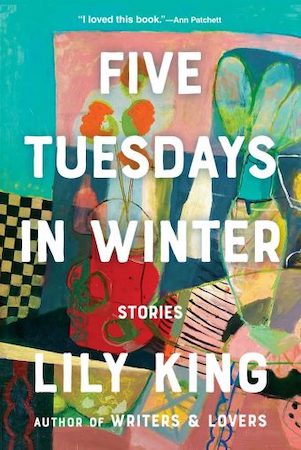
Lily King Weaves Glimmers of Hope into Her Short Story Collection

Spanning dreamy teenagers to furious parents, violence to kindness, each of the ten short stories in Five Tuesdays in Winter is rendered with Lily King’s signature longing and wit. We are all learning to carry our grief, this collection argues, yet still hoping to scrape together a few more moments of passion and connection. From the first story, King’s cleverness, emotional depth, and range pulled me in and glued me to the couch.

Take one favorite of the collection, “When in the Dordogne.” In it, a couple of college guys come to stay with a lonely young boy in his home while his parents are away for the summer. “The two boys stood responsibly beside me as we waved my parents off…. And then, after a respectful pause, they let loose.” Loose is exactly how King’s work reads as she ponders why we build boxes around ourselves and what it takes to climb out. As the boy in the story says, “I had only seen people behave one way in this house, prudently laconically, in codes I could not understand but had learned to imitate. And now here was another way.”

Indeed, King’s specialty is creating emotional change on the page. The final story holds a unique thrill for anyone who has spent time in a writing workshop. In “The Man at the Door,” an Olympic level mansplainer arrives to goad a new mother about her desire to write novels. “Women are at their best when they’re writing about men: their husbands, their fathers, their lost loves. It’s when they start writing about themselves that they become unreadable,” he says, growing ever more outrageous with each line, infuriating the protagonist until she explodes into mad creativity.

I spoke to Lily King via phone about whether her short story collection is a rebellion against the times we live in, unsolicited male advice, and the spirit of hope in her work.


Amy Reardon: There’s so much warmth in Five Tuesdays in Winter. Is this book a rebellion against the times we’re living in?

Lily King: I wrote the stories over many years, so these times were not in my mind for a lot of them. But a number of people have said, “You’re not afraid of a happy ending,” and I’ve been thinking a lot about that, and why that is true. It’s funny, everybody kind of sees what they want to see. I think even in stories that don’t have cleanly, purely happy endings, I am in the business of hope. I do believe in hope, and I do believe in change, and I do believe that we’re better than we think we are, and we’re better than this time we’re in. We are. I just… I hope we can get there before the world ends.

There is probably a part of me that does want to fight against these times because they can seem so dark, and I refuse to go there. Nobody needs to be reminded of it. We’re living in it every day. We see the incredible dysfunction at every level, the miscommunication, the misinformation, and the lack of connection. I just don’t feel like I need to remind anybody of that right now. I don’t want to. That’s not where I want to live. I see it, we all see it, let’s feel other things.

AR: There’s a certain releasing your characters experience, from difficult situations, and into love or acceptance, is that intentional?

LK: Certainly, as a short story writer, you present a knot that the character is twisted into, and somehow you want to pick at that knot and loosen up—at least a little bit—that person emotionally. I think that’s always my interest. A lot of times, I use a claustrophobic situation to get there. I put them in some compressed place where they can’t really move around a lot, and they have to deal with it without a full escape. I guess I think about “North Sea,” and they’re stuck on that island together. In “When in the Dordogne,” they’re in that house. I was interested in that kind of pressure cooker situation, and I’m really, really interested in emotional changes and an emotional arc. That’s what I’m writing about. It doesn’t really matter to me what happens and what the plot is. The plot is all in service to an emotional arc that I’m trying to create.

AR: When I finished the final story, “The Man at the Door,” I felt elated by how the story captured all those familiar “dude in workshop” comments and used them to empower the protagonist’s creative breakthrough. What’s the origin of that story? 

LK: I wrote that story in probably the darkest hour of writing and mothering and trying to figure out how I could do either of them well. I had a two-year-old and a newborn, and I was trying to nurse my younger child and write in the two naps that she would take in the morning and the afternoon. Maybe someone came to the door, or I had a dread of someone coming to the door or something. I remember so well how I used to prop her up with all of these pillows and get her to latch on and then hopefully, hopefully, hopefully fall asleep for just a little bit so I could write. I was writing a second novel. It wasn’t going well, and I took a break to write this story.

It’s a very fictional story, not my situation. I’d already published a novel. I didn’t have any novels in the basement, I didn’t have a husband like that, and I didn’t have kids in school, but I certainly did have a lot of men in my life over the years dispensing all kinds of male advice. I had an alcoholic father, so he shows up in all kinds of forms. I didn’t expect him to show up there. I honestly feel like that story came out of some sort of hallucination from lack of sleep for two and a half years straight. Because I don’t write a lot of surreal stories. Paranormal stuff, that’s not my thing. I can only attribute the lack of sleep to that happening.

AR: Is that story the completion of the book’s arc then? Because the collection begins with “Creature,” about a teenage girl reading Jane Eyre, fantasizing about her own agency when she gets assaulted in the bathroom. Then at the end, “The Man at the Door” give us a woman reaching full agency. Not so different from Jane Eyre’s path from powerless girl to grown woman with agency. Is that how you see the emotional arc of the collection? 

As a short story writer, you present a knot that the character is twisted into, and somehow you want to pick at that knot and loosen up that person emotionally.

LK: Well maybe not as sophisticatedly as that, no. When we were putting it together, we were trying to figure out what we were going to do with these three stories that have people who become writers in them. I definitely felt like they were the three pillars of the collection. There was a part of me that wanted to put them separately, at the end, boom, boom, boom. Then, I really felt like it would be better if it were over the course of the whole collection, to start at a younger age and go to the mid-20s, to the mid-30s or late 30s, or whatever she is in “Man at the Door.” I felt like “The Man at the Door” absolutely had to be the end. I do feel like those three women are holding up the collection, definitely. I didn’t really think about it in terms of Jane Eyre and agency, but I think that is so accurate. I’d give an A to that paper.

AR: Thank you, that’s very exciting. And yet there’s so much more to this collection, isn’t there? I don’t know that I’ve ever read a more lovable story than “When in the Dordogne.” The two college boys in that story hold such a gentleness and tenderness. They take this sad, lonely kid into their care, and they see him, and in doing so, they change his life. There was a similar gentleness in “Hotel Seattle,” a story that also holds violence and horror. Can you talk about the choice to write tender boys and men? 

LK: That’s really nice to hear, especially after the way [the book] begins with “Creature.” You kind of feel like perhaps we’re going get a lot of men like that [who are abusive]. I really love writing about men and in the voice of men. I’ve had some very, very, very difficult men in my life, but I have also had just incredibly tender, kind, kind male souls in my life too. I think it’s important for us to all remember that, especially in these times where everything is increasingly black and white and vitriolic.

AR:  In “Hotel Seattle,” a story about homophobia and violence, but also love and commitment, the characters begin with one way of looking at the world, and then you change their lens, and suddenly they see more. They are changed, and that extends to the reader too. You mentioned a fascination with emotional change, how do you approach that?

LK: I think that’s why I’m writing. I guess, I don’t really have an interest if people don’t change in some way. I feel like I’m changing all the time, and I feel like it’s the most interesting thing about life. You don’t see things the same way from year to year. It’s so cool. I feel like I see a person in a particular situation, and I just wonder what happens to her or him. I think in hindsight, I can tell you maybe some questions that I was asking, but when I’m writing it, I am just following along, seeing what they would do, what feels right. Kind of experiencing the pleasure of watching my imagination at work. I don’t know why that’s so pleasurable for me, but it always has been. I’m following closely behind, trying to put words to what I see.

AR: How do you get yourself into such a generous, hopeful state of mind? 

LK: It’s so funny. Okay. Generous hopeful state of mind? I mean, I’m looking at the table of contents: “Creature,” sexual violence. “Hotel Seattle,” more sexual violence. “Mansard,” some sort of absent, creepy CIA father. “Waiting for Charlie,” girl in a coma. [Laughs] 

AR: Oh my God, you’re so right. 

I do believe in hope, and I do believe in change, and I do believe that we’re better than we think we are, and we’re better than this time we’re in.

LK: So, I don’t know. Maybe I like a really, good fraught situation that can be resolved with a little hope. Every story does not have the exact same arc by any means, but for me a lot of it is a vehicle for humor. Humor in despairing situations is really important, and I think there’s something about contrasting certain things that produces some humor for me.

AR: I wanted to ask about your novel Writers & Lovers. It was my gateway book back into to reading during lockdown. Are you hearing that a lot? 

LK: I’ve heard it before, which is just so, so, so nice to hear. I’ve just had a couple of in-person events, and I have a new readership of young women. It’s so exciting because the average age of my readers before Writers & Lovers was about 87. It’s amazing to have all these young people coming up to have their book signed and telling stories of reading that book. It’s beyond my wildest dreams that it actually reached that segment of the population that I really most wanted to reach. I really wanted to reach the person that I was 20 or 30 years ago.

AR: When you mentioned emotional arcs earlier, I thought about Casey, the protagonist of Writers & Lovers. How you withheld all the good stuff from her until she was true to herself. I tried to draw a picture of her arc, and I ended up with a circle, because she started and ended in the same park, with the geese. By returning her to the same place, you showed us how much she’d changed, is that right?

LK: I love that. I honestly never thought about that. I was aware that the geese were recurring, and I was playing on that for sure. But I didn’t really think about returning to the same place and I’m seeing it afresh. That’s really accurate about Casey needing to be in a better place where she accepts things about herself and who she is and her life choices fully before she can really feel love and receive love from somebody else.

No One Was Exploited in the Production of this Space Tea

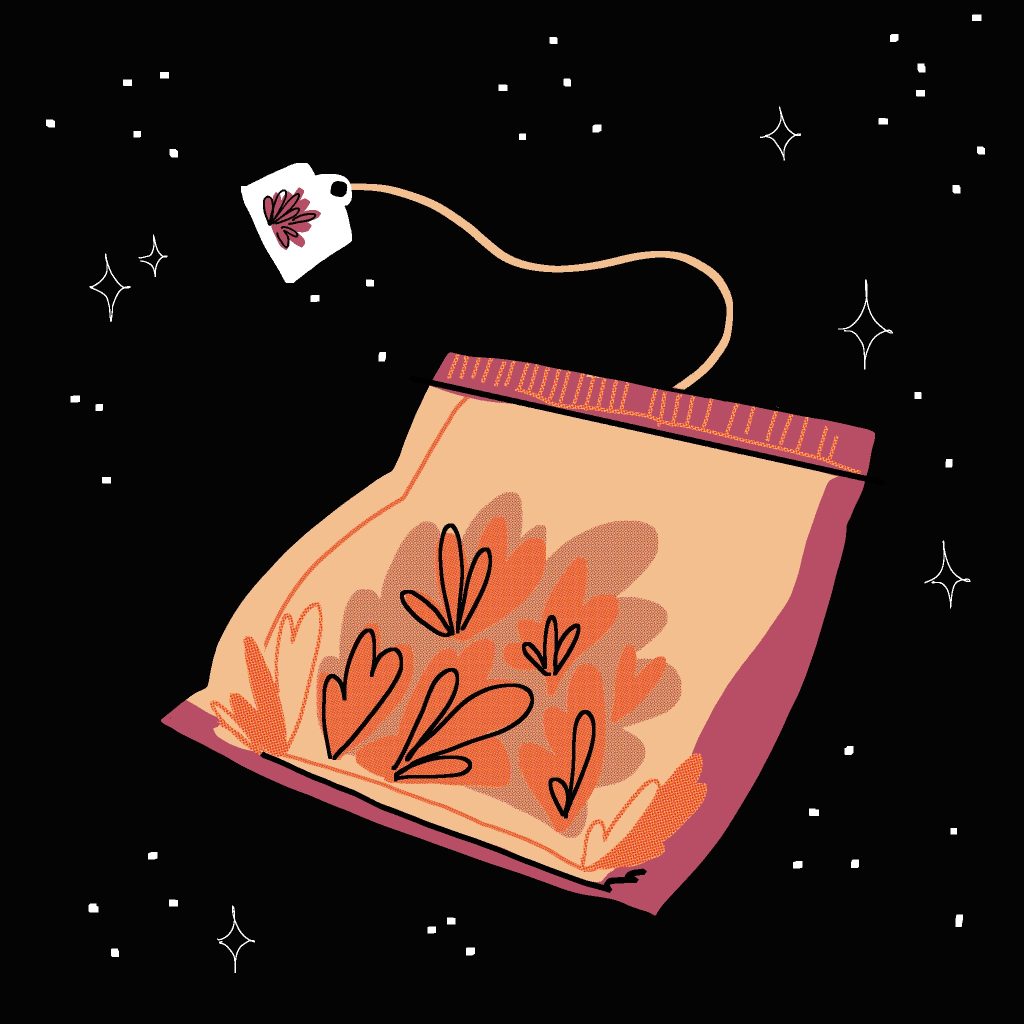
Extrasolar Teas Box

                                                    (Front)

Extrasolar Teas — Xenobiotic teas, grown where they grow, cultivated by their cultivators

Flower of Suhwill

Behold our oldest tea. A sharp, herbaceous cup with a smooth soothing finish sure to assuage your stress and awaken your yeetsu.


(Top)

Our Story

In 2438, Lee Paoder made the discovery of a lifetime. Studying the flora of the Suhwill archipelago, he observed a murmuration of 100,000 Suhwill people. This was the ceremony of Hushueeo, “Yearly Obeisance,” in which all the Queen’s subjects imbibe Flower of Suhwill tea and take flight in the throes of yeetsu.

Paoder fell in love with the tea, but knew it could never grow on Earth. So he founded Extrasolar Teas. Eighty years later, we stand by his belief that xenobiotic teas grow best in their native ecosphere, and machine harvesters are no replacement for our brilliant indigenous workers.


 (Left)

When traditional Suhwill tea masters lost their sight and flight, they would retire from growing tea to serving it. Follow their ancestral wisdom and brew a cup fit for ceremony.

Instructions

1. Heat 6 oz. water to 90º C.

2. Place one Flower of Suhwill on the water’s surface.

3. When the flower sinks, the tea is ready. Sip tranquility.


(Bottom)

The Flower of Suhwill tree is as ingenious as the Suhwill people themselves. The soothing effect it delivers is a natural pesticide which kills insectomorphs and causes an intoxicating addiction in larger, root-devouring vermin. But don’t worry—to humans, it only brings a gentle serenity.

The Old Masters …

Traditional Tea Masters dug tunnels beneath their groves to access the deep roots of the tea tree and gouge them with their beaks. This gouging mimicked the bites of vermin, inducing the trees to synthesize their tranquilizing pesticide in high concentrations.

At midday, when the flowers bloom, the masters would pluck the topmost blossom of each tree.

… And the New

Our daytime harvesters are equipped with protective eye gear, and our root gougers take flight breaks outside the tunnels every two hours. Unlike old tea masters who “lost sight and flight” after a decade of tending grove, our new master cultivators will enjoy long, healthy careers—some may even work their whole lives!


(Right)

Ingredients: FLOWER OF SUHWILL, DUST ORANGE (A PRESERVATIVE).

Better End Certified • Member of Orion Arm Organic • 0 Profit Certified • Graded A+ by UNCEB • Trust in Us™ Verified • Signatory to the Jakarta Pact • We Hire Indigenous • Rated 3800 on the Orickson Equity Index

Extrasolar Teas is a founding member of the Better End Initiative. Scan here to learn more.

Extrasolar Teas is a proud MATCO company


(Back)

The Extrasolar Commitment

We believe tea can’t be enjoyed if you’re worrying that the workers who grew it were mistreated. That’s why we founded the Better End Initiative, ensuring that indigenous workers always get the better end of the deal. Our indigenous employees are compensated for the full value of their labor +10%, as calculated by the UNCEB networked intelligence. Drink with satisfaction, knowing your money has gone to the right people.

Spotlight on Suhwill

Meet Huotseetsa. She’s a Suhwill mother of seven, and a master root gouger for Extrasolar Teas. Through our partnership with the Kingdom of Suhwill government, her children are guaranteed seats in the Queen’s University and premium healthcare. Not to mention, Huotseetsa is never short on Flower of Suhwill—all our Suhwill employees take home three flowers every day, culled from the most vital and potent flowers of the harvest.


(Individual Packets)

Party all day

Though the Suhwill are nocturnal, they make special exception for ceremony days

Powering Suhwill

For every thousand boxes of tea we sell, we donate one MATCO receiver plant to the Kingdom of Suhwill

Bigger than M-Day

The largest murmuration of Suhwill ever contained 537,000 individuals

New Masters

Traditional tea masters plucked 400-500 flowers per day. A skilled Extrasolar harvester can pluck up to 800!

Untranslatable

Yeetsu, meaning “surrender” or “docility,” is the state of carefree calm which millions of Suhwill achieve on ceremony days

Forbidden Temptation

Traditional tea masters were forbidden from drinking the tea they spent their lives growing and serving


(Catalog Insert)

The Extrasolar Bulletin

Mountain Centenar — We can’t get enough of our latest discovery. Grown only in the polar mountains of Centenar, this spicy, invigorating loose-leaf is your perfect morning wake-up, and a great mid-day energy boost too. Scan to purchase

Branch-dried Chat*a — The Ina’’grasa people have been perfecting this sophisticated fermented tea for millennia. Enjoy it cold and taste the secret delicacy the Ina’’grasa have hidden away all along. Scan to purchase

Orion Arm Medley — A new blend of our favorite dried-leaf teas, including smoky Black Chat*a, herbal Illi Long, and sweet floral Golden Tsee. Scan to purchase

What’s new?

This year we celebrate our 80th anniversary by giving back to the people who’ve brought us this far—our brilliant indigenous workers. Starting this Spring, all Extrasolar farmers will receive lifetime supplies of Flower of Suhwill and a MATCO Home Brewer to match. Drink up, Extrasolar family—you’ve earned it!


About the Illustrator

Leanne Renee is a Cuban American illustrator who has been telling stories for over a decade now and will continue to do so even with whiskers and wrinkles.

Electric Lit’s Most Popular Posts of 2021

In a year marked by epic highs and devastating lows, we’re taking a look back at our archives to see the essays, reading lists, and interviews that resonated the most with you, our readers. In a time of both hope and turmoil, you looked for reading lists to help you make sense of the world, from combating anti-Asian violence to books that center the voices of Afghan women. You read essays that reckon with the colonial legacy of English and how the myth of universality favors white women. But alongside our insightful pieces grappling with racial equity and feminism, we also published fun, entertaining fare, like seasonal literary horoscopes and a round-up of the coolest literary tattoos on the internet.

Here are our most popular posts of the year, starting with the most read:

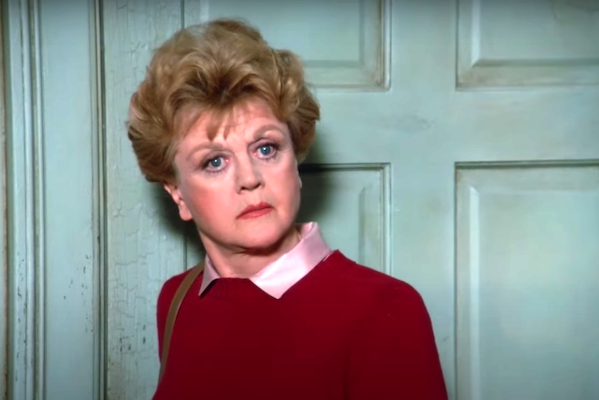
1. Please Just Let Women Be Villains by Elyse Martin

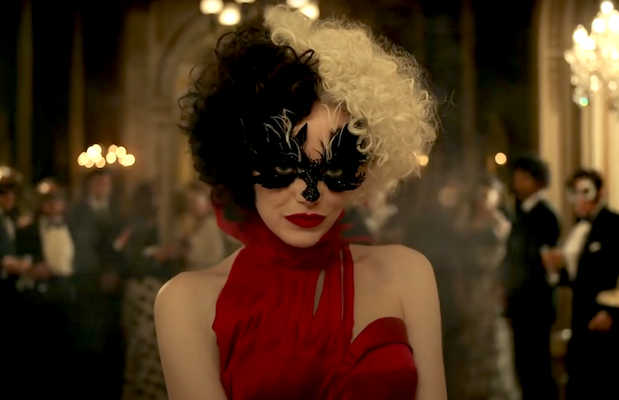
In our most popular post of the year (by a lot!), Martin writes about why Hollywood can’t allow women to revel in their wickedness without adding a gratuitous redemption arc. In her essay, she analyzes how rehabilitated villainesses rely on outdated ideas of women’s virtue:

“American culture tends to want to explain away the evil actions of women—mostly fictional women, but sometimes real ones—because female villainy rests uncomfortably with lingering cultural perceptions of women’s purity and virtue.”

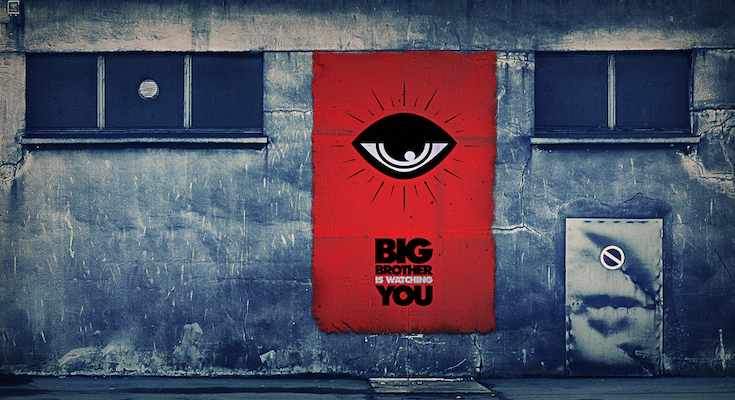
2. Please Stop Comparing Things to “1984” by Rachel Klein

Klein, a former high school English teacher, writes that George Orwell’s classic novel is no longer the cautionary tale it was intended to be—at least not in high school classrooms:

“A reading of 1984 in an American classroom has almost always brought with it comparisons between our system of government and the ‘evil’ regimes against which we’ve historically placed ourselves in relief; we read it as being about those people, not about us.”

3. 43 Books By Women of Color to Read in 2021 by R.O. Kwon

This perennially popular book list, curated annually by R.O. Kwon, has become an Electric Literature tradition. As more and more people are increasingly intentional about diversifying their reading habits, Kwon’s reading list is one of the best resources for readers:

“My extravagant hope is that, one day, publishing will be so inclusive, so much more reflective of an increasingly and splendidly diverse country, that we’ll have no need for such a list.”

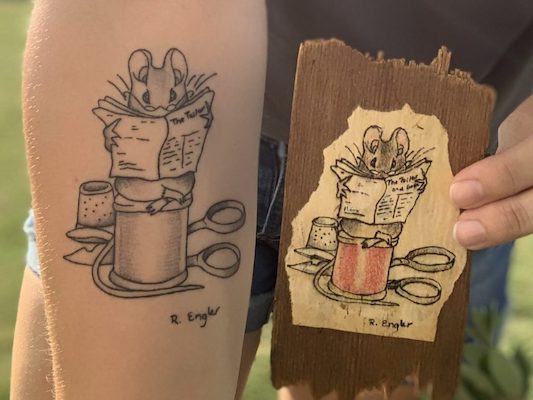
4. The Coolest Literary Tattoos on the Internet by McKayla Coyle

We asked our readers to send us their book inspired tattoos and boy did they deliver! Favorites include ink inspired by Langston Hughes, Angels in America, Phillis Wheatley, and the Wayside School series:

“Books and tattoos have one major thing in common: ink. Maybe that’s why book-lovers like getting literary tattoos so much. I asked our social media followers to send us their literary tattoos. I expected ten, maybe twenty responses. Instead, we got over 250. 250! Our feed was all skin and ink for days.”

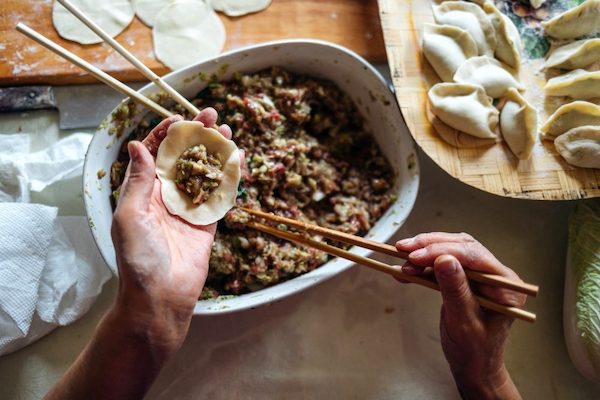
5. Chinese Cooking Helps Me Connect With My Mother—And Helps Me Prepare to Lose Her by Nicole Zhu

Michelle Zauner’s memoir Crying in H Mart helped Zhu cope with anticipatory grief after her mother was diagnosed with cancer:

Crying in H Mart made me realize how important it was to cook, to root myself in some form of action. Finally, here was something tangible I could do that wasn’t wallowing or weeping. Building muscle memory and a reference point for different tastes were ways I could hold onto my mom and by extension, my Chinese culture. In this limbo of anticipatory grief, there could also be joy.”

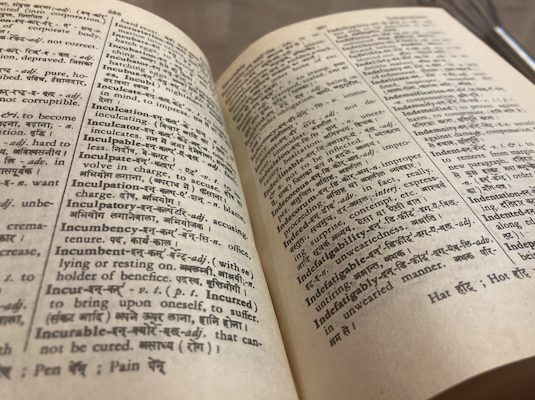
6. Why Do I Write in My Colonizers’ Language? by Anandi Mishra

Growing up in India, Mishra was taught to view English as more ambitious and educated than Hindi—but now she struggles to reckon with its colonial legacy:

“For my family, friends, relatives, and teachers, English was seen as a language of access. It could land you better jobs, remove limitations, and open up avenues. English speakers were high achievers, often conflated with the colonizers who ruled over us for about 200 years. It was ironic that the language of our colonizers was seen as aspirational, something that could lift us out of the discomfort that our parents’ mid-level jobs put us through. In reading all the subjects at school in English, we were made to understand that English was the language of possibilities.”

7. “When Harry Met Sally” Makes Adult Weekends Aspirational by Bekah Waalkes

To Waalkes, Meg Ryan’s iconic romantic comedy isn’t about fall at all, but it’s really about what adults do with their leisure time over the weekend:

“Weekends might be the background for the film, but they’re also what makes the relationship possible. Sure, When Harry Met Sally wants us to think that a scene at the Met is important because it’s the first time Harry asks Sally out. But if we can look past the plot of the film, we’ll see a relationship that unfolds over weekends. With Harry and Sally, weekends are an opportunity for connection, for catching up.”

8. Move Over, Poe—The Real Godfather of Gothic Horror Was Nathaniel Hawthorne by Adam Fleming Petty

Most famous for his iconic novel The Scarlet Letter, Hawthorne’s lesser known, eerily prescient short stories examined “the supposed innocence of the early American character” in search of the “darkness that lies beneath”:

“Hawthorne was the descendant of New England Puritans, including his great-great-grandfather John, who served as a judge of the infamous Salem witch trials. Hawthorne’s familial guilt over being involved in such a grotesque undertaking colors much of his work.”

9. In Praise of “Murder, She Wrote,” My Pandemic Lullaby by Hannah Berger 

In this essay, Berger examines what it is about Jessica Fletcher and her murder-solving escapades that she found particularly comforting during sleepless nights in the early months of the lockdown:

“The comfort in Murder, She Wrote is in what is known. We know that there will be a murder, a motive, and a confession. Jessica uncovers the truth as if she’s brushing dust off a fossil. All it takes is time.”

10. A Literary Guide to Combat Anti-Asian Racism in America by Jaeyeon Yoo and Stefani Kuo

In 2021, reports of anti-Asian hate crime has risen by more than 164% in the United States (and in New York City, that increase is a staggering 361%), but anti-Asian discrimination has a much longer history in the United States. Yoo (a former intern at Electric Literature) and Kuo curated a reading list of fiction and non-fiction for readers to gain insight into the systematic structures of racism, inequity, and oppression operating against Asian Americans:

“In the last year, the Asian American community has seen an onslaught of verbal harassment and physical attacks, triggered by the onset of COVID-19—still called ‘the Chinese virus’ by many Americans…

We’ve compiled this list as a way to better understand the deep roots of Asian American discrimination in the U.S. We hope we can help amplify the urgent need to acknowledge anti-Asian racism and the complexity of Asian American identity today.”

11. Your Summer Reading Horoscope by McKayla Coyle

We’re obviously past the summer at this point, but if you’re looking to relive the sunny days, why not start with a summer reading horoscope divined by Coyle, our social media editor and resident astrologer:

“As both a Virgo and a lesbian, I love talking about books, and I loved talking about astrology, and I’m always right. Therefore, you can be assured that this list is scientifically accurate and you’ll definitely love the books assigned to your sign. I’m not here to tell you who you are, I’m just here to tell you what to read.”

12. I Love Sally Rooney’s Novels, But They Aren’t Written For Me by Malavika Kannan

Why aren’t we seeing branded coffee trucks and bucket hats promoting the books of women of color? In this essay, Kannan writes about the hype around Normal People and how the myth of universality keeps white women at the center of the literary ecosystem:

“If you are an angsty white girl seeking media representation, there’s never been a better time to be alive. But if you are a girl of color like me, you’re more pressed for options—while authors like Akwaeke Emezi, Carmen Maria Machado, and Jacqueline Woodson are writing us gloriously into narratives, few of them receive Rooney levels of hype or status. For a time I wondered: Where are the Normal People of Color?”

13. 7 Novels that Subvert Social Norms by A. Natasha Joukovsky

What is it about crossing the boundaries of acceptable social behavior that we find so irresistible? Joukovsky recommends books that resist the pressure to conform:

“What norms and etiquette convey, above all, is social class. It is no wonder that bad manners offend us so profoundly. A subversion of social norms is tantamount to a subversion of society, a threat to our delicately calibrated place in the world. And yet, we are often drawn to taboo even in its repellence, be it due to schadenfreude or morbid curiosity; it seems to be a fundamental aspect of human nature that sheerly being told not to do something makes us all the more attracted to the idea.”

14. 7 of the Best Mystery Novels Set by the Sea by Emma Stonex

It’s clear that our readers are craving a seaside vacation. From lighthouses and ocean liners to mysterious Thai islands and the glittering Mediterranean, Stonex recommends books that revolve around the seascape:

“I might argue that the sea is literature’s greatest character, living as she does among the best mysteries ever written. And yet she is modest. She rarely takes center stage. Instead, she washes around the drama’s edges, an ever-present, ever-changing companion. She is a shining, shifting backdrop, quietly reflecting all that’s worth knowing about the story and its players.”

15. I Got an Artificial Intelligence to Write My Novel by Erik Hoel

In his experiment, Hoel tested GPT-3 to see if the natural language processor could write his debut novel. He discovered that it didn’t do a better job than him—but we should maybe be worried that it didn’t do much worse:

“Consider that when I was born, language, whenever I encountered it, was always generated by human consciousness. When I die, will most language come from a source separate from consciousness? Things that speak and things that feel are now entirely dissociable. I grew up in my mother’s independent bookstore, so to me this is anathema, a debasement of the holy. Why is no other writer in the world freaking out about this new Babel?”

16. 8 Books By and About Afghan Women by Nadia Hashimi

Written five months before Afghanistan fell into the control of the Taliban, Hashimi’s reading list of literature that centers the lives of Afghan women is more important than ever:

“In a time when Afghan women have been forgotten from the world’s consciousness and priorities, it feels more vital—either as an act of protest or desperation—to collect books that center them.”

17. Why New Fiction Is Making Mothers into Monsters by Rachel Mans McKenny

In this essay, McKenny examines novels and short stories that are using horror to convey how utterly dehumanizing motherhood can be and to question what the act of the mothering transforms women into:

“Motherhood is monstrous this year—an impossible debit when emotions and workloads are already maxed out. The only word that comes to mind is horrific, and the literature that helps me come to grips with this time period weaves in elements of horror.”

18. 7 Books About the Partition of India and Pakistan by Anjali Enjeti

The Partition is the largest human migration in history, cleaving the British Raj into India and Pakistan. In her reading list, Enjeti recommends literature about the severing of the Indian subcontinent that “capture some of the most harrowing events of the era, but also the courage, sacrifice, and generosity of the human spirit.”

“What I hoped to convey is how Partition has lived on. It is not so much an event in the past, but one that continues to influence the descendants of those who survived it.”

19. 10 Stories About Hunger and Hustle in the Restaurant Industry by Karen Tucker

For the past two years, we’ve hailed restaurant workers as heroes for performing the essential work of keeping us fed and giving us a place to gather. But The Great Labor Shortage of 2021 has made it clear that the restaurant industry as a whole can’t survive without structural labor reform. In this reading list, Tucker recommends books on the good and the ugly of working in food service:

“What I want to share with you here are some stories that capture the powerful highs—and crashing lows—of food service, as well as the intoxicating tug of restaurant life and why it’s often so difficult to quit.”

20. A New Graphic Novel Shows the History of the Black Panther Party by Jennifer Baker

David F. Walker and Marcus Kwame Anderson’s graphic novel The Black Panther Party charts the history of the Black Power organization from its 1966 inception in Oakland to its demise over a decade later. Former contributing editor Jennifer Baker interviews the authors about how the past repeats itself:

“I would like young people to look too, as they wonder why nothing has changed in their mind, look at why it hasn’t changed. Look at what’s happening. Look at what happened to the Panthers, understand how they were infiltrated, how they were turned against each other. And know that those same tactics are being used against you right now. 

The Commuter’s 10 Most Popular Posts of 2021

Whether it’s disappearing ink or rejection erasure poems, The Commuter, our weekly magazine dedicated to the weird, wonky, and off-kilter, gives a bite-sized sample of dazzling work from writers willing to experiment. Receive a delightful literary amuse bouche in the form of poetry, prose, or graphic narrative every Monday morning by signing up for The Commuter’s newsletter. Out of the 52 issues of The Commuter published this year, here are our top ten, starting with the most read.

no

Rejection Erasure Poems” by R.L. Maizes

These erasure poems made from actual rejections received by the author will make you feel better about your own submission tribulations, or at least help you laugh at them. 

Son” by Mike Schoch

Helping a parent move is never fun, especially when that parent is a hoarder. The narrator cycles through rage, bargaining, and guilt directed toward his immigrant father for not overcoming his impoverished youth.

The Temporary Job” by Hannah Gerson

A young woman starting a new job has a singular, odd task. If the phone rings, she is to not pick it up. Will she be able to ignore the ringing and her curiosity, or will she find out who is on the other side of the ringing?

pomegranate and knife

Caesara Pittman, or a Negress of God a False Man of God” by Maurice Carlos Ruffin

In this excerpt of “The Ones Who Don’t Say They Love You: Stories,” a freed woman is on trial for stabbing a man in self-defense. 

René Magritte – The double secret (1927)

Blanks Lost My Face” by Suzie Eckl

The narrator in this mad libs-esque prose is slowly misplacing parts of herself, like her nose and ears.

London Foxes” by Kaliane Bradley

It might seem like a good idea to cure mange in the feral foxes, however the city of London learns it quickly spirals to religious mania and nationalism.

dogs playing

Excerpt of Nightbitch by Rachel Yoder

A new mother with a bubbling contempt for her situation contemplates herself as a werewolf, dubbing herself Night Bitch. Does this make her son a rotten little cock and her husband a computer nutsack? And what is the hair that suddenly grows at the base of her spine?

two cups

“​​Today” by Nardine Taleb

An aunt and her niece shop, gossip about the men in their lives, and garner stares from the white Ohioans who are not used to brown women showcasing joy.

roses and thread

Unraveling” by Karen Heuler

A boyfriend is slowly coming undone, thread by thread. What is a woman to do but pull the threads? Maybe use them to sew something more permanent than a lover.

reflective snail

Black Arion” by Charlie J Stephens​​

Laying on the basement floor and letting the hermaphrodite snails crawl over your skin might be the best way to handle being eleven.

Recommended Reading’s 10 Most Popular Posts of 2021

This week Recommended Reading published its 500th issue. For 500 Wednesdays in a row since May 23, 2012, we’ve shared extraordinary and innovative fiction from emerging and established writers with heartfelt, personal recommendations. The fiction we publish is not only formally masterful, it’s exciting. We are drawn to stories that usurp expectations: charismatic and troubled narrators, new takes on contemporary topics, inspired flourishes of genre, humor that makes way for deeper revelations. We’re also proud to be one of the largest free online archives of short fiction in existence, especially considering (not to brag) our outstanding ensemble of writers. In 2021 alone, we’ve published work by Brandon Taylor, Hilma Wolitzer, Weike Wang, Elizabeth McCraken, Lily King, Ayşegül Savaş, A.S. Byatt, and 44 others. Today we are sharing our ten most popular stories of the year starting with the most read. 

bed and light cropped

Great Escape” by Hilma Wolitzer, recommended by Roxana Robinson 

After almost two years of Covid, there’s been a lot of pandemic fiction. However, Wolizter handles our new reality with unparalleled grace and wisdom. “Great Escape,” the only new story in her recent collection, Today a Woman Went Mad In the Supermarket (one of EL’s favorites of the year), follows nearly ninety-year-old Paulie and her husband, Howard. After their daughter warns them of a new dangerous virus, the seasoned couple tries to remember to wear a mask and not take the train. Paulie watches her husband in the mornings, “to see if Howard was still alive, holding [her] breath while [she] watched for the shallow rise and fall of his.” That the tragedy that follows was inspired by events in Wolitzer’s own life makes the story all the more powerful.

girl detective

Long Live the Girl Detective” by Megan Pillow, recommended by Brandon Taylor

This genre-bending tale turns the Girl Detective trope on its head. Opening with her death, the Girl Detective must work backwards to solve how she died or who is responsible, and as former senior editor Brandon Taylor puts it in his introduction, “what will she do once she knows?” This inventive story tightropes between the familiar and the uncanny, breaking form and expectations with every new hint.

Anna Karenina and Madame Bovary Discuss Their Suicides” by Pauline Melville, recommended by Brandon Taylor

Perfect for the literary buff, Pauline Melville’s humourous homage opens on the eponymous heroines mid-conversation. Brimming with nods to their stories, creators, and status in the literary canon, “Anna Karenina and Madame Bovary Discuss Their Suicides” is cleverly pokes at the agency of these fictional women. At one key moment, which former senior editor Brandon Taylor notes in his introduction, “Anna asks if Emma would like to read her story, Emma responds, “I don’t think so. Not if it doesn’t have a happy ending.”

bonfire

Filthy Animals” by Brandon Taylor, recommended by Calvert Morgan

The silver lining to Brandon Taylor stepping down from his role as senior editor was that we could finally publish his fiction. His debut collection, Filthy Animals (also on our best of the year list) opens with this titular story. Milton and Nolan are two friends headed to one of their last parties before their separation—only Nolan doesn’t know yet. The two boys repel open communication, instead opting for drugs and whichever hands are closest. Executive Editor of Riverhead, Calvert Morgan, sums up the heart of the story, “We wonder not only what he will choose, but how he will learn to live, there or anywhere, and to reckon with the tenderness in his heart.”

Chance Me” by Caitlin Horrocks, ​​recommended by Ramona Ausubel

After fifteen years of not seeing each other, Harry picks up his son, Just, from the airport. Though he’s in Boston to visit Harvard, MIT, Lesley, and all of the others, Harry can’t tell whether his son is academically accomplished enough for these schools, or if the campus visits are merely an excuse to see each other. The tension is palpable as they shuffle around their estrangement and Harry recalls his origins with Just’s mother in a pseudo-cult in the Arizona desert. If you love this story, read the entire collection, Life Among the Terranauts

person in shower

The Ring” by Pedro Mairal, translated and recommended by Jennifer Croft 

In this ribald and satisfying story, Emilio leaves his wife at home to go to friend’s party and pick up women, which doesn’t go entirely to plan. Translator and recommender Jennifer Croft, sums up the genius of the story in her introduction: “Mairal is always able to recruit the characters most suited to a given journey, protagonists both lovable and loathe-able, hilarious and sad. No matter what—no matter how deplorable their actions—we can identify at least a little with the impulse.” 

fancy dining table

The Boyish Lover” by Laurie Colwin, recommended by Halimah Marcus

Laurie Colwin passed away in the early 1990’s and was arguably best known for her collection of essays and recipes, Home Cooking. However, this year Vintage Books and Harper Collins republished her entire catalog, including five novels and three short story collections, resparking interest in her fiction. Editor of Recommended Reading, Halimah Marcus, notes in her introduction, “Her stories and novels are crisp and dynamic… Colwin is interested in the topography of happiness. Rather than a flat, unattainable goal, she sees happiness as dynamic and nuanced.” This story from her collection The Lone Pilgrim, traces the relationship of two professors: Jane, a warm and self-assured cosmopolitan woman, and Cordy, a austere and penny-pinching rich kid.

cliff house

Mrs. Spring Fragrance” by Sui Sin Far, recommended by C Pam Zhang

Originally published in the 1910s, Far’s posthumous collection, Mrs. Spring Fragrance, holds some of the first recorded fiction of the Chinese American experience. “Far’s stories have that speed, that cadence, that resounding thud of a moral message hitting the floor,” notes recommender C Pam Zhang. In this tale, a woman living in San Francisco meddles with the love life of her young neighbor, while her husband frets over a misunderstanding. “Mrs. Spring Fragrance” is sharp with moments that gleam through the decades and utterly electrify.

bustling bookstore

Terms of Agreement” by Clare Sestanovich, recommended by Leslie Jamison 

It’s been a buzzy year for autofiction and discussions of what to do if you find yourself the main character in someone’s story. In “Terms of Agreement” the main character dissects her friendships with her former lover, You, and their mutual friend, Nicole. Her ex made a habit of picking up details from everyone he encountered, and leaving them to parse themselves out of his work. Now, the narrator is turning this borrowing technique back on him. “Terms of Agreement” is collected in Objects of Desire, which made it on to our list of the best short story collections of the year.  

house at night

Fable” by Ethan Rutherford, recommended by Jill Meyers

At a dinner party amongst old friends, the newcomer shakes things up. Karen, Sasha’s third wife, is a translator by trade, but she is introduced as someone who “tells stories.” She weaves a detailed story within a story, a fairytale world of foxes and baby-thievery, which interrupts an otherwise realist scene one might find in a Raymond Carver piece. Jill Meyers notes, “The inside story, with its moral trouble, threatens the frame—it leaks, it skips, it crosses over.” Read more from Ethan Rutherford in his two critically acclaimed short story collections, The Peripatetic Coffin and Other Stories, and Farthest South.

Electric Lit’s Favorite Novels of 2021

When it comes to great novels, this year felt like an embarrassment of riches. The books collected here are ambitious—in intellect, in scope, in subject matter, and in size. Some are perfect encapsulations of the unique problems of our time, while others illuminate the human threads that connect us through time and space. Novelists often task themselves with these kinds of far reaching goals, and when they are achieved, it’s a bit like catching a shooting star mid-flight: a few parts chance, many more parts hard work and dedication in the form of returning to the page day after day. Each of these writers is a master in their craft. Each of these books deserves a place on your shelves and in your hearts. Electric Literature staff and contributors voted for their favorite novels of the past year. Here are the top three, followed by additional favorites (there were many ties!) in alphabetical order. 

The Top 3 Novels of the Year:

Intimacies by Katie Kitamura

In Intimacies, the unnamed protagonist is an interpreter who accepts a job at The Court, an organization tasked with trying men accused of perpetrating large-scale human atrocities. As her work becomes increasingly controversial, the interpreter finds herself pulled between multiple truths, unable to pinpoint her own role in stories defined by moral ambiguity. Katie Kitamura’s fourth novel, which was longlisted for the National Book Award, considers what happens when a woman’s professional commitments require erasure of her personal life. For an interesting discussion of the questions upon which she built her latest novel, check out Electric Lit’s interview with Kitamura.

Detransition, Baby by Torrey Peters

Detransition, Baby can be accurately described as “funny and gossipy” and “insightful and cutting” in the same breath (indeed, Refinery29’s review of the book did exactly that). The success of Torrey Peters’ debut novel is certainly attributable in some part to its inherent contradictions—it’s a “domestic novel” that eschews heteronormative ideas about domesticity. Detransition, Baby  is also an incredible story about two trans women that, as our interviewer noted in a conversation with Peters on Electric Lit earlier this year, “feels simultaneously familiar and utterly new at the same time.”

Nightbitch by Rachel Yoder

In an essay on fiction’s recent interest in leveraging horror to make sense of motherhood, Rachel Manns McKenny describes Nightbitch as “a satirical swipe at the failed ‘have it all’ lifestyle that so many Gen X and millennial mothers assumed was possible.” Indeed, Yoder’s protagonist is such a woman, though by the end of the novel she’s less a generational prototype for anytime and more just a burned-out pissed-off mom who turns into a dog. If you’ve ever suspected motherhood had a darker, possibly feral underbelly, you’re sure to enjoy this darkly hilarious debut—and if you still want more, read Electric Lit’s interview with Rachel Yoder and this gorgeous essay on finding your inner wolf.

Electric Lit’s Other Favorite Novels:

Appleseed by Matt Bell

Matt Bell’s third novel is nothing if not ambitious. Spanning more than one thousand years in time and featuring an eclectic cast of characters, Appleseed is the latest in the quickly expanding genre of climate fiction. The novel is set in three time periods—the 1700s, the near future, and a far-future ice age—and ultimately asks the big question: Is our world worth saving?

Civilizations by Laurent Binet, translated by Sam Taylor

In his third novel in translation, Laurent Binet returns to the form he’s best known for: imaginative historical fiction. Beginning in the Viking Age, Civilizations follows Freydis, a woman warrior leading a band of Vikings that mysteriously disappears without a trace. Fast forward to the late fifteenth century, the story picks up in the journals of Christopher Columbus, as he is exploring a new world and ultimately taken captive by the Incas. The story concludes from the perspective of Atahualpa, the last Incan emperor who arrives in Europe on ships stolen from Columbus. 

Milk Fed by Melissa Broder

Broder’s sophomore novel is, arguably, even stronger (but by no means less beguiling) than, The Pisces, her debut. Milk Fed features a memorable protagonist: 24-year-old Rachel is a lapsed Jew struggling with an eating disorder who is, when the story opens, beginning a 30-day detox treatment for her unhealthy codependent relationship with her mother. As she navigates the various toxicities attendant to living a life in Hollywood-adjacent Los Angeles, Rachel unexpectedly falls into a complicated (and hilarious) relationship with Miriam, a young Orthodox Jewish woman who works at her favorite frozen yogurt shop. This is a story that truly could not be told by anyone other than Broder—and Electric Lit staffers loved it enough to recommended it in both our 9 Diverse Novels Starring Bisexual+ Main Characters and 10 Books About Alienated Women in Their 20s lists.

Second Place by Rachel Cusk

Following the conclusion of her Outline trilogy, Rachel Cusk’s latest was one of the buzziest books of 2021. In it, a female writer invites a male artist—a painter for whom she harbors a peculiar obsession—to spend the summer in her guesthouse on a remote coast. As time passes, the narrator slowly realizes that her invitation may have unexpected and destabilizing consequences. 

Infinite Country by Patricia Engel

Told in the five voices of a Colombian family, Patricia Engel’s third novel spans continents, generations and the consequences of a family in pursuit of safety and opportunity. The first chapter opens with Talia, a 15-year-old girl who escapes from a correctional facility in Bogotá and tries to reunite with her family in the United States. As the story unfolds, often at a breakneck pace, readers are given the family history in a kaleidoscopic tale that is as fractured as the family it centers. 

The Twilight Zone by Nona Fernández, translated by Natasha Wimmer

Fernández’s second novel opens during Pinochet’s terrifying reign in 1980s Chile when a man walks into a magazine office and starts talking. Andrés Antonio Valenzuela Morales is a secret service agent and, as he reels off his ghastly list of state-sponsored murders, his confessions set the stage for what ultimately becomes the narrator’s story and her lifelong obsession with “the man who tortured people.” 

Everyone Knows Your Mother Is a Witch by Rivka Galchen

In an interview with Electric Lit, Rivka Galchen commented that there’s “something comforting about traveling back in time” to places where horrifying events have ended (unlike current horrifying events, which are ongoing). The events of Galchen’s second novel, set in the 1600s, are certainly horrifying—the narrator is accused of being a witch and faces all the consequences such an accusation entails (i.e., financial ruin, torture, execution)—and yet Galchen manages to infuse the story with a healthy dose of both intrigue and humor.  

Libertie by Kaitlyn Greenidge

In Kaitlyn Greenidge’s Libertie, a mother and daughter search for a deeper freedom during the Reconstruction era. The novel follows Dr. Cathy Sampson and her daughter Libertie from free Black spaces in Brooklyn to free Black spaces in Haiti; as much as the novel is about freedom from societal chains, it is also about freedom from the weight of familial expectations. Check out Electric Lit’s interview with Greenidge in which she discusses reimagining what real freedom looks like.

Matrix by Lauren Groff

In a departure from previous work set in modern times, Lauren Groff’s fourth novel takes place during the twelfth century. When the novel’s protagonist, Marie de France, is banished from the royal court by Eleanor of Aquitaine at seventeen, she ends up the prioress of an impoverished abbey populated by starving nuns. Matrix, a National Book Award Finalist, is a surprising and timely portrait of female power in a world that discourages feminine strength.

Klara and the Sun by Kazuo Ishiguro

Klara, the protagonist of Kazuo Ishiguro’s latest novel, is an Artificial Friend (AF), designed to be the perfect companion for the human customer lucky enough to purchase her. That customer, Josie, is unwell, a consequence of the gene editing therapy that, ironically, was meant to “lift” her above her biological constraints. As Klara accompanies Josie through  a turbulent childhood she does not fully understand, Klara and the Sun offers insight about the premium placed on able-bodied productivity, as well as sharp commentary on the fantasy of the servant who loves you back.

The Prophets by Robert Jones, Jr.

Robert Jones, Jr.’s debut novel is about a forbidden romantic relationship between two Black men enslaved on a Mississippi plantation during the Antebellum. In exploring queerness through a new lens rarely applied in literature, Jones’ The Prophets delivers a powerful historical novel about Black queer identity.

Several People Are Typing by Calvin Kasulke

Calvin Kasulke is a master of the literary stunt (just check out his Literary Stunt Index and list of books that trade on bold conceits). In his debut, a novel that could not be more perfect for a year defined by work from home culture, Kasulke sticks the landing of a trick all his own. Several People Are Typing takes place entirely on Slack (the office messaging system now favored by nearly every remote work-equipped company), and follows Gerald, a hapless worker who gets, literally, trapped inside Slack. For witty banter, fun discussion, and Kasulke’s thoughts on vast and unknowable things, check out this interview.

No One Is Talking About This by Patricia Lockwood

Patricia Lockwood, one of the hailed “Poet Laureates of Twitter,” Logs On for this experimental and unusual novel. When a woman goes viral for a tweet—“can a dogs be twins”—she begins existing in “the portal,” musing about trivialities and memes. Midway through the narrative (formatted as a series of short paragraphs), the woman is jolted out of the portal, back to reality. Suddenly, the world of the portal and her internet virality don’t matter in the face of personal and familial tragedy.

The Atmospherians by Alex McElroy

Sarah Marcus, a once-beloved influencer, gets canceled and left without a career. When she reaches out to her childhood friend, he suggests that she should become the face of his new business venture: The Atmosphere, a cult-like rehab center meant to cure men of toxic masculinity. The two cult leaders now must venture into the desert with a group of misogynists to see if they have the chops to make the world a better place, when they secretly only want attention and praise. The Atmospherians is a funny dystopian fantasy sure to please readers drowning in the depthless waters of social media. 

We Are Watching Eliza Bright by A. E. Osworth

Eliza Bright, a coder at a gaming company and the only woman to have reached elite status, files a sexual harassment report and is subsequently fired. After airing her frustrations to a reporter, she’s doxxed, and becomes a rallying figure for women everywhere. The escalation that follows is a gripping, masterfully told novel that complicates obsession and violence alongside male and female rage. Check out this interview for A. E. Osworth’s thoughts on writing from dueling perspectives in We Are Watching Eliza Bright.   

Beautiful World, Where Are You by Sally Rooney

Alice, Felix, Eileen, and Simon are young, but each of them is ready for something more. They desire each other, coming together, breaking apart and obsessing over every step they take. Rooney’s work is as thought-provoking and controversial as any writer of her status: Bekah Waalkes describes her as the “patron saint of the situationship,” while Malavika Kannon reflects on the dissonance of reading and loving Rooney’s work, even as a queer, brown woman of color. No matter how you slice it, Beautiful World, Where Are You is a defining  contemporary novel that both reflects the zeitgeist and inspires imitation.

Gold Diggers by Sanjena Sathian

Voiced by Neil—Neeraj when his parents are angry at him—Gold Diggers is set in the Indian American suburbs of Atlanta. Neil, less interested in the outsized ambitions his community and family have thrust upon him, is consumed with his neighbor and childhood friend Anita. When he learns that she and her mother Anjali are using alchemy to brew stolen gold and ensure Anita’s success, Neil wants in: consequences be damned! Read this interview with author Sanjena Sathian to learn more about her unique brand of literary magic.    

Great Circle by Maggie Shipstead

Marian Graves, rescued from a sinking ocean liner as an infant in 1914, grows up to be a pilot whose greatest ambition is to circumnavigate the globe by flying over the north and south poles. A century later, Hadley Baxter is chosen to play Marian in the film adaptation of her mysterious disappearance. In Great Circle, both women’s interwoven tales unfold over the course of this epic, emotional novel about self-determination and the cult of celebrity.    

The Life of the Mind by Christine Smallwood

In Christine Smallwood’s bracingly intelligent debut novel, The Life of the Mind, Dorothy’s recent miscarriage—a tightly kept secret that only her boyfriend knows—haunts her until the very last page. It’s the kind of secret that eats away at her as she tries to make sense of a world she can’t control and a loss that feels like a failure. Read more about how Christine Smallwood approached writing secrecy and grief in this interview

Animal by Lisa Taddeo

Lisa Taddeo’s follow up to her New York Times bestselling character study Three Women, Animal is a raw and honest portrayal of Joan, a woman who reaches her breaking point after a lifetime of coping with the cruelty of men. Soaring from New York City to the hills of Los Angeles in the wake of witnessing a violent act, Joan flees in search of Alice, the only woman alive who can help her reckon with her past. Read this interview to learn more about Lisa Taddeo’s approach to writing female rage and depravity.   

Harrow by Joy Williams

The first novel in over twenty years from Joy Williams, Harrow is a marvel to behold and tells the story of the end of the world. Known primarily for her short stories, this post-apocalyptic narrative hinges on environmental ruin. The main character, Khirsten’s, eerie statement that “It is too late to be afraid,” echoes throughout, bringing urgency to the question of cause and effect, and as the doers of harm, do we deserve salvation?     

Win Me Something by Kyle Lucia Wu

Willa Chen never felt like she fit in—not in her family where her parents divorce early, and not in her mostly white school. After drifting through high school and college, she begins working as a nanny for a wealthy white couple—The Adriens—and their daughter, Bijou. Win Me Something, Kyle Lucia Wu’s debut novel, is the stunning coming of age tale of a young woman searching for belonging and finding power in defining herself.

7 Literary Translators on How They Became Translators

By now, our fandom of translators should be no secret. We’ve spoken to contemporary translators about the politics of grammar and how to render a slender neck from Arabic poetryabout imperialism and swearing in Tamil and before that, we chopped it up with others about translating slang and living in a two-translator household.  

We couldn’t stop chatting (and there are so many interesting characters!) so here is part four featuring seven translators, who work in heritage and non-heritage languages—Nepali, Spanish, Euskara/Basque, French, Indonesian, and Icelandic. Amongst the ways they began translating include telephone conversations with Nepalese aunties in Singapore, by living with ambient sounds of rapidly-changing conversion rates of the U.S. dollar in ’80s Buenos Aires, by falling in love with a language during a layover, and by re-imagining British children’s adventure novels in Indonesian. 

The expansiveness of our conversations and the pointed geekiness over comparative grammar points have been condensed for Internet consumption. Buy their books and comics and in one case, pickles!

Muna Gurung: Nepali to English 

Based in Kathmandu, Nepal, Muna Gurung’s translations include Night, book of poems by Sulochana Manandhar Dhital. A graduate of the Columbia MFA program, she has also published her own fiction and non-fiction. Gurung is currently working with a local organization called Srijanalaya to bring together Nepali writers and illustrators to create childrens’ books. She also interviews Nepalese writers for her column in the Nepali Times, Lightroom Conversations. In addition to these literary pursuits, Gurung runs ĀMĀKO, a pickle company with her mother, Bhimi Gurung. 

Learning Tamu kyi over phone calls: “I grew up in Singapore in a gated community of Nepalis where the men worked for the Singapore Police Force and the women, like my mother, raised children, cooked, cleaned, and took care of the family. As a young girl, I spent a lot of time with my mother and other women her age. Each family lived in small quarters in an area we called “The Camp”, and each living quarter was equipped with a landline.

I remember spending a lot of time on the phone talking to my mother’s girlfriends. I loved the idea of picking up a piece of plastic handle, pressing some buttons and hearing a familiar voice right in my ears! It was magic. This was in the late ’80s and I was five or six years old. And these women I telephoned were not related to me, but I called them chyama or aunty. I remember, I would talk to this one chyama in particular. She was a Gurung woman; so, in addition to the Nepali language, she also spoke Tamu kyi, which is the Gurung language. My parents spoke to each other in Tamu kyi at home and or when they received long distance calls from Nepal, but they always spoke to us in Nepali. So I could understand things for the most part, but I could not roll my tongue to sound out the words in Tamu kyi– I didn’t have any practice. But this chyama would speak to me in Tamu kyi over the phone asking me simple things like, “Did you eat? What did you eat? Where is your mother? Where are your brothers? Do you like to drink water or do you like to drink grape juice?” I remember spending so many afternoons calling her up just to speak to her in a language that was my parents’, and how strange that I learned it from a Gurung woman in Singapore and that too over the telephone!

In school, I struggled with English, but I also felt a lot of shame around not being able to speak or write in “pure” Nepali. I grew up in a household that didn’t speak Sanskritised Nepali—our verbs were never conjugated correctly: we sprinkled Malay and Chinese words we acquired while in Singapore; and we didn’t really use proper honorific terms when speaking with our elders, so we appeared “rude” or “straightforward”. The language—at least in the way that it was taught in schools, and what we were told literature is supposed to be—was not only boring, but also intimidating and very complicated.

What has been so refreshing to see for a while now is Nepali writers breaking away from writing in that “pure” Sanskritised way and instead owning the various kinds of Nepalis that are spoken and used throughout the country. Like any language, Nepali sits differently in different tongues—and the words, cadence, structure changes with the place, people, culture, and climate even. To capture that in English is extremely tricky.”

Pickling as a form of translation: “Pickles and translation most certainly go hand in hand! Ama, my mother, felt like she had no knowledge within her. She thought knowledge was something one acquired at school and as someone who didn’t go to school, it always bugged her that she was “uneducated.” As I write in the essay, we set up the company after Ama shared with me her deep fear of how no one was going to remember her after her death; that she had come into this world and had cooked three meals a day, fed her family, and that was all. We set up the company as a way to say, “Well, that is not all.” That these jars of achar, as they are called in Nepali, is her knowledge translated.

The company has now begun to employ other mothers (“ama” in Nepali means mother; “amako” means “mother’s”) and include their recipes as an act of both translation and preservation of knowledge. You should also check out our labels: we illustrate the source plant of each ingredient that goes into an achar, so the label of each type of achar is different and one can “read” the labels by looking at the images without having to read the words. It’s an act of translation, an act of reaching out towards people like my mother who may not have gone to school, but knows what a turmeric plant looks like, while those of us who have gone to school may not know the difference between ginger and turmeric.”

Megan Matich: Icelandic, German to English

Raised on a pine tree farm in Southwestern Pennsylvania, Megan Matich came to Icelandic on an extended layover in the country on route to Germany to meet a poet she was translating. She struck up a conversation with a woman at a bookstore who told her about Icelandic’s system of inflection, which sounded to Matich a lot like Russian. “Enthralled by the prospect of complication,” Matich, who had already studied German, Russian, and Spanish, ran to the poetry section and discovered of Magnús Sigurðsson’s Tími kaldra mána (Cold Moons). She spent the next year working with Sigurðsson and translating the volume’s poems, slowly learning Icelandic, before taking a formal course in 2013. Matich has since moved to Iceland and hopes to become a citizen.

Working in a “lesser-known” language and Iceland’s Artist Salary Fund: “I think it’s important to steer the conversation toward what can be done, rather than what can’t. As an affluent nation that’s very proud of its language, Iceland has put an astonishing amount of money into the arts and disseminating Icelandic writing because the country views literature as a valuable export.

When I speak with translators of other languages, I often find that they’re surprised by the minimum rates that the Icelandic Writer’s Union (of which I am a member) sets for translation. That’s one example. Another is Iceland’s competitive Artist’s Salary Fund which, although it has problems of its own, supports many artists’ projects, offering about US$3,250 per month across artistic disciplines. Iceland injects money into the arts rather than curtailing what can be made, and that (e)valuation of art as more than a leisure occupation fuels creation and translation.

Almost every work I’ve translated has received funding from the Icelandic Literature Centre, even though novels and books of poetry don’t fit within the tidy schematics of a global economy that’s biased toward STEM. I suspect that this isn’t unrelated to the number of speakers of Icelandic and the limited number of translators; it’s a small country with an enormous, complex, surprising, joyful language and an unwavering belief in the possibilities of literature.”

A primer on contemporary Icelandic literature: “Gerður Kristný is an otherworldly and dexterous poet whom I deeply admire. The third work in her poetry trilogy (all translated by Rory McTurk), Reykjavik Requiem, gives voice to the bewildering story of a woman who died before she could tell her story of abuse, and leads us to question the limitations and permissions that we/sociopolitical forces place on storytelling and, by extension, language. Kristnýuses the form of the saga, I think, to reclaim and comment on the nature of articulation, the nature of literature.

Magma, my most recent translation, aligns quite closely with some of my own experiences. In episodic vignettes, author Þóra Hjörleifsdóttir explores escalating partner violence against a young woman while highlighting the progressive harm caused by even the most subtle of aggressions. I believe that this novel will help young women who may not understand, or even recognize, what has happened to them, to give voice to their experiences inside of a deeply fragmented culture, and by extension empower them to put it into words, to see it for what it is, to identify it, to talk about how bad things really are, and to take action, to change them. Magma is itself an “infinitive marker”—the percussive to, to, to that situates infinite action.

I’d also like to call out Steinunn G. Helgadóttir, who Larissa Kyzer is translating. Steinunn writes polyphonic novels-in-stories that infuse everyday family life with literal magic. A poet and visual artist, she turned to prose with her instant classic, Voices from the Radio Operator’s House. Her latest novel, The Strongest Woman in the World, stars Gunnhildur, a funeral beautician and Houdini-esque escape artist who not only possesses superhuman strength but can also speak to the dead.

Other writers to keep an eye out for: award-winning Auður Jónsdóttir, who explores the physical and reciprocal relationship between body, pain, and trauma in her work of autofiction Quake, which is forthcoming in my translation from Dottir Press. The novel follows Saga, who suffers from a series of epileptic seizures that silence significant parts of her memory (she doesn‘t remember, for example, that she is divorced). As she struggles to reclaim her agency, she finds that her repression has deep roots—that, as Bessel van der Kolk puts it, “the body keeps the score“. 

I‘ve been on a bit of a hiatus from poetry while I‘ve been working on novels, but let‘s talk about poets to look out for! Elías Knörr, a queer poet of Galician origin writing in Icelandic, is at the top of my list, and will hopefully have work out in English next year (fingers crossed!). He is a funambulist of etymology and imagination. A number of poets were published in Words Without Borders, translated by me and Larissa Kyzer—including Kári Tulinius, Haukur Ingvarsson, and Bergrún Anna. Haukur explores climate change in his most recent work, Ecostentialism. Over the past few years, I’ve returned time and again to Gýrðir Elíasson’s ecopoetry, which demands environmental responsibility and the ethical treatment of both animals and the wider world.”

Amaia Gabantxo: Euskara/Basque to English

Amaia Gabantxo is the world’s foremost translator of Basque literature. She is also a flamenco singer and released the album KANTUZ: 1931. She is currently at work on three titles: Old Dogs and Old Bones by Unai Elorriaga, Burning Bones by Miren Agur Meabe, and, an anthology of Basque female poets—which she is editing as well as translating. She has crafted a set of hybrid pieces (fiction, memoir, literary translation and essay writing) in The Massachusetts Review.

On language erasure and speaking an endangered language as a form of rebellion: “There was the way in which my fishing village’s songs would switch between Basque and Spanish for humorous effect—always at the expense of Spanish. It made me realize the beautiful possibilities of playing with languages, of hiding revolt within lyrics, of the subversive power that could be exercised through the use of a language deemed “useless,” “less-than.” The power resided in the inversion of power that took place in the songs, the “less-than” language having a laugh at the “superior” language in plain sight. It turned the mere act of listening and understanding into an act of rebellion. I internalized that there was something very powerful in being able to navigate languages—especially endangered ones like ours. 

I grew up speaking Euskara—it was my mother tongue—and acquired Spanish when I started to go to school. The use of Basque had been forbidden throughout the years of Franco’s dictatorship, we lost a lot of speakers. Children were punished at school when they were caught speaking Euskara. With the arrival of democracy in Spain, eventually (it took a few years), laws were put in place that allowed schooling in the other languages of the state: Basque, Catalan and Galician (there are more, like Asturian or Valencian or Aragonese, but those haven’t been recognized with “official” status and as a result aren’t afforded the same protections and governamental investment, which leads us to a whole other conversation about how key it is for endangered languages to have official status). For the first time, too, we had radio and TV stations broadcasting in Basque, Catalan, and Galician, and newspapers in those languages. 

So when the time came to switch from primary to secondary school, I made the decision to continue my schooling in Basque—since it had become possible. My primary schooling had been carried out entirely in Spanish, and switching to Basque would mean Math in Basque, Chemistry in Basque, learning Latin and Greek in Basque, Philosophy in Basque. My teachers thought I was crazy and tried to dissuade me; my parents were worried too, thinking my grades would tank. But I felt a burning need to do this for my mother tongue. It rankled with me that I was a very good writer in Spanish, but didn’t have the same literary dexterity in Basque. I only had oral knowledge of my language, and a very basic knowledge of the grammar rules of the newly minted standard Basque, Euskara Batua. I owed a debt to my language, and I was going to pay it. Thinking back now, it almost feels as if something in me knew I needed this for my future, and I’m thankful to 13 year-old me for being so headstrong and undissuadable. 

After secondary school, I did a BA in English and Irish Literature at Ulster University, in Northern Ireland. How I ended up doing that is a whole other mad story that also feels very fated now. In my last year, I had the incredible luck of having Robert (Bob) Welch as a mentor after I joined his Modern Irish Literature class. He took an interest in this Basque alien from outer space who had landed on his class (I was the only foreigner in my year) and, while supervising my thesis, planted into my head the idea that I could become a translator of Basque literature (he had translated extensively from Gaelic himself, and authored works in Gaelic as well as in English). This hadn’t occurred to me, but seemed incredibly obvious when he suggested it. It felt like everything in my life until then had led up to that decision: my primary schooling in Spanish, my secondary schooling in Basque, and my higher education in English, added to a lifetime reading literature in all three languages, and a realization, while writing my thesis with Bob Welch, that no one was translating Basque literature directly into English. That every translation that existed had been carried out using a bridge language, Spanish or French: the very languages that had oppressed and almost disappeared Euskara. There seemed to be a deep injustice in that fact that I could try to remedy. So I leaped. And here I am.”

Seeing the big picture: “One beautiful difference about Basque is that as a language, it organizes its perception of reality in an inverse order to all other languages I know. Euskara pans in, whereas most other languages pan out. In English you’d go from the concrete to the general: there’s a bird on a branch of that oak tree at the bottom of the hill. It’s the same in Spanish or all other Romance languages. In Euskara, you’d start with the big picture and progressively zoom in: there’s a hill and on its bottom there’s an oak tree and in the oak tree there’s a branch and on the branch there’s a bird.

A couple of years ago I gave a talk at the Chicago Planetarium after they projected the film Arrival. They’d hired me as the closest thing they could find to a speaker of an alien language, I suspect. They’d asked me to talk about linguistic determinism, about how the language you speak influences the way you see the world, which is the theory—the Sapir-Whorf hypothesis—underpinning the narrative of the film. Does it matter, the order in which your language leads you to perceive reality? I asked my audience, as I told them about the Basque case. I don’t know, ultimately, whether it does or not, but I do sometimes wonder if the Basque language and the Basque people have survived the odds for such a long time, precisely because we have this built-in ability to see the big picture, which comes to us through Euskara. Because, through our language, we’ve learnt to consider the whole before we focus on the detail. And maybe, just maybe, this is the key to our survival.”

Eliza Vitri Handayani: Indonesian to English 

Eliza Vitri Handayani learned English from popular songs, starting around age six, and learned spelling by watching the texts in karaoke versions. She began her study of Norwegian when she moved to Oslo with her Norwegian husband. She began translating with her own writing in order to submit to American publications.

In 2012, she founded InterSastra, a platform that publishes stories and poems in Indonesian with English translations as well as producing “collaborative art events and performances, and programs for creatives and marginalized individuals to develop their voice and capacity for self-expression.” She launched a new art initiative called Eliza Vitri & Infinity, which offers which offers workshops with marginalized groups. She works with transwomen in Jakarta for the storytelling project CERITRANS.

On her alter ago Alyssa: “Throughout elementary school I was reading the Famous Five and Three Investigators series, but I would superimpose my own original characters and settings over the books’. Period books to me were like portals to escape my own life and enter a more exciting one where I was free to go places and outsmart grown-ups. I was still choosing my own adventures, translating Eliza into Alyssa—my alter ego who was tough and sharp, and had blue eyes and long blond hair.

Was I already fleeing myself, by projecting myself not only as the heroine of stories, as children often do, but as someone from another race? Was it because I was fed up with the people around me and their fear of anything slightly out of the ordinary? Or was it because the stories took place abroad that I had to transform myself into someone from abroad?

Even though I altered the characters, I didn’t localize the settings. I invented new settings in made-up places that looked similar to those I’d seen in American TV shows or movies. I can understand if I had thought crime-solving children could only exist in make-believe cities, but why did I insist that those cities had to be foreign? The Indonesian stories I’d read never had any characters that went on great adventures overcoming slick criminals and created their own secret high-tech underground base camp, instead they obediently went to school or to the market, and played and fought with other children. I didn’t want that everyday life, I wanted to be one of the adventurers. Thus, I identified with the children in the translated books—foreign in origin, but closer to my desires. Or perhaps I didn’t think Indonesians could be leading characters in books? As my father used to say, “Don’t get your head up in the clouds, we’re just sand on the shore.”

Whereas there were no discussions in our home, in Western movies and TV shows characters were pouring out their hearts and having intimate conversations, which I first understood by subtitles. I especially loved films and TV shows whose main characters were oddballs or underdogs, yet they turned out to be heroes in the end. I used to feel lonely, but Matilda showed me how to be my own friend; “Tomorrow is another day” played in my ear whenever I was feeling discouraged; a Jackson Five biopic made me see how one could become a diamond even though born as sand on the shore. What’s more, they showed me that there were places and people who could understand me, and someday I could find those places, those people.

Nevertheless, I managed to grow up insulated in a provincialism of the big city—my cultural environment was limited to Western popular culture. Our family never went to the theater, concerts, or dances, let alone literary events. We watched television and saw blockbuster movies.

Now that I know where to look, I would come across an Indonesian book or film that made me think, “If only I had discovered this while I was growing up, I would not have felt so lonely, so out of place, all the time.” I lived in Indonesia until I was 18, but I had given up on Indonesians long before that. Based on what I encountered in my family, relatives, and schools I’d concluded that all Indonesians were the same. I stopped reading the news (“politics were all a sham and the media were full of lies”), the magazines (“the stories were all about boring moral lessons”), and stopped watching Indonesian films and TV shows (“the quality was so bad anyway”). I barricaded myself inside my own misery.

While I doubted that great societal change could happen around me, I did believe that individuals could achieve great things. That was why the setting of the books remained far away, but the characters became me and my two friends from school. To take part in adventures we had to be translated. Someone who pretended he was someone else to take part in adventures—wasn’t that Don Quixote? Whoever he had been before, he became Don Quixote, and as Don Quixote he was himself, and he was free.”

The gracefulness of Indonesian: “Indonesian is a very supple and poetic language—sometimes the translated version can use words or sentences that literally mean something completely different, yet as a whole both versions still have the same meaning, more or less. If you’re used to the gendered and time-based grammar of English, it may take you some time to fully appreciate the gracefulness of Indonesian. Some examples of the poetic-ness of Indonesian:to learn = menimba ilmu (drawing knowledge from a well) and thank you = terima kasih (I/we accept your love/caring).”

Edward Gauvin: French to English 

Edward Gauvin has translated over 400 graphic novels from French. The contributing editor for comics at Words Without Borders, Gauvin has translated literary fiction, but has become known, in his words, as “the comics guy” likely due to this intense output. In the works are a Uyghur memoir and a Baudelaire comic. The range of Gauvin’s translation subjects is equally impressive—mountain climbing, the events of Tiananmen Square, a cat called Rascal, and a graphic history of wine, amongst many others. In 2021, he was awarded a Guggenheim Fellowship. 

Choosing French as a first-generation Asian American: “I have enough Mandarin for home life, but not for reading a menu, much less a newspaper. What predisposed me to choose French—returning to or preferring it several times over, at different junctures—and what that means for a literary-minded first-generation Asian American with a middle-class upbringing (as opposed to the mainland Chinese person I am by default mistaken for in France), bringing into play the very separate histories of American francophilia vs. the longstanding affinities of France and China (declining cultural power, communist sympathies)… these are things I’ve been pondering a lot lately. My middle school offered your stock American menu of the Western European trinity. German was for masochists and iconoclasts. Spanish promised the lyrics to “La Bamba” (which should date me rather precisely). French tendered sophistication, cultural insiderhood, and pain au chocolat: aspirational, for an immigrant child too suburban at the time to detect the whiff of faded empire.

Later, I suppose I wanted a France to call my own—not that of oenophiles, or the Lost Generation, but a France that had not been staked out, even if that meant Americans might not recognize it as France. And found it, I suppose, in comics and in the intersection of Surrealism and speculative fiction. But there’s always enough to go around.”

The misconception of comics as a genre only for kids: “People tend to think translating comics means dealing with more wordplay and humor, and in a lower register. This misconception may be rooted in conceiving of comics as a genre (for kids!) and not a medium (in which any number of genres can be expressed).

One thing that has emerged for me only over time, and partly because the Francophone comics in translation scene has so greatly diversified, is that working in comics has allowed me to translate across more genres—westerns, epic fantasy, science fiction, biography, reportage, memoir, chick lit, children’s, war, noir—than I might have encountered in prose, simply because the selection of French prose we get to see here lacks the same breadth.

The late translator, teacher, and benefactor Michael Henry Heim said that you’re ready to start translating when you can tell what the language is doing (convention) from what the author is doing with it (idiolect). To this I’d add, from what the genre is doing with it. Genre has been defined, usually on a more narrative level, as a set of expectations and rules that govern both author and audience; I’d argue that these expectations extend to language (lexicon, register) and that more market categories than those we regularly recognize as genres (science fiction, thriller) have such expectations. That is, the language we’d expect to encounter in work labeled ‘literary’ is similarly if perhaps more tacitly circumscribed by expectation, especially when contextualized in period.”

Kaiama L. Glover: French to English 

Kaiama L. Glover began with French in high school and then continued with the language during her undergraduate study. She came to it through “the somewhat clichéd experience of studying the Harlem Renaissance and discovering the connections between so many of the African American writers and artists I admired and the city of Paris.” But then she became more interested in complicating that very narrative by considering the French language in a broader context. 

Her translations include Frankétienne’s Ready to Burst, Marie Chauvet’s Dance on the Volcano, René Depestre’s Hadriana in All My Dreams, and Françoise Vergès’s The Wombs of Women: Capitalism, Racialization, Feminism. A professor of French and Africana Studies at Barnard, Glover is the founding co-editor of archipelagos | a journal of Caribbean digital praxis and founding co-director of In the Same Boats: Toward an Afro-Atlantic Intellectual Cartography.

Translating Haitian French: “I’ve written about the difficulty of cultural translation, especially when it comes to the idiosyncrasies of Haitian culture. Specifically, the matter of Vodou and attendant phenomena like zombification require delicacy and care when rendering the Franco-Caribbean context into the Anglosphere, because non-Haitian audiences have been so primed by global popular and news media to associate Haitian spiritual practices with savagery, primitivity, and other racist tropes. For example, even though the term “voodoo” has been challenged, and the religion it supposedly references carefully studied and theorized by scholars, the term persists in many English language translations—this despite the fact is that “voodoo” is not the translation of “Vodou” into English, nor is it merely the “US American” spelling of Vodou. On the contrary, it is a troubling insistence on a stereotype that dates back to the US marine occupation of Haiti from 1915-1934. Stereotypes like this one leave Haiti not just lost in but victimized by translation.”

Lesson of translation: “I think more than anything else translation has taught me to read more slowly, to savor the choices writers make in deciding on the words required to best tell their stories. As someone who reads a lot “professionally”—that is, for research and teaching, translating is a crucial reminder for me to savor literature in a different kind of way.”

Ezequiel Zaidenwerg: English to Spanish 

Brooklyn-based Argentine poet and translator Ezequiel Zaidenwerg’s most recent book is 50 estados: 13 poetas contemporáneos de Estados Unidos, a genre-promiscuous book, which zigzags between the expanses of fiction and reality, and presents an experimental complication of the idea of America. It includes interviews with American poets and “Declaration of Independence,” a piece with words from the original document reconstituted by Zaidenwerg (in English and translated by Mexican writer and translator Hernán Bravo Varela).

Zaidenwerg is currently working on a book of “original” poems called Rimas. Of which he says: “I’m trying to use rhyme in less traditional ways, including some phonetic explorations, i.e. coming up with choreographies for the mouth.” He also translates American poets (translations include works by Mary Oliver, Yoko Ono, and Victoria Chang) to Spanish every day on his site.

Money and language as powerful tools for the creation of value: “I was born in Argentina in 1981, at the early stages of neoliberalization, and was raised in a tacitly bimonetary system where US dollars were seen as an amulet or fetish that protected people’s savings from the inescapable devaluation of the local currency. In hindsight, I think that learning dramatically shifting conversion rates from a very early age prepared and equipped me for becoming a translator: money and language are indeed two very powerful tools for the creation of value.”

Rendering the idea of America through 50 estados: “There are more than enough American cultural products in circulation, and that creates an illusion of higher quality or merit that is actually only backed by political, institutional and market logics. It will take even more discipline, but I’d like to find ways to translate mostly works from less hegemonic parts of the world. 50 estados—being a fictional, novelized anthology, with American authors and artists role-playing the interviews based on the poems I wrote— is more an attempt to destabilize the idea of “American poetry” than a way to peddle it. I was trying to play with the fascination we all have for American cultural products, which we’ve acquired through geopolitical and cultural training, to actually undermine it.”